Birdsong I need practice to learn!
Decision table for identifying birdsong
Übung
| Bird | Description | Audio |
| stereotypisch melodisch | ||
 Gartenbaumläufer 'Gar-ten-baum-LÄU-FER' mlLh ■■
 |
stereotypisch melodisch slow high (4-7 KHz) .
It sounds to me like a 5-7 note song like 'five k low high higher', 'short song in the gar-DEN'. The individual notes have the same backward checkmark shape as the call. It's basically the same across Europe. The song of the nominate subspecies is an evenly spaced sequence of notes teet-teet-teet-e-roi-tiit. [Link] The song of the nominate subspecies is an evenly spaced sequence of notes teet-teet-teet-e-roi-tiit. [Link] Its song is short, loud and rhythmic. [Link] Its song is short, loud and rhythmic. [Link] [In comparison with the visually similar Eurasian treecreeper, it] has a clearer, louder more staccato contact call of ‘sreet’ or ‘sree’ and a short ‘wit’ during normal activity [Link]
Song: [In comparison with the visually similar Eurasian treecreeper, it] has a clearer, louder more staccato contact call of ‘sreet’ or ‘sree’ and a short ‘wit’ during normal activity [Link]
Song:  Kurz u. bündig! (Gartenwege sind kurz.) Tonreihe am Schluss ansteigend. „Hesch du gseh woni bi?
[Link] Kurz u. bündig! (Gartenwege sind kurz.) Tonreihe am Schluss ansteigend. „Hesch du gseh woni bi?
[Link] Song diagnostic, and introductory notes often used singly when interacting. Full song starts with one or two staccato introductory notes, the first higher pitched than the second, followed by a rapid, ascending crescendo ending in a drawn-out, less pure "sree". The tone is loud and much more penetrating and clear than C. familiaris. [Link] Song diagnostic, and introductory notes often used singly when interacting. Full song starts with one or two staccato introductory notes, the first higher pitched than the second, followed by a rapid, ascending crescendo ending in a drawn-out, less pure "sree". The tone is loud and much more penetrating and clear than C. familiaris. [Link] |
♫

|
 Waldbaumläufer Waldwege sind lang ■■
 |
stereotypisch melodisch slow medium (1-5 KHz) .
Ich sage: es klingt wie ein schneller, hoher Buchfink. Wikipedia sagt: Die kurze Gesangsstrophe ist eine abfallende, zum Ende wieder ansteigende Reihe von leisen Pfeiftönen und erinnert an die Lautäußerungen von Blaumeise und Fitis. The example at bird-song.ch is a series of 5 notes falling 3x and rising back 2x, then 5 or so fast falling notes.
Song: Lang u. klar! (Waldwege sind lang). Tonreihe im Ganzen absinkend, nur letzter Ton höher. [Link]Song a short, continuous three-part phrase. [Link] |
♫

|
| improvisiert melodisch | ||
| Raspel, komisch | ||
 Wasseramsel ■■
 |
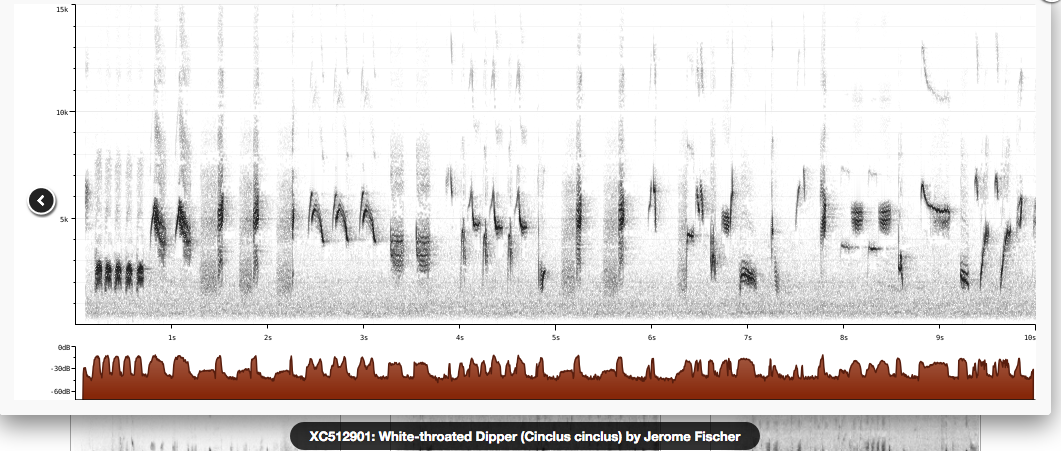
Raspel, komisch improvisiert melodisch fast low-high (1-7 KHz) .
Wonderfully weird sequence of chirps, cheeps, growls. Elements often repeated twice. In a quiz, I mistook it for a starling. This recording reminds me of other water songbirds like the Marsh warbler and various reed warblers.
Song: Song a mid tempo, staccato improvisation on contact call-like sounds. Not unlike a budgerigar. Both sexes sing, the female less melodic and more staccato than the male. [Link] |
♫
|
| singt 20 Sekunden oder länger | ||
| komisch | ||
 Teichrohrsänger ■■
 |
komisch singt 20 Sekunden oder länger fast medium (1-5 KHz) .
Weird, squeaky, urgent. Slower than Sumpfrohrsaenger.
Song: Gleichmässiges Tempo! Man kann den Takt schlagen dazu.(Metronomsänger) Oft 2-3x wiederholte kurze Motive. Viele schnarrende Töne.
[Link]By far easiest to identify by song: Characteristic, almost metric and even rhythm, very different from Sedge Warbler. Squeaky timbre with many, almost bizarre, harmonics. Phrases generally repeated 2-3 times. [Link] |
♫

|
| Mimikry, komisch | ||
 Sumpfrohrsänger ■■
 |
Mimikry, komisch singt 20 Sekunden oder länger fast medium (1-5 KHz) .
Rival Teichrohrsänger hat eher Wiederholungen, Sumpfrohrsänger auch Kohlmeise-tschurrende-Rufe und andere Geräusche und kurze Melodien von 2-5 Noten.
Song: Der Virtuose unter den Rohrsängern! Meisterhafter Imitator anderer Vogelstimmen. Viele wirbelnde und zwirlende Laute, wenig schnarrende. Variable Tempi.
[Link]Song extremely varied and full of mimicry of both European and African species. Up to 75 species imitated by the same bird. Phrases often repeated 2-4 times, and different phrases may overlap. Nevertheless, clearly defined phrases with marked pauses. Sometimes more flowing streams of notes, but less so than Icterine Warbler. Most similar to Icterine and Blyth's Reed Warbler. Softer timbre than Icterine, and not so loud. [Link] |
♫

|
| Raspel | ||
 Drosselrohrsänger ■■
 |
Raspel singt 20 Sekunden oder länger slow medium (1-5 KHz) .
General: Klingt für mich wie krächz pieps pieps.
Vogelarten der Schweiz sieht das anders:
'Laute und auffällig knarrende, rau tönende Strophe
''karre-kiet karre karre-keit.'' ' Song: In Vergleich zu Teichrohrsänger langsamer und lauter. [Link]
Song: Gesang ähnlich Teichrohrsänger, aber viel lauter, Tonhöhenunterschiede 2-3 Oktaven. Karre-Kit-Sänger.. Sehr taktmässig.
[Link]Song similar to Reed Warbler in timbre, but much deeper and slower. [Link] |
♫

|
| einfach rhythmisch | ||
 Mauersegler ■■
 |
einfach rhythmisch fast high (5-7 KHz) .
Song:  Sie singen im Flug (eigentlich LEBEN sie im Flug), und wenn du sie nicht siehst, schau weiter hoch, dann noch einmal - sie können mehrere 100m hoch fliegen oft in Gruppen von 3-10. Kappe abziehen wenn nötig! [Link]A shrilling trill "zreeeee" of about 1 -2 seconds length, gradually rising in pitch with accentuated firs half, then falling from the middle of phrase. Often continued with a dry lower pitched "trrrrrr" before calling again. [Link]
Call: Often continued with a dry lower pitched "trrrrrr" before calling again. Very vocal at breeding area, and often a flock will call together. Despite being quite similar to Pallid Swift, the call is probably the best field character to separate the two. Pallid puts the stress on the ending of the call, followed by a quick fall in pitch (dynamics like moaning with a quick release). Plain Swift calls similar to Common Swift, but differs in slightly fluctuating pitch during the call, and a loss of resonance towards the ending (thinner sounding). [Link] Sie singen im Flug (eigentlich LEBEN sie im Flug), und wenn du sie nicht siehst, schau weiter hoch, dann noch einmal - sie können mehrere 100m hoch fliegen oft in Gruppen von 3-10. Kappe abziehen wenn nötig! [Link]A shrilling trill "zreeeee" of about 1 -2 seconds length, gradually rising in pitch with accentuated firs half, then falling from the middle of phrase. Often continued with a dry lower pitched "trrrrrr" before calling again. [Link]
Call: Often continued with a dry lower pitched "trrrrrr" before calling again. Very vocal at breeding area, and often a flock will call together. Despite being quite similar to Pallid Swift, the call is probably the best field character to separate the two. Pallid puts the stress on the ending of the call, followed by a quick fall in pitch (dynamics like moaning with a quick release). Plain Swift calls similar to Common Swift, but differs in slightly fluctuating pitch during the call, and a loss of resonance towards the ending (thinner sounding). [Link] |
♫

|
| improvisiert melodisch | ||
| Triller | ||
 Orpheusspötter ■■
 | Triller improvisiert melodisch veryFast low-high (2-8 KHz) . Repeats bits 6-9 times, makes pauses, but also sings like mad with a distorted chirpy voice. Sometimes sings a descending trill that could be a giveaway. Can sing low (2k) or fairly high (8k) |
♫
|
| einnotig | ||
 Berglaubsänger ■■
 |
einnotig fast high (3-7 KHz) .
Single note repeated 6 or 8 times quickly in half a second
Song: Reihe(5-10) von gleichhohen Schlägen, ähnlich dem Schwirren der obigen Art [Waldlaubsänger], aber langsamer, einzelne Töne deutlich getrennt, etwas scheppernd. Kann mit Klappergrasmücke verwechselt werden) [Link] |
♫

|
| improvisiert melodisch | ||
| Triller, aufsteigend, komisch | ||
 Nachtigall ■■
 |
Triller, aufsteigend, komisch improvisiert melodisch slow medium (1-5 KHz) .
Can be a sequence of unrelated weird but musical sounds - trills, churrs, human-like whistles - very amusing.
Song: The song is the best characteristic to separate it from T. Nightingale. [Link] |
♫

|
| zweinotig | ||
 Heidelerche ■■
 |
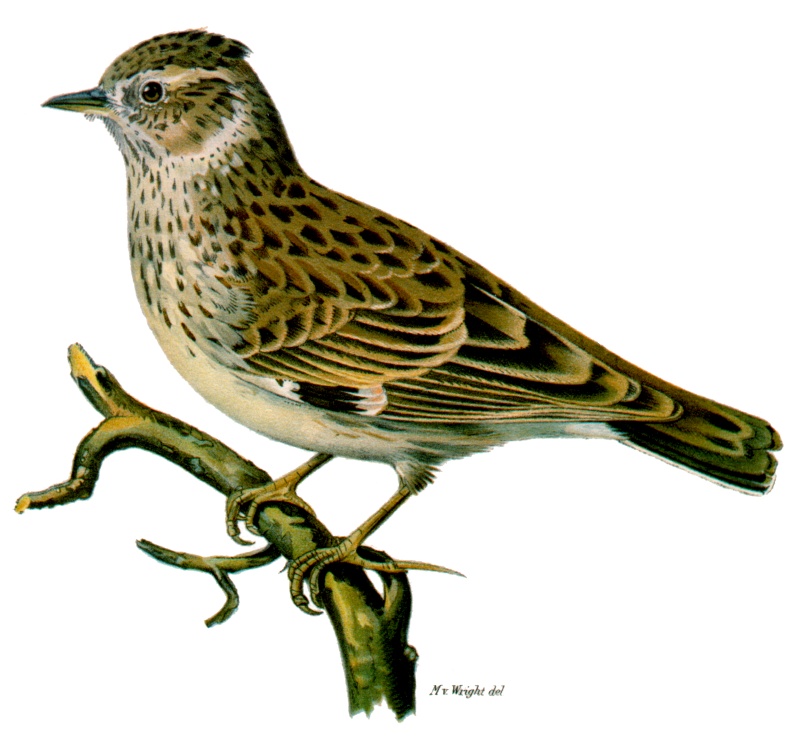
zweinotig fast medium (3-5 KHz) .
General: Slow for a lark? Fast to me. Song: Fallend dadui dadui. Or figaro figaro - picture Heidi in an opera. Wenig Variation. [Link]Der flötende Gesang der Heidelerche gehört zu den schönsten der Vogelwelt und ist tagsüber wie auch nachts zu hören. [Link]
Song: Song: Distinct and quite slow for a lark. Consists mainly of varied, disyllabic elements, or single syllables repeated in descending, accelerated phrases. Starting soft and hesitantly, then gaining in strength and speed. [Link] |
♫

|
| stereotypisch melodisch | ||
 Heckenbraunelle ■■
 |
stereotypisch melodisch fast high (4-8 KHz) .
General: High-pitched, repetitive but complex little tune, 3 seconds long with about 15 notes rising and falling, falling at the end, then 3 second pause. Song: Melodisch, slowly rising, roughly like black-cap warbler, which I guessed in the bird-song.ch quiz. [Link]Schnell wie ein Rotkehlchen aber nicht herunter plätschernd, hoch und runter zwischen 3 und 7 kHz. [Link]
Song: Singt schon im Vorfrühling. Klangfarbe ähnlich Gartenbaumläufer. Aufbau ähnlich Zaunkönig, aber ohne Triller. Viel leiser und dünner.
[Link]Song a fast and evenly paced, high pitched stream of clear notes. No consistent phrasing. Similar in timbre to Robin, but does not vary tempo or pitch nearly as much. Often compared to the sound of a squeaky wheelbarrow. [Link] |
♫
|
 Teichhuhn ■■
 |
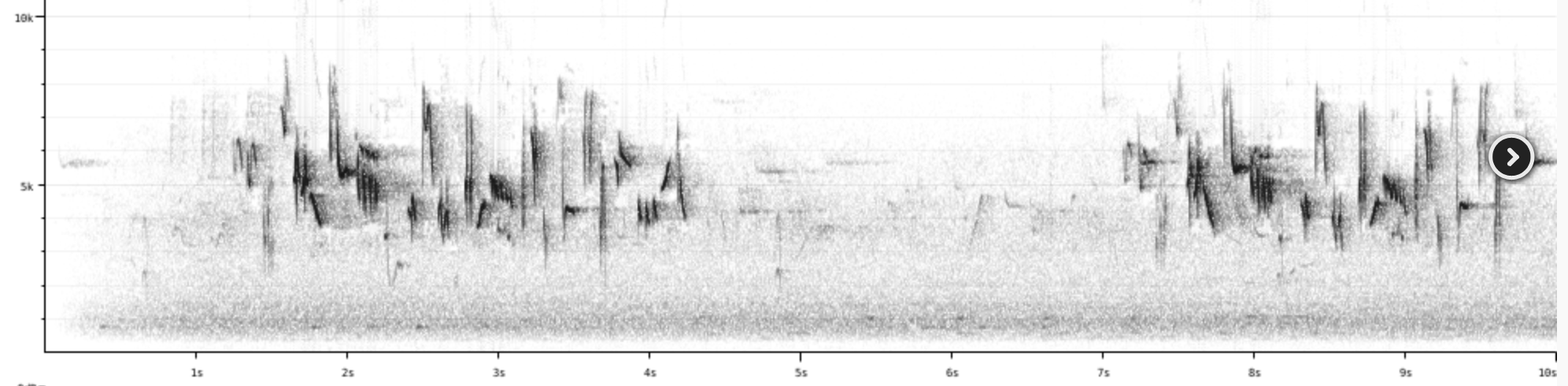
No details but a Xeno-Canto recording.
Song: Most typical is the territorial call (song); a sharp, loud and resonant "krrrr-ook" or "krrrk". [Link] |
♫

|
| stereotypisch melodisch | ||
| Mimikry | ||
 Bluthänfling ■■
 |
Mimikry stereotypisch melodisch fast low-high (2-7 KHz) .
General: Ähnlich wie ein Rohrsänger aber nur kurze Segmente mit klaren Pausen. Song: Nabu: Sein Gesang umfasst trillernde, kurze und musikalische pfeifende Laute, unter anderem „piUU“, „trrüh“ und „tu-ki-jüüh“. [Link] Song: Gesang ist fast Rohrsänger-artig, relativ hoch und zirpend. Manchmal mit kleinen Pausen. bird-song Aufnahme where kurz, llll mhllll [Link]
Song: Gesang für mich ähnlich wie Grünfink.Song a varied, sweet stream of contact calls, mimicry and trills with a staccato feel. [Link] |
♫

|
 Gimpel ■■
 |
stereotypisch melodisch slow low-high (2-8 KHz) .
3-note long M, pause, HL (somewhat falling)...Gim! Gim-peeel! Sounds a bit like a pirol.
Song: Song a quiet, modest mix of contact call and various chirping sounds, with peculiar harmonics. [Link] |
♫

|
| Triller, Mimikry | ||
 Zippammer ■■
 |
Triller, Mimikry stereotypisch melodisch fast low-high (2-9 KHz) .
AppearanceAndIdentification: orange-brauner bauch, weisse brust+kopf mit 3 schwarzen streifen am kopf (unter/am/über Augen), braun+dunkelbraun auf Flügeln; aber Weibchen eher braun
Song: Notes from 2022: Short song, relatively long pause, repeated with slight variation? Has a very short triller of just 3 notes. May have heard and seen one walking parallel to the Aa on the way to Pfaeffikersee today, though the visual ID is very uncertain; the Xeno-Canto song here sounds different than my 2022 description - musical like a chaffinch but rising, not falling. Song: Song variable, but usually distinct. [Link] |
♫
|
| einnotig | ||
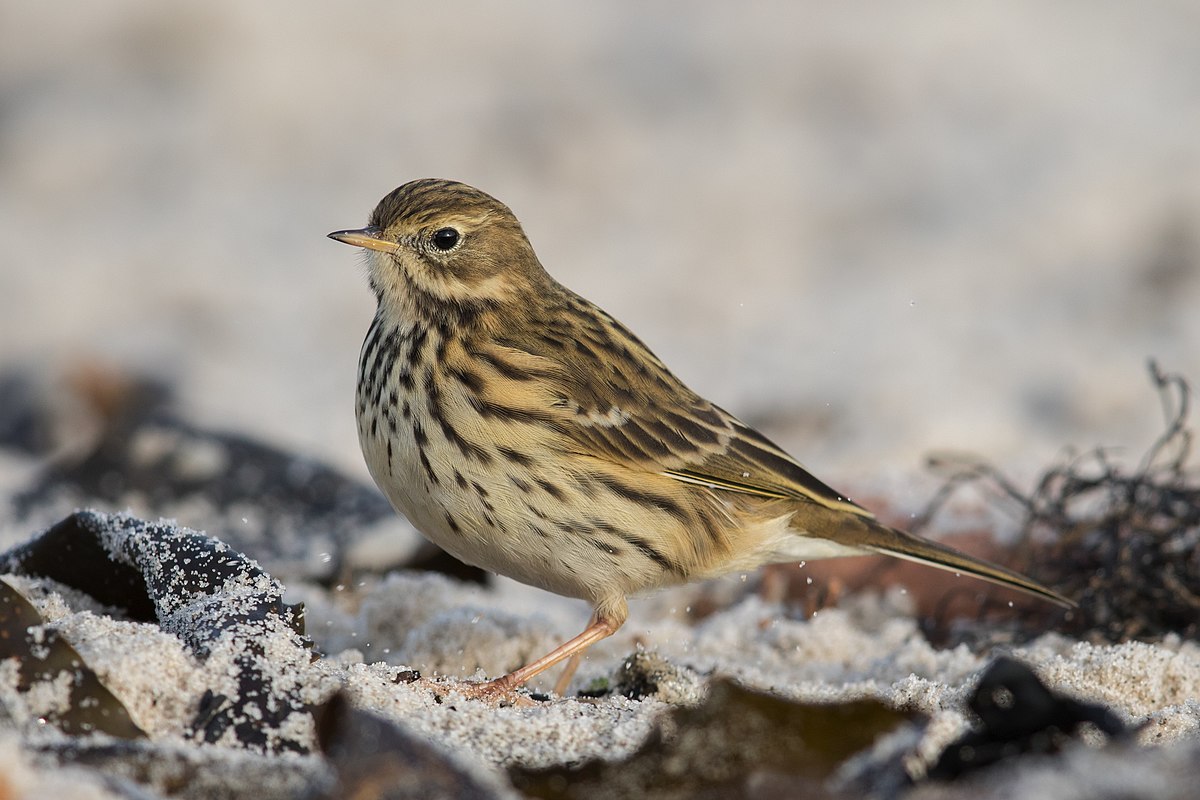 Wiesenpieper ■■
 |
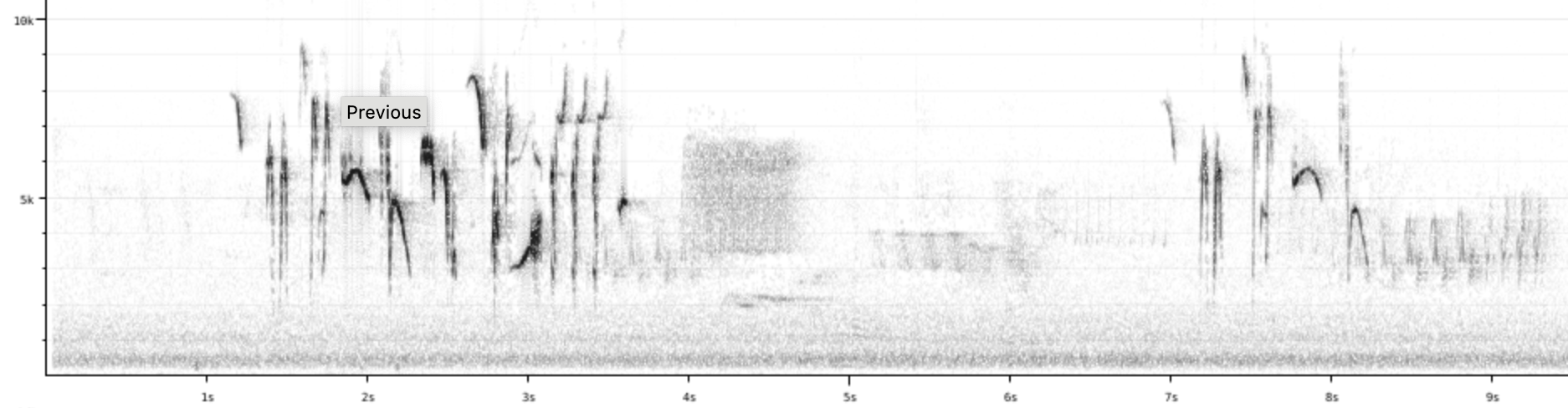
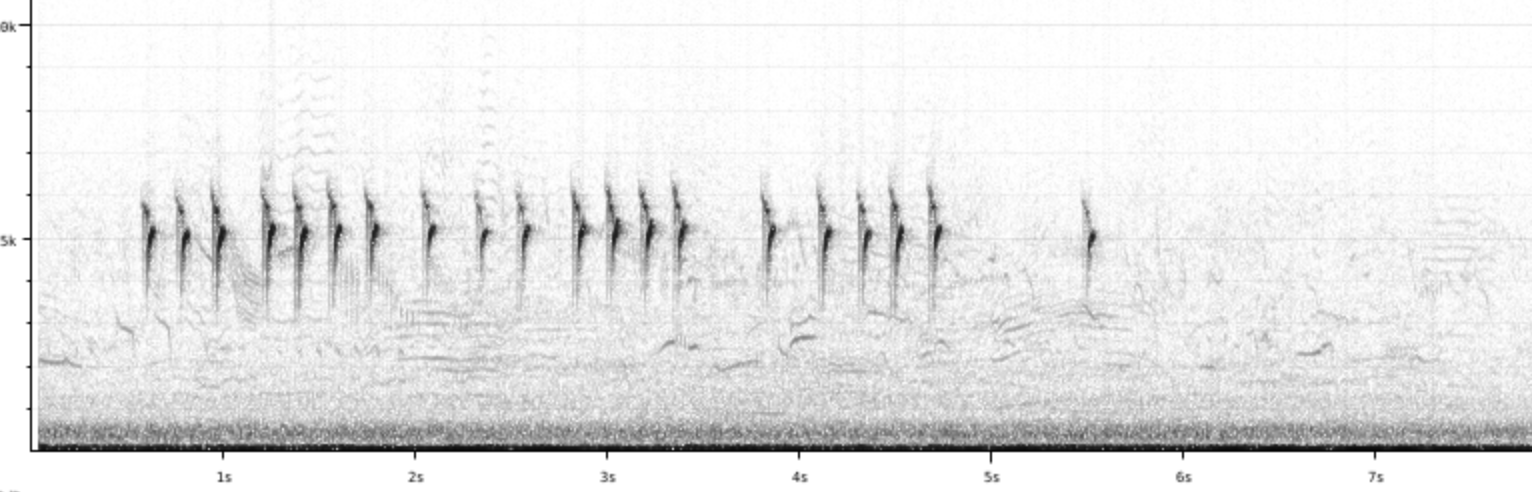
einnotig fast medium (1-5 KHz) .
Single note, possibly rising at the end. (Or: long 4 second phrases, gradually louder then softer; swoopy or whoopy.) Sings in flight. BirdID: Song very similar to Rock Pipit, but tone less full and more brittle. Lacks Rock Pipit's closing trill, and beginning is less "hammering". - but what does a rock pipit sound like?
Song: Ähnlich Baumpieper, aber ohne Zia-Rufe. Vollständiger Gesang nur in flatterndem Singflug. Lange Strophen. Mittelstück meist zart und hoch [Link]Song very similar to Rock Pipit, but tone less full and more brittle. Lacks Rock Pipit's closing trill, and beginning is less "hammering". [Link] |
♫
|
| einfach rhythmisch | ||
| Triller, aufsteigend | ||
, Jura, Scotland.JPG) Baumpieper ■■
Baumpieper ■■ |
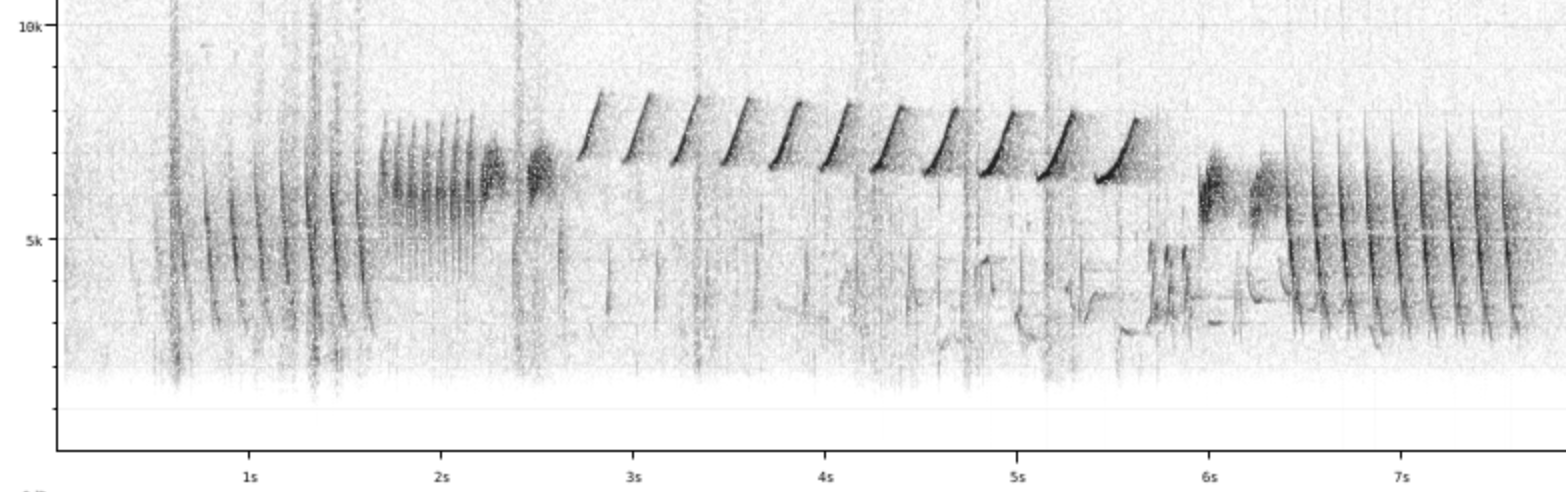
Triller, aufsteigend einfach rhythmisch slow medium (1-5 KHz) .
Reminds me of a greenfinch - series of trills, whoops and other sounds with a long pause
Song: Mehrere unterschiedliche Tonreihen aneinandergefügt. Zuletzt „zia zia zia ziah“. Zuerst auf Baum sitzend, dann im Singflug, Zia-Rufe während Gleitflug (Fallschirmvogel) [Link]Song characteristic. Starts with a series of Chaffinch-like "che-che-che" which gives way to long, descending, "ricocheting" whistling notes (especially at the end of song-flight). [Link] |
♫
|
| einnotig | ||
 Bergpieper ■■
 |
einnotig fast high (3-7 KHz) .
Er singt überwiegend fliegend ein ein- bis zweisilbiges „zip“ oder „tsi tsi“. [Link]
Song: Monoton, GAR NICHT BERGIG. Tsilp tsilp, gleich note, wiederholt sich über 10+ Sekunden, leicht schneller aber nicht zu viel. [Link]Meist drei nicht scharf abgesetzte lange Tonreihen. Singflug. Mittelteilstück rauer und geräuschhafter als bei obiger Art [Wiesenpieper]. [Link]Song slightly more melodious, often with Tree Pipit like glissandi at end of phrase. [Link] |
♫

|
| einfach rhythmisch | ||
| Mimikry | ||
 Dorngrasmücke ■■
 |
Mimikry einfach rhythmisch fast high (3-7 KHz) .
Song: Often ends with more indistinct mimicry, or subsong. May omit characteristic phrase and sing more cryptic for periods of time, and may be more difficult to identify. [Link]Relativ kurzer gesang, an Anfang fallend, dann entweder weiter oder steigend. 7-14 notes. [Link]
Song: Gesang kurz und rau (Kürzester Name).Oft im Singflug aber auch ab Warte. Wenn im Singflug dann Strophe etwas länger.
[Link]Often ends with more indistinct mimicry, or subsong. May omit characteristic phrase and sing more cryptic for periods of time, and may be more difficult to identify. [Link] |
♫

|
| Triller | ||
 Klappergrasmücke ■■
 |
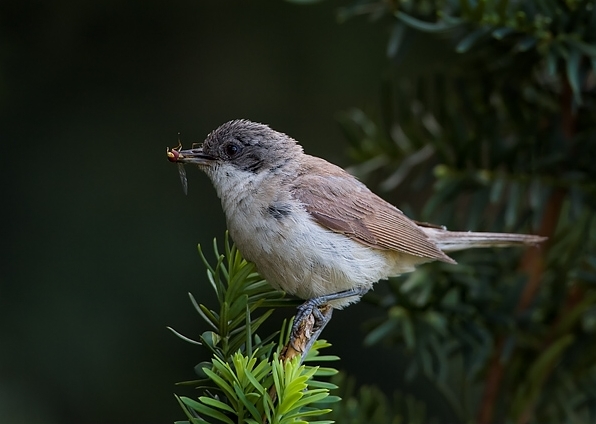
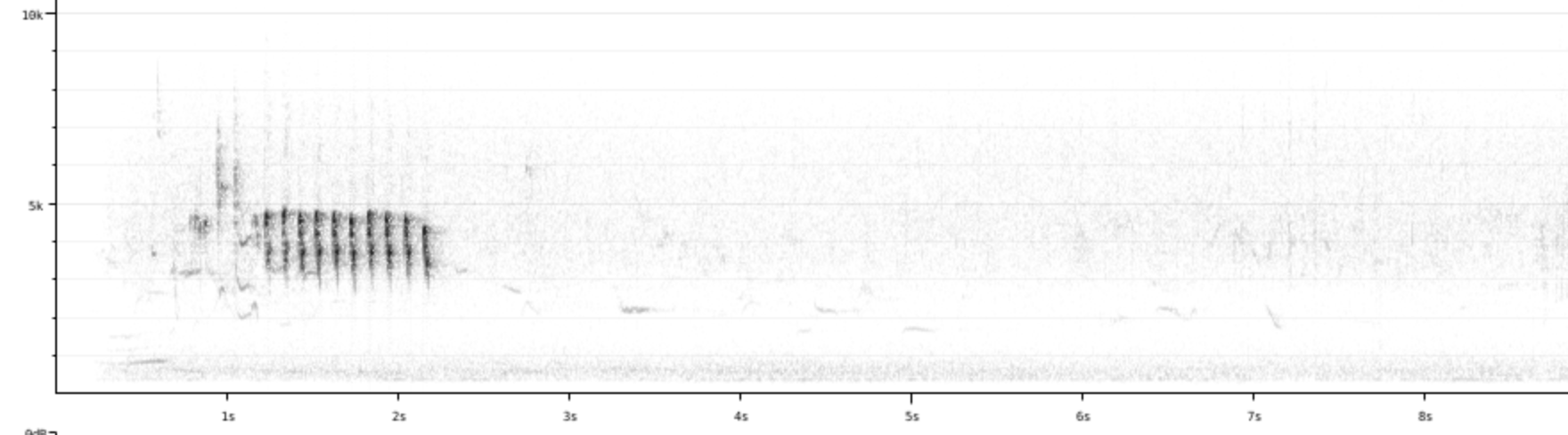
Triller einfach rhythmisch slow medium (3-5 KHz) .
Song typically consists of two parts. An indistinct chattering and warbling, subsong-like part similar to [common] Whitethroat, which is usually followed by a dry, fast and rattling trill. The trill carries much further than the chattering part. May be difficult to identify if trill is omitted. [Link]
Song: Klappernd. (Müllerchen) An Berglaubsänger erinnernd. Klappertöne (5-8) Aber oft mit leisem schwatzendem Vorgesang, der fehlen kann. Kann auch an Sumpfmeise erinnern, doch sind bei dieser die Klappertöne mehr von oben her angeschlagen.
[Link]Song typically consists of two parts. An indistinct chattering and warbling, subsong-like part similar to Whitethroat, which is usually followed by a dry, fast and rattling trill. The trill carries much further than the chattering part. May be difficult to identify if trill is omitted. [Link] |
♫
|
| singt 20 Sekunden oder länger | ||
| Mimikry | ||
 Feldlerche ■■
 |
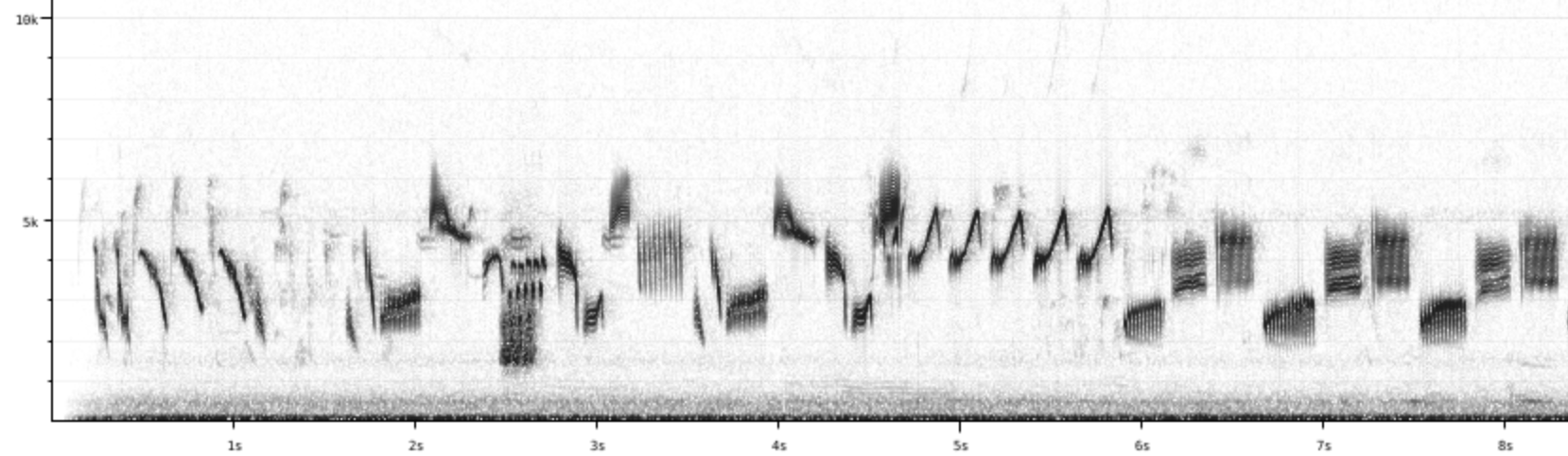
Mimikry singt 20 Sekunden oder länger slow medium (2-6 KHz) .
Fast chirpy improvization without a break, not very high, reminds me of a nightingale or a Eurasian reed warbler/Teichrohrsänger with the exact rhythm, but most likely sung in a cornfield. Or a Singdrossel that repeats its elements longer that that guy. Repeats elements 1-8 times. Sometimes buzzy/trilly. Can go on for minutes at a time. Ich habe es auch mit einem Amsel verwechselt, da er lang und melodisch, fast wie Amsel aber hört nicht auf.
Song: Song a pleasing energetic stream of chirping, merry trills, interspersed with mimicry. Trills quite resonant with fairly full tone. Song usually given in flight high in the air. Less characteristic, shorter, weaker and more varied song when given from ground. [Link] |
♫
|
 Neuntöter ■■
 |
Mimikry singt 20 Sekunden oder länger slow medium (1-5 KHz) .
Reminds me a bit of a Rohrsaenger/Feldlerche with its short, varied bits. BirdID says Song surprisingly varied with many expert imitations of small passerines, interwoven with bell-like ringing and dry chirping sounds. May be confusing and hard to identify if bird not seen. Song not very loud, but phrases can be very long. 'May be confusing' - tell me about it! What's not confusing about trying to tell apart 422 species of Swiss birds!
Song: Call a hard "check check" (like striking two rocks together), and a variable nasal "twee" Song surprisingly varied with many expert imitations of small passerines, interwoven with bell-like ringing and dry chirping sounds. May be confusing and hard to identify if bird not seen. Song not very loud, but phrases can be very long. [Link] |
♫

|
 Dohle ■■
 |
No details but a Xeno-Canto recording.
Call: Nabu: Ein hartes „kjack“ oder „schack“ sowie ein raues „tschräh“ hört man am häufigsten von der Dohle. Sie ist ein begabtes Stimmwunder und hat eine Vielzahl von Lauten und Imitationen auf Lager. [Link]meist angenehm klingende, kurze Rufe: "kja", oft mehrfach wiederholt, härteres "kjack!" oder gezogenes "kjaar". [Link] | ♫ |
| stereotypisch melodisch | ||
 Bachstelze Plaetschert wie ein Bach ■■
 |
stereotypisch melodisch slow low-high (2-7 KHz) .
General: Usually just calls. This song is just a few chirpy slurs, sometimes rising-rising-falling. Song: Zirpt wie ein Sperling aber weniger Noten. Lh lh lh [Link]
Song: Song either slow and primitive, consisting of sharp falling notes given by perched birds, or longer fast and energic bursts in excited song-flight. [Link] |
♫

|
 Schafstelze ■■
 |
stereotypisch melodisch slow high (3-9 KHz) .
Just a few notes, call seems to be common but song rare. Very short chirp of ~ 1 sec, long pause of 3 secs. At Wauwilermoos it seemed to be 'Twee tweetwee (higher note:) twee!'
Song: Song primitive and less striking. Beware differences in calls and songs between different subspecies. [Link] |
♫

|
| Triller | ||
 Gebirgsstelze ■■
 |
Triller stereotypisch melodisch fast high (3-9 KHz) .
BirdID says Song simple but variable. I hear trills up to 2 seconds long and chirps. Another description says a series of calls, not very melodic. I noted zwitx3, sometimes hhhhhll. [Link]
Song: Song simple but variable. Sometimes with more elaborate song-flight like White Wagtail. [Link] |
♫

|
| rasseln, flöten | ||
 Stieglitz Llmh ■■
 |
rasseln, flöten stereotypisch melodisch fast low-high (2-7 KHz) .
General: Hektischer Singsang, wirkt recht chaotisch in Futtergruppen. Aber auch als Käfigvogel gehalten, es muss solo schöner klingen. Gesang hat eine Struktur (und ist langsamer als der Girlitz): Zuerst eine kleine Melodie hoch und runter; dann vielleicht ein Grünfink-Triller, dann 4 wiederholte Noten oder ein neues Melodiechen. (Oder kommen diese Elemente eher zufällig?) Song: Melodie geht meistens 2-3 Sekunden hoch und runter, meistens mit einer wiederholten 1-Noter mit ~6x die gleiche Note. [Link]
Song: My first (multilingual) notes: Stieglitz like Grünfink, fast, high, occasional trills. Occasionally ends a bit with falling note like buchfinkMir wurde erst in St. Moritz in Juli 2021 bewusst wie ähnlich der Stieglitz wie ein Grünfink klingt - beide können lange Gesang mit Trillern und rauhen sinkenden Toenen singen, und ich habe Stieglitz v.a. durch dieses Stöhnen für Grünfink gehalten. Contact-call distinct, and also constitutes a major part of the song. A sharp and explosive "witt", or "tzee-witt". Sometimes given as a single syllable, di- or trisyllabic, or as continuous series. The song is comprised of rapid series of the contact call, interrupted by drawn-out melodic notes and trills. [Link] |
♫

|
| singt 5-19 Sekunden | ||
 Girlitz ■■
 |
singt 5-19 Sekunden veryFast high (4-10 KHz) .
Weird hectic song, and you'll probably hear them but not see them, which is a shame, because they're a colorful yellow bird. The song seems to defy description - described variously as the jingling of a bunch of keys, like crushing glass or the pouring of broken glass (the German Wikipedia refers to a nickname 'Glasscutter'), the sound of a cork twising in a bottle (Thomas Seilnacht on digitalefolien.ch), and one source I can no longer find talked about a ruined cassette tape. A Portuguese web site aptly calls it 'a high-pitched and fast rambled sum of indistinctive elements', and U. Cornell's ebird.org calls it frantically fast, oiseaux-birds.com 'a prolonged, wheezy, chirping', beautyofbirds.com 'a buzzing trill'. Der Gesang des Girlitz ... ist nicht so melodisch wie der des verwandten Kanarienvogels [auch Kanariengirlitz genannt]. Er wurd schon mit 'einem schnell zürückgespulten Kassentenrekorder' verglichen oder als 'hastig quitschend' bezeichnet. [Link]Das Gesangsrepertoire umfasst über 50 komplexe Silben, die in einem sehr schnellen Tempo und einer sehr stereotypen Reihenfolge eigene Lieder bilden. Starke Variationen finden sich im Übergang von einer Tour (zusammenhängenden Abfolge von Silben, also (Teil-)Strophe) in eine andere (Modulation). Das Gesangsrepertoire ist unter den Stieglitzartigen (Carduelinae) einzigartig.[1] Zudem umfasst es eine variable Menge an Silben, die auch im Gesang anderer Vögel verwendet werden. Es konnte bewiesen werden, dass die Komposition des Repertoires geographisch variiert. [Wikipedia setzt sich ernsthaft mit dem Gesang auseinander]
Song: Song a hectic, jingling, continuous trill, like the pouring of broken glass. The highest notes are constantly modulated to form vague motifs. Timbre comparable to Corn Bunting. [Link] Der Gesang des Girlitz ... ist nicht so melodisch wie der des verwandten Kanarienvogels [auch Kanariengirlitz genannt]. Er wurd schon mit 'einem schnell zürückgespulten Kassentenrekorder' verglichen oder als 'hastig quitschend' bezeichnet. [Link]Das Gesangsrepertoire umfasst über 50 komplexe Silben, die in einem sehr schnellen Tempo und einer sehr stereotypen Reihenfolge eigene Lieder bilden. Starke Variationen finden sich im Übergang von einer Tour (zusammenhängenden Abfolge von Silben, also (Teil-)Strophe) in eine andere (Modulation). Das Gesangsrepertoire ist unter den Stieglitzartigen (Carduelinae) einzigartig.[1] Zudem umfasst es eine variable Menge an Silben, die auch im Gesang anderer Vögel verwendet werden. Es konnte bewiesen werden, dass die Komposition des Repertoires geographisch variiert. [Wikipedia setzt sich ernsthaft mit dem Gesang auseinander]
Song: Song a hectic, jingling, continuous trill, like the pouring of broken glass. The highest notes are constantly modulated to form vague motifs. Timbre comparable to Corn Bunting. [Link] |
♫

|
| stereotypisch melodisch | ||
| Triller | ||
 Rohrammer mllllm ■■
 |
Triller stereotypisch melodisch slow high (3-7 KHz) .
General: At Fanel I heard sequences of whistles and trills (buzzes?), just a few notes, but wandering up and down: m h lll, or l m hhh m. Listen to recording of 2022-06-25 13.37.28 Song: Oft 4 Noten: mlhl [Link]BirdID: A short sequence of 3-5 brittle and buzzing sounds, repeated consistently with marked pauses. Last sound in phrase often has a conclusive feel, but not always. [Link]
Song: Song variable between individuals and breeding status: A short sequence of 3-5 brittle and buzzing sounds, repeated consistently with marked pauses. Last sound in phrase often has a conclusive feel, but not always. Paired males sing slower than unpaired. Unpaired male song also more contracted, making the pauses between each phrase stand out. [Link] |
♫

|
Übung
♫
Lösung
Girlitz XC637940 - European Serin - Serinus serinus - song, recorded in France.
♫
Lösung
Gimpel XC637392 - Eurasian Bullfinch - Pyrrhula pyrrhula - song, recorded in France.
♫
Lösung
Bachstelze XC694995 - White Wagtail - Motacilla alba - song recorded in Spain.
♫
Lösung
Bluthänfling XC705526 - Common Linnet - Linaria cannabina cannabina - song, recorded in England.
♫
Lösung
Teichrohrsänger XC653035 - Eurasian Reed Warbler - Acrocephalus scirpaceus - song.
♫
Lösung
Drosselrohrsänger XC661392 - Great Reed Warbler - Acrocephalus arundinaceus - song.
♫
Lösung
Gartenbaumläufer XC625133 - Short-toed Treecreeper - Certhia brachydactyla - song.
♫
Lösung
Schafstelze XC721189 - Western Yellow Wagtail - Motacilla flava cinereocapilla - song.
♫
Lösung
Teichhuhn XC946631 - Common Moorhen call, like a quack - Gallinula chloropus.
♫
Lösung
Baumpieper XC570506 - Tree Pipit - Anthus trivialis - song.
♫
Lösung
Feldlerche XC685846 - Eurasian Skylark - Alauda arvensis - song, recorded in France.
♫
Lösung
Sumpfrohrsänger XC728884 - Marsh Warbler - Acrocephalus palustris - song.
♫
Lösung
Wasseramsel Song recorded in Bern from Xeno-Canto Wonderfully weird sequence of chirps, cheeps, growls with repeated elements.
♫
Lösung
Rohrammer XC723277 - Common Reed Bunting - Emberiza schöniclus - song.
♫
Lösung
Dohle Jackdaw, etc in Illnau.
♫
Lösung
Berglaubsänger XC720128 - Western Bonelli's Warbler - Phylloscopus bonelli - song, recorded in France.
♫
Lösung
Waldbaumläufer XC656422 - Eurasian Treecreeper - Certhia familiaris - song, recorded in Sweden.
♫
Lösung
Klappergrasmücke XC652419 - Lesser Whitethroat - Sylvia curruca - song.
♫
Lösung
Heidelerche XC769994 - Woodlark - Lullula arborea - 2-note song recorded in the Netherlands.
♫
Lösung
Wiesenpieper XC722919 - Meadow Pipit - Anthus pratensis - song.
♫
Lösung
Neuntöter XC570644 - Marsh Warbler - Acrocephalus palustris - song.
♫
Lösung
Nachtigall XC505897 - Common Nightingale - Luscinia megarhynchos - song, recorded in Spain.
♫
Lösung
Bergpieper XC716570 - Water Pipit - Anthus spinoletta - song, recorded in Spain.
♫
Lösung
Stieglitz XC638230 - European Goldfinch - Cardülis cardülis.
♫
Lösung
Zippammer XC653755 - Rock Bunting - Emberiza cia - song, recorded in Spain.
♫
Lösung
Mauersegler XC813064 - Common Swift song - Apus apus.
♫
Lösung
Gebirgsstelze XC767550 - Grey Wagtail - Motacilla cinerea - song with trills and a cheek-cheek.
♫
Lösung
Heckenbraunelle XC778759 - Dunnock - Prunella modularis - song recorded in Spain.
♫
Lösung
Dorngrasmücke XC344648 - Common Whitethroat - Sylvia communis communis - song, recorded in Germany.