Vögel für FOK Theorie Wald I

Herzige Schwanzmeise. 2025-01-10 14:59:26 Fehraltorf
Zuerst beobachtet in 🇨🇭 an 2020-04-13.
Beschreibung
Allgemein: Vogelwarte.ch beschreibt genau was ich am Hungerseeli gesehen habe: 'Die Schwanzmeise zählt zu den kleinsten Vogelarten, scheint allerdings durch den langen Schwanz und das aufgeplusterte Gefieder grösser.' Wikipedia schreibt,Allgemein: Deutschland: Brut-, Jahres-, Zugvogel, Wintergast
Aussehen und Identifizierung:
 Bei uns in der Schweiz gibt's die Unterart europäus,
mit breiten dunklen Streifen über den Augen.
'Die Schwanzmeise ist nicht enger mit den echten Meisen verwandt.' [Link]
Bei uns in der Schweiz gibt's die Unterart europäus,
mit breiten dunklen Streifen über den Augen.
'Die Schwanzmeise ist nicht enger mit den echten Meisen verwandt.' [Link]
Saisonales Verhalten
Jahresvogel Brut: 03-23 - 06-29 Weitere Infos at Vogelwarte.ch
Weitere Infos
Physikalische Details
Körperlich: Länge=14 cm, Flügelspanne=16-19 cm, Gewicht=7-10 gHabitate: Wald
Vokalisierung
Gesang: General: Meistens hört man das Pfief...chk..chk..Pfief von den Rufen, siehe dort.Song: Nabu: Der Gesang ist ein feines Trillern und selten zu hören (someone at XenoCanto compares it to a blue tit trill). [Link] Gesang: Song: high tsee-tsee; funny downhill trill
Gesang:
 Song: Rapid, continuous, randomly composed sequence of bubbling,chirping sounds. [Link]
Gesang Eigenschaften:
Eselsbrücke Diddly doot-doot-doot-doot Melody: stereotypisch melodisch (hhmll), langsam, Frequency: high (3-9 KHz)
Song: Rapid, continuous, randomly composed sequence of bubbling,chirping sounds. [Link]
Gesang Eigenschaften:
Eselsbrücke Diddly doot-doot-doot-doot Melody: stereotypisch melodisch (hhmll), langsam, Frequency: high (3-9 KHz)
♫ Quelle: XENOCANTO XC572437 - Long-tailed Tit - Aegithalos caudatus - song.mp3 (Gesang)

Rufe:
Call: quite short, chirping, twittering "tzzirrret tzirrrret". Often starting at high pitch and rapidly falling, or just flat. Also a thin, slightly falling "zi zi ziii". [Link]
1:
Die fast ständig geäusserten, hohen Rufe verraten die kleinen, rastlosen Turner im Gezweig meist schon, bevor sie zu sehen sind. [Link]
Flight call from XenoCanto
♫ Quelle: XENOCANTO XC517804 Long-tailed tit flight call.mp3 (Flugruf)

2: A swoop with a trill at the end
♫ Quelle: XENOCANTO XC871720 - Long-tailed Tit call with swoop and trill - Aegithalos caudatus.mp3 (Ruf)

Ruf Eigenschaften: Kontaktruf Ruf Melodie: einfach rhythmisch, langsam, Frequenz: 7-9 KHz,
Vollprofil

Mönchsgrasmücke. 2024-05-16 12:18:58 Kaltbrunner-Riet
Zuerst beobachtet in 🇨🇭 an 2019-08-30.
Beschreibung
Allgemein: On a tree branch, but not usually on the treetop.Allgemein: Deutschland: Brut-, Zugvogel
Etymologie:
Häufig vorkommender, kleiner, grau-weisser Vogel mit schwarzem Mönchs-Tonsur.
Der Name hat weder mit Gras, noch mit Mücken zu tun! Es stammt nach Wikipedia 'aus dem Althochdeutschen von Gra-smucka = Grauschlüpfer'. [Link]
Saisonales Verhalten
Jahresvogel Brut: 04-20 - 08-09 Migration rein: 02-20 - 05-10 Migration raus: 08-18 - 10-27Weitere Infos at Vogelwarte.ch
Weitere Infos
Physikalische Details
Körperlich: Länge=13 cm, Flügelspanne=20-23 cm, Gewicht=16-25 gHabitate: Wald, Landwirtschaft
Vokalisierung
Gesang: They sometimes sing like a blackbird on speed - also non-stereotypic, seemingly improvised, in short bursts. Our local guy ends most of his songs with the same seven notes, which I find a good way to confirm the identification. In Ticino we often heard the 'Leiern' sound - the warblers would sing just the first 3 notes of a longer song, then stop. The order varied; high-medium-low I call 'Figaro' as in the opera, low-high-medium 'whiskey bar', as it sounded to me like the Kurt Weill lyrics, 'O-oh-show me-the-way to-the-next whis-ke-bar' - but the warbler usually stopped after 'way' or 'next' The British authors of The Sound Approach claim to hear 'a warblel and a whistle'. Gesang: Mit schwätzendem Vorgesang, (kann auch kurz sein oder ganz fehlen) der dann in klare, kräftige, zum Ende hin in wehmütige Flötentöne übergeht (Überschlag)
[Link]
Song pleasing, varied and loud. Sometimes very similar to Garden Warbler. A typical phrase starts with soft, staccato chattering and mimicry, which after a few seconds changes to a much louder, pure and resonant stream of notes for about 3-5 seconds. No fixed motif, but may end phrases with recurring notes. Often deviates from the characteristic type of song, and identification from song alone may be impossible. May sing first part of song for extended periods without ever reaching the characteristic ending. [Link]
Gesang Eigenschaften:
Melody: improvisiert melodisch (hml), schnell, Frequency: 2-5 KHz Special sounds: Mimikry Singing season: 03-01 - 07-31 Dawn chorus start: 45 minutes before dawn.
Mit schwätzendem Vorgesang, (kann auch kurz sein oder ganz fehlen) der dann in klare, kräftige, zum Ende hin in wehmütige Flötentöne übergeht (Überschlag)
[Link]
Song pleasing, varied and loud. Sometimes very similar to Garden Warbler. A typical phrase starts with soft, staccato chattering and mimicry, which after a few seconds changes to a much louder, pure and resonant stream of notes for about 3-5 seconds. No fixed motif, but may end phrases with recurring notes. Often deviates from the characteristic type of song, and identification from song alone may be impossible. May sing first part of song for extended periods without ever reaching the characteristic ending. [Link]
Gesang Eigenschaften:
Melody: improvisiert melodisch (hml), schnell, Frequency: 2-5 KHz Special sounds: Mimikry Singing season: 03-01 - 07-31 Dawn chorus start: 45 minutes before dawn.
♫ 2021-03-31 19:12:00 Quelle: BirdNet 20210331_191200 birdnet 1356 - Eurasian Blackcap hml - 2021-03-31 19:12:00 - Eurasian Blackcap - Lugano.mp3 Lugano (Gesang)
♫ 2023-06-20 07:52:22
 Quelle: Zoom H6/H2n Bolle di Magadino (Gesang)
♫ 2024-05-15 05:27:28
Quelle: Zoom H6/H2n Luppmen (Gesang)Rufe:
„täck“ oft wiederholt
[Link]
Alarm call a hard "check", similar to Lesser White-throat. Sometimes with an additional hoarse and nasal "cherrrr". [Link]
1:
General: Sputtery/stoney, but may have other calls too.Call:
 The Blackcap may generate a perplexing variety of territorial calls, though the typical contact call is a hard, tongue-clicking "teck teck" which has a scolding quality to it. It's not dissimilar to the 'pebble-clacking' call of the Stonechat. [Suffex Wildlife Trust]
XC546030 black cap warbler so-called tac and djii call.
♫ Quelle: XENOCANTO XC546030 black cap warbler so-called tac and djii call.mp3 (Ruf)

2: No details but a Xeno-Canto recording.
XC548858-20200411 Eurasian Blackcap, alarm call part of advertising song, male, Flughafen Belpmoos, Bern, Switzerland.
♫ Quelle: XENOCANTO XC548858-20200411 Eurasian Blackcap, alarm call part of advertising song, male, Flughafen Belpmoos, Bern, Switzerland.mp3 Schweiz (Alarmruf)

Ruf Eigenschaften: Ruf Melodie: einnotig, langsam, Frequenz: high (3-9 KHz), Spezielle Klänge: stottern/kieseln.
Vollprofil

Das muss ein Gartengrasmücke sein im Feld bei W-Wiher, noch nie so in Getreide gesehen, aber es klingt plausibel. 2024-06-27 18:57:05 Fehraltorf
Zuerst beobachtet in 🇨🇭 an 2020-04-27.
Beschreibung
Allgemein: Unauffällig, schüchtern, singen aber wie verrückt. Ich habe sie früher viel gehört beim Hungerseeli, sehe sie praktisch nur als Schatten in den Ästen oder schnell zum nächsten Baum fliegend.Allgemein: Hidden in the branches. Does change trees though. 2024 saw one in a grain field by the Wildert Weiher
Allgemein: Deutschland: Brut-, Zugvogel
Aussehen und Identifizierung: Nabu: Das Hauptbestimmungsmerkmal dieser sehr unauffällig gefärbten Grasmücke ist, dass sie kein besonderes Merkmal besitzt.
Im gegensatz zu ihrem Namen kommt die Gartengrasmücke eher seltener in Gärten vor, häufiger ist sie in Hecken und grossen Büschen in waldrandlage anzutreffen, wo sie recht versteckt lebt. [Aus der NABU Android-App]
Saisonales Verhalten
Präsenz: 04-15 - 10-05 Brut: 04-30 - 08-10 Migration rein: 04-15 - 05-30 Migration raus: 08-01 - 10-05Weitere Infos at Vogelwarte.ch
Weitere Infos
Physikalische Details
Körperlich: Länge=14 cm, Flügelspanne=20-24 cm, Gewicht=16-22 gHabitate: Wald
Vokalisierung
Gesang: Song: Hard to distinguish from Mönchsgrasmücke/black cap, but they sing much longer and don't end with a typical short melody like the black caps. [Link]'minutenlang anhaltenden, plaudernden und abwechslungsreichen Gesang' [Link]
Gesang: Sprudelnd, orgelnd, die längsten Strophen aller hiesigen Grasmücken. Mit vielen reinen, volltönenden Tönen. Ohne Überschlag der Mönchsgrasmücke.
[Link]
Song: a full bodied, flowing, melodious stream of notes, distinguished by its almost constant, warbled quality and lack of clear whistling notes (see Blackcap). Tempo is fairly even. Beware confusion possibility with occasional subsong of Blackcap that never reaches the whistling part! Call a nasal "che". [Link]
Gesang Eigenschaften:
Melody: improvisiert melodisch (hm), schnell, Frequency: medium (1-5 KHz)
Hard to distinguish from Mönchsgrasmücke/black cap, but they sing much longer and don't end with a typical short melody like the black caps. [Link]'minutenlang anhaltenden, plaudernden und abwechslungsreichen Gesang' [Link]
Gesang: Sprudelnd, orgelnd, die längsten Strophen aller hiesigen Grasmücken. Mit vielen reinen, volltönenden Tönen. Ohne Überschlag der Mönchsgrasmücke.
[Link]
Song: a full bodied, flowing, melodious stream of notes, distinguished by its almost constant, warbled quality and lack of clear whistling notes (see Blackcap). Tempo is fairly even. Beware confusion possibility with occasional subsong of Blackcap that never reaches the whistling part! Call a nasal "che". [Link]
Gesang Eigenschaften:
Melody: improvisiert melodisch (hm), schnell, Frequency: medium (1-5 KHz)
♫ Quelle: XENOCANTO XC728379 - Garden Warbler - Sylvia borin - song.mp3 (Gesang)

Rufe:
Alarm call a hard "check", and a hoarse "tcherr". [Link]
No details but a Xeno-Canto recording.
- but really
OWN
Garden warbler calls from bushes at Wildert.
♫ 2025-07-23 17:28:00 Wildert (Ruf)
Ruf Eigenschaften: Gesang Frequenz: ,
Vollprofil
Profil Wikipedia Vogelwarte BirdLife ZH ornitho.ch bird-song.ch Xeno-Canto BirdID NABU YouTube

Wintergoldhähnchen im Hönggerwald. 2024-04-14 08:24:44
Zuerst beobachtet in 🇨🇭 an 2020-07-13.
Beschreibung
Allgemein: Ein angeblicher häufig vorkommender Vogel bei Fehraltorf. Ich habe sie lang nicht mal gehört, (den ähnlichen Sommergoldhähnchen hörte ich öfter im Sommer) aber beim Pragelpass in einem Baum direkt überm Kopf gesehen wie sie auf ihrer typischen Art (das weiss ich jetzt) vom Ast zu Ast hüpfen auf der Suche nach Insekten. . In Dezember 2020 war ich vollbegeistert als eine Gruppe von 5 durch die Büsche neben unserem Haus durchgezogen sind, und in jedem Busch und Baum nach Insekten gesucht haben. Jetzt sind es 4 Jahre seit ich sie wirklich gesehen habe!Allgemein: Es wird gesagt, dass es der klenste Vogel der Schweiz ist, aber ist praktisch gleich gross wie das Sommergoldhähnchen
Allgemein: Deutschland: Brut-, Jahres-, Zugvogel, Wintergast
Saisonales Verhalten
Jahresvogel Brut: 04-01 - 08-18 Migration rein: 03-01 - 05-01 Migration raus: 08-18 - 11-06Weitere Infos at Vogelwarte.ch
Weitere Infos
Physikalische Details
Körperlich: Länge=9 cm, Flügelspanne=13-15 cm, Gewicht=4-7 gHabitate: Wald
Vokalisierung
Gesang:Vogelwarte.ch sagt, sehr hoher Gesang leicht auf- und absteigend. Hier fängt es mit flach an. [Link]
Gesang: Kurze Reihe von sehr hohen, leisen Tönen in auf-absteigender Tonhöhe, an das „W“-im Namen erinnernd. [Link]
Song: a very high-pitched, undulating series of arpeggiated notes moving down and up again, repeated 4-5 times ending with a marked "conclusion" (like "trying to start a tiny motor and failing"). Timbre of song similar to contact call. [Link]
Gesang Eigenschaften:
Eselsbrücke W=Winter=v.a. runter, dann wieder hoch, plus melodischer Schluss Melody: stereotypisch melodisch, langsam, Frequency: 6-8 KHz
Rufe:
'sisisi' [Link]
Contact call a very high pitched "zit zit zit", only similar to Firecrest and treecreepers. Treecreepers usually calls with longer "zzzziiiiit" repeated at regular intervals, while Goldcrest calls in phrases with two to four calls in series in an uneven rhythm. Firecrest contact calls lower pitched than Goldcrest, and in a softer tone (but quite similar). [Link]
No details but a Xeno-Canto recording.
- but really
OWN
Wintergoldhähnchen whoop Ruf im Biotop.
♫ 2024-09-12 16:40:00 Greater Fehraltorf (Ruf)
Ruf Eigenschaften: Gesang Frequenz: ,
Vollprofil
 weiblich.jpg)
Wikipedia Sommergoldhähnchen (Regulus ignicapilla) weiblich. Quelle: WIKIPEDIA
Wikipedia Sommergoldhaehnchen_(Regulus_ignicapilla) weiblich.jpg
Zuerst beobachtet in 🇨🇭 an 2020-05-09.
Beschreibung
Allgemein: Zusammen mit dem Wintergoldhähnchen der kleinste Vogel der Schweiz.Allgemein: Obwohl es Zugvögel sind, kann man ein paar in der Schweiz bebachten - obwohl von den Namen her man würde das Wintergoldhähnchen aber nicht das Sommergoldhähnchen erwarten.
Allgemein: I heard one in the woods by Neschwil. Unfortunately, they prefer perches in the tops of trees, which were 30m or more tall - little chance of seeing one, even if we had lingered.
Allgemein: Deutschland: Brut-, Zugvogel
Vokalisierung:
A slow crescendo of short "tze" sounds in a phrase rising slightly in pitch, without the repeated arpeggiated movements of goldcrest. [Link]
Saisonales Verhalten
Jahresvogel Brut: 04-20 - 07-20 Migration rein: 03-01 - 05-01 Migration raus: 08-09 - 11-06Weitere Infos at Vogelwarte.ch
Weitere Infos
Physikalische Details
Körperlich: Länge=9 cm, Flügelspanne=13-16 cm, Gewicht=4-6 gHabitate: Wald
Vokalisierung
Gesang: Very high rhythmic repetition of about 3 seconds Gesang:Wie [beim Wintergoldhähnchen] aber auf gleicher Tonhöhe bleibend. [Link]
Song: Similar in timbre to Goldcrest, but much more monotonous. [Link]
Gesang Eigenschaften:
Eselsbrücke Noten vom 'Sommer' steigen wie die Temperaturen Melody: einfach rhythmisch, schnell, Frequency: 6-8 KHz
Rufe:
„sisisi“ [Link]
Call: a thin "tsi tsi tsi" similar to Goldcrest, but not so sharp. [Link]
No details but a Xeno-Canto recording.
XC933773 - Common Firecrest call - Regulus ignicapilla.
♫ Quelle: XENOCANTO XC933773 - Common Firecrest call - Regulus ignicapilla.mp3 (Ruf)

Ruf Eigenschaften: Gesang Frequenz: ,
Vollprofil

Zilpzalp vorm Fanel-Plattform. 2024-05-22 17:46:23 Fanel/Chablais de Cudrefin und La Sauge
Zuerst beobachtet in 🇨🇭 an 2019-06-04.
Beschreibung
Allgemein: In the survey of 2008, there was only 1 Chiffchaff in Fehraltorf for every 7 blackbirds, and it was ranked 19th in the village. Yet in summer 2020 I heard them in nearly every recording I make, whether at home by the brook (Luppmen) or in the woods. I presume their population has exploded in the last 10 years.Allgemein: I see them in middle branches, but not in particularly exposed places.
Allgemein: Deutschland: Brut-, Zugvogel
Etymologie:
Greenish-brown above and off-white below, it is named onomatopoeically for its simple chiff-chaff song. [Link]
[The common chiffchaff's English name is onomatopoeic, referring to the repetitive chiff-chaff song of the European subspecies. [Link]
Saisonales Verhalten
Jahresvogel Brut: 04-11 - 08-09 Migration rein: 02-20 - 05-01 Migration raus: 08-29 - 11-06Weitere Infos at Vogelwarte.ch
Weitere Infos
Physikalische Details
Körperlich: Länge=10-11 cm, Flügelspanne=15-21 cm, Gewicht=6-10 gHabitate: Wald
Vokalisierung
Gesang: Seems to consist of 3 notes repeated randomly, occasionally just 2 notes. Though NABU.de says they stop singing at the end of July, I do hear their 3-note song occasionally in October, but just one or two repetitions. Gesang:Von Mitte August bis Ende September bringt der Zilpzalp regelmäßig Herbstgesang dar. [Link]
Lange Reihen (6-20) von „zilp-zalp“-Rufen, meist abwechselnd in Tonhöhe. (Als bemühe sich der Sänger vergeblich den ersten Ton wieder zu treffen , ohne jedoch weit zu verfehlen.) „Zins zahl, Zins zahl, zahl Zins, Zins Zins zahl“ („Zins“ etwas höher als „zahl“) [Link]
Song a very distinct: "chiff-chaff-chiff-chiff-chaff-chiff", in a regular clock-like rhythm. Each syllable at seemingly random pitch, but no large intervals tonally. Sometimes "get stuck" at one note. [Link]
Gesang Eigenschaften:
Melody: einfach rhythmisch, langsam, Frequency: high (3-9 KHz) Singing season: 03-01 - 07-31 Dawn chorus start: 35 minutes before dawn.
Rufe:
Rufe :einsilbiges „hüid“, hinaufgezogen, wandelbar. [Link]
Contact/alarm call a soft, plaintive ascending "hooeet". Similar to W.Warbler, but shorter with a monosyllabic feel. [Link]
Repeated rising note, not too loud
XC656913 - Common Chiffchaff - Phylloscopus collybita - call recorded in Belgium.
♫ Quelle: XENOCANTO XC656913 - Common Chiffchaff - Phylloscopus collybita - call recorded in Belgium.mp3 (Kontaktruf)

Ruf Eigenschaften: Ruf Melodie: einnotig, langsam, Frequenz: 2-4 KHz, Spezielle Klänge: aufsteigend.
Vollprofil
 XXXX Bei Wildert glaube ich dass das ein Fitis ist und kein Zilp-zalp aber MerlinBirdId war auch verwirrt und hat ZZ besser gefunden.JPG)
Bei Wildert glaube ich dass das ein Fitis ist und kein Zilp-zalp aber MerlinBirdId war auch verwirrt und hat ZZ besser gefunden. 2026-05-12 17:25:20 Wildert
Zuerst beobachtet in 🇨🇭 an 2020-04-24.
Beschreibung
Allgemein:Der Fitis (Phylloscopus trochilus), auch Fitislaubsänger genannt, ist ein Singvogel aus der Gattung der Laubsänger (Phylloscopus) und der Familie der Laubsängerartigen (Phylloscopidae). Es werden mehrere Unterarten unterschieden. Die Nominatform Phylloscopus trochilus trochilus ist in Mitteleuropa ein verbreiteter und sehr häufiger Brut- und Sommervogel.
[mehr]
Deutschland: Brut-, Zugvogel
Saisonales Verhalten
Präsenz: 03-10 - 10-10 Brut: 04-20 - 05-31 Migration rein: 03-10 - 04-30 Migration raus: 07-15 - 10-18Weitere Infos at Vogelwarte.ch
Weitere Infos
Physikalische Details
Körperlich: Länge=10-11 cm, Flügelspanne=16-22 cm, Gewicht=7-12 gHabitate: Wald
Vokalisierung
Gesang: Gesang wie Buchfink aber höher, schnell, tendenz fallend aber mit mehr hoch und runter. Gesang:Reihe v. Pfeiflauten (ca 12) etwas abfallend. Klingt ähnlich Buchfink, aber etwas traurig, melancholisch, wie in moll-Tonart. [Link]
By far most easily identified by it's call or song. Song: A 3-5 second, falling phrase of soft, rippling "svi-svi" sounds, starting high with some attack, and then falling in a mellow manner. The phrase lacks any conclusion, and diminishes both in strength and tempo. [Link]
Gesang Eigenschaften:
Eselsbrücke Buchfink diva Melody: stereotypisch melodisch, schnell, Frequency: high (3-9 KHz) Singing season: 04-01 - 06-30 Dawn chorus start: 22 minutes before dawn.
Rufe:
ähnlich oben, aber mehr zweisilbig [Link]
Contact/alarm call a soft, plaintive ascending "hoo-eet". Similar to Chiff-chaff, but first part more drawn, giving it a disyllabic feel. [Link]
Whoop very similar to chiffchaff, etc. but starts at an even level, then ascends.
Call recorded in UK, sounds typical to me, and spiced up by a yellowhammer in the background and several other birds
♫ Quelle: XENOCANTO XC444002 - Willow Warbler - Phylloscopus trochilus trochilus - call in UK, with yellowhammer in background.mp3 (Ruf)

Ruf Eigenschaften: Kontaktruf Ruf Melodie: einnotig, langsam, Frequenz: 2-4 KHz, Spezielle Klänge: aufsteigend.
Vollprofil
Profil Wikipedia Vogelwarte BirdLife ZH ornitho.ch bird-song.ch Xeno-Canto NABU YouTube

Wahrscheinlich Waldlaubsänger. 2022-05-22 09:52:22 Leuk
Zuerst beobachtet in 🇨🇭 an 2022-05-22.
Beschreibung
Allgemein:Der Waldlaubsänger (Phylloscopus sibilatrix) ist eine Vogelart der Gattung der Laubsänger (Phylloscopus) aus der Familie der Laubsängerartige (Phylloscopidae). Es werden keine Unterarten unterschieden.
[mehr]
Deutschland: Brut-, Zugvogel
Saisonales Verhalten
Präsenz: 04-11 - 09-17 Brut: 05-01 - 07-10 Migration rein: 04-11 - 05-31 Migration raus: 07-20 - 09-17Weitere Infos at Vogelwarte.ch
Weitere Infos
Physikalische Details
Körperlich: Länge=12 cm, Flügelspanne=19-24 cm, Gewicht=8-12 gHabitate: Wald
Vokalisierung
Gesang: Sid-sid-sid-sirrrr. 3 secs, then 5 secs pause. At bird-song.ch I hear a slow-fast one-noter, about 8 slow ones in 1.5 seconds, then a trill of 25 fast ones. Gesang:kurze Reihe (4-10) v. Stakkatotönen, gefolgt von abfallendem Schwirrroller. (Tönt wie das Anlassen eines Velosolex) Während des Gesanges schwebender Schwirrflug. Dazu hört man eine Reihe angenehmer Pfeiflaute wie „djü“ [Link]
Song distinct. An accelerating series of sharp, metallic "swee-swee-swee-swee". Alternative (piping) song a series of 4-6 piping, plaintive and descending "pew - pew" calls. Resembles Willow Tit's song, but is softer with each note more evenly pitched. Contact call similar to individual syllables of piping song, but with heavier accent on the ending. [Link]
Gesang Eigenschaften:
Melody: einfach rhythmisch (hl hl hl), schnell, Frequency: 5-8 KHz Special sounds: Triller
♫ Quelle: XENOCANTO XC727564 - Wood Warbler - Phylloscopus sibilatrix - song.mp3 (Gesang)

Rufe:
„düü“ [Link]
Typically with a staccato beginning. Pitch drops as the speed increases and the syllables fuses into a continuous trill. Often described as the sound of a spinning coin coming to rest on a glass table. Some phrases may be given in an almost even tempo, and may recall Bonelli's Warbler. [Link]
No details but a Xeno-Canto recording.
- but really
OWN_VIA_ZOOM
Kurzer Ruf hl hl hl, BirdNet meint Waldlaubsänger.
♫ 2025-04-24 09:15:02
Quelle: Zoom H2n Schweiz (Ruf)Ruf Eigenschaften: Gesang Frequenz: ,
Vollprofil
Profil Wikipedia Vogelwarte BirdLife ZH ornitho.ch bird-song.ch Xeno-Canto BirdID NABU YouTube

Wikipedia Berglaubsänger Phylloscopus bonelli. Quelle: WIKIPEDIA
Wikipedia Berglaubsaenger Phylloscopus_bonelli.jpg
Zuerst beobachtet in 🇨🇭 an 2020-06-08.
Beschreibung
Allgemein: Roman von Sury findet sie schön aber sie verlieren ihr Habitat in der Schweiz.Allgemein: Deutschland: Brut-, Zugvogel
Saisonales Verhalten
Präsenz: 04-11 - 09-17 Brut: 05-01 - 07-20 Migration rein: 04-11 - 06-09 Migration raus: 07-20 - 09-17Weitere Infos at Vogelwarte.ch
Weitere Infos
Habitate: WaldVokalisierung
Gesang: Single note repeated 6 or 8 times quickly in half a second Gesang:Reihe(5-10) von gleichhohen Schlägen, ähnlich dem Schwirren der obigen Art [Waldlaubsänger], aber langsamer, einzelne Töne deutlich getrennt, etwas scheppernd. Kann mit Klappergrasmücke verwechselt werden) [Link]
Gesang Eigenschaften:
Melody: einnotig, schnell, Frequency: 3-7 KHz
♫ Quelle: XENOCANTO XC720128 - Western Bonelli's Warbler - Phylloscopus bonelli - song, recorded in France.mp3 (Gesang)

Vollprofil
Profil Wikipedia Vogelwarte BirdLife ZH ornitho.ch bird-song.ch Xeno-Canto BirdID NABU YouTube

Heckenbraunelle singt auf Baumspitze - nicht in der Hecke. 2024-06-25 07:33:46 Mettmenalp, GL
Zuerst beobachtet in 🇨🇭 an 2020-04-16.
Beschreibung
Allgemein: Heard at Hungerseeli and near Lendikon according to BirdNET. Finally seen near Amden 2023, Mettmenalp 2024.Allgemein: Deutschland: Brut-, Jahres-, Zugvogel, Wintergast
Saisonales Verhalten
Jahresvogel Brut: 04-20 - 08-18 Migration rein: 03-01 - 05-01 Migration raus: 08-18 - 10-27Weitere Infos at Vogelwarte.ch
Weitere Infos
Physikalische Details
Körperlich: Länge=14 cm, Flügelspanne=19-21 cm, Gewicht=16-25 gHabitate: Wald
Vokalisierung
Gesang: General: High-pitched, repetitive but complex little tune, 3 seconds long with about 15 notes rising and falling, falling at the end, then 3 second pause.Song:
Melodisch, slowly rising, roughly like black-cap warbler, which I guessed in the bird-song.ch quiz. [Link]Schnell wie ein Rotkehlchen aber nicht herunter plätschernd, hoch und runter zwischen 3 und 7 kHz. [Link]
Gesang: Singt schon im Vorfrühling. Klangfarbe ähnlich Gartenbaumläufer. Aufbau ähnlich Zaunkönig, aber ohne Triller. Viel leiser und dünner.
[Link]
Song a fast and evenly paced, high pitched stream of clear notes. No consistent phrasing. Similar in timbre to Robin, but does not vary tempo or pitch nearly as much. Often compared to the sound of a squeaky wheelbarrow. [Link]
Gesang Eigenschaften:
Melody: stereotypisch melodisch, schnell, Frequency: 4-8 KHz Singing season: 02-15 - 07-31 Dawn chorus start: 45 minutes before dawn.
Rufe:
Hohe „zi“ „tsi“. Auf dem Zug „zieht“. Etwas absinkend..
[Link]
Contact call a dry, thick trill "trrr", and a short King Fisher-like, high-pitched "zeep". [Link]
Swooping staccato call 0.5 seconds long heard near Lendikon. Repeated irregularly after 1-3.5 seconds.
XC594397 - Dunnock - Prunella modularis modularis - call recorded in Poland.
♫ Quelle: XENOCANTO XC594397 - Dunnock - Prunella modularis modularis - call recorded in Poland.mp3 (Ruf)

Ruf Eigenschaften: Ruf Melodie: einnotig, schnell, Frequenz: 5-7 KHz, Spezielle Klänge: absteigend.
Vollprofil
Profil Wikipedia Vogelwarte BirdLife ZH ornitho.ch bird-song.ch Xeno-Canto BirdID NABU YouTube

Buchfink, sieht für mich gut ernährt aus! 2025-01-04 15:58:56 Greater Fehraltorf
Zuerst beobachtet in 🇨🇭 an 2019-06-04.
Beschreibung
Allgemein: Heard everywhere locally but less often seen. In winter 2020-2021 it often accompanied tits to our feeder (2021-2022 less often). While they grabbed sunflower seeds, the chaffinch would hunt for food on the ground or in bushes.Allgemein: On Dec 8 2021, was surprised to see flocks of collared doves, chaffinches and a few sparrows in a harvested corn field as it was snowing. I wasn't aware that chaffinches formed flocks, but the Merlin BirdID app told me 'forms flocks in winter'.
Allgemein: I've caught it on stubby branches of an evergreen, in a lone tree in a farmyard, and in Brittany even on a lightpost. And I seem to see one every time I go to Zurich, so they're happy in an urban setting.
Allgemein: Deutschland: Brut-, Jahres-, Zugvogel, Wintergast
Etymologie:
Als Kontakt- und Alarmruf dient «pink», von dem wahrscheinlich die deutsche Bezeichnung «Fink» herkommt. [Von BirdLifes Schweizer 'bird song' Website]
Anderen Quellen zufolge wird dieser Ruf nur als „Regenruf“ bezeichnet, weil er lautmalerisch als „trief“ gedeutet wird. [Link]
Aussehen und Identifizierung:
 Interesting tidbit: the chaffinch is one bird
that can change colors without molting. Its new feathers in autumn are grayish, but by late spring
the edges of the feathers have worn away, revealing the chaffinch's brightest colors of the year. [Lovette and Fitzpatrick's Handbook of Bird Biology]
Interesting tidbit: the chaffinch is one bird
that can change colors without molting. Its new feathers in autumn are grayish, but by late spring
the edges of the feathers have worn away, revealing the chaffinch's brightest colors of the year. [Lovette and Fitzpatrick's Handbook of Bird Biology]
Saisonales Verhalten
Jahresvogel Brut: 04-01 - 07-31 Migration rein: 02-20 - 04-15 Migration raus: 09-10 - 11-15Weitere Infos at Vogelwarte.ch
Weitere Infos
Physikalische Details
Körperlich: Länge=14 cm, Flügelspanne=24-28 cm, Gewicht=18-29 gHabitate: Wald Soziale Gruppen können bis 10 beinhalten.
Vokalisierung
Gesang: General: A medium long phrase that slowly descends (I think of it bouncing down a staircase), then usually takes a jump up before a final descent.Song:
In Bayern gilt als Merksatz des Buchfinken: „Ich hätte gerne ein Weizenbier“ [DasHaus]
Gesang: Song a falling 5 sec. phrase "zitt-zitt-chep-chepp-chu-chu-churrurrwitt". Structurally similar to Willow Warbler, but with a conclusive, ascending and accented ending, and with a much harder, finch-like, timbre. [Link]
Gesang Eigenschaften:
Melody: stereotypisch melodisch (mmmmmmmmLlhH), langsam, Frequency: medium (1-5 KHz) Singing season: 02-01 - 07-31 Dawn chorus start: 10 minutes before dawn.
♫ 2024-04-30 12:55:00 Fehraltorf (Gesang)
♫ 2024-06-25 08:29:58
Quelle: Zoom H6/H2n Mettmenalp, GL (Ruf)
♫ 2021-04-19 14:29:22 Quelle: BirdNet 20210419_142922 birdnet 1449 - Common Chaffinch but who is the hhll behind him - Common Chaffinch - Fehraltorf.mp3 Fehraltorf (Gesang)
1: General: Repeated ascending note, faster than the long starling whoops, about 2/seconds - compare with the black redstart. There are many different calls, the Marler book describes the 'chink' call as functioning as a mobbing and separation call. At XenoCanto I find calls described as "ping", "pik" (same thing?), "pchew", "duit", "huit", "ti-huit".
Call:
Der sogenannte Regenruf der Männchen, „schrrüt“, der selbst in benachbarten Ortsteilen deutlich variieren kann, erklingt nur während der Brutzeit. Als Regenruf wird er bezeichnet, weil er kurz vor oder sogar während des Regens zu hören ist, wenn die anderen Vögel verstummen. [DasHaus]
Rain call from XenoCanto
♫ Recorded by Paul Driver in Mundford, Norfolk, UK Quelle: XENOCANTO XC71019 common chaffinch rain call.mp3 (Regenruf)

2: Call:
Als Alarmsignal dient ein mehrsilbiges „pink“. [DasHaus]
Ping call from XenoCanto
♫ Quelle: XENOCANTO XC460303 common chaffinch ping call.mp3 (Alarmruf)

Ruf Eigenschaften: Regenruf Ruf Melodie: einnotig, langsam, Frequenz: 3-5 KHz, Spezielle Klänge: aufsteigend.
Vollprofil

Bergfink bei Bahnhof Fehraltorf. 2023-02-01 12:50:26 Fehraltorf
Zuerst beobachtet in 🇨🇭 an 2023-02-01.
Beschreibung
Geographie: Dieser Vogel erscheint jenseits grossen Meere in Kontinenten : Europa, Nordamerika, Afrika, Asien.Allgemein: Deutschland: Zugvogel, Wintergast
Geographie:
 the Brambling appears regularly in small numbers in Alaska during migration, straying the short distance across the Bering Sea. Some of those that stray across in autumn apparently then continue south on the American side, and there have been winter records for numerous states and provinces east to the Atlantic Coast and south to Colorado. Many of these vagrant Bramblings have been found visiting bird feeders. [Link]
Vokalisierung:
Large repertoire of mostly characteristic sounds. [Link]
Saisonales Verhalten
Jahresvogel Migration rein: 02-20 - 04-20 Migration raus: 09-17 - 12-07Weitere Infos at Vogelwarte.ch
Weitere Infos
Physikalische Details
Körperlich: Länge=14 cm, Flügelspanne=25-26 cm, Gewicht=17-30 gHabitate: Wald
Vokalisierung
Gesang: General: Bergfink - call cheep plus two ascending Grünfink squawks. Song? Grünfink squawk but not descending, every 3-4 seconds. Gesang:Song very distinct; a soft, wheezing, drawn-out single note. Repeated at the same pitch in a monotonous manner. [Link]
Gesang Eigenschaften:
Melody: einfach rhythmisch, langsam, Frequency: medium (1-5 KHz) Special sounds: Raspel Singing season: 04-14 - 09-15
♫ Quelle: XENOCANTO XC731031 - Brambling song - Fringilla montifringilla.mp3 (Gesang)

Rufe:
Contact calls include a short, nasal, ascending "keeaa", a short high-pitched, piercing "tzeet" and a linnet-like "chepp". May be mistaken for Greenfinch, but note softer timbre and stable pitch throughout the call. [Link]
call cheep plus two ascending greenfinch (Grünfink) squawks
XC900455 - Brambling call - Fringilla montifringilla.
♫ Quelle: XENOCANTO XC900455 - Brambling call - Fringilla montifringilla.mp3 (Ruf)

Ruf Eigenschaften: Ruf Melodie: einnotig, langsam, Frequenz: 2-6 KHz,
Vollprofil

Von Frühstückstisch aus durchs Fenster fotografiert - ein Gimpel! 2024-06-25 08:07:08 Mettmenalp, GL
Zuerst beobachtet in 🇨🇭 an 2021-02-21.
Beschreibung
Allgemein:Der Gimpel (Pyrrhula pyrrhula), auch Dompfaff oder seltener Blutfink genannt, ist eine Vogelart aus der Familie der Finken (Fringillidae). Er besiedelt Europa, Vorderasien, Ostasien einschließlich Kamtschatka und Japan sowie Sibirien. Sowohl im Tiefland als auch in Bergwäldern lebt der Gimpel im Nadelwald, überwiegend in Fichten-Schonungen, aber auch in lichten Mischwäldern mit wenig Nadelbäumen oder Unterholz. Seine Nahrung setzt sich aus halbreifen und reifen Samen von Wildkräutern und Knospen zusammen. Die Art gilt derzeit als nicht gefährdet.
[mehr]
Deutschland: Brut-, Jahres-, Zugvogel, Wintergast
Saisonales Verhalten
Jahresvogel Brut: 04-20 - 08-18 Migration rein: 02-10 - 04-01 Migration raus: 10-07 - 11-26Weitere Infos at Vogelwarte.ch
Weitere Infos
Physikalische Details
Körperlich: Länge=14-16 cm, Flügelspanne=22-29 cm, Gewicht=27-38 gHabitate: Wald
Vokalisierung
Gesang: 3-note long M, pause, HL (somewhat falling)...Gim! Gim-peeel! Sounds a bit like a pirol. Gesang:Song a quiet, modest mix of contact call and various chirping sounds, with peculiar harmonics. [Link]
Gesang Eigenschaften:
Melody: stereotypisch melodisch, langsam, Frequency: 2-8 KHz
♫ Quelle: XENOCANTO XC637392 - Eurasian Bullfinch - Pyrrhula pyrrhula - song, recorded in France.mp3 (Gesang)

Rufe:
Contact call a soft, full-bodied, descending, pure whistle; "peeuu". [Link]
laconic 1 note call w slight dip? Song NABU 1 parakeet like puppy-dog whining, NABU 2 whistles, 2-syllable peek-a-boo, ...
XC214867 - Eurasian Bullfinch - Pyrrhula pyrrhula - contact call, recorded in Germany.
♫ Quelle: XENOCANTO XC214867 - Eurasian Bullfinch - Pyrrhula pyrrhula - contact call, recorded in Germany.mp3 (Kontaktruf)

Ruf Eigenschaften: Kontaktruf Ruf Melodie: einnotig, langsam, Frequenz: 2-3 KHz,
Vollprofil
Profil Wikipedia Vogelwarte BirdLife ZH ornitho.ch bird-song.ch Xeno-Canto NABU YouTube

Kernbeisser bei Staldenweiher etwa 30m hoch in einem Baum. 2025-03-09 10:19:54 Staldenweiher
Zuerst beobachtet in 🇨🇭 an 2025-02-10.
Beschreibung
Allgemein:The hawfinch (Coccothraustes coccothraustes) is a passerine bird in the finch family Fringillidae. It is the only species placed in the genus Coccothraustes. Its closest living relatives are the Chinese grosbeak (Eophona migratoria) and Japanese grosbeak (Eophona personata) of East Asia, and the evening grosbeak (Hesperiphona vespertina) and hooded grosbeak (Hesperiphona abeillei) of North America.
[mehr]
Deutschland: Brut-, Jahres-, Zugvogel, Wintergast
Saisonales Verhalten
Jahresvogel Brut: 04-20 - 07-10 Migration rein: 02-10 - 04-20 Migration raus: 08-29 - 11-15Weitere Infos at Vogelwarte.ch
Weitere Infos
Physikalische Details
Körperlich: Länge=18 cm, Flügelspanne=29-33 cm, Gewicht=46-70 gHabitate: Wald
Vokalisierung
Gesang: No details but a Xeno-Canto recording. Gesang Eigenschaften: Frequency:♫ 2024-10-31 13:29:37 Quelle: BIRDWEATHER 20241031_132937-Birdweather-Hawfinch.mp3 Greater Fehraltorf (Gesang)
Rufe:
Most typical call a sharp and explosive "tzek", with abrupt, emphasized, cut-off ending. Quite similar to Robin, but harder, with each syllable marginally longer with a slightly wheezing timbre. Repetitions are slower and more singular than Robin. Diagnostic when interspersed with high frequency notes. [Link]
Found no references to song
XC712663 - Hawfinch - Coccothraustes coccothraustes - whit whit tsirp, recorded in Sweden, redubbed by me to a call.
♫ Quelle: XENOCANTO XC712663 - Hawfinch - Coccothraustes coccothraustes - whit whit tsirp, recorded in Sweden, redubbed by me to a call.mp3 (Ruf)

Ruf Eigenschaften: Ruf Melodie: einnotig, schnell, Frequenz: 4-8 KHz,
Vollprofil

Fichtenkreuzschnabel. 2025-10-16 14:46:49 Engadin
Zuerst beobachtet in 🇨🇭 an 2020-06-13.
Beschreibung
Geographie: Dieser Vogel erscheint jenseits grossen Meere in Kontinenten : Europa, Nordamerika, Afrika.Allgemein: Fichten- und Tannenwälder. Manche verbringen den Winter in der Schweiz, andere sind ganzjährig hier.
Allgemein: Deutschland: Brut-, Jahres-, Zugvogel, Wintergast
Aussehen und Identifizierung:
Nabu.de: das Männchen schon von weitem durch seine ziegelrote Farbe auf. Das Weibchen dagegen ist unscheinbar graugrün gefärbt.Größe: 15 bis 17 Zentimeter
Zugtyp: Teilzieher
Beobachtungszeitraum: Oktober bis April, im Mittelgebirge und Alpenraum ganzjährig. [Link]
New research suggests that there may be as many as eight different full species of Red Crossbills on [North America]. [Link]
Verhalten:
Wikipedia: Eine Vogelart aus der Familie der Finken (Fringillidae).Das klassische Habitat stellen insbesondere während der Brutzeit Nadelwaldgebiete bis zur Baumgrenze in den Alpen dar. [Link]
Saisonales Verhalten
Jahresvogel Brut: 01-01 - 12-31 Migration rein: 01-01 - 12-31Weitere Infos at Vogelwarte.ch
Weitere Infos
Physikalische Details
Körperlich: Länge=16 cm, Flügelspanne=27-30 cm, Gewicht=35-50 gHabitate: Wald
Vokalisierung
Gesang: Repeated hi-low pattern...well, doesn't always sound like that. The very short beginning of my Stazersee recording before the static sets in does, as well as a song found online. One recording reminds me of cicada sounds. Gesang:The song consist of improvised, resonant twittering, and series of contact calls with no apparent phrases. It is generally faster, with less marked pauses than in Parrot Crossbill, and the phrasing seems more random. [Link]
Gesang Eigenschaften:
Melody: stereotypisch melodisch, langsam, Frequency: 2-10 KHz
Rufe:
Contact call similar to Parroy Crossbill's "tupp", but is on average higher and less powerful, with a "cut-off" ending. In sum: Parrot Crossbill; hard attack, soft ending, Crossbill: softer attack, cut-off ending. Beware regional variations and overlap in pitch of calls with Parrot. [Link]
No details but a Xeno-Canto recording.
- but really
OWN
Fichtenkreuzschnabel Rufe bei Bever.
♫ 2025-10-16 14:45:00 Schweiz (Ruf)
Ruf Eigenschaften: Gesang Frequenz: ,
Vollprofil
Kohlmeise / Great tit (Parus major)
Profil Wikipedia Vogelwarte BirdLife ZH ornitho.ch bird-song.ch Xeno-Canto NABU YouTube

Junge Kohlmeise, Bahnhofstrasse 53, Fehraltorf. 2024-06-13 13:53:49 Fehraltorf
Zuerst beobachtet in 🇨🇭 an 2019-04-22.
Beschreibung
Allgemein: Most common year-round bird at our house. Often seen at the suet balls we hang out, or in fall at our sunflowers. It's said that they will sound a false alarm at a feeding source, knowing that other birds listen for their alarms and flee! There are many entertaining stories in the Norwegian book 'The Secret Life of Small Birds'.Allgemein: Ein Lieblingsbeutetier des Sperbers, wobei Katzen sicher mehr davon fressen.
Allgemein: They flit from tree to tree in small scattered groups, and often avail themselves of the seeds on our sunflowers. They can be heard on the Luppman in Fehraltorf at any time of year and day.
Allgemein: Deutschland: Brut-, Jahres-, Zugvogel, Wintergast
Etymologie:
(Conrad) Gessner also notes that the coal tit was known as Kohlmeiß in German – the literal equivalent of its English name, though in its modern orthography Kohlmeise it refers to the great tit (Parus major). That bird was in Gessner's day usually called Spiegelmeiß ("multicoloured tit"[5]), Brandtmeiß ("burnt tit") or grosse Meiß ("great tit") in German. [Link]
Verhalten:
'Studies in Europe on tits showed a 2-way doubly asymmetric interaction: the great tit (Parus major) is dominant over the blue tit (Cyanistes caeruleus)
during the nonbreeding season (Haftorn 1993), and the smaller blue tit is competitively dominant during the breeding season (Dhondt 1989).'
Another cited work notes that the coal tit is considered the bottom of the hierarchy in Scandinavia. [Interspecific dominance relationships and hybridization between black-capped and mountain chickadees | Behavioral Ecology]
Like all tits it is a cavity nester, usually nesting in a hole in a tree. [Link]
Sie lernen voneinander und sogar von den verwandten Blaumeisen und finden neue Nahrungsquellen. Aber sie merken es sich auch, wenn sie sehen das andere Vögel etwas fressen, was ihnen nicht zukömmlich ist. [Schlaue Kohlmeisen gucken voneinander ab]
Saisonales Verhalten
Jahresvogel Brut: 03-23 - 08-09 Migration rein: 02-10 - 03-23 Migration raus: 09-07 - 10-27Weitere Infos at Vogelwarte.ch
Weitere Infos
Physikalische Details
Körperlich: Länge=14 cm, Flügelspanne=22-25 cm, Gewicht=14-22 gHabitate: Siedlung
Vokalisierung
Gesang: Said to have a repertoire as a species of 50 or more different songs, albeit simple ones, up to 10 per individual. Females prefer a male with a large repertoire. One two-note song sounds like a squeaky bed. Gesang: Nabu: Die erste Vogelart, die wir im Jahr hören, ist meistens die Kohlmeise mit ihrem typischen Läuten: "Zip Zäh" oder "Zip zip Zäh". [NABU Experte Lars Lachmann bei Deutschlandfunk Nova]Song highly variable, but usually consisting of two to three notes repeated in a motif. Same birds have many different motifs but generally repeat them many times before switching. Identified by its timbre and often metallic resonant quality, more than by actual phrasing (which is very variable). Often includes buzzing sounds in song. [Link]
Gesang Eigenschaften:
Melody: einfach rhythmisch (llhllh), langsam, Frequency: medium (1-5 KHz) Singing season: 01-01 - 06-30 Dawn chorus start: 30 minutes before dawn.
♫ 2025-01-15 13:28:00 Fehraltorf (Gesang)
♫ 2024-05-02 15:36:26 Fehraltorf (Gesang)
♫ 2026-02-24 16:38:24
Quelle: Zoom H2n Fehraltorf (Gesang)♫ 2025-02-10 14:00:00 Luppmen (Gesang)
♫ 2020-09-30 17:04:29 Quelle: BirdNet 20200930_170429 birdnet 960 lhm glide saw great tit - Great tit - Fehraltorf.mp3 Fehraltorf (Gesang)
♫ 2024-03-22 06:43:22
Quelle: Zoom H6/H2n Staldenweiher (Gesang)♫ 2025-03-30 13:41:00 Schweiz (Ruf)
♫ 2024-03-22 06:46:48
Quelle: Zoom H6/H2n Staldenweiher (Gesang)♫ 2020-10-30 07:20:23 Quelle: BirdNet 20201030_072023 birdnet 1055 hlll - Great tit - Fehraltorf.mp3 Fehraltorf (Gesang)
♫ 2024-09-12 10:10:00 Fehraltorf (Ruf)

♫ 2025-03-17 11:59:59
Quelle: Zoom H2n Schweiz (Gesang)♫ 2020-06-03 09:14:37 Quelle: BirdNet 20200603_091437 birdnet 577 lmh kohlmeise - Great tit.mp3 Hungerseeli (Gesang)
♫ 2024-04-27 09:40:00 Schachen, Tobel Wissbach till Degersheim (Gesang)
♫ 2024-05-15 05:27:28
Quelle: Zoom H6/H2n Luppmen (Gesang)♫ 2025-02-03 15:23:00 Schweiz (Gesang)
♫ 2024-09-09 07:03:00 Greater Fehraltorf (Ruf)
Rufe:
Generally more full-bodied and resonant calls than blue tit, and not so high-pitched. Characteristic Chaffinch-like "tink tink tink" often uttered by male. [Link]
1:
Chuck-a-chuck-a-chuck, sometimes preceded by higher 'wheat!'
Call from Xeno-Canto
♫ Illustrates higher 'wheat' before the 'chuck-a-chuck' Quelle: XENOCANTO XC586723 great tit call wheat chuck-a-chuck.mp3 (Ruf)
 Call from Xeno-Canto
♫ Quelle: XENOCANTO XC592152 great tit call.mp3 (Ruf)

2: No details but a Xeno-Canto recording. - but really OWN_VIA_ZOOM
Vogelkonzert bei Staldenweiher - Kohlmeise, Buchfink, Tannenmeise, Trommeln von Buntspecht oder Schwarzspecht, Singdrossel.
♫ 2025-03-04 09:25:21
Quelle: Zoom H6/H2n Staldenweiher (Trommeln)Trommeln, Kohlmeise, chattering.
♫ 2024-03-22 06:49:36
Quelle: Zoom H6/H2n Staldenweiher (Trommeln)3: No details but a Xeno-Canto recording.
XC580188 great tit begging call.
♫ Quelle: XENOCANTO XC580188 great tit begging call.mp3 (Bettelruf)
4: No details but a Xeno-Canto recording. - but really OWN
Kontaktrufe Kohlmeise, evtl auch Blaumeisen im Garten, an der Luppmen.
♫ 2021-08-09 08:20:56 Luppmen (Kontaktruf)
Kohlmeise contact call chatter an der Luppmen.
♫ 2020-08-29 07:43:28 Luppmen (Kontaktruf)
5: No details but a Xeno-Canto recording. - but really OWN_VIA_ZOOM
Great tit check alarm call oder täck Ruf.
♫ 2021-09-19 10:13:00
Quelle: Zoom H6/H2n Fehraltorf (Alarmruf)Ruf Eigenschaften: Ruf Melodie: zweinotig, schnell, Frequenz: 1-7 KHz,
Vollprofil
Haubenmeise / European crested tit (Lophophanes cristatus)

Haubenmeise am Stazersee bei St Mortiz hebt ab. 2023-02-05 15:48:04 Engadin
Zuerst beobachtet in 🇨🇭 an 2020-07-31.
Beschreibung
Allgemein: Für mich sind es eher Vögel, die man in den Bergen oder Engadin sieht, aber im Winter werden sie auch bei uns in Fehraltorf gehört (ich probiere noch eins zu sehen oder fotografieren!Allgemein: Gesehen nah bei Pragelpasshöhe, zusammen mit Tannenmeisen, Haubenmeisen und Sommergoldhähnchen
Allgemein: Deutschland: Brut-, Jahresvogel
Saisonales Verhalten
Jahresvogel Brut: 04-01 - 07-20Weitere Infos at Vogelwarte.ch
Weitere Infos
Physikalische Details
Körperlich: Länge=11 cm, Flügelspanne=17-20 cm, Gewicht=10-13 gHabitate: Wald
Vokalisierung
Gesang: Higher-pitched than great tit - how distinguish from coal tit, etc? Gesang:Song: an improvisation over previously described calls. [Link]
Gesang Eigenschaften:
Melody: einfach rhythmisch (lhlhhh), schnell, Frequency: high (3-9 KHz) Special sounds: lallen
♫ 2025-09-06 11:13:00 Hirzli (Ruf)
Rufe:
Call a characteristic vibrating rolling trill "Trrrrurrrurrrit", with last syllable emphasized and ending with ascending pitch. Often preceded by a couple of introductory "tzi tzi". [Link]
5 oder mehr schnelle, aufsteigende Noten. Erinnert mich an die Blaumeise.
XC926922 - European Crested Tit - Lophophanes cristatus - 1x4-10 call recorded in Sweden.
♫ Quelle: XENOCANTO XC926922 - European Crested Tit - Lophophanes cristatus - 1x4-10 call recorded in Sweden.mp3 (Ruf)
 Hier von Merlin gehört.
♫ 2024-11-27 11:27:00 (Gesang?)
Ruf Eigenschaften: Ruf Melodie: stereotypisch melodisch, langsam, Frequenz: medium (1-5 KHz),
Vollprofil
Blaumeise / Eurasian blue tit (Cyanistes caeruleus)

Junge Blaumeise mit gelbem Gesicht, fehlender Kinnstreifen, graue Kopftonsur. 2021-07-19 08:33:44 Fehraltorf
Zuerst beobachtet in 🇨🇭 an 2020-04-13.
Beschreibung
Allgemein: Ich habe das erste mal eine Blaumeise bei uns daheim erkannt in April 2020, eine junge erst Juni 2020, und den Unterschied zwischen Jugendkleid und Schlicht/Prachtkleid erst in Juli 2021 kennengelertn.Allgemein: Deutschland: Brut-, Jahres-, Zugvogel, Wintergast
Persönlich gemerkt: In How to be a Bad Birdwatcher, Simon Barnes nicely explains hierarchies in feeding groups and how niches prevent blue tits from being starved by the larger, more dominant great tits. Normally they forage differently, he says, and at feeders it's simply clear to both that the great tit goes first. However in May 2021, we watched a blue tit repeatedly chase off a great tit that landed at the feeder where he was already enjoying some sunflower seeds! There are always exceptions to the rules!
Saisonales Verhalten
Jahresvogel Brut: 04-01 - 07-29 Migration rein: 03-01 - 05-10 Migration raus: 08-29 - 11-06Weitere Infos at Vogelwarte.ch
Weitere Infos
Physikalische Details
Körperlich: Länge=11 cm, Flügelspanne=17-20 cm, Gewicht=9-12 gHabitate: Siedlung Soziale Gruppen können bis 12 beinhalten. Kann in sozialen Gruppen auch mit anderen Vögeln auftreten: : Kohlmeise.
Vokalisierung
Gesang: General: High-pitched, often descending (hhll), occasionally ascending. "Christina compares it to a ping-pong ball dropping.[In Januar singt die Kohlmeise als erster Vogel in Deutschland], dann kommt die Blaumeise dazu. Gesang:
Song: Characteristic, clear, high-pitched, vibrating call. Usually introduced by a couple of accenting syllables, followed by ringing vibrating notes: "ti ti chuhuhuhuhuhuhuhuhuhu". [Link]
Gesang Eigenschaften:
Melody: einfach rhythmisch (h ll), langsam, Frequency: 3-9 KHz Special sounds: Triller Singing season: 01-01 - 06-30 Dawn chorus start: 35 minutes before dawn.
♫ 2025-03-17 12:55:34
Quelle: Zoom H2n Fehraltorf (Gesang)♫ 2025-03-29 10:19:00 Schweiz (Gesang)
♫ 2025-03-17 12:19:07
Quelle: Zoom H2n Fehraltorf (Gesang)Rufe:
Scolding alarm call: "tee-tee-tee-chirruwitt" similar to Great Tit. [Link]
1:
Low-high-high, with lightly raspy start, rather high.
XC574294 blaumeise call.
♫ Quelle: XENOCANTO XC574294 blaumeise call.mp3 (Ruf)
2: No details but a Xeno-Canto recording. - but really OWN_VIA_ZOOM
Kleine Blaumeisen machen Bettelrufe vom Haus an unserem Balkon, am Schluss hört auch mal einen Erwachsenen.
♫ 2026-05-16 13:53:30
Quelle: Zoom H2n Schweiz (Bettelruf)XC581312 blaumeise begging call.
♫ Quelle: XENOCANTO XC581312 blaumeise begging call.mp3 (Bettelruf)
Ruf Eigenschaften: Ruf Melodie: einfach rhythmisch, langsam, Frequenz: high (3-9 KHz),
Vollprofil
Sumpfmeise / Marsh tit (Poecile palustris)

Sumpfmeise richtung Wildertweiher. 2024-09-09 08:12:48 Wald Fehraltorf
Zuerst beobachtet in 🇨🇭 an 2020-05-04.
Beschreibung
Allgemein: I see them occasionally at the Luppmen or our house, but maybe 1% as often as Kohlmeisen and Blaumeisen. BirdNet suggested a Wiesenmeise, but those are rare here and Sumpfmeisen not uncommon according to BirdLife ZurichAllgemein: Deutschland: Brut-, Jahresvogel
Etymologie:
Auch Nonnenmeise genannt - weil es auch eine Mönchmeise gibt? [Link]
Vokalisierung:
Most easily identified by sound. Especially in areas where plumage is less distinct compared to Willow Tit, like in Britain. [Link]
Saisonales Verhalten
Jahresvogel Brut: 04-01 - 06-29Weitere Infos at Vogelwarte.ch
Weitere Infos
Physikalische Details
Körperlich: Länge=11 cm, Flügelspanne=18-19 cm, Gewicht=10-13 gHabitate: Wald
Vokalisierung
Gesang: General: Higher-pitched than great tit, sometimes repetitive 1- and 2-note tunes like them, sometimes simple melodies, usually pure, sometimes chirpy or raspy.Song:
'Song: A simple one or two note call repeated in series. Usually rising slightly in pitch, and with a "liquid" quality.'. [Link] At bird-song.ch it's hl-rest-hl, or 7-8 2-noter swoops. bird-song.ch names lh-break-hl as a pistjä call and also has a series of 7 or 8 falling 'swoops'. [Link]
Gesang: Klapperlied - 6-8 Noten 'angeschlagen'
At bird-song.ch it's hl-rest-hl, or 7-8 2-noter swoops. bird-song.ch names lh-break-hl as a pistjä call and also has a series of 7 or 8 falling 'swoops'. [Link]
Gesang: Klapperlied - 6-8 Noten 'angeschlagen'
Gesang:
Klapperlied. Reihe (6-8) weich angeschlagene Töne mittlerer Höhe. Ähnlich der Klappergrasmücke aber weicher. (Sumpf ist weich) Oft auch Rufe wie „psja“ zu hören. Ziemlich scharf u. gepresst. [Link]
Gesang Eigenschaften:
Eselsbrücke 1-Noter, Sumpf laenger als Kohl Melody: einfach rhythmisch (hhmmlll), schnell, Frequency: 2-10 KHz
♫ Quelle: XENOCANTO XC727754 - Marsh Tit - Poecile palustris.mp3 (Gesang)

♫ Quelle: XENOCANTO XC778730 - Marsh Tit - Poecile palustris - the two-note song BirdID, recorded in France.mp3 (Gesang)

Rufe:
Most typical call an explosive, sneeze-like "pee-choo", starting high-pitched and ending on a lower note. . [Link] 1: Falling note, relatively long, sometimes repeated - like the pee below without the choo?
Call from Xeno-Canto
♫ Quelle: XENOCANTO XC594764 marsh tit call.mp3 (Ruf)
 'Swooping' call on the Luppmen
♫ 2020-10-21 08:38:51 Chiffchaff calls go up, marsh tit calls down! Quelle: BirdNet 20201021_083851 birdnet 1019 am Luppmen - Marsh tit - Fehraltorf.mp3 Luppmen (Gesang?)
2: BirdID (at Nord U.) says an explosive, sneeze-like "pee-choo",, similar to Blaumeise with clear note followed by rough ones, but hll
Call from Xeno-Canto
♫ Quelle: XENOCANTO XC733901 - Marsh Tit - Poecile palustris - pee-choo call, sometimes just pee - recorded in Germany.mp3 (Ruf)

Ruf Eigenschaften: Ruf Melodie: einnotig, langsam, Frequenz: 6-9 KHz, Spezielle Klänge: absteigend.
Vollprofil
Bergmeise / Caspian tit (Poecile hyrcana)
Profil Wikipedia Xeno-Canto YouTubeBeschreibung
Allgemein:The Caspian tit (Poecile hyrcanus) is a passerine bird in the tit family. It breeds in the deciduous mountain forests of northern Iran, just extending into Azerbaijan.
[mehr]
Vollprofil
Singdrossel / Song thrush (Turdus philomelos)
Profil Wikipedia eBird Vogelwarte BirdLife ZH ornitho.ch bird-song.ch Xeno-Canto BirdID NABU YouTube

Singdrossel bei Unterer Buchholzweg, Fehraltorf. 2024-05-13 07:33:52 Fehraltorf
Zuerst beobachtet in Île-de-Bréhat an 2019-06-16.
Beschreibung
Die Singdrossel (Turdus philomelos) ist eine Vogelart, die zur Familie der Drosseln (Turdidae) und zur Ordnung der Sperlingsvögel (Passeriformes) gehört. Sie ist in der gemäßigten und der borealen Zone der westlichen und zentralen Paläarktis beheimatet und zählt dort zu den häufigen waldbewohnenden Arten. Europäische Vögel überwintern im Mittelmeerraum. Im Südosten Australiens und in Neuseeland wurde sie Mitte des 19. Jahrhunderts als Neubürger (Neozoon) eingeführt.
[mehr]
Deutschland: Brut-, Zugvogel
Vokalisierung:
Very melodious, varied and a master imitator. Still easily distinguished by its tendency to repeat introductory motives two or more times, and its many high pitched themes. Each phrase is loud and penetrating and the tempo deliberate. [Link]
Saisonales Verhalten
Jahresvogel Brut: 04-01 - 07-10 Migration rein: 02-10 - 04-20 Migration raus: 08-29 - 11-06Weitere Infos at Vogelwarte.ch
Weitere Infos
Physikalische Details
Körperlich: Länge=23 cm, Flügelspanne=33-36 cm, Gewicht=65-100 gHabitate: Wald
Vokalisierung
Gesang: Paced like a blackbird, humorous mix of elements like a nightingale. Huge range, elements from 2-5 KHz, others 6.5-9 KHz. Can sing for up to 50 minutes, and a male may know 100 melodies in its repertoire. Gesang:Klangfarbe ähnlich obiger Art [Amsel], aber jedes Element 2-4mal wiederholt, Pausen zwischen den Phrasen.(klingt oft wie „Philipp“, oder „Judith“) Einzige Drossel unseres Gebietes die diese Wiederholungen macht. Singt oft nicht von Baumspitze aus, sondern aus dem Geäst.
[Link]
Gesang Eigenschaften:
Melody: improvisiert melodisch (mhHL), langsam, Frequency: 2-9 KHz Special sounds: absteigend Singing season: 02-01 - 07-31 Dawn chorus start: 60 minutes before dawn.
♫ 2026-02-24 16:38:24
Quelle: Zoom H2n Fehraltorf (Gesang)Rufe:
Rufe :“zipp“, oft beim abfliegen.
[Link]
Most heard (but easily overlooked) contact call is a dry and very short "zip", sometimes given as a two syllable call "zip-ip". [Link]
1:
One or two high chirps followed by long pause of 1-2 seconds
XC389294 song thrush contact call.
♫ Quelle: XENOCANTO XC389294 song thrush contact call.mp3 (Kontaktruf)
2: No details but a Xeno-Canto recording.
XC570136 song thrush alarm call.
♫ Quelle: XENOCANTO XC570136 song thrush alarm call.mp3 (Alarmruf)
XC570138 song thrush alarm call.
♫ Quelle: XENOCANTO XC570138 song thrush alarm call.mp3 (Alarmruf)
XC918847 - Song Thrush alarm call - Turdus philomelos.
♫ Quelle: XENOCANTO XC918847 - Song Thrush alarm call - Turdus philomelos.mp3 (Alarmruf)
 XC794170 - Song Thrush - Turdus philomelos - alarm call.
♫ Quelle: XENOCANTO XC794170 - Song Thrush - Turdus philomelos - alarm call.mp3 (Alarmruf)
3: No details but a Xeno-Canto recording. - but really OWN_VIA_ZOOM
Singdrossel, trommeln, Gartenbaumläufer 5-noter.
♫ 2024-03-22 06:44:18
Quelle: Zoom H6/H2n Staldenweiher (Trommeln)Singdrossel Gesang, Tannenmeise Gesang, Buntspecht trommeln, Rabenkraeue Rufe.
♫ 2026-02-24 16:11:26
Quelle: Zoom H2n Fehraltorf (Trommeln)Singdrossel, Kohlmeise, Sumpfmeise oder Tannenmeise, Trommeln von Buntspecht oder Schwarzspecht.
♫ 2025-03-04 09:26:58
Quelle: Zoom H6/H2n Schweiz (Trommeln)100 Sekunden von Singdrossel-Gesang, um 4 und 18 usw Sekunden Trommeln eines Buntspechts.
♫ 2025-03-09 09:09:08
Quelle: Zoom H2n Schweiz (Trommeln)Ruf Eigenschaften: Kontaktruf Ruf Melodie: einnotig, langsam, Frequenz: 7-10 KHz,
Vollprofil
Misteldrossel / Mistle thrush (Turdus viscivorus)
Profil Wikipedia Vogelwarte BirdLife ZH ornitho.ch bird-song.ch Xeno-Canto BirdID NABU YouTube

MerlinBirdId sagt Misteldrossel, weit weg im Naturschutzgebiet. Selten aber schon in Fehraltorf gesehen. 2025-01-20 16:57:25 Fehraltorf
Zuerst beobachtet in 🇨🇭 an 2020-05-07.
Beschreibung
Allgemein: After a long outing in the woods with no 'new' discoveries where I hoped there might be, I followed a woodpecker-like rattle deep into the woods, and eventually managed a clear view of a mistle thrush (German Misteldrossel) while standing directly under the tree where I heard it. I believe it was a pair, but I only got a picture of one. The breast has that checkerboard look that thrushes have.Allgemein: I initially saw them in the woods but later by Neschwil they came out of the woods into the fields to feed.
Allgemein: Deutschland: Brut-, Jahres-, Zugvogel
Saisonales Verhalten
Jahresvogel Brut: 03-23 - 07-29 Migration rein: 02-20 - 05-01 Migration raus: 08-29 - 11-15Weitere Infos at Vogelwarte.ch
Weitere Infos
Physikalische Details
Körperlich: Länge=27 cm, Flügelspanne=42-47 cm, Gewicht=100-150 gHabitate: Wald
Ähnliche Arten
Sieht ähnlich aus wie: Wiesenpieper.Vokalisierung
Gesang: Song:Die Stimme ist ähnlich wie die vom Pirol. [Link]Gesang ähnlich Amsel, aber eintöniger mit geringerem Tonumfang [auch kürzer, kein schnirpsliges Ende -- Bill] [Link]
Gesang: Gesang ähnlich dem der Amsel, aber weniger abwechslungsreich und melancholisch, fast weinerlich klingend. Meist von Tannenspitze aus.
[Link]
Song loud, far reaching and melodic. Most similar to Blackbird, but pitch is higher, phrases shorter (3-6 notes) and most notably, pauses between phrases are much shorter. All which gives the song a much more hurried feel than that of the Blackbird. Timbre is thinner and slightly shivering, and tonal range more limited. May have recurring favourite motifs, but does not repeat phrases like Song Thrush. Sometimes adds higher pitched parts and imitations. [Link]
Gesang Eigenschaften:
Melody: nicht musikalisch, schnell, Frequency: 2-9 KHz Special sounds: rasseln
Rufe:
Rufe:schnarrend „kerr“, daneben „tück-tück-tück“
[Link]
Other calls; a dry rattle, likened to the sound of a piece of wood drawn over a coarse comb, and a Fieldfare-like "chuck". [Link]
General: I mistook this one for a woodpecker the first time I heard it,
partly because BirdNet also did!
Rattle generated in vocal tract, not with the beak!
XC945811 - Mistle Thrush - Turdus viscivorus - call, sounds like drumming, mistook it for a woodpecker first time I heard this.
♫ Quelle: XENOCANTO XC945811 - Mistle Thrush - Turdus viscivorus - call, sounds like drumming, mistook it for a woodpecker first time I heard this.mp3 (Trommeln)
Ruf Eigenschaften: Ruf Melodie: nicht musikalisch, schnell, Frequenz: 2-9 KHz, Spezielle Klänge: rasseln.
Vollprofil
Wacholderdrossel / Fieldfare (Turdus pilaris)

Wacholderdrossel in Sils-Maria. 2023-02-06 12:34:08 Sils
Zuerst beobachtet in 🇨🇭 an 2021-01-16.
Beschreibung
Allgemein: Deutschland: Brut-, Jahres-, Zugvogel, WintergastPersönlich gemerkt: Ich hatte eine interessantes Erlebnis mit Wacholderdrosseln - es ist unter Rotdrossel beschrieben.
Aussehen und Identifizierung:
Die Wacholderdrossel ist mit einer Körperlänge von 22 bis 27 cm nur wenig kleiner als die bekanntere Amsel, jedoch etwas langflügeliger als diese und deutlich schwerer. [Link]
Geographie: Nabu: 'Die ursprüngliche Heimat dieser nordischen Drossel ist die Sibirische Taiga. Vor etwa 200 Jahren begann ihre Ausbreitung in den südwestlichen Raum Europas.'Wie der Misteldrossel vertreibt der Wacholderdrossel Feinde wie Elster, Rabenkrähe oder Bussard vom Nestgebiet mit Kotbomben. ['Die Wacholderdrossel - Turdus pilaris Ein Wintergast wird heimisch', von Paul Laakmann aus Buntspecht 3/1986]
Verhalten:
Misteldrossel greifen Vögel an die ihr Nest bedrohen könnten.
Das nennt man eine Kopropolemische Reaktion - vom griechischen für Kot under Krieg.
Mester meint Hauptziel der Angriffe wäre meistens der Kopf.
Woanders wurde erwahnt, dass der Kot der Misteldrosseln besonders klebrig ist,
eben weil der Vogel viele Mistelbeeren frisst, und wenn die Feder zusammenkleben,
könnt das Opfer nicht optimal fliegen. [Artikel 'Defensive Defäkation in der Vogelwelt' von Horst Mester, erschienen Oktober 1976 in 'Der Ornithologische Beobachter']
Vokalisierung:
Very vocal. [Link]
Saisonales Verhalten
Jahresvogel Brut: 04-01 - 07-20 Migration rein: 03-01 - 04-20 Migration raus: 09-28 - 12-16Weitere Infos at Vogelwarte.ch
Weitere Infos
Physikalische Details
Körperlich: Länge=25 cm, Flügelspanne=39-42 cm, Gewicht=80-120 gHabitate: Wald
Vokalisierung
Gesang: BirdID says song a mix of dry contact calls, BirdLife that it's almost only heard in flight. The XC recording is a bit of a chuckle to me. Gesang:Gesang nicht melodisch,aus gepressten, quietschenden Tönen bestehend, fast nur im Flug vorgetragen.
[Link]
Song a mix of dry contact calls; "trrrt trrrrt", and high pitched, drawn out, chattering improvisations. [Link]
Gesang Eigenschaften:
Melody: nicht musikalisch (lll lll h), langsam, Frequency: 1-6 KHz Special sounds: Raspel
♫ Quelle: XENOCANTO XC769296 - Fieldfare - Turdus pilaris - song, a series of contactcalls.mp3 (Gesang)

Rufe:
Schackernd, ähnlich obiger Art [Misteldrossel], aber weicher. Am Brutplatz raue krächzende Rufe.
[Link]
Scolding call a hard "check", often given in decelerating series. Contact call in migration a soft, pleasant but, buzzy "weet". Typically bursts into continuos, squeaky chattering at takeoff. [Link]
1:
No details but a Xeno-Canto recording.
XC938835 - Fieldfare flight call - Turdus pilaris.
♫ Quelle: XENOCANTO XC938835 - Fieldfare flight call - Turdus pilaris.mp3 (Flugruf)
 Fieldfare flight call.
♫ 2025-05-14 16:16:00 Schweiz (Flugruf)
2: No details but a Xeno-Canto recording.
XC937607 - Fieldfare alarm call - Turdus pilaris.
♫ Quelle: XENOCANTO XC937607 - Fieldfare alarm call - Turdus pilaris.mp3 (Alarmruf)

Ruf Eigenschaften: Flugruf Frequenz: ,
Vollprofil
Rotdrossel / Redwing (Turdus iliacus)
Profil Wikipedia Vogelwarte BirdLife ZH ornitho.ch bird-song.ch Xeno-Canto BirdID NABU YouTube

Wieder mal ein Rotdrossel bei Wildert, auf der Flucht vom kalten Norden. 2025-10-31 16:07:48 Wildert
Zuerst beobachtet in Iceland an 2015-06-05.
Beschreibung
Allgemein: In der Schweiz nur als Durchzügler und Wintergast zu sehen, da sie in Skandinavien daheim sind. Ich habe eine Gruppe gesehen, die in einem Baum neben dem Luppmen gelandet ist. Die einen haben einen komischen Gesang von sich gegeben, den ich leider nicht aufnehmen konnte. Die sind etwas nervös gewesen und schnell weiter davon geflogen.Allgemein: I had an interesting educational experience with fieldfares! At the end of December 2020 I saw redwings in Fehraltorf for the first time. They're a winter guest that breeds in Scandinavia. Jan 2021 I saw one from our dining room window, and two days later saw 31 of them land in four trees along the Luppmen brook, and spontaneously decided to report them via the eBird app. The next day I got an automated response saying this was an unusually high number, and that I should document the sighting further. I added pictures of the group in the trees pus one of an individual close up. Then I got a nice e-mail from eBird volunteer Raphaël Nussbaumer, an Earth Science PhD and postdoc at the Swiss Ornithological Institute, saying that my redwings were fieldfares. I checked the guide books and apps, and that seemed plausible. I was surprised that none of them mentioned the danger of confusing the two, which are actually quite similar (and related). I checked the closeup I took on December 31 and asked Raphaël if it was actually a redwing, and he confirmed it. So I actually found two (to me) new thrushes within 3 weeks. He noted 'they are often found mixed with fieldfare or mistle thrush, so one has to be careful to check the entire group and not assume that all are redwings. I saw 8 similar looking birds when I saw the actual redwing, and while I think there's more than one redwing there, I can't see the whole flock well enough to be sure.
Allgemein: Deutschland: Brut-, Zugvogel, Wintergast
Aussehen und Identifizierung:
Vogelwarte beschreibt genau was ich gesehen habe: 'etwas kleiner als die Singdrossel und von dieser durch den auffallenden weissen Überaugenstreif und die rostroten Unterflügeldecken zu unterscheiden; beide Geschlechter gleich.' [Link]
Saisonal:
'Regelmässiger Durchzügler, regelmässiger Wintergast', darum nur im Winter in Fehraltorf [Link]
Vokalisierung:
First a simple, melodic phrase of 3 - 6 notes, usually followed by a more silent, indistinct, fast and less melodic, chattering sequence. First part highly variable from place to place, but constant in individuals. Often causes confusion when a new dialect is heard at a distance, since only the first part is far-reaching, and the diagnostic two-part structure gets lost. [Link]
Saisonales Verhalten
Jahresvogel Migration rein: 02-10 - 04-20 Migration raus: 09-17 - 12-07Weitere Infos at Vogelwarte.ch
Weitere Infos
Physikalische Details
Körperlich: Länge=21 cm, Flügelspanne=33-34 cm, Gewicht=50-75 gHabitate: Wald
Vokalisierung
Gesang:Song delivered in two parts. First a simple, melodic phrase of 3 - 6 notes, usually followed by a more silent, indistinct, fast and less melodic, chattering sequence. First part highly variable from place to place, but constant in individuals. [Link]
Gesang: Song delivered in two parts. [Link]
Gesang Eigenschaften:
Eselsbrücke down 6+chattering Melody: stereotypisch melodisch, langsam, Frequency: 3-5 KHz
♫ Quelle: XENOCANTO XC320315 - Redwing - Turdus iliacus.mp3 (Gesang)

Rufe:
Contact call a thin, drawn and sharp "sreee". Often heard at night during migration. Alarm call harder, dryer and more raucous than other thrushes. [Link]
No details but a Xeno-Canto recording.
XC678455 - Redwing - Turdus iliacus - single call.
♫ Quelle: XENOCANTO XC678455 - Redwing - Turdus iliacus - single call.mp3 (Ruf)

Ruf Eigenschaften: Gesang Frequenz: ,
Vollprofil
Rotkehlchen / European robin (Erithacus rubecula)
Profil Wikipedia Vogelwarte BirdLife ZH ornitho.ch bird-song.ch Xeno-Canto NABU YouTube

Rotkehlchen - sie singen endlich wieder. 2021-10-24 09:57:40 Neeracherried
Zuerst beobachtet in 🇨🇭 an 2020-04-02.
Beschreibung
Allgemein: Rotes Geschicht und rote Brust, Bauch hell, Flügel und Rücken braun und grau.Allgemein: Im Baum singend, oder auf dem Boden auf der Suche nach Futter.
Allgemein: Deutschland: Brut-, Jahres-, Zugvogel, Wintergast
Saisonales Verhalten
Jahresvogel Brut: 04-11 - 08-18 Migration rein: 02-20 - 05-01 Migration raus: 08-18 - 11-15Weitere Infos at Vogelwarte.ch
Weitere Infos
Physikalische Details
Körperlich: Länge=14 cm, Flügelspanne=20-22 cm, Gewicht=14-21 gHabitate: Wald
Vokalisierung
Gesang: General: Hoch aber auch bis tief, z.B. 2.9-7.7 KHz. Wikipedia sagt, 'Der Gesang des Rotkehlchens ist mit 275 nachgewiesenen, sich fortlaufend ändernden Motiven äußerst variabel. [Ein einzelner Vogel lernt teilweise mehr als 30 verschiedene Strophen, sagteChristina Ebneter in BirdLife Feldornithologie-Kurs.] Er wird mit vorgestreckter, das Rot betonender Brust, in der Regel von einer hohen Singwarte aus, vorgetragen. Er beginnt etwa eine Stunde vor Sonnenaufgang und ist noch eine gute Zeit nach Sonnenuntergang zu hören, hauptsächlich jedoch während der Dämmerung.Der Revieranzeigegesang wird normalerweise mit perlenden reinen Tönen und Trillern eingeleitet und fällt gegen Ende langsam ab; hohe metallische Töne werden oft dazwischen eingeschoben. Häufig sind in die 2,5 Sekunden langen Strophen auch undeutliche Imitationsphrasen eingelegt. Auf den Menschen wirkt der Reviergesang lieblich und schwermütig melodiös. Ist das Rotkehlchen hochgradig erregt, verdeutlicht es seinen Willen zur Eskalation durch übertönendes oder störendes Singen.' Ich habe in Ticino und Falera festgestellt, dass die Rotkehlchen immer noch singen und habe es nachher auch daheim im Zürcher Oberland gehört; das Ende des Singen Ende Juli ist anscheinend relativ. Seitdem weiss ich dass es eine der wenigen Vogelarten ist, die auch in Winter ein Territorium verteidigt...darum.
Song:
Only for a short period in late summer while they are moulting and inconspicuous do robins stop singing. Both sexes sing. [RSPB article]
Gesang: Song medium to very high pitched, with mostly clear tones with a liquid quality. Timbre reminiscent of Wren or Dunnock, but with a much more varied structure and tempo. Pitch ranges from very high to low, almost thrush-like, notes. No recognizable motifs. Often ends on a rising or falling pitch, giving it a "Chinese" accent. [Link]
Gesang Eigenschaften:
Melody: improvisiert melodisch, schnell, Frequency: high (3-9 KHz) Special sounds: flöten Singing season: 02-01 - 07-31 Only pauses singing while molting and thus endangered. Dawn chorus start: 50 minutes before dawn.
Rufe:
Alarm call a thin, electric "tick", often in series with decelerating tempo. [Link]
1:
"ticking call", "tik", "tek", .
Personal: A single note usually repeated twice. Somewhat sputtery. BirdID refers to 'a thin, electric "tick". In one source said to be used as alarm call. Call:
A variety of calls is also made at any time of year, including a ticking note indicating anxiety or mild alarm. [Link]
I heard 3 or 4 scattered birds calling it in woods with underbrush but saw no birds. BirdNet told me they were robins, which I found hard to believe, but on comparing it with recordings at XenoCanto, I was convinced! Maybe they were telling each other "Don't show yourself to that alarming guy!".
♫ 2021-07-03 08:05:14 (Ruf)

2: "srii". Low chirpy to sputtery monotone
Xeno-Canto recording by Stanislas Wroza noted as 'srii' call
♫ Quelle: XENOCANTO XC496627 European robin srii call.mp3 (Ruf)

3: "tsii". General: A longer falling note (9Khz-7Khz) called a tsii by the recordist.
Call:
Sound Approach: If you listen carefully you may notice that in the daytime, apart from the ubiquitous tik call, Robins also give a shrill tsi rather frequently. It is this tsi that they adapt for use as a nocturnal flight call. Nfc=night flight call. [Link]
In the sonogram it's a longer, falling note.
♫ Quelle: XENOCANTO XC512416 - European Robin - Erithacus rubecula - named tsii or alarm call by recordist Marcin Solowiej in Poland.mp3 (Alarmruf)

4: Here is an audio of a high-pitched hawk call (7.5-8.5 KHz). See also a YouTube video comparing ground threats from aerial threats.
XC139085 - European Robin - Erithacus rubecula - hawk alarm call from Paul Driver.
♫ Quelle: XENOCANTO XC139085 - European Robin - Erithacus rubecula - hawk alarm call from Paul Driver.mp3 (Alarmruf)
5: No details but a Xeno-Canto recording. - but really OWN_VIA_ZOOM
Volles Konzert - Rotkehlchen, Trommeln eine Buntspechts, Buchfink.
♫ 2025-03-09 10:34:24
Quelle: Zoom H2n Schweiz (Trommeln)Ruf Eigenschaften: Ruf Melodie: einnotig, langsam, Frequenz: 4-9 KHz, Spezielle Klänge: stottern/kieseln.
Vollprofil
Trauerschnäpper / European pied flycatcher (Ficedula hypoleuca)
Profil Wikipedia Vogelwarte BirdLife ZH ornitho.ch bird-song.ch Xeno-Canto BirdID NABU YouTube

Erster Trauerschnaepper seit Jahren gesehn - im Wald nah beim Naturzentrum. 2024-09-14 17:03:29 Fanel/Chablais de Cudrefin und La Sauge
Zuerst beobachtet in 🇨🇭 an 2020-04-15.
Beschreibung
Allgemein: Deutschland: Brut-, Zugvogel RL 3Etymologie: Vögel mit viel schwarzem Gefieder werden in der Vogelnamensgebung gerne mit dem Wortzusatz „Trauer“ versehen. Denn durch dieses „Trauerkleid“ unterscheiden sie sich von verwandten Arten, die nicht schwarz gefärbt sind. [lbv.de]
Aussehen und Identifizierung:
Kleiner SW Vogel, Kopf schwarz mit weissem Punkt an der Stirn, Bauch weiss. Gesang gar nicht traurig! [Link]
Saisonales Verhalten
Präsenz: 04-01 - 10-18 Brut: 05-01 - 07-20 Migration rein: 04-01 - 05-31 Migration raus: 07-20 - 10-18Weitere Infos at Vogelwarte.ch
Weitere Infos
Physikalische Details
Körperlich: Länge=13 cm, Flügelspanne=21-24 cm, Gewicht=10-15 gHabitate: Wald
Vokalisierung
Gesang: Nice short melody, often with 2-note parts. Blackbird-like but little variation (though differs in dialect). Gesang:Song a pleasant, tuneful, simple but varied phrase. [Link]
Gesang Eigenschaften:
Eselsbrücke Schwarzer Kopf aber nicht traurig Melody: stereotypisch melodisch, schnell, Frequency: 3-10 KHz
♫ Quelle: XENOCANTO XC723965 - European Pied Flycatcher - Ficedula hypoleuca - song.mp3 (Gesang)

Rufe:
Alarm call a sharp, energetic "wit", often in combination with a short "tic"; "whit-tic". Typically starts with disyllabic notes being repeated 3-5 times, diminishing in pitch and intensity like an echo of the first two syllables. Occasionally throws in a quick diagnostic ascending scale excercise. Clear notes and well defined pauses between phrases. [Link]
XC918321 - European Pied Flycatcher one-note call - Ficedula hypoleuca.
♫ Quelle: XENOCANTO XC918321 - European Pied Flycatcher one-note call - Ficedula hypoleuca.mp3 (Ruf)

Ruf Eigenschaften: Ruf Melodie: einnotig, langsam, Frequenz: medium (1-5 KHz), Spezielle Klänge: aufsteigend.
Vollprofil
Halsbandschnäpper / Collared flycatcher (Ficedula albicollis)
Profil Wikipedia Vogelwarte BirdLife ZH ornitho.ch Xeno-Canto BirdID NABU YouTube
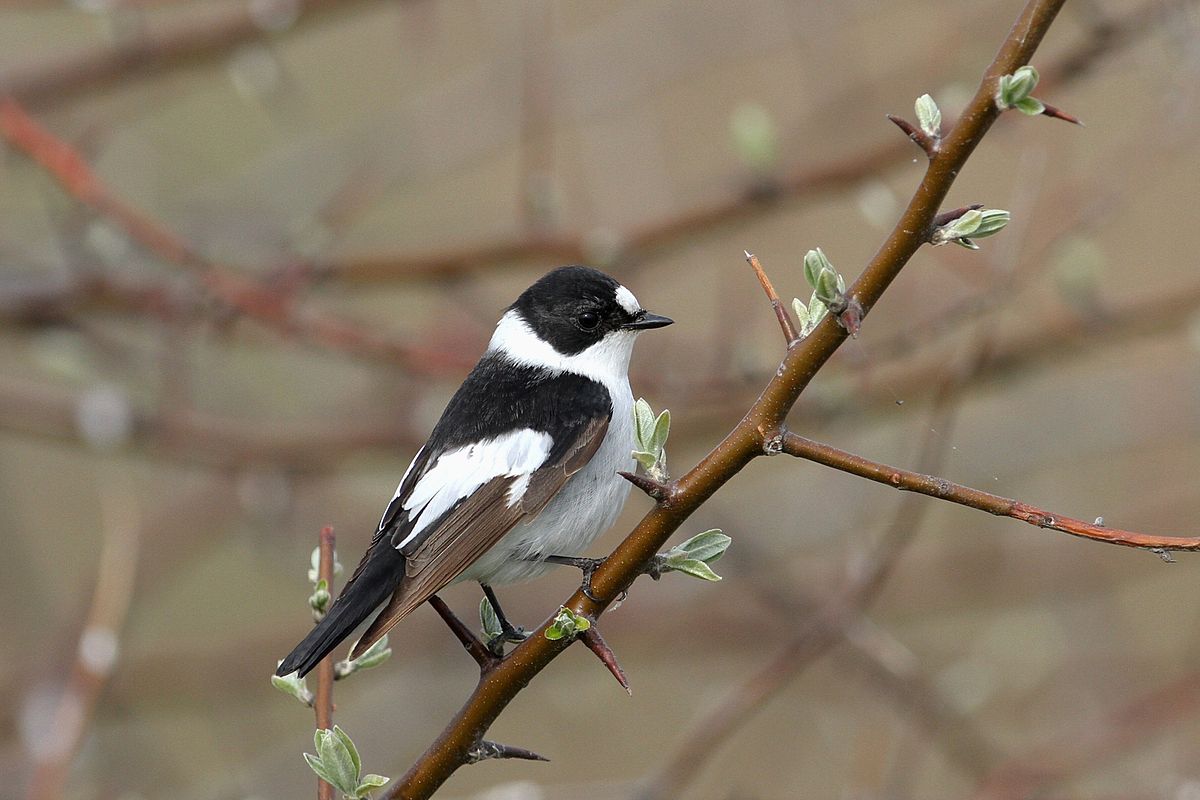
Wikipedia: Collared flycatcher Quelle: WIKIPEDIA
1200px-Collared_flycatcher_%28Ficedula_albicollis%29.jpg
🔍
Never observed (yet!)
Beschreibung
Allgemein:Der Halsbandschnäpper (Ficedula albicollis) ist eine Vogelart aus der Familie der Fliegenschnäpper. Er ist ein Charaktervogel insbesondere der Streuobstwiesen.
[mehr]
Deutschland: Brut-, Zugvogel RL 3
Saisonales Verhalten
Präsenz: 04-11 - 09-07 Brut: 05-01 - 07-20 Migration rein: 05-10 - 05-18 Migration raus: 07-20 - 09-07Weitere Infos at Vogelwarte.ch
Weitere Infos
Habitate: WaldVokalisierung
Gesang: Simple tune... Gesang Eigenschaften: Eselsbrücke Mein Halsband, mein Halsband, er schnäppt Melody: stereotypisch melodisch, schnell, Frequency: 3-7 KHz♫ Quelle: XENOCANTO XC727811 - Collared Flycatcher - Ficedula albicollis - song, recorded in Croatia.mp3 Kroatien (Gesang)

♫ Quelle: XENOCANTO XC727811 - Collared Flycatcher - Ficedula albicollis - song is variable, this improvises on a 4-note theme.mp3 (Gesang)

Vollprofil
Kleiber / European nuthatch (Sitta europaea)

Kleiber bei St Moritz - nur die können am Baum abwärts laufen. 2023-02-05 16:02:54 Engadin
Zuerst beobachtet in 🇨🇭 an 2020-04-04.
Beschreibung
Allgemein: Maybe 8 or 10 short loud notes, a bit of a whoop on the sonogramAllgemein: Deutschland: Brut-, Jahres-, Zugvogel, Wintergast
Etymologie:
Der Name bezieht sich darauf, dass der Kleiber den Eingang von Bruthöhlen anderer Vögel, zum Beispiel die von Spechten, mit Lehm verklebt [kleibt], um sie selbst zu nutzen. [Link]
Vokalisierung: Eurasian Nuthatch is very vocal. [Link]
Very varied voice. [Link]
Saisonales Verhalten
Jahresvogel Brut: 04-01 - 07-29Weitere Infos at Vogelwarte.ch
Weitere Infos
Physikalische Details
Körperlich: Länge=14 cm, Flügelspanne=22-27 cm, Gewicht=21-26 gHabitate: Wald
Vokalisierung
Gesang: Song:Song a simple series of loud notes [Link]
Gesang: The song is very variable, with rising and falling notes, sometimes with repetition of excitement calls. [Link]
The song is a slow whistled pee-pee-pee with many variants, including a faster version, and may be intermingled with the call. [Link]
Song a simple series of loud notes. [Link]
Song a simple series of loud notes. [Link]
Gesang Eigenschaften:
Eselsbrücke 6x steigt, wie 6-Buchstaben 'Kleber' Melody: einnotig (ll), schnell, Frequency: medium (1-5 KHz) Singing season: 02-01 - 07-31 Dawn chorus start: 10 minutes before dawn.
♫ Quelle: XENOCANTO XC777051 - Eurasian Nuthatch - Sitta europaea, recorded in France and designated as song - a series of 5-6 whoops, pause and repeat, hard for me to distinguish from a ca-ll.mp3 (Gesang)

Rufe: It gives loud calls when excited, an abrupt ‘twit”, only one, or in slow series, but often in phrases of 3-4 notes in rapid succession. But in great excitement, it utters phrases of about ten notes per second! We can also hear some shrill “sirrrr”, becoming harsher in alarm call. The contact call is a thin “tsit” uttered before to take off. [Link]
The Eurasian nuthatch calls frequently, usually with a loud, sharp dwip normally repeated twice, sometimes more often if excited. It has a shrill sirrrr or tsi-si-si alarm call, and a thin tsit pre-flight call. [Link]
Very varied voice. Ranging from very high pitched whistles and melodic resonant calls, to chattering and nasal mocking sounds. Characteristic warning call a hard "check" or "chwit", often in rapid series, like a pebble bouncing on hollow ice. [Link]
Ranging from very high pitched whistles and melodic resonant calls, to chattering and nasal mocking sounds. Characteristic warning call a hard "check" or "chwit", often in rapid series, like a pebble bouncing on hollow ice. [Link]
1:
Twit, dwip.
Schnelle Sequenz - ist es der oben erwähnte 'twit'?
Long fast sequence of identical whoops, possibly 'twit' call.
♫ Quelle: XENOCANTO XC129686 - Eurasian Nuthatch - Sitta europaea caesia.mp3 (Gesang?)
 Similar to XC423335 but very regular rhythm
♫ Quelle: XENOCANTO XC781193 - Eurasian Nuthatch - Sitta europaea - call, one note, regular rhythm, 2 per second, recorded in Spain.mp3 Spanien (Ruf)
 One note, irregular rhythm. A bird calling while moving up a pine tree (says recordist Nick Talbot).
♫ Quelle: XENOCANTO XC423335 - Eurasian Nuthatch - Sitta europaea caesia.mp3 (Gesang?)

2: Kleiber whoop Ruf ist ähnlich wie der vom Buchfink. Er wiederholt ihn etwa viermal.
XC632108 Kleiber whoop Ruf von Albert Noorlander in den Nederlanden.
♫ Quelle: XENOCANTO XC632108 Kleiber whoop Ruf von Albert Noorlander in den Nederlanden.mp3 (Ruf)
3: Tsit. Recordist Stanislav Wroz says flight call.
Flight call in Dampierre-en-Yvelines, Yvelines, Île-de-France. Wikipedia describes a 'thin tsit pre-flight call'.
♫ Quelle: XENOCANTO XC522601 - Eurasian Nuthatch - Sitta europaea.mp3 (Flugruf)

Ruf Eigenschaften: Ruf Melodie: einnotig, schnell, Frequenz: 2-3 KHz,
Vollprofil

Zaunkönig im Garten am Bodensee. 2024-01-01 13:32:24 Güttingen
Zuerst beobachtet in 🇨🇭 an 2019-07-07.
Beschreibung
Allgemein: Der drittkleinste Vogel der Schweiz, nach den beiden GoldhähnchenAllgemein: Deutschland: Brut-, Jahres-, Zugvogel, Wintergast
Etymologie:
The scientific name is taken from the Greek word "troglodytes" (from trogle a hole, and dyein to creep), meaning "cave-dweller",[4] and refers to its habit of disappearing into cavities or crevices whilst hunting arthropods or to roost. [Link]
Saisonales Verhalten
Jahresvogel Brut: 04-11 - 08-18 Migration rein: 03-01 - 04-20 Migration raus: 08-29 - 11-06Weitere Infos at Vogelwarte.ch
Weitere Infos
Physikalische Details
Körperlich: Länge=9-10 cm, Flügelspanne=13-17 cm, Gewicht=7-12 gHabitate: Wald
Vokalisierung
Gesang: High-pitched, melodic, very variable with many trills and whistles. At least 3 seconds long, switching low to high 6 times or more, always a trill in the mix.Der deutsche Kalendar für 2025 sagt, sie könnten ab Drei-Königs-Tag singen, d.h. ab 6. Januar. nabu.de sagt ab 1. Februar, Drei-Königs-Tag ist eventuell nur wegen dem Namen Zaunkönig? Gesang:
Auffällig laut für den kleinen Vogel. Singt auch im Winter! Schmetternd, mit einem bis zwei Trillern als letztes oder vorletztes Glied.
[Link]
Song surprisingly loud. A high-pitched stream of clear notes resembling Robin and Dunnock in timbre. Differs from those in showing frequent shifts in pitch with much larger register than Dunnock, and by the unique, numerous, interspersed long trills. [Link]
Gesang Eigenschaften:
Melody: improvisiert melodisch, schnell, Frequency: high (3-9 KHz) Special sounds: Triller Singing season: 02-01 - 07-31 Dawn chorus start: 60 minutes before dawn.
♫ Quelle: XENOCANTO XC916662 - Eurasian Wren song in China - Troglodytes troglodytes.mp3 (Gesang)

Rufe:
„zerr“ (z-und rr-gleichzeitig) auch durchdringendes „tzr“(Gezetter)
[Link]
Warning call a short hard "teck", like banging two rocks together. Often repeated in series when excited to form machine-gun-like "firing". [Link]
Sputtery/drippy/trilly repeated notes at 3-8 KHz. June 2022 heard check calls that were distinctly irregularly in their rhythm.
XC195946 - Eurasian Wren call - Troglodytes troglodytes.
♫ Quelle: XENOCANTO XC195946 - Eurasian Wren call - Troglodytes troglodytes.mp3 (Ruf)

Ruf Eigenschaften: Ruf Melodie: einnotig, langsam, Frequenz: 3-8 KHz, Spezielle Klänge: stottern/kieseln.
Vollprofil
Profil Wikipedia Vogelwarte BirdLife ZH ornitho.ch bird-song.ch Xeno-Canto NABU YouTube

Baumläufer, wahrscheinlich Gartenbaumläufer. 2022-07-18 08:58:32 Greifensee
Zuerst beobachtet in 🇨🇭 an 2020-10-16.
Beschreibung
Allgemein:Der Gartenbaumläufer (Certhia brachydactyla) ist eine Vogelart der Gattung der Eigentlichen Baumläufer (Certhia) aus der Familie der Baumläufer (Certhiidae). Er ist in weiten Teilen Mitteleuropas ein verbreiteter Brutvogel, der vor allem im Tiefland anzutreffen ist.
[mehr]
Deutschland: Brut-, Jahresvogel
Saisonales Verhalten
Jahresvogel Brut: 05-10 - 08-09Weitere Infos at Vogelwarte.ch
Weitere Infos
Physikalische Details
Körperlich: Länge=12 cm, Flügelspanne=17-20 cm, Gewicht=8-11 gHabitate: Wald
Ähnliche Arten
Sieht ähnlich aus wie: Waldbaumläufer.Vokalisierung
Gesang: It sounds to me like a 5-7 note song like 'five k low high higher', 'short song in the gar-DEN'. The individual notes have the same backward checkmark shape as the call. It's basically the same across Europe.The song of the nominate subspecies is an evenly spaced sequence of notes teet-teet-teet-e-roi-tiit. [Link]Its song is short, loud and rhythmic. [Link] [In comparison with the visually similar Eurasian treecreeper, it] has a clearer, louder more staccato contact call of ‘sreet’ or ‘sree’ and a short ‘wit’ during normal activity [Link]
Gesang: Kurz u. bündig! (Gartenwege sind kurz.) Tonreihe am Schluss ansteigend. „Hesch du gseh woni bi?
[Link]
Song diagnostic, and introductory notes often used singly when interacting. Full song starts with one or two staccato introductory notes, the first higher pitched than the second, followed by a rapid, ascending crescendo ending in a drawn-out, less pure "sree". The tone is loud and much more penetrating and clear than C. familiaris. [Link]
Gesang Eigenschaften:
Eselsbrücke 'Gar-ten-baum-LÄU-FER' Melody: stereotypisch melodisch (mlLh), langsam, Frequency: 4-7 KHz
[In comparison with the visually similar Eurasian treecreeper, it] has a clearer, louder more staccato contact call of ‘sreet’ or ‘sree’ and a short ‘wit’ during normal activity [Link]
Gesang: Kurz u. bündig! (Gartenwege sind kurz.) Tonreihe am Schluss ansteigend. „Hesch du gseh woni bi?
[Link]
Song diagnostic, and introductory notes often used singly when interacting. Full song starts with one or two staccato introductory notes, the first higher pitched than the second, followed by a rapid, ascending crescendo ending in a drawn-out, less pure "sree". The tone is loud and much more penetrating and clear than C. familiaris. [Link]
Gesang Eigenschaften:
Eselsbrücke 'Gar-ten-baum-LÄU-FER' Melody: stereotypisch melodisch (mlLh), langsam, Frequency: 4-7 KHz
♫ Quelle: XENOCANTO XC625133 - Short-toed Treecreeper - Certhia brachydactyla - song.mp3 (Gesang)

Rufe:
scharf „tiit, sri“ [Link]
Contact call very similar to C. familiaris. A thin "sreee" often repeated in an even rhythm, perhaps with slighly shorter pauses. Flight call a short and sharp "wit" used freely when moving about. Timbre recalls wet rubber-boots on vinyl flooring. Note that "mixed singers" of C. familiaris are not uncommon in areas where both species of treecreepers occur. [Link]
General: See the sonogram how the song may descend rapidly from 7Khz to and then climb from 5 to 5.75 KHz, a kind of reversed checkmark. However I find it hard to distinguish from a single note. I'm not a bird ;-(Call:
calls with a loud (Wikipedia says shrill) “tyt tyt” [Link]
A recording from Jorge Leitão in the Netherlands that I assume is the tyt tyt call.
♫ Quelle: XENOCANTO XC569503 - Short-toed Treecreeper - Certhia brachydactyla.mp3 (Gesang?)

Ruf Eigenschaften: Ruf Melodie: einnotig, langsam, Frequenz: 5-7 KHz,
Vollprofil

Waldbaumläufer oder Gartenbaumläufer am Aabach. 2023-02-09 15:34:44 Sils
Zuerst beobachtet in 🇨🇭 an 2020-04-23.
Beschreibung
Allgemein:Der Waldbaumläufer (Certhia familiaris) ist eine Vogelart der Gattung der Eigentlichen Baumläufer (Certhia) aus der Familie der Baumläufer (Certhiidae).
[mehr]
Deutschland: Brut-, Jahresvogel
Saisonales Verhalten
Jahresvogel Brut: 04-20 - 07-20Weitere Infos at Vogelwarte.ch
Weitere Infos
Physikalische Details
Körperlich: Länge=12 cm, Flügelspanne=17-21 cm, Gewicht=8-11 gHabitate: Wald
Ähnliche Arten
Sieht ähnlich aus wie: Gartenbaumläufer.Vokalisierung
Gesang: Ich sage: es klingt wie ein schneller, hoher Buchfink. Wikipedia sagt: Die kurze Gesangsstrophe ist eine abfallende, zum Ende wieder ansteigende Reihe von leisen Pfeiftönen und erinnert an die Lautäußerungen von Blaumeise und Fitis. The example at bird-song.ch is a series of 5 notes falling 3x and rising back 2x, then 5 or so fast falling notes. Gesang:Lang u. klar! (Waldwege sind lang). Tonreihe im Ganzen absinkend, nur letzter Ton höher. [Link]
Song a short, continuous three-part phrase. [Link]
Gesang Eigenschaften:
Eselsbrücken Waldwege sind lang, Sagging tree branch Melody: stereotypisch melodisch, langsam, Frequency: medium (1-5 KHz)
Rufe:
weniger scharf, „srih,“ weniger eindringlich als oben
[Link]
Contact call a drawn, high-pitched "tzreeee". Similar to Goldcrest in timbre, but of longer duration with a vibrating and slightly rolling tone. Generally repeated in evenly paced, slow series (unlike Goldcrest). Each phrase starts with a few contact call-like notes followed by a Willow Warbler-like descending part, which then jumps to a few descending high notes to form a marked conclusion. Note that "mixed singers" are not uncommon in areas where both species of treecreepers occur. [Link]
1:
General: Wikipedia sagt: Sein Ruf klingt in etwa wie "siih" oder "tih". Fairly regularly spaced single tseep at 7-9KHz.
Call:
Contact call a drawn, high-pitched "tzreeee". Similar to Goldcrest in timbre, but of longer duration with a vibrating and slightly rolling tone. Generally repeated in evenly paced, slow series (unlike Goldcrest). [Link]
XC206282 Eurasian treecreeper call.
♫ Quelle: XENOCANTO XC206282 Eurasian treecreeper call.mp3 (Ruf)

2: No details but a Xeno-Canto recording.
XC574757 Eurasian treecreeper alarm call.
♫ Quelle: XENOCANTO XC574757 Eurasian treecreeper alarm call.mp3 (Alarmruf)

Ruf Eigenschaften: Ruf Melodie: einnotig, langsam, Frequenz: 7-9 KHz,
Vollprofil
 XXXX Eichelhaeher close-up.JPG)
Eichelhäher close-up. 2026-03-24 11:24:32 Bolle di Magadino
Zuerst beobachtet in 🇨🇭 an 2020-04-17.
Beschreibung
Allgemein: Deutscher Name Häher heisst auf Englisch Jay, beide sind lautmalerisch.Allgemein: Deutschland: Brut-, Jahres-, Zugvogel, Wintergast
Etymologie: Nachahmung des Vogelrufs...mittelhochdeutsch heher [Der deutsche Wortschatz (DSDW.de)]
[22] Viele der Namen sind lautmalerisch und ahmen verschiedene Rufe nach wie Gäckser, Tschäcker, Jägg, Gäbsch oder Gräcke. [Link]
Vokalisierung:
Large repertoire. Many other social sounds. [Link]
Saisonales Verhalten
Jahresvogel Brut: 04-11 - 06-29 Migration rein: 04-01 - 06-09 Migration raus: 08-29 - 11-06Weitere Infos at Vogelwarte.ch
Weitere Infos
Physikalische Details
Körperlich: Länge=34-35 cm, Flügelspanne=52-58 cm, Gewicht=140-190 gHabitate: Wald
Vokalisierung
Gesang: Harsh crow-like call, or quiet questioning, 'grumbling', or plaintive cries. Gesang:Quiet and varied subsong with mimicry, resembling a small passerine heard from both sexes. [Link]
Gesang Eigenschaften:
Melody: nicht musikalisch, schnell, Frequency: medium (1-5 KHz) Special sounds: Krächzen, Mimikry
Rufe:
Most heard call a short, drawn and very hoarse, raspy sound, often given in quick successions. Also a Buzzard-like, mewing "peeeaaa" (more drawn and less full tone than Siberian Jay). [Link]
1:
Typically harsh jay call. I would say a contact call usually means 'Here I am', answered by 'Good, here I am.' Listening to two jays in the Swiss mountains of Toggenburg, it sounded like 'HEY IDIOT, HERE I AM...WHERE THE HECK ARE YOU?' 'WHAT? YOU HAVEN'T FIGURED IT OUT? OF COURSE I'M OVER HERE. PEABRAIN.' On the other hand, anthropomorphism is always dangerous, usually completely wrong approach.
XC536051 Eurasian Jay harsh call 20s.
♫ Quelle: XENOCANTO XC536051 Eurasian Jay harsh call 20s.mp3 (Ruf)
2: We saw and heard a jay (Eichelhaeher) at the Pfaeffikersee imitating a common buzzard - very cool.
XC97136 - Eurasian Jay - Garrulus glandarius - imitating common buzzard.
♫ Quelle: XENOCANTO XC97136 - Eurasian Jay - Garrulus glandarius - imitating common buzzard.mp3 (Nachahmung vom Ruf eines anderen Vogels)

Ruf Eigenschaften: Ruf Melodie: einnotig, langsam, Frequenz: medium (1-5 KHz), Spezielle Klänge: Raspel.
Vollprofil

Wikimedia Eurasian golden oriole. Quelle: WIKIPEDIA
Wikimedia Eurasian golden oriole.jpg
Zuerst beobachtet in 🇨🇭 an 2010-06-14.
Beschreibung
Allgemein: Pirol: auffälligen Sexualdimorphismus. Wo/Habitat: lichter Auenwälder, Bruchwälder und gewässernaher Gehölze. Ebenso zählen Laub-, Misch- und Nadelwälder sowie Parks, große Gärten, Friedhöfe, Streuobstwiesen, hohe Obstbäume, Windschutzgürtel und Alleen zu seinen Brutgebieten, wo er sich überwiegend im Kronendach höherer Bäume aufhält. Der Verbreitungsschwerpunkt liegt hier im kontinentaleren Osteuropa. knapp amselgross; Presence april 15 - September 15 https://www.vogelwarte.ch/de/vögel/vögel-der-schweiz/pirolAllgemein: In Western Europe they prefer open broadleaf forests and plantations, copses, riverine forest, orchards, large gardens.They reside in Switzerland from mid-April to mid-September, breeding in mid-May to mid-July. They predominate near the German and French borders, from Lake Constance to Geneva. I want to try to see one at Neeracherried or Thurauen.
Allgemein: Deutschland: Brut-, Zugvogel RL V
Etymologie:
[9] Albertus Magnus used the Latin form oriolus in about 1250 and erroneously stated that it was onomatopoeic because of the golden oriole's song. [Link]
Geographie:
Einzige Art der Oriolidae, die in Europa brutet.
[Link]
Saisonales Verhalten
Präsenz: 04-20 - 09-17 Brut: 05-21 - 07-20 Migration rein: 04-20 - 06-09 Migration raus: 07-10 - 09-17Weitere Infos at Vogelwarte.ch
Weitere Infos
Physikalische Details
Körperlich: Länge=24 cm, Flügelspanne=44-47 cm, Gewicht=56-79 gHabitate: Wald
Vokalisierung
Gesang: Weiches, tiefes Flöten. Meiner Meinung nach hat der Pirol eine wunderschöne Stimme aber gar keine Fantasie was Melodie betrifft - er sind immer die gleichen paar Noten. Gesang:Varied repertoire, but song and common contact call very distinct. Song a series of 1-2 seconds long phrases of 3-5 yodeling, clear, fluting notes, interspersed with 2-3 second pauses. Tone very full-bodied, melodic and pleasing. [Link]
Gesang Eigenschaften:
Melody: stereotypisch melodisch, langsam, Frequency: 0-1 KHz Singing season: 04-22 - 09-21
♫ Quelle: XENOCANTO XC567973 eurasian golden oriole song.mp3 (Gesang)

Rufe:
Flötenrufen
Oft wird der Gesang allerdings vom Star treffend ähnlich nachgeahmt. [Link]
Contact call surprisingly different: A forced, drawn "weeackt", slightly resembling Jay, but less harsh, and much more nasal. Other sounds include a Wryneck-like warning call. [Link]
3 somewhat harsh ascending notes, more melodic than a Eurasian jay call
XC565722 eurasian golden oriole call.
♫ Quelle: XENOCANTO XC565722 eurasian golden oriole call.mp3 (Ruf)

Ruf Eigenschaften: Ruf Melodie: einfach rhythmisch, langsam, Frequenz: medium (1-5 KHz),
Vollprofil
Familie Burhinidae (Triele, Haematopodidae – Austernfischer und Recurvirostridae – Säbelschnäblerverwandte):
Profil Wikipedia Vogelwarte BirdLife ZH ornitho.ch bird-song.ch Xeno-Canto BirdID NABU YouTube

Wahrscheinlich Dreizehenspecht, Ammler Höhenweg. 2021-08-02 16:16:40 Ammler Höhenweg
Zuerst beobachtet in 🇨🇭 an 2021-08-02.
Beschreibung
Behavior:Der Borkenkäferspezialist bevorzugt ungepflegte Fichtenwälder mit reichlich Totholz. [Portrait]
Allgemein: Deutschland: Brut-, Jahresvogel, Wintergast RL 2
Verhalten:
Die Anwesenheit des heimlichen Dreizehenspechts wird oft übersehen. Er ist wenig scheu und fliegt kaum weg, wenn man sich ihm nähert. [Portrait]
Vokalisierung:
Drumming powerful and slow, with each beat clearly distinguishable. Most similar to Black Woodpecker but not as long (1 - 1.4 seconds). Accelerated ending (just the last few beats). [Link]
Saisonales Verhalten
Jahresvogel Brut: 05-10 - 07-20Weitere Infos at Vogelwarte.ch
Weitere Infos
Physikalische Details
Körperlich: Länge=21-22 cm, Flügelspanne=32-35 cm, Gewicht=57-74 gHabitate: Wald
Vokalisierung
Gesang: Fast drumming, constant volume, longer than great spotted woodpecker's. Behavior:Der Borkenkäferspezialist bevorzugt ungepflegte Fichtenwälder mit reichlich Totholz. [Portrait]
Gesang Eigenschaften:
Melody: einfach rhythmisch, schnell, Frequency: low (1-3 KHz) Special sounds: trommeln
♫ Quelle: XENOCANTO XC627431 dreizehenspecht drumming.mp3 (Trommeln)
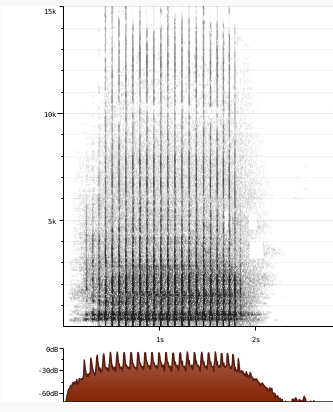
Behavior:
Der Borkenkäferspezialist bevorzugt ungepflegte Fichtenwälder mit reichlich Totholz. [Portrait]
Rufe:
Contact call similar to Great Spotted, but deeper and softer. Not very vocal. [Link]
Behavior: Seine unauffälligen Rufe sind nicht laut und tönen ähnlich wie jene des Buntspechts. [Portrait]
XC498796 Dreizehenspecht call.
♫ Quelle: XENOCANTO XC498796 Dreizehenspecht call.mp3 (Ruf)

Ruf Eigenschaften: Trommeln Ruf Melodie: einfach rhythmisch, langsam, Frequenz: low (1-3 KHz),
Vollprofil

Buntspecht in Wildert. 2024-08-31 10:29:52 Wildert
Zuerst beobachtet in 🇨🇭 an 2020-04-12.
Beschreibung
Allgemein: Häufigste Spechtart in der SchweizAllgemein: Deutschland: Brut-, Jahresvogel
Vokalisierung:
It's frequent drumming is easily recognized by its short duration. [Link]
Saisonales Verhalten
Jahresvogel Brut: 04-11 - 07-20Weitere Infos at Vogelwarte.ch
Weitere Infos
Physikalische Details
Körperlich: Länge=22-23 cm, Flügelspanne=34-39 cm, Gewicht=70-100 gHabitate: Wald
Ähnliche Arten
Gesang oder Rüfe ähnlich wie: Ringdrossel.Vokalisierung
Gesang: Song: Other: ‘Drumming’ is the sound that Great Spotted Woodpeckers make by hammering their bills against dead wood 10-20 times over 2-3 seconds. The sound resonates in the dead wood and can be heard over large distances. This drumming acts as an advert and is used by Great spotted Woodpeckers and other woodpecker species instead of a song. [From the GardenBird web site]Nabu: Manchmal, bei strahlendem Sonnenschein, fangen die Spechte schon im Dezember an zu trommeln. [NABU Vogel des Jahres 1997]
Call: Nabu: Das bekannteste Geräusch des schwarz-weißen Spechtes ist aber wohl sein kurzes, aber häufiges Trommeln. [Link]
 In a sonogram I can see about 13 taps in just over half a second, but you can never distinguish so many.
It's short but intense, and the second half trails off,
especially contrasted with the constant drumming of the three-toed woodpecker. [[Listen here.]]
Gesang Eigenschaften:
Melody: nicht musikalisch, schnell, Frequency: low (1-3 KHz) Special sounds: trommeln Singing season: 01-01 - 06-30
In a sonogram I can see about 13 taps in just over half a second, but you can never distinguish so many.
It's short but intense, and the second half trails off,
especially contrasted with the constant drumming of the three-toed woodpecker. [[Listen here.]]
Gesang Eigenschaften:
Melody: nicht musikalisch, schnell, Frequency: low (1-3 KHz) Special sounds: trommeln Singing season: 01-01 - 06-30
♫ Quelle: XENOCANTO XC625181 buntspecht drumming.mp3 (Trommeln)

Rufe:
Typically it lasts 0.5 seconds, sometimes slightly longer. Contact call frequently hear throughout the year. A short hiccup "kek", sometimes in series. When excited this may escalate into a trill. [Link]
1:
General: A chirping (that I couldn't associate in my mind with a woodpecker), repeated at somewhat irregular intervals of about a second2023: klang in bird-song.ch Quiz wie eine lauter Haussperling
Call: Nabu: Der häufigste Ruf ist ein kurzes und spitzes „kix“. Ist ein Buntspecht aufgebracht, etwa durch einen Artgenossen, kann man ein schnelles Schnarren hören. [Link]
Great spotted woodpecker call
♫ Quelle: XENOCANTO XC200059 Great spotted woodpecker call.mp3 (Ruf)

2: No details but a Xeno-Canto recording. - but really OWN_VIA_BIRDNET
Birdnet 1937 - Great Spotted Woodpecker xxxx, also heard drumming - Great Spotted Woodpecker - Fehraltorf.
♫ 2021-08-14 09:57:28 Quelle: BirdNet 20210814_095728 birdnet 1937 - Great Spotted Woodpecker xxxx, also heard drumming - Great Spotted Woodpecker - Fehraltorf.mp3 Fehraltorf (Trommeln)
FOK3 - ein Specht trommelt, welcher war das, ein Buntspecht? Dazu eine Zilzalp, evtl Zaunkönig, und unser Kursleiter, der das Trommeln erklärt.
♫ 2025-03-22 09:08:40
Quelle: Zoom H2n Schweiz (Trommeln)Trommeln während ein Buntspecht ruft, im Wildert.
♫ 2024-08-31 09:31:25 Wildert (Trommeln)
Birdnet 1937 - Great spotted woodpecker, heard slow drumming - Not analyzed - Fehraltorf.
♫ 2021-08-14 09:57:28 Quelle: BirdNet 20210814_095728 birdnet 1937 - Great spotted woodpecker, heard slow drumming - Not analyzed - Fehraltorf.mp3 Fehraltorf (Trommeln)
Ruf Eigenschaften: Ruf Melodie: einnotig, langsam, Frequenz: 1-8 KHz,
Vollprofil

Vogelwarte Mittelspecht. Quelle: VOGELWARTE
Vogelwarte Mittelspecht.jpg
🔍
Never observed (yet!)
Beschreibung
Allgemein: Deutschland: Brut-, JahresvogelHabitat:
Der Mittelspecht ist ein Habitatspezialist, der bei uns hauptsächlich ehemalige Mittelwälder mit zahlreichen Alteichen besiedelt. Der Bestand ist gefährdet und langfristig wird er sich nur halten können, wenn grossflächige Wälder mit der Eiche als Hauptbaumart bestehen bleiben. [Link]
Saisonales Verhalten
Jahresvogel Brut: 04-11 - 06-20Weitere Infos at Vogelwarte.ch
Weitere Infos
Physikalische Details
Körperlich: Länge=20-22 cm, Flügelspanne=33-34 cm, Gewicht=50-80 gHabitate: Wald
Vokalisierung
Gesang: No details but a Xeno-Canto recording. Gesang:Im Gegensatz zu anderen Spechten trommelt der Mittelspecht nur sehr selten. [Link]
Song is a series of short, mewing and nasal "peeaa peeaa peeaa ", where each syllable quickly rises in pitch, but the overall phrase is fairly constant. [Link]
Gesang Eigenschaften:
Frequency:
♫ 2024-04-07 13:50:00 (Gesang)

Rufe:
Contact and alarm call consists of a series of short "kitt" sounds, where the first syllable is clearer and distinctly in a higher pitch than the rest of the phrase. Seldom drums. [Link]
Stattdessen ist in der Brutzeit das klagende Quäken zu hören, womit der Mittelspecht sein Revier markiert. [Link]
XC624229 Mittelspecht call.
♫ Quelle: XENOCANTO XC624229 Mittelspecht call.mp3 (Ruf)

Ruf Eigenschaften: Ruf Melodie: einfach rhythmisch, langsam, Frequenz: 0-4 KHz,
Vollprofil
Profil Wikipedia Vogelwarte BirdLife ZH ornitho.ch bird-song.ch Xeno-Canto BirdID NABU YouTube

Schwarzspecht in Wildert Naturschutzgebiet. 2024-12-18 14:30:58 Wildert
Zuerst beobachtet in 🇨🇭 an 2020-10-21.
Beschreibung
Allgemein: Bisher gehört und später gesehen aber nie gut fotografiertAllgemein: Deutschland: Brut-, Jahresvogel
Aussehen und Identifizierung:
The black woodpecker (Dryocopus martius) is a large woodpecker that lives in mature forests across the northern Palearctic. It is the sole representative of its genus in that region. Its range is expanding. It does not migrate. [Link]
Habitat:
The black woodpecker is mainly found in forested regions, with a preference for extensive, mature woodland, including coniferous, tropical, subtropical and boreal forests. It is very widespread throughout mountainous and lowland forests. It is more likely to occur in marginal woods near human habitations during the non-breeding season. [Link]
Vokalisierung:
Most sounds diagnostic and very far reaching. Drumming very powerful and long (1.8 - 3 sec.) with slightly falling intensity and accelerated ending. Each beat clearly distinguishable as in Tree-toed Woodpecker, but duration much longer. [Link]
Saisonales Verhalten
Jahresvogel Brut: 04-01 - 07-20Weitere Infos at Vogelwarte.ch
Weitere Infos
Physikalische Details
Körperlich: Länge=45-57 cm, Flügelspanne=64-68 cm, Gewicht=290-370 gHabitate: Wald
Vokalisierung
Gesang: No details but a Xeno-Canto recording. Gesang:Beide Geschlechter ähnlich Grünspecht aber klangvoller. „klückklückklück“ 10-20 Laute. Die „klück“ werden etwas von unten heraufgeholt, vor allem gegen den Schluss zu. Häufiger hört man „kliüüh“ von am Stamme sitzenden Vogel. Bei Platzwechsel ruft er „krükrükrü“.
[Link]
Song a quick series of "klee" calls resembling Green Woodpecker, but with a purer tone and upward infliction at end of each syllable. [Link]
Gesang Eigenschaften:
Frequency:
♫ Quelle: XENOCANTO XC554337 Black woodpecker song.mp3 (Gesang)
Rufe:
Drumming: Flight call a characteristic resonant trill "krrreekrrreekrrreekrrree". A characteristic short, sharp and plaintive "keeaaa" with descending pitch often uttered when excited. A few slower drawn-out introductory calls before the phrase gets going is diagnostic. [Link] 1: General: A loud unearthly call on a single unwavering note.
Erschrenkender Ruf
♫ Source as noted in xeno-canto: Recordist Bodo Sonnenburg 2021-10-11 07:26 Latitude 52.2333 Longitude 13.8365 Location Oder-Spree (near Storkow (Mark)), Brandenburg Country Germany Elevation 40 m Quelle: XENOCANTO XC679746 - Black Woodpecker - Dryocopus martius.mp3 (Gesang?)

2: Describe drumming here, cf to other peckers!
XC553023 Black woodpecker drumming.
♫ Quelle: XENOCANTO XC553023 Black woodpecker drumming.mp3 (Trommeln)
3: No details but a Xeno-Canto recording.
XC549818 Black woodpecker flight call.
♫ Quelle: XENOCANTO XC549818 Black woodpecker flight call.mp3 (Flugruf)
Ruf Eigenschaften: Ruf Melodie: einnotig, langsam, Frequenz: 1-8 KHz,
Vollprofil

Vogelwarte Grauspecht. Quelle: VOGELWARTE
Vogelwarte Grauspecht.jpg
Zuerst beobachtet in 🇨🇭 an 2025-03-22.
Beschreibung
Allgemein: Deutschland: Brut-, Jahresvogel RL 2Verhalten:
Der Grauspecht gehört mit dem Grünspecht zu den «Erdspechten», die ihre Nahrung vorwiegend auf dem Boden suchen. Obwohl er fast so gross ist wie der Grünspecht, ist der heimlicher lebende Grauspecht ungleich schwieriger zu lokalisieren. Am ehesten verrät er sich durch die fallende, etwas melancholisch wirkende Rufreihe. Über seine Lebensweise ist vergleichsweise wenig bekannt. [Link]
Vokalisierung:
Mostly heard during the breeding season. [Link]
Saisonales Verhalten
Jahresvogel Brut: 04-20 - 07-29Weitere Infos at Vogelwarte.ch
Weitere Infos
Physikalische Details
Körperlich: Länge=25-26 cm, Flügelspanne=38-40 cm, Gewicht=120-160 gHabitate: Wald
Vokalisierung
Gesang: Drumming in lieu of song. Fast, constant, somehow less harsh than great and middle spotted woodpeckers. Gesang:Deutlich abfallende Tonreihe. 4-10 Töne. Absinken beginnt
gewöhnlich erst mit dem dritten oder vierten Ton und wird etwas langsamer.
Klingt etwas klagend (moll). Vor allem gegen den Schluss. Kann nachgepfiffen werden. (beim Grünspecht nicht )
[Link]
Song similar to Green Woodpecker, but general tone is soft and melancholic. Phrases consists of series of 5-8 clear notes falling both in pitch and intensity, and with diagnostic ritardando at the end. Short "kek" uttered if excited. Rarely drums. [Link]
Gesang Eigenschaften:
Melody: einfach rhythmisch, schnell, Frequency: 0-4 KHz Special sounds: trommeln
♫ Quelle: XENOCANTO XC552636 Kleinspecht drumming.mp3 (Trommeln)

1: In the FOK course, Christina said he sounds like he's running out of gas, which is a great description.
XC623125 grauspecht call.
♫ Quelle: XENOCANTO XC623125 grauspecht call.mp3 (Ruf)

2: No details but a Xeno-Canto recording.
XC628962 Grauspecht drumming.
♫ Quelle: XENOCANTO XC628962 Grauspecht drumming.mp3 (Trommeln)

Ruf Eigenschaften: Ruf Melodie: einfach rhythmisch, langsam, Frequenz: high (3-9 KHz),
Vollprofil

Elster im Baum nah bei einem Grünspecht, den ich gehört aber nicht gesehen habe. 2025-05-08 18:06:57 Wald Fehraltorf
Zuerst beobachtet in 🇨🇭 an 2020-11-08.
Beschreibung
Allgemein: In the FOK course, Tom mentioned that his nephew said it should be called the Buntspecht, since it has so many colors.Allgemein: Da es v.a. Ameisen frisst, trommelt es nicht viel, so weit ich mich erinnere, daher ist es hier nicht beschrieben. Xenocanto hat auch nichts.
Allgemein: Deutschland: Brut-, Jahresvogel RL V
Aussehen und Identifizierung:
Der Grünspecht fällt neben dem laut lachenden Balzruf auch durch den wellenförmigen Flug auf, bei dem er die Flügel zwischen zwei Schlagphasen ganz an den Körper anlegt. Neben dem Wendehals ist er unter den Spechtarten Europas am stärksten auf Ameisen spezialisiert. Er besitzt eine mehr als 10 Zentimeter lange Zunge, die klebrig und an der Spitze mit Widerhaken versehen ist. [Link]
Saisonales Verhalten
Jahresvogel Brut: 04-11 - 07-20Weitere Infos at Vogelwarte.ch
Weitere Infos
Physikalische Details
Körperlich: Länge=31-33 cm, Flügelspanne=40-42 cm, Gewicht=150-220 gHabitate: Wald
Vokalisierung
Gesang: Spooky laugh. Gesang:Helles Lachen. Weiche, oft leicht abfallende Tonreihe. Variabel in Lautstärke und Silbenzahl. je nach Stimmung. Wenn abfallend dann vom Anfang der Rufreihe an. Auch dreisilbig „kiäckkiäckkiäck“.
[Link]
Song similar to Grey-headed Woodpecker, but not as soft and fluty. Each phrase consist of a series of short "klee", with a laughing quality. Pitch drops slightly throughout the phrase, but not as markedly as in Grey-headed, and tempo is fairly constant (no ritardando). [Link]
Gesang Eigenschaften:
Melody: nicht musikalisch, langsam, Frequency: 1-6 KHz
Rufe:
Short "kek" calls when excited and in flight. Drumming of 1.5 seconds duration with decelerating tempo, but not often heard. Another call is similar to Black Woodpecker; a series of resonant "klit-klit-klit-klit-klit-klit", but is less clear, has a more determined start and has less obvious rising pitch at the end of each syllable. [Link]
Unheimliches Lachen.
XC627157 Grünspecht laughing call.
♫ Quelle: XENOCANTO XC627157 Gruenspecht laughing call.mp3 (Ruf)

Ruf Eigenschaften: Ruf Melodie: einnotig, langsam, Frequenz: high (3-9 KHz), Spezielle Klänge: absteigend.
Vollprofil

Kleinspecht am Baum wo wir mehrere Specht gesehen habe. 2024-05-31 07:58:53 Frauenfeld Allmend
Zuerst beobachtet in 🇨🇭 an 2021-01-16.
Beschreibung
Allgemein: Bisher gesehen aber nicht gehört!Allgemein: Deutschland: Brut-, Jahresvogel, Wintergast RL V
Aussehen und Identifizierung:
The smallest European woodpecker. ... From its small size and its habit of spending most of its time in the tops of tall trees in woods and parks, this little woodpecker is often overlooked, but if sighted on a trunk
it may at once be identified by the broad barring on the wings and narrower bars across the lower back. [Link]
Der Kleinspecht ist der Zwerg unter den europäischen Spechten.
Er macht sich im Frühjahr mit hohen Rufreihen und gleichmässigen Trommelwirbeln bemerkbar. [Link]
Habitat:
As above: spend(s) most of its time in the tops of tall trees [Link]
Vokalisierung:
Frequently drums in quite long series. Much longer than Great Spotted, and without ritardando. [Link]
Saisonales Verhalten
Jahresvogel Brut: 04-20 - 06-20Weitere Infos at Vogelwarte.ch
Weitere Infos
Physikalische Details
Körperlich: Länge=14-15 cm, Flügelspanne=25-27 cm, Gewicht=17-25 gHabitate: Wald
Vokalisierung
Gesang: Drumming in lieu of song. Fast, constant. Gesang Eigenschaften: Melody: einfach rhythmisch, schnell, Frequency: 0-4 KHz Special sounds: trommeln♫ Quelle: XENOCANTO XC552636 Kleinspecht drumming.mp3 (Trommeln)
Rufe:
Most common call a series of merlin-like "ke-ke-ke-ke-ke-ke" given at fairly stable pitch, and less hoarse than Merlin. Differs from Wryneck in lacking marked rise and fall in pitch, and being less plaintive. [Link]
1:
Vogelwarte wie oben..hohe Rufreihen
XC625101 Kleinspecht call.
♫ Quelle: XENOCANTO XC625101 Kleinspecht call.mp3 (Ruf)

2: No details but a Xeno-Canto recording.
Ruf Eigenschaften: Ruf Melodie: einfach rhythmisch, schnell, Frequenz: high (3-9 KHz),
Vollprofil