Birds of Ecuador

Löffelente am Klingnauerstausee. 2022-02-06 08:47:36 Klingnauer Stausee (man-made lake)
First observed in 🇨🇭 on 2021-02-08.
Description
Geography: This bird appears across the great seas in the following continents: Europe, North America, South America, Africa, Asia.General: Wintergast am Greifensee.
General: Deutschland: Brut-, Jahres-, Zugvogel, Wintergast RL 3
Appearance and identification: PK: white, black, rust-brown, yellow eyes, black spoonbill, red legs.
Vocalization:
 Male is characteristic and most often heard: A hoarse nasal knocking sound "took took", often staccato or disyllabic. Female similar to Mallard but flatter and more creaking. [Link]
Seasonal behavior
Year-round birdOther Details
Physical details
Physical details: length=44-52 cm, wingspan=70-84 cm, weight=470-800 gHabitats: River and lake Details
Profile Wikipedia Xeno-Canto YouTube

Wikipedia: Andean teal Source: WIKIPEDIA
1200px-Andean-Teal.jpg
🔍
Never observed (yet!)
Description
General: The Andean teal (Anas andium) is a South American species of duck. Like other teals, it belongs to the diverse genus Anas; more precisely it is one of the "true" teals of subgenus Nettion.[2] It is restricted to the Andean highlands of Colombia, Venezuela, and Ecuador. It inhabits freshwater wetlands, preferring palustrine habitat to rivers. It is not considered threatened by the IUCN.[1]
[more]
The Andean teal (Anas andium) is a South American species of duck. Like other teals, it belongs to the diverse genus Anas; more precisely it is one of the "true" teals of subgenus Nettion.[2] It is restricted to the Andean highlands of Colombia, Venezuela, and Ecuador. It inhabits freshwater wetlands, preferring palustrine habitat to rivers. It is not considered threatened by the IUCN.[1]
[more]
Details
Profile Wikipedia Xeno-Canto YouTube
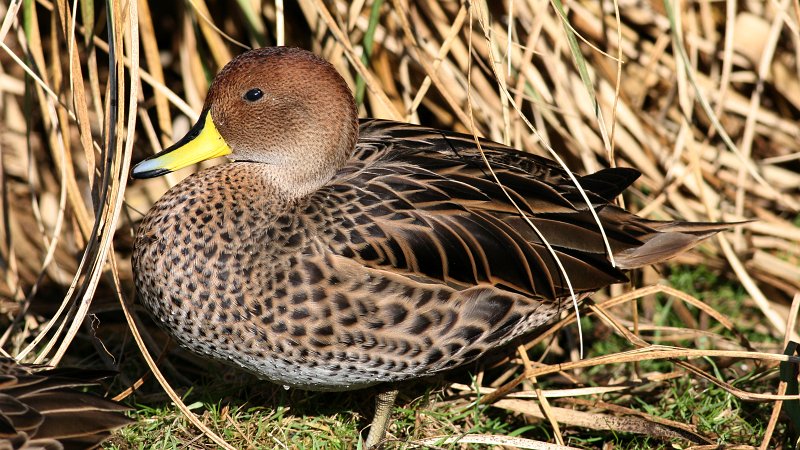
Wikipedia: Yellow-billed pintail Source: WIKIPEDIA
Brown_pintail_%28Anas_georgica_spinicauda%29_%284%29.jpg
🔍
Never observed (yet!)
Description
The yellow-billed pintail (Anas georgica) is a South American dabbling duck of the genus Anas with three described subspecies.
[more]
Details
Profile Wikipedia Xeno-Canto YouTube

Wikipedia: White-cheeked pintail Source: WIKIPEDIA
1200px-Galapagos_white-cheeked_pintail_duck_-Santa_Cruz_highlands.jpg
🔍
Never observed (yet!)
Description
The white-cheeked pintail (Anas bahamensis), also known as the Bahama pintail or summer duck,[2] is a species of dabbling duck. It was first described by Carl Linnaeus in his landmark 1758 10th edition of Systema Naturae under its current scientific name.[3]
[more]
Details
Profile Wikipedia Xeno-Canto YouTube

Wikipedia: Southern pochard Source: WIKIPEDIA
1200px-Southern_Pochard_%28Netta_erythrophthalma%29_RWD1.jpg
🔍
Never observed (yet!)
Description
Geography: This bird appears across the great seas in the following continents: South America, Africa.General:
The southern pochard (Netta erythrophthalma) is a species of duck, and a member of the genus Netta. There are two subspecies, the South American (southern) pochard N. e. erythrophthalma (Wied-Neuwied, 1833) and the African (southern) pochard N. e. brunnea (Eyton, 1838).
[more]
Details

Wikipedia: Lesser scaup Source: WIKIPEDIA
1200px-Lesser_scaup_-_Aythya_affinis.jpg
🔍
Never observed (yet!)
Description
The lesser scaup (Aythya affinis) is a small North American diving duck that migrates south as far as Central America in winter. It is colloquially known as the little bluebill or broadbill because of its distinctive blue bill. The origin of the name scaup may stem from the bird's preference for feeding on scalp—the Scottish word for clams, oysters, and mussels; however, some credit it to the female's discordant scaup call as the name's source.[2] It is apparently a very close relative of the Holarctic greater scaup or "bluebill" (A. marila), with which it forms a superspecies.[3][4] The scientific name is derived from Ancient Greek aithuia an unidentified seabird mentioned by authors including Hesychius and Aristotle, and Latin, affinis "related to", from its resemblance to the greater scaup.[5]
[more]
Details

Wikipedia: Orinoco goose Source: WIKIPEDIA
Orinoco_Goose.jpg
🔍
Never observed (yet!)
Description
The Orinoco goose (Neochen jubata) is a member of the duck, goose and swan family Anatidae. It is in the shelduck subfamily Tadorninae, and placed in the genus Neochen. Three fossil relatives have been described from Pleistocene sites: Neochen pugil from Brazil, Neochen debilis from Argentina and Neochen barbadiana from Barbados.
[more]
Details
Description
Details
Profile Wikipedia Xeno-Canto YouTube

Wikipedia: Torrent duck Source: WIKIPEDIA
1200px-Merganetta_armata_%28Pato_de_torrente%29_%2824726521941%29.jpg
🔍
Never observed (yet!)
Description
The torrent duck (Merganetta armata) is a member of the duck, goose and swan family Anatidae. It is the only member of the genus Merganetta. It is placed in the shelduck subfamily Tadorninae after the "perching duck" assemblage where it was formerly assigned to was dissolved because it turned out to be paraphyletic.[2]
[more]
Details

These Muscovy ducks are the ones that gather by the parking area. 2025-02-14 18:00:39 Fuerteventura
First observed in Fuerteventura on 2025-02-14.
Description
Geography: This bird appears across the great seas in the following continents: Europe, North America, South America.General:
The Muscovy duck (Cairina moschata) is a large duck native to Mexico and Central and South America. Small wild and feral breeding populations have established themselves in the United States, particularly in Florida, Louisiana, Massachusetts, and the lower Rio Grande Valley of Texas, the Big Island of Hawaii, as well as in many other parts of North America, including southern Canada. Feral Muscovy ducks are found in New Zealand, Australia, and in parts of Europe.
[more]
Details
Profile Wikipedia Vogelwarte BirdLife ZH ornitho.ch Audubon AllAboutBirds Xeno-Canto BirdID NABU YouTube

Wikipedia: Ruddy duck Source: WIKIPEDIA
Oxyura_jamaicensis_FWS.jpg
🔍
Never observed (yet!)
Description
Geography: This bird appears across the great seas in the following continents: Europe, North America, South America.General: Deutschland: eingebürgertes Neozoon, ausnahmsweise Brutvogel
Details

Wikipedia: Masked duck Source: WIKIPEDIA
1200px-Masked_duck_%28Nomonyx_dominicus%29.jpg
🔍
Never observed (yet!)
Description
General:The masked duck (Nomonyx dominicus) is a tiny stiff-tailed duck ranging through the tropical Americas. They are found from Mexico to South America and also in the Caribbean. Primarily not migratory, masked ducks are reported as very uncommon vagrants in the southernmost United States, along the Mexican border and in Florida. As of 2000, the conservation status for masked ducks in Texas is 3,800 birds.[2] On April 1, 1962, it was recorded from Lowndes County, Georgia, where it was photographed by Alexander Wetmore.[3]
[more]
Details
Cinnamon teal / Zimtente (Spatula cyanoptera)
Profile Wikipedia Audubon AllAboutBirds Xeno-Canto NABU YouTube

Wikipedia: Cinnamon teal Source: WIKIPEDIA
1200px-Sarcelle_cannelle_%28Spatula_cyanoptera%29.jpg
🔍
Never observed (yet!)
Description
Geography: This bird appears across the great seas in the following continents: Europe, North America, South America.General:
 [more]
Details
Blue-winged teal / Blauflügelente (Spatula discors)

Wikipedia: Blue-winged teal Source: WIKIPEDIA
1200px-Blue-Winged_Teal.jpg
🔍
Never observed (yet!)
Description
The blue-winged teal (Spatula discors) is a species of bird in the duck, goose, and swan family Anatidae. One of the smaller members of the dabbling duck group, it occurs in North America, where it breeds from southern Alaska to Nova Scotia, and south to northern Texas. It winters along the Pacific and Atlantic coasts and south into the Caribbean islands and Central America.
[more]
Details

Wikipedia: Black-bellied whistling duck Source: WIKIPEDIA
1200px-Whistling_duck_flight02_-_natures_pics-edit1.jpg
🔍
Never observed (yet!)
Description
The black-bellied whistling duck (Dendrocygna autumnalis), formerly called the black-bellied tree duck, is a whistling duck that before 2000 bred mainly in the southernmost United States, Mexico, and tropical Central to south-central South America. It can be found year-round in much of the United States. It has been recorded in every eastern state and adjacent Canadian province.[3] Since it is one of only two whistling duck species native to North America, it is occasionally just known as the "whistling duck" or "Mexican squealer" in the southern USA.
[more]
Details

Wikipedia: Fulvous whistling-duck Source: WIKIPEDIA
1200px-Dendrocygna_bicolor_wilhelma.jpg
🔍
Never observed (yet!)
Description
Geography: This bird appears across the great seas in the following continents: North America, South America, Africa, Asia.Details
Horned screamer / Hornwehrvogel (Anhima cornuta)
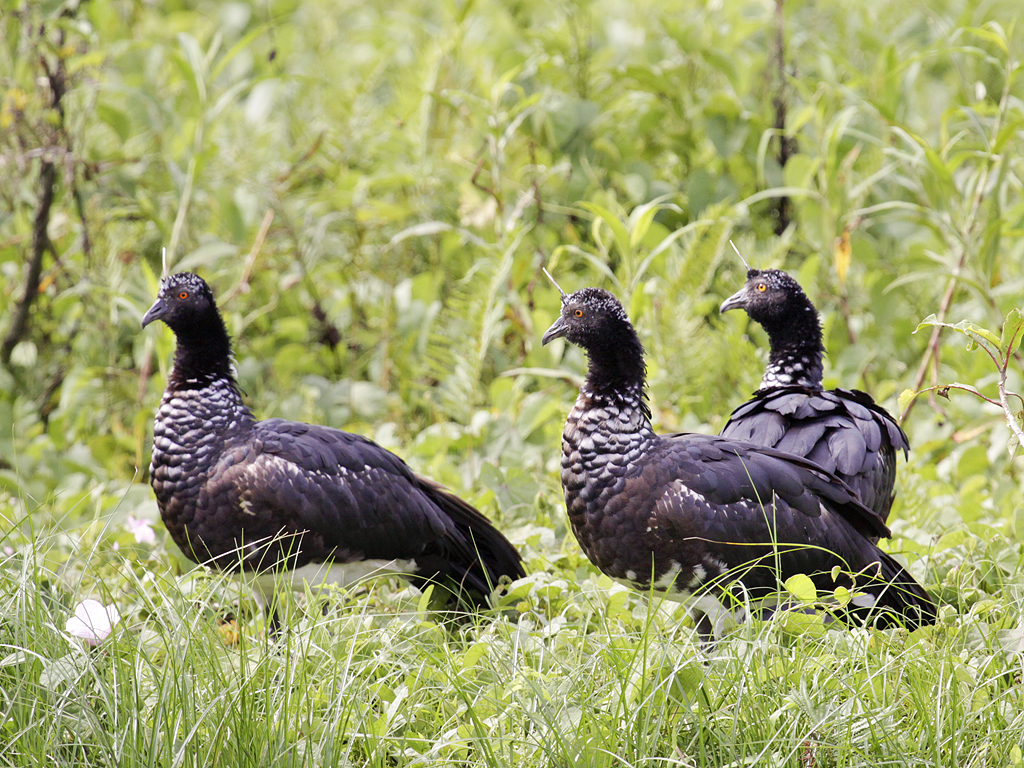
Wikipedia: Horned screamer Source: WIKIPEDIA
Anhima_cornuta_-near_Manu_Wildlife_Center%2C_Manu_National_Park%2C_Peru_-three-8.jpg
🔍
Never observed (yet!)
Description
General:The horned screamer (Anhima cornuta) is a member of a small family of birds, the Anhimidae, which occurs in wetlands of tropical South America. There are three screamer species, the other two being the southern screamer and the northern screamer in the genus Chauna. They are related to the ducks, geese and swans, which are in the family Anatidae, but have bills looking more like those of game birds.
[more]
Details
Neotropic cormorant / Olivenscharbe (Phalacrocorax brasilianus)
Profile Wikipedia Audubon AllAboutBirds Xeno-Canto YouTube

Wikipedia: Neotropic cormorant Source: WIKIPEDIA
1200px-Phalacrocorax_brasilianus_%28Costa_Rica%29.jpg
🔍
Never observed (yet!)
Description
The neotropic cormorant or olivaceous cormorant (Phalacrocorax brasilianus) is a medium-sized cormorant found throughout the American tropics and subtropics, from the middle Rio Grande and the Gulf and Californian coasts of the United States south through Mexico and Central America to southern South America, where it is called by the Indian name of biguá. It also breeds on the Bahamas, Cuba and Trinidad. It can be found both at coasts (including some mangrove areas) and on inland waters. There are at least two subspecies: P. b. mexicanus from Nicaragua northwards and P. b. brasilianus further south. In Peru the neotropic cormorant is used by the Uru people for fishing.
[more]
Details
Guanay shag / Guanokormoran (Leucocarbo bougainvillii)
Description
Der Guanokormoran oder Guanoscharbe[1] (Leucocarbo bougainvillii, Syn.: Phalacrocorax bougainvillii, Phalacrocorax bougainvilliorum, Protonym Carbo Bougainvillii[1]) ist ein sehr großer Vogel aus der Familie der Kormorane. In Südamerika ist er einer der wichtigsten Guano-Produzenten.[2]
[more]
Details
Great egret / Silberreiher (Ardea alba)

Silberreiher in Deutschland, von WikiCommons Von Andreas Eichler, CC BY-SA 4.0, https://commons.wikimedia.org/w/index.php?curid=59954907 Source: OTHER
Wikicommons 2016.10.30--Silberreiher.jpg
First observed in 🇨🇭 on 2021-02-24.
Description
Geography: This bird appears across the great seas in the following continents: Europe, North America, South America, Africa, Asia.General: Auf dem Heimweg von Schwanden haben wir bei Benken ganz weisse Reiher gesehen. Laut ornitho.ch waren sie Silberreiher.
General: Bei den meisten Quellen heisst es, sie sind in der Schweiz nur Durchzüger oder Wintergäste. Aber laut Balzari und Gygax, brüten auch einige Vögel am Lac Neuchatel seit 2013.
General: Deutschland: Zugvogel, Wintergast
Vocalization:
Silent outside breeding ground. [Link]
Seasonal behavior
Year-round bird Migration in: 03-01 - 05-31 Migration out: 08-09 - 11-15 More details at Vogelwarte.ch
Other Details
Physical details
Physical details: length=85-102 cm, wingspan=140-170 cm, weight=960-1030 gHabitats: Wetland
Vocalisation
Calls:In colonies various harsh calls like a dry, and mechanical "kerrrrrrr", and a very nasal "geet" or "ga-geet ga-geet" are heard. [Link]
1:
Partly an awkward quack: uck uck. Rattles. Deep-toned urrr. Higher-toned trill.
2: No details but a Xeno-Canto recording.
XC751146 - Great Egret - Ardea alba - call and flight call - Shanghai, China.
♫ Source: XENOCANTO XC751146 - Great Egret - Ardea alba - call and flight call - Shanghai, China.mp3 (flight call)

Call attributes: Call melody: non-musical, slow, Frequency: low (1-3 KHz),
Details
Western cattle egret / Kuhreiher (Ardea ibis)

Cattle egret. 2025-02-19 16:04:27 Fuerteventura
First observed in Costa Rica on 2018-02-27.
Description
Geography: This bird appears across the great seas in the following continents: Europe, North America, South America, Africa, Asia.Vocalisation
Song: No details but a Xeno-Canto recording. Song attributes: Frequency:♫ Source: XENOCANTO XC794287 - Eastern Cattle Egret - Bubulcus coromandus - call - Hong Kong, China.mp3 (call)

1: No details but a Xeno-Canto recording.
2: No details but a Xeno-Canto recording.
XC353848 - Western Cattle Egret - Bubulcus ibis - flight call - sevilla, andalucía, Spain.
♫ Source: XENOCANTO XC353848 - Western Cattle Egret - Bubulcus ibis - flight call - sevilla, andalucía, Spain.mp3 Spain (flight call)

Call attributes: song Frequency: ,
Details
Great blue heron / Kanadareiher (Ardea herodias)
Profile Wikipedia A-Z Animals Audubon AllAboutBirds Xeno-Canto YouTube

Great blue heron. 2022-04-28 18:15:08
First observed in Cherrywood on 2021-06-17.
Description
General:The great blue heron (Ardea herodias) is a large wading bird in the heron family Ardeidae, common near the shores of open water and in wetlands over most of North America and Central America, as well as the Caribbean and the Galápagos Islands. It is a rare vagrant to coastal Spain, the Azores, and areas of far southern Europe. An all-white population found in south Florida and the Florida Keys is known as the great white heron. Debate exists about whether this represents a white color morph of the great blue heron, a subspecies of it, or an entirely separate species.[2][3] The status of white individuals known to occur elsewhere in the Caribbean, and very rarely elsewhere in eastern North America, is unclear.[3]
[more]
Details
Cocoi heron / Cocoireiher (Ardea cocoi)
Profile Wikipedia Xeno-Canto YouTube

Wikipedia: Cocoi heron Source: WIKIPEDIA
1200px-Cocoi_heron_%28Ardea_cocoi%29_Pantanal.JPG
🔍
Never observed (yet!)
Description
The cocoi heron (Ardea cocoi) is a species of long-legged wading bird in the heron family Ardeidae found across South America. It has predominantly pale grey plumage with a darker grey crest. A carnivore, it hunts fish and crustaceans in shallow water.
[more]
Details
Black-crowned night-heron / Nachtreiher (Nycticorax nycticorax)

Nachtreiher in Camargue - the only bird I've been able to identify so far looking back on those old photos. 1991-07-15 12:41:47 Camargue
First observed in Camargue on 1991-07-15.
Description
Geography: This bird appears across the great seas in the following continents: Europe, North America, South America, Africa, Asia.General: Deutschland: Brutvogel, seltener Zugvogel RL 1
Seasonal behavior
Presence: 03-23 - 09-28 Migration in: 09-07 - 09-14 Migration out: 09-07 - 09-28More details at Vogelwarte.ch
Other Details
Physical details
Physical details: length=58-65 cm, wingspan=105-112 cm, weight=500-800 gHabitats: Wetland Details
Little blue heron / Blaureiher (Egretta caerulea)
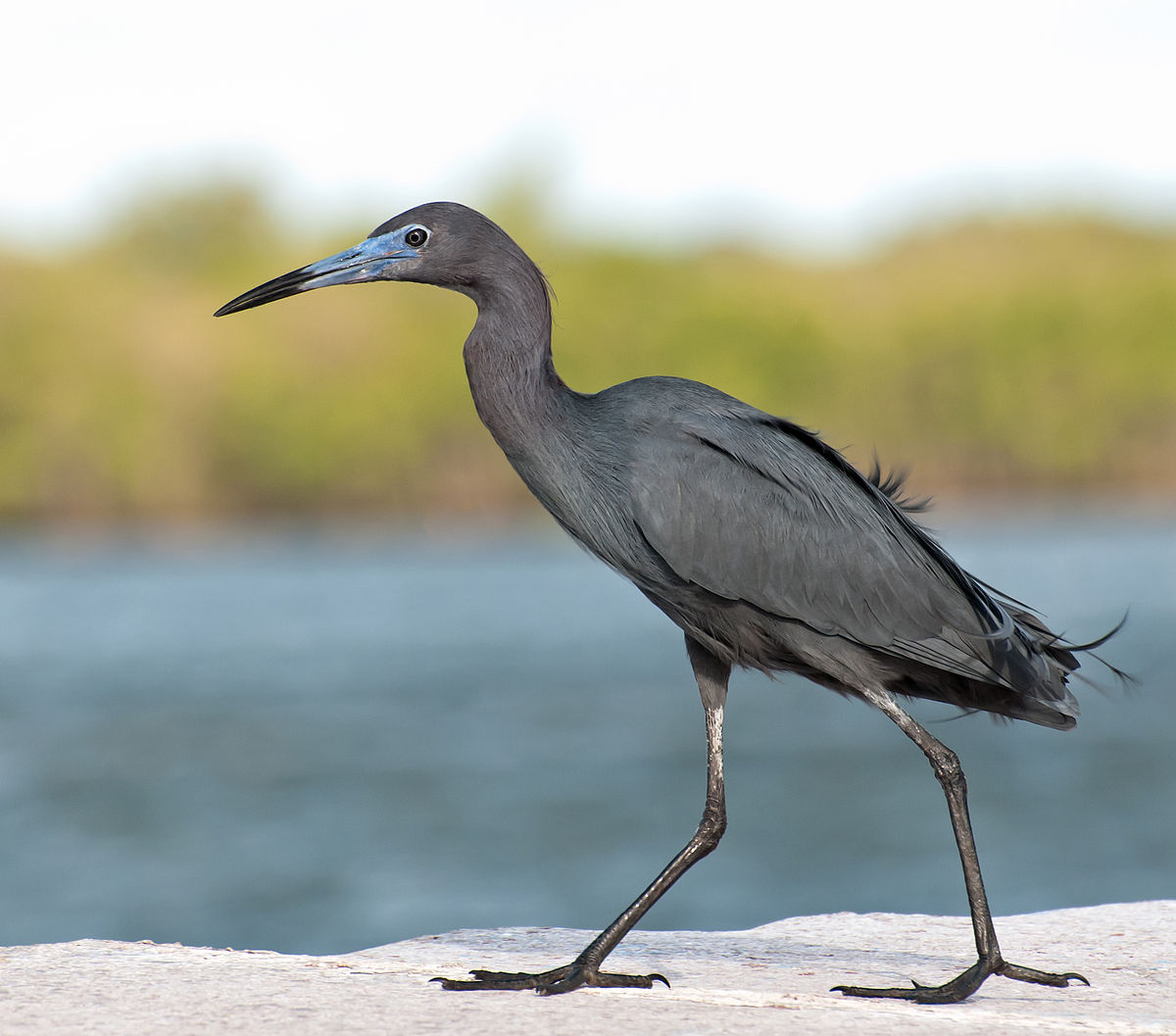
Wikipedia: Little blue heron Source: WIKIPEDIA
1200px-Egretta_caerulea_-Cananeia%2C_Sao_Paulo%2C_Brasil-8.jpg
🔍
Never observed (yet!)
Description
Geography: This bird appears across the great seas in the following continents: North America, South America, Africa.General:
The little blue heron (Egretta caerulea) is a small heron belonging to the family Ardeidae.
[more]
Details
Tricolored heron / Dreifarbenreiher (Egretta tricolor)
Profile Wikipedia Audubon AllAboutBirds Xeno-Canto YouTube

Beautiful tricolored heron near Las Coloradas. 2023-04-15 10:04:30 Yucatan
First observed in Yucatan on 2023-04-15.
Description
The tricolored heron (Egretta tricolor), formerly known as the Louisiana heron, is a small species of heron native to coastal parts of the Americas; in the Atlantic region, it ranges from the northeastern United States, south along the coast, through the Gulf of Mexico and the Caribbean, to northern South America as far south as Brazil. In the Pacific region, it ranges from Peru to California, but it is only a nonbreeding visitor to the far north.
[more]
Details
Snowy egret / Schmuckreiher (Egretta thula)
Profile Wikipedia Audubon AllAboutBirds Xeno-Canto YouTube

MerlinBirdID suggests snowy egret, but not so sure. 2023-04-15 08:34:40 Yucatan
First observed in Yucatan on 2023-04-15.
Description
Geography: This bird appears across the great seas in the following continents: North America, South America, Africa.General:
The snowy egret (Egretta thula) is a small white heron. The genus name comes from Provençal French for the little egret, aigrette, which is a diminutive of aigron, 'heron'. The species name thula is the Araucano term for the black-necked swan, applied to this species in error by Chilean naturalist Juan Ignacio Molina in 1782.[3]
[more]
Details
Yellow-crowned night heron / Krabbenreiher (Nyctanassa violacea)

Yellow-crowned night heron in Manzanillo, Costa Rica. 2020-03-13 09:00:32 Manzanillo
First observed in Manzanillo on 2020-03-13.
Description
The yellow-crowned night heron (Nyctanassa violacea), is one of two species of night herons found in the Americas, the other one being the black-crowned night heron. It is known as the "bihoreau violacé" in French and the "pedrete corona clara" in Spanish.
[more]
Details
Pinnated bittern / Südamerikanische Rohrdommel (Botaurus pinnatus)

Wikipedia: Pinnated bittern Source: WIKIPEDIA
1200px-Botaurus_pinnatus.jpg
🔍
Never observed (yet!)
Description
The pinnated bittern (Botaurus pinnatus), also known as the South American bittern, is a large member of the heron family (Ardeidae) found in the New World tropics. Like the other Botaurus bitterns, its plumage is mostly buffy-brown and cryptically patterned. Though it is a widespread species, it is rarely seen – presumably due to its skulking habits – and much about its life history remains little known.
[more]
Details
Green-backed heron / Mangrovereiher (Butorides striata)

Striated heron. 2024-02-22 11:31:30 Laos
First observed in Laos on 2024-02-22.
Description
Geography: This bird appears across the great seas in the following continents: Europe, South America, Africa, Asia.Vocalisation
Song: No details but a Xeno-Canto recording. Song attributes: Frequency:♫ Source: XENOCANTO XC791519 - Striated Heron - Butorides striata - song, sounds like Ow plus pi-rol lhl, Copperbelt Province, Zambia.mp3 (song)

Details
Green heron / Grünreiher (Butorides virescens)

Green heron. 2023-04-16 08:37:04 Yucatan
First observed in Yucatan on 2023-04-16.
Description
General:The green heron (Butorides virescens) is a small heron of North and Central America. Butorides is from Middle English butor "bittern" and Ancient Greek -oides, "resembling", and virescens is Latin for "greenish".[2]
[more]
Details
Boat-billed heron / Kahnschnabel (Cochlearius cochlearius)

MerlinBirdID suggests boat-billed heron, which is difficult to judge from this angle but looks plausible, birding tour near Rio Lagartos. 2023-04-15 08:37:52 Yucatan
First observed in Costa Rica on 2020-03-17.
Description
The boat-billed heron (Cochlearius cochlearius), colloquially known as the boatbill, is an atypical member of the heron family, and was formerly placed in a monotypic family, the Cochlearidae. It lives in mangrove swamps from Mexico south to Peru and Brazil. It is a nocturnal bird, and breeds semicolonially in mangrove trees, laying two to four bluish-white eggs in a twig nest.
[more]
Details
Least bittern / Amerikanische Zwergdommel (Ixobrychus exilis)
Profile Wikipedia Audubon AllAboutBirds Xeno-Canto YouTube
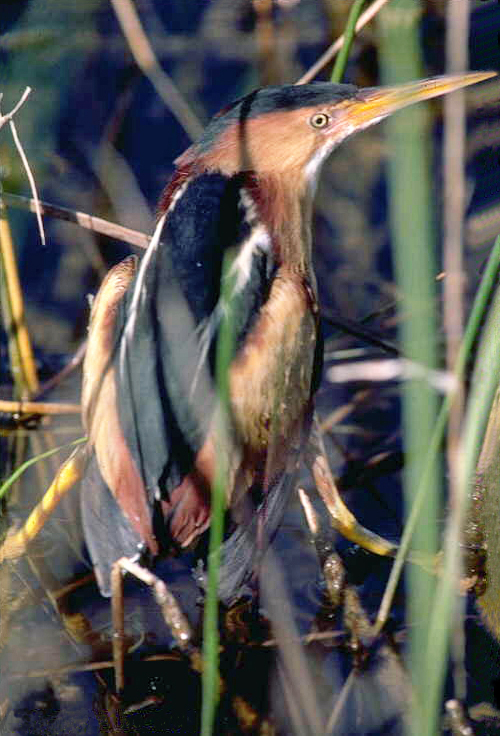
Wikipedia: Least bittern Source: WIKIPEDIA
Ixobrychus_exilis.jpg
🔍
Never observed (yet!)
Description
The least bittern (Ixobrychus exilis) is a small heron, the smallest member of the family Ardeidae found in the Americas.
[more]
Details
Fasciated tiger heron / Streifenreiher (Tigrisoma fasciatum)

Fasciated tiger heron. 2020-02-19 06:59:06 Panama
First observed in Panama on 2020-02-19.
Description
We saw this on a guided tour of the Pipeline Road near Gamboa, Panama, which is named after an oil pipeline built to ensure supply during World War II, but never actually put into service, and now providing access to Soberania National Park.General:
The fasciated tiger heron (Tigrisoma fasciatum) is a species of heron in the family Ardeidae. It is present in southern Central America and parts of northern and central South America, where its natural habitat is rivers.
[more]
Details
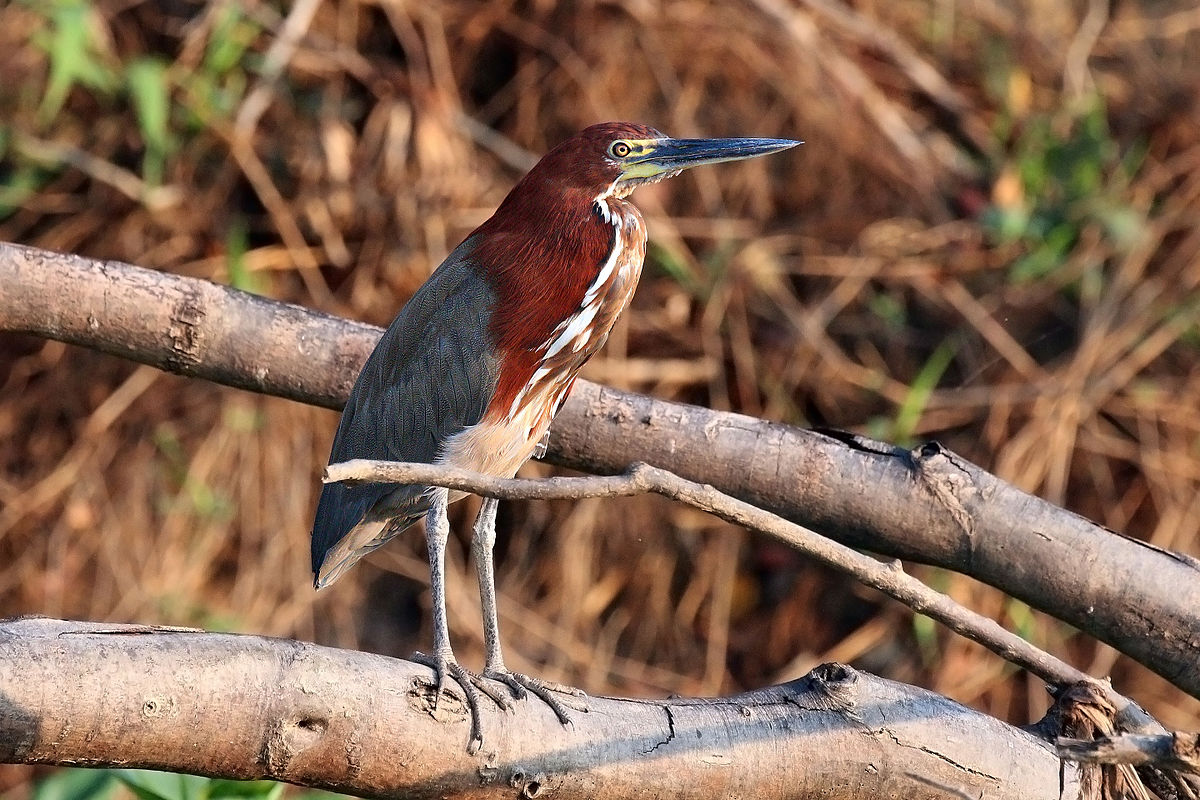
Rufescent tiger-heron / Marmorreiher (Tigrisoma lineatum)
Profile Wikipedia Xeno-Canto YouTube
Wikipedia: Rufescent tiger-heron Source: WIKIPEDIA
1200px-Rufescent_tiger_heron_%28Tigrisoma_lineatum%29.JPG
🔍
Never observed (yet!)
Description
The rufescent tiger heron (Tigrisoma lineatum) is a species of heron in the family Ardeidae. It is found in wetlands from Central America through much of South America.
[more]
Details
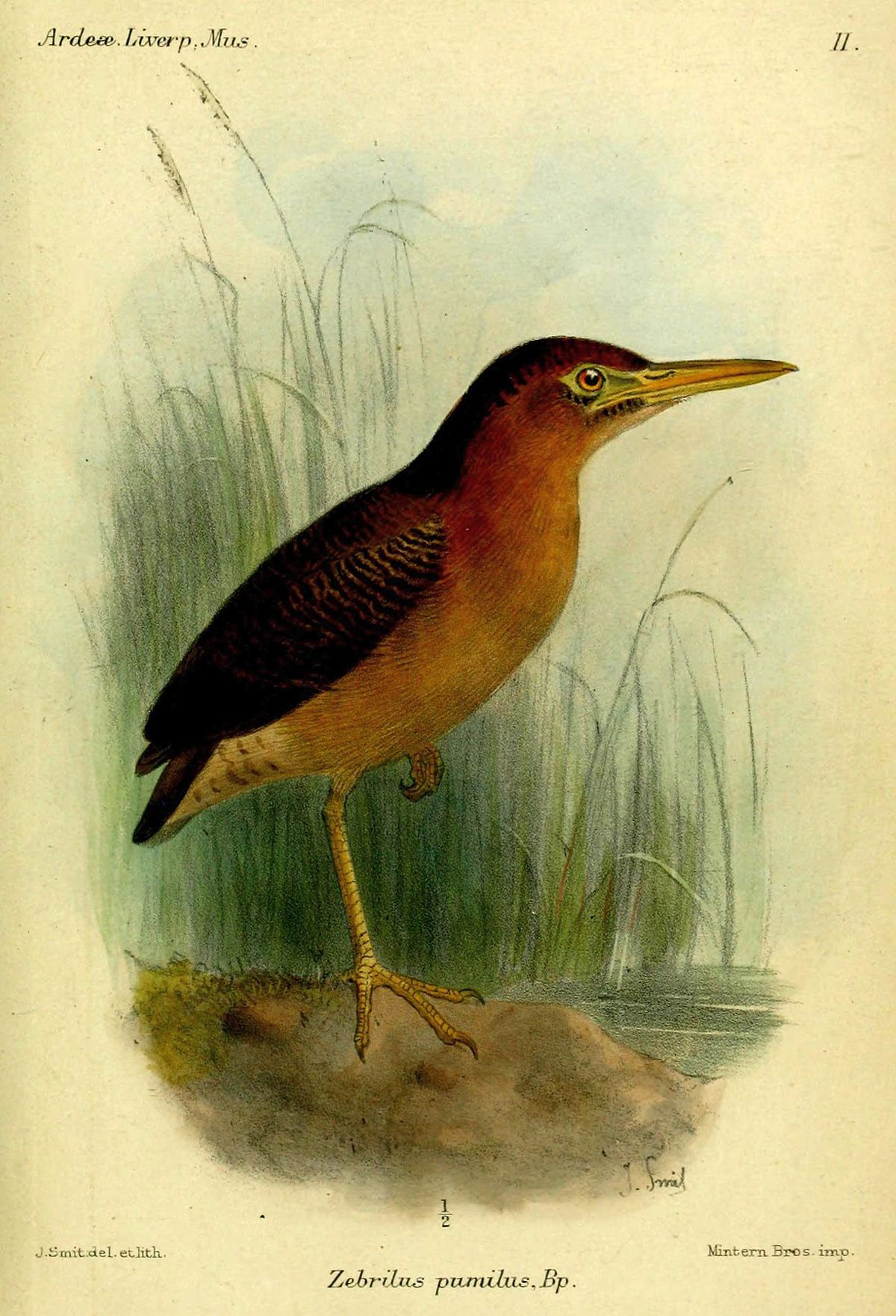
Zigzag heron / Zickzackreiher (Zebrilus undulatus)
Profile Wikipedia Xeno-Canto YouTube
Wikipedia: Zigzag heron Source: WIKIPEDIA
1200px-ZebrilusPumilus1Smit.jpg
🔍
Never observed (yet!)
Description
The zigzag heron (Zebrilus undulatus) is a species of heron in the family Ardeidae, also including egrets and bitterns. It is in the monotypic genus Zebrilus.[2] It is found in Bolivia, Brazil, Colombia, Ecuador, French Guiana, Guyana, Peru, Suriname, and Venezuela. Its natural habitat is subtropical or tropical swamps.
[more]
Details
Agami heron / Speerreiher (Agamia agami)

Wikipedia: Agami heron Source: WIKIPEDIA
Agami_Heron_%28Agamia_agami%29.jpg
🔍
Never observed (yet!)
Description
The agami heron (Agamia agami) is a medium-sized heron. It is a resident breeding bird from Central America south to Peru and Brazil. It is sometimes known as the chestnut-bellied heron, and is the only member of the genus Agamia (Reichenbach, 1853). In Brazil it is sometimes called Soco beija-flor, meaning 'hummingbird heron', thanks to its unique coloration pattern.[2]
[more]
Details
Capped heron / Kappenreiher (Pilherodius pileatus)

Wikipedia: Capped heron Source: WIKIPEDIA
1200px-Kappenreiher_Pilherodius_pileatus.jpg
🔍
Never observed (yet!)
Description
The capped heron (Pilherodius pileatus) is a water bird endemic to the neotropics, inhabiting rainforest from the center of Panama to the south of Brazil.[2] It is the only species of the genus Pilherodius, and one of the least known of the heron family, Ardeidae. It is superficially similar to the group of the night herons, but is active during daytime or at twilight.[3]
[more]
Details
American anhinga / Amerikanischer Schlangenhalsvogel (Anhinga anhinga)

Wonderful patterns of an anhinga near RIo Lagartos. 2023-04-15 08:57:48 Yucatan
First observed in Yucatan on 2023-04-15.
Description
Der Amerika-Schlangenhalsvogel (Anhinga anhinga) oder Amerikanischer Schlangenhalsvogel ist eine vergleichsweise häufige Vogelart aus der Ordnung Suliformes. Die Art kommt in zwei Unterarten auf dem amerikanischen Doppelkontinent vom Südosten der USA über Mittelamerika und Amazonien bis in den Norden Argentiniens. Die größte Ähnlichkeit besteht zu den Kormoranen (Phalacrocoracidae).
[more]
Vocalisation
No details but a Xeno-Canto recording.XC311148 - Oriental Darter - Anhinga melanogaster - quacky call - Tissamaharama area, Sri Lanka.
♫ Source: XENOCANTO XC311148 - Oriental Darter - Anhinga melanogaster - quacky call - Tissamaharama area, Sri Lanka.mp3 (call)

Call attributes: song Frequency: ,
Details
Magnificent frigatebird / Prachtfregattvogel (Fregata magnificens)
Profile Wikipedia Audubon AllAboutBirds Xeno-Canto YouTube

Magnificent frigatebirds in Puerto Morelos. 2023-03-26 13:47:02 Yucatan
First observed in Yucatan on 2023-03-26.
Description
Geography: This bird appears across the great seas in the following continents: North America, South America, Africa.General:
The magnificent frigatebird (Fregata magnificens) or man o' war is a seabird of the frigatebird family Fregatidae. With a length of 89–114 centimetres (35–45 in) and wingspan of 2.17–2.44 m (7.1–8.0 ft) it is the largest species of frigatebird. It occurs over tropical and subtropical waters off America, between northern Mexico and Perú on the Pacific coast and between Florida and southern Brazil along the Atlantic coast.[1] There are also populations on the Galápagos Islands in the Pacific and the Cape Verde islands in the Atlantic.
[more]
Details
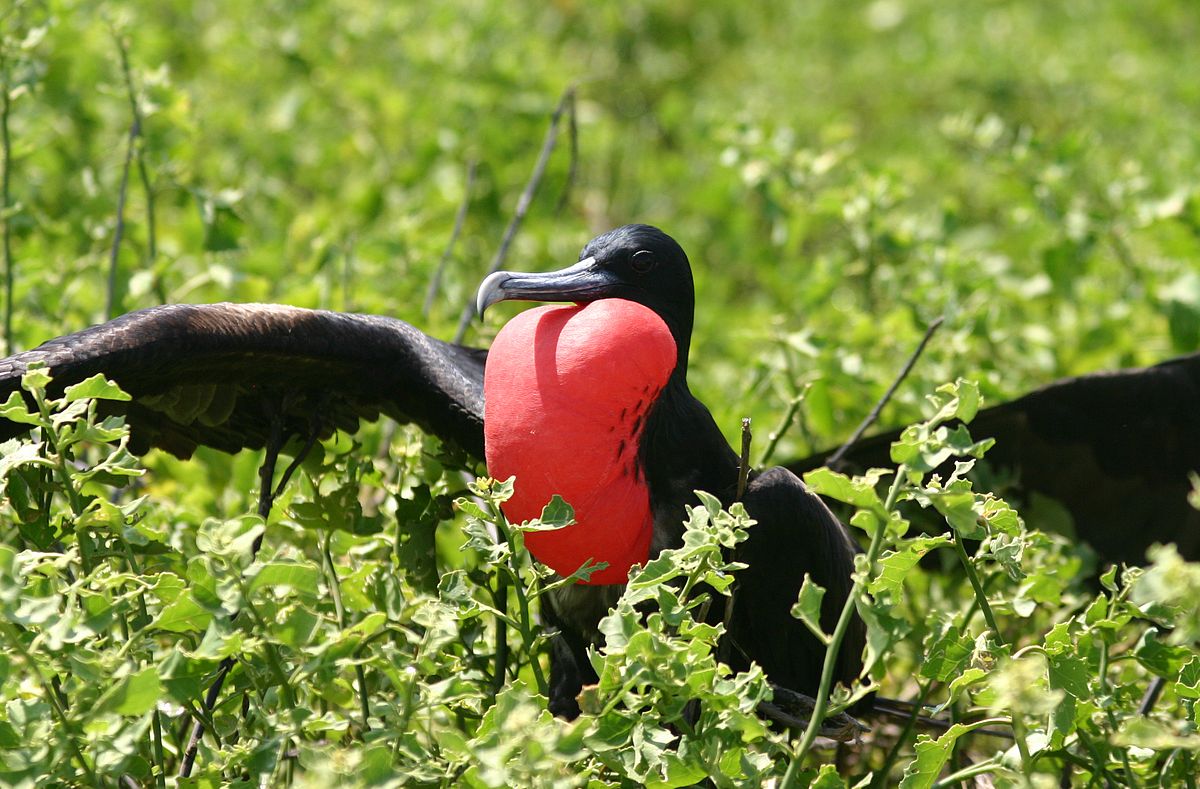
Great frigatebird / Bindenfregattvogel (Fregata minor)
Profile Wikipedia Audubon AllAboutBirds Xeno-Canto YouTube
Wikipedia: Great frigatebird Source: WIKIPEDIA
1200px-Male_greater_frigate_bird_displaying.jpg
🔍
Never observed (yet!)
Description
Geography: This bird appears across the great seas in the following continents: North America, South America, Africa, Asia.Details
Peruvian pelican / Chilepelikan (Pelecanus thagus)

Wikipedia: Peruvian pelican Source: WIKIPEDIA
1200px-Pel%C3%ADcano_en_Pucusana.JPG
🔍
Never observed (yet!)
Description
General:The Peruvian pelican (Pelecanus thagus) is a member of the pelican family. It lives on the west coast of South America, breeding in loose colonies from about 33.5° in central Chile to Piura in northern Peru, and occurring as a visitor in southern Chile and Ecuador.[2]
[more]
Details
Brown pelican / Meerespelikan (Pelecanus occidentalis)
Profile Wikipedia Audubon AllAboutBirds Xeno-Canto YouTube

This brown pelican is not shy of people. 2023-03-26 13:40:24 Yucatan
First observed in Panama on 2020-03-08.
Description
The brown pelican (Pelecanus occidentalis) is a bird of the pelican family, Pelecanidae, one of three species found in the Americas and one of two that feed by diving into water. It is found on the Atlantic Coast from New Jersey to the mouth of the Amazon River, and along the Pacific Coast from British Columbia to northern Chile, including the Galapagos Islands. The nominate subspecies in its breeding plumage has a white head with a yellowish wash on the crown. The nape and neck are dark maroon–brown. The upper sides of the neck have white lines along the base of the gular pouch, and the lower fore neck has a pale yellowish patch. The male and female are similar, but the female is slightly smaller. The nonbreeding adult has a white head and neck. The pink skin around the eyes becomes dull and gray in the nonbreeding season. It lacks any red hue, and the pouch is strongly olivaceous ochre-tinged and the legs are olivaceous gray to blackish-gray.
[more]
Details
Red-billed tropicbird / Rotschnabel-Tropikvogel (Phaethon aethereus)
Profile Wikipedia Audubon AllAboutBirds Xeno-Canto YouTube

Wikipedia: Red-billed tropicbird Source: WIKIPEDIA
1200px-Red-billed_tropicbird.jpg
🔍
Never observed (yet!)
Description
Geography: This bird appears across the great seas in the following continents: North America, South America, Africa, Asia.Details
Nazca booby / Nazcatölpel (Sula granti)
Profile Wikipedia Xeno-Canto YouTube

Wikipedia: Nazca booby Source: WIKIPEDIA
1200px-Nazca-Booby.jpg
🔍
Never observed (yet!)
Description
General:The Nazca booby (Sula granti) is a large seabird of the booby family, Sulidae, native to the eastern Pacific. First described by Walter Rothschild in 1902, it was long considered a subspecies of the masked booby until recognised as distinct genetically and behaviorally in 2002. It has a typical sulid body shape, with a long pointed orange-yellow bill, long neck, aerodynamic body, long slender wings and pointed tail. The adult is bright white with black and white wings, a black tail and a dark face mask.
[more]
Details
Peruvian booby / Guanotölpel (Sula variegata)
Profile Wikipedia Xeno-Canto YouTube

Wikipedia: Peruvian booby Source: WIKIPEDIA
Fou.varie1.jpg
🔍
Never observed (yet!)
Description
The Peruvian booby (Sula variegata) is an endemic bird of the Peruvian current, and an important predator of the marine community to which it belongs.[3] Its distribution is much less widespread than other closely related booby species. It is the most abundant seabird species that inhabits the Peruvian coast[4] and the second most important guano-producing seabird. During the mid-twentieth century, the Peruvian booby population reached 3 million birds.[5]
[more]
Details
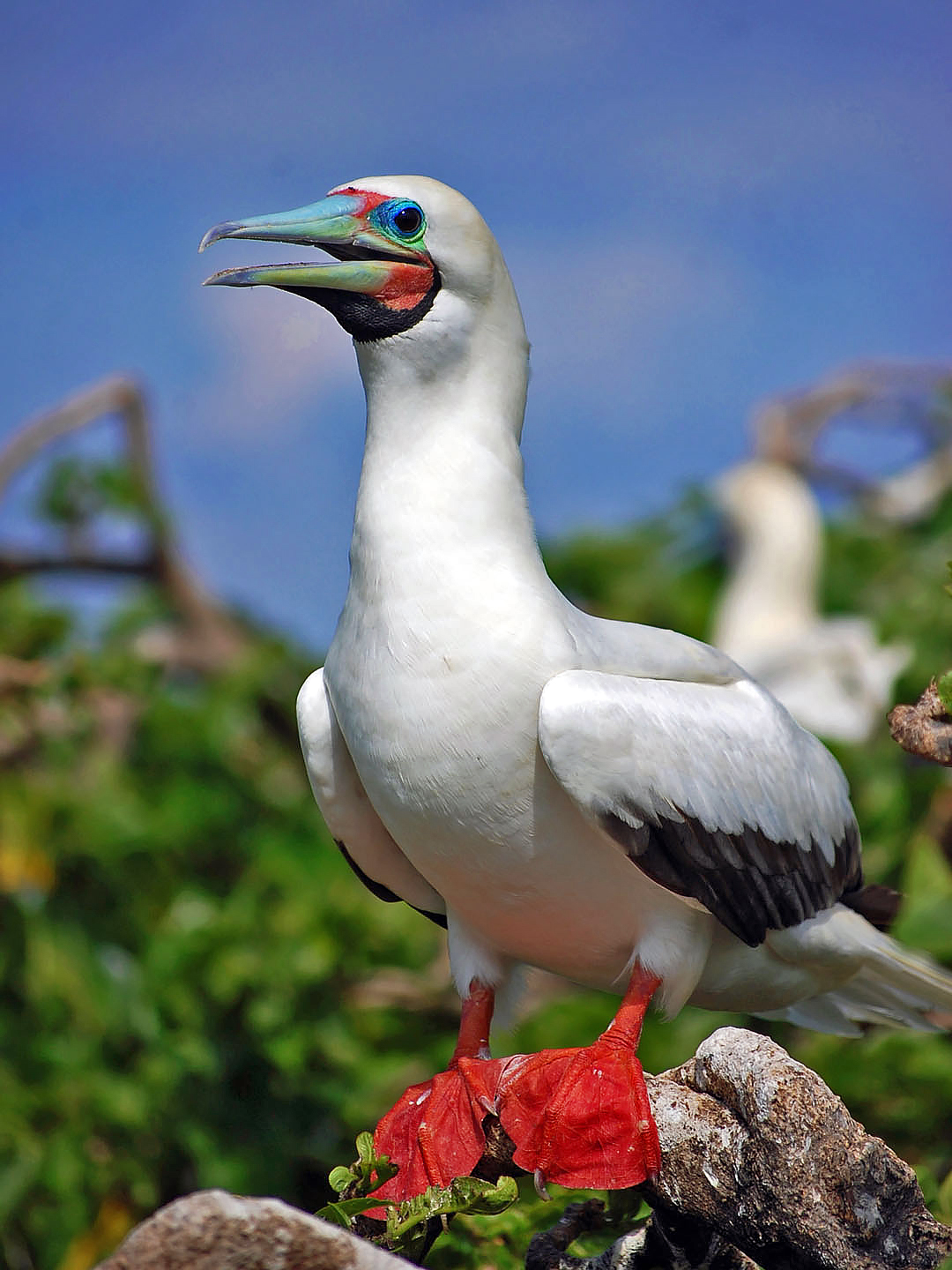
Red-footed booby / Rotfußtölpel (Sula sula)
Profile Wikipedia Audubon AllAboutBirds Xeno-Canto YouTube
Wikipedia: Red-footed booby Source: WIKIPEDIA
Sula_sula_by_Gregg_Yan_01.jpg
🔍
Never observed (yet!)
Description
Geography: This bird appears across the great seas in the following continents: North America, South America, Asia.Details
Blue-footed booby / Blaufußtölpel (Sula nebouxii)
Profile Wikipedia Xeno-Canto YouTube

Wikipedia: Blue-footed booby Source: WIKIPEDIA
Blue-footed-booby.jpg
🔍
Never observed (yet!)
Description
General:The blue-footed booby (Sula nebouxii) is a marine bird native to subtropical and tropical regions of the eastern Pacific Ocean. It is one of six species of the genus Sula – known as boobies. It is easily recognizable by its distinctive bright blue feet, which is a sexually selected trait. Males display their feet in an elaborate mating ritual by lifting them up and down while strutting before the female. The female is slightly larger than the male and can measure up to 90 cm (35 in) long with a wingspan up to 1.5 m (5 ft).[2]
[more]
Details
Glossy ibis / Brauner Sichler (Plegadis falcinellus)

Sichler nach ornitho, Brauner Sichler nach Wikipedia oder Plegadis falcinellus, Neeracherried. 2022-09-04 07:11:46 Source: WIKIPEDIA
20220904_071146-DSC_0059 Sichler nach ornitho, Brauner Sichler nach Wikipedia oder Plegadis falcinellus, Neeracherried.JPG
Neeracherried
First observed in 🇨🇭 on 2022-09-04.
Description
Geography: This bird appears across the great seas in the following continents: Europe, North America, South America, Africa, Asia.Vocalization:
Generally silent away from breeding ground. Dry, crow-like "garr garr", may be heard occasionally in flight. At breeding ground various guttural grunts, and piping, hissing sounds. [Link]
Other Details
Physical details
Physical details: length=55-65 cm, wingspan=80-95 cm, weight=530-768 gDetails
Roseate spoonbill / Rosalöffler (Platalea ajaja)

Roseate spoonbills near Rio Lagartos. 2023-04-15 08:56:42 Yucatan
First observed in Yucatan on 2023-04-15.
Description
General:The roseate spoonbill (Platalea ajaja) is a gregarious wading bird of the ibis and spoonbill family, Threskiornithidae. It is a resident breeder in South America mostly east of the Andes, and in coastal regions of the Caribbean, Central America, Mexico, the Gulf Coast of the United States,[2][3] and from central Florida's Atlantic coast[4] at Merritt Island National Wildlife Refuge, adjoined with NASA Kennedy Space Center at least as far north as South Carolina's Myrtle Beach.[5]
[more]
Details
Scarlet ibis / Scharlachsichler (Eudocimus ruber)
Profile Wikipedia Xeno-Canto YouTube

Wikipedia: Scarlet ibis Source: WIKIPEDIA
1200px-Oceanografic_Scarlet_Ibis_02.jpg
🔍
Never observed (yet!)
Description
The scarlet ibis (Eudocimus ruber) is a species of ibis in the bird family Threskiornithidae. It inhabits tropical South America and part of the Caribbean. In form, it resembles most of the other twenty-seven extant species of ibis, but its remarkably brilliant scarlet coloration makes it unmistakable. It is one of the two national birds of Trinidad and Tobago, and its Tupi–Guarani name, guará, is part of the name of several municipalities along the coast of Brazil.[2]
[more]
Details
White ibis / Schneesichler (Eudocimus albus)
Profile Wikipedia Audubon AllAboutBirds Xeno-Canto YouTube

White ibises in flight, St Petersburg. 2023-09-23 19:16:50 Florida
First observed in Florida on 2023-09-23.
Description
Der Schneesichler (Eudocimus albus) ist eine amerikanische Vogelart aus der Familie der Ibisse und Löffler (Threskiornithidae) innerhalb der Ordnung Pelecaniformes.
[more]
Details
Andean ibis / Andenibis (Theristicus branickii)
Profile Wikipedia Xeno-Canto YouTube

Wikipedia: Andean ibis Source: WIKIPEDIA
1200px-Theristicus_branickii_63684956.jpg
🔍
Never observed (yet!)
Description
The Andean ibis (Theristicus branickii) is a species of bird in the family Threskiornithidae. It is found in grassland and fields in western South America. This species was considered a subspecies of the black-faced ibis, and some taxonomic authorities (including the American Ornithological Society) still consider it so.
[more]
Details
Bare-faced ibis / Mohrenibis (Phimosus infuscatus)
Profile Wikipedia Xeno-Canto YouTube

Wikipedia: Bare-faced ibis Source: WIKIPEDIA
1200px-Bare-faced_ibis_%28Phimosus_infuscatus%29.JPG
🔍
Never observed (yet!)
Description
The bare-faced ibis (Phimosus infuscatus), also known as the whispering ibis, is a species of bird in the family Threskiornithidae, in the monotypic genus Phimosus.[2]
[more]
Details
Green ibis / Grünibis (Mesembrinibis cayennensis)
Profile Wikipedia Xeno-Canto YouTube

Wikipedia: Green ibis Source: WIKIPEDIA
1200px-Green_ibis_%28Mesembrinibis_cayennensis%29.JPG
🔍
Never observed (yet!)
Description
The green ibis (Mesembrinibis cayennensis), also known as the Cayenne ibis, is a wading bird in the ibis family Threskiornithidae. It is the only member of the genus Mesembrinibis.
[more]
Details
Profile Wikipedia A-Z Animals Vogelwarte BirdLife ZH ornitho.ch bird-song.ch Audubon AllAboutBirds Xeno-Canto BirdID NABU YouTube

Rauchschwalbe braucht eine Coiffeuse. 2025-08-03 16:54:17 Fehraltorf
First observed in 🇨🇭 on 2020-04-16.
Description
Geography: This bird appears across the great seas in the following continents: Europe, North America, South America, Africa, Asia.General: Deutschland: Brut-, Zugvogel RL V
Good to know: Die langen Schwanzfedern vom Rauchschwalbe und anderen geben auch dem Schmetterling Schwalbenschwanz seine deutschen Namen.
Etymology:
In früheren Jahrhunderten flogen sie vielfach durch die Öffnungen im Giebel ein und aus, durch die auch der Rauch des Herdfeuers abzog. So erhielten sie den Namen Rauchschwalben. [Link]
Appearance and identification:
 Rauchschwalbes Bauch ist etwas braun rot, nicht weiss wie der von der Mehlschwalbe - was wahrscheinlich Quelle der zwei Namen ist. [Link]
Seasonal behavior
Presence: 03-01 - 10-27 Breeding: 04-20 - 09-17 Migration in: 03-01 - 05-31 Migration out: 08-18 - 10-27More details at Vogelwarte.ch
Other Details
Physical details
Physical details: length=17-19 cm, wingspan=32-34 cm, weight=16-22 gHabitats: Settlement
Similar species
Looks similar to: Common house martin.Vocalisation
Song: General: Squeaky with occasional buzzes, usually heard in flock.Song:
Kann melodisch sein wenn einzeln gehört statt viele zusammen. [Link]
Song: Characteristic calls and song. Song a sparkling, squeaky energetic improvisation with interspersed contact calls, often with diagnostic ending; an electric and drawn-out "su-eerrrrrrrrrrrrrrr". [Link]
Song attributes:
Melody: stereotype melodic, fast, Frequency: 2-6 KHz
Calls:
Contact call a short and sharp "weet" or "kee-weet". [Link]
XC898815 - Barn Swallow - Hirundo rustica - flight call.
♫ Source: XENOCANTO XC898815 - Barn Swallow - Hirundo rustica - flight call.mp3 (flight call)

Call attributes: flight call Call melody: one note, slow, Frequency: medium (1-5 KHz),
Details

Wikipedia: White-banded swallow Source: WIKIPEDIA
1200px-White-banded_swallow_%28Atticora_fasciata%29.JPG
🔍
Never observed (yet!)
Description
General:The white-banded swallow (Atticora fasciata) is a species of bird in the family Hirundinidae. They are black with white thighs, a white breast, and white bars on the edges of its wings. They have a distinct, deeply forked tail.
[more]
Details
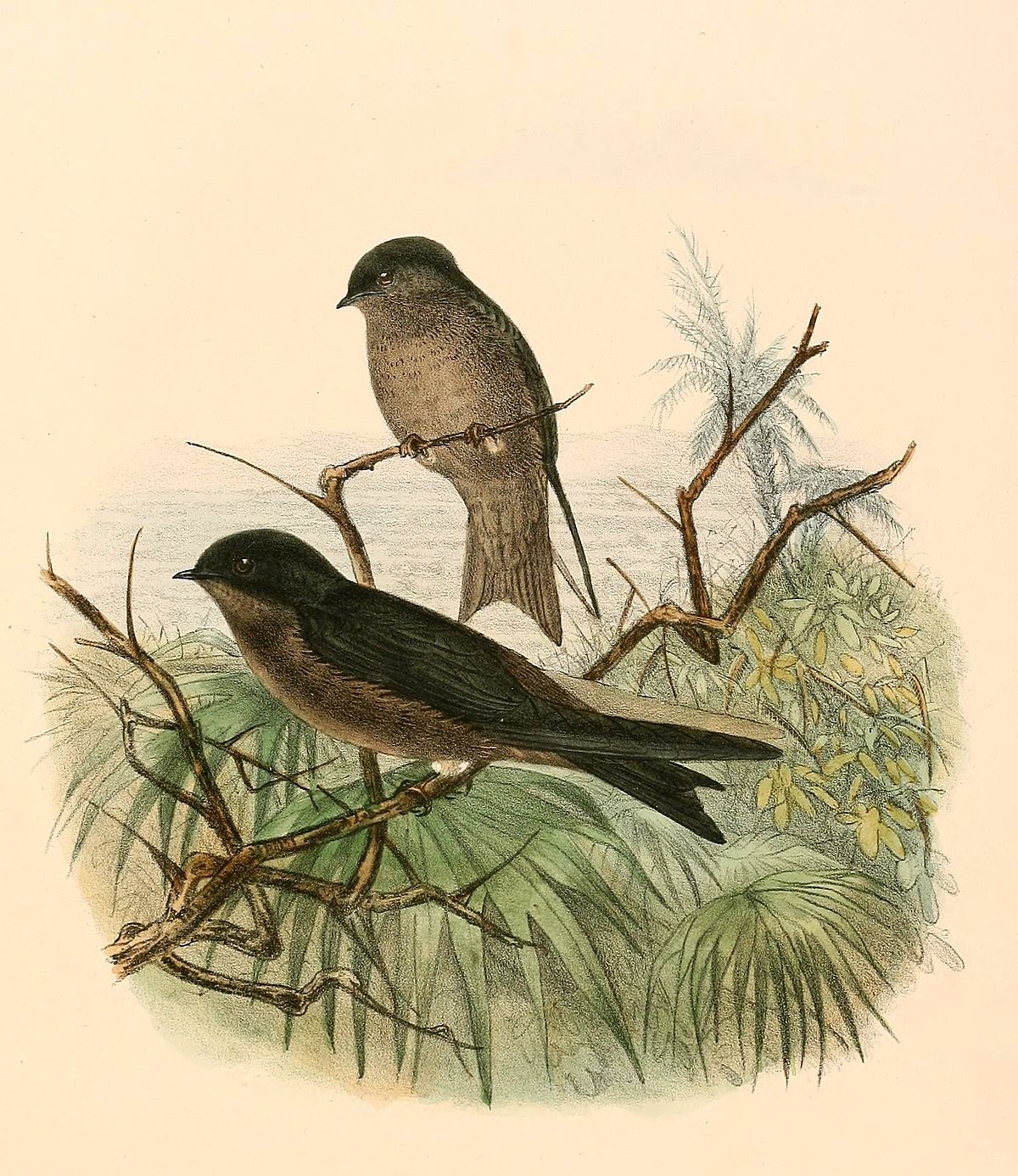
Wikipedia: White-thighed swallow Source: WIKIPEDIA
1200px-Neochelidon_tibialis_1894.jpg
🔍
Never observed (yet!)
Description
The white-thighed swallow (Neochelidon tibialis) is a species of bird in the family Hirundinidae. Its genus, Neochelidon, is monotypic.
[more]
Details
Profile Wikipedia Xeno-Canto YouTube

Wikipedia: Tumbes swallow Source: WIKIPEDIA
Tachycineta_stolzmanni_distribution_map.png
🔍
Never observed (yet!)
Description
The Tumbes swallow (Tachycineta stolzmanni) is a species of bird in the family Hirundinidae.
It is found in northwestern Peru and far southwestern Ecuador.
Its natural habitats are dry savanna, coastal saline lagoons, and arable land.
[more]
Details
Profile Wikipedia Xeno-Canto YouTube

Wikipedia: White-winged swallow Source: WIKIPEDIA
White-winged_Swallow_1052.jpg
🔍
Never observed (yet!)
Description
The white-winged swallow (Tachycineta albiventer) is a resident breeding swallow in tropical South America from Colombia, Venezuela, Trinidad, and Argentina. It is not found west of the Andes. This swallow is largely non-migratory.
[more]
Details
Description
Details
Profile Wikipedia Audubon AllAboutBirds Xeno-Canto YouTube
 best left unidentified.JPG)
Could be a wild guess - MerlinBirdID says purple martin - it says identification features are (in part) best left unidentified. 2023-04-01 14:20:30 Yucatan
First observed in Yucatan on 2023-04-01.
Description
The purple martin (Progne subis) is the largest swallow in North America. Despite their name, purple martins are not truly purple. Their dark blackish-blue feathers have an iridescent sheen caused by the refraction of incident light[2] giving them a bright blue to navy blue or deep purple appearance. In some light they may even appear green in color.
[more]
Details

Possibly gray-breasted martin at Bacalar, MerlinBirdID also suggests brown chested martin. 2023-03-31 11:24:56 Yucatan
First observed in Yucatan on 2023-03-31.
Description
The brown-chested martin (Progne tapera) is a species of passerine bird in the swallow family.
[more]
Details
Profile Wikipedia Xeno-Canto YouTube
Possibly gray-breasted martin at Bacalar, MerlinBirdID also suggests brown chested martin. 2023-03-31 11:24:56 Yucatan
First observed in Yucatan on 2023-03-31.
Description
The grey-breasted martin (Progne chalybea) is a large swallow from Central and South America.
[more]
Details
Profile Wikipedia Xeno-Canto YouTube

Arenal hike southern rough-winged swallow tentative ID by MerlinBirdID. 2018-02-28 10:47:32 Costa Rica
First observed in Costa Rica on 2018-02-28.
Description
The southern rough-winged swallow (Stelgidopteryx ruficollis) is a small swallow. It was first formally described as Hirundo ruficollis by French ornithologist Louis Vieillot in 1817 in his Nouveau Dictionnaire d'Histoire Naturelle.[2]
[more]
Details

Bank swallow. 2024-01-26 15:58:58 Thailand
First observed in Thailand on 2024-01-26.
Description
Geography: This bird appears across the great seas in the following continents: Europe, North America, South America, Africa, Asia.General:
The sand martin (Riparia riparia) or European sand martin, bank swallow, and collared sand martin in India, is a migratory passerine bird in the swallow family. It has a wide range in summer, embracing practically the whole of Europe and the Mediterranean countries and across the Palearctic to the Pacific Ocean. It is a Holarctic species also found in North America. It winters in eastern and southern Africa, South America, and the Indian Subcontinent.
[more]
Deutschland: Brut-, Zugvogel RL V
Seasonal behavior
Presence: 03-23 - 10-18 Breeding: 05-01 - 09-07 Migration in: 03-23 - 06-09 Migration out: 07-10 - 10-18More details at Vogelwarte.ch
Other Details
Physical details
Physical details: length=12 cm, wingspan=26-29 cm, weight=11-16 gHabitats: Wetland
Vocalisation
Song: Fast raspy one-noter. Song:Song a primitive improvisation on the contact call. [Link]
Song attributes:
Melody: non-musical, fast, Frequency: 1-7 KHz Special sounds: rasp
♫ Source: XENOCANTO XC344092 - Sand Martin - Riparia riparia - raspy song but note, does not sing often.mp3 (song)

Calls:
Contact call a mono- or disyllabic "trrrrt". Similar to House Martin but more raucous and less crisp, with less rolling r's, and with stable pitch throughout. Alarm call similar to House Martin; a sharp plaintive "tseep", but somewhat purer and more drawn. [Link]
No details but a Xeno-Canto recording.
XC659747 - Sand Martin - Riparia riparia - noisy call recorded in Sweden.
♫ Source: XENOCANTO XC659747 - Sand Martin - Riparia riparia - noisy call recorded in Sweden.mp3 (call)

Call attributes: song Frequency: ,
Details

Wikipedia: Chestnut-collared swallow Source: WIKIPEDIA
PetrochelidonRuficollarisKeulemans.jpg
🔍
Never observed (yet!)
Description
General:The chestnut-collared swallow (Petrochelidon rufocollaris) is a species of bird in the family Hirundinidae. It is found in Ecuador and Peru. Its natural habitats are pastureland and heavily degraded former forest.
[more]
Details

Wikipedia: Cliff swallow Source: WIKIPEDIA
Petrochelidon_pyrrhonota_-flight_-Palo_Alto_Baylands-8.jpg
🔍
Never observed (yet!)
Description
Geography: This bird appears across the great seas in the following continents: Europe, North America, South America.General:
The cliff swallow or American cliff swallow (Petrochelidon pyrrhonota) is a member of the passerine bird family Hirundinidae, the swallows and martins.[2] The scientific name is derived from Ancient Greek; Petrochelidon originates from the petros meaning "rock" and khelidon "swallow", pyrrhonota comes from purrhos meaning "flame-coloured" and -notos "-backed".[3]
[more]
Details
Profile Wikipedia Xeno-Canto YouTube

Wikipedia: Blue-and-white swallow Source: WIKIPEDIA
Pygochelidon_cyanoleuca_-Capao_do_Leao%2C_Rio_Grande_do_Sul%2C_Brazil-8.jpg
🔍
Never observed (yet!)
Description
The blue-and-white swallow (Notiochelidon cyanoleuca) is a passerine bird that breeds from Nicaragua south throughout South America, except in the deserts and the Amazon Basin. The southern race is migratory, wintering as far north as Trinidad, where it is a regular visitor. The nominate northern race may have bred on that island.[2]
[more]
Details
Profile Wikipedia eBird Vogelwarte BirdLife ZH ornitho.ch bird-song.ch Audubon AllAboutBirds Xeno-Canto BirdID NABU YouTube

MerlinBirdID suggests a Spanish sparrow, Italian sparrow or House sparrow. 2022-04-12 15:18:40
First observed in 🇨🇭 on 2019-05-14.
Description
Geography: This bird appears across the great seas in the following continents: Europe, North America (introduced), South America, Africa, Asia.General: One of the most common birds anywhere in Europe and North America. In Fehraltorf there are 5 house sparrows for every one tree sparrow. Eugene Schieffelin brought house sparrows and starlings to North Ameria. As a Shakespeare fan, it is often claimed that he wanted to introduce all species to North America that are mentioned in Shakespeare, but apparently this is not supported by any records
General: Found practically everywhere. Often on the ground or on your table in a cafe (they're very bold) or in groups in bushes and hedges
General: Deutschland: Brut-, Jahresvogel RL V
Seasonal behavior
Year-round birdOther Details
Physical details
Physical details: length=14-15 cm, wingspan=21-25 cm, weight=24-38 gnot sexually dimporphic. No breeding plumage Identifying characteristics: Youth: beak = yellow (Makes it look like a finch) Habitats: Settlement
Similar species
Looks similar to: Common reed bunting.Vocalisation
Song: An monotone chirping. Mainly 2-5 KHz with higher overtones. Song:Song a primitive, monosyllabic, or slightly disyllabic "chilp", hard to distinguish from Tree Sparrow. [Link]
Song attributes:
Melody: simple rhythmic (mh mh mh), slow, Frequency: 2-5 KHz Singing season: 01-01 - 08-31 Dawn chorus start: 30 minutes before dawn.
♫ 2024-06-18 08:35:00 Fehraltorf (call)
Calls:
Most calls very similar to Tree Sparrow, but lacks said species' distinct high pitched call (chew-itt), and alarm call is less dry and raucous. [Link]
1:
XC943040 - House Sparrow one-note swoop call - Passer domesticus.
♫ Source: XENOCANTO XC943040 - House Sparrow one-note swoop call - Passer domesticus.mp3 (call)

2: No details but a Xeno-Canto recording. - but really OWN_VIA_BIRDNET
Birdnet 825 chittering could be alarm call, - House sparrow.
♫ 2020-07-25 09:18:27 Source: BirdNet 20200725_091827 birdnet 825 chittering could be alarm call, - House sparrow.mp3 Luppmen (alarm call)
3: No details but a Xeno-Canto recording. - but really OWN_VIA_BIRDNET
Birdnet 853 typical chirping - contact calls? 2-5 KHz - House sparrow.
♫ 2020-08-06 09:04:55 Source: BirdNet 20200806_090455 birdnet 853 typical chirping - contact calls? 2-5 KHz - House sparrow.mp3 Luppmen (contact call)
Call attributes: Call melody: one note, slow, Frequency: medium (1-5 KHz), Special sounds: swoop.
Details

Wikipedia: Yellow-bellied siskin Source: WIKIPEDIA
1200px-Carduelis_xanthogastra_-Manizales%2C_Caldas%2C_Colombia-8.jpg
🔍
Never observed (yet!)
Description
General:The yellow-bellied siskin (Spinus xanthogastrus) is a small passerine bird in the finch family Fringillidae. It breeds from Costa Rica south to southern Ecuador, central Bolivia and the highlands of northwestern Venezuela.
[more]
Details

Wikipedia: Lesser goldfinch Source: WIKIPEDIA
1200px-%E2%99%82_lesser_goldfinch.jpg
🔍
Never observed (yet!)
Description
The lesser goldfinch (Spinus psaltria) is a very small songbird of the Americas. Together with its relatives the American goldfinch and Lawrence's goldfinch, it forms the American goldfinches clade in the genus Spinus sensu stricto.
[more]
Details

Wikipedia: Hooded siskin Source: WIKIPEDIA
PINTASSILGO_%28_Carduelis_magellanica_%29.jpg
🔍
Never observed (yet!)
Description
The hooded siskin (Spinus magellanicus) is a small passerine bird in the finch family (Fringillidae), native to South America. It belongs to the putative clade of neotropical siskins in the genus Spinus sensu lato.
[more]
Details

Wikipedia: Andean siskin Source: WIKIPEDIA
1200px-Carduelis_spinescens.jpg
🔍
Never observed (yet!)
Description
The Andean siskin (Spinus spinescens) is a species of finch in the family Fringillidae. It is found in Colombia, Ecuador, and Venezuela. Its natural habitats are subtropical or tropical moist montane forests, subtropical or tropical high-altitude shrubland, subtropical or tropical high-altitude grassland, and heavily degraded former forest.[1]
[more]
Details

Wikipedia: Saffron siskin Source: WIKIPEDIA
ChrysomitrisSiemiradzkiiKeulemans.jpg
🔍
Never observed (yet!)
Description
The saffron siskin (Spinus siemiradzkii) is a species of finch in the family Fringillidae. It is found in Ecuador and Peru.
Its natural habitats are subtropical or tropical dry forests, subtropical or tropical dry shrubland, and urban areas. It is threatened by habitat destruction and the IUCN has assessed it as being a "vulnerable species".
[more]
Details
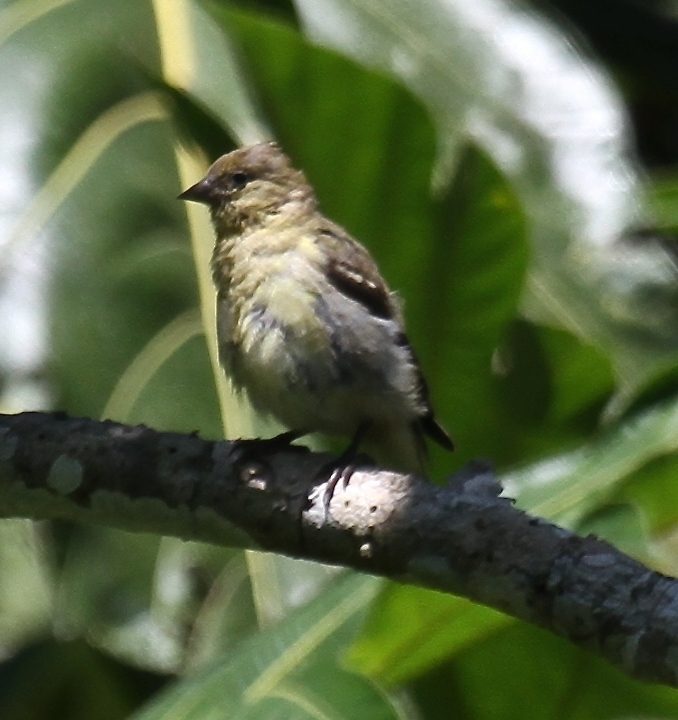
Wikipedia: Olivaceous siskin Source: WIKIPEDIA
OlivaceousSiskin.jpg
🔍
Never observed (yet!)
Description
The olivaceous siskin (Spinus olivaceus) is a species of finch in the family Fringillidae.
It is found in Bolivia, Ecuador, and Peru, where its natural habitats are subtropical or tropical moist montane forests and heavily degraded former forest.
[more]
Details
Profile Wikipedia Xeno-Canto YouTube

Red-legged honeycreeper. 2020-02-21 07:42:10 Panama
First observed in Panama on 2020-02-21.
Description
We saw this on the grounds of Gamboa Rainforest Resort, a hotel at the old U.S. administrative center for the Panama Canal. You can spend hours watching birds and wildlife just around the hotel.General:
The red-legged honeycreeper (Cyanerpes cyaneus) is a small songbird species in the tanager family (Thraupidae). It is found in the tropical New World from southern Mexico south to Peru, Bolivia and central Brazil, Trinidad and Tobago, and on Cuba, where possibly introduced. It is also rarely found in southern Texas.[2]
[more]
Details
Profile Wikipedia Xeno-Canto YouTube

Wikipedia: Short-billed honeycreeper Source: WIKIPEDIA
lossy-page1-1200px-Coereba_nitida_-_1700-1880_-_Print_-_Iconographia_Zoologica_-_Special_Collections_University_of_Amsterdam_-_UBA01_IZ19000365.tif.jpg
🔍
Never observed (yet!)
Description
The short-billed honeycreeper (Cyanerpes nitidus) is a species of bird in the family Thraupidae.
It is found in Bolivia, Brazil, Colombia, Ecuador, Peru, Suriname, and Venezuela.
Its natural habitat is subtropical or tropical moist lowland forests.
[more]
Details
Profile Wikipedia Xeno-Canto YouTube
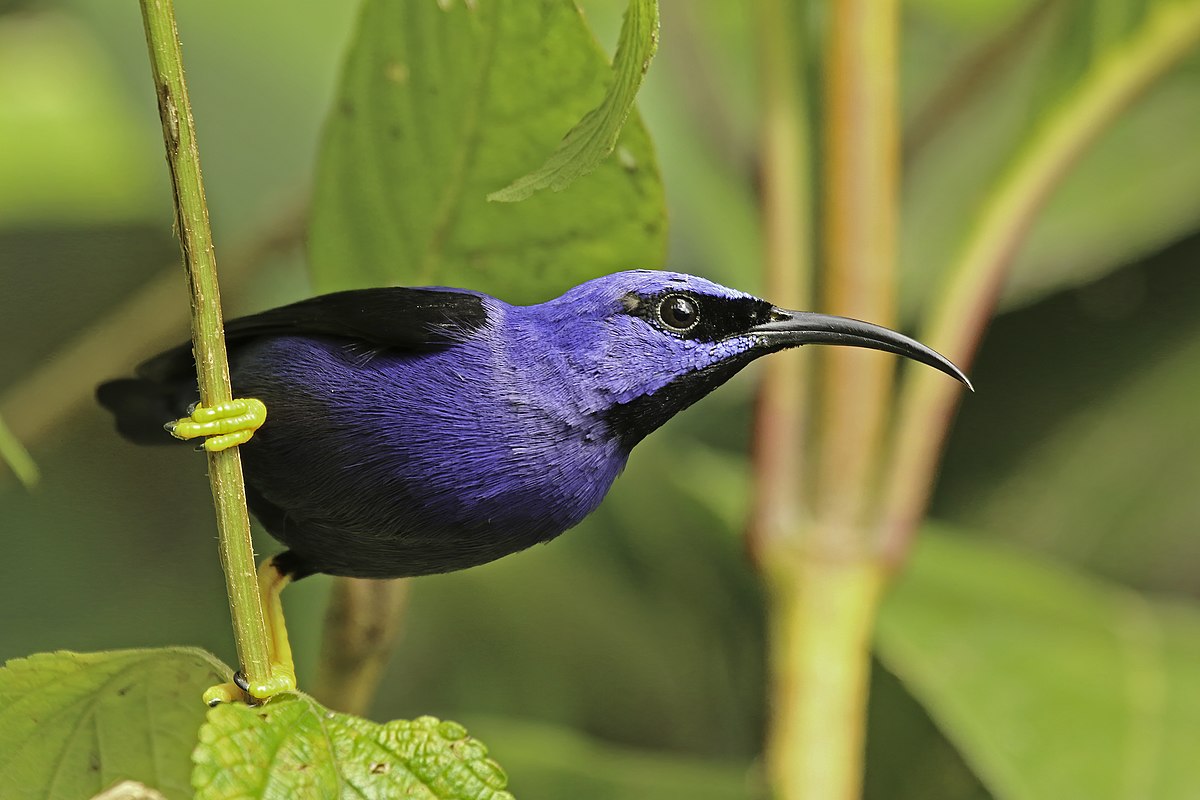
Wikipedia: Purple honeycreeper Source: WIKIPEDIA
1200px-Purple_honey_creeper_%28Cyanerpes_caeruleus_longirostris%29_male.jpg
🔍
Never observed (yet!)
Description
The purple honeycreeper (Cyanerpes caeruleus) is a small Neotropical bird in the tanager family Thraupidae. It is found in the tropical New World from Colombia and Venezuela south to Brazil, and on Trinidad. A few, possibly introduced birds have been recorded on Tobago.
[more]
Details
Profile Wikipedia Xeno-Canto YouTube
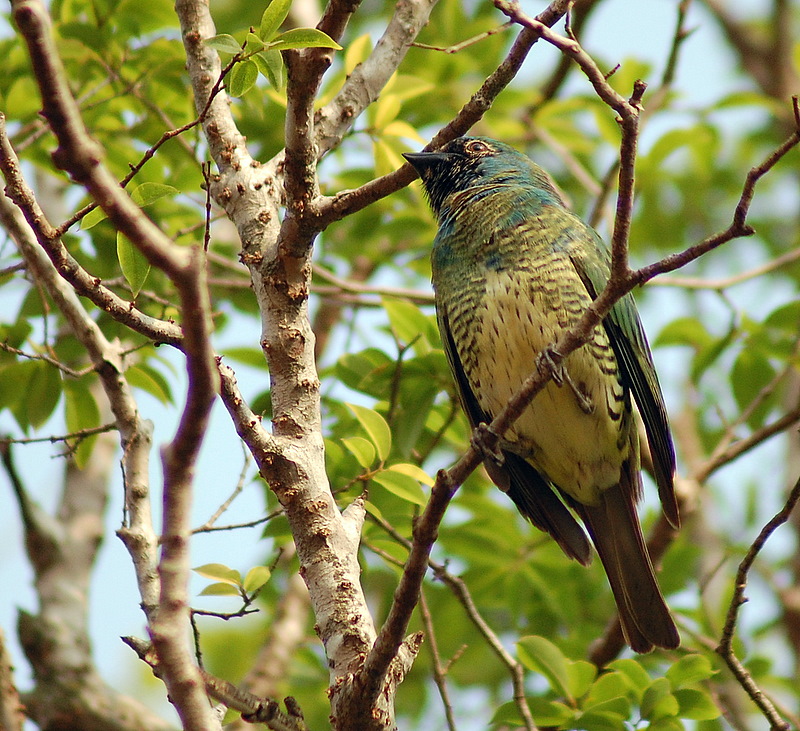
Wikipedia: Swallow tanager Source: WIKIPEDIA
Swallow_Tanager_%28Tersina_viridis%29..jpg
🔍
Never observed (yet!)
Description
The swallow tanager (Tersina viridis) is a species of Neotropic bird in the tanager family Thraupidae. It is the only member of the genus Tersina. It is found widely throughout South America, from eastern Panama to far northern Argentina. The species is sexually dimorphic: the female is a yellow-green and the male a turquoise blue with a small deep black face and upper throat patch.
[more]
Details
Profile Wikipedia A-Z Animals Audubon AllAboutBirds Xeno-Canto YouTube
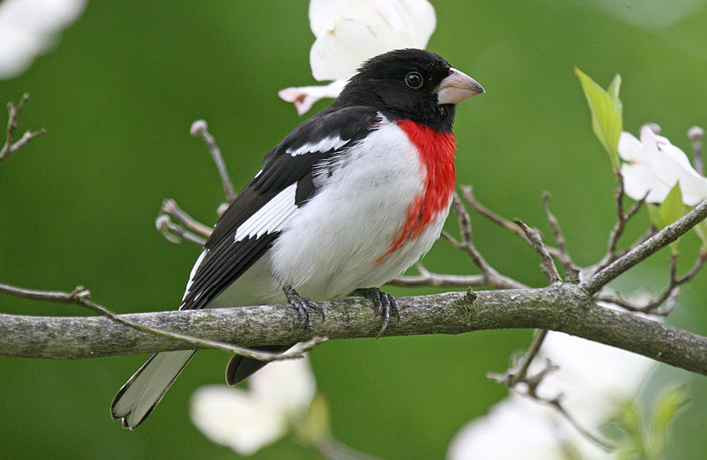
Wikipedia: Rose-breasted grosbeak Source: WIKIPEDIA
RosebreastedGrosbeak08.jpg
🔍
Never observed (yet!)
Description
The rose-breasted grosbeak (Pheucticus ludovicianus) is a large, seed-eating grosbeak in the cardinal family (Cardinalidae). It is primarily a foliage gleaner.[2] Males have black heads, wings, backs, and tails, and a bright rose colored patch on their white breast. Males and females exhibit marked sexual dimorphism.
[more]
Details
Profile Wikipedia Xeno-Canto YouTube

Wikipedia: Black-backed grosbeak Source: WIKIPEDIA
Black-backed_Grosbeak_%28Pheucticus_aureoventris%29_%288077568632%29.jpg
🔍
Never observed (yet!)
Description
The black-backed grosbeak (Pheucticus aureoventris) is a bird in the family Cardinalidae, the cardinals or cardinal grosbeaks. It is found in Argentina, Brazil, Bolivia, Colombia, Ecuador, Paraguay, Peru, and Venezuela. They are often kept as cagebirds.[2][3]
[more]
Details
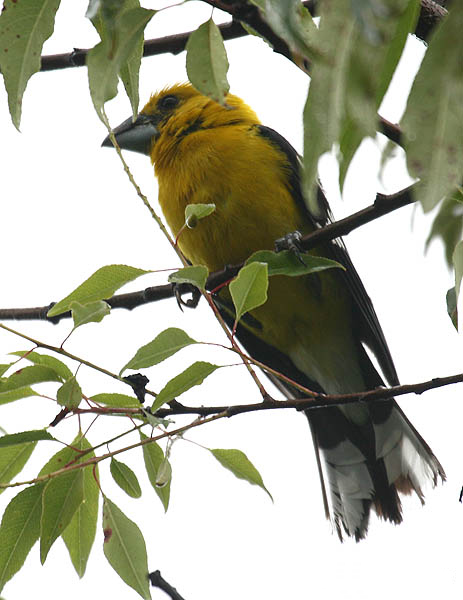
Wikipedia: Golden-bellied grosbeak Source: WIKIPEDIA
Pheucticus_chrysogaster_%28male%29_-Ecuador-8.jpg
Ecuador
🔍
Never observed (yet!)
Description
The golden grosbeak (Pheucticus chrysogaster), also known as golden-bellied grosbeak or southern yellow grosbeak, is a species of grosbeak in the family Cardinalidae. It is similar to, and has sometimes been considered conspecific with, the yellow grosbeak.
[more]
Details

Wikipedia: Blue-black grosbeak Source: WIKIPEDIA
1200px-Cyanocompsa_cyanoides.jpg
🔍
Never observed (yet!)
Description
The blue-black grosbeak (Cyanoloxia cyanoides) is a species of songbird in the family Cardinalidae.
[more]
Details

Wikipedia: Rothschild's grosbeak Source: WIKIPEDIA
1280px-Cyanoloxia_rothschildii_Rothschild%27s_Grosbeak_%28male%29%3B_Rio_Branco%2C_Acre%2C_Brazil.jpg
🔍
Never observed (yet!)
Description
The Amazonian grosbeak or Rothschild's grosbeak (Cyanoloxia rothschildii) is a species of grosbeak in the family Cardinalidae, the cardinals or cardinal grosbeaks. It is found in much of the Amazon Basin, in Bolivia, Brazil, Colombia, French Guiana, Guyana, Peru, Suriname, and Venezuela.[2][3]
[more]
Details
Profile Wikipedia Xeno-Canto YouTube

Wikipedia: Yellow-shouldered grosbeak Source: WIKIPEDIA
1200px-Yellow-shouldered_Grosbeak.jpg
🔍
Never observed (yet!)
Description
The yellow-shouldered grosbeak (Parkerthraustes humeralis) is a species of bird in the tanager family Thraupidae. It is the only member of its genus Parkerthraustes.
It is found in Bolivia, Brazil, Colombia, Ecuador, and Peru.
Its natural habitat is subtropical or tropical moist lowland forests.
[more]
Details
Profile Wikipedia Xeno-Canto YouTube

Wikipedia: Blue-naped chlorophonia Source: WIKIPEDIA
Chlorophonia_cyanea_Blue-naped_Chlorophonia_%28cropped%29.jpg
🔍
Never observed (yet!)
Description
The blue-naped chlorophonia (Chlorophonia cyanea) is a colourful South American species of bird in the family Fringillidae; it was formerly placed in the Thraupidae. It is generally fairly common.
[more]
Details
Profile Wikipedia Xeno-Canto YouTube

Wikipedia: Golden-rumped euphonia Source: WIKIPEDIA
1200px-Golden-rumped_Euphonia_%282%29.jpg
🔍
Never observed (yet!)
Description
The golden-rumped euphonia (Chlorophonia cyanocephala) is a species of bird in the family Fringillidae, formerly placed in the Thraupidae. It is found in Argentina, Bolivia, Brazil, Colombia, Ecuador, French Guiana, Guyana, Paraguay, Peru, Suriname, Trinidad and Tobago, and Venezuela.
[more]
Details
Profile Wikipedia Xeno-Canto YouTube

Wikipedia: Yellow-collared chlorophonia Source: WIKIPEDIA
ChlorophoniaSmit.jpg
🔍
Never observed (yet!)
Description
The yellow-collared chlorophonia (Chlorophonia flavirostris) is a bird species in the family Fringillidae (it was formerly placed in Thraupidae).
It is found in Colombia, Ecuador, and Panama.
Its natural habitats are subtropical or tropical moist lowland forest and subtropical or tropical moist montane forest.
[more]
Details
Profile Wikipedia Xeno-Canto YouTube

Wikipedia: Chestnut-breasted chlorophonia Source: WIKIPEDIA
Chestnut-breasted_Chlorophonia_%28Chlorophonia_pyrrhophrys%29_Clorofonia_ferruginosa_%28male%29.jpg
🔍
Never observed (yet!)
Description
The chestnut-breasted chlorophonia (Chlorophonia pyrrhophrys) is a bird species in the family Fringillidae (formerly in Thraupidae).
It is found in Colombia, Ecuador, Peru, and Venezuela.
Its natural habitat is subtropical or tropical moist montane forests.
[more]
Details
Profile Wikipedia Xeno-Canto YouTube

Wikipedia: Orange-bellied euphonia Source: WIKIPEDIA
Orange-bellied_Euphonia_-_Ecuador_S4E5535_%2822621854444%29.jpg
🔍
Never observed (yet!)
Description
The orange-bellied euphonia (Euphonia xanthogaster) is a species of bird in the finch family, Fringillidae. They were formerly considered tanagers (Thraupidae). It is found in Bolivia, Brazil, Colombia, Ecuador, Guyana, Panama, Peru, and Venezuela. Its natural habitats are subtropical or tropical moist lowland forest and subtropical or tropical moist montane forest.
[more]
Details
Profile Wikipedia Xeno-Canto YouTube

Wikipedia: Fulvous-vented euphonia Source: WIKIPEDIA
1200px-Euphonia_fulvicrissa_1902.jpg
🔍
Never observed (yet!)
Description
The fulvous-vented euphonia (Euphonia fulvicrissa) is a species of bird in the family Fringillidae, formerly placed in the Thraupidae
[more]
Details
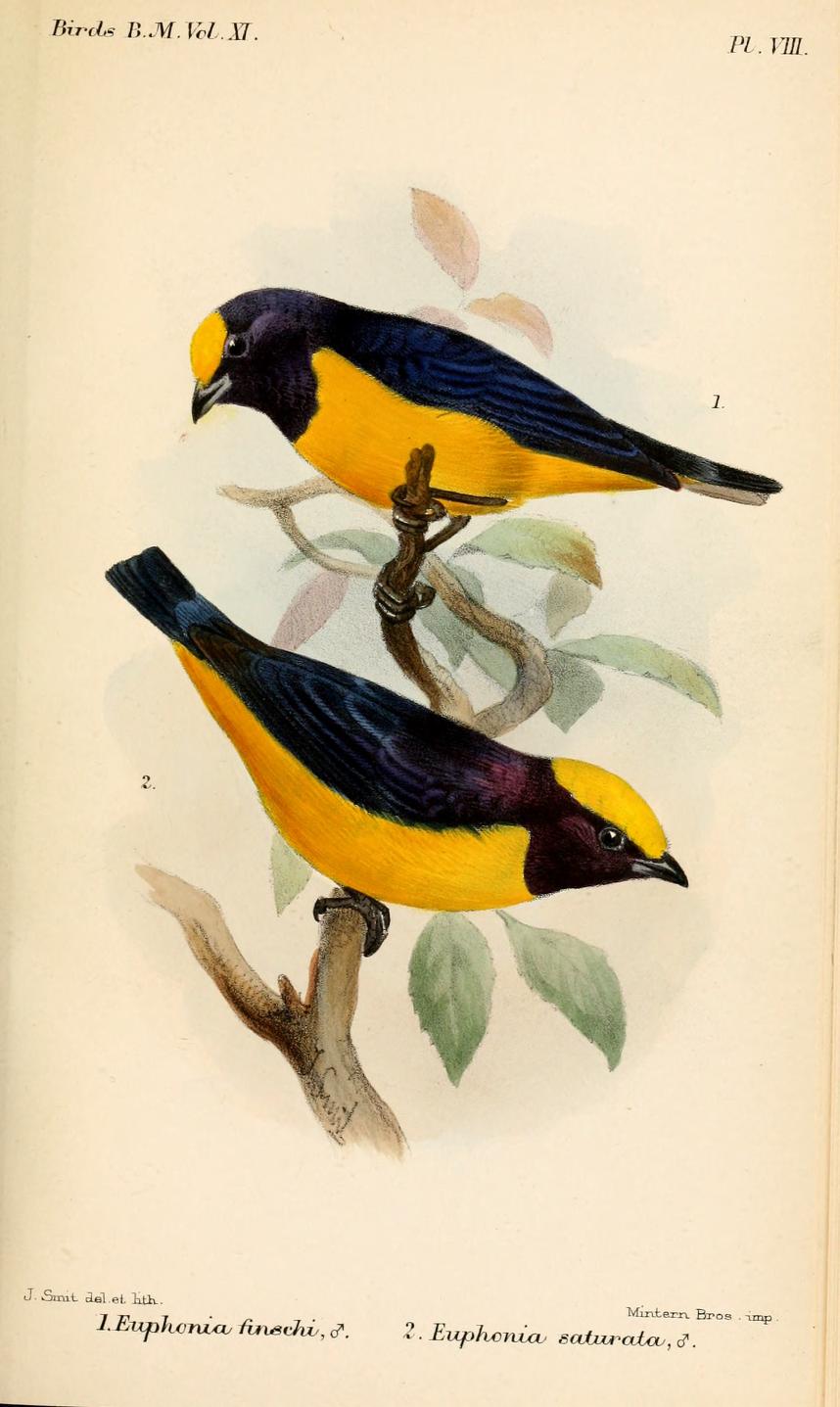
Wikipedia: Orange-crowned euphonia Source: WIKIPEDIA
EuphoniaSmit.jpg
🔍
Never observed (yet!)
Description
The orange-crowned euphonia (Euphonia saturata) is a species of bird in the family Fringillidae.
[more]
Details
Profile Wikipedia Xeno-Canto YouTube

Wikipedia: Thick-billed euphonia Source: WIKIPEDIA
1200px-Thick-billed_euphonia_%28Euphonia_laniirostris_crassirostris%29_male.jpg
🔍
Never observed (yet!)
Description
The thick-billed euphonia (Euphonia laniirostris) is a species of bird in the family Fringillidae, formerly placed in the Thraupidae.
[more]
Details
Profile Wikipedia Xeno-Canto YouTube

Wikipedia: Rufous-bellied euphonia Source: WIKIPEDIA
1200px-Euphonia_rufiventris_-_Rufous-bellied_euphonia_%28adult_male%29%2C_Manacapuru%2C_Amazonas%2C_Brazil.jpg
🔍
Never observed (yet!)
Description
The rufous-bellied euphonia (Euphonia rufiventris) is a species of bird in the family Fringillidae.
It is found in Bolivia, Brazil, Colombia, Ecuador, Peru, and Venezuela.
Its natural habitat is subtropical or tropical moist lowland forest.
[more]
Details
Profile Wikipedia Xeno-Canto YouTube
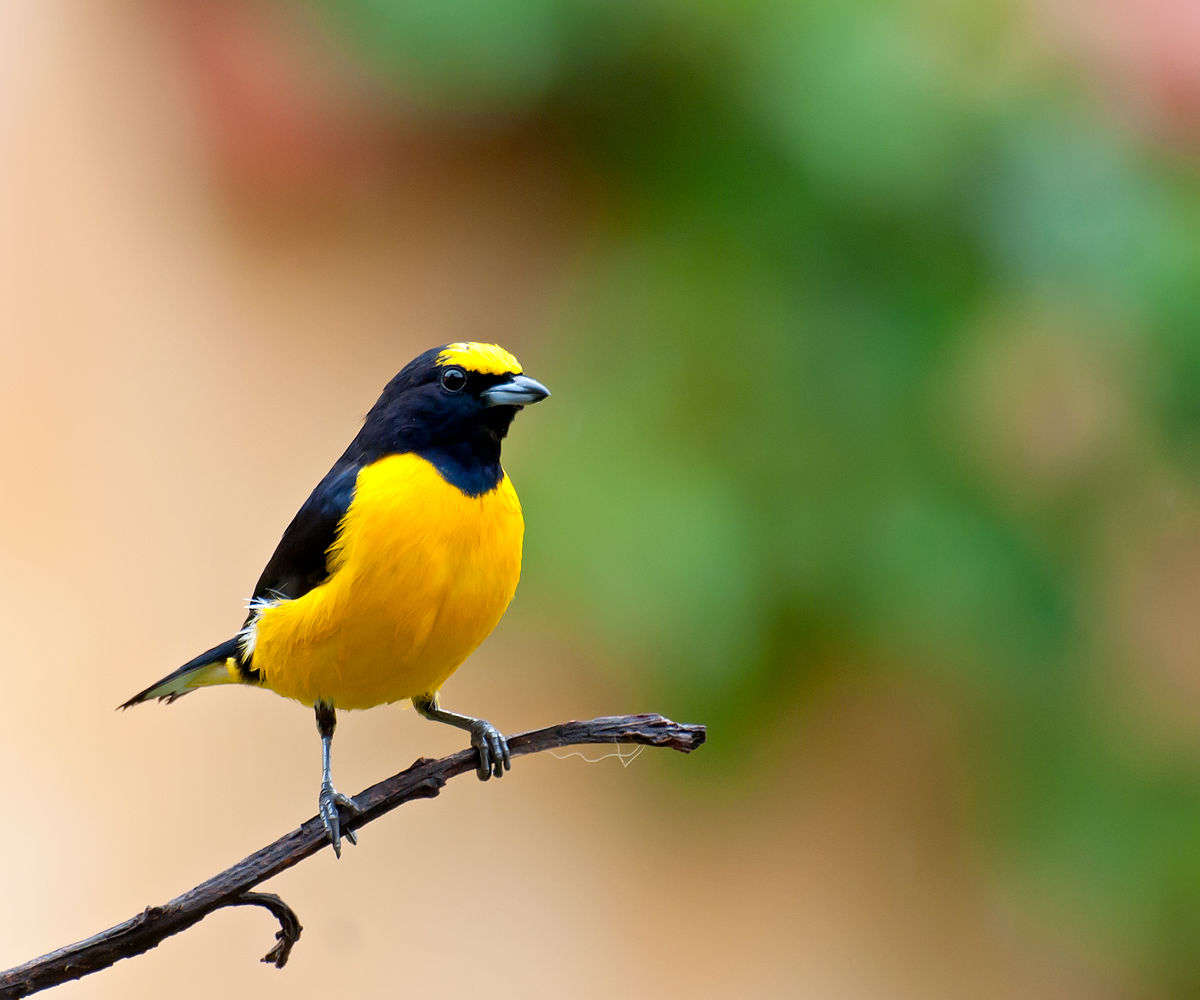
Wikipedia: Purple-throated euphonia Source: WIKIPEDIA
1200px-Euphonia_chlorotica_-Piraju%2C_Sao_paulo%2C_Brasil_-male-8.jpg
🔍
Never observed (yet!)
Description
The purple-throated euphonia (Euphonia chlorotica) is a songbird species in the family Fringillidae. It was formerly placed in the Thraupidae.
[more]
Details
Profile Wikipedia Xeno-Canto YouTube

Wikipedia: Golden-bellied euphonia Source: WIKIPEDIA
Euphonia_chrysopasta_-_White-lored_Euphonia_%28female%29.JPG
🔍
Never observed (yet!)
Description
The white-lored euphonia or golden-bellied euphonia (Euphonia chrysopasta) is a songbird species of the family Fringillidae, having recently been moved there from the Thraupidae.
[more]
Details
Profile Wikipedia Xeno-Canto YouTube

Wikipedia: Bronze-green euphonia Source: WIKIPEDIA
Bronze-green_Euphonia_-_South_Ecuador_S4E0810_%2823250387345%29.jpg
🔍
Never observed (yet!)
Description
The bronze-green euphonia (Euphonia mesochrysa) is a bird species in the family Fringillidae (formerly in Thraupidae).
It is found in Bolivia, Colombia, Ecuador, and Peru.
Its natural habitat is subtropical or tropical moist montane forests.
[more]
Details
Profile Wikipedia Xeno-Canto YouTube

Wikipedia: White-vented euphonia Source: WIKIPEDIA
Euphonia_minuta_-_White-vented_Euphonia_%28male%29%3B_Manacapuru%2C_Amazonas%2C_Brazil.jpg
🔍
Never observed (yet!)
Description
The white-vented euphonia (Euphonia minuta) is a species of bird in the family Fringillidae.
[more]
Details
Profile Wikipedia Xeno-Canto YouTube

Wikipedia: Paramo pipit Source: WIKIPEDIA
1200px-AnthusBotogensisWolf.jpg
🔍
Never observed (yet!)
Description
The paramo pipit (Anthus bogotensis) is a species of bird in the family Motacillidae. It is found in Argentina, Bolivia, Colombia, Ecuador, Peru, and Venezuela. Its natural habitats are subtropical or tropical high-altitude grassland and pastureland.
[more]
Details
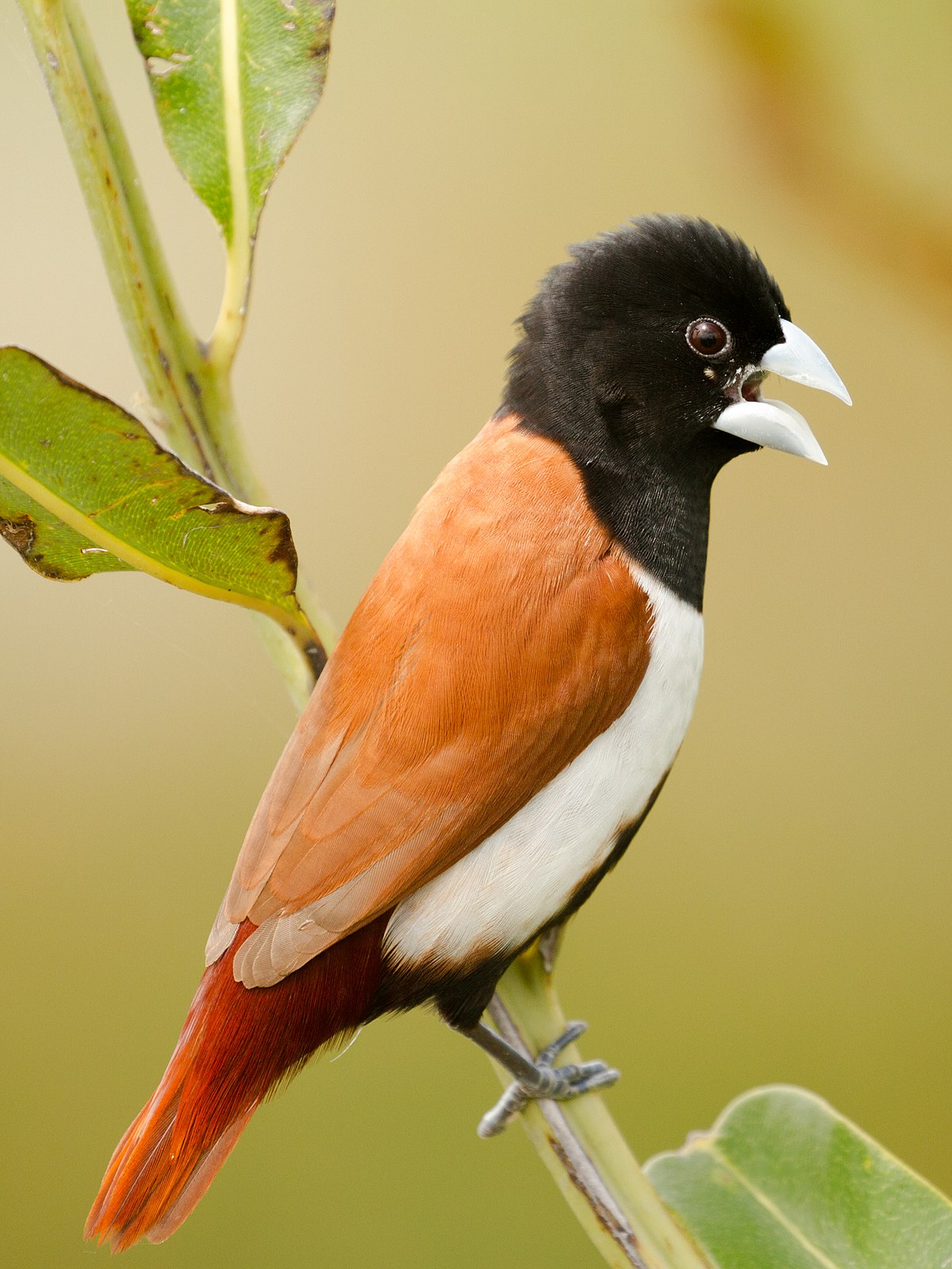
Wikipedia: Tricolored munia Source: WIKIPEDIA
1200px-Tricoloured_munia_%28cropped%29.jpg
🔍
Never observed (yet!)
Description
Geography: This bird appears across the great seas in the following continents: Europe, North America, South America, Asia.General:
The tricoloured munia (Lonchura malacca) is an estrildid finch, native to Bangladesh,[2] India, Sri Lanka, Pakistan, and southern China. The species has also introduced to the Caribbean, in Trinidad, Jamaica, Hispaniola, Puerto Rico, Cuba, and Venezuela. This species, like the chestnut munia has been known as the black-headed munia. Immature birds have pale brown upperparts, lack the dark head found in adults, and have uniform buff underparts that can be confused with immatures of other munias such as the scaly-breasted munia.
[more]
Details

Wikipedia: Red-breasted meadowlark Source: WIKIPEDIA
Red-breasted_blackbird.jpg
🔍
Never observed (yet!)
Description
The red-breasted meadowlark (Leistes militaris) is a passerine bird in the New World family Icteridae. It was formerly named red-breasted blackbird but is not closely related to the red-winged blackbird group.[2]
[more]
Details
Profile Wikipedia Xeno-Canto YouTube

A great tailed grackle nesting next to our hotel. 2023-03-26 13:55:14 Yucatan
First observed in Costa Rica on 2018-02-12.
Description
The great-tailed grackle or Mexican grackle (Quiscalus mexicanus) is a medium-sized, highly social passerine bird native to North and South America. A member of the family Icteridae, it is one of 10 extant species of grackle and is closely related to the boat-tailed grackle and the extinct slender-billed grackle.[2] In the southern United States, it is sometimes simply referred to as "blackbird" or (erroneously) "crow"[3] due to its glossy black plumage, and similarly it is often called cuervo ("crow") in some parts of Mexico, although it is not a member of the crow genus Corvus, nor even of the family Corvidae.
[more]
Vocalisation
Song: No details but a Xeno-Canto recording. Song attributes: Frequency:♫ 2021-03-18 16:52:18 Source: BirdNet 20210318_165218- birdnet 16 - Great-tailed Grackle - 2020-02-25 18:35:12 - birdnet_mobile_5867288364_recording_22.wav.mp3 Fehraltorf (song)
Details
Profile Wikipedia Xeno-Canto YouTube

Wikipedia: Band-tailed cacique Source: WIKIPEDIA
1200px-Band-Tailed_Cacique_Range.png
🔍
Never observed (yet!)
Description
The band-tailed oropendola (Cacicus latirostris) is a species of bird in the family Icteridae.
[more]
Details
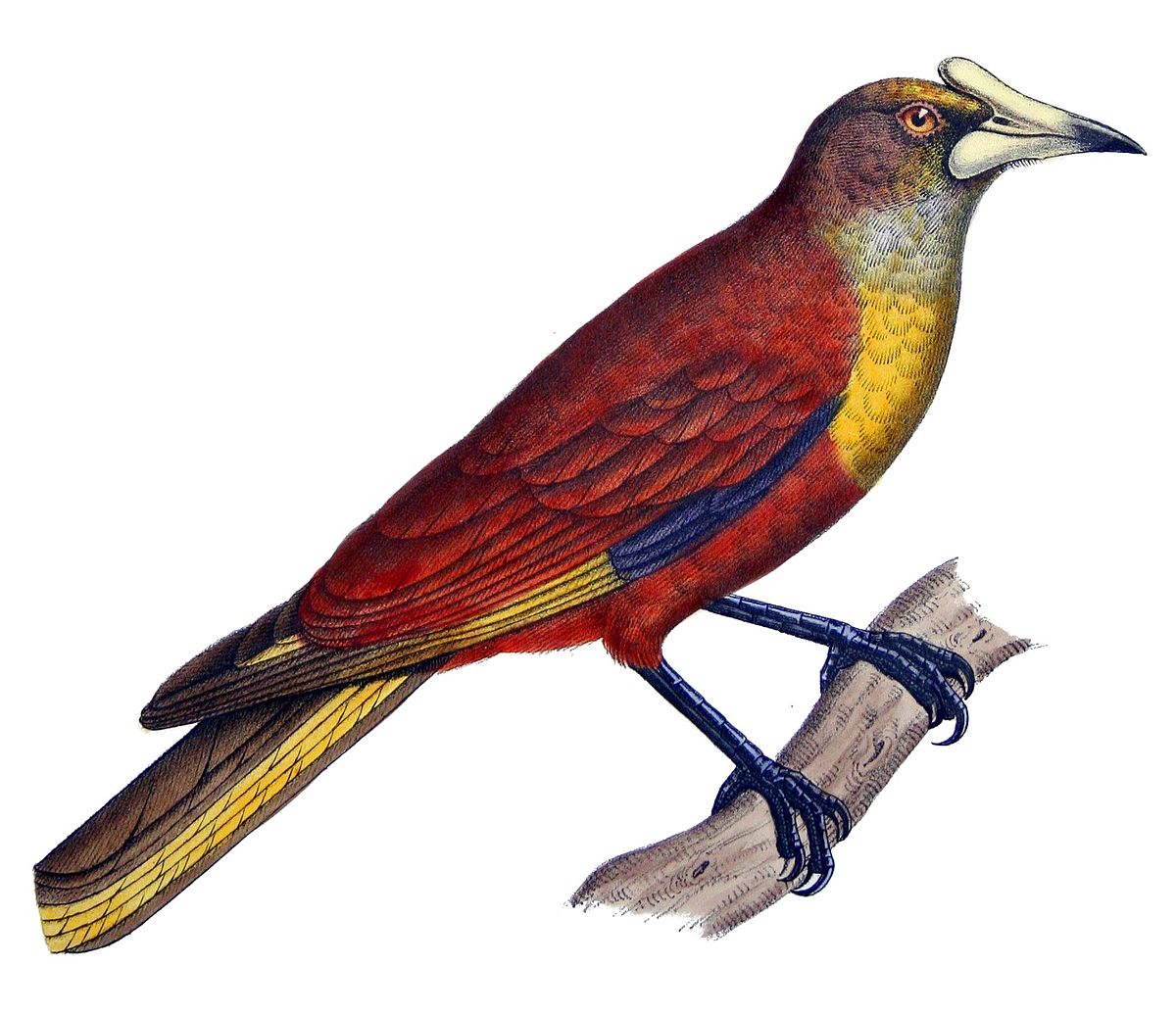
Wikipedia: Casqued cacique Source: WIKIPEDIA
1200px-Clypicterus_oseryi_Castelnau.jpg
🔍
Never observed (yet!)
Description
The casqued oropendola (Cacicus oseryi) is a species of bird in the family Icteridae.
[more]
Details
Profile Wikipedia Xeno-Canto YouTube

Wikipedia: Mountain cacique Source: WIKIPEDIA
1200px-Northern_Mountain_Cacique_%28Cacicus_chrysonotus%29.jpg
🔍
Never observed (yet!)
Description
The mountain cacique (Cacicus chrysonotus) is a species of bird in the family Icteridae. It is found in Bolivia, Colombia, Ecuador, Peru, and Venezuela.
[more]
Details

Wikipedia: Solitary cacique Source: WIKIPEDIA
Solitary_Cacique_-_Pantanal_-_Brazil_H8O0547_%2823889343835%29.jpg
🔍
Never observed (yet!)
Description
The solitary cacique or solitary black cacique (Cacicus solitarius) is a species of bird in the family Icteridae.
[more]
Details
Profile Wikipedia Xeno-Canto YouTube

Wikipedia: Ecuadorian cacique Source: WIKIPEDIA
1200px-Cacicus_sclateri_1888.jpg
🔍
Never observed (yet!)
Description
The Ecuadorian cacique (Cacicus sclateri) is a species of bird in the family Icteridae. It is found in Colombia, Ecuador, and Peru, where its natural habitat is subtropical or tropical moist lowland forest. A fairly common bird with a wide range, the IUCN has rated it a "species of least concern".
[more]
Details
Profile Wikipedia Xeno-Canto YouTube
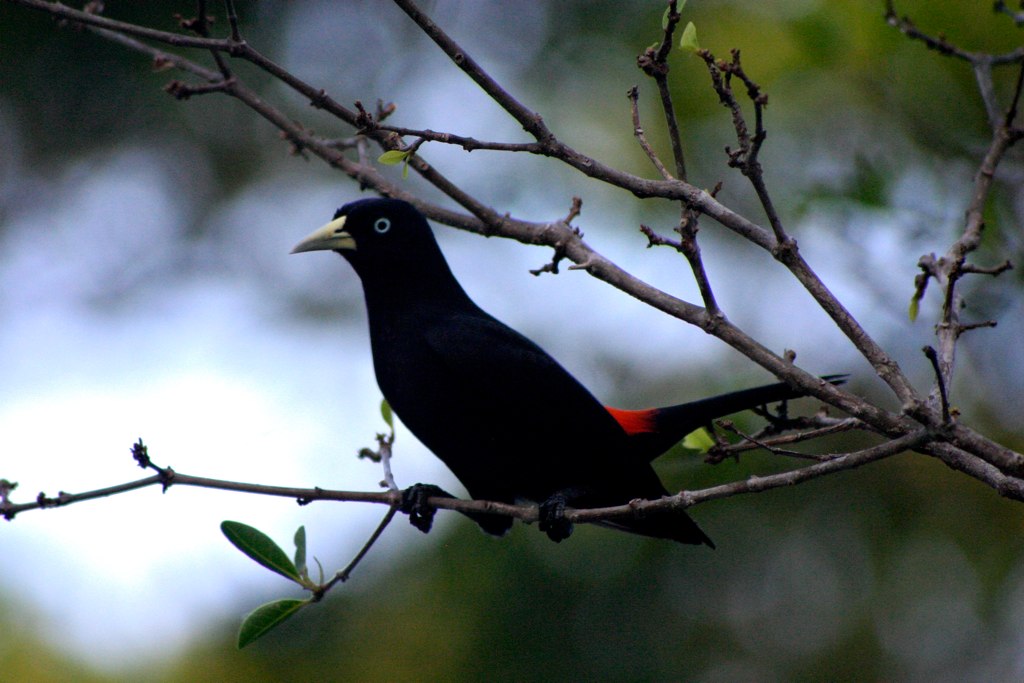
Wikipedia: Scarlet-rumped cacique Source: WIKIPEDIA
Cacicus_uropygialis_-Panama-8.jpg
Panama
🔍
Never observed (yet!)
Description
The scarlet-rumped cacique (Cacicus uropygialis) is a passerine bird species in the New World family Icteridae. It breeds from eastern Honduras to Panama and in the Pacific lowlands of South America from western Colombia south to Ecuador, and in the lower reaches of the northern Andes. There are several subspecies, some of which have been proposed for elevation to full species status.
[more]
Details
Profile Wikipedia Xeno-Canto YouTube

Wikipedia: Red-rumped cacique Source: WIKIPEDIA
1200px-Red-rumped_Cacique_bird.png
🔍
Never observed (yet!)
Description
The red-rumped cacique (Cacicus haemorrhous) is a species of bird in the family Icteridae. It is a species of the Amazon Basin and the Guyanas in northern South America, and is only coastal there in the Guyanas and the Amazon River outlet to the Atlantic; a separate large disjunct range exists in all of south-eastern and coastal Brazil, including Paraguay, and parts of north-eastern Argentina. It is also found in Bolivia, Brazil, Colombia, Ecuador, French Guiana, Guyana, Peru, Suriname, and Venezuela.
[more]
Details
Profile Wikipedia Xeno-Canto YouTube

Wikipedia: Yellow-rumped cacique Source: WIKIPEDIA
Yellow-rumped_Cacique_-_Pantanal_-_Brazil_H8O2199_%2823593614830%29.jpg
🔍
Never observed (yet!)
Description
The yellow-rumped cacique (Cacicus cela) is a passerine bird in the New World family Icteridae. It breeds in much of northern South America from Panama and Trinidad south to Peru, Bolivia and central Brazil. However, they have been sighted as far north as Nayarit state in Mexico.
[more]
Details

MerlinBirdID says yellow-billed cacique and notes pale ivory-yellow bill and staring yellow eyes. 2023-04-02 11:17:28 Yucatan
First observed in Yucatan on 2023-04-02.
Description
The yellow-billed cacique (Amblycercus holosericeus) is a species of cacique in the family Icteridae. It is monotypic within the genus Amblycercus.[2] There is some question as to whether or not it is a true cacique.[3][4]
[more]
Details

Wikipedia: Scrub blackbird Source: WIKIPEDIA
Scrub_Blackbird_-_South_Ecuador_S4E7818_%2823806878191%29.jpg
🔍
Never observed (yet!)
Description
The scrub blackbird (Dives warczewiczi) is a species of bird in the family Icteridae.
[more]
Details
Profile Wikipedia Xeno-Canto YouTube

Wikipedia: Epaulet oriole Source: WIKIPEDIA
Epaulet_Oriole_-_Pantanal_-_Brazil_H8O1352_%2823781001732%29.jpg
🔍
Never observed (yet!)
Description
The epaulet oriole (Icterus cayanensis) is a species of bird in the family Icteridae. The moriche oriole, formerly considered a distinct species (I. chrysocephalus) is now placed herein as a subspecies. The variable oriole, (I. pyrrhopterus), was formerly considered conspecific, but has recently been split by the SACC.
[more]
Details
Description
Details

Baltimore oriole. 2022-04-29 12:40:14
First observed in Maryland on 2021-06-18.
Description
Der Baltimoretrupial (Icterus galbula) ist ein Zugvogel mit Brutgebiet in Nordamerika aus der Familie der Stärlinge (Icteridae). Er ist der Staatsvogel des US-amerikanischen Bundesstaates Maryland[1] und das Wappentier des in Baltimore beheimateten Baseballvereins Baltimore Orioles.
[more]
Details
Profile Wikipedia Xeno-Canto YouTube

Yellow-tailed oriole. 2023-04-16 08:22:10 Yucatan
First observed in Yucatan on 2023-04-16.
Description
The yellow-tailed oriole (Icterus mesomelas) is a passerine bird in the New World family Icteridae. It breeds from southern Mexico to western Peru and northwestern Venezuela; in Peru it also lives in a river valley corridor.
[more]
Details
Profile Wikipedia Xeno-Canto YouTube
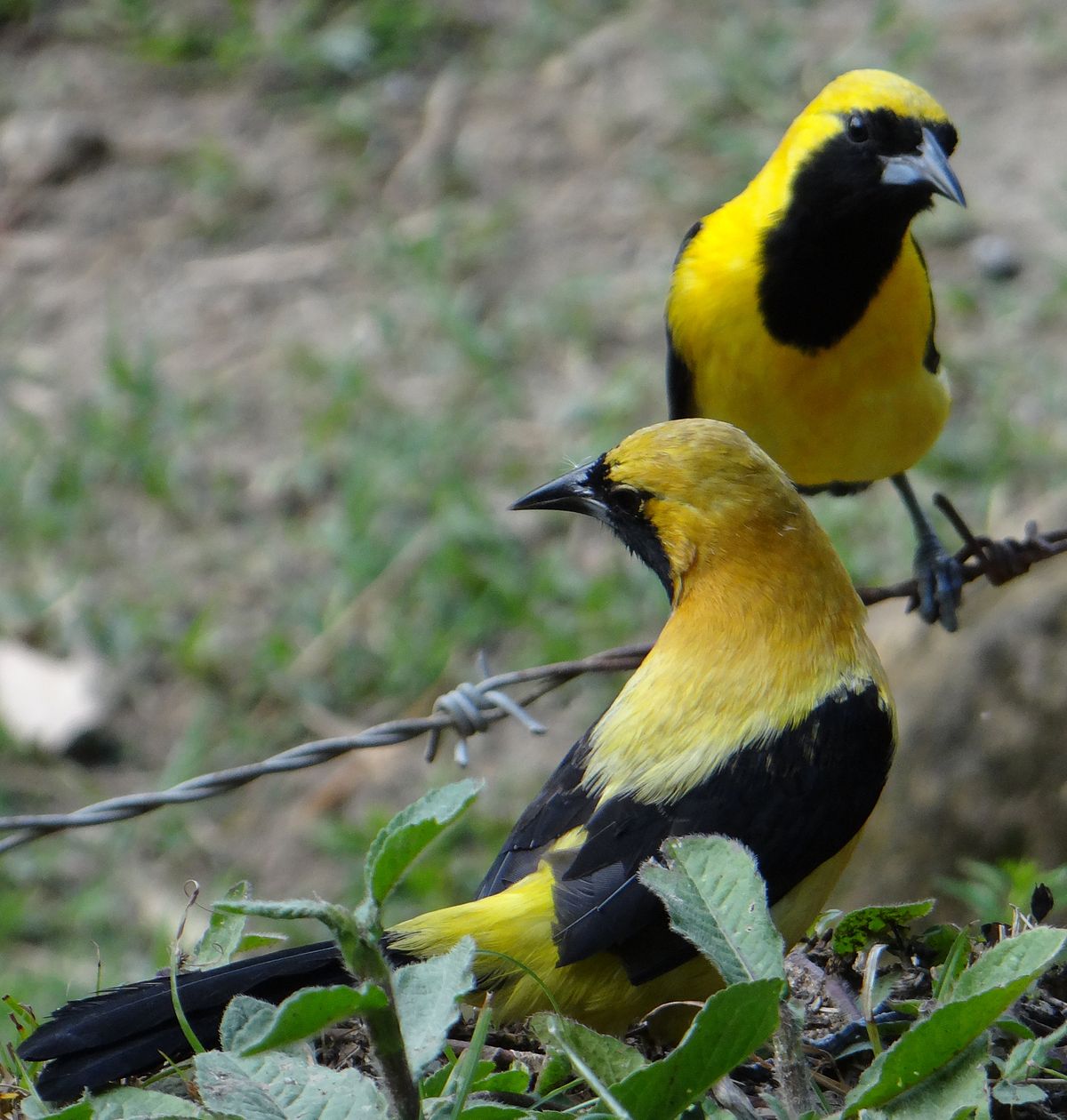
Wikipedia: Yellow-backed oriole Source: WIKIPEDIA
1200px-Toche_Pareja.jpg
🔍
Never observed (yet!)
Description
The yellow-backed oriole (Icterus chrysater) is a species of bird in the family Icteridae.
[more]
Details
Profile Wikipedia Xeno-Canto YouTube

Wikipedia: White-edged oriole Source: WIKIPEDIA
Spot-breasted_Oriole_.jpg
🔍
Never observed (yet!)
Description
The white-edged oriole (Icterus graceannae) is a species of bird in the family Icteridae. It is found in Ecuador and Peru.
[more]
Details
Profile Wikipedia Xeno-Canto YouTube
Description
The velvet-fronted grackle (Lampropsar tanagrinus) is a species of bird in the family Icteridae, monotypic within the genus Lampropsar. It is found in Bolivia, Brazil, Colombia, Ecuador, Guyana, Peru, and Venezuela where its natural habitats are subtropical or tropical swamps and heavily degraded former forest.
[more]
Details
Profile Wikipedia Xeno-Canto YouTube
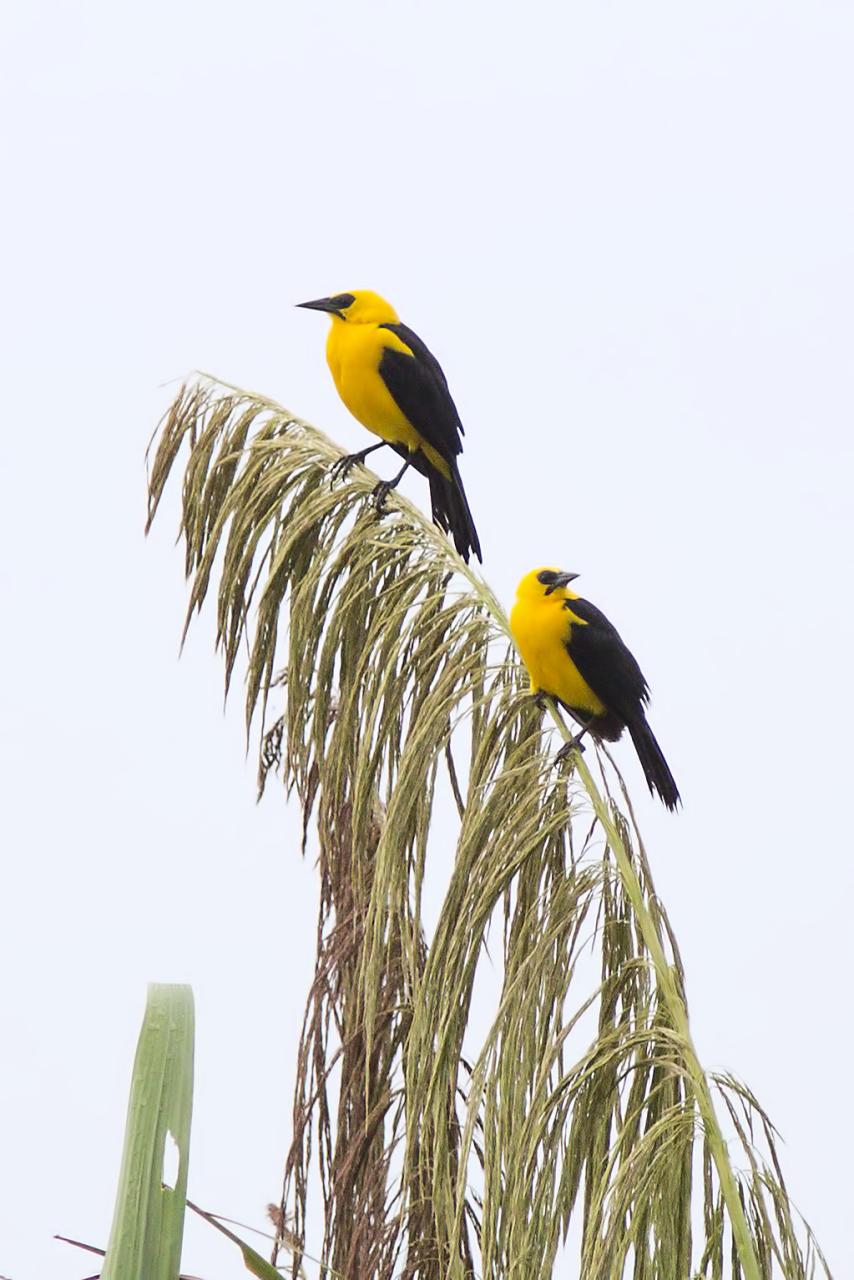
Wikipedia: Oriole blackbird Source: WIKIPEDIA
Gymnomystax_mexicanus_-Peru_-two-8.jpg
🔍
Never observed (yet!)
Description
The oriole blackbird (Gymnomystax mexicanus) is a species of bird in the family Icteridae. Its genus, Gymnomystax, is monotypic.[2] It is a medium-sized yellow and black bird found in Brazil, Colombia, Ecuador, French Guiana, Guyana, Peru, Suriname, and Venezuela, where its natural habitats are subtropical or tropical moist lowland forest, subtropical or tropical moist shrubland, subtropical or tropical seasonally wet or flooded lowland grassland, and swamps.[1]
[more]
Details
Profile Wikipedia Xeno-Canto YouTube
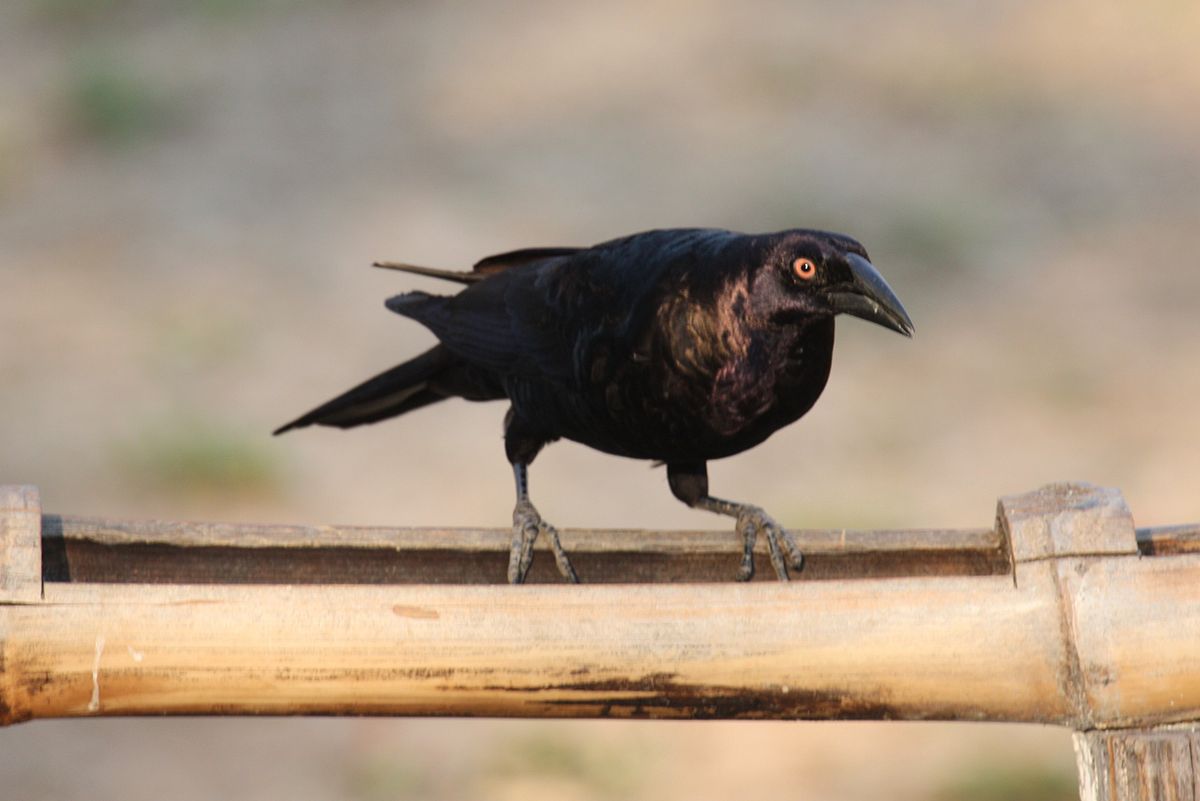
Wikipedia: Giant cowbird Source: WIKIPEDIA
1200px-Molothrus_oryzivorus.jpg
🔍
Never observed (yet!)
Description
The giant cowbird (Molothrus oryzivorus) is a large passerine bird in the New World family Icteridae. It breeds from southern Mexico south to northern Argentina, and on Trinidad and Tobago. It may have relatively recently colonised the latter island.
[more]
Details
Profile Wikipedia Audubon AllAboutBirds Xeno-Canto YouTube

Wikipedia: Shiny cowbird Source: WIKIPEDIA
1200px-Shiny_cowbird_%28Molothrus_bonariensis%29_male.JPG
🔍
Never observed (yet!)
Description
The shiny cowbird (Molothrus bonariensis) is a passerine bird in the New World family Icteridae. It breeds in most of South America except for dense forests and areas of high altitude such as mountains.[1] Since 1900 the shiny cowbirds' range has shifted northward, and it was recorded in the Caribbean islands as well as the United States, where it is found breeding in southern Florida.[2] It is a bird associated with open habitats, including disturbed land from agriculture and deforestation.[1]
[more]
Details
Profile Wikipedia Xeno-Canto YouTube

Wikipedia: Green oropendola Source: WIKIPEDIA
1200px-Green_Oropendola_-_Psarocolius_viridis.jpg
🔍
Never observed (yet!)
Description
The green oropendola (Psarocolius viridis) is a species of bird in the family Icteridae. It is found in wooded habitats in the Amazon basin and Guianas of South America, and is generally common. Uniquely among the oropendolas, the green oropendola has a pale bill with an orange tip. Male oropendola weigh around 400 grams, while females are in the 200 gram range. This is a common species and the International Union for Conservation of Nature has rated its status as being of "least concern".[1]
[more]
Details
Profile Wikipedia Xeno-Canto YouTube

Wikipedia: Chestnut-headed oropendola Source: WIKIPEDIA
1200px-Psarocolius_wagleri_-near_Rancho_Naturalista%2C_Cordillera_de_Talamanca%2C_Costa_Rica-8.jpg
🔍
Never observed (yet!)
Description
Psarocolius waglerii (lapsus)
[more]
Details
Profile Wikipedia Xeno-Canto YouTube
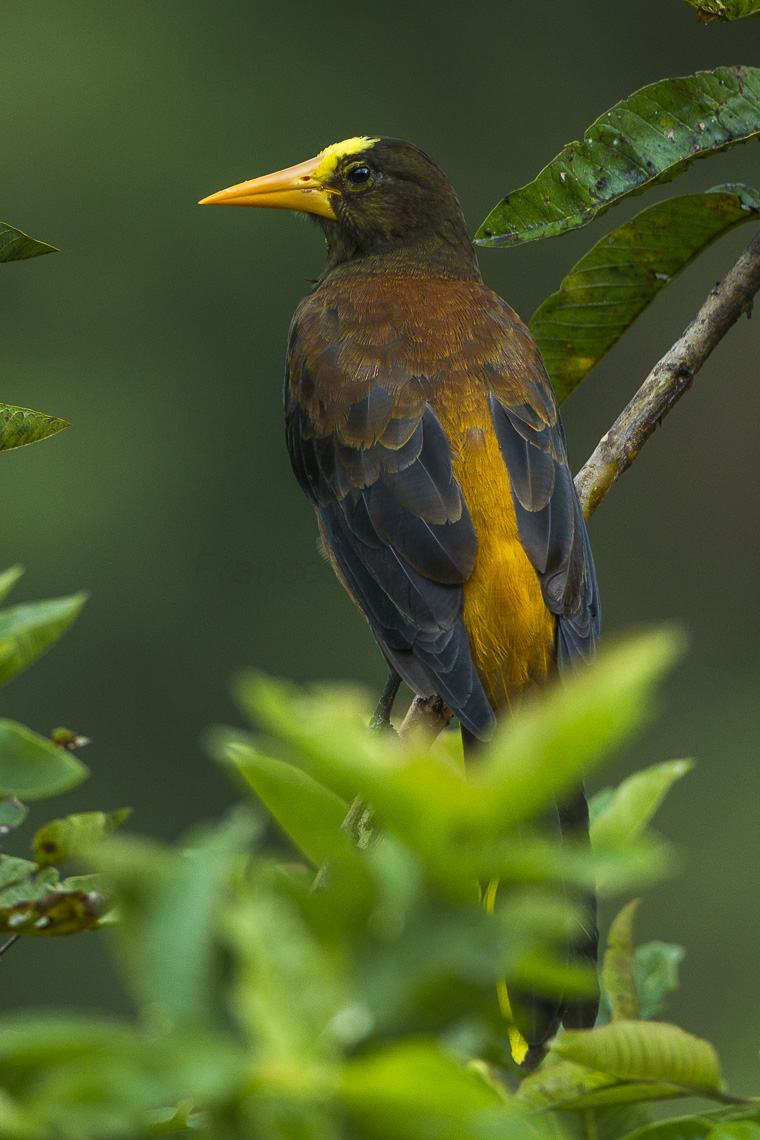
Wikipedia: Russet-backed oropendola Source: WIKIPEDIA
Russet-backed_Oropendula_-_Colombia_S4E4256_%2823781027782%29.jpg
🔍
Never observed (yet!)
Description
The russet-backed oropendola (Psarocolius angustifrons) is a species of bird in the family Icteridae. It is found in wooded habitats in the highlands of the northern and central Andes and the Venezuelan Coastal Range, and in lowlands of the western Amazon. It is generally common and widespread. Males are larger than females, but otherwise the genders are similar. Its plumage is mainly olive and brown, and the outer rectrices are contrastingly yellow. The lowland nominate subspecies has a black bill, while the highland subspecies all have pale bills. These have been regarded as separate species, but as they hybridize freely, all major authorities now regard them as a single species.
[more]
Details

Wikipedia: Olive oropendola Source: WIKIPEDIA
1200px-Psarocolius_%28bifasciatus%29_yurucares_-_Castelnau.jpg
🔍
Never observed (yet!)
Description
The olive oropendola (Psarocolius bifasciatus) is the largest member of the icterid family and rivals the Amazonian umbrellabird as the largest passerine bird in South America. It is sometimes placed in the genus Gymnostinops instead of Psarocolius. As suggested by its name, it is found widely – but often in low densities – throughout humid lowland forests of the Amazon Basin, with the notable exception of most of the Guiana Shield. It is sometimes split into two species, the western olive oropendola (P. yuracares) and the eastern Pará oropendola (P. bifasciatus), but the subspecies P. y. neivae is widely recognized as a hybrid swarm, and the vast majority of authorities consider them a single species.
[more]
Details
Profile Wikipedia Xeno-Canto YouTube

Wikipedia: Crested oropendola Source: WIKIPEDIA
1200px-Crested_oropendola_%28Psarocolius_decumanus_insularis%29.jpg
🔍
Never observed (yet!)
Description
The crested oropendola also known as the Suriname crested oropendola or the cornbird (Psarocolius decumanus) is a New World tropical icterid bird. It is a resident breeder in lowland South America east of the Andes, from Panama and Colombia south to northern Argentina, as well as on Trinidad and Tobago. If the genus Gymnostinax for the Montezuma oropendola and its closest relatives were considered valid, this species would probably belong in that genus (Price & Lanyon 2002).
[more]
Details
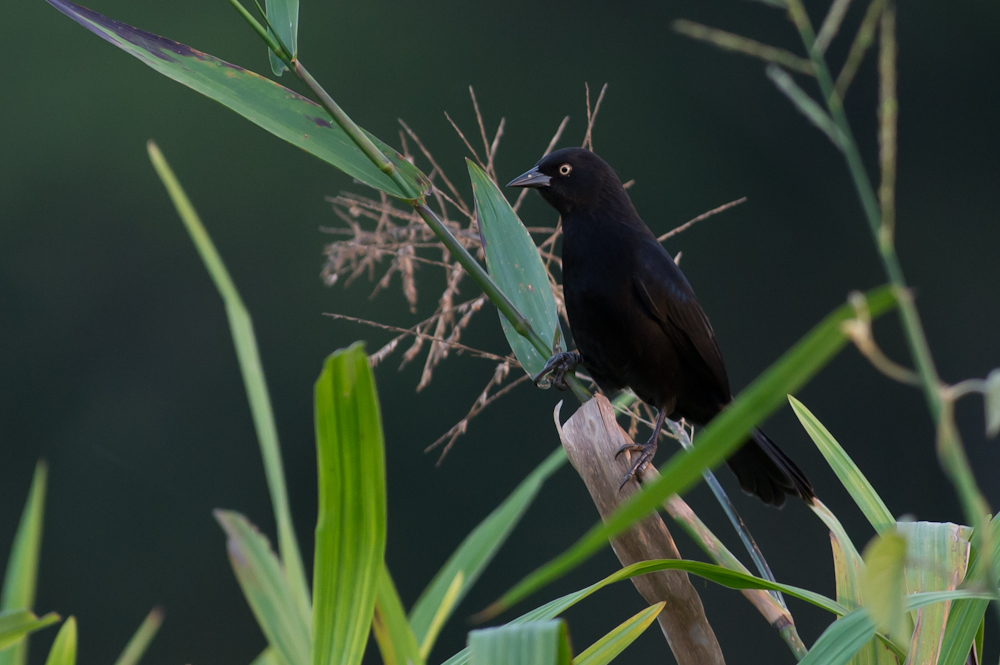
Wikipedia: Pale-eyed blackbird Source: WIKIPEDIA
Agelasticus_xanthophthalmus_Pale-eyed_Blackbird.jpg
🔍
Never observed (yet!)
Description
The pale-eyed blackbird (Agelasticus xanthophthalmus) is a species of bird in the family Icteridae. It is found in Ecuador and Peru where its natural habitat is swamps. An inconspicuous bird of very local occurrence, it was first described in 1969 by American ornithologist Lester L. Short.
[more]
Details

Wikipedia: Golden-winged warbler Source: WIKIPEDIA
Golden-winged_Warbler_NGM-v31-p308-C.jpg
🔍
Never observed (yet!)
Description
The golden-winged warbler (Vermivora chrysoptera) is a New World warbler. It breeds in southeastern and south-central Canada and in the Appalachian Mountains in northeastern to north-central United States. The majority (~70%) of the global population breeds in Wisconsin, Minnesota, and Manitoba. Golden-winged warbler populations are slowly expanding northwards, but are generally declining across its range, most likely as a result of habitat loss and competition/interbreeding with the very closely related blue-winged warbler, Vermivora cyanoptera.
[more]
Details

Wikipedia: Three-striped warbler Source: WIKIPEDIA
1200px-Three-striped_Warbler_-_Chiv%C3%AD_Tres_Rayas_%28Basileuterus_tristriatus_bessereri%29_%2814259290176%29.jpg
🔍
Never observed (yet!)
Description
The three-striped warbler (Basileuterus tristriatus) is a species of bird in the family Parulidae. It was previously considered conspecific with the Tacarcuna warbler and the black-eared warbler. This bird is found in South America from Venezuela to Peru and Bolivia. Some authorities recognised birds from the southern part of the range as a separate species, the Yungas warbler (Basileuterus punctipectus).[2]
[more]
Details
Profile Wikipedia Xeno-Canto YouTube

Wikipedia: Three-banded warbler Source: WIKIPEDIA
Three-banded_warbler.jpg
🔍
Never observed (yet!)
Description
The three-banded warbler (Basileuterus trifasciatus) is a species of bird in the family Parulidae.
It is found in Ecuador and Peru.
Its natural habitats are subtropical or tropical moist montane forests and heavily degraded former forest.
[more]
Details

Wikipedia: Mourning warbler Source: WIKIPEDIA
Oporornis_philadelphiaAAP100CB1.jpg
🔍
Never observed (yet!)
Description
The mourning warbler (Geothlypis philadelphia) is a small songbird of the New World warbler family. Mourning warblers are native to eastern and central North America as well as some countries in Central America.[2] They are neotropical migrants and tend to be found in dense second growth forests.[3] They are under the Wood-warbler category, which consists of arboreal and terrestrial colorful passerines. Wood warblers are in the order Passeriformes, which are perching birds including more than half of all bird species, and the family Parulidae which also includes the Common Yellowthroat, Black and White Warbler, Nashville Warbler, ovenbird, and American Redstart. They are very similar to the MacGillivray's Warbler in appearance, especially in females and immature birds, but their breeding range does not overlap into the west.[4]
[more]
Details
Profile Wikipedia Xeno-Canto YouTube

Wikipedia: Olive-crowned yellowthroat Source: WIKIPEDIA
Olive-crowned_Yellowthroat_-_South_Ecuador_S4E9098_%2822648743247%29.jpg
🔍
Never observed (yet!)
Description
The olive-crowned yellowthroat (Geothlypis semiflava) is a species of bird in the family Parulidae.
It is found in Colombia, Costa Rica, Ecuador, Honduras, Mexico, Nicaragua, and Panama.
Its natural habitats are subtropical or tropical moist shrubland and heavily degraded former forest.
[more]
Details
Profile Wikipedia Xeno-Canto YouTube

Wikipedia: Masked yellowthroat Source: WIKIPEDIA
Geothlypis_velata%2C_Piraju-SP%2C_Brazil.jpg
🔍
Never observed (yet!)
Description
The masked yellowthroat (Geothlypis aequinoctialis) is a New World warbler. It has a number of separate resident breeding populations in Central and South America, some of which may be considered to form separate species.
[more]
Details

Wikipedia: Canada warbler Source: WIKIPEDIA
1200px-8G7D5475-Canada.jpg
🔍
Never observed (yet!)
Description
The Canada warbler (Cardellina canadensis) is a small boreal songbird of the New World warbler family (Parulidae). It summers in Canada and northeastern United States and winters in northern South America.
[more]
Details

Black and white warbler, Ecotucan, Bacalar. 2023-03-30 17:30:48 Yucatan
First observed in Yucatan on 2023-03-27.
Description
The black-and-white warbler (Mniotilta varia) is a species of New World warbler, and the only member of its genus, Mniotilta.[2]
It breeds in northern and eastern North America and winters in Florida, Central America, and the West Indies down to Peru. This species is a very rare vagrant to western Europe.[2]
[more]
Details
Profile Wikipedia Xeno-Canto YouTube
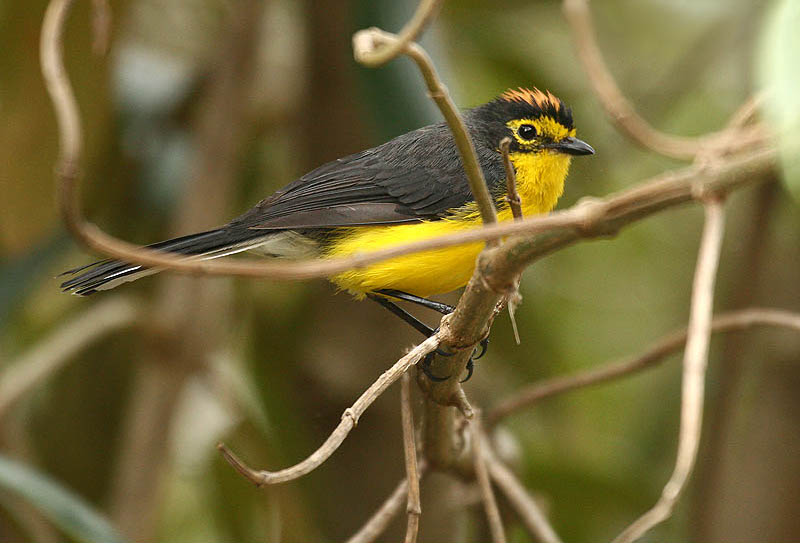
Wikipedia: Spectacled redstart Source: WIKIPEDIA
Myioborus_melanocephalus_-Ecuador-8.jpg
Ecuador
🔍
Never observed (yet!)
Description
The spectacled whitestart or spectacled redstart (Myioborus melanocephalus) is a species of bird in the family Parulidae. It is found in humid Andean forests, woodland and scrub from southern Colombia to Bolivia
[more]
Details
Profile Wikipedia Xeno-Canto YouTube

Wikipedia: Slate-throated redstart Source: WIKIPEDIA
1200px-Slate-throated_whitestart_%28Myioborus_miniatus_aurantiacus%29.jpg
🔍
Never observed (yet!)
Description
The slate-throated whitestart or slate-throated redstart (Myioborus miniatus) is a species of bird in the family Parulidae native to Central and South America.[1][2]
[more]
Details
Profile Wikipedia Audubon AllAboutBirds Xeno-Canto YouTube

MerlinBirdID suggest a prothonotary warbler, at botanical garden, Puerto Morelos. 2023-03-27 11:50:22 Yucatan
First observed in Yucatan on 2023-03-27.
Description
The prothonotary warbler (Protonotaria citrea) is a small songbird of the New World warbler family. It is the only member of the genus Protonotaria.[2]
[more]
Details

Wikipedia: Ovenbird Source: WIKIPEDIA
1200px-Ovenbird_RWD2011b.jpg
🔍
Never observed (yet!)
Description
Der Pieperwaldsänger (Seiurus aurocapilla) ist eine Vogelart aus der Familie der Waldsänger (Parulidae). Er ist der einzige Vertreter der Gattung Seiurus. Die IUCN führt den Pieperwaldsänger zur Zeit als ungefährdet (least concern).
[more]
Details

Yellow warbler, male of one of the mangrove subspecies. 2023-04-21 07:01:54 Yucatan
First observed in Yucatan on 2023-04-21.
Description
Details

Wikipedia: Cerulean warbler Source: WIKIPEDIA
Dendroica-cerulea-002.jpg
🔍
Never observed (yet!)
Description
The cerulean warbler (Setophaga cerulea) is a small songbird of the New World warbler family.
Adult males have pale cerulean blue and white upperparts with a black necklace across the breast and black streaks on the back and flanks. Females and immature birds have greyer or greenish upperparts, a pale stripe over the eye, and no streaking on the back and no neck. All of these birds have wing bars and a thin pointed bill.
They are found in deciduous forests of eastern North America during the breeding season and then migrate to forested mountain areas in South America.
The species is considered threatened with an IUCN status of near threatened, indicating it does not face any imminent threat of extinction in the wild.
[more]
Details

Wikipedia: Bay-breasted warbler Source: WIKIPEDIA
1200px-Dendroica-castanea-001.jpg
🔍
Never observed (yet!)
Description
The Bay-breasted Warbler (Setophaga castanea) is a small species of songbird in the New World warbler family, Parulidae. It is one of thirty-four species in the diverse genus Setophaga.[2] Like all songbirds, or passerines, the species is classified in the order Passeriformes.
[more]
Details

Wikipedia: Blackburnian warbler Source: WIKIPEDIA
1200px-Dendroica-fusca-001.jpg
🔍
Never observed (yet!)
Description
The Blackburnian warbler (Setophaga fusca) is a small New World warbler. They breed in eastern North America, from southern Canada, westwards to the southern Canadian Prairies, the Great Lakes region and New England, to North Carolina.
[more]
Details

Wikipedia: Blackpoll warbler Source: WIKIPEDIA
1200px-Dendroica_striata_MN.jpg
🔍
Never observed (yet!)
Description
The blackpoll warbler (Setophaga striata) is a New World warbler. Breeding males are mostly black and white. They have a prominent black cap, white cheeks and white wing bars. The blackpoll breeds in forests of northern North America, from Alaska throughout most of Canada, to the mountains of New York and New England. They are a common migrant through much of North America. In fall, they fly south to the Greater Antilles and the northeastern coasts of South America in a non-stop long-distance migration over open water, averaging 2500 km, one of the longest distance non-stop overwater flights ever recorded for a migratory songbird. Rare vagrants to western Europe, they are one of the more frequent transatlantic passerine wanderers.
[more]
Details
Profile Wikipedia Audubon AllAboutBirds Xeno-Canto YouTube

Possibly a female American redstart at Maya site Becan. 2023-04-03 12:11:18 Yucatan
First observed in Cockeysville on 2022-05-02.
Description
The American redstart (Setophaga ruticilla) is a New World warbler. It is unrelated to the Old World (common) redstart.
[more]
Vocalisation
Song: No details but a Xeno-Canto recording. Song attributes: Frequency:♫ 2022-05-02 08:57:40 Source: BirdNet 20220502_085740 birdnet - American Redstart - 2022-05-02 08:57:40 - American Redstart - Cockeysville.mp3 Cockeysville (song)
Details

Wikipedia: Tropical parula Source: WIKIPEDIA
Parula_pitiayumi_-Piraju%2C_Sao_Paulo%2C_Brazil-8.jpg
🔍
Never observed (yet!)
Description
The tropical parula (Setophaga pitiayumi) is a small New World warbler. It breeds from southernmost Texas and northwest Mexico (Sonora) south through Central America to northern Argentina, including Trinidad and Tobago. This widespread and common species is not considered threatened by the IUCN.[1]
[more]
Details
Profile Wikipedia Xeno-Canto YouTube

Wikipedia: Tennessee warbler Source: WIKIPEDIA
1200px-Tennessee_Warbler_2.jpg
🔍
Never observed (yet!)
Description
The Tennessee warbler (Leiothlypis peregrina) is a New World warbler that breeds in eastern North America and winters in southern Central America, the Caribbean, and northern South America. The specific name peregrina is from Latin peregrinus "wanderer".[2]
[more]
Details

Wikipedia: Northern waterthrush Source: WIKIPEDIA
Northern_Waterthrush%2C_Parkesia_noveboracensis.jpg
🔍
Never observed (yet!)
Description
The northern waterthrush (Parkesia noveboracensis[2]) is one of the larger New World warblers and one of the Nearctic-Neotropical migratory songbirds.[3] It breeds in the northern part of North America in Canada and the northern United States including Alaska. This bird is migratory, wintering in Central America, the West Indies and Florida, as well as in Venezuela, Colombia, and Ecuador. It is a very rare vagrant to other South American countries and to western Europe.
[more]
Details
Profile Wikipedia Xeno-Canto YouTube
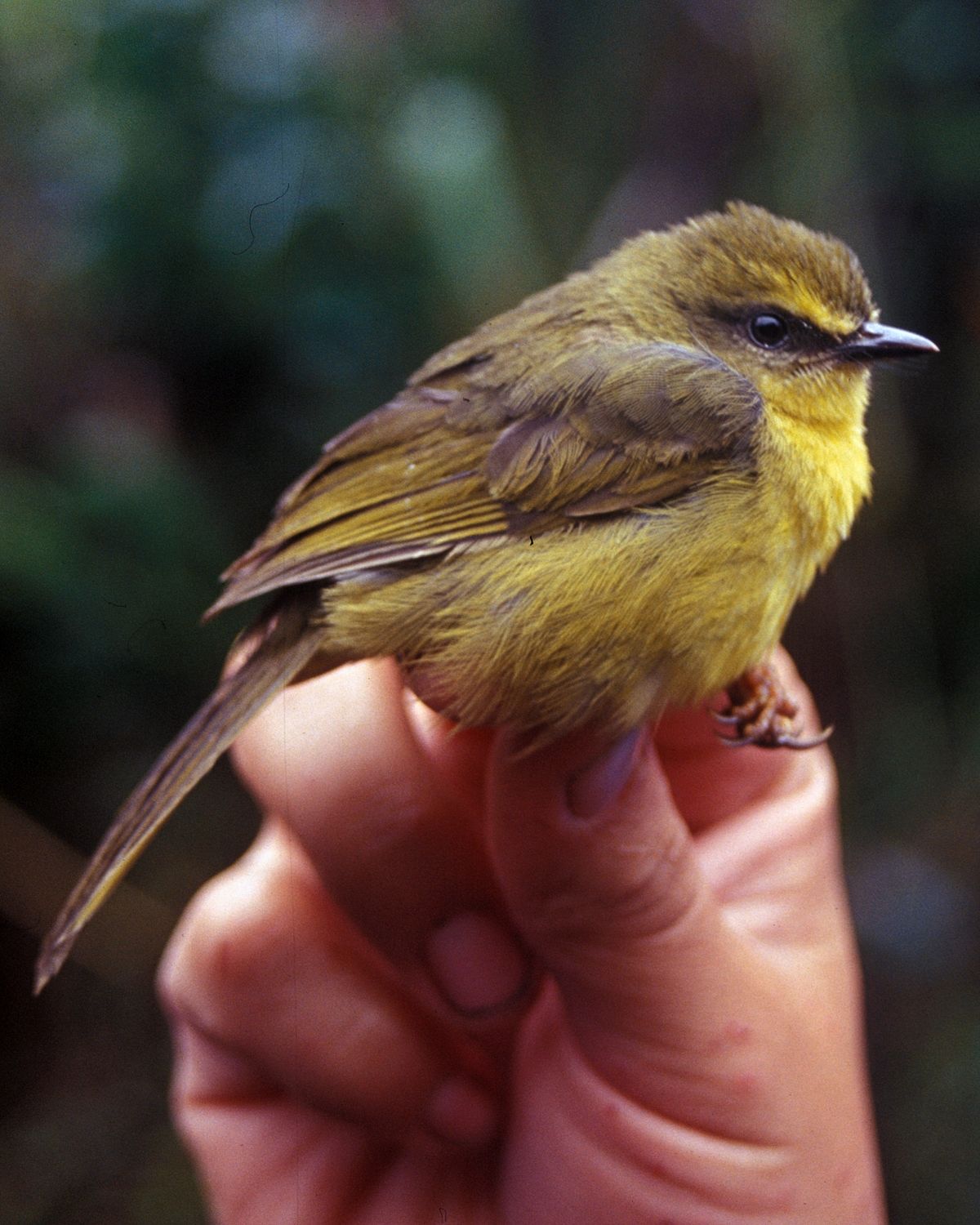
Wikipedia: Citrine warbler Source: WIKIPEDIA
1200px-Basileuterus_luteoviridis.jpg
🔍
Never observed (yet!)
Description
The citrine warbler (Myiothlypis luteoviridis) is a species of bird in the family Parulidae. The term citrine refers to its yellowish colouration. It is found in Bolivia, Colombia, Ecuador, Peru, and Venezuela. Its natural habitat is subtropical or tropical moist montane forests.[2]
[more]
Details

Wikipedia: Russet-crowned warbler Source: WIKIPEDIA
1200px-NBII_Image_Gallery_-Basileuterus_coronatus-a00207.jpg
🔍
Never observed (yet!)
Description
The russet-crowned warbler (Myiothlypis coronata) is a species of bird in the family Parulidae.
It is found in Bolivia, Colombia, Ecuador, Peru, and Venezuela.
Its natural habitats are subtropical or tropical moist montane forests and heavily degraded former forest.
[more]
Details

Wikipedia: Golden-bellied warbler Source: WIKIPEDIA
1200px-Myiothlypis_chrysogaster_107354039.jpg
🔍
Never observed (yet!)
Description
The golden-bellied warbler or Cuzco Warbler (Myiothlypis chrysogaster) is a South American species of bird in the family Parulidae.[1][2] Its natural habitats are subtropical or tropical moist lowland forests, subtropical or tropical moist montane forests, and heavily degraded former forest.
[more]
Details

Wikipedia: Black-crested warbler Source: WIKIPEDIA
Black-crested_Warbler_%28Basileuterus_nigrocristatus%29.jpg
🔍
Never observed (yet!)
Description
The black-crested warbler (Myiothlypis nigrocristata) is a species of bird in the family Parulidae.
It is found in Colombia, Ecuador, Peru, and Venezuela.
Its natural habitats are subtropical or tropical moist montane forests and heavily degraded former forest.
[more]
Details

Wikipedia: Grey-and-gold warbler Source: WIKIPEDIA
Gray-and-gold_Warbler_-_South_Ecuador_S4E8591_%2823040933926%29.jpg
🔍
Never observed (yet!)
Description
The grey-and-gold warbler (Myiothlypis fraseri) is a species of bird in the family Parulidae.
It is found in Ecuador and Peru.
Its natural habitats are subtropical or tropical dry forests and subtropical or tropical moist lowland forests. Aspects of the grey-and-gold warbler's breeding biology were recently described by Miller et al. (2007), based on a sample of two nests. It was named after British zoologist and collector Louis Fraser.
[more]
Details
Profile Wikipedia Xeno-Canto YouTube
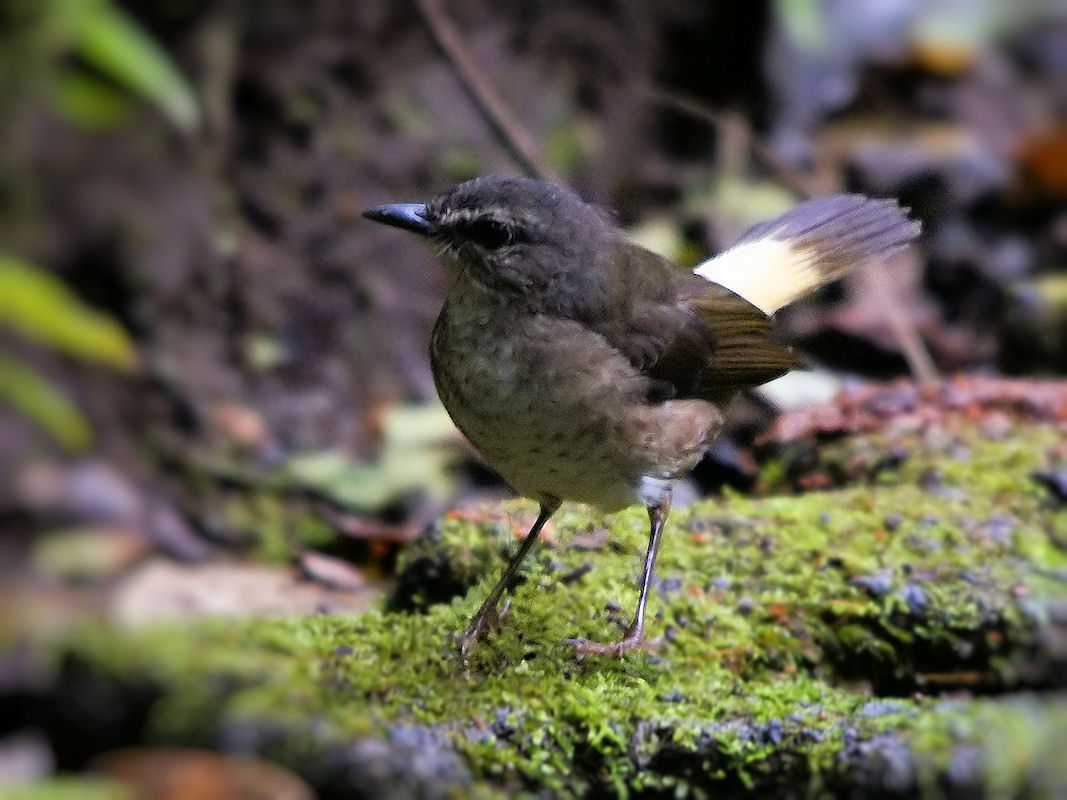
Wikipedia: Buff-rumped warbler Source: WIKIPEDIA
Myiothlypis_fulvicauda.jpg
🔍
Never observed (yet!)
Description
The buff-rumped warbler (Myiothlypis fulvicauda) is a New World warbler that is resident from Honduras south to northwestern Peru and disjunctly in the western Amazon. It is found in forests at up to 1500 m altitude, always near water.
[more]
Details
Red-crested cotinga / Rotschopfkotinga (Ampelion rubrocristatus)

Wikipedia: Red-crested cotinga Source: WIKIPEDIA
Red-crested_Cotinga_-_EcuadorDSCN2925.jpg
🔍
Never observed (yet!)
Description
The red-crested cotinga (Ampelion rubrocristatus) is a species of bird in the family Cotingidae.
[more]
Details
Chestnut-crested cotinga / Braunohrkotinga (Ampelion rufaxilla)
Profile Wikipedia Xeno-Canto YouTube
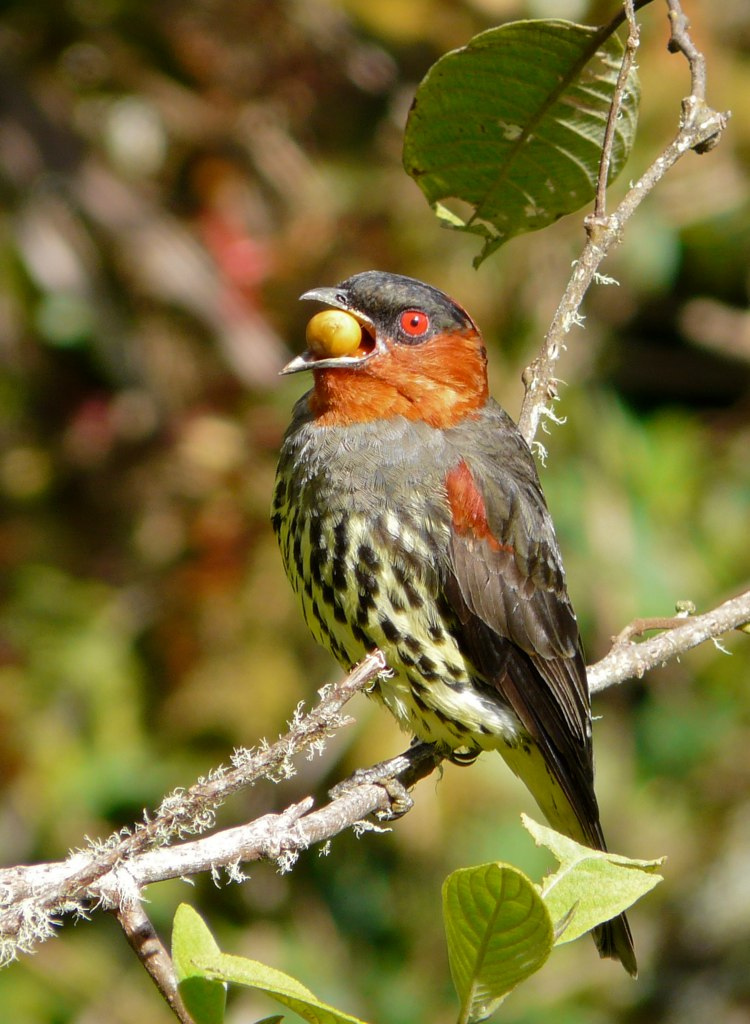
Wikipedia: Chestnut-crested cotinga Source: WIKIPEDIA
Ampelion_rufaxilla_-_Chestnut-crested_Cotinga_%285741252596%29.jpg
🔍
Never observed (yet!)
Description
The chestnut-crested cotinga (Ampelion rufaxilla) is a species of bird in the family Cotingidae.
[more]
Details
Andean cock-of-the-rock / Andenfelsenhahn (Rupicola peruviana)
Profile Wikipedia Xeno-Canto YouTube

Wikipedia: Andean cock-of-the-rock Source: WIKIPEDIA
Rupicola_peruviana_%28male%29_-San_Diego_Zoo-8a.jpg
🔍
Never observed (yet!)
Description
The Andean cock-of-the-rock (Rupicola peruvianus), also known as tunki (Quechua),[2] is a large passerine bird of the cotinga family native to Andean cloud forests in South America. It is widely regarded as the national bird of Peru. It has four subspecies and its closest relative is the Guianan cock-of-the-rock.
[more]
Details
Scaled fruiteater / Schuppenschmuckvogel (Ampelioides tschudii)
Profile Wikipedia Xeno-Canto YouTube

Wikipedia: Scaled fruiteater Source: WIKIPEDIA
Scaled_Fruiteater.jpg
🔍
Never observed (yet!)
Description
The scaled fruiteater (Ampelioides tschudii) is a species of bird in the family Cotingidae. It is the only member of the genus Ampelioides.[2]
[more]
Details
Black-tipped cotinga / Silberschmuckvogel (Carpodectes hopkei)
Profile Wikipedia Xeno-Canto YouTube

Wikipedia: Black-tipped cotinga Source: WIKIPEDIA
1200px-Carpodectes_hopkei_-_Black-tipped_Cotinga.jpg
🔍
Never observed (yet!)
Description
The black-tipped cotinga (Carpodectes hopkei), also known as the white cotinga, is a species of bird in the family Cotingidae. It is found in the Chocó region, from southeastern Panama to northwestern Ecuador ; its natural habitat is subtropical or tropical moist lowland forests. The male, being white, is conspicuous, but in general it is an uncommon species.
[more]
Details
Amazonian umbrellabird / Kurzlappen-Schirmvogel (Cephalopterus ornatus)
Profile Wikipedia Xeno-Canto YouTube
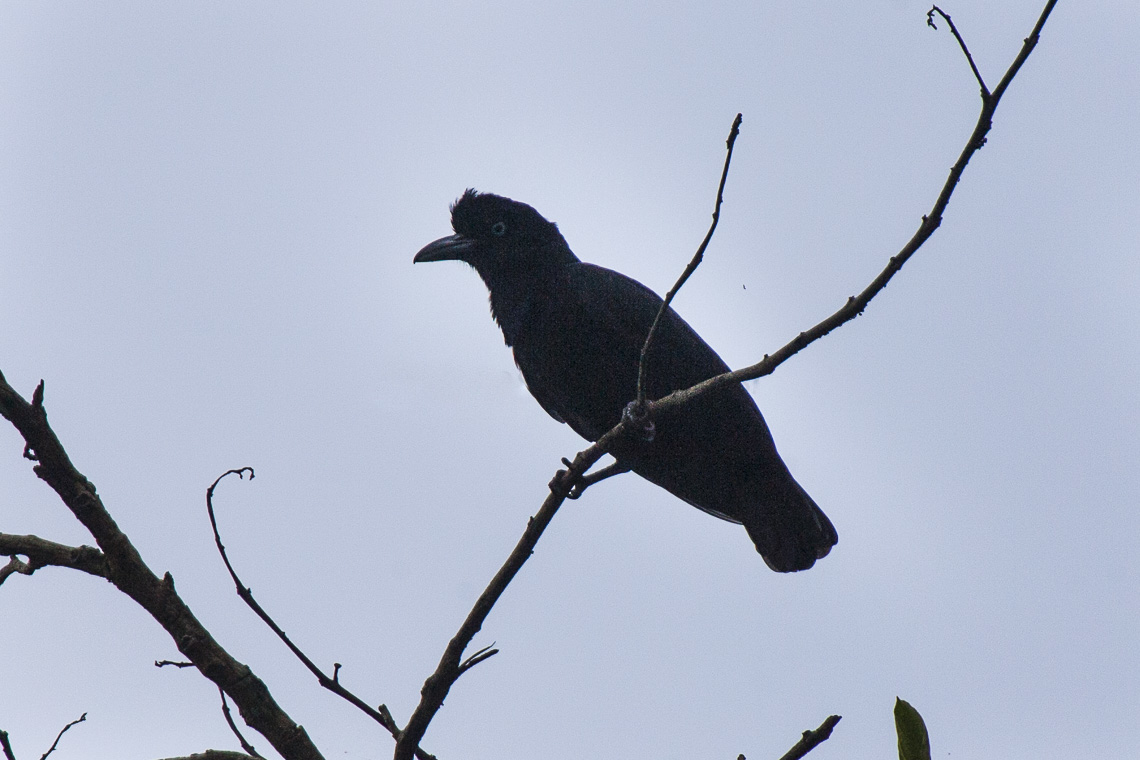
Wikipedia: Amazonian umbrellabird Source: WIKIPEDIA
Amazonian_Umbrellabird_fem_-_Manu_NP_8291_%2816834437801%29.jpg
🔍
Never observed (yet!)
Description
The Amazonian umbrellabird (Cephalopterus ornatus) is a species of bird in the family Cotingidae native to the Amazon basin with a separate population on the eastern slopes of the Andes. The male bird is entirely black, with a black crest and inflatable wattle on the throat, and at 48 to 55 cm (19 to 22 in), may be the largest passerine bird in South America. The female is slightly smaller. Both have an undulating flight, described as woodpecker-like, and the male has a loud, booming call.
[more]
Details
Long-wattled umbrellabird / Langlappen-Schirmvogel (Cephalopterus penduliger)
Profile Wikipedia Xeno-Canto YouTube

Wikipedia: Long-wattled umbrellabird Source: WIKIPEDIA
Cotingidae_-_Cephalopterus_penduliger.jpg
🔍
Never observed (yet!)
Description
The long-wattled umbrellabird (Cephalopterus penduliger) is an Umbrellabird in the Cotinga family. Its common names include "Pájaro Bolsón", "Pájaro Toro", "Dungali" and "Vaca de Monte".[2] The Long-wattled Umbrellabird is considered rare and it resides in humid to wet premontane and cloud forest.[3] They are often found on the Pacific slopes of south-west Colombia and western Ecuador, but occasionally are found at lower altitudes.[3]
[more]
Details
Blue cotinga / Nördliche Prachtkotinga (Cotinga nattererii)
Profile Wikipedia Xeno-Canto YouTube

Wikipedia: Blue cotinga Source: WIKIPEDIA
Blue_Cotinga_-_Panama_MG_2171_%2816835518485%29.jpg
🔍
Never observed (yet!)
Description
The blue cotinga (Cotinga nattererii) is a species of bird in the family Cotingidae. It is found in Colombia, north-west Ecuador, eastern and central Panama and western Venezuela in tropical moist lowland forests and heavily degraded former forest. In relation to range and population size this species is not considered to be vulnerable.[2]
[more]
Details
Spangled cotinga / Türkisblaue Kotinga (Cotinga cayana)
Profile Wikipedia Xeno-Canto YouTube

Wikipedia: Spangled cotinga Source: WIKIPEDIA
1200px-SpangledCotinga.jpg
🔍
Never observed (yet!)
Description
The spangled cotinga (Cotinga cayana) is a species of bird in the family Cotingidae, the cotingas. It is found in the canopy of the Amazon Rainforest in South America.
[more]
Details
Plum-throated cotinga / Veilchenkehlkotinga (Cotinga maynana)
Profile Wikipedia Xeno-Canto YouTube

Wikipedia: Plum-throated cotinga Source: WIKIPEDIA
Plum-throated_Cotinga_%28Cotinga_maynana%29_%2816781121739%29.jpg
🔍
Never observed (yet!)
Description
The plum-throated cotinga (Cotinga maynana) is a species of bird in the family Cotingidae. It is found in Bolivia, Brazil, Colombia, Ecuador, and Peru. Its natural habitats are subtropical or tropical moist lowland forest, subtropical or tropical swamps, and heavily degraded former forest.
[more]
Details
Chestnut-bellied cotinga / Kastanienbauchkotinga (Doliornis remseni)

Wikipedia: Chestnut-bellied cotinga Source: WIKIPEDIA
1200px-Doliornis_remseni_map.svg.png
🔍
Never observed (yet!)
Description
The chestnut-bellied cotinga (Doliornis remseni) is a species of bird in the family Cotingidae. It is found in Colombia, Ecuador, and far northern Peru. Its natural habitats are subtropical or tropical moist montane forests and subtropical or tropical high-altitude grassland. Declines in range and population are likely owing to continuing habitat loss and degradation, which has caused this species to be classified as vulnerable.[2]
[more]
Details
Bare-necked fruitcrow / Nackthalskotinga (Gymnoderus foetidus)
Profile Wikipedia Xeno-Canto YouTube

Wikipedia: Bare-necked fruitcrow Source: WIKIPEDIA
1200px-GymnoderusFoetidusKeulemans.jpg
🔍
Never observed (yet!)
Description
The bare-necked fruitcrow (Gymnoderus foetidus) is a species of bird in the family Cotingidae. It is the only member of the genus Gymnoderus. It is found in the Amazon Rainforest, especially near rivers. It is relatively common, but generally rarer and more local north of the Amazon River. Both sexes are overall mainly blackish, but the male has distinctive, large greyish-blue facial- and neck-wattles and greyish-white wings, which flash conspicuously in flight.
[more]
Details
Whitebrowed purpletuft / Weißbrauen-Zwergbekarde (Iodopleura isabellae)
Description
Die Weißbrauen-Zwergbekarde (Iodopleura isabellae), früher als Weißbrauen-Zwergkotinga bezeichnet, ist eine südamerikanische Vogelart aus der Familie der Bekarden (Tityridae).
[more]
Details
Shrike-like cotinga / Schwarzkappenkotinga (Laniisoma elegans)
Profile Wikipedia Xeno-Canto YouTube
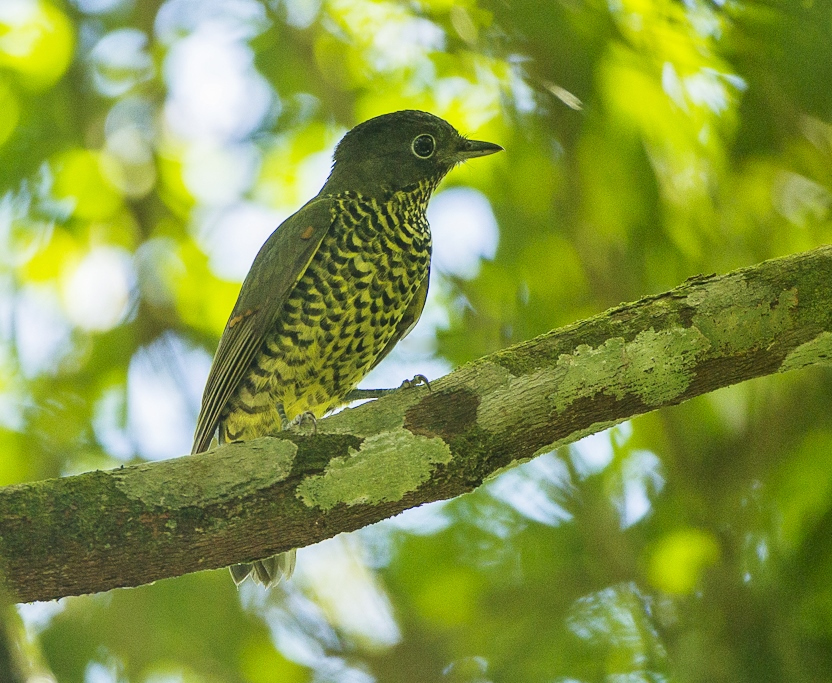
Wikipedia: Shrike-like cotinga Source: WIKIPEDIA
Shrike-like_Cotinga_-_REGUA_-_Brazil_S4E1690_%2812814049155%29_%282%29.jpg
🔍
Never observed (yet!)
Description
The Brazilian laniisoma (Laniisoma elegans), also known as the shrike-like laniisoma, the shrike-like cotinga or the elegant mourner, is a species of bird in the family Tityridae. As suggested by its common name, it was formerly considered a cotinga. As it is far from being "shrike-like", this means that the widely used common name is entirely misleading.
[more]
Details
Dusky piha / Andengraupiha (Lipaugus fuscocinereus)
Profile Wikipedia Xeno-Canto YouTube

Wikipedia: Dusky piha Source: WIKIPEDIA
Dusky_Piha_-_Colombia_S4E2023_%2816215558333%29.jpg
🔍
Never observed (yet!)
Description
The dusky piha (Lipaugus fuscocinereus) is a species of bird in the family Cotingidae.
[more]
Details
Rufous piha / Zimtrote Piha (Lipaugus unirufus)
Profile Wikipedia Xeno-Canto YouTube

Wikipedia: Rufous piha Source: WIKIPEDIA
Rufous_Piha_-_Los_Cusingos_-_Costa_Rica_MG_7504_%2826423543660%29.jpg
🔍
Never observed (yet!)
Description
The rufous piha (Lipaugus unirufus) is a species of bird in the family Cotingidae.
It is found in Belize, Colombia, Costa Rica, Ecuador, Guatemala, Honduras, Mexico, Nicaragua, and Panama. Its natural habitat is subtropical or tropical moist lowland forests.[1]
[more]
Details
Screaming piha / Schreipiha (Lipaugus vociferans)
Profile Wikipedia Xeno-Canto YouTube

Wikipedia: Screaming piha Source: WIKIPEDIA
1200px-Lipaugus_vociferans_-_Screaming_Piha%3B_Manaus%2C_Amazonas%2C_Brazil.jpg
🔍
Never observed (yet!)
Description
The screaming piha (Lipaugus vociferans) is a species of passerine bird in the family Cotingidae. It is found in humid forests in the Amazon and tropical parts of the Mata Atlântica in South America.[2] It is a common bird in the middle and lower parts of the canopy at altitudes below about 500 m (1,600 ft), or up to 1,000 m (3,300 ft) in Venezuela and the Andean foothills. It is adapting well to human settlement areas like gardens and parks, and is considered to be of least concern by BirdLife International.[1]
[more]
Details
Sharpbill / Flammenkopfbekarde (Oxyruncus cristatus)

Wikipedia: Sharpbill Source: WIKIPEDIA
1200px-Sharpbill.jpg
🔍
Never observed (yet!)
Description
The sharpbill (Oxyruncus cristatus) is a small passerine bird in the family Tityridae. Its range is from the mountainous areas of tropical South America and southern Central America (Panama and Costa Rica).
[more]
Details
Black-necked red-cotinga / Samtkotinga (Phoenicircus nigricollis)
Profile Wikipedia Xeno-Canto YouTube
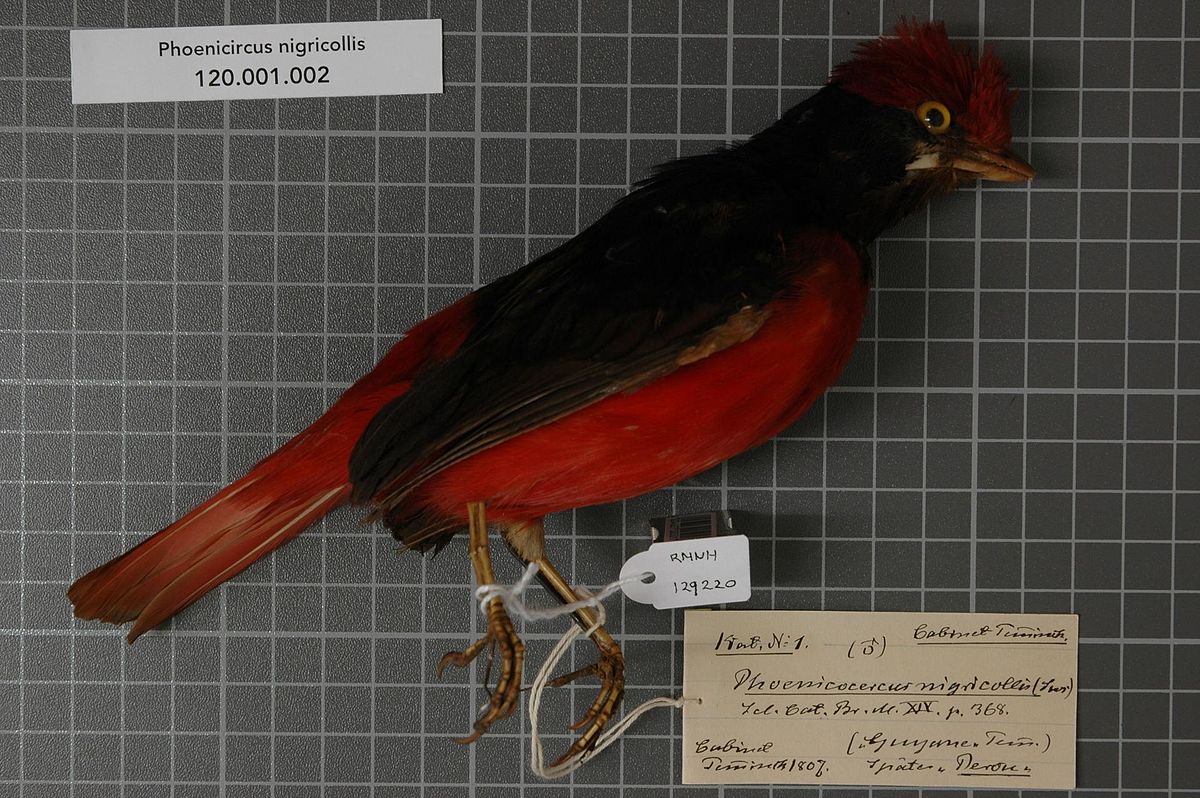
Wikipedia: Black-necked red-cotinga Source: WIKIPEDIA
1200px-Naturalis_Biodiversity_Center_-_RMNH.AVES.129220_1_-_Phoenicircus_nigricollis_Swainson%2C_1832_-_Cotingidae_-_bird_skin_specimen.jpeg
🔍
Never observed (yet!)
Description
The black-necked red cotinga (Phoenicircus nigricollis) is a species of bird in the family Cotingidae, the cotingas.
[more]
Details
Green-and-black fruiteater / Goldbandkotinga (Pipreola riefferii)
Profile Wikipedia Xeno-Canto YouTube

Wikipedia: Green-and-black fruiteater Source: WIKIPEDIA
Green-and-black_Fruiteater_-_Colombia_S4E1819.jpg
🔍
Never observed (yet!)
Description
The green-and-black fruiteater (Pipreola riefferii) is a species of bird in the family Cotingidae. It is found in Colombia, Ecuador, Peru, and Venezuela, where its habitat is subtropical or tropical moist montane forests. Because of its range and population size this species is not classified as threatened.[2]
[more]
Details
Fiery-throated fruiteater / Orangekehlkotinga (Pipreola chlorolepidota)
Profile Wikipedia Xeno-Canto YouTube

Wikipedia: Fiery-throated fruiteater Source: WIKIPEDIA
1200px-Pipreola_chlorolepidota_-_Fiery-throated_Fruiteater_-_male_%28cropped%29.jpg
🔍
Never observed (yet!)
Description
The fiery-throated fruiteater (Pipreola chlorolepidota) is a species of bird in the family Cotingidae. It is found in Colombia, Ecuador, and Peru where its natural habitats are subtropical or tropical moist lowland forests and subtropical or tropical moist montane forests. It is becoming rare due to habitat destruction of its rainforest habitat. Its population size and range are limited causing this species to be considered near threatened.
[more]
Details
Orange-breasted fruiteater / Orangebrustkotinga (Pipreola jucunda)
Profile Wikipedia Xeno-Canto YouTube

Wikipedia: Orange-breasted fruiteater Source: WIKIPEDIA
Orange-breasted_Fruiteater_-_Mindo_-_Ecuador_S4E5422.jpg
🔍
Never observed (yet!)
Description
The orange-breasted fruiteater (Pipreola jucunda) is a species of bird in the family Cotingidae native to Colombia and Ecuador. Its natural habitat is subtropical or tropical moist montane forests. It is a plump green bird about 18 centimetres (7 in) long. Males have a glossy black head and bib, an orange throat and yellow belly. Females lack the dark head and have green upper parts and green and yellow streaked underparts. Both sexes have orange beaks and greyish-green legs. This is a relatively common species with a wide range, and the International Union for Conservation of Nature has rated its conservation status as being of "least concern".
[more]
Details
Scarlet-breasted fruiteater / Scharlachbrustkotinga (Pipreola frontalis)
Profile Wikipedia Xeno-Canto YouTube

Wikipedia: Scarlet-breasted fruiteater Source: WIKIPEDIA
1200px-Pipreola_frontalis_squamipectus.jpg
🔍
Never observed (yet!)
Description
The scarlet-breasted fruiteater (Pipreola frontalis) is a species of bird in the family Cotingidae.
It is found in Bolivia, Ecuador, and Peru where its natural habitat is subtropical and tropical moist montane forests. Two subspecies are recognised though some researchers consider these should be regarded as distinct species. It is a plump green bird with a black head, the males having red throats and the females yellow. It is a relatively common species with a wide range, and the International Union for Conservation of Nature has rated its conservation status as being "least concern".
[more]
Details
Barred fruiteater / Bindenschmuckvogel (Pipreola arcuata)
Profile Wikipedia Xeno-Canto YouTube

Wikipedia: Barred fruiteater Source: WIKIPEDIA
Pipreola_arcuata_%28male%29_-NW_Ecuador-4.jpg
🔍
Never observed (yet!)
Description
The barred fruiteater (Pipreola arcuata) is a species of bird in the family Cotingidae, found in Bolivia, Colombia, Ecuador, Peru, and Venezuela. Its natural habitat is subtropical or tropical moist montane forests. The population is stable, and they are considered common.[2]
[more]
Details
Black-chester fruiteater (Pipreola lubomirskii)
Description
Details
Purple-throated cotinga / Purpurkehlkotinga (Porphyrolaema porphyrolaema)
Profile Wikipedia Xeno-Canto YouTube

Wikipedia: Purple-throated cotinga Source: WIKIPEDIA
Porphyrolaema_porphyrolaema_-_Purple-throated_cotinga_%28male%29_01.JPG
🔍
Never observed (yet!)
Description
The purple-throated cotinga (Porphyrolaema porphyrolaema) is a species of bird in the cotinga family, Cotingidae. It is found in the western Amazon rainforest of South America; its range extends from southern Colombia south through eastern Ecuador and Peru and east through extreme northwestern Bolivia and into western Amazonian Brazil. It lives in the canopy or along the borders of humid forest throughout its range. The purple-throated cotinga is monotypic within the genus Porphyrolaema and has no known subspecies. It is one of the smaller cotinga species and expresses strong sexual dimorphism. Males have black upperparts with a bold white wingstripe and white edges to the tertial feathers and a white belly with some black barring on the rear flanks. The throat is a deep purple, giving the bird both its common and scientific names. Females are dark brown with pale buffy margins on the upperparts, buffy cinnamon with black barring on the underparts, and rufous on the throat. The male has a powerful voice.
[more]
Details
Red-ruffed fruitcrow / Rotkehlkotinga (Pyroderus scutatus)
Profile Wikipedia Xeno-Canto YouTube

Wikipedia: Red-ruffed fruitcrow Source: WIKIPEDIA
Pyroderus_scutatus_-Intervales_State_Park%2C_Sao_Paulo%2C_Brazil-8.jpg
🔍
Never observed (yet!)
Description
The red-ruffed fruitcrow (Pyroderus scutatus) is a species of bird in the monotypic genus Pyroderus. It belongs to the family Cotingidae, and is one of the largest passerines in South America. Its common names in Spanish include yacutoro, toropisco montañero, sangretoro, pájaro torero, and cuervo-frutero de garganta roja. This species was first named Coracias scutata by Shaw in 1792, but was later changed to the current scientific name. This species has five subspecies P. s. scutatus (Shaw, 1792), P. s. orenocensis (Lafresnaye, 1846), P. s. granadensis (Lafresnaye, 1846), P. s. masoni (Ridgway, 1886), P. s. occidentalsis (Chapman, 1914).[1]
[more]
Details
Purple-throated fruitcrow / Purpurbrustkotinga (Querula purpurata)
Profile Wikipedia Xeno-Canto YouTube

Wikipedia: Purple-throated fruitcrow Source: WIKIPEDIA
1200px-Querula_purpurata_-_Purple-throated_Fruitcrow_%28male%29%3B_Parauapebas%2C_Par%C3%A1%2C_Brazil.jpg
🔍
Never observed (yet!)
Description
The purple-throated fruitcrow (Querula purpurata) is a species of bird in the family Cotingidae, the cotingas. It is the only species of the genus Querula.[2] It is native to Nicaragua, Costa Rica and Panama and most of the northern half of South America, its habitat being humid lowland forest where it feeds mainly on insects and fruit. It is a glossy black, medium-sized bird and the male has a purple-red throat patch. It nests in close vicinity with other birds of its species. Its population is in decline, but it is a common species with a very wide range, and the International Union for Conservation of Nature has assessed its conservation status as being of "least concern".
[more]
Details
Pompadour cotinga / Pompadourkotinga / Pompadour-Kotinga (Xipholena punicea)
Profile Wikipedia Xeno-Canto YouTube
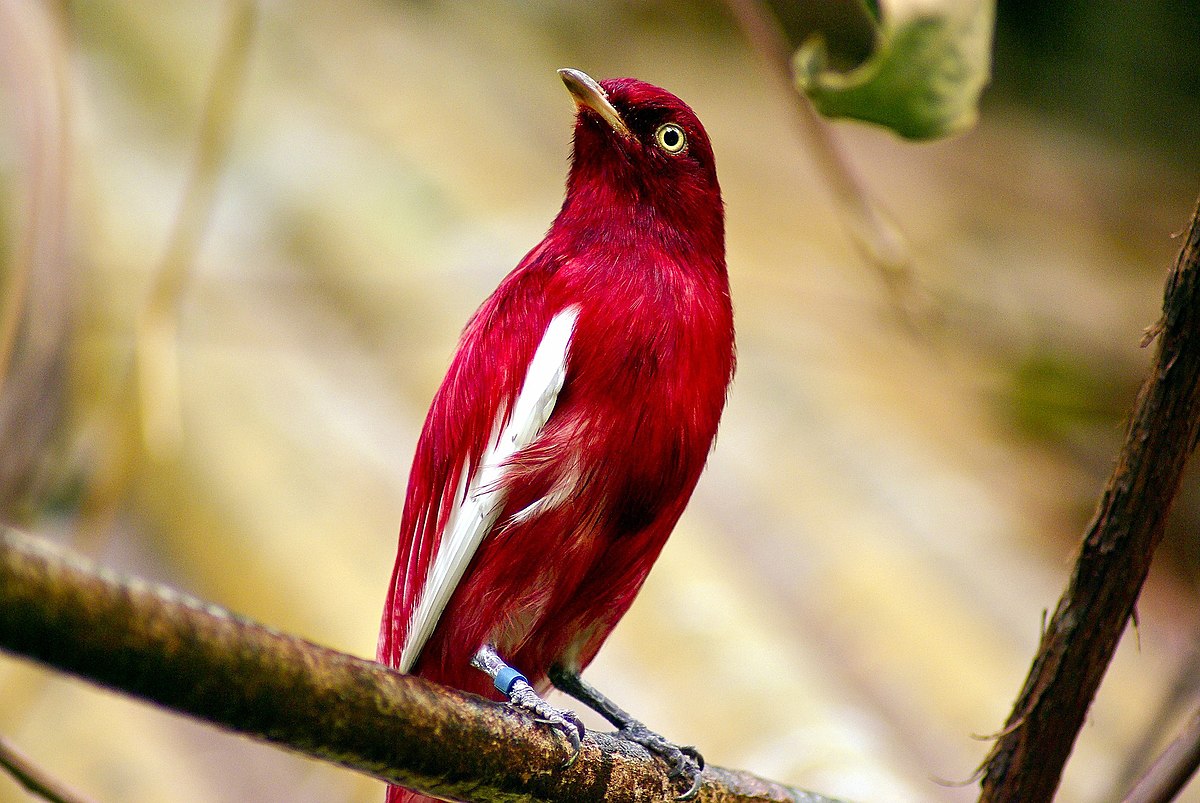
Wikipedia: Pompadour cotinga Source: WIKIPEDIA
1200px-Perched_Pompadour_Cotinga.jpg
🔍
Never observed (yet!)
Description
The pompadour cotinga (Xipholena punicea) is a species of bird in the family Cotingidae. This species lives in the Amazonian rainforest and has a range that extends across the Amazon Basin and includes Peru, Brazil, Colombia, Venezuela, and the Guianas. The pompadour cotinga is primarily a frugivore but has been known to consume insects on occasion. This species of cotinga is distinct in that the males have a burgundy head and body, bright white wings, and yellow eyes. Like other members of the Cotingidae, this species is sexually dimorphic and the females have a pale grey head and body. Although there are not many documented observations of the nesting behavior of these birds, the males are known to perform elaborate mating displays for the females who then raise the young alone.
[more]
Details
Olivaceous piha / Gelbbauchpiha / Gelbbauch-Piha (Snowornis cryptolophus)
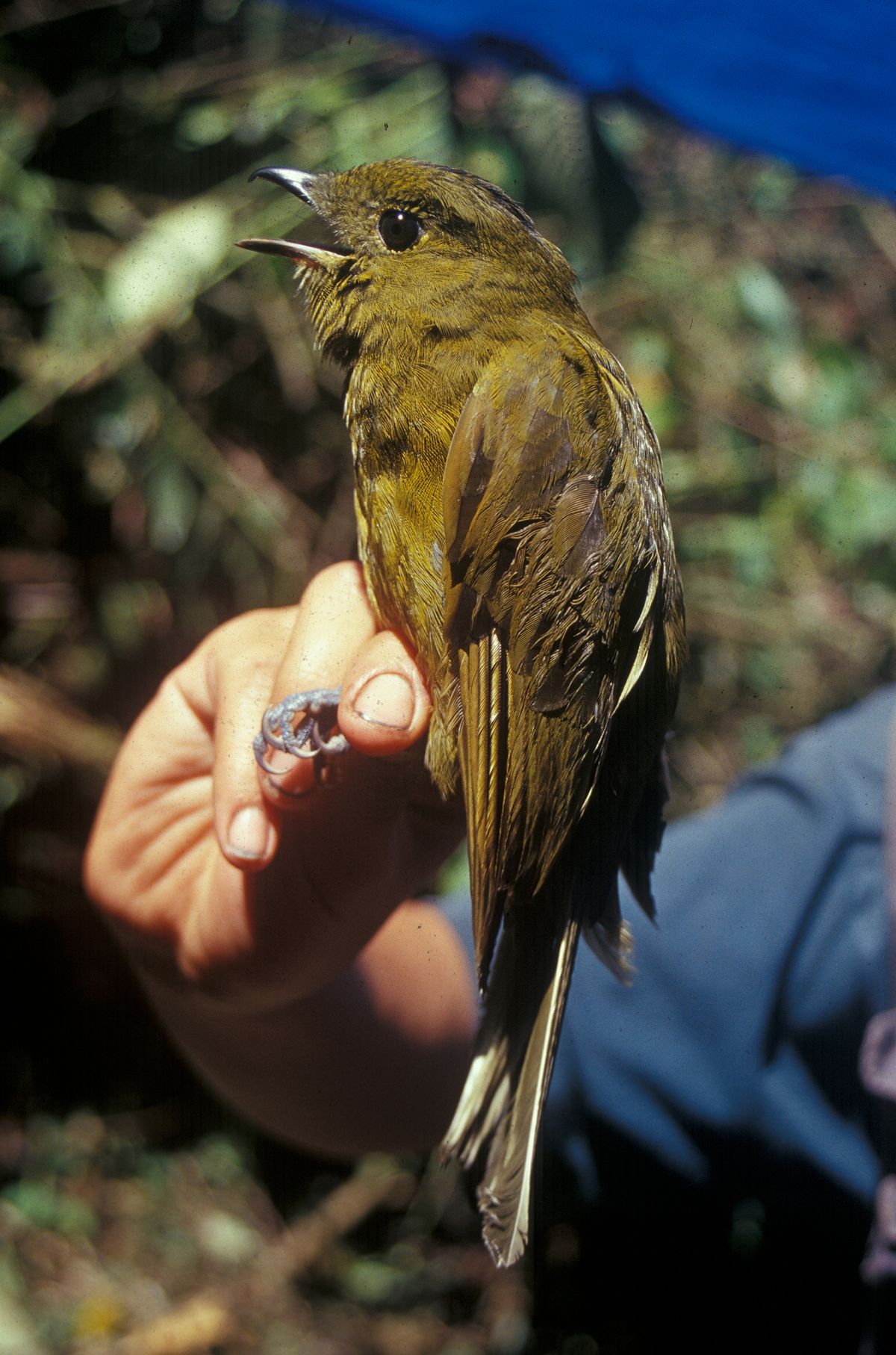
Wikipedia: Olivaceous piha Source: WIKIPEDIA
1200px-Snowornis_cryptolophus_-NBII_Image_Gallery-2003.jpg
🔍
Never observed (yet!)
Description
The olivaceous piha (Snowornis cryptolophus) is a species of bird in the family Cotingidae. It is found in Colombia, Ecuador, and Peru. In regard to population density and range this species is not considered vulnerable.[2]
[more]
Details
Grey-tailed piha / Grauschwanzpiha (Snowornis subalaris)

Wikipedia: Grey-tailed piha Source: WIKIPEDIA
1200px-LipaugusSubalarisSmit.jpg
🔍
Never observed (yet!)
Description
The grey-tailed piha (Snowornis subalaris) is a species of bird in the family Cotingidae. It is found in Colombia, Ecuador and Peru where its natural habitat is subtropical or tropical moist montane forests.
[more]
Details
White-chinned thistletail / Weißkinn-Distelschwanz (Asthenes fuliginosa)

Wikipedia: White-chinned thistletail Source: WIKIPEDIA
White-chinned_Thistletail_-_Ecuador_S4E4517.jpg
🔍
Never observed (yet!)
Description
The white-chinned thistletail or "colicardo barbiblanco" (Asthenes fuliginosa) is a species of bird in the family Furnariidae. It is found in Colombia, Ecuador, Peru, and Venezuela. Its natural habitats are subtropical or tropical moist montane forests and subtropical or tropical high-altitude grassland.
[more]
Details
Many-striped canastero / Jardineschlüpfer (Asthenes flammulata)
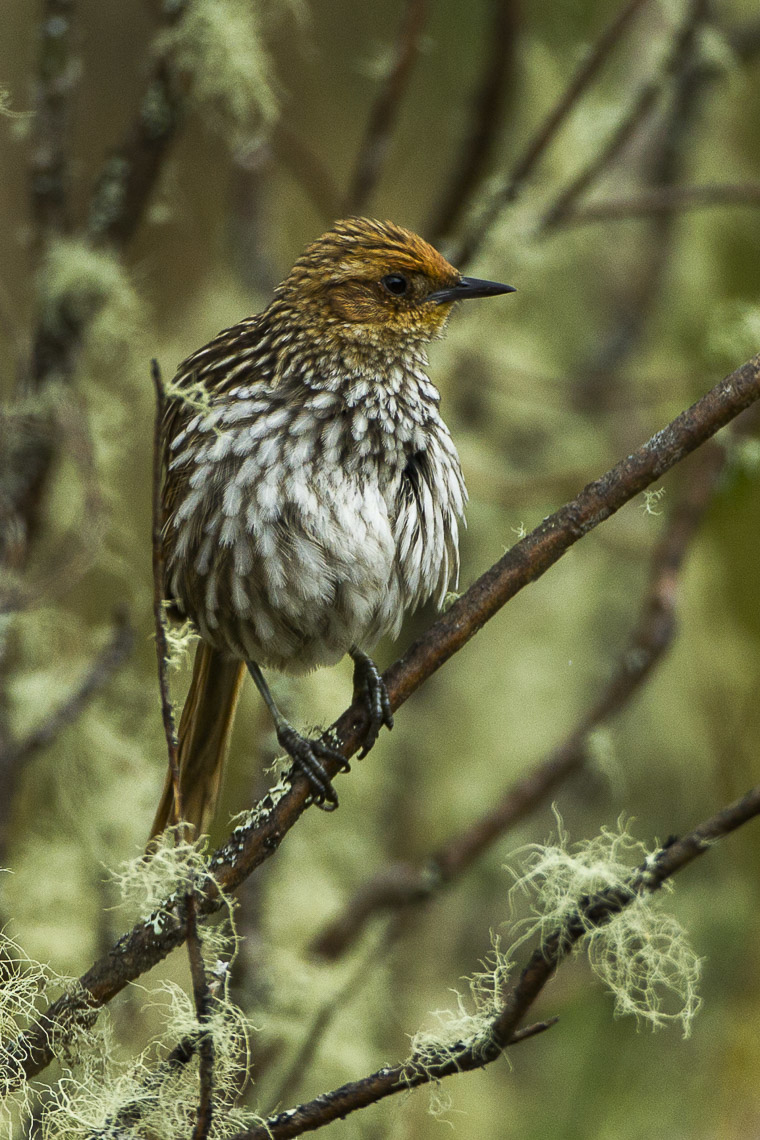
Wikipedia: Many-striped canastero Source: WIKIPEDIA
Many-striped_Canastero_-_Colombia_S4E1138.jpg
🔍
Never observed (yet!)
Description
The many-striped canastero (Asthenes flammulata) is a species of bird in the family Furnariidae.
[more]
Details
Streak-backed canastero / Wyattschlüpfer (Asthenes wyatti)

Wikipedia: Streak-backed canastero Source: WIKIPEDIA
Asthenes_wyatti_-_Streak-backed_Canastero%3B_Junin_Lake%2C_Peru_%28cropped%29.jpg
🔍
Never observed (yet!)
Description
The streak-backed canastero (Asthenes wyatti) is a species of bird in the family Furnariidae. It is found in Bolivia, Colombia, Ecuador, Peru, and Venezuela. Its natural habitat is subtropical or tropical high-altitude grassland. Seven subspecies are recognized:
[more]
Details
Mouse-colored thistletail (Asthenes griseomurina)

Wikipedia: Mouse-colored thistletail Source: WIKIPEDIA
Mouse-colored_Thistletail_-_South_Ecuador_S4E2287_%2816129504574%29.jpg
🔍
Never observed (yet!)
Description
The mouse-colored thistletail (Asthenes griseomurina) is a species of bird in the family Furnariidae. It is found in Ecuador and Peru.
[more]
Details
Plain softtail / Braunkopf-Bündelnister (Thripophaga fusciceps)
Profile Wikipedia Xeno-Canto YouTube

Wikipedia: Plain softtail Source: WIKIPEDIA
Thripophaga_fusciceps_77344453_%28cropped%29.jpg
🔍
Never observed (yet!)
Description
The plain softtail (Thripophaga fusciceps) is a species of bird in the family Furnariidae. It is found in Bolivia, Brazil, Ecuador, and Peru. Its natural habitats are subtropical or tropical dry forest, subtropical or tropical moist lowland forest, and subtropical or tropical swamps.
[more]
Details
Pale-legged hornero / Blaßfußtöpfer (Furnarius leucopus)
Profile Wikipedia Xeno-Canto YouTube

Wikipedia: Pale-legged hornero Source: WIKIPEDIA
Furnarius_leucopus_cinnamomeus-20090110.jpg
🔍
Never observed (yet!)
Description
The pale-legged hornero (Furnarius leucopus) is a species of bird in the family Furnariidae. It includes the Pacific hornero (F. leucopus cinnamomeus) and the Caribbean hornero (F. leucopus longirostris), which often are considered separate species.
[more]
Details
Lesser hornero / Kleintöpfer (Furnarius minor)
Profile Wikipedia Xeno-Canto YouTube

Wikipedia: Lesser hornero Source: WIKIPEDIA
Furnarius_minor_-_Lesser_Hornero.jpg
🔍
Never observed (yet!)
Description
The lesser hornero (Furnarius minor) is a species of bird in the ovenbird family Furnariidae. It is closely related to the Pale-legged hornero, and their global distribution overlaps somewhat. This species is monotypic, meaning there is only one subspecies.[2]
[more]
Details
Ash-browed spinetail / Olivstirnschlüpfer (Cranioleuca curtata)
Profile Wikipedia Xeno-Canto YouTube

Wikipedia: Ash-browed spinetail Source: WIKIPEDIA
1200px-Cranioleuca_curtata_-_Ash-browed_Spinetail.jpg
🔍
Never observed (yet!)
Description
The ash-browed spinetail (Cranioleuca curtata) is a species of bird in the family Furnariidae. It is found in Bolivia, Colombia, Ecuador, and Peru. Its natural habitat is subtropical or tropical moist montane forest.
[more]
Details
Parker's spinetail (Cranioleuca vulpecula)

Wikipedia: Parker's spinetail Source: WIKIPEDIA
Cranioleuca_vulpecula_-_Parker%27s_spinetail%3B_Marchantaria_island%2C_Iranduba%2C_Amazonas%2C_Brazil.jpg
🔍
Never observed (yet!)
Description
Parker's spinetail (Cranioleuca vulpecula) or the white-breasted spinetail, is a species of bird in the family Furnariidae. It is found in Bolivia, Brazil, Ecuador, and Peru.
[more]
Details
Line-cheeked spinetail / Olivrückenschlüpfer (Cranioleuca antisiensis)
Profile Wikipedia Xeno-Canto YouTube

Wikipedia: Line-cheeked spinetail Source: WIKIPEDIA
1200px-Cranioleuca_antisiensis_antisiensis_-_Line-cheeked_Spinetail.jpg
🔍
Never observed (yet!)
Description
The line-cheeked spinetail (Cranioleuca antisiensis) is an arboreal species of bird in the ovenbird family Furnariidae. It is a common species in the Andes in Ecuador and Peru. Its natural habitat is subtropical or tropical moist montane forests, woodland and scrub. It is distinguished from other species by its distribution, behaviour and white supercilium. There are two recognized subspecies, which are in reality a gradient in morphology and plumage from one extreme to the other.
[more]
Details
Speckled spinetail / Gelbkinnschlüpfer (Cranioleuca gutturata)
Profile Wikipedia Xeno-Canto YouTube
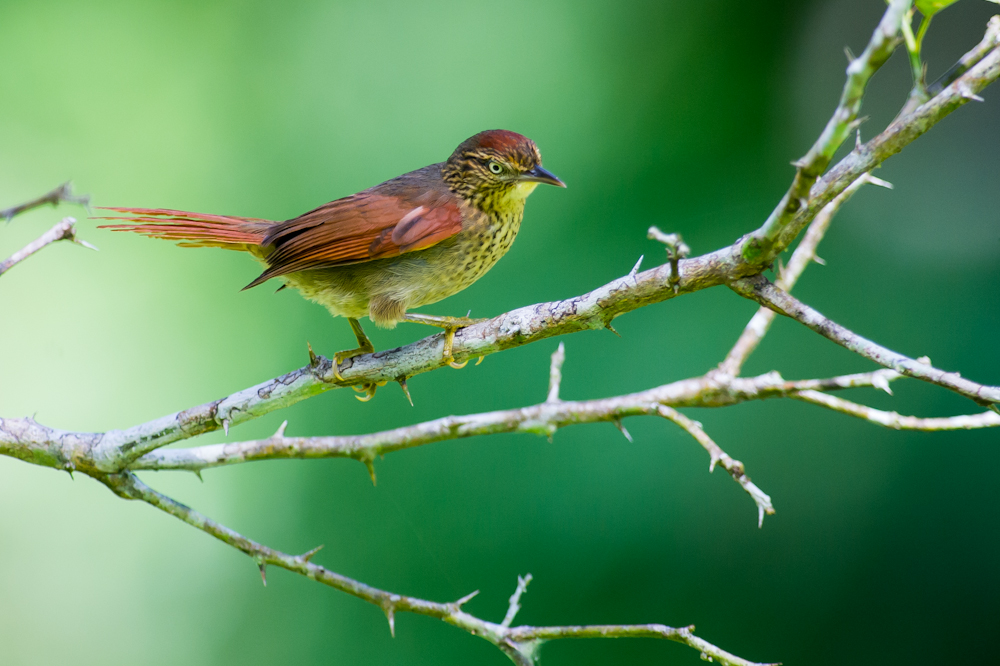
Wikipedia: Speckled spinetail Source: WIKIPEDIA
Cranioleuca_gutturata%2C_Speckled_Spinetail.jpg
🔍
Never observed (yet!)
Description
The speckled spinetail (Cranioleuca gutturata) is a species of bird in the family Furnariidae. It is found in Bolivia, Brazil, Colombia, Ecuador, French Guiana, Peru, Suriname, and Venezuela. Its natural habitats are subtropical or tropical moist lowland forests and subtropical or tropical swamps.
[more]
Details
Red-faced spinetail / Rotwangenschlüpfer (Cranioleuca erythrops)
Profile Wikipedia Xeno-Canto YouTube
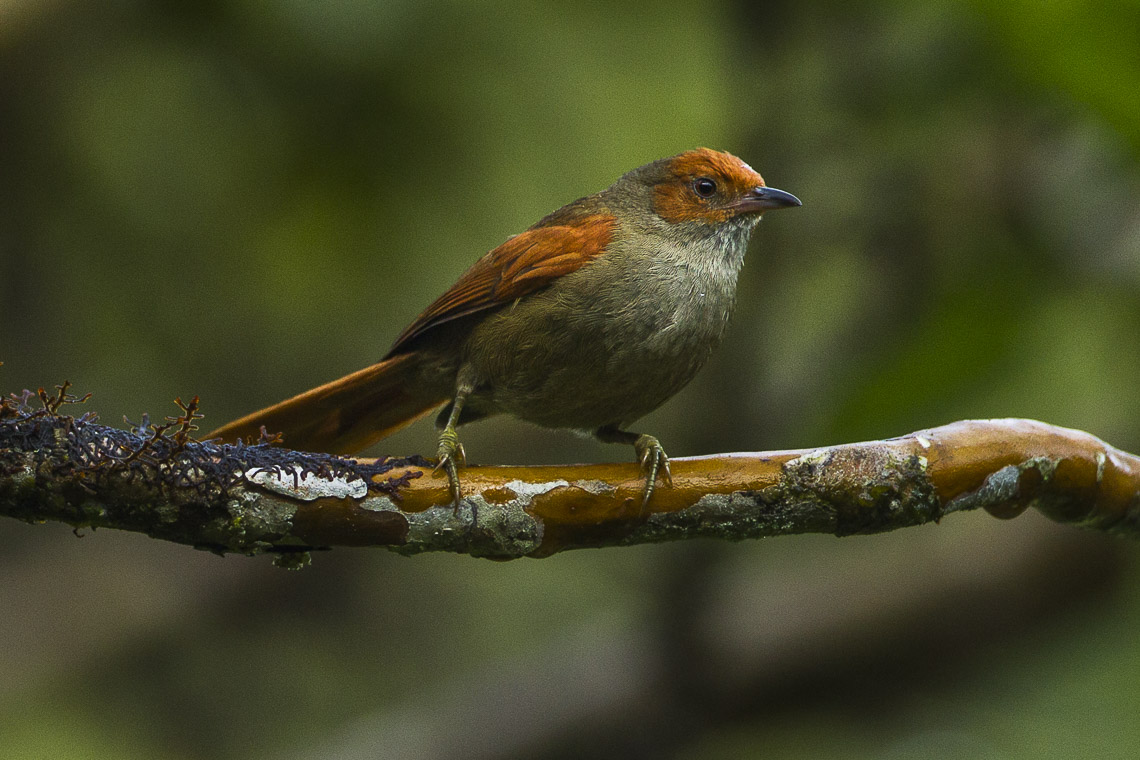
Wikipedia: Red-faced spinetail Source: WIKIPEDIA
Red-faced_Spinetail_-_Colombia_S4E4386.jpg
🔍
Never observed (yet!)
Description
The red-faced spinetail (Cranioleuca erythrops) is a species of bird in the family Furnariidae. It is found in Colombia, Costa Rica, Ecuador, and Panama. Its natural habitat is subtropical or tropical moist montane forest.
[more]
Details
White-browed spinetail / Weißbrauenschlüpfer (Hellmayrea gularis)
Profile Wikipedia Xeno-Canto YouTube

Wikipedia: White-browed spinetail Source: WIKIPEDIA
1200px-Hellmayrea_gularis_-_White-browed_Spinetail_-_Ecuador.jpg
🔍
Never observed (yet!)
Description
The white-browed spinetail (Hellmayrea gularis) is a species of bird in the family Furnariidae. It is the only member of the genus Hellmayrea.
[more]
Details
Ruddy spinetail / Rötelschlüpfer (Synallaxis rutilans)
Profile Wikipedia Xeno-Canto YouTube

Wikipedia: Ruddy spinetail Source: WIKIPEDIA
1200px-Synallaxis_rutilans_-_Ruddy_spinetail%2C_Pte._Figueiredo%2C_Amazonas%2C_Brazil.jpg
🔍
Never observed (yet!)
Description
The ruddy spinetail (Synallaxis rutilans) is a species of bird in the family Furnariidae. It is found in Bolivia, Brazil, Colombia, Ecuador, French Guiana, Guyana, Peru, Suriname, and Venezuela. Its natural habitat is subtropical or tropical moist lowland forests.
[more]
Details
White-bellied spinetail (Mazaria propinqua)

Wikipedia: White-bellied spinetail Source: WIKIPEDIA
1200px-Mazaria_propinqua_-_White-bellied_Spinetail%3B_Marchantaria_Island%2C_Iranduba%2C_Amazonas%2C_Brazil.jpg
🔍
Never observed (yet!)
Description
The white-bellied spinetail (Mazaria propinqua) is a species of bird in the family Furnariidae. It is found in river islands of the western Amazon Basin. Its natural habitat is subtropical or tropical moist shrubland.
[more]
Details
Dusky spinetail / Trauerschlüpfer (Synallaxis moesta)
Profile Wikipedia Xeno-Canto YouTube

Wikipedia: Dusky spinetail Source: WIKIPEDIA
1200px-Synallaxis_moesta_map.svg.png
🔍
Never observed (yet!)
Description
The dusky spinetail (Synallaxis moesta) is a species of bird in the family Furnariidae. It is found in Colombia, Ecuador, and Peru. Its natural habitats are subtropical or tropical moist lowland forests and heavily degraded former forest.
[more]
Details
Azara's spinetail / Azaraschlüpfer (Synallaxis azarae)
Profile Wikipedia Xeno-Canto YouTube

Wikipedia: Azara's spinetail Source: WIKIPEDIA
1200px-Synallaxis_azarae_76608368.jpg
🔍
Never observed (yet!)
Description
Azara's spinetail (Synallaxis azarae) is a species of bird in the family Furnariidae, named after Spanish naturalist Félix de Azara.[2]
[more]
Details
Plain-crowned spinetail / Cayenneschlüpfer (Synallaxis gujanensis)
Profile Wikipedia Xeno-Canto YouTube
Wikipedia: Plain-crowned spinetail Source: WIKIPEDIA
1200px-Synallaxis_gujanensis_-_Plain-crowned_Spinetail%3B_Amazon_river_island%2C_Itacoatiara%2C_Amazonas%2C_Brazil.jpg
🔍
Never observed (yet!)
Description
The plain-crowned spinetail (Synallaxis gujanensis) is a species of bird in the family Furnariidae. It is found in Bolivia, Brazil, Colombia, Ecuador, French Guiana, Guyana, Paraguay, Peru, Suriname, and Venezuela. Its natural habitats are subtropical or tropical moist lowland forests and heavily degraded former forest.
[more]
Details
Blackish-headed spinetail / Taczanowskischlüpfer (Synallaxis tithys)
Profile Wikipedia Xeno-Canto YouTube

Wikipedia: Blackish-headed spinetail Source: WIKIPEDIA
1200px-Synallaxis_tithys_-_Blackish-headed_Spinetail.jpg
🔍
Never observed (yet!)
Description
The blackish-headed spinetail (Synallaxis tithys) is a species of bird in the family Furnariidae. It is found in Ecuador and Peru. Its natural habitats are subtropical or tropical dry forests, subtropical or tropical moist lowland forests, and pastureland. It is threatened by habitat loss.
[more]
Details
Slaty spinetail / Graukehlschlüpfer (Synallaxis brachyura)
Profile Wikipedia Xeno-Canto YouTube

Wikipedia: Slaty spinetail Source: WIKIPEDIA
Slaty_Spinetail_-_Colombia_S4E0885.jpg
🔍
Never observed (yet!)
Description
The slaty spinetail or slaty castlebuilder, (Synallaxis brachyura), is a passerine bird which breeds in the tropical New World from northern Honduras to western Ecuador and east-central Brazil.
[more]
Details
Marañon spinetail / Maranonschlüpfer (Synallaxis maranonica)
Profile Wikipedia Xeno-Canto YouTube

Wikipedia: Marañon spinetail Source: WIKIPEDIA
1200px-Synallaxis_maranonica_map.svg.png
🔍
Never observed (yet!)
Description
The Marañón spinetail (Synallaxis maranonica) is a species of bird in the family Furnariidae. It is found in Ecuador and Peru. Its natural habitats are subtropical or tropical dry forests, subtropical or tropical moist lowland forests, and subtropical or tropical dry shrubland. It is threatened by habitat loss.
[more]
Details
Chestnut-throated spinetail / Braunkehlschlüpfer (Synallaxis cherriei)
Profile Wikipedia Xeno-Canto YouTube

Wikipedia: Chestnut-throated spinetail Source: WIKIPEDIA
Synallaxis_cherriei_-_Chestnut-throated_spinetail.jpg
🔍
Never observed (yet!)
Description
The chestnut-throated spinetail (Synallaxis cherriei) is a species of bird in the family Furnariidae. It is mainly found in the eastern Amazon Basin, with small numbers in Colombia, Ecuador, and Peru.
[more]
Details
Dark-breasted spinetail / Weißkehlschlüpfer (Synallaxis albigularis)
Profile Wikipedia Xeno-Canto YouTube
Wikipedia: Dark-breasted spinetail Source: WIKIPEDIA
Synallaxis_albigularis_-_Dark-breasted_Spinetail.JPG
🔍
Never observed (yet!)
Description
The dark-breasted spinetail (Synallaxis albigularis) is a species of bird in the family Furnariidae. It is found in Bolivia, Brazil, Colombia, Ecuador, and Peru. Its natural habitats are subtropical or tropical moist shrubland and heavily degraded former forest.
[more]
Details
Rufous spinetail / Rostschlüpfer (Synallaxis unirufa)
Profile Wikipedia Xeno-Canto YouTube

Wikipedia: Rufous spinetail Source: WIKIPEDIA
1200px-Synallaxis_unirufa.jpg
🔍
Never observed (yet!)
Description
The rufous spinetail (Synallaxis unirufa) is a species of bird in the family Furnariidae. It is found in Colombia, Ecuador, Peru, and Venezuela. Its natural habitat is subtropical or tropical moist montane forests.
[more]
Details
Necklaced spinetail / Fleckenbrustschlüpfer (Synallaxis stictothorax)
Profile Wikipedia Xeno-Canto YouTube

Wikipedia: Necklaced spinetail Source: WIKIPEDIA
1200px-Synallaxis_stictothorax_stictothorax_-_Necklaced_Spinetail.jpg
🔍
Never observed (yet!)
Description
The necklaced spinetail (Synallaxis stictothorax) is a species of ovenbird in the family Furnariidae. Found in Ecuador and Peru, its natural habitat is subtropical or tropical dry shrubland.
[more]
Details
Wedge-billed woodcreeper / Rindenpicker (Glyphorynchus spirurus)
Profile Wikipedia Xeno-Canto YouTube

Wikipedia: Wedge-billed woodcreeper Source: WIKIPEDIA
Glyphorynchus_spirurus_-NW_Ecuador-8.jpg
🔍
Never observed (yet!)
Description
The wedge-billed woodcreeper (Glyphorynchus spirurus), is a passerine bird which breeds in the tropical New World from southern Mexico to northern Bolivia, central Brazil and the Guianas; it is absent from the Pacific coastal areas except between Costa Rica and Ecuador. It is the only member of the genus Glyphorynchus.
[more]
Details
Sharp-tailed streamcreeper / Flussufer-Stachelschwanz (Lochmias nematura)
Profile Wikipedia Xeno-Canto YouTube

Wikipedia: Sharp-tailed streamcreeper Source: WIKIPEDIA
Lochmias_nematura_-Parque_Estadual_da_Serra_da_Cantareira%2C_Sao_Paulo%2C_Brazil-8.jpg
🔍
Never observed (yet!)
Description
The sharp-tailed streamcreeper (Lochmias nematura) is a passerine bird of South America belonging to the family Furnariidae, the ovenbirds. It is the only member of the genus Lochmias. The species is also known as the streamside streamcreeper.[2]
[more]
Details
Uniform treehunter / Einfarb-Baumspäher (Thripadectes ignobilis)
Profile Wikipedia Xeno-Canto YouTube

Wikipedia: Uniform treehunter Source: WIKIPEDIA
1200px-Thripadectes_ignobilis_-_Uniform_treehunter%3B_Cerro_Montezuma%2C_Risaralda%2C_Colombia.jpg
🔍
Never observed (yet!)
Description
\
The uniform treehunter (Thripadectes ignobilis) is a species of bird in the family Furnariidae. It is found in Colombia and Ecuador.
[more]
Details
Streak-capped treehunter / Streifenkopf-Baumspäher (Thripadectes virgaticeps)
Profile Wikipedia Xeno-Canto YouTube

Wikipedia: Streak-capped treehunter Source: WIKIPEDIA
Streak-capped_Treehunter_%28Thripadectes_virgaticeps%29_%288079775965%29.jpg
🔍
Never observed (yet!)
Description
The streak-capped treehunter (Thripadectes virgaticeps) is a species of bird in the family Furnariidae.
[more]
Details
Black-billed treehunter / Tschudibaumspäher (Thripadectes melanorhynchus)
Profile Wikipedia Xeno-Canto YouTube

Wikipedia: Black-billed treehunter Source: WIKIPEDIA
1200px-Thripadectes_melanorhynchus_-_Black-billed_Treehunter.jpg
🔍
Never observed (yet!)
Description
The black-billed treehunter (Thripadectes melanorhynchus) is a species of bird in the family Furnariidae. It is found in Colombia, Ecuador, and Peru. Its natural habitat is subtropical or tropical moist montane forest.
[more]
Details
Striped treehunter / Streifenbaumspäher (Thripadectes holostictus)
Profile Wikipedia Xeno-Canto YouTube

Wikipedia: Striped treehunter Source: WIKIPEDIA
1200px-Striped_Treehunter_Side_Shot.png
🔍
Never observed (yet!)
Description
The striped treehunter (Thripadectes holostictus) is a species of bird in the family Furnariidae with a dusky-brown coloring with prominent buff streaking on the wings, throat, and breast. It is found in humid to wet montane forest that range locally in the Andes from west Venezuela to west Bolivia (Bolivia, Colombia, Ecuador, Peru, and Venezuela) most often at elevations of 1500–2500 m. It is most often mistaken for and with the larger flammulated treehunter due to many physical and behavioral similarities.
[more]
Details
Flammulated treehunter / Strichelbaumspäher (Thripadectes flammulatus)
Profile Wikipedia Xeno-Canto YouTube

Wikipedia: Flammulated treehunter Source: WIKIPEDIA
1200px-Thripadectes_flammulatus_-NBII_Image_Gallery-a00252.jpg
🔍
Never observed (yet!)
Description
The flammulated treehunter (Thripadectes flammulatus) is a species of bird in the family Furnariidae. It is found in Colombia, Ecuador, Peru, and Venezuela. Its natural habitat is subtropical or tropical moist montane forest.
[more]
Details
Rufous-rumped foliage-gleaner / Rostbürzel-Blattspäher (Philydor erythrocercum)

Wikipedia: Rufous-rumped foliage-gleaner Source: WIKIPEDIA
1200px-Philydor_erythrocercum_-_Rufous-rumped_Foliage-gleaner.jpg
🔍
Never observed (yet!)
Description
The rufous-rumped foliage-gleaner (Philydor erythrocercum) is a species of bird in the family Furnariidae.
It is found in Bolivia, Brazil, Colombia, Ecuador, French Guiana, Guyana, Peru, and Suriname.
Its natural habitats are subtropical or tropical moist lowland forest and subtropical or tropical moist montane forest.
[more]
Details
Cinnamon-rumped foliage-gleaner / Zimtbürzel-Blattspäher (Philydor pyrrhodes)
Profile Wikipedia Xeno-Canto YouTube

Wikipedia: Cinnamon-rumped foliage-gleaner Source: WIKIPEDIA
1200px-Naturalis_Biodiversity_Center_-_RMNH.AVES.37961_1_-_Philydor_pyrrhodes_%28Cabanis%2C_1848%29_-_Furnariidae_-_bird_skin_specimen.jpeg
🔍
Never observed (yet!)
Description
The cinnamon-rumped foliage-gleaner (Philydor pyrrhodes) is a species of bird in the family Furnariidae.
It is found in Bolivia, Brazil, Colombia, Ecuador, French Guiana, Guyana, Peru, Suriname, and Venezuela.
Its natural habitats are subtropical or tropical moist lowland forest and subtropical or tropical swampland.
[more]
Details
Slaty-winged foliage-gleaner / Schieferflügel-Blattspäher (Philydor fuscipenne)
Profile Wikipedia Xeno-Canto YouTube

Wikipedia: Slaty-winged foliage-gleaner Source: WIKIPEDIA
1200px-PhilydorErythronotusSmit_cleaned.png
🔍
Never observed (yet!)
Description
The slaty-winged foliage-gleaner (Philydor fuscipenne) is a perching bird species in the ovenbird family (Furnariidae).
[more]
Details
Fulvous-dotted treerunner / Tropfenstachelschwanz (Margarornis stellatus)
Profile Wikipedia Xeno-Canto YouTube

Wikipedia: Fulvous-dotted treerunner Source: WIKIPEDIA
Fulvous-dotted_Treerunner_-_Colombia_S4E9530.jpg
🔍
Never observed (yet!)
Description
The star-chested treerunner or fulvous-dotted treerunner (Margarornis stellatus) is a species of bird in the family Furnariidae. It is found in Colombia and Ecuador.
[more]
Details
Pearled treerunner / Südlicher Perlstachelschwanz (Margarornis squamiger)
Profile Wikipedia Xeno-Canto YouTube

Wikipedia: Pearled treerunner Source: WIKIPEDIA
1200px-Margarornis_squamiger_68812121.jpg
🔍
Never observed (yet!)
Description
The pearled treerunner (Margarornis squamiger) is a species of bird in the family Furnariidae.
[more]
Details
Scaly-throated leaftosser / Schuppenkehl-Laubwender (Sclerurus guatemalensis)
Profile Wikipedia Xeno-Canto YouTube
Wikipedia: Scaly-throated leaftosser Source: WIKIPEDIA
1200px-Sclerurus_guatemalensis_1902.jpg
🔍
Never observed (yet!)
Description
The scaly-throated leaftosser (Sclerurus guatemalensis) is a species of bird in the family Furnariidae. It is found in Belize, Colombia, Costa Rica, Ecuador, Guatemala, Honduras, Mexico, Nicaragua, and Panama. Its natural habitats are subtropical or tropical moist lowland forest and subtropical or tropical moist montane forest.
[more]
Details
South American leaftosser (Sclerurus obscurior)
Profile Wikipedia Xeno-Canto YouTube

Wikipedia: South American leaftosser Source: WIKIPEDIA
Tawny-throated_Leaftosser.jpg
🔍
Never observed (yet!)
Description
The tawny-throated leaftosser (Sclerurus mexicanus) is a tropical American bird species in the ovenbird family Furnariidae. It is also known as the tawny-throated leafscraper, Mexican leaftosser or Mexican leafscraper. This bird might be a cryptic species complex.[2]
[more]
Details
Gray-throated leaftosser (Sclerurus albigularis)
Profile Wikipedia Xeno-Canto YouTube

Wikipedia: Gray-throated leaftosser Source: WIKIPEDIA
1200px-Gray_throated_leaftosser.jpg
🔍
Never observed (yet!)
Description
The grey-throated leaftosser (Sclerurus albigularis) is a species of bird in the family Furnariidae. It is found in Bolivia, Brazil, Colombia, Costa Rica, Ecuador, Panama, Peru, Trinidad and Tobago, and Venezuela. Its natural habitats are subtropical or tropical moist lowland forest and subtropical or tropical moist montane forest.
[more]
Details
Black-tailed leaftosser / Weißkehl-Laubwender (Sclerurus caudacutus)
Profile Wikipedia Xeno-Canto YouTube

Wikipedia: Black-tailed leaftosser Source: WIKIPEDIA
1200px-Naturalis_Biodiversity_Center_-_RMNH.AVES.72605_1_-_Sclerurus_caudacutus_caudacutus_%28Vieillot%2C_1816%29_-_Furnariidae_-_bird_skin_specimen.jpeg
🔍
Never observed (yet!)
Description
The black-tailed leaftosser (Sclerurus caudacutus) is a species of bird in the family Furnariidae. It is found in Bolivia, Brazil, Colombia, Ecuador, French Guiana, Guyana, Peru, Suriname, and Venezuela.
Its natural habitat is tropical moist lowland forests.
[more]
Details
Short-billed leaftosser / Zimtkehl-Laubwender (Sclerurus rufigularis)
Profile Wikipedia Xeno-Canto YouTube

Wikipedia: Short-billed leaftosser Source: WIKIPEDIA
1200px-Sclerurus_rufigularis.jpg
🔍
Never observed (yet!)
Description
The short-billed leaftosser (Sclerurus rufigularis) is a species of bird in the family Furnariidae. It is found in Bolivia, Brazil, Colombia, Ecuador, French Guiana, Guyana, Peru, Suriname, and Venezuela. Its natural habitat is subtropical or tropical moist lowland forests.
[more]
Details
Long-billed woodcreeper / Langschnabel-Baumsteiger (Nasica longirostris)
Profile Wikipedia Xeno-Canto YouTube

Wikipedia: Long-billed woodcreeper Source: WIKIPEDIA
Nasica_longirostris_-_Long-billed_Woodcreeper.jpg
🔍
Never observed (yet!)
Description
Details
Bar-bellied woodcreeper / Wellenbauch-Baumsteiger (Hylexetastes stresemanni)
Profile Wikipedia Xeno-Canto YouTube

Wikipedia: Bar-bellied woodcreeper Source: WIKIPEDIA
1200px-Hylexetastes_stresemanni_map.svg.png
🔍
Never observed (yet!)
Description
The bar-bellied woodcreeper (Hylexetastes stresemanni) is a species of bird in the Dendrocolaptinae subfamily.
It is found in humid forest of the western Amazon in northern Bolivia, far western Brazil, eastern Peru, southeastern Colombia, and, as recently confirmed, eastern Ecuador.
[more]
Details
Cinnamon-throated woodcreeper / Zimtkehl-Baumsteiger (Dendrexetastes rufigula)
Profile Wikipedia Xeno-Canto YouTube
Wikipedia: Cinnamon-throated woodcreeper Source: WIKIPEDIA
Dendexetastes_rufigula_-_Cinnamon-throated_Woodcreeper%3B_Manaus%2C_Amazonas%2C_Brazil.jpg
🔍
Never observed (yet!)
Description
The cinnamon-throated woodcreeper (Dendrexetastes rufigula) is a species of bird in the Dendrocolaptinae subfamily of the ovenbird family (Furnariidae). It makes up the monotypic genus Dendrexetastes.[2]
[more]
Details
Brown-rumped foliage-gleaner / Braunbürzel-Baumspäher (Automolus melanopezus)

Wikipedia: Brown-rumped foliage-gleaner Source: WIKIPEDIA
1200px-Automolus_melanopezus_-_Brown-rumped_Foliage-gleaner.jpg
🔍
Never observed (yet!)
Description
The brown-rumped foliage-gleaner (Automolus melanopezus) is a species of bird in the family Furnariidae.
It is found in the western Amazon Basin (mainly Peru, Ecuador and western Brazil).
Its natural habitats are subtropical or tropical moist lowland forest and subtropical or tropical swampland.
[more]
Details
Buff-throated foliage-gleaner / Fahlkehl-Baumspäher (Automolus ochrolaemus)

Wikipedia: Buff-throated foliage-gleaner Source: WIKIPEDIA
Buff-throated_Foliage-gleaner_%28Automolus_ochrolaemus%29_in_Costa_Rica.jpg
🔍
Never observed (yet!)
Description
The buff-throated foliage-gleaner (Automolus ochrolaemus) is a species of bird in the family Furnariidae.
[more]
Details
Olive-backed foliage-gleaner / Olivrücken-Baumspäher (Automolus infuscatus)

Wikipedia: Olive-backed foliage-gleaner Source: WIKIPEDIA
1200px-Naturalis_Biodiversity_Center_-_RMNH.AVES.72517_1_-_Automolus_infuscatus_cervicalis_%28Sclater%2C_1889_-_Furnariidae_-_bird_skin_specimen.jpeg
🔍
Never observed (yet!)
Description
The olive-backed foliage-gleaner (Automolus infuscatus) is a species of bird in the family Furnariidae. It is found in humid forest of most of the Amazon Basin, except in the southeastern part, where the Para foliage-gleaner is found. The two are closely related and were considered conspecific until recently.
[more]
Details
Chestnut-crowned foliage-gleaner / Rotscheitel-Baumspäher (Automolus rufipileatus)
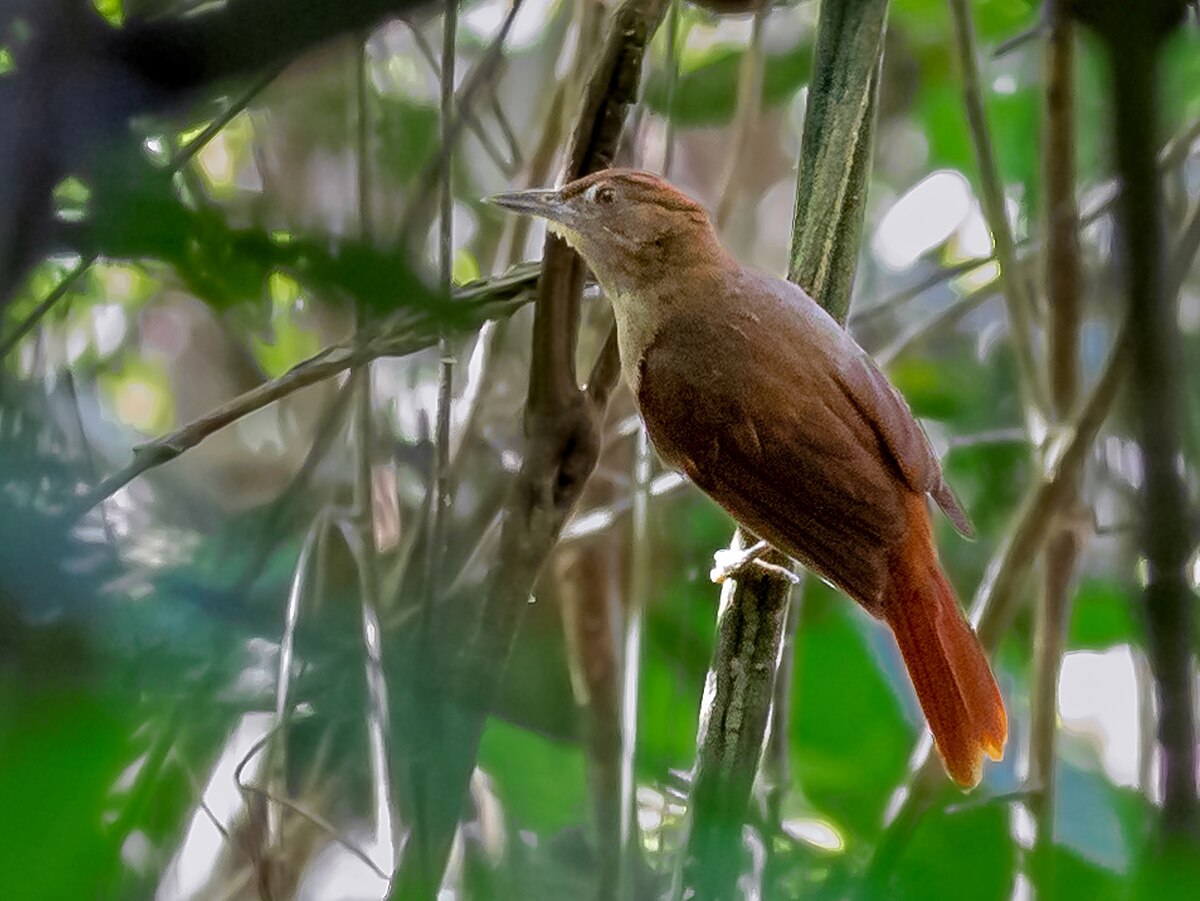
Wikipedia: Chestnut-crowned foliage-gleaner Source: WIKIPEDIA
1200px-Automolus_rufipileatus_-_Chestnut-crowned_Foliage-gleaner_%2C_Carajas_National_Forest%2C_Par%C3%A1%2C_Brazil.jpg
🔍
Never observed (yet!)
Description
The chestnut-crowned foliage-gleaner (Automolus rufipileatus) is a species of bird in the family Furnariidae.
[more]
Details
Striped woodhaunter (Automolus subulatus)
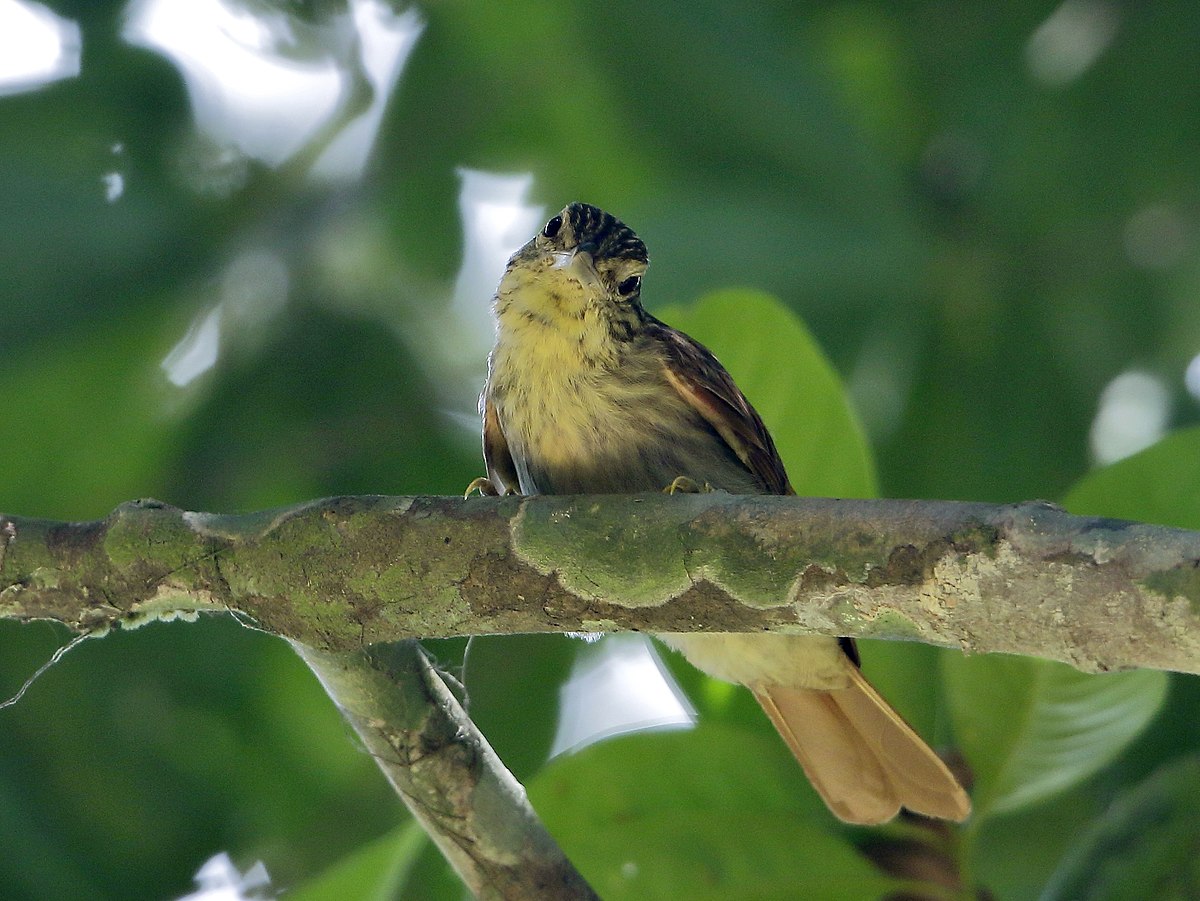
Wikipedia: Striped woodhaunter Source: WIKIPEDIA
1200px-Automolus_subulatus_-_Striped_woodhunter%3B_Xapuri%2C_Acre%2C_Brazil.jpg
🔍
Never observed (yet!)
Description
The eastern woodhaunter (Automolus subulatus), also known as the Amazonian woodhaunter, is a species of bird in the family Furnariidae. It was formerly treated as conspecific with the western woodhaunter and when lumped had the name "striped woodhaunter". It is found in the western part of the Amazon rainforest: west Brazil, southeast Colombia, east Ecuador, northeast Peru, south Venezuela and north Bolivia. Its natural habitats are subtropical or tropical moist lowland forests and subtropical or tropical moist montane forests. The species nests in earth tunnels.[3]
[more]
Details
Plain xenops / Sparrmansteigschnabel (Xenops minutus)
Profile Wikipedia Xeno-Canto YouTube

Wikipedia: Plain xenops Source: WIKIPEDIA
1200px-Xenops_minutus_-_Plain_xenops%3B_Restinga_de_Bertioga_State_Park%2C_S%C3%A3o_Paulo%2C_Brazil.jpg
🔍
Never observed (yet!)
Description
The plain xenops (Xenops minutus) is a passerine bird which breeds in moist lowland forests in the tropical New World from southern Mexico south to western Ecuador, northeastern Argentina and central Brazil.
[more]
Details
Streaked xenops / Rötelsteigschnabel (Xenops rutilans)
Profile Wikipedia Xeno-Canto YouTube

Wikipedia: Streaked xenops Source: WIKIPEDIA
Xenops_rutilans_-Piraju%2C_Sao_Paulo%2C_Brazil-8.jpg
🔍
Never observed (yet!)
Description
The streaked xenops (Xenops rutilans) is a passerine bird which breeds in the tropical New World from Costa Rica and Trinidad south to Bolivia and northern Argentina. Like the closely related true woodcreepers, it is a member of the South American bird family Furnariidae.
[more]
Details
Rufous-tailed xenops / Rotschwanz-Baumspäher (Microxenops milleri)
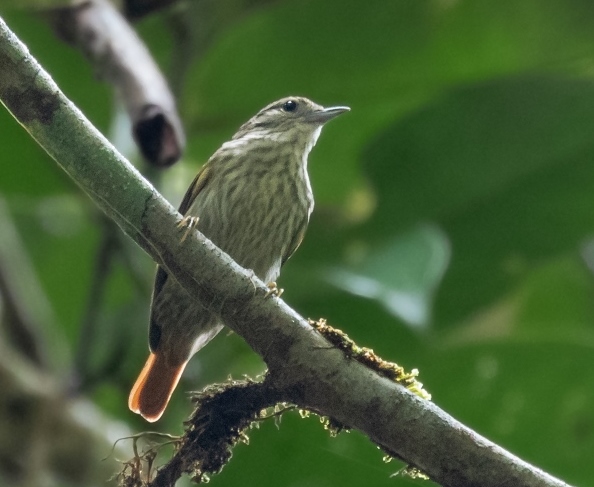
Wikipedia: Rufous-tailed xenops Source: WIKIPEDIA
Microxenops_milleri_-_Rufous-tailed_Xenops%3B_Manacapuru%2C_Amazonas%2C_Brazil.jpg
🔍
Never observed (yet!)
Description
The rufous-tailed xenops (Microxenops milleri) is a species of bird in the family Furnariidae. It is found in Bolivia, Brazil, Colombia, Ecuador, French Guiana, Peru, Suriname, and Venezuela.
[more]
Details
Slender-billed xenops / Streifenschwanz-Baumspäher (Xenops tenuirostris)
Profile Wikipedia Xeno-Canto YouTube

Wikipedia: Slender-billed xenops Source: WIKIPEDIA
1200px-Naturalis_Biodiversity_Center_-_RMNH.AVES.27983_1_-_Xenops_tenuirostris_hellmayri_Todd%2C_1925_-_Furnariidae_-_bird_skin_specimen.jpeg
🔍
Never observed (yet!)
Description
The slender-billed xenops (Xenops tenuirostris) is a species of bird in the family Furnariidae. It is found in Bolivia, Brazil, Colombia, Ecuador, French Guiana, Guyana, Peru, Suriname, and Venezuela. Its natural habitats are subtropical or tropical moist lowland forest and subtropical or tropical swampland.
[more]
Details
Slender-billed miner / Dünnschnabel-Erdhacker (Geositta tenuirostris)
Profile Wikipedia Xeno-Canto YouTube
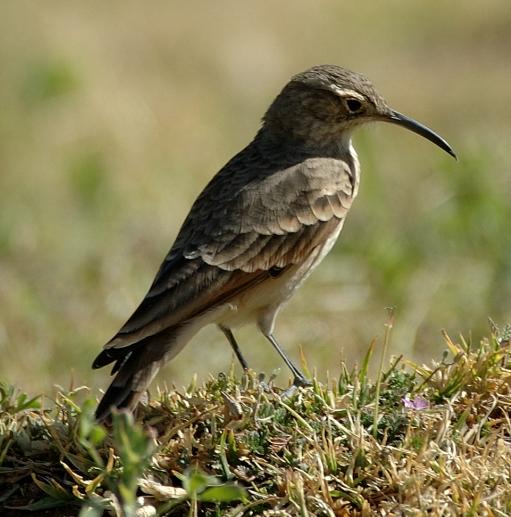
Wikipedia: Slender-billed miner Source: WIKIPEDIA
Geositta_tenuirostris_1.jpg
🔍
Never observed (yet!)
Description
The slender-billed miner (Geositta tenuirostris) is a species of bird in the family Furnariidae. It is found in Argentina, Bolivia, Chile, Ecuador, and Peru. Its natural habitats are subtropical or tropical high-altitude grassland and pastureland.
[more]
Details
Stout-billed cinclodes / Schuppenbrust-Uferwipper (Cinclodes excelsior)
Profile Wikipedia Xeno-Canto YouTube
Wikipedia: Stout-billed cinclodes Source: WIKIPEDIA
Stout-billed_Cinclodes_-_Colombia_S4E0981.jpg
🔍
Never observed (yet!)
Description
The stout-billed cinclodes (Cinclodes excelsior) is a species of bird in the family Furnariidae. It is found in Colombia, Ecuador, and Peru. Its natural habitats are subtropical or tropical high-altitude shrubland and subtropical or tropical high-altitude grassland.
[more]
Details
Chestnut-winged cinclodes (Cinclodes albidiventris)

Wikipedia: Chestnut-winged cinclodes Source: WIKIPEDIA
Bar-winged_Cincloides_-_South-Ecuador_S4E3112.jpg
🔍
Never observed (yet!)
Description
The chestnut-winged cinclodes (Cinclodes albidiventris) is a species of bird in the family Furnariidae. It is found in Colombia, Venezuela, Ecuador, and Peru. It was formerly considered a subspecies of the bar-winged cinclodes. Its natural habitats are subtropical or tropical high-altitude shrubland and grassland.
[more]
Details
Andean tit-spinetail / Andenschlüpfer (Leptasthenura andicola)
Profile Wikipedia Xeno-Canto YouTube
Wikipedia: Andean tit-spinetail Source: WIKIPEDIA
Andean_Tit-Spinetail_-_South_Ecuador_S4E3047.jpg
🔍
Never observed (yet!)
Description
The Andean tit-spinetail (Leptasthenura andicola) is a species of bird in the family Furnariidae. It is found in Bolivia, Chile, Colombia, Ecuador, Peru, and Venezuela.
[more]
Details
Rufous-fronted thornbird / Rotstirn-Bündelnister (Phacellodomus rufifrons)
Profile Wikipedia Xeno-Canto YouTube
Wikipedia: Rufous-fronted thornbird Source: WIKIPEDIA
Phacellodomus_rufifrons_-_Rufous-fronted_thornbird.JPG
🔍
Never observed (yet!)
Description
The rufous-fronted thornbird (Phacellodomus rufifrons) is a species of bird in the family Furnariidae.
[more]
Details
Point-tailed palmcreeper / Palmsteiger (Berlepschia rikeri)

Wikipedia: Point-tailed palmcreeper Source: WIKIPEDIA
Berlepschia_rikeri_-_Point-tailed_Palmcreeper.JPG
🔍
Never observed (yet!)
Description
The point-tailed palmcreeper (Berlepschia rikeri) is a species of bird in the family Furnariidae, the ovenbirds. It is monotypic, the only member of the genus Berlepschia.
[more]
Details
Rusty-winged barbtail / Rotschwingen-Stachelschwanz (Premnornis guttuliger)
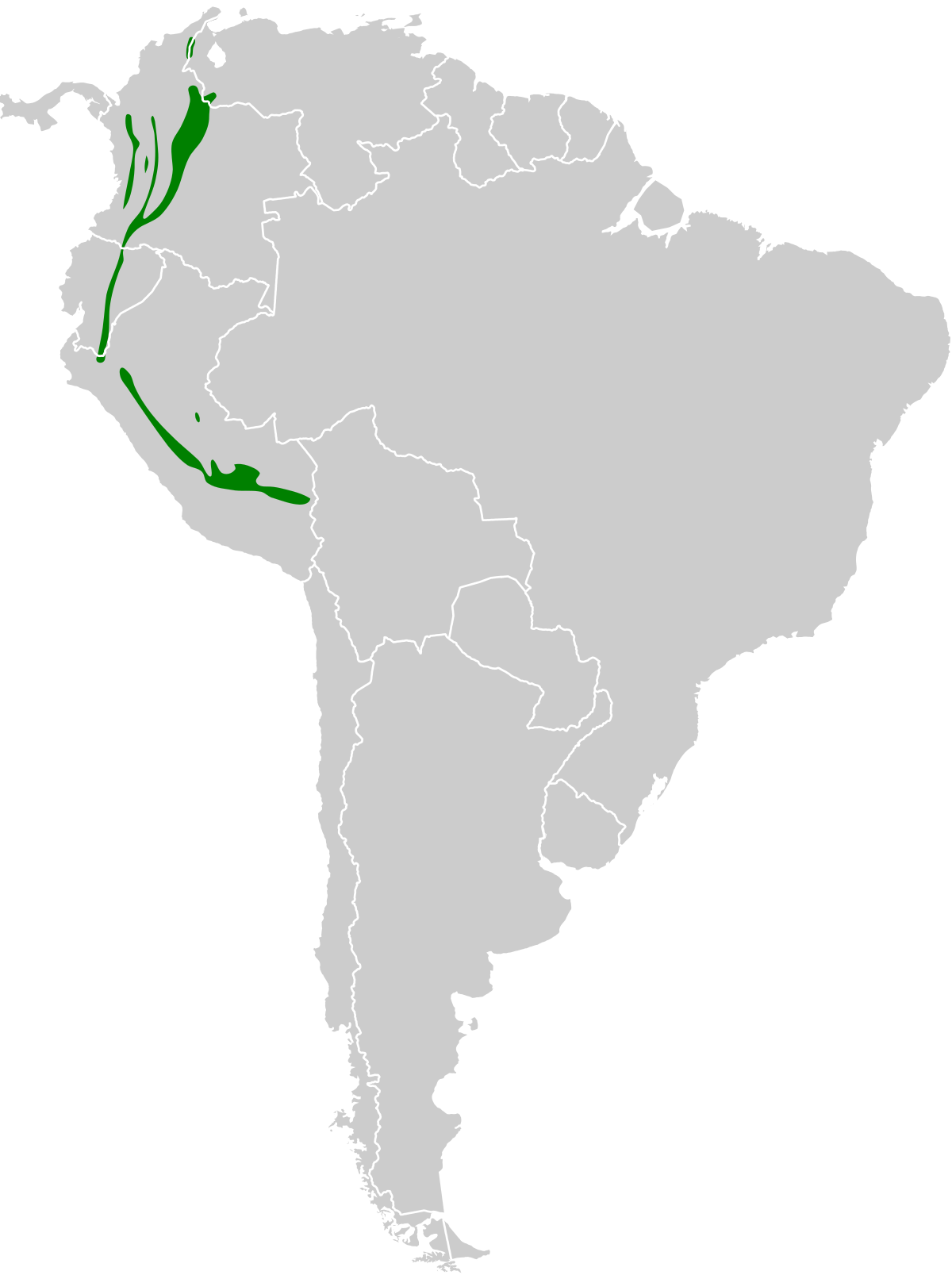
Wikipedia: Rusty-winged barbtail Source: WIKIPEDIA
1200px-Premnornis_guttuliger_map.svg.png
🔍
Never observed (yet!)
Description
The rusty-winged barbtail (Premnornis guttuliger) is a species of bird in the family Furnariidae. It is the only member of the genus Premnornis.[2] It is found in Bolivia, Colombia, Ecuador, Peru, and Venezuela, where its natural habitat is subtropical or tropical moist montane forest.[1]
[more]
Details
Spotted barbtail / Fleckbrust-Stachelschwanz (Premnoplex brunnescens)
Profile Wikipedia Xeno-Canto YouTube
Wikipedia: Spotted barbtail Source: WIKIPEDIA
1200px-MargarornisBrunnescensWolf.jpg
🔍
Never observed (yet!)
Description
The spotted barbtail (Premnoplex brunnescens) is a species of bird in the family Furnariidae. Its natural habitat is subtropical or tropical moist montane forest.
[more]
Details
Buffy tuftedcheek / Panamaschopfohr (Pseudocolaptes lawrencii)

Wikipedia: Buffy tuftedcheek Source: WIKIPEDIA
1200px-Buffy_Tuftedcheek_%28Pseudocolaptes_lawrencii%29_%285771957543%29.jpg
🔍
Never observed (yet!)
Description
The buffy tuftedcheek or Lawrence's tuftedcheek (Pseudocolaptes lawrencii) is a passerine bird in the ovenbird family, which breeds in the tropical New World in Costa Rica, western Panama and the Andes of Colombia and Ecuador. It is sometimes considered conspecific with the streaked tuftedcheek, P. boissonneautii, of South America. Birds from Colombia and Ecuador are sometimes considered a separate species, the Pacific tuftedcheek (P. johnsoni).
[more]
Details
Streaked tuftedcheek / Weißwangen-Astspäher (Pseudocolaptes boissonneautii)
Profile Wikipedia Xeno-Canto YouTube

Wikipedia: Streaked tuftedcheek Source: WIKIPEDIA
1200px-Pseudocolaptes_boissonneautii_68808554.jpg
🔍
Never observed (yet!)
Description
The streaked tuftedcheek (Pseudocolaptes boissonneautii) is a passerine bird in the ovenbird family, which breeds in the tropical New World in the coastal mountains of Venezuela, and the Andes from Venezuela to Bolivia. It is sometimes considered conspecific with the buffy tuftedcheek, P. lawrencii of Central America, Colombia and Ecuador.
[more]
Details
Montane foliage-gleaner / Bergblattspäher (Anabacerthia striaticollis)
Profile Wikipedia Xeno-Canto YouTube

Wikipedia: Montane foliage-gleaner Source: WIKIPEDIA
Anabacerthia_striaticollis_%2815768922817%29.jpg
🔍
Never observed (yet!)
Description
The montane foliage-gleaner (Anabacerthia striaticollis) is a species of bird in the family Furnariidae.
It is found in Bolivia, Colombia, Ecuador, Peru, and Venezuela.
[more]
Details
Rufous-tailed foliage-gleaner (Anabacerthia ruficaudata)
Profile Wikipedia Xeno-Canto YouTube

Wikipedia: Rufous-tailed foliage-gleaner Source: WIKIPEDIA
1200px-Anabacerthia_ruficaudata_-_Rufous-tailed_Foliage-gleaner.jpg
🔍
Never observed (yet!)
Description
The rufous-tailed foliage-gleaner (Anabacerthia ruficaudata) is a species of bird in the family Furnariidae. It is found in Bolivia, Brazil, Colombia, Ecuador, French Guiana, Guyana, Peru, Suriname, and Venezuela. Its natural habitat is subtropical or tropical moist lowland forests.
[more]
Details
Scaly-throated foliage-gleaner / Schuppenkehl-Blattspäher (Anabacerthia variegaticeps)

Wikipedia: Scaly-throated foliage-gleaner Source: WIKIPEDIA
Scaly-throated_Foliage-gleaner.jpg
🔍
Never observed (yet!)
Description
The scaly-throated foliage-gleaner (Anabacerthia variegaticeps), also known as the spectacled foliage-gleaner, is a species of bird in the family Furnariidae.
It is found in Belize, Colombia, Costa Rica, Ecuador, El Salvador, Guatemala, Honduras, Mexico, and Panama.
Its natural habitats are subtropical or tropical moist lowland forest and subtropical or tropical moist montane forest.
[more]
Details
Lineated foliage-gleaner / Streifenblattspäher (Syndactyla subalaris)
Profile Wikipedia Xeno-Canto YouTube
Wikipedia: Lineated foliage-gleaner Source: WIKIPEDIA
1200px-Syndactyla_subalaris.jpg
🔍
Never observed (yet!)
Description
The lineated foliage-gleaner (Syndactyla subalaris) is a species of bird in the family Furnariidae. It is found in Colombia, Costa Rica, Ecuador, Panama, Peru, and Venezuela. Its natural habitat is subtropical or tropical moist montane forest.
[more]
Details
Rufous-necked foliage-gleaner / Rothals-Baumspäher (Syndactyla ruficollis)
Profile Wikipedia Xeno-Canto YouTube

Wikipedia: Rufous-necked foliage-gleaner Source: WIKIPEDIA
Rufous-neckedFoliage-gleaner.jpg
🔍
Never observed (yet!)
Description
The rufous-necked foliage-gleaner (Syndactyla ruficollis) is a species of bird in the family Furnariidae. It is found in Ecuador and Peru. Its natural habitats are subtropical or tropical dry forests, subtropical or tropical moist lowland forests, and subtropical or tropical moist montane forests. It is threatened by habitat loss.
[more]
Details
Buff-browed foliage-gleaner / Ockerbrauen-Blattspäher (Syndactyla rufosuperciliata)

Wikipedia: Buff-browed foliage-gleaner Source: WIKIPEDIA
1200px-Buffbrowedfoliagegleaner.jpg
🔍
Never observed (yet!)
Description
The buff-browed foliage-gleaner (Syndactyla rufosuperciliata) is a species of bird in the family Furnariidae.
It is found in Argentina, Bolivia, Brazil, Ecuador, Paraguay, Peru, and Uruguay.
Its natural habitats are subtropical or tropical moist lowland forest and subtropical or tropical moist montane forest.
[more]
Details
Double-banded graytail (Xenerpestes minlosi)
Profile Wikipedia Xeno-Canto YouTube

Wikipedia: Double-banded graytail Source: WIKIPEDIA
1200px-XenerpestesMinlosiKeulemans.jpg
🔍
Never observed (yet!)
Description
The double-banded greytail (Xenerpestes minlosi) is a species of bird in the family Furnariidae. It is found in Colombia, Ecuador, and Panama. Its natural habitats are subtropical or tropical moist lowland forest and subtropical or tropical moist montane forest.
[more]
Details
Equatorial graytail (Xenerpestes singularis)
Profile Wikipedia Xeno-Canto YouTube

Wikipedia: Equatorial graytail Source: WIKIPEDIA
EquatorialGraytail.jpg
🔍
Never observed (yet!)
Description
The equatorial greytail (Xenerpestes singularis) is a species of bird in the family Furnariidae. It is found in Ecuador and Peru. Its natural habitat is subtropical or tropical moist montane forest. It is threatened by habitat loss.
[more]
Details
Orange-fronted plushcrown / Goldschlüpfer (Metopothrix aurantiaca)

Wikipedia: Orange-fronted plushcrown Source: WIKIPEDIA
1200px-Metopothrix_aurantiaca_-_Orange-fronted_Plushcrown%3B_Ramal_do_Noca%2C_Rio_Branco%2C_Acre%2C_Brazil.jpg
🔍
Never observed (yet!)
Description
The orange-fronted plushcrown (Metopothrix aurantiaca) is a species of bird in the family Furnariidae. It is the only member of the genus Metopothrix.
[more]
Details
Dusky-cheeked foliage-gleaner / Schopfbaumspäher (Anabazenops dorsalis)
Profile Wikipedia Xeno-Canto YouTube

Wikipedia: Dusky-cheeked foliage-gleaner Source: WIKIPEDIA
1200px-Anabazenops_dorsalis_map.svg.png
🔍
Never observed (yet!)
Description
The bamboo foliage-gleaner (Anabazenops dorsalis), also known as the crested foliage-gleaner or dusky-cheeked foliage-gleaner, is a species of bird in the family Furnariidae. It is found in Bolivia, Brazil, Colombia, Ecuador, and Peru.
[more]
Details
Chestnut-winged hookbill / Hakenschnabel-Blattspäher (Ancistrops strigilatus)
Wikipedia: Chestnut-winged hookbill Source: WIKIPEDIA
1200px-Avium_Species_Novae_%288422834063%29_%28cropped%29.jpg
🔍
Never observed (yet!)
Description
The chestnut-winged hookbill (Ancistrops strigilatus) is a species of bird in the family Furnariidae. It is the only member of the genus Ancistrops.
[more]
Details
Spectacled prickletail / Streifenhalsschlüpfer (Siptornis striaticollis)
Profile Wikipedia Xeno-Canto YouTube

Wikipedia: Spectacled prickletail Source: WIKIPEDIA
1200px-Siptornis_striaticollis_map.svg.png
🔍
Never observed (yet!)
Description
The spectacled prickletail (Siptornis striaticollis) is a species of bird in the family Furnariidae. Its genus, Siptornis, is monotypic.[2] It is found in the Andes of southwestern Colombia, Ecuador and far northern Peru. Its natural habitat is subtropical or tropical moist montane forests.[1]
[more]
Details
Ruddy foliage-gleaner (Clibanornis rubiginosus)
Profile Wikipedia Xeno-Canto YouTube
Wikipedia: Ruddy foliage-gleaner Source: WIKIPEDIA
1200px-Clibanornis_rubiginosus_-_Ruddy_Foliage-gleaner.jpg
🔍
Never observed (yet!)
Description
The ruddy foliage-gleaner (Clibanornis rubiginosus) is a species of bird in the family Furnariidae. Its range is highly disjunct, with populations in the highlands of Mexico and Central America, and lowlands and foothills in the Chocó, eastern Andes, and western and northeastern Amazon Basin. It is found in forest. There are distinct vocal variations throughout its range, suggesting that more than one species is involved, and one such population has recently been split from the ruddy foliage-gleaner as the Santa Marta foliage-gleaner.[2] The ruddy foliage-gleaner has recently been reclassified into the genus Clibanornis.[3]
[more]
Details
Henna-hooded foliage-gleaner (Clibanornis erythrocephalus)
Profile Wikipedia Xeno-Canto YouTube

Wikipedia: Henna-hooded foliage-gleaner Source: WIKIPEDIA
1200px-Clibanornis_erythrocephalus_map.svg.png
🔍
Never observed (yet!)
Description
The henna-hooded foliage-gleaner (Clibanornis erythrocephalus) is a species of bird in the family Furnariidae. It is found in southwestern Ecuador and northwestern Peru.
[more]
Details
Paramo tapaculo (Scytalopus opacus)
Profile Wikipedia Xeno-Canto YouTube

Wikipedia: Paramo tapaculo Source: WIKIPEDIA
Scytalopus_opacus.jpg
🔍
Never observed (yet!)
Description
The Paramo tapaculo (Scytalopus opacus) is a species of bird in the family Rhinocryptidae. It is found in the Andes of Ecuador and southern Colombia.[2]
[more]
Details
Blackish tapaculo / Schwarztapaculo (Scytalopus latrans)

Wikipedia: Blackish tapaculo Source: WIKIPEDIA
1200px-Scytalopus_latrans_-NBII_Image_Gallery-a00273.jpg
🔍
Never observed (yet!)
Description
The blackish tapaculo (Scytalopus latrans) is a species of bird in the family Rhinocryptidae. It is found in Colombia, Ecuador, Peru, and Venezuela.
[more]
Details
Spillman's tapaculo / Roststeißtapaculo (Scytalopus spillmanni)

Wikipedia: Spillman's tapaculo Source: WIKIPEDIA
1200px-Scytalopus_spillmanni_map.svg.png
🔍
Never observed (yet!)
Description
Spillmann's tapaculo (Scytalopus spillmanni) is a species of bird in the family Formicariidae. It inhabits the Andes of Colombia and Ecuador.[2]
[more]
Details
Ecuadorian tapaculo / Robbinstapaculo (Scytalopus robbinsi)
Profile Wikipedia Xeno-Canto YouTube

Wikipedia: Ecuadorian tapaculo Source: WIKIPEDIA
1200px-Scytalopus_robbinsi_map.svg.png
🔍
Never observed (yet!)
Description
The Ecuadorian tapaculo [3] or El Oro tapaculo [4] (Scytalopus robbinsi) is a small passerine bird belonging to the genus Scytalopus, a genus of tapaculos. It is restricted to a small area in south-western Ecuador and was not described until 1997.
[more]
Details
Nariño tapaculo / Nariñotapaculo (Scytalopus vicinior)
Profile Wikipedia Xeno-Canto YouTube
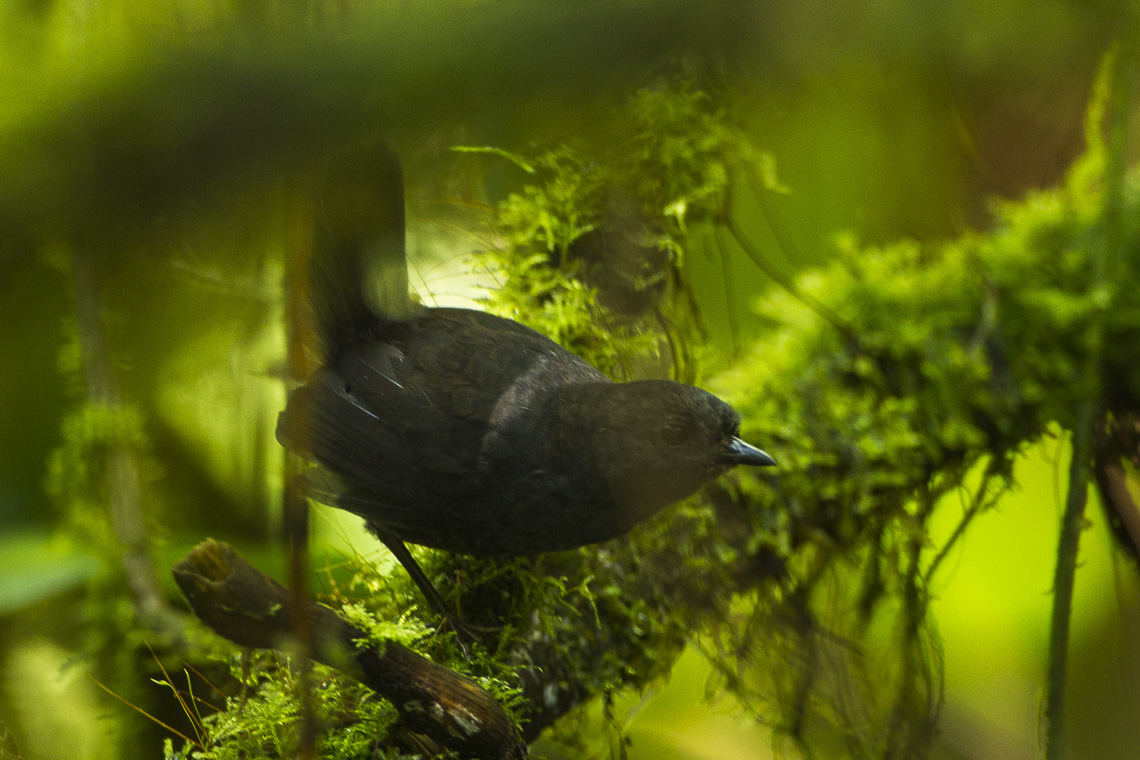
Wikipedia: Nariño tapaculo Source: WIKIPEDIA
Narino_Tapaculo_-_Colombia_S4E9464_%2816644372930%29.jpg
🔍
Never observed (yet!)
Description
The Nariño tapaculo (Scytalopus vicinior) is a species of bird in the family Rhinocryptidae. It is found in Colombia and Ecuador.[2]
[more]
Details
Loja tapaculo (Scytalopus androstictus)
Profile Wikipedia Xeno-Canto YouTube

Wikipedia: Loja tapaculo Source: WIKIPEDIA
1200px-Scytalopus_androstictus_map.svg.png
🔍
Never observed (yet!)
Description
The Loja tapaculo (Scytalopus androstictus) is a species of bird in the family Rhinocryptidae that the South American Classification Committee of the American Ornithological Society (AOS) accepted as a new species in July 2020. It had been classified as a subspecies of paramo tapaculo (Scytalopus opacus). It is found in Ecuador and Peru.[1]
[more]
Details
Choco tapaculo / Chocótapaculo (Scytalopus chocoensis)
Profile Wikipedia Xeno-Canto YouTube

Wikipedia: Choco tapaculo Source: WIKIPEDIA
1200px-Scytalopus_chocoensis_-_Choco_Tapaculo.jpg
🔍
Never observed (yet!)
Description
The Chocó tapaculo (Scytalopus chocoensis) is a species of bird in the family Rhinocryptidae. It is found in Colombia, Ecuador, and Panama.
[more]
Details
Chusquea tapaculo / Bambustapaculo (Scytalopus parkeri)
Profile Wikipedia Xeno-Canto YouTube

Wikipedia: Chusquea tapaculo Source: WIKIPEDIA
1200px-Scytalopus_parkeri_-_Chusquea_Tapaculo.jpg
🔍
Never observed (yet!)
Description
The chusquea tapaculo (Scytalopus parkeri) is a species of bird in the family Rhinocryptidae. It is found in souothern Ecuador and far northern Peru.[2]
[more]
Details
Long-tailed tapaculo (Scytalopus micropterus)

Wikipedia: Long-tailed tapaculo Source: WIKIPEDIA
Long-tailed_Tapaculo_-_Ecuador_S4E4271_%2816831736745%29.jpg
🔍
Never observed (yet!)
Description
The long-tailed tapaculo (Scytalopus micropterus) is a species of bird in the family Rhinocryptidae. It is found in the eastern Andes of Colombia, Ecuador and far northern Peru.[2]
[more]
Details
Northern white-crowned tapaculo / Weißscheiteltapaculo (Scytalopus atratus)
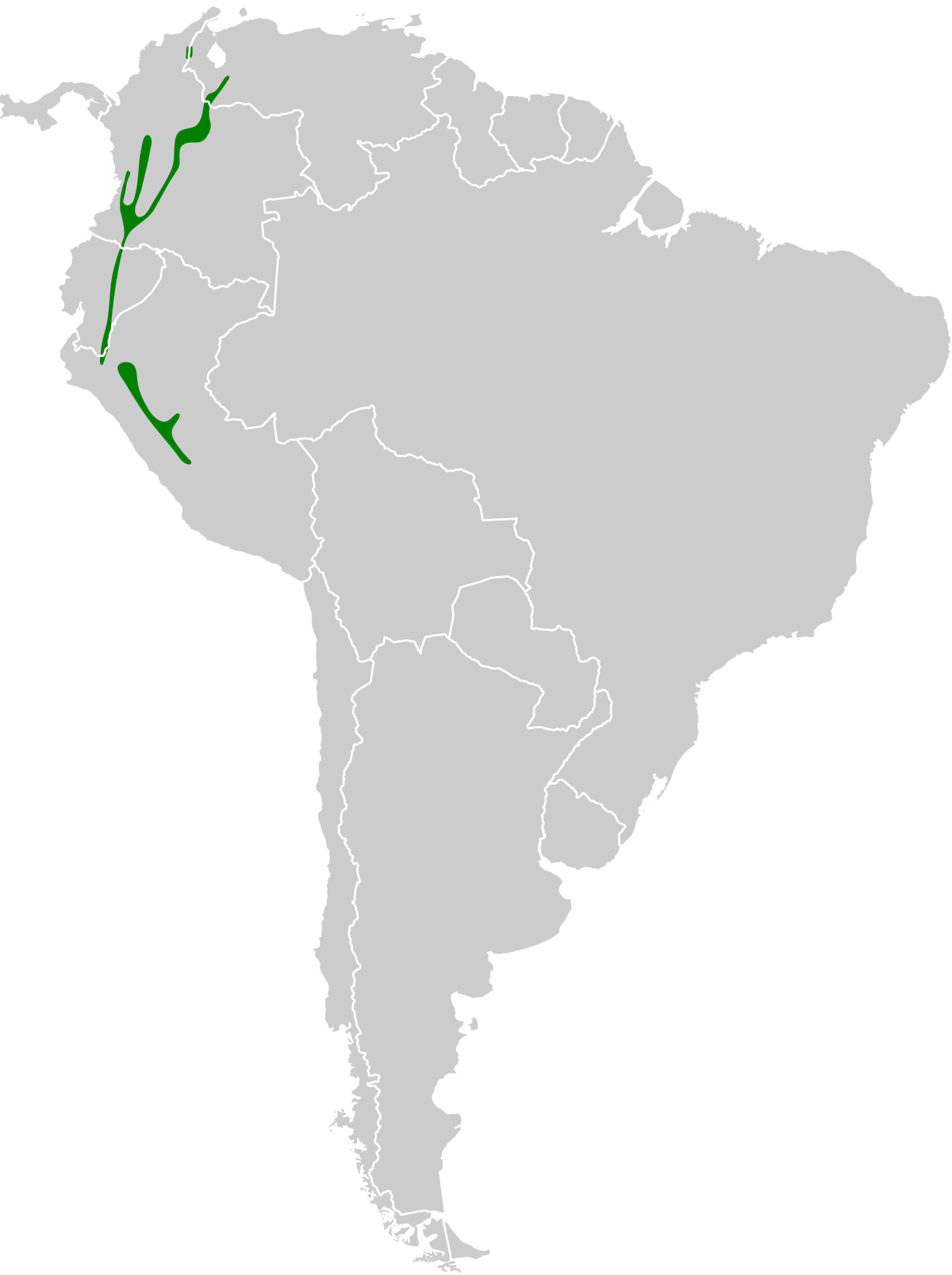
Wikipedia: Northern white-crowned tapaculo Source: WIKIPEDIA
1200px-Scytalopus_atratus_map.svg.png
🔍
Never observed (yet!)
Description
The northern white-crowned tapaculo (Scytalopus atratus) is a species of bird in the family Rhinocryptidae. It is found in Bolivia, Colombia, Ecuador, Peru, and Venezuela.[2]
[more]
Details
Elegant crescentchest / Schmuckbandvogel (Melanopareia elegans)
Profile Wikipedia Xeno-Canto YouTube

Wikipedia: Elegant crescentchest Source: WIKIPEDIA
1200px-Melanopareia_elegans_elegans_1897.jpg
🔍
Never observed (yet!)
Description
The elegant crescentchest (Melanopareia elegans) is a species of bird in the family Melanopareiidae. It is found in Ecuador and Peru.[2]
[more]
Details
Marañon crescentchest / Maranonbandvogel (Melanopareia maranonica)
Profile Wikipedia Xeno-Canto YouTube
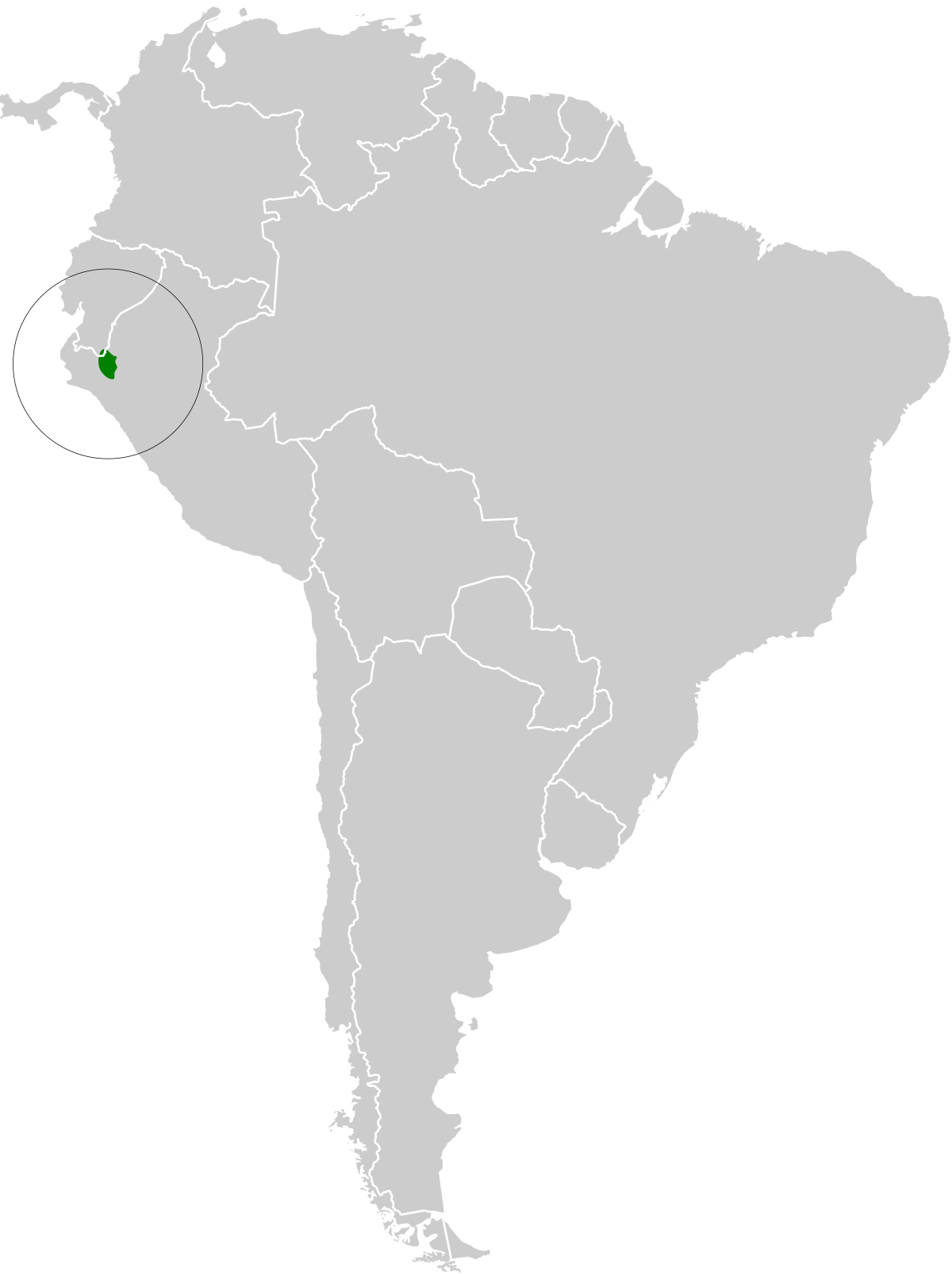
Wikipedia: Marañon crescentchest Source: WIKIPEDIA
1200px-Melanopareia_maranonica_map.svg.png
🔍
Never observed (yet!)
Description
The Marañón crescentchest (Melanopareia maranonica) is a species of bird in the family Melanopareiidae. It is found in southern Ecuador and northern Peru.[2]
[more]
Details
Ash-colored tapaculo / Aschgrauer Tapaculo (Myornis senilis)
Profile Wikipedia Xeno-Canto YouTube

Wikipedia: Ash-colored tapaculo Source: WIKIPEDIA
1200px-Myornis_senilis_-_Ash-colored_Tapaculo.jpg
🔍
Never observed (yet!)
Description
The ash-colored tapaculo (Myornis senilis) is a species of bird in the family Rhinocryptidae. It is found in Colombia, Ecuador, and Peru.[2]
[more]
Details
Rusty-belted tapaculo / Brustflecktapaculo (Liosceles thoracicus)

Wikipedia: Rusty-belted tapaculo Source: WIKIPEDIA
1200px-Rusty_Belted_Tapaculo.jpg
🔍
Never observed (yet!)
Description
The rusty-belted tapaculo, Liosceles thoracicus, is a species of bird in the family Rhinocryptidae. It is found in Bolivia, Brazil, Colombia, Ecuador, and Peru.[2][3]
[more]
Details
Ocellated tapaculo / Perlmanteltapaculo (Acropternis orthonyx)

Wikipedia: Ocellated tapaculo Source: WIKIPEDIA
1200px-Ocellated_Tapaculo_%28Acropternis_orthonyx%29.jpg
🔍
Never observed (yet!)
Description
The ocellated tapaculo (Acropternis orthonyx) is a large bird found in the northern Andes in South America. It is a highly distinctive tapaculo; traditionally united with its closest relatives in the Rhinocryptidae, this family is paraphyletic with the Formicariidae (ground-antbirds) but instead of merging the tapaculos with the ground-antbird family, recent sources tend to split the antpittas from the Formicariidae.
[more]
Details
Gray-cheeked thrush / Grauwangendrossel (Catharus minimus)
Profile Wikipedia Audubon AllAboutBirds Xeno-Canto YouTube

Wikipedia: Gray-cheeked thrush Source: WIKIPEDIA
1200px-Graycheekedthrush36.jpg
🔍
Never observed (yet!)
Description
The grey-cheeked thrush (Catharus minimus) is a medium-sized thrush. This species is 15–17 cm (5.9–6.7 in) in length, and has the white-dark-white underwing pattern characteristic of Catharus thrushes. It is a member of a close-knit group of migrant species together with the veery and Bicknell's thrush;[2] it forms a cryptic species pair with the latter. The grey-cheeked thrush is all but indistinguishable from Bicknell's thrush except by its slightly larger size and different song. The two were formerly considered conspecific.[3] Of all the American spotted thrushes, the grey-cheeked has the most northern breeding range.[4]
[more]
Details
Slaty-backed nightingale-thrush / Graurücken-Musendrossel (Catharus fuscater)
Profile Wikipedia Xeno-Canto YouTube

Wikipedia: Slaty-backed nightingale-thrush Source: WIKIPEDIA
1200px-Catharus_fuscater_Santa_Elena_1.JPG
🔍
Never observed (yet!)
Description
The slaty-backed nightingale-thrush (Catharus fuscater) is a species of bird in the family Turdidae. It is found in Bolivia, Colombia, Costa Rica, Ecuador, Panama, Peru, and Venezuela.
[more]
Details
Speckled nightingale-thrush (Catharus maculatus)
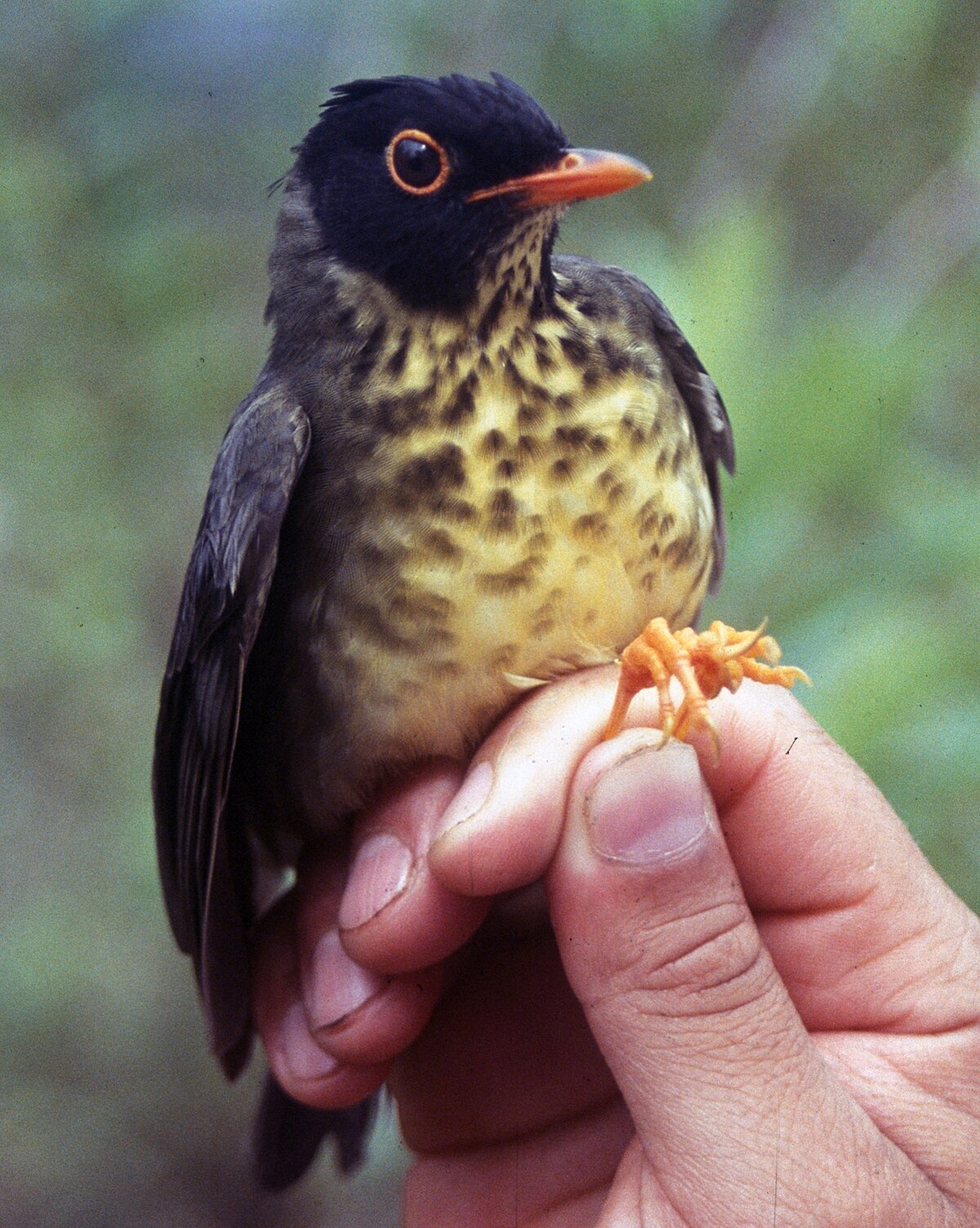
Wikipedia: Speckled nightingale-thrush Source: WIKIPEDIA
1200px-Catharus_maculatus.jpg
🔍
Never observed (yet!)
Description
The speckled nightingale-thrush or Sclater's nightingale-thrush (Catharus maculatus) is a species of bird in the thrush family Turdidae native to South America.
[more]
Details
Swainson's thrush / Zwergmusendrossel (Catharus ustulatus)
Profile Wikipedia Audubon AllAboutBirds Xeno-Canto YouTube

Swainson's thrush. 2024-09-24 16:06:24 Annandale, Virginia
First observed in Annandale, Virginia on 2024-09-24.
Description
Swainson's thrush (Catharus ustulatus), also called olive-backed thrush and russet-backed thrush, is a medium-sized thrush. It is a member of genus Catharus and is typical of it in terms of its subdued coloration and beautiful, ascending flute-like voice. Swainson's thrush was named after William Swainson, an English ornithologist.
[more]
Details
Marañon thrush / Maranondrossel (Turdus maranonicus)
Profile Wikipedia Xeno-Canto YouTube

Wikipedia: Marañon thrush Source: WIKIPEDIA
1200px-TurdusMaranonicusSmit.jpg
🔍
Never observed (yet!)
Description
The Marañón thrush (Turdus maranonicus) is a species of bird in the family Turdidae. It is found in far southern Ecuador and northern Peru. Its natural habitats are subtropical or tropical dry forests and subtropical or tropical moist lowland forests.
[more]
Details
Great thrush / Riesendrossel (Turdus fuscater)

Wikipedia: Great thrush Source: WIKIPEDIA
GreatThrush.jpg
🔍
Never observed (yet!)
Description
The great thrush (Turdus fuscater) is a species of bird in the family Turdidae. It is found in Bolivia, Colombia, Ecuador, Peru, and Venezuela. It is considered as the largest thrush in South America.[2][3] The great thrush's size distinguishes it from the several other uniform slaty-colored thrushes in its range. It inhabits subtropical or tropical moist montane forests and high-altitude shrubland, but can also make use of degraded forest and urban areas.
[more]
Details
Pale-vented thrush / Blasssteißdrossel (Turdus obsoletus)
Profile Wikipedia Xeno-Canto YouTube

Wikipedia: Pale-vented thrush Source: WIKIPEDIA
Turdus_obsoletus.jpg
🔍
Never observed (yet!)
Description
The pale-vented thrush (Turdus obsoletus) is a species of bird in the family Turdidae.
[more]
Details
Hauxwell's thrush (Turdus hauxwelli)
Profile Wikipedia Xeno-Canto YouTube

Wikipedia: Hauxwell's thrush Source: WIKIPEDIA
Turdus_hauxwelli.jpg
🔍
Never observed (yet!)
Description
Hauxwell's thrush (Turdus hauxwelli) is a species of bird in the family Turdidae. It is found in Bolivia, Brazil, Colombia, Ecuador, Peru, and Venezuela.
[more]
Details
Pale-eyed thrush / Taczanowskidrossel (Turdus leucops)
Description
The pale-eyed thrush (Turdus leucops) is a species of bird in the family Turdidae.
[more]
Details
Ecuadorian thrush / Berlepschdrossel (Turdus maculirostris)
Profile Wikipedia Xeno-Canto YouTube

Wikipedia: Ecuadorian thrush Source: WIKIPEDIA
Turdus_maculirostris_-NW_Ecuador-6.jpg
🔍
Never observed (yet!)
Description
The Ecuadorian thrush (Turdus maculirostris) is a resident bird found in western South America in western Ecuador and far northwestern Peru. It was formerly considered to be a subspecies of the spectacled thrush (yellow-eyed thrush), Turdus nudigenis, but has a narrower eyering, and is widely separated in range.
[more]
Details
Chiguanco thrush / Chiguancodrossel (Turdus chiguanco)
Profile Wikipedia Xeno-Canto YouTube
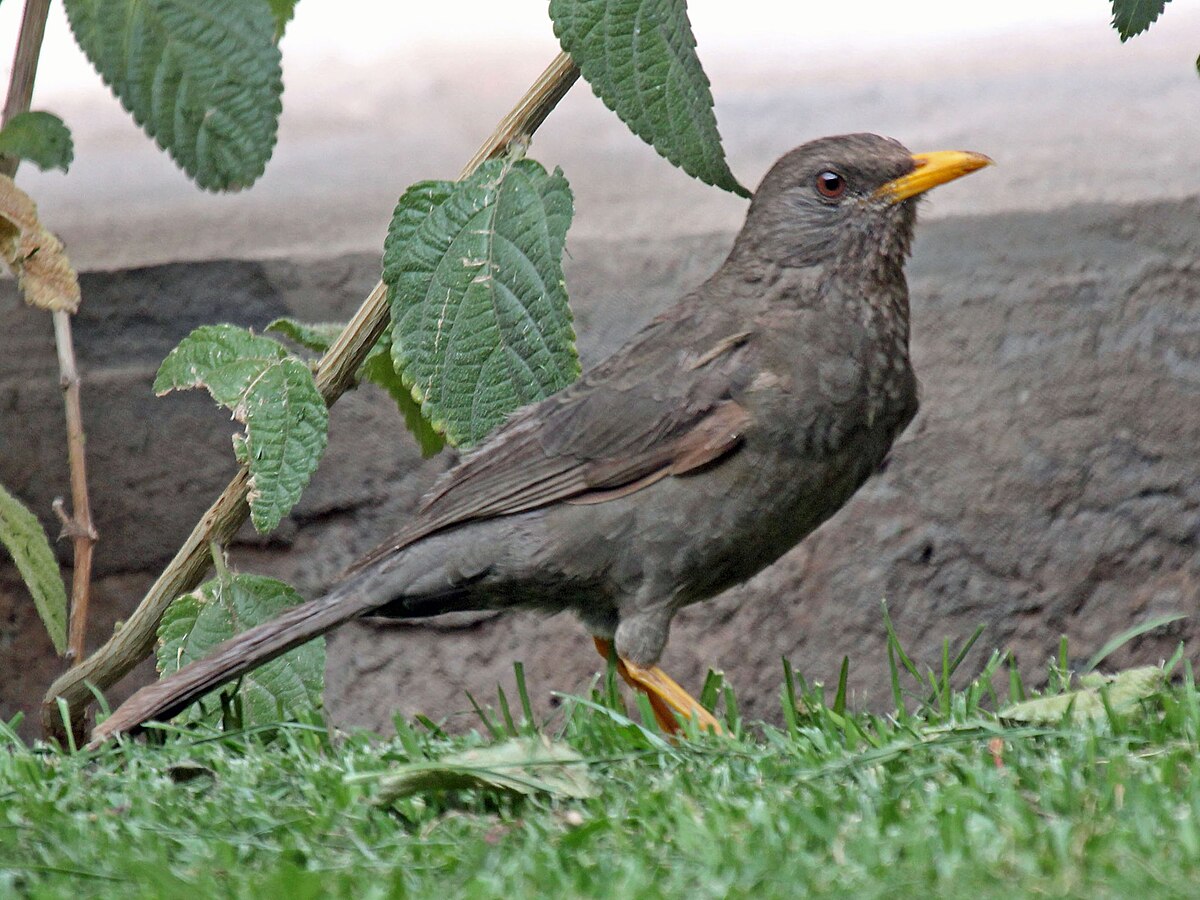
Wikipedia: Chiguanco thrush Source: WIKIPEDIA
1200px-Chiguanco_Thrush_RWD5.jpg
🔍
Never observed (yet!)
Description
The Chiguanco thrush (Turdus chiguanco) is a species of bird in the family Turdidae. It is found in Ecuador and the Altiplano. Its natural habitats are subtropical or tropical high-altitude shrubland and heavily degraded former forest.
[more]
Details
Lawrence's thrush / Lawrencedrossel (Turdus lawrencii)
Profile Wikipedia Xeno-Canto YouTube

Wikipedia: Lawrence's thrush Source: WIKIPEDIA
1200px-TurdusLawrenciiKeulemans.jpg
🔍
Never observed (yet!)
Description
Lawrence's thrush (Turdus lawrencii) is a species of bird in the family Turdidae. It is found in Bolivia, Brazil, Colombia, Ecuador, Peru, and Venezuela. Described in 1878 by George N. Lawrence as Turdus brunneus, a name that was already in use (by Brewer, 1852 and used for Turdus rufescens) the species was therefore renamed as Turdus lawrencii by Elliott Coues in 1880.[2][3] Its natural habitats are subtropical or tropical moist lowland forests and subtropical or tropical swamps.
[more]
Details
Andean slaty thrush / Weißachseldrossel (Turdus nigriceps)
Profile Wikipedia Xeno-Canto YouTube
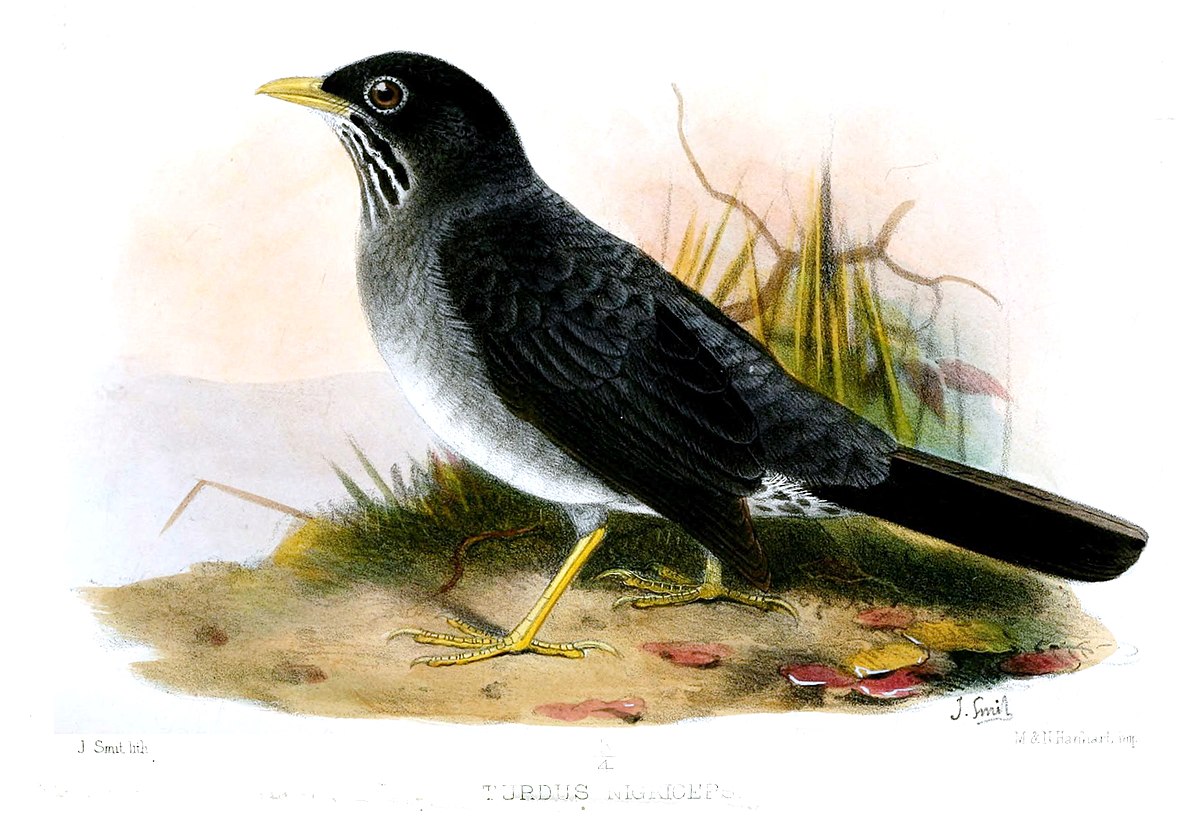
Wikipedia: Andean slaty thrush Source: WIKIPEDIA
1200px-TurdusNigricepsSmit.jpg
🔍
Never observed (yet!)
Description
The Andean slaty thrush (Turdus nigriceps) is a species of bird in the family Turdidae.
[more]
Details
Chestnut-bellied thrush / Ockerbauchdrossel (Turdus fulviventris)
Profile Wikipedia Xeno-Canto YouTube

Wikipedia: Chestnut-bellied thrush Source: WIKIPEDIA
1200px-Chestnut-bellied_Thrush_%285304204959%29.jpg
🔍
Never observed (yet!)
Description
The chestnut-bellied thrush (Turdus fulviventris) is a species of bird in the family Turdidae. It is found in Colombia, Ecuador, Peru, and Venezuela. Its natural habitats are subtropical or tropical moist montane forests and heavily degraded former forest.
[more]
Details
Glossy-black thrush / Samtdrossel (Turdus serranus)
Profile Wikipedia Xeno-Canto YouTube
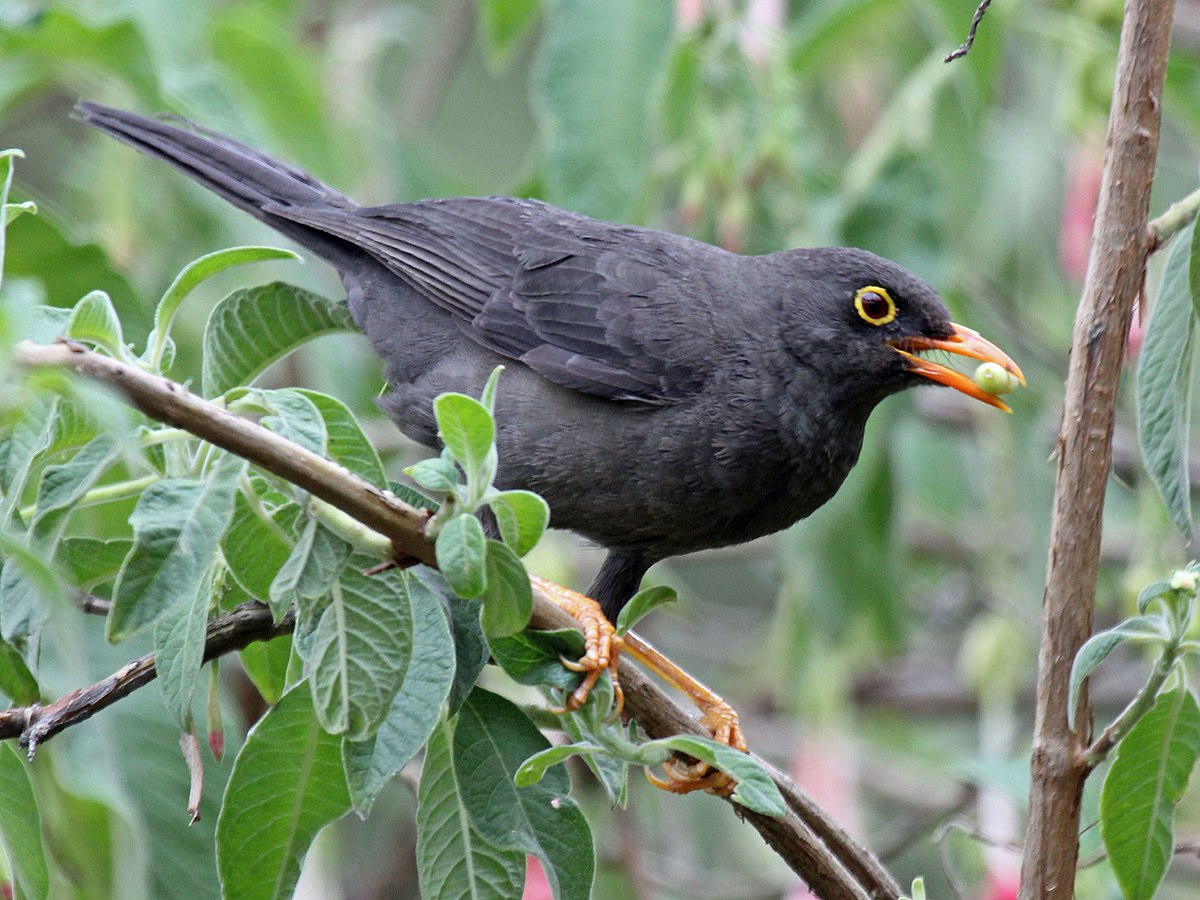
Wikipedia: Glossy-black thrush Source: WIKIPEDIA
1200px-Glossy-black_Thrush_RWD3.jpg
🔍
Never observed (yet!)
Description
The glossy-black thrush (Turdus serranus) is a species of bird in the family Turdidae. It is found from northern Venezuela to northwestern Argentina. Its natural habitat is subtropical or tropical moist montane forests.
[more]
Details
Plumbeous-backed thrush / Mausdrossel (Turdus reevei)
Profile Wikipedia Xeno-Canto YouTube
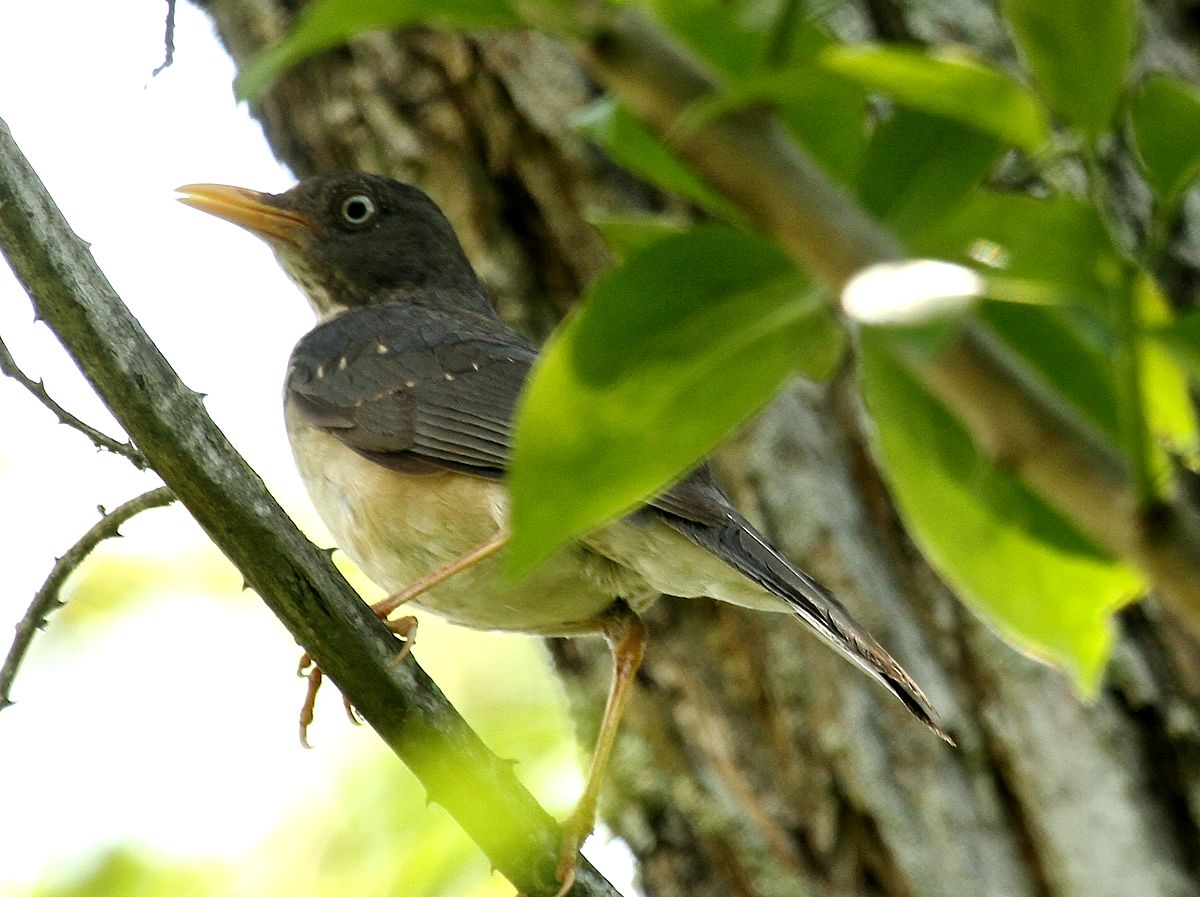
Wikipedia: Plumbeous-backed thrush Source: WIKIPEDIA
1200px-Plumbeous-backedThrush.jpg
🔍
Never observed (yet!)
Description
The plumbeous-backed thrush (Turdus reevei) is a species of bird in the family Turdidae. It is found in Ecuador and Peru. Its natural habitats are subtropical or tropical dry forests, subtropical or tropical moist lowland forests, and subtropical or tropical moist montane forests.
[more]
Details
White-necked thrush / Trauerdrossel (Turdus albicollis)
Profile Wikipedia Xeno-Canto YouTube

Wikipedia: White-necked thrush Source: WIKIPEDIA
1200px-Turdus_albicollis.jpg
🔍
Never observed (yet!)
Description
The white-necked thrush (Turdus albicollis) is a songbird found in forest and woodland in South America. The taxonomy is potentially confusing, and it sometimes includes the members of the T. assimilis group as subspecies, in which case the "combined species" is referred to as the white-throated thrush (a name limited to T. assimilis when the two are split). On the contrary, it may be split into two species, the rufous-flanked thrush (T. albicollis) and the grey-flanked thrush (T. phaeopygos).
[more]
Details
White-throated thrush (Turdus assimilis)

Wikipedia: White-throated thrush Source: WIKIPEDIA
1200px-Mirlo_Garganta_Blanca%2C_White_Throated_Thrush%2C_Turdus_assimilis_%2813362733943%29.jpg
🔍
Never observed (yet!)
Description
The white-throated thrush (Turdus assimilis) is a species of bird in the family Turdidae. It is found in Mexico and Central America, ranging south to central Panama.[2] Its natural habitats are subtropical or tropical dry forests, subtropical or tropical moist lowland forests, and subtropical or tropical moist montane forests. It is common in its range and an extremely rare vagrant into Texas and Arizona; 3 sightings have been recorded (1990 and 1998 in Texas and 2019 in Arizona).[3][4]
[more]
Details
Black-billed thrush / Schwarzschnabeldrossel (Turdus ignobilis)
Profile Wikipedia Xeno-Canto YouTube

Wikipedia: Black-billed thrush Source: WIKIPEDIA
Turdus_ignobilis%2C_Black-billed_Thrush.jpg
🔍
Never observed (yet!)
Description
The black-billed thrush (Turdus ignobilis) is a bird in the family Turdidae native to Colombia and also scantily distributed across Venezuela, the Guiana Shield and the western Amazon.
[more]
Details
Andean solitaire / Andenklarino (Myadestes ralloides)

Wikipedia: Andean solitaire Source: WIKIPEDIA
1200px-Myadestes_ralloides_75757649.jpg
🔍
Never observed (yet!)
Description
The Andean solitaire (Myadestes ralloides) is a species of bird in the family Turdidae. It is found in Bolivia, Colombia, Ecuador, Peru, and Venezuela. Its natural habitats are subtropical or tropical moist montane forests and heavily degraded former forest.
[more]
Details
Black solitaire / Schwarzklarino (Entomodestes coracinus)
Profile Wikipedia Xeno-Canto YouTube

Wikipedia: Black solitaire Source: WIKIPEDIA
1200px-MyiadestesCoracinusKeulemans.jpg
🔍
Never observed (yet!)
Description
The black solitaire (Entomodestes coracinus) is a species of bird in the family Turdidae. It is found in Colombia and Ecuador. Its natural habitats are subtropical or tropical moist lowland forests and subtropical or tropical moist montane forests.
[more]
Details
Rufous-brown solitaire / Rotrückenklarino (Cichlopsis leucogenys)
Profile Wikipedia Xeno-Canto YouTube

Wikipedia: Rufous-brown solitaire Source: WIKIPEDIA
CichlopsisLeucogonysSmit.jpg
🔍
Never observed (yet!)
Description
The rufous-brown solitaire (Cichlopsis leucogenys) is a species of bird in the family Turdidae. It is found in Brazil, Colombia, Ecuador, Guyana, Peru, Suriname, and Venezuela. Its natural habitats are subtropical or tropical moist lowland forest and subtropical or tropical moist montane forest.
[more]
Details
Alder flycatcher / Erlentyrann (Empidonax alnorum)
Profile Wikipedia Audubon AllAboutBirds Xeno-Canto YouTube

Wikipedia: Alder flycatcher Source: WIKIPEDIA
1200px-Empidonax_alnorum_CT2.jpg
🔍
Never observed (yet!)
Description
The alder flycatcher (Empidonax alnorum) is a small insect-eating bird of the tyrant flycatcher family. The genus name Empidonax is from Ancient Greek empis, "gnat", and anax, "master". The specific alnorum is Latin and means "of the alders".[2]
[more]
Details
Acadian flycatcher / Buchentyrann (Empidonax virescens)
Profile Wikipedia Audubon AllAboutBirds Xeno-Canto YouTube
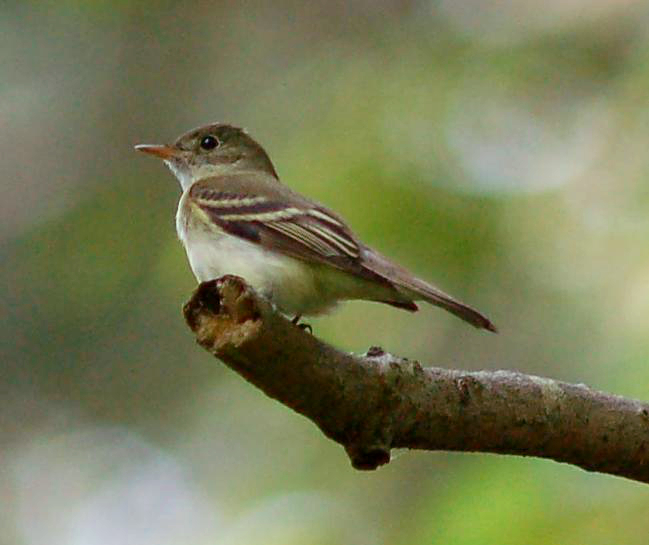
Wikipedia: Acadian flycatcher Source: WIKIPEDIA
Acadian_Flycatcher.jpg
🔍
Never observed (yet!)
Description
The Acadian flycatcher (Empidonax virescens) is a small insect-eating bird of the tyrant flycatcher family.
[more]
Details
Willow flycatcher / Weidentyrann (Empidonax traillii)
Profile Wikipedia A-Z Animals Audubon AllAboutBirds Xeno-Canto YouTube

Wikipedia: Willow flycatcher Source: WIKIPEDIA
Southwestern_Willow_Flycatcher.jpg
🔍
Never observed (yet!)
Description
The willow flycatcher (Empidonax traillii) is a small insect-eating, neotropical migrant bird of the tyrant flycatcher family. There are four subspecies of the willow flycatcher currently recognized, all of which breed in North America (including three subspecies that breed in California).[2] Empidonax flycatchers are almost impossible to tell apart in the field so biologists use their songs to distinguish between them.[3] The binomial commemorates the Scottish zoologist Thomas Stewart Traill.
[more]
Details
White-throated kingbird / Burmeistertyrann (Tyrannus albogularis)
Profile Wikipedia Xeno-Canto YouTube

Wikipedia: White-throated kingbird Source: WIKIPEDIA
1200px-Tyrannus_albogularis_-_White-throated_Flycatcher%3B_Iranduba%2C_Amazonas%2C_Brazil.jpg
🔍
Never observed (yet!)
Description
The white-throated kingbird (Tyrannus albogularis) is a species of bird in the family Tyrannidae, the tyrant flycatchers.
It is found in Bolivia, Brazil, Colombia, Ecuador, Peru, and Venezuela, and in the Guianas of Guyana, Suriname and French Guiana.
Its natural habitats are subtropical or tropical moist lowland forests and subtropical or tropical moist shrubland.
[more]
Details
Eastern kingbird / Königstyrann (Tyrannus tyrannus)
Profile Wikipedia A-Z Animals Audubon AllAboutBirds Xeno-Canto YouTube

Eastern kingbird. 2022-04-29 12:54:00
First observed in Maryland on 2021-06-14.
Description
Lanius tyrannus Linnaeus, 1758
[more]
Details
Fork-tailed flycatcher / Gabeltyrann (Tyrannus savana)
Profile Wikipedia Audubon AllAboutBirds Xeno-Canto YouTube

Wikipedia: Fork-tailed flycatcher Source: WIKIPEDIA
1200px-Fork-tailed_flycatcher_%28Tyrannus_savana_monachus%29_female.jpg
🔍
Never observed (yet!)
Description
The fork-tailed flycatcher (Tyrannus savana) is a passerine bird of the tyrant flycatcher family, and is the member of a genus typically referred to as kingbirds. Named for their distinguishingly long forked tail, fork-tailed flycatchers are seen in lightly-forested or grassland areas; ranging from southern Mexico, to south past Argentina. They are most frequently observed sitting on conspicuous perches waiting for flying arthropods to fly past, they then sally out, eat their prey, and return to their perch. Northern populations near southern Mexico tend to be permanent residents, while fork-tailed flycatchers that live further south are migrants with a reputation to wander as far north as the eastern seaboard of the United States.
[more]
Details
Tropical kingbird / Trauertyrann (Tyrannus melancholicus)
Profile Wikipedia Audubon AllAboutBirds Xeno-Canto YouTube

Tropical kingbird. 2018-02-16 16:18:52 Costa Rica
First observed in Costa Rica on 2018-02-16.
Description
The tropical kingbird (Tyrannus melancholicus) is a large tyrant flycatcher. This bird breeds from southern Arizona and the lower Rio Grande Valley of Texas in the United States through Central America, South America as far as south as central Argentina and eastern Peru, and on Trinidad and Tobago. Birds from the northernmost and southern breeding areas migrate to warmer parts of the range after breeding.
[more]
Details
Snowy-throated kingbird / Schneekehltyrann (Tyrannus niveigularis)
Profile Wikipedia Xeno-Canto YouTube

Wikipedia: Snowy-throated kingbird Source: WIKIPEDIA
1200px-TyrannusNiveigularisSmit.jpg
🔍
Never observed (yet!)
Description
The snowy-throated kingbird (Tyrannus niveigularis) is a species of bird in the family Tyrannidae.
It is found in Colombia, Ecuador, and Peru.
Its natural habitats are subtropical or tropical moist lowland forests and subtropical or tropical dry shrubland.
[more]
Details
Black phoebe / Schwarzkopf-Phoebetyrann (Sayornis nigricans)
Profile Wikipedia Audubon AllAboutBirds Xeno-Canto YouTube
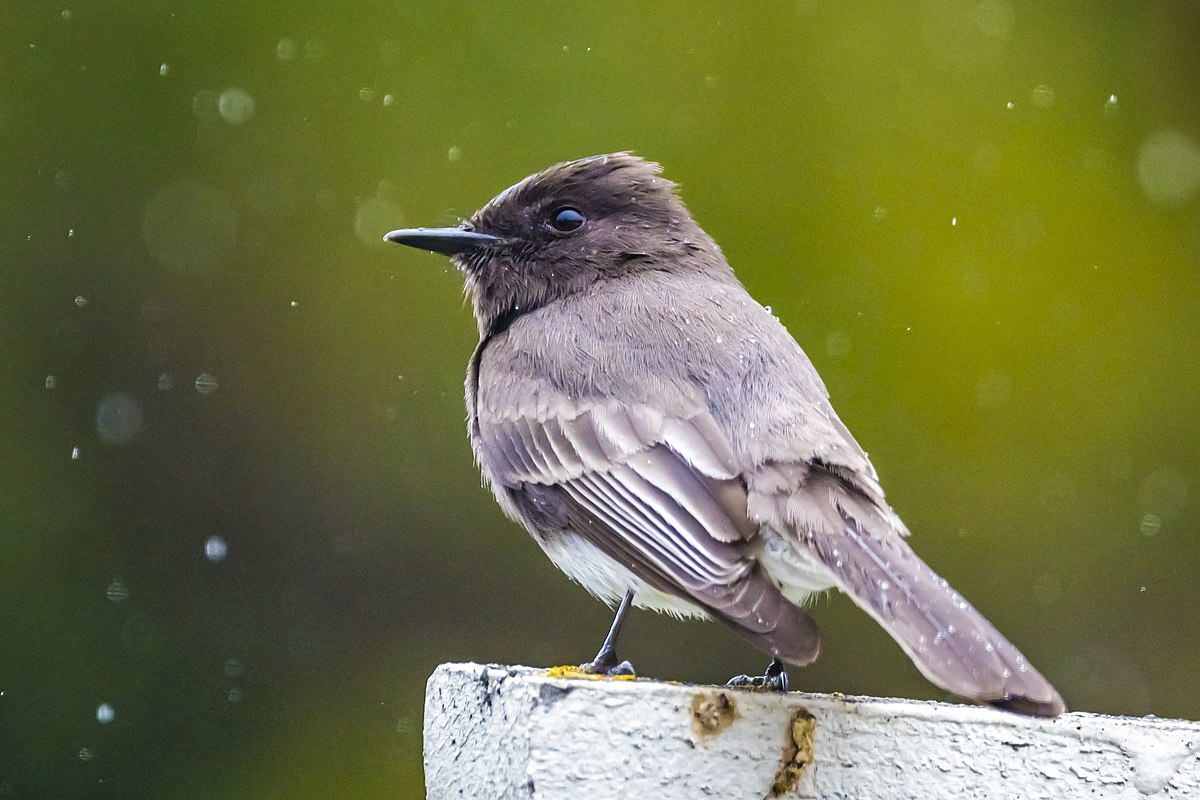
Wikipedia: Black phoebe Source: WIKIPEDIA
1200px-Black_Phoebe_in_the_Rain.jpg
🔍
Never observed (yet!)
Description
The black phoebe (Sayornis nigricans) is a passerine bird in the tyrant-flycatcher family. It breeds from southwest Oregon and California south through Central and South America. It occurs year-round throughout most of its range and migrates less than the other birds in its genus, though its northern populations are partially migratory. Six subspecies are commonly recognized, although two are occasionally combined as a separate species, the white-winged phoebe.
[more]
Details
Black-crested tit-tyrant / Schwarzhauben-Tachurityrann (Anairetes nigrocristatus)
Profile Wikipedia Xeno-Canto YouTube
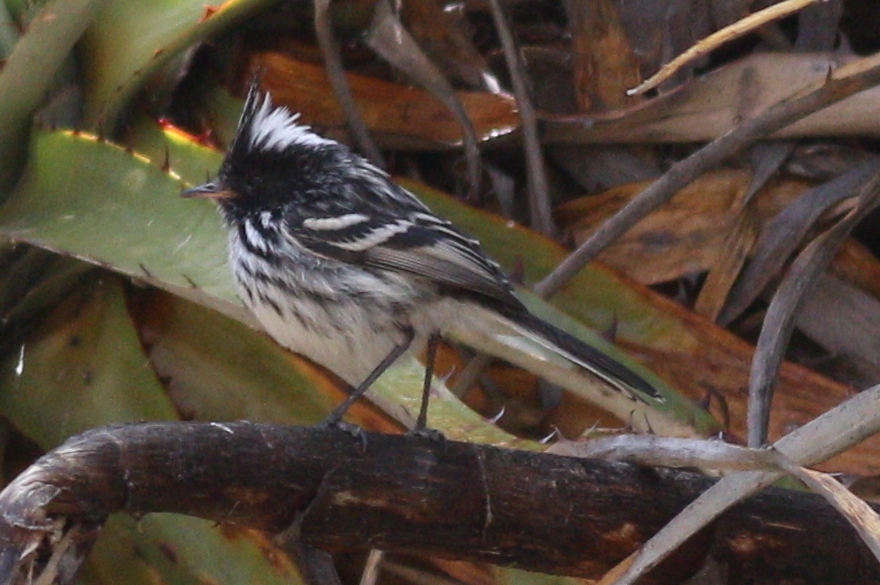
Wikipedia: Black-crested tit-tyrant Source: WIKIPEDIA
Black-crested_Tit-tyrant.JPG
🔍
Never observed (yet!)
Description
The black-crested tit-tyrant or Marañón tit-tyrant (Anairetes nigrocristatus) is a species of bird in the family Tyrannidae. It is found in Ecuador and Peru. Its natural habitats are subtropical or tropical moist montane forests and subtropical or tropical high-altitude shrubland.
[more]
Details
Tufted tit-tyrant / Meisentachuri (Anairetes parulus)
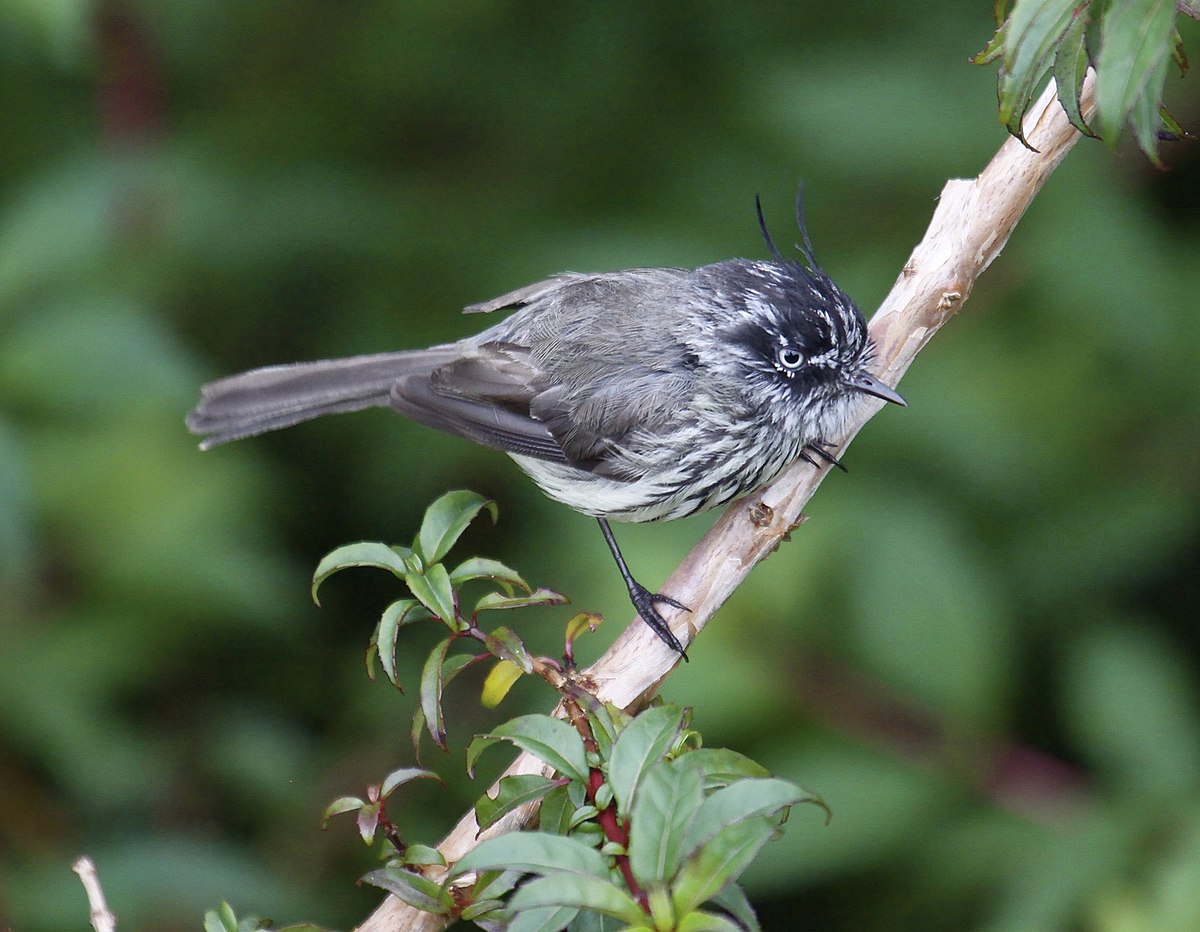
Wikipedia: Tufted tit-tyrant Source: WIKIPEDIA
1200px-Tufted_Tit-Tyrant.jpg
🔍
Never observed (yet!)
Description
The tufted tit-tyrant (Anairetes parulus) is a species of bird in the tyrant flycatcher family Tyrannidae. This species is found in western South America; its range stretches from southern Colombia south along the Andes mountains to Tierra del Fuego. It prefers to live in upper montane forests and shrublands; however, it is a habitat generalist and can be found across a wide range of ecosystems. The tufted tit-tyrant has three subspecies, including the nominate subspecies Anairetes parulus parulus, A. p. aequatorialis, and A. p. patagonicus, and is very closely related to the Juan Fernández tit-tyrant. It is very small with a distinctive and conspicuous crest. The bird's head is black overall with white supraloral and postocular stripes. Its dull grayish-brown back contrasts with its white throat and breast that are covered with black streaks and pale, unmarked yellow underbelly. There are few noticeable differences in plumage between the subspecies. It is a vocal flycatcher with a broad repertoire of songs.
[more]
Details
Lesser wagtail-tyrant / Braunrückentachuri (Stigmatura napensis)
Profile Wikipedia Xeno-Canto YouTube

Wikipedia: Lesser wagtail-tyrant Source: WIKIPEDIA
1200px-Stigmatura_napensis_-_Lesser_wagtail_tyrant.JPG
🔍
Never observed (yet!)
Description
The lesser wagtail-tyrant (Stigmatura napensis) is a small South American species of bird in the family Tyrannidae. It occurs in two distinct populations: One found in wooded and shrubby habitats along major Amazonian rivers in Brazil, Peru, Ecuador and Colombia, and a second found in the comparable far drier northeastern Brazil. The latter is sometimes considered a separate species, the Bahian wagtail-tyrant (S. bahiae), named after the state Bahia, where the majority of its range is.
[more]
Details
Agile tit-tyrant (Uromyias agilis)

Wikipedia: Agile tit-tyrant Source: WIKIPEDIA
Anairetes_agilis.jpg
🔍
Never observed (yet!)
Description
The agile tit-tyrant (Uromyias agilis) is a species of bird in the family Tyrannidae, the tyrant flycatchers. It is native to Bolivia, Colombia, Ecuador, and Venezuela.[1]
[more]
Details
Small-billed elaenia / Kurzschnabelelänie (Elaenia parvirostris)
Profile Wikipedia Xeno-Canto YouTube
Wikipedia: Small-billed elaenia Source: WIKIPEDIA
Elaenia_parvirostris_-Capao_do_Leao%2C_Rio_Grande_do_Sul%2C_Brasil-8.jpg
🔍
Never observed (yet!)
Description
The small-billed elaenia (Elaenia parvirostris) is a species of bird in the family Tyrannidae.
[more]
Details
Sierran elaenia / Sierrälänie (Elaenia pallatangae)
Profile Wikipedia Xeno-Canto YouTube
Wikipedia: Sierran elaenia Source: WIKIPEDIA
Sierran_Elaenia_-_South_Ecuador.jpg
🔍
Never observed (yet!)
Description
The sierran elaenia (Elaenia pallatangae) is a species of bird in the family Tyrannidae.
[more]
Details
Large elaenia / Graubrustelänie (Elaenia spectabilis)
Profile Wikipedia Xeno-Canto YouTube

Wikipedia: Large elaenia Source: WIKIPEDIA
Elaenia_spectabilis.jpeg
🔍
Never observed (yet!)
Description
The large elaenia (Elaenia spectabilis) is a species of bird in the family Tyrannidae. It is found in South America from western Amazonia to eastern Brazil and central Bolivia.[2] Its natural habitats are subtropical or tropical moist lowland forest and heavily degraded former forest.
[more]
Details
White-crested elaenia / Buschelänie (Elaenia albiceps)
Profile Wikipedia Xeno-Canto YouTube

Wikipedia: White-crested elaenia Source: WIKIPEDIA
1200px-White-crested_Elaenia_%28Elaenia_albiceps%29_%2815934867376%29.jpg
🔍
Never observed (yet!)
Description
The white-crested elaenia (Elaenia albiceps) is a species of bird in the family Tyrannidae, the tyrant flycatchers. It has several subspecies breeding across southern and western parts of South America. Southern birds migrate north in winter.
[more]
Details
Yellow-bellied elaenia / Gelbbauchelänie (Elaenia flavogaster)
Profile Wikipedia Xeno-Canto YouTube

Wikipedia: Yellow-bellied elaenia Source: WIKIPEDIA
Flickr_-_Dario_Sanches_-_GUARACAVA-DE-BARRIGA-AMARELA_%28Elaenia_flavogaster%29.jpg
🔍
Never observed (yet!)
Description
The yellow-bellied elaenia (Elaenia flavogaster) is a small bird of the tyrant flycatcher family. It breeds from southern Mexico and the Yucatán Peninsula through Central and South America as far as northern Argentina, and on Trinidad and Tobago.
[more]
Details
Lesser elaenia / Schlankschnabelelänie (Elaenia chiriquensis)
Profile Wikipedia Xeno-Canto YouTube
Wikipedia: Lesser elaenia Source: WIKIPEDIA
1200px-Lesser_elaenia_%28Elaenia_chiriquensis_chiriquensis%29.jpg
🔍
Never observed (yet!)
Description
The lesser elaenia (Elaenia chiriquensis) is a species of bird in the family Tyrannidae, the tyrant flycatchers.
[more]
Details
Coopmans's elaenia (Elaenia brachyptera)

Wikipedia: Coopmans's elaenia Source: WIKIPEDIA
1200px-Elaenia_brachyptera_map.svg.png
🔍
Never observed (yet!)
Description
Coopmans's elaenia (Elaenia brachyptera) is a species of bird in the family Tyrannidae, the tyrant flycatchers.
[more]
Details
Mottle-backed elaenia / Schuppenelänie (Elaenia gigas)
Profile Wikipedia Xeno-Canto YouTube

Wikipedia: Mottle-backed elaenia Source: WIKIPEDIA
Mottle-backedElaenia.jpg
🔍
Never observed (yet!)
Description
The mottle-backed elaenia (Elaenia gigas) is a species of bird in the family Tyrannidae. It is found in Bolivia, Colombia, Ecuador, and Peru.
[more]
Details
Highland elaenia (Elaenia obscura)
Profile Wikipedia Xeno-Canto YouTube

Wikipedia: Highland elaenia Source: WIKIPEDIA
Highland_Elaenia_%28Elaenia_obscura%29_%288077622933%29.jpg
🔍
Never observed (yet!)
Description
The highland elaenia (Elaenia obscura) is a species of bird in the family Tyrannidae, the tyrant flycatchers. It is found in southeastern Ecuador to Bolivia and northwestern Argentina
[more]
Details
One-colored becard (Pachyramphus homochrous)
Profile Wikipedia Xeno-Canto YouTube

Wikipedia: One-colored becard Source: WIKIPEDIA
One-colored_Becard_m_-_South_Ecuador_S4E8722_%2816730610578%29.jpg
🔍
Never observed (yet!)
Description
The one-colored becard (Pachyramphus homochrous) is a species of bird in the family Tityridae. It has traditionally been placed in Cotingidae or Tyrannidae, but evidence strongly suggest it is better placed in Tityridae,[2] where it is now placed by the South American Classification Committee.
[more]
Details
Chestnut-crowned becard / Kastanienbekarde (Pachyramphus castaneus)
Wikipedia: Chestnut-crowned becard Source: WIKIPEDIA
CANELEIRO_%28Pachyramphus_castaneus%29.jpg
🔍
Never observed (yet!)
Description
The chestnut-crowned becard (Pachyramphus castaneus) is a species of bird in the family Tityridae. It has traditionally been placed in Cotingidae or Tyrannidae, but evidence strongly suggest it is better placed in Tityridae,[2] where it is now placed by the South American Classification Committee.
[more]
Details
Cinnamon becard / Zimtbekarde (Pachyramphus cinnamomeus)
Profile Wikipedia Xeno-Canto YouTube

Wikipedia: Cinnamon becard Source: WIKIPEDIA
Flickr_-_Rainbirder_-_Cinnamon_Becard_%28Pachyramphus_cinnamomeus%29_%281%29_%28cropped%29.jpg
🔍
Never observed (yet!)
Description
The cinnamon becard (Pachyramphus cinnamomeus) is a passerine bird found in Latin America.
[more]
Details
Green-backed becard / Grünrückenbekarde (Pachyramphus viridis)
Profile Wikipedia Xeno-Canto YouTube
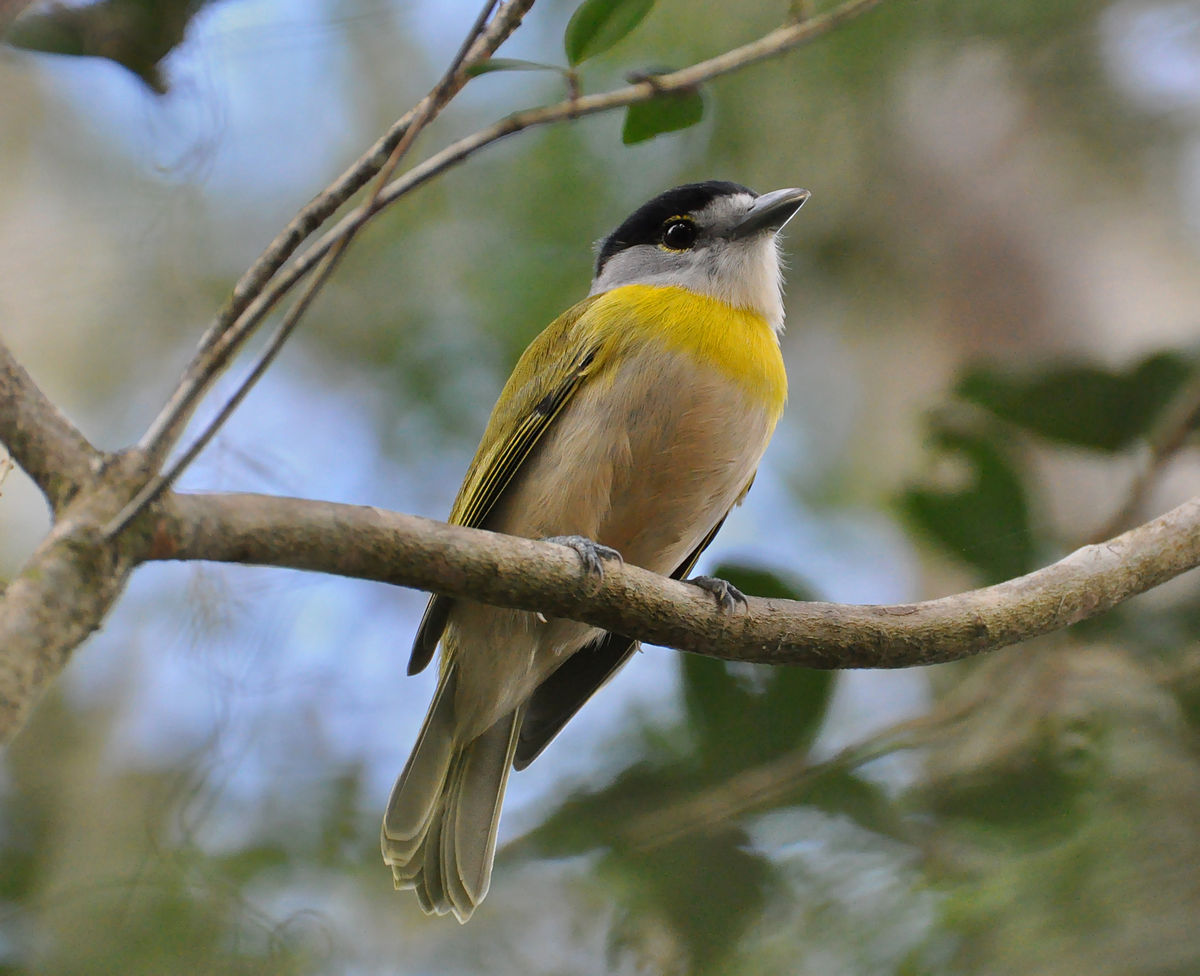
Wikipedia: Green-backed becard Source: WIKIPEDIA
1200px-Pachyramphus_viridis_viridis.jpg
🔍
Never observed (yet!)
Description
The green-backed becard (Pachyramphus viridis) is a species of bird in the family Tityridae. It has traditionally been placed in Cotingidae or Tyrannidae, but evidence strongly suggest it is better placed in Tityridae,[2] where it is now placed by the South American Classification Committee. It often includes the Andean yellow-cheeked becard (Pachyramphus xanthogenys) as a subspecies.
[more]
Details
White-winged becard / Weißflügelbekarde (Pachyramphus polychopterus)
Profile Wikipedia Xeno-Canto YouTube

Wikipedia: White-winged becard Source: WIKIPEDIA
1200px-Pachyramphus_polychopterus_-Panama-8.jpg
Panama
🔍
Never observed (yet!)
Description
The white-winged becard (Pachyramphus polychopterus) is a species of bird in the family Tityridae. It has traditionally been placed in Cotingidae or Tyrannidae, but evidence strongly suggest it is better placed in Tityridae,[2] where it is now placed by the South American Classification Committee. The species contains 8 subspecies that vary markedly in plumage and voice, and it has been suggested that they represent more than one species.
[more]
Details
Slaty becard / Schieferbekarde (Pachyramphus spodiurus)
Profile Wikipedia Xeno-Canto YouTube

Wikipedia: Slaty becard Source: WIKIPEDIA
Slatybecard.jpg
🔍
Never observed (yet!)
Description
The slaty becard (Pachyramphus spodiurus) is a species of bird in the family Tityridae. It has traditionally been placed in Cotingidae or Tyrannidae, but evidence strongly suggest it is better placed in Tityridae,[2] where it is now placed by the South American Classification Committee.
[more]
Details
Black-and-white becard / Elsterbekarde (Pachyramphus albogriseus)
Profile Wikipedia Xeno-Canto YouTube

Wikipedia: Black-and-white becard Source: WIKIPEDIA
Black-and-White_Becard_-_Ecuador_S4E3868_%2816298262843%29.jpg
🔍
Never observed (yet!)
Description
The black-and-white becard (Pachyramphus albogriseus) is a species of bird in the family Tityridae. It has traditionally been placed in Cotingidae or Tyrannidae, but evidence strongly suggest it is better placed in Tityridae,[2] where it is now placed by the South American Classification Committee. It is found in Colombia, Costa Rica, Ecuador, Panama, Peru, and Venezuela. Its natural habitats are subtropical or tropical dry forests and subtropical or tropical moist montane forests.
[more]
Details
Pink-throated becard / Rotkehlbekarde (Pachyramphus minor)
Profile Wikipedia Xeno-Canto YouTube
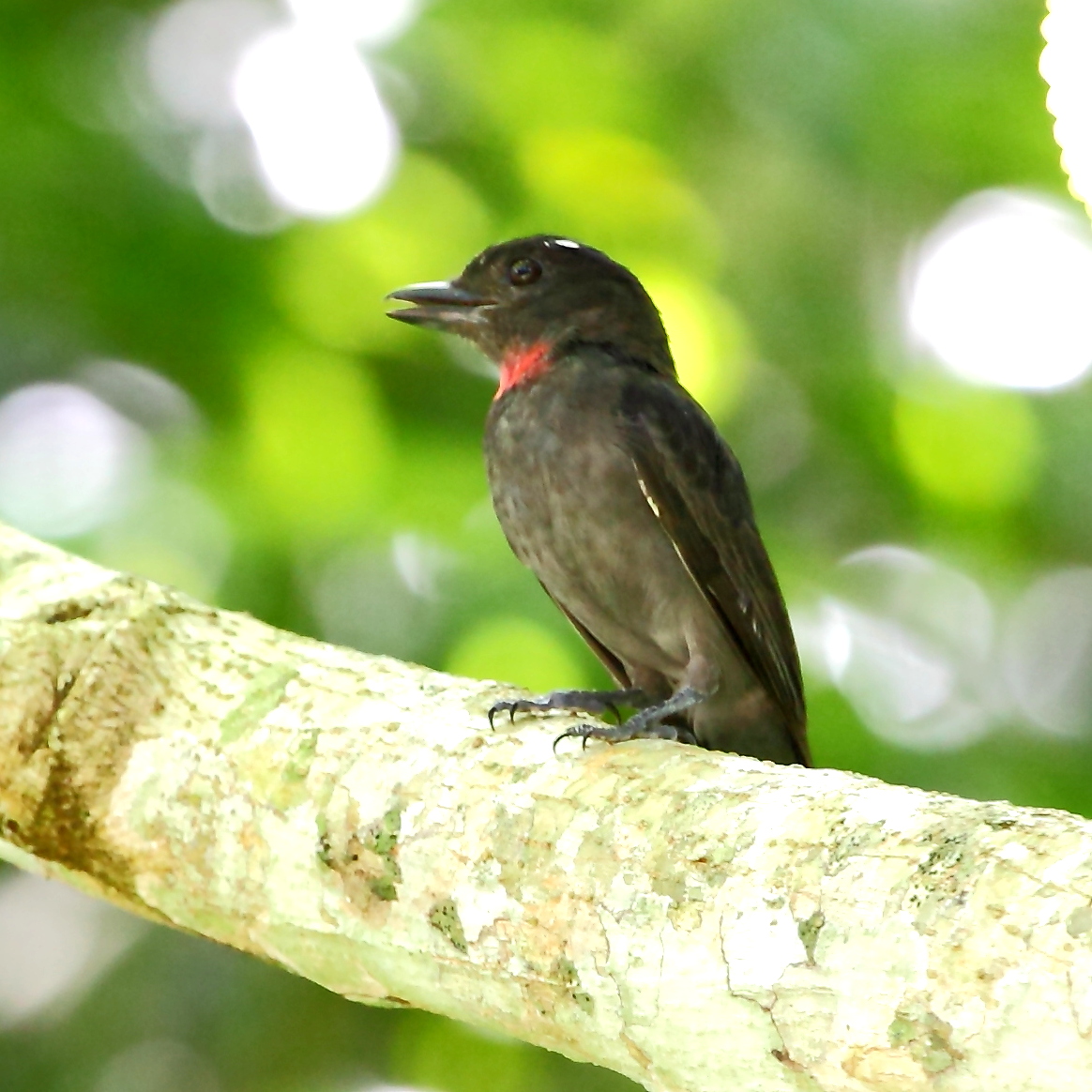
Wikipedia: Pink-throated becard Source: WIKIPEDIA
Pachyramphus_minor_-_Pink-throated_Becard_%28male%29.JPG
🔍
Never observed (yet!)
Description
The pink-throated becard (Pachyramphus minor) is a species of bird in the family Tityridae. It has traditionally been placed in Cotingidae or Tyrannidae, but evidence strongly suggest it is better placed in Tityridae,[2] where it is now placed by the South American Classification Committee.
It is found in Bolivia, Brazil, Colombia, Ecuador, French Guiana, Guyana, Peru, Suriname, and Venezuela.
[more]
Details
Barred becard / Wellenbekarde (Pachyramphus versicolor)
Profile Wikipedia Xeno-Canto YouTube
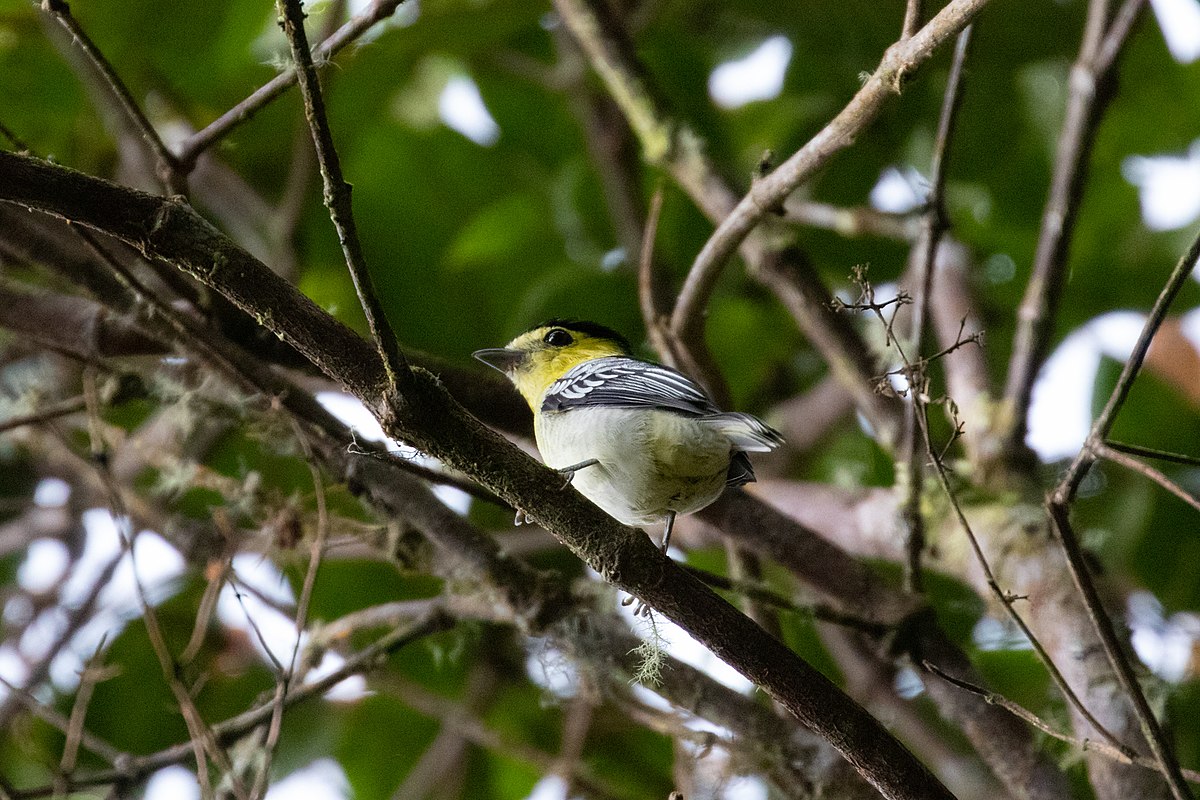
Wikipedia: Barred becard Source: WIKIPEDIA
1200px-Pachyramphus_versicolor_70264620.jpg
🔍
Never observed (yet!)
Description
The barred becard (Pachyramphus versicolor) is a small passerine bird which is a resident breeding species in highlands from Costa Rica to northwestern Ecuador and northern Bolivia. It has traditionally been placed in Cotingidae or Tyrannidae, but evidence strongly suggests it belongs in Tityridae, where it is now placed by the South American Classification Committee.[2]
[more]
Details
Black-capped becard / Kappenbekarde (Pachyramphus marginatus)
Profile Wikipedia Xeno-Canto YouTube

Wikipedia: Black-capped becard Source: WIKIPEDIA
1200px-Black-capped_Becard.jpg
🔍
Never observed (yet!)
Description
The black-capped becard (Pachyramphus marginatus) is a species of bird in the family Tityridae. It has traditionally been placed in Cotingidae or Tyrannidae, but evidence strongly suggest it is better placed in Tityridae,[2] where it is now placed by the South American Classification Committee.
It is found in Bolivia, Brazil, Colombia, Ecuador, French Guiana, Guyana, Peru, Suriname, and Venezuela.
Its natural habitat is subtropical or tropical moist lowland forest.
[more]
Details
Black-tailed tityra / Schwarznackenbekarde (Tityra cayana)
Profile Wikipedia Xeno-Canto YouTube
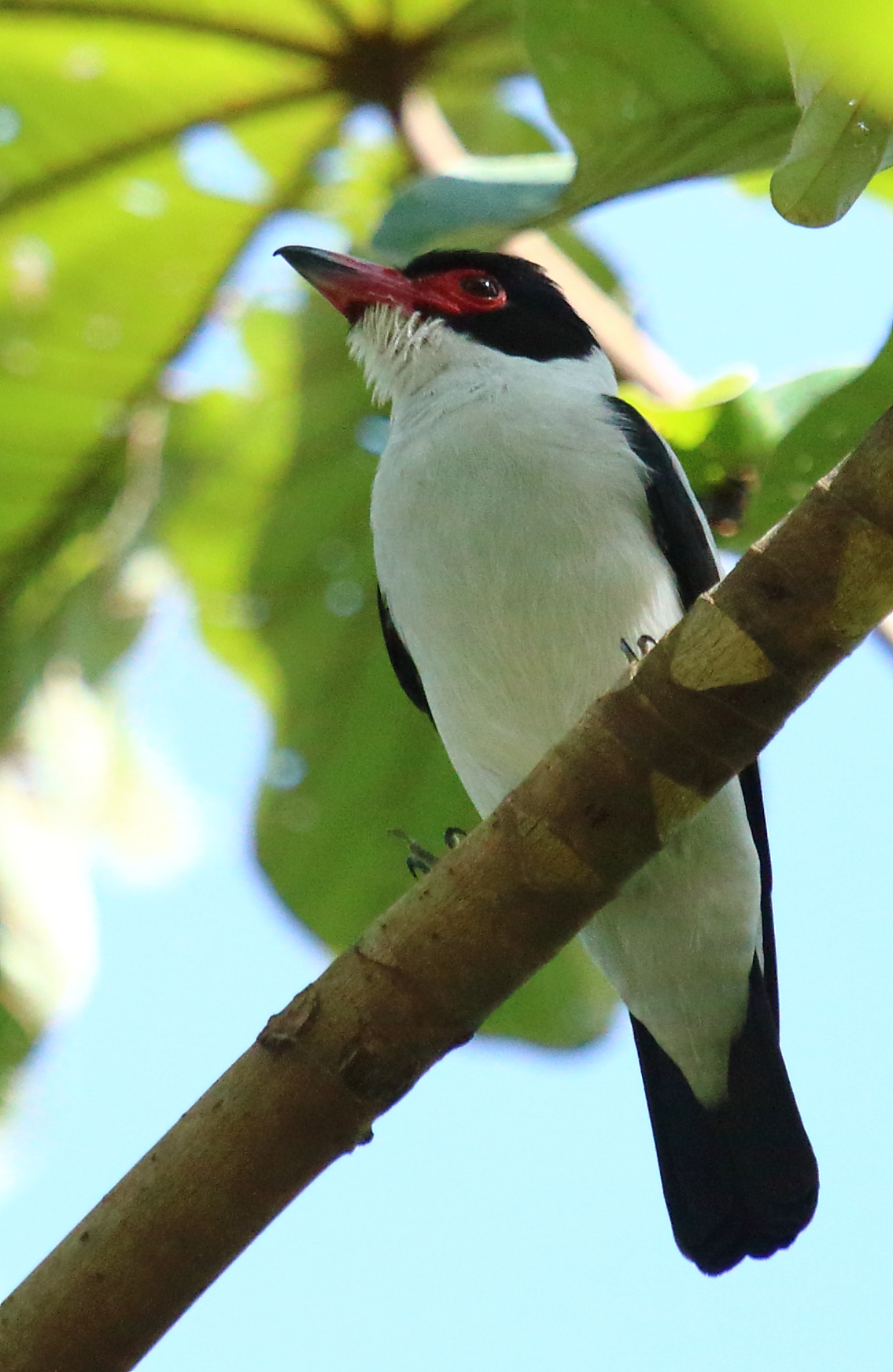
Wikipedia: Black-tailed tityra Source: WIKIPEDIA
Black-tailed_tityra_%28Tityra_cayana%29.jpg
🔍
Never observed (yet!)
Description
The black-tailed tityra (Tityra cayana) is a medium-sized passerine bird of tropical South America. The tityras have been placed in the cotinga or the tyrant flycatcher families (Cotingidae and Tyrannidae) by various authors. But the weight of evidence strongly suggest they and their closest relatives are better separated as Tityridae; the AOU for example advocates this separation.[2]
[more]
Details
Masked tityra / Weißnackentityra (Tityra semifasciata)
Profile Wikipedia Xeno-Canto YouTube

Masked tityra. 2023-03-31 08:30:30 Yucatan
First observed in Belize on 2018-02-05.
Description
The masked tityra (Tityra semifasciata) is a medium-sized passerine bird. It has traditionally been placed in the cotinga or the tyrant flycatcher family, but evidence strongly suggests that it is better placed in Tityridae,[2] where it is now placed by the South American Classification Committee.
[more]
Details
Black-crowned tityra / Schwarzschnabeltityra (Tityra inquisitor)
Profile Wikipedia Xeno-Canto YouTube

Wikipedia: Black-crowned tityra Source: WIKIPEDIA
Black-crowned_tityra.jpg
🔍
Never observed (yet!)
Description
The black-crowned tityra (Tityra inquisitor) is a medium-sized passerine bird. It has traditionally been placed in the cotinga or the tyrant flycatcher family, but evidence strongly suggest it is better placed in Tityridae.
[more]
Details
Streak-necked flycatcher / Spitzschwingen-Stricheltyrann (Mionectes striaticollis)
Profile Wikipedia Xeno-Canto YouTube

Wikipedia: Streak-necked flycatcher Source: WIKIPEDIA
1200px-Mionectes_striaticollis_-NBII_Image_Gallery-a00255.jpg
🔍
Never observed (yet!)
Description
The streak-necked flycatcher (Mionectes striaticollis) is a species of bird in the family Tyrannidae.
[more]
Details
Ochre-bellied flycatcher / Ockerbauch-Pipratyrann (Mionectes oleagineus)

Wikipedia: Ochre-bellied flycatcher Source: WIKIPEDIA
1200px-Mionectes_oleagineus_2.jpg
🔍
Never observed (yet!)
Description
The ochre-bellied flycatcher (Mionectes oleagineus) is a small bird of the tyrant flycatcher family. It breeds from southern Mexico through Central America, and South America east of the Andes as far as southern Brazil, and on Trinidad and Tobago.
[more]
Details
Olive-striped flycatcher / Rundschwingen-Stricheltyrann (Mionectes olivaceus)
Profile Wikipedia Xeno-Canto YouTube

Wikipedia: Olive-striped flycatcher Source: WIKIPEDIA
1200px-Olive-striped_flycatcher.jpg
🔍
Never observed (yet!)
Description
The olive-striped flycatcher (Mionectes olivaceus) is a species of bird in the family Tyrannidae.
[more]
Details
White-tailed shrike-tyrant / Weißschwanz-Hakentyrann (Agriornis albicauda)
Profile Wikipedia Xeno-Canto YouTube

Wikipedia: White-tailed shrike-tyrant Source: WIKIPEDIA
White-tailed_Shrike-Tyrant_-_South_Ecuador_S4E3293_%2816295894634%29.jpg
🔍
Never observed (yet!)
Description
The white-tailed shrike-tyrant (Agriornis albicauda) is a species of bird in the family Tyrannidae. It is found in Argentina, Bolivia, Chile, Ecuador, and Peru. At 25–28 cm (10–11 in) long, it is a very large flycatcher, second only to the great shrike-tyrant in size.
[more]
Details
Black-billed shrike-tyrant / Schwarzschnabel-Hakentyrann (Agriornis montanus)

Wikipedia: Black-billed shrike-tyrant Source: WIKIPEDIA
Agriornis_montanus_-_Black-billed_shrike-tyrant.jpg
🔍
Never observed (yet!)
Description
The black-billed shrike-tyrant (Agriornis montanus) is a species of bird in the family Tyrannidae. It is found in Argentina, Bolivia, Chile, Colombia, Ecuador, Peru, and is a vagrant to the Falkland Islands. It is a large flycatcher at 23–25 cm (9–10 in) long. Its natural habitats are subtropical or tropical high-altitude shrubland, subtropical or tropical high-altitude grassland, and pastureland.
[more]
Details
Short-tailed field-tyrant / Stummeltyrann (Muscigralla brevicauda)

Wikipedia: Short-tailed field-tyrant Source: WIKIPEDIA
Short-tailed_Field-Tyrant_-_South_Ecuador_S4E8007_%2816710944637%29.jpg
🔍
Never observed (yet!)
Description
The short-tailed field tyrant (Muscigralla brevicauda) is a species of bird in the family Tyrannidae. It is monotypic within the genus Muscigralla.[2] It is found in Ecuador, Peru and far northern Chile[1] where its natural habitats are subtropical or tropical dry shrubland and pastureland.[3]
[more]
Details
Spot-billed ground-tyrant / Lerchentyrann (Muscisaxicola maculirostris)
Profile Wikipedia Xeno-Canto YouTube

Wikipedia: Spot-billed ground-tyrant Source: WIKIPEDIA
Spot-billed_Ground-Tyrant.jpg
🔍
Never observed (yet!)
Description
The spot-billed ground tyrant (Muscisaxicola maculirostris) is a species of bird in the family Tyrannidae.
[more]
Details
White-browed ground-tyrant / Rotkäppchentyrann (Muscisaxicola albilora)
Profile Wikipedia Xeno-Canto YouTube

Wikipedia: White-browed ground-tyrant Source: WIKIPEDIA
1200px-White-browed_Ground-tyrant.jpg
🔍
Never observed (yet!)
Description
The white-browed ground tyrant (Muscisaxicola albilora) is a species of bird in the family Tyrannidae.
It breeds in the Andes in Argentina and Chile between 1,500 and 4,000 m above sea-level. It migrates north to Bolivia, Colombia, Ecuador and Peru. It is a vagrant to the Falkland Islands. Its natural habitat is subtropical or tropical high-altitude grassland.
[more]
Details
Plain-capped ground-tyrant / Felsentyrann (Muscisaxicola alpinus)

Wikipedia: Plain-capped ground-tyrant Source: WIKIPEDIA
1200px-Dormilona_taczanowski.jpg
🔍
Never observed (yet!)
Description
Taczanowski's ground tyrant or plain-capped ground tyrant (Muscisaxicola griseus) is a species of bird in the family Tyrannidae.
It is found in Bolivia and Peru.
Its natural habitat is subtropical or tropical high-altitude grassland.
[more]
Details
Ruddy-tailed flycatcher / Zimtschwanztyrann (Terenotriccus erythrurus)

Wikipedia: Ruddy-tailed flycatcher Source: WIKIPEDIA
1200px-Terenotriccus_erythrurus_-_Ruddy-tailed_flycatcher%3B_Rio_Branco%2C_Acre%2C_Brazil.jpg
🔍
Never observed (yet!)
Description
The ruddy-tailed flycatcher (Terenotriccus erythrurus) is a small passerine bird in the family Tityridae. It breeds in lowlands from southeastern Mexico to northern Bolivia, north-central Brazil and the Guianas. This flycatcher ranges east of the Andes cordillera into the entire Amazon Basin of northern Brazil and the Guianas; to the west of the Andes in Colombia and Ecuador into Central America. It is the only member of the genus Terenotriccus, but some authorities place it in genus Myiobius. However, it differs in voice, behaviour, and structure from members of that group.
[more]
Details
Ringed antpipit / Nördlicher Brustbandtyrann (Corythopis torquatus)

Wikipedia: Ringed antpipit Source: WIKIPEDIA
1200px-Corythopis_torquatus.jpg
🔍
Never observed (yet!)
Description
The ringed antpipit (Corythopis torquatus) is a species of bird in the family Tyrannidae, the tyrant flycatchers. It is one of two species in the genus Corythopis.
It is found in the Amazon Basin of Brazil and the Guianas, and Amazonian Colombia, Ecuador, Peru, and Bolivia; also Guyana, Suriname, French Guiana, and in eastern Venezuela in the Orinoco River drainage.
[more]
Details
Smoke-colored pewee (Contopus fumigatus)
Profile Wikipedia Xeno-Canto YouTube

Wikipedia: Smoke-colored pewee Source: WIKIPEDIA
Contopus_fumigatus%2C_Smoke-colored_Pewee.jpg
🔍
Never observed (yet!)
Description
The smoke-colored pewee (Contopus fumigatus) is a species of bird in the family Tyrannidae.
[more]
Details
Olive-sided flycatcher / Fichtentyrann (Contopus cooperi)
Profile Wikipedia Audubon AllAboutBirds Xeno-Canto YouTube

Wikipedia: Olive-sided flycatcher Source: WIKIPEDIA
Olive-sided_Flycatcher.jpg
🔍
Never observed (yet!)
Description
The olive-sided flycatcher (Contopus cooperi) is a passerine bird. It is a medium-sized tyrant flycatcher.
[more]
Details
Eastern wood-pewee / Östlicher Waldtyrann (Contopus virens)
Profile Wikipedia Audubon AllAboutBirds Xeno-Canto YouTube
 Eastern wood pewee, last new bird we discovered - at the parking lot shortly before leaving, Oregon Ridge.JPG)
Eastern wood pewee, last new bird we discovered - at the parking lot shortly before leaving, Oregon Ridge. 2021-06-19 09:34:10
First observed in Maryland on 2021-06-19.
Description
The eastern wood pewee (Contopus virens) is a small tyrant flycatcher from North America. This bird and the western wood pewee (C. sordidulus) were formerly considered to be a single species. The two species are virtually identical in appearance, and can be distinguished most easily by their calls.
[more]
Vocalisation
Song: No details but a Xeno-Canto recording. Song attributes: Frequency:♫ 2022-05-01 08:44:50 Source: BirdNet 20220501_084450 birdnet - Eastern Wood-Pewee - 2022-05-01 08:44:50 - Eastern Wood-Pewee - Cockeysville.mp3 Cockeysville (song)
Details
Blackish pewee / Einfarbtyrann (Contopus nigrescens)
Profile Wikipedia Xeno-Canto YouTube
Wikipedia: Blackish pewee Source: WIKIPEDIA
Contopus_nigrescens_-_Blackish_pewee.JPG
🔍
Never observed (yet!)
Description
The blackish pewee (Contopus nigrescens) is a species of bird in the family Tyrannidae. It is found in Brazil, Ecuador, Guyana, and Peru.
[more]
Details
Tropical pewee / Spixtyrann (Contopus cinereus)
Profile Wikipedia Xeno-Canto YouTube

Wikipedia: Tropical pewee Source: WIKIPEDIA
Tropical_Pewee_-_Rio_Tigre_-_Costa_Rica.jpg
🔍
Never observed (yet!)
Description
The tropical pewee or southern tropical pewee (Contopus cinereus) is a small passerine bird in the tyrant flycatcher family. It breeds from southern Mexico and Trinidad south to Bolivia and Argentina. The taxon punensis, found in south-western Ecuador and western Peru, is usually included as a subspecies of the tropical pewee, but it has been suggested it should be considered a separate species, the Tumbes pewee (Contopus punensis) .
[more]
Details
Western wood-pewee / Westlicher Waldtyrann (Contopus sordidulus)
Profile Wikipedia Audubon AllAboutBirds Xeno-Canto YouTube

Arenal western wood-pewee tentative ID by MerlinBirdID. 2018-03-01 07:50:38 Costa Rica
First observed in Costa Rica on 2018-03-01.
Description
The western wood pewee (Contopus sordidulus) is a small tyrant flycatcher. Adults are gray-olive on the upperparts[2] with light underparts, washed with olive on the breast. They have two wing bars and a dark bill with yellow at the base of the lower mandible. This bird is very similar in appearance to the eastern wood pewee; the two birds were formerly considered to be one species. The call of C. sordidulus is a loud buzzy peeer; the song consists of three rapid descending tsees ending with a descending peeer.
[more]
Details
Euler's flycatcher (Lathrotriccus euleri)
Profile Wikipedia Xeno-Canto YouTube

Wikipedia: Euler's flycatcher Source: WIKIPEDIA
Lathrotriccus_euleri_Euler%27s_Flycatcher.JPG
🔍
Never observed (yet!)
Description
Euler's flycatcher (Lathrotriccus euleri) is a small passerine bird in the tyrant flycatcher family. It breeds in South America east of the Andes from Colombia and Venezuela south to Bolivia and Argentina, and on the islands of Trinidad and formerly also Grenada (see below). This species is named for the Swiss ornithologist Carl Euler.[2]
[more]
Details
Gray-breasted flycatcher / Graubrusttyrann (Lathrotriccus griseipectus)
Profile Wikipedia Xeno-Canto YouTube

Wikipedia: Gray-breasted flycatcher Source: WIKIPEDIA
Gray-breasted_Flycatcher_-_South_Ecuador_S4E9465.jpg
🔍
Never observed (yet!)
Description
The grey-breasted flycatcher (Lathrotriccus griseipectus) is a species of bird in the family Tyrannidae. It is found in western Ecuador and northwestern Peru. Its natural habitats are subtropical or tropical dry forests, subtropical or tropical moist lowland forests, and subtropical or tropical moist montane forests. It is threatened by habitat loss.
[more]
Details
Fuscous flycatcher / Finkentyrann (Cnemotriccus fuscatus)
Profile Wikipedia Xeno-Canto YouTube

Wikipedia: Fuscous flycatcher Source: WIKIPEDIA
1200px-Cnemotriccus_fuscatus_-_Fuscous_Flycatcher%3B_Bodoquena%2C_Mato_Grosso_do_Sul%2C_Brazil.jpg
🔍
Never observed (yet!)
Description
The fuscous flycatcher (Cnemotriccus fuscatus) is a small passerine bird in the tyrant flycatcher family, and the only member of the genus Cnemotriccus. It breeds from Colombia and Venezuela south to Bolivia, Paraguay and Argentina, and on both Trinidad and Tobago. The fuscous flycatcher ranges in northern and eastern South America, including the entire Amazon Basin, and the Guianas; also all of Brazil except the very southeastern border area with Uruguay.
[more]
Details
Tufted flycatcher / Gelbbauchtyrann (Mitrephanes phaeocercus)
Profile Wikipedia Xeno-Canto YouTube

Wikipedia: Tufted flycatcher Source: WIKIPEDIA
Mitrephanes_phaeocercus_-Costa_Rica-8a.jpg
🔍
Never observed (yet!)
Description
The northern tufted flycatcher or simply tufted flycatcher (Mitrephanes phaeocercus) is a small passerine bird in the tyrant flycatcher family. It breeds in highlands from northwestern Mexico to northwestern Ecuador. The olive flycatcher (Mitrephanes olivaceus) of Peru and Bolivia is now considered a separate species.
[more]
Details
Amazonian scrub-flycatcher (Sublegatus obscurior)
Profile Wikipedia Xeno-Canto YouTube

Wikipedia: Amazonian scrub-flycatcher Source: WIKIPEDIA
1200px-Sublegatus_obscurior_-_Todd%27s_scrub-flycatcher%2C_Pte._Figueiredo%2C_Amazonas%2C_Brazil.jpg
🔍
Never observed (yet!)
Description
The Amazonian scrub flycatcher or Todd's scrub flycatcher (Sublegatus obscurior) is a species of bird in the family Tyrannidae, the tyrant flycatchers.
It is found in South America in its natural habitats of subtropical or tropical dry forests and subtropical or tropical moist lowland forests.
[more]
Details
Black-tailed flycatcher / Schwarzschwanztyrann (Myiobius atricaudus)
Profile Wikipedia Xeno-Canto YouTube
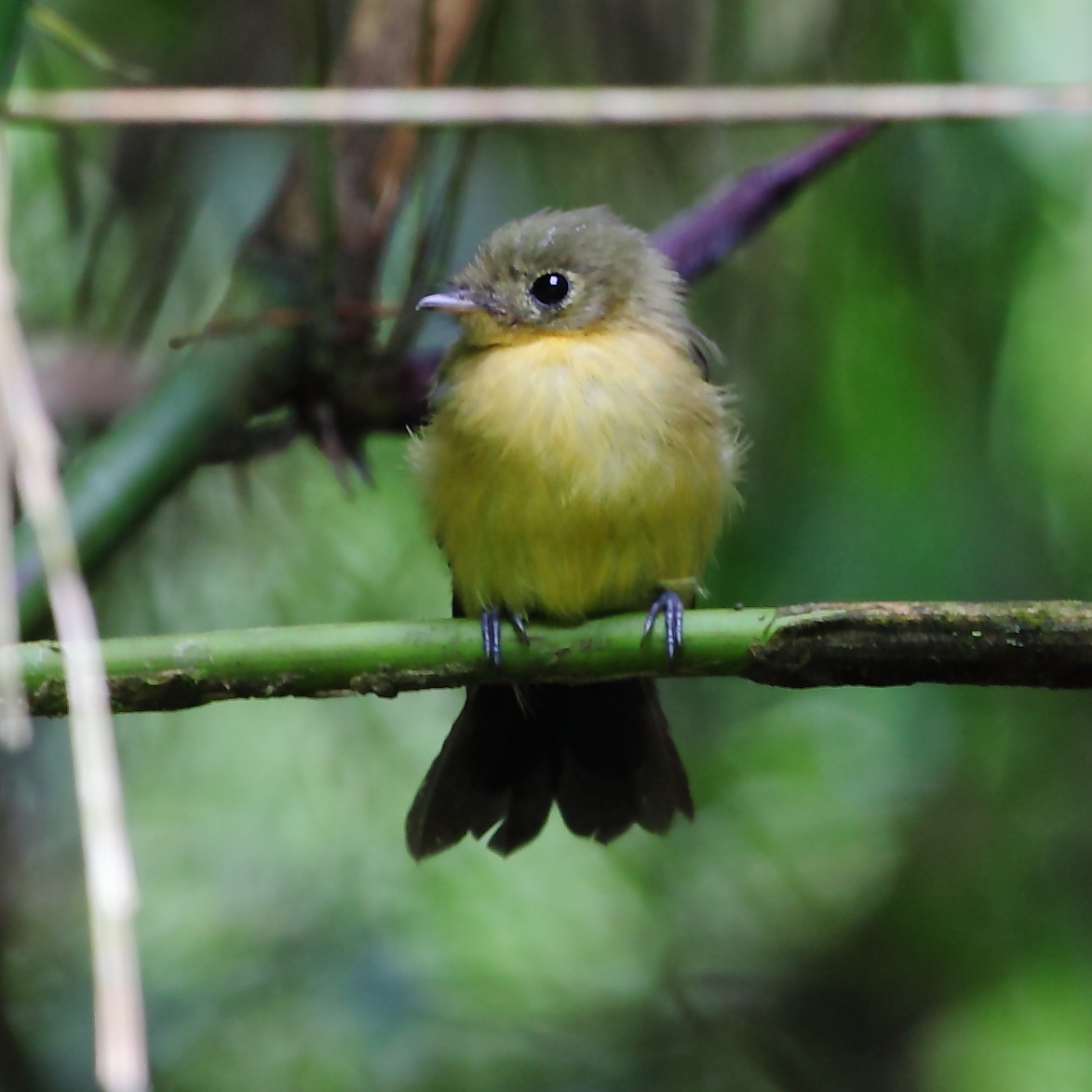
Wikipedia: Black-tailed flycatcher Source: WIKIPEDIA
Myiobius_atricaudus_-_Black-tailed_Flycatcher.JPG
🔍
Never observed (yet!)
Description
The black-tailed myiobius or black-tailed flycatcher (Myiobius atricaudus) is a species of passerine bird in the family Tityridae. It was previously placed in the family Tyrannidae.[2] Black-tailed flycatchers are found in Brazil, Colombia, Costa Rica, Ecuador, Panama, Peru, and Venezuela.[3] Their natural habitats are subtropical or tropical moist lowland forests and heavily degraded former forest. They are usually found alone or in pairs, but may join flocks of several species.[3]
[more]
Details
Tawny-breasted flycatcher / Borstentyrann (Myiobius villosus)
Profile Wikipedia Xeno-Canto YouTube

Wikipedia: Tawny-breasted flycatcher Source: WIKIPEDIA
1200px-Tawny-breasted_Flycatcher.jpg
🔍
Never observed (yet!)
Description
The tawny-breasted myiobius or tawny-breasted flycatcher (Myiobius villosus) is a species of passerine bird in the family Tityridae. It is found in Bolivia, Colombia, Ecuador, Panama, Peru, and Venezuela.
Its natural habitat is subtropical or tropical moist montane forests.
[more]
Details
Sulphur-rumped flycatcher (Myiobius barbatus)
Profile Wikipedia Xeno-Canto YouTube

Wikipedia: Sulphur-rumped flycatcher Source: WIKIPEDIA
1200px-Myiobius_sulphureipygius_map.svg.png
🔍
Never observed (yet!)
Description
The sulphur-rumped myiobius or sulphur-rumped flycatcher (Myiobius sulphureipygius) is a species of passerine bird in the family Tityridae. It is found in Belize, Colombia, Costa Rica, Ecuador, Guatemala, Honduras, Mexico, Nicaragua, and Panama. Its natural habitat is subtropical or tropical moist lowland forests.
[more]
Details
Dusky-capped flycatcher / Kappentyrann (Myiarchus tuberculifer)
Profile Wikipedia Audubon AllAboutBirds Xeno-Canto YouTube

Wikipedia: Dusky-capped flycatcher Source: WIKIPEDIA
Myiarchus-tuberculifer-001.jpg
🔍
Never observed (yet!)
Description
The dusky-capped flycatcher (Myiarchus tuberculifer) is a passerine bird in the tyrant flycatcher family. It breeds in forest and other woodland from southern Arizona, as well as the Chisos Mountains, Texas, south to northern Argentina and on Trinidad. It is resident in most of its range, but American breeders retreat to Mexico in winter.
[more]
Details
Panama flycatcher / Panamatyrann (Myiarchus panamensis)
Profile Wikipedia Xeno-Canto YouTube

Wikipedia: Panama flycatcher Source: WIKIPEDIA
Panama_Flycatcher_-_Panama_H8O3031.jpg
🔍
Never observed (yet!)
Description
The Panamanian flycatcher (Myiarchus panamensis) is a species of bird in the family Tyrannidae. It is found in Colombia, Costa Rica, Panama, and Venezuela. Its natural habitats are subtropical or tropical dry forest, subtropical or tropical moist lowland forest, subtropical or tropical mangrove forest, subtropical or tropical dry shrubland, and heavily degraded former forest.
[more]
Details
Short-crested flycatcher / Kurzschopftyrann (Myiarchus ferox)
Profile Wikipedia Xeno-Canto YouTube

Wikipedia: Short-crested flycatcher Source: WIKIPEDIA
1200px-Myiarchus_ferox-Short-crested_Flycatcher.JPG
🔍
Never observed (yet!)
Description
The short-crested flycatcher (Myiarchus ferox) is a species of bird in the family Tyrannidae.
[more]
Details
Great crested flycatcher / Schnäppertyrann (Myiarchus crinitus)
Profile Wikipedia A-Z Animals Audubon AllAboutBirds Xeno-Canto YouTube

Wikipedia: Great crested flycatcher Source: WIKIPEDIA
Great_Crested_Flycatcher_RWD2.jpg
First observed in 🇨🇭 on 2021-03-18.
Description
The great crested flycatcher (Myiarchus crinitus) is a large insect-eating bird of the tyrant flycatcher family. It is the most widespread member of the genus Myiarchus in North America, and is found over most of the eastern and mid-western portions of the continent.[2] It dwells mostly in the treetops and rarely is found on the ground.[3]
[more]
Vocalisation
Song: No details but a Xeno-Canto recording. Song attributes: Frequency:♫ 2021-03-18 16:52:19 Source: BirdNet 20210318_165219- birdnet 9 - Great Crested Flycatcher - 2020-02-25 18:26:45 - birdnet_mobile_5867288364_recording_15.wav.mp3 Fehraltorf (song)
Details
Pale-edged flycatcher / Taczanowskityrann (Myiarchus cephalotes)
Profile Wikipedia Xeno-Canto YouTube

Wikipedia: Pale-edged flycatcher Source: WIKIPEDIA
1200px-Myiarchus_cephalotes_%28Atrapamoscas_monta%C3%B1ero%29_%2816089213637%29.jpg
🔍
Never observed (yet!)
Description
The pale-edged flycatcher (Myiarchus cephalotes) is a species of bird in the family Tyrannidae.
It is found in Bolivia, Colombia, Ecuador, Peru, and Venezuela.
Its natural habitats are subtropical or tropical moist montane forests and heavily degraded former forest.
[more]
Details
Sooty-crowned flycatcher / Graustirntyrann (Myiarchus phaeocephalus)
Profile Wikipedia Xeno-Canto YouTube

Wikipedia: Sooty-crowned flycatcher Source: WIKIPEDIA
1200px-Sooty-crowned_Flycatcher_%28Myiarchus_phaeocephalus%29_%2820027044745%29.jpg
🔍
Never observed (yet!)
Description
The sooty-crowned flycatcher (Myiarchus phaeocephalus) is a species of bird in the family Tyrannidae.
It is found in Ecuador and Peru.
Its natural habitats are subtropical or tropical dry forests and subtropical or tropical moist lowland forests.
[more]
Details
Swainson's flycatcher / Swainsontyrann (Myiarchus swainsoni)
Profile Wikipedia Xeno-Canto YouTube
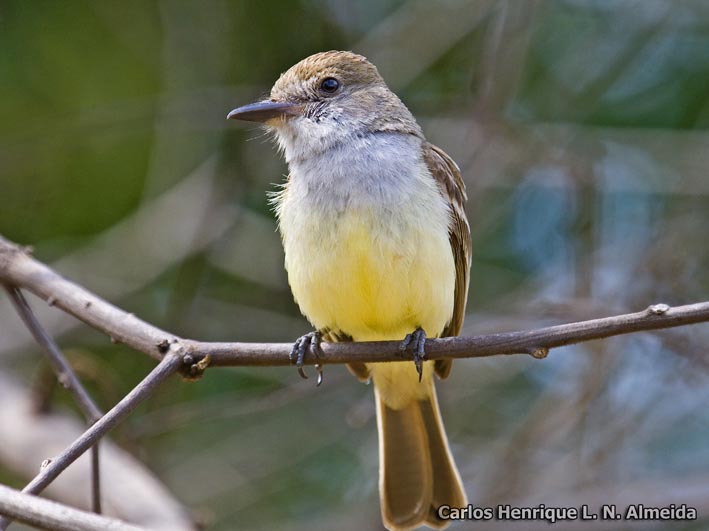
Wikipedia: Swainson's flycatcher Source: WIKIPEDIA
Myiarchus_swainsoni.jpeg
🔍
Never observed (yet!)
Description
Swainson's flycatcher (Myiarchus swainsoni) is a species of bird in the family Tyrannidae.
It is found in Argentina, Bolivia, Brazil, Colombia, Ecuador, French Guiana, Guyana, Paraguay, Peru, Suriname, Trinidad and Tobago, Uruguay, and Venezuela.
Its natural habitats are subtropical or tropical dry forests, subtropical or tropical moist lowland forests, and heavily degraded former forest.
[more]
Details
Masked water-tyrant / Wassertyrann (Fluvicola nengeta)
Profile Wikipedia Xeno-Canto YouTube
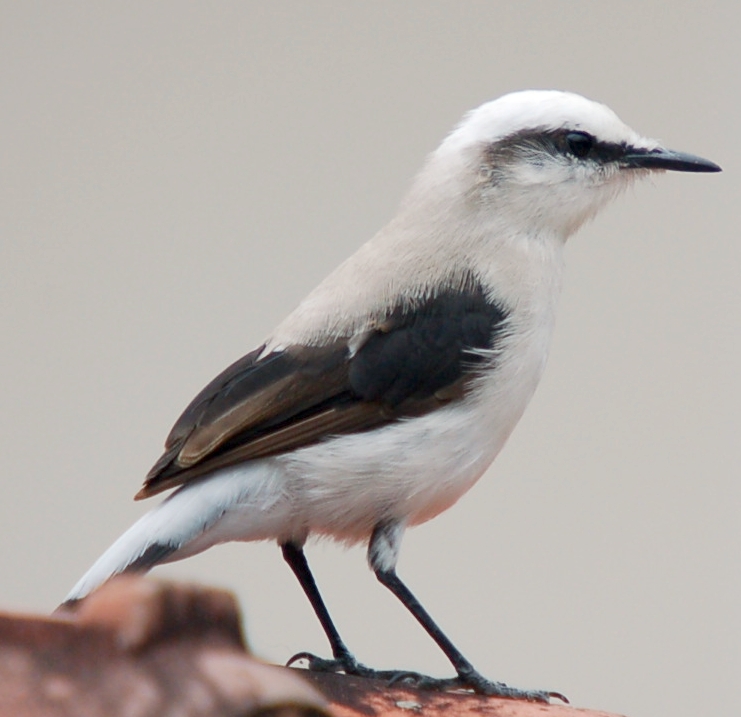
Wikipedia: Masked water-tyrant Source: WIKIPEDIA
Lavadeira_mascarada.jpg
🔍
Never observed (yet!)
Description
The masked water tyrant (Fluvicola nengeta) is a species of bird in the family Tyrannidae, the tyrant flycatchers, one of three in the genus Fluvicola.
[more]
Details
Sepia-capped flycatcher / Braunkopf-Fliegenstecher (Leptopogon amaurocephalus)
Profile Wikipedia Xeno-Canto YouTube

Wikipedia: Sepia-capped flycatcher Source: WIKIPEDIA
Leptopogon_amaurocephalus_-Piraju%2C_Sao_Paulo%2C_Brazil-8.jpg
🔍
Never observed (yet!)
Description
The sepia-capped flycatcher (Leptopogon amaurocephalus) is a species of bird in the family Tyrannidae.
[more]
Details
Rufous-breasted flycatcher / Rostbrust-Fliegenstecher (Leptopogon rufipectus)

Wikipedia: Rufous-breasted flycatcher Source: WIKIPEDIA
Rufous-breasted_Flycatcher_-_Ecuador_S4E4101_%2816253355453%29.jpg
🔍
Never observed (yet!)
Description
The rufous-breasted flycatcher (Leptopogon rufipectus) is a species of bird in the family Tyrannidae. It is found in Colombia, Ecuador, far northwestern Peru and far western Venezuela. Its natural habitat is subtropical or tropical moist montane forests.
[more]
Details
Slaty-capped flycatcher / Schieferkopf-Fliegenstecher (Leptopogon superciliaris)
Profile Wikipedia Xeno-Canto YouTube
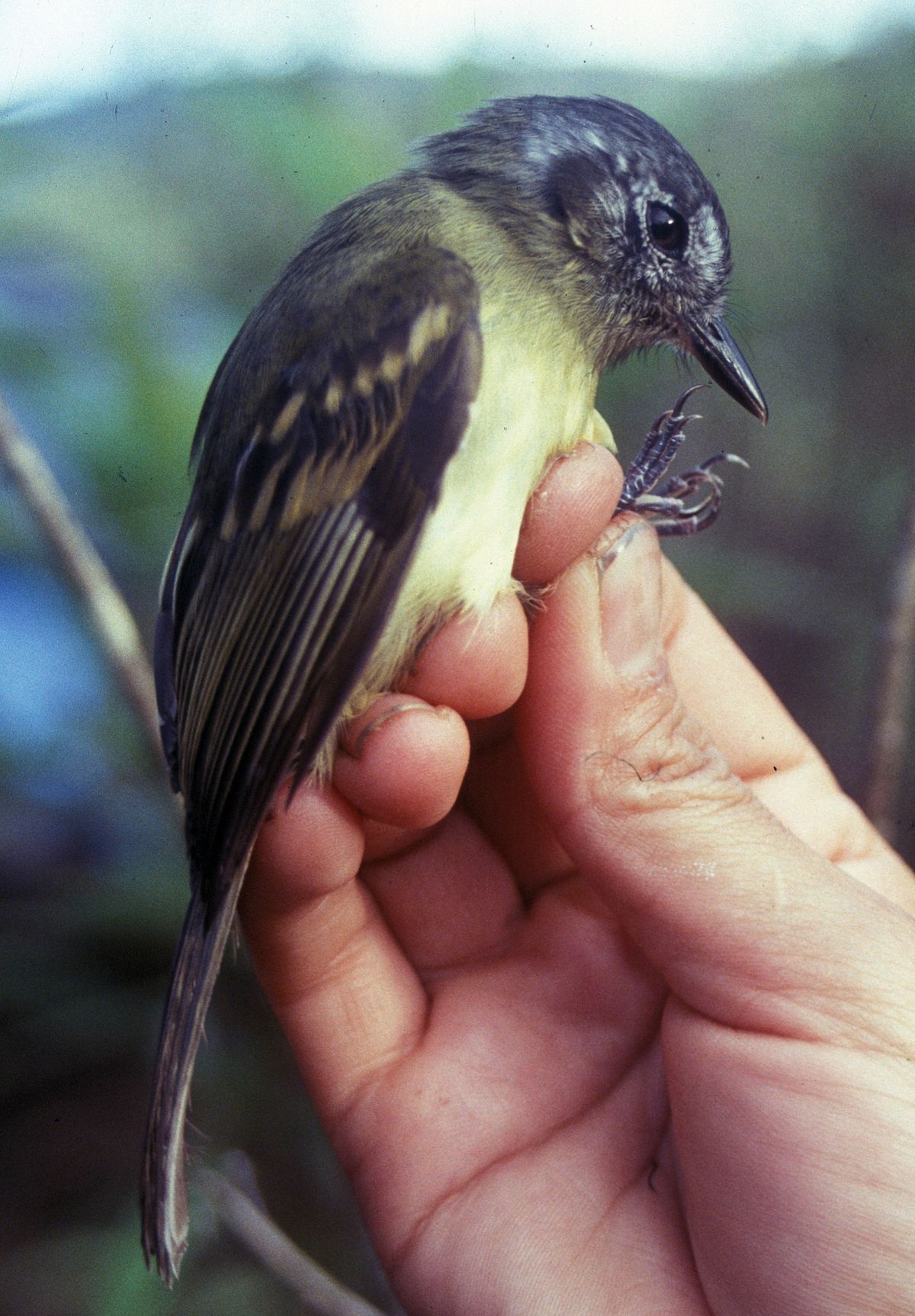
Wikipedia: Slaty-capped flycatcher Source: WIKIPEDIA
1200px-Leptopogon_superciliaris.jpg
🔍
Never observed (yet!)
Description
The slaty-capped flycatcher (Leptopogon superciliaris) is a small passerine bird in the tyrant flycatcher family. It is found in northern Bolivia to Costa Rica and in Trinidad.
[more]
Details
Pacific elaenia / Strichelbrustelänie (Myiopagis subplacens)
Profile Wikipedia Xeno-Canto YouTube

Wikipedia: Pacific elaenia Source: WIKIPEDIA
1200px-Myiopagis_subplacens_1859.jpg
🔍
Never observed (yet!)
Description
The Pacific elaenia (Myiopagis subplacens) is a species of bird in the family Tyrannidae. It is found in Ecuador and Peru. Its natural habitats are subtropical or tropical dry forests and subtropical or tropical moist lowland forests.
[more]
Details
Yellow-crowned elaenia / Goldscheitelelänie (Myiopagis flavivertex)
Profile Wikipedia Xeno-Canto YouTube
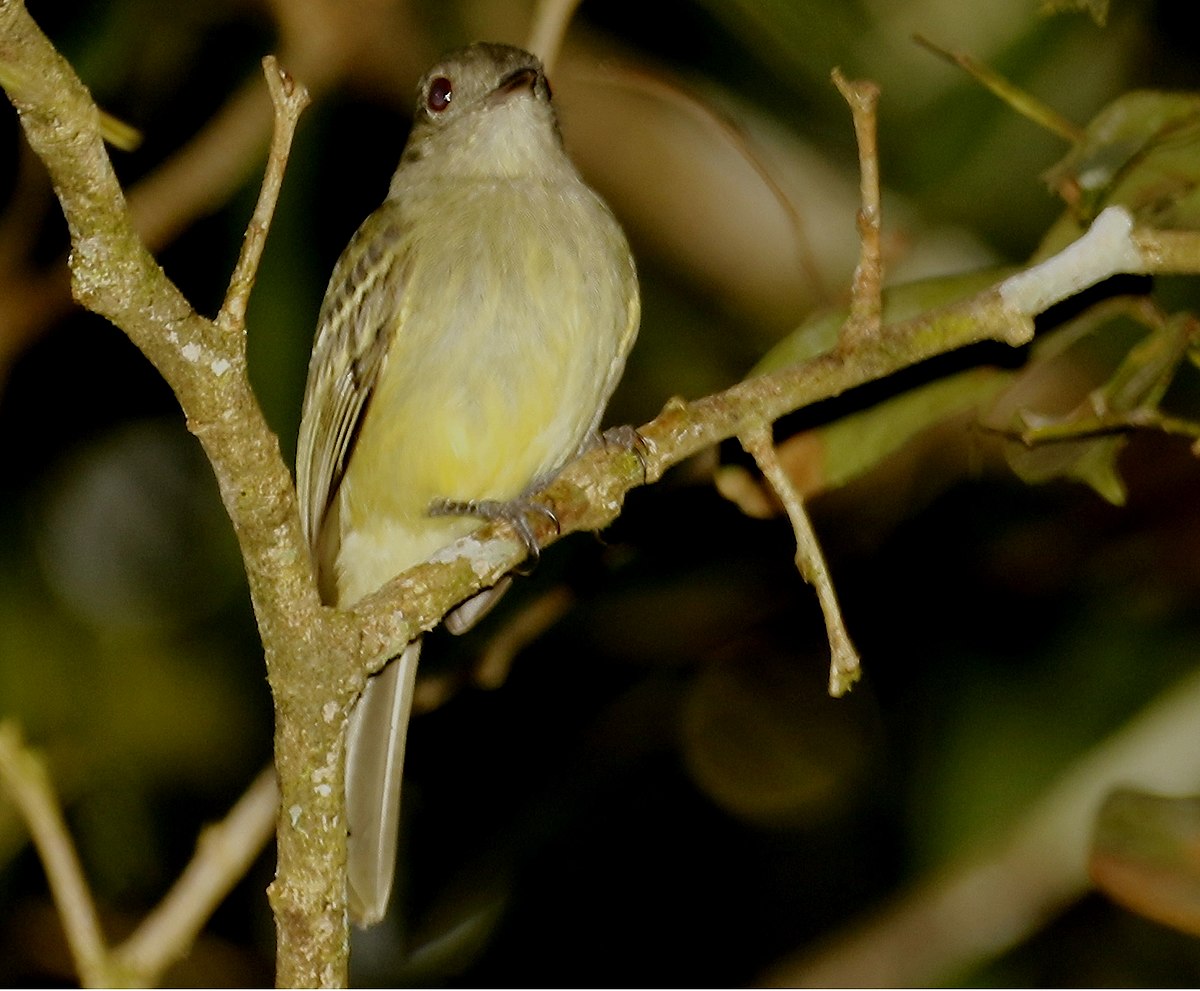
Wikipedia: Yellow-crowned elaenia Source: WIKIPEDIA
1200px-Yellow-crowned_Elaenia.jpg
🔍
Never observed (yet!)
Description
The yellow-crowned elaenia (Myiopagis flavivertex) is a species of bird in the family Tyrannidae, the tyrant flycatchers.
It is found in eastern Orinoco Basin Venezuela, the Guianas, and along the Amazon River corridor; also Colombia, Brazil, Guyana, Suriname, French Guiana, Ecuador and Peru.
[more]
Details
Greenish elaenia / Grünelänie (Myiopagis viridicata)
Profile Wikipedia Xeno-Canto YouTube

Wikipedia: Greenish elaenia Source: WIKIPEDIA
1200px-Myiopagis_viridicata.jpg
🔍
Never observed (yet!)
Description
The greenish elaenia (Myiopagis viridicata) is a species of bird in the family Tyrannidae, the tyrant flycatchers.
It is found in Argentina, Belize, Bolivia, Brazil, Colombia, Costa Rica, Ecuador, El Salvador, Guatemala, Guyana, Honduras, Mexico, Nicaragua, Panama, Paraguay, Peru, the United States, and Venezuela.
Its natural habitats are subtropical or tropical dry forests, subtropical or tropical moist lowland forests, and heavily degraded former forest.
[more]
Details
Forest elaenia / Waldelänie (Myiopagis gaimardii)
Profile Wikipedia Xeno-Canto YouTube

Wikipedia: Forest elaenia Source: WIKIPEDIA
1200px-Myiopagis_gaimardii_-_Forest_Elaenia%3B_Manacapuru%2C_Amazonas%2C_Brazil.jpg
🔍
Never observed (yet!)
Description
The forest elaenia (Myiopagis gaimardii) is a small passerine bird in the tyrant flycatcher family. It breeds from Panama through Colombia, Venezuela and the Guianas to Bolivia and Brazil. It also occurs on Trinidad.
[more]
Details
Foothill elaenia (Myiopagis olallai)
Profile Wikipedia Xeno-Canto YouTube

Wikipedia: Foothill elaenia Source: WIKIPEDIA
Coopmansi_%2815536659372%29.jpg
🔍
Never observed (yet!)
Description
The foothill elaenia (Myiopagis olallai) is a species of bird in the family Tyrannidae. It is found in Ecuador and Peru. Its natural habitat is subtropical or tropical moist montane forests. It is threatened by habitat loss.
[more]
Details
Gray elaenia (Myiopagis caniceps)
Profile Wikipedia Xeno-Canto YouTube
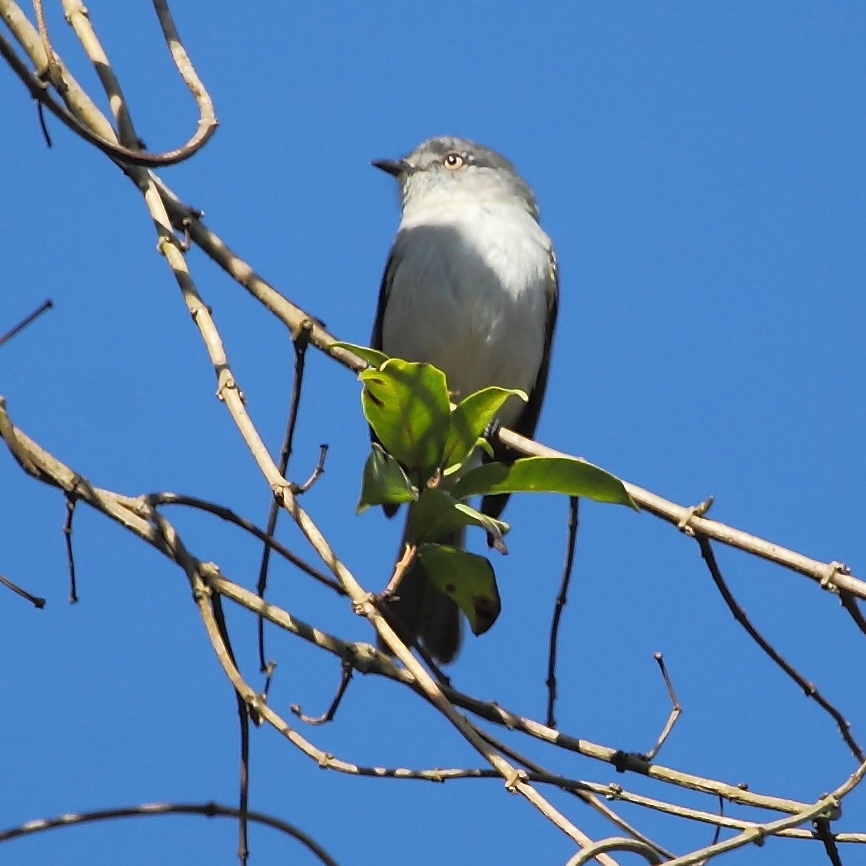
Wikipedia: Gray elaenia Source: WIKIPEDIA
Myiopagis_caniceps-Gray_Elaenia.JPG
🔍
Never observed (yet!)
Description
The grey elaenia (Myiopagis caniceps) is a species of bird in the family Tyrannidae. It is found in Argentina, Bolivia, Brazil, Colombia, Ecuador, French Guiana, Guyana, Panama, Paraguay, Peru, and Venezuela. Its natural habitat is subtropical or tropical moist lowland forest.
[more]
Details
Black-headed tody-flycatcher / Schwarzkopf-Spateltyrann (Todirostrum nigriceps)
Profile Wikipedia Xeno-Canto YouTube

Wikipedia: Black-headed tody-flycatcher Source: WIKIPEDIA
1200px-Black-headed_tody-flycatcher.jpg
🔍
Never observed (yet!)
Description
The black-headed tody-flycatcher (Todirostrum nigriceps) is a species of bird in the family Tyrannidae.
It is found in Colombia, Costa Rica, Ecuador, Panama, and Venezuela.
Its natural habitat is subtropical or tropical moist lowland forests.
[more]
Details
Common tody flycatcher / Gelbbauch-Spateltyrann (Todirostrum cinereum)

Wikipedia: Common tody flycatcher Source: WIKIPEDIA
Common_Tody-Flycatcher.jpg
🔍
Never observed (yet!)
Description
The common tody-flycatcher or black-fronted tody-flycatcher (Todirostrum cinereum) is a very small passerine bird in the tyrant flycatcher family. It breeds from southern Mexico to northwestern Peru, eastern Bolivia and southern, eastern and northeast Brazil.
[more]
Details
Yellow-browed tody-flycatcher / Goldbrauen-Spateltyrann (Todirostrum chrysocrotaphum)
Profile Wikipedia Xeno-Canto YouTube

Wikipedia: Yellow-browed tody-flycatcher Source: WIKIPEDIA
Todirostrum_chrysocrotaphum_-_Yellow-browed_Tody-Flycatcher.JPG
🔍
Never observed (yet!)
Description
The yellow-browed tody-flycatcher (Todirostrum chrysocrotaphum) is a species of bird in the family Tyrannidae, the tyrant flycatchers. It is found mainly in the southern Amazon Basin of Brazil, also Amazonian Colombia, Ecuador, Peru, and Bolivia; the species is recorded in Venezuela. Its natural habitats are subtropical or tropical moist lowland forests, subtropical or tropical swamps, and heavily degraded former forest.
[more]
Details
Spotted tody-flycatcher / Tropfenbrust-Spateltyrann (Todirostrum maculatum)
Profile Wikipedia Xeno-Canto YouTube

Wikipedia: Spotted tody-flycatcher Source: WIKIPEDIA
Todirostrum_maculatum_JJK%271.jpg
🔍
Never observed (yet!)
Description
The spotted tody-flycatcher (Todirostrum maculatum) is a species of bird in the family Tyrannidae, the tyrant flycatchers.
It is found in Bolivia, Brazil, Colombia, Ecuador, French Guiana, Guyana, Peru, Suriname, Trinidad and Tobago, and Venezuela, and is mostly a species of the Amazon Basin countries and Guianan countries.
[more]
Details
Rufous mourner / Zimtschmucktyrann (Rhytipterna holerythra)
Profile Wikipedia Xeno-Canto YouTube
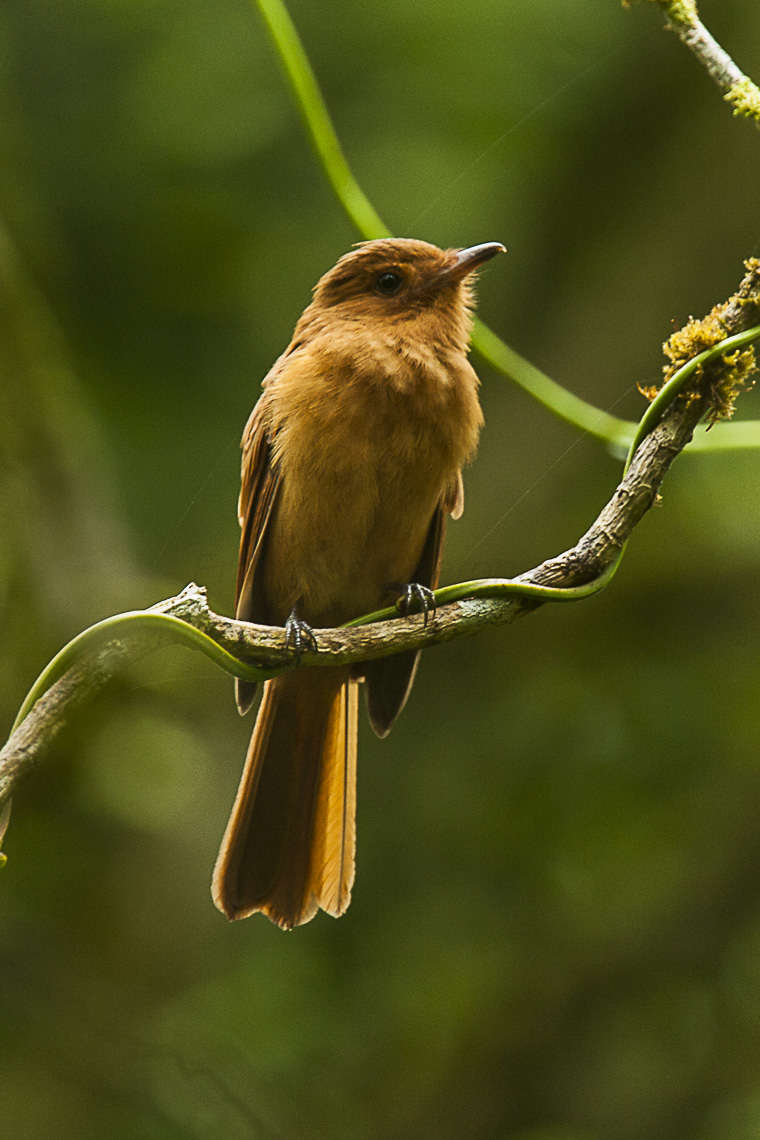
Wikipedia: Rufous mourner Source: WIKIPEDIA
Rufous_Mourner_-_Panama_H8O0032.jpg
🔍
Never observed (yet!)
Description
The rufous mourner (Rhytipterna holerythra) is a small passerine bird in the tyrant flycatcher family. It breeds from southwestern Mexico to northwestern Ecuador. It was formerly believed to be a cotinga, but well-supported anatomical evidence has shown it to be related to tyrant flycatchers of the genera Myiarchus, Sirystes and Casiornis.[2]
[more]
Details
Grayish mourner / Grauschmucktyrann (Rhytipterna simplex)
Profile Wikipedia Xeno-Canto YouTube
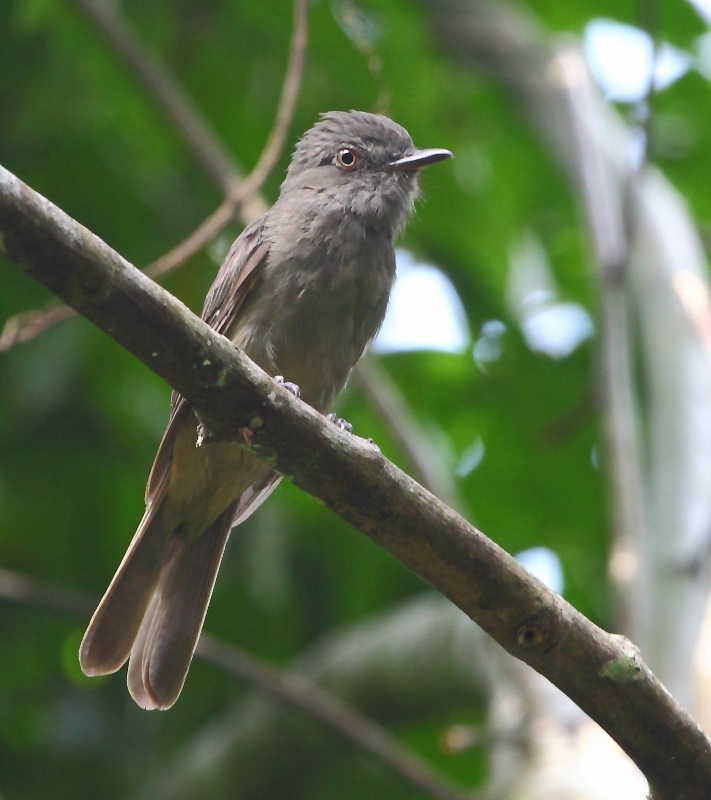
Wikipedia: Grayish mourner Source: WIKIPEDIA
Rhytipterna_simplex_-_Grayish_Mourner.jpg
🔍
Never observed (yet!)
Description
The greyish mourner (Rhytipterna simplex) is a species of bird in the family Tyrannidae.
It is found in Bolivia, Brazil, Colombia, Ecuador, French Guiana, Guyana, Peru, Suriname, and Venezuela.
Its natural habitat is subtropical or tropical moist lowland forest.
[more]
Details
Broad-billed sapayoa / Tyrannenbreitrachen (Sapayoa aenigma)

Wikipedia: Broad-billed sapayoa Source: WIKIPEDIA
1200px-Sapayoa_aenigma%2C_Nusagandi%2C_Panama.jpg
🔍
Never observed (yet!)
Description
Der Tyrannenbreitrachen (Sapayoa aenigma), auch Grünbreitrachen genannt, ist eine Schreivogelart, die im östlichen Panama, im westlichen Kolumbien und im nordwestlichen Ecuador vorkommt.[1]
[more]
Details
Zimmer's tody-tyrant / Weißkinn-Spateltyrann (Hemitriccus minimus)
Profile Wikipedia Xeno-Canto YouTube

Wikipedia: Zimmer's tody-tyrant Source: WIKIPEDIA
1200px-Hemitriccus_minimus_-_Zimmer%27s_Tody-Tyrant%2C_Carajas_National_Forest%2C_Par%C3%A1%2C_Brazil.jpg
🔍
Never observed (yet!)
Description
Zimmer's tody-tyrant (Hemitriccus minimus) is a species of bird in the family Tyrannidae.
[more]
Details
White-eyed tody-tyrant / Vireospateltyrann (Hemitriccus zosterops)
Profile Wikipedia Xeno-Canto YouTube
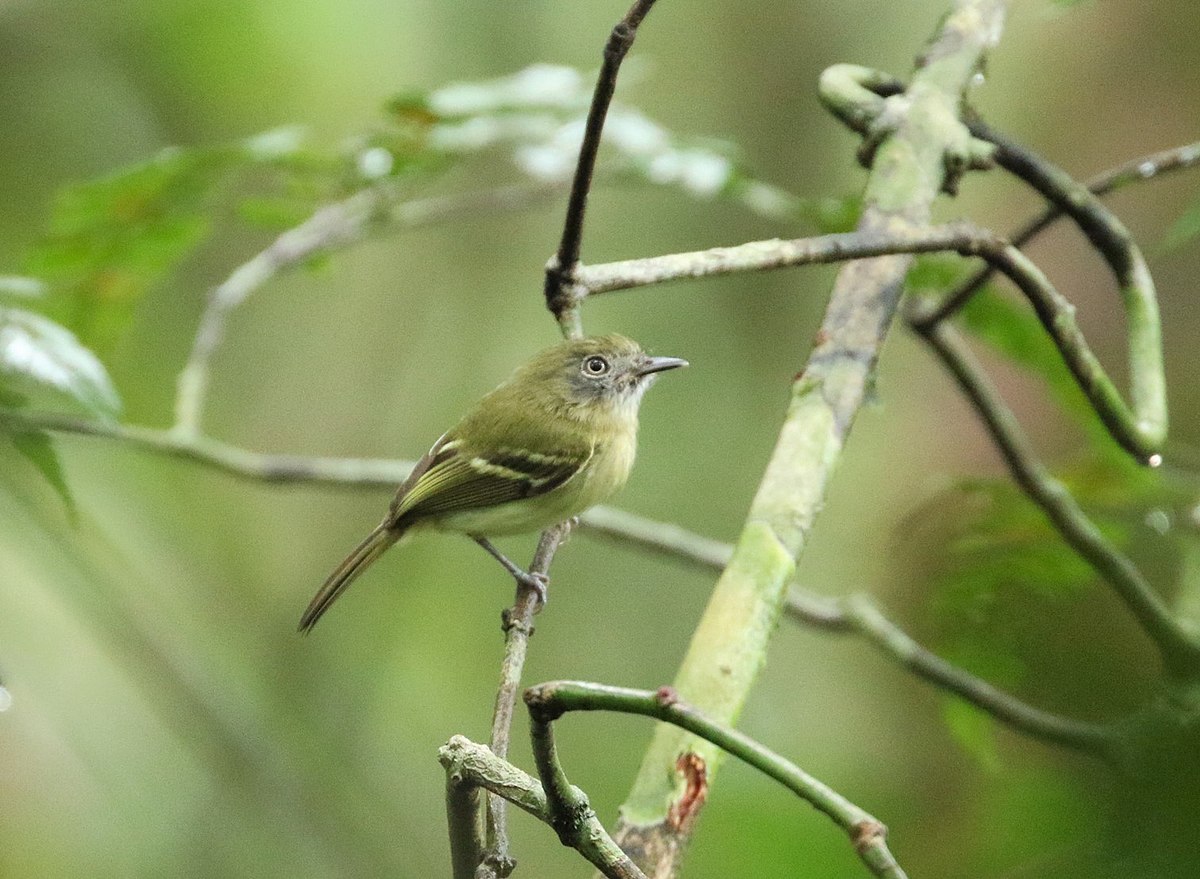
Wikipedia: White-eyed tody-tyrant Source: WIKIPEDIA
1200px-Hemitriccus_zosterops_64004204.jpg
🔍
Never observed (yet!)
Description
The white-eyed tody-tyrant (Hemitriccus zosterops) is a species of bird in the family Tyrannidae, the tyrant flycatchers.
[more]
Details
Black-throated tody-tyrant / Schwarzkehl-Spateltyrann (Hemitriccus granadensis)

Wikipedia: Black-throated tody-tyrant Source: WIKIPEDIA
1200px-Hemitriccus_granadensis_2.jpg
🔍
Never observed (yet!)
Description
The black-throated tody-tyrant (Hemitriccus granadensis) is a species of bird in the family Tyrannidae.
[more]
Details
Cinnamon-breasted tody-tyrant / Zimtbrust-Todityrann (Hemitriccus cinnamomeipectus)
Profile Wikipedia Xeno-Canto YouTube

Wikipedia: Cinnamon-breasted tody-tyrant Source: WIKIPEDIA
1200px-Hemitriccus_cinnamomeipectus.jpg
🔍
Never observed (yet!)
Description
The cinnamon-breasted tody-tyrant (Hemitriccus cinnamomeipectus) is a species of bird in the family Tyrannidae. It is found in Ecuador and Peru. Its natural habitat is subtropical or tropical moist montane forests. It is threatened by habitat loss.
[more]
Details
Johannes's tody-tyrant / Johannesspateltyrann (Hemitriccus iohannis)
Profile Wikipedia Xeno-Canto YouTube

Wikipedia: Johannes's tody-tyrant Source: WIKIPEDIA
1200px-Hemitriccus_iohannis_-_Johannes%27s_Tody-Tyrant%3B_Cruzeiro_do_Sul%2C_Acre%2C_Brazil.jpg
🔍
Never observed (yet!)
Description
Johannes's tody-tyrant (Hemitriccus iohannis) is a species of bird in the family Tyrannidae. It is found in Bolivia, Brazil, Colombia, Ecuador, and Peru. Its natural habitats are subtropical or tropical moist lowland forests and heavily degraded former forest.
[more]
Details
Buff-throated tody-tyrant / Braunbrust-Spateltyrann (Hemitriccus rufigularis)
Profile Wikipedia Xeno-Canto YouTube

Wikipedia: Buff-throated tody-tyrant Source: WIKIPEDIA
1200px-Hemitriccus_rufigularis_map.svg.png
🔍
Never observed (yet!)
Description
The buff-throated tody-tyrant (Hemitriccus rufigularis) is a species of bird in the family Tyrannidae. It is found in Bolivia, Ecuador, and Peru. Its natural habitat is subtropical or tropical moist montane forests. It is threatened by habitat loss.
[more]
Details
Speckled mourner (Laniocera rufescens)
Profile Wikipedia Xeno-Canto YouTube

Wikipedia: Speckled mourner Source: WIKIPEDIA
LipaugusRufescensSmit.jpg
🔍
Never observed (yet!)
Description
The speckled mourner (Laniocera rufescens) is a species of bird in the family Tityridae. It has traditionally been placed in the family Cotingidae, but evidence strongly suggest it is better placed in Tityridae,[2] where it is now placed by the SACC. It is found in Belize, Colombia, Costa Rica, Ecuador, Guatemala, Honduras, Mexico, Nicaragua, and Panama. Its natural habitat is subtropical or tropical moist lowland forest.
[more]
Details
Cinereous mourner / Rotbüschelaulia / Rotbüschel-Aulia (Laniocera hypopyrra)
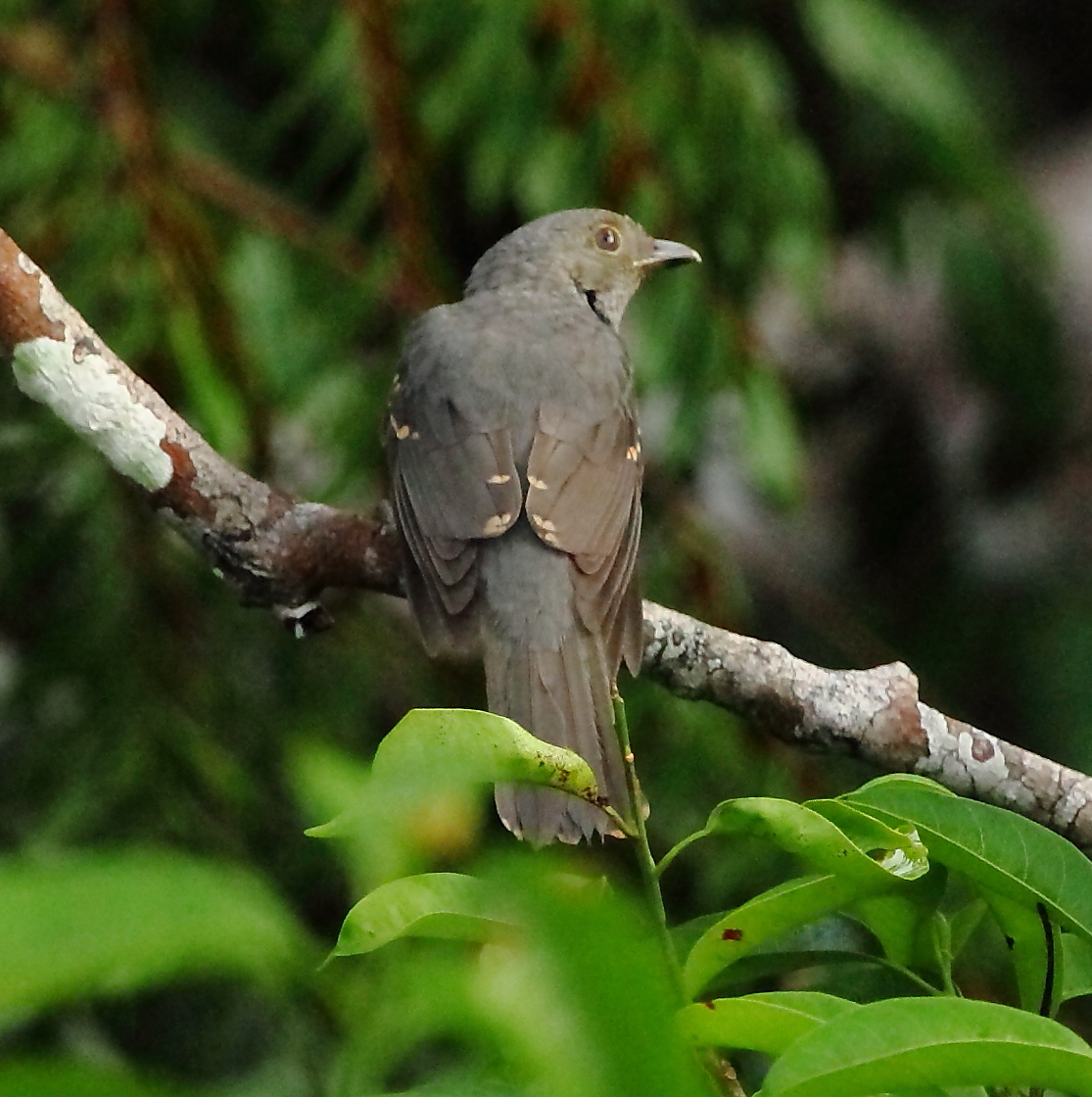
Wikipedia: Cinereous mourner Source: WIKIPEDIA
Laniocera_hypopyrra_-_Cinereous_Mourner.JPG
🔍
Never observed (yet!)
Description
The cinereous mourner (Laniocera hypopyrra) is a species of bird in the family Tityridae. The term cinereous describes its colouration. It has traditionally been placed in the cotinga family, but evidence strongly suggest it is better placed in Tityridae,[2] where now placed by SACC. It is found in Bolivia, Brazil, Colombia, Ecuador, French Guiana, Guyana, Peru, Suriname, and Venezuela.
Its natural habitat is subtropical or tropical moist lowland forests.
[more]
Details
Long-tailed tyrant / Langschwanztyrann (Colonia colonus)
Profile Wikipedia Xeno-Canto YouTube

Wikipedia: Long-tailed tyrant Source: WIKIPEDIA
1200px-Colonia_colonus_-Parque_Nacional_do_Itatiaia%2C_Rio_de_Janeiro%2C_Brazil-8.jpg
🔍
Never observed (yet!)
Description
The long-tailed tyrant (Colonia colonus) is a species of bird in the family Tyrannidae, the only member of genus Colonia.
[more]
Details
Double-banded pygmy-tyrant / Ährenschopftyrann (Lophotriccus vitiosus)
Profile Wikipedia Xeno-Canto YouTube

Wikipedia: Double-banded pygmy-tyrant Source: WIKIPEDIA
1200px-Lophotriccus_vitiosus_-_Double-banded_pygmy-tyrant.jpg
🔍
Never observed (yet!)
Description
The double-banded pygmy tyrant (Lophotriccus vitiosus) is a species of bird in the family Tyrannidae. It is found in Brazil, Colombia, Ecuador, French Guiana, Guyana, Peru, and Suriname. Its natural habitats are subtropical or tropical moist lowland forest and subtropical or tropical swampland.
[more]
Details
Scale-crested pygmy-tyrant / Schuppenkopftyrann (Lophotriccus pileatus)
Profile Wikipedia Xeno-Canto YouTube

Wikipedia: Scale-crested pygmy-tyrant Source: WIKIPEDIA
1200px-Scale-crested_Pygmy-Tirant.jpg
🔍
Never observed (yet!)
Description
The scale-crested pygmy tyrant (Lophotriccus pileatus) is a species of bird in the family Tyrannidae.
[more]
Details
Black-capped pygmy-tyrant / Schwarzkappen-Zwergtyrann (Myiornis atricapillus)
Profile Wikipedia Xeno-Canto YouTube

Wikipedia: Black-capped pygmy-tyrant Source: WIKIPEDIA
Myiornis_atricapillus_1.jpg
🔍
Never observed (yet!)
Description
The black-capped pygmy tyrant (Myiornis atricapillus) is the smallest passerine bird in its range, though larger than its cousin, the short-tailed pygmy tyrant. This tyrant flycatcher occurs from Costa Rica to north-western Ecuador.
[more]
Details
White-bellied pygmy-tyrant / Weißbauch-Zwergtyrann (Myiornis albiventris)
Profile Wikipedia Xeno-Canto YouTube

Wikipedia: White-bellied pygmy-tyrant Source: WIKIPEDIA
1200px-Myiornis_albiventris_map.svg.png
🔍
Never observed (yet!)
Description
The white-bellied pygmy tyrant (Myiornis albiventris) is a species of bird in the family Tyrannidae. It is found in Bolivia and Peru. Its natural habitat is subtropical or tropical moist lowland forests.
[more]
Details
Short-tailed pygmy-tyrant / Stummelschwanz-Zwergtyrann (Myiornis ecaudatus)
Profile Wikipedia Xeno-Canto YouTube

Wikipedia: Short-tailed pygmy-tyrant Source: WIKIPEDIA
Myiornis_ecaudatus_-_Short-tailed_Pigmy-Tyrant_%28Manaus%29.jpg
🔍
Never observed (yet!)
Description
The short-tailed pygmy tyrant (Myiornis ecaudatus) is a small species of tyrant-flycatcher. The species is one of the smallest birds on Earth and the smallest passerine.[2] Among both the family and the order, only the closely related black-capped pygmy tyrant approaches similarly diminutive sizes. The pygmy tyrant is widespread throughout most of the Amazon in northern and central South America.
[more]
Details
Brownish twistwing / Steifschwingentyrann (Cnipodectes subbrunneus)
Profile Wikipedia Xeno-Canto YouTube

Wikipedia: Brownish twistwing Source: WIKIPEDIA
1200px-Cnipodectes_subbrunneus_-_Brownish_twistwing%2C_Careiro%2C_Amazonas%2C_Brazil.jpg
🔍
Never observed (yet!)
Description
The brownish twistwing (Cnipodectes subbrunneus), also known as the brownish flycatcher, is a species of bird in the Tyrannidae. It was the only member of the genus Cnipodectes until the description of Cnipodectes superrufus in 2007.
[more]
Details
Ornate flycatcher / Schmucktyrann (Myiotriccus ornatus)
Profile Wikipedia Xeno-Canto YouTube

Wikipedia: Ornate flycatcher Source: WIKIPEDIA
Ornate_Flycatcher_-_South_Ecuador_S4E0633.jpg
🔍
Never observed (yet!)
Description
The ornate flycatcher (Myiotriccus ornatus) is a species of bird in the family Tyrannidae. It is the only member of the genus Myiotriccus.[2] It is found in Colombia, Ecuador, and Peru.
[more]
Details
Royal flycatcher / Kronentyrann (Onychorhynchus coronatus)
Profile Wikipedia Xeno-Canto YouTube

Wikipedia: Royal flycatcher Source: WIKIPEDIA
Onychorhynchus_coronatus_-_Amazonian_Royal_Flycatcher.JPG
🔍
Never observed (yet!)
Description
The royal flycatchers are a genus, Onychorhynchus, of passerine birds in the family Tityridae[1][2] according to the IOC. Other taxonomic authorities including the AOU, Clements, and the IUCN, include it in Onychorhynchidae. Depending on authority, it includes a single widespread,[1] or four more localized species.[2] The specific epithet of the type species, coronatus, and the common name of all the species in this genus, royal flycatcher, refer to the striking, colourful crest,[3] which is seen displayed very rarely,[3] except after mating, while preening, in courtship as well as being handled.[3]
[more]
Details
Yellow tyrannulet / Zitronentyrann (Capsiempis flaveola)

Wikipedia: Yellow tyrannulet Source: WIKIPEDIA
1200px-Capsiempis_flaveola_-Costa_Rica-8_%281%29.jpg
🔍
Never observed (yet!)
Description
The yellow tyrannulet (Capsiempis flaveola) is a very small passerine bird in the tyrant flycatcher family. It breeds from Nicaragua south to northeastern Argentina and southeastern Brazil. It is the only member of the genus Capsiempis, but its taxonomy is uncertain, and it has been allocated to at least three other genera in the past.
[more]
Details
White-crested spadebill / Silberkopf-Breitschnabel (Platyrinchus platyrhynchos)
Profile Wikipedia Xeno-Canto YouTube
Wikipedia: White-crested spadebill Source: WIKIPEDIA
Platyrinchus_platyrhynchos_-_White-crested_spadebill.JPG
🔍
Never observed (yet!)
Description
The white-crested spadebill (Platyrinchus platyrhynchos) is a species of bird in the family Tyrannidae. It is found in Bolivia, Brazil, Colombia, Ecuador, French Guiana, Guyana, Peru, Suriname, and Venezuela. Its natural habitat is subtropical or tropical moist lowland forests.[1]
[more]
Details
White-throated spadebill / Weißkehl-Breitschnabel (Platyrinchus mystaceus)
Profile Wikipedia Xeno-Canto YouTube

Wikipedia: White-throated spadebill Source: WIKIPEDIA
PATINHO_%28Platyrinchus_mystaceus%29.jpg
🔍
Never observed (yet!)
Description
The white-throated spadebill (Platyrinchus mystaceus) is a tiny passerine bird in the tyrant flycatcher family. It lives in the tropical Americas.
[more]
Details
Yellow-throated spadebill / Gelbkehl-Breitschnabel (Platyrinchus flavigularis)
Profile Wikipedia Xeno-Canto YouTube

Wikipedia: Yellow-throated spadebill Source: WIKIPEDIA
PlatyrhynchusSmit.jpg
🔍
Never observed (yet!)
Description
The yellow-throated spadebill (Platyrinchus flavigularis) is a species of bird in the family Tyrannidae. It is found in Colombia, Ecuador, Peru, and Venezuela. Its natural habitat is subtropical or tropical moist montane forests.
[more]
Details
Cinnamon-crested spadebill / Zimtkopf-Breitschnabel (Platyrinchus saturatus)
Profile Wikipedia Xeno-Canto YouTube

Wikipedia: Cinnamon-crested spadebill Source: WIKIPEDIA
1200px-Naturalis_Biodiversity_Center_-_RMNH.AVES.72157_1_-_Platyrinchus_saturatus_saturatus_Salvin_and_Godman%2C_1882_-_Tyrannidae_-_bird_skin_specimen.jpeg
🔍
Never observed (yet!)
Description
The cinnamon-crested spadebill (Platyrinchus saturatus) is a species of bird in the family Tyrannidae.
It is found in Brazil, Colombia, Ecuador, French Guiana, Guyana, Peru, Suriname, and Venezuela.
[more]
Details
Golden-crowned spadebill / Goldkopf-Breitschnabel (Platyrinchus coronatus)
Profile Wikipedia Xeno-Canto YouTube

Wikipedia: Golden-crowned spadebill Source: WIKIPEDIA
Golden-crowned_Spadebill_-_Rio_Tigre_-_Costa_Rica_MG_7766_%2826669722376%29.jpg
🔍
Never observed (yet!)
Description
The golden-crowned spadebill (Platyrinchus coronatus) is a species of bird in the family Tyrannidae. It is found in Bolivia, Brazil, Colombia, Costa Rica, Ecuador, French Guiana, Guyana, Honduras, Nicaragua, Panama, Peru, Suriname, and Venezuela. Its natural habitat is subtropical or tropical moist lowland forests.
[more]
Details
Sooty-headed tyrannulet / Zwergfliegenstecher (Phyllomyias griseiceps)
Profile Wikipedia Xeno-Canto YouTube

Wikipedia: Sooty-headed tyrannulet Source: WIKIPEDIA
Sooty-headedTyrannulet.jpg
🔍
Never observed (yet!)
Description
The sooty-headed tyrannulet (Phyllomyias griseiceps) is a species of bird in the family Tyrannidae. It is found in Brazil, Colombia, Ecuador, Guyana, Panama, Peru, and Venezuela.
[more]
Details
Rough-legged tyrannulet / Höckerfuß-Fliegenstecher (Phyllomyias burmeisteri)
Profile Wikipedia Xeno-Canto YouTube
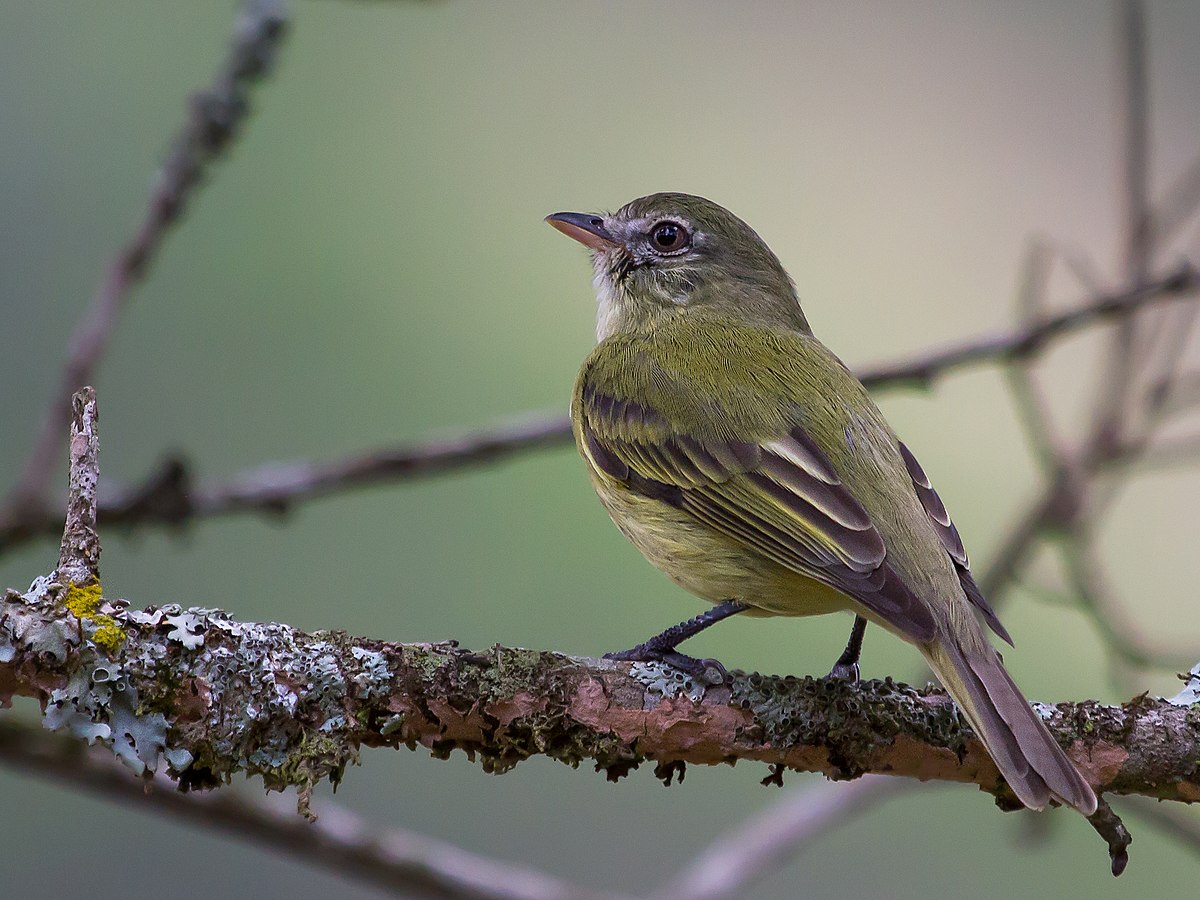
Wikipedia: Rough-legged tyrannulet Source: WIKIPEDIA
1200px-Phyllomyias_burmeisteri_-_Rough-legged_tyrannulet%3B_Extrema%2C_Minas_Gerais%2C_Brazil.jpg
🔍
Never observed (yet!)
Description
The rough-legged tyrannulet (Phyllomyias burmeisteri) is a species of bird in the family Tyrannidae. It is found in Argentina, Bolivia, Brazil, Colombia, Costa Rica, Ecuador, Panama, Paraguay, Peru, and Venezuela. Its natural habitats are subtropical or tropical moist lowland forest and subtropical or tropical moist montane forest.
[more]
Details
Plumbeous-crowned tyrannulet / Bleikopf-Fliegenstecher (Phyllomyias plumbeiceps)
Profile Wikipedia Xeno-Canto YouTube

Wikipedia: Plumbeous-crowned tyrannulet Source: WIKIPEDIA
1200px-Phyllomyias_plumbeiceps_map.svg.png
🔍
Never observed (yet!)
Description
The plumbeous-crowned tyrannulet (Phyllomyias plumbeiceps) is a species of bird in the family Tyrannidae. It is found in the countries of Colombia, Ecuador, and Peru. Its natural habitat is subtropical or tropical moist montanes.
[more]
Details
Black-capped tyrannulet / Mönchsfliegenstecher (Phyllomyias nigrocapillus)
Profile Wikipedia Xeno-Canto YouTube

Wikipedia: Black-capped tyrannulet Source: WIKIPEDIA
Black-cappedTyrannulet.jpg
🔍
Never observed (yet!)
Description
The black-capped tyrannulet (Phyllomyias nigrocapillus) is a species of bird in the family Tyrannidae. It is found in Colombia, Ecuador, Peru, and Venezuela. Its natural habitat is subtropical or tropical moist montane forests.
[more]
Details
Tawny-rumped tyrannulet / Goldbürzel-Fliegenstecher (Phyllomyias uropygialis)
Profile Wikipedia Xeno-Canto YouTube
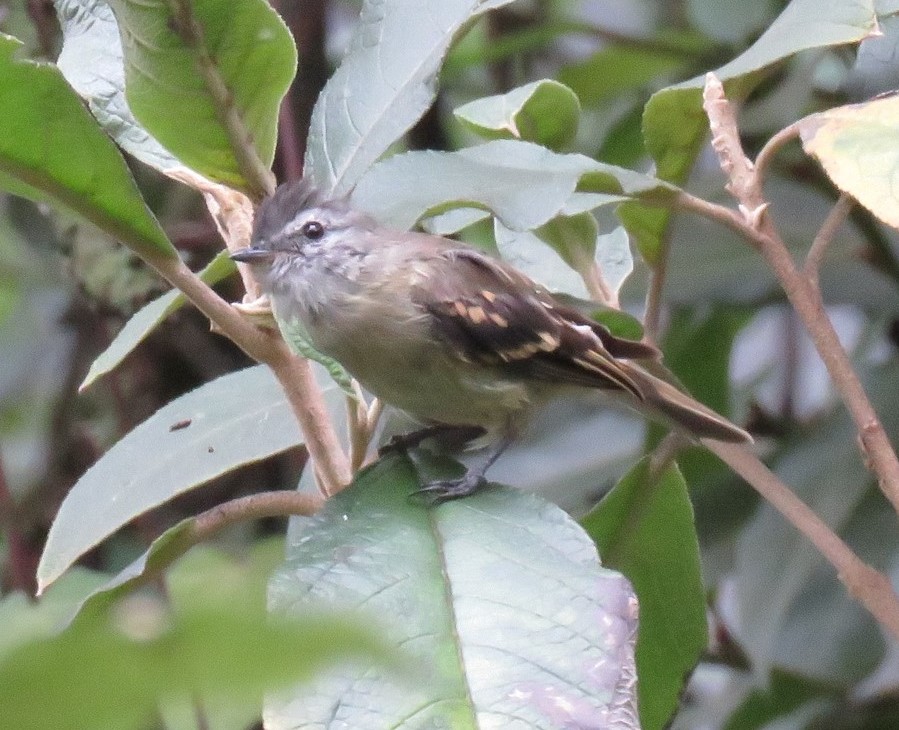
Wikipedia: Tawny-rumped tyrannulet Source: WIKIPEDIA
Phyllomyias_uropygialis_cropped.jpg
🔍
Never observed (yet!)
Description
The tawny-rumped tyrannulet (Phyllomyias uropygialis) is a species of bird in the family Tyrannidae. It is found in Argentina, Bolivia, Colombia, Ecuador, Peru, and Venezuela. Its natural habitats are subtropical or tropical moist montane forests and heavily degraded former forest.
[more]
Details
Ashy-headed tyrannulet / Graukopf-Fliegenstecher (Phyllomyias cinereiceps)
Profile Wikipedia Xeno-Canto YouTube

Wikipedia: Ashy-headed tyrannulet Source: WIKIPEDIA
TyranniscusSmit.jpg
🔍
Never observed (yet!)
Description
The ashy-headed tyrannulet (Phyllomyias cinereiceps) is a species of bird in the family Tyrannidae. It is found in Colombia, Ecuador, and Peru.
[more]
Details
Dusky-tailed flatbill / Chapmanbreitschnabel (Ramphotrigon fuscicauda)
Profile Wikipedia Xeno-Canto YouTube

Wikipedia: Dusky-tailed flatbill Source: WIKIPEDIA
1200px-Ramphotrigon_fuscicauda_-_Dusky-tailed_Flatbill%3B_Ramal_do_Noca%2C_Rio_Branco%2C_Acre%2C_Brazil.jpg
🔍
Never observed (yet!)
Description
The dusky-tailed flatbill (Ramphotrigon fuscicauda) is a species of bird in the family Tyrannidae. It is found in Bolivia, Brazil, Colombia, Ecuador, and Peru.
[more]
Details
Rufous-tailed flatbill / Rotschwanz-Breitschnabel (Ramphotrigon ruficauda)
Profile Wikipedia Xeno-Canto YouTube

Wikipedia: Rufous-tailed flatbill Source: WIKIPEDIA
1200px-Ramphotrigon_ruficauda_-_Rufous-tailed_Flatbill%3B_Xapuri%2C_Acre%2C_Brazil.jpg
🔍
Never observed (yet!)
Description
The rufous-tailed flatbill (Ramphotrigon ruficauda) is a species of bird in the family Tyrannidae.
It is found in Bolivia, Brazil, Colombia, Ecuador, French Guiana, Guyana, Peru, Suriname, and Venezuela.
Its natural habitat is subtropical or tropical moist lowland forests.
[more]
Details
Large-headed flatbill / Brauenbreitschnabel (Ramphotrigon megacephalum)

Wikipedia: Large-headed flatbill Source: WIKIPEDIA
Ramphotrigon_megacephalum_-_Large-headed_Flatbill.jpg
🔍
Never observed (yet!)
Description
The large-headed flatbill (Ramphotrigon megacephalum), also known as the bamboo flatbill, is a species of bird in the family Tyrannidae.
It is found in Argentina, Bolivia, Brazil, Colombia, Ecuador, Paraguay, Peru, and Venezuela.
Its natural habitats are subtropical or tropical moist lowland forests and subtropical or tropical moist montane forests.
[more]
Details
Orange-eyed flatbill (Tolmomyias traylori)

Wikipedia: Orange-eyed flatbill Source: WIKIPEDIA
1200px-Tolmomyias_traylori_Orange-eyed_Flatbill%3B_Iquitos%2C_Peru.jpg
🔍
Never observed (yet!)
Description
The orange-eyed flatbill or orange-eyed flycatcher (Tolmomyias traylori) is a species of bird in the family Tyrannidae. It is found in the Amazon (specifically in várzea forest) in south-eastern Colombia, eastern Ecuador, and north-eastern Peru. First recognized as a species due to its distinct voice, it was only described in 1997; the binomial commemorates the American ornithologist Melvin Alvah Traylor Jr.[3] The International Union for Conservation of Nature has rated the conservation status of this species as being of "least concern".
[more]
Details
Yellow-breasted flycatcher / Gelbbauch-Breitschnabel (Tolmomyias flaviventris)

Wikipedia: Yellow-breasted flycatcher Source: WIKIPEDIA
1200px-Tolmomyias_flaviventris_-_Yellow-breasted_Flycatcher.JPG
🔍
Never observed (yet!)
Description
The ochre-lored flatbill (Tolmomyias flaviventris) or yellow-breasted flycatcher, is a passerine bird in the tyrant flycatcher family. It is found in South America, ranging from Colombia and Venezuela south to Peru, Bolivia, and Brazil, and on both Trinidad and Tobago. There are significant variations in its voice and plumage, with western birds duller and more olive, and eastern and northern birds brighter and more ochre-yellow. The two are sometimes considered separate species, the western olive-faced flatbill (or flycatcher), T. viridiceps, and the eastern and northern ochre-lored flatbill (or flycatcher), T. flaviventris.[2]
[more]
Details
Yellow-margined flycatcher / Spiegelbreitschnabel (Tolmomyias assimilis)

Wikipedia: Yellow-margined flycatcher Source: WIKIPEDIA
Tolmomyias_assimilis_-NW_Ecuador-8.jpg
🔍
Never observed (yet!)
Description
Zimmer's flatbill (Tolmomyias assimilis) or the yellow-margined flatbill is a species of bird in the tyrant flycatcher family Tyrannidae. It is found in humid forest in southern Central America, and the Chocó and Amazon in South America.
[more]
Details
Gray-crowned flatbill (Tolmomyias poliocephalus)

Wikipedia: Gray-crowned flatbill Source: WIKIPEDIA
Tolmomyias_poliocephalus_-_Gray-crowned_Flycatcher.JPG
🔍
Never observed (yet!)
Description
The grey-crowned flatbill or grey-crowned flycatcher (Tolmomyias poliocephalus) is a species of bird in the family Tyrannidae.
It is found in humid forest in the Amazon and Atlantic Forest in South America. It closely resembles the yellow-margined and yellow-olive flatbills, but its lower mandible is dark with a pale base. It is a fairly common bird with a wide range and the International Union for Conservation of Nature has rated it as "least concern".
[more]
Details
Yellow-olive flycatcher / Olivscheitel-Breitschnabel (Tolmomyias sulphurescens)

Wikipedia: Yellow-olive flycatcher Source: WIKIPEDIA
Tolmomyias_sulphurescens_-Parque_Estadual_da_Cantareira%2C_Sao_Paulo%2C_Brazil-8.jpg
🔍
Never observed (yet!)
Description
The yellow-olive flatbill or yellow-olive flycatcher (Tolmomyias sulphurescens) is a species of bird in the family Tyrannidae. It is found in tropical and subtopical forest and woodland in Central and South America, but over its range there are significant variations in plumage, iris-colour and voice, leading to speculations that more than one species is involved. Its plumage is overall greenish-yellow, the lores are whitish, the crown is often greyish and some subspecies have a dusky patch on the auriculars. The flat bill is black above and pale pinkish or greyish below; similar to the yellow-margined flatbill, but unlike the grey-crowned flatbill.
[more]
Details
Rusty-fronted tody-flycatcher / Rostzügel-Spateltyrann (Poecilotriccus latirostris)
Profile Wikipedia Xeno-Canto YouTube

Wikipedia: Rusty-fronted tody-flycatcher Source: WIKIPEDIA
1200px-Poecilotriccus_latirostris_-_Rusty-fronted_tody-flycatcher.jpg
🔍
Never observed (yet!)
Description
The rusty-fronted tody-flycatcher (Poecilotriccus latirostris) is a species of bird in the family Tyrannidae, and one of twelve in the genus Poecilotriccus. It is found in Bolivia, Brazil, Colombia, Ecuador, and Peru. Its natural habitats are subtropical or tropical moist lowland forest and heavily degraded former forest.
[more]
Details
Black-and-white tody-flycatcher / Schwarzweiß-Todityrann (Poecilotriccus capitalis)
Profile Wikipedia Xeno-Canto YouTube

Wikipedia: Black-and-white tody-flycatcher Source: WIKIPEDIA
1200px-Poecilotriccus_capitalis_132295026.jpg
🔍
Never observed (yet!)
Description
The black-and-white tody-flycatcher (Poecilotriccus capitalis) is a species of bird in the family Tyrannidae. It was formerly placed in the genus Todirostrum, and known as the black-and-white tody-tyrant.[2] It is found in thickets, especially bamboo, in southern Colombia, eastern Ecuador, eastern Peru, and south-western Brazil.
[more]
Details
Golden-winged tody-flycatcher / Goldflügel-Spateltyrann (Poecilotriccus calopterus)
Profile Wikipedia Xeno-Canto YouTube

Wikipedia: Golden-winged tody-flycatcher Source: WIKIPEDIA
1200px-Poecilotriccus_calopterus_Wolf.jpg
🔍
Never observed (yet!)
Description
The golden-winged tody-flycatcher (Poecilotriccus calopterus) is a species of bird in the family Tyrannidae, and one of twelve in the genus Poecilotriccus.
[more]
Details
Rufous-crowned tody-flycatcher / Rotscheitel-Spateltyrann (Poecilotriccus ruficeps)
Profile Wikipedia Xeno-Canto YouTube

Wikipedia: Rufous-crowned tody-flycatcher Source: WIKIPEDIA
1200px-Poecilotriccus_ruficeps.jpg
🔍
Never observed (yet!)
Description
The rufous-crowned tody-flycatcher (Poecilotriccus ruficeps) is a species of bird in the family Tyrannidae, the tyrant flycatchers. It was formerly placed in the genus Todirostrum, and has been known as the rufous-crowned tody-tyrant.[2]
It is found in thickets and second growth in the Andes of Venezuela, Colombia, Ecuador and far northern Peru.
[more]
Details
Rufous-headed pygmy-tyrant / Rotkopftyrann (Pseudotriccus ruficeps)
Profile Wikipedia Xeno-Canto YouTube

Wikipedia: Rufous-headed pygmy-tyrant Source: WIKIPEDIA
1200px-Pseudotriccus_ruficeps_-NBII_Image_Gallery-a00198.jpg
🔍
Never observed (yet!)
Description
The rufous-headed pygmy tyrant (Pseudotriccus ruficeps) is a species of bird in the family Tyrannidae. It is found in Bolivia, Colombia, Ecuador, and Peru. Its natural habitat is subtropical or tropical moist montane forests.
[more]
Details
Bronze-olive pygmy-tyrant / Bronzetyrann (Pseudotriccus pelzelni)
Profile Wikipedia Xeno-Canto YouTube
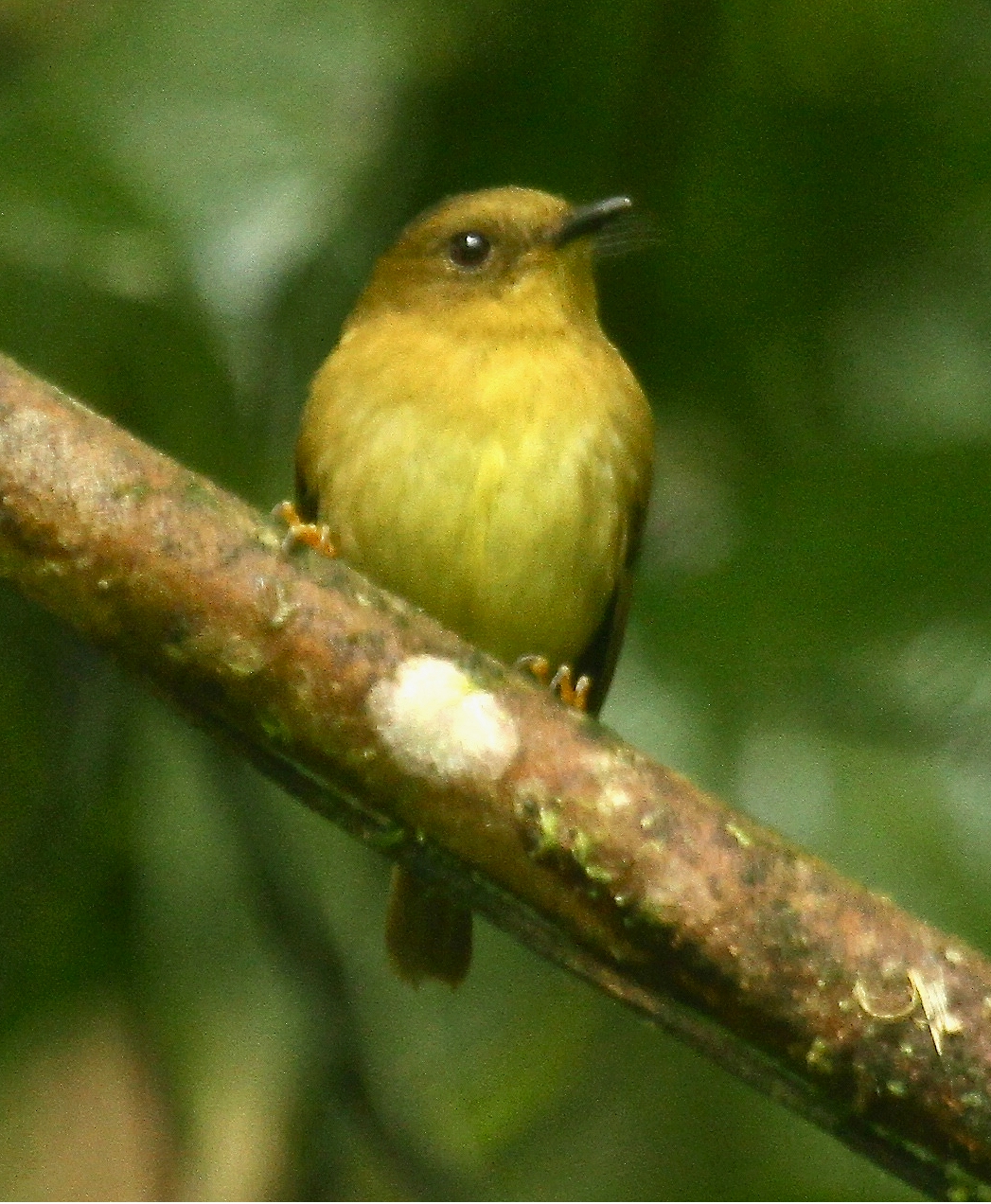
Wikipedia: Bronze-olive pygmy-tyrant Source: WIKIPEDIA
Bronze-olivePygmy-Tyrant.jpg
🔍
Never observed (yet!)
Description
The bronze-olive pygmy tyrant (Pseudotriccus pelzelni) is a species of bird in the family Tyrannidae. It is found in Colombia, Ecuador, Panama, and Peru. Its natural habitat is subtropical or tropical moist montane forests.
[more]
Details
Fulvous-breasted flatbill / Ockerbrust-Kreisschnabel (Rhynchocyclus fulvipectus)
Profile Wikipedia Xeno-Canto YouTube

Wikipedia: Fulvous-breasted flatbill Source: WIKIPEDIA
Rhynchocyclus_fulvipectus_-_Fulvous-breasted_Flatbill_-_3.jpg
🔍
Never observed (yet!)
Description
The fulvous-breasted flatbill (Rhynchocyclus fulvipectus) is a species of bird in the family Tyrannidae. It is found in Bolivia, Colombia, Ecuador, Peru, and Venezuela. Its natural habitat is subtropical or tropical moist montane forests.
[more]
Details
Pacific flatbill (Rhynchocyclus pacificus)
Profile Wikipedia Xeno-Canto YouTube

Wikipedia: Pacific flatbill Source: WIKIPEDIA
1200px-Rhynchocyclus_pacificus_map.svg.png
🔍
Never observed (yet!)
Description
The Pacific flatbill (Rhynchocyclus pacificus) is a species of bird in the family Tyrannidae. It is found in Colombia and Ecuador.
[more]
Details
Olivaceous flatbill / Olivrücken-Kreisschnabel (Rhynchocyclus olivaceus)
Profile Wikipedia Xeno-Canto YouTube

Wikipedia: Olivaceous flatbill Source: WIKIPEDIA
1200px-Rhynchocyclus_olivaceus_Picoplano_oliv%C3%A1ceo_Olivaceous_flatbill_%2812226833734%29.jpg
🔍
Never observed (yet!)
Description
The olivaceous flatbill (Rhynchocyclus olivaceus) is a species of bird in the family Tyrannidae.
[more]
Details
Streaked flycatcher / Südlicher Fleckenmaskentyrann (Myiodynastes maculatus)
Profile Wikipedia Xeno-Canto YouTube

Streaked flycatcher. 2020-02-20 14:53:44 Panama
First observed in Panama on 2020-02-20.
Description
We saw this at Los Lagartos Restaurant on the grounds of Gamboa Rainforest Resort in Panama.General:
The streaked flycatcher (Myiodynastes maculatus) is a passerine bird in the tyrant flycatcher family.
[more]
Details
Baird's flycatcher / Samtstirntyrann (Myiodynastes bairdii)
Profile Wikipedia Xeno-Canto YouTube

Wikipedia: Baird's flycatcher Source: WIKIPEDIA
1200px-Baird%E2%80%98s_Flycatcher.jpg
🔍
Never observed (yet!)
Description
Baird's flycatcher (Myiodynastes bairdii) is a species of bird in the family Tyrannidae.
It is found in Ecuador and Peru.
Its natural habitats are subtropical or tropical dry forests, subtropical or tropical moist lowland forests, and heavily degraded former forest.
[more]
Details
Sulphur-bellied flycatcher / Weißstirntyrann (Myiodynastes luteiventris)
Profile Wikipedia Audubon AllAboutBirds Xeno-Canto YouTube

Sulphur-bellied flycatcher, Ecotucan. 2023-04-01 09:30:12 Yucatan
First observed in Yucatan on 2023-04-01.
Description
The sulphur-bellied flycatcher (Myiodynastes luteiventris) is a large tyrant flycatcher. This bird breeds from southeasternmost Arizona of the United States (the Madrean sky islands region of Arizona, southwestern New Mexico, and northern Sonora, Mexico) to Costa Rica. They are short distance migrants, spending winters in the eastern Andean foothills of Colombia, Ecuador, Peru, Bolivia, and Brazil, and are passage migrants over the southern portions of Central America.
[more]
Details
Golden-crowned flycatcher / Goldkrontyrann (Myiodynastes chrysocephalus)
Profile Wikipedia Xeno-Canto YouTube

Wikipedia: Golden-crowned flycatcher Source: WIKIPEDIA
1200px-Myiodynastes_chrysocephalus-2.jpg
🔍
Never observed (yet!)
Description
The golden-crowned flycatcher (Myiodynastes chrysocephalus) is a species of bird in the family Tyrannidae.
[more]
Details
Great kiskadee / Schwefelmaskentyrann (Pitangus sulphuratus)
Profile Wikipedia A-Z Animals Audubon AllAboutBirds Xeno-Canto YouTube

Great kiskadee with white head and black eyestripe at Casa San Diego, Tulum. 2023-03-29 16:39:38 Yucatan
First observed in Costa Rica on 2018-02-26.
Description
The great kiskadee (Pitangus sulphuratus), called bem-te-vi in Brazil, is a passerine bird in the tyrant flycatcher family Tyrannidae. It is the only member of the genus Pitangus.
[more]
Etymology:
, The call is an exuberant BEE-tee-WEE, and the bird has an onomatopoeic name in different languages and countries: In Brazil its popular name is bem-te-vi ("I saw you well") and in Spanish-speaking countries it is often bien-te-veo ("I see you well") and sometimes shortened to benteveo. [Link]
Details
Vermilion flycatcher / Rubintyrann (Pyrocephalus rubinus)
Profile Wikipedia A-Z Animals Audubon AllAboutBirds Xeno-Canto YouTube

Wikipedia: Vermilion flycatcher Source: WIKIPEDIA
1200px-Vermilion_Flycatcher_by_Dan_Pancamo.jpg
🔍
Never observed (yet!)
Description
General:The vermilion flycatcher (Pyrocephalus obscurus) is a small passerine bird in the tyrant flycatcher family found throughout South America and southern North America. It is a striking exception among the generally drab Tyrannidae due to its vermilion-red coloration. The males have bright red crowns, chests, and underparts, with brownish wings and tails. Females lack the vivid red coloration and can be hard to identify—they may be confused for the Say's phoebe. The vermilion flycatcher's song is a pit pit pit pidddrrrreeedrr, which is variable and important in establishing a territory. Riparian habitats and semi-open environments are preferred. As aerial insectivores, they catch their prey while flying. Their several months-long molt begins in summer.
[more]
Details
Southern beardless-tyrannulet / Gelbkehl-Fliegenstecher (Camptostoma obsoletum)
Profile Wikipedia Xeno-Canto YouTube
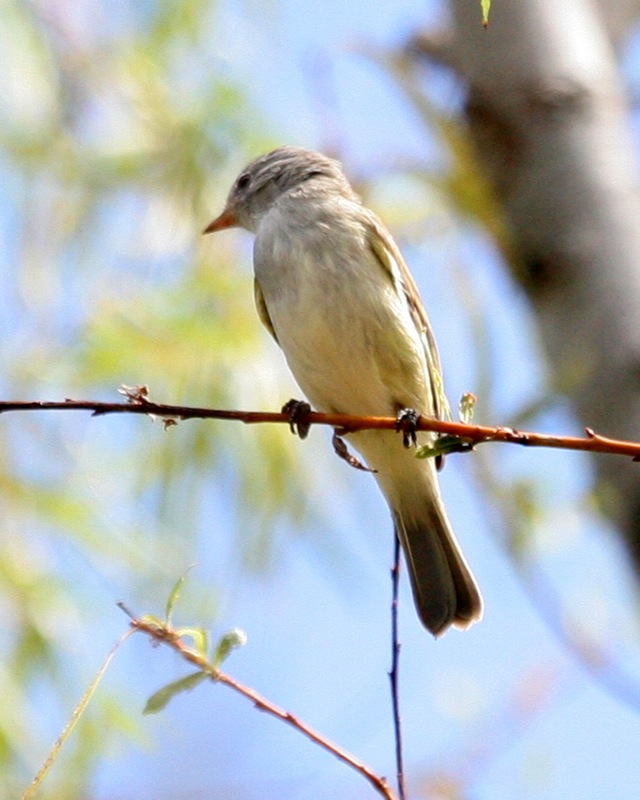
Wikipedia: Southern beardless-tyrannulet Source: WIKIPEDIA
Southern_Beardless_Tyrannulet.jpg
🔍
Never observed (yet!)
Description
The southern beardless tyrannulet (Camptostoma obsoletum) is a small passerine bird in the tyrant flycatcher family. It breeds from Costa Rica through South America south to Paraguay, Bolivia, and Argentina.
[more]
Details
Rufous-tailed tyrant / Rotschwanztyrann (Knipolegus poecilurus)
Profile Wikipedia Xeno-Canto YouTube

Wikipedia: Rufous-tailed tyrant Source: WIKIPEDIA
1200px-Knipolegus_poecilurus_%28Atrapamoscas_ojirrojo%29_%2814021842042%29.jpg
🔍
Never observed (yet!)
Description
The rufous-tailed tyrant (Knipolegus poecilurus) is a species of bird in the family Tyrannidae.
It is found in Bolivia, Brazil, Colombia, Ecuador, Guyana, Peru, and Venezuela.
Its natural habitats are subtropical or tropical moist montane forests, subtropical or tropical high-altitude shrubland, and heavily degraded former forest.
[more]
Details
Jelski's black-tyrant / Jelskimohrentyrann (Knipolegus signatus)
Profile Wikipedia Xeno-Canto YouTube

Wikipedia: Jelski's black-tyrant Source: WIKIPEDIA
1200px-Knipolegus_signatus_map.svg.png
🔍
Never observed (yet!)
Description
Jelski's black tyrant (Knipolegus signatus) is a species of bird in the family Tyrannidae. It is found from southern Ecuador to northwestern Argentina. Its natural habitat is subtropical or tropical moist montane forests. This and the plumbeous tyrant are sometimes considered conspecific, in which case, the bird is then usually referred to as the Andean tyrant.
[more]
Details
Riverside tyrant / Orinokotyrann (Knipolegus orenocensis)
Profile Wikipedia Xeno-Canto YouTube

Wikipedia: Riverside tyrant Source: WIKIPEDIA
1200px-Cnipolegusorenocensis.JPG
🔍
Never observed (yet!)
Description
The riverside tyrant (Knipolegus orenocensis) is a species of bird in the family Tyrannidae.
It is found in Brazil, Colombia, Ecuador, Peru, and Venezuela.
Its natural habitat is subtropical or tropical moist shrubland.
[more]
Details
Amazonian black-tyrant / Kohletyrann (Knipolegus poecilocercus)

Wikipedia: Amazonian black-tyrant Source: WIKIPEDIA
1200px-Knipolegus_poecilocercus_-_Amazonian_Black-Tyrant_%28female%29%2C_Anavilhanas_islands%2C_%2C_Novo_Air%C3%A3o%2C_Amazonas%2C_Brazil.jpg
🔍
Never observed (yet!)
Description
The Amazonian black tyrant (Knipolegus poecilocercus) is a species of bird in the family Tyrannidae. It is found in subtropical or tropical swamps in Brazil, Colombia, Ecuador, Guyana, Peru, and Venezuela.
[more]
Details
Torrent tyrannulet / Sturzbachtachuri (Serpophaga cinerea)
Profile Wikipedia Xeno-Canto YouTube

Wikipedia: Torrent tyrannulet Source: WIKIPEDIA
1200px-Torrent_Tyrannulet.jpg
🔍
Never observed (yet!)
Description
The torrent tyrannulet (Serpophaga cinerea) is a small bird of the tyrant flycatcher family. It breeds from Costa Rica south to northern Bolivia and northwestern Venezuela.
[more]
Details
River tyrannulet / Ufertachuri (Serpophaga hypoleuca)
Profile Wikipedia Xeno-Canto YouTube

Wikipedia: River tyrannulet Source: WIKIPEDIA
1200px-Serpophaga_hypoleuca_-_River_tyrannulet%3B_Marchantaria_Island%2C_Iranduba%2C_Amazonas%2C_Brazil.jpg
🔍
Never observed (yet!)
Description
The river tyrannulet (Serpophaga hypoleuca) is a species of bird in the family Tyrannidae, the tyrant flycatchers.
It is found in Peru, Venezuela and Brazil; also river extensions into Ecuador, Colombia-(border) and Bolivia.
[more]
Details
White-throated tyrannulet / Weißkehltachuri (Mecocerculus leucophrys)
Profile Wikipedia Xeno-Canto YouTube

Wikipedia: White-throated tyrannulet Source: WIKIPEDIA
Mecocerculus_leucophrys_-Ecuador-8.jpg
Ecuador
🔍
Never observed (yet!)
Description
The white-throated tyrannulet (Mecocerculus leucophrys) is a species of bird in the family Tyrannidae.
[more]
Details
White-tailed tyrannulet / Weißschwanztachuri (Mecocerculus poecilocercus)
Profile Wikipedia Xeno-Canto YouTube

Wikipedia: White-tailed tyrannulet Source: WIKIPEDIA
White-tailedTyrannulet.jpg
🔍
Never observed (yet!)
Description
The white-tailed tyrannulet (Mecocerculus poecilocercus) is a species of bird in the family Tyrannidae.
[more]
Details
White-banded tyrannulet / Weißbindentachuri (Mecocerculus stictopterus)
Profile Wikipedia Xeno-Canto YouTube

Wikipedia: White-banded tyrannulet Source: WIKIPEDIA
Mecocerculus_stictopterus_-Eduador-8.jpg
🔍
Never observed (yet!)
Description
The white-banded tyrannulet (Mecocerculus stictopterus) is a species of bird in the family Tyrannidae.
[more]
Details
Sulphur-bellied tyrannulet / Gelbbauchtachuri (Mecocerculus minor)
Profile Wikipedia Xeno-Canto YouTube
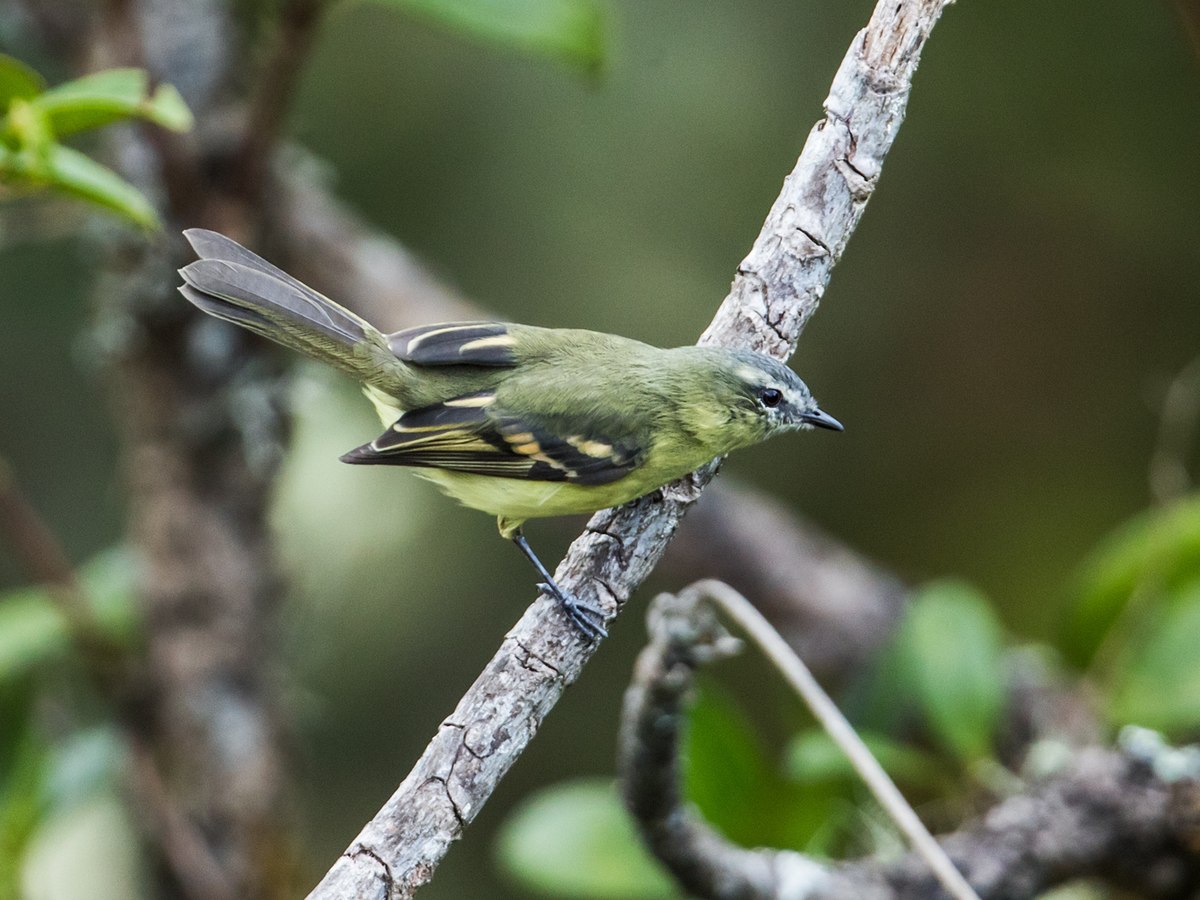
Wikipedia: Sulphur-bellied tyrannulet Source: WIKIPEDIA
1200px-Mecocerculus_minor_-_Sulphur-bellied_Tyrannulet_%28cropped%29.jpg
🔍
Never observed (yet!)
Description
The sulphur-bellied tyrannulet (Mecocerculus minor) is a species of bird in the family Tyrannidae. It is found in the eastern Andes of Colombia, Ecuador and Peru. Its natural habitat is subtropical or tropical moist montane forests.
[more]
Details
Rufous-winged tyrannulet / Rotschwingentachuri (Mecocerculus calopterus)
Profile Wikipedia Xeno-Canto YouTube

Wikipedia: Rufous-winged tyrannulet Source: WIKIPEDIA
1200px-ChlorospingusSerpophagaKeulemans_%28cropped%29_%28cropped%29.jpg
🔍
Never observed (yet!)
Description
The rufous-winged tyrannulet (Mecocerculus calopterus) is a species of bird in the family Tyrannidae. It is found in Ecuador and Peru. Its natural habitats are subtropical or tropical dry forests and subtropical or tropical moist montane forests.
[more]
Details
Olive-chested flycatcher / Olivhaubentyrann (Myiophobus cryptoxanthus)
Profile Wikipedia Xeno-Canto YouTube

Wikipedia: Olive-chested flycatcher Source: WIKIPEDIA
1200px-Myiophobus_cryptoxanthus_map.svg.png
🔍
Never observed (yet!)
Description
The olive-chested flycatcher (Myiophobus cryptoxanthus) is a species of bird in the family Tyrannidae. It is found in Ecuador and Peru. Its natural habitat is subtropical or tropical moist montane forests.
[more]
Details
Orange-crested flycatcher / Goldscheiteltyrann (Myiophobus phoenicomitra)
Profile Wikipedia Xeno-Canto YouTube

Wikipedia: Orange-crested flycatcher Source: WIKIPEDIA
1200px-Myiophobus_phoenicomitra.jpg
🔍
Never observed (yet!)
Description
The orange-crested flycatcher (Myiophobus phoenicomitra) is a species of bird in the family Tyrannidae. It is found in Colombia, Ecuador, and Peru. Its natural habitat is subtropical or tropical moist montane forests.
[more]
Details
Bran-colored flycatcher (Myiophobus fasciatus)
Profile Wikipedia Xeno-Canto YouTube

Wikipedia: Bran-colored flycatcher Source: WIKIPEDIA
1200px-Myiophobus_fasciatus_54670465.jpg
🔍
Never observed (yet!)
Description
The bran-colored flycatcher (Myiophobus fasciatus) is a small passerine bird in the tyrant flycatcher family. It breeds from Costa Rica through South America to Bolivia, Uruguay, and Argentina. It also occurs on Trinidad.
[more]
Details
Roraiman flycatcher / Roraimatyrann (Myiophobus roraimae)
Profile Wikipedia Xeno-Canto YouTube

Wikipedia: Roraiman flycatcher Source: WIKIPEDIA
1200px-Myiophobus_roraimae.jpg
🔍
Never observed (yet!)
Description
The Roraiman flycatcher (Myiophobus roraimae) is a species of bird in the family Tyrannidae. It is found in Bolivia, Brazil, Colombia, Ecuador, Guyana, Peru, and Venezuela. Its natural habitat is subtropical or tropical moist montane forests.
[more]
Details
Flavescent flycatcher / Gilbtyrann (Myiophobus flavicans)
Profile Wikipedia Xeno-Canto YouTube

Wikipedia: Flavescent flycatcher Source: WIKIPEDIA
1200px-MyiobiusFlavicansSmit.jpg
🔍
Never observed (yet!)
Description
The flavescent flycatcher (Myiophobus flavicans) is a species of bird in the family Tyrannidae. Its name comes from flavescent, a yellowish colour. It is found in Colombia, Ecuador, Peru, and Venezuela. Its natural habitat is subtropical or tropical moist montane forests.
[more]
Details
Cinnamon manakin-tyrant / Zimtbauch-Pipratyrann (Neopipo cinnamomea)
Profile Wikipedia Xeno-Canto YouTube

Wikipedia: Cinnamon manakin-tyrant Source: WIKIPEDIA
Neopipo_cinnamomea_-_Cinnamon_neopipo.jpg
🔍
Never observed (yet!)
Description
The cinnamon neopipo or cinnamon manakin-tyrant (Neopipo cinnamomea) is a species of bird in the family Tyrannidae. It is the only member of the genus Neopipo.[3]
[more]
Details
Slaty-backed chat-tyrant / Graumanteltyrann (Ochthoeca cinnamomeiventris)
Profile Wikipedia Xeno-Canto YouTube

Wikipedia: Slaty-backed chat-tyrant Source: WIKIPEDIA
1200px-Ochthoeca_cinnamomeiventris_106401038.jpg
🔍
Never observed (yet!)
Description
The slaty-backed chat-tyrant (Ochthoeca cinnamomeiventris) is a species of bird in the tyrant flycatcher family. It is found in Bolivia, Colombia, Ecuador, Peru, and Venezuela. Its natural habitats are subtropical or tropical moist montane forests and heavily degraded former forest.
[more]
Details
White-browed chat-tyrant / Schluchtentyrann (Ochthoeca leucophrys)
Profile Wikipedia Xeno-Canto YouTube

Wikipedia: White-browed chat-tyrant Source: WIKIPEDIA
1200px-OchthoecaLeucometopaSmit.jpg
🔍
Never observed (yet!)
Description
The white-browed chat-tyrant (Ochthoeca leucophrys) is a species of bird in the family Tyrannidae. It is found in the Puna grassland.
[more]
Details
Rufous-breasted chat-tyrant / Röteltyrann (Ochthoeca rufipectoralis)
Profile Wikipedia Xeno-Canto YouTube
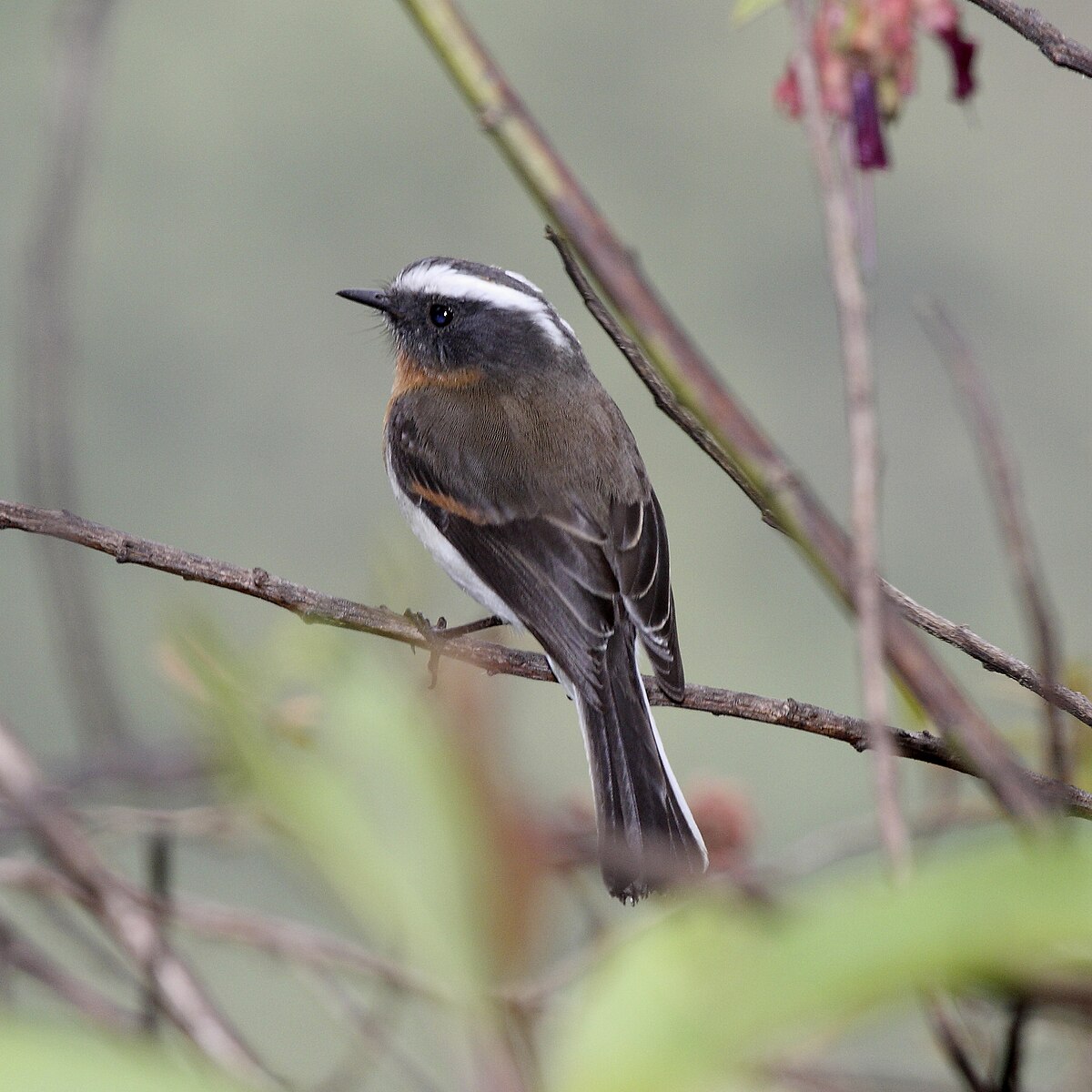
Wikipedia: Rufous-breasted chat-tyrant Source: WIKIPEDIA
1200px-Rufous-breasted_Chat-tyrant_%28Ochthoeca_rufipectoralis%29.jpg
🔍
Never observed (yet!)
Description
The rufous-breasted chat-tyrant (Ochthoeca rufipectoralis) is a species of bird in the family Tyrannidae. It is found in Bolivia, Colombia, Ecuador, Peru, and Venezuela.
[more]
Details
Brown-backed chat-tyrant / Rauchtyrann (Ochthoeca fumicolor)
Profile Wikipedia Xeno-Canto YouTube
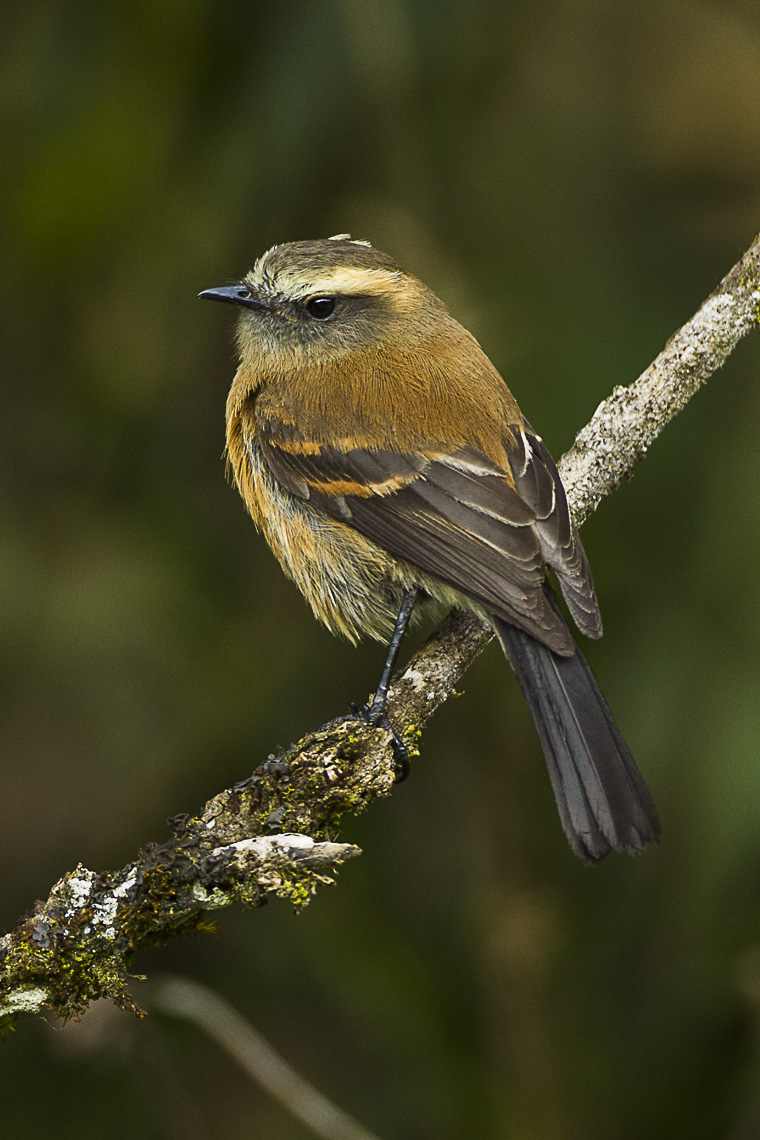
Wikipedia: Brown-backed chat-tyrant Source: WIKIPEDIA
Brown-backed_Chat-Tyrant_-_Colombia_S4E1525.jpg
🔍
Never observed (yet!)
Description
The brown-backed chat-tyrant (Ochthoeca fumicolor) is a species of bird in the family Tyrannidae. It is found in Bolivia, Colombia, Ecuador, Peru, and Venezuela.
[more]
Details
Yellow-bellied chat-tyrant / Diademtyrann (Ochthoeca diadema)
Profile Wikipedia Xeno-Canto YouTube

Wikipedia: Yellow-bellied chat-tyrant Source: WIKIPEDIA
1200px-Ochthoeca_diadema.jpg
🔍
Never observed (yet!)
Description
The yellow-bellied chat-tyrant (Silvicultrix diadema) is a species of passerine bird in the family Tyrannidae. It is 12–12.5 cm (4.7–4.9 in) in length. It is a chunky bird with a short, thin bill. It is mostly olive with an ochre yellow forehead and long yellow eyebrow. It has dusky colored wings and tail with two rufous tail bars. It is mostly found in Colombia, Ecuador, Peru, and Venezuela. It feeds in separated pairs hunting near the ground in foliage.
[more]
Details
White-lored tyrannulet / Weißzügel-Fliegenstecher (Ornithion inerme)
Profile Wikipedia Xeno-Canto YouTube

Wikipedia: White-lored tyrannulet Source: WIKIPEDIA
Ornithion_inerme_-_White-lored_tyrannulet.JPG
🔍
Never observed (yet!)
Description
The white-lored tyrannulet (Ornithion inerme) is a species of bird in the family Tyrannidae. It is found in Bolivia, Brazil, Colombia, Ecuador, French Guiana, Guyana, Peru, Suriname, and Venezuela. Its natural habitats are subtropical or tropical moist lowland forest and subtropical or tropical swamps.
[more]
Details
Brown-capped tyrannulet / Braunkappen-Fliegenstecher (Ornithion brunneicapillus)
Profile Wikipedia Xeno-Canto YouTube
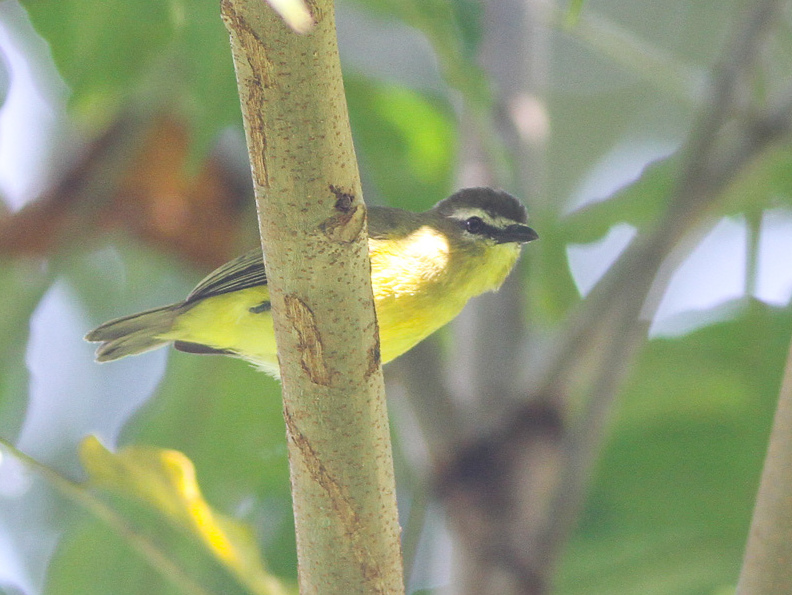
Wikipedia: Brown-capped tyrannulet Source: WIKIPEDIA
Brown-capped_Tyrannulet_%28Ornithion_brunneicapillus%29_%288079747729%29.jpg
🔍
Never observed (yet!)
Description
The brown-capped tyrannulet (Ornithion brunneicapillus) is a species of bird in the family Tyrannidae. It is found in Colombia, Costa Rica, Ecuador, Panama, and Venezuela. Its natural habitats are subtropical or tropical moist lowland forests and heavily degraded former forest.
[more]
Details
Mouse-colored tyrannulet / Brauenfliegenstecher (Phaeomyias murina)
Profile Wikipedia Xeno-Canto YouTube

Wikipedia: Mouse-colored tyrannulet Source: WIKIPEDIA
Phaeomyias_murina1.jpg
🔍
Never observed (yet!)
Description
The mouse-colored tyrannulet (Phaeomyias murina) is a species of bird in the tyrant flycatcher family Tyrannidae. It occurs in a wide range of scrubby and wooded habitats in tropical and subtropical South America, being absent from the southernmost part of the continent, the high Andes and dense rainforest. It also occurs in Panama and Costa Rica. It is generally common, but its small size and dull plumage results in it often being overlooked – or at least not identified, as it resembles several other tyrant flycatchers.
[more]
Details
Marble-faced bristle-tyrant / Schwarzohr-Borstentyrann (Phylloscartes ophthalmicus)
Profile Wikipedia Xeno-Canto YouTube

Wikipedia: Marble-faced bristle-tyrant Source: WIKIPEDIA
1200px-Marble-faced-Bristle-tyrant.jpg
🔍
Never observed (yet!)
Description
The marble-faced bristle tyrant (Pogonotriccus ophthalmicus) is a species of passerine bird in the family Tyrannidae. This species is sometimes placed in the genus Phylloscartes. It is found in Bolivia, Colombia, Ecuador, Peru, and Venezuela. Its natural habitat is subtropical or tropical moist montane forests.
[more]
Details
Spectacled bristle-tyrant / Weißflügel-Borstentyrann (Phylloscartes orbitalis)
Profile Wikipedia Xeno-Canto YouTube

Wikipedia: Spectacled bristle-tyrant Source: WIKIPEDIA
1200px-Phylloscartes_orbitalis_map.svg.png
🔍
Never observed (yet!)
Description
The spectacled bristle tyrant (Pogonotriccus orbitalis) is a species of passerine bird in the family Tyrannidae. This species is sometimes placed in the genus Phylloscartes.
[more]
Details
Rufous-browed tyrannulet / Rostbrauen-Laubtyrann (Phylloscartes superciliaris)
Profile Wikipedia Xeno-Canto YouTube

Wikipedia: Rufous-browed tyrannulet Source: WIKIPEDIA
Phylloscartes_superciliaris.jpg
🔍
Never observed (yet!)
Description
The rufous-browed tyrannulet (Phylloscartes superciliaris) is a species of bird in the family Tyrannidae.
[more]
Details
Ecuadorian tyrannulet / Gualaquizborstentyrann (Phylloscartes gualaquizae)
Profile Wikipedia Xeno-Canto YouTube
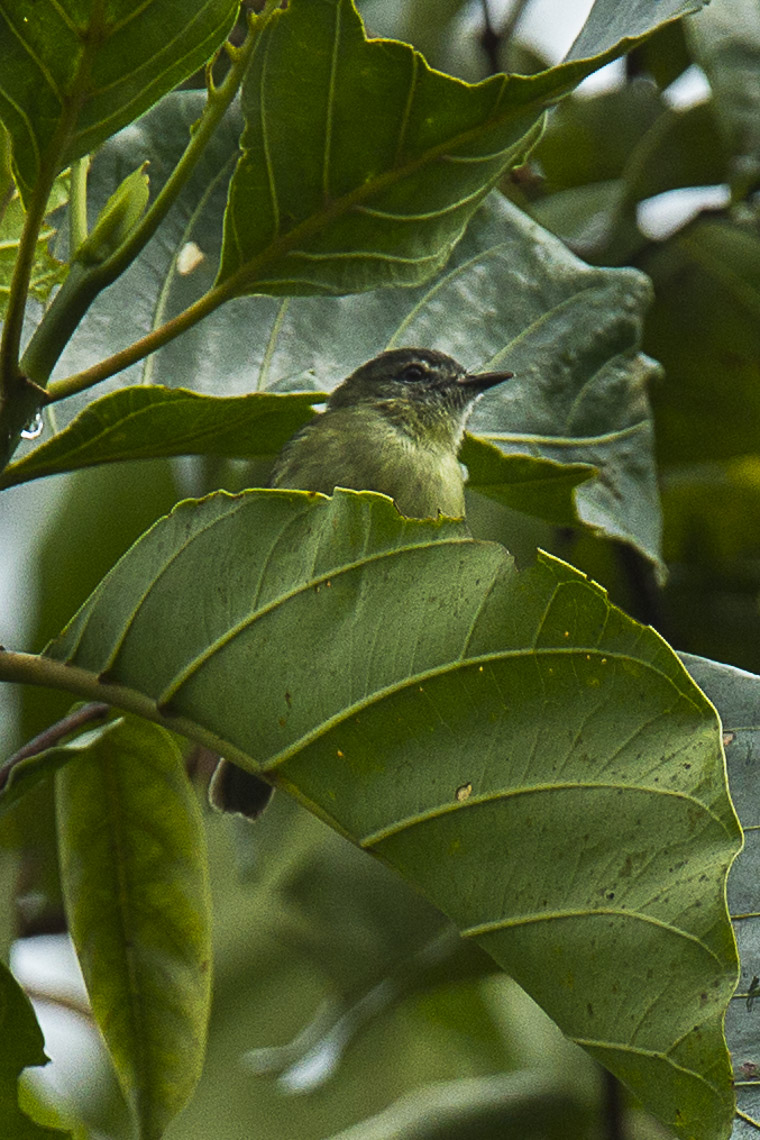
Wikipedia: Ecuadorian tyrannulet Source: WIKIPEDIA
Ecuadorian_Tyrannulet_-_South_Ecuador_S4E0296_%2816685960400%29.jpg
🔍
Never observed (yet!)
Description
The Ecuadorian tyrannulet (Phylloscartes gualaquizae) is a species of bird in the family Tyrannidae. It is found in Ecuador and northern Peru. Its natural habitat is subtropical or tropical moist montane forests.
[more]
Details
Variegated bristle-tyrant / Ohrstreif-Borstentyrann (Phylloscartes poecilotis)
Profile Wikipedia Xeno-Canto YouTube
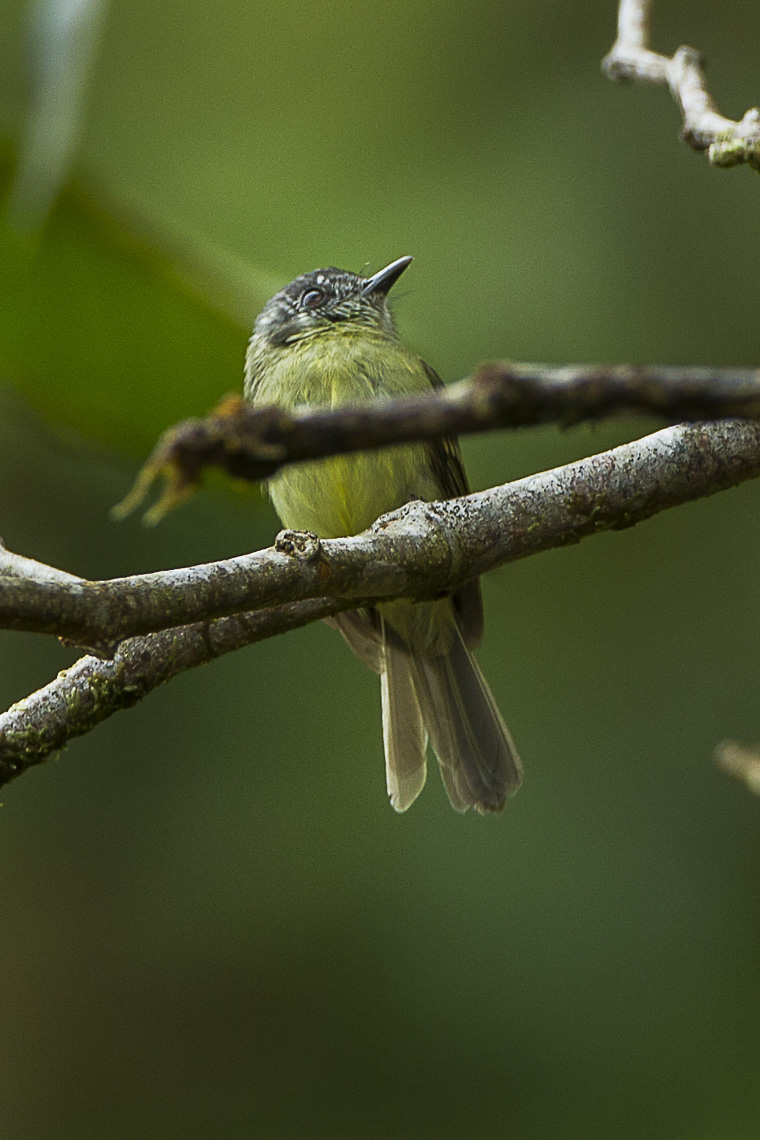
Wikipedia: Variegated bristle-tyrant Source: WIKIPEDIA
Variegated_Bristle-Tyrant_-_Colombia_S4E9894_%2816251007584%29.jpg
🔍
Never observed (yet!)
Description
The variegated bristle tyrant (Pogonotriccus poecilotis) is a species of passerine bird in the family Tyrannidae. It is found in Colombia, Ecuador, Peru, and Venezuela. This species is sometimes placed in the genus Phylloscartes.
[more]
Details
Yellow-crowned tyrannulet / Gelbscheitel-Fliegenstecher (Tyrannulus elatus)
Profile Wikipedia Xeno-Canto YouTube

Wikipedia: Yellow-crowned tyrannulet Source: WIKIPEDIA
1200px-Yellow-crowned_Tyrannulet_%28Tyrannulus_elatus%29.jpg
🔍
Never observed (yet!)
Description
The yellow-crowned tyrannulet (Tyrannulus elatus) is a species of bird in the family Tyrannidae. It is monotypic within the genus Tyrannulus.[2] It is found in Bolivia, Brazil, Colombia, Costa Rica, Ecuador, French Guiana, Guyana, Panama, Peru, Suriname, and Venezuela, where its natural habitats are subtropical or tropical moist lowland forest, subtropical or tropical swamps, and heavily degraded former forest.[1]
[more]
Details
Peruvian tyrannulet (Zimmerius viridiflavus)
Profile Wikipedia Xeno-Canto YouTube

Wikipedia: Peruvian tyrannulet Source: WIKIPEDIA
1200px-Peruvian_Tyrannulet.jpg
🔍
Never observed (yet!)
Description
The Peruvian tyrannulet (Zimmerius viridiflavus) is a species of bird in the family Tyrannidae. As traditionally defined, it is endemic to Peru, but recent genetic evidence suggests it should include the taxon flavidifrons as a subspecies, in which case the range of the Peruvian tyrannulet extends into far southern Ecuador. Alternatively, flavidifrons is sometimes considered a separate species, the Loja tyrannulet, but it is not closely related to the golden-faced tyrannulet as previously believed.
[more]
Details
Choco tyrannulet (Zimmerius albigularis)

Wikipedia: Choco tyrannulet Source: WIKIPEDIA
1200px-Zimmerius_albigularis_map.svg.png
🔍
Never observed (yet!)
Description
The Choco tyrannulet (Zimmerius albigularis) is a species of bird in the family Tyrannidae, the tyrant flycatchers. It is found in forests in the Chocó of south-western Colombia and western Ecuador. It was previously treated as a conspecific with the golden-faced tyrannulet (Zimmerius chrysops) but the species were split based on the molecular and vocal differences.[2][3][4] It is restricted to a region with extensive habitat destruction but it is generally fairly common and therefore unlikely to be seriously threatened.
[more]
Details
Red-billed tyrannulet (Zimmerius cinereicapilla)

Wikipedia: Red-billed tyrannulet Source: WIKIPEDIA
Zimmerius_cinereicapilla_86969947.jpg
🔍
Never observed (yet!)
Description
The red-billed tyrannulet (Zimmerius cinereicapilla) is a species of bird in the family Tyrannidae. It is found in Bolivia, Ecuador, and Peru. Its natural habitats are subtropical or tropical moist lowland forests and subtropical or tropical moist montane forests.
[more]
Details
Slender-footed tyrannulet / Schlankfuß-Fliegenstecher (Zimmerius gracilipes)
Profile Wikipedia Xeno-Canto YouTube
Wikipedia: Slender-footed tyrannulet Source: WIKIPEDIA
TyranniscusSmit.jpg
🔍
Never observed (yet!)
Description
The slender-footed tyrannulet (Zimmerius gracilipes) is a species of bird in the family Tyrannidae, the tyrant flycatchers. It is found in humid forests of the west Amazon Basin in Venezuela, Colombia, Ecuador, Peru, Bolivia and Brazil. Until recently, it included the Guianan tyrannulet as a subspecies.
[more]
Details
Golden-faced tyrannulet / Goldstirn-Fliegenstecher (Zimmerius chrysops)
Profile Wikipedia Xeno-Canto YouTube
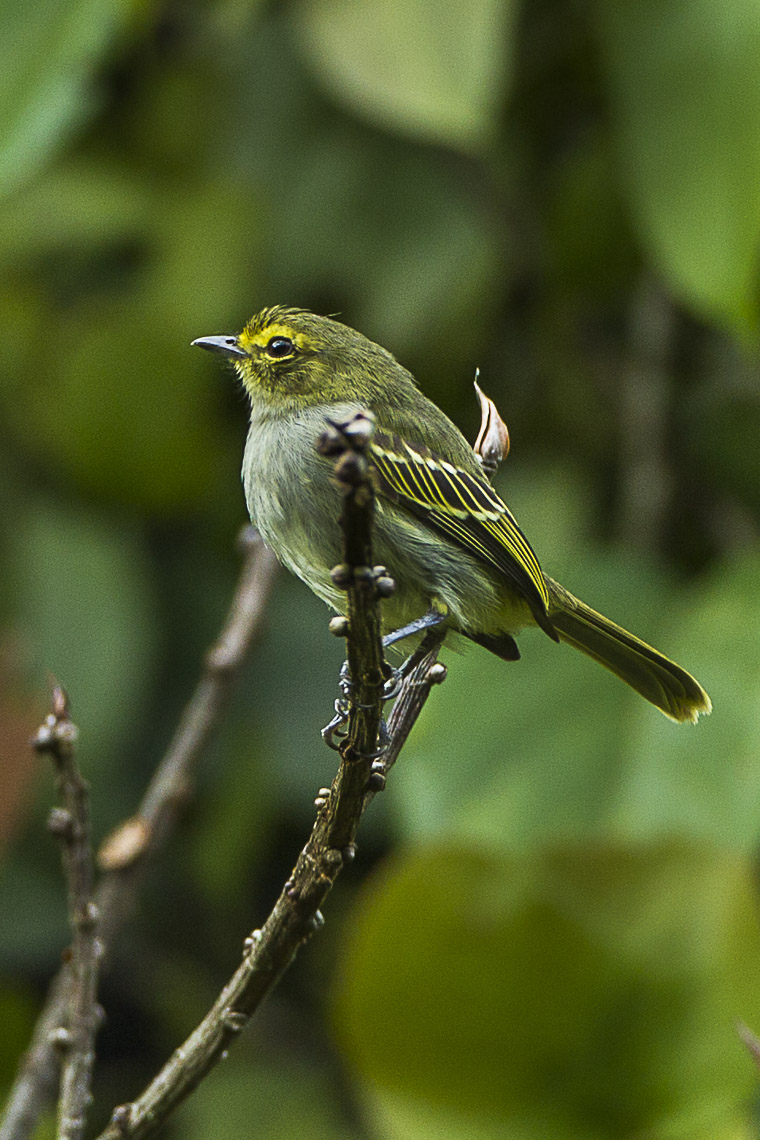
Wikipedia: Golden-faced tyrannulet Source: WIKIPEDIA
Golden-faced_Tyrannulet_-_Colombia_S4E9917.jpg
🔍
Never observed (yet!)
Description
The golden-faced tyrannulet (Zimmerius chrysops) is a species of bird belonging to the family Tyrannidae.
It is found in Colombia, Ecuador, Peru, and Venezuela.
[more]
Details
Cinnamon attila / Zimtattila (Attila cinnamomeus)

Wikipedia: Cinnamon attila Source: WIKIPEDIA
1200px-Attila_cinnamomeus_-_Cinnamon_Attila%3B_Caxias%2C_Maranh%C3%A3o%2C_Brazil.jpg
🔍
Never observed (yet!)
Description
The cinnamon attila (Attila cinnamomeus) is a species of bird in the family Tyrannidae, the tyrant flycatchers.
It is found in northern South America in the Amazon Basin of Brazil and the Guianas.
It is found in Brazil, Colombia, Venezuela, Guyana, Suriname, and French Guiana; also Amazonian Ecuador, Peru, and regions of Bolivia.
Its natural habitat is subtropical or tropical swamps.
[more]
Details
Citron-bellied attila / Gelbbauchattila (Attila citriniventris)
Profile Wikipedia Xeno-Canto YouTube
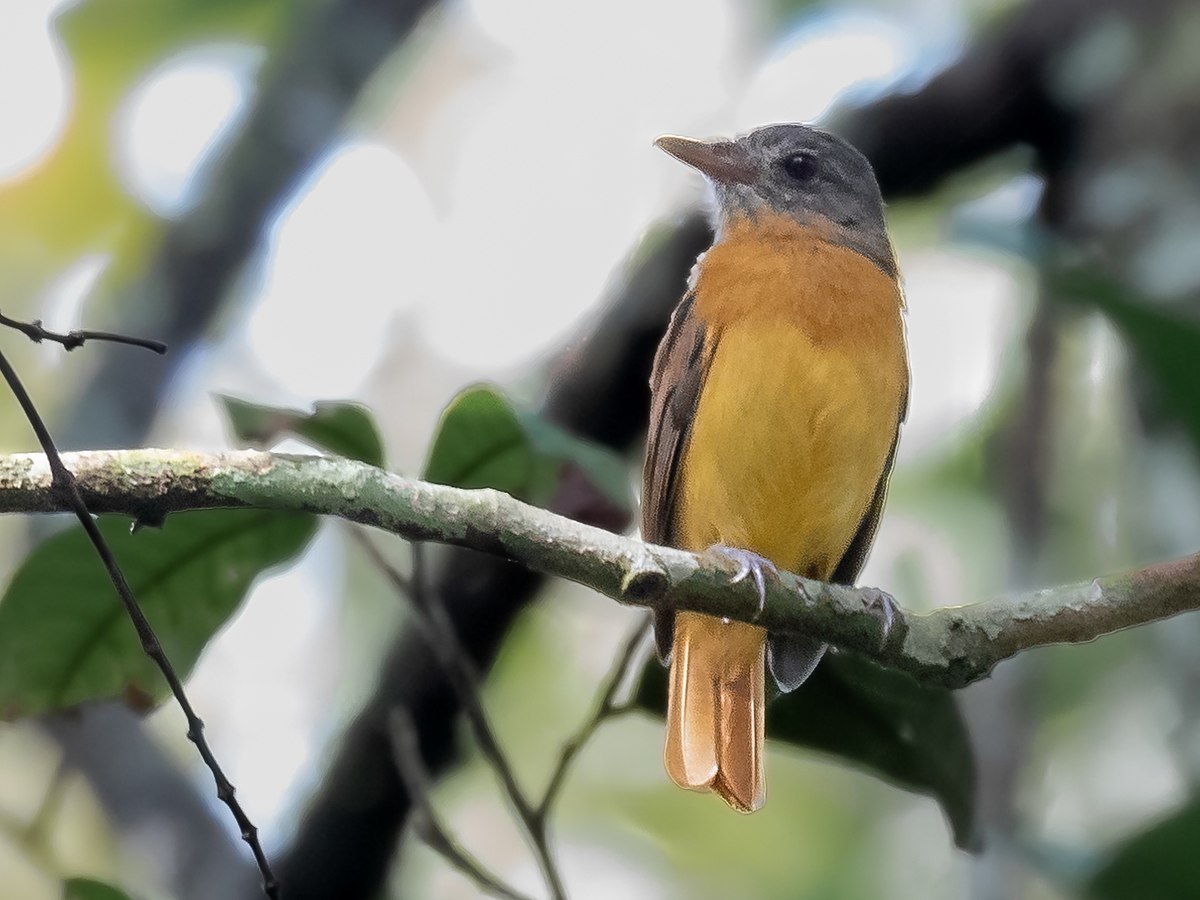
Wikipedia: Citron-bellied attila Source: WIKIPEDIA
1200px-Attila_citriniventris_-_Citron-bellied_Attila%3B_Careiro%2C_Amazonas%2C_Brazil.jpg
🔍
Never observed (yet!)
Description
The citron-bellied attila (Attila citriniventris) is a species of bird in the family Tyrannidae.
[more]
Details
Ochraceous attila / Ockerattila (Attila torridus)
Profile Wikipedia Xeno-Canto YouTube

Wikipedia: Ochraceous attila Source: WIKIPEDIA
1200px-Attila_torridus_-_Ochraceous_Attila_2.jpg
🔍
Never observed (yet!)
Description
The ochraceous attila (Attila torridus) is a species of bird in the family Tyrannidae.
It is found in Colombia, Ecuador, and Peru.
Its natural habitats are subtropical or tropical moist lowland forests and plantations .
It is threatened by habitat loss.
[more]
Details
Bright-rumped attila / Goldbürzelattila (Attila spadiceus)
Profile Wikipedia Xeno-Canto YouTube

Wikipedia: Bright-rumped attila Source: WIKIPEDIA
1200px-Attila_spadiceus.jpg
🔍
Never observed (yet!)
Description
The bright-rumped attila or polymorphic attila (Attila spadiceus) is a small passerine bird in the tyrant flycatcher family (Tyrannidae). It breeds from northwestern Mexico to western Ecuador, Bolivia and southeastern Brazil, and on Trinidad.
[more]
Details
Variegated flycatcher / Fleckentyrann (Empidonomus varius)
Profile Wikipedia Xeno-Canto YouTube

Wikipedia: Variegated flycatcher Source: WIKIPEDIA
Empidonomus_varius-2.jpg
🔍
Never observed (yet!)
Description
The variegated flycatcher (Empidonomus varius) is a species of bird in the family Tyrannidae. With the crowned slaty flycatcher being moved to its own genus, this is now the only species remaining in Empidonomus.
[more]
Details
Fulvous-crowned scrub-tyrant / Weißbauch-Todityrann (Euscarthmus meloryphus)

Wikipedia: Fulvous-crowned scrub-tyrant Source: WIKIPEDIA
Euscarthmus_meloryphus_-Piraju%2C_Sao_Paulo%2C_Brazil-8.jpg
🔍
Never observed (yet!)
Description
The fulvous-crowned scrub tyrant (Euscarthmus meloryphus) is a species of bird in the family Tyrannidae. It is found in Argentina, Bolivia, Brazil, Colombia, Ecuador, Paraguay, Peru, Uruguay, and Venezuela. Its natural habitats are dry savanna, subtropical or tropical dry shrubland, and subtropical or tropical high-altitude shrubland.
[more]
Details
Piratic flycatcher / Legat (Legatus leucophaius)
Profile Wikipedia Xeno-Canto YouTube
Wikipedia: Piratic flycatcher Source: WIKIPEDIA
Piratic_flycatcher.jpg
🔍
Never observed (yet!)
Description
The piratic flycatcher (Legatus leucophaius) is a passerine bird, the only member of the genus Legatus. It is a resident breeder from southern Mexico and Trinidad south to Bolivia and Argentina. At least some birds from Central America and Trinidad are migratory, and this species also visits Tobago.
[more]
Details
Boat-billed flycatcher / Bauchschnabeltyrann (Megarynchus pitangua)
Profile Wikipedia Xeno-Canto YouTube

Boat billed flycatcher has a much bigger beak than other yellow birds, photo at Ecotucan. 2023-03-31 08:05:34 Yucatan
First observed in Yucatan on 2023-03-31.
Description
The boat-billed flycatcher (Megarynchus pitangua) is a passerine bird. It is a large tyrant flycatcher, the only member of the monotypic genus Megarynchus.
[more]
Details
Gray-capped flycatcher (Myiozetetes granadensis)
Profile Wikipedia Xeno-Canto YouTube

La tarde last morning gray-capped flycatcher. 2018-03-11 10:56:34 Costa Rica
First observed in Costa Rica on 2018-03-11.
Description
The grey-capped flycatcher (Myiozetetes granadensis) is a passerine bird, a member of the large tyrant flycatcher family.
[more]
Details
Rusty-margined flycatcher / Rotschwingentyrann (Myiozetetes cayanensis)
Profile Wikipedia Xeno-Canto YouTube

Wikipedia: Rusty-margined flycatcher Source: WIKIPEDIA
1200px-Rusty-margined_flycatcher_%28Myiozetetes_cayanensis_hellmayri%29.jpg
🔍
Never observed (yet!)
Description
The rusty-margined flycatcher (Myiozetetes cayanensis) is a species of bird in the family Tyrannidae, the tyrant flycatchers.
[more]
Details
Social flycatcher / Rotkrontyrann (Myiozetetes similis)
Profile Wikipedia Xeno-Canto YouTube

MerlinBirdID suggests social flycatcher at botanical garden, Puerto Morelos 2. 2023-03-27 11:50:34 Yucatan
First observed in Yucatan on 2023-03-27.
Description
The social flycatcher (Myiozetetes similis) is a passerine bird from the Americas, a member of the large tyrant flycatcher family (Tyrannidae).
[more]
Details
Dusky-chested flycatcher / Kurzschnabeltyrann (Myiozetetes luteiventris)
Profile Wikipedia Xeno-Canto YouTube

Wikipedia: Dusky-chested flycatcher Source: WIKIPEDIA
1200px-Myiozetetes_luteiventris_-_Dusky-chested_Flycatcher%3B_Carajas_National_Forest%2C_Par%C3%A1%2C_Brazil.jpg
🔍
Never observed (yet!)
Description
The dusky-chested flycatcher (Myiozetetes luteiventris) is a species of bird in the family Tyrannidae.
It is found in Bolivia, Brazil, Colombia, Ecuador, French Guiana, Peru, Suriname, and Venezuela.
Its natural habitats are subtropical or tropical moist lowland forests and subtropical or tropical swamps.
[more]
Details
Subtropical doradito / Schmalschwingendoradito (Pseudocolopteryx acutipennis)
Profile Wikipedia Xeno-Canto YouTube

Wikipedia: Subtropical doradito Source: WIKIPEDIA
1200px-Pseudocolopteryx_acutipennis_map.svg.png
🔍
Never observed (yet!)
Description
The subtropical doradito (Pseudocolopteryx acutipennis) is a species of bird in the family Tyrannidae. It is found in Argentina, Bolivia, Colombia, Ecuador, Paraguay, and Peru. Its natural habitats are subtropical or tropical moist shrubland and swamps.
[more]
Details
White-rumped sirystes (Sirystes albocinereus)
Profile Wikipedia Xeno-Canto YouTube

Wikipedia: White-rumped sirystes Source: WIKIPEDIA
1200px-SirystesAlbocinereusSmit.jpg
🔍
Never observed (yet!)
Description
The white-rumped sirystes (Sirystes albocinereus), is a species of bird in the family Tyrannidae. It was formerly considered conspecific with the sibilant sirystes.
[more]
Details
Choco sirystes (Sirystes albogriseus)
Profile Wikipedia Xeno-Canto YouTube

Wikipedia: Choco sirystes Source: WIKIPEDIA
1200px-Sirystes_albogriseus_1902.jpg
🔍
Never observed (yet!)
Description
The western sirystes or Chocó sirystes (Sirystes albogriseus) is a species of bird in the family Tyrannidae. It was formerly considered conspecific with the sibilant sirystes.
[more]
Details
Crowned slaty flycatcher / Inkatyrann (Griseotyrannus aurantioatrocristatus)

Wikipedia: Crowned slaty flycatcher Source: WIKIPEDIA
1200px-Griseotyrannus_aurantioatrocristatus_-_Crowned_slaty_flycatcher.JPG
🔍
Never observed (yet!)
Description
The crowned slaty flycatcher (Griseotyrannus aurantioatrocristatus) is a species of bird in the family Tyrannidae, the tyrant flycatchers. It was formerly united in the genus Empidonomus with the variegated flycatcher, but is now considered the only species of Griseotyrannus. The name Griseotyrannus aurantioatrocristatus means "orange-black crested gray Tyrannus".
[more]
Details
Lesser kiskadee / Liktor (Philohydor lictor)

Wikipedia: Lesser kiskadee Source: WIKIPEDIA
1200px-Lesser_kiskadee_%28Pitangus_lictor_panamense%29.jpg
🔍
Never observed (yet!)
Description
The lesser kiskadee (Philohydor lictor) is a species of passerine bird in the family Tyrannidae. It is the only species in the genus Philohydor. It is found in Argentina, Bermuda, Bolivia, Brazil, Colombia, Ecuador, French Guiana, Guyana, Panama, Peru, Suriname, Trinidad, Guatemala, and Venezuela. Its natural habitats are subtropical or tropical moist shrubland and swamps.
[more]
Details
Cinnamon flycatcher / Zimttyrann (Pyrrhomyias cinnamomeus)

Wikipedia: Cinnamon flycatcher Source: WIKIPEDIA
Cinnamon_Flycatcher_%28Pyrrhomyias_cinnamomeus%29.jpg
🔍
Never observed (yet!)
Description
The cinnamon flycatcher (Pyrrhomyias cinnamomeus) is a species of bird in the family Tyrannidae. It is the only member of the genus Pyrrhomyias.[2]
[more]
Details
Cliff flycatcher / Schwalbentyrann (Hirundinea ferruginea)
Profile Wikipedia Xeno-Canto YouTube

Wikipedia: Cliff flycatcher Source: WIKIPEDIA
1200px-Gib%C3%A3o_de_couro.jpg
🔍
Never observed (yet!)
Description
The cliff flycatcher (Hirundinea ferruginea) is a species of bird in the tyrant flycatcher family, Tyrannidae. The cliff flycatcher is the only species in the genus Hirundinea after the swallow flycatcher was merged, becoming subspecies Hirundinea ferruginea bellicosa. It is native to South America, where its natural habitats are cliffs and crags in the vicinity of subtropical or tropical dry forest, subtropical or tropical moist lowland forest, subtropical or tropical moist montane forest, and heavily degraded former forest.
[more]
Details
Tumbes tyrant / Gelbstirntyrann (Tumbezia salvini)
Profile Wikipedia Xeno-Canto YouTube

Wikipedia: Tumbes tyrant Source: WIKIPEDIA
Tumbes_Tyrant_-_South_Ecuador_S4E9643_%2816666065997%29.jpg
🔍
Never observed (yet!)
Description
The Tumbes tyrant (Tumbezia salvini) is a species of bird in the family Tyrannidae. It is monotypic within the genus Tumbezia.[2] It is endemic to Peru, where its natural habitats are subtropical or tropical dry forest, subtropical or tropical moist lowland forest, and subtropical or tropical dry shrubland. It is threatened by habitat loss.[1]
[more]
Details
Red-rumped bush-tyrant / Rostbürzeltyrann (Cnemarchus erythropygius)
Profile Wikipedia Xeno-Canto YouTube

Wikipedia: Red-rumped bush-tyrant Source: WIKIPEDIA
1200px-Red-rumped-Bush-tyrant.jpg
🔍
Never observed (yet!)
Description
The red-rumped bush tyrant (Cnemarchus erythropygius) is a species of bird in the family Tyrannidae, the only one in the genus Cnemarchus. It is found in Bolivia, Colombia, Ecuador, and Peru.
Its natural habitats are subtropical or tropical moist montane forests and subtropical or tropical high-altitude grassland.
[more]
Details
Smoky bush-tyrant / Rußbuschtyrann (Myiotheretes fumigatus)
Profile Wikipedia Xeno-Canto YouTube

Wikipedia: Smoky bush-tyrant Source: WIKIPEDIA
1200px-Smoky_Bush-tyrant.jpg
🔍
Never observed (yet!)
Description
The smoky bush tyrant (Myiotheretes fumigatus) is a species of bird in the family Tyrannidae.
[more]
Details
Streak-throated bush-tyrant / Streifenkehl-Buschtyrann (Myiotheretes striaticollis)
Profile Wikipedia Xeno-Canto YouTube

Wikipedia: Streak-throated bush-tyrant Source: WIKIPEDIA
Myiotheretes_striaticollis_-Ecuador-6.jpg
Ecuador
🔍
Never observed (yet!)
Description
The streak-throated bush tyrant (Myiotheretes striaticollis) is a species of bird in the family Tyrannidae.
[more]
Details
Cattle tyrant / Graslandtyrann (Machetornis rixosa)

Wikipedia: Cattle tyrant Source: WIKIPEDIA
Cattle_Tyrant_-_Pantanal_-_Brazil_H8O0107_%2816298240983%29.jpg
🔍
Never observed (yet!)
Description
The cattle tyrant (Machetornis rixosa) is a species of bird in the tyrant-flycatcher family Tyrannidae. It is the only member of the genus Machetornis. The relationships of this species and genus to other genera in the tyrant flycatchers are uncertain. It resembles Tyrannus flycatchers, but this may be the result of convergence. Three subspecies are recognised, the nominate race, M. r. flavigularis and M. r. obscurodorsalis, although the latter two may not be distinct from M. r. flavigularis. The genus name was given to the species by George Robert Gray and is derived from the Ancient Greek makhētēs for fighter and ornis for bird, a reference to its pugnacious behaviour and habit of dispossessing other species of their nests. The specific name comes from the Latin rixosus meaning quarrelsome, again referring to the species/ behaviour and temperament.[3]
[more]
Details
Drab water tyrant / Fahltyrann (Ochthornis littoralis)
Profile Wikipedia Xeno-Canto YouTube

Wikipedia: Drab water tyrant Source: WIKIPEDIA
Ochthornis_littoralis_-_Drab_Water-Tyrant.jpg
🔍
Never observed (yet!)
Description
The drab water tyrant (Ochthornis littoralis) is a species of bird in the family Tyrannidae, the tyrant flycatchers, and is the only species in the monotypic genus Ochthornis.[2] It is found in Bolivia, Brazil, Colombia, Ecuador, French Guiana, Guyana, Peru, and Venezuela, where its natural habitat is rivers.[1]
[more]
Details
Gray-and-white tyrannulet / Graustirnelänie (Pseudelaenia leucospodia)
Profile Wikipedia Xeno-Canto YouTube

Wikipedia: Gray-and-white tyrannulet Source: WIKIPEDIA
1200px-Pseudelaenia_leucospodia_map.svg.png
🔍
Never observed (yet!)
Description
The grey-and-white tyrannulet (Pseudelaenia leucospodia) is a species of bird in the tyrant flycatcher family Tyrannidae. It is the only species placed in the genus Pseudelaenia.[2] It is found in Ecuador and Peru, where natural habitats are subtropical or tropical dry shrubland and subtropical or tropical moist shrubland.[1]
[more]
Details
Sulphury flycatcher / Schwefeltyrann (Tyrannopsis sulphurea)
Profile Wikipedia Xeno-Canto YouTube

Wikipedia: Sulphury flycatcher Source: WIKIPEDIA
Tyrannopsis_sulphurea_-_Sulphury_Flycatcher.JPG
🔍
Never observed (yet!)
Description
The sulphury flycatcher (Tyrannopsis sulphurea) is a passerine bird which is a localised resident breeder from Trinidad, the Guianas and Venezuela south to Amazonian Peru, northern Bolivia and Brazil.
[more]
Details
Three-striped flycatcher / Dreistreifentyrann (Conopias trivirgatus)
Profile Wikipedia Xeno-Canto YouTube

Wikipedia: Three-striped flycatcher Source: WIKIPEDIA
Conopias_trivirgatus-Three-striped_Flycatcher.JPG
🔍
Never observed (yet!)
Description
The three-striped flycatcher (Conopias trivirgatus) is a species of bird in the family Tyrannidae.
It is found in Argentina, Bolivia, Brazil, Ecuador, Paraguay, Peru, and Venezuela.
Its natural habitats are subtropical or tropical moist lowland forest and subtropical or tropical swamps.
[more]
Details
White-ringed flycatcher / Kopfbindentyrann (Conopias albovittatus)
Profile Wikipedia Xeno-Canto YouTube

Wikipedia: White-ringed flycatcher Source: WIKIPEDIA
1200px-White-ringed_Flycatcher_2014-11-16.jpg
🔍
Never observed (yet!)
Description
The white-ringed flycatcher (Conopias albovittatus) is a species of bird in the family Tyrannidae.
[more]
Details
Lemon-browed flycatcher / Gelbringtyrann (Conopias cinchoneti)
Profile Wikipedia Xeno-Canto YouTube

Wikipedia: Lemon-browed flycatcher Source: WIKIPEDIA
1200px-Lemon-browed_Flycatcher_%285285655862%29.jpg
🔍
Never observed (yet!)
Description
The lemon-browed flycatcher (Conopias cinchoneti) is a species of bird in the family Tyrannidae.
It is found in Bolivia, Colombia, Ecuador, Peru, and Venezuela.
Its natural habitat is subtropical or tropical moist montane forests.
[more]
Details
Yellow-throated flycatcher (Conopias parvus)
Profile Wikipedia Xeno-Canto YouTube

Wikipedia: Yellow-throated flycatcher Source: WIKIPEDIA
Conopias_parvus_-_Yellow-throated_Flycatcher.JPG
🔍
Never observed (yet!)
Description
The yellow-throated flycatcher (Conopias parvus) is a species[2] of bird in the family Tyrannidae.
It is found in Bolivia, Brazil, Colombia, Ecuador, French Guiana, Guyana, Peru, Suriname, and Venezuela.
Its natural habitat is subtropical or tropical moist lowland forests.
[more]
Details
Jelski's chat-tyrant / Jelskityrann (Silvicultrix jelskii)

Wikipedia: Jelski's chat-tyrant Source: WIKIPEDIA
1200px-Ochthoeca_jelskii_map.svg.png
🔍
Never observed (yet!)
Description
Jelski's chat-tyrant (Silvicultrix jelskii) is a species of passerine bird in the family Tyrannidae. It is found Peru and southern Ecuador. Its natural habitat is subtropical or tropical moist montane forests.
[more]
Details
Crowned chat-tyrant / Braunscheiteltyrann (Silvicultrix frontalis)

Wikipedia: Crowned chat-tyrant Source: WIKIPEDIA
1200px-Ochthoeca_frontalis_-NBII_Image_Gallery-a00286.jpg
🔍
Never observed (yet!)
Description
The crowned chat-tyrant (Silvicultrix frontalis) is a species of bird in the tyrant flycatcher family.
[more]
Details
Orange-banded flycatcher (Nephelomyias lintoni)
Profile Wikipedia Xeno-Canto YouTube

Wikipedia: Orange-banded flycatcher Source: WIKIPEDIA
1200px-Myiophobus_lintoni.jpg
🔍
Never observed (yet!)
Description
The orange-banded flycatcher (Nephelomyias lintoni) is a species of bird in the family Tyrannidae. It is found in southern Ecuador and far northern Peru. Its natural habitat is subtropical or tropical moist montane forests. It is threatened by habitat loss.
[more]
Details
Handsome flycatcher (Nephelomyias pulcher)
Profile Wikipedia Xeno-Canto YouTube

Wikipedia: Handsome flycatcher Source: WIKIPEDIA
Handsome_Flycatcher_-_Colombia_S4E3093_%2816687220829%29.jpg
🔍
Never observed (yet!)
Description
The handsome flycatcher (Nephelomyias pulcher) is a species of bird in the family Tyrannidae. It is found in Bolivia, Colombia, Ecuador, and Peru. Its natural habitat is subtropical or tropical moist montane forests.
[more]
Details
Long-tailed mockingbird / Langschwanz-Spottdrossel (Mimus longicaudatus)
Profile Wikipedia Xeno-Canto YouTube

Wikipedia: Long-tailed mockingbird Source: WIKIPEDIA
1200px-Long-tailed_Mockingbird_RWD3.jpg
🔍
Never observed (yet!)
Description
The long-tailed mockingbird (Mimus longicaudatus) is a species of bird in the family Mimidae. It is found in dry scrubland and woodland in western Ecuador and Peru (north of Camaná).
[more]
Details
Tropical mockingbird / Tropenspottdrossel (Mimus gilvus)
Profile Wikipedia Xeno-Canto YouTube

Tropical mockingbird in Puerto Morelos. 2023-03-26 16:27:30 Yucatan
First observed in Yucatan on 2023-03-26.
Description
The tropical mockingbird (Mimus gilvus) is a resident breeding bird from southern Mexico south to northern Brazil, and in the Lesser Antilles and other Caribbean islands. The birds in Panama and Trinidad may have been introduced. The northern mockingbird (M. polyglottos) is its closest living relative, but the critically endangered Socorro mockingbird (M. graysoni) is also much closer to these two than previously believed .[2]
[more]
Details
Black-capped donacobius / Rohrspotter (Donacobius atricapilla)

Wikipedia: Black-capped donacobius Source: WIKIPEDIA
1200px-Donacobius_atricapilla_-Fazenda_Campo_de_Ouro%2C_Piraju%2C_Sao_Paulo%2C_Brasil-8.jpg
🔍
Never observed (yet!)
Description
The black-capped donacobius (Donacobius atricapilla) is a conspicuous, vocal South American bird. It is found in tropical swamps and wetlands in Argentina, Bolivia, Brazil, Colombia, Ecuador, French Guiana, Guyana, Paraguay, Peru, Suriname, and Venezuela; also Panama of Central America.[1]
[more]
Details
Profile Wikipedia Xeno-Canto YouTube
Wikipedia: Mountain wren Source: WIKIPEDIA
Mountain_Wren_-_Ecuador_S4E3967_%2817168286775%29.jpg
🔍
Never observed (yet!)
Description
The mountain wren (Troglodytes solstitialis) is a species of bird in the family Troglodytidae. It is found in the Andes or north-west Argentina, Bolivia, Colombia, Ecuador, Peru, and western Venezuela. Its natural habitat is subtropical or tropical moist montane forests.
[more]
Details
Profile Wikipedia A-Z Animals Audubon AllAboutBirds Xeno-Canto YouTube

MerlinBirdId says house wren. 2022-04-28 11:41:38
First observed in Cherrywood on 2021-06-17.
Description
The house wren (Troglodytes aedon) is a very small songbird of the wren family, Troglodytidae. It occurs from Canada to southernmost South America, and is thus the most widely distributed native bird in the Americas.[2] It occurs in most suburban areas in its range and it is the single most common wren. Its taxonomy is highly complex and some subspecies groups are often considered separate species.
[more]
Vocalisation
Song: No details but a Xeno-Canto recording. Song attributes: Frequency:♫ 2022-05-03 10:31:53 Source: BirdNet 20220503_103153 birdnet - House Wren - 2022-05-03 10:31:53 - House Wren - Cockeysville.mp3 Cockeysville (song)
Details
Profile Wikipedia Xeno-Canto YouTube

Wikipedia: Band-backed wren Source: WIKIPEDIA
1200px-Campylorhynchus_zonatus.jpg
🔍
Never observed (yet!)
Description
The band-backed wren (Campylorhynchus zonatus) is a small songbird of the wren family.
[more]
Details
Profile Wikipedia Xeno-Canto YouTube

Wikipedia: Thrush-like wren Source: WIKIPEDIA
Campylorhynchus_turdinus-Thrush-like_Wren.JPG
🔍
Never observed (yet!)
Description
The thrush-like wren (Campylorhynchus turdinus) is a South American species of bird in the family Troglodytidae, the wrens. As suggested by its common and scientific name, its size and coloration are vaguely reminiscent of that of a thrush, although the general impression it gives in life is very different and not at all "thrush-like".
[more]
Details
Profile Wikipedia Xeno-Canto YouTube

Wikipedia: Fasciated wren Source: WIKIPEDIA
Fasciated_Wren_-_South_Ecuador_S4E1692_%2817142371156%29.jpg
🔍
Never observed (yet!)
Description
The fasciated wren (Campylorhynchus fasciatus) is a species of bird in the family Troglodytidae. It is found in Ecuador and Peru.[2]
[more]
Details

Wikipedia: Grey-breasted wood-wren Source: WIKIPEDIA
Gray-breasted_Wood-Wren_-_Colombia_S4E9753_%2816982145839%29.jpg
🔍
Never observed (yet!)
Description
The grey-breasted wood wren (Henicorhina leucophrys) is a species of bird in the family Troglodytidae.
It is found at low levels in wooded montane areas of Mexico, Central America and the northern Andes.
[more]
Details
Profile Wikipedia Xeno-Canto YouTube

Wikipedia: Bar-winged wood-wren Source: WIKIPEDIA
1200px-Henicorhina_leucoptera.jpg
🔍
Never observed (yet!)
Description
The bar-winged wood wren (Henicorhina leucoptera) is a species of bird in the family Troglodytidae.
It is found locally in humid Andean forest in southern Ecuador and northern Peru.
It is threatened by habitat loss. As suggested by its name, it has a single distinctive white wing-bar.
[more]
Details
Profile Wikipedia Xeno-Canto YouTube

Wikipedia: White-breasted wood-wren Source: WIKIPEDIA
1200px-Henicorhina_leucosticta_%28Cucarachero_pechiblanco%29_-_Juvenil_%2814037225664%29.jpg
🔍
Never observed (yet!)
Description
The white-breasted wood wren (Henicorhina leucosticta) is a small songbird of the wren family. It is a resident breeding species from central Mexico to northeastern Peru and Suriname.
[more]
Details

Wikipedia: Musician wren Source: WIKIPEDIA
1200px-Cyphorhinus_arada_arada_-_Musician_wren%2C_Pte._Figueiredo%2C_Amazonas%2C_Brazil.jpg
🔍
Never observed (yet!)
Description
The musician wren or organ wren (Cyphorhinus arada) is a species of wren named for its elaborate song. It is native to the Amazon Rainforest in South America, and west and southwestwards into the Amazonian Andes. In Portuguese it is known as uirapuru or many other variants of this name, all based on the Tupi wirapu 'ru. Especially in Brazil, the musician wren is the subject of several legends and fables, most relating to its loud and beautiful song. One of these tells that when it starts singing all other birds stop their song to hear it. The musician wren is also believed to bring good luck, which leads some people to kill it in order to have it stuffed.[2] Even though there are no reliable statistics of its numbers, the musician wren, due to its large range and being locally fairly common, is not considered threatened.
[more]
Details
Profile Wikipedia Xeno-Canto YouTube

Wikipedia: Song wren Source: WIKIPEDIA
1200px-Song_Wren_-_iNaturalist_Panam%C3%A1_3.jpg
🔍
Never observed (yet!)
Description
The song wren (Cyphorhinus phaeocephalus) is a species of bird in the family Troglodytidae.
[more]
Details
Profile Wikipedia Xeno-Canto YouTube

Wikipedia: Chestnut-breasted wren Source: WIKIPEDIA
1200px-Cyphorhinus_thoracicus_Tschudi_1846.png
🔍
Never observed (yet!)
Description
The chestnut-breasted wren (Cyphorhinus thoracicus) is a species of bird in the family Troglodytidae. It is found in the Andes of Colombia, Ecuador, Peru and western Bolivia. Its natural habitat is subtropical or tropical moist montane forests.
[more]
Details
Wikipedia: Sedge wren Source: WIKIPEDIA
1200px-Sedge_Wren_%2831204304001%29.jpg
🔍
Never observed (yet!)
Description
The sedge wren (Cistothorus stellaris) is a small and secretive passerine bird in the family Troglodytidae. It is widely distributed in North America. It is often found in wet grasslands and meadows where it nests in the tall grasses and sedges and feeds on insects. The sedge wren was formerly considered as conspecific with the non-migratory grass wren of central and South America.
[more]
Details
Profile Wikipedia Xeno-Canto YouTube

Wikipedia: Rufous wren Source: WIKIPEDIA
Rufous_Wren_%28Cinnycerthia_unirufa%29.jpg
🔍
Never observed (yet!)
Description
The rufous wren (Cinnycerthia unirufa) is a species of bird in the family Troglodytidae. It is found in Colombia, Ecuador, Peru, and Venezuela. Its natural habitat is subtropical or tropical moist montane forests.
[more]
Details

Wikipedia: Sharpe's wren Source: WIKIPEDIA
1200px-Cinnycerthia_olivascens.jpg
🔍
Never observed (yet!)
Description
The sepia-brown wren or Sharpe's wren (Cinnycerthia olivascens) is a species of bird in the family Troglodytidae. It is found in Colombia, Ecuador, and Peru.[2][3]
[more]
Details
Profile Wikipedia Xeno-Canto YouTube

Wikipedia: Wing-banded wren Source: WIKIPEDIA
1200px-Microcerculus_bamblaDraw.jpg
🔍
Never observed (yet!)
Description
The wing-banded wren (Microcerculus bambla) is a species of bird in the family Troglodytidae.
It is found in Brazil, Ecuador, French Guiana, Guyana, Peru, Suriname, and Venezuela.
Its natural habitat is tropical moist lowland forests.
[more]
Details

Wikipedia: Southern nightingale-wren Source: WIKIPEDIA
1200px-Microcerculus_marginatus.jpg
🔍
Never observed (yet!)
Description
The southern nightingale-wren (Microcerculus marginatus), also known as the scaly-breasted wren, is a species of bird in the family Troglodytidae. Its rich song varies locally over its range, suggesting that more than one species is included in the taxonomic complex currently called the southern nightingale-wren.
[more]
Details
Profile Wikipedia Xeno-Canto YouTube

Wikipedia: Gray-mantled wren Source: WIKIPEDIA
1200px-Odontorchilus_branickii.jpg
🔍
Never observed (yet!)
Description
The grey-mantled wren (Odontorchilus branickii) is a species of bird in the family Troglodytidae. It is found in Bolivia, Colombia, Ecuador, and Peru.[2]
[more]
Details
Profile Wikipedia Xeno-Canto YouTube
Description
The speckle-breasted wren (Pheugopedius sclateri) is a species of bird in the family Troglodytidae. It is found in Colombia, Ecuador, and Peru.[4]
[more]
Details
Profile Wikipedia Xeno-Canto YouTube

Wikipedia: Whiskered wren Source: WIKIPEDIA
Pheugopedius_mystacalis_-_Whiskered_wren%3B_Rubio%2C_T%C3%A1chira%2C_Venezuela.jpg
🔍
Never observed (yet!)
Description
The whiskered wren (Pheugopedius mystacalis) is a species of bird in the family Troglodytidae. It is found in Colombia, Ecuador, and Venezuela.[2]
[more]
Details
Profile Wikipedia Xeno-Canto YouTube

Wikipedia: Plain-tailed wren Source: WIKIPEDIA
1200px-Plain-tailedwren2.jpg
🔍
Never observed (yet!)
Description
The plain-tailed wren (Pheugopedius euophrys) is a species of songbird in the family Troglodytidae. It has a mostly rufous body with a gray, black, and white striped head. It is found in the Andes of southern Colombia, Ecuador, and northern Peru. Its natural habitat is subtropical or tropical moist montane forests. Plain-tailed wrens are so-called bamboo specialists and live almost exclusively in chusquea bamboo thickets. Like other wrens, its diet consists mainly of insects with some seeds and berries.
[more]
Details
Description
Der Corayazaunkönig (Pheugopedius coraya) ist eine Vogelart aus der Familie der Zaunkönige (Troglodytidae), die in Guyana, Suriname, Französisch-Guayana, Venezuela, Kolumbien, Ecuador, Peru und Brasilien verbreitet ist. Der Bestand wird von der IUCN als nicht gefährdet (Least Concern) eingeschätzt.
[more]
Details

Wikipedia: Buff-breasted wren Source: WIKIPEDIA
Cantorchilus_leucotis-Buff-breasted_Wren.jpg
🔍
Never observed (yet!)
Description
The buff-breasted wren (Cantorchilus leucotis) is a species of bird in the family Troglodytidae, the wrens.
It is found in the Amazon Basin of northern Brazil and Amazonian Colombia, Ecuador, Peru and northern-border Bolivia; also the Guianan countries Guyana, Suriname, French Guiana. It occurs in non-Amazonian regions of Venezuela and Colombia and its range extends into eastern Panama.
[more]
Details

Wikipedia: Superciliated wren Source: WIKIPEDIA
Superciliated_Wren_-_Ecuador_S4E9157_%2817166675562%29.jpg
🔍
Never observed (yet!)
Description
The superciliated wren (Cantorchilus superciliaris) is a species of bird in the family Troglodytidae. It is found in Ecuador and Peru.[2]
[more]
Details
Profile Wikipedia Xeno-Canto YouTube

Wikipedia: Stripe-throated wren Source: WIKIPEDIA
1200px-Cantorchilus_leucopogon_map.svg.png
🔍
Never observed (yet!)
Description
The stripe-throated wren (Cantorchilus leucopogon) is a species of bird in the family Troglodytidae. It is found in Colombia, Ecuador, and Panama.[2]
[more]
Details
Profile Wikipedia Xeno-Canto YouTube

Wikipedia: Bay wren Source: WIKIPEDIA
1200px-Bay_Wren.jpg
🔍
Never observed (yet!)
Description
The bay wren (Cantorchilus nigricapillus) is a species of bird in the family Troglodytidae. It is native to southern Central America and northwestern South America.[2]
[more]
Details
Profile Wikipedia Xeno-Canto YouTube

Wikipedia: Slate-throated gnatcatcher Source: WIKIPEDIA
1200px-Polioptila_schistaceigula_map.svg.png
🔍
Never observed (yet!)
Description
The slate-throated gnatcatcher (Polioptila schistaceigula) is a species of bird in the family Polioptilidae.
It is found in Colombia, Ecuador, and Panama.
Its natural habitat is subtropical or tropical moist lowland forests.
[more]
Details
Profile Wikipedia Xeno-Canto YouTube

Wikipedia: Tropical gnatcatcher Source: WIKIPEDIA
Tropical_Gnatcatcher_%28Polioptila_plumbea%29.jpg
🔍
Never observed (yet!)
Description
The tropical gnatcatcher (Polioptila plumbea) is a small active insectivorous songbird, which is a resident species throughout a large part of the Neotropics. There are large geographical variations in its voice and plumage, resulting in some populations sometimes being considered separate species, notably the bilineata group as the white-browed gnatcatcher, and the taxon maior as the Marañón gnatcatcher.[2]
[more]
Details

Wikipedia: Long-billed gnatwren Source: WIKIPEDIA
1200px-Long-billed_Gnatwren.jpg
🔍
Never observed (yet!)
Description
The trilling gnatwren (Ramphocaenus melanurus), formerly long-billed gnatwren, is a very small bird in the gnatcatcher family. It found from southeast Mexico south to Ecuador and Amazonia.
[more]
Details
Profile Wikipedia Xeno-Canto YouTube

Wikipedia: Collared gnatwren Source: WIKIPEDIA
1200px-Microbates_collaris_-_Collared_Gnatwren%3B_Presidente_Figueiredo%2C_Amazonas%2C_Brazil.jpg
🔍
Never observed (yet!)
Description
The collared gnatwren (Microbates collaris) is a species of bird in the family Polioptilidae, the gnatcatchers. It is found in Brazil, Colombia, Ecuador, French Guiana, Guyana, Peru, Suriname, and Venezuela.[2]
[more]
Details

Wikipedia: Tawny-faced gnatwren Source: WIKIPEDIA
1200px-Microbates_cinereiventris_map.svg.png
🔍
Never observed (yet!)
Description
The tawny-faced gnatwren or half-collared gnatwren (Microbates cinereiventris) is a species of bird in the family Polioptilidae.
[more]
Details
Black-striped woodcreeper / Tränen-Baumsteiger (Xiphorhynchus lachrymosus)
Profile Wikipedia Xeno-Canto YouTube

Black-striped woodcreeper in Manzanillo, Costa Rica. 2020-03-12 09:50:48 Manzanillo
First observed in Manzanillo on 2020-03-12.
Description
The black-striped woodcreeper (Xiphorhynchus lachrymosus) is a species of bird in the Dendrocolaptinae subfamily.
[more]
Details
Striped woodcreeper / Streifenbaumsteiger (Xiphorhynchus obsoletus)
Profile Wikipedia Xeno-Canto YouTube

Wikipedia: Striped woodcreeper Source: WIKIPEDIA
Xiphorhynchus_obsoletus_-_Striped_Woodcreeper.JPG
🔍
Never observed (yet!)
Description
The striped woodcreeper (Xiphorhynchus obsoletus) is a species of bird in the woodcreeper subfamily (Dendrocolaptinae). It is found in Bolivia, Brazil, Colombia, Ecuador, French Guiana, Guyana, Peru, Suriname, and Venezuela. Its natural habitats are subtropical or tropical moist lowland forests, subtropical or tropical swamps, and subtropical or tropical dry shrubland.
[more]
Details
Buff-throated woodcreeper / Tropfenstirnbaumsteiger (Xiphorhynchus guttatus)
Profile Wikipedia Xeno-Canto YouTube

Wikipedia: Buff-throated woodcreeper Source: WIKIPEDIA
1200px-Xiphorhyinchus_guttatus_-_Buff-throated_Woodcreeper.JPG
🔍
Never observed (yet!)
Description
The buff-throated woodcreeper (Xiphorhynchus guttatus) is a resident passerine bird found in tropical South America in the Guiana Shield and disjunctly in the northern Atlantic Forest. It formerly included the cocoa woodcreeper and the Lafresnaye's woodcreeper as subspecies. Some authorities retain Lafresnaye's position as a subspecies of the buff-throated woodcreeper, but the resulting group is polyphyletic (see Systematics and evolution).
[more]
Details
Straight-billed woodcreeper (Dendroplex picus)

Wikipedia: Straight-billed woodcreeper Source: WIKIPEDIA
Dendroplex_picus_-_Straight-billed_Woodcreeper.JPG
🔍
Never observed (yet!)
Description
The straight-billed woodcreeper (Dendroplex picus) is a species of bird in the woodcreeper subfamily (Dendrocolaptinae). Its genus, Dendroplex, was recently confirmed to be distinct from Xiphorhynchus.
It is found in Bolivia, Brazil, Colombia, Ecuador, French Guiana, Guyana, Panama, Peru, Suriname, Trinidad and Tobago, and Venezuela.
Its natural habitats are subtropical or tropical dry forests, subtropical or tropical moist lowland forests, subtropical or tropical mangrove forests, and heavily degraded former forest.
[more]
Details
Spotted woodcreeper / Sternflecken-Baumsteiger (Xiphorhynchus erythropygius)
Profile Wikipedia Xeno-Canto YouTube

Wikipedia: Spotted woodcreeper Source: WIKIPEDIA
Xiphorhynchus_erythropygius_-NW_Ecuador-8.jpg
🔍
Never observed (yet!)
Description
The spotted woodcreeper (Xiphorhynchus erythropygius) is a species of bird in the Dendrocolaptinae subfamily. It is found in Belize, Colombia, Costa Rica, Ecuador, El Salvador, Guatemala, Honduras, Mexico, Nicaragua, and Panama.
[more]
Details
Elegant woodcreeper / Schmuckbaumsteiger (Xiphorhynchus elegans)

Wikipedia: Elegant woodcreeper Source: WIKIPEDIA
Xiphorhynchus_elegans.jpg
🔍
Never observed (yet!)
Description
The elegant woodcreeper (Xiphorhynchus elegans) is a species of bird in the woodcreeper subfamily (Dendrocolaptinae). It was formerly considered a subspecies of Spix's woodcreeper. It is found in the western and southern Amazon in Bolivia, Brazil, Colombia, Ecuador, and Peru. Its natural habitat is tropical humid lowland forests. The subspecies X. e. juruanus is sometimes treated as a separate species, Juruá woodcreeper.
[more]
Details
Ocellated woodcreeper / Augenbaumsteiger (Xiphorhynchus ocellatus)
Profile Wikipedia Xeno-Canto YouTube

Wikipedia: Ocellated woodcreeper Source: WIKIPEDIA
1200px-Xiphorhynchus_ocellatus_Castelnau.jpg
🔍
Never observed (yet!)
Description
The ocellated woodcreeper (Xiphorhynchus ocellatus) is a species of bird in the Dendrocolaptinae subfamily of the ovenbird family (Furnariidae). It sometimes includes the Tschudi's woodcreeper as a subspecies.
[more]
Details
Olive-backed woodcreeper / Schuppenbrust-Baumsteiger (Xiphorhynchus triangularis)
Profile Wikipedia Xeno-Canto YouTube

Wikipedia: Olive-backed woodcreeper Source: WIKIPEDIA
Olive-backed_Woodcreeper_-_Ecuador_S4E3621_%2816568144480%29.jpg
🔍
Never observed (yet!)
Description
The olive-backed woodcreeper (Xiphorhynchus triangularis) is a species of bird in the subfamily Dendrocolaptinae. It is found in Bolivia, Colombia, Ecuador, Peru, and Venezuela. Its natural habitat is subtropical or tropical moist montane forests.
[more]
Details
Duida woodcreeper (Lepidocolaptes duidae)

Wikipedia: Duida woodcreeper Source: WIKIPEDIA
1200px-Duida_Woodcreeper.jpg
🔍
Never observed (yet!)
Description
The Duida woodcreeper (Lepidocolaptes duidae) is a species of bird in the subfamily Dendrocolaptinae. It is found in northwest Amazonia in Brazil, Colombia, Ecuador, Peru, and Venezuela. Its natural habitat is subtropical or tropical moist lowland forests.
[more]
Details
Montane woodcreeper (Lepidocolaptes lacrymiger)
Profile Wikipedia Xeno-Canto YouTube

Wikipedia: Montane woodcreeper Source: WIKIPEDIA
Lepidocolaptes_lacrymiger_-NW_Ecuador-6.jpg
🔍
Never observed (yet!)
Description
The montane woodcreeper (Lepidocolaptes lacrymiger) is a perching bird species in the subfamily Dendrocolaptinae of the ovenbird family (Furnariidae).
[more]
Details
Streak-headed woodcreeper / Souleyetbaumsteiger (Lepidocolaptes souleyetii)
Profile Wikipedia Xeno-Canto YouTube
Wikipedia: Streak-headed woodcreeper Source: WIKIPEDIA
Flickr_-_Rainbirder_-_Streak-headed_Woodcreeper_%28Lepidocolaptes_souleyetii%29.jpg
🔍
Never observed (yet!)
Description
The streak-headed woodcreeper (Lepidocolaptes souleyetii) is a passerine bird which breeds in the tropical New World from southern Mexico to northwestern Peru, northern Brazil and Guyana, and also on Trinidad.
[more]
Details
Olivaceous woodcreeper / Olivbaumsteiger (Sittasomus griseicapillus)
Profile Wikipedia Xeno-Canto YouTube

Wikipedia: Olivaceous woodcreeper Source: WIKIPEDIA
Sittasomus_griseicapillus_Olivaceous_Woodcreeper.jpg
🔍
Never observed (yet!)
Description
The olivaceous woodcreeper (Sittasomus griseicapillus) is a passerine bird of the tropical Americas. It belongs to the true woodcreepers (tribe Dendrocolaptini) of the ovenbird family (Furnariidae).
[more]
Details
Black-banded woodcreeper / Blauschnabel-Baumsteiger (Dendrocolaptes picumnus)
Profile Wikipedia Xeno-Canto YouTube

Wikipedia: Black-banded woodcreeper Source: WIKIPEDIA
1200px-DendrocolaptesPuncticollisSmit.jpg
🔍
Never observed (yet!)
Description
The black-banded woodcreeper (Dendrocolaptes picumnus) is a species of bird in the Dendrocolaptinae subfamily, the woodcreepers.
It is discontinuously spread from Chiapas to Paraguay and northern Argentina.
Its natural habitats are subtropical or tropical moist lowland forests and subtropical or tropical moist montane forests.
[more]
Details
Amazonian barred-woodcreeper / Bindenbaumsteiger (Dendrocolaptes certhia)
Profile Wikipedia Xeno-Canto YouTube

Wikipedia: Amazonian barred-woodcreeper Source: WIKIPEDIA
Amazonian_Barred-woodcreeper_%28Dendrocolaptes_certhia%29.jpg
🔍
Never observed (yet!)
Description
The Amazonian barred woodcreeper (Dendrocolaptes certhia) is a species of bird in the Dendrocolaptinae subfamily, the woodcreepers. The northern barred woodcreeper (D. sanctithomae) was formerly included in this species. The Amazonian barred woodcreeper still includes the subspecies concolor, which sometimes is considered a separate species, the concolor woodcreeper.
[more]
Details
Northern barred-woodcreeper (Dendrocolaptes sanctithomae)
Profile Wikipedia Xeno-Canto YouTube

Wikipedia: Northern barred-woodcreeper Source: WIKIPEDIA
Flickr_-_Rainbirder_-_Northern_Barred_Woodcreeper_%28Dendrocolaptes_sanctithomae%29.jpg
🔍
Never observed (yet!)
Description
The northern barred woodcreeper (Dendrocolaptes sanctithomae) is a species of bird in the subfamily Dendrocolaptinae. It was formerly included as a subspecies of the Amazonian barred woodcreeper (D. certhia).
[more]
Details
Strong-billed woodcreeper / Strichelkopf-Baumsteiger (Xiphocolaptes promeropirhynchus)
Profile Wikipedia Xeno-Canto YouTube

Wikipedia: Strong-billed woodcreeper Source: WIKIPEDIA
1200px-Strong-billed_woodcreeper_2.jpg
🔍
Never observed (yet!)
Description
The strong-billed woodcreeper (Xiphocolaptes promeropirhynchus) is a species of bird in the Dendrocolaptinae subfamily. It is one of the largest woodcreepers and the largest furnariids, though the slender long-billed woodcreeper is longer and the great rufous woodcreeper is larger overall. There is some size variation across the range, with typical birds measuring 28–31 cm (11-12.5 in) long and weighing about 120 grams (4.2 oz). Large strong-billed woodcreepers can measure up to 35 cm (14 in) and weigh 169 grams (6 oz).[2] The most distinctive feature of this typically marked striped, brownish bird (other than its size) is its massive, semi-decurved bill, which may be brown or blackish.
[more]
Details
White-chinned woodcreeper / Weißkinn-Baumsteiger (Dendrocincla merula)

Wikipedia: White-chinned woodcreeper Source: WIKIPEDIA
1200px-Dendrocincla_merula_-_White-chinned_Woodcreeper%3B_Madre_de_Dios%2C_Per%C3%BA.jpg
🔍
Never observed (yet!)
Description
The white-chinned woodcreeper (Dendrocincla merula) is a species of bird in the Dendrocolaptinae subfamily.
It is found in Bolivia, Brazil, Colombia, Ecuador, French Guiana, Guyana, Peru, Suriname, and Venezuela.
Its natural habitat is subtropical or tropical moist lowland forests.
[more]
Details
Tryannine woodcreeper / Tyrannenbaumsteiger (Dendrocincla tyrannina)
Description
Details
Plain-brown woodcreeper / Grauwangen-Baumsteiger (Dendrocincla fuliginosa)
Profile Wikipedia Xeno-Canto YouTube
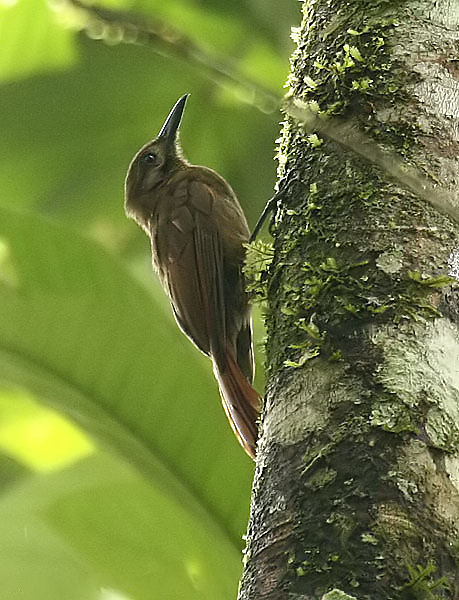
Wikipedia: Plain-brown woodcreeper Source: WIKIPEDIA
Dendrocincla_fuliginosa_-NW_Ecuador-8.jpg
🔍
Never observed (yet!)
Description
The plain-brown woodcreeper (Dendrocincla fuliginosa), is a sub-oscine passerine bird which breeds in the tropical New World from Honduras through South America to northern Argentina, and in Trinidad and Tobago. Sometimes it is considered to include the plain-winged woodcreeper (D. turdina) as a subspecies.
[more]
Details
Brown-billed scythebill / Braunsensenschnabel (Campylorhamphus pusillus)
Profile Wikipedia Xeno-Canto YouTube

Wikipedia: Brown-billed scythebill Source: WIKIPEDIA
1200px-Campylorhamphus_pusillus_-_Brown-billed_Scythebill_1_%28cropped%29.jpg
🔍
Never observed (yet!)
Description
The brown-billed scythebill (Campylorhamphus pusillus) is a species of bird in the family Furnariidae.
[more]
Details
Curve-billed scythebill / Dunkelsensenschnabel (Campylorhamphus procurvoides)
Profile Wikipedia Xeno-Canto YouTube

Wikipedia: Curve-billed scythebill Source: WIKIPEDIA
Campylorhamphus_procurvoides_-_Curve-billed_Scythebill%3B_Botanic_Garden_Tower%2C_Manaus%2C_Amazonas%2C_Brazil.jpg
🔍
Never observed (yet!)
Description
The curve-billed scythebill (Campylorhamphus procurvoides) is a species of bird in the ovenbird family.
It is found in Amazonia. Its natural habitat is subtropical or tropical moist lowland forests.
[more]
Details
Greater scythebill (Drymotoxeres pucherani)

Wikipedia: Greater scythebill Source: WIKIPEDIA
1200px-Drymotoxeres_pucheranii_1849.jpg
🔍
Never observed (yet!)
Description
The greater scythebill (Drymotoxeres pucheranii) is a species of bird in the Dendrocolaptinae subfamily. This species is found at very low densities in highland forest in the Andes, ranging from southern Colombia to far northern Peru. It has traditionally been included in Campylorhamphus together with the other scythebills, but it is closer to the scimitar-billed woodcreeper, leading to the description of the new genus Drymotoxeres.[1]
[more]
Details
Red-billed scythebill / Rotrücken-Sensenschnabel (Campylorhamphus trochilirostris)
Profile Wikipedia Xeno-Canto YouTube

Wikipedia: Red-billed scythebill Source: WIKIPEDIA
Campylorhamphus_trochilirostris_-NW_Ecuador-8.jpg
🔍
Never observed (yet!)
Description
The red-billed scythebill (Campylorhamphus trochilirostris) is a species of bird in the Dendrocolaptinae subfamily.
[more]
Details
Long-tailed woodcreeper / Langschwanz-Baumsteiger (Deconychura longicauda)
Profile Wikipedia Xeno-Canto YouTube

Wikipedia: Long-tailed woodcreeper Source: WIKIPEDIA
Deconychura_longicauda_-_Long-tailed_Woodcreeper.JPG
🔍
Never observed (yet!)
Description
The long-tailed woodcreeper (Deconychura longicauda) is a species of bird in the Dendrocolaptinae subfamily. It is monotypic within Deconychura, but formerly this genus also included the spot-throated woodcreeper.[2]
[more]
Details
Spot-throated woodcreeper / Kehlflecken-Baumsteiger (Certhiasomus stictolaemus)
Description
The spot-throated woodcreeper (Certhiasomus stictolaemus) is a species of bird in the Dendrocolaptinae subfamily. It is the only species in the genus Certhiasomus (i.e. the genus is monotypic). It was formerly included in Deconychura together with the long-tailed woodcreeper, but the two are not closely related.[1]
[more]
Details
Rufous-capped antthrush / Colma-Ameisendrossel (Formicarius colma)
Profile Wikipedia Xeno-Canto YouTube

Wikipedia: Rufous-capped antthrush Source: WIKIPEDIA
Formicarius_colma_-Vale_do_Ribeira%2C_Registro%2C_Sao_Paulo%2C_Brazil-8_%281%29.jpg
🔍
Never observed (yet!)
Description
The rufous-capped antthrush (Formicarius colma) is a small species of bird in the family Formicariidae located in the order Passeriformes.
It is considered to be uncommon but widespread, found in Bolivia, Brazil, Colombia, Ecuador, French Guiana, Guyana, Peru, Suriname, and Venezuela.
The rufous-capped antthrush is typically found inhabiting the shady floor of tall, humid forests on solid ground, and is occasionally spotted in transitional forests (várzea) and savanna forests (Suriname).[2]
[more]
Details
Rufous-breasted antthrush / Rotbrust-Ameisendrossel (Formicarius rufipectus)
Profile Wikipedia Xeno-Canto YouTube

Wikipedia: Rufous-breasted antthrush Source: WIKIPEDIA
1200px-Formicarius_rufipectus.jpg
🔍
Never observed (yet!)
Description
The rufous-breasted antthrush (Formicarius rufipectus) is a species of bird in the family Formicariidae. It is found in Colombia, Costa Rica, Ecuador, Panama, Peru, and Venezuela. Its natural habitat is subtropical or tropical moist montane forest.
[more]
Details
Black-faced antthrush / Schwarzkehl-Ameisendrossel (Formicarius analis)
Profile Wikipedia Xeno-Canto YouTube

Wikipedia: Black-faced antthrush Source: WIKIPEDIA
Black-faced_Antthrush_-_Rio_Tigre_-_Costa_Rica_%2826631229751%29.jpg
🔍
Never observed (yet!)
Description
The black-faced antthrush (Formicarius analis), is a species of passerine bird in the family Formicariidae.
[more]
Details
Black-headed antthrush / Schwarzkopf-Ameisendrossel (Formicarius nigricapillus)
Profile Wikipedia Xeno-Canto YouTube

Wikipedia: Black-headed antthrush Source: WIKIPEDIA
1200px-Formicarius_nigricapillus_dist.png
🔍
Never observed (yet!)
Description
The black-headed antthrush (Formicarius nigricapillus) is a species of bird in the family Formicariidae.
Its natural habitats are subtropical or tropical moist lowland forests and subtropical or tropical moist montane forests.
[more]
Details
Rufous antpitta / Einfarb-Ameisenpitta (Grallaria rufula)

Wikipedia: Rufous antpitta Source: WIKIPEDIA
1200px-Rufous_Antpitta%2C_Tapichalaca%2C_Ecuador_%285746102588%29.jpg
🔍
Never observed (yet!)
Description
The rufous antpitta (Grallaria rufula) was a species of bird in the family Grallaridae that, in 2020, was found to be a species complex made up of 13 visually similar, but distinct species.[2]
[more]
Details
White-bellied antpitta / Rotrücken-Ameisenpitta (Grallaria hypoleuca)
Profile Wikipedia Xeno-Canto YouTube

Wikipedia: White-bellied antpitta Source: WIKIPEDIA
White-bellied_Antpitta_-_San_Isidro_-_South_Ecuador_S4E3747.jpg
🔍
Never observed (yet!)
Description
The white-bellied antpitta (Grallaria hypoleuca) is a species of bird in the family Grallariidae. It is found in Colombia, Ecuador and far northern Peru.
[more]
Details
Undulated antpitta / Schuppenbauch-Ameisenpitta (Grallaria squamigera)
Profile Wikipedia Xeno-Canto YouTube

Wikipedia: Undulated antpitta Source: WIKIPEDIA
1200px-Naturalis_Biodiversity_Center_-_RMNH.AVES.120540_-_Grallaria_squamigera_squamigera_Pr%C3%A9vost_%26_Des_Murs%2C_1842_-_Formicariidae_-_bird_skin_specimen.jpeg
🔍
Never observed (yet!)
Description
The undulated antpitta (Grallaria squamigera) is a bird in the family Grallariidae. The species was first described by Florent Prévost and Marc Athanase Parfait Œillet des Murs in 1842.
[more]
Details
Scaled antpitta / Schuppenkopf-Ameisenpitta (Grallaria guatimalensis)
Profile Wikipedia Xeno-Canto YouTube

Wikipedia: Scaled antpitta Source: WIKIPEDIA
1200px-Scaled_Antpitta_%28Grallaria_guatimalensis%29.jpg
🔍
Never observed (yet!)
Description
The scaled antpitta (Grallaria guatimalensis) is a species of bird in the family Grallariidae.
[more]
Details
Yellow-breasted antpitta (Grallaria flavotincta)

Wikipedia: Yellow-breasted antpitta Source: WIKIPEDIA
1200px-Yellow-breasted_Antpitta%2C_Paz_de_las_Aves%2C_Ecuador_%285745552999%29.jpg
🔍
Never observed (yet!)
Description
The yellow-breasted antpitta (Grallaria flavotincta) is a species of bird in the family Grallariidae.
[more]
Details
Jocotoco antpitta (Grallaria ridgelyi)
Profile Wikipedia Xeno-Canto YouTube

Wikipedia: Jocotoco antpitta Source: WIKIPEDIA
Jocotoco_Antpitta.jpg
🔍
Never observed (yet!)
Description
The jocotoco antpitta (Grallaria ridgelyi) is an endangered antpitta, a bird from Ecuador and Peru. It was discovered in 1997, and scientifically described in 1999.
[more]
Details
Ochre-striped antpitta / Rostkehl-Ameisenpitta (Grallaria dignissima)
Profile Wikipedia Xeno-Canto YouTube

Wikipedia: Ochre-striped antpitta Source: WIKIPEDIA
1200px-GrallariaDignissimaKeulemans.jpg
🔍
Never observed (yet!)
Description
The ochre-striped antpitta (Grallaria dignissima) is a species of bird in the family Grallariidae. It is found in Ecuador, Peru and southern Colombia.
[more]
Details
Scrub antpitta / Watkinsameisenpitta (Grallaria watkinsi)

Wikipedia: Scrub antpitta Source: WIKIPEDIA
Watkins%27_Antpitta_-_South_Ecuador_S4E9791_%2816824015255%29.jpg
🔍
Never observed (yet!)
Description
Watkins's antpitta (Grallaria watkinsi) or scrub antpitta, is a species of bird in the family Grallariidae. It is found in Ecuador and Peru.
[more]
Details
Chestnut-naped antpitta / Rotkopf-Ameisenpitta (Grallaria nuchalis)
Profile Wikipedia Xeno-Canto YouTube

Wikipedia: Chestnut-naped antpitta Source: WIKIPEDIA
1200px-Grallaria_nuchalis_by_Alejandro_Bayer_Tamayo.jpg
🔍
Never observed (yet!)
Description
The chestnut-naped antpitta (Grallaria nuchalis) is a species of bird placed in the family Grallariidae.
[more]
Details
Plain-backed antpitta / Ockerbart-Ameisenpitta (Grallaria haplonota)
Profile Wikipedia Xeno-Canto YouTube

Wikipedia: Plain-backed antpitta Source: WIKIPEDIA
GrallariaHaplonotaSmit.jpg
🔍
Never observed (yet!)
Description
The plain-backed antpitta (Grallaria haplonota) is a species of bird in the family Grallariidae. It is found in the Andes of Ecuador and the Venezuelan Coastal Range. Its natural habitats are subtropical or tropical moist montane forest and heavily degraded former forest.
[more]
Details
Bicolored antpitta / Zweifarben-Ameisenpitta (Grallaria rufocinerea)
Profile Wikipedia Xeno-Canto YouTube

Wikipedia: Bicolored antpitta Source: WIKIPEDIA
1200px-Bicolored_Antpitta_%28Grallaria_rufocinerea%29.jpg
🔍
Never observed (yet!)
Description
The bicolored antpitta (Grallaria rufocinerea) is a species of bird in the family Grallariidae. In 2020, genetic evidence revealed that the bicolored pitta is a member of the rufous antpitta species complex.[3] It is found in Colombia and Ecuador. Its natural habitat is subtropical or tropical moist montane forest. It is threatened by habitat loss.
[more]
Details
Moustached antpitta / Bartstreif-Ameisenpitta (Grallaria alleni)
Profile Wikipedia Xeno-Canto YouTube

Wikipedia: Moustached antpitta Source: WIKIPEDIA
1200px-Moustached_Antpitta%2C_Paz_de_las_Aves%2C_Ecuador_%285746102084%29.jpg
🔍
Never observed (yet!)
Description
The moustached antpitta (Grallaria alleni) is a species of bird placed in the family Grallariidae.
[more]
Details
Chestnut-crowned antpitta / Rostkappen-Ameisenpitta (Grallaria ruficapilla)
Profile Wikipedia Xeno-Canto YouTube

Wikipedia: Chestnut-crowned antpitta Source: WIKIPEDIA
1200px-Chestnut-crowned_Antpitta%2C_Rio_Blanco%2C_Colombia_%285746788680%29.jpg
🔍
Never observed (yet!)
Description
The chestnut-crowned antpitta (Grallaria ruficapilla) is a species of bird in the family Grallariidae. It is found in Colombia, Ecuador, Peru, and Venezuela. Its natural habitats are subtropical or tropical moist montane forest and heavily degraded former forest, which it has a much greater tolerance for than most antpittas. Usually this bird lives at elevations of 1,900 to 3,100 meters (6,200–10,200 ft).
[more]
Details
Giant antpitta / Riesenameisenpitta (Grallaria gigantea)
Profile Wikipedia Xeno-Canto YouTube

Wikipedia: Giant antpitta Source: WIKIPEDIA
1200px-Grallaria_gigantea.jpg
🔍
Never observed (yet!)
Description
The giant antpitta (Grallaria gigantea) is a perching bird species in the antpitta family (Grallariidae).
[more]
Details
Tawny antpitta / Bergameisenpitta (Grallaria quitensis)
Profile Wikipedia Xeno-Canto YouTube

Wikipedia: Tawny antpitta Source: WIKIPEDIA
Tawny_Antpitta.jpg
🔍
Never observed (yet!)
Description
The tawny antpitta (Grallaria quitensis) is a species of bird in the family Grallariidae.
[more]
Details
Crescent-faced antpitta / Halbmondstelzling (Grallaricula lineifrons)
Profile Wikipedia Xeno-Canto YouTube

Wikipedia: Crescent-faced antpitta Source: WIKIPEDIA
1200px-Crescent-faced_Antpitta.jpg
🔍
Never observed (yet!)
Description
The crescent-faced antpitta (Grallaricula lineifrons) is a species of bird in the family Grallariidae. It is found in Colombia and Ecuador.
[more]
Details
Peruvian antpitta / Perustelzling (Grallaricula peruviana)
Profile Wikipedia Xeno-Canto YouTube

Wikipedia: Peruvian antpitta Source: WIKIPEDIA
1200px-Grallaricula_peruviana.jpg
🔍
Never observed (yet!)
Description
The Peruvian antpitta (Grallaricula peruviana) is a species of bird in the family Grallariidae. It is found in Ecuador and northern Peru.
[more]
Details
Ochre-breasted antpitta / Ockerbruststelzling (Grallaricula flavirostris)
Profile Wikipedia Xeno-Canto YouTube

Wikipedia: Ochre-breasted antpitta Source: WIKIPEDIA
1200px-Grallaricula_flavirostris.jpg
🔍
Never observed (yet!)
Description
The ochre-breasted antpitta (Grallaricula flavirostris) is a species of bird placed in the family Grallariidae.
[more]
Details
Rufous-breasted antpitta (Grallaricula leymebambae)

Wikipedia: Rufous-breasted antpitta Source: WIKIPEDIA
1200px-Grallaricula_leymebambae_106401195.jpg
🔍
Never observed (yet!)
Description
The rufous-breasted antpitta or leymebamba antpitta (Grallaricula leymebambae) is a species of bird in the family Grallariidae. It was first described by American ornithologist and entomologist Melbourne Armstrong Carriker. It is found in Peru and western Bolivia. Its natural habitats are subtropical or tropical moist montane forest and heavily degraded former forest. It has been recently considered a subspecies of Grallaricula ferrugineipectus.[2]
[more]
Details
Slate-crowned antpitta / Grauscheitelstelzling (Grallaricula nana)
Profile Wikipedia Xeno-Canto YouTube

Wikipedia: Slate-crowned antpitta Source: WIKIPEDIA
Slate-crowned_Antpitta_-_Colombia_S4E1919.jpg
🔍
Never observed (yet!)
Description
The slaty-crowned antpitta (Grallaricula nana) is a species of bird placed in the family Grallariidae.
[more]
Details
Streak-chested antpitta / (Westliche) Brillenameisenpitta (Hylopezus perspicillatus)
Profile Wikipedia Xeno-Canto YouTube

Wikipedia: Streak-chested antpitta Source: WIKIPEDIA
1200px-Hylopezus_perspicillatus_-Carara_National_Park%2C_Central_Pacific_Conservation_Area%2C_Costa_Rica-8.jpg
🔍
Never observed (yet!)
Description
The streak-chested antpitta or spectacled antpitta (Hylopezus perspicillatus) is a species of bird in the family Grallariidae.
It is found in Colombia, Costa Rica, Ecuador, Honduras, Nicaragua, and Panama.
Its natural habitat is subtropical or tropical moist lowland forest.[2]
[more]
Details
Thrush-like antpitta / Fleckenbrust-Ameisenjäger (Myrmothera campanisona)
Profile Wikipedia Xeno-Canto YouTube

Wikipedia: Thrush-like antpitta Source: WIKIPEDIA
1200px-GrallariaModestaWolf.jpg
🔍
Never observed (yet!)
Description
The thrush-like antpitta (Myrmothera campanisona) is a species of bird in the family Grallariidae.
[more]
Details
White-lored antpitta (Myrmothera fulviventris)
Profile Wikipedia Xeno-Canto YouTube

Wikipedia: White-lored antpitta Source: WIKIPEDIA
GrallariaFulviventrisSmit.jpg
🔍
Never observed (yet!)
Description
The white-lored antpitta or fulvous-bellied antpitta (Hylopezus fulviventris) is a species of bird in the family Grallariidae. It is found in Colombia, Ecuador, and Peru. Its natural habitats are subtropical or tropical moist lowland forest and heavily degraded former forest.
[more]
Details
Barred antthrush / Bindenameisendrossel (Chamaeza mollissima)
Profile Wikipedia Xeno-Canto YouTube

Wikipedia: Barred antthrush Source: WIKIPEDIA
1200px-ChamaezaMollissimaWolf.jpg
🔍
Never observed (yet!)
Description
The barred antthrush (Chamaeza mollissima) is a species of bird in the family Formicariidae.
[more]
Details
Striated antthrush / Streifenameisendrossel (Chamaeza nobilis)
Profile Wikipedia Xeno-Canto YouTube

Wikipedia: Striated antthrush Source: WIKIPEDIA
1200px-Chamaeza_nobilis.jpg
🔍
Never observed (yet!)
Description
The striated antthrush (Chamaeza nobilis) is a species of bird in the family Formicariidae.
It is found in Bolivia, Brazil, Colombia, Ecuador, and Peru.
Its natural habitat is subtropical or tropical moist lowland forests.
[more]
Details
Short-tailed antthrush / Kurzschwanz-Ameisendrossel (Chamaeza campanisona)
Profile Wikipedia Xeno-Canto YouTube

Wikipedia: Short-tailed antthrush Source: WIKIPEDIA
Chamaeza_campanisona.jpeg
🔍
Never observed (yet!)
Description
The short-tailed antthrush (Chamaeza campanisona) is a South American species of bird in the family Formicariidae. Its distribution is highly disjunct with populations in the Atlantic Forest in eastern Brazil, eastern Paraguay and northeastern Argentina, isolated highland forests in northeastern Brazil, forests on the tepuis in southern Venezuela, Guyana and northern Brazil, and in forests along the east Andean slope from Venezuela to Bolivia.
[more]
Details
Gray antbird / Aschgrauer Ameisenfänger (Cercomacra cinerascens)
Profile Wikipedia Xeno-Canto YouTube

Wikipedia: Gray antbird Source: WIKIPEDIA
1200px-Cercomacra_cinerascens_-_Gray_Anbird_male%3B_Caraj%C3%A1s_National_Forest%2C_Para%2C_Brazil.jpg
🔍
Never observed (yet!)
Description
The grey antbird (Cercomacra cinerascens) is a species of bird in the antbird family Thamnophilidae.
It is found in Bolivia, Brazil, Colombia, Ecuador, French Guiana, Guyana, Peru, Suriname, and Venezuela.
Its natural habitat is subtropical or tropical moist lowland forests.
[more]
Details
Jet antbird / Trauerameisenfänger (Cercomacra nigricans)
Profile Wikipedia Xeno-Canto YouTube

Wikipedia: Jet antbird Source: WIKIPEDIA
Jet_Antbird_-_Colombia_S4E9202_%2816823101325%29.jpg
🔍
Never observed (yet!)
Description
The jet antbird (Cercomacra nigricans) is a species of bird in the family Thamnophilidae. It is found in Colombia, Venezuela, Panama and western Ecuador. Its natural habitat is subtropical or tropical moist lowland forests.
[more]
Details
Black antbird (Cercomacroides serva)
Profile Wikipedia Xeno-Canto YouTube

Wikipedia: Black antbird Source: WIKIPEDIA
1200px-Cercomacroides_serva_-_Black_antbird_%28male%29%2C_Careiro%2C_Amazonas%2C_Brazil.jpg
🔍
Never observed (yet!)
Description
The black antbird (Cercomacroides serva) is a species of passerine bird in the family Thamnophilidae. It is found in Bolivia, Brazil, Colombia, Ecuador, and Peru. Its natural habitat is subtropical or tropical moist lowland forests.
[more]
Details
Blackish antbird (Cercomacroides nigrescens)

Wikipedia: Blackish antbird Source: WIKIPEDIA
1200px-Cercomacra_nigrescens_-_Blackish_Antbird_%28male%29.JPG
🔍
Never observed (yet!)
Description
The blackish antbird (Cercomacroides nigrescens) is a species of passerine bird in the family Thamnophilidae. It is found in Bolivia, Brazil, Colombia, Ecuador, French Guiana, Peru, and Suriname. Its natural habitats are subtropical or tropical moist lowland forests, subtropical or tropical moist montane forests, and heavily degraded former forest.
[more]
Details
Dusky antbird (Cercomacroides tyrannina)

Wikipedia: Dusky antbird Source: WIKIPEDIA
Cercomacra_tyrannina_%28female%29_-NW_Ecuador-8.jpg
🔍
Never observed (yet!)
Description
The dusky antbird or tyrannine antbird (Cercomacroides tyrannina) is a passerine bird in the antbird family. It is a resident breeder in tropical Central and South America from southeastern Mexico southwards to western Ecuador, and Amazonian Brazil.
[more]
Details
Western fire-eye (Pyriglena maura)
Profile Wikipedia Xeno-Canto YouTubeDescription
The western fire-eye (Pyriglena maura) is an insectivorous bird in the antbird family Thamnophilidae.
It is found in Ecuador, Peru, Colombia, Bolivia, and Brazil.
[more]
Details
Rufous-crowned antpitta / Rotscheitel-Ameisenpitta (Pittasoma rufopileatum)
Profile Wikipedia Xeno-Canto YouTube

Wikipedia: Rufous-crowned antpitta Source: WIKIPEDIA
1200px-PittasomaRufopileatumKeulemans.jpg
🔍
Never observed (yet!)
Description
The rufous-crowned antpitta, or rufous-crowned pittasoma, (Pittasoma rufopileatum) is a species of bird in the gnateater family, Conopophagidae. It is found in Colombia and Ecuador.[2][1]
[more]
Details
Northern slaty-antshrike / Tüpfelwollrücken (Thamnophilus punctatus)
Profile Wikipedia Xeno-Canto YouTube

Wikipedia: Northern slaty-antshrike Source: WIKIPEDIA
1200px-Naturalis_Biodiversity_Center_-_RMNH.AVES.30396_1_-_Thamnophilus_punctatus_punctatus_%28Shaw%2C_1809%29_-_Formicariidae_-_bird_skin_specimen.jpeg
🔍
Never observed (yet!)
Description
The northern slaty antshrike (Thamnophilus punctatus) is a species of bird in the family Thamnophilidae. It previously included the Natterer's slaty antshrike, Bolivian slaty antshrike, Planalto slaty antshrike and Sooretama slaty antshrike as subspecies, in which case the combined species simply was referred to as the slaty antshrike.
[more]
Details
Chapman's antshrike (Thamnophilus zarumae)
Profile Wikipedia Xeno-Canto YouTube
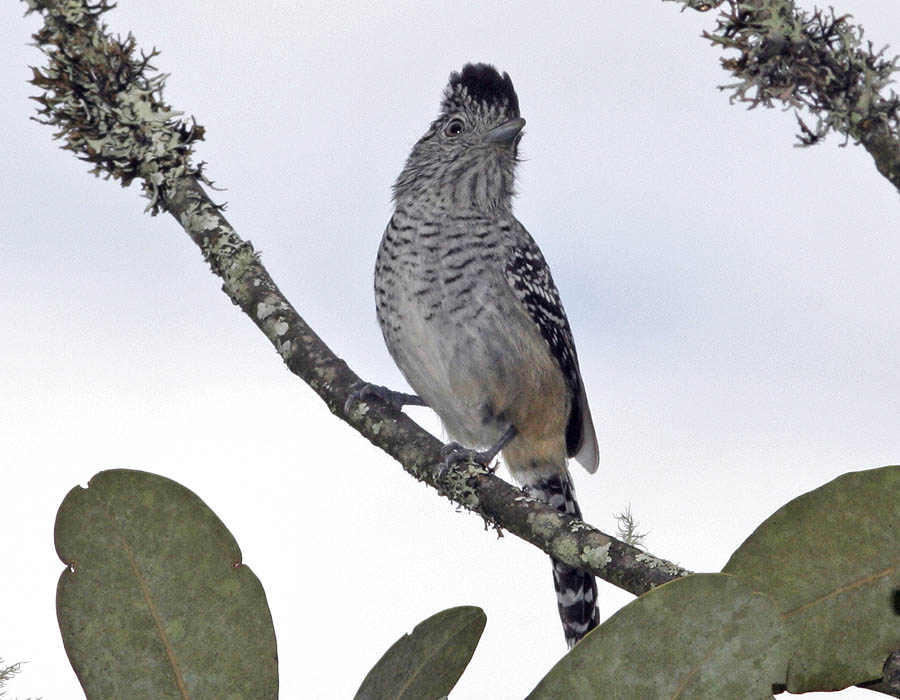
Wikipedia: Chapman's antshrike Source: WIKIPEDIA
Chapman%27s_Antshrike%2C_male_%28530829149%29.jpg
🔍
Never observed (yet!)
Description
Chapman's antshrike (Thamnophilus zarumae) is a species of bird in the family Thamnophilidae. It is found in Ecuador and Peru.
[more]
Details
Collared antshrike / Weißnacken-Ameisenwürger (Thamnophilus bernardi)

Wikipedia: Collared antshrike Source: WIKIPEDIA
1200px-CollaredAntshrike.jpg
🔍
Never observed (yet!)
Description
The collared antshrike (Thamnophilus bernardi) is a species of bird in the family Thamnophilidae.
It is found in Ecuador and Peru.
Its natural habitats are subtropical or tropical dry forests, subtropical or tropical dry shrubland, and subtropical or tropical moist shrubland.
[more]
Details
Plain-winged antshrike / Schiefergrauer Ameisenwürger (Thamnophilus schistaceus)
Profile Wikipedia Xeno-Canto YouTube

Wikipedia: Plain-winged antshrike Source: WIKIPEDIA
1200px-Thamnophilus_schistaceus_-_Plain-winged_Antshrike_%28male%29%2C_Parauapebas%2C_Par%C3%A1%2C_Brazil.jpg
🔍
Never observed (yet!)
Description
The plain-winged antshrike (Thamnophilus schistaceus) is a species of bird in the family Thamnophilidae. It is found in Bolivia, Brazil, Colombia, Ecuador, and Peru. Its natural habitats are subtropical or tropical moist lowland forests and subtropical or tropical swamps.
[more]
Details
Amazonian antshrike / Amazonien-Tropfenameisenwürger (Thamnophilus amazonicus)
Profile Wikipedia Xeno-Canto YouTube

Wikipedia: Amazonian antshrike Source: WIKIPEDIA
Thamnophilus_amazonicus_-_Amazonian_Antshrike_%28female%29_01.JPG
🔍
Never observed (yet!)
Description
The Amazonian antshrike (Thamnophilus amazonicus) is a species of bird in the family Thamnophilidae, the antbirds. It occurs in the Amazon Basin of Brazil, and east to Maranhão state; also Amazonian Colombia, Ecuador, Peru, and Bolivia. It is in the Guianas in Guyana, Suriname and French Guiana, also two regions of Venezuela. Its natural habitats are subtropical or tropical moist lowland forests and subtropical or tropical swamps.
[more]
Details
Lined antshrike / Feinstreifen-Ameisenwürger (Thamnophilus tenuepunctatus)
Profile Wikipedia Xeno-Canto YouTube

Wikipedia: Lined antshrike Source: WIKIPEDIA
Lined-Antshrike.jpg
🔍
Never observed (yet!)
Description
The lined antshrike (Thamnophilus tenuepunctatus) is a species of bird in the family Thamnophilidae.
[more]
Details
Mouse-colored antshrike / Braunflügel-Ameisenwürger (Thamnophilus murinus)
Profile Wikipedia Xeno-Canto YouTube

Wikipedia: Mouse-colored antshrike Source: WIKIPEDIA
1200px-Mouse-colored_Antshrike.jpg
🔍
Never observed (yet!)
Description
The mouse-colored antshrike (Thamnophilus murinus) is a species of bird in the family Thamnophilidae.
[more]
Details
Uniform antshrike / Einfarb-Ameisenwürger (Thamnophilus unicolor)
Profile Wikipedia Xeno-Canto YouTube
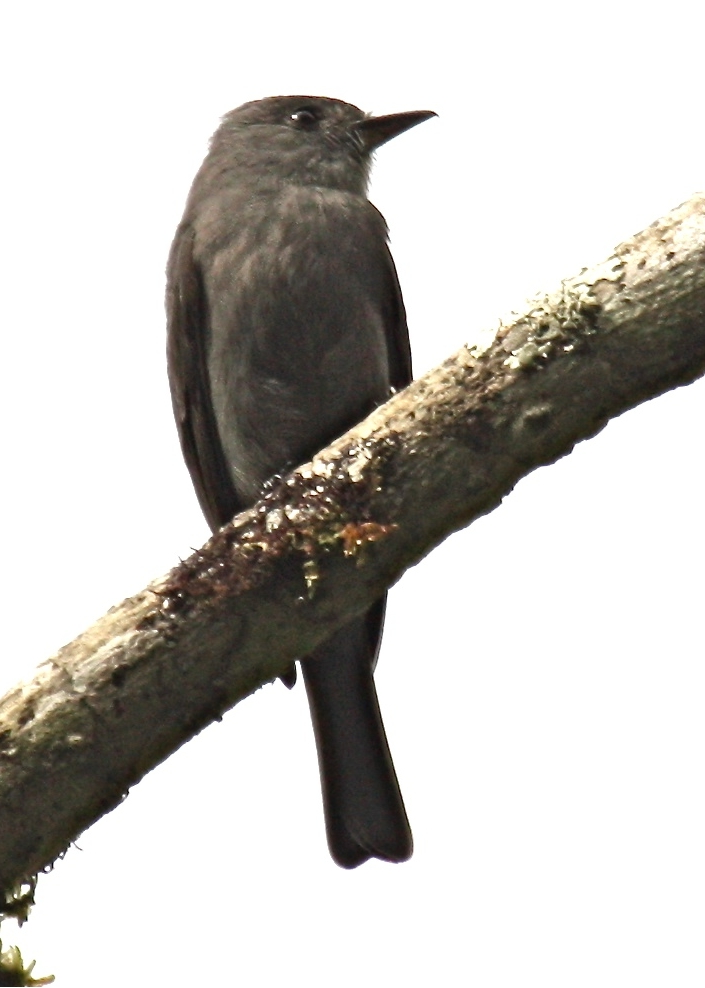
Wikipedia: Uniform antshrike Source: WIKIPEDIA
Uniform_Antshrike.jpg
🔍
Never observed (yet!)
Description
The uniform antshrike (Thamnophilus unicolor) is a species of bird in the family Thamnophilidae. It is found in Colombia, Ecuador, and Peru. Its natural habitat is subtropical or tropical moist montane forests.
[more]
Details
Castelnau's antshrike / Flussufer-Ameisenwürger (Thamnophilus cryptoleucus)
Profile Wikipedia Xeno-Canto YouTube

Wikipedia: Castelnau's antshrike Source: WIKIPEDIA
1200px-Thamnophilus_cryptoleucus_-_Castelnau%27s_Antshrike_%28cropped%29.jpg
🔍
Never observed (yet!)
Description
Castelnau's antshrike (Thamnophilus cryptoleucus) is a species of bird in the family Thamnophilidae. It is found in Brazil, Colombia, Ecuador, and Peru. Its natural habitats are riverine subtropical or tropical moist lowland forests and heavily degraded former forest.
[more]
Details
Barred antshrike / Binden-Ameisenwürger (Thamnophilus doliatus)
Profile Wikipedia Xeno-Canto YouTube

Wikipedia: Barred antshrike Source: WIKIPEDIA
1200px-Thamnophilus_doliatus_-Goias%2C_Brazil-8.jpg
🔍
Never observed (yet!)
Description
The barred antshrike (Thamnophilus doliatus) is a passerine bird in the antbird family. It is found in the Neotropics from Tamaulipas, Mexico, through Central America, Trinidad and Tobago, and a large part of South America east of the Andes as far south as northern Argentina, Bolivia and Paraguay. There is one accepted record from southern Texas.[2] It is found in a wide range of wooded habitats (even gardens and parks) in both humid and arid regions. Throughout a large part of its range, it is among the most common antbirds.
[more]
Details
Black-crowned antshrike / Westlicher Tropfenameisenwürger (Thamnophilus atrinucha)
Profile Wikipedia Xeno-Canto YouTube

Wikipedia: Black-crowned antshrike Source: WIKIPEDIA
1200px-Black-crowned_Antshrike_%2840880837972%29.jpg
🔍
Never observed (yet!)
Description
The black-crowned antshrike or western slaty antshrike (Thamnophilus atrinucha) is a species of bird in the family Thamnophilidae.
It is found in from western Ecuador, western Colombia, western Venezuela, and Central America as far north as Belize.
[more]
Details
White-shouldered antshrike / Perlschulter-Ameisenwürger (Thamnophilus aethiops)
Profile Wikipedia Xeno-Canto YouTube

Wikipedia: White-shouldered antshrike Source: WIKIPEDIA
1200px-Thamnophilus_aethiops.jpg
🔍
Never observed (yet!)
Description
The white-shouldered antshrike (Thamnophilus aethiops) is a species of bird in the family Thamnophilidae. It is found in Bolivia, Brazil, Colombia, Ecuador, Peru, and Venezuela. Its natural habitat is subtropical or tropical moist lowland forests.
[more]
Details
Cocha antshrike / Südlicher Schwarzameisenwürger (Thamnophilus praecox)
Profile Wikipedia Xeno-Canto YouTube

Wikipedia: Cocha antshrike Source: WIKIPEDIA
1200px-Thamnophilus_praecox_-_Cocha_Antshrike_-_female_%28cropped%29.jpg
🔍
Never observed (yet!)
Description
The cocha antshrike (Thamnophilus praecox) is a species of bird in the family Thamnophilidae. It is endemic to Ecuador.
[more]
Details
Striated antbird / Weißbauch-Ameisenfänger (Drymophila devillei)
Profile Wikipedia Xeno-Canto YouTube

Wikipedia: Striated antbird Source: WIKIPEDIA
Drymophila_devillei_-_Striated_Antbird%3B_Madre_de_Dios%2C_Peru_2.jpg
🔍
Never observed (yet!)
Description
The striated antbird (Drymophila devillei) is a species of bird in the family Thamnophilidae, the antbirds. It is found in the western and south-central Amazon in South America. As presently defined, it has two subspecies: the nominate subspecies in the west, and D. d. subochracea in the south-central Amazon. The latter is sometimes known as the Xingu antbird, but this leads to confusion with Willisornis vidua.
[more]
Details
Streak-headed antbird (Drymophila striaticeps)

Wikipedia: Streak-headed antbird Source: WIKIPEDIA
Drymophila_striaticeps_%28Streak-headed_Antbird%29_-_male_%287062565647%29.jpg
🔍
Never observed (yet!)
Description
The streak-headed antbird (Drymophila striaticeps) is a species of bird in the family Thamnophilidae. It is found in humid highland forests, especially near bamboo, ranging through the Andes from Bolivia to Colombia. This 15 cm (6 in) bird is found at higher elevations. It was previously considered conspecific with the long-tailed antbird.
[more]
Details
Yellow-breasted antwren / Gelbkehl-Ameisenfänger (Herpsilochmus axillaris)
Profile Wikipedia Xeno-Canto YouTube

Wikipedia: Yellow-breasted antwren Source: WIKIPEDIA
Yellow-breasted-antwren.jpg
🔍
Never observed (yet!)
Description
The yellow-breasted antwren (Herpsilochmus axillaris) is a species of bird in the family Thamnophilidae. It is found in Colombia, Ecuador, and Peru. Its natural habitat is subtropical or tropical moist montane forests.
[more]
Details
Rufous-winged antwren / Rotschwingen-Ameisenfänger (Herpsilochmus rufimarginatus)
Profile Wikipedia Xeno-Canto YouTubeDescription
Details
Dugand's antwren / Westamazonischer Ameisenfänger (Herpsilochmus dugandi)
Profile Wikipedia Xeno-Canto YouTube

Wikipedia: Dugand's antwren Source: WIKIPEDIA
1200px-Herpsilochmus_dugandi_-_Dugand%27s_Antwren.jpg
🔍
Never observed (yet!)
Description
Dugand's antwren (Herpsilochmus dugandi) is a species of bird in the family Thamnophilidae. It is found in Colombia, Ecuador, and Peru. Its natural habitat is subtropical or tropical moist lowland forests.
[more]
Details
Ancient antwren (Herpsilochmus gentryi)
Profile Wikipedia Xeno-Canto YouTube

Wikipedia: Ancient antwren Source: WIKIPEDIA
Herpsilochmus_gentryi_-_Ancient_Antwren_1.jpg
🔍
Never observed (yet!)
Description
The ancient antwren (Herpsilochmus gentryi) is a species of bird in the family Thamnophilidae. It is found in northern Peru and southeastern Ecuador.
Its natural habitat is subtropical or tropical moist lowland forests. It is threatened by habitat loss.
[more]
Details
Peruvian warbling antbird (Hypocnemis peruviana)

Wikipedia: Peruvian warbling antbird Source: WIKIPEDIA
1200px-Hypocnemis_peruviana_-_Peruvian_warbling-antbird_01.jpg
🔍
Never observed (yet!)
Description
The Peruvian warbling antbird (Hypocnemis peruviana) is a species of bird in the family Thamnophilidae. It was considered a subspecies of Hypocnemis cantator, but based on vocal differences and to a lesser degree differences in plumages, it has been recommended that they be treated as separate species. As presently defined, the Peruvian warbling antbird includes a single subspecies, saturata. It has a black, white, and grey head and breast, with rufous flanks and a dull brown lower back and tail.
[more]
Details
Yellow-browed antbird / Gelbbrauen-Ameisenschnäpper (Hypocnemis hypoxantha)
Profile Wikipedia Xeno-Canto YouTube

Wikipedia: Yellow-browed antbird Source: WIKIPEDIA
1200px-Hypocnemis_hypoxantha_-_Yellow-browed_antbird%2C_Manacapuru%2C_Amazonas%2C_Brazil.jpg
🔍
Never observed (yet!)
Description
The yellow-browed antbird (Hypocnemis hypoxantha) is a species of bird in the antbird family Thamnophilidae. It is found in Brazil, Colombia, Ecuador, and Peru. Its natural habitat is subtropical or tropical moist lowland forests.
[more]
Details
Amazonian streaked-antwren / Amazonien-Strichelameisenschlüpfer (Myrmotherula multostriata)
Profile Wikipedia Xeno-Canto YouTube

Wikipedia: Amazonian streaked-antwren Source: WIKIPEDIA
Myrmotherula_multostriata_-_Amazonian_Streaked-Antwren_%28female%29.JPG
🔍
Never observed (yet!)
Description
The Amazonian streaked antwren (Myrmotherula multostriata) is a species of bird in the family Thamnophilidae. It is found in South America where its natural habitats are subtropical or tropical moist lowland forests and subtropical or tropical swamps.
[more]
Details
Pacific antwren / Westlicher Strichelameisenschlüpfer (Myrmotherula pacifica)
Profile Wikipedia Xeno-Canto YouTube

Wikipedia: Pacific antwren Source: WIKIPEDIA
1200px-Pacific_Antwren_%28Myrmotherula_pacifica%29_%285833660102%29.jpg
🔍
Never observed (yet!)
Description
The Pacific antwren, or Pacific streaked antwren, (Myrmotherula pacifica) is a species of bird in the family Thamnophilidae. It is found in Colombia, Ecuador and Panama, living in forests, clearings, woodland verges and gardens.
[more]
Details
Long-winged antwren / Silber-Ameisenschlüpfer (Myrmotherula longipennis)
Profile Wikipedia Xeno-Canto YouTube

Wikipedia: Long-winged antwren Source: WIKIPEDIA
1200px-Myrmotherula_longipennis_-_Long-winged_antwren_%28male%29.jpg
🔍
Never observed (yet!)
Description
The long-winged antwren (Myrmotherula longipennis) is a species of bird in the family Thamnophilidae. It is found in Bolivia, Brazil, Colombia, Ecuador, French Guiana, Guyana, Peru, Suriname, and Venezuela. Its natural habitat is subtropical or tropical moist lowland forests.
[more]
Details
Stripe-chested antwren / Weißbauch-Ameisenschlüpfer (Myrmotherula longicauda)
Profile Wikipedia Xeno-Canto YouTube

Wikipedia: Stripe-chested antwren Source: WIKIPEDIA
Stripe-chested_Antwren_-_Manu_NP_7858_%2816635561888%29.jpg
🔍
Never observed (yet!)
Description
The stripe-chested antwren (Myrmotherula longicauda) is a species of bird in the family Thamnophilidae found in Bolivia, Ecuador, and Peru and southwestern Colombia. Its natural habitats are subtropical or tropical moist lowland forests, subtropical or tropical moist montane forests, and heavily degraded former forest.
[more]
Details
White-fronted antwren / Weißflanken-Ameisenschlüpfer (Myrmotherula axillaris)
Description
Der Weißflanken-Ameisenschlüpfer (Myrmotherula axillaris) zählt innerhalb der Familie der Ameisenvögel (Thamnophilidae) zur Gattung Myrmotherula.[1]
[more]
Details
Gray antwren / Blassgrauer Ameisenschlüpfer (Myrmotherula menetriesii)
Profile Wikipedia Xeno-Canto YouTube

Wikipedia: Gray antwren Source: WIKIPEDIA
1200px-Naturalis_Biodiversity_Center_-_RMNH.AVES.34368_1_-_Myrmotherula_menetriesii_cinereiventris_Sclater_%26_Salvin%2C_1867_-_Formicariidae_-_bird_skin_specimen.jpeg
🔍
Never observed (yet!)
Description
The grey antwren (Myrmotherula menetriesii) is a species of bird in the family Thamnophilidae. It is found in Bolivia, Brazil, Colombia, Ecuador, French Guiana, Guyana, Peru, Suriname, and Venezuela.
[more]
Details
Slaty antwren / Schieferameisenschlüpfer (Myrmotherula schisticolor)
Profile Wikipedia Xeno-Canto YouTube

Wikipedia: Slaty antwren Source: WIKIPEDIA
Slaty_Antwren_-_Ecuador_05_dgs_%2816823121085%29.jpg
🔍
Never observed (yet!)
Description
The slaty antwren (Myrmotherula schisticolor) is a small passerine bird in the antbird family. It is a resident breeder in tropical Central and South America from southern Mexico to western Ecuador and eastern Peru.
[more]
Details
Colombian antwren / Westlicher Weißkehl-Ameisenschlüpfer (Myrmotherula ignota)
Description
Der Westliche Weißkehl-Ameisenschlüpfer, jetzt Kurzschwanz-Ameisenschlüpfer[1] (Myrmotherula ignota, Syn.: Myrmotherula brachyura ignota), zählt innerhalb der Familie der Ameisenvögel (Thamnophilidae) zur Gattung Myrmotherula.[2]
[more]
Details
Rio Suno antwren / Kleiner Silberameisenschlüpfer (Myrmotherula sunensis)
Profile Wikipedia Xeno-Canto YouTube

Wikipedia: Rio Suno antwren Source: WIKIPEDIA
1200px-Myrmotherula_sunensis_map.svg.png
🔍
Never observed (yet!)
Description
The Rio Suno antwren (Myrmotherula sunensis) is a species of bird in the family Thamnophilidae. It is found in western Brazil Colombia, Ecuador and Peru.
[more]
Details
Plain-winged antwren / Grauflügel-Ameisenschlüpfer (Myrmotherula behni)
Profile Wikipedia Xeno-Canto YouTube

Wikipedia: Plain-winged antwren Source: WIKIPEDIA
1200px-Myrmotherula_behni_map.svg.png
🔍
Never observed (yet!)
Description
The plain-winged antwren (Myrmotherula behni) is a species of bird in the family Thamnophilidae. It is found in Brazil, Colombia, Ecuador, French Guiana, Guyana, and Venezuela.
[more]
Details
Plain-throated antwren (Isleria hauxwelli)

Wikipedia: Plain-throated antwren Source: WIKIPEDIA
1200px-Isleria_Hauxwelli_-_Plain-throated_antwren_%28male%29.jpg
🔍
Never observed (yet!)
Description
The plain-throated antwren (Isleria hauxwelli) is a species of bird in the family Thamnophilidae. It is found in all the countries of the Amazon Basin. Its natural habitat is subtropical or tropical moist lowland forests. Unlike other Myrmotherula, it stays near ground level often clinging sideways to saplings.
[more]
Details
Pygmy antwren / Östlicher Weißkehl-Ameisenschlüpfer (Myrmotherula brachyura)
Profile Wikipedia Xeno-Canto YouTube
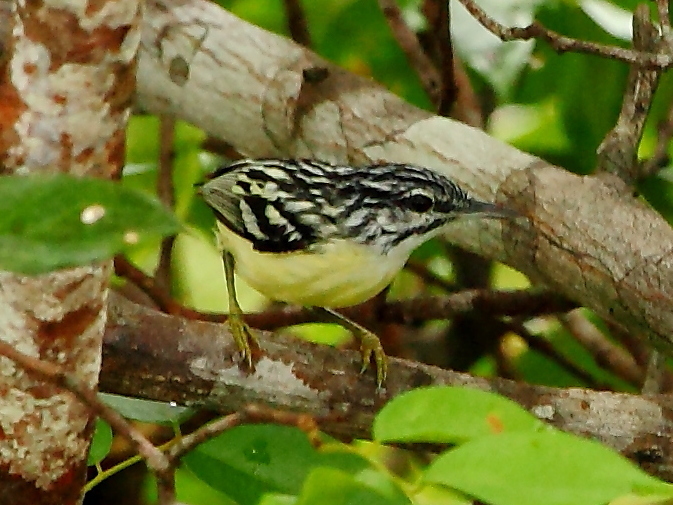
Wikipedia: Pygmy antwren Source: WIKIPEDIA
Myrmotherula_brachyura_-_Pigmy_antwren.JPG
🔍
Never observed (yet!)
Description
The pygmy antwren (Myrmotherula brachyura) is a species of bird in the family Thamnophilidae, the antbirds. It is found in Bolivia, Brazil, Colombia, Ecuador, French Guiana, Guyana, Peru, Suriname, and Venezuela. Its natural habitats are subtropical or tropical moist lowland forests, subtropical or tropical swamps, and heavily degraded former forest.
[more]
Details
Black-spotted bare-eye / Tropfenmantel-Ameisenvogel (Phlegopsis nigromaculata)
Profile Wikipedia Xeno-Canto YouTube

Wikipedia: Black-spotted bare-eye Source: WIKIPEDIA
1200px-Phlegopsis_nigromaculata_1847.jpg
🔍
Never observed (yet!)
Description
The black-spotted bare-eye (Phlegopsis nigromaculata) is a species of insectivore passerine bird in the antbird family Thamnophilidae. It is found in Bolivia, Brazil, Colombia, Ecuador, and Peru. Its natural habitats are subtropical or tropical moist lowland forests.[1]
[more]
Details
Reddish-winged bare-eye / Rotspiegel-Ameisenvogel (Phlegopsis erythroptera)
Profile Wikipedia Xeno-Canto YouTube
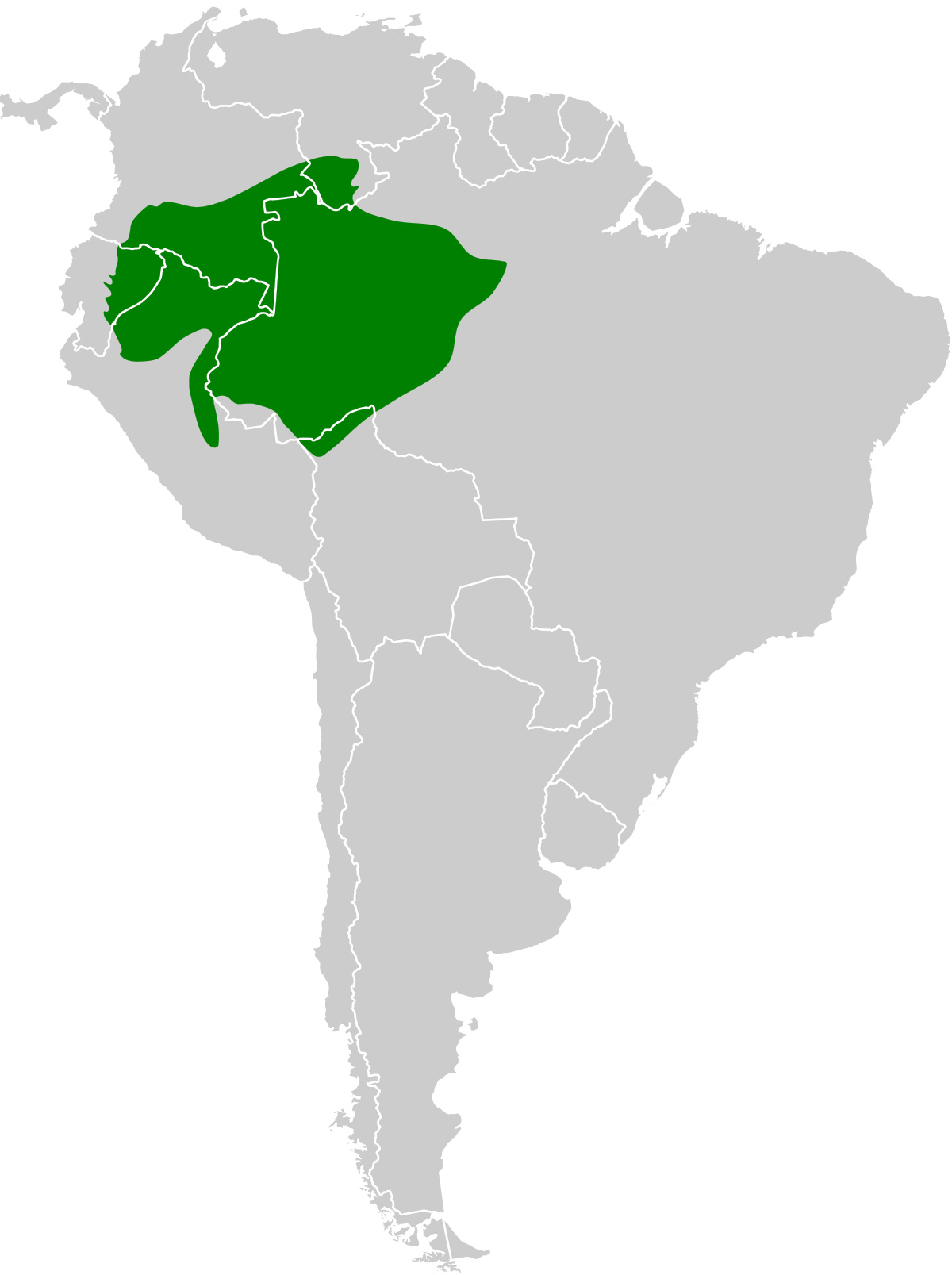
Wikipedia: Reddish-winged bare-eye Source: WIKIPEDIA
1200px-Phlegopsis_erythroptera_map.svg.png
🔍
Never observed (yet!)
Description
The reddish-winged bare-eye (Phlegopsis erythroptera) is a species of insectivorous passerine bird in the antbird family, Thamnophilidae.
It is found in Bolivia, Brazil, Colombia, Ecuador, Peru, and Venezuela.
Its natural habitat is subtropical or tropical moist lowland forests.
[more]
Details
Wing-banded antbird / Stummelschwanz-Ameisenvogel (Myrmornis torquata)
Profile Wikipedia Xeno-Canto YouTube

Wikipedia: Wing-banded antbird Source: WIKIPEDIA
Myrmornis_torquata_-_Wing-banded_Antbird_%28male%29%29%2C_Carajas_National_Forest%2C_Par%C3%A1%2C_Brazil.jpg
🔍
Never observed (yet!)
Description
The wing-banded antbird (Myrmornis torquata) is a species of passerine bird in the antbird family, Thamnophilidae. It is placed in the monotypic genus Myrmornis.[2]
It is found in Brazil, Colombia, Ecuador, French Guiana, Guyana, Nicaragua, Panama, Peru, Suriname, and Venezuela. Its natural habitat is subtropical or tropical moist lowland forests.[1]
[more]
Details
Fulvous antshrike (Frederickena fulva)
Profile Wikipedia Xeno-Canto YouTube

Wikipedia: Fulvous antshrike Source: WIKIPEDIA
1200px-Frederickena_fulva_map.svg.png
🔍
Never observed (yet!)
Description
The fulvous antshrike (Frederickena fulva) is a monotypic species of antbird in the family Thamnophilidae.[1] Formerly considered to be a subspecies of the undulated antshrike, it was determined to be a distinct species based on vocal differences.[2][3] The species occurs from the western Amazon in eastern Ecuador, south-eastern Colombia, north-eastern Peru, and possibly extreme western Brazil. Only the female is overall fulvous with dark barring; the male is black with whitish barring.
[more]
Details
White-plumed antbird / Weißgesicht-Ameisenvogel (Pithys albifrons)
Profile Wikipedia Xeno-Canto YouTube

Wikipedia: White-plumed antbird Source: WIKIPEDIA
1200px-Pithys_albifrons_-NBII_Image_Gallery-a00203.jpg
🔍
Never observed (yet!)
Description
Details
Great antshrike / Weißbrust-Ameisenwürger (Taraba major)
Profile Wikipedia Xeno-Canto YouTube

Wikipedia: Great antshrike Source: WIKIPEDIA
1200px-Great_Antshrike_-_Male.jpg
🔍
Never observed (yet!)
Description
The great antshrike (Taraba major) is a passerine bird in the antbird family, Thamnophilidae. It is the only member of the genus Taraba. It is a resident breeder in the tropical New World in southern Mexico, Central America, Trinidad and South America down to northern Argentina and southeastern Brazil.
[more]
Details
Pearly antshrike / Perlenwollrücken (Megastictus margaritatus)
Profile Wikipedia Xeno-Canto YouTube

Wikipedia: Pearly antshrike Source: WIKIPEDIA
1200px-Megastictus_margaritatus_-_Pearly_Antshrike_%28male%29%2C_Novo_Air%C3%A3o%2C_Amazonas%2C_Brazil.jpg
🔍
Never observed (yet!)
Description
The pearly antshrike (Megastictus margaritatus) is a species of bird in the family Thamnophilidae. It is monotypic within the genus Megastictus.[2] It is found in Brazil, Colombia, Ecuador, Peru, and Venezuela, where its natural habitat is subtropical or tropical moist lowland forests.[1]
[more]
Details
Spot-winged antshrike / Fleckflügel-Wollrücken (Pygiptila stellaris)
Profile Wikipedia Xeno-Canto YouTube

Wikipedia: Spot-winged antshrike Source: WIKIPEDIA
Spot-winged_Antshrike_-_Avium_Species_Novae.jpg
🔍
Never observed (yet!)
Description
The spot-winged antshrike (Pygiptila stellaris) is a species of bird in the family Thamnophilidae. It is monotypic within the genus Pygiptila.[2] It is found in Bolivia, Brazil, Colombia, Ecuador, French Guiana, Peru, Suriname, and Venezuela, where its natural habitat is subtropical or tropical moist lowland forests.[1]
[more]
Details
Russet antshrike / Rostwürgerling (Thamnistes anabatinus)
Profile Wikipedia Xeno-Canto YouTube
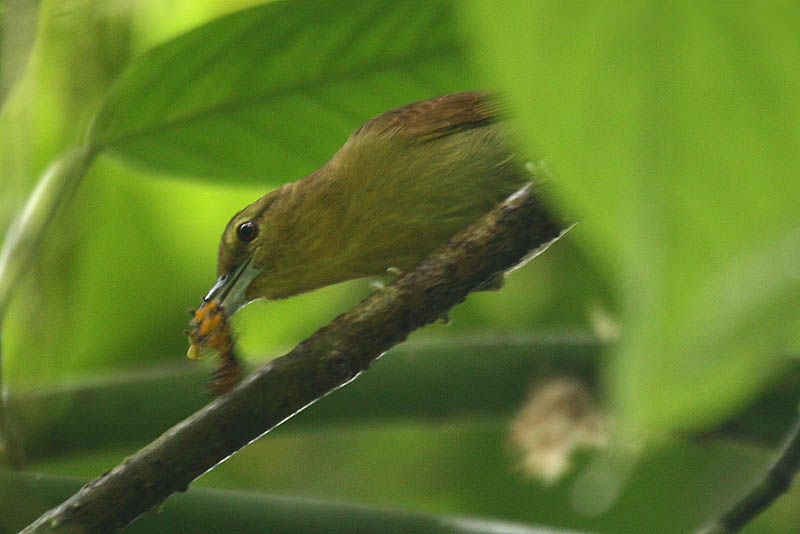
Wikipedia: Russet antshrike Source: WIKIPEDIA
Thamnistes_anabatinus_-NW_Ecuador-6.jpg
🔍
Never observed (yet!)
Description
The russet antshrike (Thamnistes anabatinus) is a passerine bird in the antbird family.
[more]
Details
Rufescent antshrike (Thamnistes rufescens)
Profile Wikipedia Xeno-Canto YouTube

Wikipedia: Rufescent antshrike Source: WIKIPEDIA
1200px-Thamnistes_rufescens_map.svg.png
🔍
Never observed (yet!)
Description
The rufescent antshrike (Thamnistes rufescens) is a passerine bird in the antbird family.
[more]
Details
Dusky-throated antshrike / Nördlicher Schwarzkehlwürgerling (Thamnomanes ardesiacus)
Profile Wikipedia Xeno-Canto YouTube

Wikipedia: Dusky-throated antshrike Source: WIKIPEDIA
Thamnomanes_ardesiacus_-_Dusky-throated_antshrike_%28male%29.jpg
🔍
Never observed (yet!)
Description
The dusky-throated antshrike (Thamnomanes ardesiacus) is a species of bird in the family Thamnophilidae. It is found in Bolivia, Brazil, Colombia, Ecuador, French Guiana, Guyana, Peru, Suriname, and Venezuela. Its natural habitat is subtropical or tropical moist lowland forests.
[more]
Details
Cinereous antshrike / Einfarbwürgerling (Thamnomanes caesius)
Profile Wikipedia Xeno-Canto YouTube

Wikipedia: Cinereous antshrike Source: WIKIPEDIA
1200px-Thamnomanes_caesius_-_Cinereous_antshrike.jpg
🔍
Never observed (yet!)
Description
The cinereous antshrike (Thamnomanes caesius) is an insectivorous bird in the antbird family Thamnophilidae. The term cinereous describes its colouration. It is found in Bolivia, Brazil, Colombia, Ecuador, French Guiana, Guyana, Peru, Suriname, and Venezuela. Its natural habitat is subtropical or tropical moist lowland forests.
[more]
Details
White-streaked antvireo / Nördlicher Schwarzbrustwürgerling (Dysithamnus leucostictus)
Profile Wikipedia Xeno-Canto YouTube

Wikipedia: White-streaked antvireo Source: WIKIPEDIA
1200px-White-streaked_Antvireo_-_Dysithamnus_leucostictus.jpg
🔍
Never observed (yet!)
Description
The white-streaked antvireo or white-spotted antvireo (Dysithamnus leucostictus) is a species of bird in the family Thamnophilidae. It is found in Colombia, Ecuador, Peru, and Venezuela. Its natural habitat is subtropical or tropical moist montane forests.
[more]
Details
Spot-crowned antvireo / Tüpfelscheitel-Würgerling (Dysithamnus puncticeps)
Profile Wikipedia Xeno-Canto YouTube

Wikipedia: Spot-crowned antvireo Source: WIKIPEDIA
1200px-Dysithamnus_puncticeps_map.svg.png
🔍
Never observed (yet!)
Description
The spot-crowned antvireo (Dysithamnus puncticeps) is a species of bird in the family Thamnophilidae. It is found in Colombia, Costa Rica, Ecuador, and Panama. Its natural habitat is subtropical or tropical moist lowland forests.
[more]
Details
Bicolored antvireo / Schiefergrauer Würgerling (Dysithamnus occidentalis)
Profile Wikipedia Xeno-Canto YouTube

Wikipedia: Bicolored antvireo Source: WIKIPEDIA
1200px-Dysithamnus_occidentalis_-_Bicolored_Antvireo.jpg
🔍
Never observed (yet!)
Description
The bicolored antvireo (Dysithamnus occidentalis) is an insectivorous bird in the antbird family Thamnophilidae. It is found on the west slope of the Andes from southwest Colombia to northwest Ecuador. Its natural habitat is subtropical or tropical moist montane forests. It is threatened by habitat loss.
[more]
Details
Plain antvireo / Waldwürgerling (Dysithamnus mentalis)
Profile Wikipedia Xeno-Canto YouTube

Wikipedia: Plain antvireo Source: WIKIPEDIA
1200px-Dysithamnus_mentalis_-_Plain_Antvireo_%28male%29.JPG
🔍
Never observed (yet!)
Description
The plain antvireo (Dysithamnus mentalis) is a passerine bird species in the antbird family (Thamnophilidae). It is a resident breeder in tropical Central and South America.
[more]
Details
Ash-breasted antbird / Varzeaameisenschnäpper (Myrmoborus lugubris)
Profile Wikipedia Xeno-Canto YouTube

Wikipedia: Ash-breasted antbird Source: WIKIPEDIA
1200px-Myrmoborus_lugubris_stictopterus_-_Ash-breasted_Antbird_%28female%29%3B_Anavilhanas_islands%2C_Novo_Air%C3%A3o%3B_Amazonas%2C_Brazil.jpg
🔍
Never observed (yet!)
Description
The ash-breasted antbird (Myrmoborus lugubris) is an insectivorous bird in the antbird family, Thamnophilidae. It is found in Brazil, Colombia, Ecuador, and Peru. Its natural habitat is subtropical or tropical moist lowland forests.
[more]
Details
Black-faced antbird / Schuppenflügel-Ameisenschnäpper (Myrmoborus myotherinus)
Profile Wikipedia Xeno-Canto YouTube
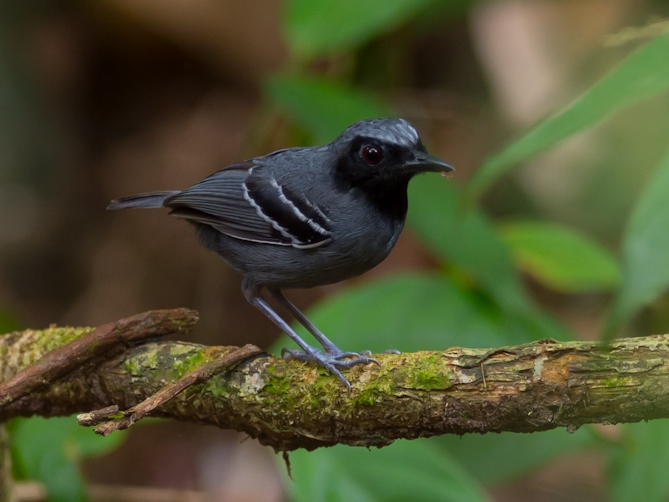
Wikipedia: Black-faced antbird Source: WIKIPEDIA
Myrmoborus_myotherinus_ardesiacus_-_Black-faced_Antbird_%28male%29.jpg
🔍
Never observed (yet!)
Description
The black-faced antbird (Myrmoborus myotherinus) is a species of bird, about 12–13 cm (5 inches) long, in the antbird family Thamnophilidae. It is endemic to a wide range across the Amazon basin. It feeds on insects and spiders and sometimes follows army ants to catch the insects disturbed by their march.
[more]
Details
White-browed antbird / Weißstirn-Ameisenschnäpper (Myrmoborus leucophrys)
Profile Wikipedia Xeno-Canto YouTube

Wikipedia: White-browed antbird Source: WIKIPEDIA
1200px-Myrmoborus_leucophrys_leucophrys_Wolf.jpg
🔍
Never observed (yet!)
Description
The white-browed antbird (Myrmoborus leucophrys) is a species of perching bird in the family Thamnophilidae. It is found in Bolivia, Brazil, Colombia, Ecuador, French Guiana, Guyana, Peru, Suriname, and Venezuela. Its natural habitats are subtropical or tropical moist lowland forests and subtropical or tropical moist montane forests.
[more]
Details
Ocellated antbird / Halsband-Ameisenvogel (Phaenostictus mcleannani)
Profile Wikipedia Xeno-Canto YouTube

Wikipedia: Ocellated antbird Source: WIKIPEDIA
1200px-Phaenostictus-mcleannani-001.jpg
🔍
Never observed (yet!)
Description
The ocellated antbird (Phaenostictus mcleannani) is a species of antbird in the family Thamnophilidae. It is monotypic within the genus Phaenostictus and is found in southern Central America and the northwestern part of South America. Its natural habitat is the understory of tropical moist lowland forest, foothill forest, and tall secondary growth woodlands.
[more]
Details
Hairy-crested antbird / Grauschopf-Ameisenvogel (Rhegmatorhina melanosticta)
Profile Wikipedia Xeno-Canto YouTube

Wikipedia: Hairy-crested antbird Source: WIKIPEDIA
1200px-Rhegmatorhina_melanosticta_-NBII_Image_Gallery-a00183.jpg
🔍
Never observed (yet!)
Description
The hairy-crested antbird (Rhegmatorhina melanosticta) is a species of bird in the family Thamnophilidae. It is found in Bolivia, Brazil, Colombia, Ecuador, and Peru. Its natural habitat is subtropical or tropical moist lowland forests.
[more]
Details
Bicolored antbird (Gymnopithys bicolor)

Wikipedia: Bicolored antbird Source: WIKIPEDIA
1200px-Gymnopithys-leucaspis-001_edit2.jpg
🔍
Never observed (yet!)
Description
The bicolored antbird (Gymnopithys bicolor) is a species of bird in the family Thamnophilidae. It is found in Honduras south to Panama, western Colombia and Ecuador. Its natural habitat is subtropical or tropical moist lowland forest.
[more]
Details
Bicolored antbird / Weißohr-Ameisenvogel (Gymnopithys leucaspis)
Wikipedia: Bicolored antbird Source: WIKIPEDIA
1200px-Gymnopithys-leucaspis-001_edit2.jpg
🔍
Never observed (yet!)
Description
The bicolored antbird (Gymnopithys bicolor) is a species of bird in the family Thamnophilidae. It is found in Honduras south to Panama, western Colombia and Ecuador. Its natural habitat is subtropical or tropical moist lowland forest.
[more]
Details
Dot-winged antwren / Tropfenflügel-Ameisenfänger (Microrhopias quixensis)
Profile Wikipedia Xeno-Canto YouTube

Wikipedia: Dot-winged antwren Source: WIKIPEDIA
Microrhopias_quixensis_-_Dot-winged_Antwren_%28male%29.JPG
🔍
Never observed (yet!)
Description
The dot-winged antwren (Microrhopias quixensis) is a passerine bird in the antbird family. In the past it was sometimes known as the velvety antwren, and some of its more distinctive subspecies have their own infrequently used English names. It is a resident in tropical Central and South America from southeastern Mexico south to western Ecuador, northern Bolivia, central Brazil and the Guianas. It is the only member of the genus Microrhopias.
[more]
Details
Black bushbird / Schwarzer Bodenameisenwürger (Neoctantes niger)
Profile Wikipedia Xeno-Canto YouTube

Wikipedia: Black bushbird Source: WIKIPEDIA
1200px-Neoctantes_niger_-_Black_Bushbird_-_female_%28cropped%29.jpg
🔍
Never observed (yet!)
Description
The black bushbird (Neoctantes niger) is a species of insectivorous bird in the antbird family Thamnophilidae. It is monotypic within the genus Neoctantes.[2] It is found in Brazil, Colombia, Ecuador, and Peru. Its natural habitat is subtropical or tropical moist lowland forests.[1]
[more]
Details
Banded antbird / Bürzelbinden-Ameisenfänger (Dichrozona cincta)
Profile Wikipedia Xeno-Canto YouTube

Wikipedia: Banded antbird Source: WIKIPEDIA
1200px-Dichrozona_cincta_map.svg.png
🔍
Never observed (yet!)
Description
The banded antbird (Dichrozona cincta) – sometimes called banded antwren despite not being close to the true antwrens – is a species of bird in the family Thamnophilidae. It is the only member of the genus Dichrozona. Its natural habitat is subtropical or tropical moist lowland forests. Hence why it is predominately located in Bolivia, Brazil, Colombia, Ecuador, Peru, and
[more]
Details
Dot-backed antbird / Weißflecken-Ameisenwächter (Hylophylax punctulatus)

Wikipedia: Dot-backed antbird Source: WIKIPEDIA
Hylophylax_punctulatus_-_Dot-backed_Antbird_%28male%29.JPG
🔍
Never observed (yet!)
Description
The dot-backed antbird (Hylophylax punctulatus) is a species of bird in the family Thamnophilidae. It is found in Bolivia, Brazil, Colombia, Ecuador, French Guiana, Peru, and Venezuela. Its natural habitat is subtropical or tropical swamps.
[more]
Details
Spotted antbird / Rotmantel-Ameisenwächter (Hylophylax naevioides)
Profile Wikipedia Xeno-Canto YouTube

Wikipedia: Spotted antbird Source: WIKIPEDIA
1200px-Spotted_Antbird.jpg
🔍
Never observed (yet!)
Description
The spotted antbird (Hylophylax naevioides) is a species of bird in the family Thamnophilidae.
In southern Central America, it is found in Honduras, Nicaragua, Costa Rica and Panama; also Colombia and Ecuador of northwestern South America.
Its natural habitat is subtropical or tropical moist lowland forests.
[more]
Details
Spot-backed antbird / Ockerflecken-Ameisenwächter (Hylophylax naevius)

Wikipedia: Spot-backed antbird Source: WIKIPEDIA
1200px-Hylophylax_naevia.jpg
🔍
Never observed (yet!)
Description
The spot-backed antbird (Hylophylax naevius) is a species of bird in the family Thamnophilidae, the antbirds. It is found in Bolivia, Brazil, Colombia, Ecuador, French Guiana, Guyana, Peru, Suriname, and Venezuela. Its natural habitats are subtropical or tropical moist lowland forests and subtropical or tropical swamps.
[more]
Details
Black-and-white antbird / Weißbauch-Ameisenschnäpper (Myrmochanes hemileucus)
Profile Wikipedia Xeno-Canto YouTube

Wikipedia: Black-and-white antbird Source: WIKIPEDIA
1200px-Myrmochanes_hemileucus_-_Black-and-white_antbird_%28male%29%3B_Marchantaria_island%2C_Iranduba%2C_Amazonas%2C_Brazil.jpg
🔍
Never observed (yet!)
Description
The black-and-white antbird (Myrmochanes hemileucus) is a species of bird in the family Thamnophilidae. It is monotypic within the genus Myrmochanes.[2] It is found in Bolivia, Brazil, Colombia, Ecuador, and Peru. Its natural habitats are subtropical or tropical moist lowland forests and subtropical or tropical moist shrubland.[1]
[more]
Details
Black-chinned antbird / Schwarzkinn-Ameisenschnäpper (Hypocnemoides melanopogon)
Profile Wikipedia Xeno-Canto YouTube

Wikipedia: Black-chinned antbird Source: WIKIPEDIA
1200px-Hypocnemoides_melanopogon_-_Black-chinned_Antbird_%28female%29%2C_Anavilhanas_islands%2C_Novo_Air%C3%A3o%2C_Amanazonas%2C_Brazil.jpg
🔍
Never observed (yet!)
Description
The black-chinned antbird (Hypocnemoides melanopogon) is a species of bird in the family Thamnophilidae. It is found in Brazil, Colombia, Ecuador, French Guiana, Guyana, Peru, Suriname, and Venezuela. Its natural habitat is subtropical or tropical swamps.
[more]
Details
Silvered antbird / Mangroveameisenvogel (Sclateria naevia)
Profile Wikipedia Xeno-Canto YouTube

Wikipedia: Silvered antbird Source: WIKIPEDIA
1200px-Sclateria_naevia_Castelnau.jpg
🔍
Never observed (yet!)
Description
The silvered antbird (Sclateria naevia) is a passerine bird in the antbird family, the only member of the genus Sclateria. It is a resident breeder in tropical South America from Colombia and Trinidad south to Peru, Bolivia and central Brazil.
[more]
Details
Fasciated antshrike / Zebra-Ameisenwürger (Cymbilaimus lineatus)
Profile Wikipedia Xeno-Canto YouTube

Wikipedia: Fasciated antshrike Source: WIKIPEDIA
1200px-Fasciated_Antshrike_male.jpg
🔍
Never observed (yet!)
Description
The fasciated antshrike (Cymbilaimus lineatus) is a species of bird in the antbird family Thamnophilidae. The species is found in Central and Southern America.
[more]
Details
Rufous-tailed stipplethroat / Rotschwanz-Ameisenschlüpfer (Epinecrophylla erythrura)
Profile Wikipedia Xeno-Canto YouTube

Wikipedia: Rufous-tailed stipplethroat Source: WIKIPEDIA
MyrmotherulaErythruraSmit.jpg
🔍
Never observed (yet!)
Description
The rufous-tailed stipplethroat or rufous-tailed antwren (Epinecrophylla erythrura) is a species of insectivorous bird in the antbird family Thamnophilidae. It was formerly placed in the genus Myrmotherula. It is found in Brazil, Colombia, Ecuador, and Peru. Its natural habitat is subtropical or tropical moist lowland forests.
[more]
Details
Foothill stipplethroat / Westlicher Graubrust-Ameisenschlüpfer (Epinecrophylla spodionota)
Profile Wikipedia Xeno-Canto YouTube

Wikipedia: Foothill stipplethroat Source: WIKIPEDIA
1200px-Epinecrophylla_spodionota_map.svg.png
🔍
Never observed (yet!)
Description
The foothill stipplethroat or foothill antwren (Epinecrophylla spodionota) is a species of bird in the family Thamnophilidae. It is found in Peru, Ecuador and southwestern Colombia. Its natural habitats are subtropical or tropical moist lowland forests and subtropical or tropical moist montane forests.
[more]
Details
Ornate stipplethroat / Schwarzkehl-Ameisenschlüpfer (Epinecrophylla ornata)

Wikipedia: Ornate stipplethroat Source: WIKIPEDIA
1200px-Epinecrophylla_ornata.jpg
🔍
Never observed (yet!)
Description
The ornate stipplethroat or ornate antwren (Epinecrophylla ornata) is a species of bird in the family Thamnophilidae. It is found in Bolivia, Brazil, Colombia, Ecuador, and Peru. Its natural habitats are subtropical or tropical moist lowland forests and subtropical or tropical swamps.
[more]
Details
Rufous-backed stipplethroat / Östlicher Graubrust-Ameisenschlüpfer (Epinecrophylla haematonota)
Profile Wikipedia Xeno-Canto YouTube

Wikipedia: Rufous-backed stipplethroat Source: WIKIPEDIA
1200px-Epinecrophylla_haematonota_map.svg.png
🔍
Never observed (yet!)
Description
The rufous-backed stipplethroat (Epinecrophylla haematonota), also called the rufous-backed antwren or the stipple-throated antwren, is a species of bird in the family Thamnophilidae. It is found in southeastern Colombia and southern Venezuela to eastern Ecuador, northern and eastern Peru and western Brazil in its natural habitat of subtropical or tropical moist lowland forests.[2]
[more]
Details
Checker-throated antwren / Tropfenkehl-Ameisenschlüpfer (Epinecrophylla fulviventris)

Wikipedia: Checker-throated antwren Source: WIKIPEDIA
1200px-Epinecrophylla_fulviventris.jpg
🔍
Never observed (yet!)
Description
The checker-throated stipplethroat (Epinecrophylla fulviventris), also called fulvous-bellied antwren or checker-throated antwren, is a small passerine bird in the antbird family. It has traditionally been placed in the genus Myrmotherula, but is, together with other members of the so-called "stipple-throated group", now placed in the new genus Epinecrophylla. This is supported by molecular work, behavior, voice and morphology. Now treated as monotypic, it includes the former subspecies E. f. costaricensis and E. f. salmoni.
[more]
Details
Scale-backed antbird (Willisornis poecilinotus)

Wikipedia: Scale-backed antbird Source: WIKIPEDIA
1200px-Willisornis_poecilonotus_male.jpg
🔍
Never observed (yet!)
Description
The common scale-backed antbird (Willisornis poecilinotus) is a species of passerine bird in the antbird family, Thamnophilidae. It is found in the Amazon of Bolivia, Brazil, Colombia, Ecuador, French Guiana, Guyana, Peru, Suriname, and Venezuela.
Its natural habitat is tropical moist lowland forests. As with other species of antbirds, it regularly follows swarms of army ants as they flush insects and other arthropods out of the leaf litter.
[more]
Details
Plumbeous antbird (Myrmelastes hyperythrus)
Profile Wikipedia Xeno-Canto YouTube

Wikipedia: Plumbeous antbird Source: WIKIPEDIA
1200px-Myrmelastes_hyperythrus_-_Plumbeous_antbird_%28male%29.jpg
🔍
Never observed (yet!)
Description
The plumbeous antbird (Myrmelastes hyperythrus) is a species of bird in the family Thamnophilidae.
[more]
Details
Slate-colored antbird (Myrmelastes schistaceus)

Wikipedia: Slate-colored antbird Source: WIKIPEDIA
1200px-Myrmelastes_schistaceus_map.svg.png
🔍
Never observed (yet!)
Description
The slate-colored antbird (Myrmelastes schistaceus) is a species of bird in the family Thamnophilidae. It is found in Brazil, Colombia, Ecuador, and Peru. Its natural habitat is subtropical or tropical moist lowland forest.
[more]
Details
Spot-winged antbird / Sternflügel-Ameisenvogel (Myrmelastes leucostigma)

Wikipedia: Spot-winged antbird Source: WIKIPEDIA
1200px-Schistocichla_leucostigma.jpg
🔍
Never observed (yet!)
Description
The spot-winged antbird (Myrmelastes leucostigma) is a species of bird in the family Thamnophilidae. It is found in humid forest in the Amazon north of the Amazon River, and in the far western Amazon and adjacent lower east Andean slopes.
[more]
Details
Ash-winged antwren (Euchrepomis spodioptila)
Profile Wikipedia Xeno-Canto YouTube

Wikipedia: Ash-winged antwren Source: WIKIPEDIA
1200px-Euchrepomis_spodioptila_-_Ash-winged_antwren_%28male%29%3B_Manaus%2C_Amazonas%2C_Brazil.jpg
🔍
Never observed (yet!)
Description
The ash-winged antwren (Euchrepomis spodioptila) is an insectivorous bird in the antbird family Thamnophilidae. It is found in Brazil, Colombia, Ecuador, French Guiana, Guyana, Peru, Suriname, and Venezuela. Its natural habitat is subtropical or tropical moist lowland forests.
[more]
Details
Rufous-rumped antwren (Euchrepomis callinota)
Profile Wikipedia Xeno-Canto YouTube

Wikipedia: Rufous-rumped antwren Source: WIKIPEDIA
1200px-FormicivoraCallinotaWolf.jpg
🔍
Never observed (yet!)
Description
The rufous-rumped antwren (Euchrepomis callinota) is a species of bird in the family Thamnophilidae. It is found in Colombia, Costa Rica, Ecuador, Guyana, Panama, Peru, Suriname, and Venezuela. Its natural habitat is subtropical or tropical moist montanes.
[more]
Details
Chestnut-shouldered antwren (Euchrepomis humeralis)
Profile Wikipedia Xeno-Canto YouTube

Wikipedia: Chestnut-shouldered antwren Source: WIKIPEDIA
1200px-Terenura_humoralis_Keulemans.jpg
🔍
Never observed (yet!)
Description
The chestnut-shouldered antwren (Euchrepomis humeralis) is an insectorivous bird in the antbird family Thamnophilidae. It is found in far northwestern Bolivia, Peru, Ecuador and western Brazil. Its natural habitat is subtropical or tropical moist lowland forests.
[more]
Details
Stub-tailed antbird / Stutzschwanzsipia / Stutzschwanz-Sipia (Sipia berlepschi)
Profile Wikipedia Xeno-Canto YouTube

Wikipedia: Stub-tailed antbird Source: WIKIPEDIA
1200px-Sipia_berlepschi_-_Stub-tailed_Antbird_-_male_%28cropped%29.jpg
🔍
Never observed (yet!)
Description
The stub-tailed antbird (Sipia berlepschi) is a species of bird in the family Thamnophilidae. It is found in Colombia and Ecuador. Its natural habitat is subtropical or tropical moist lowland forests.
[more]
Details
Esmeraldas antbird (Sipia nigricauda)

Wikipedia: Esmeraldas antbird Source: WIKIPEDIA
Myrmeciza_nigricauda_%28male%29_-NW_Ecuador-4.jpg
🔍
Never observed (yet!)
Description
The Esmeraldas antbird (Sipia nigricauda) is a species of bird in the family Thamnophilidae. It is found in Colombia and Ecuador. Its natural habitats are subtropical or tropical moist lowland forests and subtropical or tropical moist montane forests.
[more]
Details
White-shouldered antbird (Akletos melanoceps)

Wikipedia: White-shouldered antbird Source: WIKIPEDIA
1200px-Akletos_melanoceps_-_White-shouldered_Antbird_%28male%29%3B_River_Moa%2C_Mancio_Lima%2C_Acre%2C_Brazil.jpg
🔍
Never observed (yet!)
Description
The white-shouldered antbird (Percnostola melanoceps) is a species of bird in the family Thamnophilidae. It is found in Brazil, Colombia, Ecuador, and Peru. Its natural habitat is subtropical or tropical swamps.
[more]
Details
Gray-headed antbird (Ampelornis griseiceps)

Wikipedia: Gray-headed antbird Source: WIKIPEDIA
1200px-Ampelornis_griseiceps_map.svg.png
🔍
Never observed (yet!)
Description
The grey-headed antbird (Ampelornis griseiceps) is a species of bird in the family Thamnophilidae. It is found in Ecuador and Peru.
[more]
Details
Sooty antbird (Hafferia fortis)
Profile Wikipedia Xeno-Canto YouTube

Wikipedia: Sooty antbird Source: WIKIPEDIA
1200px-Hafferia_fortis_-_Sooty_Antbird_-_male_%28cropped%29.jpg
🔍
Never observed (yet!)
Description
The sooty antbird (Percnostola fortis) is a species of bird in the family Thamnophilidae. It is found in Bolivia, Brazil, Colombia, Ecuador, and Peru. Its natural habitat is subtropical or tropical moist lowland forests.[2]
[more]
Details
Zeledon's antbird (Hafferia zeledoni)
Profile Wikipedia Xeno-Canto YouTube

Wikipedia: Zeledon's antbird Source: WIKIPEDIA
1200px-Zeledon%27s_antbird_%28M%29.jpg
🔍
Never observed (yet!)
Description
Zeledon's antbird (Percnostola zeledoni) is a species of antbird in the family Thamnophilidae. It is found at low levels in humid forests from Nicaragua to Panama, and in the Chocó of western Colombia and western Ecuador. Zeledon's antbird feeds on insects, and regularly follows swarms of army ants in order to catch prey flushed by the swarms, but it is not an obligate ant-follower like some species of antbirds.
[more]
Details
Black-throated antbird (Myrmophylax atrothorax)
Profile Wikipedia Xeno-Canto YouTube

Wikipedia: Black-throated antbird Source: WIKIPEDIA
1200px-Myrmophilax_atrothorax_-_Black-throated_Antbird_%28male%29%3B_Manaus%2C_Amazonas%2C_Brazil.jpg
🔍
Never observed (yet!)
Description
The black-throated antbird (Myrmophylax atrothorax) is a species of passerine bird in the family Thamnophilidae. It is the only species in the genus Myrmophylax. It is found in Bolivia, Brazil, Colombia, Ecuador, French Guiana, Guyana, Peru, Suriname, and Venezuela.[1] Its natural habitats are subtropical or tropical moist lowland forests and heavily degraded former forest.[2]
[more]
Details
Lunulated antbird (Oneillornis lunulatus)

Wikipedia: Lunulated antbird Source: WIKIPEDIA
1200px-PithysLunulataSmit.jpg
🔍
Never observed (yet!)
Description
The lunulated antbird (Oneillornis lunulatus) is a species of insectivorous bird in the family Thamnophilidae. It is found in Ecuador and Peru. Its natural habitat is subtropical or tropical moist lowland forests.
[more]
Details
Chestnut-backed antbird / Braunrücken-Ameisenvogel (Poliocrania exsul)

Wikipedia: Chestnut-backed antbird Source: WIKIPEDIA
1200px-Chestnut-backed_Antbird%2C_El_Paujil%2C_Cololmbia_%285746230497%29.jpg
🔍
Never observed (yet!)
Description
The chestnut-backed antbird (Poliocrania exsul) is a passerine bird in the antbird family. It is found in humid forests in Central and South America (Chocó-Magdalena), ranging from eastern Nicaragua to western Ecuador. It mainly occurs in lowlands up to an altitude of 900 metres (3,000 ft) m, but locally it occurs higher.
[more]
Details
Wire-tailed manakin / Fadenpipra (Pipra filicauda)
Profile Wikipedia Xeno-Canto YouTube

Wikipedia: Wire-tailed manakin Source: WIKIPEDIA
Pipra_filicauda_-_Wire-tailed_Manakin.jpg
🔍
Never observed (yet!)
Description
The wire-tailed manakin (Pipra filicauda) is a species of bird in the family Pipridae. It forms a superspecies with both the Band-tailed Manakin (Pipra fasciicauda) and the Crimson-hooded Manakin (Pipra aureola).[2]
It is found upriver in the western Amazon Basin and the neighboring countries of northern Peru, eastern Ecuador and Colombia, and southern and western portions of Venezuela. In Venezuela it occurs upriver in the Orinoco River basin, but not the final 1300 km; its range in Venezuela continues around the Andes cordillera to the northwestern coast. In northwest Brazil, the species ranges from Roraima and Amazonas west to Venezuela and Colombia, and southwest from Rondônia and Acre to Peru and Ecuador.
[more]
Details
Club-winged manakin / Keulenschwingenpipra (Machaeropterus deliciosus)
Profile Wikipedia Xeno-Canto YouTube

Wikipedia: Club-winged manakin Source: WIKIPEDIA
Machaeropterus_deliciosus_-NW_Ecuador-6.jpg
🔍
Never observed (yet!)
Description
The club-winged manakin (Machaeropterus deliciosus) is a small passerine bird which is a resident breeding species in the cloud forest on the western slopes of the Andes Mountains of Colombia and northwestern Ecuador. The manakins are a family (Pipridae) of small bird species of subtropical and tropical Central and South America.
[more]
Details
Striolated manakin (Machaeropterus striolatus)

Wikipedia: Striolated manakin Source: WIKIPEDIA
1200px-Machaeropterus_striolatus_-_Western_Striped_Manakin_%28male%29%3B_Serra_do_Divisor_National_Park%2C_Acre%2C_Brazil.jpg
🔍
Never observed (yet!)
Description
The striolated manakin or western striped manakin (Machaeropterus striolatus) is a small South American species of passerine bird in the family Pipridae. It is found in west and north west Amazonia. The striolated manakin was formerly considered conspecific with the kinglet manakin (Machaeropterus regulus) with the common name "striped manakin". Males have a bright red crown, which the females lack.
[more]
Details
White-winged piprites / Graunackenpiprites / Graunacken-Piprites (Piprites chloris)
Description
Details
Thrush-like schiffornis / Bronzeschiffornis / Bronze-Schiffornis (Schiffornis turdina)
Description
Details
Greater schiffornis / Zimttrauerkotinga (Schiffornis major)

Wikipedia: Greater schiffornis Source: WIKIPEDIA
1200px-Schiffornis_major_-_Greater_schiffornis%3B_Anavilhanas_islands%2C_Novo_Air%C3%A3o%2C_Amazonas%2C_Brazil.jpg
🔍
Never observed (yet!)
Description
The varzea schiffornis (Schiffornis major), also called várzea mourner or greater schiffornis, is a species of bird in the family Tityridae. It has traditionally been placed in the manakin family, but evidence strongly suggest it is better placed in Tityridae,[2] where now placed by SACC.
[more]
Details
Foothill schiffornis (Schiffornis aenea)
Profile Wikipedia Xeno-Canto YouTube

Wikipedia: Foothill schiffornis Source: WIKIPEDIA
1200px-Schiffornis_aenea_map.svg.png
🔍
Never observed (yet!)
Description
The foothill schiffornis (Schiffornis aenea) is a species of Neotropical bird.
[more]
Details
Northern schiffornis (Schiffornis veraepacis)
Profile Wikipedia Xeno-Canto YouTube

Wikipedia: Northern schiffornis Source: WIKIPEDIA
1200px-Schiffornis_veraepacis_%2815150857585%29.jpg
🔍
Never observed (yet!)
Description
The northern schiffornis (Schiffornis veraepacis), is a species of Neotropical bird.
[more]
Details
Yellow-headed manakin / Olivkehlpipra (Chloropipo flavicapilla)

Wikipedia: Yellow-headed manakin Source: WIKIPEDIA
HeteropelmaFlavicapillumSmit.jpg
🔍
Never observed (yet!)
Description
The yellow-headed manakin (Chloropipo flavicapilla) is a species of bird in the family Pipridae.
[more]
Details
Jet manakin / Atlaspipra (Chloropipo unicolor)

Wikipedia: Jet manakin Source: WIKIPEDIA
1200px-Chloropipo_unicolor_map.svg.png
🔍
Never observed (yet!)
Description
The jet manakin (Chloropipo unicolor) is a species of bird in the family Pipridae. It is found in Ecuador and Peru. Its natural habitat is subtropical or tropical moist montane forest.
[more]
Details
Blue-backed manakin / Prachtpipra (Chiroxiphia pareola)
Profile Wikipedia Xeno-Canto YouTube

Wikipedia: Blue-backed manakin Source: WIKIPEDIA
1200px-Prachtpipra_%28Chiroxiphia_pareola%29_01.jpg
🔍
Never observed (yet!)
Description
The blue-backed manakin (Chiroxiphia pareola) is a small passerine bird which breeds in tropical South America, its range extending from Colombia and Tobago to southeastern Brazil. It is found in deciduous forests but not evergreen rainforests. It is a small, plump bird about 13 centimetres (5 in) long. Males have black plumage with a bright blue back and a red or yellow crown. Females and juveniles are olive-green with paler underparts. At breeding time, males are involved in a cooperative lekking behaviour during which they jump and twirl. This is a fairly common species with a wide range, and the International Union for Conservation of Nature has rated its conservation status as being of "least concern".
[more]
Details
White-bearded manakin (Manacus manacus)
Profile Wikipedia Xeno-Canto YouTube

Wikipedia: White-bearded manakin Source: WIKIPEDIA
Manacus_manacus.jpg
🔍
Never observed (yet!)
Description
The white-bearded manakin (Manacus manacus) is a small passerine bird which breeds in tropical South America. It is found from Colombia, Venezuela and Trinidad south to Bolivia and northern Argentina. This manakin is found in forests, secondary growth and plantations. It is a small, plump bird about 10.7 centimetres (4.2 in) long. Males have a black crown, upper back, wings and tail and are otherwise white. Females are olive-green and resemble female golden-headed manakins. At breeding time, males are involved in lekking behaviour on the forest floor during which they puff out their neck feathers. This is a fairly common species with a wide range, and the International Union for Conservation of Nature has rated its conservation status as being of "least concern".
[more]
Details
Dwarf tyrant-manakin / Südliche Zwergpipra (Tyranneutes stolzmanni)
Profile Wikipedia Xeno-Canto YouTube

Wikipedia: Dwarf tyrant-manakin Source: WIKIPEDIA
1200px-Tyranneutes_stolzmanni_132818882.jpg
🔍
Never observed (yet!)
Description
The dwarf tyrant-manakin or dwarf tyranneutes (Tyranneutes stolzmanni) is a species of bird in the family Pipridae.
[more]
Details
Blue-crowned manakin / Blauscheitelpipra / Blauscheitel-Pipra (Lepidothrix coronata)

Wikipedia: Blue-crowned manakin Source: WIKIPEDIA
Blue-crowned_manakin_male.png
🔍
Never observed (yet!)
Description
The blue-crowned manakin (Lepidothrix coronata) is a species of bird in the family Pipridae. The males have a brilliant blue cap; some have black, others have green body plumage, but the relationship between the subspecies is not well understood.
[more]
Details
Blue-rumped manakin / Blaubürzelpipra / Blaubürzel-Pipra (Lepidothrix isidorei)

Wikipedia: Blue-rumped manakin Source: WIKIPEDIA
Lepidothrix_isidorei_%28male%29_-NBII_Image_Gallery-a00296.jpg
🔍
Never observed (yet!)
Description
The blue-rumped manakin (Lepidothrix isidorei) is a species of bird in the family Pipridae. It is found in Colombia, Ecuador, and Peru. Its natural habitat is montane forest and, in Ecuador, the species is considered a foothill specialty. These tiny manakins, which average 8 cm (3.1 in) in length, are infrequently encountered away from their leks, where the black, white-capped and blue backed males display for female attentions.
[more]
Details
Orange-crowned manakin / Orangescheitelpipra / Orangescheitel-Pipra (Heterocercus aurantiivertex)
Profile Wikipedia Xeno-Canto YouTube

Wikipedia: Orange-crowned manakin Source: WIKIPEDIA
HeterocercusAurantiivertex.jpg
🔍
Never observed (yet!)
Description
The orange-crested manakin (Heterocercus aurantiivertex) is a species of bird in the family Pipridae. It is found in Ecuador and Peru. Its natural habitats are subtropical or tropical swampland and subtropical or tropical dry shrubland.
[more]
Details
Golden-winged manakin / Goldschwingenpipra (Masius chrysopterus)
Profile Wikipedia Xeno-Canto YouTube

Wikipedia: Golden-winged manakin Source: WIKIPEDIA
1200px-Masius_chrysopterus_-_male.jpg
🔍
Never observed (yet!)
Description
The golden-winged manakin (Masius chrysopterus) is a species of bird in the family Pipridae. It is the only member of the monotypic genus, Masius.[2]
[more]
Details
Red-capped manakin (Ceratopipra mentalis)
Profile Wikipedia Xeno-Canto YouTube

Wikipedia: Red-capped manakin Source: WIKIPEDIA
Red-capped-manakin.png
🔍
Never observed (yet!)
Description
The red-capped manakin (Ceratopipra mentalis) is a species of bird in the family Pipridae.
It is found in Belize, Colombia, Costa Rica, Ecuador, Guatemala, Honduras, Mexico, Nicaragua, Peru and Panama.
Its natural habitat is subtropical or tropical moist lowland forest.
[more]
Details
Golden-headed manakin (Ceratopipra erythrocephala)
Profile Wikipedia Xeno-Canto YouTube

Wikipedia: Golden-headed manakin Source: WIKIPEDIA
1200px-Golden-headed_Manakin_RWD.jpg
🔍
Never observed (yet!)
Description
The golden-headed manakin (Ceratopipra erythrocephala) is a small passerine bird which breeds in tropical Central and South America in both wet and dry forests, secondary growth and plantations. It is a small mannakin, about 9.4 centimetres (3.7 in) long. Males are entirely black apart from a golden head, yellow bill, white and red thighs and pink legs. Females and juveniles are olive-green with pink legs. At breeding time, males are involved in a cooperative lekking behaviour during which they jump, slide and dart from perch to perch. This is a fairly common species with a wide range, and the International Union for Conservation of Nature has rated its conservation status as being of "least concern".
[more]
Details
Green manakin / Grünpipra (Cryptopipo holochlora)

Wikipedia: Green manakin Source: WIKIPEDIA
1200px-Xenopipo_holochlora_a00282.jpg
🔍
Never observed (yet!)
Description
Chloropipo holochloraXenopipo holochlora [more]
Details
Chestnut-belted gnateater / Rostbrust-Mückenfresser (Conopophaga aurita)
Profile Wikipedia Xeno-Canto YouTube

Wikipedia: Chestnut-belted gnateater Source: WIKIPEDIA
1200px-Conopophaga_aurita_-_Chestnut-belted_gnateater.jpg
🔍
Never observed (yet!)
Description
The chestnut-belted gnateater (Conopophaga aurita) is a species of bird in the family Conopophagidae, the gnateaters. It is found in the Amazon Basin of northern Brazil, southern Colombia and eastern Peru and Ecuador; also the Guianan countries of Guyana, Suriname and eastern French Guiana.
Its natural habitat is tropical moist lowland forest.
[more]
Details
Chestnut-crowned gnateater / Rotscheitel-Mückenfresser (Conopophaga castaneiceps)
Profile Wikipedia Xeno-Canto YouTube

Wikipedia: Chestnut-crowned gnateater Source: WIKIPEDIA
Conopophaga_castaneiceps.jpg
🔍
Never observed (yet!)
Description
The chestnut-crowned gnateater (Conopophaga castaneiceps) is a species of bird in the family Conopophagidae. It is found in Colombia, Ecuador, and Peru.[3]
[more]
Details
Ash-throated gnateater / Graurücken-Mückenfresser (Conopophaga peruviana)
Profile Wikipedia Xeno-Canto YouTube

Wikipedia: Ash-throated gnateater Source: WIKIPEDIA
Conopophaga_peruviana_castelnau.jpg
🔍
Never observed (yet!)
Description
The ash-throated gnateater (Conopophaga peruviana) is a species of bird in the family Conopophagidae. It is found in Bolivia, Brazil, Ecuador, and Peru.[2]
[more]
Details
White-capped dipper / Weißkopf-Wasseramsel (Cinclus leucocephalus)
Profile Wikipedia Xeno-Canto YouTube

Wikipedia: White-capped dipper Source: WIKIPEDIA
White-capped_Dipper_-_Colombia_S4E0638_%2816432276063%29.jpg
🔍
Never observed (yet!)
Description
The white-capped dipper (Cinclus leucocephalus) is an aquatic passerine found in South America. It is a small black bird with white spots. It is found in the Andes from northern Bolivia, through Peru, Ecuador, Colombia to northwest Venezuela.
[more]
Details
Profile Wikipedia Xeno-Canto YouTube

Wikipedia: Beautiful jay Source: WIKIPEDIA
Cyanolyca_pulchra_-NW_Ecuador-6.jpg
🔍
Never observed (yet!)
Description
The beautiful jay (Cyanolyca pulchra) is a species of bird in the crow and jay family Corvidae. It is closely related to the azure-hooded jay, and the two species are considered sister species. The species is monotypic, having no subspecies. The specific name for the beautiful jay, pulchra, is derived from the Latin word for beautiful.[2]
[more]
Details
Profile Wikipedia Xeno-Canto YouTube

Wikipedia: Black-collared jay Source: WIKIPEDIA
1134px-Cyanolyca_armillata.jpg
🔍
Never observed (yet!)
Description
The black-collared jay (Cyanolyca armillata) is a jay found in Andean forests in Ecuador, Colombia and Venezuela. It was formerly considered conspecific with the white-collared jay.
[more]
Details
Profile Wikipedia Xeno-Canto YouTube

Wikipedia: Turquoise jay Source: WIKIPEDIA
1200px-Turquoise_jay_Ecuador_1241a.jpg
🔍
Never observed (yet!)
Description
The turquoise jay (Cyanolyca turcosa) is a species of bird in the family Corvidae.
[more]
Details
Profile Wikipedia Xeno-Canto YouTube

Wikipedia: Violaceous jay Source: WIKIPEDIA
Cyanocorax_violaceus.jpg
🔍
Never observed (yet!)
Description
The violaceous jay (Cyanocorax violaceus) is a species of bird in the family Corvidae, the crows and their allies.
[more]
Details
Profile Wikipedia Xeno-Canto YouTube

Wikipedia: White-tailed jay Source: WIKIPEDIA
White-tailed_Jay.jpg
🔍
Never observed (yet!)
Description
The white-tailed jay (Cyanocorax mystacalis) is a species of bird in the family Corvidae.
It is found in Ecuador and Peru.
Its natural habitats are subtropical or tropical dry forest and subtropical or tropical moist lowland forest. It exhibits no sexual dimorphism.[2] it forages in the open on beetles, ants, and other insects, with a vocal repetitive hollow call.[3][4]
[more]
Details

Wikipedia: Green jay Source: WIKIPEDIA
Cyanocorax_luxuosus_calling.jpg
🔍
Never observed (yet!)
Description
The green jay (Cyanocorax luxuosus) is a species of the New World jays, and is found in Central America. Adults are about 27 cm (11 in) long and variable in colour across their range; they usually have blue and black heads, green wings and mantle, bluish-green tails, black bills, yellow or brown eye rings, and dark legs. The basic diet consists of arthropods, vertebrates, seeds, and fruit. The nest is usually built in a thorny bush; the female incubates the clutch of three to five eggs. This is a common species of jay with a wide range and the International Union for Conservation of Nature has rated its conservation status as being of "least concern".
[more]
Details
Profile Wikipedia Xeno-Canto YouTube

Rufous-browed peppershrike in garden at Izamal. 2023-04-12 07:19:10 Yucatan
First observed in Yucatan on 2023-04-12.
Description
The rufous-browed peppershrike (Cyclarhis gujanensis) is a passerine bird in the vireo family. It is widespread and often common in woodland, forest edge, and cultivation with some tall trees from Mexico and Trinidad south to Argentina and Uruguay.
[more]
Details
Profile Wikipedia Xeno-Canto YouTube

Wikipedia: Black-billed peppershrike Source: WIKIPEDIA
1200px-CyclorhisAtrirostrisKeulemans.jpg
🔍
Never observed (yet!)
Description
The black-billed peppershrike (Cyclarhis nigrirostris) is a species of bird in the family Vireonidae. It is found in the Andes of Colombia and northern Ecuador. Its natural habitats are subtropical or tropical moist montane forests and heavily degraded former forest.
[more]
Details
Profile Wikipedia Xeno-Canto YouTube

Wikipedia: Choco vireo Source: WIKIPEDIA
Vireo_masteri_17620880_%28cropped%29.jpg
🔍
Never observed (yet!)
Description
The Chocó vireo (Vireo masteri) is a species of bird in the family Vireonidae that was discovered by Paul Salaman in 1991 and described in 1996.[2] It is found in western Colombia and has recently been found in north-west Ecuador.[3] Its natural habitat is subtropical or tropical moist montane forests. It is threatened by habitat loss.
[more]
Details
Profile Wikipedia Xeno-Canto YouTube

Wikipedia: Brown-capped vireo Source: WIKIPEDIA
Brown-capped_Vireo_-_South_Ecuador_S4E8717_%2822991156292%29.jpg
🔍
Never observed (yet!)
Description
The brown-capped vireo (Vireo leucophrys) is a small passerine bird. It breeds in highlands from southern Mexico south to northwestern Bolivia. It is sometimes considered to be conspecific with the similar warbling vireo.
[more]
Details
Profile Wikipedia Audubon AllAboutBirds Xeno-Canto YouTube

Wikipedia: Red-eyed vireo Source: WIKIPEDIA
1200px-Vireo_olivaceus_-Madison_-Wisconsin_-USA-8.jpg
First observed in Cockeysville on 2021-06-13.
Description
The red-eyed vireo (Vireo olivaceus) is a small American songbird. It is somewhat warbler-like but not closely related to the New World warblers (Parulidae). Common across its vast range, this species is not considered threatened by the IUCN.
[more]
Vocalisation
Song: No details but a Xeno-Canto recording. Song attributes: Frequency:♫ 2021-06-15 18:22:00 Source: BirdNet 20210615_182200 birdnet 1658 - Red-eyed Vireo, two-part song - Red-eyed Vireo - Cockeysville.mp3 Cockeysville (song)
Details
Profile Wikipedia Audubon AllAboutBirds Xeno-Canto YouTube

MerlinBirdID says yellow-green vireo, one of the many yellow birds, Ecotucan, Bacalar. 2023-03-31 07:37:58 Yucatan
First observed in Yucatan on 2023-03-31.
Description
The yellow-green vireo (Vireo flavoviridis) is a small American passerine bird. It is migratory breeding from Mexico to Panama and wintering in the northern and eastern Andes and the western Amazon Basin.
[more]
Details
Profile Wikipedia Xeno-Canto YouTube

Wikipedia: Slaty-capped shrike-vireo Source: WIKIPEDIA
Vireolanius_leucotis_-_Slaty-capped_Shrike-Vireo.JPG
🔍
Never observed (yet!)
Description
The slaty-capped shrike-vireo (Vireolanius leucotis) is a species of bird in the family Vireonidae. It is found in Bolivia, Brazil, Colombia, Ecuador, French Guiana, Guyana, Peru, Suriname, and Venezuela. Its natural habitats are subtropical or tropical moist lowland forests and subtropical or tropical moist montane forests.
[more]
Details

Wikipedia: Olivaceous greenlet Source: WIKIPEDIA
Olivaceous_Greenlet_-_South_Ecuador_S4E2555_%2823015707721%29.jpg
🔍
Never observed (yet!)
Description
The olivaceous greenlet (Hylophilus olivaceus) is a species of bird in the family Vireonidae. It is found in on the eastern slope of the Andes in Ecuador and Peru. Its natural habitat is subtropical or tropical moist montane forests.
[more]
Details

Wikipedia: Dusky-capped greenlet Source: WIKIPEDIA
1200px-Dusky-capped_Greenlet_%28Hylophilus_hypoxanthus%29.jpg
🔍
Never observed (yet!)
Description
The dusky-capped greenlet (Pachysylvia hypoxantha) is a species of bird in the family Vireonidae.
It is found in Bolivia, Brazil, Colombia, Ecuador, Peru, and Venezuela.
Its natural habitat is subtropical or tropical moist lowland forests.
[more]
Details

Wikipedia: Tawny-crowned greenlet Source: WIKIPEDIA
1200px-Hylophilus_ochraceiceps_-NBII_Image_Gallery-a00166.jpg
🔍
Never observed (yet!)
Description
The tawny-crowned greenlet (Tunchiornis ochraceiceps) is a species of bird in the family Vireonidae. It is found in Belize, Bolivia, Brazil, Colombia, Costa Rica, Ecuador, French Guiana, Guatemala, Guyana, Honduras, Mexico, Nicaragua, Panama, Peru, Suriname, and Venezuela. Its natural habitat is subtropical or tropical moist lowland forest. It is monotypic in the genus Tunchiornis.
[more]
Details
Profile Wikipedia Xeno-Canto YouTube

Wikipedia: Lemon-chested greenlet Source: WIKIPEDIA
1200px-Hylophilus_thoracicus_-_Lemmon-chested_greenlet.jpg
🔍
Never observed (yet!)
Description
The lemon-chested greenlet (Hylophilus thoracicus) is a species of bird in the family Vireonidae.
It is found in Bolivia, Brazil, Colombia, Ecuador, French Guiana, Guyana, Peru, Suriname, and Venezuela.
[more]
Details
Masked crimson tanager / Maskentangare (Ramphocelus nigrogularis)
Profile Wikipedia Xeno-Canto YouTube

Wikipedia: Masked crimson tanager Source: WIKIPEDIA
Ramphocelus_nigrogularis%2C_Masked_Crimson_Tanager.jpg
🔍
Never observed (yet!)
Description
The masked crimson tanager (Ramphocelus nigrogularis) is a species of bird in the family Thraupidae.
It is found in Bolivia, Brazil, Colombia, Ecuador, and Peru.
Its natural habitats are subtropical or tropical swamps and subtropical or tropical moist shrubland.
[more]
Details
Silver-beaked tanager / Silberschnabeltangare (Ramphocelus carbo)
Profile Wikipedia Xeno-Canto YouTube

Wikipedia: Silver-beaked tanager Source: WIKIPEDIA
1200px-Ramphocelus_carbo_-Piraju%2C_Sao_Paulo%2C_Brazil_-male-8.jpg
🔍
Never observed (yet!)
Description
The silver-beaked tanager (Ramphocelus carbo) is a medium-sized passerine bird. This tanager is a resident breeder in South America from eastern Colombia and Venezuela south to Paraguay and central Brazil, Perú and on Trinidad. It is common and conspicuous.
[more]
Details
Flame-rumped tanager / Gelbrückentangare (Ramphocelus flammigerus)

Wikipedia: Flame-rumped tanager Source: WIKIPEDIA
Flame-rumped_Tanager_%28Ramphocelus_flammigerus%29_male.jpg
🔍
Never observed (yet!)
Description
The flame-rumped tanager (Ramphocelus flammigerus) is a species of bird in the family Thraupidae. It is found in semi-open forest and woodland.
[more]
Details
Hepatic tanager / Zinnobertangare (Piranga flava)
Profile Wikipedia Audubon AllAboutBirds Xeno-Canto YouTube

Wikipedia: Hepatic tanager Source: WIKIPEDIA
Piranga_hepatica.jpg
🔍
Never observed (yet!)
Description
The hepatic tanager (Piranga flava) is a medium-sized American songbird. Formerly placed in the tanager family (Thraupidae), it and other members of the genus Piranga are now classified in the cardinal family (Cardinalidae).[2] The species's plumage and vocalizations are similar to other members of the cardinal family.
[more]
Details
Red-hooded tanager / Scharlachkopftangare (Piranga rubriceps)
Profile Wikipedia Xeno-Canto YouTube

Wikipedia: Red-hooded tanager Source: WIKIPEDIA
1200px-Naturalis_Biodiversity_Center_-_RMNH.AVES.152222_2_-_Piranga_rubriceps_%28G.R._Gray%2C_1844%29_-_Emberizidae_-_bird_skin_specimen.jpeg
🔍
Never observed (yet!)
Description
The red-hooded tanager (Piranga rubriceps), is a medium-sized American songbird in the family Cardinalidae, the cardinals or cardinal grosbeaks. It is found in Colombia, Ecuador, and Peru.[2] [more]
Details
White-winged tanager / Weißbindentangare (Piranga leucoptera)
Profile Wikipedia Xeno-Canto YouTube

Wikipedia: White-winged tanager Source: WIKIPEDIA
1200px-Piranga_leucoptera_-_Waraira_Repano_National_Park%2C_Venezuela_-male-8.jpg
🔍
Never observed (yet!)
Description
The white-winged tanager (Piranga leucoptera) is a medium-sized American songbird. Formerly placed in the tanager family (Thraupidae),other members of its genus and it are now classified in the cardinal family (Cardinalidae).[2] The species' plumage and vocalizations are similar to other members of the cardinal family. Along with the red-headed tanager and red-hooded tanager, it is sometimes placed in the genus Spermagra.
[more]
Details
Summer tanager / Sommertangare (Piranga rubra)
Profile Wikipedia A-Z Animals Audubon AllAboutBirds Xeno-Canto YouTube

MerlinBirdID says Summer tanager, which I find unlikely. 2023-04-01 07:17:00 Yucatan
First observed in Costa Rica on 2018-02-27.
Description
The summer tanager (Piranga rubra) is a medium-sized American songbird. Formerly placed in the tanager family (Thraupidae), it and other members of its genus are now classified in the cardinal family (Cardinalidae).[2] The species's plumage and vocalizations are similar to other members of the cardinal family.
[more]
Details
Scarlet tanager / Scharlachtangare (Piranga olivacea)
Profile Wikipedia Audubon AllAboutBirds Xeno-Canto YouTube

Scarlet tanager. 2022-05-07 17:48:58
First observed in Maryland on 2022-05-07.
Description
The scarlet tanager (Piranga olivacea) is a medium-sized American songbird. Until recently, it was placed in the tanager family (Thraupidae), but it and other members of its genus are now classified as belonging to the cardinal family (Cardinalidae).[2] The species' plumage and vocalizations are similar to other members of the cardinal family, although the Piranga species lacks the thick conical bill (well suited to seed and insect eating) that many cardinals possess. The species resides in thick deciduous woodlands and suburbs.
[more]
Details
Green honeycreeper / Kappennaschvogel (Chlorophanes spiza)
Profile Wikipedia Xeno-Canto YouTube

Wikipedia: Green honeycreeper Source: WIKIPEDIA
1200px-Green_honey_creeper_%28Chlorophanes_spiza_spiza%29_male.jpg
🔍
Never observed (yet!)
Description
The green honeycreeper (Chlorophanes spiza) is a small bird in the tanager family. It is found in the tropical New World from southern Mexico south to Brazil, and on Trinidad. It is the only member of the genus Chlorophanes.
[more]
Details
Ochre-breasted tanager / Ockerbrusttangare (Chlorothraupis stolzmanni)
Profile Wikipedia Xeno-Canto YouTube

Wikipedia: Ochre-breasted tanager Source: WIKIPEDIA
Chlorothraupis_stolzmanni_-NW_Ecuador-8.jpg
🔍
Never observed (yet!)
Description
The ochre-breasted tanager (Chlorothraupis stolzmanni) is a species of bird in the family Cardinalidae. It is found in Colombia and Ecuador where its natural habitats are subtropical or tropical moist lowland forests and subtropical or tropical moist montane forests. As a fairly common species with a stable population, the International Union for Conservation of Nature has rated this bird as being of "least concern".[1]
[more]
Details
Lemon-spectacled tanager / Gelbbrauentangare (Chlorothraupis olivacea)
Profile Wikipedia Xeno-Canto YouTube

Wikipedia: Lemon-spectacled tanager Source: WIKIPEDIA
1200px-Chlorothraupis_olivacea_map.svg.png
🔍
Never observed (yet!)
Description
The lemon-spectacled tanager (Chlorothraupis olivacea) is a species of bird in the family Cardinalidae. It is found in Colombia, Ecuador, and Panama where its natural habitats are subtropical or tropical moist lowland forest, subtropical or tropical moist montane forest, and heavily degraded former forest.
[more]
Details
Carmiol's tanager / Carmioltangare (Chlorothraupis carmioli)
Profile Wikipedia Xeno-Canto YouTube

Wikipedia: Carmiol's tanager Source: WIKIPEDIA
Chlorothraupis_carmioli_-Costa_Rica-8.jpg
🔍
Never observed (yet!)
Description
The olive tanager (Chlorothraupis carmioli), also known as Carmiol's tanager, is a species of bird traditionally placed in the family Thraupidae (tanagers), though molecular evidence indicates it should be placed in Cardinalidae (cardinals).[1] This bird's natural habitats are subtropical or tropical moist lowland forests and heavily degraded former forest.
[more]
Details
Scarlet-and-white tanager / Seidenflankentangare (Chrysothlypis salmoni)
Profile Wikipedia Xeno-Canto YouTube

Wikipedia: Scarlet-and-white tanager Source: WIKIPEDIA
Chrysothlypis_salmoni_-_Scarlet-and-White_Tanager.jpg
🔍
Never observed (yet!)
Description
The scarlet-and-white tanager (Chrysothlypis salmoni) is a species of bird in the family Thraupidae.
It is found in Colombia and northern Ecuador.
Its natural habitats are subtropical or tropical moist lowland forests and heavily degraded former forest.
[more]
Details
Gray-hooded bush tanager / Graukopf-Buschtangare (Cnemoscopus rubrirostris)
Profile Wikipedia Xeno-Canto YouTube

Wikipedia: Gray-hooded bush tanager Source: WIKIPEDIA
1200px-Cnemoscopus_rubrirostris.jpg
🔍
Never observed (yet!)
Description
The grey-hooded bush tanager (Cnemoscopus rubrirostris) is a species of South American bird in the tanager family Thraupidae. It is the only member of the genus Cnemoscopus.
It is found in Bolivia, Colombia, Ecuador, Peru, and Venezuela.
Its natural habitat is subtropical or tropical moist montane forests.
[more]
Details
Black-and-white tanager / Spiegeltangare (Conothraupis speculigera)
Profile Wikipedia Xeno-Canto YouTube

Wikipedia: Black-and-white tanager Source: WIKIPEDIA
1200px-Conothraupis_speculigera_-_Black-and-white_Tanager_-_male_%28cropped%29.jpg
🔍
Never observed (yet!)
Description
The black-and-white tanager (Conothraupis speculigera) is a tanager found in the Tumbes region of southwestern Ecuador and northwestern Peru; it migrates eastwards as far as Acre. The only other member of its genus is the recently rediscovered cone-billed tanager.
[more]
Details
Rufous-crested tanager / Ockerschopftangare (Creurgops verticalis)
Profile Wikipedia Xeno-Canto YouTube

Wikipedia: Rufous-crested tanager Source: WIKIPEDIA
1200px-EuchaetesCreurgopsWolf.jpg
🔍
Never observed (yet!)
Description
The rufous-crested tanager (Creurgops verticalis) is a species of bird in the family Thraupidae.
It is found in Colombia, Ecuador, Peru and Venezuela.
Its natural habitat is subtropical or tropical moist montane forests.
[more]
Details
Black-faced dacnis / Maskenpitpit (Dacnis lineata)
Profile Wikipedia Xeno-Canto YouTube

Wikipedia: Black-faced dacnis Source: WIKIPEDIA
1200px-Black-faced_Dacnis_%28Dacnis_lineata%29.jpg
🔍
Never observed (yet!)
Description
The black-faced dacnis (Dacnis lineata) is a species of bird in the family Thraupidae. It is found in humid forest in the Amazon and the Chocó-Magdalena. The latter population has a yellow (not white) belly and is sometimes considered a separate species, the yellow-tufted dacnis (D. egregia).
[more]
Details
Scarlet-breasted dacnis / Rotbrustpitpit (Dacnis berlepschi)
Profile Wikipedia Xeno-Canto YouTube

Wikipedia: Scarlet-breasted dacnis Source: WIKIPEDIA
1200px-Dacnis_berlepschi_1901.jpg
🔍
Never observed (yet!)
Description
The scarlet-breasted dacnis (Dacnis berlepschi) is a species of bird in the family Thraupidae.
It is found in Colombia and Ecuador.
Its natural habitat is subtropical or tropical moist lowland forests.
It is threatened by habitat loss.
[more]
Details
Scarlet-thighed dacnis / Rotschenkelpitpit (Dacnis venusta)
Profile Wikipedia Xeno-Canto YouTube

Wikipedia: Scarlet-thighed dacnis Source: WIKIPEDIA
1200px-Dacnis_venusta_-Panama-8a.jpg
Panama
🔍
Never observed (yet!)
Description
The scarlet-thighed dacnis (Dacnis venusta) is a tanager 4¾" long. It is found in Costa Rica, Colombia, Ecuador and Panama.
[more]
Details
White-bellied dacnis / Weißbauchpitpit (Dacnis albiventris)
Profile Wikipedia Xeno-Canto YouTube

Wikipedia: White-bellied dacnis Source: WIKIPEDIA
1200px-Dacnis_albiventris_-_White-bellied_dacnis%2C_male%3B_Beruri%2C_Amazonas%2C_Brazil.jpg
🔍
Never observed (yet!)
Description
The white-bellied dacnis (Dacnis albiventris) is a species of bird in the family Thraupidae.
It is found in Brazil, Colombia, Ecuador, Peru, and Venezuela.
Its natural habitat is subtropical or tropical moist lowland forests.
[more]
Details
Yellow-bellied dacnis / Gelbbauchpitpit (Dacnis flaviventer)
Profile Wikipedia Xeno-Canto YouTube

Wikipedia: Yellow-bellied dacnis Source: WIKIPEDIA
Dacnis_flaviventer%2C_Yellow-bellied_Dacnis.jpg
🔍
Never observed (yet!)
Description
The yellow-bellied dacnis (Dacnis flaviventer) is a species of bird in the family Thraupidae, the Tanagers. It is found in Amazonian regions of Colombia, Ecuador, Peru, Bolivia and Brazil; also the eastern Orinoco River region of Venezuela. Its natural habitat is the canopy of tropical humid lowland forest.
[more]
Details
Blue dacnis / Blaukopfpitpit (Dacnis cayana)
Profile Wikipedia Xeno-Canto YouTube

Wikipedia: Blue dacnis Source: WIKIPEDIA
1200px-Pitpit.jpg
🔍
Never observed (yet!)
Description
The blue dacnis or turquoise honeycreeper (Dacnis cayana) is a small passerine bird. This member of the tanager family is found from Nicaragua to Panama, on Trinidad, and in South America south to Bolivia and northern Argentina. It is widespread and often common, especially in parts of its South American range.
[more]
Details
Glossy flowerpiercer / Stahlhakenschnabel (Diglossa lafresnayii)
Profile Wikipedia Xeno-Canto YouTube

Wikipedia: Glossy flowerpiercer Source: WIKIPEDIA
1200px-Diglossa_lafresnayii.jpg
🔍
Never observed (yet!)
Description
The glossy flowerpiercer (Diglossa lafresnayii) is a species of bird in the family Thraupidae. It is found in Colombia, Ecuador, Peru, and Venezuela.
[more]
Details
White-sided flowerpiercer / Schieferhakenschnabel (Diglossa albilatera)
Profile Wikipedia Xeno-Canto YouTube
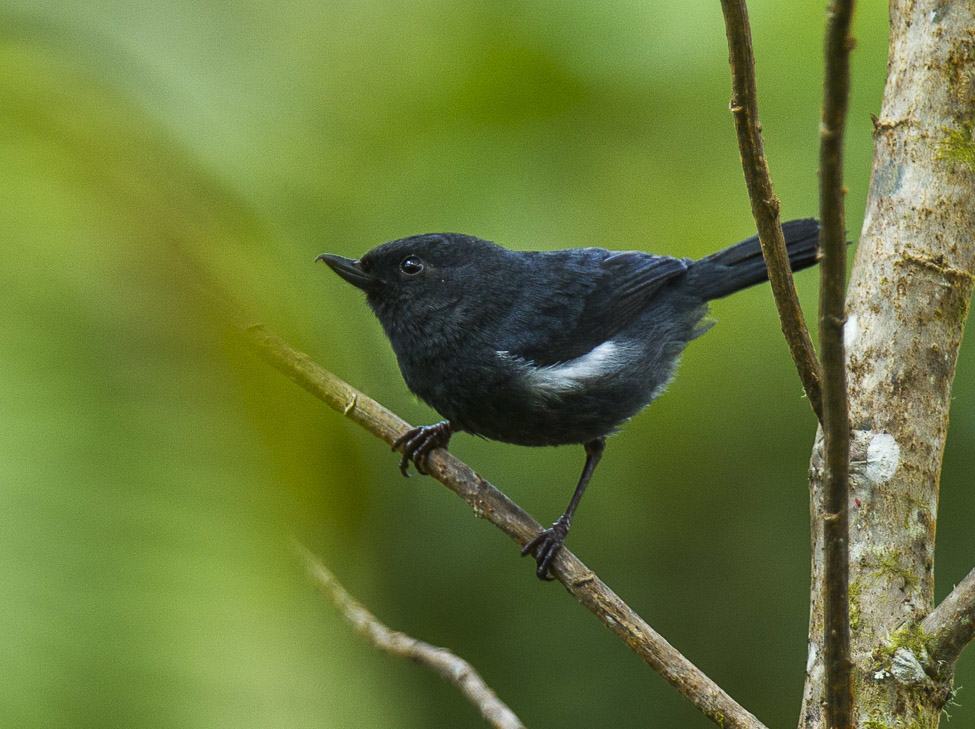
Wikipedia: White-sided flowerpiercer Source: WIKIPEDIA
White-sided_Flowerpiercer_-_South_Ecuador_S4E2856_%2823391895895%29.jpg
🔍
Never observed (yet!)
Description
The white-sided flowerpiercer (Diglossa albilatera) is a species of bird in the family Thraupidae.
[more]
Details
Rusty flowerpiercer / Rostbauch-Hakenschnabel (Diglossa sittoides)
Profile Wikipedia Xeno-Canto YouTube

Wikipedia: Rusty flowerpiercer Source: WIKIPEDIA
Rusty_Flowerpiercer_fem_-_Colombia_S4E8749_%2822763945584%29.jpg
🔍
Never observed (yet!)
Description
The rusty flowerpiercer (Diglossa sittoides) is a species of bird in the family Thraupidae. It is found in Argentina, Bolivia, Colombia, Ecuador, Peru, and Venezuela.
[more]
Details
Indigo flowerpiercer / Indigohakenschnabel (Diglossa indigotica)

Wikipedia: Indigo flowerpiercer Source: WIKIPEDIA
Indigo_Flowerpiercer_-_Colombia_S4E9812_%2822765133693%29.jpg
🔍
Never observed (yet!)
Description
The indigo flowerpiercer (Diglossa indigotica) is a species of bird in the family Thraupidae. It is found in humid forest on the lower west Andean slopes in northern Ecuador and Colombia.
[more]
Details
Black flowerpiercer / Schwarzbauch-Hakenschnabel (Diglossa humeralis)
Profile Wikipedia Xeno-Canto YouTube

Wikipedia: Black flowerpiercer Source: WIKIPEDIA
1200px-Black_flowerpiercer_GC.jpg
🔍
Never observed (yet!)
Description
The black flowerpiercer (Diglossa humeralis) is a species of bird in the family Thraupidae of the order Passeriformes. The family Thraupidae is known for tanagers and other very similar species of birds, but it is still facing classification issues. The black flowerpiercer is found in Colombia, Ecuador, Peru, and Venezuela.
[more]
Details
Deep-blue flowerpiercer / Ultramarinhakenschnabel (Diglossa glauca)

Wikipedia: Deep-blue flowerpiercer Source: WIKIPEDIA
1200px-Diglossopis_glauca.jpg
🔍
Never observed (yet!)
Description
The golden-eyed flowerpiercer (Diglossa glauca), also known as the deep-blue flowerpiercer, is a species of bird in the tanager family Thraupidae. It is found in humid Andean forests in Colombia, Ecuador, Peru and Bolivia. It is the only species of flowerpiercer with bright yellow eyes.
[more]
Details
Masked flowerpiercer / Maskenhakenschnabel (Diglossa cyanea)
Profile Wikipedia Xeno-Canto YouTube

Wikipedia: Masked flowerpiercer Source: WIKIPEDIA
Masked_Flowerpiercer_%28Diglossopis_cyanea%29.jpg
🔍
Never observed (yet!)
Description
The masked flowerpiercer (Diglossa cyanea) is a species of bird in the tanager family, Thraupidae. It is found in humid montane forest and scrub in Venezuela, Colombia, Ecuador, Peru and Bolivia. Flowerpiercers got their name from the fact that they have a sharp hook on the tip of their upper mandible which they use to slice open the base of flowers to get at the nectar. [more]
Details
Bluish flowerpiercer / Silberhakenschnabel (Diglossa caerulescens)

Wikipedia: Bluish flowerpiercer Source: WIKIPEDIA
1200px-Bluish_Flowerpiercer_%285283140856%29.jpg
🔍
Never observed (yet!)
Description
The bluish flowerpiercer (Diglossa caerulescens) is a species of bird in the family Thraupidae. It is found in humid montane forest in Bolivia, Colombia, Ecuador, Peru and Venezuela.
[more]
Details
Gray-headed tanager / Graukopftangare (Eucometis penicillata)
Profile Wikipedia Xeno-Canto YouTube

Wikipedia: Gray-headed tanager Source: WIKIPEDIA
1200px-Eucometis_penicillata_-Manizales%2C_Caldas%2C_Colombia-8.jpg
🔍
Never observed (yet!)
Description
The grey-headed tanager (Eucometis penicillata) is a widely distributed species of small Neotropical bird in the tanager family Thraupidae. It is the only member of the genus Eucometis.
[more]
Details
Red-crowned ant-tanager / Karminhabia (Habia rubica)
Profile Wikipedia Xeno-Canto YouTube

Wikipedia: Red-crowned ant-tanager Source: WIKIPEDIA
1200px-Habia_rubica_-_Red-crowned_Ant-Tanager_%28male%29.JPG
🔍
Never observed (yet!)
Description
The red-crowned ant tanager (Habia rubica) is a medium-sized passerine bird from tropical America. The genus Habia was long placed with the tanagers (Thraupidae), but it is actually closer to the cardinals (Cardinalidae). Consequently, it can be argued that referring to the members of this genus as ant-tanagers is misleading, but no other common name has gained usage.
[more]
Details
Yellow-backed tanager / Gelbbürzeltangare (Hemithraupis flavicollis)
Profile Wikipedia Xeno-Canto YouTube

Wikipedia: Yellow-backed tanager Source: WIKIPEDIA
Hemithraupis_flavicollis_insignis.jpg
🔍
Never observed (yet!)
Description
The yellow-backed tanager (Hemithraupis flavicollis) is a species of bird in the family Thraupidae, the tanagers.
[more]
Details
Guira tanager / Guiratangare (Hemithraupis guira)
Profile Wikipedia Xeno-Canto YouTube

Wikipedia: Guira tanager Source: WIKIPEDIA
Hemithraupis_guira.jpg
🔍
Never observed (yet!)
Description
The guira tanager (Hemithraupis guira) is a species of bird in the family Thraupidae.
[more]
Details
Scarlet-browed tanager / Brauenschopftangare (Heterospingus xanthopygius)
Profile Wikipedia Xeno-Canto YouTube

Wikipedia: Scarlet-browed tanager Source: WIKIPEDIA
Scarlet-browed_Tanager_%28Heterospingus_xanthopygius_%288079749074%29.jpg
🔍
Never observed (yet!)
Description
The scarlet-browed tanager (Heterospingus xanthopygius) is a species of bird in the family Thraupidae.
[more]
Details
Fulvous shrike-tanager / Braunbrust-Würgtangare (Lanio fulvus)
Profile Wikipedia Xeno-Canto YouTube

Wikipedia: Fulvous shrike-tanager Source: WIKIPEDIA
1200px-Lanio_fulvus_-_Fulvous_Shrike-Tanager_%28male%29%3B_Botanic_Garden%2C_Manaus%2C_Amazonas%2C_Brazil.jpg
🔍
Never observed (yet!)
Description
The fulvous shrike-tanager (Lanio fulvus) is a South American bird in the tanager family Thraupidae.
It is found in Brazil, Colombia, Ecuador, French Guiana, Guyana, Peru, Suriname, and Venezuela.
Its natural habitat is subtropical or tropical moist lowland forests.
[more]
Details
Dusky-faced tanager / Rußgesichttangare (Mitrospingus cassinii)
Profile Wikipedia Xeno-Canto YouTube

Wikipedia: Dusky-faced tanager Source: WIKIPEDIA
1200px-Dusky-faced_tanager_%28Mitrospingus_cassinii_cassinii%29.jpg
🔍
Never observed (yet!)
Description
The dusky-faced tanager (Mitrospingus cassinii) is a species of bird formerly in the family Thraupidae.
[more]
Details
White-capped tanager / Weißkappentangare (Sericossypha albocristata)
Profile Wikipedia Xeno-Canto YouTube

Wikipedia: White-capped tanager Source: WIKIPEDIA
1200px-Sericossypha_albocristata_Pollo_de_monte_White-capped_Tanager_%2811198141456%29.jpg
🔍
Never observed (yet!)
Description
The white-capped tanager (Sericossypha albocristata) is a South American bird in the tanager family Thraupidae. It is the only member of the genus Sericossypha . It is the heaviest but not the longest species of tanager, at a weight of 114 g (4 oz) and a length of 24 cm (9.5 in). This species is glossy black overall with a large white crown and a red throat (which is brightest in adult males). It occurs in Colombia, Venezuela, Ecuador and Peru at elevations of 1600–3200 m. It lives in humid Andean forest in groups of up to 20 individuals. Flocks of these tanagers stay in tight formation, often foraging from tree to tree together. They may eat fruits, seeds, hymenoptera, and coleoptera.
[more]
Details
White-lined tanager / Schwarztangare (Tachyphonus rufus)
Profile Wikipedia Xeno-Canto YouTube

Wikipedia: White-lined tanager Source: WIKIPEDIA
1200px-White-lined_tanager_%28Tachyphonus_rufus%29_male.jpg
🔍
Never observed (yet!)
Description
The white-lined tanager (Tachyphonus rufus) is a medium-sized passerine bird in the tanager family Thraupidae. It is a resident breeder from Costa Rica south to northern Argentina, and on the islands of Trinidad and Tobago.
[more]
Details
Tawny-crested tanager / Schwarzachseltangare (Tachyphonus delatrii)
Profile Wikipedia Xeno-Canto YouTube

Wikipedia: Tawny-crested tanager Source: WIKIPEDIA
Tachyphonus_delatrii_-Costa_Rica-6.jpg
🔍
Never observed (yet!)
Description
The tawny-crested tanager (Tachyphonus delatrii) is a species of bird in the family Thraupidae.
It is found in Colombia, Costa Rica, Ecuador, Honduras, Nicaragua, and Panama.
Its natural habitats are subtropical or tropical moist lowland forests, subtropical or tropical moist montane forests, and heavily degraded former forest.[1]
[more]
Details
Fulvous-crested tanager / Goldschopftangare (Tachyphonus surinamus)
Profile Wikipedia Xeno-Canto YouTube

Wikipedia: Fulvous-crested tanager Source: WIKIPEDIA
1200px-Tachyphonus_surinamus_-_Fulvous-crested_Tanager_%28male%29_%3B_Ramal_do_Pau_Rosa%2C_Manaus%2C_Amazonas%2C_Brazil.jpg
🔍
Never observed (yet!)
Description
The fulvous-crested tanager (Tachyphonus surinamus) is a species of bird in the family Thraupidae, the tanagers.
[more]
Details
Buff-bellied tanager / Braunbauchtangare (Thlypopsis inornata)
Profile Wikipedia Xeno-Canto YouTube

Wikipedia: Buff-bellied tanager Source: WIKIPEDIA
Thlypopsis_inornata_-_Buff-bellied_Tanager_%28cropped%29.jpg
🔍
Never observed (yet!)
Description
The buff-bellied tanager (Thlypopsis inornata) is a species of bird in the family Thraupidae.
[more]
Details
Superciliaried hemispingus (Thlypopsis superciliaris)
Profile Wikipedia Xeno-Canto YouTube

Wikipedia: Superciliaried hemispingus Source: WIKIPEDIA
Hemispingus_superciliaris.jpg
🔍
Never observed (yet!)
Description
The superciliaried hemispingus (Thlypopsis superciliaris) is a species of bird in the family Thraupidae.
[more]
Details
Rufous-chested tanager / Zimtbrusttangare (Thlypopsis ornata)
Profile Wikipedia Xeno-Canto YouTube

Wikipedia: Rufous-chested tanager Source: WIKIPEDIA
1200px-Thlypopsis_ornata_103050574.jpg
🔍
Never observed (yet!)
Description
The rufous-chested tanager (Thlypopsis ornata) is a species of bird in the family Thraupidae.
[more]
Details
Orange-headed tanager / Orangekopftangare (Thlypopsis sordida)
Profile Wikipedia Xeno-Canto YouTube

Wikipedia: Orange-headed tanager Source: WIKIPEDIA
1200px-Thlypopsis_sordida.jpg
🔍
Never observed (yet!)
Description
The orange-headed tanager (Thlypopsis sordida) is a species of bird in the family Thraupidae.
It is found in Argentina, Bolivia, Brazil, Colombia, Ecuador, Paraguay, Peru, and Venezuela.
Its natural habitats are subtropical or tropical moist lowland forests, subtropical or tropical moist shrubland, and heavily degraded former forest.
[more]
Details
Tit-like dacnis / Meisenpitpit (Xenodacnis parina)
Profile Wikipedia Xeno-Canto YouTube

Wikipedia: Tit-like dacnis Source: WIKIPEDIA
1200px-Tit-like-dacnis.jpg
🔍
Never observed (yet!)
Description
The tit-like dacnis (Xenodacnis parina) is a small neotropical passerine bird found in southern Ecuador and Peru. In Spanish, it is known as Azulito Altoandino. It is found in Andean montane scrub forests from 3000 m to 4600 m elevation.
[more]
Details
Bananaquit / Zuckervogel (Coereba flaveola)
Profile Wikipedia Xeno-Canto YouTube

Possibly a bananaquit at the botanical garden, Puerto Morelos. 2023-03-27 11:43:00 Yucatan
First observed in Yucatan on 2023-03-27.
Description
The bananaquit (Coereba flaveola) is a species of passerine bird in the tanager family Thraupidae. Before the development of molecular genetics in the 21st century, its relationship to other species was uncertain and it was either placed with the buntings and New World sparrows in the family Emberizidae, with New World warblers in the family Parulidae or in its own monotypic family Coerebidae. This small, active nectarivore is found in warmer parts of the Americas, and is generally common.
[more]
Details
Yellow-faced grassquit / Goldbraue (Tiaris olivaceus)

MerlinBirdID says yellow-faced grassquit. 2023-04-01 09:25:10 Yucatan
First observed in Yucatan on 2023-04-01.
Description
The yellow-faced grassquit (Tiaris olivaceus) is a passerine bird in the tanager family Thraupidae and is the only member of the genus Tiaris. It is native to the Central America, South America, and the Caribbean.
[more]
Details
Slaty finch / Schieferämmerling (Haplospiza rustica)
Profile Wikipedia Xeno-Canto YouTube

Wikipedia: Slaty finch Source: WIKIPEDIA
Haplospiza-rustica-002.jpg
🔍
Never observed (yet!)
Description
The slaty finch (Haplospiza rustica) is a bird species in the family Thraupidae (formerly in Emberizidae).
[more]
Details
Caqueta seedeater (Sporophila murallae)
Profile Wikipedia Xeno-Canto YouTube

Wikipedia: Caqueta seedeater Source: WIKIPEDIA
1200px-Sporophila_murallae_-_Caqueta_seedeater_%28male%29%3B_Serra_do_Divisor_National_Park%2C_Acre%2C_Brazil.jpg
🔍
Never observed (yet!)
Description
The Caquetá seedeater (Sporophila murallae) is a passerine bird from the western Amazon Basin in south-eastern Colombia, eastern Ecuador, north-eastern Peru and far western Brazil (western Acre and Amazonas only). The status in south-eastern Peru is unclear. Together with the mainly Central American S. corvina, it was formerly considered a subspecies of S. americana, in which case the common name for the combined species was variable seed eater. Following the split, this common name is now restricted to S. corvina.
[more]
Details
Chestnut-bellied seedeater / Rotbauchpfäffchen (Sporophila castaneiventris)
Profile Wikipedia Xeno-Canto YouTube

Wikipedia: Chestnut-bellied seedeater Source: WIKIPEDIA
Sporophila_castaneiventris_-_Chestnut-bellied_seedeater_%28male%29%2C_Rio_Branco%2C_Acre%2C_Brazil.jpg
🔍
Never observed (yet!)
Description
The chestnut-bellied seedeater (Sporophila castaneiventris) is a species of bird in the family Thraupidae.
It is found in Bolivia, Brazil, Colombia, Ecuador, French Guiana, Guyana, Peru, Suriname, and Venezuela.
Its natural habitats are subtropical or tropical moist shrubland and heavily degraded former forest.
[more]
Details
Black-billed seed-finch (Sporophila atrirostris)
Profile Wikipedia Xeno-Canto YouTube

Wikipedia: Black-billed seed-finch Source: WIKIPEDIA
Black-billed_seed_finch_%28Sporophila_atrirostris%29_%28cropped%29.jpg
🔍
Never observed (yet!)
Description
The black-billed seed finch (Sporophila atrirostris) is a species of bird in the family Thraupidae.
It is found in the western Amazon Basin (Ecuador, Peru and northwestern Bolivia).
[more]
Details
Lined seedeater / Diamantpfäffchen (Sporophila lineola)
Profile Wikipedia Xeno-Canto YouTube

Wikipedia: Lined seedeater Source: WIKIPEDIA
BIGODINHO_%28Sporophila_lineola_%29.jpg
🔍
Never observed (yet!)
Description
The lined seedeater (Sporophila lineola) is a species of bird in the family Thraupidae.
[more]
Details
Variable seedeater / Mohrenpfäffchen (Sporophila corvina)
Profile Wikipedia Xeno-Canto YouTube

Wikipedia: Variable seedeater Source: WIKIPEDIA
Sporophila-corvina-002.jpg
🔍
Never observed (yet!)
Description
The variable seedeater (Sporophila corvina) is a passerine bird which breeds from southern Mexico through Central America to the Chocó of northwestern South America. The taxonomy is confusing, and it was formerly considered a subspecies of Sporophila americana (see Taxonomy). Even within the variable seedeater as presently defined, there are great variations in plumage.
[more]
Details
Black-and-white seedeater / Trauerpfäffchen (Sporophila luctuosa)
Profile Wikipedia Xeno-Canto YouTube

Wikipedia: Black-and-white seedeater Source: WIKIPEDIA
1200px-Black-and-white_Seedeater_BW12b.jpg
🔍
Never observed (yet!)
Description
The black-and-white seedeater (Sporophila luctuosa) is a species of bird in the family Thraupidae.
It is found in Bolivia, Brazil, Colombia, Ecuador, Peru, and Venezuela.
Its natural habitats are subtropical or tropical moist shrubland, subtropical or tropical high-altitude shrubland, and heavily degraded former forest.
[more]
Details
Chestnut-throated seedeater / Braunkehlpfäffchen (Sporophila telasco)
Profile Wikipedia Xeno-Canto YouTube

Wikipedia: Chestnut-throated seedeater Source: WIKIPEDIA
Chestnut-throatedSeedeater.jpg
🔍
Never observed (yet!)
Description
The chestnut-throated seedeater (Sporophila telasco) is Neotropical songbird in the family Thraupidae.
[more]
Details
Large-billed seed-finch (Sporophila crassirostris)
Profile Wikipedia Xeno-Canto YouTube

Wikipedia: Large-billed seed-finch Source: WIKIPEDIA
1200px-Oryzoborus_crassirostris_female_Naturhistorisches_Museum_%28MoNH%29_Vienna.jpg
🔍
Never observed (yet!)
Description
The large-billed seed finch (Sporophila crassirostris) is a species of bird in the family Thraupidae.
[more]
Details
Ruddy-breasted seedeater / Zwergpfäffchen (Sporophila minuta)
Profile Wikipedia Xeno-Canto YouTube

Wikipedia: Ruddy-breasted seedeater Source: WIKIPEDIA
1200px-Sporophila_minuta_Espiguero_ladrillo_Ruddy-breasted_Seedeater_%2811481101056%29.jpg
🔍
Never observed (yet!)
Description
The ruddy-breasted seedeater (Sporophila minuta) is a species of bird in the tanager family Thraupidae.
It is found in Brazil, Colombia, Costa Rica, Ecuador, El Salvador, French Guiana, Guatemala, Guyana, Honduras, Mexico, Nicaragua, Panama, Suriname, Trinidad and Tobago, and Venezuela.
Its natural habitats are dry savanna, subtropical or tropical seasonally wet or flooded lowland grassland, and heavily degraded former forest.
[more]
Details
Chestnut-bellied seed-finch (Sporophila angolensis)

Wikipedia: Chestnut-bellied seed-finch Source: WIKIPEDIA
1200px-Oryzoborus_angolensis.jpg
🔍
Never observed (yet!)
Description
The chestnut-bellied seed finch (Sporophila angolensis) is a species of bird in the family Thraupidae, but was until recently placed in Emberizidae.
[more]
Details
Lesson's seedeater (Sporophila bouvronides)
Profile Wikipedia Xeno-Canto YouTube

Wikipedia: Lesson's seedeater Source: WIKIPEDIA
Spermophila_ocellata_Keulemans.jpg
🔍
Never observed (yet!)
Description
Lesson's seedeater (Sporophila bouvronides) is a bird species in the family Thraupidae (formerly in Emberizidae).
[more]
Details
Yellow-bellied seedeater / Gelbbauchpfäffchen (Sporophila nigricollis)
Profile Wikipedia Xeno-Canto YouTube

Wikipedia: Yellow-bellied seedeater Source: WIKIPEDIA
Sporophila_nigricollis_%28male%29_-NW_Ecuador.jpg
🔍
Never observed (yet!)
Description
The yellow-bellied seedeater (Sporophila nigricollis) is a species of bird in the family Thraupidae, formerly placed with the American sparrows in the Emberizidae.
[more]
Details
Drab seedeater / Dickschnabelpfäffchen (Sporophila simplex)
Profile Wikipedia Xeno-Canto YouTube

Wikipedia: Drab seedeater Source: WIKIPEDIA
DrabSeedeater.jpg
🔍
Never observed (yet!)
Description
The drab seedeater (Sporophila simplex) is a species of bird in the family Thraupidae.
It is found in Ecuador and Peru.
Its natural habitats are subtropical or tropical dry shrubland, subtropical or tropical moist shrubland, and subtropical or tropical high-altitude shrubland.
[more]
Details
Thick-billed seed-finch (Sporophila funerea)
Profile Wikipedia Xeno-Canto YouTube

Wikipedia: Thick-billed seed-finch Source: WIKIPEDIA
Thick-billed_Seed-Finch_-_Sarapiqui_-_Costa_Rica_MG_0887_%2826405624880%29.jpg
🔍
Never observed (yet!)
Description
The thick-billed seed finch (Sporophila funerea) is a species of bird in the family Thraupidae, but was until recently placed in Emberizidae. It is found widely in shrubby and grassy areas from southern Mexico, through Central America, to the Chocó in Colombia and Ecuador. It is replaced by the closely related chestnut-bellied seed finch in South America east of the Andes, as well as the valleys of Cauca and Magdalena in Colombia. The two have often been considered conspecific as the lesser seed-finch (Oryzoborus angolensis).
[more]
Details
Parrot-billed seedeater / Papageischnabelpfäffchen (Sporophila peruviana)
Profile Wikipedia Xeno-Canto YouTube

Wikipedia: Parrot-billed seedeater Source: WIKIPEDIA
1200px-Sporophila_peruviana_-_Parrot-billed_Seedeater_-_male.jpg
🔍
Never observed (yet!)
Description
The parrot-billed seedeater (Sporophila peruviana) is a small species of bird in the family Thraupidae. It is found in various shrubby habitats in western Ecuador and western Peru. Outside the breeding season, it is quite social and frequently seen in flocks with other small seed-eating birds.
[more]
Details
Slate-colored seedeater / Schieferpfäffchen (Sporophila schistacea)
Profile Wikipedia Xeno-Canto YouTube

Wikipedia: Slate-colored seedeater Source: WIKIPEDIA
1200px-Sporophila_schistacea.jpg
🔍
Never observed (yet!)
Description
The slate-coloured seedeater (Sporophila schistacea) is a bird species in the family Thraupidae.
[more]
Details
Blue-black grassquit / Jacariniammer (Volatinia jacarina)

Wikipedia: Blue-black grassquit Source: WIKIPEDIA
Tiziu.jpg
🔍
Never observed (yet!)
Description
Tanagra jacarina Linnaeus, 1766
[more]
Details
Collared warbling-finch / Schwarzbrust-Ammerfink (Poospiza hispaniolensis)

Wikipedia: Collared warbling-finch Source: WIKIPEDIA
1200px-Poospiza_hispaniolensis_-_Collared_Warbling-Finch_-_male_%28cropped%29.jpg
🔍
Never observed (yet!)
Description
The collared warbling finch (Poospiza hispaniolensis) is a species of bird in the family Thraupidae. It is found in Ecuador and Peru.
[more]
Details
Red-crested finch / Roter Kronfink (Coryphospingus cucullatus)

Wikipedia: Red-crested finch Source: WIKIPEDIA
1200px-Coryphospingus_cucullatus_-Piraju%2C_Sao_Paulo%2C_Brazil-8.jpg
🔍
Never observed (yet!)
Description
The red pileated finch (Coryphospingus cucullatus), also known as the red-crested finch, is a species of bird in the family Thraupidae. It is found in Argentina, Bolivia, Brazil, Ecuador, French Guiana, Guyana, Paraguay, Peru, on the eastern side of the Andes. Its natural habitats are subtropical or tropical dry forests, subtropical or tropical moist lowland forests, subtropical or tropical dry shrubland, and heavily degraded former forest. This is a common species, and the International Union for Conservation of Nature has rated its conservation status as "least concern".
[more]
Details
Plain-colored seedeater (Catamenia inornata)
Profile Wikipedia Xeno-Canto YouTube

Wikipedia: Plain-colored seedeater Source: WIKIPEDIA
1200px-NBII_Image_Gallery_-Catamenia_inornata-a00269.jpg
🔍
Never observed (yet!)
Description
The plain-colored seedeater (Catamenia inornata) is a species of bird in the family Thraupidae.
[more]
Details
Band-tailed seedeater / Spiegelcatamenie (Catamenia analis)
Profile Wikipedia Xeno-Canto YouTube

Wikipedia: Band-tailed seedeater Source: WIKIPEDIA
1200px-Band-tailed_Seedeater%2C_Lomas_de_Lachay%2C_Peru_%285964875508%29.jpg
🔍
Never observed (yet!)
Description
The band-tailed seedeater (Catamenia analis) is a species of bird in the family Thraupidae.
It is found in Argentina, Bolivia, Chile, Colombia, Ecuador, and Peru.
Its natural habitats are subtropical or tropical high-altitude shrubland and heavily degraded former forest.
[more]
Details
Paramo seedeater / Schlankschnabelcatamenie (Catamenia homochroa)
Profile Wikipedia Xeno-Canto YouTube

Wikipedia: Paramo seedeater Source: WIKIPEDIA
Paramo_seedeater.jpg
🔍
Never observed (yet!)
Description
The paramo seedeater (Catamenia homochroa) is a species of bird in the family Thraupidae.
[more]
Details
Grassland yellow-finch / Kurzschnabel-Gilbammer (Sicalis luteola)
Profile Wikipedia Xeno-Canto YouTube

Wikipedia: Grassland yellow-finch Source: WIKIPEDIA
1200px-Sicalis_luteola.jpg
🔍
Never observed (yet!)
Description
The grassland yellow finch (Sicalis luteola) is a small passerine bird. Despite its name, it is not a finch, but is a seedeater. These were formerly united with the buntings and American sparrows in the Emberizidae, but are now known to be tanagers.
[more]
Details
Saffron finch / Safrangilbammer (Sicalis flaveola)
Profile Wikipedia Audubon AllAboutBirds Xeno-Canto YouTube

Wikipedia: Saffron finch Source: WIKIPEDIA
1200px-Saffron_finch_%28Sicalis_flaveola%29_male.JPG
🔍
Never observed (yet!)
Description
The saffron finch (Sicalis flaveola) is a tanager from South America that is common in open and semi-open areas in lowlands outside the Amazon Basin. They have a wide distribution in Colombia, northern Venezuela (where it is called "canario de tejado" or "roof canary"), western Ecuador, western Peru, eastern and southern Brazil (where it is called "canário-da-terra" or "native canary"), Bolivia, Paraguay, Uruguay, northern Argentina, and Trinidad and Tobago. It has also been introduced to Hawaii, Puerto Rico and elsewhere. Although commonly regarded as a canary, it is not related to the Atlantic canary. Formerly, it was placed in the Emberizidae but it is close to the seedeaters.
[more]
Details
Sulphur-throated finch / Taczanowskigilbammer (Sicalis taczanowskii)
Profile Wikipedia Xeno-Canto YouTube

Wikipedia: Sulphur-throated finch Source: WIKIPEDIA
1200px-Sicalis_taczanowskii_-_Sulphur-throated_Finch_-_male.jpg
🔍
Never observed (yet!)
Description
The sulphur-throated finch (Sicalis taczanowskii) is a species of bird in the family Thraupidae.
It is found in Ecuador and Peru.
Its natural habitat is subtropical or tropical dry shrubland.
[more]
Details
Giant conebill / Riesenspitzschnabel (Conirostrum binghami)
Profile Wikipedia Xeno-Canto YouTube

Wikipedia: Giant conebill Source: WIKIPEDIA
1200px-Giant_Conebill%2C_Cajas%2C_Ecuador_%285771232969%29.jpg
🔍
Never observed (yet!)
Description
The giant conebill (Conirostrum binghami) is a small passerine bird, one of the tanager family. It is closely related to the regular conebills Conirostrum though it differs in its larger size and nuthatch-like foraging habits.
[more]
Details
Chestnut-vented conebill / Rotsteiß-Spitzschnabel (Conirostrum speciosum)
Profile Wikipedia Xeno-Canto YouTube

Wikipedia: Chestnut-vented conebill Source: WIKIPEDIA
1200px-Chestnut-vented_Conebill.jpg
🔍
Never observed (yet!)
Description
The chestnut-vented conebill (Conirostrum speciosum) is a species of bird in the family Thraupidae.
It is found in Argentina, Bolivia, Brazil, Colombia, Ecuador, French Guiana, Guyana, Paraguay, Peru, Suriname, and Venezuela.
Its natural habitats are subtropical or tropical moist lowland forests and heavily degraded former forest.
[more]
Details
Blue-backed conebill / Blaurücken-Spitzschnabel (Conirostrum sitticolor)
Profile Wikipedia Xeno-Canto YouTube

Wikipedia: Blue-backed conebill Source: WIKIPEDIA
1200px-Conirostrum_sitticolor_-_Conirrostro_encapuchado_-_Blue-backed_Conebill_%288730321476%29.jpg
🔍
Never observed (yet!)
Description
The blue-backed conebill (Conirostrum sitticolor) is a species of bird in the family Thraupidae (Tanager).
It is found in Bolivia, Colombia, Ecuador, Peru, and Venezuela.
Its natural habitat is subtropical or tropical moist montane forests.
[more]
Details
Capped conebill / Kappenspitzschnabel (Conirostrum albifrons)
Profile Wikipedia Xeno-Canto YouTube
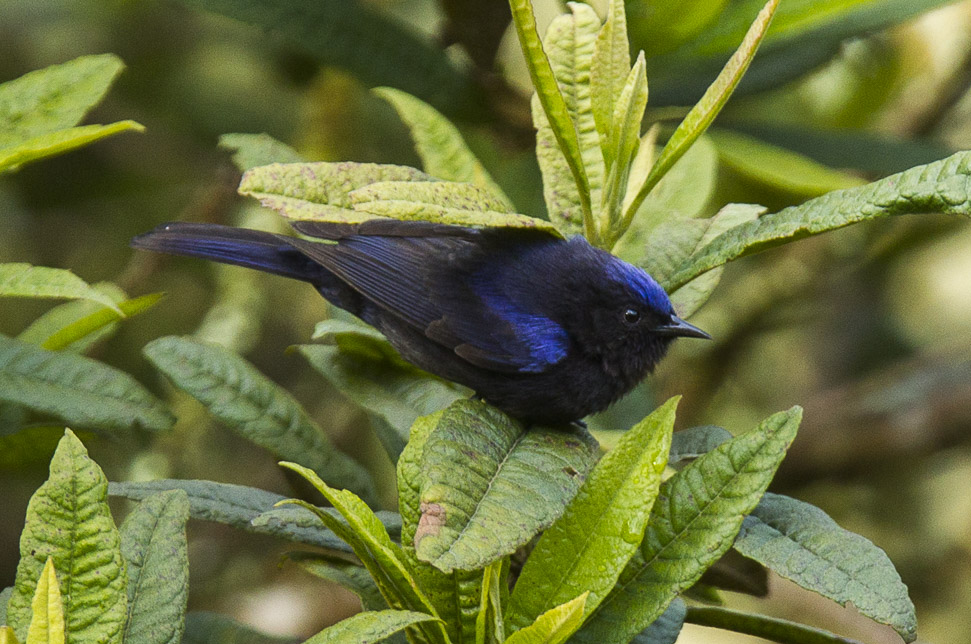
Wikipedia: Capped conebill Source: WIKIPEDIA
Capped_Conebill_-_Ecuador_S4E4700_%2822882391489%29.jpg
🔍
Never observed (yet!)
Description
The capped conebill (Conirostrum albifrons) is a species of bird in the family Thraupidae.
[more]
Details
Cinereous conebill / Weißstirn-Spitzschnabel (Conirostrum cinereum)
Profile Wikipedia Xeno-Canto YouTube

Wikipedia: Cinereous conebill Source: WIKIPEDIA
1200px-Cinereous_Conebill_RWD2.jpg
🔍
Never observed (yet!)
Description
The cinereous conebill (Conirostrum cinereum) is a species of bird in the tanager family Thraupidae. The term cinereous describes its colouration. It is found in Bolivia, Chile, Colombia, Ecuador, and Peru. Its natural habitats are subtropical or tropical moist shrubland, subtropical or tropical high-altitude shrubland, and heavily degraded former forest.
[more]
Details
Pearly-breasted conebill / Perlbrust-Spitzschnabel (Conirostrum margaritae)
Profile Wikipedia Xeno-Canto YouTube

Wikipedia: Pearly-breasted conebill Source: WIKIPEDIA
1200px-Conirostrum_margaritae.png
🔍
Never observed (yet!)
Description
The pearly-breasted conebill (Conirostrum margaritae) is a species of bird in the family Thraupidae.
[more]
Details
Bicolored conebill / Zweifarben-Spitzschnabel (Conirostrum bicolor)
Profile Wikipedia Xeno-Canto YouTube
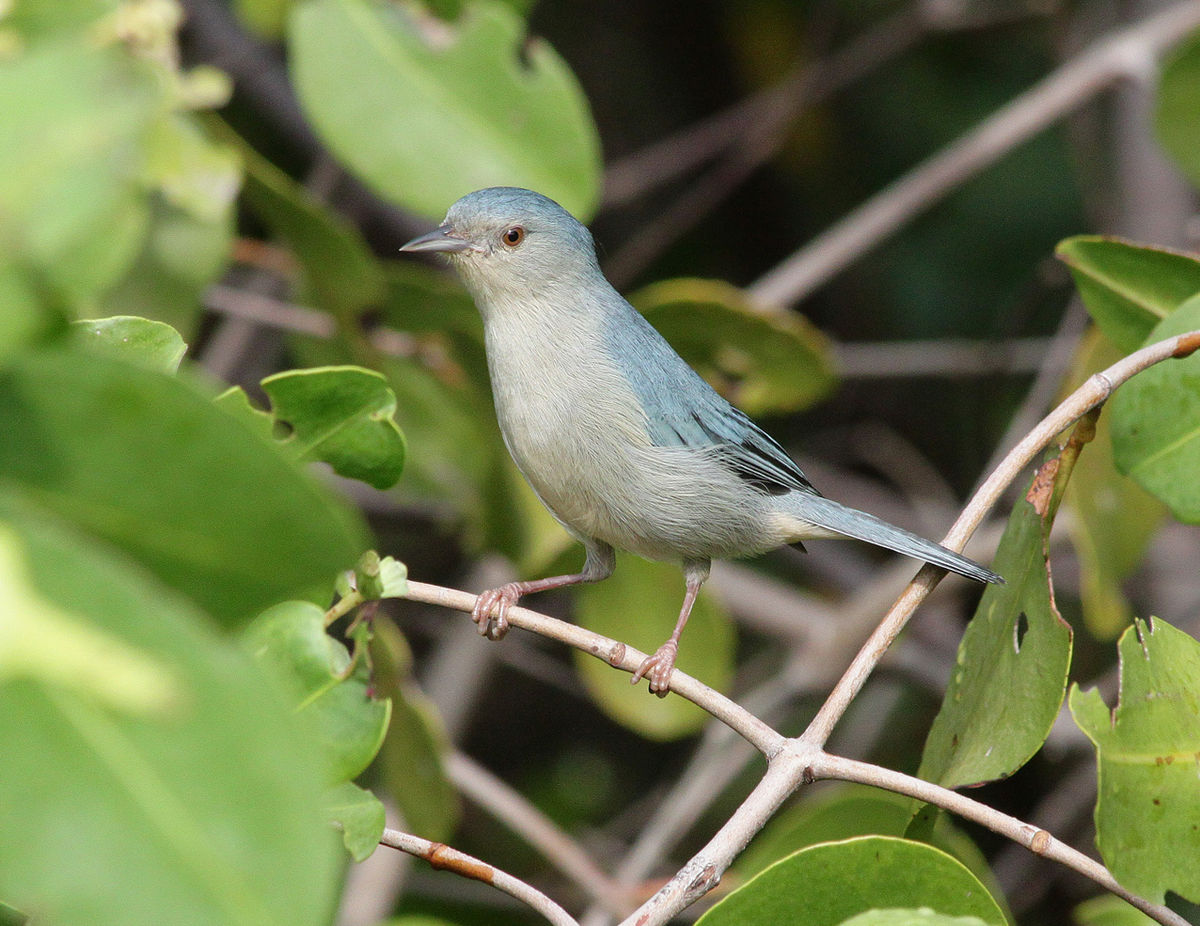
Wikipedia: Bicolored conebill Source: WIKIPEDIA
1200px-Bicolored_Conebill_%28Conirostrum_bicolor%29.jpg
🔍
Never observed (yet!)
Description
The bicolored conebill (Conirostrum bicolor) is a small passerine bird. This member of the tanager family is a resident breeder in South America from Colombia, Venezuela and Trinidad south and east to the Guianas, northeast Peru and Brazil.
[more]
Details
Plushcap / Plüschkopftangare (Catamblyrhynchus diadema)
Profile Wikipedia Xeno-Canto YouTube

Wikipedia: Plushcap Source: WIKIPEDIA
Plush-capped_Finch_-_Colombia_S4E1689_%2822623276893%29.jpg
🔍
Never observed (yet!)
Description
The plushcap (Catamblyrhynchus diadema) is a species of bird in the tanager family Thraupidae and it is the only member of the genus Catamblyrhynchus.
[more]
Details
Wedge-tailed grass-finch / Keilschwanzammer (Emberizoides herbicola)
Profile Wikipedia Xeno-Canto YouTube

Wikipedia: Wedge-tailed grass-finch Source: WIKIPEDIA
1200px-Emberizoides_herbicola_-nature_reserve%2C_Piraju%2C_Sao_paulo%2C_Brazil-8.jpg
🔍
Never observed (yet!)
Description
The wedge-tailed grass finch (Emberizoides herbicola) is a species of bird in the family Thraupidae; it was formerly placed in the Emberizidae. It is found in Argentina, Bolivia, Brazil, Colombia, Costa Rica, Ecuador, French Guiana, Guyana, Panama, Paraguay, Peru, Suriname, Uruguay, and Venezuela.
[more]
Details
Blue seedeater / Indigopfäffchen (Amaurospiza concolor)
Profile Wikipedia Xeno-Canto YouTube

Wikipedia: Blue seedeater Source: WIKIPEDIA
1200px-Amaurospiza_concolor_map_after_split_with_aequatorialis.svg.png
🔍
Never observed (yet!)
Description
The Cabanis's seedeater (Amaurospiza concolor) is a species of bird in the cardinal family Cardinalidae.[2] It is found in highland forest and woodland, mainly near bamboo, in southern Mexico and Central America. Due to its association with bamboo, it is often local and erratic in occurrence, but overall it is not considered threatened and therefore listed as Least Concern by BirdLife International and IUCN.[1]
[more]
Details
Crimson-breasted finch / Rosenmöwe (Rhodospingus cruentus)
Profile Wikipedia Xeno-Canto YouTube

Wikipedia: Crimson-breasted finch Source: WIKIPEDIA
RhodospingusHart.jpg
🔍
Never observed (yet!)
Description
The crimson-breasted finch (Rhodospingus cruentus), also known as the crimson finch-tanager, is a species of small finch-like bird native to woodland and scrub of western Ecuador and adjacent north-western Peru. It is the only member of the genus Rhodospingus. It has traditionally been placed in the family Emberizidae, but molecular phylogenetic studies have shown that it belongs to the tanager family Thraupidae. It is strongly sexually dichromatic, with males being blackish above and rich orange-red below and on the crown, while females are overall dull greyish-buff.
[more]
Details
Golden-collared honeycreeper / Halsbandtangare (Iridophanes pulcherrimus)
Profile Wikipedia Xeno-Canto YouTube

Wikipedia: Golden-collared honeycreeper Source: WIKIPEDIA
1200px-Iridophanes_pulcherrimus_-_Golden-collared_Honeycreeper%3B_Ecuador.jpg
🔍
Never observed (yet!)
Description
The golden-collared honeycreeper (Iridophanes pulcherrimus) is an uncommon species of Neotropical bird in the tanager family Thraupidae. It is the only member of the genus Iridophanes.
[more]
Details
Black-backed bush tanager / Stolzmanntangare (Urothraupis stolzmanni)
Profile Wikipedia Xeno-Canto YouTube

Wikipedia: Black-backed bush tanager Source: WIKIPEDIA
1200px-Black-backed_Bush_Tanager_%28Urothraupis_stolzmanni%29.jpg
🔍
Never observed (yet!)
Description
The black-backed bush tanager (Urothraupis stolzmanni), also known as the black-backed bush-finch, is a species of bird in the family Thraupidae. It is the only member in the genus Urothraupis. It is found in Colombia and Ecuador. Its natural habitat is subtropical or tropical moist montane forests.
[more]
Details
Profile Wikipedia Xeno-Canto YouTube

Wikipedia: Streaked saltator Source: WIKIPEDIA
1200px-Saltator_striatipectus_-Manizales%2C_Caldas%2C_Colombia-8_%281%29.jpg
🔍
Never observed (yet!)
Description
The streaked saltator (Saltator striatipectus) is a species of saltator in the family Thraupidae. It is found in Colombia, Costa Rica, Ecuador, Guadeloupe, Panama, Peru, and Venezuela.
[more]
Details
Profile Wikipedia Xeno-Canto YouTube

Wikipedia: Black-winged saltator Source: WIKIPEDIA
1200px-Saltator_atripennis_-Manizales%2C_Caldas%2C_Colombia-8.jpg
🔍
Never observed (yet!)
Description
The black-winged saltator (Saltator atripennis) is a species of songbird found in Colombia and Ecuador. Its natural habitat is subtropical or tropical moist montane forests. While saltators were traditionally placed in the family Cardinalidae, they are now placed in the tanager family Thraupidae.
[more]
Details
Profile Wikipedia Xeno-Canto YouTube

Wikipedia: Slate-colored grosbeak Source: WIKIPEDIA
1200px-Saltator_grossus.jpg
🔍
Never observed (yet!)
Description
The slate-coloured grosbeak (Saltator grossus) is a species of grosbeak in the family Thraupidae. Most of its range is the Amazon in South America, but it is also found in forests of the Chocó in Ecuador and Colombia, and southern Central America from Panama to Honduras.
[more]
Details

Wikipedia: Grayish saltator Source: WIKIPEDIA
1200px-Grausaltator_.jpg
🔍
Never observed (yet!)
Description
The greyish saltator (Saltator coerulescens) is a passerine bird in the tanager family Thraupidae that is widespread in the tropical Americas. In El Salvador, it is well known as dichosofui after the "elaborate" version of its call, which sounds like a drawn-out ¡dichoso fui!, Spanish for "I was happy!"
[more]
Details
Profile Wikipedia Xeno-Canto YouTube

Wikipedia: Black-cowled saltator Source: WIKIPEDIA
1200px-Black-CowledSaltator.jpg
🔍
Never observed (yet!)
Description
The black-cowled saltator (Saltator nigriceps) is a seed-eating passerine bird in the tanager family Thraupidae. It is found in the southern border region of Ecuador and the northern border region of Peru. Its natural habitats are subtropical or tropical dry forests and subtropical or tropical moist lowland forests.
[more]
Details
Profile Wikipedia Xeno-Canto YouTube

Wikipedia: Buff-throated saltator Source: WIKIPEDIA
1200px-Buff-throated_Saltator.jpg
🔍
Never observed (yet!)
Description
The buff-throated saltator (Saltator maximus) is a seed-eating bird in the tanager family Thraupidae. It breeds from southeastern Mexico to western Ecuador and northeastern Brazil.
[more]
Details
Profile Wikipedia Xeno-Canto YouTube
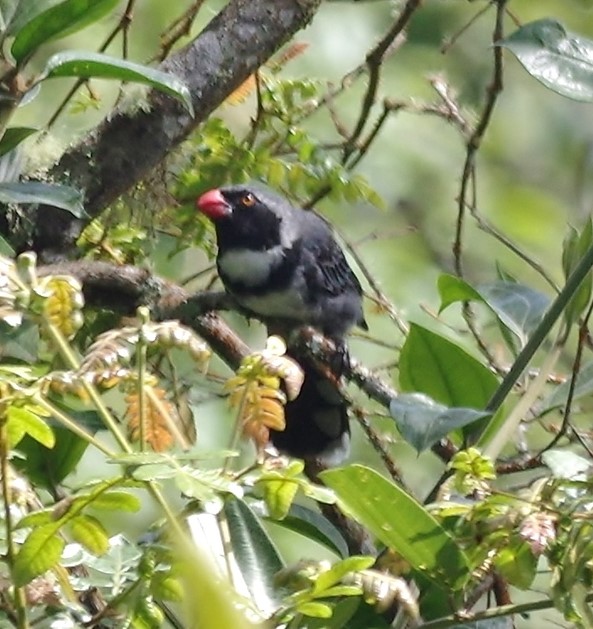
Wikipedia: Masked saltator Source: WIKIPEDIA
Saltator_cinctus.jpg
🔍
Never observed (yet!)
Description
The masked saltator (Saltator cinctus) is a species passerine bird in the tanager family Thraupidae.
[more]
Details

MerlinBirdID says blue-gray tanager. 2023-04-01 09:16:26 Yucatan
First observed in Costa Rica on 2018-02-27.
Description
We saw this on the grounds of Gamboa Rainforest Resort.General:
The blue-gray tanager (Thraupis episcopus) is a medium-sized South American songbird of the tanager family, Thraupidae. Its range is from Mexico south to northeast Bolivia and northern Brazil, all of the Amazon Basin, except the very south. It has been introduced to Lima (Peru). On Trinidad and Tobago, this bird is called blue jean.
[more]
Details

Zoom one golden-hooded tanager on telephone wire. 2020-02-18 10:52:28 Panama
First observed in Costa Rica on 2018-02-27.
Description
We saw this on a nature tour on the grounds of Gamboa Rainforest Resort. I noted it as a honeycreeper, which it is not - not sure if my mistake or the guide's.General:
The golden-hooded tanager (Stilpnia larvata) is a medium-sized passerine bird. This tanager is a resident breeder from southern Mexico south to western Ecuador.
[more]
Details
Profile Wikipedia Xeno-Canto YouTube

Wikipedia: Green-and-gold tanager Source: WIKIPEDIA
Green-and-gold_Tanager_-_South_Ecuador_S4E0470_%2822856239437%29.jpg
🔍
Never observed (yet!)
Description
The green-and-gold tanager (Tangara schrankii) is a species of bird in the family Thraupidae, the tanagers. It is one of 49 species in the genus Tangara.
[more]
Details
Profile Wikipedia Xeno-Canto YouTube

Wikipedia: Golden-eared tanager Source: WIKIPEDIA
1200px-Golden-eared-tanager.jpg
🔍
Never observed (yet!)
Description
The golden-eared tanager (Tangara chrysotis) is a species of bird in the family Thraupidae (tanagers).
[more]
Details
Profile Wikipedia Xeno-Canto YouTube

Wikipedia: Saffron-crowned tanager Source: WIKIPEDIA
1200px-Saffron-crowned_Tanager_%28Tangara_xanthocephala%29.jpg
🔍
Never observed (yet!)
Description
The saffron-crowned tanager (Tangara xanthocephala) is a species of bird in the family Thraupidae.
It is found in the northern Andes of Bolivia, Colombia, Ecuador, Peru, and Venezuela.
Its natural habitats are subtropical or tropical moist montane forests and heavily degraded former forest.
[more]
Details
Profile Wikipedia Xeno-Canto YouTube

Wikipedia: Flame-faced tanager Source: WIKIPEDIA
1200px-Flame-faced_Tanager_%2847050446254%29.jpg
🔍
Never observed (yet!)
Description
The flame-faced tanager (Tangara parzudakii) is a species of bird in the family Thraupidae.
It is found in the eastern Andes of Colombia, Ecuador, Peru and Venezuela.
Its natural habitat is subtropical or tropical moist montane forests.
[more]
Details
Profile Wikipedia Xeno-Canto YouTube

Wikipedia: Emerald tanager Source: WIKIPEDIA
Emerald_Tanager_-_San_Luis_-_Costa_Rica_MG_1694_%2826584929732%29.jpg
🔍
Never observed (yet!)
Description
The emerald tanager (Tangara florida) is a species of bird in the family Thraupidae.
It is found in Colombia, Costa Rica, Ecuador, and Panama.
Its natural habitats are subtropical or tropical moist lowland forests and subtropical or tropical moist montane forests.
[more]
Details
Profile Wikipedia Xeno-Canto YouTube
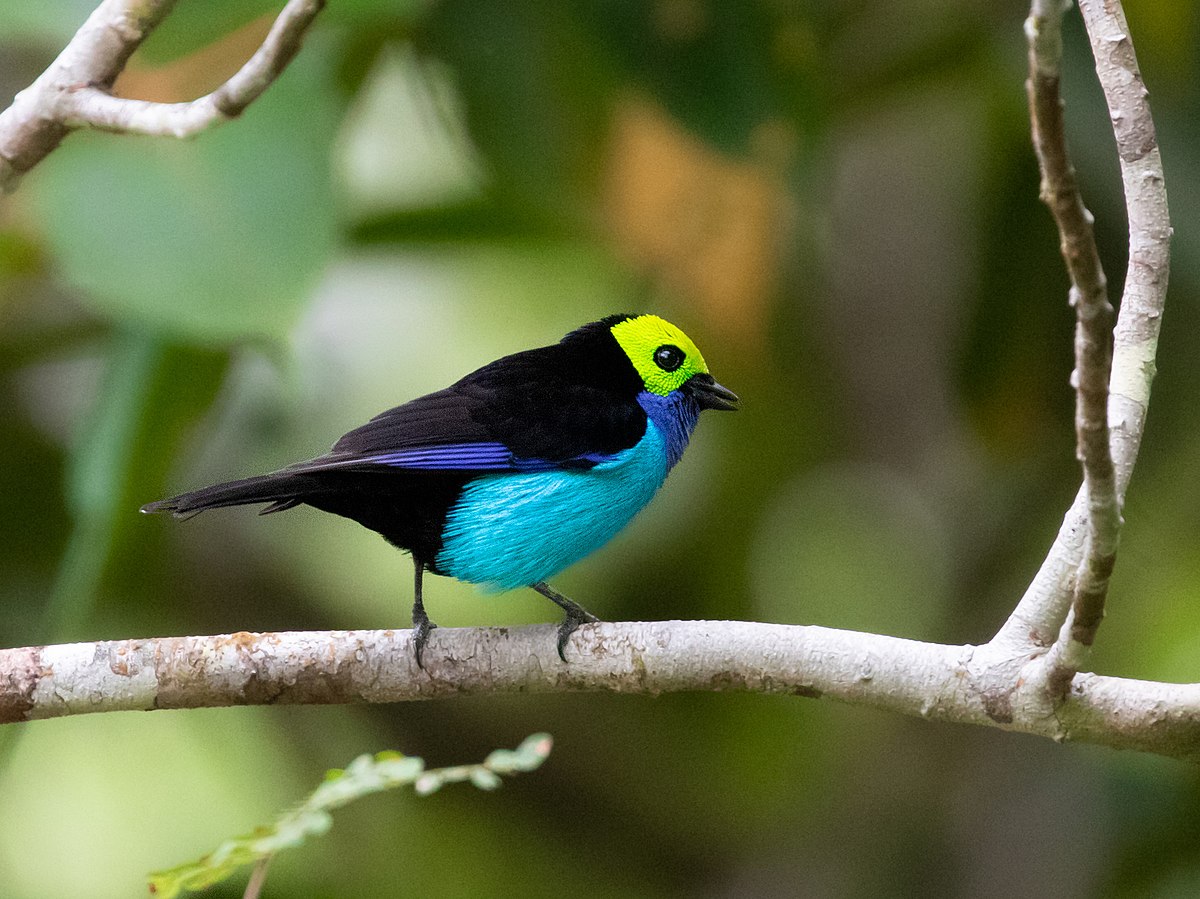
Wikipedia: Paradise tanager Source: WIKIPEDIA
1200px-Tangara_chilensis_94893412.jpg
🔍
Never observed (yet!)
Description
The paradise tanager (Tangara chilensis) is a brilliantly multicolored, medium-sized songbird whose length varies between 13.5 and 15 cm. It has a light green head, sky blue underparts and black upper body plumage. Depending on subspecies, the behind is yellow and red or all red. The beak is black and the legs are grey. it is from the amazon rainforest.
[more]
Details
Profile Wikipedia Xeno-Canto YouTube

Wikipedia: Opal-crowned tanager Source: WIKIPEDIA
1200px-Tangara_callophrys_-_Opal-crowned_Tanager%3B_Serra_do_Divisor_National_Park%2C_Acre%2C_Brazil.jpg
🔍
Never observed (yet!)
Description
The opal-crowned tanager (Tangara callophrys) is a species of bird in the family Thraupidae, the tanagers. It is one of 49 species in the genus Tangara.
[more]
Details
Profile Wikipedia Xeno-Canto YouTube

Wikipedia: Metallic-green tanager Source: WIKIPEDIA
1200px-Metallic-green_Tanager_JCB.jpg
🔍
Never observed (yet!)
Description
The metallic-green tanager (Tangara labradorides) is a species of bird in the family Thraupidae.
[more]
Details

Wikipedia: Silver-throated tanager Source: WIKIPEDIA
1200px-Silver-throated_tanager_%28Tangara_icterocephala%29.jpg
🔍
Never observed (yet!)
Description
The silver-throated tanager (Tangara icterocephala) is a small passerine bird. This brightly coloured tanager is a resident from Costa Rica, through Panama and western Colombia, to western Ecuador.
[more]
Details
Profile Wikipedia Xeno-Canto YouTube

Wikipedia: Golden tanager Source: WIKIPEDIA
1200px-Tangara_arthus_-_T%C3%A1ngara_dorada_-_Golden_Tanager_%288542820434%29.jpg
🔍
Never observed (yet!)
Description
The golden tanager (Tangara arthus) is a species of bird in the family Thraupidae. It is widespread and often common in highland forests of the Andes (from Bolivia and northwards) and Venezuelan Coastal Range in north-western South America.
[more]
Details
Profile Wikipedia Xeno-Canto YouTube

Wikipedia: Beryl-spangled tanager Source: WIKIPEDIA
1200px-Tangara_nigroviridis_T%C3%A1ngara_berlina_Beryl-spangled_Tanager_%2814996504381%29_%28cropped%29.jpg
🔍
Never observed (yet!)
Description
The beryl-spangled tanager (Tangara nigroviridis) is a small songbird of the northern Andes.
[more]
Details
Profile Wikipedia Xeno-Canto YouTube

Wikipedia: Rufous-winged tanager Source: WIKIPEDIA
1200px-Rufous-winged_tanager.jpg
🔍
Never observed (yet!)
Description
The rufous-winged tanager (Tangara lavinia) is a species of bird in the family Thraupidae. It is found in Colombia, Costa Rica, Ecuador, Honduras, Nicaragua, and Panama. Its natural habitats are subtropical or tropical moist lowland forests and heavily degraded former forest.
[more]
Details
Profile Wikipedia Xeno-Canto YouTube
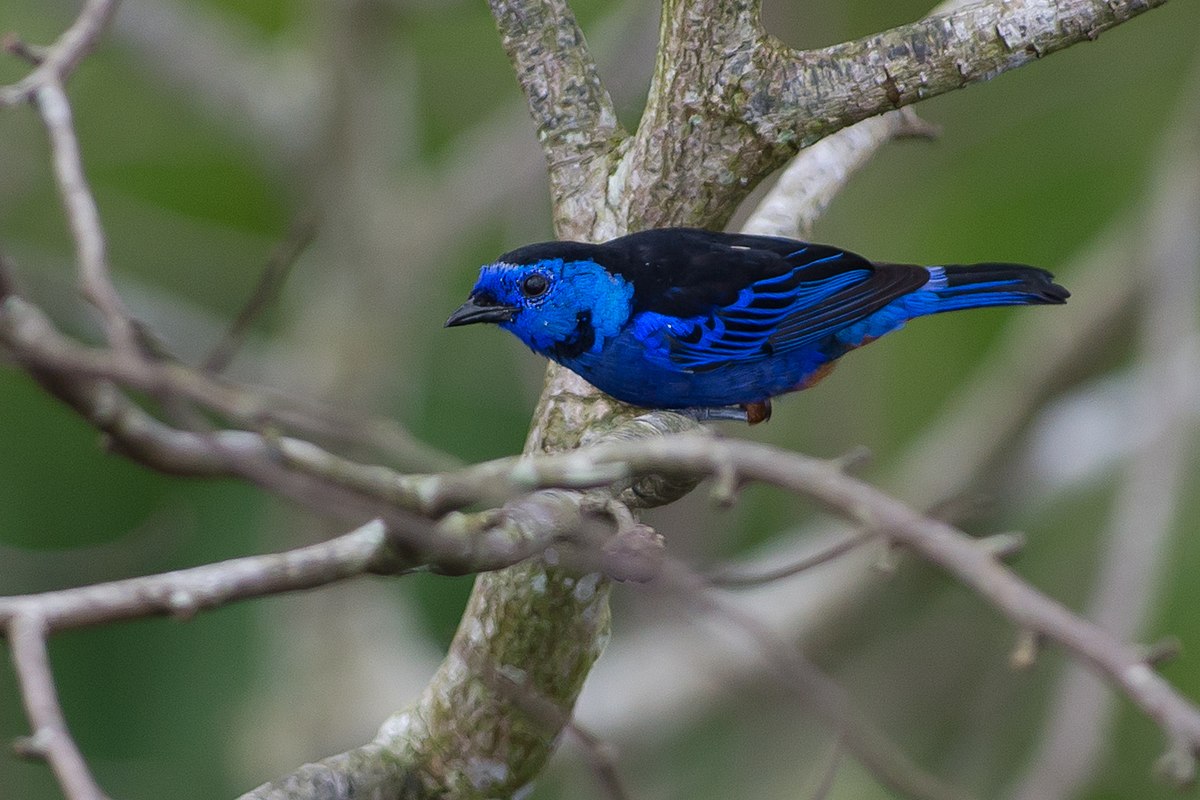
Wikipedia: Opal-rumped tanager Source: WIKIPEDIA
1200px-Tangara_velia_Opal-rumped_Tanager.jpg
🔍
Never observed (yet!)
Description
The opal-rumped tanager (Tangara velia) is a species of bird in the family Thraupidae. It is found in the Amazon and Atlantic Forest of South America. The population of the Atlantic Forest has a far paler chest than the other populations, and has often been considered a separate species as the silvery-breasted tanager (Tangara cyanomelas). Today most authorities treat it as a subspecies of the opal-rumped tanager.
[more]
Details
Profile Wikipedia Xeno-Canto YouTube

Wikipedia: Blue-whiskered tanager Source: WIKIPEDIA
1200px-TangaraJohannaeKeulemans.jpg
🔍
Never observed (yet!)
Description
The blue-whiskered tanager (Tangara johannae) is a species of bird in the family Thraupidae.
It is found in the Chocó of Colombia and Ecuador.
Its natural habitat is subtropical or tropical moist lowland forests.
It is threatened by habitat loss.
[more]
Details
Profile Wikipedia Xeno-Canto YouTube

Wikipedia: Blue-and-black tanager Source: WIKIPEDIA
Tangara_vassorii_by_Francesco_Veronesi.jpg
🔍
Never observed (yet!)
Description
The blue-and-black tanager (Tangara vassorii) is a species of bird in the family Thraupidae.
[more]
Details
Profile Wikipedia Xeno-Canto YouTube

Wikipedia: Bay-headed tanager Source: WIKIPEDIA
1200px-Tangara_gyrola_-Manizales%2C_Caldas%2C_Colombia-8_%282%29.jpg
🔍
Never observed (yet!)
Description
The bay-headed tanager (Tangara gyrola) is a medium-sized passerine bird. This tanager is a resident breeder in Costa Rica, Panama, South America south to Ecuador, Bolivia and southern Brazil, and on Trinidad.
[more]
Details
Profile Wikipedia Xeno-Canto YouTube

Wikipedia: Blue-browed tanager Source: WIKIPEDIA
1200px-Tangara_cyanotis_-_Blue-browed_Tanager_%28cropped%29.jpg
🔍
Never observed (yet!)
Description
The blue-browed tanager (Tangara cyanotis) is a species of bird in the family Thraupidae.
It is found in Bolivia, Colombia, Ecuador, and Peru.
Its natural habitat is subtropical or tropical moist montane forests.
[more]
Details
Profile Wikipedia Xeno-Canto YouTube

Wikipedia: Turquoise tanager Source: WIKIPEDIA
Sa%C3%ADra-de-bando.jpg
🔍
Never observed (yet!)
Description
The turquoise tanager (Tangara mexicana) is a medium-sized passerine bird in the tanager family Thraupidae. It is a resident bird from Trinidad, Colombia and Venezuela south to Bolivia and much of Brazil (despite its scientific name, it is not found in Mexico). It is restricted to areas with humid forest, with its primary distribution being the Amazon, while a disjunct population occurs in the Atlantic Forest of eastern Brazil. The latter population is sometimes considered a separate species, the white-bellied tanager (Tangara brasiliensis) .
[more]
Details

Arenal feeder palm tanager. 2018-02-27 12:23:14 Costa Rica
First observed in Costa Rica on 2018-02-27.
Description
The palm tanager (Thraupis palmarum) is a medium-sized passerine bird. This tanager is a resident breeder from Nicaragua south to Bolivia, Paraguay and southern Brazil.[2][3] It also breeds on Trinidad and, since 1962, on Tobago. In Trinidad and Tobago, it is known by colloquial names such as the "palmiste" and the "green jean".[4]
[more]
Details

Wikipedia: Scarlet-bellied mountain tanager Source: WIKIPEDIA
Anisognathus_igniventris_by_Francesco_Veronesi.jpg
🔍
Never observed (yet!)
Description
The scarlet-bellied mountain tanager (Anisognathus igniventris) is a species of bird in the family Thraupidae. It is found in Andean forest, woodland and shrub in Bolivia, Colombia, Ecuador, Peru, and Venezuela.[2] It is sometimes split into two species: The scarlet-bellied mountain tanager (A. lunulatus) ranging north from central Peru, and the fire-bellied mountain tanager (A. igniventris) ranging south from central Peru.[1][3] The latter has a lighter, more orangish belly than the former.[2]
[more]
Details

Wikipedia: Blue-winged mountain tanager Source: WIKIPEDIA
1200px-Blue-winged_Mountain-tanager_Ecuador_1357a.jpg
🔍
Never observed (yet!)
Description
The blue-winged mountain tanager (Anisognathus somptuosus) is a species of bird in the family Thraupidae, the tanagers. It is found in highland forest and woodland in the Andes of Bolivia, Colombia, Ecuador, Peru and Venezuela, as well as a disjunct population in the Venezuelan Coastal Range. It is a common species and its populations appear to be stable.[1] It is generally bright yellow and black with blue to the wings and tail; some populations have a moss-green back.[2] In Bolivia and southernmost Peru, the rump is blue and the voice is very different;[2] this population is sometimes recognized as a separate species, the Bolivian mountain tanager (A. flavinucha).[3]
[more]
Details

Wikipedia: Black-chinned mountain tanager Source: WIKIPEDIA
Anisognathus_notabilis_-Ecuador-8.jpg
Ecuador
🔍
Never observed (yet!)
Description
The black-chinned mountain tanager (Anisognathus notabilis) is a species of bird in the family Thraupidae.
It is found in Colombia and Ecuador.
Its natural habitat is subtropical or tropical moist montane forests.
[more]
Details

Wikipedia: Lacrimose mountain tanager Source: WIKIPEDIA
1200px-Anisognathus_lacrymosus_-_Tangara_lacrimosa_-_Lachrymose_Mountain-Tanager_%288729291521%29.jpg
🔍
Never observed (yet!)
Description
The lacrimose mountain tanager (Anisognathus lacrymosus) is a species of bird in the family Thraupidae. It is found in Andean highland forest from Venezuela, through Colombia and Ecuador, to Peru. Some of its 11 subspecies are quite distinctive and A. l. yariguierum was only scientifically described in 2010.[2][3]
[more]
Details

Wikipedia: Hooded mountain tanager Source: WIKIPEDIA
1200px-Hooded_mountain_tanager_%28Buthraupis_montana_cucullata%29_Caldas.jpg
🔍
Never observed (yet!)
Description
The hooded mountain tanager (Buthraupis montana) is a species of bird in the tanager family Thraupidae. It is the only member of the genus Buthraupis. This yellow, blue and black tanager is found in forest, woodland and shrub in the Andean highlands of Bolivia, Colombia, Ecuador, Peru, and Venezuela. At 23 centimetres (9.1 in) and 85 grams (3.0 oz), it is one of the largest tanagers (second in weight only to the white-capped tanager).
[more]
Details
Profile Wikipedia Xeno-Canto YouTube

Wikipedia: Vermilion tanager Source: WIKIPEDIA
1200px-Calochaetes_coccineus_-_Vermilion_Tanager_%28cropped%29.jpg
🔍
Never observed (yet!)
Description
The vermilion tanager (Calochaetes coccineus) is a species of Neotropical bird in the tanager family Thraupidae. It is the only member of its genus Calochaetes.
[more]
Details
Profile Wikipedia Xeno-Canto YouTube

Wikipedia: Orange-eared tanager Source: WIKIPEDIA
1200px-Chlorochrysa_calliparaea.jpg
🔍
Never observed (yet!)
Description
The orange-eared tanager (Chlorochrysa calliparaea) is a species of bird in the family Thraupidae.
It is found in Bolivia, Colombia, Ecuador, Peru, and Venezuela.
Its natural habitat is subtropical or tropical moist montane forests.
[more]
Details
Profile Wikipedia Xeno-Canto YouTube

Wikipedia: Glistening-green tanager Source: WIKIPEDIA
1200px-Glistening-green_Tanager.jpeg
🔍
Never observed (yet!)
Description
The glistening-green tanager (Chlorochrysa phoenicotis) is a species of bird in the family Thraupidae. It is found in Colombia and Ecuador.
[more]
Details
Profile Wikipedia Xeno-Canto YouTube
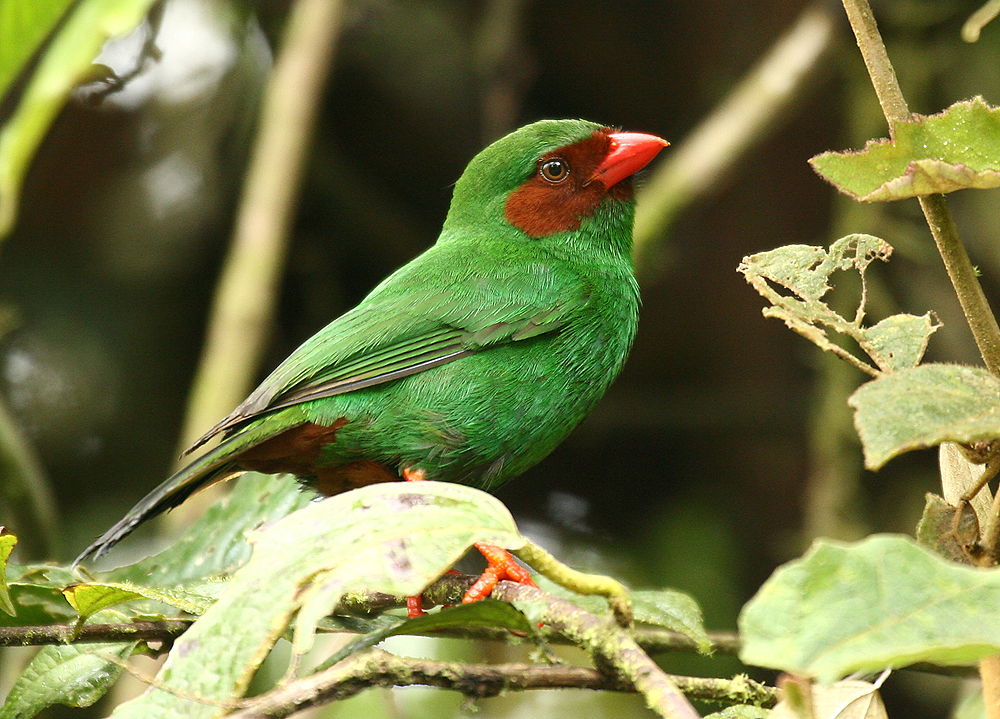
Wikipedia: Grass-green tanager Source: WIKIPEDIA
Chlorornis_riefferii.jpg
🔍
Never observed (yet!)
Description
The grass-green tanager (Chlorornis riefferii) is a small South America bird in the tanager family Thraupidae. It is the only member of the genus Chlorornis.
[more]
Details

Wikipedia: Magpie tanager Source: WIKIPEDIA
Magpie_Tanager_-_Manu_NP_-_Per%C3%B9_8577_%2822954466240%29.jpg
🔍
Never observed (yet!)
Description
The magpie tanager (Cissopis leverianus) is a South American species of tanager. It is the only member of the monotypic genus Cissopis. As suggested by its common name, this blue-black and white species is superficially reminiscent of a European magpie. With a total length of 25–30 centimetres (9.8–11.8 in), a large percentage of which is tail, it is the longest species of tanager. It weighs 69–76 grams (2.4–2.7 oz).
[more]
Details

Wikipedia: Buff-breasted mountain tanager Source: WIKIPEDIA
Buff-breasted_Mountain_Tanager_%28Dubusia_taeniata%29_%288079763473%29.jpg
🔍
Never observed (yet!)
Description
The buff-breasted mountain tanager (Dubusia taeniata) is a species of Neotropical bird in the tanager family Thraupidae.
[more]
Details

Wikipedia: Purplish-mantled tanager Source: WIKIPEDIA
Purplish-mantled_Tanager_-_Colombia_S4E9634_%2822856163507%29.jpg
🔍
Never observed (yet!)
Description
The purplish-mantled tanager (Iridosornis porphyrocephalus) is a species of bird in the family Thraupidae.
It is found in Colombia and Ecuador.
Its natural habitats are subtropical or tropical moist montane forests and heavily degraded former forest.
It is threatened by habitat loss.
[more]
Details
Profile Wikipedia Xeno-Canto YouTube

Wikipedia: Yellow-throated tanager Source: WIKIPEDIA
1200px-Iridosornis_analis_-NBII_Image_Gallery-a00213.jpg
🔍
Never observed (yet!)
Description
The yellow-throated tanager (Iridosornis analis) is a species of bird in the family Thraupidae.
It is found in Colombia, Ecuador, and Peru.
Its natural habitat is subtropical or tropical moist montane forests.
[more]
Details
Profile Wikipedia Xeno-Canto YouTube

Wikipedia: Golden-crowned tanager Source: WIKIPEDIA
Iridosornis_rufivertex.jpg
🔍
Never observed (yet!)
Description
The golden-crowned tanager (Iridosornis rufivertex) is a species of bird in the family Thraupidae.
[more]
Details
Profile Wikipedia Xeno-Canto YouTube

Wikipedia: Fawn-breasted tanager Source: WIKIPEDIA
Pipraeidea_melanonota%2C_Sa%C3%ADra-vi%C3%BAva%2C_Fawn-breasted_Tanager.jpg
🔍
Never observed (yet!)
Description
The fawn-breasted tanager (Pipraeidea melanonota) is a species of tanager with a blue head and yellow breast. It occurs in the Andes of northwestern Argentina, Bolivia, Colombia, Ecuador, Peru and Venezuela, as well as in the highlands of northeastern Argentina, south Brazil, Paraguay and Uruguay.
[more]
Details
Profile Wikipedia Xeno-Canto YouTube
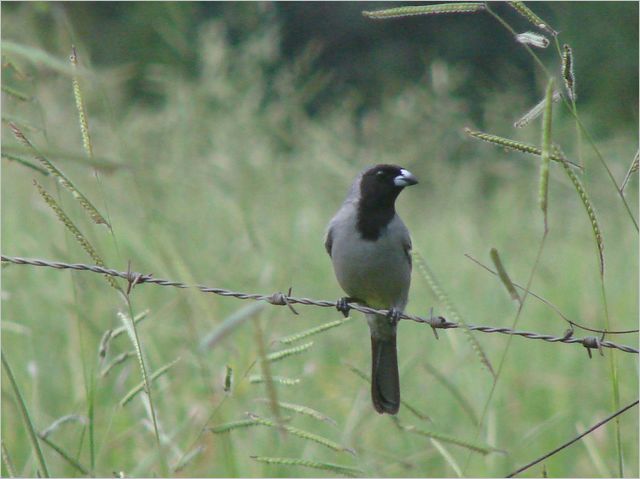
Wikipedia: Black-faced tanager Source: WIKIPEDIA
Black-faced_tanager.jpg
🔍
Never observed (yet!)
Description
The black-faced tanager (Schistochlamys melanopis) is a species of bird in the family Thraupidae.
[more]
Details
Profile Wikipedia Xeno-Canto YouTube

Wikipedia: Red-capped cardinal Source: WIKIPEDIA
1200px-Thraupidae_-_Paroaria_gularis.JPG
🔍
Never observed (yet!)
Description
The red-capped cardinal (Paroaria gularis) is a small South American bird. It belongs to Paroaria, a genus in the tanager family Thraupidae.
[more]
Details

Wikipedia: Moss-backed tanager Source: WIKIPEDIA
1200px-Moss-backed_Tanager_%2815742706581%29.jpg
🔍
Never observed (yet!)
Description
The moss-backed tanager (Bangsia edwardsi) is a species of bird in the family Thraupidae.
It is found in Colombia and Ecuador.
Its natural habitats are subtropical or tropical moist lowland forests and subtropical or tropical moist montane forests.
[more]
Details

Wikipedia: Golden-chested tanager Source: WIKIPEDIA
1200px-Bangsia_rothschildi_1897.jpg
🔍
Never observed (yet!)
Description
The golden-chested tanager (Bangsia rothschildi) is a species of bird in the family Thraupidae.
It is found in Colombia and Ecuador.
Its natural habitats are subtropical or tropical moist lowland forests and subtropical or tropical moist montane forests.
[more]
Details
Profile Wikipedia Xeno-Canto YouTube
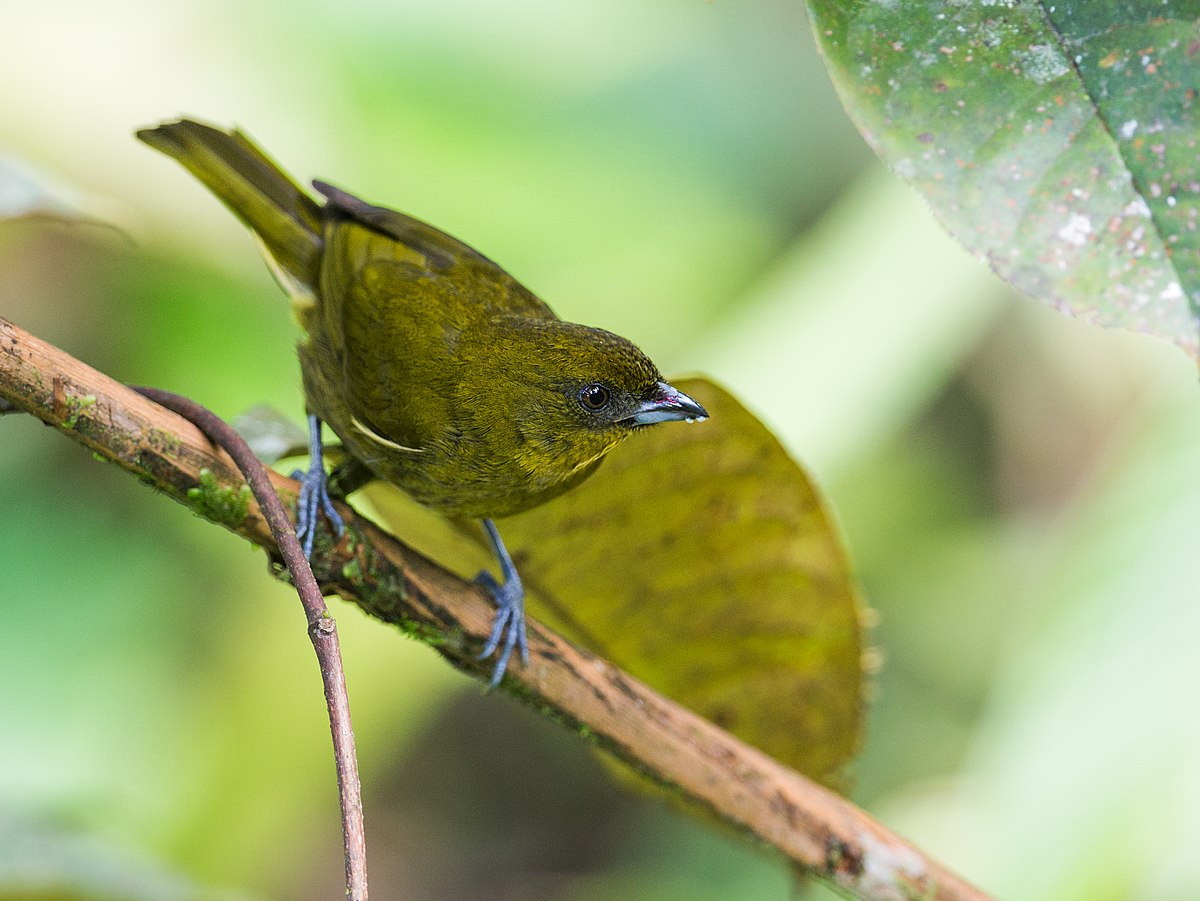
Wikipedia: Yellow-green tanager Source: WIKIPEDIA
1200px-Bangsia_flavovirens_-_Yellow-green_Tanager_2_%28cropped%29.jpg
🔍
Never observed (yet!)
Description
The yellow-green tanager (Bangsia flavovirens) is a species of bird in the family Thraupidae.[1][2] It is also known as the yellow-green bush tanager as it was formerly place in the genus Chlorospingus with other bush tanagers. The whole genus was moved to the New World sparrow family Passerellidae when bush tanagers were found to be more closely related to the genus Arremonops. However, recent molecular analysis has discovered that this species is neither a bush tanager or sparrow and the species returned to Thraupidae and placed in the genus Bangsia.[3] It is found in Colombia and Ecuador.
Its natural habitats are subtropical or tropical moist lowland forest and subtropical or tropical moist montane forest.
It is threatened by habitat loss[1]
[more]
Details
Profile Wikipedia Xeno-Canto YouTube

Wikipedia: Orange-throated tanager Source: WIKIPEDIA
Wetmorethraupis_sterrhopteron_-_Orange-throated_Tanager_%28cropped%29.jpg
🔍
Never observed (yet!)
Description
The orange-throated tanager (Wetmorethraupis sterrhopteron) is a species of bird in the tanager family Thraupidae that is found very locally in humid forests around the Ecuador-Peru border. As a species it is considered threatened. The orange-throated tanager is the only member of the genus Wetmorethraupis, named after the ornithologist Alexander Wetmore. It is closely related to members of the genus Bangsia.
[more]
Details
Plumbeous sierra finch / Bleiämmerling (Geospizopsis unicolor)

Wikipedia: Plumbeous sierra finch Source: WIKIPEDIA
1200px-Plumbeous_Sierra-finch.jpg
🔍
Never observed (yet!)
Description
The plumbeous sierra finch (Geospizopsis unicolor) is a species of bird in the family Thraupidae.
[more]
Details
Ash-breasted sierra finch (Geospizopsis plebejus)
Profile Wikipedia Xeno-Canto YouTube

Wikipedia: Ash-breasted sierra finch Source: WIKIPEDIA
1200px-Ash-breasted_Sierra-Finch_%28Phrygilus_plebejus%29.jpg
🔍
Never observed (yet!)
Description
The ash-breasted sierra finch (Geospizopsis plebejus) is a species of bird in the family Thraupidae.
[more]
Details
Band-tailed sierra finch (Rhopospina alaudina)
Profile Wikipedia Xeno-Canto YouTube
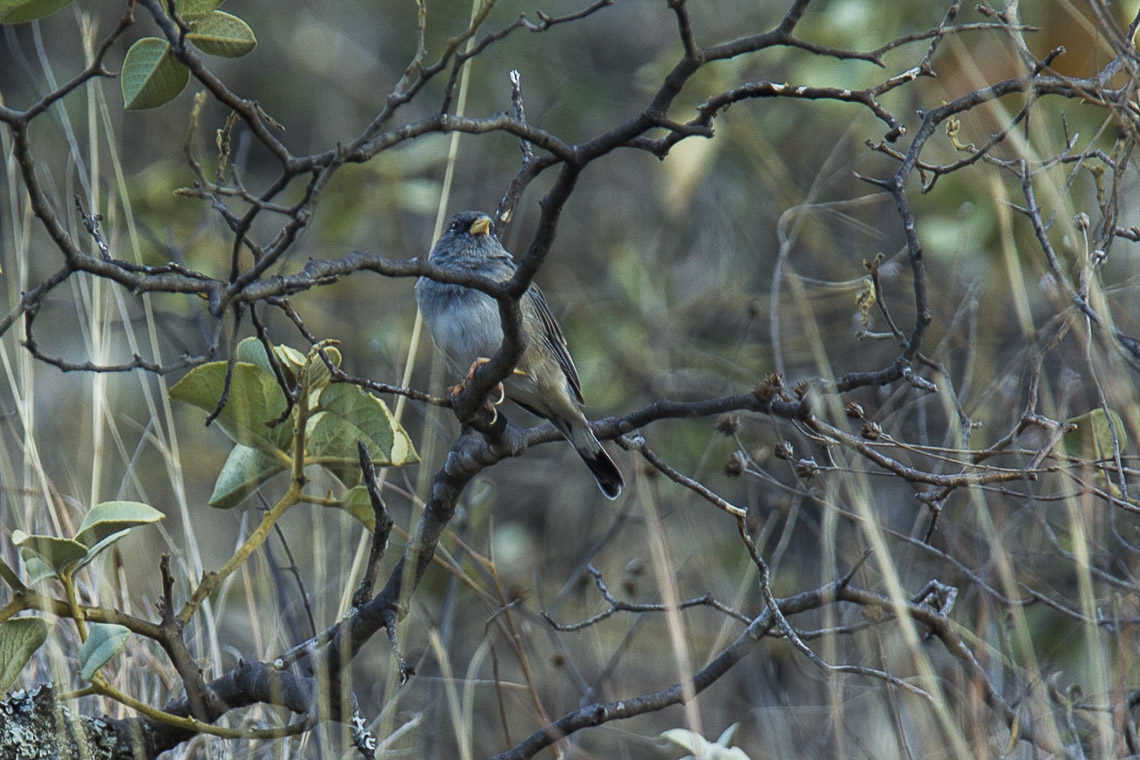
Wikipedia: Band-tailed sierra finch Source: WIKIPEDIA
Band-tailed_Sierra_Finch.jpg
🔍
Never observed (yet!)
Description
The band-tailed sierra finch (Porphyrospiza alaudina) is a species of bird in the family Thraupidae and is found in Argentina, Bolivia, Chile, Ecuador, and Peru. Its natural habitats are subtropical or tropical dry shrubland and subtropical or tropical high-altitude shrubland.
[more]
Details
Dull-colored grassquit (Asemospiza obscura)
Profile Wikipedia Xeno-Canto YouTube

Wikipedia: Dull-colored grassquit Source: WIKIPEDIA
1200px-Dull-colored_Grassquit_%28Tiaris_obscurus%29.jpg
🔍
Never observed (yet!)
Description
The dull-coloured grassquit (Asemospiza obscura) is a small bird. It is recognized as a tanager closely related to Darwin's finches.
[more]
Details
Rufous-collared sparrow / Morgenammer (Zonotrichia capensis)

La fortuna rufous collared sparrow. 2018-02-26 10:16:56 Costa Rica
First observed in Costa Rica on 2018-02-26.
Description
The rufous-collared sparrow or Andean sparrow (Zonotrichia capensis) is an American sparrow found in a wide range of habitats, often near humans, from the extreme south-east of Mexico to Tierra del Fuego, and in the Caribbean, only on the island of Hispaniola (in both the Dominican Republic and Haiti). It is famous for its diverse vocalizations, which have been intensely studied since the 1970s, particularly by Paul Handford and Stephen C. Lougheed (UWO), Fernando Nottebohm (Rockefeller University) and Pablo Luis Tubaro (UBA). Local names for this bird include the Portuguese tico-tico, the Spanish chingolo, chincol and copetón, "tufted" in Colombia and comemaíz "corn eater" in Costa Rica.
[more]
Details
Common chlorospingus / Fleckenbuschtangare (Chlorospingus flavopectus)
Profile Wikipedia Xeno-Canto YouTube

Wikipedia: Common chlorospingus Source: WIKIPEDIA
1200px-Common_bush_tanager_%28Chlorospingus_flavopectus_regionalis%29.jpg
🔍
Never observed (yet!)
Description
The common bush tanager (Chlorospingus flavopectus), also referred to as common chlorospingus, is a small passerine bird. It is a resident breeder in the highlands from central Mexico south to Bolivia and northwest Argentina. C. flavopectus in the loose sense is a notorious cryptic species complex, and several of the up to 25 subspecies recognized in recent times are likely to be distinct species. Some populations in fact appear to be more distinct than several other members of Chlorospingus.[2]
[more]
Details
Short-billed chlorospingus / Kurzschnabel-Buschtangare (Chlorospingus parvirostris)
Profile Wikipedia Xeno-Canto YouTube

Wikipedia: Short-billed chlorospingus Source: WIKIPEDIA
1200px-Yellow-whiskeredBush-Tanager.jpg
🔍
Never observed (yet!)
Description
The yellow-whiskered bush tanager or short-billed bush-tanager (Chlorospingus parvirostris) is a species of bird traditionally placed in the family Thraupidae, but now viewed closer to Arremonops in the Passerellidae. It is found in Bolivia, Colombia, Ecuador, and Peru.
[more]
Details
Yellow-throated chlorospingus / Gelbkehl-Buschtangare (Chlorospingus flavigularis)
Profile Wikipedia Xeno-Canto YouTube

Wikipedia: Yellow-throated chlorospingus Source: WIKIPEDIA
1200px-Chlorospingus_flavigularis_-NBII_Image_Gallery-a00254.jpg
🔍
Never observed (yet!)
Description
The yellow-throated bush tanager (Chlorospingus flavigularis) is a species of bird traditionally placed in the family Thraupidae, but now closer to Arremonops in the Passerellidae. It is found in Bolivia, Colombia, Ecuador, Panama, and Peru.
[more]
Details
Dusky chlorospingus / Graubrust-Buschtangare (Chlorospingus semifuscus)
Profile Wikipedia Xeno-Canto YouTube

Wikipedia: Dusky chlorospingus Source: WIKIPEDIA
Dusky_Bush-Tanager_-_Ecuador_S4E5699_%2822856133227%29.jpg
🔍
Never observed (yet!)
Description
The dusky bush tanager (Chlorospingus semifuscus) is a species of bird traditionally placed in the family Thraupidae, but now viewed closer to Arremonops in the Passerellidae.
[more]
Details
Ashy-throated chlorospingus / Graukehl-Buschtangare (Chlorospingus canigularis)
Profile Wikipedia Xeno-Canto YouTube

Wikipedia: Ashy-throated chlorospingus Source: WIKIPEDIA
Chlorospingus_canigularis.jpg
🔍
Never observed (yet!)
Description
The ashy-throated bush tanager (Chlorospingus canigularis) is a species of bird traditionally placed in the family Thraupidae, but perhaps closer to Arremonops in the Passerellidae.
It is found in Colombia, Costa Rica, Ecuador, Panama, Peru, and Venezuela.
Its natural habitats are subtropical or tropical dry forests, subtropical or tropical moist lowland forests, and subtropical or tropical moist montane forests.
[more]
Details
White-rimmed brushfinch / Brillenbuschammer (Atlapetes leucopis)

Wikipedia: White-rimmed brushfinch Source: WIKIPEDIA
BuarremonLeucopisSmit.jpg
🔍
Never observed (yet!)
Description
The white-rimmed brushfinch (Atlapetes leucopis) is a species of bird in the family Passerellidae. It is found in Colombia and Ecuador.
[more]
Details
White-headed brushfinch / Weißkopf-Buschammer (Atlapetes albiceps)

Wikipedia: White-headed brushfinch Source: WIKIPEDIA
White-headed_Brush-Finch_-_South_Ecuador_S4E9179_%2822765143613%29.jpg
🔍
Never observed (yet!)
Description
The white-headed brushfinch (Atlapetes albiceps) is a species of bird in the family Passerellidae.
[more]
Details
Pale-naped brush-finch / Zimtstirn-Buschammer (Atlapetes pallidinucha)
Profile Wikipedia Xeno-Canto YouTube

Wikipedia: Pale-naped brush-finch Source: WIKIPEDIA
1200px-Pale-naped_Brush-Finch_RWD3.jpg
🔍
Never observed (yet!)
Description
The pale-naped brushfinch (Atlapetes pallidinucha) is a species of bird in the family Passerellidae.
[more]
Details
Yellow-breasted brushfinch / Rostnacken-Buschammer (Atlapetes latinuchus)
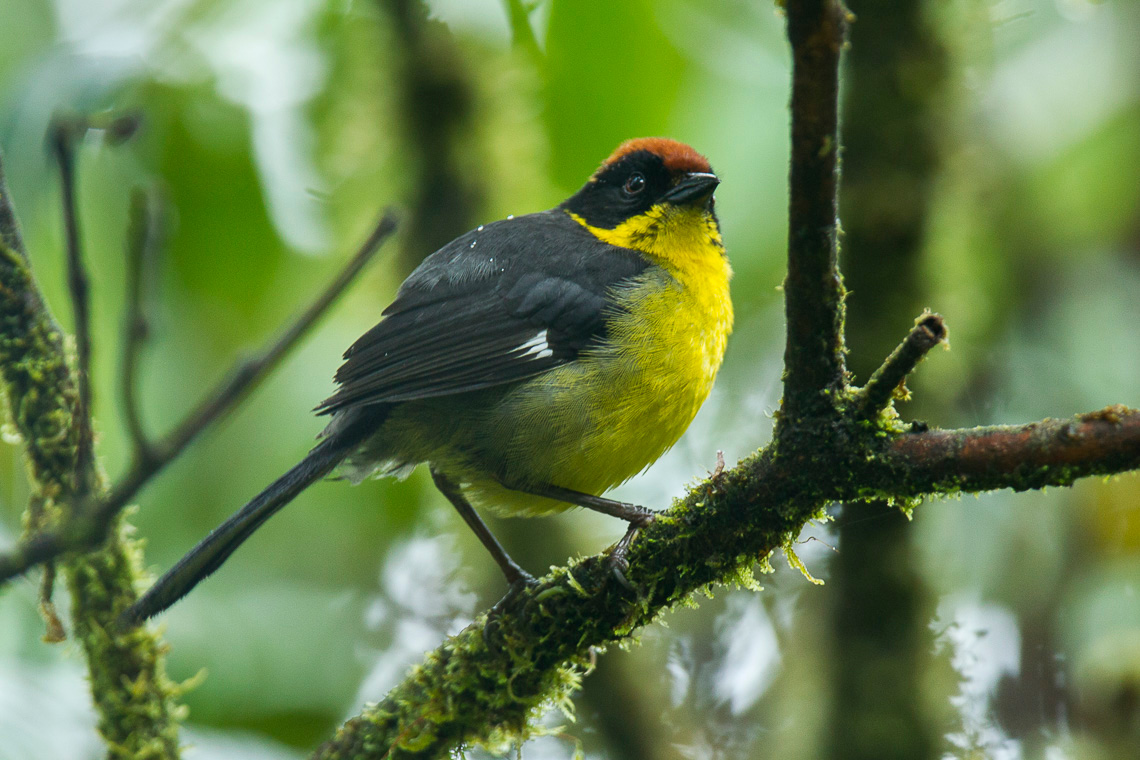
Wikipedia: Yellow-breasted brushfinch Source: WIKIPEDIA
Rufous-naped_Brush-Finch_-_South_Ecuador_S4E1959_%2822764735833%29.jpg
🔍
Never observed (yet!)
Description
The yellow-breasted brushfinch (Atlapetes latinuchus), also known as the cloud-forest brushfinch, is a species of bird in the family Passerellidae. It is sometimes considered a subspecies of Atlapetes rufinucha.
[more]
Details
Pale-headed brush-finch / Blasskopf-Buschammer (Atlapetes pallidiceps)

Wikipedia: Pale-headed brush-finch Source: WIKIPEDIA
1200px-Atlapetes_pallidiceps_-NBII_Image_Gallery-a00258.jpg
🔍
Never observed (yet!)
Description
The pale-headed brushfinch (Atlapetes pallidiceps) is a species of bird in the family Passerellidae. It is endemic to arid areas with low scrub at altitudes of 1,650–1,800 m (5,410–5,910 ft) in south-central Ecuador.
[more]
Details
Slaty brushfinch / Graubrust-Buschammer (Atlapetes schistaceus)
Profile Wikipedia Xeno-Canto YouTube

Wikipedia: Slaty brushfinch Source: WIKIPEDIA
Slaty_Brush-Finch_-_Colombia_S4E2313_%2822763527104%29.jpg
🔍
Never observed (yet!)
Description
The slaty brushfinch (Atlapetes schistaceus) is a species of bird in the family Passerellidae. It is found in humid Andean forests from western Venezuela, through Colombia, to Ecuador, with a disjunct population in central Peru. The latter is sometimes considered a separate species, the Taczanowski's brushfinch (A. taczanowskii). Furthermore, the Cuzco brushfinch from south-eastern Peru is sometimes considered a subspecies of the slaty brush finch.
[more]
Details
White-winged brushfinch / Spiegelbuschammer (Atlapetes leucopterus)

Wikipedia: White-winged brushfinch Source: WIKIPEDIA
1200px-White-winged_Brush-Finch%2C_Tandayapa%2C_Ecuador_%285771791640%29.jpg
🔍
Never observed (yet!)
Description
The white-winged brushfinch (Atlapetes leucopterus) is a species of bird in the family Passerellidae.
[more]
Details
Bay-crowned brushfinch / Rotscheitel-Buschammer (Atlapetes seebohmi)

Wikipedia: Bay-crowned brushfinch Source: WIKIPEDIA
Bay-crowned_Brushfinch.JPG
🔍
Never observed (yet!)
Description
The bay-crowned brushfinch (Atlapetes seebohmi) is a species of bird in the family Passerellidae.
[more]
Details
Tricolored brushfinch (Atlapetes tricolor)

Wikipedia: Tricolored brushfinch Source: WIKIPEDIA
Tricolored_Brush-Finch_-_Colombia_S4E9856_%2823096532120%29.jpg
🔍
Never observed (yet!)
Description
The tricolored brushfinch (Atlapetes tricolor) is a species of bird in the family Passerellidae. It is found in the Andes of central Peru and Ecuador.[2] Its natural habitats are subtropical or tropical moist montane forests and heavily degraded former forest.
[more]
Details
White-naped brush-finch / Weißnacken-Buschammer (Atlapetes albinucha)

Wikipedia: White-naped brush-finch Source: WIKIPEDIA
White-naped_Brush-Finch_-_Colombia_S4E3782_%2823309308051%29.jpg
🔍
Never observed (yet!)
Description
The white-naped brushfinch (Atlapetes albinucha), also known as the yellow-throated brush finch, is a species of bird in the family Passerellidae.
[more]
Details
Yellow-browed sparrow / Gelbwangenammer (Ammodramus aurifrons)
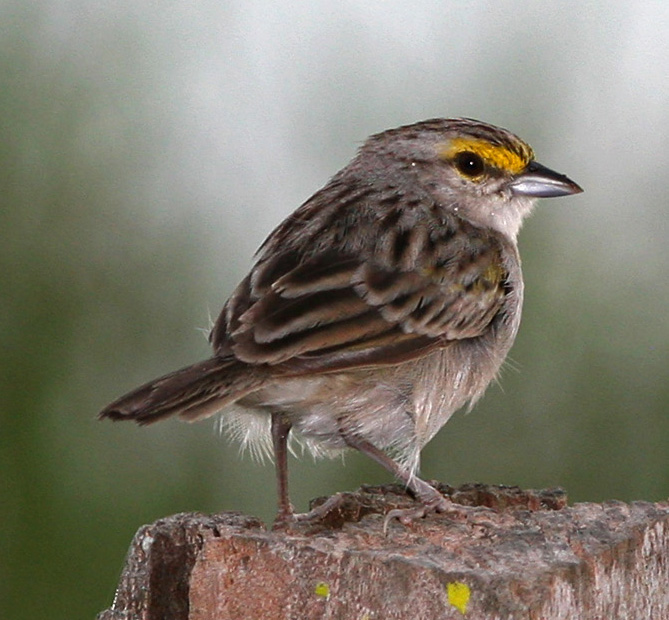
Wikipedia: Yellow-browed sparrow Source: WIKIPEDIA
Yellow-crowned_Sparrow.jpg
🔍
Never observed (yet!)
Description
The yellow-browed sparrow (Ammodramus aurifrons) is a species of bird in the family Passerellidae. First described by Johann Baptist von Spix in 1825, this American sparrow is found across much of the Amazon basin in South America. Its natural habitats are subtropical or tropical moist shrubland, pastureland, and heavily degraded former forest.
[more]
Details
Grasshopper sparrow / Heuschreckenammer (Ammodramus savannarum)
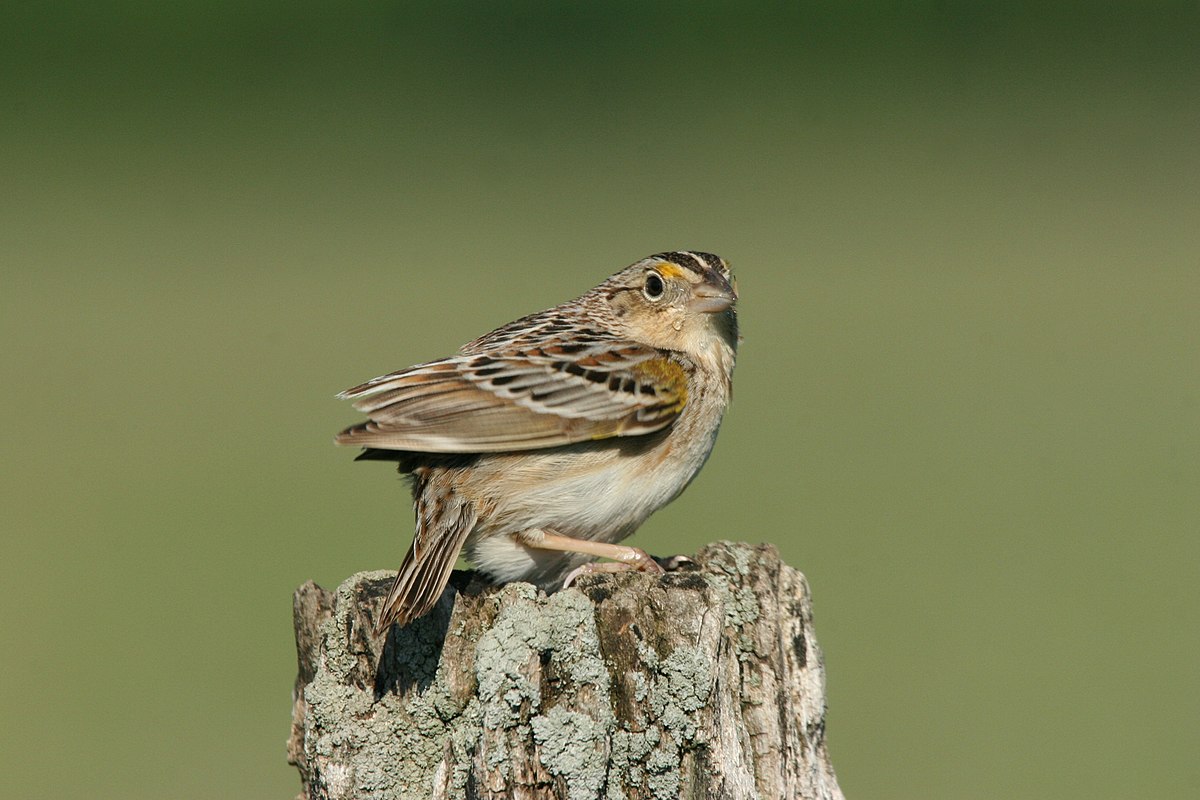
Wikipedia: Grasshopper sparrow Source: WIKIPEDIA
1200px-Grasshopper_Sparrow.jpg
🔍
Never observed (yet!)
Description
The grasshopper sparrow (Ammodramus savannarum) is a small New World sparrow. The genus Ammodramus contains nine species that inhabit grasslands and prairies.
[more]
Details
Black-striped sparrow / Panamaammer (Arremonops conirostris)

Wikipedia: Black-striped sparrow Source: WIKIPEDIA
1200px-Arremonops_conirostris_-near_Rancho_Naturalista%2C_Cordillera_de_Talamanca%2C_Costa_Rica-8.jpg
🔍
Never observed (yet!)
Description
The black-striped sparrow (Arremonops conirostris) is a passerine bird found from eastern Honduras to western Ecuador, northern Brazil, and Venezuela.
[more]
Details
Black-capped sparrow / Kapuzenruderammer (Arremon abeillei)
Profile Wikipedia Xeno-Canto YouTube

Wikipedia: Black-capped sparrow Source: WIKIPEDIA
Black-capped_Sparrow_-_South_Ecuador_S4E9265_%2823309731381%29.jpg
🔍
Never observed (yet!)
Description
The black-capped sparrow (Arremon abeillei) is a species of bird in the family Passerellidae.
[more]
Details
Chestnut-capped brush-finch (Arremon brunneinucha)

Wikipedia: Chestnut-capped brush-finch Source: WIKIPEDIA
1200px-Chestnut-capped_brushfinch_%28Arremon_brunneinucha_elsae%29.jpg
🔍
Never observed (yet!)
Description
The chestnut-capped brushfinch (Arremon brunneinucha), is a Neotropical passerine bird in the New World sparrow Passerellidae
[more]
Details
Grey-browed brush-finch (Arremon assimilis)
Description
Details
Orange-billed sparrow / Goldschnabel-Ruderammer (Arremon aurantiirostris)
Profile Wikipedia Xeno-Canto YouTube

Wikipedia: Orange-billed sparrow Source: WIKIPEDIA
Orange-billed_Sparrow_-_Rio_Tigre_-_Costa_Rica_S4E9639_%2826584988352%29_%28cropped%29.jpg
🔍
Never observed (yet!)
Description
The orange-billed sparrow (Arremon aurantiirostris) is a species of bird in the family Passerellidae.
In Central America it is found in Belize, Costa Rica, Guatemala, Honduras, Mexico, Nicaragua and Panama. In northwestern South America the orange-billed sparrow is found in Colombia, Ecuador and northern Peru. The species are black and as the name suggests, have an orange bill.[2] Its natural habitat is subtropical or tropical moist lowland forest.
[more]
Details
Olive finch / Olivbuschammer (Arremon castaneiceps)

Wikipedia: Olive finch Source: WIKIPEDIA
Olive_Finch_-_Colombia_S4E3362_%2823283455182%29.jpg
🔍
Never observed (yet!)
Description
The olive finch (Arremon castaneiceps) is a species of bird in the family Passerellidae. Until recently, it was placed in the genus Lysurus.[2]
[more]
Details
Tanager finch / Tangarenbuschammer (Oreothraupis arremonops)

Wikipedia: Tanager finch Source: WIKIPEDIA
1200px-Tanager_Finch.jpg
🔍
Never observed (yet!)
Description
The tanager finch (Oreothraupis arremonops) is a songbird species. In the recent past it was placed in the Emberizidae, and then classified as its common name implies, a kind of tanager (Thraupidae). Today, it has been placed in the family Passerellidae, which was formerly considered to be part of the Emberizidae. It is the only species in the monotypic genus Oreothraupis.[2]
It is found in Colombia and Ecuador, where its natural habitat is subtropical or tropical moist montane forests. It is threatened by habitat loss.
[more]
Details
Tumbes sparrow / Stolzmannammer (Rhynchospiza stolzmanni)

Wikipedia: Tumbes sparrow Source: WIKIPEDIA
1200px-GnathospizaHaemophilaSmit.jpg
🔍
Never observed (yet!)
Description
The Tumbes sparrow (Rhynchospiza stolzmanni) is a species of bird in the family Passerellidae found in Ecuador and Peru. Its natural habitats are subtropical or tropical dry forests and subtropical or tropical dry shrubland.
[more]
Details
Profile Wikipedia Xeno-Canto YouTube

Wikipedia: Kelp gull Source: WIKIPEDIA
1200px-SouthShetland-2016-Livingston_Island_%28Hannah_Point%29%E2%80%93Kelp_gull_%28Larus_dominicanus%29.jpg
🔍
Never observed (yet!)
Description
Geography: This bird appears across the great seas in the following continents: South America, Africa.Details
Profile Wikipedia Xeno-Canto YouTube

Wikipedia: Belcher's gull Source: WIKIPEDIA
1200px-Band-Tailed_Gull.jpg
🔍
Never observed (yet!)
Description
General:Belcher's gull (Larus belcheri), also known as the band-tailed gull, is a bird in the family Laridae found along the Pacific coast of South America. It formerly included the very similar Olrog's gull as a subspecies, but that bird occurs on the Atlantic coast of South America and is now accepted as Larus atlanticus. Belcher's gull is a medium-sized gull with a blackish mantle, white head and underparts, a black band on the otherwise white tail, and a yellow bill with a red and black tip. Non-breeding adults have a brownish-black head and a white eye-ring. The name of this bird commemorates the British explorer Sir Edward Belcher who performed survey work on the Pacific coast of South America.
[more]
Details
Profile Wikipedia Xeno-Canto YouTube

Wikipedia: Andean gull Source: WIKIPEDIA
1200px-Andean_Gull_RWD5.jpg
🔍
Never observed (yet!)
Description
The Andean gull (Chroicocephalus serranus) is a species of gull in the family Laridae. As is the case with many gulls, it has traditionally been placed in the genus Larus.
It is found in the Andes in mountainous regions of Argentina, Bolivia, Chile, Colombia, Ecuador, and Peru. It is unusual for a gull in that it breeds inland in mountain areas. It may be variously found around rivers, freshwater lakes, saline marshes, and pastureland.
[more]
Details

Wikipedia: Grey-headed gull Source: WIKIPEDIA
1200px-Graukopf-M%C3%B6we_Larus_cirrocephalus_090501_We_150.JPG
🔍
Never observed (yet!)
Description
Geography: This bird appears across the great seas in the following continents: South America, Africa.General:
The grey-headed gull (Chroicocephalus cirrocephalus), also known as the grey-hooded gull, is a small gull which breeds patchily in South America and Africa south of the Sahara. It is not truly migratory, but is more widespread in winter. This species has occurred as a rare vagrant to North America, Italy and Spain. As is the case with many gulls, it has traditionally been placed in the genus Larus.
[more]
Details
Gull-billed tern / Lachseeschwalbe (Gelochelidon nilotica)
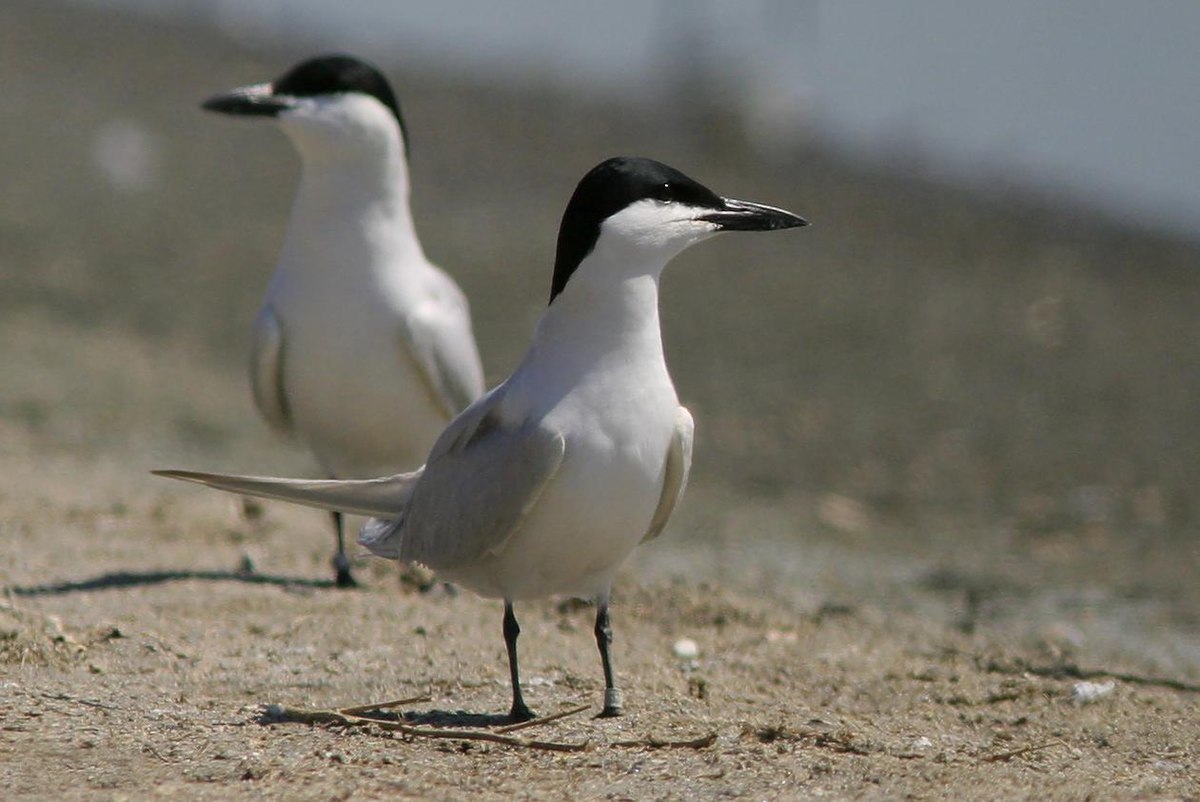
Wikipedia: Gull-billed tern Source: WIKIPEDIA
1200px-Gelochelidon_nilotica_vanrossemi.jpg
🔍
Never observed (yet!)
Description
Geography: This bird appears across the great seas in the following continents: Europe, North America, South America, Africa, Asia.General: Deutschland: Brut-, seltener Zugvogel RL 1
Vocalization:
Quite vocal and easily distinguished from most congeners. Mewing and sharp in tone, but not rattling or raucous like most terns. Other variants are series of "ke-ke-ke-ke", or the mewing sounds. [Link]
Seasonal behavior
Seldom seen hereMore details at Vogelwarte.ch
Other Details
Physical details
Physical details: length=35-38 cm, wingspan=100-115 cm, weight=190-260 gDetails
Swallow-tailed gull / Gabelschwanzmöwe (Creagrus furcatus)

Wikipedia: Swallow-tailed gull Source: WIKIPEDIA
1200px-Creagrus_furcatus_-Galapagos_Islands-8.jpg
🔍
Never observed (yet!)
Description
General:The swallow-tailed gull (Creagrus furcatus) is an equatorial seabird in the gull family, Laridae. It is the only species in the genus Creagrus, which derives from the Latin Creagra and the Greek kreourgos which means butcher, also from kreas, meat; according to Jobling it would mean "hook for meat" referring to the hooked bill of this species.[2] It was first described by French naturalist and surgeon Adolphe-Simon Neboux in 1846. Its scientific name is originally derived from the Greek word for gull, "Glaros" and via Latin Larus, "gull" and furca "two-tined fork".[3] It spends most of its life flying and hunting over the open ocean. The main breeding location is in the Galápagos Islands, particularly the rocky shores and cliffs of Hood, Tower and Wolf Islands, with lower numbers on most of the other islands. It is more common on the eastern islands where the water is warmer.[4]
[more]
Details
Sabine's gull / Schwalbenmöwe (Xema sabini)

Wikipedia: Sabine's gull Source: WIKIPEDIA
Xema_sabini_-Iceland_-swimming-8_%281%29.jpg
🔍
Never observed (yet!)
Description
Geography: This bird appears across the great seas in the following continents: Europe, North America, South America, Africa, Asia.General: Deutschland: seltener Zugvogel
Seasonal behavior
Presence: 08-18 - 10-27 Migration in: 08-18 - 10-27More details at Vogelwarte.ch
Details
Black skimmer / Schwarzmantel-Scherenschnabel (Rynchops niger)
Profile Wikipedia Xeno-Canto YouTube

Black skimmers near Las Coloradas. 2023-04-15 10:11:18 Yucatan
First observed in Yucatan on 2023-04-15.
Description
Geography: This bird appears across the great seas in the following continents: North America, South America, Africa.General:
The black skimmer (Rynchops niger) is a tern-like seabird, one of three very similar birds species in the skimmer genus Rynchops in the gull family Laridae. It breeds in North and South America. Northern populations winter in the warmer waters of the Caribbean and the tropical and subtropical Pacific coasts, but the South American races make only shorter movements in response to annual floods which extend their feeding areas in the river shallows.
[more]
Details
Black tern / Trauerseeschwalbe (Chlidonias niger)
Profile Wikipedia Vogelwarte BirdLife ZH ornitho.ch Audubon AllAboutBirds Xeno-Canto BirdID NABU YouTube

Trauerseeschwalbe. 2024-08-24 18:51:27 Klingnauer Stausee (man-made lake)
First observed in 🇨🇭 on 2024-08-24.
Description
Geography: This bird appears across the great seas in the following continents: Europe, North America, South America, Africa.General: Deutschland: Brut-, Zugvogel RL 1
Vocalization:
Moderately vocal. [Link]
Other Details
Physical details
Physical details: length=22-24 cm, wingspan=64-68 cm, weight=60-86 gHabitats: River and lake Details
Brown noddy / Noddi (Anous stolidus)

Wikipedia: Brown noddy Source: WIKIPEDIA
1200px-Common_Noddy_1_-_Michaelmas.jpg
🔍
Never observed (yet!)
Description
Geography: This bird appears across the great seas in the following continents: North America, South America, Africa, Asia.Details
Inca tern / Inkaseeschwalbe (Larosterna inca)
Profile Wikipedia Xeno-Canto YouTube

Wikipedia: Inca tern Source: WIKIPEDIA
1200px-Larosterna_inca_%28Inca_Tern_-_Inkaseeschwalbe%29_Weltvogelpark_Walsrode_2012-015.jpg
🔍
Never observed (yet!)
Description
General:The Inca tern (Larosterna inca) is a tern in the family Laridae. It is the only member of the genus Larosterna.
[more]
Details
Large-billed tern / Großschnabel-Seeschwalbe (Phaetusa simplex)
Profile Wikipedia Xeno-Canto YouTube

Wikipedia: Large-billed tern Source: WIKIPEDIA
1200px-Grossschnabel-Seeschwalbe.jpg
🔍
Never observed (yet!)
Description
The large-billed tern (Phaetusa simplex) is a species of tern in the family Laridae. It belongs to the monotypic genus Phaetusa.
[more]
Details
Franklin's gull / Präriemöwe (Leucophaeus pipixcan)

Wikipedia: Franklin's gull Source: WIKIPEDIA
Franklin%27s_Gull%2C_Calgary.jpg
🔍
Never observed (yet!)
Description
Geography: This bird appears across the great seas in the following continents: North America, South America, Africa.General:
Franklin's gull (Leucophaeus pipixcan) is a small (length 12.6–14.2 in, 32–36 cm) gull.[2] The genus name Leucophaeus is from Ancient Greek leukos, "white", and phaios, "dusky". The specific pipixcan is a Nahuatl name for a type of gull.[3][4]
[more]
Details
Grey gull / Graumöwe (Leucophaeus modestus)

Wikipedia: Grey gull Source: WIKIPEDIA
1200px-Gray_Gull_RWD.jpg
🔍
Never observed (yet!)
Description
The grey gull, also known as garuma gull (Leucophaeus modestus) is a medium-sized gull native to South America. Unusual among gulls, it breeds inland in the extremely dry Atacama Desert in northern Chile, although it is present as a non-breeding bird along much of the Pacific coast of South America.
[more]
Details
Laughing gull / Aztekenmöwe (Leucophaeus atricilla)

Someone enjoys feeding laughing gulls at Puerto Morelos. 2023-03-26 17:05:02 Yucatan
First observed in Yucatan on 2023-03-26.
Description
The laughing gull (Leucophaeus atricilla) is a medium-sized gull of North and South America. Named for its laugh-like call, it is an opportunistic omnivore and scavenger. It breeds in large colonies mostly along the Atlantic coast of North America, the Caribbean, and northern South America. The two subspecies are: L. a. megalopterus – which can be seen from southeast Canada down to Central America, and L. a. atricilla which appears from the West Indies to the Venezuelan islands. The laughing gull was long placed in the genus Larus until its present placement in Leucophaeus, which follows the American Ornithologists' Union.
[more]
Details
Bridled tern / Zügelseeschwalbe (Onychoprion anaethetus)
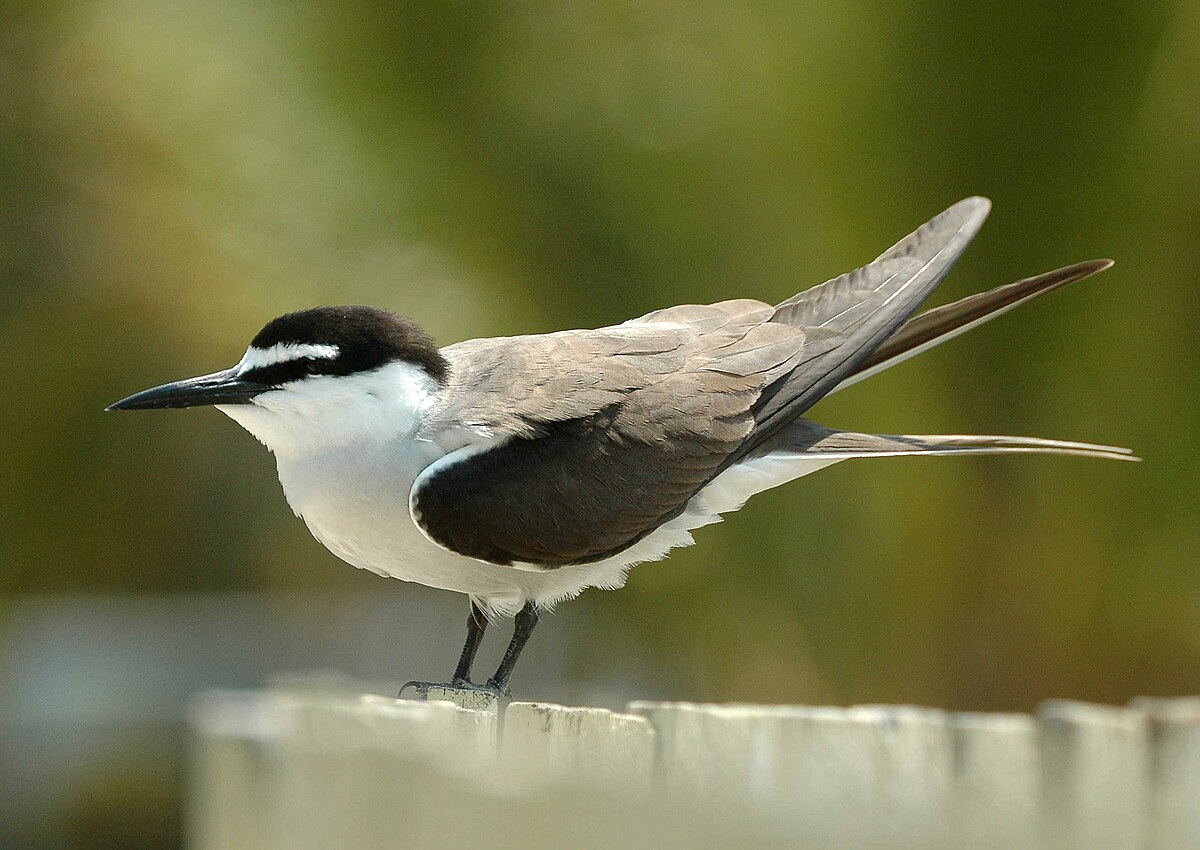
Wikipedia: Bridled tern Source: WIKIPEDIA
1200px-Bridled_Tern_LEI_Nov06.JPG
🔍
Never observed (yet!)
Description
Geography: This bird appears across the great seas in the following continents: North America, South America, Africa, Asia.Details
Sooty tern / Rußseeschwalbe (Onychoprion fuscatus)

Wikipedia: Sooty tern Source: WIKIPEDIA
1200px-Sterna_fuscata.JPG
🔍
Never observed (yet!)
Description
Geography: This bird appears across the great seas in the following continents: Europe, North America, South America, Africa, Asia.Details
Yellow-billed tern / Amazonasseeschwalbe (Sternula superciliaris)

Wikipedia: Yellow-billed tern Source: WIKIPEDIA
1200px-Yellow-billed_tern_Sternula_superciliaris.jpg
🔍
Never observed (yet!)
Description
General:The yellow-billed tern (Sternula superciliaris) is a small seabird found in South America. It is a species of tern in the family Laridae.
It is found in Argentina, Bolivia, Brazil, Colombia, Ecuador, French Guiana, Guyana, Panama, Paraguay, Peru, Suriname, Trinidad and Tobago, Uruguay, and Venezuela.
Its natural habitats are rivers, swamps, and freshwater lakes.
[more]
Details
Peruvian tern / Peruseeschwalbe (Sternula lorata)
Profile Wikipedia Xeno-Canto YouTube

Wikipedia: Peruvian tern Source: WIKIPEDIA
1200px-Peruvian_Tern.JPG
🔍
Never observed (yet!)
Description
The Peruvian tern, chirrío or gaviotín Chico (Sternula lorata) is a species of tern in the family Laridae.
Found in northern Chile, Ecuador, and Peru, its natural habitats are hot deserts, sandy shores, and coastal saline lagoons. It is threatened by habitat loss.
[more]
Details
Elegant tern / Schmuckseeschwalbe (Thalasseus elegans)

Wikipedia: Elegant tern Source: WIKIPEDIA
1200px-Elegant_Tern_Bolsa_Chica.jpg
🔍
Never observed (yet!)
Description
Geography: This bird appears across the great seas in the following continents: North America, South America, Africa.General:
The elegant tern (Thalasseus elegans) is a tern in the family Laridae. It breeds on the Pacific coasts of the southern United States and Mexico and winters south to Peru, Ecuador and Chile.
[more]
Details
Royal tern / Königsseeschwalbe (Thalasseus maximus)

Leaving no tern unstoned at Las Coloradas - royal terns, I believe. 2023-04-15 09:34:30 Yucatan
First observed in Yucatan on 2023-04-15.
Description
Geography: This bird appears across the great seas in the following continents: Europe, North America, South America, Africa.General:
The royal tern (Thalasseus maximus) is a tern in the family Laridae.
[more]
Details
Sandwich tern / Brandseeschwalbe (Thalasseus sandvicensis)

Sandwich tern in flight with distinct yellow tipped bill. 2023-09-27 12:28:34 Florida
First observed in Costa Rica on 2018-03-11.
Description
Geography: This bird appears across the great seas in the following continents: Europe, North America, South America, Africa.General: Deutschland: Brut-, Zugvogel RL 2
Other Details
Physical details
Physical details: length=36-41 cm, wingspan=95-105 cm, weight=215-275 gHabitats: River and lake Details
Southern lapwing / Bronzekiebitz (Vanellus chilensis)
Profile Wikipedia Xeno-Canto YouTube

Southern lapwings in Chile. 2019-02-17 15:23:52 Patagonia
First observed in Patagonia on 2019-02-17.
Description
General:The southern lapwing (Vanellus chilensis) is a wader in the order Charadriiformes. It is a common and widespread resident throughout South America, except in densely forested regions (e.g. most of the Amazon), the higher parts of the Andes and the arid coast of a large part of western South America. This bird is particularly common in the basin of the Rio de la Plata. It has also been spreading through Central America in recent years. It reached Trinidad in 1961 and Tobago in 1974, and has rapidly increased on both islands, sporadically making its way North to Barbados where one pair mated, nested and produced chicks in 2007.
[more]
Details
Andean lapwing / Andenkiebitz (Vanellus resplendens)
Profile Wikipedia Xeno-Canto YouTube

Wikipedia: Andean lapwing Source: WIKIPEDIA
1200px-Andean_Lapwing_%28Vanellus_resplendens%29_on_the_ground%2C_side_view.jpg
🔍
Never observed (yet!)
Description
The Andean lapwing (Vanellus resplendens) is a species of bird in the family Charadriidae.
It is found in Argentina, Bolivia, Chile, Colombia, Ecuador, and Peru.
Its natural habitats are subtropical or tropical high-altitude grassland, rivers, swamps, and pastureland.
[more]
Details
Pied lapwing (Vanellus cayanus)
Profile Wikipedia Xeno-Canto YouTube

Wikipedia: Pied lapwing Source: WIKIPEDIA
1200px-BK3U7978.jpg
🔍
Never observed (yet!)
Description
The pied plover (Vanellus cayanus), also known as the pied lapwing, is a species of bird in the family Charadriidae. It is a strongly marked bird with a prominent black V on its mantle.[3]
[more]
Details
Snowy plover / Schneeregenpfeifer (Charadrius nivosus)
Profile Wikipedia Audubon AllAboutBirds Xeno-Canto YouTube

Wikipedia: Snowy plover Source: WIKIPEDIA
1200px-Snowy_Plover_srgb.jpg
🔍
Never observed (yet!)
Description
The snowy plover (Charadrius nivosus) is a small wader in the plover bird family, typically about 5-7" in length.[2] It breeds in Ecuador, Peru, Chile, the southern and western United States and the Caribbean. Long considered to be a subspecies of the Kentish plover, it is now known to be a distinct species.
[more]
Details
Semipalmated plover / Amerika-Sandregenpfeifer (Charadrius semipalmatus)
Profile Wikipedia Audubon AllAboutBirds Xeno-Canto BirdID NABU YouTube

Wikipedia: Semipalmated plover Source: WIKIPEDIA
Semipalmated_Plover.jpg
🔍
Never observed (yet!)
Description
Geography: This bird appears across the great seas in the following continents: Europe, North America, South America.General:
The semipalmated plover (Charadrius semipalmatus) is a small plover. The genus name Charadrius is a Late Latin word for a yellowish bird mentioned in the fourth-century Vulgate. It derives from Ancient Greek kharadrios a bird found in ravines and river valleys (kharadra, "ravine"). The specific semipalmatus is Latin and comes from semi, "half" and palma, "palm". Like the English name, this refers to its only partly webbed feet.[2]
[more]
Details
Collared plover / Schlankschnabel-Regenpfeifer (Charadrius collaris)
Profile Wikipedia Xeno-Canto YouTube

Wikipedia: Collared plover Source: WIKIPEDIA
1200px-Charadrius_collaris.jpg
🔍
Never observed (yet!)
Description
The collared plover (Charadrius collaris) is a small shorebird in the plover family, Charadriidae. It lives along coasts and riverbanks of the tropical to temperate Americas, from central Mexico south to Chile and Argentina.
[more]
Details
Killdeer / Keilschwanz-Regenpfeifer (Charadrius vociferus)

Wikipedia: Killdeer Source: WIKIPEDIA
Killdeer.jpg
🔍
Never observed (yet!)
Description
The killdeer (Charadrius vociferus) is a large plover found in the Americas. It gets its name from its shrill, two-syllable call, which is often heard. It was described and given its current scientific name in 1758 by Carl Linnaeus in the 10th edition of his Systema Naturae. Three subspecies are described. Its upperparts are mostly brown with rufous fringes, the head has patches of white and black, and two black bands cross the breast. The belly and the rest of the breast are white. The nominate (or originally described) subspecies breeds from southeastern Alaska and southern Canada to Mexico. It is seen year-round in the southern half of its breeding range; the subspecies C. v. ternominatus is resident in the West Indies, and C. v. peruvianus inhabits Peru and surrounding South American countries throughout the year. North American breeders winter from their resident range south to Central America, the West Indies, and the northernmost portions of South America. Despite their name, they are not known for killing deer.
[more]
Details
Wilson's plover / Wilsonregenpfeifer (Charadrius wilsonia)
Profile Wikipedia Audubon AllAboutBirds Xeno-Canto YouTube

Wikipedia: Wilson's plover Source: WIKIPEDIA
1200px-Wilson%27s_Plover_male_RWD2.jpg
🔍
Never observed (yet!)
Description
Wilson's plover (Charadrius wilsonia) is a small bird of the family Charadriidae.
[more]
Details
Black-bellied plover / Kiebitzregenpfeifer (Pluvialis squatarola)

Wikipedia: Black-bellied plover Source: WIKIPEDIA
1200px-Pluvialis_squatarola_%28summer_plumage%29.jpg
🔍
Never observed (yet!)
Description
Geography: This bird appears across the great seas in the following continents: Europe, North America, South America, Africa, Asia.General: Deutschland: Zugvogel
Seasonal behavior
Presence: 04-11 - 11-26 Migration in: 11-06 - 11-14 Migration out: 05-01 - 05-31More details at Vogelwarte.ch
Other Details
Physical details
Physical details: length=27-30 cm, wingspan=71-83 cm, weight=190-280 gHabitats: Wetland Details
American golden-plover / Wanderregenpfeifer (Pluvialis dominica)
Profile Wikipedia Audubon AllAboutBirds Xeno-Canto YouTube
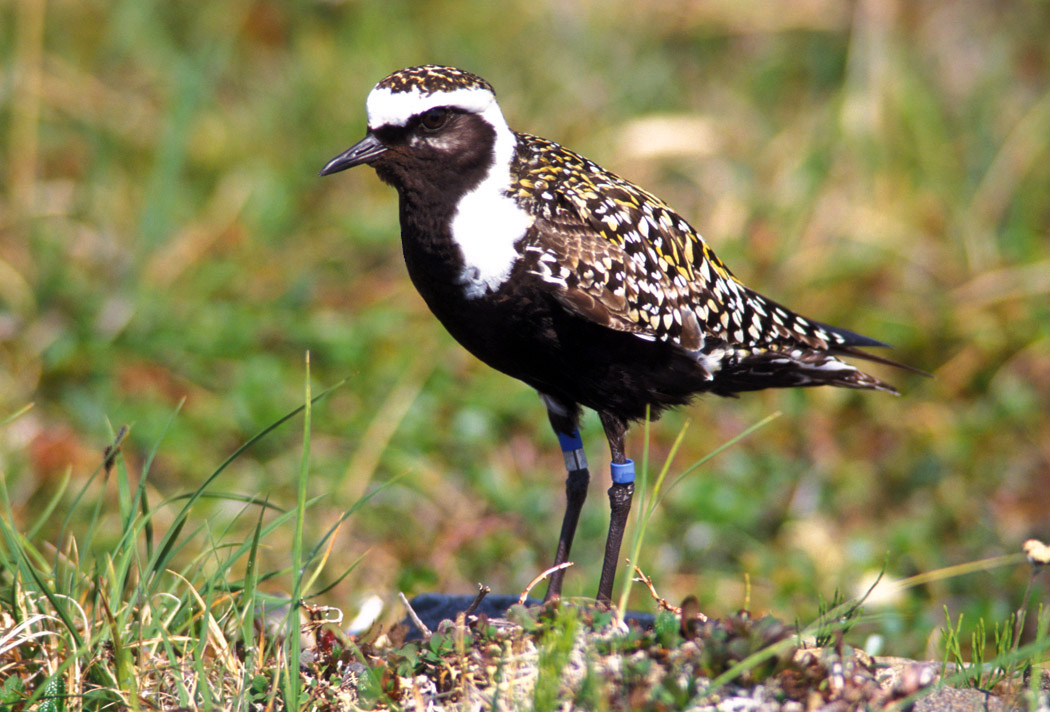
Wikipedia: American golden-plover Source: WIKIPEDIA
Pluvialis_dominica1.jpg
🔍
Never observed (yet!)
Description
Geography: This bird appears across the great seas in the following continents: North America, South America, Africa.General:
The American golden plover (Pluvialis dominica), or American golden-plover is a medium-sized plover. The genus name is Latin and means relating to rain, from pluvia, "rain". It was believed that golden plovers flocked when rain was imminent. The species name dominica refers to Santo Domingo, now Hispaniola, in the West Indies.[2]
[more]
Details
White-rumped sandpiper / Weißbürzelstrandläufer (Calidris fuscicollis)
Profile Wikipedia Audubon AllAboutBirds Xeno-Canto YouTube

Wikipedia: White-rumped sandpiper Source: WIKIPEDIA
1200px-Calidris_fuscicollis_PLAYERO_RABADILLA_BLANCA.jpg
🔍
Never observed (yet!)
Description
Geography: This bird appears across the great seas in the following continents: North America, South America, Africa.General:
The white-rumped sandpiper (Calidris fuscicollis) is a small shorebird that breeds in the northern tundra of Canada and Alaska. This bird can be difficult to distinguish from other similar tiny shorebirds; these are known collectively as "peeps" or "stints".
[more]
Details
Pectoral sandpiper / Graubrust-Strandläufer (Calidris melanotos)
Profile Wikipedia Vogelwarte BirdLife ZH ornitho.ch Audubon AllAboutBirds Xeno-Canto BirdID NABU YouTube

Wikipedia: Pectoral sandpiper Source: WIKIPEDIA
1200px-Pectoral_Sandpiper3.jpg
🔍
Never observed (yet!)
Description
Geography: This bird appears across the great seas in the following continents: Europe, North America, South America, Asia.General: Deutschland: seltener Zugvogel
Details
Stilt sandpiper / Bindenstrandläufer (Calidris himantopus)

Wikipedia: Stilt sandpiper Source: WIKIPEDIA
Calidris_himantopus.jpg
🔍
Never observed (yet!)
Description
General:The stilt sandpiper (Calidris himantopus) is a small shorebird. The scientific name is from Ancient Greek. The genus name kalidris or skalidris is a term used by Aristotle for some grey-coloured waterside birds. The specific himantopus means "strap foot" or "thong foot".[2]
[more]
Details
Baird's sandpiper / Bairdstrandläufer (Calidris bairdii)
Profile Wikipedia Audubon AllAboutBirds Xeno-Canto YouTube

Wikipedia: Baird's sandpiper Source: WIKIPEDIA
Calidris_bairdii_-Gullbringusysla%2C_Iceland-8.jpg
🔍
Never observed (yet!)
Description
Geography: This bird appears across the great seas in the following continents: North America, South America, Africa.General:
Baird's sandpiper (Calidris bairdii) is a small shorebird. It is among those calidrids which were formerly included in the genus Erolia, which was subsumed into the genus Calidris in 1973.[2] The genus name is from Ancient Greek kalidris or skalidris, a term used by Aristotle for some grey-coloured waterside birds. The English name and specific bairdii commemorate Spencer Fullerton Baird, 19th-century naturalist and assistant secretary of the Smithsonian Institution.[3]
[more]
Details
Western sandpiper / Bergstrandläufer (Calidris mauri)
Profile Wikipedia Audubon AllAboutBirds Xeno-Canto YouTube

Wikipedia: Western sandpiper Source: WIKIPEDIA
Western_Sandpiper.jpg
🔍
Never observed (yet!)
Description
The western sandpiper (Calidris mauri) is a small shorebird. The genus name is from Ancient Greek kalidris or skalidris, a term used by Aristotle for some grey-coloured waterside birds. The specific mauri commemorates Italian botanist Ernesto Mauri (1791–1836).[2]
[more]
Details
Semipalmated sandpiper / Sandstrandläufer (Calidris pusilla)

CHECK IF Semipalmated Sandpiper, Long Beach Island, NJ. 2024-09-18 18:30:28 New Jersey
First observed in Yucatan on 2023-04-20.
Description
The semipalmated sandpiper (Calidris pusilla) is a very small shorebird. The genus name is from Ancient Greek kalidris or skalidris, a term used by Aristotle for some grey-coloured waterside birds. The specific pusilla is Latin for "very small".[2]
[more]
Details
Buff-breasted sandpiper / Grasläufer (Calidris subruficollis)

Wikipedia: Buff-breasted sandpiper Source: WIKIPEDIA
1200px-Tryngites_subruficollis_-USA-8.jpg
🔍
Never observed (yet!)
Description
Geography: This bird appears across the great seas in the following continents: North America, South America, Africa.General:
The buff-breasted sandpiper (Calidris subruficollis) is a small shorebird. The species name subruficollis is from Latin subrufus, "reddish" (from sub, "somewhat", and rufus, "rufous") and collis, "-necked/-throated" (from collum, "neck").[2] It is a calidrid sandpiper.
[more]
Details
Surfbird / Gischtläufer (Calidris virgata)
Profile Wikipedia Audubon AllAboutBirds Xeno-Canto YouTube

Wikipedia: Surfbird Source: WIKIPEDIA
Aphriza_virgata_Cayucos_2.jpg
🔍
Never observed (yet!)
Description
The surfbird (Calidris virgata) is a small stocky wader in the family Scolopacidae. It was once considered to be allied to the turnstones, and placed in the monotypic genus Aphriza, but is now placed in the genus Calidris.
[more]
Details
Sanderling / Sanderling (Calidris alba)
Profile Wikipedia Vogelwarte BirdLife ZH ornitho.ch Audubon AllAboutBirds Xeno-Canto BirdID NABU YouTube

Wahrscheinlich Sanderling - there must be a better photo. 2024-09-14 15:34:48 Fanel/Chablais de Cudrefin und La Sauge
First observed in Yucatan on 2023-03-27.
Description
Geography: This bird appears across the great seas in the following continents: Europe, North America, South America, Africa, Asia.General: Deutschland: Zugvogel, Wintergast
Seasonal behavior
Presence: 04-11 - 10-27 Migration in: 10-07 - 10-15 Migration out: 04-20 - 05-31More details at Vogelwarte.ch
Other Details
Physical details
Physical details: length=20-21 cm, wingspan=40-45 cm, weight=44-70 gHabitats: Wetland Details
Least sandpiper / Wiesenstrandläufer (Calidris minutilla)
Profile Wikipedia Audubon AllAboutBirds Xeno-Canto YouTube

Least sandpiper has wandered off the sea into the city in Campeche. 2023-04-06 16:53:02 Yucatan
First observed in Yucatan on 2023-04-06.
Description
General:The least sandpiper (Calidris minutilla) is the smallest shorebird. The genus name is from Ancient Greek kalidris or skalidris, a term used by Aristotle for some grey-colored waterside birds. The specific minutilla is Medieval Latin for "very small".[2]
[more]
Details
Whimbrel / Regenbrachvogel (Numenius phaeopus)

Whimbrel at x. 2025-02-25 10:29:04 Lanzarote
First observed in San Christiano on 2022-03-19.
Description
Geography: This bird appears across the great seas in the following continents: Europe, North America, South America, Africa, Asia.General: Deutschland: Zugvogel
Seasonal behavior
Presence: 03-23 - 10-07 Migration in: 05-10 - 05-31 Migration out: 05-10 - 05-18More details at Vogelwarte.ch
Other Details
Physical details
Physical details: length=40-42 cm, wingspan=76-89 cm, weight=300-660 gHabitats: Wetland Details
Ruddy turnstone / Steinwälzer (Arenaria interpres)

Ruddy turnstone, San Christiana, Tenerife. 2022-03-19 10:26:30
First observed in Tenerife on 2022-03-19.
Description
Geography: This bird appears across the great seas in the following continents: Europe, North America, South America, Africa, Asia.General: Deutschland: Brut-, Zugvogel, Wintergast RL 2
Seasonal behavior
Presence: 04-11 - 10-18 Migration in: 05-01 - 06-20 Migration out: 05-01 - 06-08More details at Vogelwarte.ch
Other Details
Physical details
Physical details: length=22-24 cm, wingspan=50-57 cm, weight=85-150 gHabitats: Wetland Details
Imperial snipe / Kaiserbekassine (Gallinago imperialis)

Wikipedia: Imperial snipe Source: WIKIPEDIA
1200px-GallinagoImperialisSmit.jpg
🔍
Never observed (yet!)
Description
General:The imperial snipe (Gallinago imperialis) is a small stocky wader which breeds in the Andes. For a century it was known only from two specimens collected near Bogotá, Colombia, and was presumed extinct, but it was rediscovered in Peru in 1967 and Ecuador in 1988. It is not known if it is migratory.
[more]
Details
Jameson's snipe / Andenbekassine (Gallinago jamesoni)
Description
The Jameson's snipe or Andean snipe (Gallinago jamesoni) is a small, stocky wader. It breeds in the Andes in Bolivia, Colombia, Ecuador, Peru and Venezuela. It appears to be entirely sedentary, with no evidence of migration.
[more]
Details
Noble snipe / Nobelbekassine (Gallinago nobilis)
Profile Wikipedia Xeno-Canto YouTube

Wikipedia: Noble snipe Source: WIKIPEDIA
1200px-Gallinago_nobilis_%28Caica_paramuna%29_%2824701320152%29.jpg
🔍
Never observed (yet!)
Description
The noble snipe (Gallinago nobilis) is a small stocky wader. It breeds in the Andes of Colombia, Ecuador, Peru and Venezuela above or just below the treeline. It is entirely sedentary.
[more]
Details
Shortbilled dowitcher / Kleiner Schlammläufer (Limnodromus griseus)
Profile Wikipedia Audubon AllAboutBirds Xeno-Canto YouTubeDescription
Der Kleine Schlammläufer (Limnodromus griseus), auch Kurzschnabelschlammläufer genannt, ist eine nordamerikanische Art aus der Familie der Schlammläufer. Es werden drei Unterarten unterschieden. In Europa ist der Kleine Schlammläufer ein extrem seltener Ausnahmegast und wird deutlich seltener als der Große Schlammläufer hier beobachtet.[1]
[more]
Details
Hudsonian godwit / Hudsonschnepfe (Limosa haemastica)
Profile Wikipedia Audubon AllAboutBirds Xeno-Canto YouTube

Wikipedia: Hudsonian godwit Source: WIKIPEDIA
1200px-Limosa_haemastica_-_Kogarah_Bay.jpg
🔍
Never observed (yet!)
Description
Geography: This bird appears across the great seas in the following continents: North America, South America, Africa.General:
The Hudsonian godwit (Limosa haemastica) is a large shorebird in the sandpiper family, Scolopacidae. The genus name Limosa is from Latin and means "muddy", from limus, "mud". The specific haemastica is from Ancient Greek and means "bloody". An 18th century name for this bird was red-breasted godwit.[2] The English term "godwit" was first recorded in about 1416–7 and is believed to imitate the bird's call.[3]
[more]
Details
Willet / Schlammtreter (Tringa semipalmata)

Willet near Las Coloradas. 2023-04-15 10:06:38 Yucatan
First observed in Yucatan on 2023-04-15.
Description
Der Schlammtreter (Tringa semipalmata) ist eine Vogelart aus der Familie der Schnepfenvögel, deren zwei Unterarten sich deutlich in ihren ökologischen Ansprüchen unterscheiden. Die westliche Unterart T. p. inornata brütet in Binnensümpfen im Bereich der Prairie Pothole Region und des Großen Beckens im Inneren Nordwestamerikas; die Nominatform besiedelt die Ostküste Nordamerikas von Neufundland bis Tamaulipas sowie die Westindischen Inseln und brütet in Salzwiesen und Brackwassersümpfen.
[more]
Details
Wandering tattler / Wanderwasserläufer (Tringa incana)

Wikipedia: Wandering tattler Source: WIKIPEDIA
1200px-Wandering_Tattler.jpg
🔍
Never observed (yet!)
Description
Geography: This bird appears across the great seas in the following continents: North America, South America, Australia.General:
The wandering tattler (Tringa incana) (formerly Heteroscelus incanus: Pereira & Baker, 2005; Banks et al., 2006), is a medium-sized wading bird. It is similar in appearance to the closely related gray-tailed tattler, T. brevipes. The tattlers are unique among the species of Tringa for having unpatterned, greyish wings and backs, and a scaly breast pattern extending more or less onto the belly in breeding plumage, in which both also have a rather prominent supercilium.
[more]
Details
Solitary sandpiper / Einsamer Wasserläufer (Tringa solitaria)
Profile Wikipedia Audubon AllAboutBirds Xeno-Canto YouTube

Wikipedia: Solitary sandpiper Source: WIKIPEDIA
Solitarysandpiper.jpg
🔍
Never observed (yet!)
Description
The solitary sandpiper (Tringa solitaria) is a small shorebird. The genus name Tringa is the New Latin name given to the green sandpiper by Aldrovandus in 1599 based on Ancient Greek trungas, a thrush-sized, white-rumped, tail-bobbing wading bird mentioned by Aristotle. The specific solitaria is Latin for "solitary" from solus, "alone".[2]
[more]
Details
Greater yellowlegs / Großer Gelbschenkel (Tringa melanoleuca)
Profile Wikipedia Audubon AllAboutBirds Xeno-Canto YouTube

Wikipedia: Greater yellowlegs Source: WIKIPEDIA
1200px-Greater_Yellowlegs2.jpg
🔍
Never observed (yet!)
Description
Totanus melanoleucus
[more]
Details
Lesser yellowlegs / Kleiner Gelbschenkel (Tringa flavipes)
Profile Wikipedia Audubon AllAboutBirds Xeno-Canto YouTube

Wikipedia: Lesser yellowlegs Source: WIKIPEDIA
1200px-Lesser_Yellowlegs.jpg
🔍
Never observed (yet!)
Description
Geography: This bird appears across the great seas in the following continents: North America, South America, Africa.General:
The lesser yellowlegs (Tringa flavipes) is a medium-sized shorebird. The genus name Tringa is the New Latin name given to the green sandpiper by Aldrovandus in 1599 based on Ancient Greek trungas, a thrush-sized, white-rumped, tail-bobbing wading bird mentioned by Aristotle. The specific flavipes is from Latin flavus, "yellow", and pes, "foot".[2]
[more]
Details
Spotted sandpiper / Drosseluferläufer (Actitis macularius)
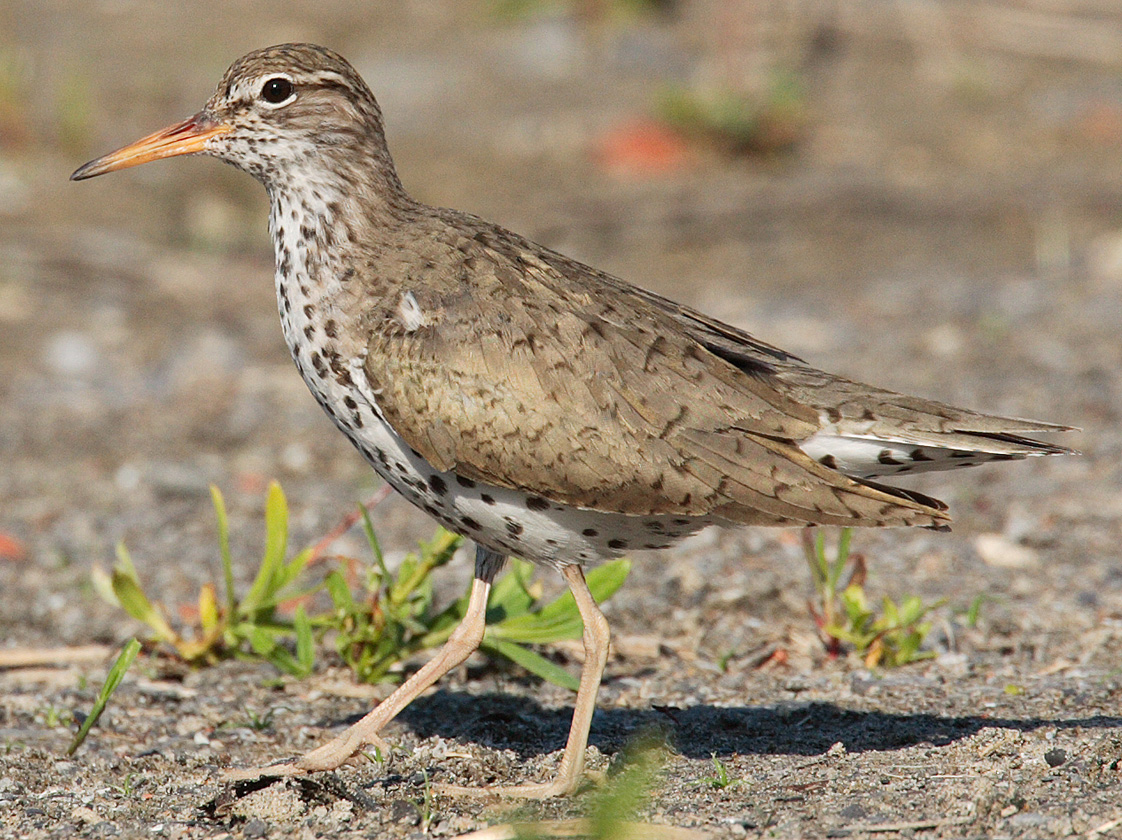
Wikipedia: Spotted sandpiper Source: WIKIPEDIA
Actitis-macularia-005.jpg
🔍
Never observed (yet!)
Description
The spotted sandpiper (Actitis macularius) is a small shorebird. The genus name Actitis is from Ancient Greek aktites, "coast-dweller", derived from akte, "coast", and macularius is Latin from macula, "spot".[2]
[more]
Details
Red-necked phalarope / Odinshühnchen (Phalaropus lobatus)
Profile Wikipedia Vogelwarte BirdLife ZH ornitho.ch Audubon AllAboutBirds Xeno-Canto BirdID NABU YouTube

Wikipedia: Red-necked phalarope Source: WIKIPEDIA
1200px-Red-necked_Phalarope.jpg
🔍
Never observed (yet!)
Description
Geography: This bird appears across the great seas in the following continents: Europe, North America, South America, Africa, Asia.General: Deutschland: Zugvogel
Vocalization:
Short and sharp "teck", sometimes repeated to form trilling series. Also a mewing, nasal "veeoo". [Link]
Seasonal behavior
Presence: 05-21 - 10-27 Migration in: 10-07 - 10-27 Migration out: 10-07 - 10-15More details at Vogelwarte.ch
Other Details
Physical details
Physical details: length=18-19 cm, wingspan=32-41 cm, weight=27-48 gDetails
Wilson's phalarope / Wilson-Wassertreter (Phalaropus tricolor)
Profile Wikipedia Audubon AllAboutBirds Xeno-Canto YouTube

Wikipedia: Wilson's phalarope Source: WIKIPEDIA
1200px-Phalaropus_tricolor_-_breeding_female.jpg
🔍
Never observed (yet!)
Description
Geography: This bird appears across the great seas in the following continents: North America, South America, Africa.General:
Wilson's phalarope (Phalaropus tricolor) is a small wader. This bird, the largest of the phalaropes, breeds in the prairies of North America in western Canada and the western United States. It is migratory, wintering in inland salt lakes near the Andes in Argentina.[2] They are passage migrants through Central America around March/April and again during September/October.[3] The species is a rare vagrant to western Europe.
[more]
Details
Red phalarope / Thorshühnchen (Phalaropus fulicarius)

Wikipedia: Red phalarope Source: WIKIPEDIA
1200px-Phalaropus_fulicarius_10.jpg
🔍
Never observed (yet!)
Description
Geography: This bird appears across the great seas in the following continents: Europe, North America, South America, Africa, Asia.General: Deutschland: seltener Zugvogel
Seasonal behavior
Seldom seen hereMore details at Vogelwarte.ch
Other Details
Physical details
Physical details: length=20-22 cm, wingspan=40-44 cm, weight=40-75 gDetails
Upland sandpiper / Prärieläufer (Bartramia longicauda)
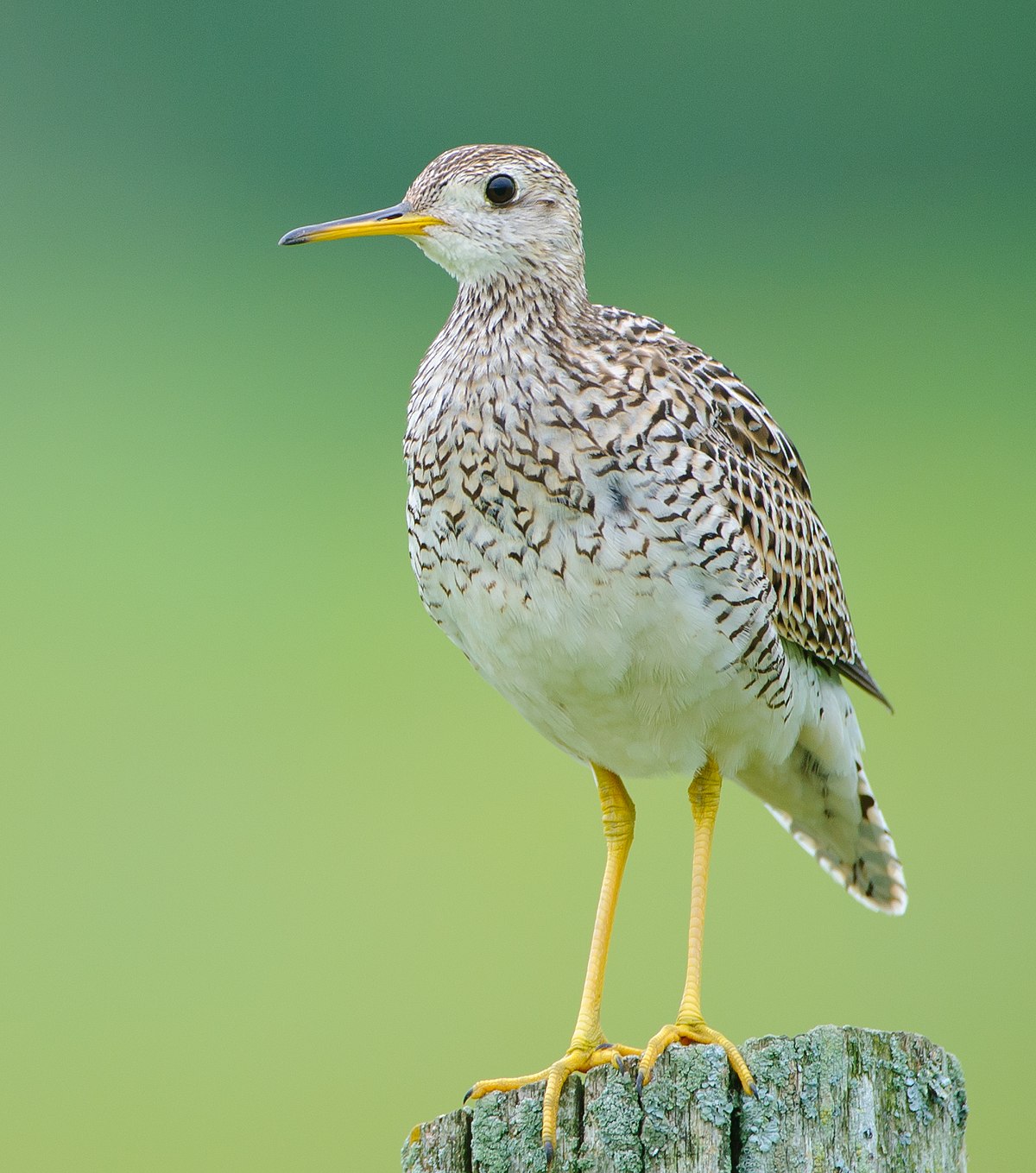
Wikipedia: Upland sandpiper Source: WIKIPEDIA
1200px-UplandSandpiperOntarioCropped.jpg
🔍
Never observed (yet!)
Description
General:The upland sandpiper (Bartramia longicauda) is a large sandpiper, closely related to the curlews.[2] Older names are the upland plover and Bartram's sandpiper. In Louisiana, it is also colloquially known as the papabotte.[3] It is the only member of the genus Bartramia. The genus name and the old common name Bartram's sandpiper commemorate the American naturalist William Bartram. The species name longicauda is from Latin longus, "long" and caudus, "tail".[4] The name "Bartram's sandpiper" was made popular by Alexander Wilson, who was taught ornithology and natural history illustration by Bartram.
[more]
Details
Common tern / Flussseeschwalbe (Sterna hirundo)
Profile Wikipedia Vogelwarte BirdLife ZH ornitho.ch bird-song.ch Audubon AllAboutBirds Xeno-Canto BirdID NABU YouTube

Flussseeschwalbe. 2023-07-08 19:00:12 Neeracherried
First observed in 🇨🇭 on 2020-04-27.
Description
Geography: This bird appears across the great seas in the following continents: Europe, North America, South America, Africa, Asia.General: Deutschland: Brut-, Zugvogel RL 2
Etymology:
[9] The Scots names picktarnie,[11] tarrock[12] and their many variants are also believed to be onomatopoeic, derived from the distinctive call. [Link]
Seasonal Behavior:
Die Flussseeschwalbe (Sterna hirundo) ist eine Vogelart aus der Familie der Seeschwalben (Sternidae).
Sie ist in Mitteleuropa ein verbreiteter, aber nicht sehr häufiger Brut- und Sommervogel.
Während der Zugzeiten können im mitteleuropäischen Raum außerdem viele Durchzügler beobachtet werden. [Link]
Vocalization:
Similar to Arctic Tern but deeper. [Link]
Seasonal behavior
Presence: 03-23 - 10-07 Breeding: 05-01 - 07-29 Migration in: 03-23 - 06-09 Migration out: 06-29 - 10-07More details at Vogelwarte.ch
Other Details
Physical details
Physical details: length=31-35 cm, wingspan=77-98 cm, weight=110-150 gHabitats: River and lake
Vocalisation
Song: No details but a Xeno-Canto recording. Song attributes: Frequency:♫ 2020-04-27 14:08:13 Source: BirdNet 20200427_140813 birdnet 430 - Common tern.mp3 Luppmen (song)
Details
South american tern / Falklandseeschwalbe (Sterna hirundinacea)
Profile Wikipedia Xeno-Canto YouTubeDescription
General:Die Falklandseeschwalbe (Sterna hirundinacea) ist eine monotypische Art aus der Familie der Seeschwalben. Sie kommt ausschließlich in Südamerika und auf den Falklandinseln vor.
[more]
Details
Arctic tern / Kü̈stenseeschwalbe (Sterna paradisaea)

Küstenseeschwalbe. 2026-05-26 13:09:32 Switzerland
First observed in 🇨🇭 on 2026-05-25.
Description
Geography: This bird appears across the great seas in the following continents: Europe, North America, South America, Africa, Asia.General: Deutschland: Brut-, Zugvogel RL 2
Vocalization:
Similar to Common Tern but higher pitched. [Link]
Seasonal behavior
Seldom seen hereMore details at Vogelwarte.ch
Other Details
Physical details
Physical details: length=33-35 cm, wingspan=75-85 cm, weight=95-120 gDetails
American oystercatcher / Braunmantel-Austernfischer (Haematopus palliatus)
Profile Wikipedia Audubon AllAboutBirds Xeno-Canto YouTube

Wikipedia: American oystercatcher Source: WIKIPEDIA
1200px-American_oystercatchers_at_Fort_Tilden_%2860747%29.jpg
🔍
Never observed (yet!)
Description
General:The American oystercatcher (Haematopus palliatus), occasionally called the American pied oystercatcher, is a member of family Haematopodidae. Originally called the "sea pie", it was renamed in 1731 when naturalist Mark Catesby observed the bird eating oysters.[2] The current population of American oystercatchers is estimated to be 43,000.[2] There are estimated to be 1,500 breeding pairs along the Atlantic and Gulf Coasts of the US.[3] The bird is marked by its black and white body and a long, thick orange beak.
[more]
Details
Blackish oystercatcher / Südamerikanischer Austernfischer (Haematopus ater)
Profile Wikipedia Xeno-Canto YouTube

Wikipedia: Blackish oystercatcher Source: WIKIPEDIA
1200px-Blackish_oystercatcher_Bahia_Inglesa_Chile.jpg
🔍
Never observed (yet!)
Description
The blackish oystercatcher (Haematopus ater) is a species of wading bird in the oystercatcher family Haematopodidae. It is found in Argentina, Chile, the Falkland Islands and Peru, and is a vagrant to Uruguay. The population is estimated at 15,000–80,000.[2]
[more]
Details
Wattled jacana / Rotstirn-Blatthühnchen (Jacana jacana)
Profile Wikipedia Xeno-Canto YouTube

Wikipedia: Wattled jacana Source: WIKIPEDIA
1200px-Wattled_jacana_%28Jacana_jacana%29.JPG
🔍
Never observed (yet!)
Description
The wattled jacana (Jacana jacana) is a wader which is a resident breeder from western Panama and Trinidad south through most of South America east of the Andes.
[more]
Details
Family Burhinidae (Triele, Haematopodidae – Austernfischer und Recurvirostridae – Säbelschnäblerverwandte):
Peruvian thick-knee / Inkatriel (Burhinus superciliaris)

Wikipedia: Peruvian thick-knee Source: WIKIPEDIA
1200px-Peruvian_Thick-knee_%28Burhinus_superciliaris%29%2C_crop.jpg
🔍
Never observed (yet!)
Description
The Peruvian thick-knee (Burhinus superciliaris) is a species of bird in the family Burhinidae. It is found in Chile, Ecuador, and Peru. Its natural habitats are subtropical or tropical dry shrubland, subtropical or tropical seasonally wet or flooded lowland grassland, and pastureland. It is a ground-dwelling bird and feeds on insects and small animals.
[more]
Details
Black-necked stilt / Amerikanischer Stelzenläufer (Himantopus mexicanus)
Profile Wikipedia Audubon AllAboutBirds Xeno-Canto YouTube

Wikipedia: Black-necked stilt Source: WIKIPEDIA
1200px-Black-necked_Stilt_%28Himantopus_mexicanus%29%2C_Corte_Madera.jpg
🔍
Never observed (yet!)
Description
The black-necked stilt (Himantopus mexicanus) is a locally abundant shorebird of American wetlands and coastlines. It is found from the coastal areas of California through much of the interior western United States and along the Gulf of Mexico as far east as Florida, then south through Central America and the Caribbean to Ecuador and the Galápagos Islands. The northernmost populations, particularly those from inland, are migratory, wintering from the extreme south of the United States to southern Mexico, rarely as far south as Costa Rica; on the Baja California peninsula it is only found regularly in winter.[2]
[more]
Details
American coot / Amerikanisches Blässhuhn (Fulica americana)
Profile Wikipedia Audubon AllAboutBirds Xeno-Canto YouTube
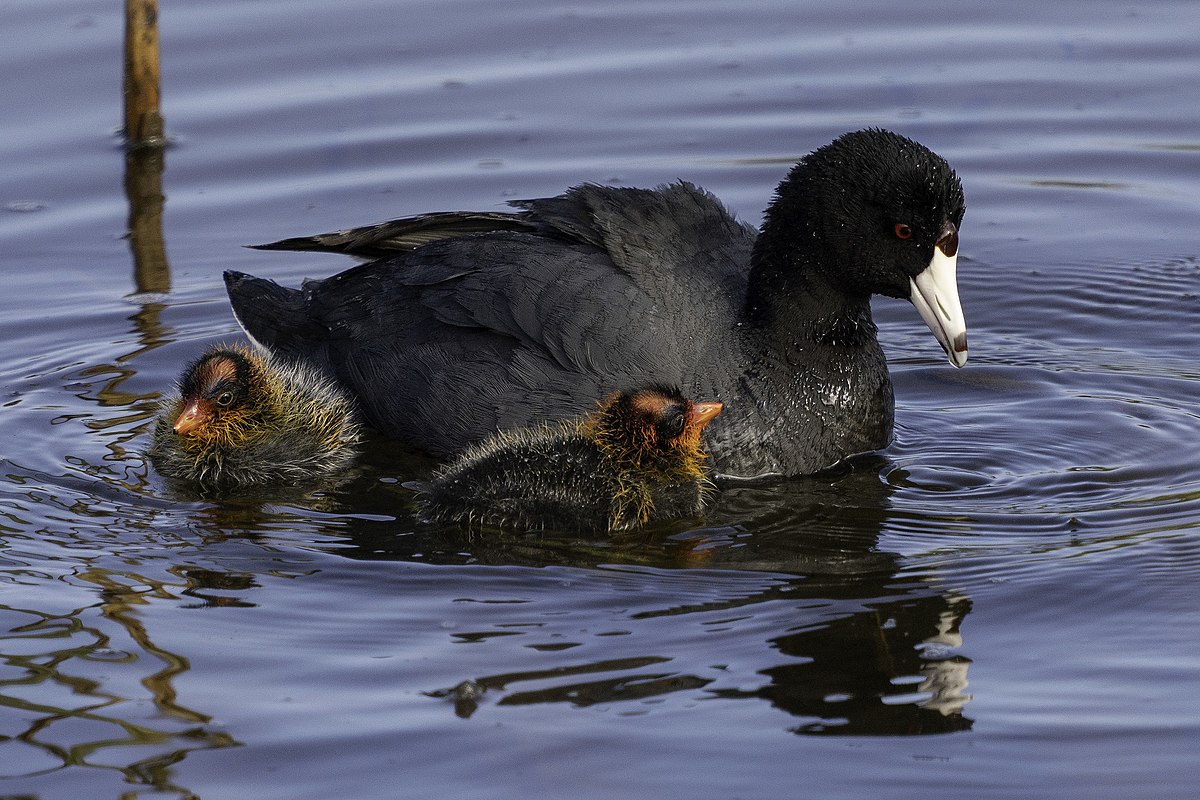
Wikipedia: American coot Source: WIKIPEDIA
1200px-American-coot-casey-klebba.jpg
🔍
Never observed (yet!)
Description
The American coot (Fulica americana), also known as a mud hen or pouldeau, is a bird of the family Rallidae. Though commonly mistaken for ducks, American coots are only distantly related to ducks, belonging to a separate order. Unlike the webbed feet of ducks, coots have broad, lobed scales on their lower legs and toes that fold back with each step in order to facilitate walking on dry land.[2] Coots live near water, typically inhabiting wetlands and open water bodies in North America. Groups of coots are called covers[3] or rafts.[citation needed] The oldest known coot lived to be 22 years old.[2]
[more]
Details
Slate-colored coot (Fulica ardesiaca)
Profile Wikipedia Xeno-Canto YouTube

Wikipedia: Slate-colored coot Source: WIKIPEDIA
1200px-Andean_Coot_RWD2.jpg
🔍
Never observed (yet!)
Description
The Andean coot (Fulica ardesiaca), also known as the slate-coloured coot, is a species of bird in the family Rallidae. It is found in the Andes from far southwestern Colombia to northwestern Argentina. Its natural habitats are swamps and freshwater lakes. Fossils tentatively assigned to this species are known from the Laguna de Tagua Tagua formation of Chile.[2]
[more]
Details
Virginia rail / Virginiaralle (Rallus limicola)
Profile Wikipedia Audubon AllAboutBirds Xeno-Canto YouTube

Wikipedia: Virginia rail Source: WIKIPEDIA
1200px-Rallus_limicola_-Cloisters_Park%2C_Morro_Bay%2C_California%2C_USA-8_%281%29.jpg
🔍
Never observed (yet!)
Description
The Virginia rail (Rallus limicola) is a small waterbird, of the family Rallidae.
These birds remain fairly common despite continuing loss of habitat, but are secretive by nature and more often heard than seen.[2] They are also considered a game species in some provinces and states, though rarely hunted.[3] The Ecuadorian rail is often considered a subspecies, but some taxonomic authorities consider it distinct.
[more]
Details
Mangrove rail / Klapperralle (Rallus longirostris)
Profile Wikipedia Xeno-Canto YouTube

Wikipedia: Mangrove rail Source: WIKIPEDIA
lossy-page1-1200px-Rallus_longirostris_-_1700-1880_-_Print_-_Iconographia_Zoologica_-_Special_Collections_University_of_Amsterdam_-_UBA01_IZ17500025.tif.jpg
🔍
Never observed (yet!)
Description
The mangrove rail (Rallus longirostris) is a species of bird in the family Rallidae.
It is found in Central and South America. It was formerly considered conspecific with the clapper rail (Rallus crepitans).
[more]
Details
Common gallinule / Amerikateichhuhn (Gallinula galeata)
Profile Wikipedia Audubon AllAboutBirds Xeno-Canto YouTube

Common gallinule, juvenile, Florida. 2023-09-23 20:46:10 Florida
First observed in Florida on 2023-09-23.
Description
The common gallinule (Gallinula galeata) is a bird in the family Rallidae. It was split from the common moorhen by the American Ornithologists' Union in July 2011.[3] It lives around well-vegetated marshes, ponds, canals, and other wetlands in the Americas. The species is not found in the polar regions or many tropical rainforests. Elsewhere, the common gallinule is likely the most commonly seen rail species in much of North America, except for the American coot in some regions.
[more]
Details
Rufous-sided crake / Rothalsralle (Laterallus melanophaius)
Profile Wikipedia Xeno-Canto YouTube

Wikipedia: Rufous-sided crake Source: WIKIPEDIA
SAN%C3%83-VERMELHA_%28Laterallus_melanophaius%29_%2811568760295%29.jpg
🔍
Never observed (yet!)
Description
The rufous-sided crake (Laterallus melanophaius) is a species of bird in the family Rallidae.
It is found in Argentina, Bolivia, Brazil, Colombia, Ecuador, Guyana, Paraguay, Peru, Suriname, Uruguay, and Venezuela.
Its natural habitat is swamps.
[more]
Details
White-throated crake / Weißkehlralle (Laterallus albigularis)
Profile Wikipedia Xeno-Canto YouTube

Wikipedia: White-throated crake Source: WIKIPEDIA
1200px-Laterallus_albigularis.jpg
🔍
Never observed (yet!)
Description
The white-throated crake (Laterallus albigularis) is a species of bird in the family Rallidae.
[more]
Details
Gray-breasted crake (Laterallus exilis)
Profile Wikipedia Xeno-Canto YouTube
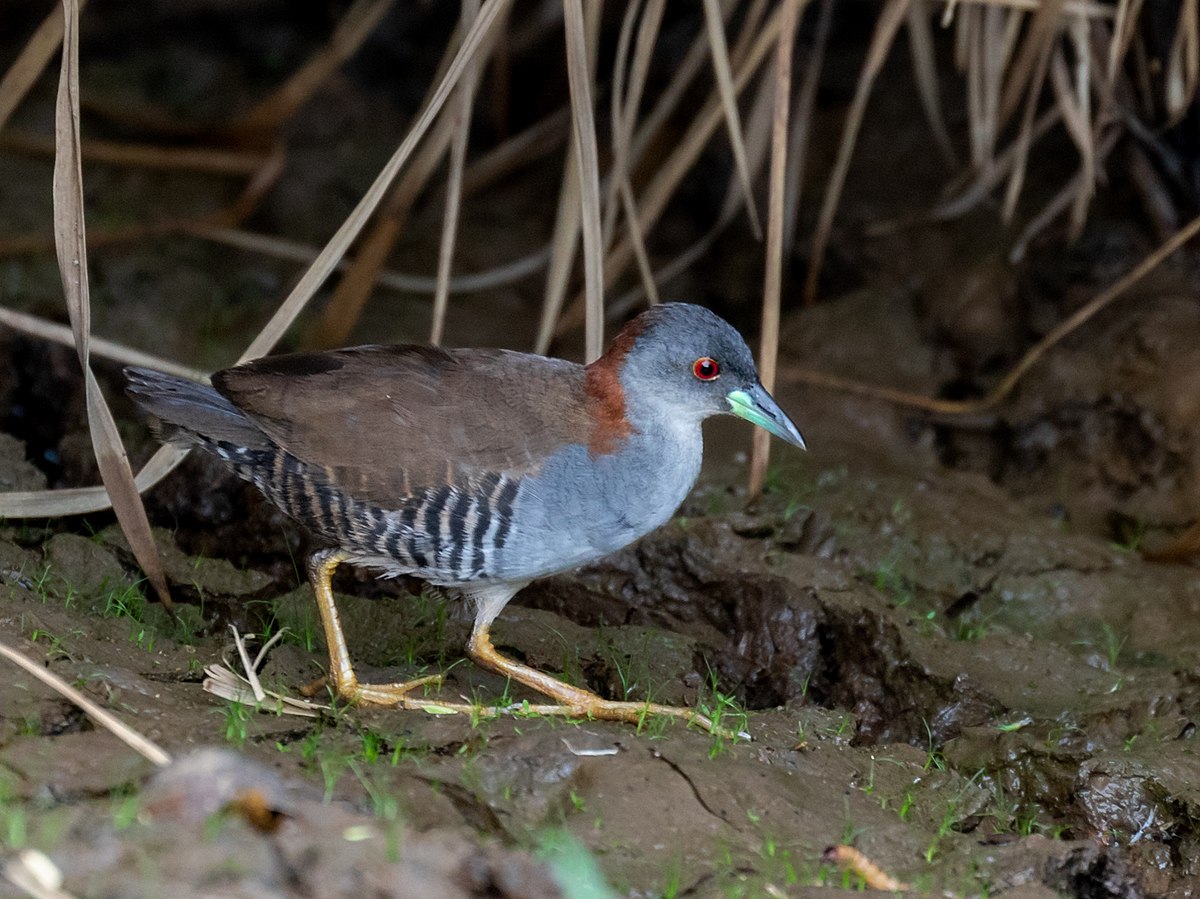
Wikipedia: Gray-breasted crake Source: WIKIPEDIA
1200px-Laterallus_exilis_-_Grey-breasted_Crake%3B_Arari%2C_Maranh%C3%A3o%2C_Brazil.jpg
🔍
Never observed (yet!)
Description
The grey-breasted crake (Laterallus exilis) is a species of bird in the family Rallidae. It is found in Argentina, Belize, Bolivia, Brazil, Colombia, Costa Rica, Ecuador, French Guiana, Guatemala, Guyana, Honduras, Nicaragua, Panama, Paraguay, Peru, Suriname, Trinidad and Tobago, and Venezuela. Its natural habitats are swamps and pastureland.
[more]
Details
Purple gallinule / Zwergsultanshuhn (Porphyrio martinica)
Description
Geography: This bird appears across the great seas in the following continents: Europe, North America, South America, Africa.General:
Das Zwergsultanshuhn (Porphyrula martinica, Syn.: Porphyrio martinicus) ist ein vor allem in Amerika heimischer Rallenvogel.
[more]
Details
Azure gallinule / Azursultanshuhn (Porphyrio flavirostris)

Wikipedia: Azure gallinule Source: WIKIPEDIA
1200px-Azure_Gallinule%2C_Kernahan%2C_Trinidad_3.jpg
🔍
Never observed (yet!)
Description
The azure gallinule (Porphyrio flavirostris) is a species of bird in the family Rallidae.
It is found in Argentina, Bolivia, Brazil, Colombia, Ecuador, French Guiana, Guyana, Paraguay, Peru, Suriname, Trinidad and Tobago, and Venezuela.
[more]
Details
Sora / Carolinasumpfhuhn (Porzana carolina)
Profile Wikipedia Audubon AllAboutBirds Xeno-Canto YouTubeDescription
The sora, sora rail or Carolina crake (Porzana carolina) is a small waterbird of the rail family Rallidae, sometimes also referred to as the sora rail or sora crake, that occurs throughout much of North America. The genus name Porzana is derived from Venetian terms for small rails, and the specific carolina refers to the Carolina Colony. The common name "Sora" is probably taken from a Native American language.
[more]
Details
Chestnut-headed crake (Anurolimnas castaneiceps)

Wikipedia: Chestnut-headed crake Source: WIKIPEDIA
PorzanaCastaneicepsSmit.jpg
🔍
Never observed (yet!)
Description
The chestnut-headed crake (Rufirallus castaneiceps) is a species of bird in the family Rallidae.[2] It is found throughout the Peruvian Amazon Basin and neighboring areas. Its natural habitats are subtropical or tropical moist lowland forest and heavily degraded former forest.
[more]
Details
Russet-crowned crake / Indioralle (Anurolimnas viridis)

Wikipedia: Russet-crowned crake Source: WIKIPEDIA
1200px-Anurolimnas_viridis_%28M%C3%BCller%2C_1776%29%2C_Rallidae%2C_Atlantic_forest%2C_northern_littoral_of_Bahia%2C_Brazil_%2814224836829%29.jpg
🔍
Never observed (yet!)
Description
The russet-crowned crake (Rufirallus viridis) is a species of bird in the family Rallidae.[2]
[more]
Details
Black-banded crake / Streifenbauchralle (Anurolimnas fasciatus)
Profile Wikipedia Xeno-Canto YouTube

Wikipedia: Black-banded crake Source: WIKIPEDIA
PorzanaHauxwelliSmit.jpg
🔍
Never observed (yet!)
Description
The black-banded crake (Laterallus fasciatus) is a species of bird in the family Rallidae.[2] It is found in the western part of the Amazon Forest.
[more]
Details
Rufous-necked wood-rail / Braunkappenralle (Aramides axillaris)
Profile Wikipedia Xeno-Canto YouTube

Wikipedia: Rufous-necked wood-rail Source: WIKIPEDIA
1200px-Rufous-necked_Wood_Rail.jpg
🔍
Never observed (yet!)
Description
The rufous-necked wood rail (Aramides axillaris) is a species of bird in the family Rallidae.
It is found in Belize, Colombia, Costa Rica, Ecuador, El Salvador, French Guiana, Guyana, Honduras, Mexico, Nicaragua, Panama, Peru, Suriname, Trinidad and Tobago, and Venezuela.
Its natural habitats are subtropical or tropical dry forest, subtropical or tropical moist lowland forest, and subtropical or tropical mangrove forest.
[more]
Details
Brown wood-rail / Esmeraldasralle (Aramides wolfi)
Profile Wikipedia Xeno-Canto YouTube

Wikipedia: Brown wood-rail Source: WIKIPEDIA
1200px-Planches_enlumin%C3%A9es_d%27histoire_naturelle_%289933212185%29.jpg
🔍
Never observed (yet!)
Description
The brown wood rail (Aramides wolfi) is a species of bird in the family Rallidae. It is found in Colombia, Ecuador, and possibly Peru.
[more]
Details
Red-winged wood-rail / Rotflügelralle (Aramides calopterus)
Profile Wikipedia Xeno-Canto YouTube

Wikipedia: Red-winged wood-rail Source: WIKIPEDIA
1200px-AramidesCalopterusSmit.jpg
🔍
Never observed (yet!)
Description
The red-winged wood rail (Aramides calopterus) is a species of bird in the family Rallidae.
It is found in the western Amazon Basin of Brazil, Ecuador and Peru.
Its natural habitats are subtropical or tropical moist lowland forests and rivers.
[more]
Details
Gray-cowled wood-rail / Cayenneralle (Aramides cajaneus)
Profile Wikipedia Xeno-Canto YouTube

Wikipedia: Gray-cowled wood-rail Source: WIKIPEDIA
1200px-Aramides_cajanea_%28Chilacoa_colinegra%29_%2814636758294%29.jpg
🔍
Never observed (yet!)
Description
The grey-cowled wood rail or grey-necked wood rail (Aramides cajaneus) is a species of bird in the family Rallidae, the rails. It lives primarily in the forests, mangroves, and swamps of Central and South America. Of the two subspecies, A. c. avicenniae is found in southeastern Brazil, while the nominate is found throughout the portion of the range not occupied by the other subspecies. The species as a whole is usually found at elevations from sea level to 2,000 metres (6,600 ft), although some have been found above that. This bird's large extent of occurrence along with its population is why it is considered to be least-concern by the International Union for Conservation of Nature (IUCN). In some places, it is occasionally hunted and kept for food.
[more]
Details
Plumbeous rail / Grauralle (Pardirallus sanguinolentus)
Profile Wikipedia Xeno-Canto YouTube

Wikipedia: Plumbeous rail Source: WIKIPEDIA
1200px-Plumbeous_Rail.jpg
🔍
Never observed (yet!)
Description
The plumbeous rail (Pardirallus sanguinolentus) is a species of bird in the family Rallidae.
It is found in Argentina, Bolivia, Brazil, Chile, Ecuador, Paraguay, Peru and Uruguay, and is a vagrant to the Falkland Islands.
Its natural habitat is swamps. Adult plumbeous rail are distinguished by their gray and brown plumage and long colorful bill. The plumbeous rail is the only long-billed rail expected to be found in the Andean marshes with the exception of the rare Bogota rail. Fossils of this species are known from the Laguna de Tagua Tagua formation of Chile.[2]
[more]
Details
Spotted rail / Fleckenralle (Pardirallus maculatus)
Profile Wikipedia Xeno-Canto YouTube

Wikipedia: Spotted rail Source: WIKIPEDIA
1200px-Spotted_Rail.jpg
🔍
Never observed (yet!)
Description
The spotted rail (Pardirallus maculatus) is a species of bird in the family Rallidae.
It is found in Argentina, Belize, Bolivia, Brazil, Cayman Islands, Chile, Colombia, Costa Rica, Cuba, the Dominican Republic, Ecuador, El Salvador, French Guiana, Guyana, Jamaica, Mexico, Panama, Paraguay, Peru, Suriname, Trinidad and Tobago, Uruguay, Venezuela, and possibly Honduras.
The spotted rail is found in marshland and swamps.
[more]
Details
Blackish rail / Trauerralle (Pardirallus nigricans)

Wikipedia: Blackish rail Source: WIKIPEDIA
Pardirallus_nigricans-Blackish_Rail.jpg
🔍
Never observed (yet!)
Description
The blackish rail (Pardirallus nigricans) is a species of bird in the rail family Rallidae from South America. The species is closely related to the plumbeous rail, and has been treated as being the same species, or placed with that species in the genus Ortygonax. It has also been placed in the genus Rallus.[2]
[more]
Details
Uniform crake / Einfarbralle (Amaurolimnas concolor)

Wikipedia: Uniform crake Source: WIKIPEDIA
1200px-Amaurolimnas_concolor_-_Uniform_crake%3B_Dourado%2C_S%C3%A3o_Paulo%2C_Brazil.jpg
🔍
Never observed (yet!)
Description
The uniform crake (Amaurolimnas concolor) is a species of bird in the family Rallidae, the only member of the genus Amaurolimnas.
[more]
Details
Limpkin / Rallenkranich (Aramus guarauna)

Wikipedia: Limpkin Source: WIKIPEDIA
1200px-Limpkin%2C_Florida_05.jpg
🔍
Never observed (yet!)
Description
The limpkin (Aramus guarauna), also called carrao, courlan, and crying bird, is a large wading bird related to rails and cranes, and the only extant species in the genus Aramus and the family Aramidae. It is found mostly in wetlands in warm parts of the Americas, from Florida to northern Argentina. It feeds on molluscs, with the diet dominated by apple snails of the genus Pomacea. Its name derives from its seeming limp when it walks.[2]
[more]
Details
Common trumpeter / Grauflügel-Trompetervogel (Psophia crepitans)

Wikipedia: Common trumpeter Source: WIKIPEDIA
1280px-Mendosoma_lineatum_Real_bastard_trumpeter_P2174370.JPG
🔍
Never observed (yet!)
Description
Mendosoma lineatum, the telescope fish, real bastard trumpeter or common trumpeter, is a species of marine ray finned fish belonging to the family Latridae, the trumpeters. It is native to the subantarctic and cooler temperate waters of the Southern Ocean. It inhabits tide pools and surge channels and has been found living inside such invertebrates as salps. It occurs from near the surface to a depth of about 20 metres (66 ft). This species can reach a length of 40 centimetres (16 in) TL. This species was thought to be the only known member of its genus.
[more]
Details
Sungrebe / Zwergbinsenralle (Heliornis fulica)
Profile Wikipedia Xeno-Canto YouTube

Wikipedia: Sungrebe Source: WIKIPEDIA
Sungrebe.jpg
🔍
Never observed (yet!)
Description
The sungrebe (Heliornis fulica) is a small aquatic gruiforme found in the tropical and subtropical Americas from northeastern Mexico to central Ecuador and southern Brazil.[2]
[more]
Details
Sunbittern / Sonnenralle (Eurypyga helias)
Profile Wikipedia Xeno-Canto YouTube

Wikipedia: Sunbittern Source: WIKIPEDIA
1200px-Sunbittern_%28Eurypyga_helias%29.JPG
🔍
Never observed (yet!)
Description
The sunbittern (Eurypyga helias) is a bittern-like bird of tropical regions of the Americas, and the sole member of the family Eurypygidae (sometimes spelled Eurypigidae) and genus Eurypyga. It is found in Central and South America, and has three subspecies. The sunbittern shows both morphological and molecular similarities with the kagu (Rhynochetos jubatus) of New Caledonia, indicating a gondwanic origin, both species being placed in the clade Eurypygiformes.[3]
[more]
Details

Roadside hawk. 2020-02-19 10:02:22 Panama
First observed in Guatemala on 2018-02-07.
Description
We saw this on the Pipeline Road near Gamboa, Panama - see tiger heron for more on that.General:
The roadside hawk (Rupornis magnirostris) is a relatively small bird of prey found in America. This vocal species is often the most common raptor in its range. It has many subspecies and is now usually placed in the monotypic genus Rupornis instead of Buteo.[2]
[more]
Details
Profile Wikipedia Xeno-Canto YouTube

Wikipedia: White-throated hawk Source: WIKIPEDIA
Buteo_albigula.PNG
🔍
Never observed (yet!)
Description
The white-throated hawk (Buteo albigula) is a bird of prey in the family Accipitridae, which includes the eagles, hawks and Old World vultures. In British usage, it would be called a buzzard rather than a true hawk.
[more]
Details
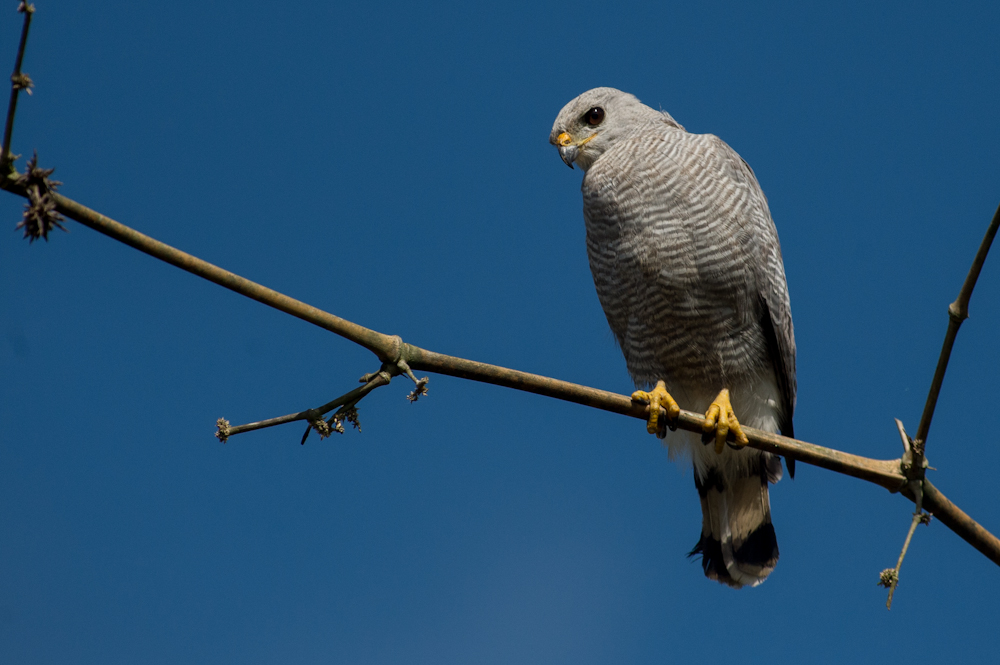
Wikipedia: Grey-lined hawk Source: WIKIPEDIA
Grey-lined_hawk_%28Buteo_nitidus%29.jpg
🔍
Never observed (yet!)
Description
The gray-lined hawk (Buteo nitidus) is a smallish raptor found in open country and forest edges. It is sometimes placed in the genus Asturina as Asturina nitida. The species has been split by the American Ornithological Society from the gray hawk. The gray-lined hawk is found from El Salvador to Argentina.
[more]
Details

Wikipedia: Swainson's hawk Source: WIKIPEDIA
1200px-Swainson%27s_Hawk_%28Buteo_swainsoni%29_RWD.jpg
🔍
Never observed (yet!)
Description
Swainson's hawk (Buteo swainsoni) is a large birds species in the Accipitriformes order. This species was named after William Swainson, a British naturalist. It is colloquially known as the grasshopper hawk or locust hawk, as it is very fond of Acrididae (locusts and grasshoppers) and will voraciously eat these insects whenever they are available.
[more]
Details
Profile Wikipedia Audubon AllAboutBirds Xeno-Canto YouTube

Wikipedia: Zone-tailed hawk Source: WIKIPEDIA
1200px-229_-_ZONE-TAILED_HAWK_%284-11-2015%29_blue_haven_road%2C_patagonia%2C_santa_cruz_co%2C_az_-02_%2816906279787%29.jpg
🔍
Never observed (yet!)
Description
The zone-tailed hawk (Buteo albonotatus) is a medium-sized hawk of warm, dry parts of the Americas. It is somewhat similar in plumage and flight style to a common scavenger, the turkey vulture, and may benefit from being able to blend into groups of vultures. It feeds on small terrestrial tetrapods of all kinds.
[more]
Details
Profile Wikipedia Audubon AllAboutBirds Xeno-Canto YouTube

Wikipedia: Short-tailed hawk Source: WIKIPEDIA
Buteo_brachyurus_-Manduri%2C_Sao_Paulo%2C_Brazil_-flying-8.jpg
🔍
Never observed (yet!)
Description
The short-tailed hawk (Buteo brachyurus) is an American bird of prey in the family Accipitridae, which also includes the eagles and Old World vultures. As a member of the genus Buteo, it is not a true hawk and thus also referred to as a "buteo" or (outside North America) "buzzard". The white-throated hawk (B. albigula) is a close relative and was formerly included in the species B. brachyurus.
[more]
Details

Wikipedia: Broad-winged hawk Source: WIKIPEDIA
Julie_Waters_broad_winged_hawk.JPG
🔍
Never observed (yet!)
Description
The broad-winged hawk (Buteo platypterus) is a medium-sized hawk of the genus Buteo. During the summer, some subspecies are distributed over eastern North America, as far west as British Columbia and Texas; they then migrate south to winter in the Neotropics from Mexico south to southern Brazil.[2] Other subspecies are all-year residents on Caribbean islands.[3] As in most raptors, females are slightly larger than males. Broad-winged hawks' wings are relatively short and broad with a tapered, somewhat pointed appearance. The two types of coloration are a dark morph with fewer white areas and a light morph that is more pale overall. Although the broad-winged hawk's numbers are relatively stable, populations are declining in some parts of its breeding range because of forest fragmentation.
[more]
Details

Wikipedia: Bicolored hawk Source: WIKIPEDIA
1200px-Bicoloured_Hawk_%28Accipiter_bicolor%29_with_prey.jpg
🔍
Never observed (yet!)
Description
The bicolored hawk (Accipiter bicolor) is a species of bird of prey in the family Accipitridae. It is found in forest, woodland, second growth, plantations, and wooded savanna in southeastern Mexico, Central America, and northern and central South America (as far south as northern Argentina).[3] Though generally uncommon, it is the most common species of Accipiter in most of its range, but it does not occur at altitudes above 2,700 metres (8,900 ft) such as the highest parts of the Andes.[4]
[more]
Details
Profile Wikipedia A-Z Animals Audubon AllAboutBirds Xeno-Canto YouTube

Wikipedia: Sharp-shinned hawk Source: WIKIPEDIA
1200px-Accipiter_striatus%2C_Canet_Road%2C_San_Luis_Obispo_1.jpg
🔍
Never observed (yet!)
Description
A. s. chionogaster A. s. erythronemius
A. s. fringilloides
A. s. madrensis
A. s. perobscurus
A. s. striatus
A. s. suttoni
A. s. velox
A. s. venator
A. s. ventralis [more]
Details

Wikipedia: Gray-bellied hawk Source: WIKIPEDIA
1200px-UrospiziasJardineiKeulemans.jpg
🔍
Never observed (yet!)
Description
The grey-bellied hawk or grey-bellied goshawk (Accipiter poliogaster) is a fairly large and rare species of forest-dwelling South American bird of prey in the family Accipitridae.
[more]
Details

Wikipedia: Tiny hawk Source: WIKIPEDIA
Accipiter_superciliosus.jpg
🔍
Never observed (yet!)
Description
The tiny hawk (Accipiter superciliosus) is a small diurnal bird of prey found in or near forests, primarily humid, throughout much of the Neotropics. It is primarily a bird-eater, and is known to prey on hummingbirds.
[more]
Details
Profile Wikipedia Xeno-Canto YouTube

Wikipedia: Semicollared hawk Source: WIKIPEDIA
1200px-Accipiter_collaris_1860.jpg
🔍
Never observed (yet!)
Description
The semicollared hawk (Accipiter collaris) is a rare bird of prey species in the family Accipitridae. It is found in Colombia, Ecuador, Peru, and Venezuela. Its natural habitat is subtropical or tropical moist montane forests. It is potentially being affected by habitat loss.
[more]
Details
Profile Wikipedia Xeno-Canto YouTube

Wikipedia: Cinereous harrier Source: WIKIPEDIA
Circus_cinereus_-Rio_Grande_do_Sul%2C_Brazil_-flying-8.jpg
🔍
Never observed (yet!)
Description
The cinereous harrier (Circus cinereus) is a South American bird of prey of the harrier family. Its breeding range extends from the Tierra del Fuego through Argentina and Chile to Bolivia, Paraguay, Peru and southern Brasil; and across the Andes north to Colombia. The bird's population is declining but due to its large range is not considered vulnerable.[2] The term cinereous, deriving from the Latin word for ashy, describes its colouration.[3]
[more]
Details
Profile Wikipedia Xeno-Canto YouTube

Wikipedia: Pearl kite Source: WIKIPEDIA
1200px-Gampsonyx_swainsonii_Pearl_Kite.jpg
🔍
Never observed (yet!)
Description
The pearl kite (Gampsonyx swainsonii) is a very small raptor found in open savanna habitat adjacent to deciduous woodland. It is the only member of the genus Gampsonyx. The scientific name commemorates the English naturalist William Swainson.
[more]
Details
Profile Wikipedia Audubon AllAboutBirds Xeno-Canto YouTube

Wikipedia: Snail kite Source: WIKIPEDIA
1200px-Schneckenweih-Snail-Kite.JPG
🔍
Never observed (yet!)
Description
The snail kite (Rostrhamus sociabilis) is a bird of prey within the family Accipitridae, which also includes the eagles, hawks, and Old World vultures. Its relative, the slender-billed kite, is now again placed in Helicolestes, making the genus Rostrhamus monotypic. Usually, it is placed in the milvine kites, but the validity of that group is under investigation.
[more]
Details
Profile Wikipedia Audubon AllAboutBirds Xeno-Canto YouTube

Wikipedia: Swallow-tailed kite Source: WIKIPEDIA
1200px-Swallow-tailed_Kite_%2834163638494%29.jpg
🔍
Never observed (yet!)
Description
The swallow-tailed kite (Elanoides forficatus) is a pernine raptor which breeds from the southeastern United States to eastern Peru and northern Argentina. It is the only species in the genus Elanoides. Most North and Central American breeders winter in South America where the species is resident year round.
[more]
Details
Profile Wikipedia Xeno-Canto YouTube

Wikipedia: Harpy eagle Source: WIKIPEDIA
Harpia_harpyja_001_800.jpg
🔍
Never observed (yet!)
Description
The harpy eagle (Harpia harpyja) is a neotropical species of eagle. It is also called the American harpy eagle to distinguish it from the Papuan eagle, which is sometimes known as the New Guinea harpy eagle or Papuan harpy eagle.[3] It is the largest and most powerful raptor found throughout its range,[4] and among the largest extant species of eagles in the world. It usually inhabits tropical lowland rainforests in the upper (emergent) canopy layer. Destruction of its natural habitat has caused it to vanish from many parts of its former range, and it is nearly extirpated from much of Central America. In Brazil, the harpy eagle is also known as royal-hawk (in Portuguese: gavião-real).[5] The genus Harpia, together with Harpyopsis and Morphnus form the subfamily Harpiinae.
[more]
Details
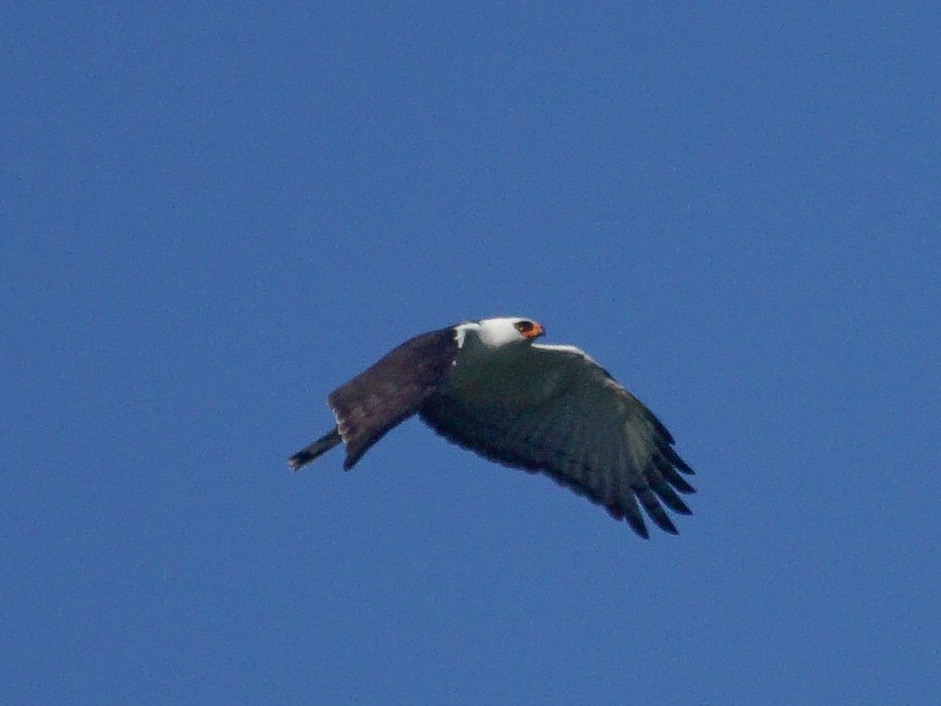
Wikipedia: Black-and-white hawk-eagle Source: WIKIPEDIA
Black-and-white_Hawk-Eagle.jpg
🔍
Never observed (yet!)
Description
The black-and-white hawk-eagle (Spizaetus melanoleucus, formerly Spizastur melanoleucus) is a bird of prey species in the eagle and hawk family (Accipitridae). It is found throughout a large part of tropical America, from southern Mexico to northern Argentina.[2]
[more]
Details
Profile Wikipedia Xeno-Canto YouTube

Wikipedia: Black-and-chestnut eagle Source: WIKIPEDIA
Black_and_chestnut_Eagle.jpg
🔍
Never observed (yet!)
Description
The black-and-chestnut eagle (Spizaetus isidori) is a South American species of bird of prey in the family Accipitridae. It is sometimes called Isidor's eagle.[2] It is often placed in the monotypic genus Oroaetus.[2] However, recent genetic testing indicates that this species is fairly closely related to Spizaetus species and thus the species should be included in that genus.[3]
[more]
Details
Profile Wikipedia Xeno-Canto YouTube
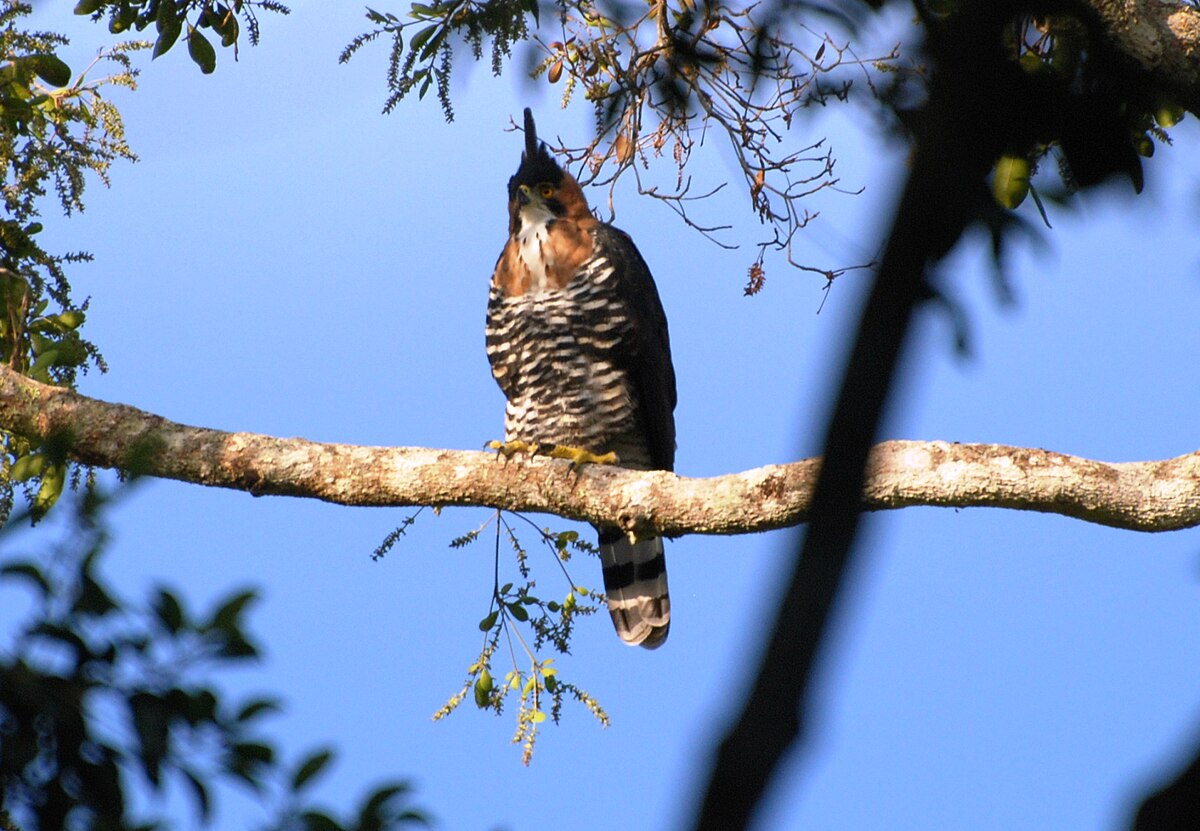
Wikipedia: Ornate hawk-eagle Source: WIKIPEDIA
1200px-Calakmul_Adler.JPG
🔍
Never observed (yet!)
Description
The ornate hawk-eagle (Spizaetus ornatus) is a fairly large bird of prey from the tropical Americas. Formerly, some authorities referred to this species as the crested hawk-eagle, a name that may cause some confusion as it is more commonly used for an Asian eagle species.[3] Like all eagles, it is in the family Accipitridae. This species has a feathered tarsus that marks it as a member of the Aquilinae or booted eagle subfamily.[4] This species is notable for the vivid colors and bold markings of adults, which differ considerably from the far more whitish plumage of the juvenile bird.[5] The ornate hawk-eagle ranges from central Mexico south through much of Central America and in a somewhat spotty but broad overall range into South America, including in the west apart from the Andes and broadly on the Atlantic side especially Brazil down to as far as Southeast Brazil and northern Argentina.[1][6] This species is found largely in primary forests with tall trees, although can be found in many forest types.[6] The ornate hawk-eagle female lays almost always a single egg and the species has a fairly prolonged breeding cycle like many tropical raptors, especially due to a lengthy post-fledging stage on which juveniles are dependent on their parents.[7] It is a diversified and exceptionally powerful predator which takes a range of prey, usually various medium-to-large-sized birds and small-to-medium-sized mammals as well as occasional reptiles.[8] Like many forest-dependent raptors, especially those in the tropical and subtropical regions, this species is likely under the pressing threat of deforestation. The decline of forest habitat in this species range, especially the Amazon rainforest, led the IUCN to uplist the ornate hawk-eagle as Near Threatened in 2016.[1]
[more]
Details
Profile Wikipedia Xeno-Canto YouTube

Wikipedia: Black hawk-eagle Source: WIKIPEDIA
1200px-Gavi%C3%A3o-pega-macaco_%28Spizaetus_tyrannus%29.jpg
🔍
Never observed (yet!)
Description
The black hawk-eagle (Spizaetus tyrannus), also known as the tyrant hawk-eagle,[3] is a species of eagle found from central Mexico through Central America[4] into Colombia, eastern Peru, the south of Brazil, and as far as northern Argentina.[5] There are two known subspecies, S.t. tyrannus, which is found in Southeastern Brazil and Northeastern Argentina, and the slightly smaller S. t. serus, which can be found elsewhere throughout the species' range.[6] Its preferred habitats include humid and moist forests close to rivers, and several types of woodland.[7] It is uncommon to fairly common throughout most of its range. Its closest relative is the ornate hawk-eagle, which is similar in size, appearance and behavior but lives at lower elevations.
[more]
Details
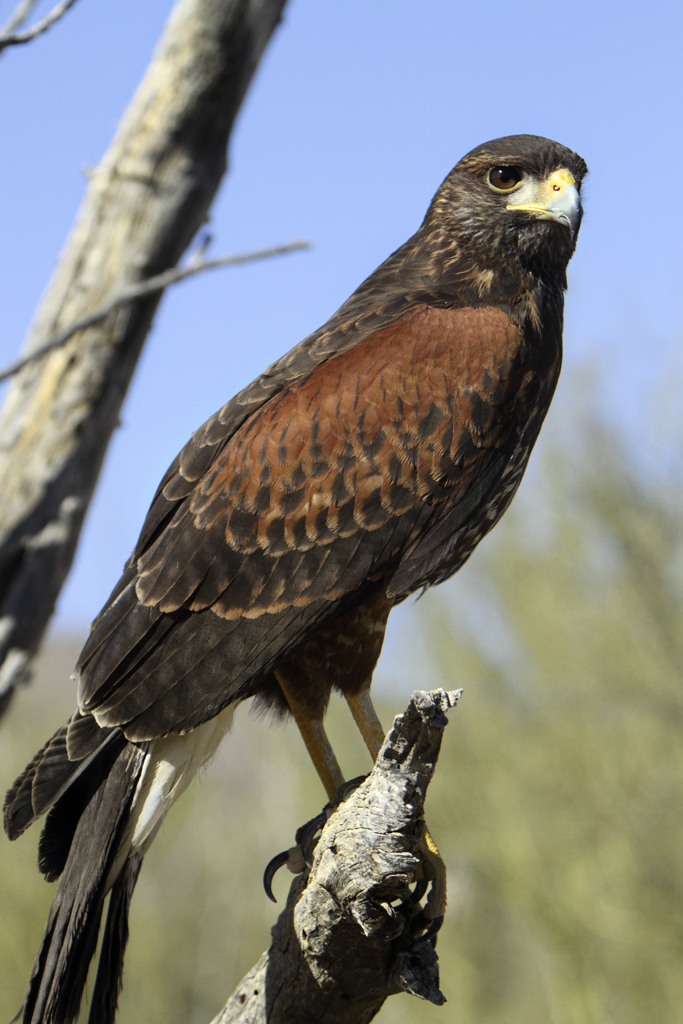
Wikipedia: Harris's hawk Source: WIKIPEDIA
Harris%27s_Hawk_%28Parabuteo_unicinctus%29_3_of_4_in_set.jpg
🔍
Never observed (yet!)
Description
Harris's hawk (Parabuteo unicinctus), formerly known as the bay-winged hawk or dusky hawk, and known in Latin America as peuco, is a medium-large bird of prey that breeds from the southwestern United States south to Chile, central Argentina, and Brazil. Birds are sometimes reported at large in Western Europe, especially Britain, but it is a popular species in falconry and these records almost certainly all refer to escapes from captivity.
[more]
Details
Profile Wikipedia Xeno-Canto YouTube
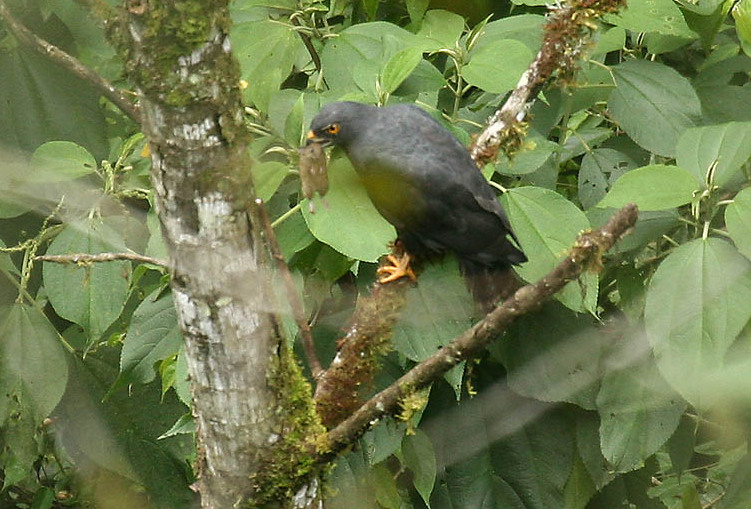
Wikipedia: White-rumped hawk Source: WIKIPEDIA
Buteo_leucorrhous_-NW_Ecuador-6.jpg
🔍
Never observed (yet!)
Description
The white-rumped hawk (Parabuteo leucorrhous) is a species of bird of prey in the family Accipitridae.
It is found in Argentina, Bolivia, Brazil, Colombia, Ecuador, Paraguay, Peru, and Venezuela.
Its natural habitat is subtropical or tropical moist montane forests.
[more]
Details

Wikipedia: Savanna hawk Source: WIKIPEDIA
1200px-Savanna_hawk_%28Buteogallus_meridionalis%29.JPG
🔍
Never observed (yet!)
Description
The savanna hawk (Buteogallus meridionalis) is a large raptor found in open savanna and swamp edges. It was formerly placed in the genus Heterospizias. It breeds from Panama and Trinidad south to Bolivia, Uruguay and central Argentina.[2]
[more]
Details
Profile Wikipedia Xeno-Canto YouTube
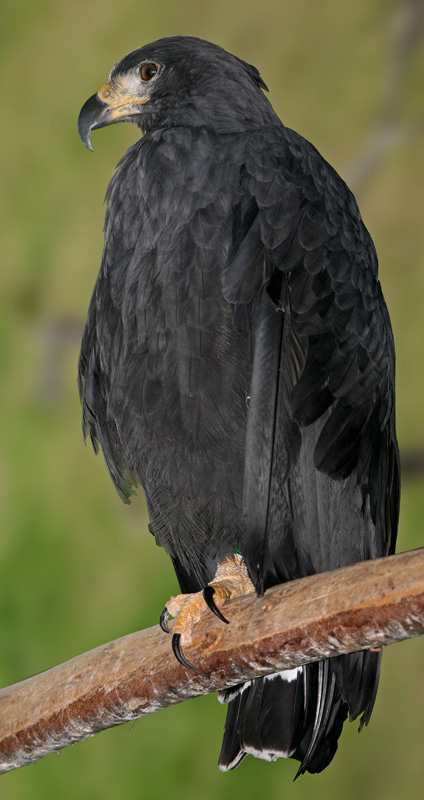
Wikipedia: Solitary eagle Source: WIKIPEDIA
Solitary_Eagle.jpg
🔍
Never observed (yet!)
Description
The solitary eagle or montane solitary eagle (Buteogallus solitarius) is a large Neotropical eagle. It is also known as the black solitary eagle.
[more]
Details

Wikipedia: Great black-hawk Source: WIKIPEDIA
1200px-Buteogallus_urubitinga_NBII.jpg
🔍
Never observed (yet!)
Description
The great black hawk (Buteogallus urubitinga) is a bird of prey in the family Accipitridae, which also includes the eagles, hawks, and Old World vultures.
[more]
Details

MerlinBirdID suggests common black hawk, flamingo tour near Rio Lagartos. 2023-04-15 08:40:26 Yucatan
First observed in Yucatan on 2023-04-15.
Description
The common black hawk (Buteogallus anthracinus) is a bird of prey in the family Accipitridae, which also includes the eagles, hawks, and Old World vultures. It formerly included the Cuban black-hawk (Buteogallus gundlachii) as a subspecies. The mangrove black hawk, traditionally considered a distinct species, is now generally considered a subspecies, B. a. subtilis, of the common black-hawk.[3]
[more]
Details
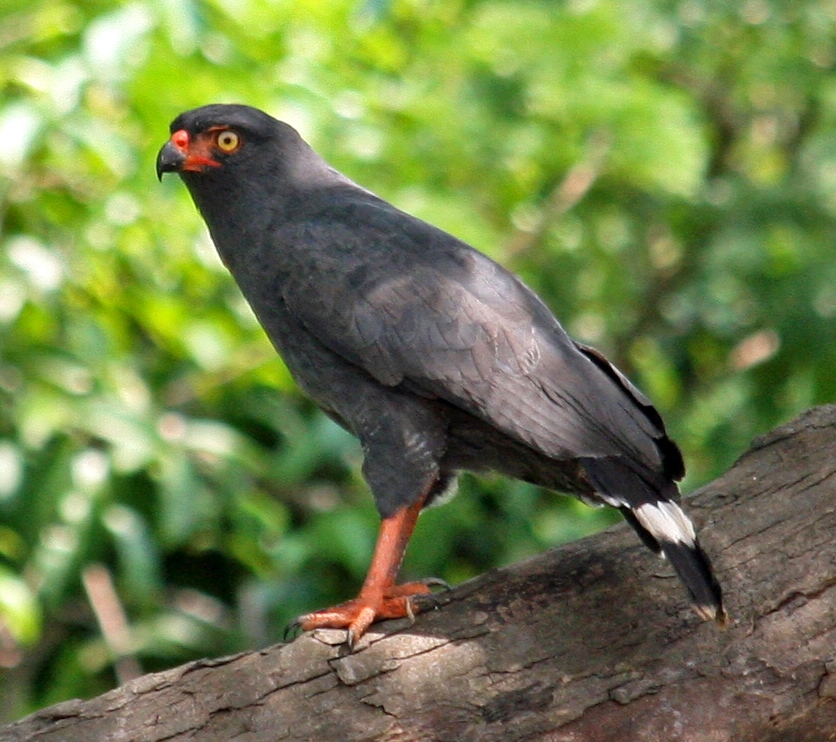
Wikipedia: Slate-colored hawk Source: WIKIPEDIA
Buteogallus_schistaceus_JJK%271.jpg
🔍
Never observed (yet!)
Description
The slate-colored hawk (Buteogallus schistaceus) is a species of bird of prey in the family Accipitridae: the hawks, eagles, and allies.
[more]
Details
Profile Wikipedia Xeno-Canto YouTube
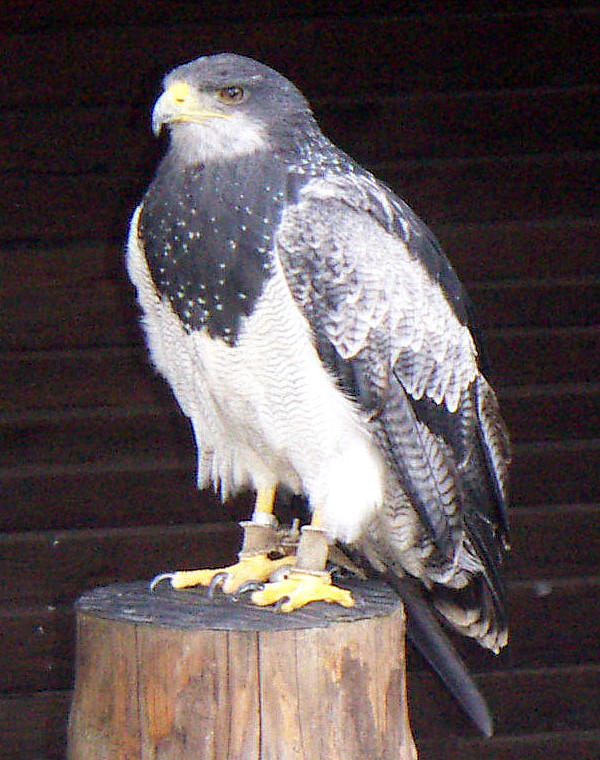
Wikipedia: Black-chested buzzard-eagle Source: WIKIPEDIA
Geranoaetus_melanoleucus.JPG
🔍
Never observed (yet!)
Description
Der Andenbussard (Geranoaetus melanoleucus, auch Aguja, Blaubussard, Kordillerenadler oder die Aguja,[1] von portugiesisch águia = Adler) ist eine Greifvogelart aus der Unterfamilie der Bussardartigen (Buteoninae). Er kommt entlang der Anden und in weiteren, klimatisch eher gemäßigten Teilen Südamerikas vor. Er bewohnt offene und halboffene Landschaften aller Art und besiedelt Bergregionen bis in Höhen von mindestens 3000 Metern. Die Beute besteht vor allem aus kleinen und mittelgroßen Säugetieren, aber auch Vögeln und Insekten. Seinen Horst errichtet er auf Felsklippen, in hohen Bäumen oder Kakteen.
[more]
Details
Profile Wikipedia Xeno-Canto YouTube
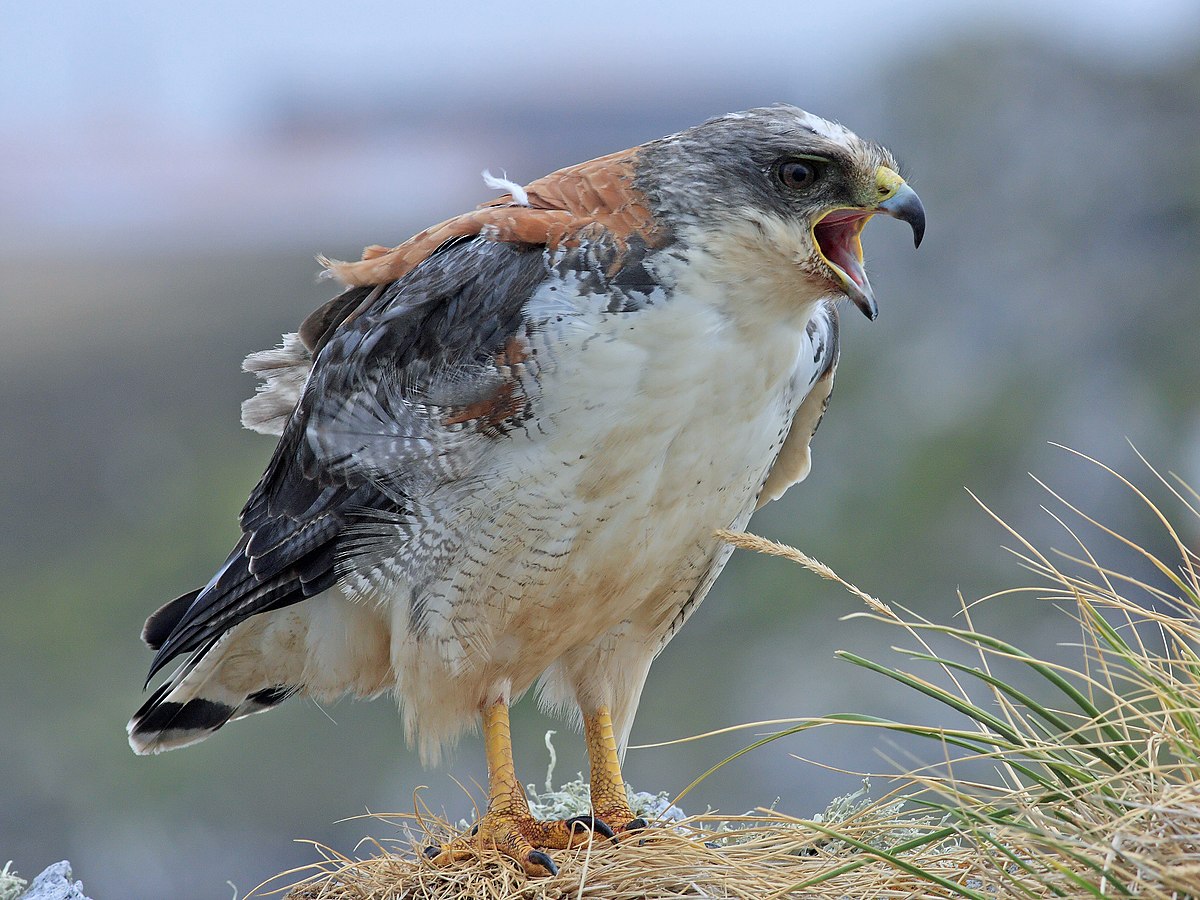
Wikipedia: Variable hawk Source: WIKIPEDIA
1200px-Red-backed_Hawk_%28Buteo_polyosoma%29_1.jpg
🔍
Never observed (yet!)
Description
The variable hawk (Geranoaetus polyosoma) is a polymorphic species of bird of prey in the family Accipitridae.
[more]
Details

Wikipedia: Black-collared hawk Source: WIKIPEDIA
1200px-Black-collared_hawk_%28Busarellus_nigricollis%29_adult.jpg
🔍
Never observed (yet!)
Description
The black-collared hawk (Busarellus nigricollis) is a species of bird of prey in the family Accipitridae. It is monotypic within the genus Busarellus.[3] It has a widespread range of presence, from western Mexico to Uruguay. Its natural habitats are subtropical or tropical moist lowland forests, subtropical or tropical swamps, and swamps.[1]
[more]
Details
Profile Wikipedia Xeno-Canto YouTube
Wikipedia: Crested eagle Source: WIKIPEDIA
Morphnus_guianensis_eating_green_snake_-Bolivia-8.jpg
🔍
Never observed (yet!)
Description
The crested eagle (Morphnus guianensis) is a large Neotropical eagle.
[more]
Details
Profile Wikipedia Audubon AllAboutBirds Xeno-Canto YouTube

Wikipedia: White-tailed kite Source: WIKIPEDIA
1200px-Elanus_leucurus_3.jpg
🔍
Never observed (yet!)
Description
The white-tailed kite (Elanus leucurus) is a small raptor found in western North America and parts of South America.
[more]
Details
Profile Wikipedia Audubon AllAboutBirds Xeno-Canto YouTube

Wikipedia: Hook-billed kite Source: WIKIPEDIA
1200px-Chondrohierax_uncinatus_76608753.jpg
🔍
Never observed (yet!)
Description
The hook-billed kite (Chondrohierax uncinatus), is a bird of prey in the family Accipitridae, which also includes many other diurnal raptors such as kites, eagles, and harriers. It occurs in the Americas, including the Rio Grande Valley of Texas in the United States, Mexico, the Caribbean, Central America, and tropical South America.
[more]
Details
Profile Wikipedia Xeno-Canto YouTube

Wikipedia: Gray-headed kite Source: WIKIPEDIA
Leptodon_cayannensis_-_Gray-headed_kite.JPG
🔍
Never observed (yet!)
Description
The gray-headed kite (Leptodon cayanensis) is a raptor found in open woodland and swamp forests. It shares the genus Leptodon with the extremely rare white-collared kite. It breeds from eastern Mexico and Trinidad south to Peru, Bolivia, Brazil and northern Argentina.
[more]
Details
Profile Wikipedia Xeno-Canto YouTube

Wikipedia: Black-faced hawk Source: WIKIPEDIA
1200px-Leucopternis_melanops_-_Black-faced_hawk.jpg
🔍
Never observed (yet!)
Description
The black-faced hawk (Leucopternis melanops) is a species of bird of prey in the family Accipitridae. This low-density species has traditionally been believed to be restricted to Amazon Basin north of the Amazon River, but there are several records south of this river, in, for example, the Brazilian states of Pará and Acre, and southeastern Peru. It is closely related to the white-browed hawk and individuals showing a level of intermediacy between the two species are known, suggesting that they rarely hybridize
[more]
Details
Profile Wikipedia Xeno-Canto YouTube

Wikipedia: Semiplumbeous hawk Source: WIKIPEDIA
1200px-Semiplumbeous_hawk_%28Leucopternis_semiplumbeus%29.jpg
🔍
Never observed (yet!)
Description
The semiplumbeous hawk (Leucopternis semiplumbeus) is a species of bird of prey in the family Accipitridae. It is found in Colombia, Costa Rica, Ecuador, Honduras, and Panama. Its natural habitat is subtropical or tropical moist lowland forests.
[more]
Details
Profile Wikipedia Xeno-Canto YouTube

Wikipedia: Plumbeous kite Source: WIKIPEDIA
1200px-Ictinia_plumbea_-Mato_Grosso_do_Sul%2C_Brazil-8.jpg
🔍
Never observed (yet!)
Description
The plumbeous kite (Ictinia plumbea) is a bird of prey in the family Accipitridae.
[more]
Details
Profile Wikipedia Xeno-Canto YouTube

Wikipedia: Crane hawk Source: WIKIPEDIA
Crane_hawk_%28Geranospiza_caerulescens%29.jpg
🔍
Never observed (yet!)
Description
The crane hawk (Geranospiza caerulescens) is a species of bird of prey in the family Accipitridae. It is monotypic within the genus Geranospiza.[2]
[more]
Details
Profile Wikipedia Xeno-Canto YouTube
Wikipedia: Double-toothed kite Source: WIKIPEDIA
Double-tooth_Kite_-_Choco_-_Ecuador.jpg
🔍
Never observed (yet!)
Description
The double-toothed kite (Harpagus bidentatus) is a species of bird of prey in the family Accipitridae. It is found in Belize, Bolivia, Brazil, Colombia, Costa Rica, Ecuador, El Salvador, French Guiana, Guatemala, Guyana, Honduras, Mexico, Nicaragua, Panama, Peru, Suriname, Trinidad and Tobago, and Venezuela.[1]
[more]
Details
Andean condor / Andenkondor (Vultur gryphus)

Andean Condor in Chile. 2019-02-20 10:16:54 Patagonia
First observed in Patagonia on 2019-02-20.
Description
The Andean condor (Vultur gryphus) is a South American bird in the New World vulture family Cathartidae and is the only member of the genus Vultur. Found in the Andes mountains and adjacent Pacific coasts of western South America, the Andean condor is the largest flying bird in the world by combined measurement of weight and wingspan. It has a maximum wingspan of 3.3 m (10 ft 10 in) and weight of 15 kg (33 lb). It is generally considered as the largest bird of prey in the world.[2][3]
[more]
Details
Greater yellow-headed vulture / Großer Gelbkopfgeier (Cathartes melambrotus)
Profile Wikipedia Xeno-Canto YouTube

Wikipedia: Greater yellow-headed vulture Source: WIKIPEDIA
Greater_Yellow-headed_Vulture_%28Cathartes_melambrotus%29_in_flight_from_below.jpg
🔍
Never observed (yet!)
Description
The greater yellow-headed vulture (Cathartes melambrotus), also known as the forest vulture,[2] is a species of bird in the New World vulture family Cathartidae. It was considered to be the same species as the lesser yellow-headed vulture until they were split in 1964.[3] It is found in South America in tropical moist lowland forests. It is a fairly large bird, with a wingspan of 166–178 cm (65–70 in), a weight of 1.65 kilograms (3.6 lb) and a body length of 64–75 cm (25–30 in). The body plumage is black, and the head and neck, which are featherless, range in color from deep yellow to pale orange. It lacks a syrinx, and its vocalizations are therefore limited to grunts or low hisses.
[more]
Details
Turkey vulture / Truthahngeier (Cathartes aura)

Turkey vulture. 2022-04-29 11:39:28
First observed in Costa Rica on 2018-02-28.
Description
The turkey vulture (Cathartes aura), also known in some North American regions as the turkey buzzard (or just buzzard), and in some areas of the Caribbean as the John crow or carrion crow,[2] is the most widespread of the New World vultures.[3] One of three species in the genus Cathartes of the family Cathartidae, the turkey vulture ranges from southern Canada to the southernmost tip of South America. It inhabits a variety of open and semi-open areas, including subtropical forests, shrublands, pastures, and deserts.[1]
[more]
Details
Black vulture / Rabengeier (Coragyps atratus)
Profile Wikipedia Audubon AllAboutBirds Xeno-Canto YouTube

Black vulture at cenote xxx. 2023-04-14 13:13:48 Yucatan
First observed in Yucatan on 2023-04-14.
Description
The black vulture (Coragyps atratus), also known as the American black vulture, is a bird in the New World vulture family whose range extends from the northeastern United States to Peru, Central Chile and Uruguay in South America. Although a common and widespread species, it has a somewhat more restricted distribution than its compatriot, the turkey vulture, which breeds well into Canada and south to Tierra del Fuego. It is the only extant member of the genus Coragyps, which is in the family Cathartidae. Despite the similar name and appearance, this species is unrelated to the Eurasian black vulture, an Old World vulture in the family Accipitridae (which includes eagles, hawks, kites, and harriers). It inhabits relatively open areas which provide scattered forests or shrublands. With a wingspan of 1.5 m (4.9 ft), the black vulture is a large bird though relatively small for a vulture. It has black plumage, a featherless, grayish-black head and neck, and a short, hooked beak.
[more]
Details
King vulture / Königsgeier (Sarcoramphus papa)

Wikipedia: King vulture Source: WIKIPEDIA
1200px-Sarcoramphus_papa_-National_Zoo_-Washington_-USA-8a.jpg
🔍
Never observed (yet!)
Description
The king vulture (Sarcoramphus papa) is a large bird found in Central and South America. It is a member of the New World vulture family Cathartidae. This vulture lives predominantly in tropical lowland forests stretching from southern Mexico to northern Argentina. It is the only surviving member of the genus Sarcoramphus, although fossil members are known.
[more]
Details
Osprey / Fischadler (Pandion haliaetus)

Osprey with eyes wide open in Holbox. 2023-04-21 06:54:26 Yucatan
First observed in Yucatan on 2023-04-21.
Description
Geography: This bird appears across the great seas in the following continents: Europe, North America, South America, Africa, Asia.General: Deutschland: Brut-, Zugvogel RL 3
Other Details
Physical details
Physical details: length=55-58 cm, wingspan=145-170 cm, weight=1120-2050 gHabitats: Agricultural
Vocalisation
Song: No details but a Xeno-Canto recording. Song attributes: Frequency:♫ 2023-10-12 15:55:00 New England (song)
Details
Profile Wikipedia Xeno-Canto YouTube

Wikipedia: Andean tinamou Source: WIKIPEDIA
1200px-NothoproctaPentlandiSmit.jpg
🔍
Never observed (yet!)
Description
General:The Andean tinamou (Nothoprocta pentlandii) is a tinamou, found commonly in high-altitude shrubland, in the Andes of South America.[3]
[more]
Details
Profile Wikipedia Xeno-Canto YouTube
Description
The curve-billed tinamou (Nothoprocta curvirostris) is a type of tinamou commonly found in high-altitude grassland and shrubland habitats in the Andes of South America.[3]
[more]
Details
Profile Wikipedia Xeno-Canto YouTube

La tarde great tinamou tenative ID by MerlinBirdID. 2018-03-09 12:58:40 Costa Rica
First observed in Costa Rica on 2018-03-09.
Description
The great tinamou (Tinamus major) is a species of tinamou ground bird native to Central and South America. There are several subspecies, mostly differentiated by their coloration.
[more]
Details
Profile Wikipedia Xeno-Canto YouTube
Wikipedia: White-throated tinamou Source: WIKIPEDIA
Tinamus_guttatus.JPG
🔍
Never observed (yet!)
Description
The white-throated tinamou (Tinamus guttatus) is a species of bird native to the Amazon rainforest of Brazil, northern Bolivia, southeastern Colombia, northeastern Ecuador, eastern Peru and southern Venezuela.[3]
[more]
Details
Profile Wikipedia Xeno-Canto YouTube
Description
The black tinamou (Tinamus osgoodi) is a species of ground bird found in humid foothill and montane forest in the Andes of South America.
[more]
Details
Description
Details
Profile Wikipedia Xeno-Canto YouTube
Wikipedia: Undulated tinamou Source: WIKIPEDIA
Crypturellus_undulatus.JPG
🔍
Never observed (yet!)
Description
The undulated tinamou (Crypturellus undulatus) is a species of ground bird found in a wide range of wooded habitats in eastern and northern South America.[3][4]
[more]
Details
Profile Wikipedia Xeno-Canto YouTube

Wikipedia: Berlepsch's tinamou Source: WIKIPEDIA
1200px-Crypturellus_berlepschi_1897.jpg
🔍
Never observed (yet!)
Description
Berlepsch's tinamou (Crypturellus berlepschi) is a type of ground bird found in moist forest[3] in northwestern Colombia and northwestern Ecuador.[4]
[more]
Details
Profile Wikipedia Xeno-Canto YouTube

Wikipedia: Cinereous tinamou Source: WIKIPEDIA
Crypturellus_cinereus.jpg
🔍
Never observed (yet!)
Description
The cinereous tinamou (Crypturellus cinereus), also known as brushland tinamou,[3] is a type of ground bird found in swamp and lowland forests in northern South America.[4] They have some localized names that have been used by the indigenous people such as in Amazonas where they are called inambu-pixuna, and in Pará, Brazil where they are called nambu-sujo. Also, throughout their range they are called inhambu-preto.[5] Cinereous tinamous have been around for many centuries. They are part of the oldest families of the world today and have fossils discovered dating back tens of millions of years. Their quick reflexes play a role in their ability to survive.
[more]
Details
Profile Wikipedia Xeno-Canto YouTube

Wikipedia: Tataupa tinamou Source: WIKIPEDIA
1200px-Crypturellus_tataupa_-Piraju%2C_Sao_Paulo%2C_Brasil-8.jpg
🔍
Never observed (yet!)
Description
The Tataupa tinamou (Crypturellus tataupa) is a type of tinamou commonly found in dry forest in subtropical and tropical regions in southeastern South America.[3]
[more]
Details
Profile Wikipedia Xeno-Canto YouTube

Wikipedia: Bartlett's tinamou Source: WIKIPEDIA
1200px-CrypturusBartlettiKeulemans.jpg
🔍
Never observed (yet!)
Description
Bartlett's tinamou (Crypturellus bartletti) is a type of tinamou found in lowland forest in South America.[3]
[more]
Details

Wikipedia: Variegated tinamou Source: WIKIPEDIA
Crypturellus_variegatus.jpg
🔍
Never observed (yet!)
Description
The variegated tinamou (Crypturellus variegatus) a type of tinamou commonly found in moist forest lowlands in subtropical and tropical regions of northern South America.[3]
[more]
Details
Profile Wikipedia Xeno-Canto YouTube

Wikipedia: Little tinamou Source: WIKIPEDIA
Crypturellus_soui.jpg
🔍
Never observed (yet!)
Description
The little tinamou (Crypturellus soui) is a species of tinamou. It is found in Central and South America.[4]
[more]
Details

Wikipedia: Brown tinamou Source: WIKIPEDIA
Crypturellus_obsoletus.jpg
🔍
Never observed (yet!)
Description
The brown tinamou (Crypturellus obsoletus) is a brownish ground bird found in humid lowland and montane forest in tropical and subtropical South America.[3]
[more]
Details
Profile Wikipedia Xeno-Canto YouTube

Wikipedia: Pale-browed tinamou Source: WIKIPEDIA
1200px-CrypturusTransfasciatusSmit.jpg
🔍
Never observed (yet!)
Description
The pale-browed tinamou (Crypturellus transfasciatus) is a type of tinamou found in tropical dry forests in Peru and Ecuador.[3]
[more]
Details
Profile Wikipedia Xeno-Canto YouTube
Description
The tawny-breasted tinamou (Nothocercus julius) is a type of ground bird found in montane moist forest.[1] Their range is northwestern South America.[1][3]
[more]
Details
Profile Wikipedia Xeno-Canto YouTube

Wikipedia: Highland tinamou Source: WIKIPEDIA
1200px-Nothocercus_bonapartei_1902.jpg
🔍
Never observed (yet!)
Description
The highland tinamou or Bonaparte's tinamou (Nothocercus bonapartei) is a type of ground bird found in montane moist forest typically over 1,500 m (4,900 ft) altitude.
[more]
Details
Profile Wikipedia Audubon AllAboutBirds Xeno-Canto YouTube

Wikipedia: Wood stork Source: WIKIPEDIA
1200px-Wood_stork_%28Mycteria_americana%29_and_Yacare_caiman.jpg
🔍
Never observed (yet!)
Description
The wood stork (Mycteria americana) is a large American wading bird in the family Ciconiidae (storks). It was formerly called the "wood ibis", though it is not an ibis. It is found in subtropical and tropical habitats in the Americas, including the Caribbean. In South America, it is resident, but in North America, it may disperse as far as Florida. Originally described by Carl Linnaeus in 1758, this stork likely evolved in tropical regions. The head and neck are bare of feathers, and dark grey in colour.[2] The plumage is mostly white, with the exception of the tail and some of the wing feathers, which are black with a greenish-purplish sheen. The juvenile differs from the adult, with the former having a feathered head and a yellow bill, compared to the black adult bill. There is little sexual dimorphism.
[more]
Details
Profile Wikipedia Xeno-Canto YouTube

Wikipedia: Rufous-bellied seedsnipe Source: WIKIPEDIA
1200px-Rufous-bellied_Seedsnipe%2C_Guango%2C_Ecuador_%285771242459%29.jpg
🔍
Never observed (yet!)
Description
The rufous-bellied seedsnipe (Attagis gayi) is a wader which is a resident breeding bird in the Andes of South America south from Ecuador.
[more]
Details
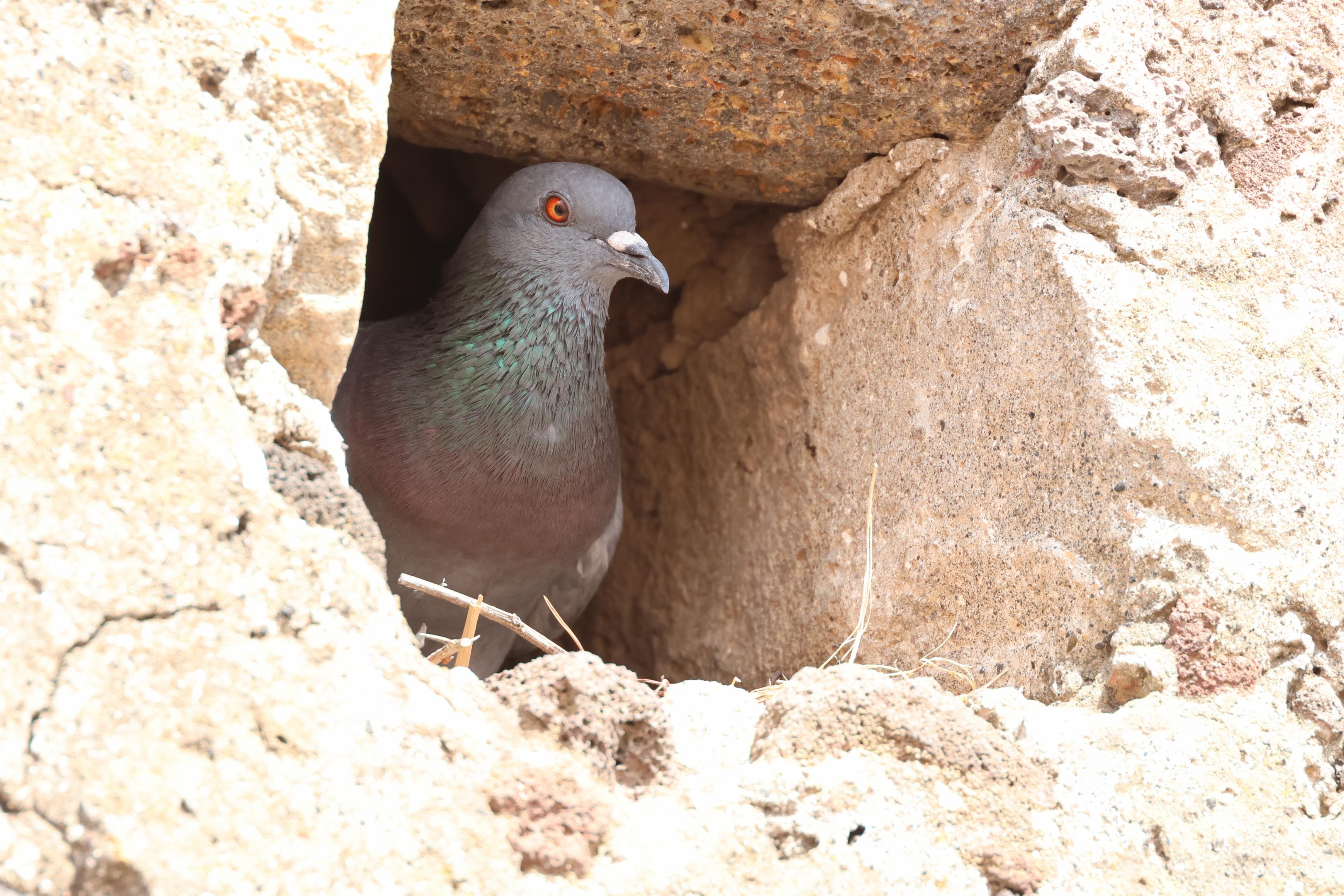
Rock dove with beautiful orange eyes. 2025-06-06 15:26:39 Stromboli
First observed in La Gomera on 2022-03-08.
Description
Geography: This bird appears across the great seas in the following continents: Europe, North America, South America, Africa, Asia.General: Deutschland: Brut-, Jahresvogel
Vocalization:
Not loud. [Link]
Seasonal behavior
Year-round bird Breeding: 01-01 - 12-31More details at Vogelwarte.ch
Other Details
Physical details
Physical details: length=31-34 cm, wingspan=63-70 cm, weight=230-370 gHabitats: Settlement
Vocalisation
Song: No details but a Xeno-Canto recording. Song:Song a two-syllable, but continuous cooing. First a rolling ascending "orrrrrr" immediately followed by a short descending "oohh". Wings produce a quite audible whistling sound. [Link]
Song attributes:
Frequency:
♫ Source: XENOCANTO XC661807 - Rock Dove call - Columba livia.mp3 (call)

No details but a Xeno-Canto recording.
Call attributes: song Frequency: ,
Details

Wikipedia: Pacific dove Source: WIKIPEDIA
1200px-Zenaida_meloda_-Lima%2C_Peru-8.jpg
🔍
Never observed (yet!)
Description
General:The West Peruvian dove or Pacific dove (Zenaida meloda) was first described in 1843 by the Swiss naturalist Johann Jakob Baron von Tschudi. It is closely related to the North American white-winged dove (Zenaida asiatica), but is now considered a separate species by ornithologists due to genetic and behavioral differences.[2] Specimens are brownish-gray above and gray below, with a bold white wing patch that appears as a brilliant white crescent in flight and is also visible at rest. Adults have a bright blue (almost indigo), featherless patch of skin around each eye. The legs and feet of adults are red, but unlike Z. asiatica, their eyes are brown. Both sexes are similar, but juveniles have a lighter color than adults, they do not have blue eye rings, and their legs and feet are brownish-pink.
[more]
Details
Profile Wikipedia Xeno-Canto YouTube

Wikipedia: Eared dove Source: WIKIPEDIA
1200px-Aruba-Zenaida-auriculata.JPG
🔍
Never observed (yet!)
Description
The eared dove (Zenaida auriculata) is a New World dove. It is a resident breeder throughout South America from Colombia to southern Argentina and Chile, and on the offshore islands from the Grenadines southwards. It may be a relatively recent colonist of Tobago and Trinidad. It appears to be partially migratory, its movements driven by food supplies.[2]
[more]
Details

Wikipedia: Plain-breasted ground-dove Source: WIKIPEDIA
1200px-Plain-breasted_Ground_Dove_%28Columbina_minuta%29%2C_Belize_%287264650850%29.jpg
🔍
Never observed (yet!)
Description
The plain-breasted ground dove (Columbina minuta) is a species of bird in the family Columbidae. It lacks the scaled appearance to the feathers of the similar and typically more abundant common ground dove.
[more]
Details

Wikipedia: Common ground-dove Source: WIKIPEDIA
Columbina_passerina_-near_Salton_Sea%2C_California%2C_USA-8.jpg
🔍
Never observed (yet!)
Description
The common ground dove (Columbina passerina) is a small bird that inhabits the southern United States, parts of Central America, the Caribbean and northern South America. It is considered to be the smallest dove that inhabits the United States. As its name suggests, the bird spends the majority of its time on the ground walking but still has the ability to fly.
[more]
Details
Description
Details
Description
Das Perutäubchen (Columbina cruziana), auch Goldschnabeltäubchen genannt, ist eine Art der Taubenvögel, die zur Unterfamilie der Amerikanischen Kleintauben gerechnet wird. Die Art kommt ausschließlich in Südamerika vor und gilt als nicht gefährdet. Im deutschen Sprachgebrauch verfügt die Perutaube über einen sehr ähnlichen Namen. Diese Art gehört jedoch zur Gattung der Trauertauben.
[more]
Details

Ruddy ground doves by the cenote with Erik. 2023-04-16 08:38:56 Yucatan
First observed in Costa Rica on 2018-03-11.
Description
The ruddy ground dove (Columbina talpacoti) is a small New World tropical dove. It is a resident breeder from Mexico south to Peru, Brazil and Paraguay, and northern Argentina, and on Trinidad and Tobago. Individual birds can sometimes be seen in the southwestern USA, from southern Texas to southernmost California, primarily during winter.
[more]
Details

Wikipedia: Blue ground-dove Source: WIKIPEDIA
1200px-Blue_Ground-dove_2496236152.jpg
🔍
Never observed (yet!)
Description
The blue ground dove (Claravis pretiosa) is a small New World tropical dove. It is a resident breeder from southeastern Mexico to northwestern Peru and northern Argentina, and on Trinidad in the Caribbean.
[more]
Details
Profile Wikipedia Xeno-Canto YouTube

Wikipedia: Purple quail-dove Source: WIKIPEDIA
1200px-OsculatiaPurpureaKeulemans.jpg
🔍
Never observed (yet!)
Description
The purple quail-dove or indigo-crowned quail-dove (Geotrygon purpurata) is a species of bird in the family Columbidae. Its natural habitats are subtropical or tropical moist lowland forests and subtropical or tropical moist montane forests. It was formerly considered a subspecies of the sapphire quail-dove. It is found in Colombia and Ecuador.
[more]
Details
Profile Wikipedia Xeno-Canto YouTube
Description
The sapphire quail-dove (Geotrygon saphirina) is a species of bird in the family Columbidae. It is found in the western Amazon Basin. Its natural habitats are subtropical or tropical moist lowland forest and subtropical or tropical moist montane forest. The purple quail-dove was formerly considered to be a subspecies of the sapphire quail-dove.
[more]
Details
Profile Wikipedia Xeno-Canto YouTube

Wikipedia: Ruddy quail-dove Source: WIKIPEDIA
1200px-Geotrygon_montana_Parc_des_Mamelles_Guadeloupe_2010-04-04.jpg
🔍
Never observed (yet!)
Description
The ruddy quail-dove (Geotrygon montana) is a species of bird in the dove and pigeon family Columbidae. It breeds throughout the West Indies, Central America, and tropical South America. It has appeared as a vagrant in Florida and southern Texas. It lays two buff-colored eggs on a flimsy platform built on a shrub. Some nests are built on the ground.
[more]
Details
Profile Wikipedia Xeno-Canto YouTube

Wikipedia: Pallid dove Source: WIKIPEDIA
Leptotila_pallida.jpg
🔍
Never observed (yet!)
Description
The pallid dove (Leptotila pallida) is a species of bird in the family Columbidae.
It is found in western Colombia, Ecuador and far northern Peru.
Its natural habitats are subtropical or tropical moist lowland forests and heavily degraded former forest.
[more]
Details
Profile Wikipedia Xeno-Canto YouTube

Wikipedia: Ochre-bellied dove Source: WIKIPEDIA
1200px-Ochre-belliedDove.jpg
🔍
Never observed (yet!)
Description
The ochre-bellied dove or Buff Bellied Dove (Leptotila ochraceiventris) is a species of bird in the family Columbidae. It is found in Ecuador and Peru.
[more]
Details
Profile Wikipedia Audubon AllAboutBirds Xeno-Canto YouTube
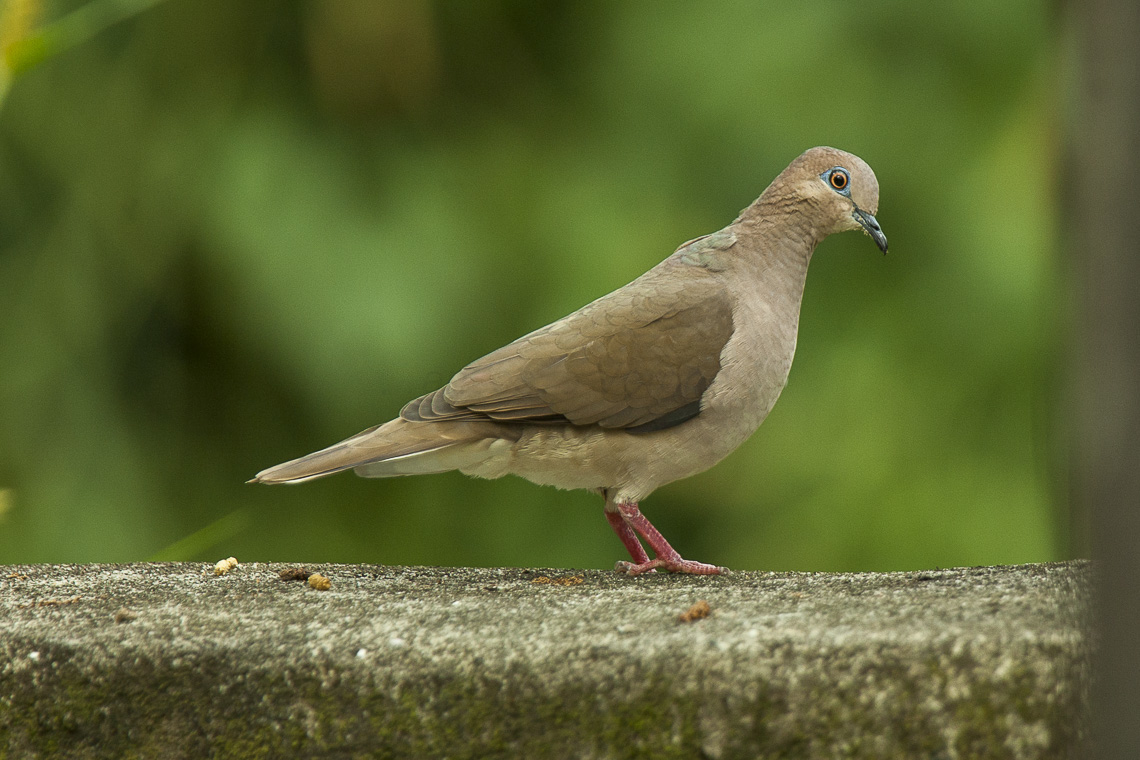
Wikipedia: White-tipped dove Source: WIKIPEDIA
White-tipped_Dove_-_Panama_H8O8470.jpg
🔍
Never observed (yet!)
Description
The white-tipped dove (Leptotila verreauxi) is a large New World tropical dove. Its scientific name commemorates the French naturalists Jules and Edouard Verreaux.
[more]
Details

Wikipedia: Grey-fronted dove Source: WIKIPEDIA
Leptotila_rufaxilla_-in_tree-8-4c.jpg
🔍
Never observed (yet!)
Description
The grey-fronted dove, (Leptotila rufaxilla) is a large New World tropical dove. It is a resident breeder in South America from Colombia, Venezuela and the Guyanas south to northeast Argentina and Uruguay. Several subspecies exist, among them L. r. hellmayrii from Trinidad and the Paria Peninsula in Venezuela.
[more]
Details
Profile Wikipedia Xeno-Canto YouTube

Wikipedia: Black-winged ground dove Source: WIKIPEDIA
1200px-Black-winged_Ground-dove.jpg
🔍
Never observed (yet!)
Description
The black-winged ground dove (Metriopelia melanoptera) is a species of bird in the family Columbidae.
It is found in Argentina, Bolivia, Chile, Colombia, Ecuador, and Peru.
Its natural habitats are subtropical or tropical moist montane forests and subtropical or tropical high-altitude shrubland.
[more]
Details

Wikipedia: Scaled pigeon Source: WIKIPEDIA
Patagioenas_speciosa_-Zooparque_Itatiba%2C_Sao_Paulo_State%2C_Brazil_-adult-8a.jpg
🔍
Never observed (yet!)
Description
The scaled pigeon (Patagioenas speciosa)[2] is a large New World tropical dove. It is a resident breeder from southern Mexico south to western Ecuador, southern Brazil, northern Argentina, and Trinidad.
[more]
Details

Wikipedia: Plumbeous pigeon Source: WIKIPEDIA
Plumbeous_Pigeon_%28Patagioenas_plumbea%29_%288079745172%29.jpg
🔍
Never observed (yet!)
Description
The plumbeous pigeon (Patagioenas plumbea) is a species of bird in the family Columbidae. It is found in Bolivia, Brazil, Colombia, Ecuador, French Guiana, Guyana, Panama, Paraguay, Peru, Suriname, and Venezuela in secondary growth forests, edge forests, and low hills. It can often be confused with the Ruddy Pigeon.[2]
[more]
Details
Profile Wikipedia Xeno-Canto YouTube

Wikipedia: Dusky pigeon Source: WIKIPEDIA
Patagioenas_goodsoni_-NW_Ecuador-6.jpg
🔍
Never observed (yet!)
Description
The dusky pigeon (Patagioenas goodsoni) is a species of bird in the family Columbidae. It is found in Colombia, Ecuador, and Panama. Its natural habitats are subtropical or tropical moist lowland forests and subtropical or tropical moist montane forests.
[more]
Details

Wikipedia: Band-tailed pigeon Source: WIKIPEDIA
1200px-Patagioenas_fasciata_-San_Luis_Obispo%2C_California%2C_USA-8_%281%29.jpg
🔍
Never observed (yet!)
Description
Columba fasciata (Say, 1823)Northern band-tailed pigeon (Patagioenas fasciata)
Southern band-tailed pigeon (Patagioenas albilinea) [more]
Details
Profile Wikipedia Xeno-Canto YouTube

MerlinBirdID says pale-vented pigeon. 2023-04-03 16:37:04 Yucatan
First observed in Yucatan on 2023-04-03.
Description
The pale-vented pigeon (Patagioenas cayennensis) is a large pigeon (family Columbidae) found in the tropical Americas. Formerly often placed in Columba, it actually belongs to a clade of the older New World genus Patagioenas. With its relatives it represents an evolutionary radiation extending through most of the warm-temperate to tropical Americas. Grey-hued birds, even their males generally lack iridescent display plumage, although the present species has some coppery gloss on the nape.[2]
[more]
Details
Profile Wikipedia Xeno-Canto YouTube
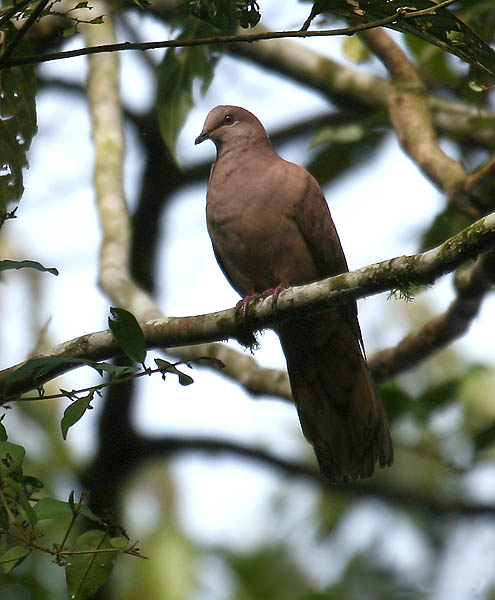
Wikipedia: Ruddy pigeon Source: WIKIPEDIA
Patagioenas_subvinacea_-NW_Ecuador-8.jpg
🔍
Never observed (yet!)
Description
The ruddy pigeon (Patagioenas subvinacea) is a largish pigeon which breeds from Costa Rica south to western Ecuador, Bolivia, and central Brazil. It belongs to a clade of small and rather plain species of Patagioenas with characteristic calls[2] that constitute the subgenus Oenoenas.[3] Like the other New World pigeons, it was formerly united with their Old World relatives in Columba, but today the New World genus Patagioenas is recognized as distinct again.[2]
[more]
Details
Profile Wikipedia Xeno-Canto YouTube

Wikipedia: White-throated quail-dove Source: WIKIPEDIA
1200px-White-throatedQuail-Dove.jpg
🔍
Never observed (yet!)
Description
The white-throated quail-dove (Zentrygon frenata) is a species of bird in the family Columbidae. It was formerly considered part of the genus Geotrygon.
It is found in Argentina, Bolivia, Colombia, Ecuador, and Peru.
Its natural habitat is subtropical or tropical moist montane forests. At 28–32 cm (11–13 in) long and a weight of 305 grams (10.8 oz.), this is the largest quail-dove and is one of the larger South American pigeons.
[more]
Details

Wikipedia: Green kingfisher Source: WIKIPEDIA
1200px-Green_kingfisher_%28Chloroceryle_americana_americana%29_male.jpg
🔍
Never observed (yet!)
Description
The green kingfisher (Chloroceryle americana) is a resident breeding bird which occurs from southern Texas in the United States south through Central and South America to central Argentina.
[more]
Details
Profile Wikipedia Xeno-Canto YouTube

Wikipedia: Amazon kingfisher Source: WIKIPEDIA
1200px-Amazon_Kingfisher.jpg
🔍
Never observed (yet!)
Description
The Amazon kingfisher (Chloroceryle amazona) is a resident breeding kingfisher in the lowlands of the American tropics from southern Mexico south through Central America to northern Argentina.
[more]
Details
Profile Wikipedia Xeno-Canto YouTube

Wikipedia: American pygmy kingfisher Source: WIKIPEDIA
1200px-Chloroceryle-aenea-001.jpg
🔍
Never observed (yet!)
Description
The American pygmy kingfisher (Chloroceryle aenea) is a resident breeding kingfisher which occurs in the American tropics from southern Mexico south through Central America to western Ecuador, and then around the northern Andes cordillera in the east to central Bolivia and central Brazil. The species occupies the entire Amazon basin and the Tocantins River drainage adjacent in Pará state Brazil. It also occurs on Trinidad.
[more]
Details
Profile Wikipedia Xeno-Canto YouTube

Wikipedia: Green-and-rufous kingfisher Source: WIKIPEDIA
1200px-Green-and-rufous_kingfisher_%28Chloroceryle_inda%29.JPG
🔍
Never observed (yet!)
Description
The green-and-rufous kingfisher (Chloroceryle inda) is a resident breeding bird in the lowlands of the American tropics from southeastern Nicaragua south to southern Brazil.
[more]
Details
Profile Wikipedia Xeno-Canto YouTube

Wikipedia: Ringed kingfisher Source: WIKIPEDIA
1200px-MARTIM-PESCADOR-GRANDE_%28Megaceryle_torquata%29.jpg
🔍
Never observed (yet!)
Description
The ringed kingfisher (Megaceryle torquata) is a large, conspicuous and noisy kingfisher bird commonly found along the lower Rio Grande valley in southeasternmost Texas in the United States through Central America to Tierra del Fuego in South America.[4]
[more]
Details

Curi cancha blue crowned motmot in tree. 2018-02-18 13:52:48 Costa Rica
First observed in Costa Rica on 2018-02-18.
Description
I saw one in Monteverde, Costa Rica. It was perched on a cable and showed no fear, so I had time to take a picture. I've read that they often use cables as a place to watch for insects or other food.General: The call sounds a lot like a frog to me. The song less so because it consists of multiple notes, but it still sounds similar.
Etymology: Both motmot and bobo (the name Costa Ricans use) are onomatopoeia, meaning their name sounds like the call they make: “mot-mot” or “bo-bo.” [Link]
Details
Profile Wikipedia Xeno-Canto YouTube

Wikipedia: Andean motmot Source: WIKIPEDIA
Highland_Motmot_-_Colombia_%2822048211293%29.jpg
🔍
Never observed (yet!)
Description
General:The Andean motmot or highland motmot (Momotus aequatorialis) is a colorful near-passerine bird found from northern Colombia to western Bolivia.[2]
[more]
Details
Profile Wikipedia Xeno-Canto YouTube

Wikipedia: Whooping motmot Source: WIKIPEDIA
Momotus_subrufescens%2C_Panama_5.jpg
🔍
Never observed (yet!)
Description
The whooping motmot (Momotus subrufescens) is a colorful near-passerine bird found in forests and woodlands of southern Panama to northwestern Peru. This species and the blue-capped motmot, Lesson's motmot, Trinidad motmot, Amazonian motmot, and Andean motmot were all considered conspecific.
[more]
Details

Wikipedia: Rufous motmot Source: WIKIPEDIA
1200px-Baryphthengus_martii_-Panama-8.jpg
Panama
🔍
Never observed (yet!)
Description
The rufous motmot (Baryphthengus martii) is a near-passerine bird which is a resident breeder in rain forests from northeastern Honduras south to western Ecuador, northeastern Bolivia, and southwestern Brazil.
[more]
Details
Profile Wikipedia Xeno-Canto YouTube
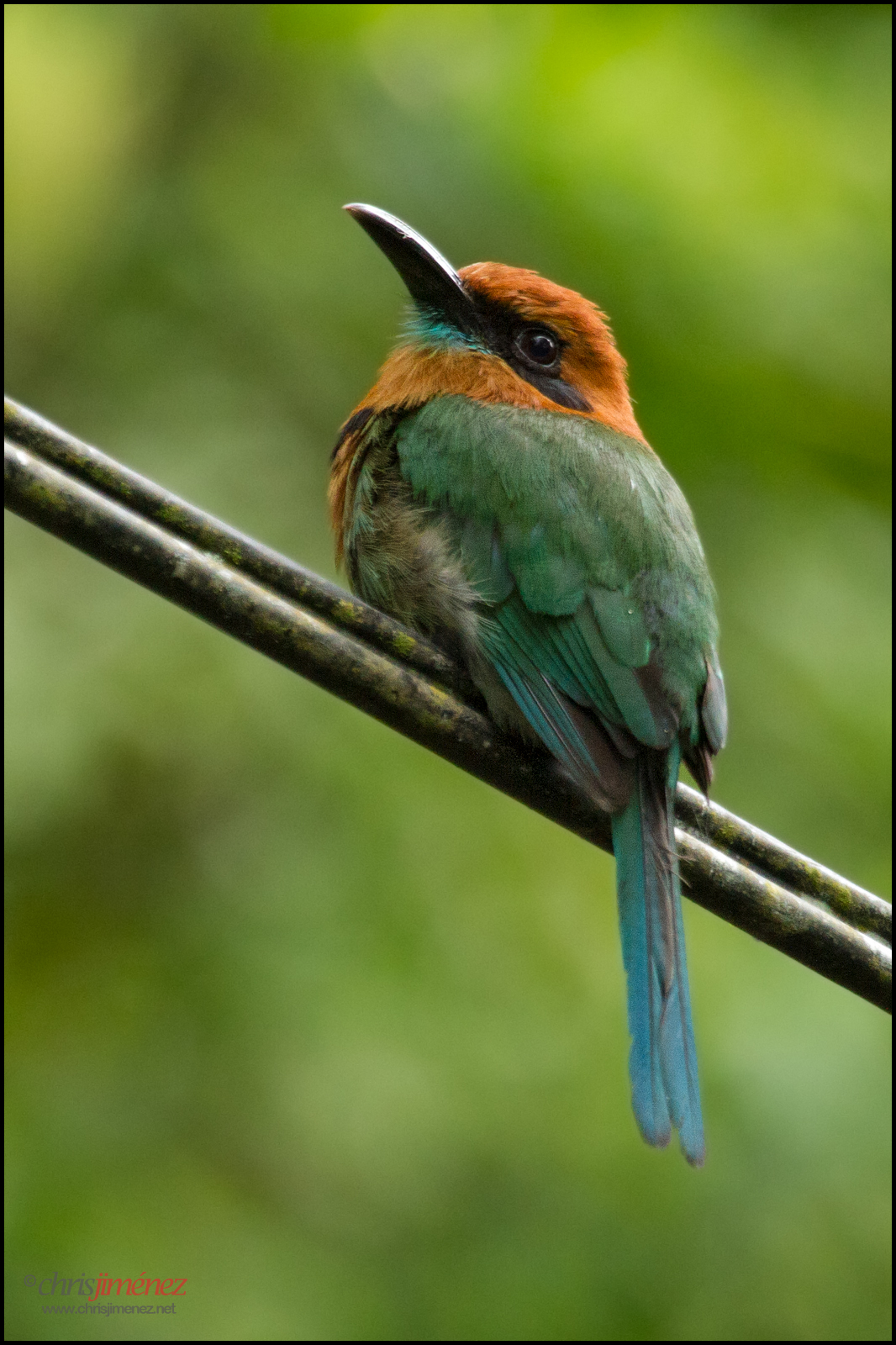
Wikipedia: Broad-billed motmot Source: WIKIPEDIA
Broad-billed_Motmot.jpg
🔍
Never observed (yet!)
Description
The broad-billed motmot (Electron platyrhynchum) is a fairly common[2] Central and South American bird of the Momotidae family.[3] They are nonmigratory, sedentary birds[4] that are most frequently seen in singles or pairs.[3] There exist six subspecies of the broad-billed motmot.[3]
[more]
Details
Profile Wikipedia Xeno-Canto YouTube

Wikipedia: Little cuckoo Source: WIKIPEDIA
1200px-Little_Cuckoo_%285306039683%29.jpg
🔍
Never observed (yet!)
Description
The little cuckoo (Coccycua minuta) is a species of bird in the cuckoo family (Cuculidae) from South America and Panama. It was formerly placed in the genus Piaya, but was moved to the reinstated genus Coccycua following the discovery that its closest living relatives are a couple species traditionally placed in Coccyzus or Micrococcyx, rather than the other members of Piaya.[2]
[more]
Details
Profile Wikipedia Xeno-Canto YouTube

Wikipedia: Dwarf cuckoo Source: WIKIPEDIA
1200px-Coccycua_pumila_%28Cuco_enano%29_%2815430611517%29.jpg
🔍
Never observed (yet!)
Description
The dwarf cuckoo (Coccycua pumila) is a tropical American bird species of the cuckoo family (Cuculidae).
[more]
Details
Profile Wikipedia Audubon AllAboutBirds Xeno-Canto YouTube

Smooth-billed ani. 2023-04-16 06:25:20 Yucatan
First observed in Yucatan on 2023-04-16.
Description
The smooth-billed ani (Crotophaga ani) is a large near passerine bird in the cuckoo family. It is a resident breeding species from southern Florida, the Caribbean, parts of Central America, south to western Ecuador, Brazil, northern Argentina and southern Chile.[2] It was introduced to Galápagos around the 1960s and is potentially impacting native and endemic species across the archipelago.[3]
[more]
Details
Profile Wikipedia Xeno-Canto YouTube
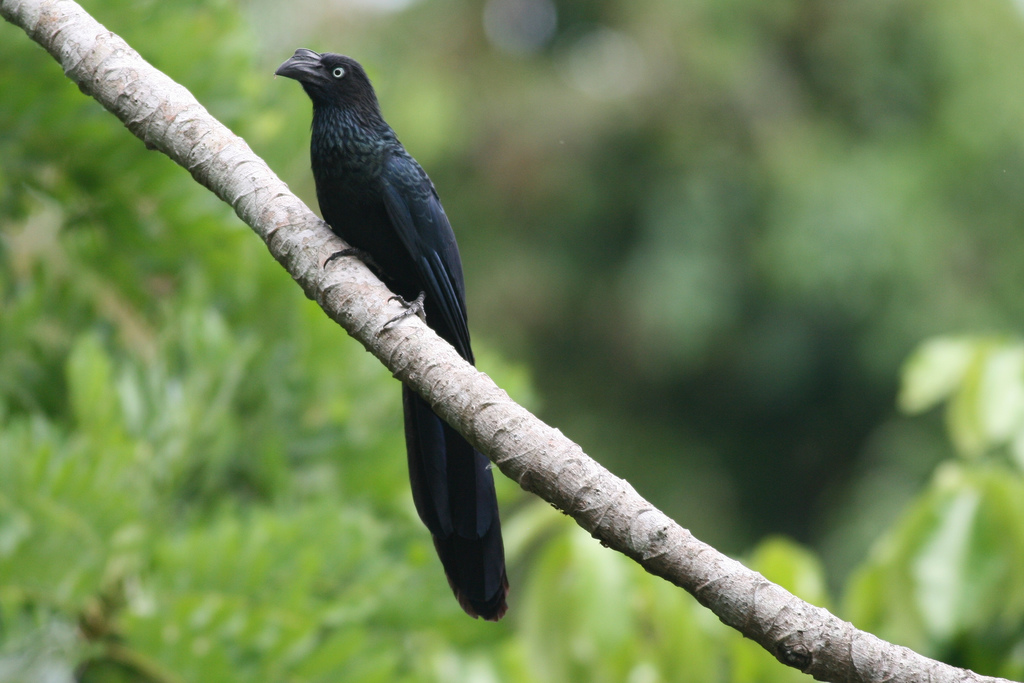
Wikipedia: Greater ani Source: WIKIPEDIA
Crotophaga_major_%28Greater_Ani%29.jpg
🔍
Never observed (yet!)
Description
The greater ani (Crotophaga major) is a large bird in the cuckoo family. It is a breeding species from Panama and Trinidad through tropical South America to northern Argentina. It is sometimes referred to as the black cuckoo.
[more]
Details
Profile Wikipedia Audubon AllAboutBirds Xeno-Canto YouTube
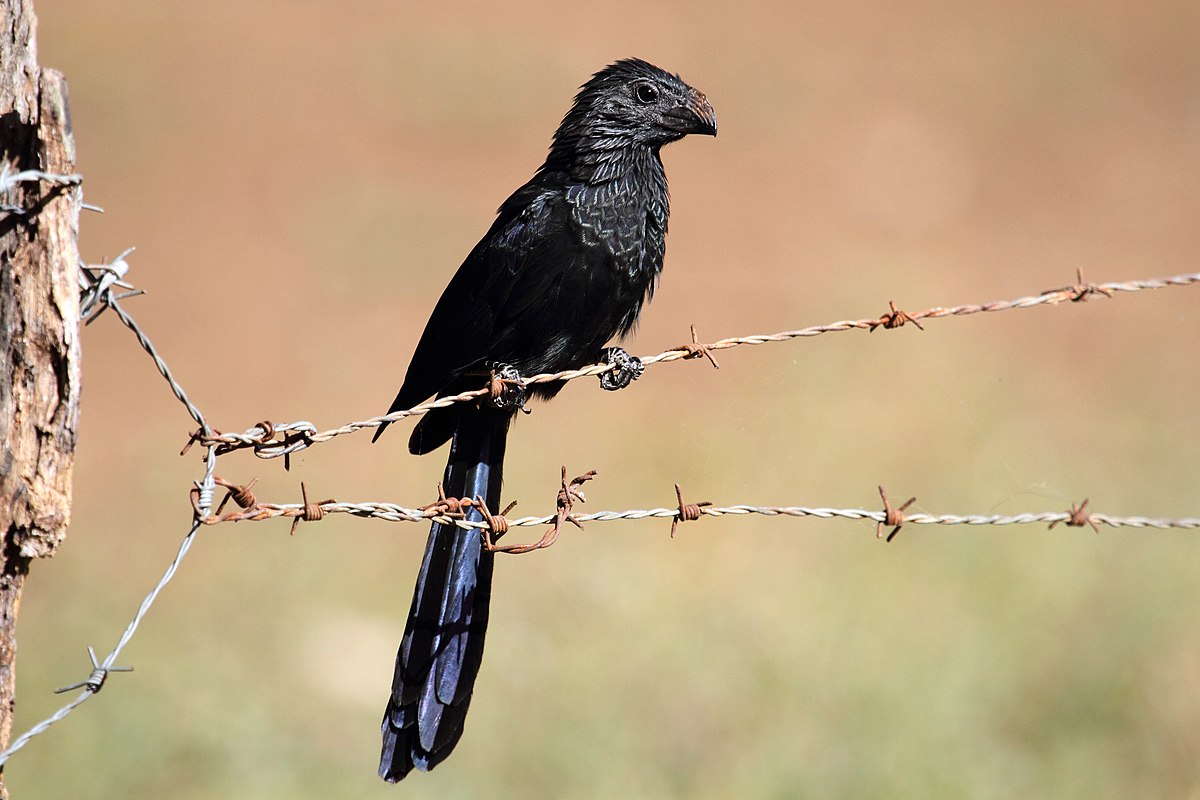
Wikipedia: Groove-billed ani Source: WIKIPEDIA
1200px-Crotophaga_sulcirostris_CR_bis.JPG
🔍
Never observed (yet!)
Description
The groove-billed ani (Crotophaga sulcirostris) is a tropical bird in the cuckoo family with a long tail and a large, curved beak. It is a resident species throughout most of its range, from southern Texas, central Mexico and The Bahamas, through Central America, to northern Colombia and Venezuela, and coastal Ecuador and Peru. It only retreats from the northern limits of its range in Texas and northern Mexico during winter.
[more]
Details
Profile Wikipedia Xeno-Canto YouTube

Squirrel cuckoo. 2020-03-04 09:26:50 Panama
First observed in Panama on 2020-03-04.
Description
The squirrel cuckoo (Piaya cayana) is a large and active species of cuckoo found in wooded habitats from northwestern Mexico to northern Argentina and Uruguay, and on Trinidad. Some authorities have split off the western Mexican form as the Mexican squirrel-cuckoo (Piaya mexicana).[2]
[more]
Details
Profile Wikipedia Xeno-Canto YouTube

Wikipedia: Black-bellied cuckoo Source: WIKIPEDIA
Piaya_melanogaster_-_Black-bellied_Cuckoo.JPG
🔍
Never observed (yet!)
Description
The black-bellied cuckoo or black-bellied squirrel cuckoo (Piaya melanogaster) is a bird of the family Cuculidae found in the Amazon region.[2][3][4] The genus Playa is considered part of the cuckoos of the New World.[5] Even though this species has a wide distribution, little is known about its ecology and natural history.[4] This species is considered as monotypic. The word melanogaster means "black belly"; it has Greek roots, melas meaning "black" and gaster meaning "belly".[5]
[more]
Details
Profile Wikipedia Xeno-Canto YouTube

Wikipedia: Dark-billed cuckoo Source: WIKIPEDIA
1200px-Coccyzus_melacoryphus.jpg
🔍
Never observed (yet!)
Description
The dark-billed cuckoo (Coccyzus melacoryphus) is a species of bird in the family Cuculidae, the cuckoos.
[more]
Details
Profile Wikipedia Xeno-Canto YouTube

Wikipedia: Pearly-breasted cuckoo Source: WIKIPEDIA
1200px-Pearly-breasted_Cuckoo.jpg
🔍
Never observed (yet!)
Description
The pearly-breasted cuckoo (Coccyzus euleri) is a species of cuckoo in the family Cuculidae.
It is found in Argentina, Bolivia, Brazil,[2] Colombia, Ecuador, French Guiana, Guyana, Paraguay, Suriname, Peru[3] and Venezuela.
Its natural habitats are subtropical or tropical moist lowland forests and heavily degraded former forest. It does not occur above an elevation of 2000 meters.[4]
[more]
Details
Description
Geography: This bird appears across the great seas in the following continents: Europe, North America, South America.General:
Der Schwarzschnabelkuckuck (Coccyzus erythropthalmus) ist eine Art aus der Familie der Kuckucksvögel, die ausschließlich in der neuen Welt vorkommt. Er brütet ausschließlich im Nordosten Nordamerikas, überwintert aber während des Winterhalbjahres in Südamerika. Während seines Zuges im Herbst und Frühjahr ist er auch in Zentralamerika, in Mexiko und dem Süden der Vereinigten Staaten zu beobachten. Der sehr heimlich lebende Schwarzschnabelkuckuck ist ein mittelgroßer, schlanker und langschwänziger Kuckuck, der sich überwiegend versteckt im Blattwerk aufhält.
[more]
Details
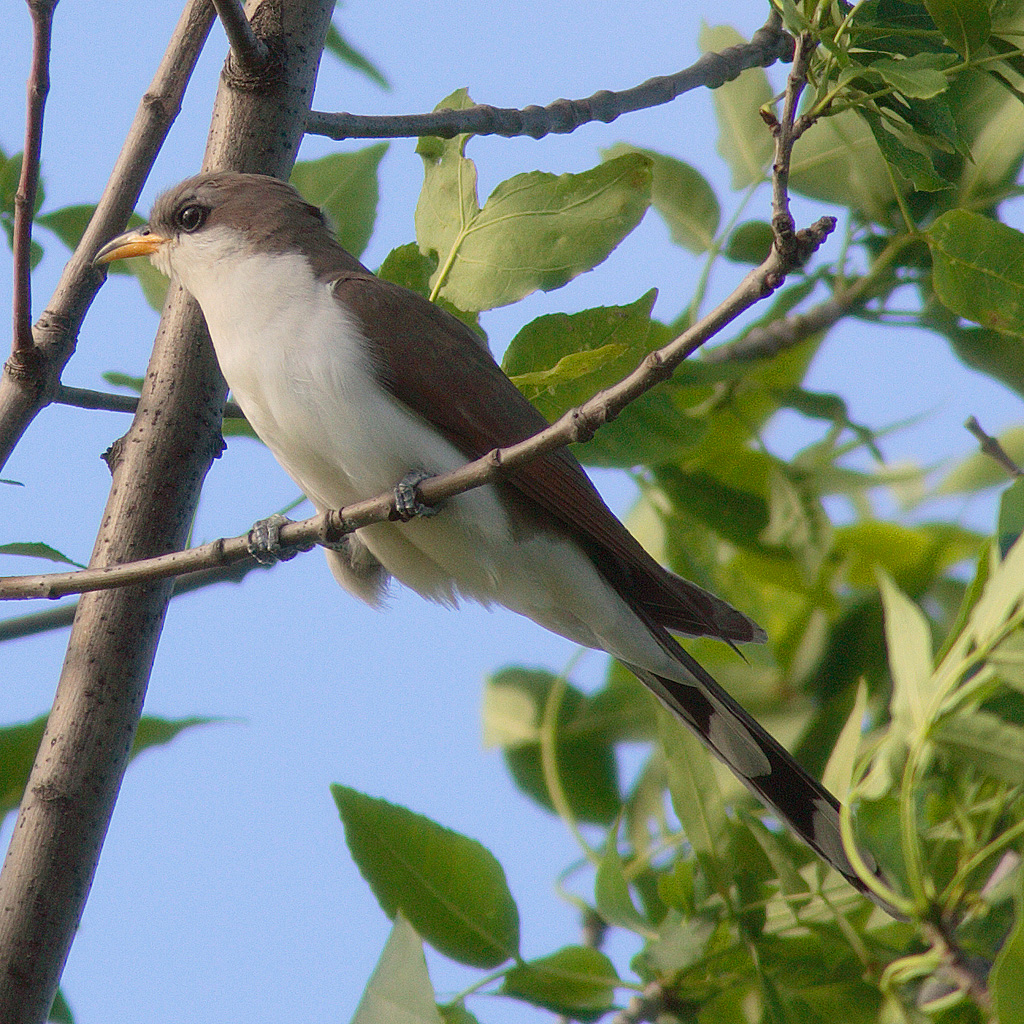
Wikipedia: Yellow-billed cuckoo Source: WIKIPEDIA
Coccyzus-americanus-001.jpg
🔍
Never observed (yet!)
Description
Der Gelbschnabelkuckuck (Coccyzus americanus) ist eine Art aus der Familie der Kuckucksvögel, die ausschließlich in der Neuen Welt vorkommt. Er brütet überwiegend im Osten Nordamerikas, den Großen Antillen und Teilen Mexikos, überwintert aber während des Winterhalbjahres in Südamerika. Während seines Zuges im Herbst und Frühjahr ist er auch in Zentralamerika zu beobachten. Der sehr heimlich lebende Gelbschnabelkuckuck ist ein mittelgroßer, schlanker und langschwänziger Kuckuck, der sich überwiegend versteckt im Blattwerk aufhält.
[more]
Details
Profile Wikipedia Xeno-Canto YouTube

Wikipedia: Gray-capped cuckoo Source: WIKIPEDIA
1200px-Coccyzus_lansbergi_map.svg.png
🔍
Never observed (yet!)
Description
The grey-capped cuckoo (Coccyzus lansbergi) is a species of cuckoo in the family Cuculidae. It is found in Aruba, Colombia, Ecuador, Netherlands Antilles, Panama, Peru, and Venezuela.
[more]
Details
Profile Wikipedia Xeno-Canto YouTube

Wikipedia: Pheasant cuckoo Source: WIKIPEDIA
1200px-Dromococcyx_phasianellus_-_Pheasant_Cuckoo%3B_Caxias%2C_Maranh%C3%A3o%2C_Brazil.jpg
🔍
Never observed (yet!)
Description
The pheasant cuckoo (Dromococcyx phasianellus) is a species of neotropical cuckoo in the subfamily Neomorphinae of the family Cuculidae. It is native to Central and South America where it occurs in lowland tropical forest.
[more]
Details
Profile Wikipedia Xeno-Canto YouTube

Wikipedia: Pavonine cuckoo Source: WIKIPEDIA
Dromococcyx_pavoninus.jpg
🔍
Never observed (yet!)
Description
The pavonine cuckoo (Dromococcyx pavoninus) is a Neotropical cuckoo with a long graduated tail and a short crest. It is one of three species of Neotropical cuckoo which are known to be brood parasites.
[more]
Details
Profile Wikipedia Xeno-Canto YouTube

Wikipedia: Rufous-vented ground-cuckoo Source: WIKIPEDIA
1200px-Rufous-vented_Ground_Cuckoo.jpg
🔍
Never observed (yet!)
Description
The rufous-vented ground cuckoo (Neomorphus geoffroyi) is a large terrestrial species of cuckoo in the family Cuculidae. It is found in humid primary forests from southern Nicaragua, through Costa Rica and Panama, into north-western Colombia. Another population occurs in the western and southern Amazon Basin of south-eastern Colombia, eastern Ecuador, eastern Peru, northern Bolivia and Brazil, while a final population occurs in the Atlantic Forest of eastern Brazil. Much confusion exists over the exact limits of its distribution in the south-central Amazon, where the very similar scaled ground cuckoo occurs (the breast-markings typically used to separate the scaled and the rufous-vented ground cuckoos are known to vary clinally). Consequently, the scaled ground cuckoo has often been considered a subspecies of the rufous-vented ground cuckoo.[2]
[more]
Details
Profile Wikipedia Xeno-Canto YouTube

Wikipedia: Banded ground-cuckoo Source: WIKIPEDIA
1200px-NeomorphusRadiolosusSmit.jpg
🔍
Never observed (yet!)
Description
The banded ground cuckoo (Neomorphus radiolosus) is a species of cuckoo in the family Cuculidae. It is found in the Chocó of western Colombia and Ecuador.
[more]
Details
Profile Wikipedia Xeno-Canto YouTube
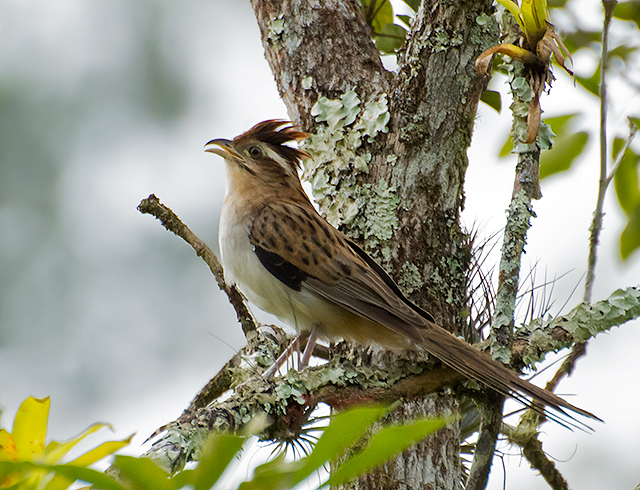
Wikipedia: Striped cuckoo Source: WIKIPEDIA
SACI_%28Tapera_naevia_%29.jpg
🔍
Never observed (yet!)
Description
The striped cuckoo (Tapera naevia) is a near-passerine bird, the only member of the genus Tapera. This resident cuckoo is found from Mexico and Trinidad south to Bolivia and Argentina.
[more]
Details
Profile Wikipedia Vogelwarte BirdLife ZH ornitho.ch Audubon AllAboutBirds Xeno-Canto BirdID NABU YouTube

Wikipedia Datei Falco columbarius Male. Source: WIKIPEDIA
Wikipedia_Datei_Falco_columbarius_Male.jpg
First observed in 🇨🇭 on 2024-05-16.
Description
Geography: This bird appears across the great seas in the following continents: Europe, North America, South America, Africa, Asia.General:
The merlin (Falco columbarius) is a small species of falcon from the Northern Hemisphere,[2] with numerous subspecies throughout North America and Eurasia. A bird of prey, the merlin breeds in the northern Holarctic; some migrate to subtropical and northern tropical regions in winter. Males typically have wingspans of 53–58 centimetres (21–23 in), with females being slightly larger. They are swift fliers and skilled hunters which specialize in preying on small birds in the size range of sparrows to doves and medium-sized shorebirds. In recent decades merlin populations in North America have been significantly increasing, with some merlins becoming so well adapted to city life that they forgo migration; in Europe, populations increased up to about 2000 but have been steady subsequently.[3] The merlin has for centuries been well regarded as a falconry bird.
[more]
Deutschland: Zugvogel, Wintergast
Vocalization:
Series of harsh "kwik-wik wik". Coarseness similar to Peregrine, but pace much quicker. [Link]
Seasonal behavior
Year-round bird Migration in: 02-20 - 03-01 Migration out: 02-22 - 03-01More details at Vogelwarte.ch
Other Details
Physical details
Physical details: length=25-30 cm, wingspan=50-62 cm, weight=125-300 gHabitats: Agricultural Details
Profile Wikipedia Audubon AllAboutBirds Xeno-Canto YouTube

Wikipedia: Aplomado falcon Source: WIKIPEDIA
Aplomado_Falcon_portrait.jpg
🔍
Never observed (yet!)
Description
General:The aplomado falcon (Falco femoralis) is a medium-sized falcon of the Americas. The species' largest contiguous range is in South America, but not in the deep interior Amazon Basin. It was long known as Falco fusco-coerulescens or Falco fuscocaerulescens, but these names are now believed to refer to the bat falcon (F. rufigularis).[2] Its resemblance in shape to the hobbies accounts for its old name orange-chested hobby. Aplomado is an unusual Spanish word for "lead-colored", referring to the blue-grey areas of the plumage – an approximate English translation would be "plumbeous falcon". Spanish names for the species include halcón aplomado and halcón fajado (roughly "banded falcon" in reference to the characteristic pattern); in Brazil it is known as falcão-de-coleira.
[more]
Details
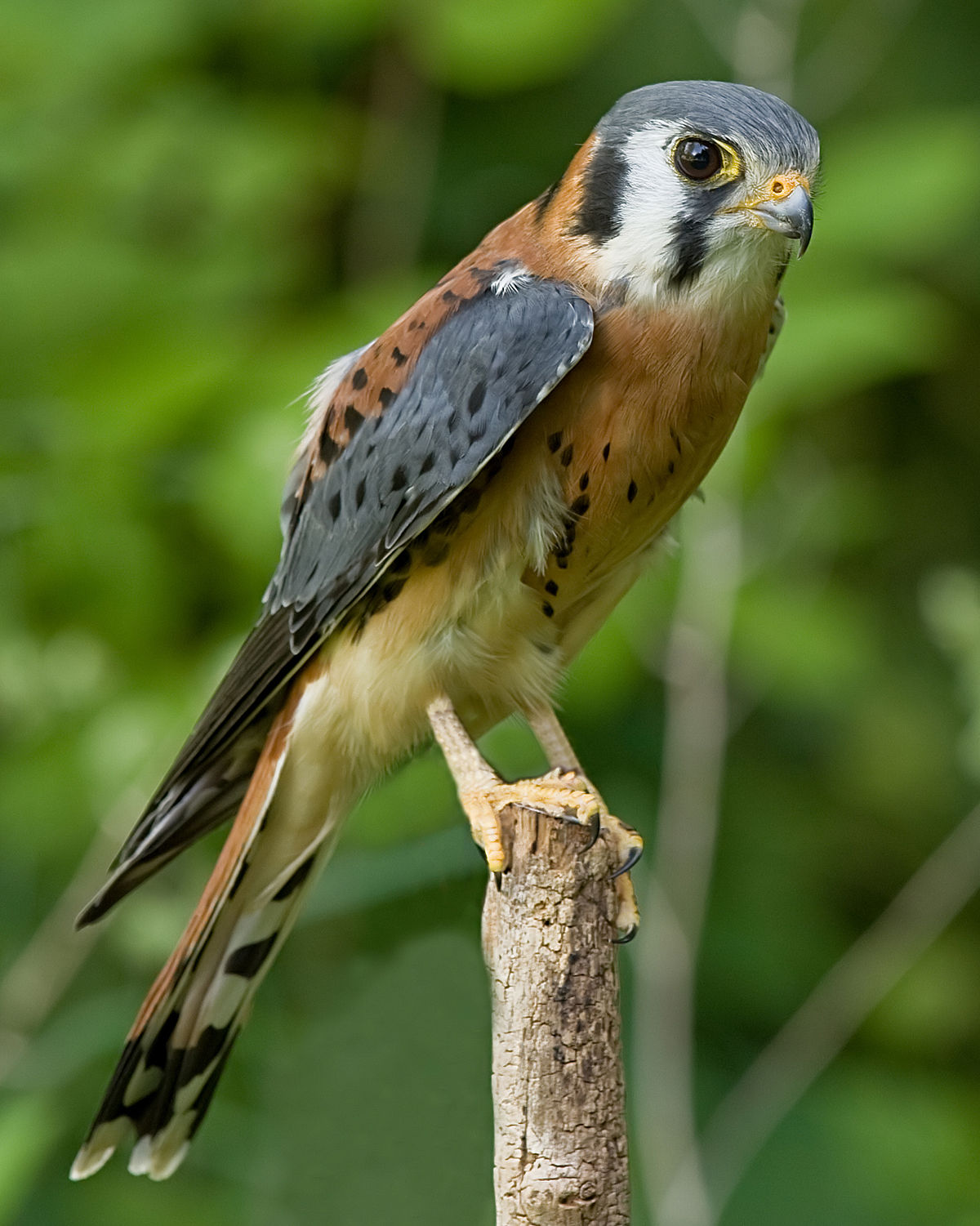
Wikipedia: American kestrel Source: WIKIPEDIA
1200px-AmericanKestrel02.jpg
🔍
Never observed (yet!)
Description
The American kestrel (Falco sparverius), also called the sparrow hawk, is the smallest and most common falcon in North America. It has a roughly two-to-one range in size over subspecies and sex, varying in size from about the weight of a blue jay to a mourning dove. It also ranges to South America and is a well-established species that has evolved into 17 subspecies adapted to different environments and habitats throughout the Americas. It exhibits sexual dimorphism in size (females being moderately larger) and plumage, although both sexes have a rufous back with noticeable barring. Its plumage is colorful and attractive, and juveniles are similar in plumage to adults.
[more]
Details
Profile Wikipedia Xeno-Canto YouTube

Bat falcon at Ixpujil. 2023-04-05 10:01:54 Yucatan
First observed in Yucatan on 2023-04-05.
Description
The bat falcon (Falco rufigularis) is a falcon that is a resident breeder in tropical Mexico, Central and South America, and Trinidad. It was long known as Falco albigularis; the names Falco fusco-coerulescens or Falco fuscocaerulescens, long used for the aplomado falcon, are now believed to refer to the present species.[2]
[more]
Details
Profile Wikipedia Xeno-Canto YouTube

Wikipedia: Orange-breasted falcon Source: WIKIPEDIA
1200px-Falco_deiroleucus_-_Orange-breasted_Falcon.JPG
🔍
Never observed (yet!)
Description
The orange-breasted falcon (Falco deiroleucus) is a bird of the falcon family. It is probably closely related to and looks like a larger version of the bat falcon. These two, in turn, are probably closest to the aplomado falcon and constitute a rather old American lineage of Falco.[2]
[more]
Details

Wikipedia: Peregrine falcon Source: WIKIPEDIA
Falco_peregrinus_good_-_Christopher_Watson.jpg
🔍
Never observed (yet!)
Description
Geography: This bird appears across the great seas in the following continents: Europe, North America, South America, Africa, Asia.General: Deutschland: Brut-, Jahres-, Zugvogel, Wintergast
Vocalization:
A harsh, drawn out "kiaaaa" with emphasised endings repeated in series. Much slower than Merlin, but higher pitched than Gyrfalcon. [Link]
Seasonal behavior
Year-round bird Breeding: 02-20 - 07-10 Migration in: 02-20 - 05-01 Migration out: 08-09 - 11-06More details at Vogelwarte.ch
Other Details
Physical details
Physical details: length=36-48 cm, wingspan=95-110 cm, weight=582-1300 gHabitats: Agricultural
Vocalisation
Song: No details but a Xeno-Canto recording. Song attributes: Frequency:♫ Source: XENOCANTO XC942609 - Peregrine Falcon call - Falco peregrinus.mp3 (call)

Calls:
Also shorter, coarse warning-calls. [Link]
No details but a Xeno-Canto recording.
Call attributes: song Frequency: ,
Details
Profile Wikipedia Xeno-Canto YouTube

Wikipedia: Lined forest-falcon Source: WIKIPEDIA
1200px-Lined_Forest_Falcon.jpg
🔍
Never observed (yet!)
Description
General:The lined forest falcon (Micrastur gilvicollis) is a species of bird of prey in the family Falconidae. It is endemic to humid forest in the western and northern Amazon Basin. Populations found in the south-eastern Amazon Basin (south of the Amazon River and east of the Madeira River) were formerly included in this species, but were described as a new species, the cryptic forest falcon, in 2003. Together with the plumbeous forest falcon of the Chocó, they are an example of a cryptic species complex. While adults of all three species have the deep orange-red facial skin and cere that separates them from the sympatric barred forest falcon, only the lined forest falcon has two white bars in the tail (in addition to a narrow white tail-tip). The species is listed by the IUCN as a species of least concern, indicating that populations are not in decline.[2]
[more]
Details
Description
Buckley's forest falcon (Micrastur buckleyi), also known as the lesser collared forest falcon or Traylor's forest falcon, is a species of bird of prey in the family Falconidae.
It is found in the Amazon basin of Peru, Ecuador and far southern Colombia.
Its natural habitat is subtropical or tropical moist lowland forest.
[more]
Details
Profile Wikipedia Xeno-Canto YouTube

Wikipedia: Plumbeous forest-falcon Source: WIKIPEDIA
1200px-MicrasturPlumbeusGronvold.jpg
🔍
Never observed (yet!)
Description
The plumbeous forest falcon (Micrastur plumbeus) is a species of bird of prey in the family Falconidae. It is endemic to humid forests in the Chocó in south-western Colombia and north-western Ecuador. It is generally poorly known and rare. It is threatened by habitat loss, and consequently considered vulnerable by BirdLife International and IUCN. It closely resembles the lined forest falcon from the Amazon, but adults only have a single white tail-band (in addition to a narrow white tail-tip) and the irides are pale brownish-grey.
[more]
Details
Profile Wikipedia Xeno-Canto YouTube

Wikipedia: Barred forest-falcon Source: WIKIPEDIA
1200px-Micrastur_ruficollis_-Parque_Estadual_da_Serra_da_Cantareira%2C_Sao_Paulo%2C_Brazil-8.jpg
🔍
Never observed (yet!)
Description
The barred forest falcon (Micrastur ruficollis) is a species of bird of prey in the family Falconidae which includes the falcons, caracaras, and their relatives. It occurs throughout most of tropical and subtropical Latin America, except the arid Pacific coast in South America, northern and western Mexico, and the Antilles.
[more]
Details
Profile Wikipedia Xeno-Canto YouTube

Collared forest falcon awaits dinner at Zetzo bat cave near Ixpujil. 2023-04-03 18:00:06 Yucatan
First observed in Yucatan on 2023-04-03.
Description
The collared forest falcon (Micrastur semitorquatus) is a species of bird of prey in the family Falconidae. It is the largest member of the Micrastur genus and a common inhabitant of tropical rainforests in Latin America.[2] Hiding in the dense forest canopy, they are a secretive bird often only recognized by their distinctive call. With a morphology or body type allowing them to be agile in their forested habitat, their diet comprises a wide variety of prey from smaller frogs (20 g) to adult turkeys (2.7-3.2 kg).[3]
[more]
Details

Wikipedia: Slaty-backed forest-falcon Source: WIKIPEDIA
1200px-Micrastur_mirandollei_1902.jpg
🔍
Never observed (yet!)
Description
The slaty-backed forest falcon (Micrastur mirandollei) is a species of bird of prey in the family Falconidae.
It is found in Bolivia, Brazil, Colombia, Costa Rica, Ecuador, French Guiana, Guyana, Panama, Peru, Suriname, and Venezuela. Its natural habitat is subtropical or tropical moist lowland forests. It is an active hunter that preys on birds, snakes, lizards, rodents, fish, and sometimes bats. Its call is different from that of other forest falcons, with 7-10 notes repeated in a series.
[more]
Details
Profile Wikipedia Xeno-Canto YouTube

Wikipedia: Yellow-headed caracara Source: WIKIPEDIA
1200px-Gelbkopfkarakara_Milvago_chimachima.jpg
🔍
Never observed (yet!)
Description
The yellow-headed caracara (Milvago chimachima) is a bird of prey in the family Falconidae. It is found in tropical and subtropical South America and the southern portion of Central America. Unlike the falcons in the same family, the caracara is not a fast-flying aerial hunter, but is rather sluggish and often obtains food by scavenging.
[more]
Details
Profile Wikipedia Xeno-Canto YouTube
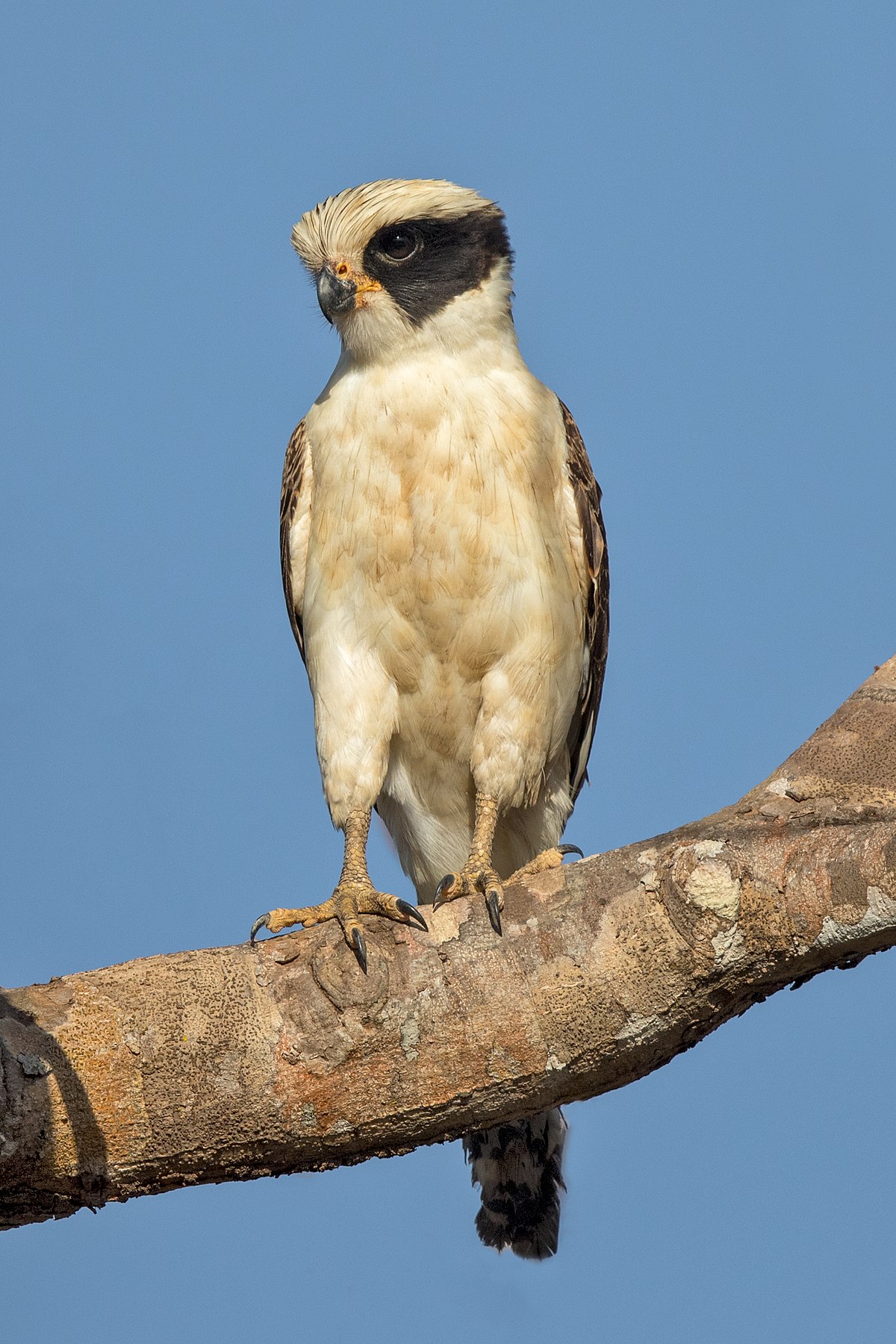
Wikipedia: Laughing falcon Source: WIKIPEDIA
1200px-Lachfalke.jpg
🔍
Never observed (yet!)
Description
Der Lachfalke (Herpetotheres cachinnans) oder Lachhabicht ist eine Vogelart aus der Familie der Falkenartigen.
[more]
Details
Profile Wikipedia Xeno-Canto YouTube

Wikipedia: Carunculated caracara Source: WIKIPEDIA
1200px-Ecuador_0698b_Carunculated_Caracara.jpg
🔍
Never observed (yet!)
Description
The carunculated caracara (Phalcoboenus carunculatus) is a species of bird of prey in the family Falconidae. It is found in páramo in the Andes of Ecuador and Colombia. It is generally uncommon to fairly common.
[more]
Details
Profile Wikipedia Xeno-Canto YouTube

Wikipedia: Mountain caracara Source: WIKIPEDIA
1200px-Phalcoboenus_megalopterus_in_Cordillera_Real%2C_Bolivia_03.jpg
🔍
Never observed (yet!)
Description
The mountain caracara (Phalcoboenus megalopterus, Spanish: corequenque) is a species of bird of prey in the family Falconidae. It is found in puna and páramo in the Andes, ranging from southern Ecuador, through Peru and Bolivia, to northern Argentina and Chile. It is generally uncommon to fairly common. It resembles the closely related Carunculated Caracara and White-throated Caracara, but unlike those species, its chest is uniform black. Juveniles are far less distinctive than the red-faced pied adults, being overall brown with dull pinkish-grey facial skin.
[more]
Details
Profile Wikipedia Xeno-Canto YouTube

Wikipedia: Black caracara Source: WIKIPEDIA
1200px-Black_Caracara_-_Chupacacao_Negro_%28Daptrius_ater%29_%2814909975447%29_%28cropped%29.jpg
🔍
Never observed (yet!)
Description
The black caracara (Daptrius ater) is a species of bird of prey in the family Falconidae found in Amazonian and French Guiana lowlands, commonly along rivers. They are locally referred to as Ger' futu busikaka[2] in the Republic of Suriname or juápipi {nẽjõmbʌ} by the Emberá of Panama and Colombia. Both these names refer to multiple bird species within Falconidae.[3] German-Brazilian ornithologist Helmut Sick also referred to this species as gavião-de-anta, literally translating to "tapir-hawk".[4]
[more]
Details

Wikipedia: Crested caracara Source: WIKIPEDIA
1200px-Schopfkarakara.jpg
🔍
Never observed (yet!)
Description
The crested caracara (Caracara plancus), is a bird of prey in the family Falconidae. As presently defined, the crested caracara is found in South America, the southern United States, including Florida, where it has been seen on the East coast as far as extreme eastern Seminole County, Florida (Lake Harney), where it is now considered a resident but listed as threatened. There have been reports of the crested caracara as far north as San Francisco, California.[2] and, in 2012, near Crescent City, California.[3] Some are believed to possibly be living in Nova Scotia, with numerous sightings throughout the 2010s.[4] In July 2016 a northern caracara was reported and photographed by numerous people in the upper peninsula of Michigan, just outside of Munising.[5][6][7] In June 2017, a northern caracara was sighted far north in St. George, New Brunswick, Canada.[8] A specimen was photographed in Woodstock, Vermont in March 2020.[citation needed] The species has recently become more common in central and north Texas and is generally common in south Texas and south of the US border.[citation needed] It can also be found (nesting) in the Southern Caribbean (e.g. Aruba, Curaçao and Bonaire)[citation needed], Mexico, and Central America. It was formerly placed in the genus Polyborus.
[more]
Details

Wikipedia: Red-throated caracara Source: WIKIPEDIA
Red-throated_Caracara.jpg
🔍
Never observed (yet!)
Description
The red-throated caracara (Ibycter americanus) is a social species of bird of prey in the family Falconidae. It is placed in the monotypic genus Ibycter, or sometimes united in Daptrius with the black caracara. Unique among caracaras, it mainly feeds on the larvae of bees and wasps, but also takes the adult insects and fruits and berries.[2]
[more]
Details

Chilean flamingo. 2019-02-15 17:02:42 Patagonia
First observed in Patagonia on 2019-02-15.
Description
Geography: This bird appears across the great seas in the following continents: Europe, South America.General: Deutschland: Brut-, seltener Zugvogel Bruten gehen auf ausgesetzte Tiere zurück; Population gilt als noch nicht eingebürgert
Details

Our first caribbean flamingos at Las Colorados - closeup. 2023-04-15 09:33:10 Yucatan
First observed in Yucatan on 2023-04-15.
Description
General:The American flamingo (Phoenicopterus ruber) is a large species of flamingo closely related to the greater flamingo and Chilean flamingo native to the Neotropics. It was formerly considered conspecific with the greater flamingo, but that treatment is now widely viewed (e.g. by the American and British Ornithologists' Unions) as incorrect due to a lack of evidence. It is also known as the Caribbean flamingo, although it is also present in the Galápagos Islands. It is the only flamingo that naturally inhabits North America.
[more]
Details
Profile Wikipedia Xeno-Canto YouTube

Wikipedia: Andean flicker Source: WIKIPEDIA
Colaptes_rupicola_20070123.jpg
🔍
Never observed (yet!)
Description
The Andean flicker (Colaptes rupicola) is a South American species of woodpecker. It is found in grassland, shrubland and Polylepis woodland at altitudes of 2,000–5,000 metres (6,600–16,400 ft) in the Puna ecoregion. Together with the campo flicker and ground woodpecker, it is one of the few largely terrestrial woodpeckers.
[more]
Details

Wikipedia: Golden-olive woodpecker Source: WIKIPEDIA
1200px-Golden-olive_Woodpecker.jpg
🔍
Never observed (yet!)
Description
The golden-olive woodpecker (Colaptes rubiginosus) is a resident breeding bird from Mexico south and east to Guyana, northwest Argentina, Trinidad and Tobago. It was formerly placed in the genus Piculus.[4] The scientific name rubiginosus means "full of rust", describing the color of the bird's wings and back.
[more]
Details

Wikipedia: Crimson-mantled woodpecker Source: WIKIPEDIA
Crimson-mantled_Woodpecker_-_Colombia_S4E2671.jpg
🔍
Never observed (yet!)
Description
The crimson-mantled woodpecker (Colaptes rivolii) is a bird species in the woodpecker family (Picidae). It was formerly placed in the genus Piculus but moved to the genus Colaptes after mitochondrial DNA sequencing.[2][3] Its scientific name, rivolii, honors French ornithologist François Victor Masséna, second Duke of Rivoli and third Prince of Essling.[4]
[more]
Details
Profile Wikipedia Xeno-Canto YouTube

Wikipedia: Spot-breasted woodpecker Source: WIKIPEDIA
Spot-breasted_Woodpecker_700.jpg
🔍
Never observed (yet!)
Description
The spot-breasted woodpecker (Colaptes punctigula) is a species of bird in the family Picidae.
It is found in South America in Bolivia, Brazil, Colombia, Ecuador, French Guiana, Peru, Suriname and Venezuela and also in eastern Panama of Central America.
Its natural habitats are subtropical or tropical moist lowland forests, subtropical or tropical mangrove forests and heavily degraded former forest.
[more]
Details

Smoky brown woodpecker, nature walk in the woods with Jacqueline at Ecotucan. 2023-04-02 11:16:18 Yucatan
First observed in Yucatan on 2023-04-02.
Description
The smoky-brown woodpecker (Leuconotopicus fumigatus) is a species of bird in subfamily Picinae of the woodpecker family Picidae. It is found in Argentina, Belize, Bolivia, Colombia, Costa Rica, Ecuador, El Salvador, Guatemala, Honduras, Mexico, Nicaragua, Panama, Peru, and Venezuela.[2]
[more]
Details
Profile Wikipedia Xeno-Canto YouTube

Lineated woodpecker cahal pech. 2018-02-04 15:57:04 Belize
First observed in Belize on 2018-02-04.
Description
The lineated woodpecker (Dryocopus lineatus) is a very large woodpecker which is a resident breeding bird from southern Mexico to northern Argentina and on Trinidad in the Caribbean.
[more]
Details
Description
The Lita woodpecker (Piculus litae) is a species of bird in the family Picidae.
It is found in western Colombia and northwestern Ecuador.
[more]
Details
Profile Wikipedia Xeno-Canto YouTube

Wikipedia: Golden-green woodpecker Source: WIKIPEDIA
Golden-green_Woodpecker_-_Dari%C3%A9n_-_Panama_%2848431577586%29.jpg
🔍
Never observed (yet!)
Description
The golden-green woodpecker (Piculus chrysochloros) is a species of bird in the family Picidae, the woodpeckers, piculets and wrynecks.
It is found in north-central South America, centered on the Amazon Basin in the countries of Argentina, Bolivia, Brazil, Ecuador, French Guiana, Guyana, Paraguay, Peru and Suriname. A disjunct region of the bird's range occurs in northwestern Colombia and Venezuela. A second disjunct group is found 1,500 km southeast of the Amazon Basin in the Brazilian states of Minas Gerais and Espírito Santo in an 800 km coastal strip.
[more]
Details

Wikipedia: Rufous-winged woodpecker Source: WIKIPEDIA
Flickr_-_Rainbirder_-_Rufous-winged_Woodpecker_%28Piculus_simplex%29_male.jpg
🔍
Never observed (yet!)
Description
The rufous-winged woodpecker (Piculus simplex) is a species of bird in the family Picidae. It is found in Costa Rica, Honduras, Nicaragua and Panama. Its natural habitat is subtropical or tropical moist lowland forests.
[more]
Details
Profile Wikipedia Xeno-Canto YouTube

Wikipedia: Yellow-throated woodpecker Source: WIKIPEDIA
Yellow-throated_woodpecker_%28Piculus_flavigula%29.jpg
🔍
Never observed (yet!)
Description
The yellow-throated woodpecker (Piculus flavigula) is a species of bird in the family Picidae, the woodpeckers, piculets, and wrynecks.
It is found in northern and central South America in Brazil and the entire Amazon Basin; also in the Guianas, and Bolivia, Colombia, Ecuador, French Guiana, Guyana, Peru, Suriname and Venezuela. Besides the Amazon Basin, it is found in the southeast basin in the adjoining Tocantins-Araguaia River drainage; on the east at the edge of its range there, it only occurs in the headwaters of the Tocantins, then recontinues at the joining of the Araguaia-Tocantins as it goes to the Atlantic Ocean.
[more]
Details
Profile Wikipedia Xeno-Canto YouTube

Wikipedia: Ecuadorian piculet Source: WIKIPEDIA
Ecuadorian_Piculet_-_Ecuador_S4E9348.jpg
🔍
Never observed (yet!)
Description
The Ecuadorian piculet (Picumnus sclateri) is a species of bird in the family Picidae. It is found in Ecuador and Peru.
[more]
Details
Profile Wikipedia Xeno-Canto YouTube

Wikipedia: Lafresnaye's piculet Source: WIKIPEDIA
Lafresnaye%E2%80%98sPiculet.jpg
🔍
Never observed (yet!)
Description
Lafresnaye's piculet (Picumnus lafresnayi) is a species of bird in the family Picidae. It is found in Brazil, Colombia, Ecuador, and Peru.
[more]
Details
Profile Wikipedia Xeno-Canto YouTube

Wikipedia: Olivaceous piculet Source: WIKIPEDIA
Picumnus_olivaceus_hembra_%2816567469923%29.jpg
🔍
Never observed (yet!)
Description
The olivaceous piculet (Picumnus olivaceus) is a species of bird in the family Picidae. Etymologically, piculet is as a double diminutive of the Latin picus, woodpecker,[2] see also Picus. In Greek, δρύοψ is woodpecker, which shares its roots with δρῦς, 'tree'; 'oak' and Druids.
[more]
Details
Profile Wikipedia Xeno-Canto YouTube
Description
The rufous-breasted piculet (Picumnus rufiventris) is a species of bird in the family Picidae. It is found in Bolivia, Brazil, Colombia, Ecuador, and Peru.
[more]
Details
Profile Wikipedia Xeno-Canto YouTube

Wikipedia: Yellow-tufted woodpecker Source: WIKIPEDIA
1200px-Melanerpes_cruentatus_Yellow-tufted_Woodpecker.jpg
🔍
Never observed (yet!)
Description
The yellow-tufted woodpecker (Melanerpes cruentatus) is a species of woodpecker. It is found in Bolivia, Brazil, Colombia, Ecuador, French Guiana, Guyana, Peru, Suriname, and Venezuela. Its natural habitats are subtropical or tropical moist lowland forests and heavily degraded former forest.[1]
[more]
Details
Profile Wikipedia Xeno-Canto YouTube

Wikipedia: Black-cheeked woodpecker Source: WIKIPEDIA
1200px-Black-cheeked_Woodpecker.jpg
🔍
Never observed (yet!)
Description
The black-cheeked woodpecker (Melanerpes pucherani) is a resident breeding bird from southeastern Mexico south to western Ecuador.
[more]
Details

Wikipedia: Crimson-bellied woodpecker Source: WIKIPEDIA
1200px-Campephilus_haematogasterPicideesP009AA.jpg
🔍
Never observed (yet!)
Description
The crimson-bellied woodpecker (Campephilus haematogaster) is a species of bird in the family Picidae.
It is found in Colombia, Ecuador, Panama, and Peru.
Its natural habitats are subtropical or tropical moist lowland forest and subtropical or tropical moist montane forest.
[more]
Details
Profile Wikipedia Xeno-Canto YouTube
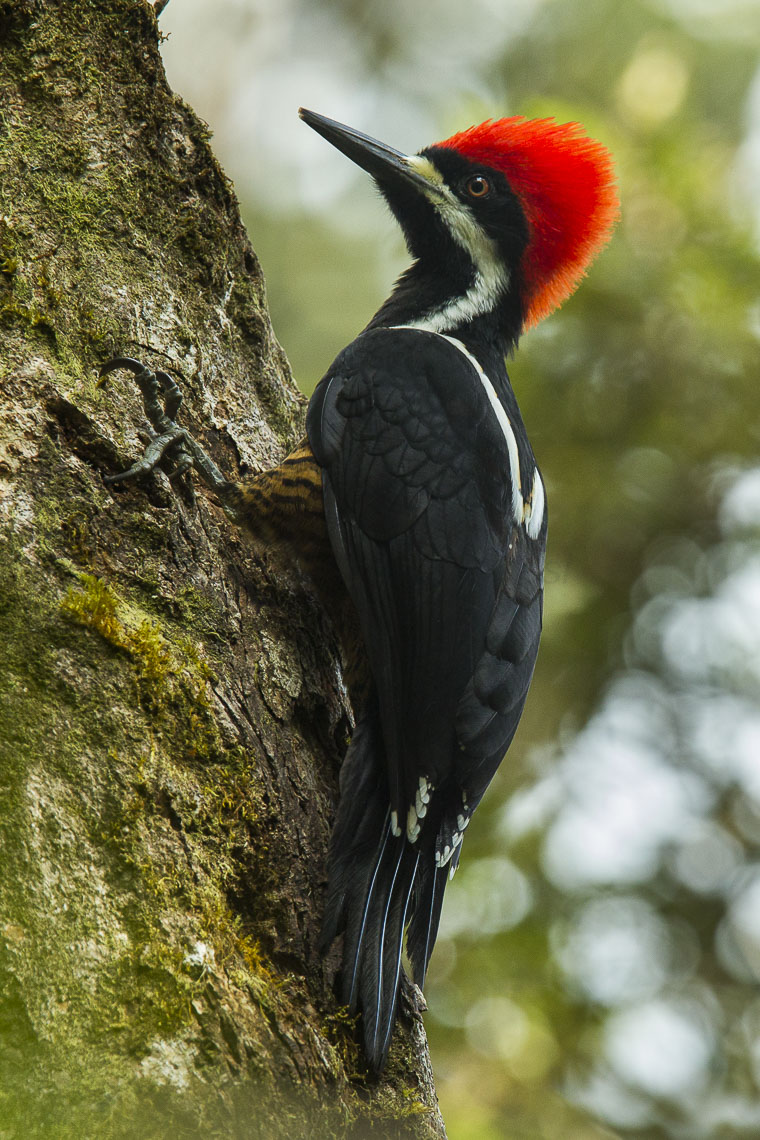
Wikipedia: Powerful woodpecker Source: WIKIPEDIA
Powerful_Woodpecker_-_Ecuador_S4E2767.jpg
🔍
Never observed (yet!)
Description
The powerful woodpecker (Campephilus pollens) is a species of bird in the family Picidae. It is found in Colombia, Ecuador, Peru, and Venezuela. This little-known species is a large woodpecker, 33–38 cm (13–15 in) long, and is a close relative to the North American ivory-billed woodpecker.[2]
[more]
Details
Profile Wikipedia Xeno-Canto YouTube

Wikipedia: Red-necked woodpecker Source: WIKIPEDIA
Campephilus_rubricollis_-_Red-necked_Woodpecker.JPG
🔍
Never observed (yet!)
Description
The red-necked woodpecker (Campephilus rubricollis) is a species of bird in the family Picidae.
It is found in Bolivia, Brazil, Colombia, Ecuador, French Guiana, Guyana, Peru, Suriname, and Venezuela.
Its natural habitats are subtropical or tropical moist lowland forest and subtropical or tropical moist montane forest.
[more]
Details
Profile Wikipedia Xeno-Canto YouTube

Wikipedia: Guayaquil woodpecker Source: WIKIPEDIA
1200px-Guayaquil_woodpecker_%28Campephilus_gayaquilensis%29_%286995906660%29.jpg
🔍
Never observed (yet!)
Description
The Guayaquil woodpecker (Campephilus gayaquilensis) is a species of bird in the family Picidae.
It is found in southern Colombia, Ecuador and northern Peru.
Its natural habitats are subtropical or tropical dry forests and subtropical or tropical moist lowland forests.
It is threatened by habitat loss.
[more]
Details
Profile Wikipedia Xeno-Canto YouTube

Wikipedia: Crimson-crested woodpecker Source: WIKIPEDIA
Crimson-crestewoodpecker.jpg
🔍
Never observed (yet!)
Description
The crimson-crested woodpecker (Campephilus melanoleucos) is a very large woodpecker which is a resident breeding bird from Panama south to northern border regions of Argentina, and on Trinidad.
[more]
Details
Profile Wikipedia Xeno-Canto YouTube

Wikipedia: Cream-colored woodpecker Source: WIKIPEDIA
Celeus_flavus%2C_Cream-colored_Woodpecker.jpg
🔍
Never observed (yet!)
Description
The cream-colored woodpecker (Celeus flavus) is unmistakably recognizable by its pale but distinct yellow plumage and beak, long erect crest, dark brown wings and black tail. The male is differentiated by the female by its thick bright red malar stripe. The yellow plumage may darken to a browner or darker tone if soiled. The cream-colored woodpecker is 24–26 centimetres (9.4–10.2 in) in height and weighs 95–130 grams (3.4–4.6 oz).
[more]
Details
Profile Wikipedia Xeno-Canto YouTube
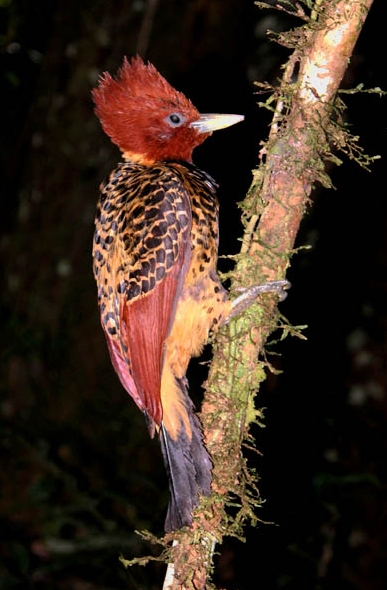
Wikipedia: Rufous-headed woodpecker Source: WIKIPEDIA
Celeus_spectabilis.jpg
🔍
Never observed (yet!)
Description
The rufous-headed woodpecker (Celeus spectabilis) is a species of bird in the family Picidae. It formerly included Kaempfer's woodpecker as a subspecies.
[more]
Details
Profile Wikipedia Xeno-Canto YouTube

Wikipedia: Scale-breasted woodpecker Source: WIKIPEDIA
1200px-Celeus_grammicus_-_Scaly-breasted_woodpecker_%28female%29%2C_Manacapuru%2C_Amazonas%2C_Brazil.jpg
🔍
Never observed (yet!)
Description
The scaly-breasted woodpecker (Celeus grammicus), also known as the scale-breasted woodpecker,[2] is a bird species in the family Picidae. It is found in Bolivia, Brazil, Colombia, Ecuador, French Guiana, Peru, and Venezuela. Its natural habitat is subtropical or tropical moist lowland forests.[1]
[more]
Details
Profile Wikipedia Xeno-Canto YouTube

Wikipedia: Chestnut woodpecker Source: WIKIPEDIA
1200px-Celeus_elegans_Chestnut_Woodpecker.jpg
🔍
Never observed (yet!)
Description
The chestnut woodpecker (Celeus elegans) is a resident breeding bird in South America from Colombia, Venezuela and the Guianas south to Ecuador, Bolivia and northern and western Brazil, and on Trinidad. It is found in a range of habitat types including rainforest, gallery forest, seasonally flooded forest, mangrove woodland, swamps, plantations and wooded savannah.[3] It is a generally uncommon bird, and threatened by habitat loss, but it has a very wide range, and the International Union for Conservation of Nature has assessed its conservation status as being of least concern.[1]
[more]
Details
Profile Wikipedia Xeno-Canto YouTube

Wikipedia: Cinnamon woodpecker Source: WIKIPEDIA
1200px-Cinnamon_woodpecker_%28Celeus_loricatus_mentalis%29_female_making_hole_in_tree.jpg
🔍
Never observed (yet!)
Description
The cinnamon woodpecker (Celeus loricatus) is a species of bird in the family Picidae.
[more]
Details
Profile Wikipedia Xeno-Canto YouTube

Wikipedia: Ringed woodpecker Source: WIKIPEDIA
1200px-Celeus_torquatus_-_Ringed_woodpecker_%28male%29.jpg
🔍
Never observed (yet!)
Description
The ringed woodpecker (Celeus torquatus) is a species of bird in the family Picidae that contains the woodpeckers, piculets, and wrynecks. It is found in northern Brazil, French Guiana, Guyana, Suriname, and western Venezuela. Its natural habitats are subtropical or tropical moist lowland forests and subtropical or tropical swamps.[1]
[more]
Details
Profile Wikipedia Xeno-Canto YouTube

Wikipedia: Yellow-vented woodpecker Source: WIKIPEDIA
Yellow-vented_Woodpecker_-_Colombia_S4E8871_%2816223080170%29.jpg
🔍
Never observed (yet!)
Description
The yellow-vented woodpecker (Veniliornis dignus) is a species of bird in the family Picidae. It is found in Colombia, Ecuador, Peru, and Venezuela. Its natural habitat is subtropical or tropical moist montane forests.
[more]
Details
Profile Wikipedia Xeno-Canto YouTube

Wikipedia: Red-rumped woodpecker Source: WIKIPEDIA
Red-Rumped_Woodpecker_%28Veniliornis_kirkii%29.jpg
🔍
Never observed (yet!)
Description
The red-rumped woodpecker (Veniliornis kirkii) is a resident breeding bird from Costa Rica south and east to Ecuador, Venezuela, Trinidad and Tobago.
[more]
Details
Profile Wikipedia Xeno-Canto YouTube
Description
The Chocó woodpecker (Veniliornis chocoensis) is a species of bird in the family Picidae. It is found in Colombia and Ecuador. Its natural habitat is subtropical or tropical moist lowland forests. It is threatened by habitat loss from deforestation.[1]
[more]
Details
Profile Wikipedia Xeno-Canto YouTube

Wikipedia: Bar-bellied woodpecker Source: WIKIPEDIA
Bar-bellied_Woodpecker_-_Ecuador_S4E2727_%2816222857138%29.jpg
🔍
Never observed (yet!)
Description
The bar-bellied woodpecker (Veniliornis nigriceps) is a species of bird in the family Picidae.
[more]
Details
Profile Wikipedia Xeno-Canto YouTube

Wikipedia: Scarlet-backed woodpecker Source: WIKIPEDIA
Scarlet-backed_Woodpecker_-_Ecuador_S4E7608.jpg
🔍
Never observed (yet!)
Description
The scarlet-backed woodpecker (Veniliornis callonotus) is a species of bird in the family Picidae.
It is found in Colombia, Ecuador and northern Peru where its natural habitats are subtropical or tropical dry forests and subtropical or tropical dry shrubland. It is listed by the International Union for Conservation of Nature as being a species of "least concern".
[more]
Details
Profile Wikipedia Xeno-Canto YouTube

Wikipedia: Red-stained woodpecker Source: WIKIPEDIA
Veniliornis_affinis_-_Red-stained_Woodpecker_%28male%29.JPG
🔍
Never observed (yet!)
Description
The red-stained woodpecker (Veniliornis affinis) is a species of bird in the family Picidae.
It is found in eastern Brazil and the Amazon Basin.
Its natural habitat is subtropical or tropical moist lowland forest.
[more]
Details
Profile Wikipedia Xeno-Canto YouTube

Wikipedia: Little woodpecker Source: WIKIPEDIA
Veniliornis_passerinus.jpg
🔍
Never observed (yet!)
Description
The little woodpecker (Veniliornis passerinus) is a species of bird in the family Picidae, the woodpeckers, piculets, and wrynecks. It is found in a wide range of wooded habitats in a large part of South America east of the Andes, and generally common. Unlike other similar and comparably sized members of the genus Veniliornis, the little woodpecker lacks a contrasting yellow nape.
[more]
Details

Wikipedia: Crimson-rumped toucanet Source: WIKIPEDIA
CRTO_Matthew-Gable.JPG
🔍
Never observed (yet!)
Description
The crimson-rumped toucanet (Aulacorhynchus haematopygus) is a species of bird in the family Ramphastidae. It is found in humid Andean forests in Ecuador, Colombia and Venezuela. Its plumage is overall green (often faintly tinged blue), except for a maroon-red rump and tail-tip. The bill is black and maroon with a white band at the base. It is about 35 cm (14 in) long and weighs from 141–232 grams (5–8.2 oz.).
[more]
Details
Profile Wikipedia Xeno-Canto YouTube

Wikipedia: Chestnut-tipped toucanet Source: WIKIPEDIA
1200px-Chestnut-tipped_Toucanet.JPG
🔍
Never observed (yet!)
Description
The chestnut-tipped toucanet (Aulacorhynchus derbianus) is a South American species of bird in the family Ramphastidae. It occurs in humid highland forests along the east Andean slope from southernmost Colombia to central Bolivia. It was formerly considered conspecific with Whitely's toucanet.
[more]
Details
Profile Wikipedia Xeno-Canto YouTube

Wikipedia: Southern emerald-toucanet Source: WIKIPEDIA
1200px-Aulacorhynchus_albivitta_%2814458390459%29.jpg
🔍
Never observed (yet!)
Description
The white-throated toucanet (Aulacorhynchus albivitta) is a near-passerine bird found in the Andes from western Venezuela, through Colombia to northern Ecuador.
[more]
Details

Wikipedia: Black-billed mountain-toucan Source: WIKIPEDIA
1200px-Black-billed-Mountain-Toucan.jpg
🔍
Never observed (yet!)
Description
The black-billed mountain toucan (Andigena nigrirostris) is a species of bird in the family Ramphastidae. It is found in humid highland forests in the Andes of western Venezuela, Colombia, Ecuador and far northern Peru. It is the only mountain-toucan with a white throat. Despite its name, only the nominate subspecies has an entirely black bill, while both A. n. occidentalis and A. n. spilorhyncha have bills that are coloured chestnut and black.
[more]
Details

Wikipedia: Grey-breasted mountain-toucan Source: WIKIPEDIA
1200px-Gray-breasted_Mountain-Toucan_%28Andigena_hypoglauca%29.jpg
🔍
Never observed (yet!)
Description
The grey-breasted mountain toucan (Andigena hypoglauca) is a species of bird in the family Ramphastidae found in humid highland forest, often at the tops of the trees, in the Andes of southern Colombia, Ecuador and Peru. It remains locally fairly common, but has declined due to habitat loss.[2]
[more]
Details

Wikipedia: Plate-billed mountain toucan Source: WIKIPEDIA
1200px-Plate-billed_Mountain-toucan_%2847792081302%29.jpg
🔍
Never observed (yet!)
Description
The plate-billed mountain toucan (Andigena laminirostris) is a species of bird in the family Ramphastidae. It is native to the west slope of Ecuador and extreme southern Colombia, where it lives in the high-altitude humid mountain forests of the Andes. It is also known as the laminated hill-toucan, laminated mountain-toucan, and plain-billed mountain-toucan.
[more]
Details
Profile Wikipedia Xeno-Canto YouTube

Wikipedia: Gilded barbet Source: WIKIPEDIA
1200px-F_de_Castelnau-oiseauxPl8.jpg
🔍
Never observed (yet!)
Description
The gilded barbet (Capito auratus) is a species of bird in the family Capitonidae, the New World barbets, and are close relatives of the toucans.
[more]
Details
Profile Wikipedia Xeno-Canto YouTube

Wikipedia: Five-colored barbet Source: WIKIPEDIA
1200px-Capito_quinticolor.jpg
🔍
Never observed (yet!)
Description
The five-colored barbet (Capito quinticolor) is a species of bird in the family Capitonidae, the New World barbets. It is found in Colombia and Ecuador.[2]
[more]
Details
Profile Wikipedia Xeno-Canto YouTube

Wikipedia: Orange-fronted barbet Source: WIKIPEDIA
1200px-Capitosquamatus.JPG
🔍
Never observed (yet!)
Description
The orange-fronted barbet (Capito squamatus) is a species of bird in the family Capitonidae. It is found Ecuador and Colombia.[2]
[more]
Details
Profile Wikipedia Xeno-Canto YouTube

Wikipedia: Scarlet-crowned barbet Source: WIKIPEDIA
Capito_aurovirens.jpg
🔍
Never observed (yet!)
Description
The scarlet-crowned barbet (Capito aurovirens) is a species of bird in the family Capitonidae, the New World barbets. It is found in Amazonian Brazil, Colombia, Ecuador, and Peru.[2][3]
[more]
Details
Profile Wikipedia Xeno-Canto YouTube
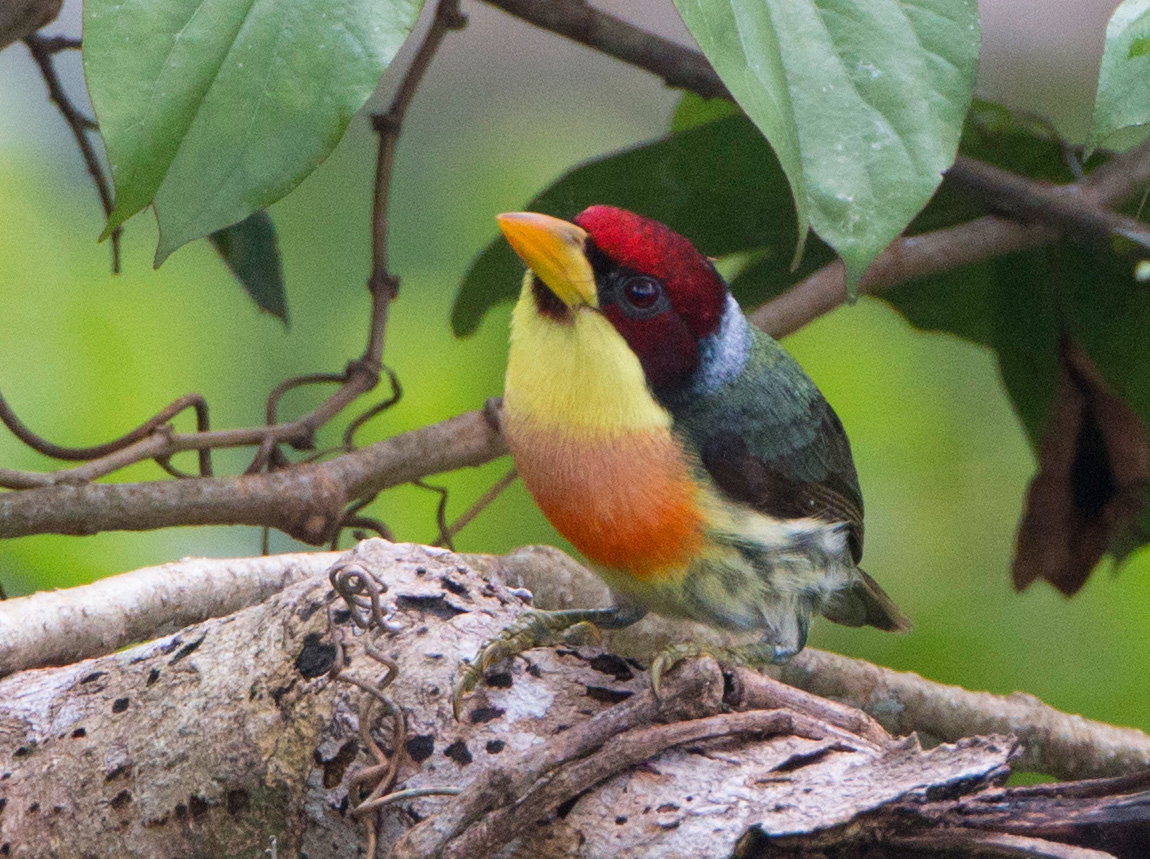
Wikipedia: Lemon-throated barbet Source: WIKIPEDIA
Lemon-throated_Barbet_%28Eubucco_richardsoni%29.jpg
🔍
Never observed (yet!)
Description
The lemon-throated barbet (Eubucco richardsoni) is a species of bird in the New World barbet family Capitonidae. It is found in Bolivia, Brazil, Colombia, Ecuador, and Peru.[3]
[more]
Details
Profile Wikipedia Xeno-Canto YouTube

Wikipedia: Red-headed barbet Source: WIKIPEDIA
1200px-Male_Red-headed_Barbet_in_Ecuador_%2814619063547%29.jpg
🔍
Never observed (yet!)
Description
The red-headed barbet (Eubucco bourcierii) is a species of bird in the family Capitonidae. It is found in humid highland forest in Costa Rica and Panama, as well as the Andes in western Venezuela, Colombia, Ecuador and far northern Peru. The diet of the red-headed barbet may include bananas and various other fruits.[2]
[more]
Details
Profile Wikipedia Xeno-Canto YouTube

Wikipedia: Lettered aracari Source: WIKIPEDIA
1200px-Lettered_Ara%C3%A7ari.jpg
🔍
Never observed (yet!)
Description
The lettered aracari (Pteroglossus inscriptus), is a species of bird in the toucan family.
[more]
Details
Profile Wikipedia Xeno-Canto YouTube

Tikal collared aracari. 2018-02-07 12:38:40 Guatemala
First observed in Guatemala on 2018-02-07.
Description
The collared aracari or collared araçari (Pteroglossus torquatus) is a toucan, a near-passerine bird. It breeds from southern Mexico(North America) to Panama; also Ecuador, Colombia, Venezuela and Costa Rica.
[more]
Details
Profile Wikipedia Xeno-Canto YouTube

Wikipedia: Many-banded aracari Source: WIKIPEDIA
1200px-Many-banded_Aracari%2C_Ecuador.jpg
🔍
Never observed (yet!)
Description
The many-banded aracari, or many-banded araçari (Pteroglossus pluricinctus), is a species of bird in the family Ramphastidae.[2][3]
[more]
Details
Description
Der Rotkropfarassari (Pteroglossus azara) ist eine Vogelart aus der Familie der Tukane. Die Art, die überwiegend in Wäldern der Tiefebene verbreitet ist, kommt ausschließlich in Südamerika vor. Die IUCN stuft den Rotkropfarassari als nicht gefährdet (least concern) ein.
[more]
Details
Profile Wikipedia Xeno-Canto YouTube

Wikipedia: Chestnut-eared aracari Source: WIKIPEDIA
1200px-Aracari_Castanho.jpg
🔍
Never observed (yet!)
Description
The chestnut-eared aracari, or chestnut-eared araçari (Pteroglossus castanotis), is a bird native to central and south-eastern South America. It belongs to the toucan and aracari family (Ramphastidae). The chestnut-eared aracari is a larger, more colorful bird than the black-necked aracari, which it otherwise resembles.
[more]
Details
Profile Wikipedia Xeno-Canto YouTube
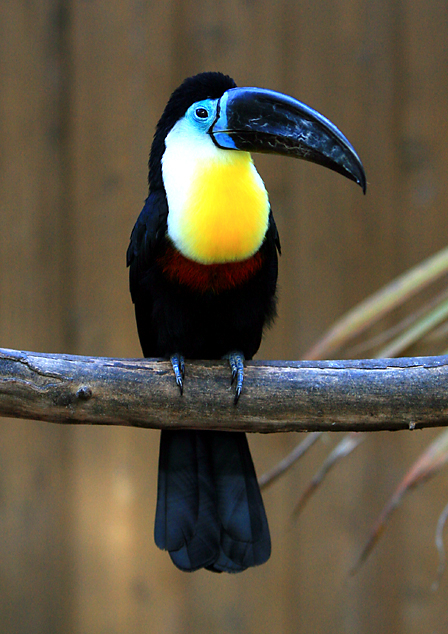
Wikipedia: Channel-billed toucan Source: WIKIPEDIA
Ramphastos_vitellinus_-Matsue_Vogel_Park-8a-4c.jpg
🔍
Never observed (yet!)
Description
The channel-billed toucan (Ramphastos vitellinus) is a near-passerine bird in the family Ramphastidae found on the Caribbean island of Trinidad and in tropical South America as far south as southern Brazil and central Bolivia.
[more]
Details
Profile Wikipedia Xeno-Canto YouTube

Wikipedia: Yellow-throated toucan Source: WIKIPEDIA
1200px-Black-mandibled_Toucan_2012.jpg
🔍
Never observed (yet!)
Description
The yellow-throated toucan (Ramphastos ambiguus) is a large toucan in the family Ramphastidae found in Central and northern South America.
[more]
Details

Wikipedia: Red-billed toucan Source: WIKIPEDIA
1200px-Red-billed_toucan_31l07.JPG
🔍
Never observed (yet!)
Description
The white-throated toucan (Ramphastos tucanus) is a near-passerine bird in the family Ramphastidae found in South America throughout the Amazon Basin including the adjacent Tocantins and Araguaia River drainage. It prefers tropical humid forest, but also occurs in woodland and locally in riverine forest within cerrado.
This bird can be found in Bolivia in the Beni Departement, notably in the city of Riberalta and in the close by Aquicuana Reserve.
[more]
Details
Profile Wikipedia Xeno-Canto YouTube

Wikipedia: Choco toucan Source: WIKIPEDIA
1200px-Choco_toucan.jpg
🔍
Never observed (yet!)
Description
The Choco toucan (Ramphastos brevis) is a near-passerine bird in the family Ramphastidae found in humid lowland and foothill forests on the Pacific slope of Colombia and Ecuador. Within its range, extensive habitat destruction is taking place, but it remains fairly common locally.
[more]
Details
Profile Wikipedia Xeno-Canto YouTube

Wikipedia: Golden-collared toucanet Source: WIKIPEDIA
1200px-Selenidera_reinwardtii_langsdorfii_-_Golden-collared_toucanet_%28male%29%3B_Careiro%2C_Amazonas%2C_Brazil.jpg
🔍
Never observed (yet!)
Description
The golden-collared toucanet (Selenidera reinwardtii) is a species of bird in the family Ramphastidae. It is found in the western Amazon rainforest in South America.
[more]
Details
Profile Wikipedia Xeno-Canto YouTube

Wikipedia: Yellow-eared toucanet Source: WIKIPEDIA
1200px-Yellow-eared_Toucanet.jpg
🔍
Never observed (yet!)
Description
The yellow-eared toucanet (Selenidera spectabilis) is a species of bird in the family Ramphastidae found in humid forests of Central America and the Chocó. Cassin's aracari is an alternate name for the yellow-eared toucanet. A somewhat aberrant member of the genus Selenidera, it is relatively large (total length approximately 38 cm [15 in]) and the plumage of the sexes only differ in that the male has a yellow auricular streak, while the female has a brown crown. It weighs 175-245 grams (6.2-8.7 oz.)[2]
[more]
Details
Profile Wikipedia Xeno-Canto YouTube

Wikipedia: Toucan barbet Source: WIKIPEDIA
1200px-Toucan_Barbet_%2823405007136%29.jpg
🔍
Never observed (yet!)
Description
The toucan barbet (Semnornis ramphastinus) is a barbet native to western Ecuador and Colombia. Along with the prong-billed barbet, it forms the family Semnornithidae, and is closely related to the toucans. It is a medium-sized barbet with a robust yellow bill. It has striking plumage, having a black head with grey throat and nape, red breast and upper belly, yellow lower belly and grey wings and tail.
[more]
Details
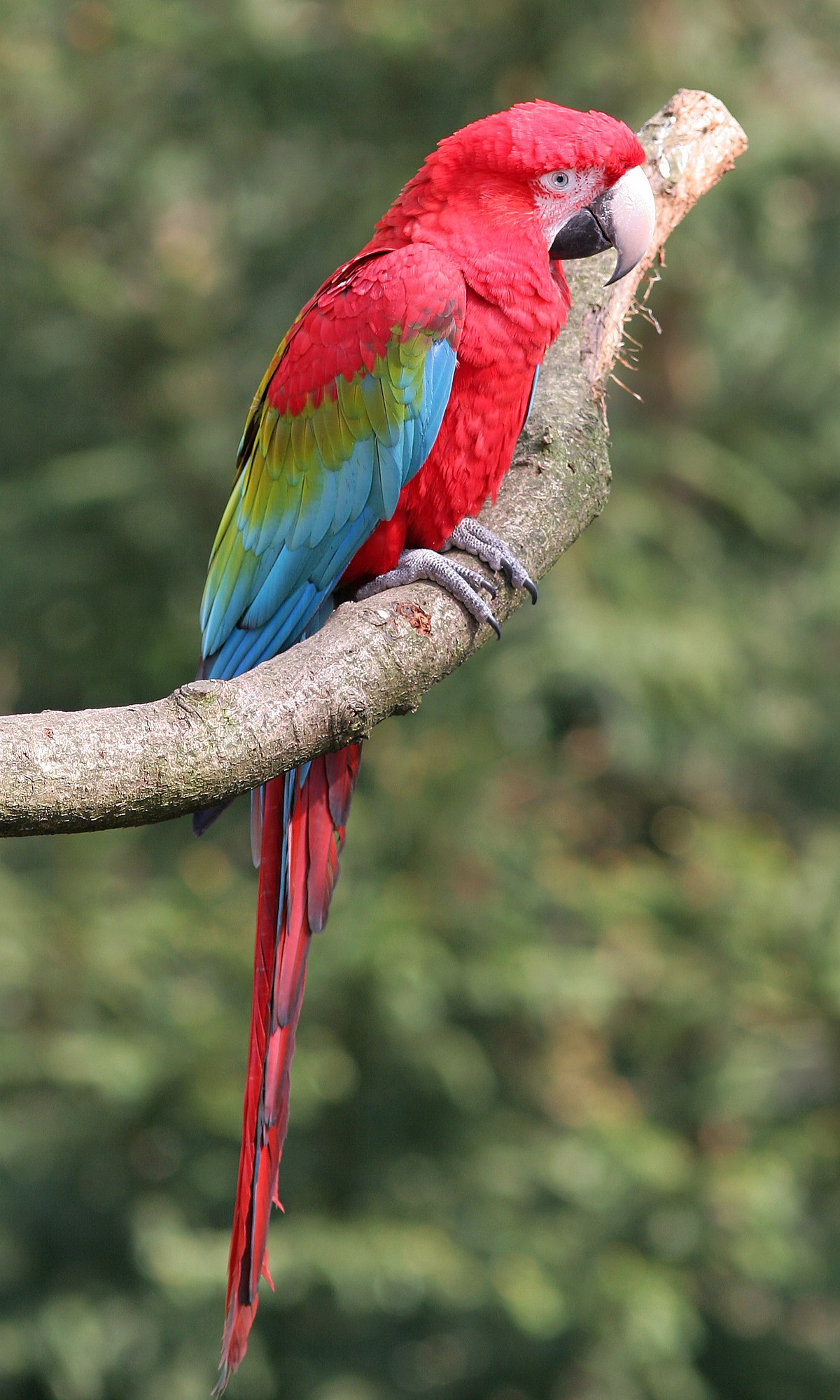
Wikipedia: Red-and-green macaw Source: WIKIPEDIA
1200px-Ara_chloropterus_-Apenheul_Primate_Park_-Netherlands-8a.jpg
🔍
Never observed (yet!)
Description
The red-and-green macaw (Ara chloropterus), also known as the green-winged macaw,[2] is a large, mostly-red macaw of the genus Ara.
[more]
Details
Description
Der Bechsteinara[1] oder Große Soldatenara (Ara ambiguus) ist ein Vogel aus der Familie der Eigentlichen Papageien (Psittacidae) und der Gattung der Eigentlichen Aras (Ara).
[more]
Details

Wikipedia: Military macaw Source: WIKIPEDIA
1200px-Ara_militaris_-London_Zoo-8a.jpg
🔍
Never observed (yet!)
Description
Psittacus militaris Linnaeus, 1766
[more]
Details

La Tarde scarlet macaws in tree. 2018-03-09 06:34:58 Costa Rica
First observed in Costa Rica on 2018-03-09.
Description
The scarlet macaw (Ara macao) is a large red, yellow, and blue Central and South American parrot, a member of a large group of Neotropical parrots called macaws. It is native to humid evergreen forests of tropical Central and South America. Its range extends from south-eastern Mexico to the Peruvian Amazon, Ecuador, Colombia, Bolivia, Venezuela and Brazil in lowlands of 500 m (1,600 ft) (at least formerly) up to 1,000 m (3,300 ft), as well as the Pacific island of Coiba. Formerly, it ranged north to southern Tamaulipas. In some areas, it has suffered local extinction because of habitat destruction, or capture for the parrot trade, but in other areas, it remains fairly common. It is the national bird of Honduras. Like its relative the blue-and-yellow macaw, scarlet macaws are popular birds in aviculture as a result of their striking plumage.
[more]
Details

Wikipedia: Blue-and-yellow macaw Source: WIKIPEDIA
1200px-Ara_ararauna_Luc_Viatour.jpg
🔍
Never observed (yet!)
Description
The blue-and-yellow macaw (Ara ararauna), also known as the blue-and-gold macaw, is a large South American parrot with mostly blue top parts and light orange underparts, with gradient hues of green on top of its head. It is a member of the large group of neotropical parrots known as macaws. It inhabits forest (especially varzea, but also in open sections of terra firme or unflooded forest), woodland and savannah of tropical South America. They are popular in aviculture because of their striking color, ability to talk, ready availability in the marketplace, and close bonding to humans.
[more]
Details
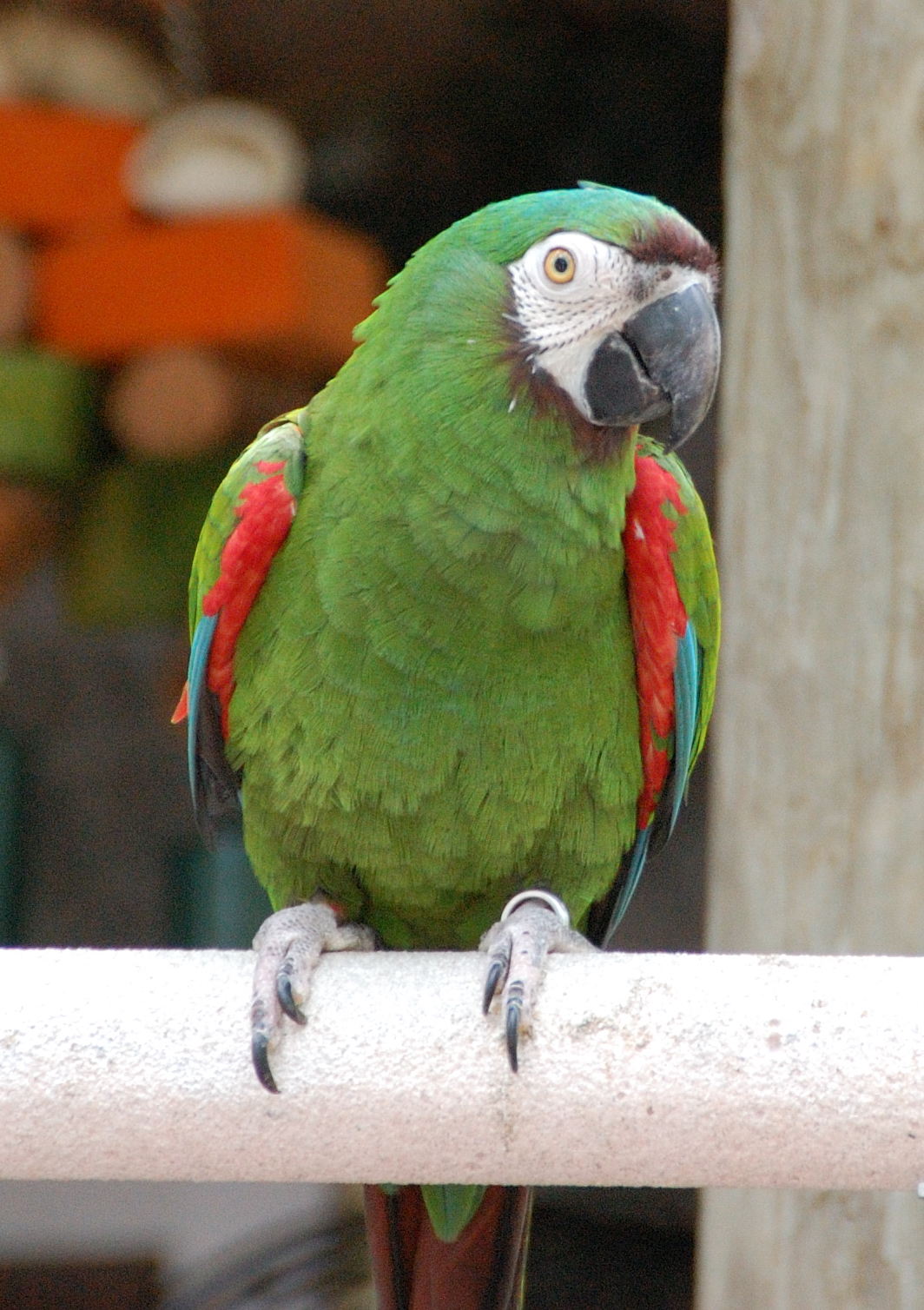
Wikipedia: Chestnut-fronted macaw Source: WIKIPEDIA
Chestnut-fronted_Macaw_%28Ara_severa%29_-Southwicks_Zoo_c.jpg
🔍
Never observed (yet!)
Description
The chestnut-fronted macaw or severe macaw (Ara severus) is one of the largest of the mini-macaws. It reaches a size of around 45 cm (18 in) of which around half is the length of the tail.
[more]
Details

Probably red-lored amazons flying gamboa. 2020-02-19 17:41:24 Panama
First observed in Panama on 2020-02-19.
Description
It's hard to overlook this parrot because of the incredible racket they make! In Manzanilla, Costa Rica, small groups of them (more properly called pandemoniums) flew past our house every morning and evening.General:
The red-lored amazon or red-lored parrot (Amazona autumnalis) is a species of amazon parrot, native to tropical regions of the Americas, from eastern Mexico south to Ecuador where it occurs in humid evergreen to semi-deciduous forests up to 1,100 m altitude. It is absent from the Pacific side of Central America north of Costa Rica. Not originally known from El Salvador, a pair - perhaps escaped from captivity - nested successfully in 1995 and 1996 in the outskirts of San Salvador[2] and the species might expand its range permanently into that country in the future.[3] This species has also established feral populations in several California cities.[4]
[more]
Details

Wikipedia: Festive parrot Source: WIKIPEDIA
Amazona_festiva_bodini_-Tulsa_Zoo-8a.jpg
🔍
Never observed (yet!)
Description
The festive amazon (Amazona festiva), also known as the festive parrot, is a species of parrot in the family Psittacidae. It is found in Brazil, Colombia, Ecuador, Bolivia, Guyana, Peru, and Venezuela. It is associated with forest (especially Várzea) and woodland growing near major rivers. Locally it is also found in coastal mangroves (primarily in Amapá). There are two subspecies; A. f. festiva and A. f. bodini.
[more]
Details
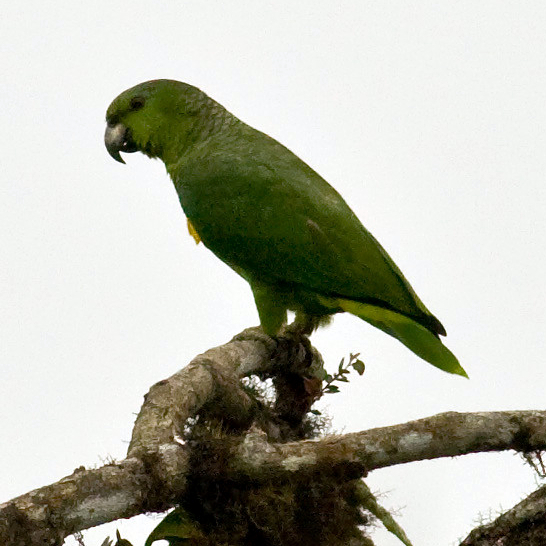
Wikipedia: Scaly-naped parrot Source: WIKIPEDIA
Amazona_mercenaria_-Ecuador_-Andes-8-4c.jpg
🔍
Never observed (yet!)
Description
The scaly-naped amazon (Amazona mercenarius), also known as the scaly-naped parrot, mercenary amazon, Tschudi's amazon, mountain parrot, or gray-naped amazon is a species of parrot in the family Psittacidae.
It is found along the Andes in the northern part of South America.
Its natural habitats are subtropical or tropical moist lowland forest and subtropical or tropical moist montane forest.
[more]
Details

Wikipedia: Yellow-crowned parrot Source: WIKIPEDIA
Yellow-crowned_Amazon_%28Amazona_ochrocephala%29_-Well_Place_Zoo-4c.jpg
🔍
Never observed (yet!)
Description
The yellow-crowned amazon or yellow-crowned parrot (Amazona ochrocephala) is a species of parrot native to tropical South America, Panama and Trinidad and Tobago. The taxonomy is highly complex and the yellow-headed (A. oratrix) and yellow-naped amazon (A. auropalliata) are sometimes considered subspecies of the yellow-crowned amazon. Except in the taxonomic section, the following deals only with the nominate group (including subspecies xantholaema, nattereri and panamensis).They are found in the Amazon basin.
[more]
Details

Possibly mealy parrots in Manzanillo, Costa Rica. 2020-03-12 17:25:08 Manzanillo
First observed in Manzanillo on 2020-03-12.
Description
Die Mülleramazone (Amazona farinosa), auch Müller-Amazone geschrieben, ist eine Papageienart aus der Unterfamilie der Neuweltpapageien. Die Grundfärbung des Gefieders dieser 38 Zentimeter groß werdenden Amazonenart ist grün, wobei die Körperoberseite leicht bläulich überhaucht ist. Einzelne Individuen weisen einen deutlich ausgeprägten gelben Scheitelfleck auf. Bei anderen ist dieser Scheitelfleck auf wenige Federn begrenzt. Kopfoberseite, der Nacken sowie die Federn am Hals sind breit graublau gesäumt und weisen violettschwarze Säume auf. Die Vögel weisen keinen Geschlechtsdimorphismus auf. Sie wiegen zwischen 535 und 766 Gramm.[1]
[more]
Details

Wikipedia: Orange-winged parrot Source: WIKIPEDIA
Amazona_amazonica_%281%29.jpg
🔍
Never observed (yet!)
Description
The orange-winged amazon (Amazona amazonica), also known locally as orange-winged parrot and loro guaro, is a large amazon parrot. It is a resident breeding bird in tropical South America, from Colombia, Trinidad and Tobago south to Peru, Bolivia and central Brazil. Its habitat is forest and semi-open country. Although common, it is persecuted as an agricultural pest and by capture for the pet trade (over 66,000 captured from 1981 to 1985). It is also hunted as a food source. Introduced breeding populations have been reported in Puerto Rico[2] and Tenerife in the Canary Islands.[3]
[more]
Details

Wikipedia: Dusky-headed parakeet Source: WIKIPEDIA
1200px-Aratinga_weddellii_-Beale_Park%2C_Reading%2C_Berkshire%2C_England-8a-4c.jpg
🔍
Never observed (yet!)
Description
The dusky-headed parakeet (Aratinga weddellii), also known as Weddell's conure or dusky-headed conure in aviculture, is a small green Neotropical parrot with dusty grey head found in wooded habitats in the western Amazon basin of South America. Its range extends from southeastern Colombia south through eastern Ecuador, eastern Peru and southwest Amazonian Brazil, to central Bolivia. It prefers semiopen habitats such as várzea, forest edge, and forest remnants, but can also be found in coffee plantations. It is generally common and its habitat preference makes it less vulnerable than many other Amazonian species. Consequently, it is considered to be of least concern by BirdLife International and IUCN.
[more]
Details

Wikipedia: Bronze-winged parrot Source: WIKIPEDIA
1200px-Bronze-winged_Parrot_%28Pionus_chalcopterus%29.jpg
🔍
Never observed (yet!)
Description
The bronze-winged parrot (Pionus chalcopterus) is a medium-sized pionus parrot 28 cm (11 in) long. It is a short-tailed stocky parrot found in forest and woodland in north-western South America.
[more]
Details
Profile Wikipedia Xeno-Canto YouTube
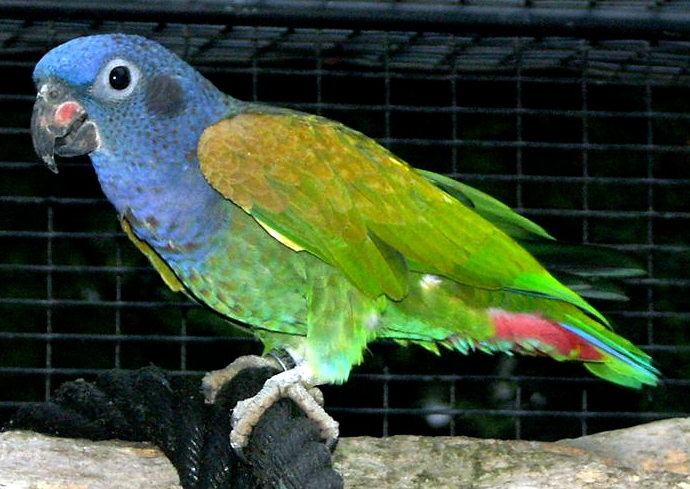
Wikipedia: Blue-headed parrot Source: WIKIPEDIA
Pionus_menstruus_-in_captivity.jpg
🔍
Never observed (yet!)
Description
The blue-headed parrot, also known as the blue-headed pionus (Pionus menstruus) is a medium-sized parrot of about 27 cm in length. The body is mostly green, with a blue head and neck, and red undertail coverts.[2] It is a resident in tropical and subtropical South America and southern Central America, from Costa Rica, Venezuela and Trinidad south to Bolivia and Brazil.
[more]
Details
Profile Wikipedia Xeno-Canto YouTube

Wikipedia: Speckle-faced parrot Source: WIKIPEDIA
Pionus_tumultuosus_69270129_%28cropped%29.jpg
🔍
Never observed (yet!)
Description
The speckle-faced parrot (Pionus tumultuosus) is a South American species of parrot from the humid Andean forests from Colombia, through Ecuador and Peru, to Bolivia. It is sometimes split into two species, in which case the southern Pionus tumultuosus retains the common name speckle-faced parrot or is renamed plum-crowned parrot or plum-crowned pionus, while the northern Pionus seniloides is referred to as the white-capped parrot or white-headed pionus (leading to easy confusion with Pionus senilis). The two were originally described as separate species, are morphologically distinctive, and there is no evidence of intergradation, but this in itself is not remarkable, as their distributions are separated by a gap of approx. 150 km.[2][3]
[more]
Details
Profile Wikipedia Xeno-Canto YouTube

Wikipedia: Red-billed parrot Source: WIKIPEDIA
1200px-Red-billed_Parrot.jpg
🔍
Never observed (yet!)
Description
The red-billed parrot (Pionus sordidus) also known as coral-billed pionus or red-billed pionus is a species of parrot in the family Psittacidae. It is found in humid subtropical forests in the Venezuelan Coastal Range, Sierra Nevada de Santa Marta, and in the Andes from Colombia in north to Bolivia in south (though with significant gaps). Uniquely for a member of the genus Pionus, its bill is almost entirely bright red. The plumage is greenish with a dull blue chest and red undertail coverts.
[more]
Details

Wikipedia: Red-fan parrot Source: WIKIPEDIA
Deroptyus_accipitrinus_or_Red-fan_Parrot_on_ground.jpg
🔍
Never observed (yet!)
Description
The red-fan parrot (Deroptyus accipitrinus), also known as the hawk-headed parrot, is an unusual[according to whom?] New World parrot hailing from the Amazon Rainforest. It is the only member of the genus Deroptyus.
[more]
Details
Profile Wikipedia Xeno-Canto YouTube

Wikipedia: Maroon-tailed parakeet Source: WIKIPEDIA
1200px-Maroon-tailed_Parakeet.jpg
🔍
Never observed (yet!)
Description
The maroon-tailed parakeet (Pyrrhura melanura) is a species of parrot in the family Psittacidae. It is found in Brazil, Colombia, Ecuador, Peru, and Venezuela.
[more]
Details
Profile Wikipedia Xeno-Canto YouTube

Wikipedia: White-necked parakeet Source: WIKIPEDIA
White-breasted_Parakeets_%28Pyrrhua_albipectus%29.jpg
🔍
Never observed (yet!)
Description
The white-breasted parakeet (Pyrrhura albipectus) or white-necked parakeet is a species of parrot in the family Psittacidae. It is found in southern Ecuador and adjacent northern Peru.
[more]
Details

Wikipedia: Red-crowned parakeet Source: WIKIPEDIA
Kakariki.jpg
🔍
Never observed (yet!)
Description
The red-crowned parakeet (Cyanoramphus novaezelandiae), also known as red-fronted parakeet and by its Māori name of kākāriki,[2] is a small parrot from New Zealand. It is characterised by its bright green plumage and the red pattern on its head. This versatile bird can feed on a variety food items and can be found in many habitat types. It used to be classified as near threatened as invasive predators had pushed it out of its historical range but it is now at least concern. This species used to occupy the entire island, but is now confined to only a few areas on the mainland and some offshore islands.
[more]
Details
Profile Wikipedia Xeno-Canto YouTube

Wikipedia: El Oro parakeet Source: WIKIPEDIA
1200px-El_Oro_Parakeet.jpg
🔍
Never observed (yet!)
Description
The El Oro parakeet, conure D'Orcès, cotorra de El Oro, or perico de El Oro (Pyrrhura orcesi) is a species of parrot in the family Psittacidae, endemic to Ecuador. It is a relatively newly identified species, having been discovered in 1980. Little is currently known about it.
[more]
Details
Profile Wikipedia Xeno-Canto YouTube

Wikipedia: Pacific parrotlet Source: WIKIPEDIA
1200px-Forpus_coelestis_-two_in_Ecuador-8.jpg
🔍
Never observed (yet!)
Description
The Pacific parrotlet (Forpus coelestis), also known as Lesson's parrotlet or the celestial parrotlet, is a species of small parrot in the family Psittacidae.
[more]
Details

Wikipedia: Riparian parrotlet Source: WIKIPEDIA
Blue-winged_Parrotlet_-_REGUA_-_Brazil_S4E2247_%2812931340974%29.jpg
🔍
Never observed (yet!)
Description
The large-billed parrotlet (Forpus crassirostris) is a species of parrot in the family Psittacidae.
[more]
Details
Profile Wikipedia Xeno-Canto YouTube

Wikipedia: Dusky-billed parrotlet Source: WIKIPEDIA
Forpus_sclateri_-_Dusky-billed_Parrotlet_01.JPG
🔍
Never observed (yet!)
Description
The dusky-billed parrotlet (Forpus modestus), also known as Sclater's parrotlet, is a small species of parrot in the family Psittacidae. It is the nominate species (F. m. modestus).
[more]
Details
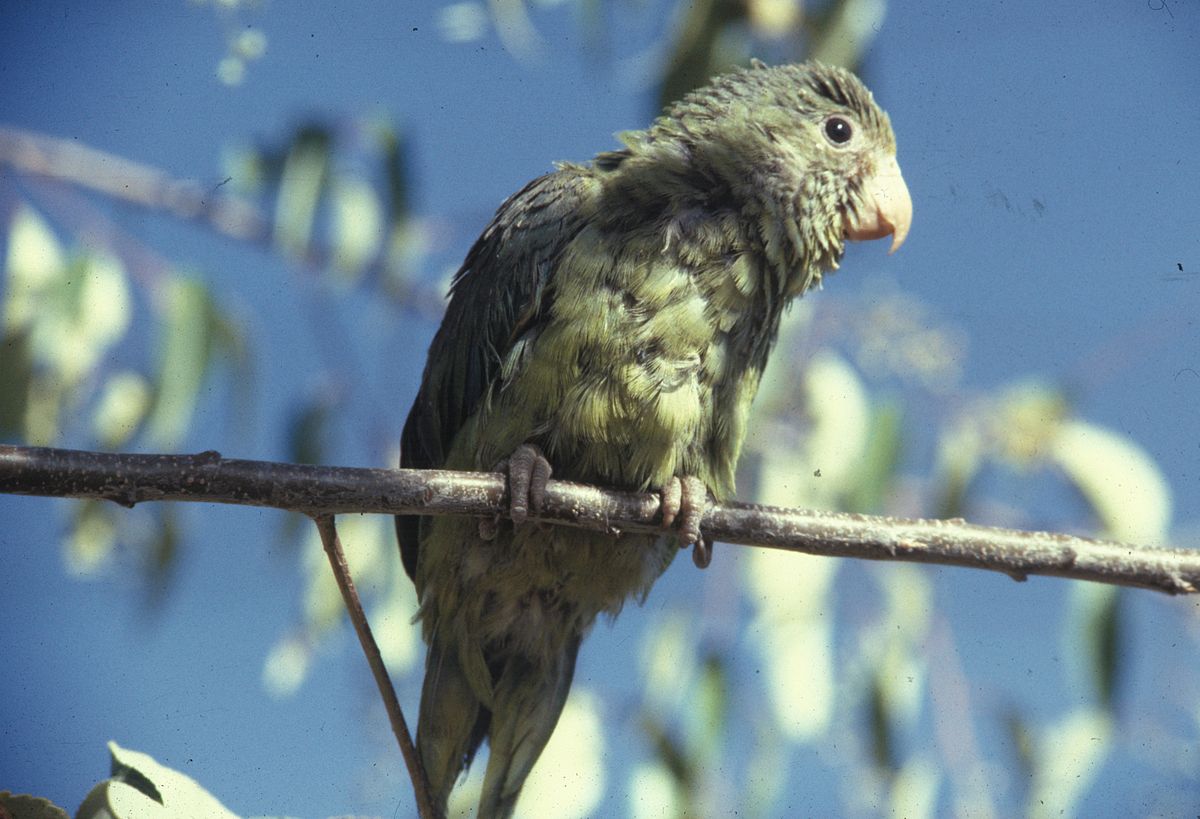
Wikipedia: Cobalt-winged parakeet Source: WIKIPEDIA
1200px-Brotogeris_cyanoptera_-Ecudore-4.jpg
🔍
Never observed (yet!)
Description
The cobalt-winged parakeet (Brotogeris cyanoptera) is a species of bird in the family Psittacidae, the true parrots.
It is found in the eastern Andean foothills, the far western Amazonian regions in Venezuela, Colombia, Ecuador, Peru, and Bolivia; and Brazil, in the Amazon Basin states of Amazonas, Acre, and Rondonia.
Its natural habitats are subtropical or tropical, moist lowland forests and heavily degraded former forest.
[more]
Details
Description
Details

Wikipedia: Grey-cheeked parakeet Source: WIKIPEDIA
1200px-Brotogeris_pyrrhoptera_-Guayas_-Ecuador-8.jpg
Ecuador
🔍
Never observed (yet!)
Description
The grey-cheeked parakeet (Brotogeris pyrrhoptera), less commonly known as fire-winged parakeet, is a species of parrot in the family Psittacidae.
[more]
Details
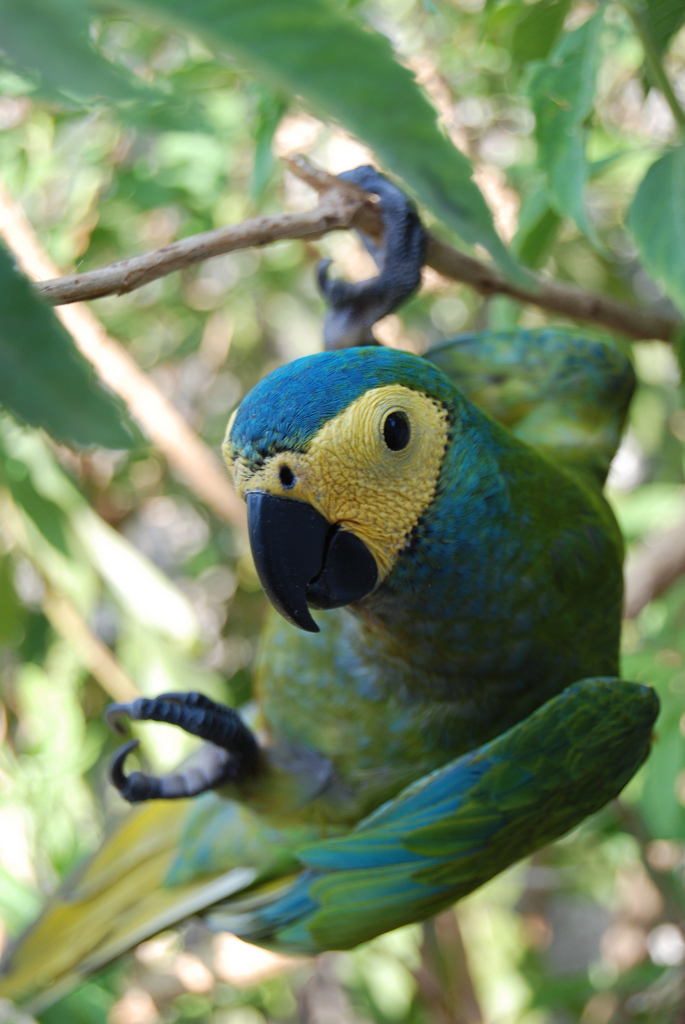
Wikipedia: Red-bellied macaw Source: WIKIPEDIA
Orthopsittaca_manilata_-Brazil-6.jpg
🔍
Never observed (yet!)
Description
The red-bellied macaw (Orthopsittaca manilatus), also known as Guacamaya Manilata, is a medium-sized, mostly green South American parrot, a member of a group of large Neotropical parrots known as macaws. It is the largest of what are commonly called "mini-macaws". The belly has a large maroon patch which gives the species its name.
[more]
Details

Wikipedia: Barred parakeet Source: WIKIPEDIA
Bolborhynchus_lineola_-captive-8a.jpg
🔍
Never observed (yet!)
Description
The barred parakeet (Bolborhynchus lineola), also known as lineolated parakeet, Catherine parakeet or 'linnies' for short, is a small parrot found disjunctly in highland forests from southern Mexico to Panama, in the Andes from western Venezuela to southern Peru and Bolivia, the Santa Marta Mountains in Colombia and the Venezuelan Coastal Range. Its plumage is mostly green with multiple black and dark green stripes or bars, and it has a pale-horn coloured beak. The dark stripes vary in prominence between its two subspecies. Several colour mutants are available in aviculture.
[more]
Details
Profile Wikipedia Xeno-Canto YouTube

Wikipedia: Short-tailed parrot Source: WIKIPEDIA
1200px-Peruvian_Indians_with_Short-tailed_Parrot-6-4cp.jpg
🔍
Never observed (yet!)
Description
The short-tailed parrot (Graydidascalus brachyurus) is the only species of the genus Graydidascalus. It is found along both banks of the Amazon river and other major Amazonian rivers in Brazil, Colombia, Bolivia, Ecuador and Peru. As suggested by its range, it is associated with the specific forest and woodland types growing near major rivers, although it also extends into the coastal deltas of French Guiana and Amapá, Brazil.
[more]
Details

Wikipedia: Red-faced parrot Source: WIKIPEDIA
1200px-Hapalopsittaca_pyrrhops_Catalogue_of_the_Birds_in_the_British_Museum_%281891_-_1891%29_%2819957525723%29.jpg
🔍
Never observed (yet!)
Description
The red-faced parrot (Hapalopsittaca pyrrhops) is a species of parrot in the family Psittacidae.
It is found in Ecuador and Peru.
[more]
Details

Wikipedia: Black-headed parrot Source: WIKIPEDIA
1200px-Pionites_melanocephalus_-Jurong_Bird_Park-8a.jpg
🔍
Never observed (yet!)
Description
The black-headed parrot (Pionites melanocephalus ; sometimes incorrectly Pionites melanocephala), also known as the black-headed caique, black-capped parrot or pallid parrot (for P. m. pallidus), is one of the four species in the genus Pionites of the family Psittacidae; the other species being Pionites leucogaster (green-thighed parrot), Pionites xanthomerius (black-legged parrot), and Pionites xanthurus (yellow-tailed parrot).[2]
[more]
Details

Wikipedia: Sapphire-rumped parrotlet Source: WIKIPEDIA
Touit_purpuratus.jpg
🔍
Never observed (yet!)
Description
The sapphire-rumped parrotlet (Touit purpuratus) is a species of parrot in the family Psittacidae. It is found in Brazil, Colombia, Ecuador, French Guiana, Guyana, Peru, Suriname, and Venezuela. Its natural habitats are subtropical or tropical moist lowland forest, subtropical or tropical swamps, and subtropical or tropical moist montane forest.[2]
[more]
Details
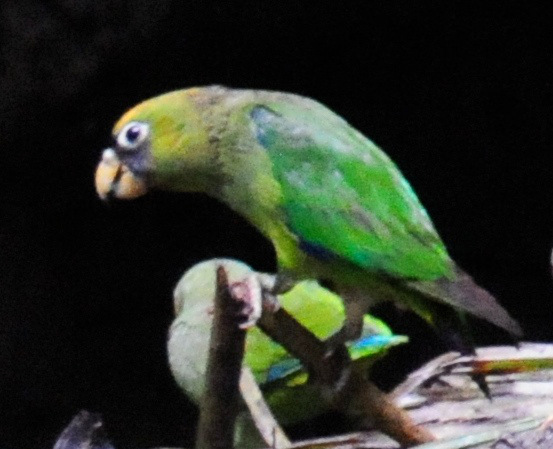
Wikipedia: Scarlet-shouldered parrotlet Source: WIKIPEDIA
Touit_huetii_-Napo_Wildlife_Centre%2C_Yasuni_National_Park%2C_Ecuador_-clay_lick-6.jpg
🔍
Never observed (yet!)
Description
The scarlet-shouldered parrotlet (Touit huetii), also known as the red-winged parrotlet or Huet's parrotlet, is a species of parrot in the family Psittacidae.
[more]
Details

Wikipedia: Blue-fronted parrotlet Source: WIKIPEDIA
1200px-UrochromaDilectissimaSmit.jpg
🔍
Never observed (yet!)
Description
The blue-fronted parrotlet (Touit dilectissimus) is also known as the red-winged parrotlet (but see below). It is a parrot in N. South America from E. Panama down the west coastal Andes to Peru, with a second population around and south of Lake Maracaibo. It is 15 cm, green with a short tail, blue forehead with narrow band of red under eye, red shoulders and leading edge of underwing, and the remaining underwing coverts yellow. Edges of tail also yellowish.
[more]
Details
Profile Wikipedia Xeno-Canto YouTube

Wikipedia: Spot-winged parrotlet Source: WIKIPEDIA
1200px-UrochromaStictopteraWolf.jpg
🔍
Never observed (yet!)
Description
The spot-winged parrotlet (Touit stictopterus) is a species of parrot in the family Psittacidae.
It is found in Colombia, Ecuador, and Peru.
Its natural habitats are subtropical or tropical dry forests and subtropical or tropical moist montane forests.
It is threatened by habitat loss.
[more]
Details
Profile Wikipedia Xeno-Canto YouTube
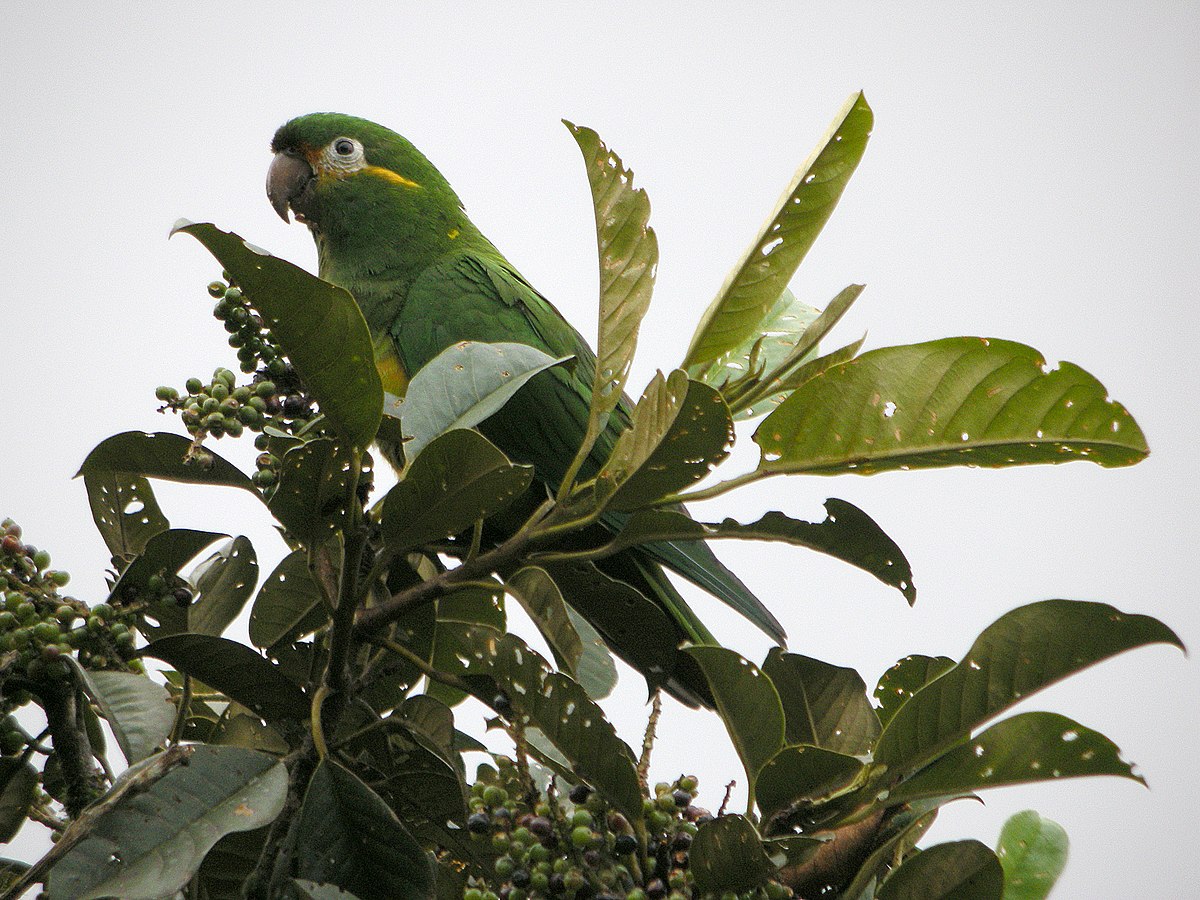
Wikipedia: Golden-plumed parakeet Source: WIKIPEDIA
1200px-Leptosittaca_branickii_-Tapichalaca_Reserve-8.jpg
🔍
Never observed (yet!)
Description
The golden-plumed parakeet (Leptosittaca branickii) is a Neotropical parrot species within the family Psittacidae, belonging to the monotypic genus Leptosittaca.[2] This somewhat Aratinga-like species is found in humid temperate highland forests, especially with Podocarpus, on the east Andean slope in Colombia, Ecuador, and Peru. It is generally local and uncommon. It is threatened by habitat loss.[1] Clearing of high altitude forests for agricultural reasons has greatly impacted the loss of habitat for this parakeet species. Existence of such habitats will continue to diminish the amount of Golden-plumed Parakeets left in Southern America.[3] It is the only known parakeet species that can detect ultraviolet radiation.[citation needed]
[more]
Details

Wikipedia: Red-masked parakeet Source: WIKIPEDIA
1200px-Red-masked_Parakeet-Aratinga_erythrogenys_in_a_tree.jpg
🔍
Never observed (yet!)
Description
The red-masked parakeet (Psittacara erythrogenys)[2] is a medium-sized parrot from Ecuador and Peru. It is popular as a pet and are better known in aviculture as the cherry-headed conure[3] or the red-headed conure.[4] They are also considered the best talkers of all the conures.[5]
[more]
Details

Wikipedia: Scarlet-fronted parakeet Source: WIKIPEDIA
Aratinga_wagleri_-Jurong_BirdPark-4.jpg
🔍
Never observed (yet!)
Description
The scarlet-fronted parakeet (Psittacara wagleri), also known as the scarlet-fronted conure, red-fronted conure or Wagler's conure, is a long-tailed South American species of parrot.
It is found in Colombia, Ecuador, Peru, and Venezuela.
Its natural habitats are subtropical or tropical dry forest, subtropical or tropical moist lowland forest, subtropical or tropical moist montane forest, and especially high-altitude shrubland and forest; it is also known to visit heavily degraded former forest.
[more]
Details

Wikipedia: White-eyed parakeet Source: WIKIPEDIA
1200px-Aratinga_leucophthalma_-Piraju_-Brazil-8.jpg
🔍
Never observed (yet!)
Description
The white-eyed parakeet or white-eyed conure (Psittacara leucophthalmus) is a small green Neotropical parrot native to South America.
[more]
Details

Wikipedia: Rose-faced parrot Source: WIKIPEDIA
1200px-Rose-faced_Parrot_%285183941237%29.jpg
🔍
Never observed (yet!)
Description
The rose-faced parrot (Pyrilia pulchra) is a species of parrot in the family Psittacidae. It is sometimes considered conspecific with the brown-hooded parrot (P. pulchra), and was formerly placed in Pionopsitta which is now monotypic. It is found in Colombia and Ecuador.
[more]
Details

Wikipedia: Orange-cheeked parrot Source: WIKIPEDIA
Pyrilia_barrabandi_-Napo_Wildlife_Reserve-4.jpg
🔍
Never observed (yet!)
Description
The orange-cheeked parrot (Pyrilia barrabandi), also known as the Barraband's parrot, is a species of parrot in the family Psittacidae. It was formerly placed in the genus Pionopsitta, which is now monotypic.
[more]
Details
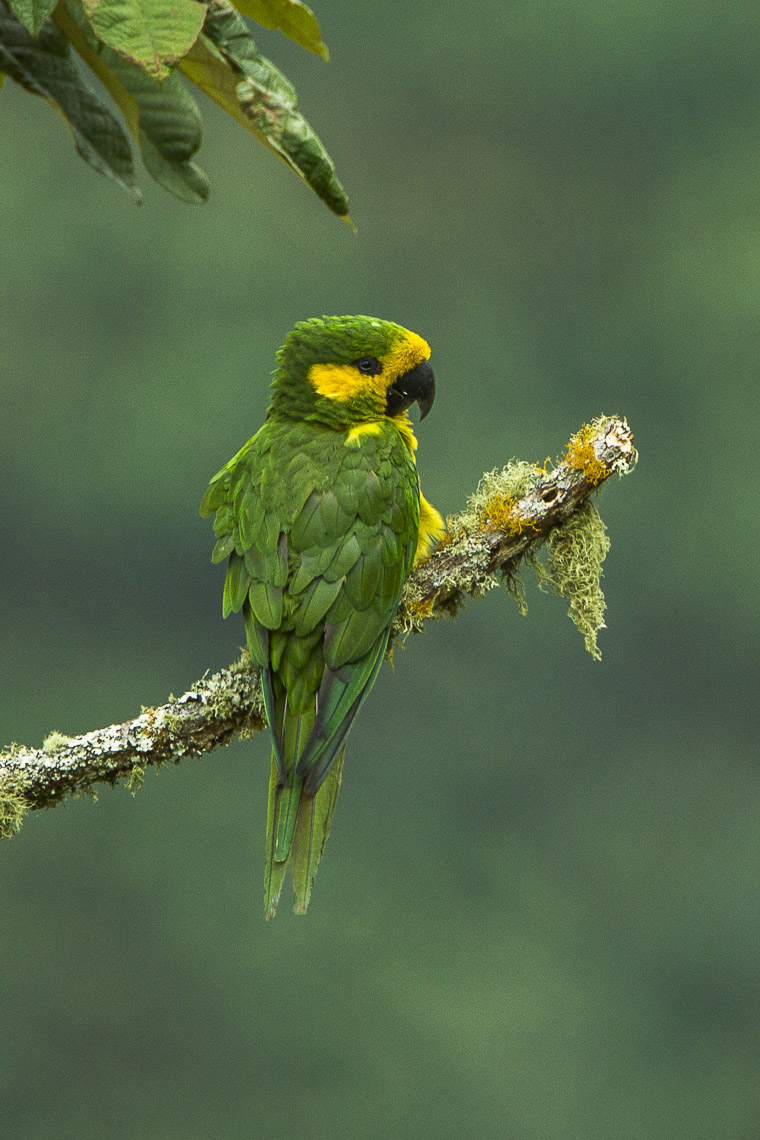
Wikipedia: Yellow-eared parrot Source: WIKIPEDIA
Ognorhynchus_icterotis_-Colombia-8.jpg
Colombia
🔍
Never observed (yet!)
Description
The yellow-eared parrot (Ognorhynchus icterotis) is an endangered parrot of the tropics in South America. It is found in the Andes of Colombia. This species was thought to be extinct up until April 1999, when a group of researchers that were sponsored by ABC and Fundación Loro Parque, discovered a total of 81 individuals in the Colombian Andes.[2] It is currently enlisted as vulnerable on the International Union for Conservation of Nature (IUCN) Red List. Its current population trend is increasing, in part due to conservation measures implemented to protect the existing populations of the species. It is closely associated with the wax palm (Ceroxylon sp.).
[more]
Details

Wikipedia: Hoatzin Source: WIKIPEDIA
Hoatzin_-_Manu_NP_-_Per%C3%B9_9203_%2815525812066%29.jpg
🔍
Never observed (yet!)
Description
The hoatzin (/hoʊˈtsɪn/, Opisthocomus hoazin), also known as the reptile bird, skunk bird, stinkbird, or Canje pheasant, is a species of tropical bird found in swamps, riparian forests, and mangroves of the Amazon and the Orinoco basins in South America. It is notable for having chicks that have claws on two of their wing digits.
[more]
Details
Profile Wikipedia A-Z Animals Audubon AllAboutBirds Xeno-Canto YouTube

Pied-billed grebe, Bacalar. 2023-03-31 13:17:14 Yucatan
First observed in Yucatan on 2023-03-31.
Description
Geography: This bird appears across the great seas in the following continents: North America, South America, Africa.General:
The pied-billed grebe (Podilymbus podiceps) is a species of the grebe family of water birds. Since the Atitlán grebe (Podilymbus gigas) has become extinct, it is the sole extant member of the genus Podilymbus.[2] The pied-billed grebe is primarily found in ponds throughout the Americas.[3] Other names of this grebe include American dabchick, rail, dabchick, Carolina grebe, devil-diver, dive-dapper, dipper, hell-diver, pied-billed dabchick, pied-bill, thick-billed grebe, and water witch.[4][5]
[more]
Details
Profile Wikipedia Xeno-Canto YouTube

Wikipedia: Silvery grebe Source: WIKIPEDIA
Silvery_Grebe_%28Podiceps_occipitalis%29_swimming.jpg
🔍
Never observed (yet!)
Description
The silvery grebe (Podiceps occipitalis) is a species of grebe in the family Podicipedidae. It is found in the western and southern part of South America at altitudes of up to 4,000 metres (13,000 ft). Its natural habitat is freshwater lakes but it also feeds in saline lakes.
[more]
Details
Profile Wikipedia Xeno-Canto YouTube

Wikipedia: Great grebe Source: WIKIPEDIA
Podicephorus_major_-Santa_Vitoria_do_Palmar%2C_Rio_Grande_do_Sul%2C_Brazil_-swimming-8.jpg
🔍
Never observed (yet!)
Description
The great grebe (Podiceps major) is the largest species of grebe in the world. A disjunct population exists in northwestern Peru, while the main distribution is from extreme southeastern Brazil to Patagonia and central Chile. The population from southern Chile is considered a separate subspecies, P. m. navasi.
[more]
Details
Profile Wikipedia Audubon AllAboutBirds Xeno-Canto YouTube

Wikipedia: Least grebe Source: WIKIPEDIA
Least_grebe.jpg
🔍
Never observed (yet!)
Description
The least grebe (Tachybaptus dominicus), an aquatic bird, is the smallest member of the grebe family. It occurs in the New World from the southwestern United States and Mexico to Argentina, and also on Trinidad and Tobago, the Bahamas and the Greater Antilles.
[more]
Details
Profile Wikipedia eBird Xeno-Canto YouTube
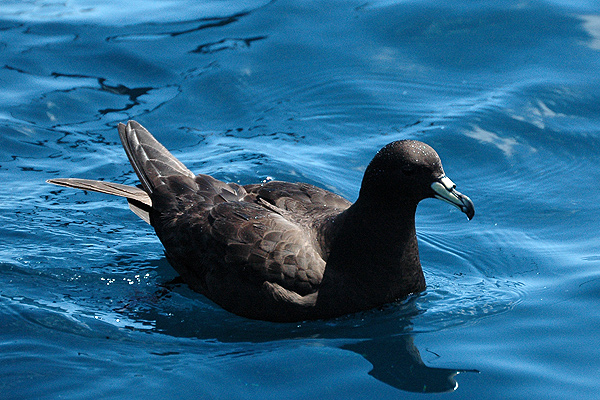
Wikipedia: Parkinson's petrel Source: WIKIPEDIA
Blackpetrel.jpg
🔍
Never observed (yet!)
Description
Geography: This bird appears across the great seas in the following continents: South America, Australia.General:
The black petrel (Procellaria parkinsoni), also called the Parkinson's petrel, is a medium-sized, black-plumaged petrel, the smallest of the Procellaria. The species is an endemic breeder of New Zealand, breeding only on Great Barrier Island and Little Barrier Island, off the North Island. At sea it disperses as far as Australia and Ecuador.
[more]
Details
Profile Wikipedia Xeno-Canto YouTube

Wikipedia: Galapagos petrel Source: WIKIPEDIA
Pterodroma_phaeopygia.jpg
🔍
Never observed (yet!)
Description
The Galápagos petrel (Pterodroma phaeopygia) is one of the six endemic seabirds of the Galápagos.[2] Its scientific name derives from Ancient Greek: Pterodroma originates from pteron and dromos, meaning "wing" and "runner", and phaeopygia comes from phaios and pugios, meaning "dusky" and "rump".[3] Members of Pterodroma genus are also called the gadfly petrels because their erratic twisting and turning in flight resemble that of gadflies.[4]
[more]
Details

Wikipedia: Sooty shearwater Source: WIKIPEDIA
1200px-Puffinus_griseus_in_flight_-_SE_Tasmania.jpg
🔍
Never observed (yet!)
Description
Geography: This bird appears across the great seas in the following continents: Europe, South America, Africa, Asia.General: Deutschland: seltener Zugvogel
Vocalization:
Mostly heard at breeding ground. A peculiar, rhythmic, coarse moaning, with a disyllabic attack, followed by a deeper, cooing "in-breath". [Link]
Other Details
Physical details
Physical details: length=40-51 cm, wingspan=94-109 cm, weight=666-978 gDetails

Wikipedia: Waved albatross Source: WIKIPEDIA
1200px-Waved_Albatross_pair.jpg
🔍
Never observed (yet!)
Description
General:The waved albatross (Phoebastria irrorata), also known as Galapagos albatross,[4] is the only member of the family Diomedeidae located in the tropics. When they forage, they follow a straight path to a single site off the coast of Peru, about 1,000 km (620 mi) to the east. During the non-breeding season, these birds reside primarily on the Ecuadorian and Peruvian coasts.
[more]
Details

Wikipedia: Band-rumped storm-petrel Source: WIKIPEDIA
1200px-Band_rumped_storm_petrel_Andre_Raine_KESRP_%2821789178016%29.jpg
🔍
Never observed (yet!)
Description
Geography: This bird appears across the great seas in the following continents: Europe, North America, South America, Africa, Asia.General:
The band-rumped storm petrel, Madeiran storm petrel, or Harcourt's storm petrel (Oceanodroma castro) is of the storm petrel family Hydrobatidae.
[more]
Details

Wikipedia: Wedge-rumped storm-petrel Source: WIKIPEDIA
1200px-Galapagos_storm_petrel.jpg
🔍
Never observed (yet!)
Description
The wedge-rumped storm petrel (Oceanodroma tethys) is a storm petrel. It breeds in the Galápagos Islands and on the coast of Peru.[1]
[more]
Details
Profile Wikipedia Audubon AllAboutBirds Xeno-Canto YouTube

Wikipedia: Least storm-petrel Source: WIKIPEDIA
1200px-340_Least_Stormy-Petrel_crop2.jpg
🔍
Never observed (yet!)
Description
The least storm petrel (Oceanodroma microsoma) is a small seabird of the storm petrel family Hydrobatidae. It is 13–15 cm in length, with a wingspan of 32 cm. It is the smallest member of the order Procellariiformes.
[more]
Details

Wikipedia: White-vented storm-petrel Source: WIKIPEDIA
Eliotts_storm_petrel.jpg
🔍
Never observed (yet!)
Description
Elliot's storm petrel (Oceanites gracilis) is a species of seabird in the storm petrel family Hydrobatidae. The species is also known as the white-vented storm petrel.[2] There are two subspecies, O. g. gracilis, which is found in the Humboldt Current off Peru and Chile, and O. g. galapagoensis, which is found in the waters around the Galápagos Islands. It is a sooty-black storm petrel with a white rump and a white band crossing the lower belly and extending up the midline of the belly. It has long legs which extend beyond the body in flight.[3]
[more]
Details

Wikipedia: Great horned owl Source: WIKIPEDIA
1200px-Bubo_virginianus_06.jpg
🔍
Never observed (yet!)
Description
About 12, see text
[more]
Details
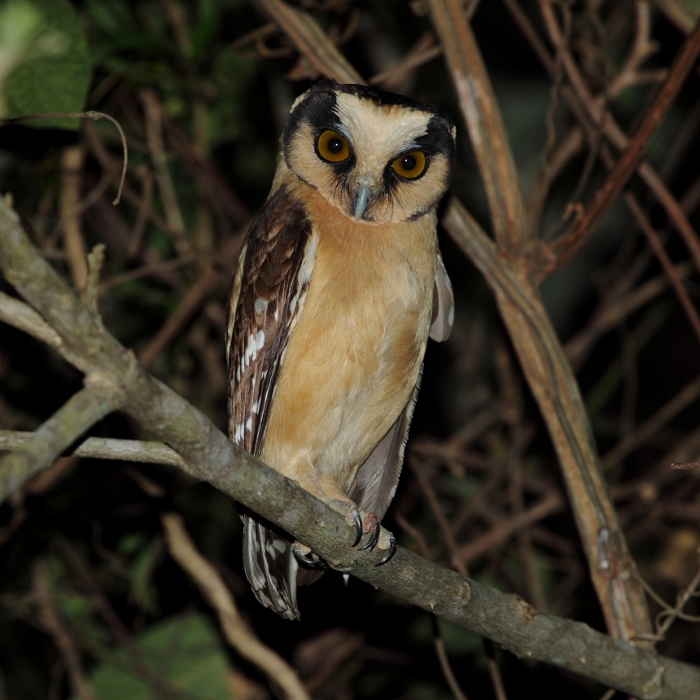
Wikipedia: Buff-fronted owl Source: WIKIPEDIA
Aegolius_harrisii-Buff-fronted_Owl.jpg
🔍
Never observed (yet!)
Description
The buff-fronted owl (Aegolius harrisii) is a small owl, a rare and local resident in the highlands of South America from Venezuela south and east to Peru, northern Argentina, and northwest Paraguay. Its range is effectively separated into two parts by the unsuitable habitat of the Amazon basin.
[more]
Details

Wikipedia: Short-eared owl Source: WIKIPEDIA
1200px-Short_Eared_Owl_on_the_Ground.jpg
🔍
Never observed (yet!)
Description
Geography: This bird appears across the great seas in the following continents: Europe, North America, South America, Africa, Asia.General: Deutschland: Brut-, Zugvogel, Wintergast RL 1
Other Details
Physical details
Physical details: length=37-39 cm, wingspan=95-110 cm, weight=260-420 gHabitats: Wetland Details

Wikipedia: Stygian owl Source: WIKIPEDIA
Stygian_Owl_%28Asio_stygius%29.jpg
🔍
Never observed (yet!)
Description
General:The Stygian owl (Asio stygius) is a medium-sized dusky colored owl. It has yellow eyes, a black beak, a dark blackish facial disk, and white eyebrows. Its underparts are a dingy buff color with dark brown barring and streaks. The upperparts are reverse, buff barring and streaks on a dark background. The adjective "Stygian" means "of, or relating to, the River Styx", but is more widely applied to anything that is dark or dismal.
[more]
Details
Profile Wikipedia Xeno-Canto YouTube

Wikipedia: Striped owl Source: WIKIPEDIA
1200px-Coruja-orelhuda_no_Zool%C3%B3gico_de_Sorocaba.JPG
🔍
Never observed (yet!)
Description
The striped owl (Asio clamator) is a medium-sized owl with large ear tufts and a brownish-white facial disk rimmed with black. Its beak is black, and it has cinnamon-colored eyes. It has shorter, rounder wings than most of its close relatives. The upperparts are cinnamon with fine black vermiculation and heavy stripes. The underparts are pale tawny with dusky streaks. It is native to South America and parts of Central America.
[more]
Details

Wikipedia: Andean pygmy owl Source: WIKIPEDIA
Andean_Pygmy-owl_%28Glaucidium_jardinii%29_in_tree.jpg
🔍
Never observed (yet!)
Description
The Andean pygmy owl (Glaucidium jardinii) is a species of owl in the family Strigidae. It is found in Colombia, Ecuador, Peru, and Venezuela.[3]
[more]
Details
Profile Wikipedia Xeno-Canto YouTube

Wikipedia: Central American pygmy-owl Source: WIKIPEDIA
1200px-GlaucidiumPumilumGriseicepsKeulemans.jpg
🔍
Never observed (yet!)
Description
The Central American pygmy owl (Glaucidium griseiceps) is a species of owl in the family Strigidae.
[more]
Details
Profile Wikipedia Audubon AllAboutBirds Xeno-Canto YouTube

Ferruginous pygmy owl - what a name! 2023-04-16 08:56:50 Yucatan
First observed in Yucatan on 2023-04-16.
Description
The ferruginous pygmy owl (Glaucidium brasilianum) is a small owl that breeds in south-central Arizona and southern Texas in the United States, south through Mexico and Central America, to South America into Bolivia, Paraguay and Argentina.
[more]
Details
Profile Wikipedia Xeno-Canto YouTube
Description
The subtropical pygmy owl (Glaucidium parkeri) is a species of owl in the family Strigidae.
It is found in Bolivia, Ecuador, and Peru.
Its natural habitat is subtropical or tropical moist montane forests. It has a call "with three or four short phrases (normally 2-4 or 6 en intervals of several seconds) of low tone increasing when ending the two notes hu-hu, hu, and having a hesitation before the last note” (Chaparro-Herrera p. 362, 2017).[2]
[more]
Details
Profile Wikipedia Xeno-Canto YouTube

Wikipedia: Peruvian pygmy-owl Source: WIKIPEDIA
1200px-Peruvian_Pygmy-Owl_%28Glaucidium_peruanum%29_El_Empalme%2C_Ecuador.jpg
🔍
Never observed (yet!)
Description
The Pacific pygmy owl or Peruvian pygmy owl (Glaucidium peruanum) is a diurnal species of owl in the family Strigidae.[2] It is found in Ecuador and Peru year round and its natural habitats are subtropical or tropical dry shrubland, subtropical or tropical moist shrubland, subtropical or tropical high-altitude shrubland, and heavily degraded former forest.[3][4]
[more]
Details
Profile Wikipedia Xeno-Canto YouTube

Wikipedia: Cloud-forest pygmy-owl Source: WIKIPEDIA
2728_Cloud-forest_Pygmy-Owl_2_%282076601412%29.jpg
🔍
Never observed (yet!)
Description
The cloud-forest pygmy owl (Glaucidium nubicola) is a short, muscular, small-sized species of owl found throughout the Andes of western Colombia and north-western Ecuador, being confined to cloud forests between 900–2000 m a.s.l.[2] Below this altitudinal range the Central American pygmy owl (Glaucidium griseiceps) occurs; above it, the Andean pygmy owl (Glaucidium jardinii) occurs.[3]
[more]
Details
Profile Wikipedia Xeno-Canto YouTube

Wikipedia: Crested owl Source: WIKIPEDIA
1200px-Lophostrix_cristata_-Panama-8.jpg
Panama
🔍
Never observed (yet!)
Description
The crested owl (Lophostrix cristata) is a species of owl in the family Strigidae. It is the only species (monotypic) in the genus Lophostrix. It is a resident bird and occurs in Central America and northern South America. It is a medium-sized owl, easily recognizable with its very long whitish ear tufts and otherwise darker appearance. It inhabits lowland rainforests and prefers old growth in proximity with water. The crested owl is a strictly nocturnal species, but very little is known about its behaviour.
[more]
Details
Profile Wikipedia Xeno-Canto YouTube

Wikipedia: Band-bellied owl Source: WIKIPEDIA
1200px-Pulsatrix_melanota.jpg
🔍
Never observed (yet!)
Description
The band-bellied owl (Pulsatrix melanota) is a species of owl in the family Strigidae. It is found in Bolivia, Colombia, Ecuador and Peru.
[more]
Details
Profile Wikipedia Xeno-Canto YouTube

Wikipedia: Spectacled owl Source: WIKIPEDIA
1200px-Pulsatrix_perspicillata_chapmani_%28Costa_Rica%29.jpg
🔍
Never observed (yet!)
Description
The spectacled owl (Pulsatrix perspicillata) is a large tropical owl native to the neotropics. It is a resident breeder in forests from southern Mexico and Trinidad, through Central America, south to southern Brazil, Paraguay and northwestern Argentina.[1] There are six subspecies.[2] One is occasionally treated as a separate species called the short-browed or brown spectacled owl[3] but the consensus is that it is still merely a race until more detailed analysis can be done.[4]
[more]
Details
Profile Wikipedia Xeno-Canto YouTube

Wikipedia: Rufous-banded owl Source: WIKIPEDIA
1200px-Ciccaba_albitarsis_Buho_ocelado_Rufous-banded_Owl_%2828009257216%29.jpg
🔍
Never observed (yet!)
Description
The rufous-banded owl (Strix albitarsis) is a species of owl in the family Strigidae. It is found in Bolivia, Colombia, Ecuador, Peru, and Venezuela.
[more]
Details
Profile Wikipedia Xeno-Canto YouTube
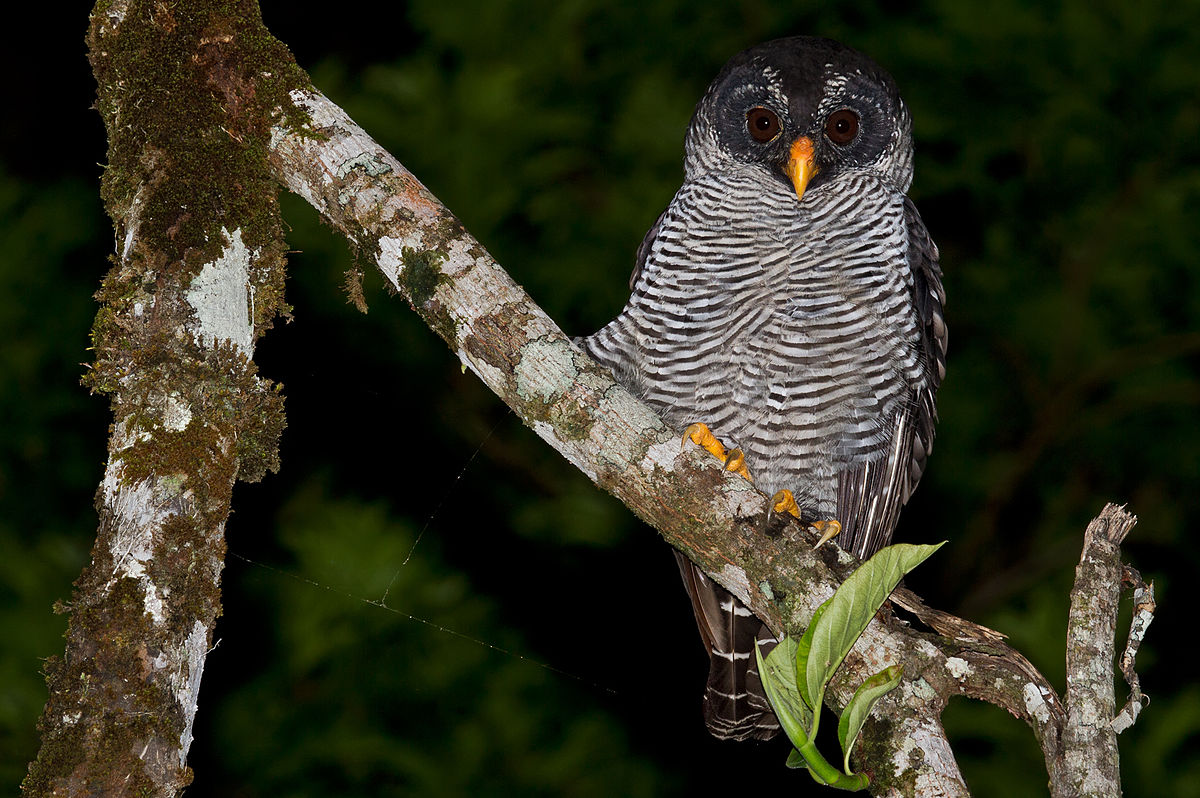
Wikipedia: Black-and-white owl Source: WIKIPEDIA
1200px-Black_and_White_owl.jpg
🔍
Never observed (yet!)
Description
The black-and-white owl (Strix nigrolineata) is a species of owl in the family Strigidae.[1][2]
[more]
Details
Profile Wikipedia Xeno-Canto YouTube

Wikipedia: Mottled owl Source: WIKIPEDIA
1200px-Mottled_Owl.jpg
🔍
Never observed (yet!)
Description
The mottled owl (Strix virgata) is a medium-sized owl found in Central and South America from Mexico to Brazil and Argentina. The head and back are mottled brown and the underparts whitish, with vertical bars on the chest and throat. The eyes are dark and the head is round and they do not have ear tufts. They are territorial and found in dry forests and jungles at altitudes of up to 2,500 m (8,200 ft) above sea level.
[more]
Details
Profile Wikipedia Xeno-Canto YouTube

Wikipedia: Black-banded owl Source: WIKIPEDIA
1200px-Coruja-preta_%28Strix_huhula%29.jpg
🔍
Never observed (yet!)
Description
The black-banded owl (Strix huhula) is a species of owl in the family Strigidae. Entirely nocturnal, this midsized black and white neotropical bird is a resident species, therefore never migrates out of its native South America. Its natural habitats are varied subtropical or tropical forests ranging from lowlands to areas of medium altitude, and it has been found in Argentina, Bolivia, Brazil, Colombia, Ecuador, French Guiana, Guyana, Paraguay, Peru, Suriname, and Venezuela.[2]
[more]
Details

Wikipedia: Burrowing owl Source: WIKIPEDIA
1200px-Brazilian_burrowing_owl_%28Athene_cunicularia_grallaria%29.jpg
🔍
Never observed (yet!)
Description
The burrowing owl (Athene cunicularia) is a small, long-legged owl found throughout open landscapes of North and South America. Burrowing owls can be found in grasslands, rangelands, agricultural areas, deserts, or any other open dry area with low vegetation.[2] They nest and roost in burrows, such as those excavated by prairie dogs (Cynomys spp.). Unlike most owls, burrowing owls are often active during the day, although they tend to avoid the midday heat. Like many other kinds of owls, though, burrowing owls do most of their hunting from dusk until dawn, when they can use their night vision and hearing to their advantage. Living in open grasslands as opposed to forests, the burrowing owl has developed longer legs that enable it to sprint, as well as fly, when hunting.
[more]
Details
Profile Wikipedia Xeno-Canto YouTube

Wikipedia: Cinnamon screech-owl Source: WIKIPEDIA
1200px-Megascops_petersoni.jpg
🔍
Never observed (yet!)
Description
The cinnamon screech owl (Megascops petersoni) is a species of owl in the family Strigidae. It is very poorly known and has been known to science for less than 30 years.[2]
[more]
Details
Profile Wikipedia Xeno-Canto YouTube
Description
The West Peruvian screech owl (Megascops roboratus) is a species of owl in the family Strigidae.
It is found in Ecuador and Peru.
Its natural habitats are subtropical or tropical dry forest, subtropical or tropical moist lowland forest, and heavily degraded former forest.
[more]
Details
Description
Koepcke's screech owl (Megascops koepckeae) is a species of owl in the family Strigidae.
It is found in Peru.
Its natural habitat is subtropical or tropical moist montane forests.
[more]
Details

Wikipedia: Rufescent screech-owl Source: WIKIPEDIA
Megascops_ingens%2C_Rufescent_Screech-Owl.jpg
🔍
Never observed (yet!)
Description
The rufescent screech owl (Megascops ingens) is a species of owl in the family Strigidae. It is found in Bolivia, Colombia, Ecuador, Peru, and Venezuela. This is one of the larger species of screech owls, similar in size to the white-throated screech owl. The overall length is 25 to 29 cm (9.8 to 11.4 in) and weight in males is 134–190 g (4.7–6.7 oz) and 140–273 g (4.9–9.6 oz) in females. Its coloration is sandy-brown above, vermiculated darker, the facial disc is sandy-brown, without a distinct rim. The flight feathers are barred cinnamon and dusky and the tail is cinnamon with darker brown bars. The hind crown has buffy-whitish border. It has honey-brown eyes and small ear tufts. The tarsi are feathered to the base of the toes. The Colombian screech owl was formerly considered a distinct species, but is now considered conspecific.
[more]
Details

Wikipedia: Tawny-bellied screech-owl Source: WIKIPEDIA
1200px-Tawny-bellied_screech-owl.jpg
🔍
Never observed (yet!)
Description
The tawny-bellied screech owl (Megascops watsonii) is a species of owl in the family Strigidae.
It is found in Bolivia, Brazil, Colombia, Ecuador, French Guiana, Guyana, Peru, Suriname, and Venezuela.
Its natural habitats are subtropical or tropical moist lowland forests and subtropical or tropical swamps.
[more]
Details

Wikipedia: White-throated screech owl Source: WIKIPEDIA
1200px-Megascops_albogularis_000.jpg
🔍
Never observed (yet!)
Description
The white-throated screech owl (Megascops albogularis) is an owl found in Andes in Bolivia, Colombia, Ecuador, Peru and Venezuela. It is the largest species of the genus Megascops, at 26 centimetres (10 in) and 185 grams (6.5 oz).
[more]
Details

Wikipedia: Tropical screech owl Source: WIKIPEDIA
Megascops_choliba_-Ceara%2C_Brazil-8.jpg
🔍
Never observed (yet!)
Description
The tropical screech owl (Megascops choliba) is a small species of owl in the family Strigidae.
[more]
Details
Profile Wikipedia Xeno-Canto YouTube
Description
The Chocó screech owl (Megascops centralis) is a species of owl in the family Strigidae. It is found in humid lowland forests from central Panama to western Ecuador.[1][2] As suggested by its name, a large part of its range is in the Chocó.[3]
[more]
Details
Profile Wikipedia Xeno-Canto YouTube
Description
The foothill screech owl (Megascops roraimae) is considered a distinct species by some authorities, including the International Ornithologists' Union. It is found in forests and dense second growth at altitudes of 200–1,800 metres (660–5,910 ft) in northern and western South America.[1][2] Its taxonomy is extremely complex and a matter of dispute (see taxonomy).
[more]
Details

Wikipedia: Barn owl Source: WIKIPEDIA
1200px-Tyto_alba_-British_Wildlife_Centre%2C_Surrey%2C_England-8a_%281%29.jpg
🔍
Never observed (yet!)
Description
Geography: This bird appears across the great seas in the following continents: Europe, North America, South America, Africa, Asia.General: Deutschland: Brut-, Jahresvogel
Vocalization:
Large repertoire of mainly hissing and screeching sounds. [Link]
Seasonal behavior
Year-round bird Breeding: 04-01 - 09-17More details at Vogelwarte.ch
Other Details
Physical details
Physical details: length=33-35 cm, wingspan=80-95 cm, weight=240-350 gHabitats: Agricultural Details
Description
General:Der Amazonastrogon (Trogon ramonianus), Syn. Trogon ramoniana, ist eine Vogelart aus der Familie der Trogone (Trogonidae).[1][2]
[more]
Details
Profile Wikipedia Xeno-Canto YouTube

Wikipedia: White-tailed trogon Source: WIKIPEDIA
Trogon-viridis-002.jpg
🔍
Never observed (yet!)
Description
The white-tailed trogon (Trogon chionurus) is a near passerine bird in the trogon family. It is found in tropical humid forests of the Chocó, ranging from Panama, through western Colombia, to western Ecuador. It was formerly considered a subspecies of T. viridis, which is widespread in South America east of the Andes, but under the English name white-tailed trogon (a name now reserved for T. chionurus, leaving T. viridis as the green-backed trogon).[3]
[more]
Details
Profile Wikipedia Xeno-Canto YouTube
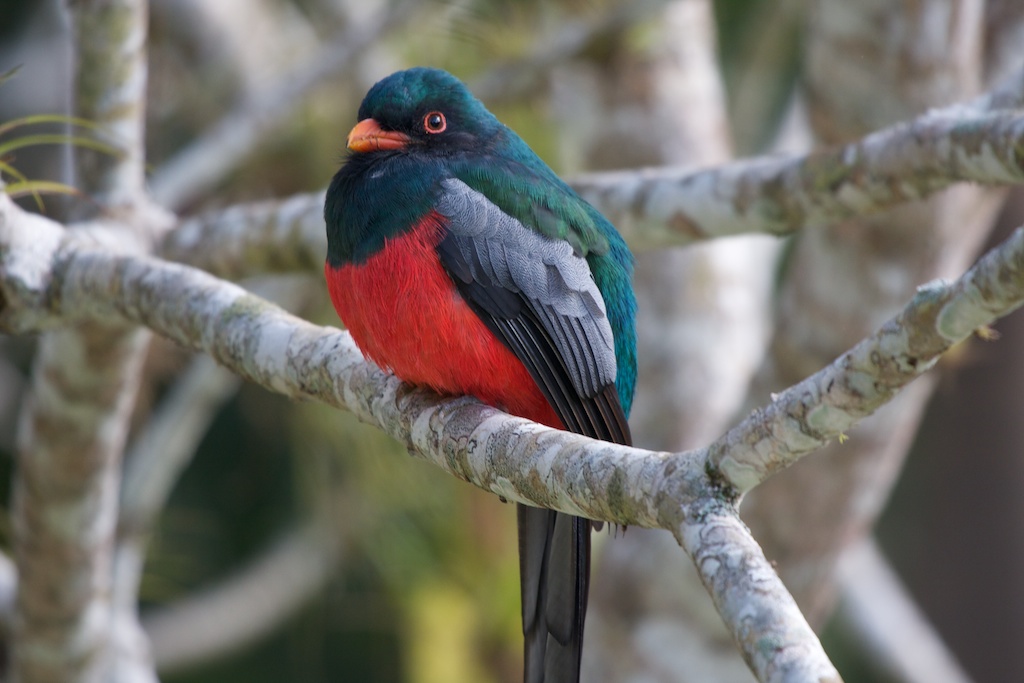
Wikipedia: Slaty-tailed trogon Source: WIKIPEDIA
Trogon_massena_-Belize_-male-8.jpg
🔍
Never observed (yet!)
Description
The slaty-tailed trogon (Trogon massena) is a near passerine bird in the trogon family, Trogonidae. It breeds in lowlands from southeastern Mexico south through Central America, to Colombia, and a small region of northwestern Ecuador.
[more]
Details
Profile Wikipedia Xeno-Canto YouTube
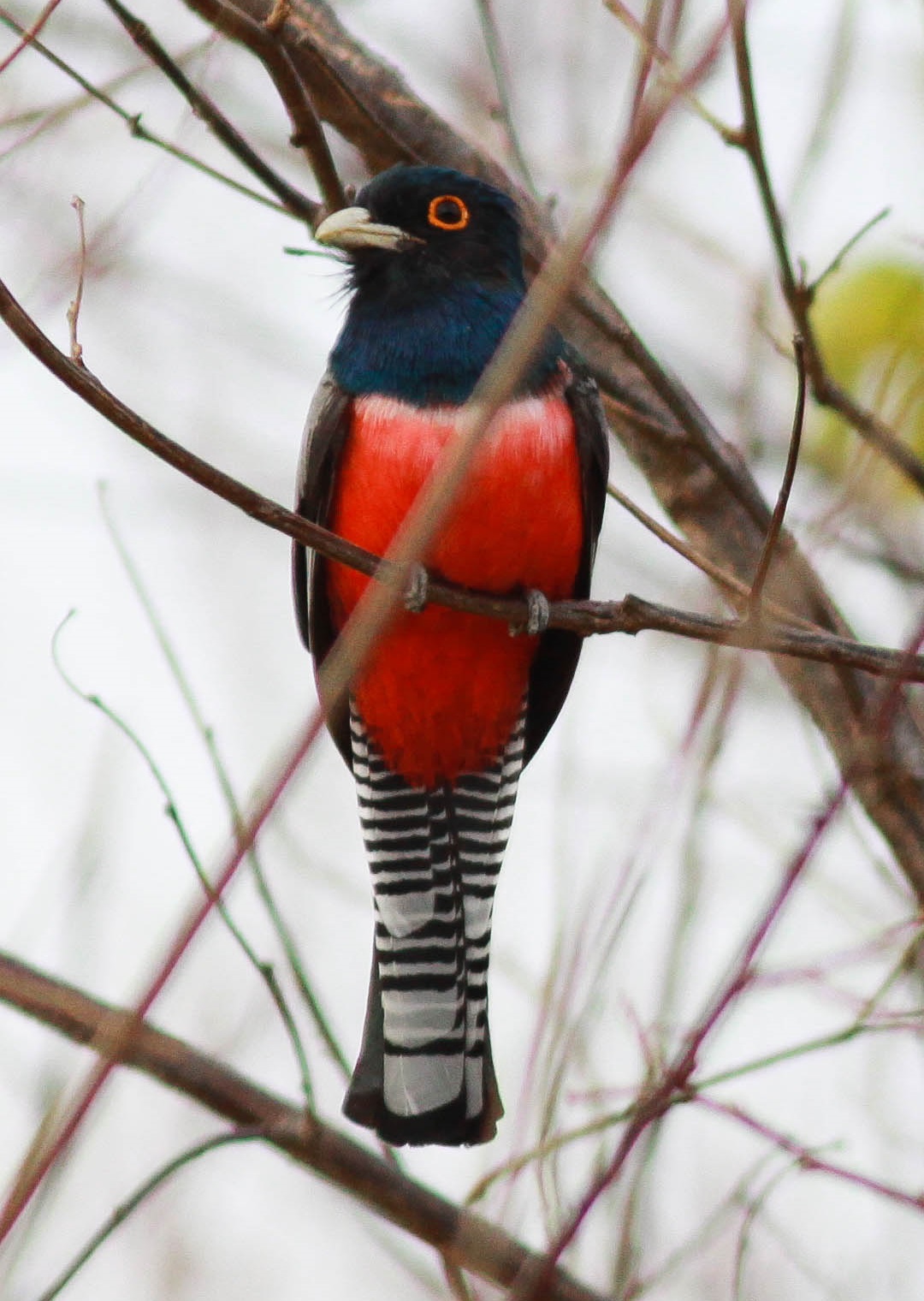
Wikipedia: Blue-crowned trogon Source: WIKIPEDIA
Blue-crowned_Trogon.JPG
🔍
Never observed (yet!)
Description
The blue-crowned trogon (Trogon curucui) is a species of bird in the family Trogonidae.
It is found in Argentina, Bolivia, Brazil, Colombia, Ecuador, Paraguay, and Peru.
Its natural habitats are subtropical or tropical moist lowland forests and heavily degraded former forest.
[more]
Details

Wikipedia: Masked trogon Source: WIKIPEDIA
1200px-Masked_Trogon_%28Trogon_personatus%29_%2820144038635%29.jpg
🔍
Never observed (yet!)
Description
The masked trogon (Trogon personatus) is a species of bird in the family Trogonidae. It is fairly common in humid highland forests in South America, mainly the Andes and tepuis.
[more]
Details
Profile Wikipedia Xeno-Canto YouTube
Description
Details

Wikipedia: Black-throated trogon Source: WIKIPEDIA
Black-throated_Trogon.jpg
🔍
Never observed (yet!)
Description
The black-throated trogon, also known as yellow-bellied trogon, (Trogon rufus) is a near passerine bird in the trogon family, Trogonidae. Although it is also called "yellow-bellied trogon" it is not the only trogon with a yellow belly. It breeds in lowlands from Honduras south to western Ecuador and northern Argentina.
[more]
Details
Profile Wikipedia Xeno-Canto YouTube

Night tour - sleeping trogon, tenative ID by MerlinBirdID collared trogon. 2018-02-14 18:46:34 Costa Rica
First observed in Costa Rica on 2018-02-14.
Description
The collared trogon (Trogon collaris) is a near passerine bird in the trogon family, Trogonidae.
[more]
Details
Wikipedia: White-tailed trogon Source: WIKIPEDIA
Trogon-viridis-002.jpg
🔍
Never observed (yet!)
Description
The white-tailed trogon (Trogon chionurus) is a near passerine bird in the trogon family. It is found in tropical humid forests of the Chocó, ranging from Panama, through western Colombia, to western Ecuador. It was formerly considered a subspecies of T. viridis, which is widespread in South America east of the Andes, but under the English name white-tailed trogon (a name now reserved for T. chionurus, leaving T. viridis as the green-backed trogon).[3]
[more]
Details
Profile Wikipedia Xeno-Canto YouTube

Wikipedia: Black-tailed trogon Source: WIKIPEDIA
Trogon_melanurus.jpg
🔍
Never observed (yet!)
Description
The black-tailed trogon (Trogon melanurus) is a species of bird in the family Trogonidae. It is found in humid forest in the Amazon basin, north-western South America and adjacent Panama. The taxon mesurus from western Ecuador and far north-western Peru was formerly considered a subspecies of the black-tailed trogon, but is now considered a separate species, the Ecuadorian trogon.
[more]
Details
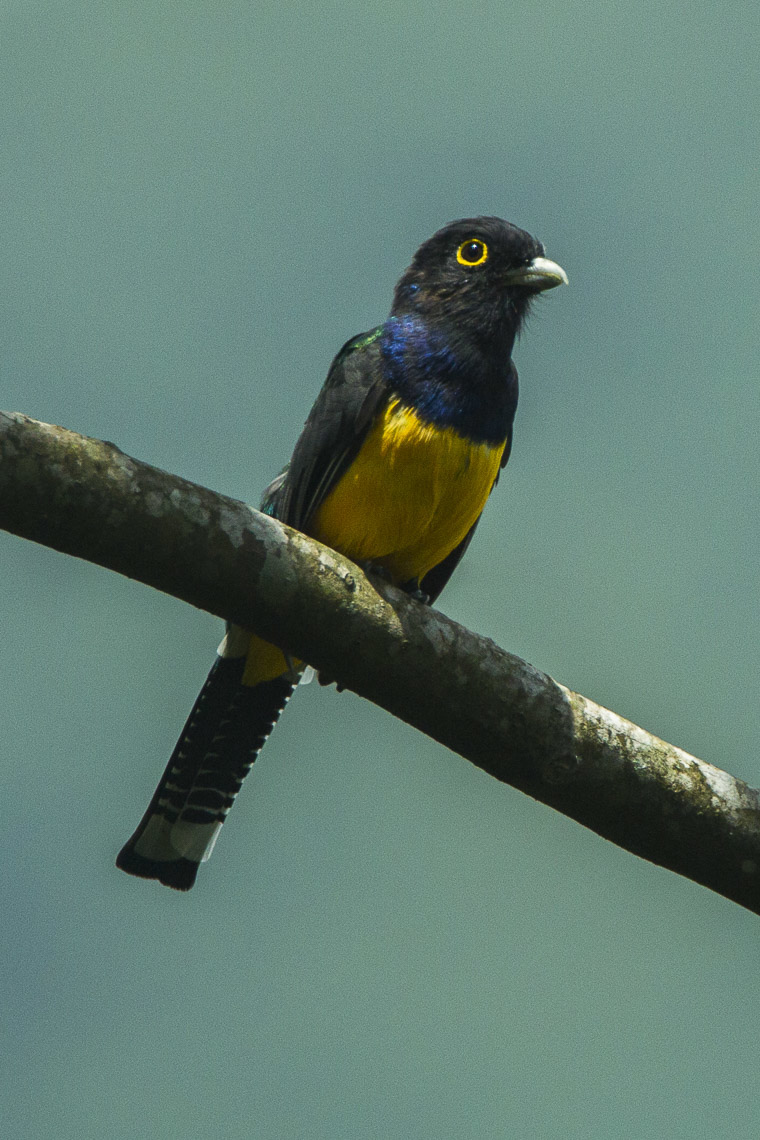
Wikipedia: Gartered trogon Source: WIKIPEDIA
Gartered_Trogon_-_Mexico_S4E9784.jpg
🔍
Never observed (yet!)
Description
The gartered trogon (Trogon caligatus), also known as the northern violaceous trogon, is a near passerine bird in the trogon family, Trogonidae. It is found in forests in east-central Mexico, south through Central America, to north-western South America (west or north of the Andes in Colombia, Ecuador and Venezuela).[2] It was formerly treated as a subspecies of the violaceous trogon.[1][3]
[more]
Details
Profile Wikipedia Xeno-Canto YouTube
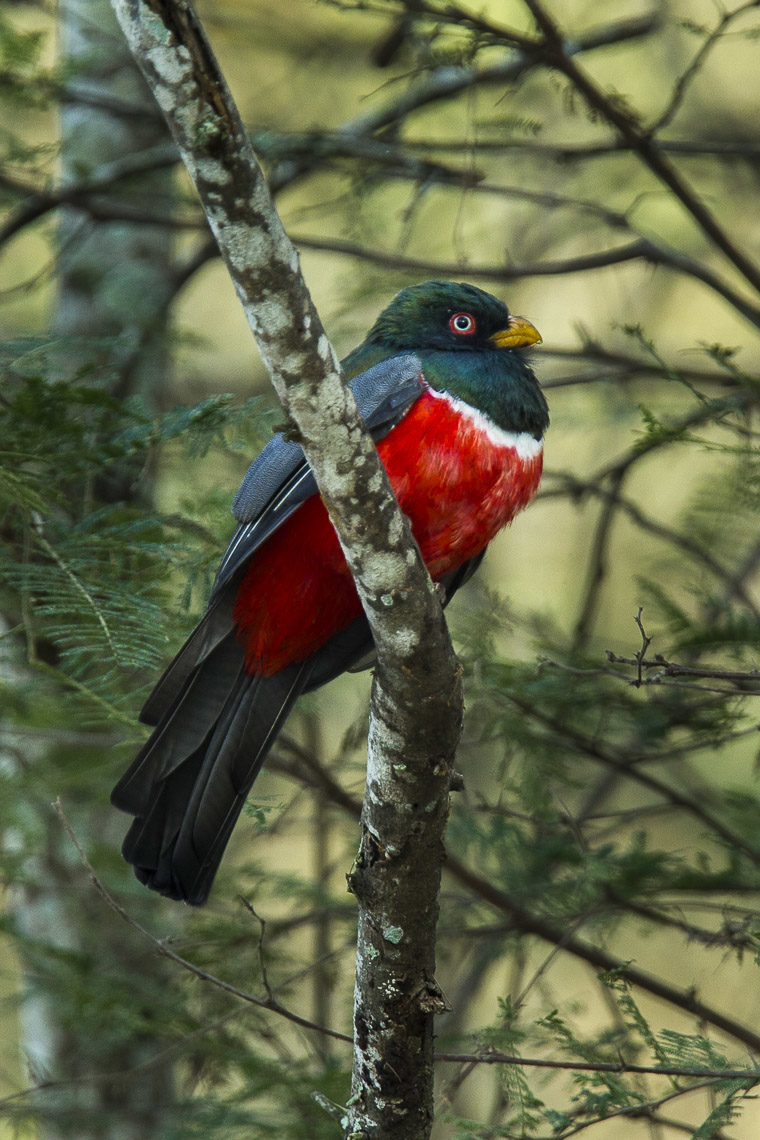
Wikipedia: Ecuadorian trogon Source: WIKIPEDIA
Ecuadorian_Trogon_-_Ecuador_S4E9606.jpg
🔍
Never observed (yet!)
Description
The Ecuadorian trogon (Trogon mesurus) is a species of bird in the family Trogonidae. It is found in deciduous and semi-humid forest and woodland in western Ecuador and far north-western Peru. It was formerly considered a subspecies of the black-tailed trogon, which it resembles, except for its white eyes. It does not currently have any subspecies listed in the Catalogue of Life.[3]
[more]
Details
Profile Wikipedia Xeno-Canto YouTube
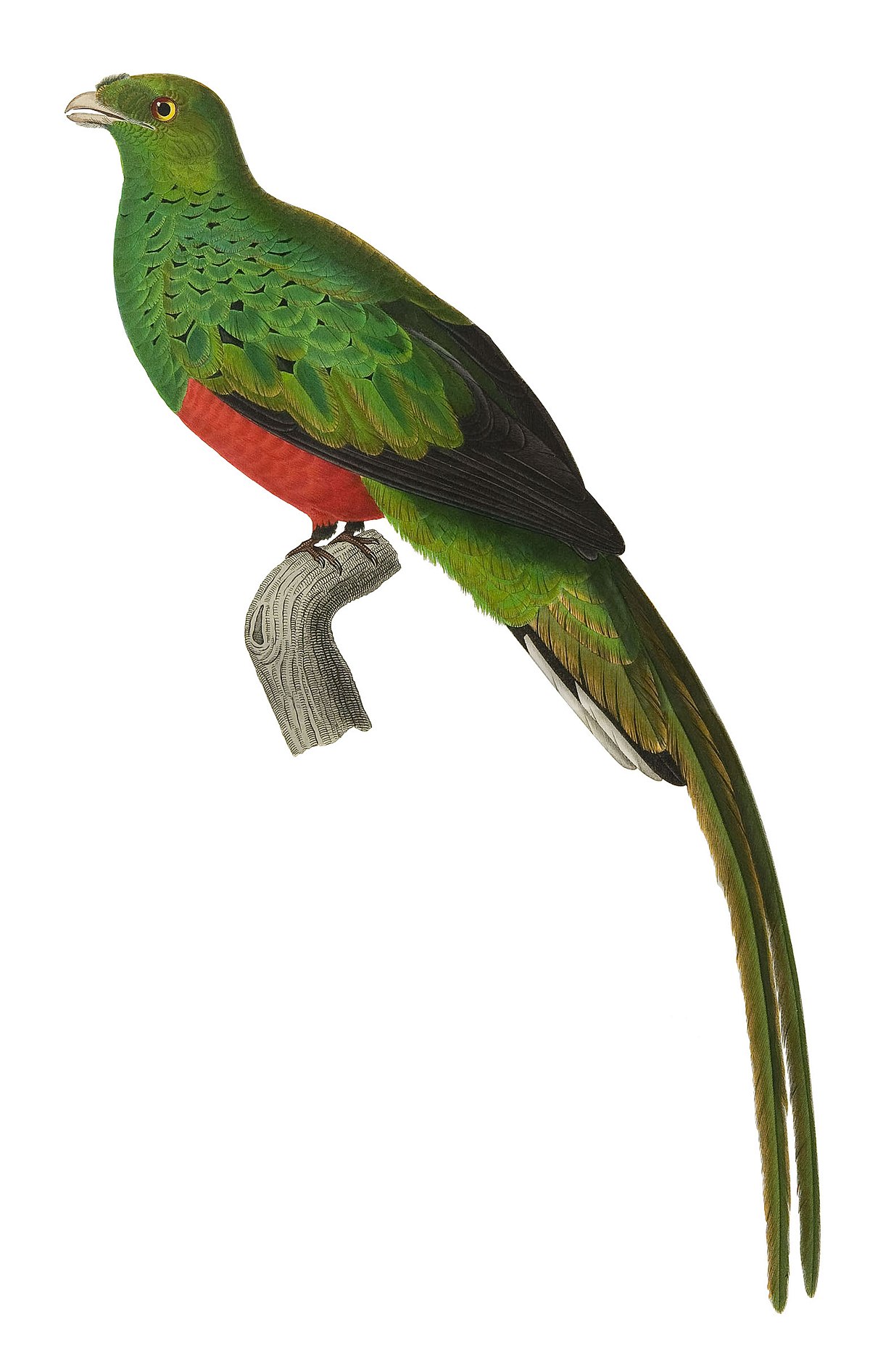
Wikipedia: Pavonine quetzal Source: WIKIPEDIA
1200px-Pharomachrus_pavoninus_1838.jpg
🔍
Never observed (yet!)
Description
The pavonine quetzal (Pharomachrus pavoninus) is a species of bird in the family Trogonidae, the trogons. It is also known at the peacock trogon, red-billed train bearer, or viuda pico rojo in Spanish.[2] The pavonine quetzal lives in the Neotropics, more specifically in the northern region of the Amazon basin, spreading from Colombia to Bolivia. The most notable characteristics helpful in identifying this bird are its plumage, red beak (male; females have grey bills), and its distribution - it is the only quetzal occupying the lowland rainforest east of the Andes.[2][3]
[more]
Details
Profile Wikipedia Xeno-Canto YouTube

Wikipedia: Crested quetzal Source: WIKIPEDIA
Crested_Quetzal.jpg
🔍
Never observed (yet!)
Description
The crested quetzal /ketSAHL/ (Pharomachrus antisianus) is a species of bird in the family Trogonidae native to South America, where it is found in Bolivia, Colombia, Ecuador, Peru, and Venezuela. Its natural habitat is subtropical or tropical moist montane forests.
[more]
Details
Profile Wikipedia Xeno-Canto YouTube
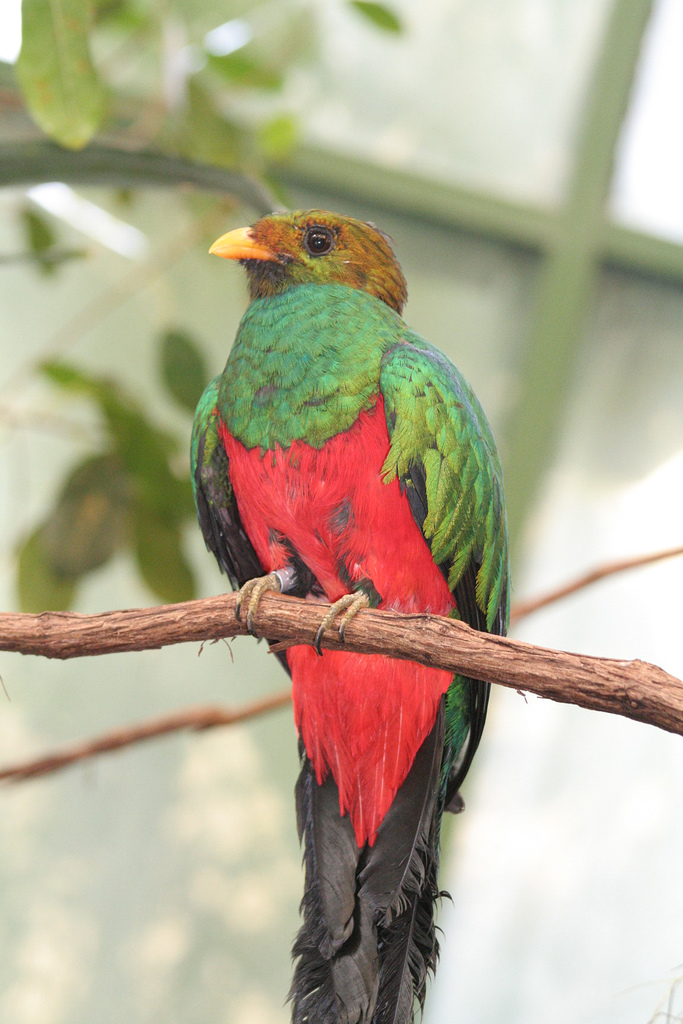
Wikipedia: Golden-headed quetzal Source: WIKIPEDIA
Golden-headed_Quetzal.jpg
🔍
Never observed (yet!)
Description
The golden-headed quetzal or corequenque (Pharomachrus auriceps) is a strikingly coloured bird in the genus Pharomachrus; it is also referred to as Trogon auriceps. It is found in moist mid-elevation forests from eastern Panama to northern Bolivia.
[more]
Details
Profile Wikipedia Xeno-Canto YouTube

Wikipedia: White-chinned jacamar Source: WIKIPEDIA
Galbula_tombacea.jpg
🔍
Never observed (yet!)
Description
The white-chinned jacamar (Galbula tombacea) is a species of bird in the family Galbulidae. It is found in Brazil, Colombia, Ecuador, and Peru.[2]
[more]
Details
Profile Wikipedia Xeno-Canto YouTube

Wikipedia: Coppery-chested jacamar Source: WIKIPEDIA
Coppery-chested_Jacamar_-_Ecuador_S4E0608.jpg
🔍
Never observed (yet!)
Description
The coppery-chested jacamar (Galbula pastazae) is a species of bird in the family Galbulidae. It is found in Colombia, Ecuador and Peru.[2][3]
[more]
Details
Profile Wikipedia Xeno-Canto YouTube

Wikipedia: Bluish-fronted jacamar Source: WIKIPEDIA
Bluish-fronted_Jacamar_-_Manu_NP_8499.jpg
🔍
Never observed (yet!)
Description
The bluish-fronted jacamar (Galbula cyanescens) is a species of bird in the family Galbulidae. It is found in Bolivia, Brazil, and Peru.[2][3]
[more]
Details
Profile Wikipedia Xeno-Canto YouTube

Wikipedia: Rufous-tailed jacamar Source: WIKIPEDIA
1200px-Rufous-tailed_jacamar_%28Galbula_ruficauda%29_male_2.JPG
🔍
Never observed (yet!)
Description
The rufous-tailed jacamar (Galbula ruficauda) is a near-passerine bird which breeds in the tropical New World in southern Mexico, Central America and South America as far south as southern Brazil and Ecuador.
[more]
Details

Wikipedia: Purplish jacamar Source: WIKIPEDIA
Purplish_Jacamar_%28Galbula_leucogastra%29.jpg
🔍
Never observed (yet!)
Description
The purplish jacamar (Galbula chalcothorax) is a species of bird in the family Galbulidae. It is found in Brazil, Colombia, Ecuador, and Peru.[2][3]
[more]
Details

Wikipedia: Paradise jacamar Source: WIKIPEDIA
Galbula_dea_-_Paradise_Jacamar.JPG
🔍
Never observed (yet!)
Description
The paradise jacamar (Galbula dea) is a species of bird in the family Galbulidae. It is found in Bolivia, Brazil, Ecuador, French Guiana, Guyana, Peru, Suriname, and Venezuela.[2][3]
[more]
Details
Profile Wikipedia Xeno-Canto YouTube

Wikipedia: Yellow-billed jacamar Source: WIKIPEDIA
1200px-Galbula_albirostris_-_Yellow-billed_jacamar_%28male%29.jpg
🔍
Never observed (yet!)
Description
The yellow-billed jacamar (Galbula albirostris) is a species of bird in the family Galbulidae. It is found in Brazil, Colombia, Ecuador, French Guiana, Guyana, Peru, Suriname, and Venezuela.[2]
[more]
Details
Profile Wikipedia Xeno-Canto YouTube

Wikipedia: Great jacamar Source: WIKIPEDIA
Great_Jacamar_-_Panama_H8O2675.jpg
🔍
Never observed (yet!)
Description
The great jacamar (Jacamerops aureus) is a species of bird in the family Galbulidae. It is placed in the monotypic genus Jacamerops.[2] It is found in Bolivia, Brazil, Colombia, Costa Rica, Ecuador, French Guiana, Guyana, Panama, Peru, Suriname, and Venezuela, where its natural habitat is subtropical and tropical moist lowland forests.[1]
[more]
Details

Wikipedia: Brown jacamar Source: WIKIPEDIA
1200px-Deleitando.JPG
🔍
Never observed (yet!)
Description
The brown jacamar (Brachygalba lugubris) is a species of bird in the family Galbulidae. It is found in Bolivia, Brazil, Colombia, Ecuador, French Guiana, Guyana, Peru, Suriname, and Venezuela.[2][3]
[more]
Details
Profile Wikipedia Xeno-Canto YouTube

Wikipedia: Spotted puffbird Source: WIKIPEDIA
1200px-Bucco_tamatia_-_Spotted_Puffbird.JPG
🔍
Never observed (yet!)
Description
The spotted puffbird (Bucco tamatia) is a species of puffbird in the family Bucconidae.
It is found in Bolivia, Brazil, Colombia, Ecuador, French Guiana, Guyana, Peru, Suriname, and Venezuela.
Its natural habitats are subtropical and tropical swamps and heavily degraded former forest.
[more]
Details
Profile Wikipedia Xeno-Canto YouTube

Wikipedia: Collared puffbird Source: WIKIPEDIA
1200px-Bucco_capensis_62884158.jpg
🔍
Never observed (yet!)
Description
The collared puffbird (Bucco capensis) is bird in the family Bucconidae that is found across the northern region of South America in the Amazon Basin, southern Colombia and Venezuela, and the Guianas.
[more]
Details

Wikipedia: Chestnut-capped puffbird Source: WIKIPEDIA
Chestnut-capped_Puffbird.jpg
🔍
Never observed (yet!)
Description
The chestnut-capped puffbird (Bucco macrodactylus) is a species of bird in the family Bucconidae, the puffbirds.
[more]
Details
Profile Wikipedia Xeno-Canto YouTube

Wikipedia: Western striolated-puffbird Source: WIKIPEDIA
Nystalus_obamai.jpg
🔍
Never observed (yet!)
Description
The western striolated puffbird (Nystalus obamai) was considered conspecific with the eastern striolated puffbird.[1][2] It lives in Bolivia, western Brazil, Colombia, Ecuador, and Peru.[3] Its natural habitat is subtropical and tropical moist lowland forests. It was named after U.S. president Barack Obama.[4]
[more]
Details
Profile Wikipedia Xeno-Canto YouTube
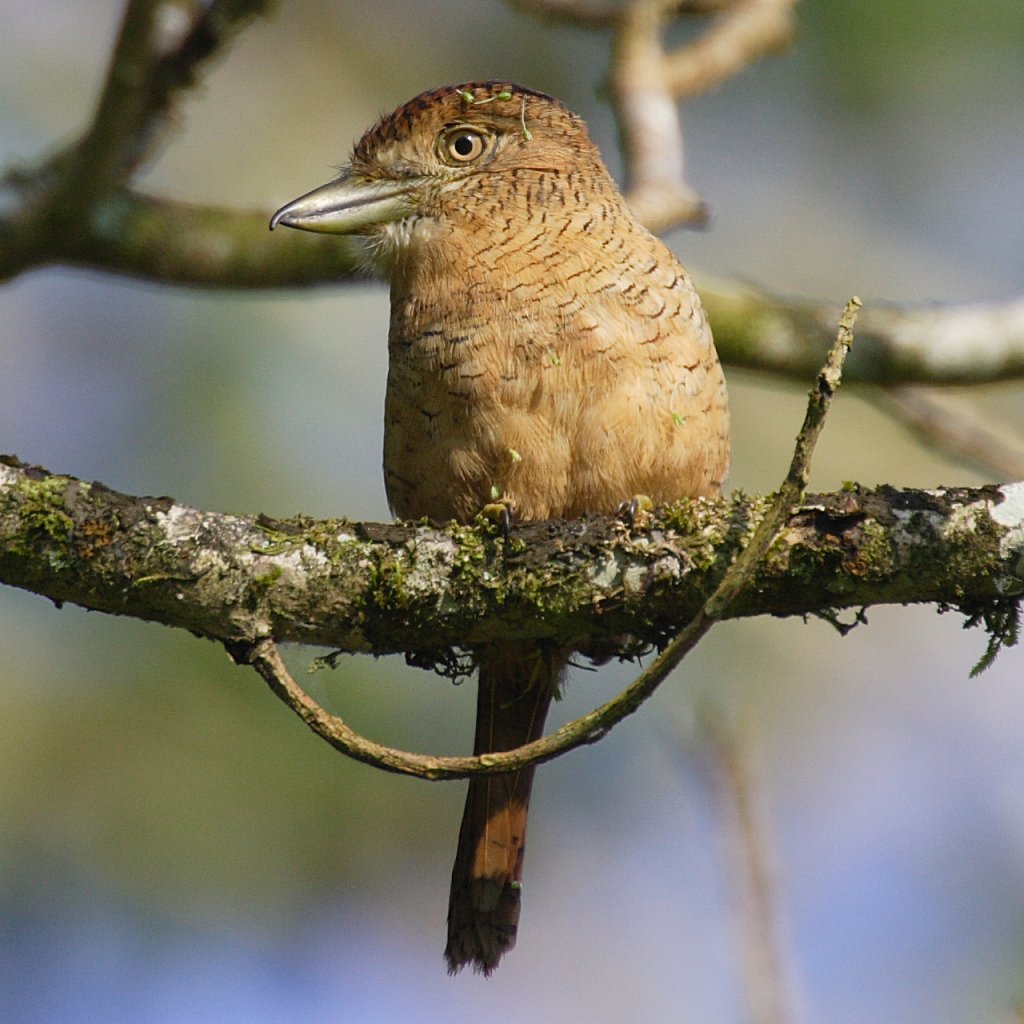
Wikipedia: Barred puffbird Source: WIKIPEDIA
Nystalus-radiatus-001.jpg
🔍
Never observed (yet!)
Description
The barred puffbird (Nystalus radiatus) is a species of puffbird in the family Bucconidae. It lives in forests in the Tumbes-Chocó-Magdalena of Panama, Colombia and Ecuador. They can often be found in the middle to upper levels of the forests, in addition it has been spotted on the edges of forest trials, wires in loosely populated land, clearings with scattered trees, and occasionally in lower stories of humid forest borders. In terms of behavior, this bird is easily overlooked because of its propensity to sit still for long periods of time (similar to other puffbirds). Migration of this species has not been observed. Their diet consists of beetles, large caterpillars, local praying mantis, and small lizards. It can be identified by its faint red color, long, narrow and slightly graduated tail, creamy yellow colored iris and small size.[2][3]
[more]
Details
Profile Wikipedia Xeno-Canto YouTube

Wikipedia: Rusty-breasted nunlet Source: WIKIPEDIA
1200px-Nonnula_rubecula.jpg
🔍
Never observed (yet!)
Description
The rusty-breasted nunlet (Nonnula rubecula) is a species of puffbird in the Bucconidae family.
It is found in two major ranges: regions of the central Amazon Basin with parts of the Guianas; and in southeastern Brazil, with Paraguay and Argentina, including in the interior, the cerrado.
It is found in Argentina, Brazil, Colombia, Ecuador, French Guiana, Paraguay, Peru, Suriname, and Venezuela.
[more]
Details
Profile Wikipedia Xeno-Canto YouTube

Wikipedia: Brown nunlet Source: WIKIPEDIA
1200px-Brown_Nunlet.jpg
🔍
Never observed (yet!)
Description
The brown nunlet (Nonnula brunnea) is a species of puffbird in the family Bucconidae.
[more]
Details
Profile Wikipedia Xeno-Canto YouTube

Wikipedia: Moustached puffbird Source: WIKIPEDIA
1200px-Malacoptila_mystacalis_-Manizales%2C_Caldas%2C_Colombia-8.jpg
🔍
Never observed (yet!)
Description
The moustached puffbird (Malacoptila mystacalis) is a species of puffbird in the family Bucconidae. It is one of seven species in the genus Malacoptila.
[more]
Details
Profile Wikipedia Xeno-Canto YouTube

Wikipedia: White-chested puffbird Source: WIKIPEDIA
1200px-Malacoptila_fusca.jpg
🔍
Never observed (yet!)
Description
The white-chested puffbird (Malacoptila fusca) is a species of puffbird in the family Bucconidae. It is one of seven species in the genus Malacoptila.
It is found in Brazil, Colombia, Ecuador, French Guiana, Guyana, Peru, Suriname, and Venezuela.
Its natural habitat is subtropical and tropical moist lowland forests.
[more]
Details
Profile Wikipedia Xeno-Canto YouTube

Wikipedia: White-whiskered puffbird Source: WIKIPEDIA
White_whiskered_puffbird.jpg
🔍
Never observed (yet!)
Description
The white-whiskered puffbird (Malacoptila panamensis) is a resident breeding bird species from southeastern Mexico to central Ecuador. It is sometimes known as the white-whiskered softwing.
[more]
Details
Profile Wikipedia Xeno-Canto YouTube

Wikipedia: Black-streaked puffbird Source: WIKIPEDIA
Black-streaked_Puffbird_-_Manu_NP_9768.jpg
🔍
Never observed (yet!)
Description
The black-streaked puffbird (Malacoptila fulvogularis) is a species of puffbird in the family Bucconidae.
It is found in Bolivia, Colombia, Ecuador, and Peru.
Its natural habitat is subtropical and tropical moist montane forests.
[more]
Details
Profile Wikipedia Xeno-Canto YouTube

Wikipedia: Pied puffbird Source: WIKIPEDIA
Pied_Puffbird_-_Ecuador.jpg
🔍
Never observed (yet!)
Description
The pied puffbird (Notharchus tectus) is a species of puffbird in the family Bucconidae.
[more]
Details
Profile Wikipedia Xeno-Canto YouTube

Wikipedia: White-necked puffbird Source: WIKIPEDIA
Notharchus_hyperrhynchus_-Belize_-perching_in_tree-8.jpg
🔍
Never observed (yet!)
Description
The white-necked puffbird (Notharchus hyperrhynchus) is a species of puffbird in the family Bucconidae.
[more]
Details
Profile Wikipedia Xeno-Canto YouTube

Wikipedia: Black-breasted puffbird Source: WIKIPEDIA
1200px-Black-breasted_puffbird_%28Notharchus_pectoralis%29.jpg
🔍
Never observed (yet!)
Description
The black-breasted puffbird (Notharchus pectoralis) is a species of puffbird in the family Bucconidae. It is found in Colombia, Ecuador, and Panama.
[more]
Details
Profile Wikipedia Xeno-Canto YouTube

Wikipedia: Yellow-billed nunbird Source: WIKIPEDIA
1200px-Yellow-billed_Nunbird.jpg
🔍
Never observed (yet!)
Description
The yellow-billed nunbird (Monasa flavirostris) is a species of puffbird in the family Bucconidae.
It is found in Bolivia, Brazil, Colombia, Ecuador, and Peru.
Its natural habitats are subtropical and tropical moist lowland forests, subtropical and tropical swamps, and heavily degraded former forest.
[more]
Details
Profile Wikipedia Xeno-Canto YouTube

Wikipedia: White-fronted nunbird Source: WIKIPEDIA
1200px-White-fronted_Nunbird.jpg
🔍
Never observed (yet!)
Description
The white-fronted nunbird (Monasa morphoeus) is a species of near passerine bird in the puffbird family (Bucconidae). It is found in the tropical Americas.
[more]
Details
Profile Wikipedia Xeno-Canto YouTube
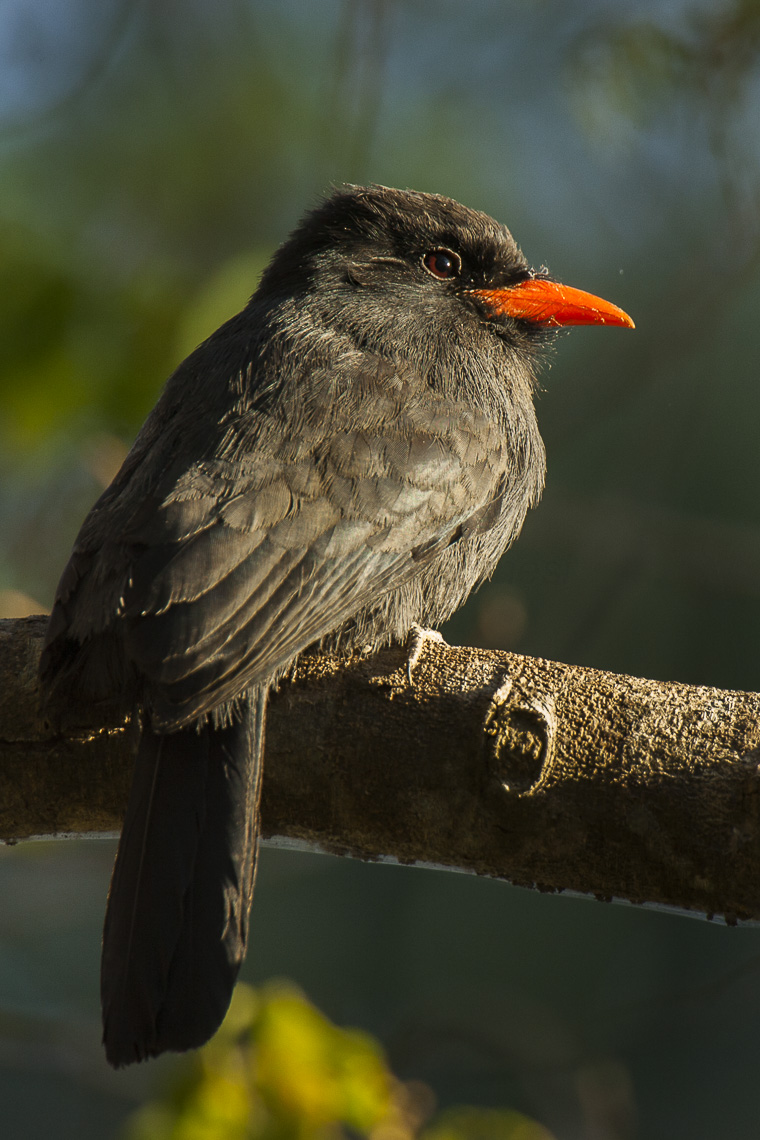
Wikipedia: Black-fronted nunbird Source: WIKIPEDIA
Black-fronted_Nunbird_-_Brazil_H8O2216.jpg
🔍
Never observed (yet!)
Description
The black-fronted nunbird (Monasa nigrifrons) is a species of bird in the family Bucconidae, the puffbirds.
[more]
Details
Profile Wikipedia Xeno-Canto YouTube
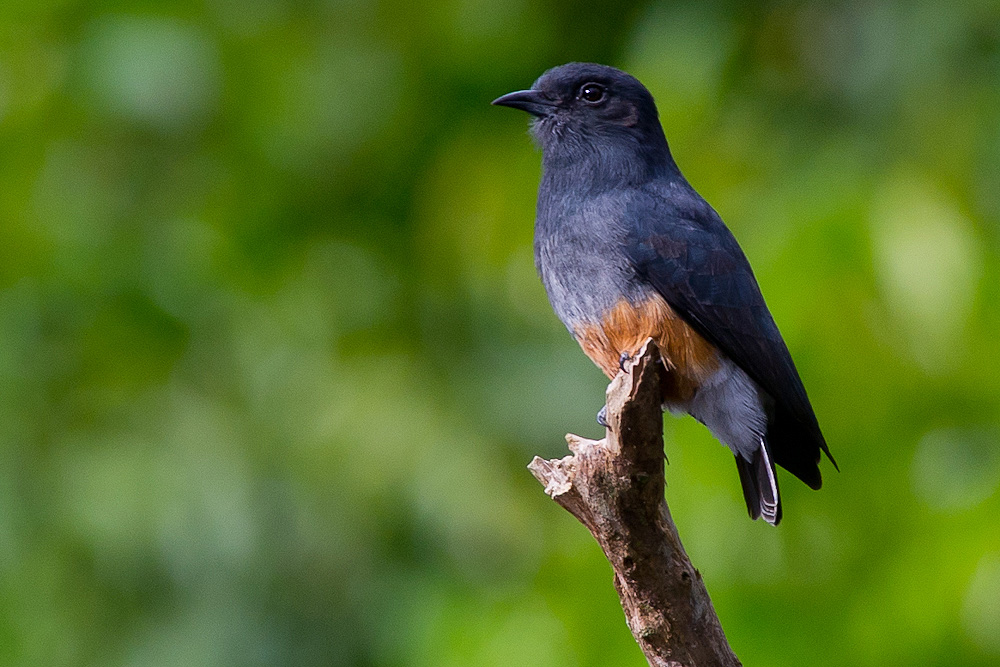
Wikipedia: Swallow-winged puffbird Source: WIKIPEDIA
Chelidoptera_tenebrosa_Swallow-wing.jpg
🔍
Never observed (yet!)
Description
The swallow-winged puffbird (Chelidoptera tenebrosa) is a species of bird in the family Bucconidae, the puffbirds. It is also called the swallow-wing. It is the only species in the genus Chelidoptera.[2]
[more]
Details
Profile Wikipedia Xeno-Canto YouTube

Wikipedia: Rufous-headed chachalaca Source: WIKIPEDIA
Rufous-headed_Chachalaca.jpg
🔍
Never observed (yet!)
Description
The rufous-headed chachalaca (Ortalis erythroptera) is a species of bird in the family Cracidae. It is found in Colombia and adjacent Ecuador and Peru. Its natural habitats are subtropical or tropical dry forest, subtropical or tropical moist lowland forest, subtropical or tropical moist montane forest, subtropical or tropical dry shrubland, and plantations . It is threatened by habitat loss.
[more]
Details
Profile Wikipedia Xeno-Canto YouTube

Wikipedia: Speckled chachalaca Source: WIKIPEDIA
Ortalis_guttata%2C_Speckled_Chachalaca.jpg
🔍
Never observed (yet!)
Description
The speckled chachalaca (Ortalis guttata) is a species of bird in the family Cracidae. It is found in forests and woodlands in the western Amazon Basin. It has distinct white scaling/spotting on the lower neck and chest, but otherwise it resembles other chachalacas, it being vaguely pheasant-like (though far more arboreal and social), and with an overall brown plumage.
[more]
Details
Profile Wikipedia Xeno-Canto YouTube

Wikipedia: Baudo guan Source: WIKIPEDIA
1200px-Orton%27s_Guan_%28Penelope_ortoni%29.jpg
🔍
Never observed (yet!)
Description
The Baudó guan (Penelope ortoni) is a species of bird from the family Cracidae. It is restricted to humid forests in the west Andean foothills of western Colombia and north-western Ecuador. It is highly sensitive to hunting and habitat destruction, with large sections of the main distribution in the Chocó having already disappeared. Consequently, it is considered to be endangered by BirdLife International and IUCN.
[more]
Details
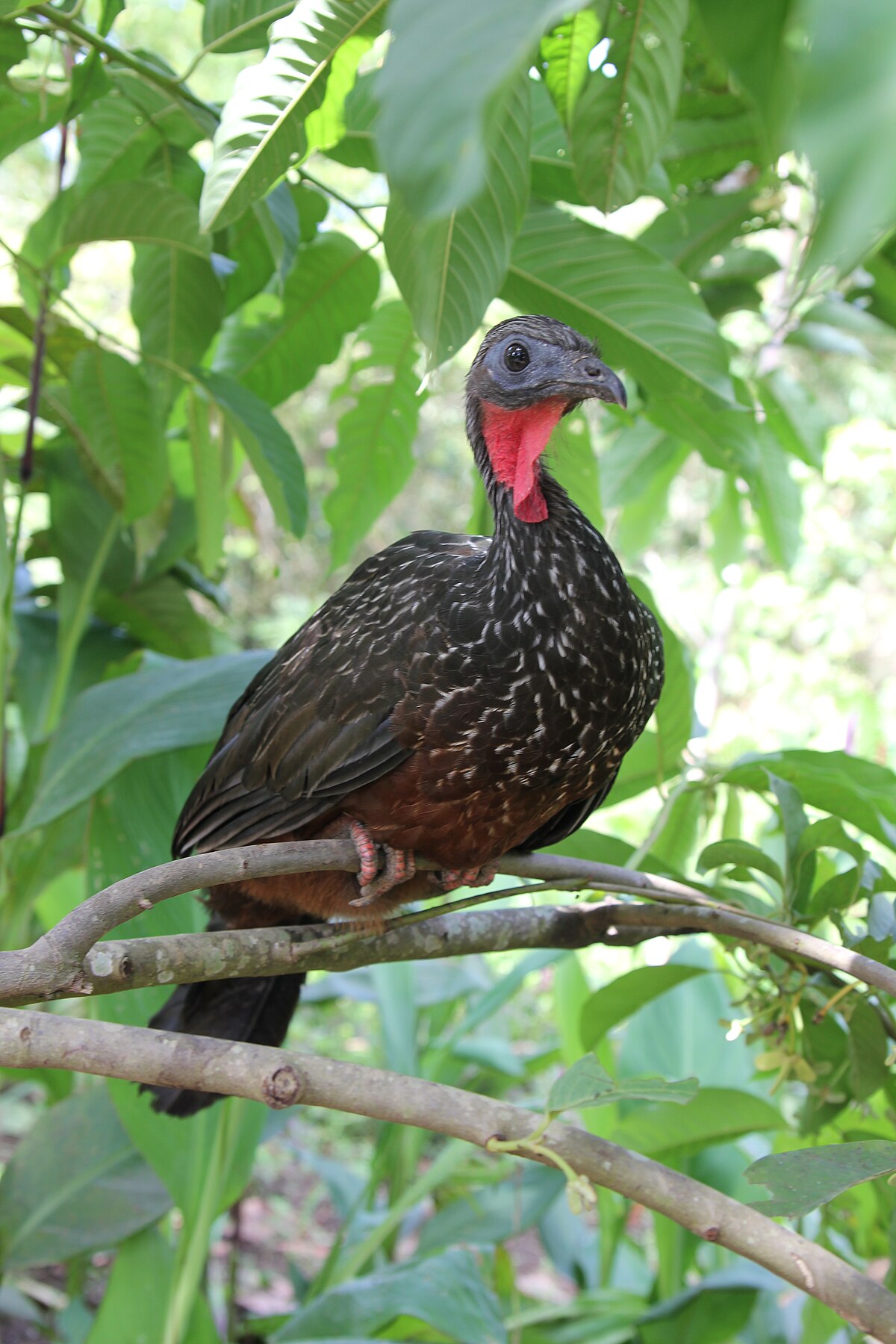
Wikipedia: Spix's guan Source: WIKIPEDIA
1200px-Penelope_jacquacu_-Manu_National_Park%2C_Peru-8.jpg
🔍
Never observed (yet!)
Description
Spix's guan (Penelope jacquacu) is a species of bird in the family Cracidae. It is "the prototypical cracid of the Amazonian lowlands."[2] The common name commemorates the German naturalist Johann Baptist von Spix (1782-1826).[3]
[more]
Details
Profile Wikipedia Xeno-Canto YouTube

Arenal feeder crested guan eats watermelon. 2018-02-27 13:15:42 Costa Rica
First observed in Costa Rica on 2018-02-26.
Description
The crested guan (Penelope purpurascens) is a member of an ancient group of birds of the family Cracidae, which are related to the Australasian mound builders. It is found in the Neotropics, in lowlands forests ranging from south Mexico and the Yucatán Peninsula to western Ecuador and southern Venezuela. The sexes are similar in appearance; the plumage is mainly dark brown with white spotting, an area of bare skin round the eye, bright red wattles, a bushy crest, a long broad tail and pink legs. It is a social bird, often seen in pairs or small family groups. It feeds in trees, mainly on fruit, and builds a nest of twigs on a branch. The two or three white eggs are incubated by the female. The International Union for Conservation of Nature has rated this bird's conservation status as "least concern".
[more]
Details
Profile Wikipedia Xeno-Canto YouTube

Wikipedia: Andean guan Source: WIKIPEDIA
Andean_Guan_%28Penelope_montagnii%29.jpg
🔍
Never observed (yet!)
Description
The Andean guan (Penelope montagnii) is a gamefowl species of the family Cracidae, in which it belongs to the guan subfamily Penelopinae. This bird occurs in the highlands (5,000 ft/1,500 m ASL and higher) of the Andes, from Venezuela and Colombia through Ecuador and Peru south to Bolivia and perhaps northwesternmost Argentina.[2]
[more]
Details
Profile Wikipedia Xeno-Canto YouTube

Wikipedia: Bearded guan Source: WIKIPEDIA
Bearded_Guan.jpg
🔍
Never observed (yet!)
Description
The bearded guan (Penelope barbata) is a species of bird in the family Cracidae, the chachalacas, guans, and curassows. It is found in Ecuador and Peru. Its natural habitat is subtropical or tropical moist montane forest. It is threatened by habitat loss.
[more]
Details

Wikipedia: Wattled guan Source: WIKIPEDIA
Wattled_Guan_%288079915812%29.jpg
🔍
Never observed (yet!)
Description
The wattled guan (Aburria aburri) is a species of bird in the family Cracidae. It is a fairly large black cracid with blue-based, black-tipped beak and a long, red-and-yellow wattle.
[more]
Details
Profile Wikipedia Xeno-Canto YouTube

Wikipedia: Wattled curassow Source: WIKIPEDIA
1200px-Wattled_Curassow_Crax_globulosa_Bird_1400px.jpg
🔍
Never observed (yet!)
Description
The wattled curassow (Crax globulosa) is a threatened member of the family Cracidae, the curassows, guans, and chachalacas. It is found in remote rainforests in the western Amazon basin in South America. Males have black plumage, except for a white crissum (the area around the cloaca), with curly feathers on the head and red bill ornaments and wattles. Females and juveniles are similar but lack the bill ornamentation and have a reddish-buff crissum area. The wattled curassow is the most ancient lineage of the southern Crax curassows. In captivity, it sometimes hybridises with the blue-billed curassow.
[more]
Details
Profile Wikipedia Xeno-Canto YouTube

Arenal feeder great curassow female. 2018-02-27 12:54:26 Costa Rica
First observed in Guatemala on 2018-02-07.
Description
The great curassow (Crax rubra) (Spanish: hocofaisán, pavón norteño) is a large, pheasant-like bird from the Neotropical rainforests, its range extending from eastern Mexico, through Central America to western Colombia and northwestern Ecuador. Male birds are black with curly crests and yellow beaks; females come in three colour morphs, barred, rufous and black. These birds form small groups, foraging mainly on the ground for fruits and arthropods, and the occasional small vertebrate, but they roost and nest in trees. This species is monogamous, the male usually building the rather small nest of leaves in which two eggs are laid. This species is threatened by loss of habitat and hunting, and the International Union for Conservation of Nature has rated its conservation status as "vulnerable".
[more]
Details
Profile Wikipedia Xeno-Canto YouTube

Wikipedia: Sickle-winged guan Source: WIKIPEDIA
1200px-Sickle-winged_Guan.jpg
🔍
Never observed (yet!)
Description
The sickle-winged guan (Chamaepetes goudotii) is a species of bird in the family Cracidae.
[more]
Details
Profile Wikipedia Xeno-Canto YouTube
Wikipedia: Salvin's curassow Source: WIKIPEDIA
Mitu_salvini_57851272_%28cropped%29.jpg
🔍
Never observed (yet!)
Description
Salvin's curassow (Mitu salvini) is a species of bird in the family Cracidae. It is found in Colombia, Ecuador, and Peru. Its natural habitat is subtropical or tropical moist lowland forest.
[more]
Details
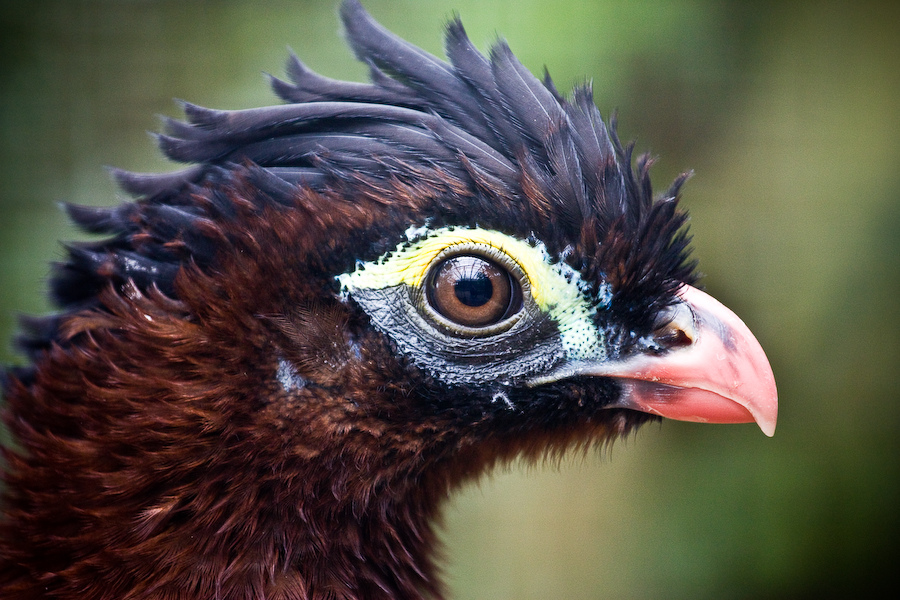
Wikipedia: Nocturnal curassow Source: WIKIPEDIA
Nothocrax_urumutum_-head_-zoo-8a.jpg
🔍
Never observed (yet!)
Description
The nocturnal curassow (Nothocrax urumutum) is a species of bird in the family Cracidae. It is found in Brazil, Colombia, Ecuador, Peru, and Venezuela. Its natural habitats are subtropical or tropical moist lowland forest and subtropical or tropical swampland.
[more]
Details
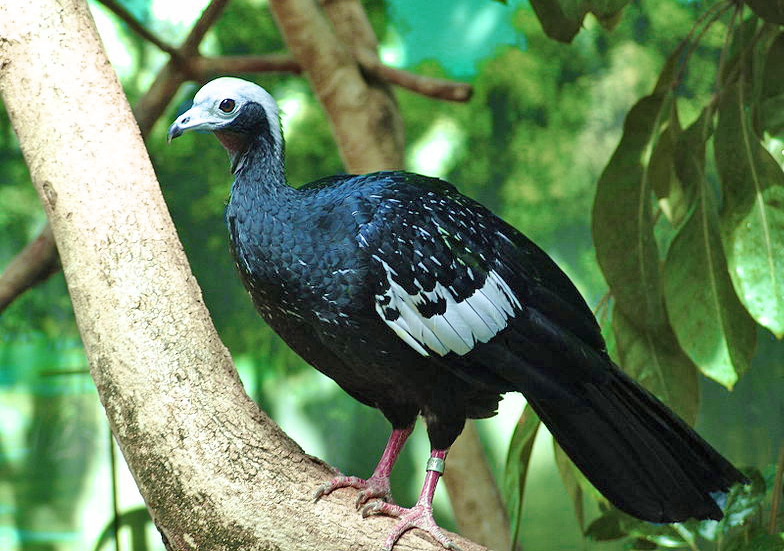
Wikipedia: Blue-throated piping guan Source: WIKIPEDIA
Pipile_cumanensis_%28Denver_Zoo%292.jpg
🔍
Never observed (yet!)
Description
The blue-throated piping guan (Pipile cumanensis) is a South American bird of the family Cracidae that is somewhat similar in appearance to the turkey.
[more]
Details

Wikipedia: Starred wood quail Source: WIKIPEDIA
Odontophorus_stellatus.jpg
🔍
Never observed (yet!)
Description
The starred wood quail (Odontophorus stellatus) is a species of bird in the family Odontophoridae (New World quail). It is found in subtropical or tropical moist lowland forests of Bolivia, Brazil, Ecuador, and Peru.
[more]
Details

Wikipedia: Marbled wood quail Source: WIKIPEDIA
Marbled_Wood-Quail_-_Rio_Tigre_-_Costa_Rica_MG_7758_%2826101675664%29.jpg
🔍
Never observed (yet!)
Description
The marbled wood quail (Odontophorus gujanensis), also known as the Amazonian wood quail, is a species of bird in the New World quail family. It is found in Bolivia, Brazil, Colombia, Costa Rica, Ecuador, French Guiana, Guyana, Panama, Peru, Suriname, and Venezuela. Its natural habitat is subtropical or tropical moist lowland forests.
[more]
Details
Description
Die Schwarzrückenwachtel (Odontophorus melanonotus) ist eine wenig erforschte Vogelart aus der Familie der Zahnwachteln (Odontophoridae). Sie kommt in Ecuador und in Kolumbien vor.
[more]
Details

Wikipedia: Rufous-breasted wood quail Source: WIKIPEDIA
1200px-Odontophorus_speciosus_-_1700-1880_-_Print_-_Iconographia_Zoologica_-_Special_Collections_University_of_Amsterdam_-_UBA01_IZ17100191.png
🔍
Never observed (yet!)
Description
The rufous-breasted wood quail (Odontophorus speciosus) is a species of bird in the family Odontophoridae. It is found in Bolivia, Ecuador, and Peru primarily on the east side of the Andes between 800 and 2000m in elevation (higher in Peru).[2]
[more]
Details

Wikipedia: Rufous-fronted wood quail Source: WIKIPEDIA
Odontophorus_erythrops_parambae_1897.jpg
🔍
Never observed (yet!)
Description
The rufous-fronted wood quail (Odontophorus erythrops) is a species of bird in the family Odontophoridae.
[more]
Details
Profile Wikipedia Xeno-Canto YouTube

Wikipedia: Tawny-faced quail Source: WIKIPEDIA
1200px-Rhynchortyx_cinctus.jpg
🔍
Never observed (yet!)
Description
The tawny-faced quail (Rhynchortyx cinctus) is a species of bird in the family Odontophoridae, and the only species in its genus Rhynchortyx.
[more]
Details
Profile Wikipedia Xeno-Canto YouTube

Wikipedia: White-chinned swift Source: WIKIPEDIA
1200px-Cypseloides_cryptus_map.svg.png
🔍
Never observed (yet!)
Description
The white-chinned swift (Cypseloides cryptus) is a species of swift in the family Apodidae. It is found in Belize, Colombia, Costa Rica, Ecuador, Guyana, Honduras, Mexico, Nicaragua, Panama, Peru, and Venezuela. Its natural habitats are subtropical or tropical moist lowland forests and subtropical or tropical moist montane forests.
[more]
Details
Profile Wikipedia Xeno-Canto YouTube

Wikipedia: White-chested swift Source: WIKIPEDIA
1200px-Cypseloides_lemosi.jpg
🔍
Never observed (yet!)
Description
The white-chested swift (Cypseloides lemosi) is a species of swift in the family Apodidae.
It is found in Colombia, Ecuador, and Peru.
Its natural habitat is heavily degraded former forest.
[more]
Details
Profile Wikipedia Xeno-Canto YouTube

Wikipedia: Spot-fronted swift Source: WIKIPEDIA
1200px-Cypseloides_cherriei_map.svg.png
🔍
Never observed (yet!)
Description
The spot-fronted swift (Cypseloides cherriei) is a species of swift in the family Apodidae. It is found in Colombia, Costa Rica, Ecuador and western Venezuela. Its natural habitat is subtropical or tropical moist montane forests. The scientific name commemorates the specimen collector George K. Cherrie.
[more]
Details
Profile Wikipedia Xeno-Canto YouTube
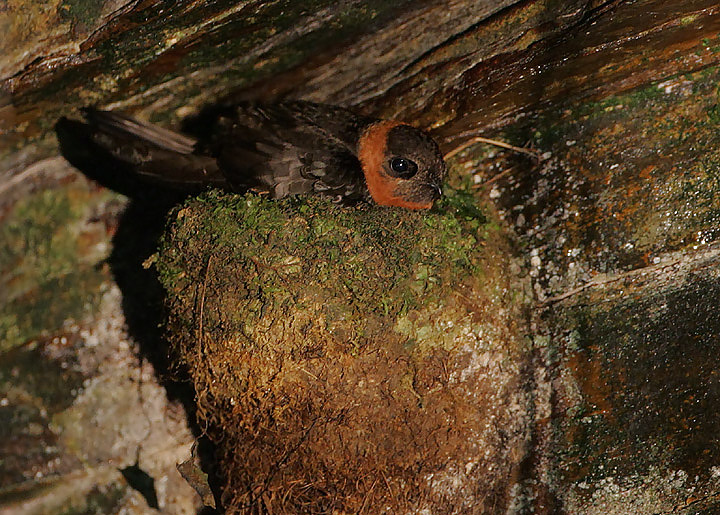
Wikipedia: Chestnut-collared swift Source: WIKIPEDIA
Flickr_-_Rainbirder_-_Chestnut-collared_Swift_%28Streptoprocne_rutila%29_on_the_nest.jpg
🔍
Never observed (yet!)
Description
The chestnut-collared swift (Streptoprocne rutila) is a resident breeding bird from Mexico and Trinidad south to Peru and Bolivia. It was one of the species of Cypseloides controversially moved to Streptoprocne by the AOU (BLI 2004).
[more]
Details
Profile Wikipedia Xeno-Canto YouTube

Wikipedia: White-collared swift Source: WIKIPEDIA
Streptoprocne_zonaris%2C_White-collared_Swift.jpg
🔍
Never observed (yet!)
Description
The white-collared swift (Streptoprocne zonaris) is a resident breeding bird from central Mexico, the Greater Antilles and Trinidad south to Peru, northern Argentina and southeastern Brazil.
[more]
Details
Profile Wikipedia Xeno-Canto YouTube
Description
The pale-rumped swift (Chaetura egregia) is a species of swift in the family Apodidae.
It is found in Bolivia, Brazil, Ecuador, and Peru.
Its natural habitat is subtropical or tropical moist lowland forests.
[more]
Details
Profile Wikipedia Xeno-Canto YouTube

Wikipedia: Gray-rumped swift Source: WIKIPEDIA
1200px-Chaetura_cinereiventris_cinereiventris.jpg
🔍
Never observed (yet!)
Description
The grey-rumped swift (Chaetura cinereiventris) is a small swift.
[more]
Details
Profile Wikipedia Audubon AllAboutBirds Xeno-Canto YouTube

Wikipedia: Chimney swift Source: WIKIPEDIA
Chimney_swift_overhead.jpg
🔍
Never observed (yet!)
Description
The chimney swift (Chaetura pelagica) is a bird belonging to the swift family Apodidae. A member of the genus Chaetura, it is closely related to both the Vaux's swift and the Chapman's swift; in the past, the three were sometimes considered to be conspecific. It has no subspecies. The chimney swift is a medium-sized, sooty gray bird with very long, slender wings and very short legs. Like all swifts, it is incapable of perching, and can only cling vertically to surfaces.
[more]
Details
Profile Wikipedia Xeno-Canto YouTube
Wikipedia: Band-rumped swift Source: WIKIPEDIA
Chaetura_spinicaudus_-_Band-rumped_Swift.jpg
🔍
Never observed (yet!)
Description
The band-rumped swift (Chaetura spinicaudus) is a small swift. Until 1998, it was known as Chaetura spinicauda. At that time, the previously considered subspecies Costa Rican swift, Chaetura fumosa, was split from this species and the scientific name was modified from C. spinacauda to C. spinacaudus.
[more]
Details
Profile Wikipedia Audubon AllAboutBirds Xeno-Canto YouTube

Wikipedia: Short-tailed swift Source: WIKIPEDIA
Chaetura_brachyura_-_Short-tailed_Swift.JPG
🔍
Never observed (yet!)
Description
The short-tailed swift (Chaetura brachyura) is a bird in the Apodidae, or swift family.
[more]
Details
Profile Wikipedia Xeno-Canto YouTube

Wikipedia: White-tipped swift Source: WIKIPEDIA
1200px-Aeronautes_montivagus_1847.jpg
🔍
Never observed (yet!)
Description
The white-tipped swift (Aeronautes montivagus) is a species of swift in the family Apodidae.
It is found in Argentina, Bolivia, Brazil, Colombia, Ecuador, Guyana, Peru, and Venezuela.
Its natural habitats are subtropical or tropical moist lowland forests, subtropical or tropical moist montane forests, and heavily degraded former forest.
[more]
Details

Wikipedia: Fork-tailed palm swift Source: WIKIPEDIA
1200px-CypselusSquamatusWolf.jpg
🔍
Never observed (yet!)
Description
The fork-tailed palm swift or Neotropical palm swift (Tachornis squamata) is a species of bird in subfamily Apodinae of the swift family Apodidae. It is found across most of northern South America and on Trinidad and Tobago.[2][3]
[more]
Details
Profile Wikipedia Xeno-Canto YouTube

Wikipedia: Long-billed hermit Source: WIKIPEDIA
1200px-Phaethornis_longirostris.jpg
🔍
Never observed (yet!)
Description
The long-billed hermit (Phaethornis longirostris) is a large hummingbird that is a resident breeder from central Mexico south to northwestern Colombia, extreme western Venezuela and western Ecuador. This species was formerly known as the western long-tailed hermit or just long-tailed hermit, but was renamed to highlight its unusual bill.
[more]
Details
Profile Wikipedia Xeno-Canto YouTube

Wikipedia: Reddish hermit Source: WIKIPEDIA
Reddish_Hermit_-.jpg
🔍
Never observed (yet!)
Description
The reddish hermit (Phaethornis ruber) is a species of bird in the family Trochilidae, the hummingbirds. It is found in Bolivia, Brazil, Colombia, Ecuador, Peru, Venezuela, and in the Guianas. At 7.5 cm (3 in) and a weight under 3 grams, it is among the smallest of the hermits and smallest birds overall.[2] Its natural habitats are forest and woodland, primarily humid.
[more]
Details
Profile Wikipedia Xeno-Canto YouTube
Description
The black-throated hermit (Phaethornis atrimentalis) is a species of hummingbird in the family Trochilidae. This small hermit is found in the western Amazon in Colombia, Ecuador, and Peru. Its diet pertains to anthropods and flowering plants such as Costus, Aechmea, Palicourea and Drymonia.[2]
[more]
Details

Wikipedia: Great-billed hermit Source: WIKIPEDIA
1200px-Phaethornis_malaris_-_Great-billed_Hermit%3B_Serra_do_Divisor_Nationa_Park%2C_Acre%2C_Brazil.jpg
🔍
Never observed (yet!)
Description
The great-billed hermit (Phaethornis malaris) is a species of hummingbird in the family Trochilidae.
It is found in Bolivia, Brazil, Colombia, Ecuador, French Guiana, Peru, Suriname, and Venezuela.
Its natural habitat is subtropical or tropical moist lowland forest.
[more]
Details
Profile Wikipedia Xeno-Canto YouTube
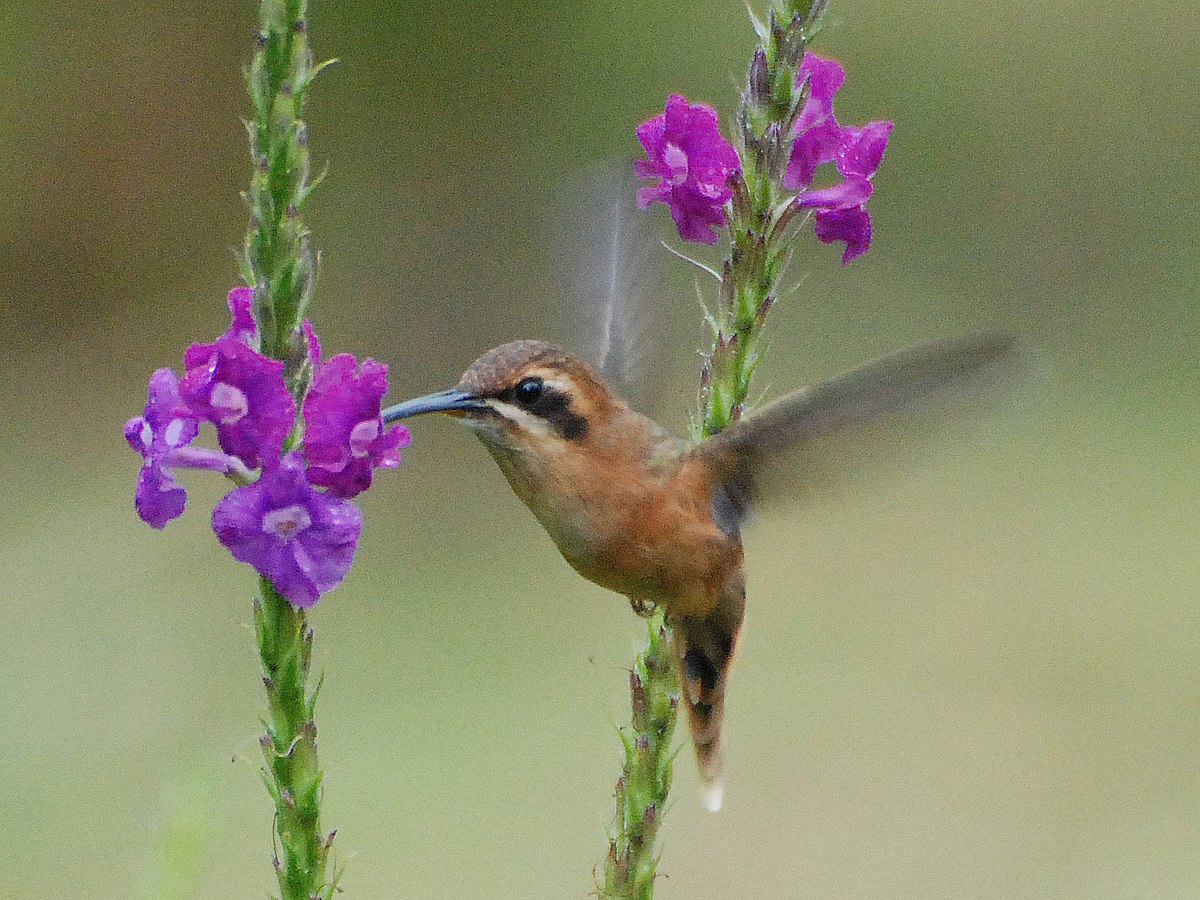
Wikipedia: Stripe-throated hermit Source: WIKIPEDIA
1200px-Phaethornis_striigularis.jpg
🔍
Never observed (yet!)
Description
The stripe-throated hermit (Phaethornis striigularis) is a species of hummingbird from Central America and north-western South America. It is generally fairly common and considered Least Concern by BirdLife International.
[more]
Details
Profile Wikipedia Xeno-Canto YouTube
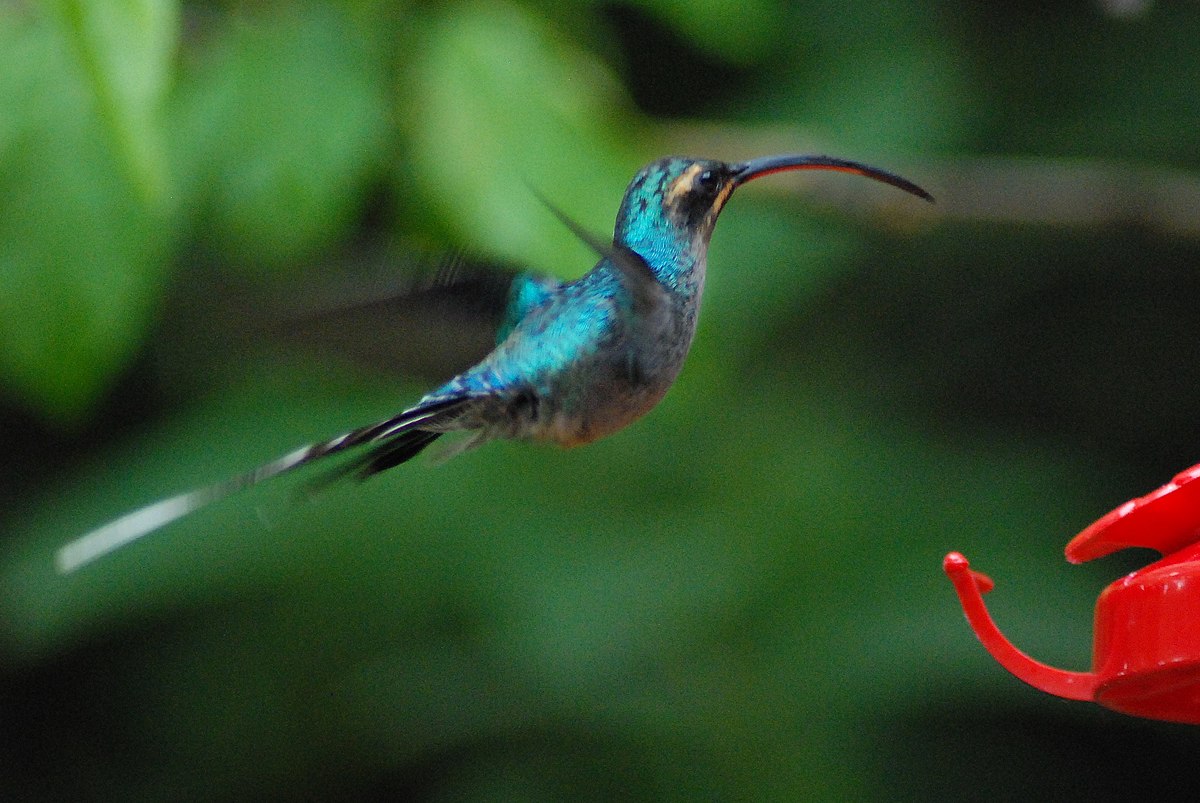
Wikipedia: Green hermit Source: WIKIPEDIA
1200px-Phaethornis_guy.jpg
🔍
Never observed (yet!)
Description
The green hermit (Phaethornis guy) is a large hummingbird that is a resident breeder from southern Central America (Costa Rica and Panama) south to northern South America (north-eastern Venezuela and Trinidad, and the northern Andes of eastern Peru)
[more]
Details
Profile Wikipedia Xeno-Canto YouTube

Wikipedia: White-bearded hermit Source: WIKIPEDIA
1200px-MonographTrochi1Goul_0232.jpg
🔍
Never observed (yet!)
Description
The white-bearded hermit (Phaethornis hispidus) is a species of hummingbird in the family Trochilidae.
[more]
Details
Profile Wikipedia Xeno-Canto YouTube

Wikipedia: Gray-chinned hermit Source: WIKIPEDIA
Grey-chinned_Hermit.jpg
🔍
Never observed (yet!)
Description
The grey-chinned hermit (Phaethornis griseogularis) is a species of hummingbird in the family Trochilidae. It is found in Colombia, Ecuador, Peru, Venezuela, and - marginally - far northern Brazil. Its natural habitats are subtropical or tropical dry forest, subtropical or tropical moist montane forest, and heavily degraded former forest. This is not a quiet species, where it will often sing and have audible wing noises.[2]
[more]
Details
Profile Wikipedia Xeno-Canto YouTube
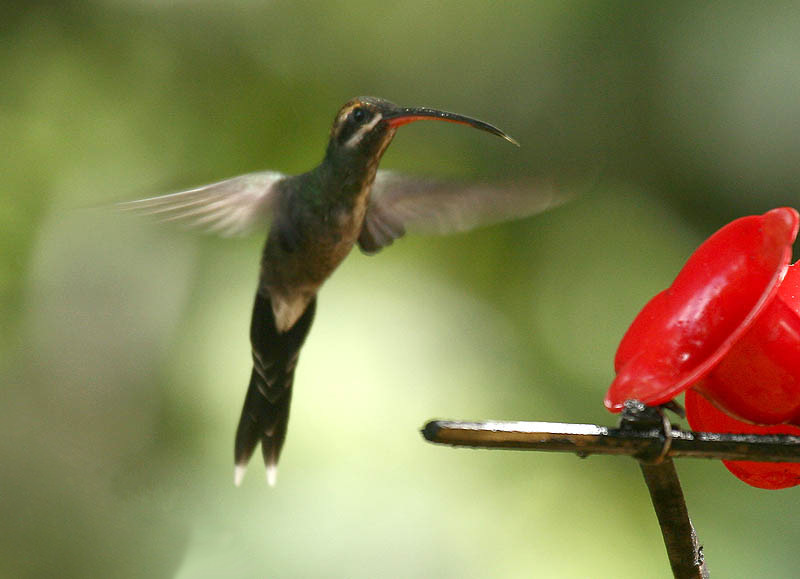
Wikipedia: White-whiskered hermit Source: WIKIPEDIA
White-whiskered_Hermit_%28Phaethornis_yaruqui%29.jpg
🔍
Never observed (yet!)
Description
The white-whiskered hermit (Phaethornis yaruqui) is a hummingbird that is found in Colombia and Ecuador.
[more]
Details
Profile Wikipedia Xeno-Canto YouTube

Wikipedia: Straight-billed hermit Source: WIKIPEDIA
1200px-Straight-billed_Hermit_%28Phaethornis_bourcieri%29.jpg
🔍
Never observed (yet!)
Description
The straight-billed hermit (Phaethornis bourcieri) is a species of bird in the family Trochilidae, the hummingbirds.
[more]
Details
Profile Wikipedia Xeno-Canto YouTube

Wikipedia: Tawny-bellied hermit Source: WIKIPEDIA
Tawny-bellied_Hermit_%28Phaethornis_syrmatophorus%29.jpg
🔍
Never observed (yet!)
Description
The tawny-bellied hermit (Phaethornis syrmatophorus) is a species of hummingbird. It is found in the mountains of Colombia, Ecuador, and Peru usually in humid forest understory and undergrowth.[2][3] This is where it spends its time foraging for arthropods and nectar via traplining like the diet of most if not all hummingbirds.[2][3] It thrives in elevations above 1000m, where at lower levels it is gradually replaced by the White-Whiskered Hermit.[4]
[more]
Details

Wikipedia: Shining sunbeam Source: WIKIPEDIA
Shining_Sunbeam_%28Aglaeactis_cupripennis%29.jpg
🔍
Never observed (yet!)
Description
The Shining sunbeam (Aglaeactis cupripennis) is a species of hummingbird in the family Trochilidae. It is found in Colombia, Ecuador, and Peru. Its natural habitats are subtropical or tropical moist montane forest and subtropical or tropical high-altitude shrubland.
[more]
Details
Profile Wikipedia Xeno-Canto YouTube
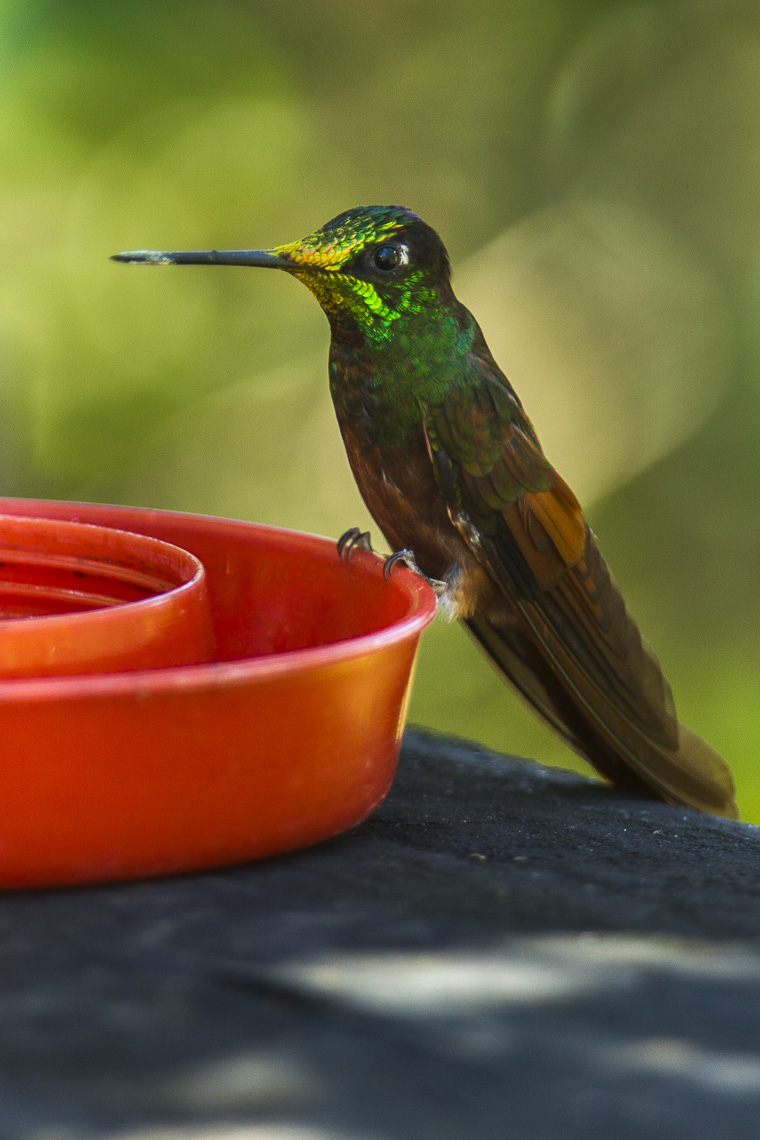
Wikipedia: Rainbow starfrontlet Source: WIKIPEDIA
Rainbow_Starfrontlet_-_Ecuador_S4E0095.jpg
🔍
Never observed (yet!)
Description
The rainbow starfrontlet (Coeligena iris) is a species of hummingbird in the family Trochilidae. It is found in Ecuador and Peru. Its natural habitats are subtropical or tropical moist montane forest, subtropical or tropical high-altitude shrubland, at elevations of 1500 – 3300 m, and heavily degraded former forest. They can be seen along the edges of forests and adjacent shrubby areas.
[more]
Details
Profile Wikipedia Xeno-Canto YouTube

Wikipedia: Brown inca Source: WIKIPEDIA
Brown_Inca_%28Coeligena_wilsoni%29.jpg
🔍
Never observed (yet!)
Description
The brown inca (Coeligena wilsoni) is a species of hummingbird found in forests between 1000 and 2800 m along the Pacific slope of the Andes from western Colombia to southern Ecuador.
[more]
Details
Profile Wikipedia Xeno-Canto YouTube

Wikipedia: Bronzy inca Source: WIKIPEDIA
1200px-Coeligena_coeligena_-NBII_Image_Gallery-a00195.jpg
🔍
Never observed (yet!)
Description
The bronzy inca (Coeligena coeligena) is a species of hummingbird in the family Trochilidae. It is found in Bolivia, Colombia, Ecuador, Peru, and Venezuela.
[more]
Details
Profile Wikipedia Xeno-Canto YouTube

Wikipedia: Collared inca Source: WIKIPEDIA
1200px-Coeligena_torquata.jpg
🔍
Never observed (yet!)
Description
The collared inca (Coeligena torquata) is a species of hummingbird found in humid Andean forests from western Venezuela, through Colombia and Ecuador, to Peru and Bolivia. It is very distinctive and unique in having a white chest-patch and white on the tail. Like other hummingbirds it takes energy from flower nectar (especially from bromeliads), while the plant benefits from the symbiotic relationship by being pollinated. Its protein source is small arthropods such as insects. It is normally solitary and can be found at varying heights above the ground, often in the open.[2]
[more]
Details
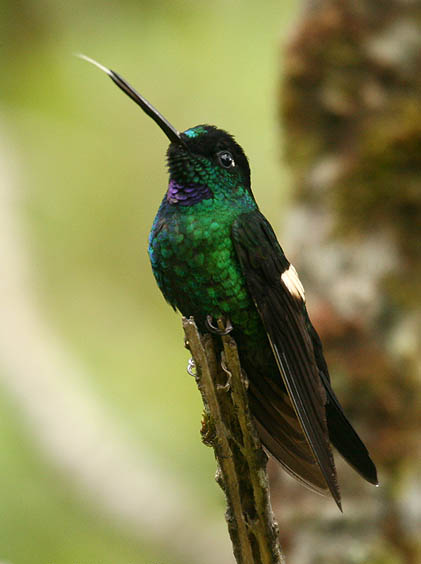
Wikipedia: Buff-winged starfrontlet Source: WIKIPEDIA
Buff-Winged_Starfrontlet_%28Coeligena_lutetiae%29.jpg
🔍
Never observed (yet!)
Description
The buff-winged starfrontlet (Coeligena lutetiae) is a species of hummingbird in the family Trochilidae.
It is found in Colombia, Ecuador, and Peru.
Its natural habitat is subtropical or tropical moist montane forest.
[more]
Details
Profile Wikipedia Xeno-Canto YouTube

Wikipedia: Black-breasted puffleg Source: WIKIPEDIA
1200px-MonographTrochi4Goul_0302.jpg
🔍
Never observed (yet!)
Description
The black-breasted puffleg (Eriocnemis nigrivestis) is a species of hummingbird native to Ecuador. It is Endangered, with less than 300 individuals remaining in the wild.
[more]
Details
Profile Wikipedia Xeno-Canto YouTube

Wikipedia: Sapphire-vented puffleg Source: WIKIPEDIA
Sapphire-Vented_Puffleg_%28Eriocnemis_luciani%29.jpg
🔍
Never observed (yet!)
Description
The sapphire-vented puffleg (Eriocnemis luciani) is a species of hummingbird in the family Trochilidae.
It is found in Colombia, Ecuador, Peru, and Venezuela.
Its natural habitat is subtropical or tropical moist montane forest. It sometimes includes the coppery-naped puffleg as a subspecies.
[more]
Details
Profile Wikipedia Xeno-Canto YouTube

Wikipedia: Emerald-bellied puffleg Source: WIKIPEDIA
1200px-MonographTrochi4Goul_0318.jpg
🔍
Never observed (yet!)
Description
The emerald-bellied puffleg (Eriocnemis aline) is a species of hummingbird in the family Trochilidae. It is found in Colombia, Ecuador, and Peru. Its natural habitats are subtropical or tropical moist montane forest and heavily degraded former forest.
[more]
Details
Profile Wikipedia Xeno-Canto YouTube

Wikipedia: Turquoise-throated puffleg Source: WIKIPEDIA
1200px-Eriocnemis_godini.jpg
🔍
Never observed (yet!)
Description
The turquoise-throated puffleg (Eriocnemis godini), also known as Godin's puffleg, is a species of hummingbird from Ecuador. It is mostly green with blue undertail coverts and white powder-puffs of downy feathers on the legs, and the male has a bluish-purple throat patch. It is only known from a few specimens taken in the nineteenth century and its taxonomic position is unclear. The type of habitat in which the type species was recovered has largely disappeared, and recent surveys trying to find this bird have failed. The International Union for Conservation of Nature believes it may be extinct, but there is a possibility that some individuals remain, so the bird has been rated as "critically endangered".
[more]
Details
Profile Wikipedia Xeno-Canto YouTube

Wikipedia: Black-thighed puffleg Source: WIKIPEDIA
1200px-Eriocnemis_derbyi_%28Paramero_rabihorcado%29_%2815484965256%29.jpg
🔍
Never observed (yet!)
Description
The black-thighed puffleg (Eriocnemis derbyi) is a species of hummingbird in the family Trochilidae. It is found at humid forest edge and ravines in the Andean highlands of Colombia and northern Ecuador. It is threatened by habitat loss. As suggested by its name, the feathering around its legs is black, which is unique among the pufflegs. Otherwise its plumage is green with a contrastingly black tail.
[more]
Details
Profile Wikipedia Xeno-Canto YouTube

Wikipedia: Golden-breasted puffleg Source: WIKIPEDIA
Golden-Breasted_Puffleg_%28Eriocnemis_mosquera%29.jpg
🔍
Never observed (yet!)
Description
The golden-breasted puffleg (Eriocnemis mosquera) is a species of hummingbird in the family Trochilidae.
[more]
Details

Wikipedia: Glowing puffleg Source: WIKIPEDIA
1200px-Eriocnemis_vestitus.jpg
🔍
Never observed (yet!)
Description
The glowing puffleg (Eriocnemis vestita) is a species of hummingbird in the family Trochilidae.
[more]
Details
Profile Wikipedia Xeno-Canto YouTube

Wikipedia: Mountain velvetbreast Source: WIKIPEDIA
Mountain_Velvetbreast_%28Lafresnaya_lafresnayi%29.jpg
🔍
Never observed (yet!)
Description
The mountain velvetbreast (Lafresnaya lafresnayi) is a species in the family Trochilidae, the family to which all hummingbirds belong. It is the only member of its genus and is found in the Andes, mostly between 2400 and 3500 m (7,900 to 11,500 ft), of northwestern Venezuela, Colombia, Ecuador, and Peru. Its natural habitats are clearings and bushes at the edges of subtropical or tropical moist montane forests and heavily degraded forests.
[more]
Details
Profile Wikipedia Xeno-Canto YouTube

Wikipedia: Green-tailed trainbearer Source: WIKIPEDIA
1200px-Lesbia_nuna.jpg
🔍
Never observed (yet!)
Description
The green-tailed trainbearer (Lesbia nuna) is a species of hummingbird in the family Trochilidae.
It is found in Bolivia, Colombia, Ecuador, Peru, and Venezuela.
Its natural habitats are subtropical or tropical high-altitude shrubland and heavily degraded former forest.
[more]
Details
Profile Wikipedia Xeno-Canto YouTube

Wikipedia: Black-tailed trainbearer Source: WIKIPEDIA
Black-tailed_Trainbearer_%28Lesbia_victoriae%29.jpg
🔍
Never observed (yet!)
Description
The black-tailed trainbearer (Lesbia victoriae) is a species of hummingbird in the family Trochilidae. It is found between 2500 and 3800m in Colombia, Ecuador, and Peru. Its natural habitats are subtropical or tropical moist montane forest, subtropical or tropical high-altitude shrubland, and heavily degraded former forest.
[more]
Details
Profile Wikipedia Xeno-Canto YouTube

Wikipedia: Viridian metaltail Source: WIKIPEDIA
1200px-Metallura_williami_atrigularis_1894.jpg
🔍
Never observed (yet!)
Description
The viridian metaltail (Metallura williami) is a species of hummingbird in the family Trochilidae.
[more]
Details
Profile Wikipedia Xeno-Canto YouTube

Wikipedia: Tyrian metaltail Source: WIKIPEDIA
1200px-Metallura_tyrianthina.jpg
🔍
Never observed (yet!)
Description
The Tyrian metaltail (Metallura tyrianthina) is a species of hummingbird in the family Trochilidae.
It is found in Bolivia, Colombia, Ecuador, Peru, and Venezuela.
Its natural habitats are subtropical or tropical moist montane forest and heavily degraded former forest.
[more]
Details
Profile Wikipedia Xeno-Canto YouTube
Description
The neblina metaltail, métallure du Chinguela, or metalura del Chinguela (Metallura odomae) is a species of hummingbird in the family Trochilidae.
It is found in Ecuador and Peru.
Its natural habitats are subtropical or tropical moist montane forest and subtropical or tropical high-altitude shrubland.
It is threatened by habitat loss.[1]
[more]
Details
Profile Wikipedia Xeno-Canto YouTube

Wikipedia: Violet-throated metaltail Source: WIKIPEDIA
1200px-Metallura_baroni_1894.jpg
🔍
Never observed (yet!)
Description
The violet-throated metaltail (Metallura baroni) — also called métallure de baron, metalura de azuay, and metalura gorjivioleta — is a species of hummingbird in the family Trochilidae found only in Ecuador. Its natural habitats are subtropical or tropical moist montane forest and subtropical or tropical high-altitude grassland.
it is threatened by habitat loss.
[more]
Details
Profile Wikipedia Xeno-Canto YouTube

Wikipedia: Ecuadorian hillstar Source: WIKIPEDIA
Ecuadorian_Hillstar.jpg
🔍
Never observed (yet!)
Description
The Ecuadorian hillstar (Oreotrochilus chimborazo) is a species of hummingbird. It is native to the Andes of Ecuador and extreme southern Colombia. Its main habitat type is high-altitude mountain grassland between 3500 and 5200 meters.[2]
[more]
Details
Profile Wikipedia Xeno-Canto YouTube
Description
The blue-throated hillstar (Oreotrochilus cyanolaemus) is a hummingbird found only in a small portion of the southwestern Andes in Ecuador. It was discovered in 2017.[1][2]
[more]
Details

Wikipedia: Green-headed hillstar Source: WIKIPEDIA
Andean_Hillstar.jpg
🔍
Never observed (yet!)
Description
The green-headed hillstar (Oreotrochilus stolzmanni) is a species of hummingbird found in the Andes of southern Ecuador and northern and central Peru.[2][3] It is one of 6 species in the genus Oreotrochilus, and can be distinguished from its relatives by subtle differences in plumage coloration.[4] The green-headed hillstar received its name due to its bronze and green crown and gorget of bright emerald green plumage. The species was first discovered by English ornithologist Osbert Salvin in 1895 and named after Polish ornithologist Jean Stanislaus Stolzmann.[5][6]
[more]
Details

La tarde rufous-tailed hummingbird. 2018-03-10 07:58:50 Costa Rica
First observed in Costa Rica on 2018-03-10.
Description
The rufous-tailed hummingbird (Amazilia tzacatl) is a medium-sized hummingbird that breeds from east-central Mexico, through Central America and Colombia, east to western Venezuela and south through western Ecuador to near the border with Peru. The larger Escudo hummingbird from Isla Escudo de Veraguas in Panama is commonly considered a subspecies of the rufous-tailed hummingbird. This is a common to abundant bird of open country, river banks, woodland, scrub, forest edge, coffee plantations and gardens up to 1,850 m (6,070 ft).
[more]
Details
Profile Wikipedia Xeno-Canto YouTube

Wikipedia: Western emerald Source: WIKIPEDIA
Chlorostilbon_melanorhynchus_%28male%29_-NW_Eduador-8.jpg
🔍
Never observed (yet!)
Description
The western emerald (Chlorostilbon melanorhynchus) is a species of hummingbird in the family Trochilidae. While most taxonomic authorities recognize it as a separate species, the Birdlife International checklist considers it as a subspecies of either the blue-tailed emerald, C. mellisugus, or the red-billed emerald, C. gibsoni.[1][2]
[more]
Details
Profile Wikipedia Xeno-Canto YouTube

Wikipedia: Blue-tailed emerald Source: WIKIPEDIA
Blue-tailed_Emerald_-_Ecuador_S4E0715.jpg
🔍
Never observed (yet!)
Description
The blue-tailed emerald (Chlorostilbon mellisugus) is a hummingbird found in tropical and subtropical South America east of the Andes from Colombia east to the Guianas and Trinidad, and south to northern Bolivia and central Brazil.
[more]
Details
Profile Wikipedia Xeno-Canto YouTube

Wikipedia: Blue-mantled thornbill Source: WIKIPEDIA
Blue-mantled_Thornbill_-_Ecuador_S4E3147.jpg
🔍
Never observed (yet!)
Description
The blue-mantled thornbill (Chalcostigma stanleyi) is a species of hummingbird native to the high-altitude forest and grassland regions of Ecuador, Bolivia, and Peru.
[more]
Details
Profile Wikipedia Xeno-Canto YouTube

Wikipedia: Rainbow-bearded thornbill Source: WIKIPEDIA
Rainbow-Bearded_Thornbill_%28Chalcostigma_herrani%29.jpg
🔍
Never observed (yet!)
Description
The rainbow-bearded thornbill (Chalcostigma herrani) is a species of hummingbird in the family Trochilidae.
It is found in Colombia, Ecuador, and Peru.
Its natural habitat is subtropical or tropical high-altitude grassland.
[more]
Details
Profile Wikipedia Xeno-Canto YouTube

Wikipedia: Rufous-capped thornbill Source: WIKIPEDIA
1200px-MonographTrochi3Goul_0296.jpg
🔍
Never observed (yet!)
Description
The rufous-capped thornbill (Chalcostigma ruficeps) is a species of hummingbird in the family Trochilidae.
It is found in Bolivia, Colombia, Ecuador, and Peru.
Its natural habitats are subtropical or tropical moist montane forest and heavily degraded former forest.
[more]
Details
Profile Wikipedia Xeno-Canto YouTube

Wikipedia: Amethyst-throated sunangel Source: WIKIPEDIA
Amethyst-throated_Sunangel_-_Ecuador_S4E1868.jpg
🔍
Never observed (yet!)
Description
The amethyst-throated sunangel (Heliangelus amethysticollis) is a species of hummingbird.
[more]
Details
Profile Wikipedia Xeno-Canto YouTube

Wikipedia: Royal sunangel Source: WIKIPEDIA
1200px-Heliangelus_regalis_map.svg.png
🔍
Never observed (yet!)
Description
The royal sunangel (Heliangelus regalis) is a species of hummingbird. It is endemic to subtropical elfin forests and shrubs in the Andes of northern Peru and adjacent south-eastern Ecuador. It is endangered due to habitat loss. It is strongly sexually dichromatic, and while females resemble other female sunangels, males are unique with their iridescent dark blue plumage.
[more]
Details
Profile Wikipedia Xeno-Canto YouTube
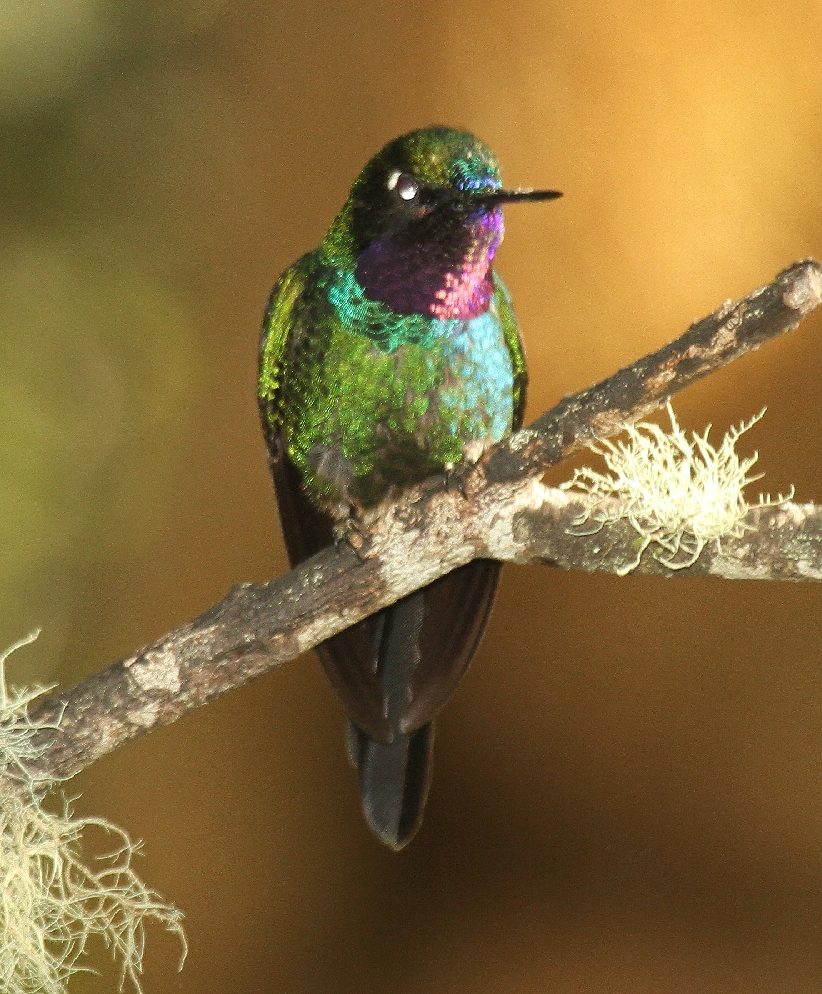
Wikipedia: Purple-throated sunangel Source: WIKIPEDIA
Purple-throatedSunangel.jpg
🔍
Never observed (yet!)
Description
The purple-throated sunangel (Heliangelus viola) is a species of midsized hummingbird in the genus Heliangelus. It is found in western Ecuador and northwestern Peru.[2] Its natural habitats are subtropical or tropical moist montane forest and heavily degraded former forest at an elevation ranging from 2150 to 3050 meters.[1] It forages in the midstory of the forest for nectar.[3] The sunangel is one of the more common hummingbirds in the Andean highlands and is more habituated to both human settlement and open habitats than many of its relatives. It is listed by the IUCN as a species of Least Concern due to its large range and its treatment as a frequently-seen species across much of its range.[1]
[more]
Details
Profile Wikipedia Xeno-Canto YouTube

Wikipedia: Tourmaline sunangel Source: WIKIPEDIA
1200px-Tourmaline_Sunangel_RWD2b.jpg
🔍
Never observed (yet!)
Description
The tourmaline sunangel (Heliangelus exortis) is a species of hummingbird.
It is found in Colombia and Ecuador.
Its natural habitats are subtropical or tropical moist montane forest and heavily degraded former forest.
[more]
Details
Profile Wikipedia Xeno-Canto YouTube

Wikipedia: Gorgeted sunangel Source: WIKIPEDIA
1200px-Gorgeted_Sunangel_%28m%29_JCB.jpg
🔍
Never observed (yet!)
Description
The gorgeted sunangel (Heliangelus strophianus) is a species of hummingbird found on the west slope of Ecuador and extreme southwestern Colombia.
[more]
Details
Profile Wikipedia Xeno-Canto YouTube

Wikipedia: Little sunangel Source: WIKIPEDIA
Little_Sunangel_-_Ecuador_S4E1895.jpg
🔍
Never observed (yet!)
Description
The flame-throated sunangel or little sunangel (Heliangelus micraster) is a species of hummingbird.
It is found in Ecuador and Peru.
Its natural habitat is subtropical or tropical moist montane forest.
[more]
Details

Wikipedia: Black-throated mango Source: WIKIPEDIA
Anthracothorax_nigricollis_1152.jpg
🔍
Never observed (yet!)
Description
The black-throated mango (Anthracothorax nigricollis) is a hummingbird species native to South America and Trinidad and Tobago.
[more]
Details
Profile Wikipedia Xeno-Canto YouTube

Wikipedia: Long-billed starthroat Source: WIKIPEDIA
Heliomaster_longirostris%2C_Long-billed_Starthroat.jpg
🔍
Never observed (yet!)
Description
The long-billed starthroat (Heliomaster longirostris) is a hummingbird that breeds from southern Mexico to Panama, from Colombia south and east to Bolivia and Brazil, and on Trinidad. It is present throughout South and Central America and is an uncommon but widespread species, which appears to be a local or seasonal migrant, although its movements are not well understood.
[more]
Details
Profile Wikipedia Xeno-Canto YouTube

Wikipedia: Rufous-throated sapphire Source: WIKIPEDIA
Flickr_-_Dario_Sanches_-_BEIJA-FLOR.jpg
🔍
Never observed (yet!)
Description
The rufous-throated sapphire (Hylocharis sapphirina) is a species of hummingbird in the family Trochilidae. It is found at forest edge, savanna-like habitats and plantations in northern and central South America.
[more]
Details

Wikipedia: Bronzy hermit Source: WIKIPEDIA
Bronzy_Hermit_%283529655516%29_%28cropped%29.jpg
🔍
Never observed (yet!)
Description
The bronzy hermit (Glaucis aeneus) is a species of hummingbird in the family Trochilidae. It is found in forests and thickets from eastern Honduras south to western Panama, and in the Chocó of western Colombia and north-western Ecuador. It closely resembles the larger rufous-breasted hermit.
[more]
Details
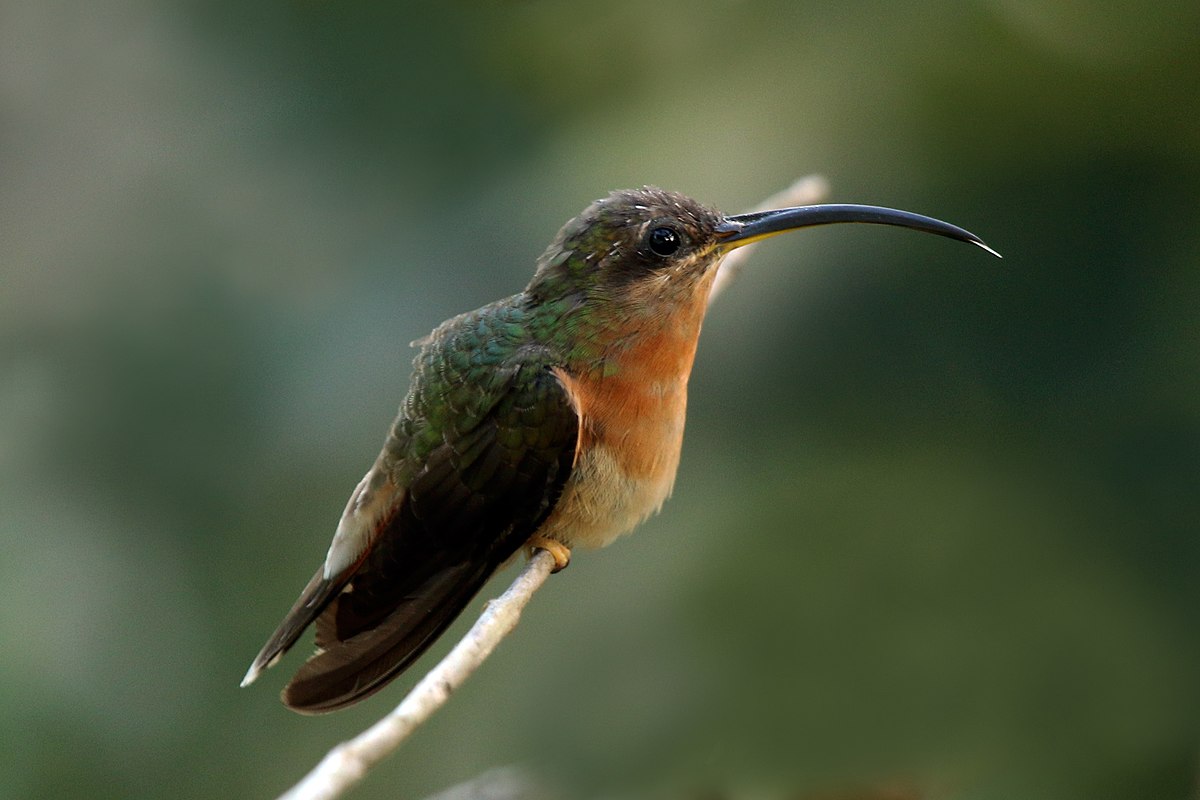
Wikipedia: Rufous-breasted hermit Source: WIKIPEDIA
1200px-Rufous-breasted_hermit_%28_Glaucis_hirsutus_insularum%29.jpg
🔍
Never observed (yet!)
Description
The rufous-breasted hermit or hairy hermit (Glaucis hirsutus) is a hummingbird that breeds from Panama south to Bolivia, and on Trinidad, Tobago and Grenada. It is a widespread and generally common species, though local populations may change in numbers and disappear altogether in marginal habitat[2]
[more]
Details
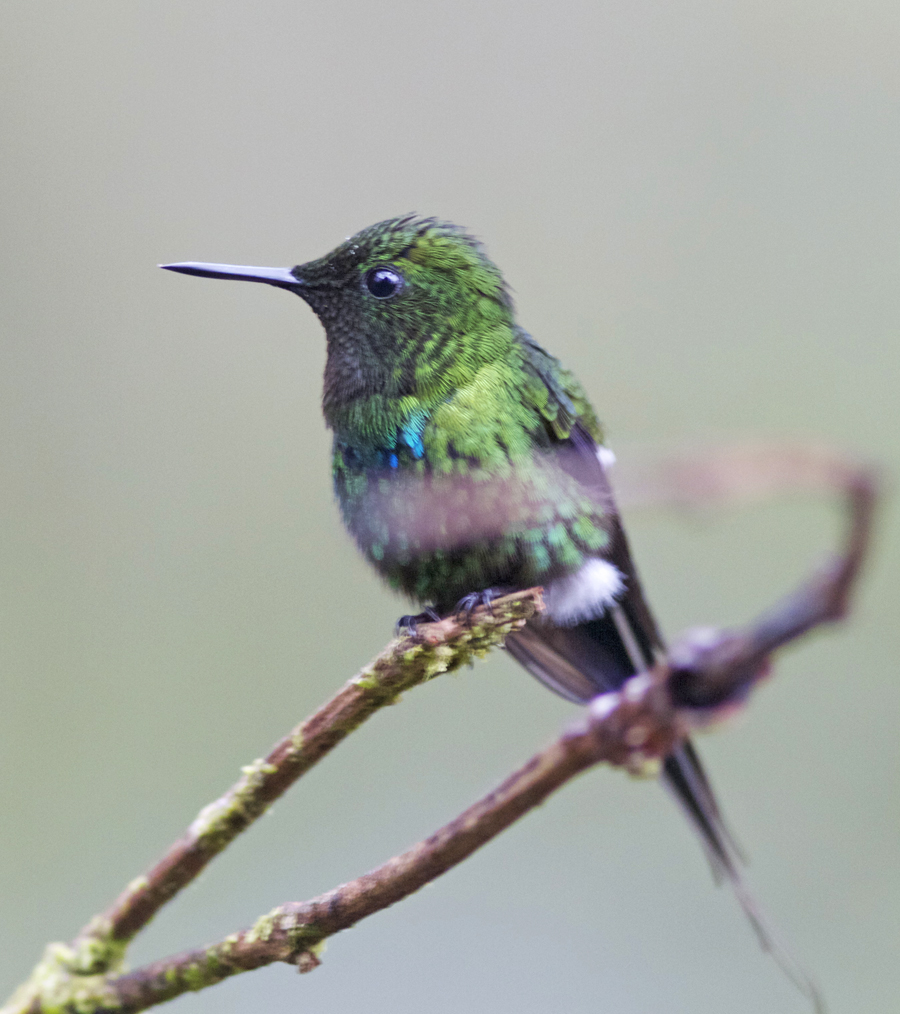
Wikipedia: Green thorntail Source: WIKIPEDIA
Green_Thorntail_JCB.jpg
🔍
Never observed (yet!)
Description
The green thorntail (Discosura conversii) is a small hummingbird that is a resident breeder from Costa Rica to western Ecuador. It occurs at middle elevations from 700–1,400 m (2,300–4,600 ft) but may descend lower early in the wet season. In Costa Rica and Panama it is confined to the Caribbean slopes.
[more]
Details

Wikipedia: Black-bellied thorntail Source: WIKIPEDIA
1200px-Histoirenaturel04muls_0363.jpg
🔍
Never observed (yet!)
Description
The black-bellied thorntail (Discosura langsdorffi) is a slow flying species of hummingbird in the family Trochilidae.[2]
It is found in Bolivia, Brazil, Colombia, Ecuador, Peru, and Venezuela.
Its natural habitats are subtropical or tropical moist lowland forest and heavily degraded former forest at about a 100-300m altitude.[3] It stays high in the forest which explains the lack of scientific information on it.[4] The male will attract the female by fanning out their tail and zooming side-to-side with a loud cracking sound.[2] Generally they'd only make a quick “tsip” or “chip” noise when feeding.[3]
[more]
Details
Profile Wikipedia Xeno-Canto YouTube
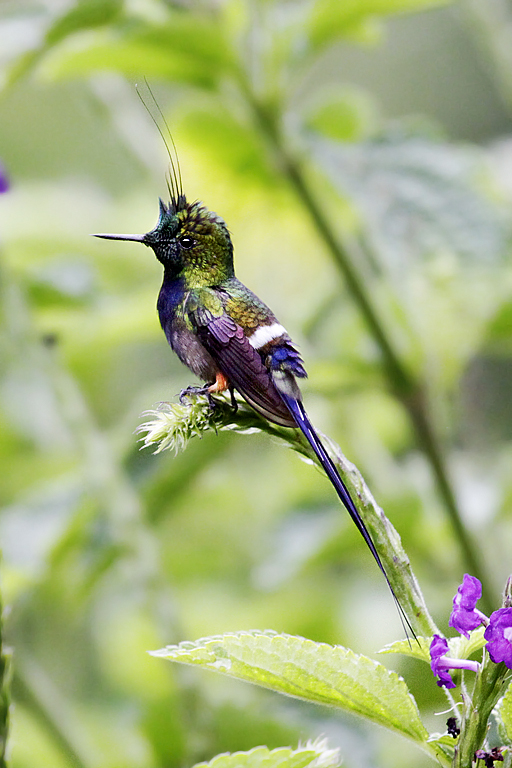
Wikipedia: Wire-crested thorntail Source: WIKIPEDIA
Discosura_popelairii_-near_Manu_Road%2C_Peru-8.jpg
🔍
Never observed (yet!)
Description
The wire-crested thorntail (Discosura popelairii) is a hummingbird which occurs in Colombia, Ecuador and Peru.
[more]
Details
Profile Wikipedia Xeno-Canto YouTube

Wikipedia: Buff-tailed sicklebill Source: WIKIPEDIA
1200px-Haaksnavelkolibrie.jpg
🔍
Never observed (yet!)
Description
The buff-tailed sicklebill (Eutoxeres condamini) is a species of hermit hummingbird from the lower Andes and adjacent west Amazonian lowlands from southern Colombia and northern Ecuador to Peru and Bolivia.[2]
[more]
Details
Profile Wikipedia Xeno-Canto YouTube

Wikipedia: White-tipped sicklebill Source: WIKIPEDIA
1200px-Eutoxeres_aquila.jpg
🔍
Never observed (yet!)
Description
The white-tipped sicklebill (Eutoxeres aquila) is a species of hummingbird in the family Trochilidae.
It is found in Costa Rica and Panama of Central America, and Colombia, Ecuador, and far northern Peru. There is also a single recent record from Mérida in Venezuela.
[more]
Details

Wikipedia: Black-eared fairy Source: WIKIPEDIA
1200px-Heliothryx_aurita_Black-eared_Fairy.jpg
🔍
Never observed (yet!)
Description
The black-eared fairy (Heliothryx auritus) is a species of hummingbird in the family Trochilidae. It is found in tropical forests in South America.
[more]
Details
Profile Wikipedia Xeno-Canto YouTube

Wikipedia: Purple-crowned fairy Source: WIKIPEDIA
1200px-Heliothryx_barroti_on_nest.jpg
🔍
Never observed (yet!)
Description
The purple-crowned fairy (Heliothryx barroti) is a large hummingbird that breeds in the lowlands and hills from southeastern Mexico south to southwestern Ecuador.
[more]
Details
Profile Wikipedia Xeno-Canto YouTube

Wikipedia: Fork-tailed woodnymph Source: WIKIPEDIA
Thalurania_furcata_-near_Amazonia_Lodge%2C_Manu_National_Park%2C_Peru-8.jpg
🔍
Never observed (yet!)
Description
The fork-tailed woodnymph (Thalurania furcata) is a species of hummingbird in the family Trochilidae. It is found in Argentina, Bolivia, Brazil, Colombia, Ecuador, French Guiana, Guyana, Paraguay, Peru, Suriname, Trinidad and Tobago, and Venezuela. Its natural habitats are subtropical or tropical moist lowland forest, subtropical or tropical moist montane forest, and heavily degraded former forest.
[more]
Details
Profile Wikipedia Xeno-Canto YouTube

Wikipedia: Crowned woodnymph Source: WIKIPEDIA
Violet_crowned_Woodnymph.jpg
🔍
Never observed (yet!)
Description
The crowned woodnymph (Thalurania colombica) is a species of bird in the hummingbird family Trochilidae.
It is found in Belize and Guatemala to northern Peru.
Its natural habitats are subtropical or tropical moist lowland forest, subtropical or tropical moist montane forest, and heavily degraded former forest.
[more]
Details
Profile Wikipedia Xeno-Canto YouTube

Wikipedia: Tooth-billed hummingbird Source: WIKIPEDIA
1200px-Androdon_aequatorialis.jpg
🔍
Never observed (yet!)
Description
The tooth-billed hummingbird (Androdon aequatorialis) is a species of bird from the family Trochilidae. It is monotypic within the genus Androdon. It is found in humid forests in western Colombia, north-western Ecuador (south to Pichincha Province), and far eastern Panama (Darién Province). While generally scarce, localized and associated with the highly threatened humid sections of the Chocó, its range remains relatively large, and it is therefore considered to be of least concern by BirdLife International.
[more]
Details
Profile Wikipedia Xeno-Canto YouTube

Wikipedia: Brown violetear Source: WIKIPEDIA
1200px-Brown_violetear_%28Colibri_delphinae%29.jpg
🔍
Never observed (yet!)
Description
The brown violetear (Colibri delphinae) is a large hummingbird that breeds at middle elevations in the mountains in Central America, and western and northern South America (primarily the Andes and the tepuis) with isolated populations on Trinidad and in the Brazilian state Bahia.
[more]
Details
Profile Wikipedia Xeno-Canto YouTube

Wikipedia: Sparkling violet-ear Source: WIKIPEDIA
1200px-Colibri_coruscans.jpg
🔍
Never observed (yet!)
Description
The sparkling violetear (Colibri coruscans) is a species of hummingbird widespread in highlands of northern and western South America, including a large part of the Andes (from Argentina and northwards), the Venezuelan Coastal Range, and the Tepuis. It occurs in a wide range of semi-open habitats, even in gardens and parks within major cities such as Quito, and is often the most common species of hummingbird in its range. The sparkling violetear is most abundant near coniferous or evergreen eucalyptus forests. It is highly vocal and territorial.
[more]
Details
Profile Wikipedia Xeno-Canto YouTube

Wikipedia: Green-fronted lancebill Source: WIKIPEDIA
1200px-Doryfera_ludovicae.jpg
🔍
Never observed (yet!)
Description
The green-fronted lancebill (Doryfera ludovicae) is a species of hummingbird in the family Trochilidae. Primarily known for its incredibly long bill and “glittering” green patch of feathers on its forehead, D. ludovicae is found in subtropical and tropical moist montane forest and prefers regions that include fast moving rivers and streams.[2]
[more]
Details
Profile Wikipedia Xeno-Canto YouTube

Wikipedia: Blue-fronted lancebill Source: WIKIPEDIA
1200px-A_monograph_of_the_Trochilid%C3%A6%2C_or_family_of_humming-birds_%28Plate_87%29_%287175953308%29.jpg
🔍
Never observed (yet!)
Description
The blue-fronted lancebill (Doryfera johannae) is a species of hummingbird in the family Trochilidae.
It is found in Brazil, Colombia, Ecuador, Guyana, Peru, and Venezuela.
Its natural habitats are subtropical or tropical moist lowland forest and subtropical or tropical moist montane forest.
[more]
Details
Profile Wikipedia Xeno-Canto YouTube

Wikipedia: Band-tailed barbthroat Source: WIKIPEDIA
Band-tailed_Barbthroat_%28Threnetes_ruckeri%29.jpg
🔍
Never observed (yet!)
Description
The band-tailed barbthroat (Threnetes ruckeri) is a medium-sized hummingbird which is a resident breeder from southeastern Guatemala and Belize to western Ecuador and western Venezuela.[1]
[more]
Details
Profile Wikipedia Xeno-Canto YouTube

Wikipedia: Pale-tailed barbthroat Source: WIKIPEDIA
1200px-A_monograph_of_the_Trochilid%C3%A6%2C_or_family_of_humming-birds_%28Plate_13%29_%286987075833%29.jpg
🔍
Never observed (yet!)
Description
The pale-tailed barbthroat (Threnetes leucurus) is a species of hummingbird in the family Trochilidae.
It is found in the Amazon Basin proper and bordering countries, Brazil, Bolivia, Colombia, Ecuador, Peru, French Guiana, Guyana, Suriname, and Venezuela.
Its natural habitats are subtropical or tropical moist lowland forest and subtropical or tropical swampland.
[more]
Details
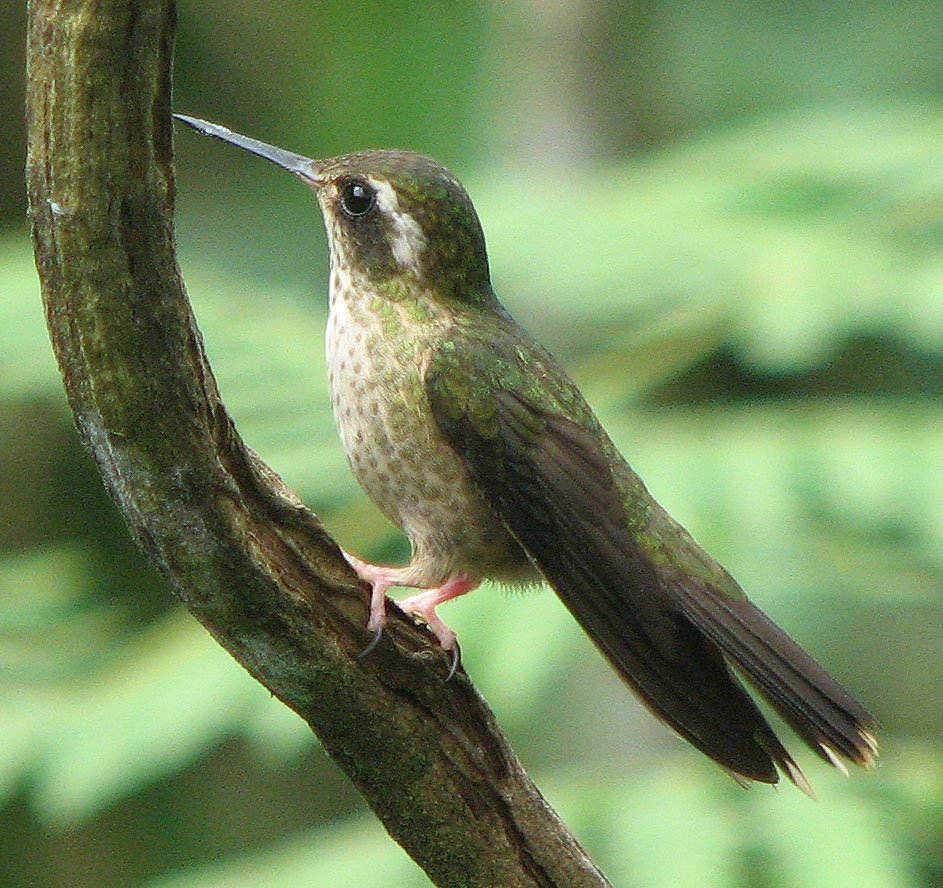
Wikipedia: Speckled hummingbird Source: WIKIPEDIA
SpeckledHummingbird.jpg
🔍
Never observed (yet!)
Description
The speckled hummingbird (Adelomyia melanogenys), is a species of hummingbird. It is the only member of the genus Adelomyia. It inhabits Neotropical montane cloud forests at elevations of 1,000–2,500 meters and is confined to the Andes of Argentina, Bolivia, Peru, Ecuador, Colombia and Venezuela; as well as to some isolated montane forest in western Ecuador and Venezuela. In Ecuador, it ranges across both eastern and western slopes of the Andes and occupies a broad altitudinal range from subtropical forests (1400 m) to cloud forests (3000 m). In addition, one isolated population inhabits the Chongón Colonche cordillera in coastal evergreen montane forest (600 m) located ca. 130 km away from the Andes.
[more]
Details
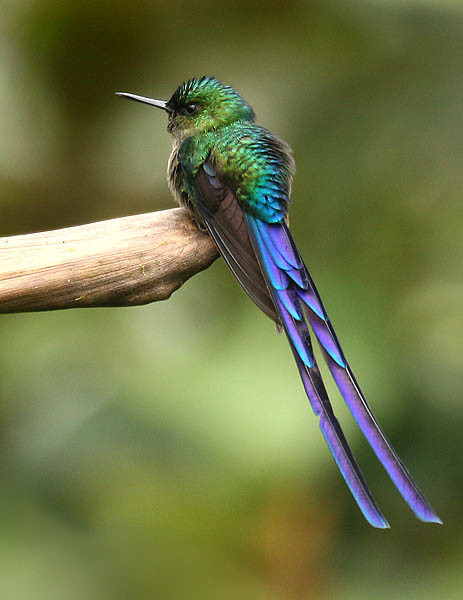
Wikipedia: Violet-tailed sylph Source: WIKIPEDIA
Violet-tailed_Sylph_%28Aglaiocercus_coelestis%29.jpg
🔍
Never observed (yet!)
Description
The violet-tailed sylph (Aglaiocercus coelestis) is a species of hummingbird. It is found in Colombia and Ecuador. This sylph lives in areas from 300–2,100 metres (980–6,890 ft) in elevation, though typically above 900 metres (3,000 ft) on the west slope of the Andes.[2] A sylph is a mythological air spirit.
[more]
Details
Profile Wikipedia Xeno-Canto YouTube
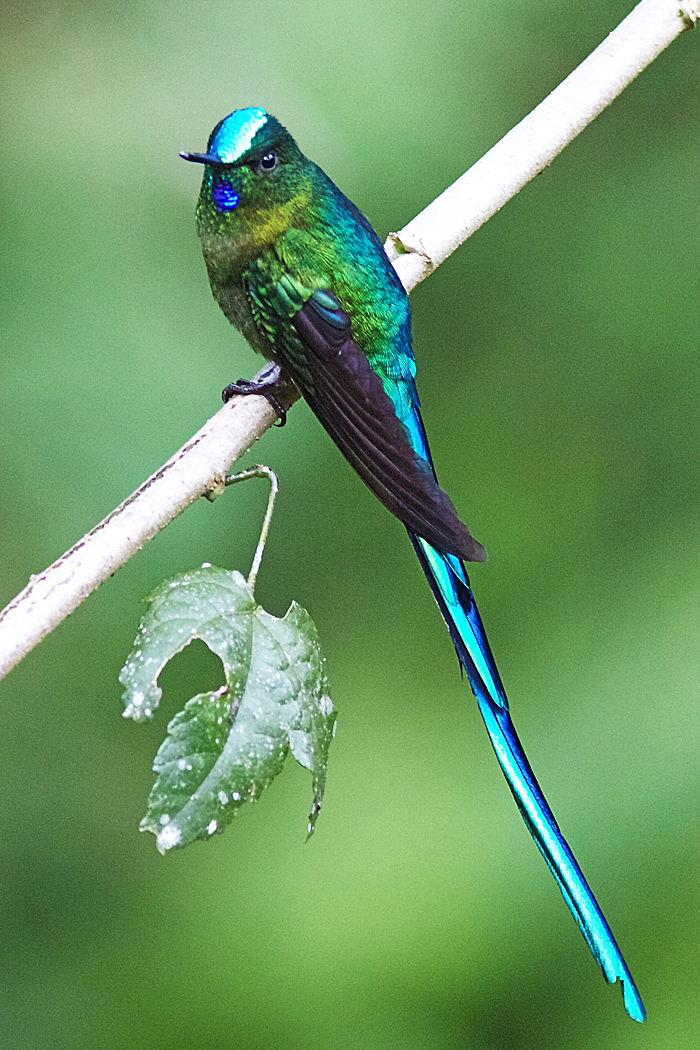
Wikipedia: Long-tailed sylph Source: WIKIPEDIA
Long-tailed_Sylph.jpg
🔍
Never observed (yet!)
Description
The long-tailed sylph (Aglaiocercus kingii) is a species of hummingbird in the family Trochilidae. It is found in Bolivia, Colombia, Ecuador, Peru, and Venezuela. Its natural habitat is subtropical or tropical moist montane forest. It has an average lifespan of 3 to 4 years in the wild.
[more]
Details
Profile Wikipedia Xeno-Canto YouTube

Wikipedia: Napo sabrewing Source: WIKIPEDIA
1200px-Campylopterus_villaviscensio.jpg
🔍
Never observed (yet!)
Description
The Napo sabrewing (Campylopterus villaviscensio) is a species of hummingbird in the family Trochilidae.
It is found in Colombia, Ecuador, and Peru.
Its natural habitat is subtropical or tropical moist montane forest.
It is becoming rare due to habitat loss.
[more]
Details
Profile Wikipedia Xeno-Canto YouTube

Wikipedia: Gray-breasted sabrewing Source: WIKIPEDIA
1200px-Unbekannter_kolibri.jpg
🔍
Never observed (yet!)
Description
The grey-breasted sabrewing (Campylopterus largipennis) is a species of hummingbird in the family Trochilidae.
[more]
Details
Profile Wikipedia Xeno-Canto YouTube

Wikipedia: Lazuline sabrewing Source: WIKIPEDIA
Campylopterus_falcatus.jpg
🔍
Never observed (yet!)
Description
The lazuline sabrewing (Campylopterus falcatus) is a species of hummingbird in the family Trochilidae.
[more]
Details
Profile Wikipedia Xeno-Canto YouTube
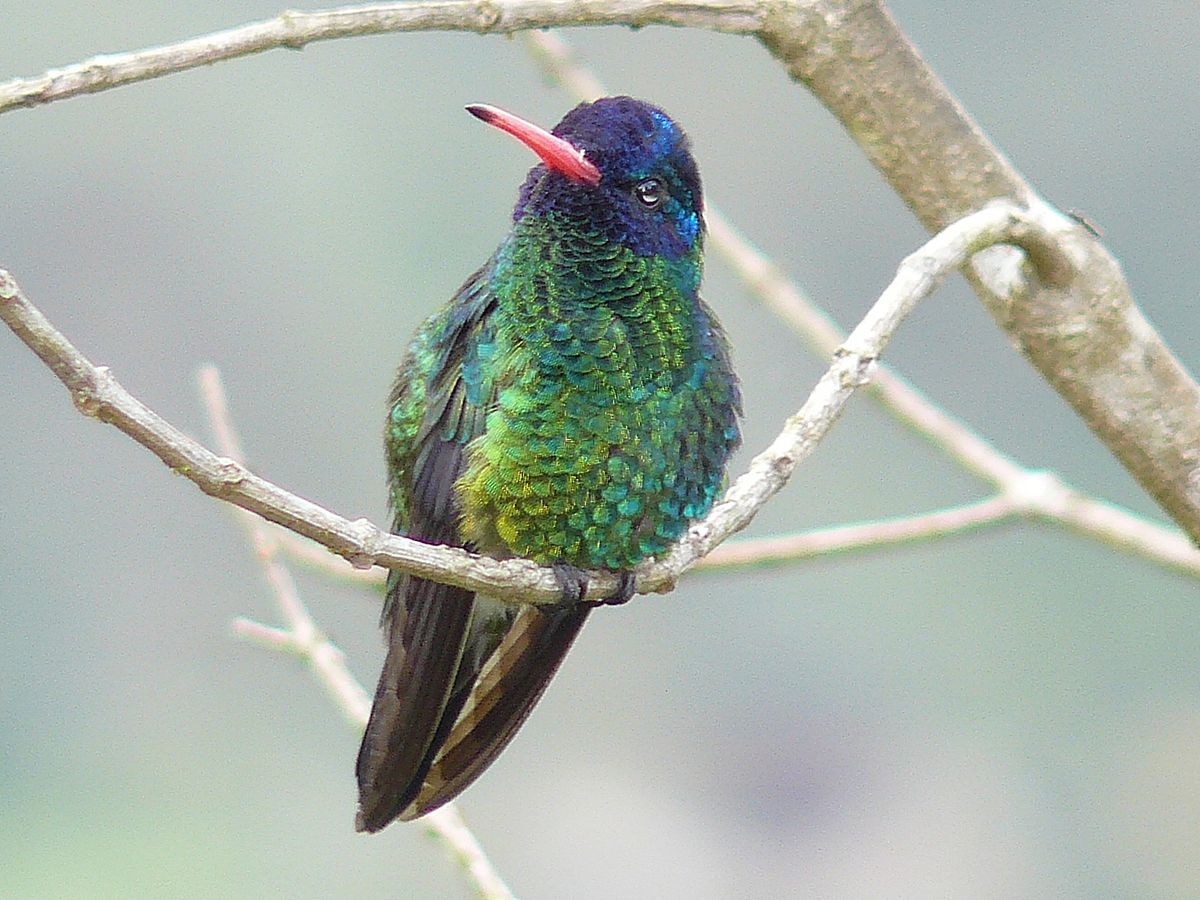
Wikipedia: Blue-headed sapphire Source: WIKIPEDIA
1200px-Blue-headed_Sapphire_-_Colombia.jpg
🔍
Never observed (yet!)
Description
The blue-headed sapphire (Chrysuronia grayi) is a species of hummingbird in the family Trochilidae.
It is found in Colombia and Ecuador. It formerly included the Humboldt's sapphire as a subspecies.
Its natural habitats are subtropical or tropical moist lowland forest, subtropical or tropical mangrove forest, and heavily degraded former forest.
[more]
Details
Profile Wikipedia Xeno-Canto YouTube

Wikipedia: Humboldt's sapphire Source: WIKIPEDIA
1200px-Hylocharis_humboldtii_Gould.JPG
🔍
Never observed (yet!)
Description
Humboldt's sapphire (Chrysuronia humboldtii) is a species of hummingbird in the family Trochilidae.
It is found in Colombia, Ecuador, and Panama. It was formerly considered a subspecies of the blue-headed sapphire.
Its natural habitat is subtropical or tropical mangrove forest.
[more]
Details
Profile Wikipedia Xeno-Canto YouTube

Wikipedia: Golden-tailed sapphire Source: WIKIPEDIA
1200px-Golden-tailed_Sapphire_JCB.jpg
🔍
Never observed (yet!)
Description
The golden-tailed sapphire (Chrysuronia oenone) is a species of hummingbird in the family Trochilidae. It is found in Bolivia, Brazil, Colombia, Ecuador, Peru, Trinidad and Tobago, and Venezuela.
[more]
Details
Profile Wikipedia Xeno-Canto YouTube

Wikipedia: Sword-billed hummingbird Source: WIKIPEDIA
Sword-billed_Hummingbird.jpg
🔍
Never observed (yet!)
Description
The sword-billed hummingbird (Ensifera ensifera) is a neotropical species of hummingbird from the Andean regions of South America. It is the sole member of the genus Ensifera and is characterized by its unusually long bill; it is the only bird to have a beak longer than the rest of its body. E. ensifera uses its bill to drink nectar from flowers with long corollas and has coevolved with the species Passiflora mixta. While most hummingbirds preen using their bills, E. ensifera must use its feet to scratch and preen due to its bill being so long. This uncommon bird is also one of the largest hummingbird species.
[more]
Details
Profile Wikipedia Xeno-Canto YouTube

Arenal hummingbird tentative ID White-necked Jacobin. 2018-02-28 09:40:12 Costa Rica
First observed in Costa Rica on 2018-02-28.
Description
The white-necked jacobin (Florisuga mellivora) is a large and attractive hummingbird that ranges from Mexico, south to Peru, Bolivia and south Brazil. It is also found on Tobago (subspecies F. m. flabellifera) and in Trinidad (subspecies F. m. mellivora)
[more]
Details
Profile Wikipedia Xeno-Canto YouTube

Wikipedia: Hoary puffleg Source: WIKIPEDIA
1200px-Hoary_Puffleg.jpg
🔍
Never observed (yet!)
Description
The hoary puffleg (Haplophaedia lugens) is a species of hummingbird in the family Trochilidae. It is found in Colombia and Ecuador.
[more]
Details
Profile Wikipedia Xeno-Canto YouTube

Wikipedia: Greenish puffleg Source: WIKIPEDIA
Greenish_Puffleg_-_Colombia_S4E3301.jpg
🔍
Never observed (yet!)
Description
The greenish puffleg (Haplophaedia aureliae) is a species of hummingbird in the family Trochilidae.
It is found in Colombia, Ecuador, and Panama.
Its natural habitats are subtropical or tropical moist montane forest and heavily degraded former forest. It is often regarded as including the buff-thighed puffleg as a subspecies.
[more]
Details
Profile Wikipedia Xeno-Canto YouTube

Wikipedia: Pink-throated brilliant Source: WIKIPEDIA
1200px-MonographTrochi2Goul_0066.jpg
🔍
Never observed (yet!)
Description
The pink-throated brilliant (Heliodoxa gularis) is a species of hummingbird in the family Trochilidae.
It is found in Colombia, Ecuador, and Peru.
Its natural habitats are subtropical or tropical moist lowland forest and subtropical or tropical moist montane forest.
It is becoming rare due to habitat loss.
[more]
Details
Profile Wikipedia Xeno-Canto YouTube

Wikipedia: Black-throated brilliant Source: WIKIPEDIA
1200px-Heliodoxa_schreibersii.jpg
🔍
Never observed (yet!)
Description
The black-throated brilliant (Heliodoxa schreibersii) is a species of hummingbird in the family Trochilidae.
It is found in Brazil, Colombia, Ecuador, and Peru.
Its natural habitats are subtropical or tropical moist lowland forest and subtropical or tropical moist montane forest.
[more]
Details
Profile Wikipedia Xeno-Canto YouTube

Wikipedia: Violet-fronted brilliant Source: WIKIPEDIA
1200px-Violet-fronted_Brilliant_JCB.jpg
🔍
Never observed (yet!)
Description
The violet-fronted brilliant (Heliodoxa leadbeateri) is a species of hummingbird in the family Trochilidae.
It is found on the east slope of the Andes in Venezuela, Colombia, Ecuador, Peru, and Bolivia.
Its natural habitat is subtropical or tropical moist montane forest.
[more]
Details
Profile Wikipedia Xeno-Canto YouTube

Wikipedia: Fawn-breasted brilliant Source: WIKIPEDIA
Fawn-breasted_Brilliant.jpg
🔍
Never observed (yet!)
Description
The fawn-breasted brilliant (Heliodoxa rubinoides) is a species of hummingbird. It is native to South America, where it occurs in Bolivia, Colombia, Ecuador, and Peru.[1]
[more]
Details
Profile Wikipedia Xeno-Canto YouTube

Wikipedia: Gould's jewelfront Source: WIKIPEDIA
Heliodoxa_aurescens%2C_Gould%27s_Jewelfront.jpg
🔍
Never observed (yet!)
Description
Gould's jewelfront (Heliodoxa aurescens) is a medium-sized hummingbird in the family Trochilidae.
It is found in tropical and equatorial South America.[2] This is an uncommon species with an unusually large range compared to the other members of Heliodoxa.
[more]
Details
Profile Wikipedia Xeno-Canto YouTube

Wikipedia: Empress brilliant Source: WIKIPEDIA
Empress_Brilliant.jpg
🔍
Never observed (yet!)
Description
The empress brilliant (Heliodoxa imperatrix) is a species of hummingbird in the family Trochilidae.
It is found in Colombia and Ecuador.
[more]
Details
Profile Wikipedia Xeno-Canto YouTube

Cloud forest green crowned brilliant hummingbird in tree. 2018-02-17 11:03:54 Costa Rica
First observed in Costa Rica on 2018-02-17.
Description
The green-crowned brilliant (Heliodoxa jacula) is a large, robust hummingbird that is a resident breeder in the highlands from Costa Rica to western Ecuador. It is also known as the green-fronted brilliant.[2]
[more]
Details
Profile Wikipedia Xeno-Canto YouTube

Wikipedia: Violet-headed hummingbird Source: WIKIPEDIA
1200px-Violet-headed_Hummingbird_%28f%29_JCB.jpg
🔍
Never observed (yet!)
Description
The violet-headed hummingbird (Klais guimeti) is a species of hummingbird in the family Trochilidae. It is the only species in the genus Klais.
[more]
Details
Profile Wikipedia Xeno-Canto YouTube

Wikipedia: Spangled coquette Source: WIKIPEDIA
1200px-Bevalet_hummingbirds.jpg
🔍
Never observed (yet!)
Description
The spangled coquette, coquette pailletée, coqueta coronada, or coqueta lentejuelada (Lophornis stictolophus) is a species of hummingbird in the family Trochilidae.
It is found in Colombia, Ecuador, Peru, and Venezuela.
Its natural habitats are subtropical or tropical dry forest, subtropical or tropical moist lowland forest, and heavily degraded former forest.
[more]
Details
Profile Wikipedia Xeno-Canto YouTube

Wikipedia: Butterfly coquette Source: WIKIPEDIA
Lophornis_chalybeus_verreauxii.png
🔍
Never observed (yet!)
Description
The butterfly coquette (Lophornis verreauxii) is a species of hummingbird in the family Trochilidae.[1]
It is found in northwestern South America, the region of the western Amazon Basin, in the countries of northwest Brazil, Colombia, Venezuela, Ecuador and Peru. To the southeast it is found in adjacent Bolivia. It was recently split from the festive coquette.
[more]
Details
Profile Wikipedia Xeno-Canto YouTube
Wikipedia: Purple-collared woodstar Source: WIKIPEDIA
Purple-collared_Woodstar_%28Myrtis_fanny%29.jpg
🔍
Never observed (yet!)
Description
The purple-collared woodstar (Myrtis fanny) is a species of hummingbird found in Ecuador and Peru. Its natural habitats are subtropical or tropical moist shrubland, subtropical or tropical high-altitude shrubland, and heavily degraded former forest. It is the only species of the genus Myrtis.
[more]
Details
Profile Wikipedia Xeno-Canto YouTube

Wikipedia: Booted racket-tail Source: WIKIPEDIA
Ocreatus_addae_%28Rufous-booted_Racket-tail%29%2C_Paucartambo%2C_Peru.jpg
🔍
Never observed (yet!)
Description
The booted racket-tails are a small group of hummingbirds in the genus Ocreatus that was long considered to have only one species, O. underwoodii. The genus was first recognized by John Gould in 1846. Field research by Karl-L. Schuchmann published in 2016, however, found notable differences between some populations traditionally assigned to O. underwoodii, and recommended that the taxa annae, addae, and peruanus be raised to species level.[1] The research results have been mostly accepted by the International Ornithological Union, with more data required for the species status of Anna's racket-tail.[2] The American Ornithological Society has yet to recognize the split.
[more]
Details
Profile Wikipedia Xeno-Canto YouTube

Wikipedia: Giant hummingbird Source: WIKIPEDIA
Patagona_gigas.jpg
🔍
Never observed (yet!)
Description
The giant hummingbird (Patagona gigas) is the only member of the genus Patagona[2] and the largest member of the hummingbird family, weighing 18–24 g (0.63–0.85 oz) and having a wingspan of approximately 21.5 cm (8.5 in) and length of 23 cm (9.1 in).[3][4] This is approximately the same length as a European starling or a northern cardinal, though the giant hummingbird is considerably lighter because it has a slender build and long bill, making the body a smaller proportion of the total length. This weight is almost twice that of the next heaviest hummingbird species[5] and ten times that of the smallest, the bee hummingbird.[6]
[more]
Details
Profile Wikipedia Xeno-Canto YouTube

Wikipedia: Purple-throated woodstar Source: WIKIPEDIA
Purple-throated_Woodstar_-_Colombia_S4E3309.jpg
🔍
Never observed (yet!)
Description
The purple-throated woodstar (Calliphlox mitchellii) is a species of hummingbird, and it is one of the four Calliphlox species, the woodstars. The species is found in Colombia and Ecuador, and a minor localized population in Panama, 600 km from its main species distribution.
[more]
Details
Profile Wikipedia Xeno-Canto YouTube

Wikipedia: Ecuadorian piedtail Source: WIKIPEDIA
1200px-Phlogophilus_hemileucurus_%2B_Paphinia_cristata_-_Gould_-_Humm._161.jpg
🔍
Never observed (yet!)
Description
The Ecuadorian piedtail (Phlogophilus hemileucurus) is a species of hummingbird in the family Trochilidae.
It is found in Colombia, Ecuador, and Peru.
Its natural habitat is subtropical or tropical moist montane forest.
It is becoming rare due to habitat loss.
[more]
Details
Profile Wikipedia Xeno-Canto YouTube

Wikipedia: Great sapphirewing Source: WIKIPEDIA
Great_Sapphirewing_%28Pterophanes_cyanopterus%29.jpg
🔍
Never observed (yet!)
Description
The great sapphirewing (Pterophanes cyanopterus) is a species of hummingbird in the family Trochilidae.
It is found in Bolivia, Colombia, Ecuador, and Peru.
Its natural habitat is subtropical or tropical moist montane forest. At 15.5-17.5 cm (6–7 in) in length and weighing about 10 grams, this is one of the largest species of hummingbird, though slightly smaller than the Topaza hummingbirds and the giant hummingbird.
[more]
Details

Wikipedia: Geoffroy's daggerbill Source: WIKIPEDIA
1200px-Schistes_geoffroyi_%28Pico_de_cu%C3%B1a%29_%2822653616465%29.jpg
🔍
Never observed (yet!)
Description
Geoffroy's daggerbill, Geoffroy's wedgebill or eastern wedge-billed hummingbird (Schistes geoffroyi) is a species of hummingbird in the family Trochilidae. It is sometimes merged with the visorbearers in Augastes. It has been split from the white-throated daggerbill by most taxonomic authorities. Some authorities calling them the wedge-billed hummingbird.
[more]
Details
Profile Wikipedia Xeno-Canto YouTube
Description
The white-throated daggerbill, white-throated wedgebill or western wedge-billed hummingbird (Schistes albogularis) is a species of hummingbird in the family Trochilidae. It is sometimes merged with the visorbearers in Augastes.
It is found in western Colombia and Ecuador. It has been split from the Geoffroy's daggerbill by most taxonomic authorities. Some authorities continue to lump both species together, calling them the wedge-billed hummingbird.
Its natural habitat is subtropical or tropical moist montane forest.
[more]
Details
Profile Wikipedia Xeno-Canto YouTube
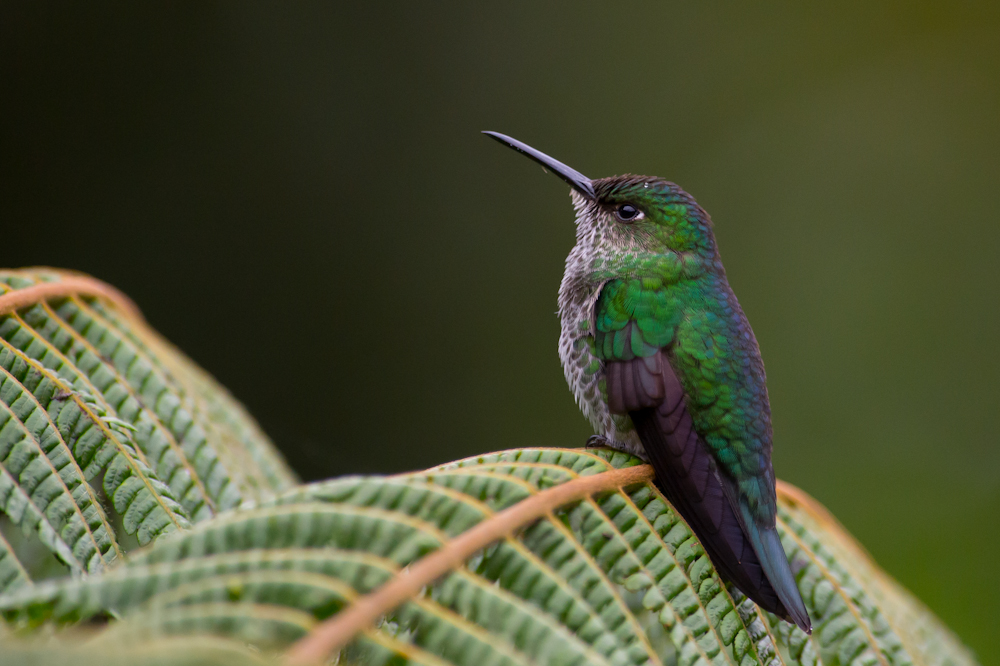
Wikipedia: Many-spotted hummingbird Source: WIKIPEDIA
Taphrospilus_hypostictus%2C_Many-spotted_Hummingbird.jpg
🔍
Never observed (yet!)
Description
The many-spotted hummingbird (Taphrospilus hypostictus) is a species of hummingbird in the family Trochilidae. It is the only member of the genus Taphrospilus.
[more]
Details

Wikipedia: Fiery topaz Source: WIKIPEDIA
Topaza_pyra_-_Fiery_Topaz_%28male%29%3B_Manacapuru%2C_Amazonas%2C_Brazil.jpg
🔍
Never observed (yet!)
Description
The fiery topaz (Topaza pyra) is a species of hummingbird in the family Trochilidae. It has brilliant iridescent plumage and resides in northern South America, where it consumes nectar and insects.
[more]
Details
Profile Wikipedia Xeno-Canto YouTube

Wikipedia: Purple-bibbed whitetip Source: WIKIPEDIA
Purple-bibbed_Whitetip_%28Urosticte_benjamini%29.jpg
🔍
Never observed (yet!)
Description
The purple-bibbed whitetip (Urosticte benjamini) is a species of hummingbird. It is native to Colombia and Ecuador.[1] Little is known about the species due to it rarely foraging in the open - in search for insects and small flowers.[2] Nesting is made from foliage such as moss and ferns, usually along steep ravines.[2]
[more]
Details

Wikipedia: Rufous-vented whitetip Source: WIKIPEDIA
1200px-Urosticte_ruficrissa_%28edited%29.jpg
🔍
Never observed (yet!)
Description
The rufous-vented whitetip (Urosticte ruficrissa) is a species of hummingbird in the family Trochilidae. It is found in Colombia, Ecuador and Peru.
Its natural habitat is subtropical or tropical moist montane forest.
[more]
Details

Wikipedia: Amethyst woodstar Source: WIKIPEDIA
1200px-Calliphlox_amethystina_%28male%29.jpg
🔍
Never observed (yet!)
Description
The amethyst woodstar (Calliphlox amethystina) is a species of hummingbird in the family Trochilidae.
It is found in most of central, and eastern South America proper, in Argentina, Bolivia, Brazil, Colombia, Ecuador, French Guiana, Guyana, Suriname-(the Guianas), Paraguay, Peru, and Venezuela. The bird's range surrounds the Amazon countries into the Andes foothills and higher elevations of upstream river systems, but is not along the Amazon River proper in the central Amazon Basin, or the central upper Basin; it is in Brazil at the river's outlet, and upstream for about 500 km.
[more]
Details
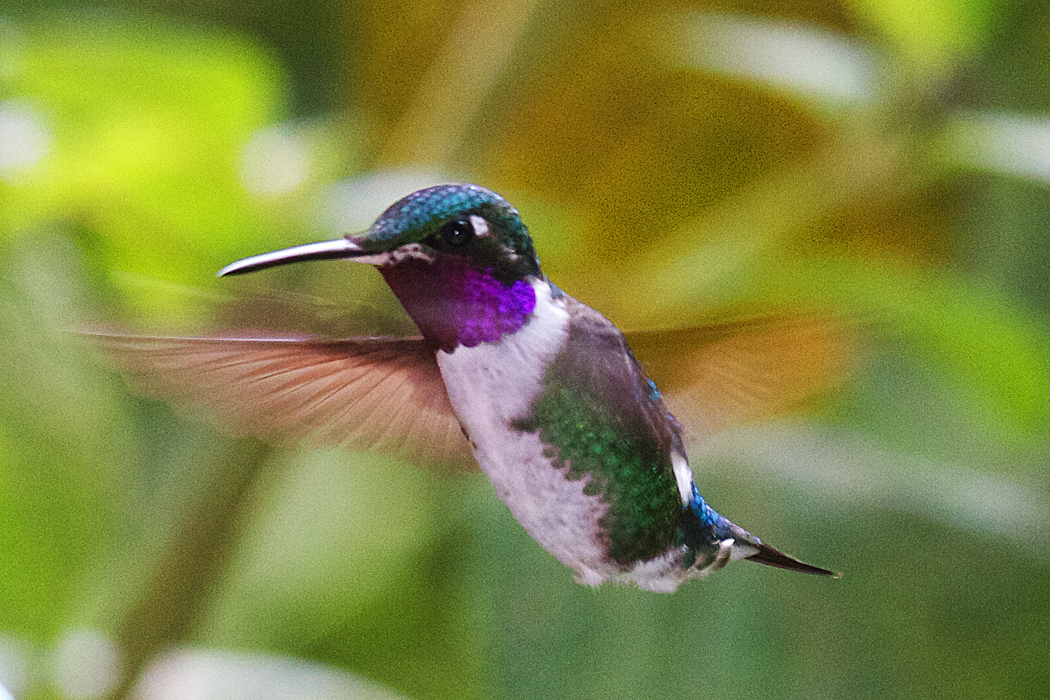
Wikipedia: White-bellied woodstar Source: WIKIPEDIA
White-bellied_Woodstar.jpg
🔍
Never observed (yet!)
Description
The white-bellied woodstar (Chaetocercus mulsant) is a species of hummingbird in the family Trochilidae.
[more]
Details

Wikipedia: Gorgeted woodstar Source: WIKIPEDIA
1200px-Gorgeted_Woodstar_female_JCB.jpg
🔍
Never observed (yet!)
Description
The gorgeted woodstar (Chaetocercus heliodor) is a species of hummingbird in the family Trochilidae.
It is found in Colombia and Venezuela, and also has an isolated population in Ecuador. Its natural habitats are subtropical or tropical moist montane forest and heavily degraded former forest. This species favors forested areas highly but can be seen at flowering trees in gardens and in semi-open. The tail is frequently wagged while feeding.
[more]
Details
Profile Wikipedia Xeno-Canto YouTube

Wikipedia: Little woodstar Source: WIKIPEDIA
1200px-MonographTrochiSupplementGoul_0166.jpg
🔍
Never observed (yet!)
Description
The little woodstar, colibri bourdon, colibrí abejorro, or estrellita chica (Chaetocercus bombus) is a species of hummingbird in the family Trochilidae. It is found in Colombia, Ecuador and Peru.
[more]
Details

Wikipedia: Esmeraldas woodstar Source: WIKIPEDIA
1200px-Esmeraldas_woodstar.jpg
🔍
Never observed (yet!)
Description
The Esmeraldas woodstar (Chaetocercus berlepschi) is a rare, neotropical species of hummingbird in the family Trochilidae.[2] There are six different species in the woodstar genus.[3] Most of them are poorly studied due to their small size, extremely similar resemblance to each other, and rarity. Esmeraldas woodstars are one of the smallest bird species. They are sexually dimorphic. The main difference between sexes is that males have a bright purple throat. Esmeraldas woodstars are found only on the Pacific coast of west Ecuador in semi-deciduous to evergreen forests.[3] They feed on the nectar of flowering shrubs and trees.[3] The main threat to this species is deforestation.[3] Esmeraldas woodstars are Vulnerable and require habitat protection.[2]
[more]
Details
Profile Wikipedia Xeno-Canto YouTube
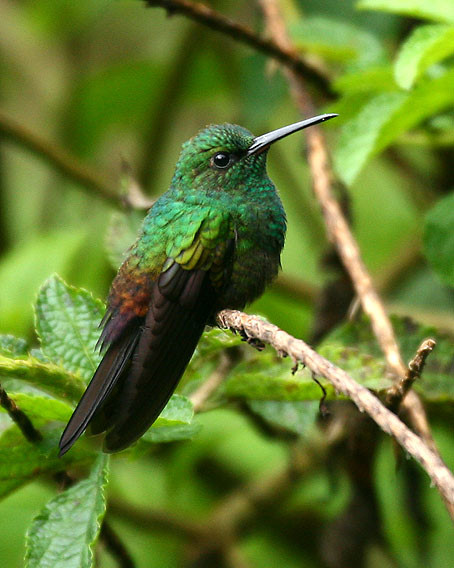
Wikipedia: Bronze-tailed plumeleteer Source: WIKIPEDIA
Bronze-tailed_Plumeleteer_%28Chalybura_urochrysia%29.jpg
🔍
Never observed (yet!)
Description
The bronze-tailed plumeleteer (Chalybura urochrysia) is a large hummingbird resident in Central America and South America from eastern Honduras to northwestern Ecuador. The birds inhabit forests and have a preference for edges, gaps and secondary growth. It occurs in the Caribbean lowlands, typically up to an elevation of 700 metres.
[more]
Details
Profile Wikipedia Xeno-Canto YouTube

Wikipedia: White-vented plumeleteer Source: WIKIPEDIA
1200px-White-vented_Plumeleteer.jpg
🔍
Never observed (yet!)
Description
The white-vented plumeleteer (Chalybura buffonii) is a species of hummingbird in the family Trochilidae.
[more]
Details
Profile Wikipedia Xeno-Canto YouTube

Wikipedia: Mountain avocetbill Source: WIKIPEDIA
1200px-Opisthoprora_euryptera.jpg
🔍
Never observed (yet!)
Description
The mountain avocetbill (Opisthoprora euryptera) is a species of hummingbird in the family Trochilidae, the only member of its genus.
[more]
Details
Profile Wikipedia Xeno-Canto YouTube

Wikipedia: Purple-backed thornbill Source: WIKIPEDIA
Purple-backed_Thornbill_%28Ramphomicron_microrhynchum%29_%288079763797%29.jpg
🔍
Never observed (yet!)
Description
The purple-backed thornbill (Ramphomicron microrhynchum) is a species of hummingbird in the family Trochilidae.
It is found in Bolivia, Colombia, Ecuador, Peru, and Venezuela.
Its natural habitat is subtropical or tropical moist montane forest.
[more]
Details
Profile Wikipedia Xeno-Canto YouTube

Wikipedia: Rufous-gaped hillstar Source: WIKIPEDIA
1200px-Urochroa_bougueri_%28Colibr%C3%AD_nag%C3%BCiblanco%29_%2814144500332%29.jpg
🔍
Never observed (yet!)
Description
The rufous-gaped hillstar (Urochroa bougueri) formerly known as white-tailed hillstar is a species of hummingbird in the family Trochilidae, and one of two species in the genus Urochroa. It is found in humid montane forest in southern Colombia, Ecuador, and northern Peru. It has two species, the nominate species on the west Andean slope, and U. leucura on the east Andean slope. The two differ most conspicuously in that the former has a broad orange malar, which the latter lacks. Both have a straight black bill, greenish upperparts, a blue throat, grey belly, and extensive white to the tail. Although sharing the name hillstar with the members of the genus Oreotrochilus, they are quite different and not closely related.
[more]
Details
Profile Wikipedia Xeno-Canto YouTube

Wikipedia: Green-backed hillstar Source: WIKIPEDIA
1200px-White-tailed_Hillstar_JCB.jpg
🔍
Never observed (yet!)
Description
The green-backed hillstar (Urochroa leucura) formerly known as White-tailed hillstar is a species of hummingbird in the family Trochilidae, and one of two species in the genus Urochroa. It is found in humid montane forests on the east Andean slope of southern Colombia, Ecuador, and northern Peru.
[more]
Details

Wikipedia: Fiery-tailed awlbill Source: WIKIPEDIA
1200px-MonographTrochi3Goul_0348.jpg
🔍
Never observed (yet!)
Description
The fiery-tailed awlbill is an uncommon bird native to Brazil, Ecuador, French Guiana, Guyana, Suriname, and Venezuela and can be found in drier habitats such as savannas, forest edges, and dry zones on large granite outcrops.[3] The main distinction between this bird and other hummingbirds is its bill that is slightly curved upwards at the tip.[3] This species displays sexual dimorphism in color, with males being fully dark green with a black streak near their abdomen while females have a white underbelly that is marked with black line down the middle.[3][4] They typically measure 3.1-4 inches (8-10cm) and are often confused with black-throated mango hummingbirds (Anthracothorax nigricollis).[4] However, they can be differentiated by looking for a curve in the beak . Other names for the fiery-tailed waybill around the world include mango picolezna, colibri avocette, and schwarzbauch-avosettkolibri. [4]
[more]
Details
Profile Wikipedia Xeno-Canto YouTube

Wikipedia: Short-tailed woodstar Source: WIKIPEDIA
1200px-Myrmia_micrura.jpg
🔍
Never observed (yet!)
Description
The short-tailed woodstar (Myrmia micrura) is a species of hummingbird in the family Trochilidae.
It is found in Ecuador and Peru. Its natural habitat is subtropical or tropical dry shrubland where it is the only hummingbird of the woodstar variety. It usually feeds close to the ground and often is attracted to flowers planted around houses.
[more]
Details
Profile Wikipedia Xeno-Canto YouTube

Wikipedia: Peruvian sheartail Source: WIKIPEDIA
Trochilidae_-_Thaumastura_cora.JPG
🔍
Never observed (yet!)
Description
The Peruvian sheartail (Thaumastura cora) is a hummingbird in the family Trochilidae. The species was first described by René Lesson and Prosper Garnot in 1827.
[more]
Details

Wikipedia: Velvet-purple coronet Source: WIKIPEDIA
1200px-Velvet-purple_coronet_%28Boissonneaua_jardini%29.jpg
🔍
Never observed (yet!)
Description
The velvet-purple coronet (Boissonneaua jardini) is a species of hummingbird in the family Trochilidae. It is found in humid foothill forest on the West Andean slope in western Colombia and north-western Ecuador. The species has a quirk of holding its wings straight up for a moment after perching.[2] It generally breeds between January and March, but some have been spotted nesting as far off as September.[3]
[more]
Details

Wikipedia: Buff-tailed coronet Source: WIKIPEDIA
1200px-Buff-tailed_Coronet_JCB.jpg
🔍
Never observed (yet!)
Description
The buff-tailed coronet (Boissonneaua flavescens) is a species of hummingbird from the family Trochilidae. It is found in Colombia, Ecuador, and Venezuela. Distinguishing characteristics are the short bill, glittering green coloration, and buffy color under the remiges (flight feathers) and rectrices (tail feathers). Like other hummingbirds, the buff-tailed coronet is often found in mid-level forest to canopy searching for flowers with nectar and some insects. This bird is commonly found from 1500–2400 meters above sea level.
[more]
Details

Wikipedia: Chestnut-breasted coronet Source: WIKIPEDIA
1200px-Boissonneaua_matthewsii_-Machu_Picchu%2C_Peru-8.jpg
🔍
Never observed (yet!)
Description
The chestnut-breasted coronet (Boissonneaua matthewsii) is a species of hummingbird in the family Trochilidae. It is found in humid Andean montane forest in Colombia, Ecuador, and Peru. It is generally easily recognized by its contrasting rufous underparts.
[more]
Details
Profile Wikipedia Xeno-Canto YouTube

Wikipedia: Ocellated poorwill Source: WIKIPEDIA
1200px-Nyctiphrynus_ocellatus_Ocellated_Poorwill.JPG
🔍
Never observed (yet!)
Description
The ocellated poorwill (Nyctiphrynus ocellatus) is a species of nightjar in the family Caprimulgidae. It is found in Argentina, Bolivia, Brazil, Colombia, Costa Rica, Ecuador, Honduras, Nicaragua, Paraguay, and Peru. Its natural habitats are subtropical or tropical moist lowland forests and subtropical or tropical moist montane forests.
[more]
Details
Profile Wikipedia Xeno-Canto YouTube
Description
The Chocó poorwill (Nyctiphrynus rosenbergi) is a species of nightjar in the family Caprimulgidae.
It is found in Colombia and Ecuador.
Its natural habitat is subtropical or tropical moist lowland forests.
It is threatened by habitat loss.
[more]
Details

Wikipedia: Swallow-tailed nightjar Source: WIKIPEDIA
1200px-Swallow-tailed_Nightjar_%285277616287%29.jpg
🔍
Never observed (yet!)
Description
The swallow-tailed nightjar (Uropsalis segmentata) is a species of nightjar in the family Caprimulgidae.
[more]
Details
Profile Wikipedia Xeno-Canto YouTube

Wikipedia: Lyre-tailed nightjar Source: WIKIPEDIA
Uropsalis_lyra_%28male%29_-NW_Ecuacor-3.jpg
🔍
Never observed (yet!)
Description
The lyre-tailed nightjar (Uropsalis lyra) is a species of nightjar in the family Caprimulgidae. It is found in Argentina, Bolivia, Colombia, Ecuador, Peru, and Venezuela.
[more]
Details
Description
Anthony's nightjar (Nyctidromus anthonyi), also known as the scrub nightjar, is a species of nightjar in the family Caprimulgidae. It is found in western Ecuador and north-western Peru. Its natural habitat is subtropical or tropical dry shrubland.
[more]
Details

Wikipedia: Pauraque Source: WIKIPEDIA
1200px-Nyctidromus_albicollis2.jpg
🔍
Never observed (yet!)
Description
The pauraque (Nyctidromus albicollis) – also called the common pauraque to distinguish it from similar species – is a nightjar species, one of two birds in the genus Nyctidromus. It breeds in the subtropical and tropical of the New World, and except for northernmost birds it is largely resident all year round.[2]
[more]
Details

Wikipedia: Spot-tailed nightjar Source: WIKIPEDIA
1200px-Hydropsalis_maculicaudus_-_Caprimulgus_maculicaudus_-_Spot-tailed_Nightjar.JPG
🔍
Never observed (yet!)
Description
The spot-tailed nightjar (Hydropsalis maculicaudus) is a species of nightjar in the family Caprimulgidae.
It is found in Bolivia, Brazil, Colombia, French Guiana, Guyana, Honduras, Mexico, Nicaragua, Paraguay, Peru, Suriname, Venezuela, and possibly Ecuador.
[more]
Details
Profile Wikipedia Xeno-Canto YouTube

Wikipedia: Ladder-tailed nightjar Source: WIKIPEDIA
Hydropsalis_climacocerca_female.jpg
🔍
Never observed (yet!)
Description
The ladder-tailed nightjar (Hydropsalis climacocerca) is a species of bird in the family Caprimulgidae, the nightjars. It is one of two species in the genus, Hydropsalis.
[more]
Details

Wikipedia: White-tailed nightjar Source: WIKIPEDIA
1200px-Caprimulgus_cayennensis.jpg
🔍
Never observed (yet!)
Description
The white-tailed nightjar (Hydropsalis cayennensis) is a species of nightjar in the family Caprimulgidae.
[more]
Details
Profile Wikipedia Xeno-Canto YouTube

Wikipedia: Nacunda nighthawk Source: WIKIPEDIA
1200px-Nacunda_nighthawk.jpg
🔍
Never observed (yet!)
Description
The nacunda nighthawk (Chordeiles nacunda) is a species of nightjar in the family Caprimulgidae. It is found in Argentina, Bolivia, Brazil, Chile, Colombia, Ecuador, French Guiana, Guyana, Paraguay, Peru, Suriname, Trinidad and Tobago, Uruguay, and Venezuela. Its natural habitats are dry savanna, subtropical or tropical seasonally wet or flooded lowland grassland, and heavily degraded former forest.[1]
[more]
Details
Profile Wikipedia Xeno-Canto YouTube

Wikipedia: Sand-colored nighthawk Source: WIKIPEDIA
1200px-Chordeiles_rupestris_-Ucayali_Region%2C_Peru-8.jpg
🔍
Never observed (yet!)
Description
The sand-coloured nighthawk (Chordeiles rupestris) is a species of nightjar in the family Caprimulgidae.
It is found in Bolivia, Brazil, Colombia, Ecuador, Peru, and Venezuela.
Its natural habitats are subtropical or tropical moist shrubland, rivers, and heavily degraded former forest.
[more]
Details
Profile Wikipedia Audubon AllAboutBirds Xeno-Canto YouTube

Wikipedia: Lesser nighthawk Source: WIKIPEDIA
1200px-Chordeiles_acutipennis_-_Lesser_Nighthawk.jpg
🔍
Never observed (yet!)
Description
The lesser nighthawk (Chordeiles acutipennis) is a nightjar found throughout a large part of the Americas.
[more]
Details

Wikipedia: Common nighthawk Source: WIKIPEDIA
1200px-Common_Nighthawk_%2814428313550%29.jpg
🔍
Never observed (yet!)
Description
The common nighthawk (Chordeiles minor) is a medium-sized [3][4] crepuscular or nocturnal bird[3][5] of the Americas within the nightjar family, whose presence and identity are best revealed by its vocalization. Typically dark[3] (grey, black and brown),[5] displaying cryptic colouration and intricate patterns, this bird is difficult to spot with the naked eye during the day. Once aerial, with its buoyant but erratic flight, this bird is most conspicuous. The most remarkable feature of this aerial insectivore is its small beak that belies the massiveness of its mouth. Some claim appearance similarities to owls. With its horizontal stance[3] and short legs, the common nighthawk does not travel frequently on the ground, instead preferring to perch horizontally, parallel to branches, on posts, on the ground or on a roof.[5] The males of this species may roost together but the bird is primarily solitary. The common nighthawk shows variability in territory size.[4]
[more]
Details
Profile Wikipedia Xeno-Canto YouTube

Wikipedia: Rufous-bellied nighthawk Source: WIKIPEDIA
1200px-Rufous-bellied_Nighthawk.jpg
🔍
Never observed (yet!)
Description
The rufous-bellied nighthawk (Lurocalis rufiventris) is a species of nightjar in the family Caprimulgidae.
[more]
Details
Profile Wikipedia Xeno-Canto YouTube

Wikipedia: Short-tailed nighthawk Source: WIKIPEDIA
1200px-LurocalisSemitorquatusGray.jpg
🔍
Never observed (yet!)
Description
The short-tailed nighthawk (Lurocalis semitorquatus) is a species of nightjar in the family Caprimulgidae.[2]
[more]
Details
Profile Wikipedia Xeno-Canto YouTube

Wikipedia: Band-tailed nighthawk Source: WIKIPEDIA
1200px-Nyctiprogne_leucopyga.jpg
🔍
Never observed (yet!)
Description
The band-tailed nighthawk (Nyctiprogne leucopyga) is a species of nightjar in the family Caprimulgidae.
It is found in Bolivia, Brazil, Colombia, Ecuador, French Guiana, Guyana, Paraguay, Peru, and Venezuela.
Its natural habitats are subtropical or tropical moist lowland forest, rivers, and swamps.
[more]
Details

Wikipedia: Blackish nightjar Source: WIKIPEDIA
%28Hydropsalis_nigrescens%29_or_%28Nyctipolus_nigrescens%29_-_Blackish_Nightjar.jpg
🔍
Never observed (yet!)
Description
The blackish nightjar (Nyctipolus nigrescens) is a species of bird in the family Caprimulgidae. This relatively small dark nightjar is found in the Guianas and the Amazon. It is rare or even absent in the western part, but is among the commonest nightjars in the eastern Amazon and the Guianas.
[more]
Details

Wikipedia: Rufous nightjar Source: WIKIPEDIA
JO%C3%83O-CORTA-PAU_%28Antrostomus_rufus%29_%2815846824680%29.jpg
🔍
Never observed (yet!)
Description
The rufous nightjar (Antrostomus rufus) is a species of nightjar in the family Caprimulgidae.
[more]
Details
Profile Wikipedia Xeno-Canto YouTube

Wikipedia: Band-winged nightjar Source: WIKIPEDIA
1200px-Band-winged_Nightjar.jpg
🔍
Never observed (yet!)
Description
The band-winged nightjar or greater band-winged nightjar (Systellura longirostris) is a species of nightjar in the family Caprimulgidae. It is widespread in South America, where it is found in the Andes, Venezuelan Coastal Range, Santa Marta Mountains, Tepuis, most of Chile, Argentina, Paraguay, Uruguay and eastern Brazil. It occurs in a wide range of habitats, from the edge of humid montane forest to shrubby semi-deserts and urban rooftops.
[more]
Details
Profile Wikipedia Xeno-Canto YouTube

Wikipedia: Long-tailed potoo Source: WIKIPEDIA
1200px-Long-tailed_potoo.jpg
🔍
Never observed (yet!)
Description
The long-tailed potoo (Nyctibius aethereus) is a species of bird in the Nyctibiidae family.
It is found in Brazil, Venezuela, Guyana, Colombia, Ecuador, Peru, Bolivia, and Paraguay; also in Argentina in the extreme northeast.
Its natural habitat is subtropical or tropical moist lowland forests.
[more]
Details
Profile Wikipedia Xeno-Canto YouTube

Wikipedia: Andean potoo Source: WIKIPEDIA
Andean_Potto_%28Nyctibius_maculosus%29_on_a_branch.jpg
🔍
Never observed (yet!)
Description
The Andean potoo (Nyctibius maculosus) is a species of bird in the Nyctibiidae family.
It is found in Bolivia, Colombia, Ecuador, Peru, and Venezuela.
Its natural habitat is subtropical or tropical moist montane forests.
[more]
Details
Profile Wikipedia Xeno-Canto YouTube

Wikipedia: Great potoo Source: WIKIPEDIA
1200px-Great_potoo_%28Nyctibius_grandis%29.JPG
🔍
Never observed (yet!)
Description
The great potoo (Nyctibius grandis) is a near passerine bird, both the largest potoo species and the largest member of the order Caprimulgiformes (nightjars and allies). They are also one of seven species in one genus, Nyctibius, located in tropical America.
[more]
Details
Profile Wikipedia Xeno-Canto YouTube

Wikipedia: Common potoo Source: WIKIPEDIA
1200px-Uruta%C3%BA_%28Nyctibius_griseus%29.jpg
🔍
Never observed (yet!)
Description
The common potoo, or poor-me-ones (Nyctibius griseus), is one of seven species within the genus Nyctibius.[2] It is notable for its large yellow eyes and comically wide mouth. Potoos are nocturnal near passerines related to nightjars and frogmouths. They lack the characteristic bristles around the mouths of true nightjars.[3] Until recently, the common potoo was said to range from Mexico down to the lowlands of central South America. However, in 2016, the species was subdivided into the northern potoo and the continuing branch of the common potoo, which only retains residence from Nicaragua to northern Argentina and Uruguay.[2] This division was largely based on the differing calls of the two species (view 0:39-0:50 here). Though not yet classified as endangered, the common potoo has been declining in numbers due to habitat destruction.[2]
[more]
Details

Wikipedia: Rufous potoo Source: WIKIPEDIA
1200px-Rufous_Potoo.jpg
🔍
Never observed (yet!)
Description
The rufous potoo (Nyctibius bracteatus)[2] is a species of bird in the Nyctibiidae family. Its common name refers to its rufous, or reddish-brown color. Their species name bracteatus is Latin for "gold-leaf".
[more]
Details
Profile Wikipedia Xeno-Canto YouTube

Wikipedia: Oilbird Source: WIKIPEDIA
1200px-Oilbirds.jpg
🔍
Never observed (yet!)
Description
The oilbird (Steatornis caripensis), locally known as the guácharo, is a bird species found in the northern areas of South America including the island of Trinidad. It is the only species in the genus Steatornis and the family Steatornithidae. Nesting in colonies in caves, oilbirds are nocturnal feeders on the fruits of the oil palm and tropical laurels. They are the only nocturnal flying fruit-eating birds in the world (the kakapo is flightless). They forage at night, with specially adapted eyesight. However they navigate by echolocation in the same way as bats, one of the few birds to do so. They produce a high-pitched clicking sound of around 2 kHz that is audible to humans.[2]
[more]
Details
Classification not found:
15 species not correctly classifiedLesser violetear / Berg-Veilchenohrkolibri (Colibri cyanotus)

Green violetear and green crowned brilliants at cloud forest hummingbird feeder. 2018-02-17 18:04:19 Costa Rica
First observed in Costa Rica on 2018-02-17.
Description
General:The lesser violetear (Colibri cyanotus), also known as the mountain violet-ear, is a medium-sized, metallic green hummingbird species commonly found in forested areas from Costa Rica to northern South America. This species and the Mexican violetear were formerly considered as conspecific and named the 'green violetear'.
[more]
Details
Lesser greenlet (Pachysylvia decurtata)
Profile Wikipedia Xeno-Canto YouTube

Wikipedia: Lesser greenlet Source: WIKIPEDIA
1200px-Lesser_Greenlet_%28Hylophilus_decurtatus%29_%287222933432%29.jpg
🔍
Never observed (yet!)
Description
The lesser greenlet (Pachysylvia decurtata) is a small passerine bird in the vireo family. It breeds from northeastern Mexico south to western Ecuador.
[more]
Details
Violet-bellied hummingbird (Chlorestes julie)
Profile Wikipedia Xeno-Canto YouTube

Wikipedia: Violet-bellied hummingbird Source: WIKIPEDIA
1200px-Violet-bellied_Hummingbird.jpg
🔍
Never observed (yet!)
Description
The violet-bellied hummingbird (Chlorestes julie) is a species of hummingbird characterized by the male's shimmering violet belly.[3]
[more]
Details
White hawk / Schneebussard (Pseudastur albicollis)
Profile Wikipedia Xeno-Canto YouTube
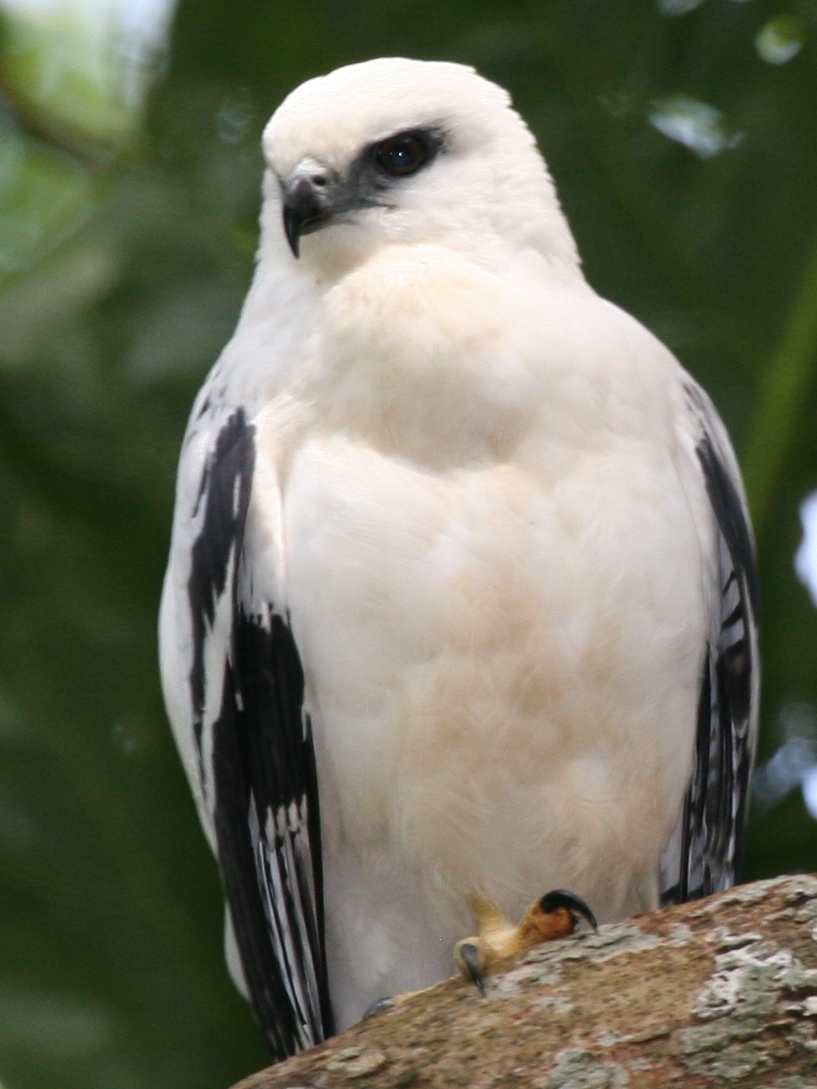
Wikipedia: White hawk Source: WIKIPEDIA
White_Hawk_1_2496239182_cropped.jpg
🔍
Never observed (yet!)
Description
Der Schneebussard (Pseudastur albicollis, Syn.: Leucopternis albicollis) ist ein Greifvogel aus der Familie der Habichtartigen. Die nur wenig erforschte Art ist in den tropischen und subtropischen Wäldern Süd- und Mittelamerikas verbreitet. Besonders auffällig ist das kontrastreiche Gefieder, das in Schwarz- und Weißtönen gefärbt ist. Schneebussarde gelten allgemein als nicht gefährdet, ihr Bestand nimmt jedoch durch das zunehmende Verschwinden der Wälder in der Region kontinuierlich ab.
[more]
Details
White-chinned sapphire (Chlorestes cyanus)
Profile Wikipedia Xeno-Canto YouTube

Wikipedia: White-chinned sapphire Source: WIKIPEDIA
Hylocharis_cyanus_2.jpg
🔍
Never observed (yet!)
Description
The white-chinned sapphire (Chlorestes cyanus) is a species of hummingbird in the family Trochilidae.
It is found in northern South America.
Its natural habitats are subtropical or tropical moist lowland forest, subtropical or tropical dry shrubland, and heavily degraded former forest.
[more]
Details
Masked tanager (Stilpnia nigrocincta)
Profile Wikipedia Xeno-Canto YouTube

Wikipedia: Masked tanager Source: WIKIPEDIA
1200px-Tangara_nigrocincta_nigrocincta_1849.jpg
🔍
Never observed (yet!)
Description
The masked tanager (Stilpnia nigrocincta) is a species of bird in the family Thraupidae. It is found in Bolivia, Brazil, Colombia, Ecuador, Guyana, Peru, and Venezuela.
[more]
Details
Blue-chinned sapphire / Blaukinn-Smaragdkolibri (Chlorestes notata)
Profile Wikipedia Xeno-Canto YouTube

Wikipedia: Blue-chinned sapphire Source: WIKIPEDIA
1200px-Blue-chinned_sapphire_%28Chlorestes_notata_notata%29_male.jpg
🔍
Never observed (yet!)
Description
The blue-chinned sapphire or blue-chinned emerald (Chlorestes notata) is a hummingbird that ranges from Colombia south and east to the Guianas, Trinidad and Tobago, Peru, and Brazil.[3] There have been occasional records from Tobago. For Brazil, the species' range is along the main Amazon River Basin, as well as the Atlantic Forest, both in the northeast, as well as far south on the southeast coastal strip, (an entire coastal strip, north-east-south of about 3000 km). It is sometimes placed in the genus Chlorostilbon.
[more]
Details
Silvery tanager (Stilpnia viridicollis)
Profile Wikipedia Xeno-Canto YouTube

Wikipedia: Silvery tanager Source: WIKIPEDIA
1200px-Stilpnia_viridicollis_-_Silvery_Tanager_-_male_%28cropped%29.jpg
🔍
Never observed (yet!)
Description
The silver-backed tanager (Stilpnia viridicollis), also known as the silvery tanager, is a species of bird in the tanager family. It is found in humid highland forests in southern Ecuador, Peru, and Bolivia. It is regularly spotted at Machu Picchu.
[more]
Details
Blue-necked tanager / Azurkopftangare (Stilpnia cyanicollis)
Profile Wikipedia Xeno-Canto YouTube

Wikipedia: Blue-necked tanager Source: WIKIPEDIA
Blue-necked_Tanager_-_Manu_NP_-_Per%C3%B9_8872_%2822856153227%29.jpg
🔍
Never observed (yet!)
Description
The blue-necked tanager (Stilpnia cyanicollis) is a species of bird in the family Thraupidae. It is found in South America from Colombia to Bolivia.
[more]
Details
Scrub tanager / Rotscheiteltangare (Stilpnia vitriolina)
Profile Wikipedia Xeno-Canto YouTube

Wikipedia: Scrub tanager Source: WIKIPEDIA
1200px-Tangara_vitriolina_-Manizales%2C_Caldas%2C_Colombia-8.jpg
🔍
Never observed (yet!)
Description
The scrub tanager (Stilpnia vitriolina) is a species of bird in the family Thraupidae.
[more]
Details
Black-capped tanager / Schwarzscheiteltangare (Stilpnia heinei)
Profile Wikipedia Xeno-Canto YouTube

Wikipedia: Black-capped tanager Source: WIKIPEDIA
1200px-Tangara_heinei_T%C3%A1ngara_capirotada_Black-capped_Tanager_%28male%29_%2810937083674%29.jpg
🔍
Never observed (yet!)
Description
The black-capped tanager (Stilpnia heinei) is one of the many species of Neotropical bird in the family Thraupidae. It lives in mountains of Ecuador, Colombia and Venezuela year-round. This bird can often be found in open landscapes, alone or in pairs, hiding under branches of trees and bushes. Its natural habitats are subtropical or tropical moist montane forests and heavily degraded former forest.[1][2]
[more]
Details
Rufous-naped greenlet (Pachysylvia semibrunnea)
Profile Wikipedia Xeno-Canto YouTube

Wikipedia: Rufous-naped greenlet Source: WIKIPEDIA
1200px-Hylophilus_semibrunneus_%28Verder%C3%B3n_casta%C3%B1o%29_%2828231647886%29.jpg
🔍
Never observed (yet!)
Description
The rufous-naped greenlet (Pachysylvia semibrunnea) is a species of bird in the family Vireonidae. It is found in the Andes in Colombia, northern Ecuador, and westernmost Venezuela. Its natural habitats are subtropical or tropical moist montane forests and heavily degraded former forest.
[more]
Details
Gray-backed hawk (Pseudastur occidentalis)
Profile Wikipedia Xeno-Canto YouTube

Wikipedia: Gray-backed hawk Source: WIKIPEDIA
Gray-backed_Hawk_-_South-Ecuador_S4E8637_%2815478568822%29.jpg
🔍
Never observed (yet!)
Description
The grey-backed hawk (Pseudastur occidentalis) is an Endangered species of bird of prey in subfamily Accipitrinae, the "true" hawks, of family Accipitridae. It is found in Ecuador and far northern Peru.[2][3][1]
[more]
Details
Lesser swallow-tailed swift / Kleiner Schwalbensegler (Panyptila cayennensis)
Profile Wikipedia Xeno-Canto YouTube

Wikipedia: Lesser swallow-tailed swift Source: WIKIPEDIA
Panyptila_cayennensis_-NW_Ecuador-4.jpg
🔍
Never observed (yet!)
Description
The lesser swallow-tailed swift or Cayenne swift (Panyptila cayennensis) is a species of bird in subfamily Apodinae of the swift family Apodidae. It is found from southern Mexico through Central America; in every mainland South America country except Argentina, Chile, Paraguay, and Uruguay; and on Trinidad.[2][3][4]
[more]
Details
Green-throated tanager (Stilpnia argyrofenges)
Profile Wikipedia Xeno-Canto YouTube

Wikipedia: Green-throated tanager Source: WIKIPEDIA
1200px-TangaraArygrofengesSmit.jpg
🔍
Never observed (yet!)
Description
The straw-backed tanager (Stilpnia argyrofenges), also known as the green-throated tanager, is a species of bird in the tanager family. It is found in humid highland forests in the Andes of southernmost Ecuador, Peru and Bolivia, but it is generally local and uncommon.
[more]
Details