Vögel in Zentralamerika in taxonomischer Hierarchie
Klasse aves (Vögel / Birds):
Ordnung Anseriformes (Vögel / Ducks, geese and swans):
Familie anatidae (Entenvögel / Anatidae):
Unterfamilie Anatinae (Dabbling ducks plus extinct):
Tribus Anatini (Schwimmenten / Dabbling ducks):

Mother and 4 of 9 babies on the Pfäffikersee 2020-05-20 09.12.44 Pfäffikersee
Dieser Vogel erscheint jenseits grossen Meere in Kontinenten :
Europa, Nordamerika, Südamerika, Afrika.
Common waterbird at Pfäffikersee
Etymologie:  Der heutige Name kann als Hinweis auf ihre Brutplätze verstanden werden, zu denen auf Stock gesetzte Weiden, Weidengebüsch oder auch Reisighaufen gehören.
['Stock' wird weiter erklärt: Als Stockausschlag bezeichnet man bei Bäumen und Sträuchern Triebe, die nach dem Verlust der primären Sprossachse
neu aus dem Stumpf oder Stubben (der dann „Stock“ genannt wird) austreiben.] [Link]
Der heutige Name kann als Hinweis auf ihre Brutplätze verstanden werden, zu denen auf Stock gesetzte Weiden, Weidengebüsch oder auch Reisighaufen gehören.
['Stock' wird weiter erklärt: Als Stockausschlag bezeichnet man bei Bäumen und Sträuchern Triebe, die nach dem Verlust der primären Sprossachse
neu aus dem Stumpf oder Stubben (der dann „Stock“ genannt wird) austreiben.] [Link]
The name 'was derived from the Old French malart or mallart for "wild drake"' [Link]
Vokalisierung:  Female: A distinct coarse, laughing quacking; "haaa ha ha ha ha ha", with first note accented and then descending in pitch. Male: a more silent, very nasal "rriib". [Link]
Rufe: Display call a high-pitched short whistle. [Link]
Körperlich: Länge=50-65 cm,
Flügelspanne=81-98 cm,
Gewicht=750-1450 g

Krickente am Aa-Bach beim Südende des Pfäffikersee 2021-01-26 15.41.54 Pfäffikersee
Dieser Vogel erscheint jenseits grossen Meere in Kontinenten :
Europa, Nordamerika, Südamerika, Afrika.
Wintergast am Teich am Aa-Bach beim Südende des Pfäffikersee
Etymologie:  Die hellen «krrik»-Rufe der stimmfreudigen Erpel verhalfen dieser Art zu ihrem deutschen Namen. [Link]
Vokalisierung: Male: characteristic, short, highly resonant and metallic "plytt". A bit similar to Pintail, but higher pitched and lacking accompanying whistling sound. Female: various quacking sounds generally quicker paced, more nasal and noticeably higher pitched than Mallard. [Link]
Körperlich: Länge=34-38 cm,
Flügelspanne=58-64 cm,
Gewicht=200-450 g
Ruf:
Blup blup, fast wie vom Computer generiert, fur mich nohe Noten (obwohl Sonogram nur 2.5 KHz zeigt)
Krickente Ruf von XenoCanto
♫ Krickente Ruf von XenoCanto Quelle: XENOCANTO (Ruf)

Ruf Eigenschaften:
Ruf Melodie: einfach rhythmisch, langsam, Frequenz: low (1-3 KHz),

Spiessente Paar. 2022-02-05 13.14.54 Klingnauer Stausee
Dieser Vogel erscheint jenseits grossen Meere in Kontinenten :
Europa, Nordamerika, Südamerika, Afrika.
Allgemein: Die Spießente (Anas acuta) ist eine Art aus der Familie der Entenvögel (Anatidae), die im Norden Eurasiens und Nordamerika weit verbreitet ist. In Mitteleuropa brütet diese Art nur unregelmäßig und verhältnismäßig selten. Sie ist hier überwiegend Durchzügler und Wintergast und hält sich von September bis April vor allem im Tiefland und in den Küstenregionen auf.
[more]
Vokalisierung: Female: similar to Mallards coarse laughing sound, but with a more emphasized first "haaa", and a more silent accelerating subsequent "laugh". Male: Pleasant, resonant "plop" similar to Teal, but lower pitched, richer, mellower and not so metallic. Accompanied by a higher pitched, slightly raspy whistling "aiiooo" rising and falling in pitch. [Link]
Körperlich: Länge=51-66 cm,
Flügelspanne=51-66 cm,
Gewicht=500-1100 g
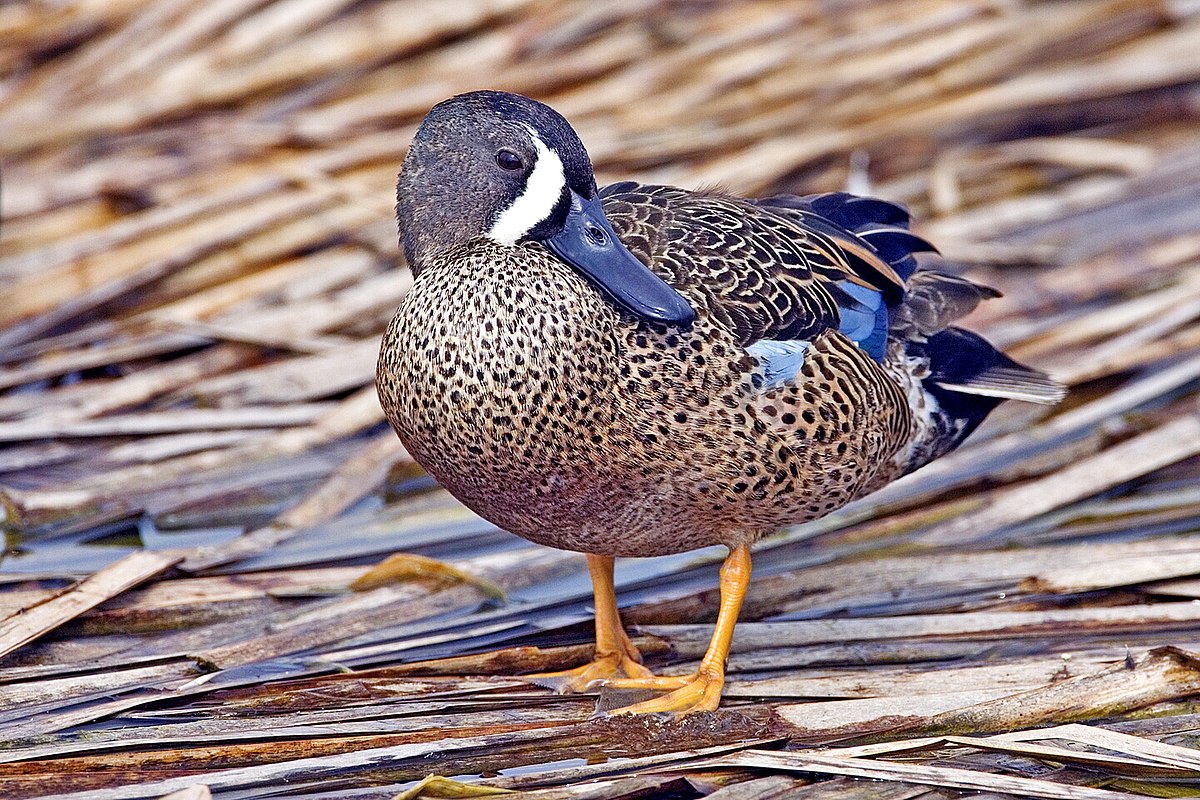
Wikipedia: Blue-winged teal
Allgemein: The blue-winged teal (Spatula discors) is a species of bird in the duck, goose, and swan family Anatidae. One of the smaller members of the dabbling duck group, it occurs in North America, where it breeds from southern Alaska to Nova Scotia, and south to northern Texas. It winters along the Pacific and Atlantic coasts and south into the Caribbean islands and Central America.
[more]

Wikipedia: American wigeon
Die Nordamerikanische Pfeifente (Mareca americana, Syn.: Anas americana) ist eine im Norden Nordamerikas weit verbreitete Art der Schwimmenten. Ihr Verbreitungsgebiet erstreckt sich von der Mitte Alaskas in einem breiten Streifen über den Norden Kanadas bis zu den südöstlichen Ufern der Großen Seen. Sie brütet außerdem im Westen der Vereinigten Staaten. Die Nordamerikanische Pfeifente ist das amerikanische Pendant zur in Eurasien heimischen Pfeifente. Sowohl im Erscheinungsbild als auch in der Lebensweise weisen diese Enten viele Gemeinsamkeiten auf. In ihrem Bestand gilt die Nordamerikanische Pfeifente als ungefährdet und zählt zu den häufigsten Entenvögeln, die in Nordamerika zu beobachten sind.
[more]
Tribus Aythyini (Tauchenten / Diving ducks):

Wikipedia: Ring-necked duck
Die Ringschnabelente (Aythya collaris), auch Halsringente genannt, ist eine kleine nordamerikanische Tauchente aus der Familie der Entenvögel. Auch wenn sie eindeutig zur Gattung der Tauchenten gehört, weist die Ringschnabelente einige Verhaltensweisen auf, die an Gründelenten erinnern. Sie liegt für eine Tauchente verhältnismäßig hoch auf dem Wasser, kann sich ohne Anlauf sofort vom Wasser erheben, gründelt häufig und sucht mitunter nur mit untergetauchtem Kopf nach Nahrung. Ihre Jungen hält sie in der Ufervegetation versteckt und führt sie anders als die meisten Tauchenten nicht sofort aufs offene Gewässer.[1] Diese Verhaltensweisen sind vermutlich dadurch bedingt, dass sie anders als die meisten Tauchenten seichte Sumpfgewässer als Lebensraum präferiert.
[more]

Wikipedia: Lesser scaup
The lesser scaup (Aythya affinis) is a small North American diving duck that migrates south as far as Central America in winter. It is colloquially known as the little bluebill or broadbill because of its distinctive blue bill. The origin of the name scaup may stem from the bird's preference for feeding on scalp—the Scottish word for clams, oysters, and mussels; however, some credit it to the female's discordant scaup call as the name's source.[2] It is apparently a very close relative of the Holarctic greater scaup or "bluebill" (A. marila), with which it forms a superspecies.[3][4] The scientific name is derived from Ancient Greek aithuia an unidentified seabird mentioned by authors including Hesychius and Aristotle, and Latin, affinis "related to", from its resemblance to the greater scaup.[5]
[more]
Gattung Cairina:

Wikipedia: Muscovy duck
Die Moschusente (Cairina moschata) ist eine große Entenart aus der Gruppe der Eigentlichen Enten, die in Südamerika beheimatet ist. Sie ist die Wildform der domestizierten Warzenente.
[more]
Gattung Nomonyx:

Wikipedia: Masked duck
The masked duck (Nomonyx dominicus) is a tiny stiff-tailed duck ranging through the tropical Americas. They are found from Mexico to South America and also in the Caribbean. Primarily not migratory, masked ducks are reported as very uncommon vagrants in the southernmost United States, along the Mexican border and in Florida. As of 2000, the conservation status for masked ducks in Texas is 3,800 birds.[2] On April 1, 1962, it was recorded from Lowndes County, Georgia, where it was photographed by Alexander Wetmore.[3]
[more]
Familie Anatidae (Waterfowl):
Unterfamilie Dendrocygninae:
Gattung Dendrocygna:

Black billed whistling duck. 2020-02-19 07.35.22 Zentralamerika
We saw this on the Pipeline Road near Gamboa, Panama - see tiger heron for more on that.
Allgemein: Die Kubapfeifgans (Dendrocygna arborea) ist eine Art der Entenvögel. In der Unterfamilie der Pfeifgänse stellt sie die größte Art dar. Sie ist auf den Großen Antillen, einigen Bahama-Inseln, den Kaimaninseln und den Kleinen Antillen bis nach Martinique verbreitet.
[more]

Wikipedia: Fulvous whistling-duck
Dieser Vogel erscheint jenseits grossen Meere in Kontinenten :
Nordamerika, Südamerika, Afrika.
Die Gelbe Pfeifgans (Dendrocygna bicolor), auch Gelbbrustpfeifgans genannt, ist eine Art der Familie der Entenvögel. Sie ist in Zentral- und Südamerika, der südlichen Küstenregion Nordamerikas, Kubas, Puerto Ricos, in Subsahara-Afrika, Madagaskar und auf dem Indischen Subkontinent beheimatet.[1] Sie weist damit eine der ungewöhnlichsten Verteilungen von Vögeln weltweit auf: Sie ist nicht nur auf vier Kontinenten beheimatet, sondern auch in vier unterschiedlichen zoogeografischen Zonen.[2] Sie ist besonders häufig in großen Trupps im Nigerdelta und im Delta des Senegal zu beobachten.
[more]
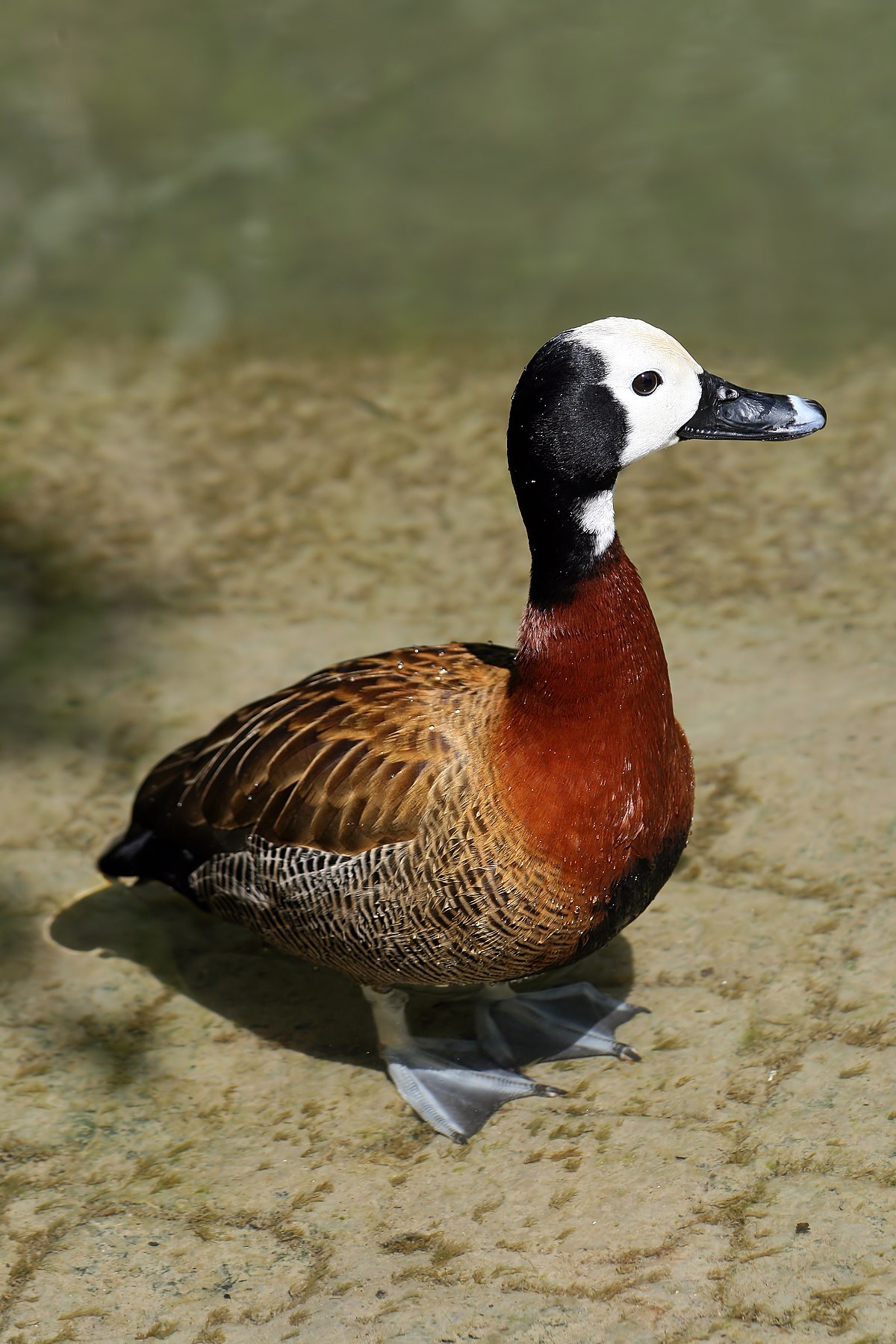
Wikipedia: White-faced whistling-duck
Dieser Vogel erscheint jenseits grossen Meere in Kontinenten :
Südamerika, Afrika.
Die Witwenpfeifgans (Dendrocygna viduata) ist eine Vogelart aus der Unterfamilie der Pfeifgänse. Sie ist beheimatet im tropischen Südamerika sowie im südlich der Sahara gelegenen Afrika und kommt auch auf Madagaskar vor. Die in Trupps lebende und vorwiegend nachtaktive Gans bewohnt nahrungsreiche Binnengewässer.
[more]

Wikipedia: Black-bellied whistling-duck
Die Herbstpfeifgans (Dendrocygna autumnalis) ist eine Art der Familie der Entenvögel. Die Herbstpfeifgans ist in beiden Amerikas beheimatet. Seit den 1950er Jahren hat die Nördliche Herbstpfeifgans sogar ihr Brutareal von Mexiko ausgehend bis in die Südstaaten der USA erweitern können. Die Art spielt als Jagdwild keine Rolle. Sie gilt – ähnlich wie in Südostasien die Zwergpfeifgans, die der gleichen Gattung angehört – in der Landwirtschaft als Schädling und wird wie diese deswegen verfolgt.
[more]
Ordnung Suliformes:
Familie Phalacrocoracidae (Kormorane / Cormorants and shags):
Gattung Phalacrocorax:
Olivenscharbe / Neotropic cormorant (Phalacrocorax brasilianus)
Profil Wikipedia eBird Audubon AllAboutBirds Xeno-Canto

Wikipedia: Neotropic cormorant
Die Olivenscharbe (Phalacrocorax brasilianus), früher (Nannopterum brasilianus), ist eine Vogelart aus der Familie der Kormorane. Die hauptsächlich braun oder schwarz gefärbte Art besiedelt den amerikanischen Kontinent von den südlichen USA bis Feuerland, brütet in Kolonien und ernährt sich vorwiegend von Fischen und Amphibien. Die IUCN führt die Art als „nicht gefährdet“ (least concern).
[more]
Ordnung Pelecaniformes (Ibis, herons and pelicans):
Familie Ardeidae (Reiher / Herons):
Gattung Ardea (Great herons):
Silberreiher / Great egret (Ardea alba)

Silberreiher in Deutschland, von WikiCommons Von Andreas Eichler, CC BY-SA 4.0, https://commons.wikimedia.org/w/index.php?curid=59954907
Dieser Vogel erscheint jenseits grossen Meere in Kontinenten :
Europa, Nordamerika, Südamerika, Afrika.
Auf dem Heimweg von Schwanden haben wir bei Benken ganz weisse Reiher gesehen.
Laut ornitho.ch waren sie Silberreiher.
Bei den meisten Quellen heisst es, sie sind in der Schweiz nur Durchzüger oder Wintergäste.
Aber laut Balzari und Gygax, brüten auch einige Voegel am Lac Neuchatel seit 2013.
Vokalisierung: Silent outside breeding ground. [Link]
Rufe: In colonies various harsh calls like a dry, and mechanical "kerrrrrrr", and a very nasal "geet" or "ga-geet ga-geet" are heard. [Link]
Körperlich: Länge=85-102 cm,
Flügelspanne=140-170 cm,
Gewicht=960-1030 g
Kanadareiher / Great blue heron (Ardea herodias)
Profil Wikipedia eBird Audubon AllAboutBirds Xeno-Canto
 Great blue heron, apparently known as a predator of small birds and chased away, above Cherrywood Court.JPG)
Great blue heron, apparently known as a predator of small birds and chased away, above Cherrywood Court. 2021-06-17 05.48.04 Maryland
Allgemein: Der Kanadareiher (Ardea herodias) ist eine Vogelart aus der Ordnung Pelecaniformes. Mit einer Höhe von 102 bis 127 Zentimeter ist er der größte Reiher Nordamerikas. Neben Nordamerika ist er auch in Zentralamerika sowie auf den Galápagos-Inseln beheimatet. In seinem Äußeren entspricht er weitgehend dem in Europa verbreiteten Graureiher.
[more]
Cocoireiher / Cocoi heron (Ardea cocoi)
Profil Wikipedia eBird Xeno-Canto

Wikipedia: Cocoi heron
Der Cocoireiher (Ardea cocoi) ist eine südamerikanische Reiherart. Er ist der größte Reiher in seinem Verbreitungsgebiet. Unterarten werden für diese Reiherart nicht beschrieben. Es handelt sich um eine weitverbreitete und häufige Art. Trotzdem ist relativ wenig über seine Lebensweise bekannt.
[more]
Gattung Nycticorax (Night herons):
Nachtreiher / Black-crowned night-heron (Nycticorax nycticorax)

Wikipedia: Black-crowned night-heron
Dieser Vogel erscheint jenseits grossen Meere in Kontinenten :
Europa, Nordamerika, Südamerika, Afrika.
Der Nachtreiher (Nycticorax nycticorax) ist eine Art aus der Familie der Reiher (Ardeidae) und gehört somit in die Ordnung Pelecaniformes.
[more]
Rufe: Most commonly hear call is a nasal, soft croaking "roack", like cross between Raven and frog. [Link]
Körperlich: Länge=58-65 cm,
Flügelspanne=105-112 cm,
Gewicht=500-800 g
Gattung Egretta (Plumed egrets):
Egretta thula / Snowy egret (Egretta thula)
Profil Wikipedia eBird Audubon AllAboutBirds Xeno-Canto

Wikipedia: Snowy egret
Dieser Vogel erscheint jenseits grossen Meere in Kontinenten :
Nordamerika, Südamerika, Afrika.
Allgemein: The snowy egret (Egretta thula) is a small white heron. The genus name comes from Provençal French for the little egret, aigrette, which is a diminutive of aigron, 'heron'. The species name thula is the Araucano term for the black-necked swan, applied to this species in error by Chilean naturalist Juan Ignacio Molina in 1782.[3]
[more]
Blaureiher / Little blue heron (Egretta caerulea)
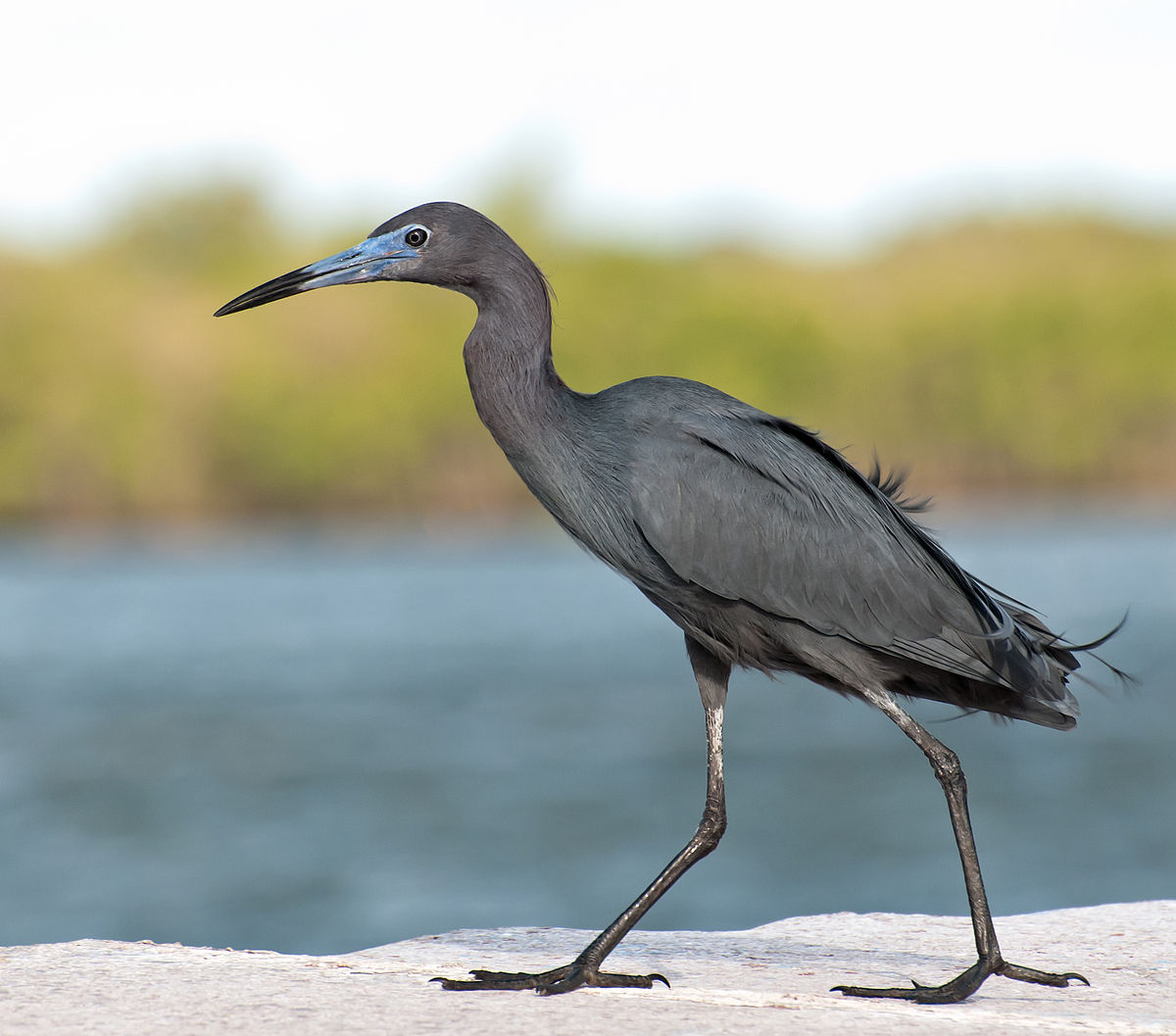
Wikipedia: Little blue heron
Dieser Vogel erscheint jenseits grossen Meere in Kontinenten :
Nordamerika, Südamerika, Afrika.
Der Blaureiher (Egretta caerulea) gehört zur Familie der Reiher aus der Ordnung Pelecaniformes.
[more]
Rötelreiher / Reddish egret (Egretta rufescens)
Profil Wikipedia eBird Audubon AllAboutBirds Xeno-Canto

Wikipedia: Reddish egret
Der Rötelreiher (Egretta rufescens) ist eine Vogelart aus der Familie der Reiher.
[more]
Dreifarbenreiher / Tricolored heron (Egretta tricolor)
Profil Wikipedia eBird Audubon AllAboutBirds Xeno-Canto

Wikipedia: Tricolored heron
Der Dreifarbenreiher (Egretta tricolor) ist eine Vogelart aus der Familie der Reiher.
[more]
Gattung Nyctanassa:
Krabbenreiher / Yellow-crowned night heron (Nyctanassa violacea)

Juvenile Yellow-crowned night heron in Manzanillo, Costa Rica. 2020-03-13 08.59.00 Zentralamerika
Der Krabbenreiher (Nyctanassa violacea, Syn.: Nycticorax violaceus) ist eine Vogelart aus der Familie der Reiher.
[more]
Gattung Botaurus (Brown bitterns):
Nordamerikanische Rohrdommel / American bittern (Botaurus lentiginosus)

Wikipedia: American bittern
Dieser Vogel erscheint jenseits grossen Meere in Kontinenten :
Nordamerika, Südamerika, Afrika.
Die Nordamerikanische Rohrdommel (Botaurus lentiginosus) ist ein in ausgedehnten Röhrichten verborgen lebender Vogel aus der Familie der Reiher (Ardeidae). Das Verbreitungsgebiet dieser Art reicht von Kanada bis nach Texas und Florida. Überwinterungsgebiete dieser Art finden sich unter anderem in Panama und auf den Karibischen Inseln.
[more]
Südamerikanische Rohrdommel / Pinnated bittern (Botaurus pinnatus)

Wikipedia: Pinnated bittern
Die Südamerikanische Rohrdommel (Botaurus pinnatus) ist eine Art der Reiher und gehört zur Unterfamilie der Dommeln. Sie kommt in zwei Unterarten vom Süden des Nordamerikanischen Kontinents bis nach Südamerika vor.
[more]
Gattung Bubulcus (Cattle egrets):
Kuhreiher / Cattle egret (Bubulcus ibis)

Arenal cattle w cattle egrets. 2018-02-27 16.42.14 Zentralamerika
Dieser Vogel erscheint jenseits grossen Meere in Kontinenten :
Europa, Nordamerika, Südamerika, Afrika.
Der Kuhreiher (Bubulcus ibis) gehört zur Familie der Reiher aus der Ordnung Pelecaniformes. Er ist weltweit verbreitet und fehlt nur auf der Antarktika, sein Verbreitungsgebiet hat sich insbesondere im Verlauf des 20. Jahrhunderts stark ausgedehnt. Es werden zwei Unterarten unterschieden, die von einigen Autoren auch als eigene Arten aufgefasst werden.[1] In diesem Artikel wird der traditionellen Darstellung gefolgt, nach der der Kuhreiher die einzige Art der Gattung Bubulcus darstellt.
[more]
Vokalisierung: Usually silent away from breeding ground. In the colonies a chorus of various coarse sounds can be heard. Most distinct is a disyllabic "rick-rack". Other sounds includes short, guttural utterings, or drawn, harsh shrieks. [Link]
Körperlich: Länge=48-53 cm,
Flügelspanne=90-96 cm,
Gewicht=300-400 g
Gattung Butorides (Green-backed herons):
Butorides striata / Green-backed heron (Butorides striata)

Wikipedia: Green-backed heron
Dieser Vogel erscheint jenseits grossen Meere in Kontinenten :
Europa, Südamerika, Afrika.
Grünreiher / Green heron (Butorides virescens)
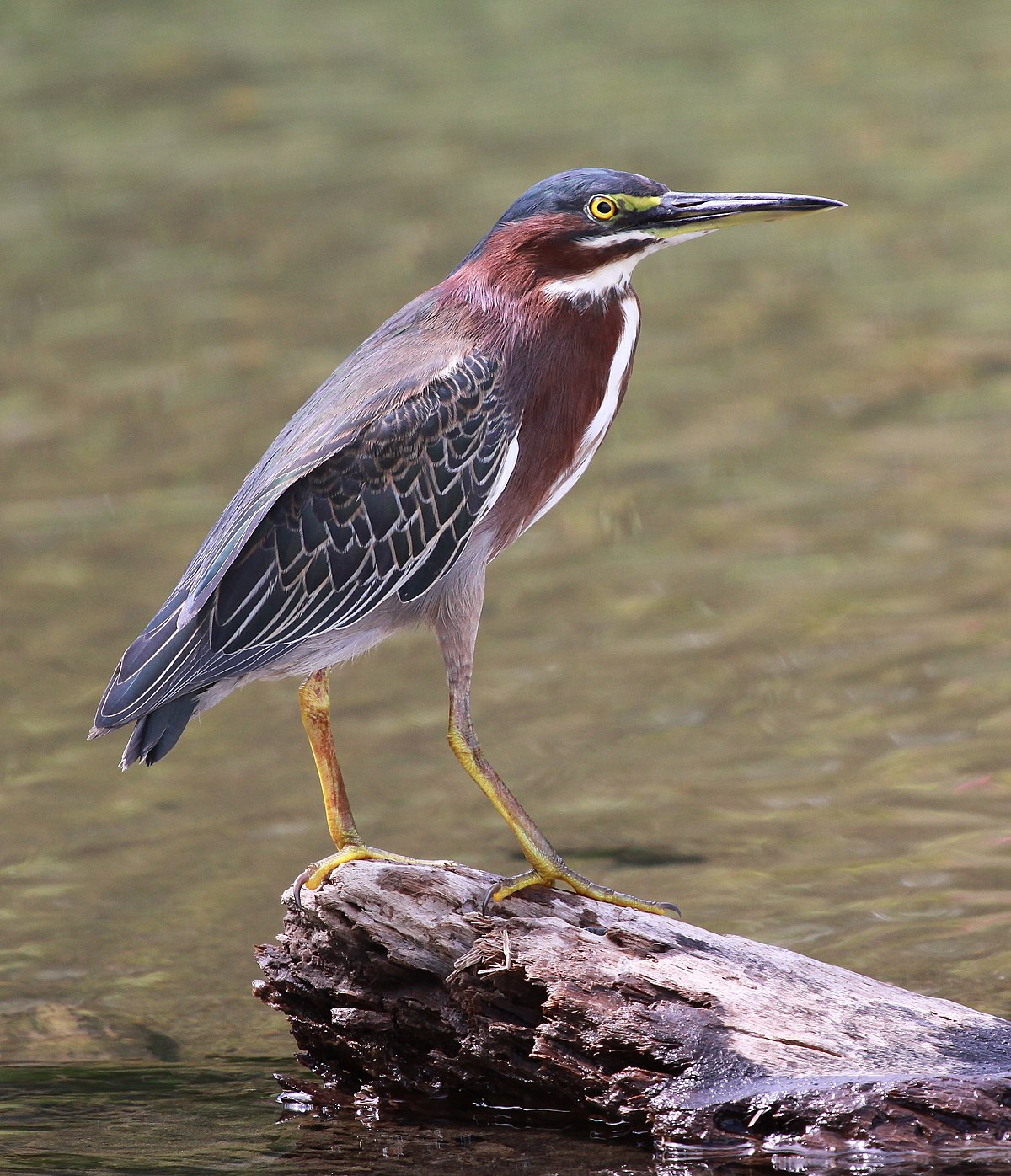
Wikipedia: Green heron
Allgemein: Der Grünreiher (Butorides virescens) gehört zur Familie der Reiher aus der Ordnung Pelecaniformes. Er ist eng mit dem Mangrovereiher (Butorides striatus) aus dem tropischen Afrika und Asien verwandt und wird von einigen Wissenschaftlern als Unterart Butorides striatus virescens zu diesem gerechnet.
[more]
Gattung Cochlearius:
Kahnschnabel / Boat-billed heron (Cochlearius cochlearius)

Boat billed heron in Cahuita, Costa Rica. 2020-03-17 16.57.49 Zentralamerika
Der Kahnschnabel (Cochlearius cochlearius) gehört innerhalb der Familie der Reiher (Ardeidae) zur monotypischen Gattung Cochlearius.
[more]
Gattung Ixobrychus (Least bitterns):
Amerikanische Zwergdommel / Least bittern (Ixobrychus exilis)
Profil Wikipedia eBird Audubon AllAboutBirds Xeno-Canto
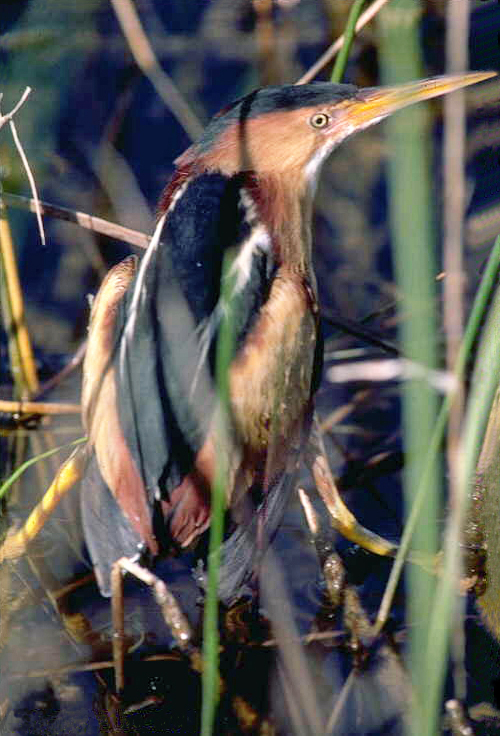
Wikipedia: Least bittern
Die Amerikanische Zwergdommel (Ixobrychus exilis) ist eine Vogelart aus der Familie der Reiher.
[more]
Gattung Tigrisoma:
Streifenreiher / Fasciated tiger heron (Tigrisoma fasciatum)

Fasciated tiger heron. 2020-02-19 06.59.06 Zentralamerika
We saw this on a guided tour of the Pipeline Road near Gamboa, Panama, which is named after an oil pipeline built to ensure supply during World War II, but never actually put into service, and now providing access to Soberania National Park.
Allgemein: Der Streifenreiher (Tigrisoma fasciatum) ist ein in Südamerika verbreiteter Reiher.
[more]
Nacktkehlreiher / Bare-throated tiger-heron (Tigrisoma mexicanum)
Profil Wikipedia eBird Xeno-Canto

Wikipedia: Bare-throated tiger-heron
Der Nacktkehlreiher (Tigrisoma mexicanum) ist ein in Mittelamerika verbreiteter Reiher.
[more]
Marmorreiher / Rufescent tiger-heron (Tigrisoma lineatum)
Profil Wikipedia eBird Xeno-Canto
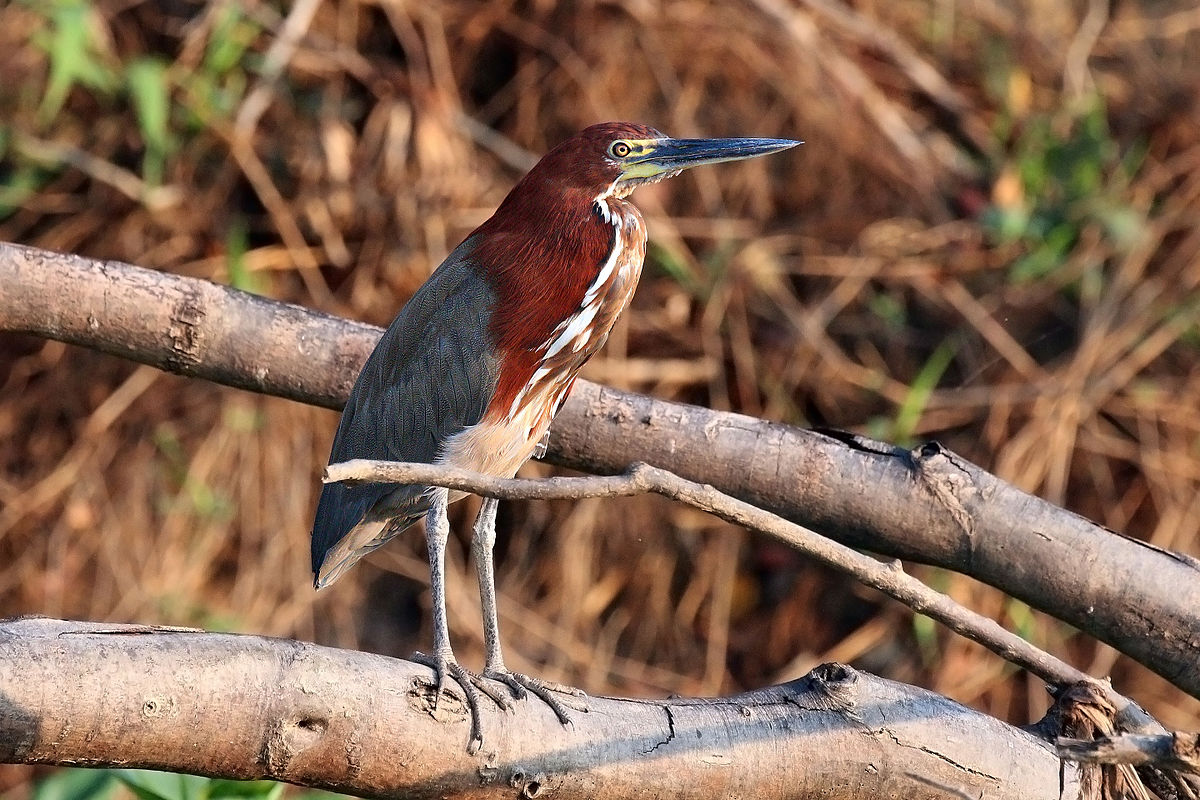
Wikipedia: Rufescent tiger-heron
Der Marmorreiher (Tigrisoma lineatum) ist eine Art aus der Familie der Reiher. Die Art kommt in zwei Unterarten ausschließlich in Zentral- und Südamerika vor.
[more]
Gattung Agamia:
Agamia agami / Agami heron (Agamia agami)

Wikipedia: Agami heron
The agami heron (Agamia agami) is a medium-sized heron. It is a resident breeding bird from Central America south to Peru and Brazil. It is sometimes known as the chestnut-bellied heron, and is the only member of the genus Agamia (Reichenbach, 1853). In Brazil it is sometimes called Soco beija-flor, meaning 'hummingbird heron', thanks to its unique coloration pattern.[2]
[more]
Gattung Pilherodius:
Kappenreiher / Capped heron (Pilherodius pileatus)

Wikipedia: Capped heron
Der Kappenreiher (Pilherodius pileatus) ist eine Vogelart aus der Familie der Reiher.
[more]
Familie Fregatidae (Frigatebirds):
Gattung Fregata:
Bindenfregattvogel / Great frigatebird (Fregata minor)
Profil Wikipedia eBird Audubon AllAboutBirds Xeno-Canto
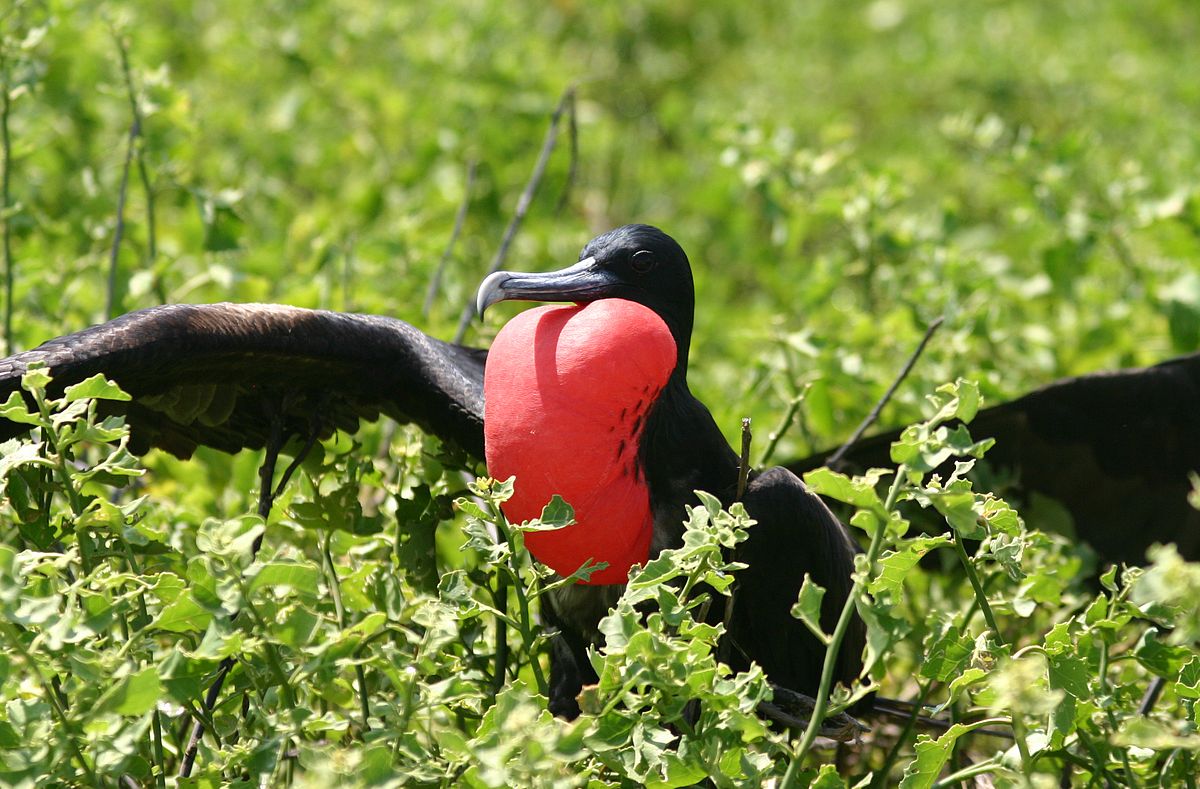
Wikipedia: Great frigatebird
Dieser Vogel erscheint jenseits grossen Meere in Kontinenten :
Nordamerika, Südamerika, Afrika.
Der Bindenfregattvogel (Fregata minor) ist ein großer Vogel aus der Familie der Fregattvögel (Fregatidae). Es handelt sich um sehr große, schwarze oder schwarzweiße Seevögel, die in ihrer Körpergröße die meisten anderen Seevögel übertreffen, die in tropischen Gewässern vorkommen. Lediglich der seltene Weißbauch-Fregattvogel ist noch größer.
[more]
Prachtfregattvogel / Magnificent frigatebird (Fregata magnificens)
Profil Wikipedia eBird Audubon AllAboutBirds Xeno-Canto

Wikipedia: Magnificent frigatebird
Dieser Vogel erscheint jenseits grossen Meere in Kontinenten :
Nordamerika, Südamerika, Afrika.
Der Prachtfregattvogel (Fregata magnificens) ist eine Art aus der Ordnung Suliformes.
[more]
Familie Pelecanidae (Pelicans):
Gattung Pelecanus:
Pelecanus occidentalis / Brown pelican (Pelecanus occidentalis)
Profil Wikipedia eBird Audubon AllAboutBirds Xeno-Canto

Brown pelican tentative ID. 2020-03-08 13.27.20 Zentralamerika
The brown pelican (Pelecanus occidentalis) is a bird of the pelican family, Pelecanidae, one of three species found in the Americas and one of two that feed by diving into water. It is found on the Atlantic Coast from New Jersey to the mouth of the Amazon River, and along the Pacific Coast from British Columbia to northern Chile, including the Galapagos Islands. The nominate subspecies in its breeding plumage has a white head with a yellowish wash on the crown. The nape and neck are dark maroon–brown. The upper sides of the neck have white lines along the base of the gular pouch, and the lower fore neck has a pale yellowish patch. The male and female are similar, but the female is slightly smaller. The nonbreeding adult has a white head and neck. The pink skin around the eyes becomes dull and gray in the nonbreeding season. It lacks any red hue, and the pouch is strongly olivaceous ochre-tinged and the legs are olivaceous gray to blackish-gray.
[more]
Familie Phaethontidae (Tropicbirds):
Gattung Phaethon:
Rotschnabel-Tropikvogel / Red-billed tropicbird (Phaethon aethereus)
Profil Wikipedia eBird Audubon AllAboutBirds Xeno-Canto

Wikipedia: Red-billed tropicbird
Dieser Vogel erscheint jenseits grossen Meere in Kontinenten :
Nordamerika, Südamerika, Afrika.
Der Rotschnabel-Tropikvogel (Phaethon aethereus) ist ein Vogel aus der Ordnung der Tropikvögel. Wie alle Tropikvogelarten zeichnet er sich durch extrem verlängerte mittlere Schwanzfedern aus. Seine Schwimmfähigkeit ist recht schlecht, die Flugfähigkeiten sind dagegen ausgezeichnet und die Vögel können häufig hunderte von Kilometern vom Land entfernt über offenem Meer angetroffen werden.
[more]
Familie Sulidae (Tölpel / Gannets and boobies):
Gattung Sula:
Weißbauchtölpel / Brown booby (Sula leucogaster)
Profil Wikipedia eBird Audubon AllAboutBirds Xeno-Canto

Wikipedia: Brown booby
Dieser Vogel erscheint jenseits grossen Meere in Kontinenten :
Nordamerika, Südamerika, Afrika.
Der Weißbauchtölpel (Sula leucogaster) ist ein gänsegroßer Seevogel aus der Familie der Tölpel (Sulidae) in der Ordnung der Ruderfüßer (Pelecaniformes).
[more]
Rotfußtölpel / Red-footed booby (Sula sula)
Profil Wikipedia eBird Audubon AllAboutBirds Xeno-Canto
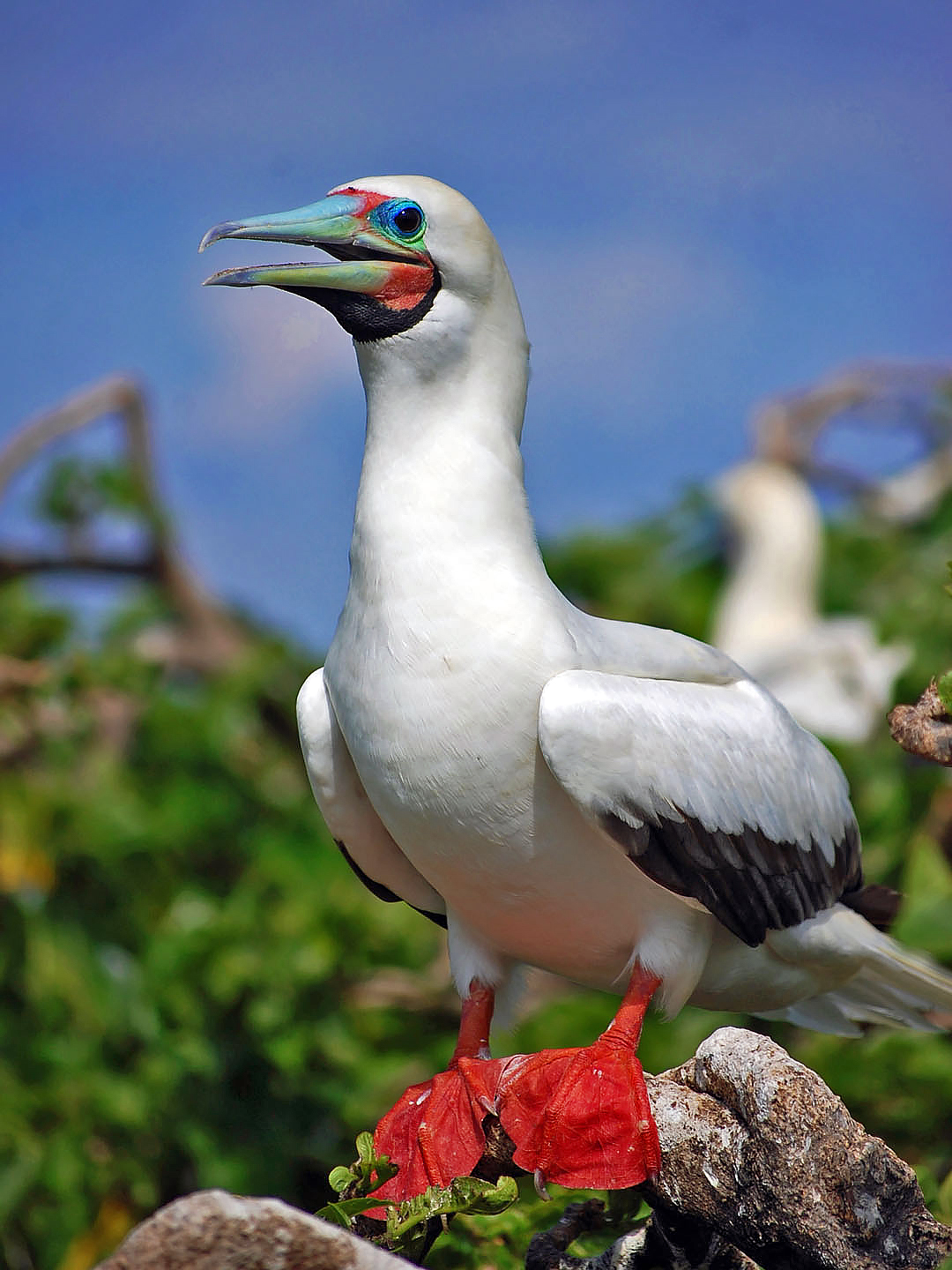
Wikipedia: Red-footed booby
Dieser Vogel erscheint jenseits grossen Meere in Kontinenten :
Nordamerika, Südamerika, Afrika.
Der Rotfußtölpel (Sula sula) ist ein Vogel aus der Familie der Tölpel (Sulidae). Es gibt mehrere Farbmorphen, die meisten Rotfußtölpel weisen jedoch ein überwiegend weißes Gefieder auf. Einige wenige Individuen zeigen ein überwiegend braunes Gefieder und zahlreiche Individuen sind Mischformen der weißen und braunen Morphen.
[more]
Sula dactylatra / Masked booby (Sula dactylatra)

Wikipedia: Masked booby
Dieser Vogel erscheint jenseits grossen Meere in Kontinenten :
Nordamerika, Südamerika, Afrika.
The masked booby (Sula dactylatra), also called the masked gannet or the blue-faced booby, is a large seabird of the booby and gannet family, Sulidae. First described by the French naturalist René-Primevère Lesson in 1831, the masked booby is one of six species of booby in the genus Sula. It has a typical sulid body shape, with a long pointed yellowish bill, long neck, aerodynamic body, long slender wings and pointed tail. The adult is bright white with black wings, a black tail and a dark face mask; at 75–85 cm (30–33 in) long, it is the largest species of booby. The sexes have similar plumage. This species ranges across tropical oceans, except in the eastern Atlantic and eastern Pacific. In the latter, it is replaced by the Nazca booby (Sula granti), which was formerly regarded as a subspecies of masked booby.
[more]
Nazcatölpel / Nazca booby (Sula granti)
Profil Wikipedia eBird Xeno-Canto

Wikipedia: Nazca booby
Der Nazcatölpel (Sula granti) ist ein tropischer Meeresvogel. Die Art wurde früher als Unterart Sula dactylatra granti dem Maskentölpel zugeordnet, im Jahr 1998 aber durch Pitman und Jehl in den Rang einer eigenständigen Art erhoben[1], was 2000 durch die American Ornithologists’ Union anerkannt[2] und 2002 auch durch DNA-Untersuchungen bestätigt wurde[3].
[more]
Blaufußtölpel / Blue-footed booby (Sula nebouxii)
Profil Wikipedia eBird Xeno-Canto

Wikipedia: Blue-footed booby
Der Blaufußtölpel (Sula nebouxii) ist ein tropischer Meeresvogel aus der Gattung Sula innerhalb der Familie der Tölpel (Sulidae). Seinen Namen verdankt er seinen blauen Füßen und seiner scheinbaren Ungeschicklichkeit (Tölpel, siehe Tollpatsch); der Blaufußtölpel ist allerdings ein gewandter Flieger und Taucher beim Beutefang.
[more]
Guanotölpel / Peruvian booby (Sula variegata)
Profil Wikipedia eBird Xeno-Canto
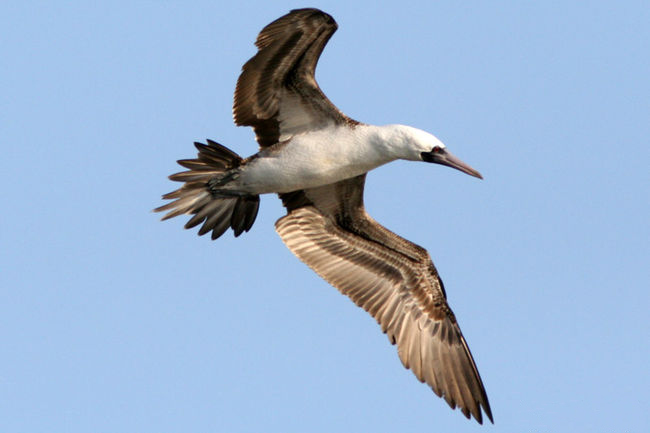
Wikipedia: Peruvian booby
Der Guanotölpel (Sula variegata), auch Peruanischer Tölpel genannt, ist ein Meeresvogel aus der Familie der Tölpel. Während die anderen Arten dieser Familie sich auf die Nutzung küstenferner Nahrungsnischen spezialisiert haben, nutzt der nur an der peruanischen, chilenischen und vereinzelt auch an der argentinischen Küste vorkommende Vogel den Nahrungsreichtum, der durch den Humboldtstrom dort existiert. Das in normalen Jahren überreiche Angebot an Anchoveta engraulis kompensiert, dass der Guanotölpel hier mit dem Chilepelikan und dem Guanokormoran, zwei weiteren Arten aus der Ordnung Suliformes, um Nahrung konkurrieren muss. Das große Nahrungsangebot erlaubt es ihm auch, regelmäßig mehrere Küken großzuziehen. Dies unterscheidet ihn gleichfalls von den anderen Tölpelarten.
[more]
Familie Threskiornithidae:
Gattung Plegadis:
Plegadis falcinellus / Glossy ibis (Plegadis falcinellus)
Profil Wikipedia eBird Audubon AllAboutBirds Xeno-Canto BirdID NABU

Wikipedia: Glossy ibis
Dieser Vogel erscheint jenseits grossen Meere in Kontinenten :
Europa, Nordamerika, Südamerika, Afrika.
The glossy ibis (Plegadis falcinellus) is a water bird in the order Pelecaniformes and the ibis and spoonbill family Threskiornithidae. The scientific name derives from Ancient Greek plegados and Latin, falcis, both meaning "sickle" and referring to the distinctive shape of the bill.[2]
[more]
Vokalisierung: Generally silent away from breeding ground. Dry, crow-like "garr garr", may be heard occasionally in flight. At breeding ground various guttural grunts, and piping, hissing sounds. [Link]
Körperlich: Länge=55-65 cm,
Flügelspanne=80-95 cm,
Gewicht=530-768 g
Brillensichler / White-faced ibis (Plegadis chihi)
Profil Wikipedia eBird Audubon AllAboutBirds Xeno-Canto
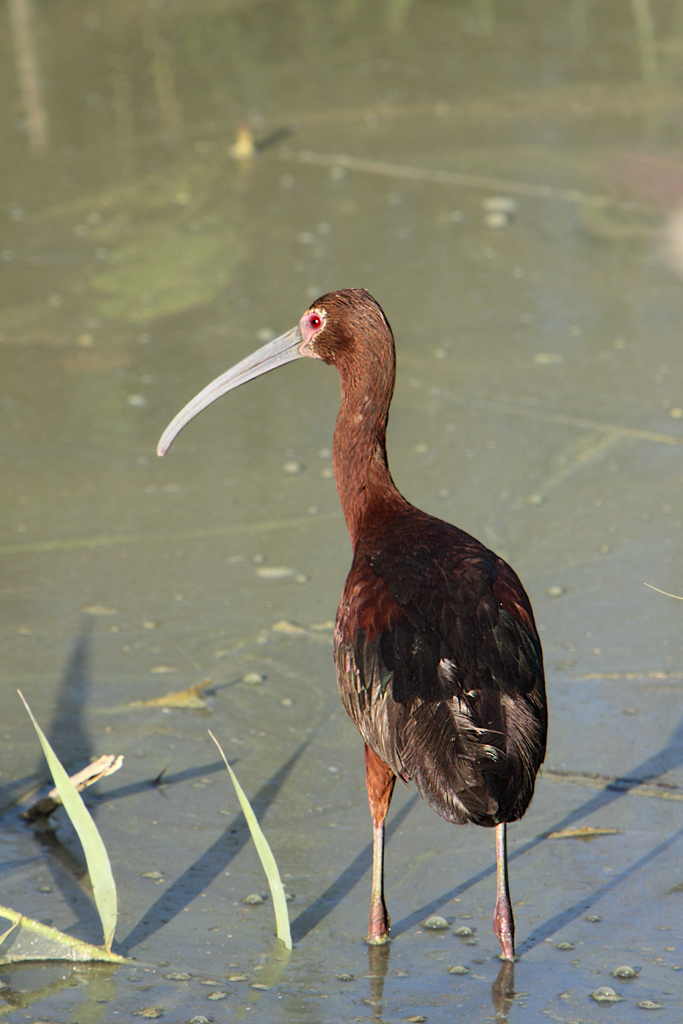
Wikipedia: White-faced ibis
Allgemein: Der Brillensichler (Plegadis chihi) ist ein in Amerika beheimateter, monotypischer Ibis. Die Bestandssituation des Brillensichlers wurde 2016 in der Roten Liste gefährdeter Arten der IUCN als nicht gefährdet (least concern) eingestuft.[1]
[more]
Gattung Platalea:
Rosalöffler / Roseate spoonbill (Platalea ajaja)

Wikipedia: Roseate spoonbill
Der Rosalöffler (Platalea ajaja, Syn.: Ajaia ajaja) ist eine Vogelart aus der Gattung der Löffler (Platalea) innerhalb der Familie der Ibisse und Löffler (Threskiornithidae).
[more]
Gattung Mesembrinibis:
Grünibis / Green ibis (Mesembrinibis cayennensis)
Profil Wikipedia eBird Xeno-Canto

Wikipedia: Green ibis
Der Grünibis oder auch Cayenneibis (Mesembrinibis cayennensis) ist ein mittel- und südamerikanischer Vogel aus der Familie der Ibisse und Löffler. Er steht in der monotypischen Gattung Mesembrinibis.
[more]
Ordnung Passeriformes (Singvögel / Passerine):
Unterordnung Passeri (Sperlingsvögel):
Überfamilie Sylvioidea:
Familie Hirundinidae (Schwalben / Swallows):
Profil Wikipedia eBird Vogelwarte BirdLife ZH Audubon AllAboutBirds Xeno-Canto BirdID NABU

Rauchschwalben schenkel farm, farbe betont für ID. 2020-04-16 10.09.16 Luppmen
Dieser Vogel erscheint jenseits grossen Meere in Kontinenten :
Europa, Nordamerika, Südamerika, Afrika.
Seen every evening from spring to fall, need good picture.
Etymologie: In früheren Jahrhunderten flogen sie vielfach durch die Öffnungen im Giebel ein und aus, durch die auch der Rauch des Herdfeuers abzog. So erhielten sie den Namen Rauchschwalben. [Link]
Gesang: Characteristic calls and song. Song a sparkling, squeaky energetic improvisation with interspersed contact calls, often with diagnostic ending; an electric and drawn-out "su-eerrrrrrrrrrrrrrr". [Link]
Rufe: Contact call a short and sharp "weet" or "kee-weet". [Link]
Körperlich: Länge=17-19 cm,
Flügelspanne=32-34 cm,
Gewicht=16-22 g
Sieht ähnlich aus wie: Mehlschwalbe.
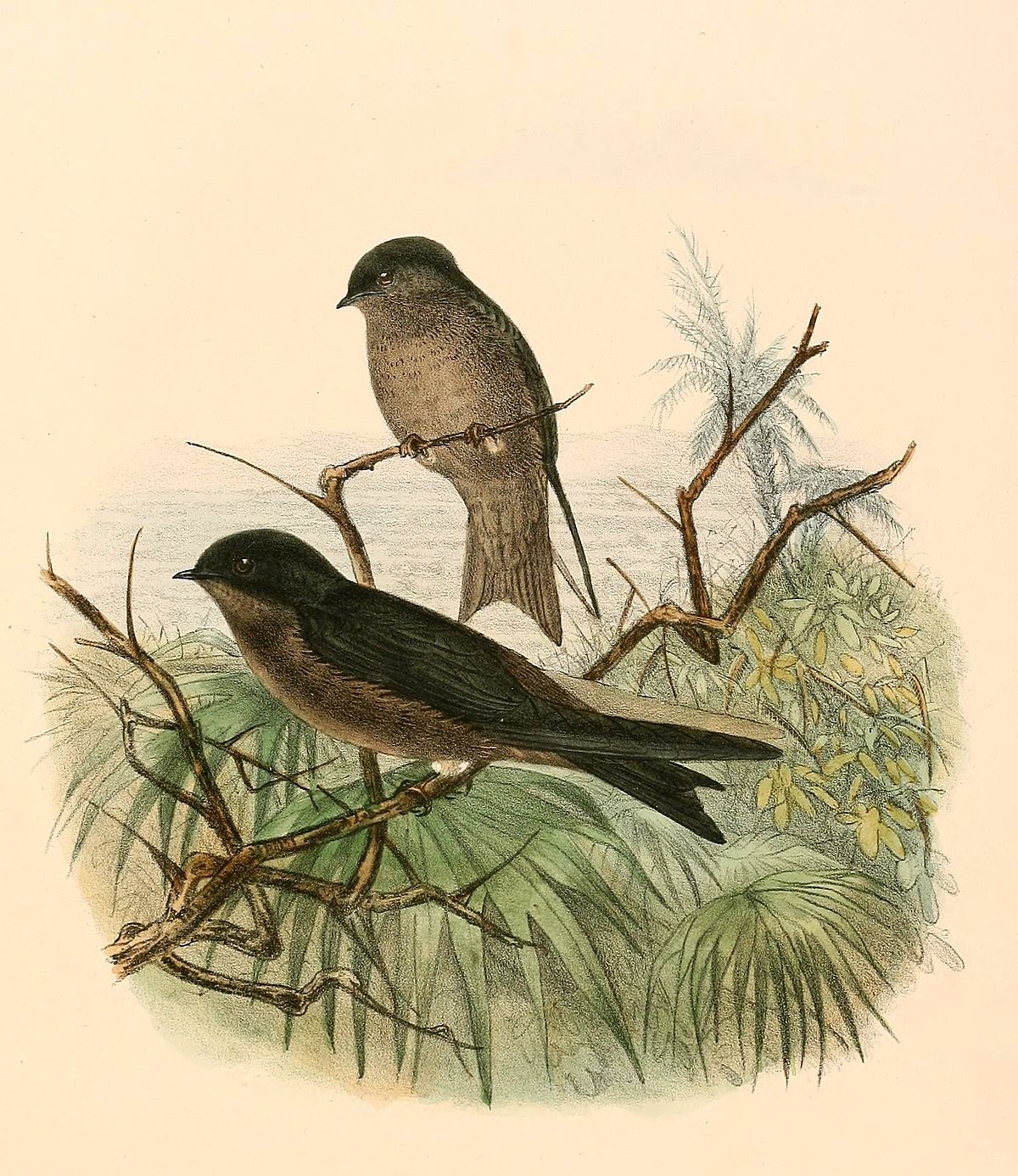
Wikipedia: White-thighed swallow
Allgemein: The white-thighed swallow (Neochelidon tibialis) is a species of bird in the family Hirundinidae. Its genus, Neochelidon, is monotypic.
[more]
 Tree swallow, Cromwell Valley Park, Maryland.JPG)
Tree swallow, Cromwell Valley Park, Maryland. 2021-06-14 15.15.38 Maryland
Die Sumpfschwalbe (Tachycineta bicolor) ist ein Singvogel, der im Norden Nordamerikas brütet und in Mexiko, Zentralamerika und der Karibik überwintert.
[more]
Profil Wikipedia eBird Audubon AllAboutBirds Xeno-Canto

Wikipedia: Violet-green swallow
The violet-green swallow (Tachycineta thalassina) is a small North American passerine bird in the swallow family. These aerial insectivores are distributed along the west coast from Alaska to Mexico, extending as far east as Montana and Texas. With an appearance very similar to the tree swallow, these individuals can be identified by the white rump side-patches that appear to separate their green back and purple tail. Violet-green swallows are secondary cavity nesters, found in a number of habitats including deciduous and coniferous forest. In addition to nesting in tree holes within these habitats, they are also widely observed nesting in the cracks of large cliffs.[2]
[more]
Profil Wikipedia eBird Xeno-Canto

Wikipedia: Mangrove swallow
The mangrove swallow (Tachycineta albilinea) is a passerine bird in the swallow family that breeds in coastal regions from Mexico through Central America to Panama. It has blue-green upperparts, blackish flight feathers, a white rump, a black tail, and white underparts. It can be identified by the supraloral white streak, the white line near its eye, which only occurs in two other species of Tachycineta: the violet-green swallow and the white-rumped swallow. The sexes, although similar in plumage, differ slightly in size. The juveniles have grey-brown upperparts and white-washed underparts. This swallow's song is generally described as a soft trilling, with a rolled jeerrt call, and a sharp alarm note.
[more]
Profil Wikipedia eBird Audubon AllAboutBirds Xeno-Canto
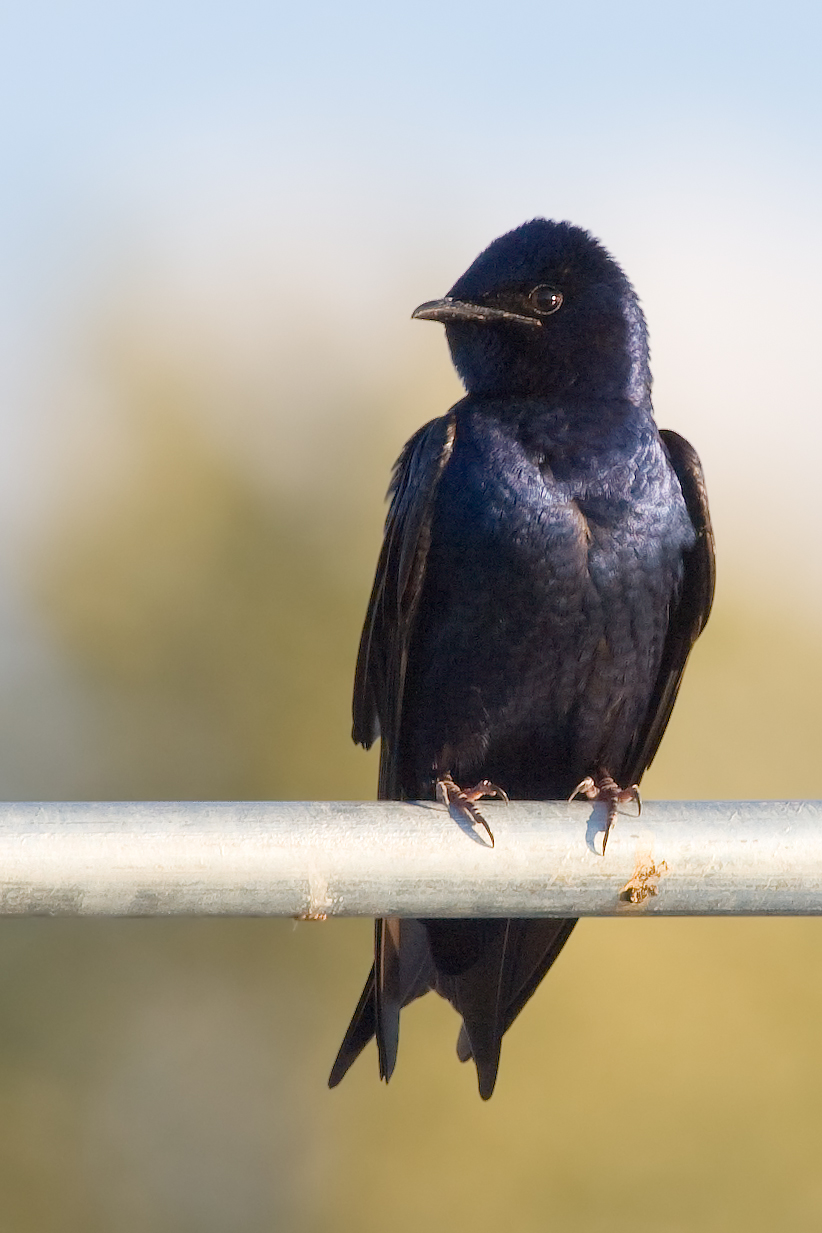
Wikipedia: Purple martin
Die Purpurschwalbe (Progne subis) ist eine amerikanische Singvogelart.
[more]
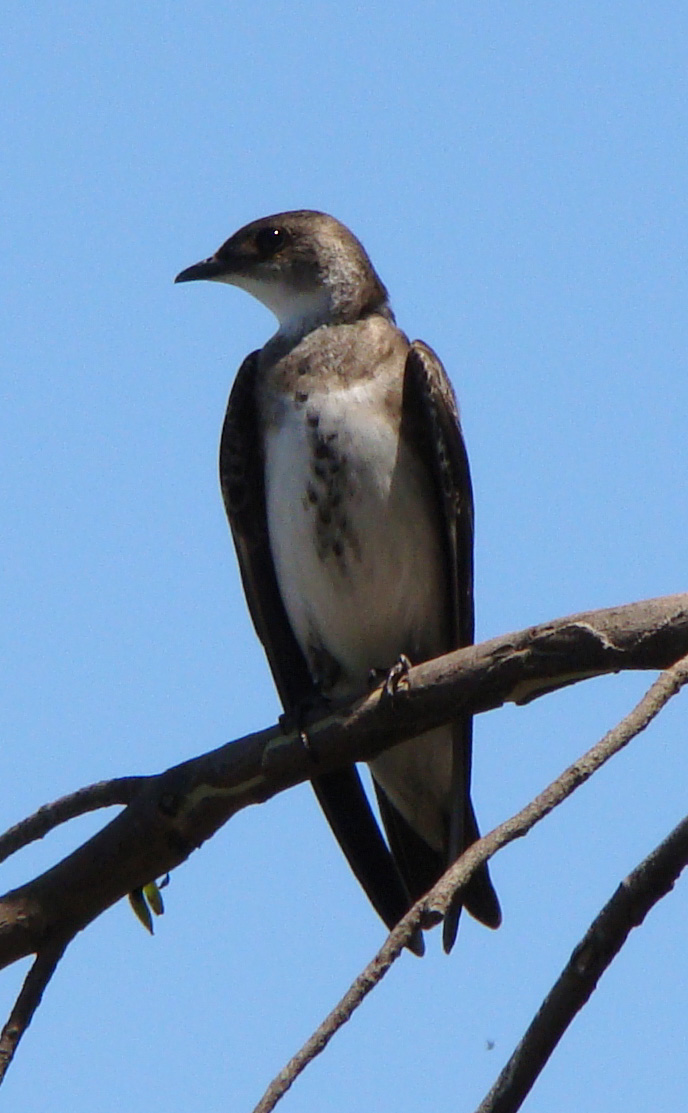
Wikipedia: Brown-chested martin
The brown-chested martin (Progne tapera) is a species of passerine bird in the swallow family.
[more]
Profil Wikipedia eBird Xeno-Canto
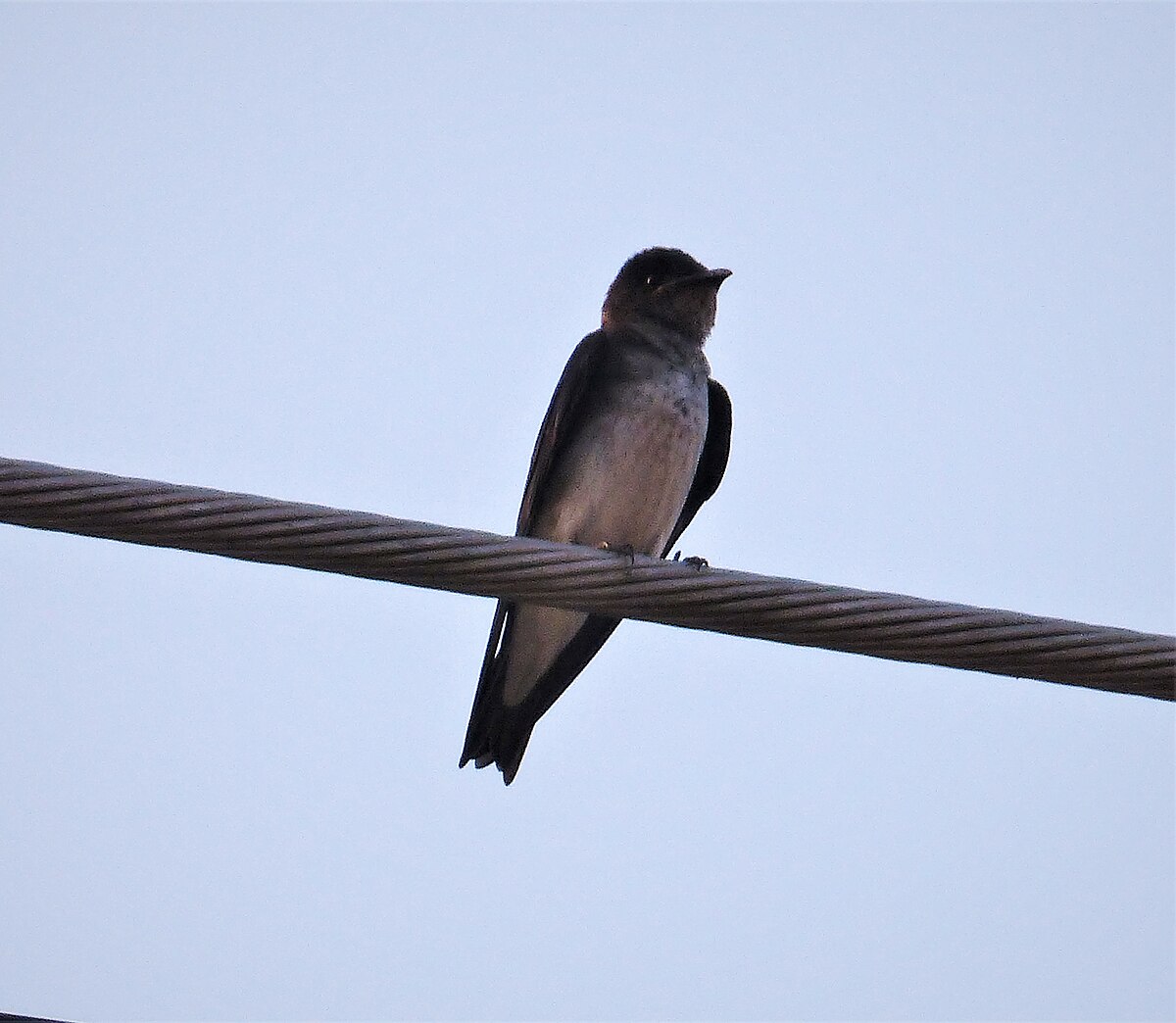
Wikipedia: Gray-breasted martin
The grey-breasted martin (Progne chalybea) is a large swallow from Central and South America.
[more]
Profil Wikipedia eBird Audubon AllAboutBirds Xeno-Canto
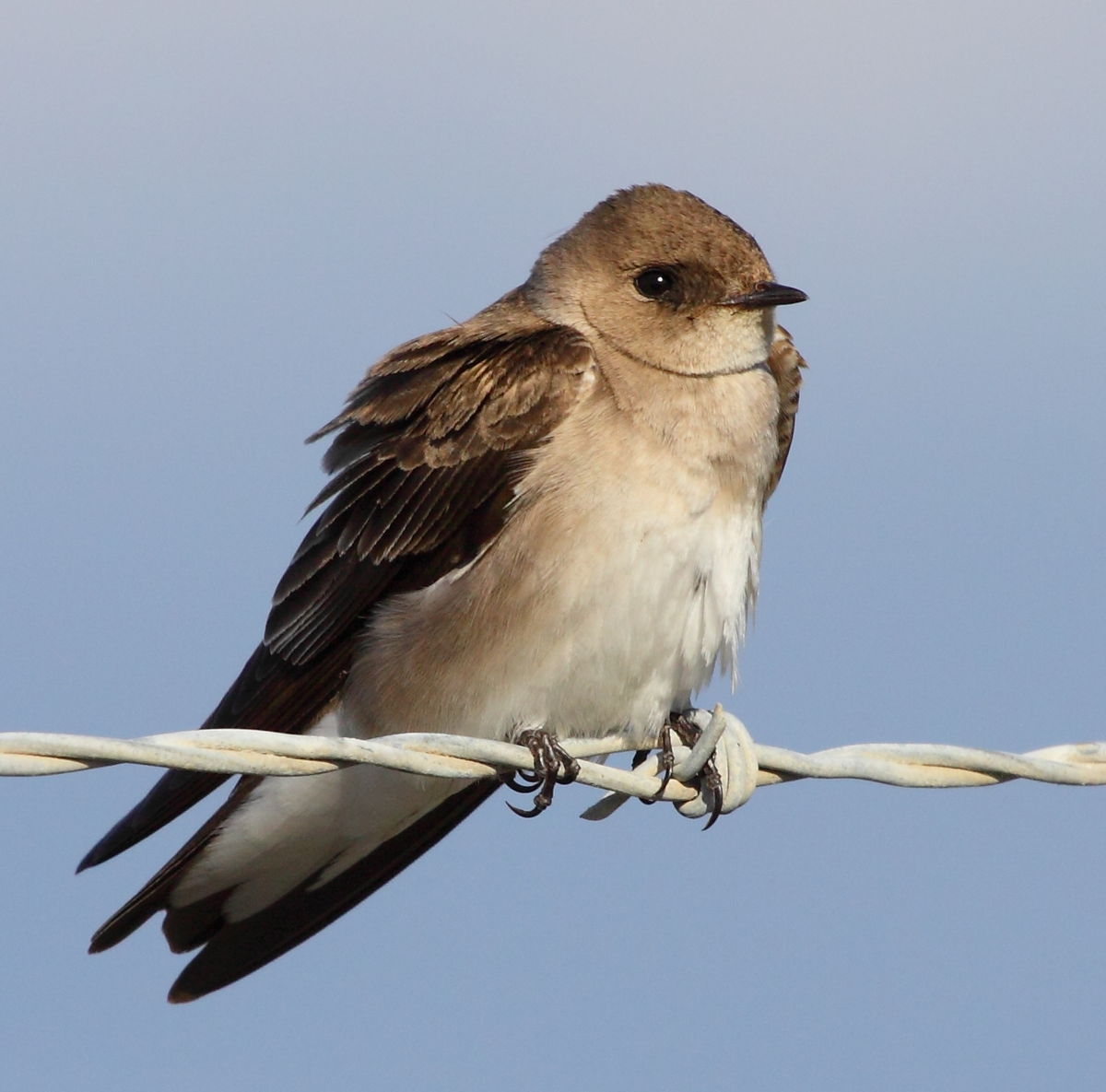
Wikipedia: Northern rough-winged swallow
The northern rough-winged swallow (Stelgidopteryx serripennis) is a small, migratory swallow. It is very similar to the southern rough-winged swallow, Stelgidopteryx ruficollis.
[more]
Profil Wikipedia eBird Xeno-Canto

Arenal hike southern rough-winged swallow tentative ID by Merlin. 2018-02-28 10.47.32 Zentralamerika
The southern rough-winged swallow (Stelgidopteryx ruficollis) is a small swallow. It was first formally described as Hirundo ruficollis by French ornithologist Louis Vieillot in 1817 in his Nouveau Dictionnaire d'Histoire Naturelle.[2]
[more]

Wikipedia: Bank swallow
Dieser Vogel erscheint jenseits grossen Meere in Kontinenten :
Europa, Nordamerika, Südamerika, Afrika.
Die Uferschwalbe (Riparia riparia), auch Rheinschwalbe genannt, ist eine Vogelart aus der Familie der Schwalben (Hirundinidae). Es werden mehrere Unterarten unterschieden.
[more]
Gesang: Song a primitive improvisation on the contact call. [Link]
Rufe: Contact call a mono- or disyllabic "trrrrt". Similar to House Martin but more raucous and less crisp, with less rolling r's, and with stable pitch throughout. Alarm call similar to House Martin; a sharp plaintive "tseep", but somewhat purer and more drawn. [Link]
Körperlich: Länge=12 cm,
Flügelspanne=26-29 cm,
Gewicht=11-16 g

Wikipedia: Cliff swallow
Dieser Vogel erscheint jenseits grossen Meere in Kontinenten :
Europa, Nordamerika, Südamerika.
Allgemein: The cliff swallow or American cliff swallow (Petrochelidon pyrrhonota) is a member of the passerine bird family Hirundinidae, the swallows and martins.[2] The scientific name is derived from Ancient Greek; Petrochelidon originates from the petros meaning "rock" and khelidon "swallow", pyrrhonota comes from purrhos meaning "flame-coloured" and -notos "-backed".[3]
[more]
Profil Wikipedia eBird Xeno-Canto

Wikipedia: Blue-and-white swallow
The blue-and-white swallow (Notiochelidon cyanoleuca) is a passerine bird that breeds from Nicaragua south throughout South America, except in the deserts and the Amazon Basin. The southern race is migratory, wintering as far north as Trinidad, where it is a regular visitor. The nominate northern race may have bred on that island.[2]
[more]
Überfamilie Passeroidea:
Familie Passeridae (Sperlinge / Sparrows):
Profil Wikipedia eBird Vogelwarte BirdLife ZH Audubon AllAboutBirds Xeno-Canto BirdID NABU

Pair of house sparrows in a tree near Zürichstrasse, Fehraltorf 2020-04-11 07.54.30 Luppmen
Dieser Vogel erscheint jenseits grossen Meere in Kontinenten :
Europa, Nordamerika (introduced), Südamerika, Afrika.
Einer der meistverbreitete Vögel überall in Europa und Nordamerika.
In Fehraltorf gibt's 5 Haussperlinge für jeden Feldsperling.
Praktisch überall. Oft auf dem Boden oder auf deinem Tisch im Cafe,
auch in Gruppen in Büschen und Hecken.
Gesang: Song a primitive, monosyllabic, or slightly disyllabic "chilp", hard to distinguish from Tree Sparrow. [Link]
Rufe: Most calls very similar to Tree Sparrow, but lacks said species' distinct high pitched call (chew-itt), and alarm call is less dry and raucous. [Link]
Körperlich: Länge=14-15 cm,
Flügelspanne=21-25 cm,
Gewicht=24-38 g
Gesang:
Monotones Zirpen. Hauptsächlich 2-5 KHz mit Übertönen.
Gesang Eigenschaften:
Melody: einfach rhythmisch, langsam, Frequency: 2-5 KHz Singing season: 01-01 - 08-31 Dawn chorus start, 30 minutes before dawn.
Familie Fringillidae (Finken):

Wikipedia: Lesser goldfinch
Allgemein: Der Mexikozeisig (Spinus psaltria, Syn.: Carduelis psaltria, Astragalinus psaltria), auch Mexikanerzeisig oder Mexikanischer Zeisig genannt, ist eine Vogelart aus der Unterfamilie der Stieglitzartigen. Er kommt in mehreren Unterarten vor. Sein Verbreitungsgebiet reicht von Nord- bis Südamerika.
[more]
Profil Wikipedia eBird Xeno-Canto

Wikipedia: Yellow-bellied siskin
The yellow-bellied siskin (Spinus xanthogastrus) is a small passerine bird in the finch family Fringillidae. It breeds from Costa Rica south to southern Ecuador, central Bolivia and the highlands of northwestern Venezuela.
[more]
Wikipedia: Yellow-bellied siskin
The yellow-bellied siskin (Spinus xanthogastrus) is a small passerine bird in the finch family Fringillidae. It breeds from Costa Rica south to southern Ecuador, central Bolivia and the highlands of northwestern Venezuela.
[more]
Profil Wikipedia eBird Xeno-Canto

Red-legged honeycreeper. 2020-02-21 07.42.10 Zentralamerika
We saw this on the grounds of Gamboa Rainforest Resort, a hotel at the old U.S. administrative center for the Panama Canal. You can spend hours watching birds and wildlife just around the hotel.
Allgemein: Der Türkisnaschvogel, auch Rotfußhonigsauger (Cyanerpes cyaneus) genannt, ist eine kleine Vogelart aus der Familie der Tangaren (Thraupidae).
[more]
Profil Wikipedia eBird Xeno-Canto
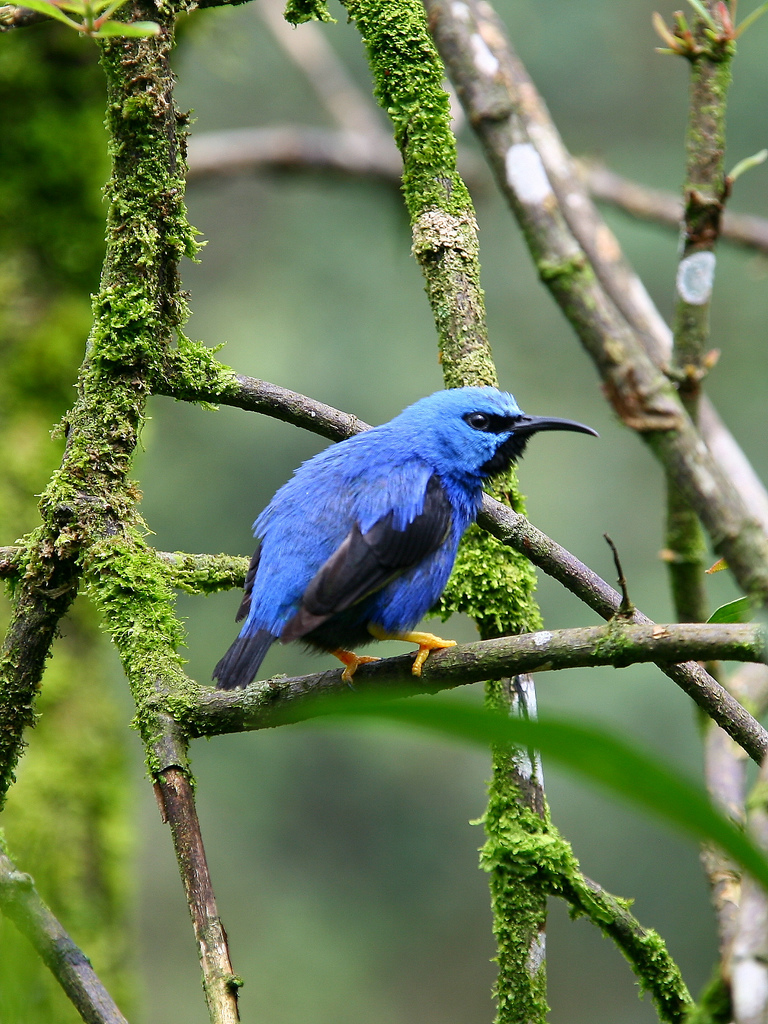
Wikipedia: Shining honeycreeper
The shining honeycreeper (Cyanerpes lucidus) is a small bird in the tanager family. It is found in the tropical New World in Central America from southern Mexico to Panama and northwest Colombia. It is sometimes considered to be conspecific with the purple honeycreeper (C. caeruleus), but the two species breed sympatrically in eastern Panama and northwest Colombia.
[more]
Profil Wikipedia eBird Xeno-Canto
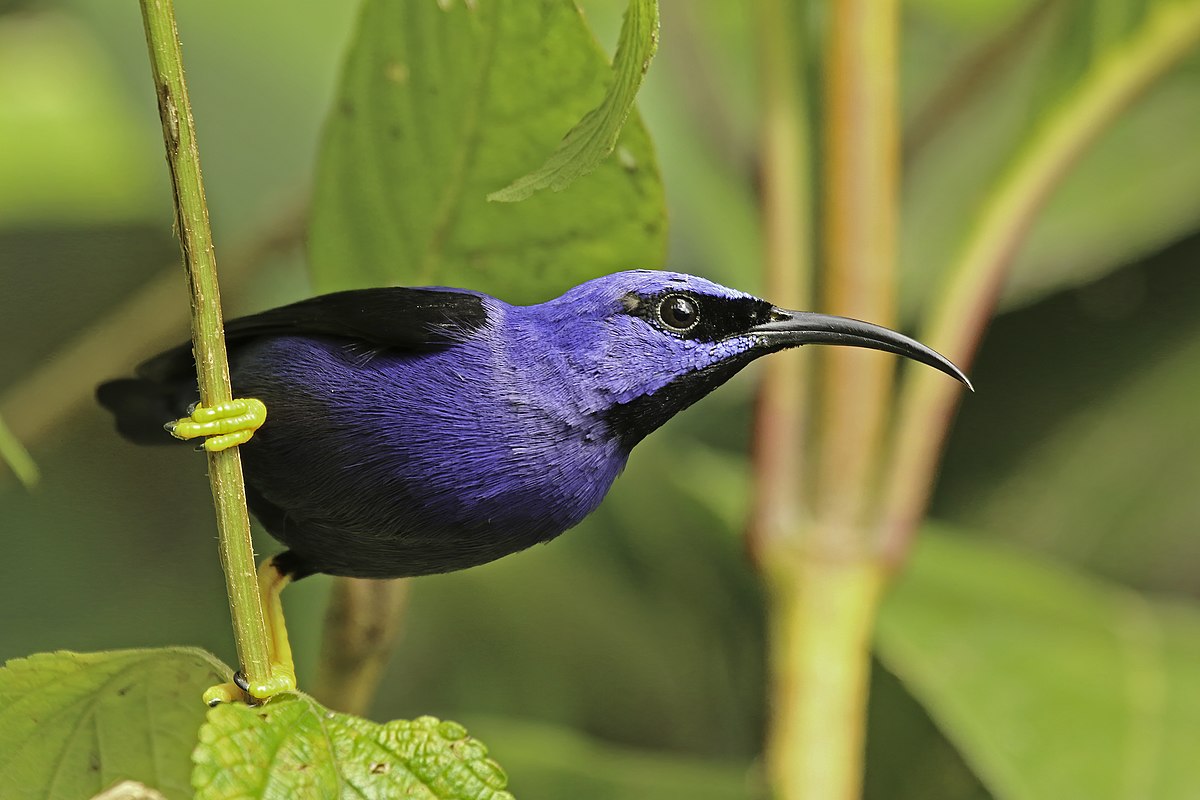
Wikipedia: Purple honeycreeper
Der Purpurnaschvogel (Cyanerpes caeruleus) ist eine Vogelart der Gattung der Türkisvögel (Cyanerpes) aus der Familie der Tangaren (Thraupidae). Man findet ihn im tropischen Amerika (Neotropis) von Kolumbien und Venezuela südlich bis nach Brasilien sowie auf Trinidad. Es wurden auch einige (vielleicht ausgesetzte) Exemplare von Tobago gemeldet.
[more]
Profil Wikipedia eBird Xeno-Canto
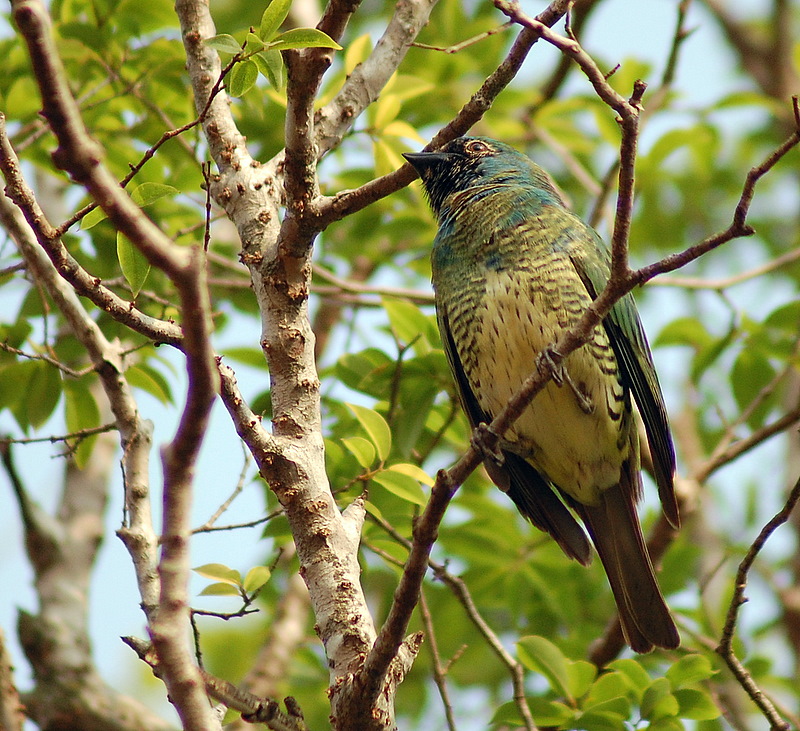
Wikipedia: Swallow tanager
Die Schwalbentangare (Tersina viridis) ist mit einer Körperlänge von 14 Zentimetern ein mittelgroßer Vertreter aus der Familien der Tangaren.
[more]
Profil Wikipedia eBird Audubon AllAboutBirds Xeno-Canto
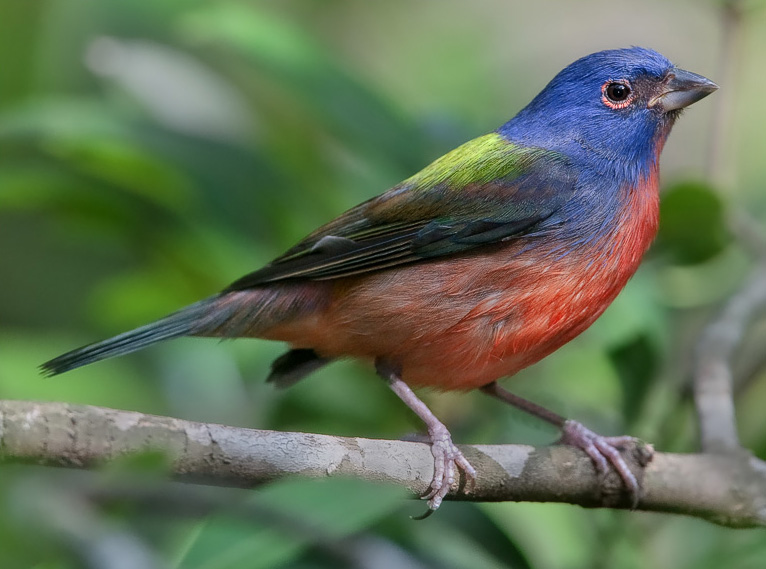
Wikipedia: Painted bunting
The painted bunting (Passerina ciris) is a species of bird in the cardinal family, Cardinalidae, that is native to North America. The bright plumage of the male only comes in the second year of life; in the first year they can only be distinguished from the female by close inspection.
[more]

Wikipedia: Blue grosbeak
The blue grosbeak (Passerina caerulea), is a medium-sized North American passerine bird in the cardinal family Cardinalidae. It is mainly migratory, wintering in Central America and breeding in northern Mexico and the southern United States. The male is blue with two brown wing bars. The female is mainly brown with scattered blue feathers on the upperparts and two brown wing bars.
[more]
Profil Wikipedia eBird Audubon AllAboutBirds Xeno-Canto
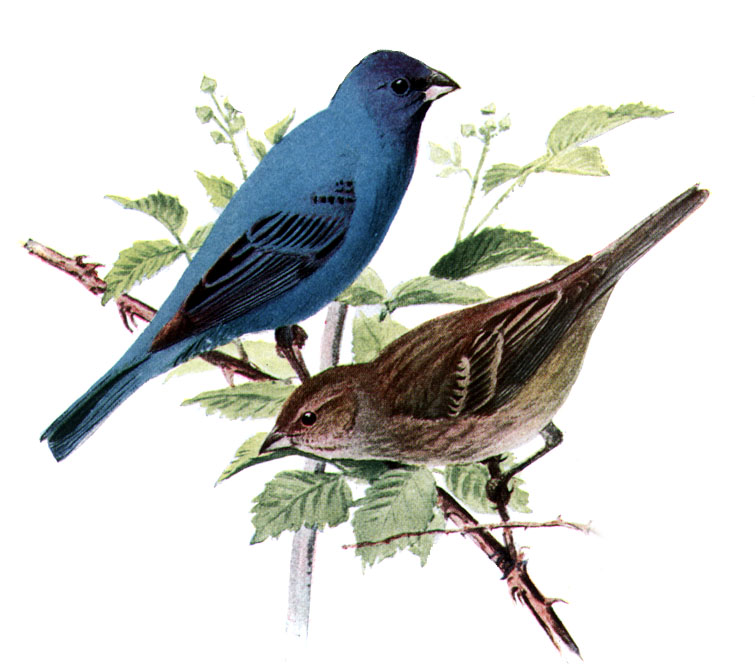
Wikipedia: Indigo bunting
Der Indigofink (Passerina cyanea) ist ein nordamerikanischer Singvogel aus der Familie der Kardinäle.
[more]
Profil Wikipedia eBird Audubon AllAboutBirds Xeno-Canto
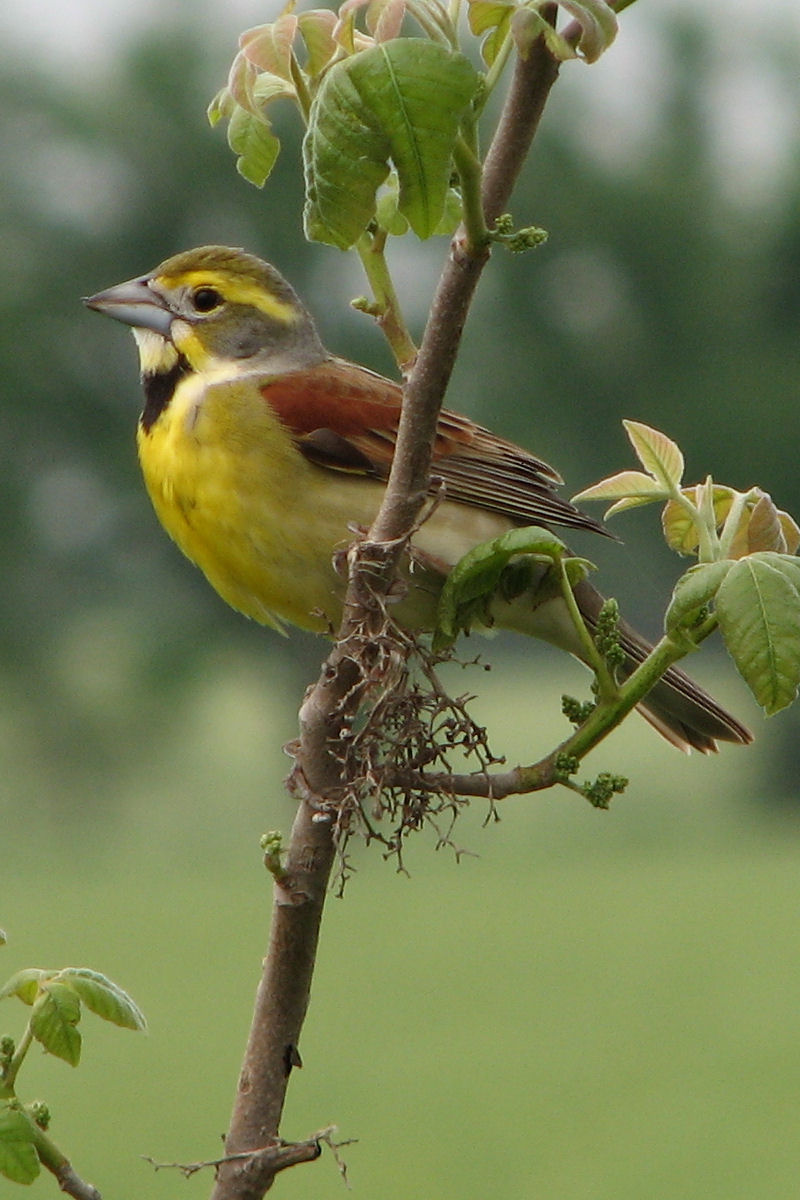
Wikipedia: Dickcissel
Der Dickzissel (Spiza americana) ist ein amerikanischer Singvogel aus der Familie der Kardinäle. Die Art ist der einzige Vertreter der Gattung Spiza.
[more]
Profil Wikipedia eBird Audubon AllAboutBirds Xeno-Canto
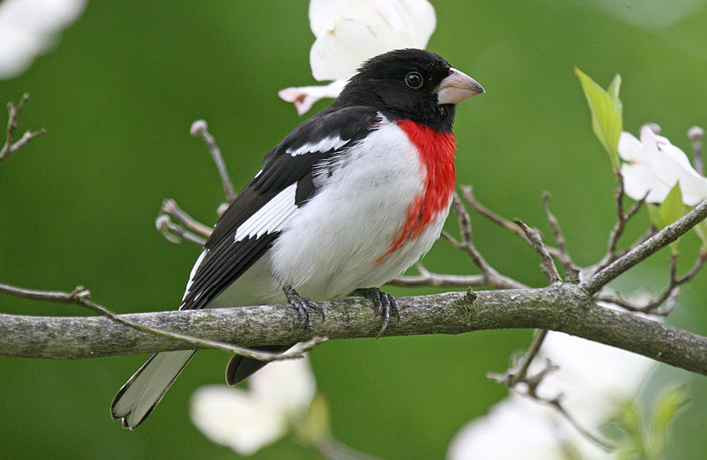
Wikipedia: Rose-breasted grosbeak
Der Rosenbrust-Kernknacker (Pheucticus ludovicianus) ist ein großer Singvogel aus der Familie der Kardinäle (Cardinalidae). Das Artepitheton ludovicianus bezieht sich auf König Ludwig XIV. von Frankreich, zu dessen Ehren der Bundesstaat im Süden der Vereinigten Staaten von Amerika, Louisiana, seinen Namen erhielt. Linnaeus bezog sich damit auf die Herkunft des Typusexemplares aus Louisiana.[1]
[more]
Profil Wikipedia eBird Xeno-Canto

Wikipedia: Black-thighed grosbeak
The black-thighed grosbeak (Pheucticus tibialis) is a large seed-eating bird in the cardinal family, which is endemic to the mountains of Costa Rica and western Panama.
[more]
Profil Wikipedia eBird Xeno-Canto

Wikipedia: Black-faced grosbeak
The black-faced grosbeak (Caryothraustes poliogaster) is a large seed-eating bird in the cardinal family (Cardinalidae), which is a resident breeding species from south-eastern Mexico to eastern Panama.
[more]
Profil Wikipedia eBird Xeno-Canto

Wikipedia: Yellow-green grosbeak
The yellow-green grosbeak (Caryothraustes canadensis) is a species of grosbeak in the family Cardinalidae.
[more]

Wikipedia: Blue-black grosbeak
The blue-black grosbeak (Cyanoloxia cyanoides) is a species of songbird in the family Cardinalidae.
[more]
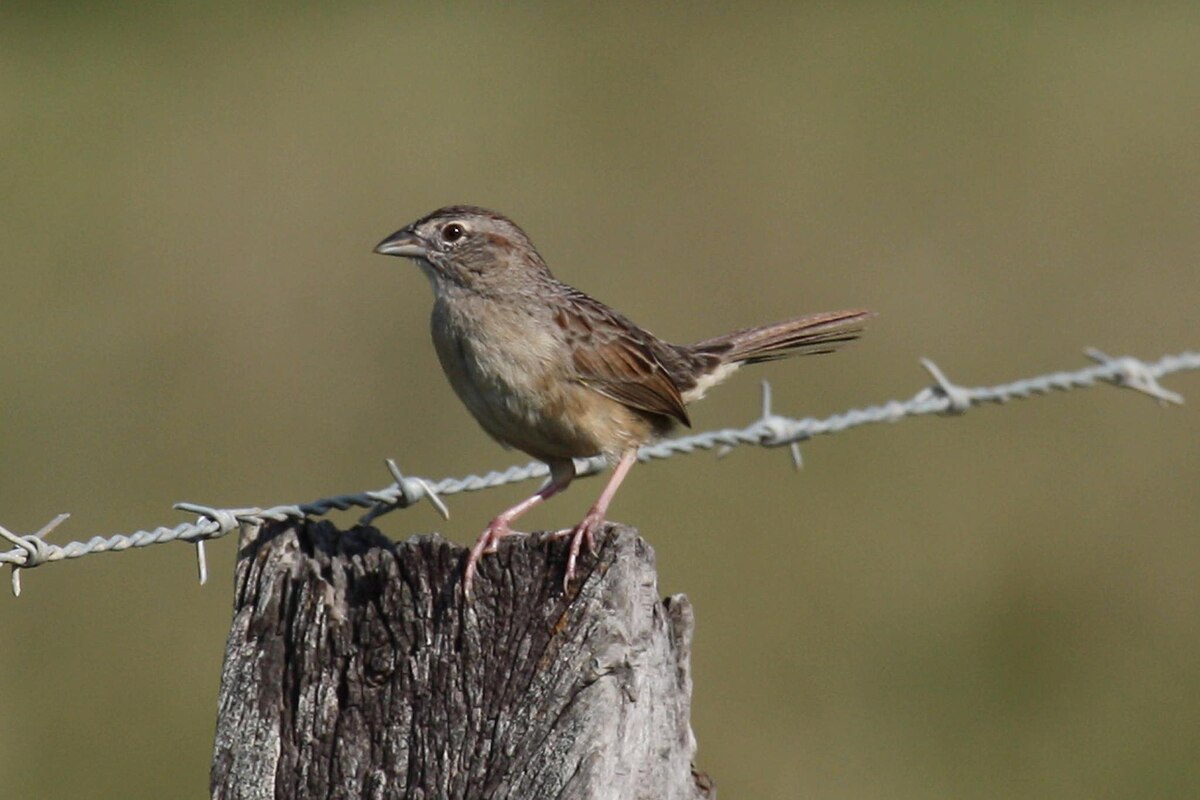
Wikipedia: Botteri's sparrow
Botteri's sparrow (Peucaea botterii) is a medium-sized sparrow.
[more]

Wikipedia: Stripe-headed sparrow
The stripe-headed sparrow (Peucaea ruficauda) is an American sparrow which breeds from Pacific coastal south-western Mexico, including the transverse ranges, Cordillera Neovolcanica to Pacific coastal northern Costa Rica.
[more]
Profil Wikipedia eBird Xeno-Canto

Wikipedia: Golden-browed chlorophonia
The golden-browed chlorophonia (Chlorophonia callophrys) is a species of bird in the family Fringillidae. It is found in Costa Rica and Panama. It is uncommon in subtropical or tropical moist montane forest above 750 m (2,460 ft) elevation.
[more]
Profil Wikipedia eBird Xeno-Canto

Wikipedia: White-vented euphonia
The white-vented euphonia (Euphonia minuta) is a species of bird in the family Fringillidae.
[more]
Profil Wikipedia eBird Xeno-Canto

Wikipedia: Thick-billed euphonia
Der Dickschnabelorganist (Euphonia laniirostris) ist ein Singvogel aus der Gattung der Organisten (Euphonia) in der Familie der Finken (Fringilidae).
[more]
Profil Wikipedia eBird Xeno-Canto
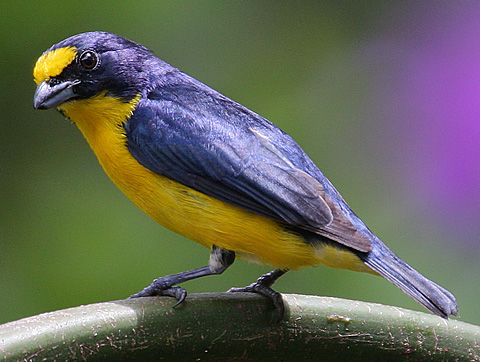
Wikipedia: Yellow-throated euphonia
The yellow-throated euphonia (Euphonia hirundinacea) is a species of songbird in the family Fringillidae. It is found in southeastern Mexico and throughout Central America with its range stretching from Belize south to western Panama. It inhabits primarily both humid and dry regions where it prefers the forest edge, open woodland, and shaded plantations. It has two subspecies, the nominate subspecies Euphonia hirundinacea hirundinacea and Euphonia hirundinacea gnatho. This finch is a small bird with pointed wings and a short bill and short tail. Males of this species have dark glossy blue-black upperparts excluding a yellow forecrown, and bright yellow underparts, while females have olive green upperparts and whitish-gray breast and lower parts. It has a shrill song that alternates between high-pitched and moderately pitched and appears to be able to mimic some calls of other birds.
[more]
Profil Wikipedia eBird Xeno-Canto

Wikipedia: Elegant euphonia
The elegant or blue-hooded euphonia (Euphonia elegantissima) is a species of bird in the family Fringillidae. It is found in Belize, Costa Rica, El Salvador, Guatemala, Honduras, Mexico, Nicaragua, and Panama.
[more]
Profil Wikipedia eBird Xeno-Canto

Wikipedia: Tawny-capped euphonia
The tawny-capped euphonia (Euphonia anneae) is a species of bird in the family Fringillidae.
It is found in Colombia, Costa Rica, and Panama.
Its natural habitats are subtropical or tropical moist lowland forest, subtropical or tropical moist montane forest, and heavily degraded former forest.
[more]
Profil Wikipedia eBird Xeno-Canto

Wikipedia: Olive-backed euphonia
Der Olivrückenorganist (Euphonia gouldi) ist ein kleiner Singvogel aus der Gattung der Organisten (Euphonia) in der Familie der Finken (Fringilidae). Die Art wird in zwei Unterarten (E. g. gouldi und E. g. praetermissa) unterteilt, die in den karibischen Tiefebenen und Gebirgsausläufern vom südlichen Mexiko bis ins westliche Panama vorkommen.
[more]
Profil Wikipedia eBird Xeno-Canto

Wikipedia: Yellow-crowned euphonia
The yellow-crowned euphonia (Euphonia luteicapilla) is a species of bird in the family Fringillidae. It is found in Costa Rica, Nicaragua, and Panama, and is perhaps the most common euphonia in its range.[2] Its natural habitats are subtropical or tropical dry forest, subtropical or tropical moist lowland forest, and heavily degraded former forest. It can be found on occasion in the canopy of small forests.[3]
[more]
Profil Wikipedia eBird Xeno-Canto

Wikipedia: Scrub euphonia
The scrub euphonia (Euphonia affinis) is a species of bird in the family Fringillidae.
[more]

Wikipedia: Spot-crowned euphonia
The spot-crowned euphonia (Euphonia imitans) is a species of bird in the family Fringillidae.
It is found in Costa Rica and Panama.
Its natural habitats are subtropical or tropical moist lowland forest and heavily degraded former forest.
[more]
Profil Wikipedia eBird Xeno-Canto

Wikipedia: Orange-bellied euphonia
The orange-bellied euphonia (Euphonia xanthogaster) is a species of bird in the finch family, Fringillidae. They were formerly considered tanagers (Thraupidae). It is found in Bolivia, Brazil, Colombia, Ecuador, Guyana, Panama, Peru, and Venezuela. Its natural habitats are subtropical or tropical moist lowland forest and subtropical or tropical moist montane forest.
[more]
Profil Wikipedia eBird Xeno-Canto

Wikipedia: Fulvous-vented euphonia
The fulvous-vented euphonia (Euphonia fulvicrissa) is a species of bird in the family Fringillidae, formerly placed in the Thraupidae
[more]
Familie Motacillidae (Stelzenverwandte):
Profil Wikipedia eBird Xeno-Canto

Wikipedia: Yellowish pipit
The yellowish pipit (Anthus lutescens) is a species of bird in the family Motacillidae.
It is found in Argentina, Bolivia, Brazil, Chile, Colombia, French Guiana, Guyana, Panama, Paraguay, Peru, Suriname, Uruguay, and Venezuela.
Its natural habitats are temperate grassland, subtropical or tropical seasonally wet or flooded lowland grassland, and pastureland.
[more]
Familie Estrildidae:
Profil Wikipedia eBird Xeno-Canto NABU
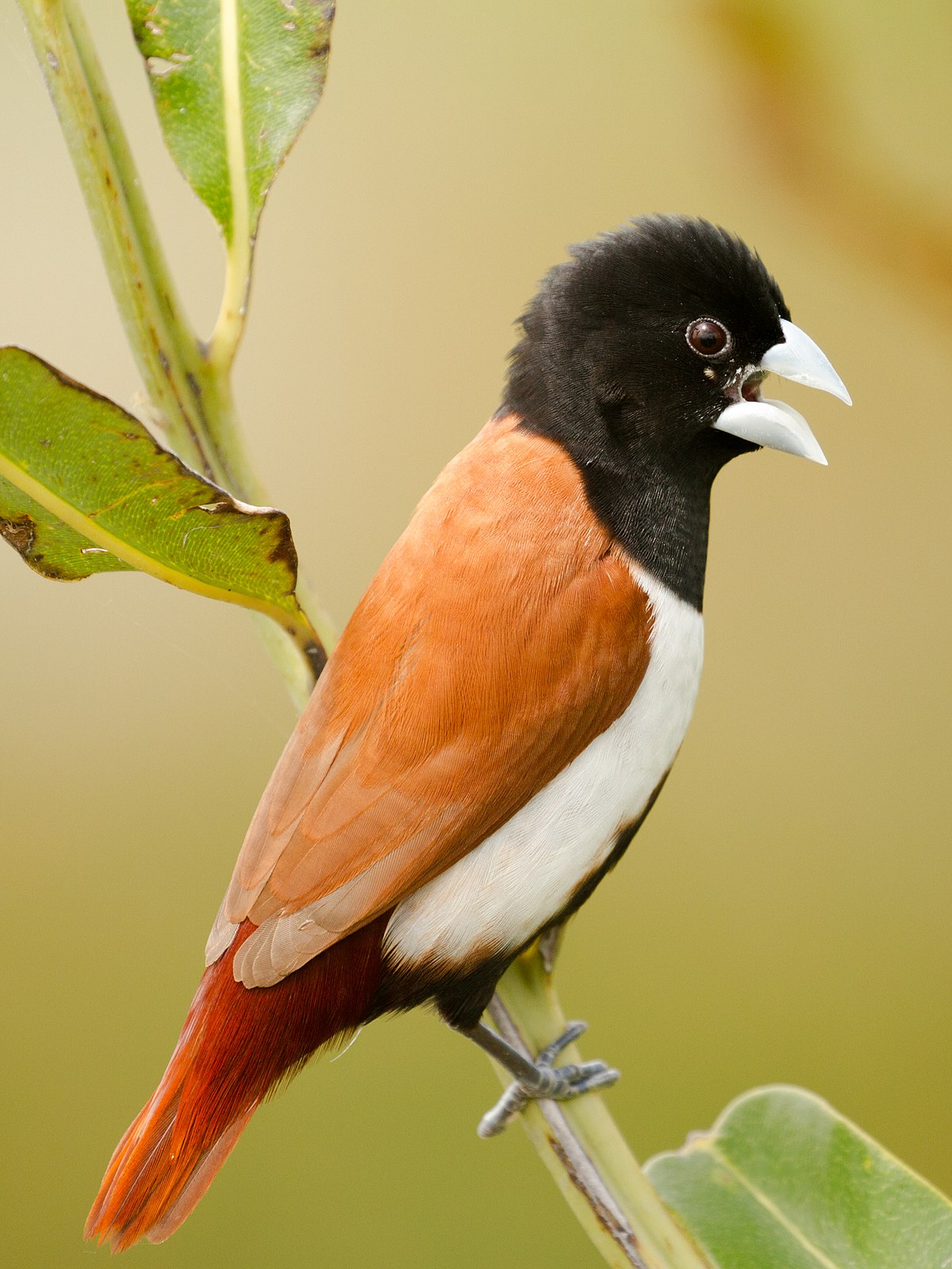
Wikipedia: Tricolored munia
Dieser Vogel erscheint jenseits grossen Meere in Kontinenten :
Europa, Südamerika.
Die Schwarzbauchnonne (Lonchura malacca, Syn.: Munia malacca) oder Dreifarbennonne ist eine Vogelart aus der Art aus der Familie der Prachtfinken (Estrildidae) die in Südindien und Sri Lanka vorkommt. Sie wird verhältnismäßig häufig in Europa als Ziervogel gehalten.
[more]
Familie Icteridae (New world blackbirds, orioles and allies):
 Red-winged blackbird, Cromwell Valley Park, Marylan.JPG)
Red-winged blackbird, Cromwell Valley Park, Marylan. 2021-06-14 16.09.06 Maryland
Der Rotflügelstärling (Agelaius phoeniceus) ist ein Vogel aus der Familie der Stärlinge (Icteridae). Er ist einer der bestuntersuchten Singvögel in Nordamerika.
[more]
Profil Wikipedia eBird Audubon AllAboutBirds Xeno-Canto
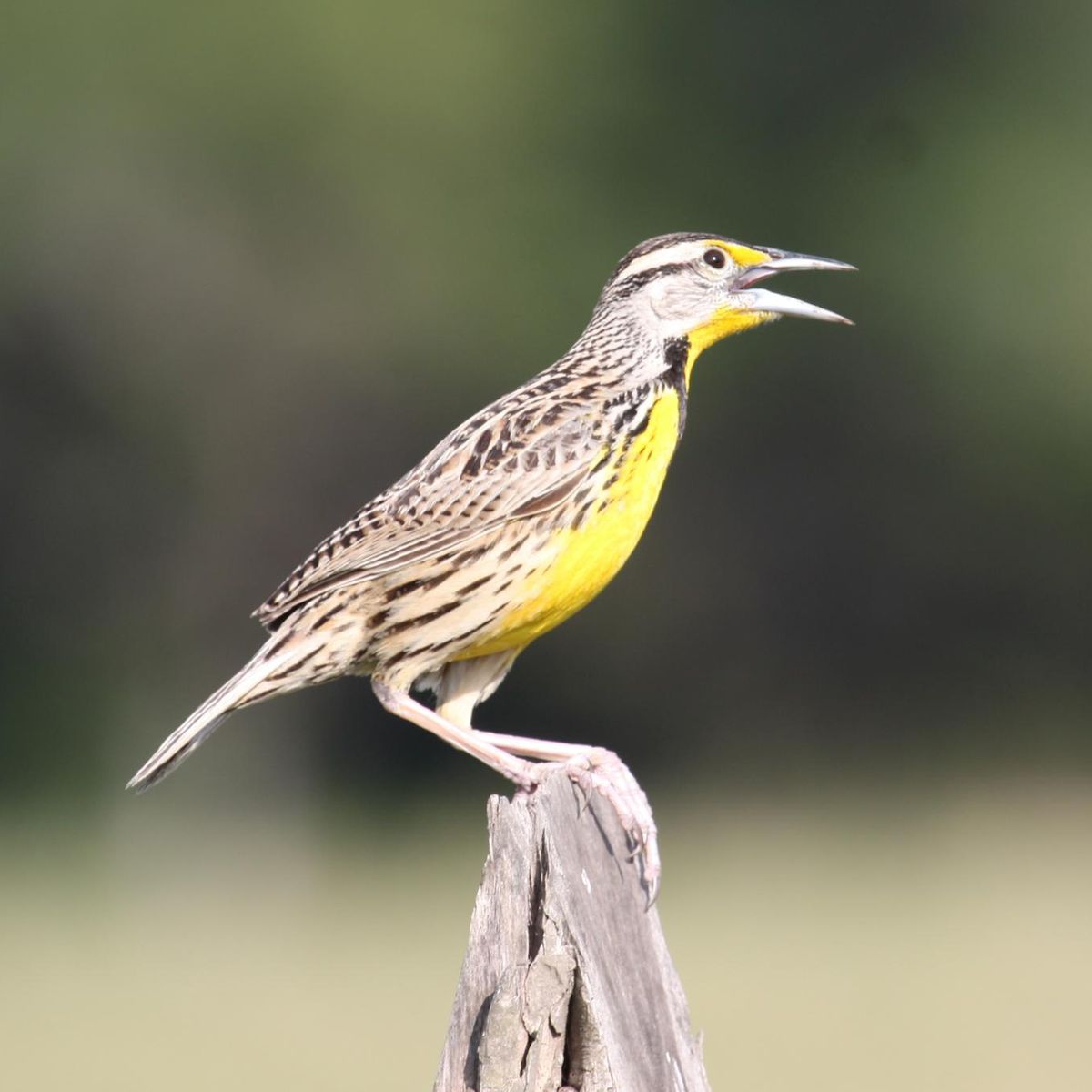
Wikipedia: Eastern meadowlark
The eastern meadowlark (Sturnella magna) is a medium-sized icterid bird, very similar in appearance to the western meadowlark. It occurs from eastern North America to South America, where it is also most widespread in the east.
[more]

Wikipedia: Red-breasted meadowlark
The red-breasted meadowlark (Leistes militaris) is a passerine bird in the New World family Icteridae. It was formerly named red-breasted blackbird but is not closely related to the red-winged blackbird group.[2]
[more]
Profil Wikipedia eBird Xeno-Canto

Monteverde great tailed grackle female. 2018-02-12 16.47.52 Zentralamerika
Die Dohlengrackel (Quiscalus mexicanus) ist ein Vogel aus der Familie der Stärlinge (Icteridae). Früher wurden die Dohlengrackeln mit den Purpur-Grackeln (Quiscalus quiscula) zu einer Art zusammengefasst.
[more]
Profil Wikipedia eBird Xeno-Canto

Wikipedia: Nicaraguan grackle
The Nicaraguan grackle (Quiscalus nicaraguensis) is a species of passerine bird belonging to the genus Quiscalus, a genus of grackles in the New World blackbird family, Icteridae. It is found only in Nicaragua and northernmost Costa Rica.
[more]
Profil Wikipedia eBird Xeno-Canto
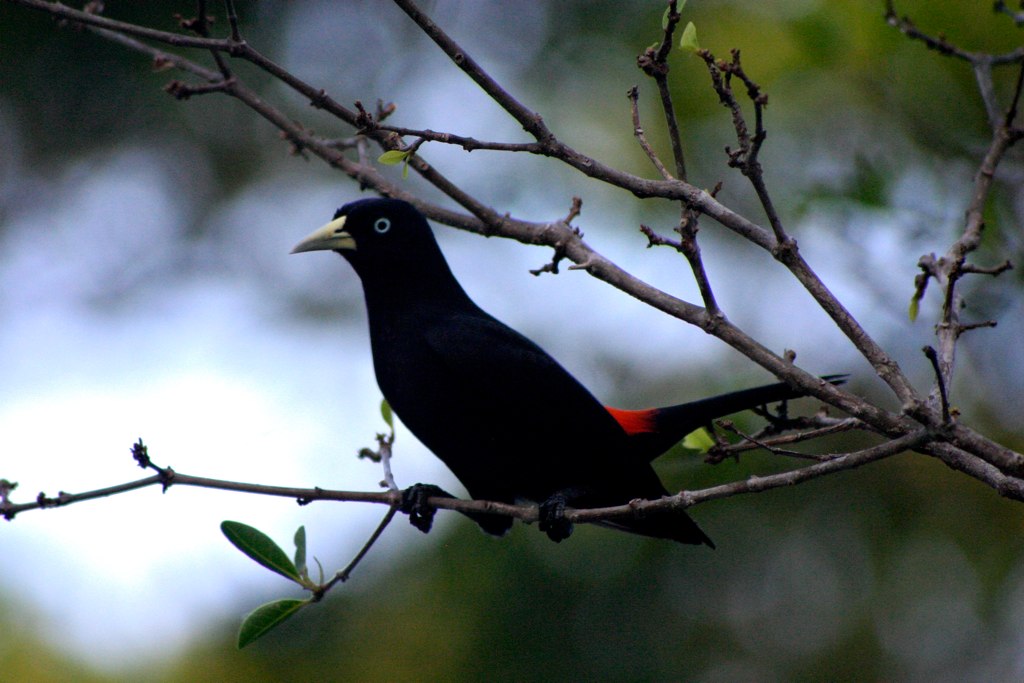
Wikipedia: Scarlet-rumped cacique
The scarlet-rumped cacique (Cacicus uropygialis) is a passerine bird species in the New World family Icteridae. It breeds from eastern Honduras to Panama and in the Pacific lowlands of South America from western Colombia south to Ecuador, and in the lower reaches of the northern Andes. There are several subspecies, some of which have been proposed for elevation to full species status.
[more]
Profil Wikipedia eBird Xeno-Canto

Wikipedia: Yellow-rumped cacique
Die Gelbbürzelkassike oder Gelbrücken-Stirnvogel (Cacicus cela), auch Arendajo, ist ein südamerikanischer Singvogel aus der Familie der Stärlinge.
[more]
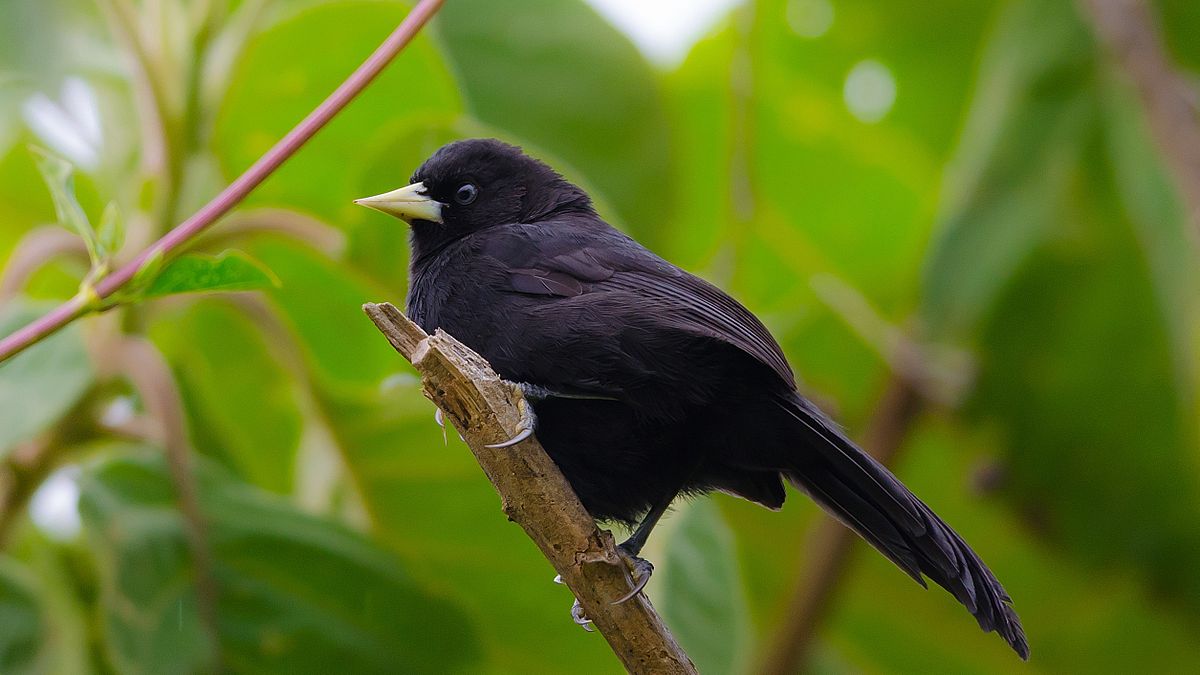
Wikipedia: Yellow-billed cacique
The yellow-billed cacique (Amblycercus holosericeus) is a species of cacique in the family Icteridae. It is monotypic within the genus Amblycercus.[2] There is some question as to whether or not it is a true cacique.[3][4]
[more]
Profil Wikipedia eBird Xeno-Canto
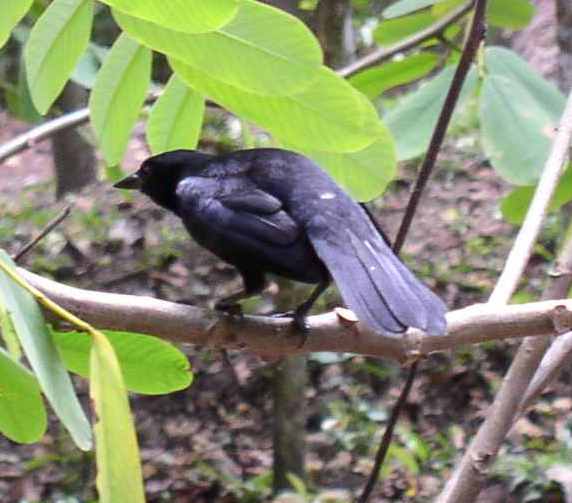
Wikipedia: Melodious blackbird
The melodious blackbird (Dives dives) is a New World tropical bird.
[more]
Profil Wikipedia eBird Audubon AllAboutBirds Xeno-Canto

Wikipedia: Bobolink
Der Reisstärling (Dolichonyx oryzivorus), auch Bobolink genannt, ist die einzige rezente Vogelart in der Vogelgattung Dolichonyx und gehört zu der Familie der Stärlinge (Icteridae). Die vor allem im englischsprachigen Raum gebräuchliche Bezeichnung Bobolink geht auf den Gesang dieser Art zurück, der mit Bob-o-liiiii umschrieben wird.[1]
[more]

Black-cowled oriole in Manzanillo, Costa Rica. 2020-03-12 09.34.56 Zentralamerika
The black-cowled oriole (Icterus prosthemelas) is a species of bird in the family Icteridae. It is common and widespread in the Caribbean lowlands and foothills from southern Mexico to western Panama. It lives primarily in humid or semihumid forest, as well as in clearings, along forest edges, in plantations, in semi-open areas with scattered trees and bushes, and in gardens. The adult male is black, with yellow on the belly, shoulder, rump, wing lining, and crissum. The female's plumage varies depending on location. In the south of its range, it is similar to that of the male. In the north, its crown and upperparts are olive-yellow, while its face, throat, upper breast, wings, and tail are black.
[more]
 Seldom seen Baltimore Oriole, Cromwell Valley Park.JPG)
Seldom seen Baltimore Oriole, Cromwell Valley Park. 2021-06-18 11.34.42 Maryland
Der Baltimoretrupial (Icterus galbula) ist ein Zugvogel mit Brutgebiet in Nordamerika aus der Familie der Stärlinge (Icteridae). Er ist der Staatsvogel des US-amerikanischen Bundesstaates Maryland[1] und das Wappentier des in Baltimore beheimateten Baseballvereins Baltimore Orioles.
[more]
Profil Wikipedia eBird Audubon AllAboutBirds Xeno-Canto

Wikipedia: Orchard oriole
Der Gartentrupial (Icterus spurius) ist eine in Nord-, Mittel- und Südamerika vorkommende Singvogelart aus der Familie der
Stärlinge (Icteridae).
[more]
Profil Wikipedia eBird Audubon AllAboutBirds Xeno-Canto

Wikipedia: Spot-breasted oriole
Der Tropfentrupial (Icterus pectoralis) ist eine in Mittelamerika vorkommende Singvogelart aus der Familie der
Stärlinge (Icteridae).
[more]
Profil Wikipedia eBird Xeno-Canto
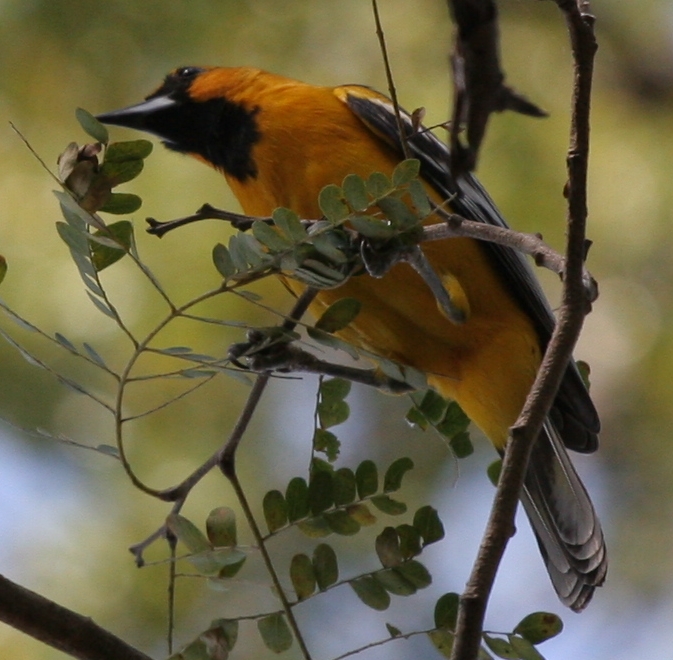
Wikipedia: Streak-backed oriole
The streak-backed oriole (Icterus pustulatus) is a medium-sized species of passerine bird from the icterid family (the same family as many blackbirds, meadowlarks, cowbirds, grackles, and others, including the New World orioles). It is native to Central America and Mexico and is an occasional visitor to the United States.[1]
[more]
Profil Wikipedia eBird Xeno-Canto
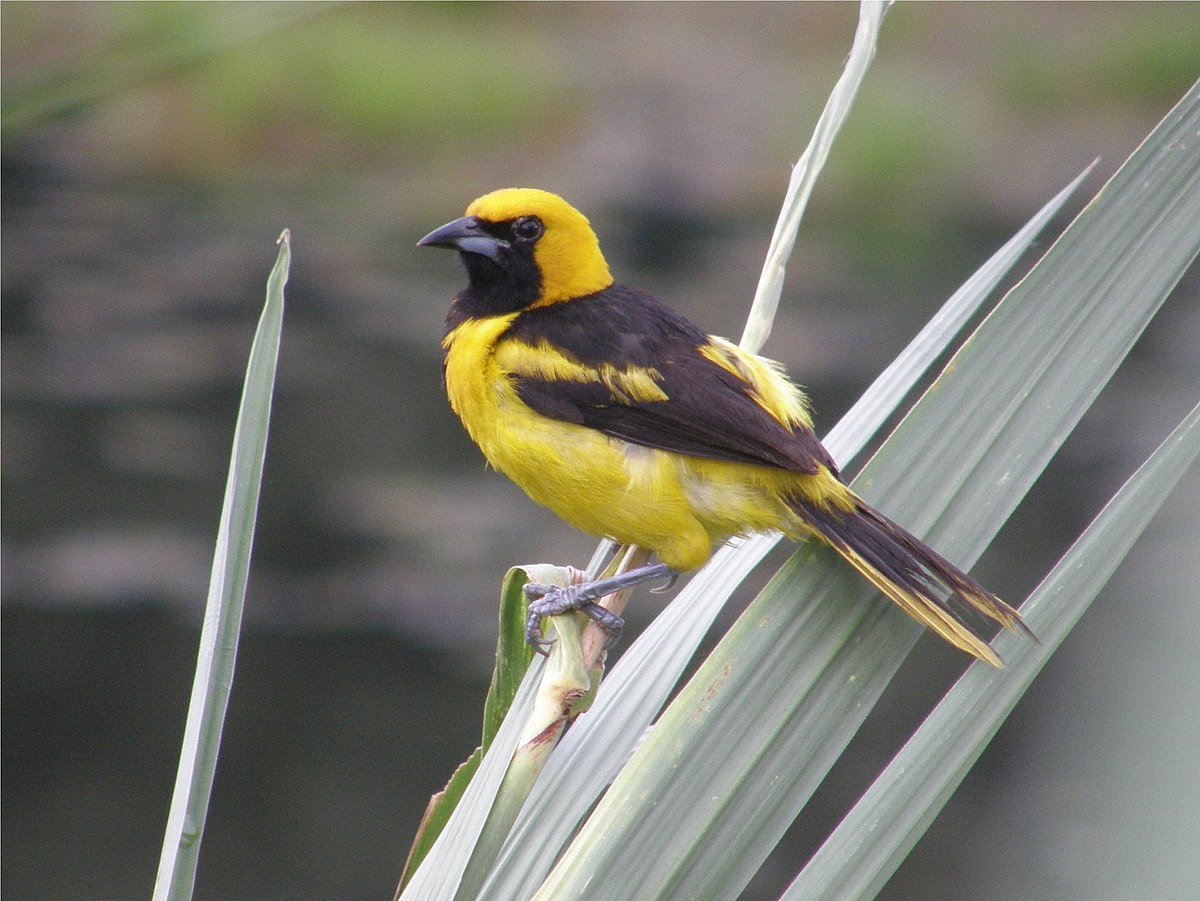
Wikipedia: Yellow-tailed oriole
The yellow-tailed oriole (Icterus mesomelas) is a passerine bird in the New World family Icteridae. It breeds from southern Mexico to western Peru and northwestern Venezuela; in Peru it also lives in a river valley corridor.
[more]
Profil Wikipedia eBird Xeno-Canto

Wikipedia: Orange-crowned oriole
The orange-crowned oriole (Icterus auricapillus) is a species of bird in the family Icteridae. It is found in eastern Panama, Colombia and Venezuela.
[more]
Profil Wikipedia eBird Xeno-Canto
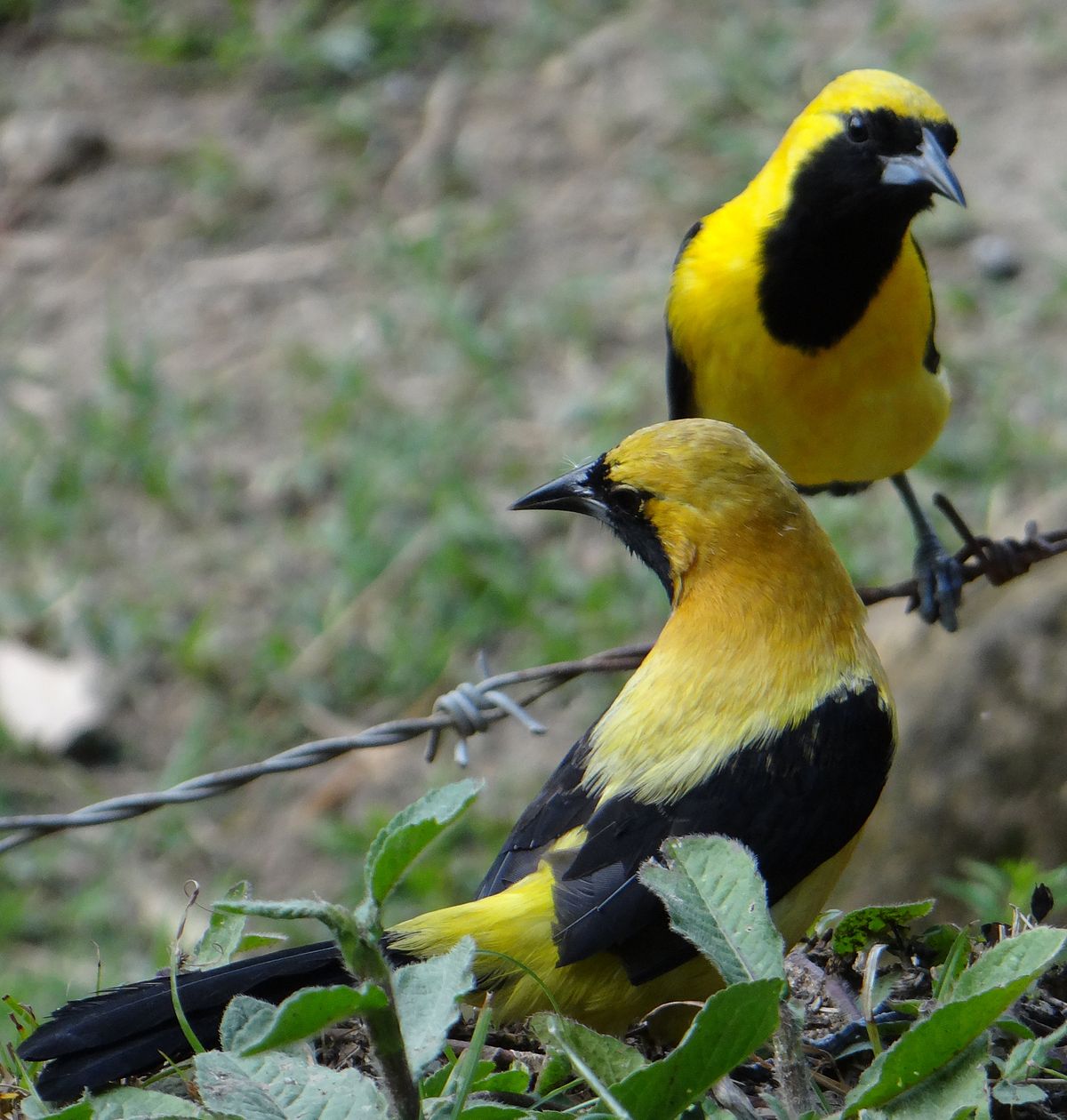
Wikipedia: Yellow-backed oriole
The yellow-backed oriole (Icterus chrysater) is a species of bird in the family Icteridae.
[more]
Profil Wikipedia eBird Audubon AllAboutBirds Xeno-Canto

Wikipedia: Shiny cowbird
Der Seidenkuhstärling (Molothrus bonariensis), gelegentlich auch Glanzkuhstärling, ist ein kleiner Singvogel aus der Gattung der Kuhstärlinge. Die in weiten Teilen Südamerikas und der Karibik verbreitete Art wurde erstmals im Jahr 1789 durch den deutschen Naturforscher Johann Friedrich Gmelin wissenschaftlich beschrieben. Wie alle Vertreter seiner Gattung ist auch der Seidenkuhstärling ein Brutschmarotzer, der die Aufzucht der eigenen Jungen anderen Arten überlässt. Des Weiteren handelt es sich um einen Kulturfolger, der von menschlichen Veränderungen seines Lebensraums, wie etwa der Abholzung von Wäldern profitiert.
[more]
Profil Wikipedia eBird Audubon AllAboutBirds Xeno-Canto

Wikipedia: Bronzed cowbird
The bronzed cowbird (once known as the red-eyed cowbird, Molothrus aeneus) is a small icterid.
[more]
Profil Wikipedia eBird Xeno-Canto
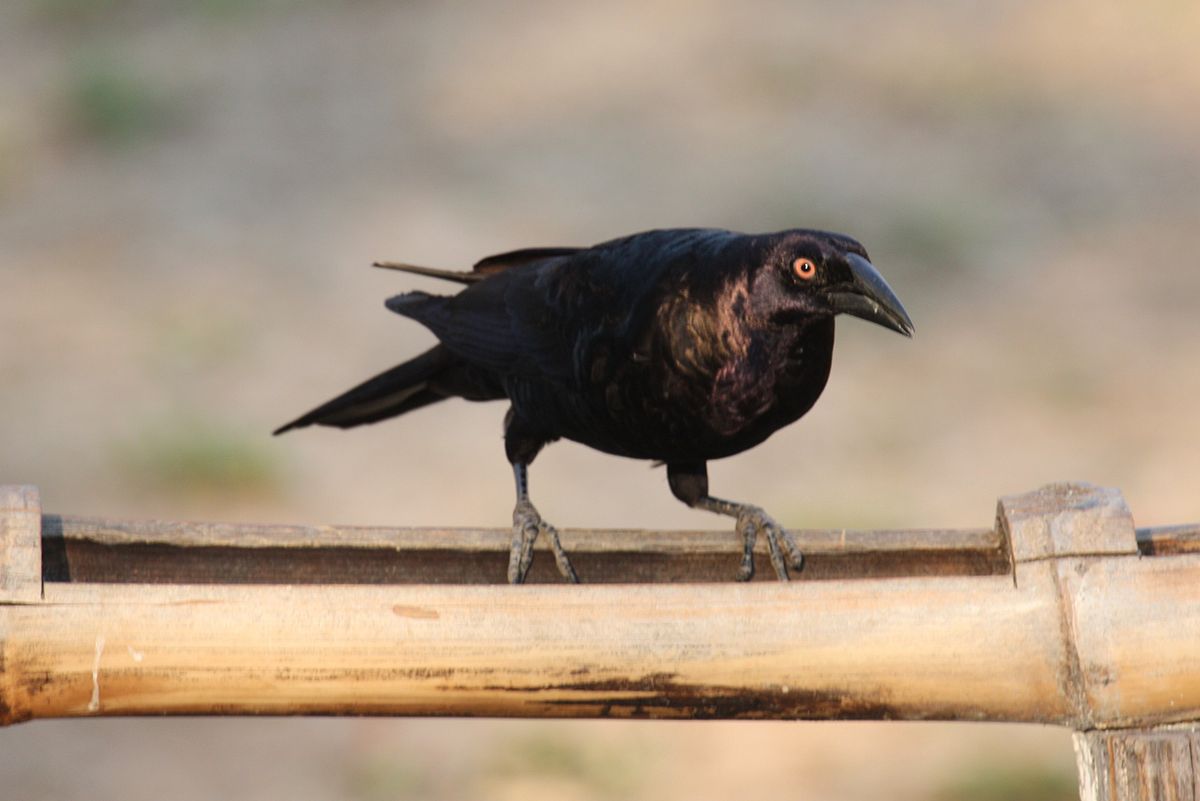
Wikipedia: Giant cowbird
The giant cowbird (Molothrus oryzivorus) is a large passerine bird in the New World family Icteridae. It breeds from southern Mexico south to northern Argentina, and on Trinidad and Tobago. It may have relatively recently colonised the latter island.
[more]

Arenal feeder montezuma oropendola landing. 2018-02-27 12.51.44 Zentralamerika
Der Montezumastirnvogel (Psarocolius montezuma, Syn.: Gymnostinops montezuma) ist ein mittelamerikanischer Singvogel aus der Familie der Stärlinge.
[more]
Profil Wikipedia eBird Xeno-Canto

Wikipedia: Crested oropendola
The crested oropendola also known as the Suriname crested oropendola or the cornbird (Psarocolius decumanus) is a New World tropical icterid bird. It is a resident breeder in lowland South America east of the Andes, from Panama and Colombia south to northern Argentina, as well as on Trinidad and Tobago. If the genus Gymnostinax for the Montezuma oropendola and its closest relatives were considered valid, this species would probably belong in that genus (Price & Lanyon 2002).
[more]
Profil Wikipedia eBird Xeno-Canto

Wikipedia: Chestnut-headed oropendola
Psarocolius waglerii (lapsus)
[more]

Wikipedia: Black oropendola
The black oropendola (Psarocolius guatimozinus) is a species of bird in the family Icteridae (New World blackbirds). It is found in Colombia and Panama. Its natural habitat is subtropical or tropical moist lowland forests.
[more]
Familie Parulidae (New world warblers):

Wikipedia: Golden-winged warbler
The golden-winged warbler (Vermivora chrysoptera) is a New World warbler. It breeds in southeastern and south-central Canada and in the Appalachian Mountains in northeastern to north-central United States. The majority (~70%) of the global population breeds in Wisconsin, Minnesota, and Manitoba. Golden-winged warbler populations are slowly expanding northwards, but are generally declining across its range, most likely as a result of habitat loss and competition/interbreeding with the very closely related blue-winged warbler, Vermivora cyanoptera.
[more]

Wikipedia: Blue-winged warbler
The blue-winged warbler (Vermivora cyanoptera) is a fairly common New World warbler, 11.5 cm (4.5 in) long and weighing 8.5 g (0.30 oz). It breeds in eastern North America in southern Ontario and the eastern United States. Its range is extending northwards, where it is replacing the very closely related golden-winged warbler, Vermivora chrysoptera.
[more]

Wikipedia: Rufous-capped warbler
Der Rotkappen-Waldsänger (Basileuterus rufifrons) ist ein kleiner Vogel aus der Familie der Waldsänger (Parulidae).
[more]

Wikipedia: Golden-crowned warbler
Der Goldhähnchen-Waldsänger (Basileuterus culicivorus) ist ein Vogel aus der Familie der Waldsänger (Parulidae).
[more]
Profil Wikipedia eBird Xeno-Canto

Wikipedia: Costa Rican warbler
The black-eared warbler or Costa Rican warbler (Basileuterus melanotis) is a species of bird in the family Parulidae. It was previously considered conspecific with the three-striped warbler and the Tacarcuna warbler.
[more]
Profil Wikipedia eBird Xeno-Canto

Wikipedia: Black-cheeked warbler
The black-cheeked warbler (Basileuterus melanogenys) is a New World warbler, resident breeding bird endemic to the Talamancan montane forests of Costa Rica and western Panama.
[more]
Profil Wikipedia eBird Xeno-Canto
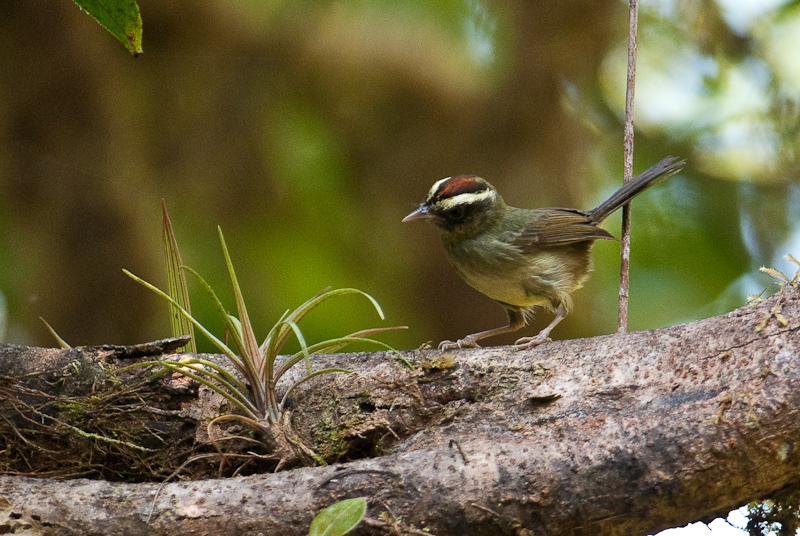
Wikipedia: Pirre warbler
Der Pirrewaldsänger (Basileuterus ignotus) ist ein kleiner Singvogel aus der Gattung Basileuterus in der Familie der Waldsänger (Parulidae). Diese Art bildet mit dem Schwarzwangen-Waldsänger (Basileuterus melanogenys) eine Superspezies. Manche Autoren betrachten den Pirrewaldsänger und den Schwarzwangen-Waldsänger auch als konspezifisch. Das kleine Verbreitungsgebiet befindet sich im südöstlichen Panama sowie in Kolumbien. Die IUCN listet die Vogelart als „gefährdet“ (vulnerable).
[more]

Wikipedia: Kentucky warbler
Der Kentuckywaldsänger (Geothlypis formosa, Syn.: Oporornis formosus) ist ein kleiner insektenfressender Vogel aus der Gattung der Gelbkehlchen (Geothlypis) in der Familie der Waldsänger (Parulidae).
[more]

Wikipedia: Mourning warbler
Der Graukopf-Waldsänger (Geothlypis philadelphia, Syn.: Oporornis philadelphia) ist ein kleiner insektenfressender Vogel aus der Gattung der Gelbkehlchen (Geothlypis) in der Familie der Waldsänger (Parulidae).
Graukopf-Waldsänger sind etwa dreizehn Zentimeter groß. Das Oberseitengefieder ist olivgrün; das Unterseitengefieder gelb. Männliche Graukopf-Waldsänger tragen ein graues Kopf- und Brustgefieder. Am Kehlbereich und auf der Brust haben sie schwarze Flecken. Bei den Weibchen und Jungvögeln ist das Kopf- und Brustgefieder graubraun.
[more]
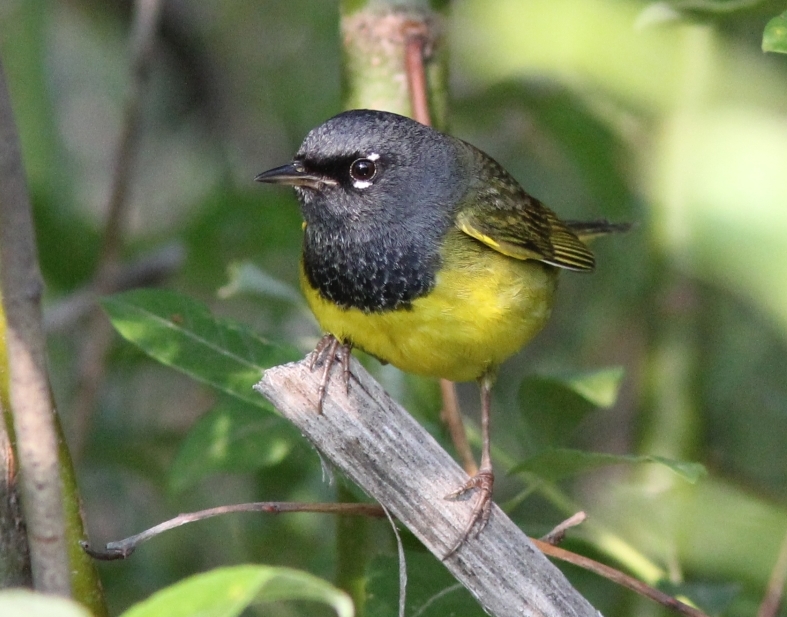
Wikipedia: Macgillivray's warbler
MacGillivray's warbler (Geothlypis tolmiei) is a species of New World warbler. These birds are sluggish and heavy warblers, preferring to spend most of their time on, or near the ground, except when singing.
[more]

Wikipedia: Common yellowthroat
Das Weiden-Gelbkehlchen (Geothlypis trichas) ist ein Singvogel aus der Familie der Waldsänger (Parulidae).
[more]
Profil Wikipedia eBird Xeno-Canto

Wikipedia: Gray-crowned yellowthroat
Das Wiesen-Gelbkehlchen (Geothlypis poliocephala, Syn.: Chamaethlypis poliocephala) ist ein kleiner Singvogel aus der Gattung der Gelbkehlchen (Geothlypis) in der Familie der Waldsänger (Parulidae). Manche Autoren stellen diese Art auch in eine eigene Gattung Chamaethlypis. Gründe sind die im Vergleich zu anderen Gelbkehlchenarten fehlende ausgeprägte, schwarze Gesichtsmaske, der kräftigere Schnabel, die längeren, gestaffelten Schwanzfedern und der einigermaßen abweichende Gesang. Die IUCN listet sie als „nicht gefährdet“ (least Concern).
[more]
Profil Wikipedia eBird Xeno-Canto

Wikipedia: Olive-crowned yellowthroat
Das Olivscheitel-Gelbkehlchen (Geothlypis semiflava) ist ein kleiner Singvogel aus der Gattung Gelbkehlchen (Geothlypis) in der Familie der Waldsänger (Parulidae). Es kommt in Zentralamerika und Südamerika vor. Genetisch sehr ähnlich ist der Kentuckywaldsänger (Oporornis formosus). Die IUCN listet sie als „nicht gefährdet“ (least Concern).
[more]
Profil Wikipedia eBird Audubon AllAboutBirds Xeno-Canto

Wikipedia: Yellow-breasted chat
The yellow-breasted chat (Icteria virens) is a large songbird found in North America, and is the only member of the family Icteriidae. It was once a member of the New World warbler family, but in 2017, the American Ornithological Society moved it to its own family. Its placement is not definitely resolved.
[more]
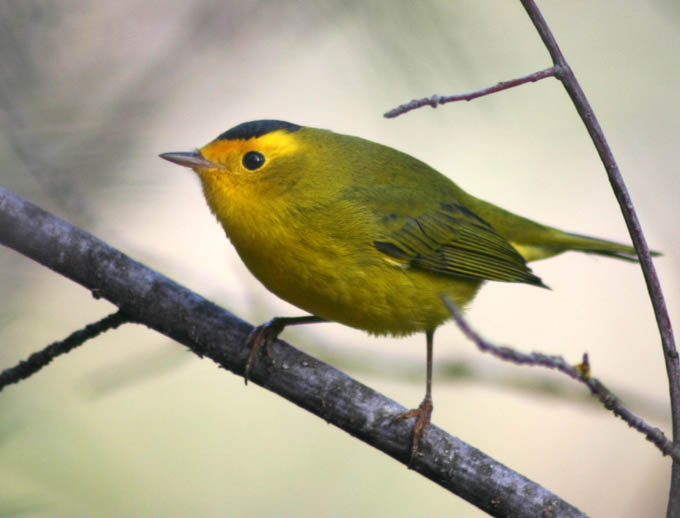
Wikipedia: Wilson's warbler
Der Mönchswaldsänger (Cardellina pusilla, Syn.: Wilsonia pusilla) ist ein kleiner Vogel in der Familie der Waldsänger (Parulidae). Die American Ornithologists’ Union hat die Spezies 2011 in die Gattung Cardellina eingeordnet, davor war der Vogel in Wilsonia.[1]
[more]

Wikipedia: Canada warbler
Der Kanadawaldsänger (Cardellina canadensis, Syn.: Wilsonia canadensis) ist ein kleiner insektenfressender Vogel in der Familie der Waldsänger (Parulidae).
[more]

Wikipedia: Worm-eating warbler
Der Haldenwaldsänger (Helmitheros vermivorum, Syn.: Helmitheros vermivorus) ist ein kleiner Singvogel in der Familie der Waldsänger (Parulidae) und die einzige Art in der Gattung Helmitheros. Die Brutgebiete befinden sich in den USA. Über den Winter wandert die Art nach Zentralamerika und auf die Westindischen Inseln. Die IUCN listet die Art als „nicht gefährdet“ (least concern).
[more]

Wikipedia: Black-and-white warbler
Der Kletterwaldsänger (Mniotilta varia) oder Baumläuferwaldsänger ist ein kleiner Vogel in der Familie der Waldsänger (Parulidae) und die einzige Art in der Gattung Mniotilta.
[more]
Profil Wikipedia eBird Xeno-Canto

Wikipedia: Collared redstart
Der Halsband-Waldsänger (Myioborus torquatus) ist ein kleiner Singvogel in der Gattung Myioborus aus der Familie der Waldsänger (Parulidae). Die Art ist endemisch in Costa Rica und im Westen von Panama. Die IUCN listet den Vogel als „nicht gefährdet“ (least concern).
[more]
Profil Wikipedia eBird Xeno-Canto

Wikipedia: Slate-throated redstart
Der Larven-Waldsänger (Myioborus miniatus) ist ein kleiner Singvogel aus der Gattung Myioborus in der Familie der Waldsänger (Parulidae). Er ist die am weitesten verbreitete Art der Gattung. Das Verbreitungsgebiet erstreckt sich vom südwestlichen Nordamerika über Zentralamerika bis Südamerika. Die IUCN listet sie als „nicht gefährdet“ (least Concern).
[more]
Profil Wikipedia eBird Audubon AllAboutBirds Xeno-Canto

Wikipedia: Prothonotary warbler
Der Zitronenwaldsänger (Protonotaria citrea) ist ein auffälliger, leuchtend gelb-oranger Vogel in der Familie der Waldsänger (Parulidae) und die einzige Art in der Gattung Protonotaria.
[more]

Wikipedia: Ovenbird
Der Pieperwaldsänger (Seiurus aurocapilla) ist eine Vogelart aus der Familie der Waldsänger (Parulidae). Er ist der einzige Vertreter der Gattung Seiurus. Die IUCN führt den Pieperwaldsänger zur Zeit als ungefährdet (least concern).
[more]

Wikipedia: Blackburnian warbler
Der Fichtenwaldsänger (Setophaga fusca, Syn.: Dendroica fusca) ist ein kleiner Vogel aus der Gattung der Baumwaldsänger (Setophaga) in der Familie der Waldsänger (Parulidae). Die englische Bezeichnung „Blackburnian Warbler“ geht auf die englische Botanikerin Anna Blackburne zurück.
[more]

Wikipedia: Hermit warbler
The hermit warbler (Setophaga occidentalis) is a small perching bird. It is a species of New World warbler.
[more]
Profil Wikipedia eBird Audubon AllAboutBirds Xeno-Canto
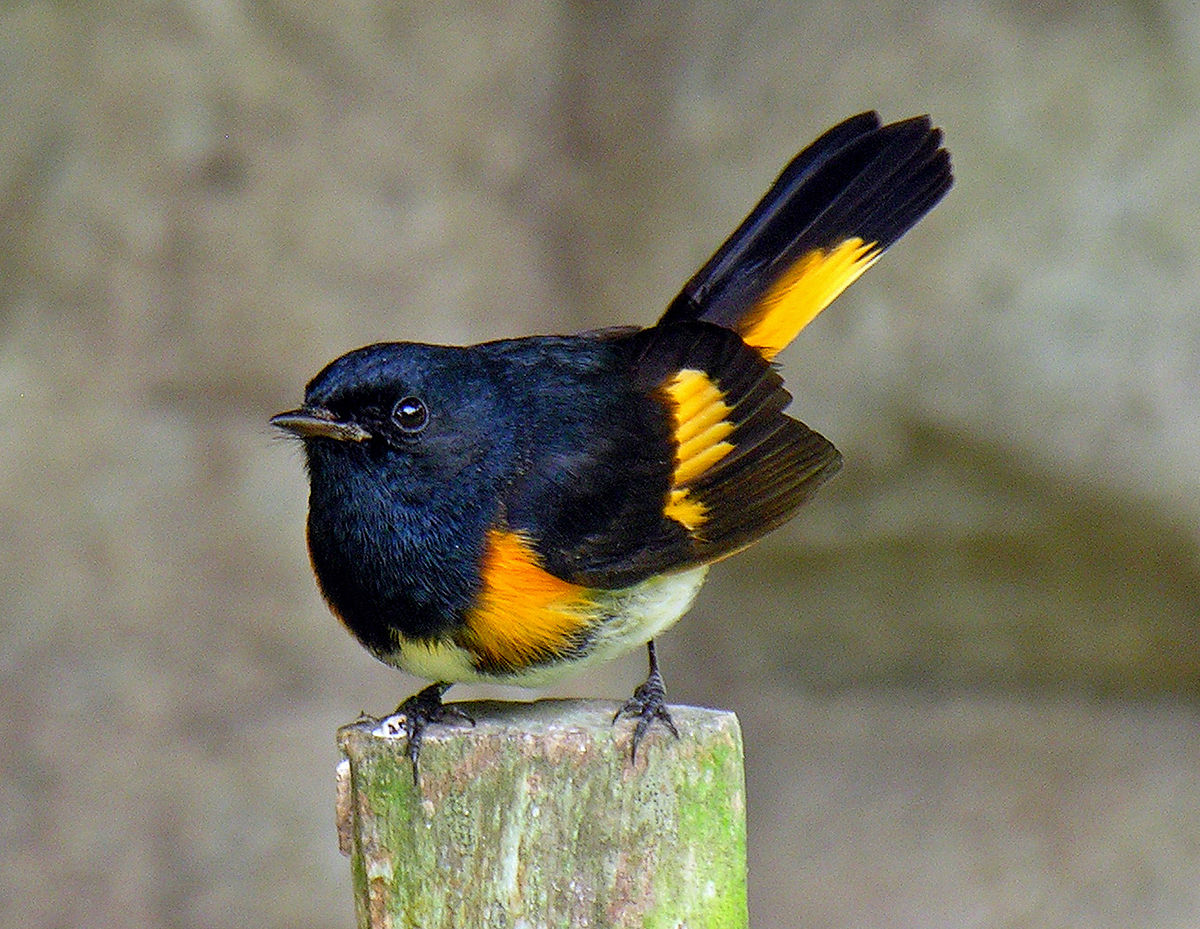
Wikipedia: American redstart
Der Schnäpperwaldsänger (Setophaga ruticilla) ist eine amerikanische Singvogelart.
[more]

Wikipedia: Pine warbler
Der Kiefernwaldsänger (Setophaga pinus, Syn.: Dendroica pinus) ist ein kleiner Vogel aus der Gattung der Baumwaldsänger (Setophaga) in der Familie der Waldsänger (Parulidae).
[more]
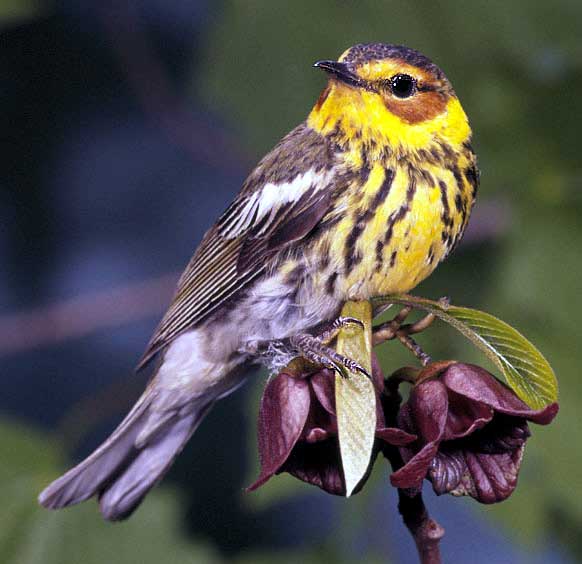
Wikipedia: Cape may warbler
Der Tigerwaldsänger (Setophaga tigrina, Syn.: Dendroica tigrina) ist ein kleiner Vogel aus der Gattung der Baumwaldsänger (Setophaga) in der Familie der Waldsänger (Parulidae).
[more]

Wikipedia: Blackpoll warbler
Der Streifenwaldsänger (Setophaga striata, Syn.: Dendroica striata), auch Kappenwaldsänger genannt (selten auch Mönchs- oder Schwarzkappen-Waldsänger), ist eine kleine monotypische Singvogelart aus der Gattung der Baumwaldsänger (Setophaga) in der Familie der Waldsänger (Parulidae).[1] Er kommt ausschließlich in Nordamerika vor. Die IUCN stuft ihn als ungefährdet (least concern) ein.
[more]
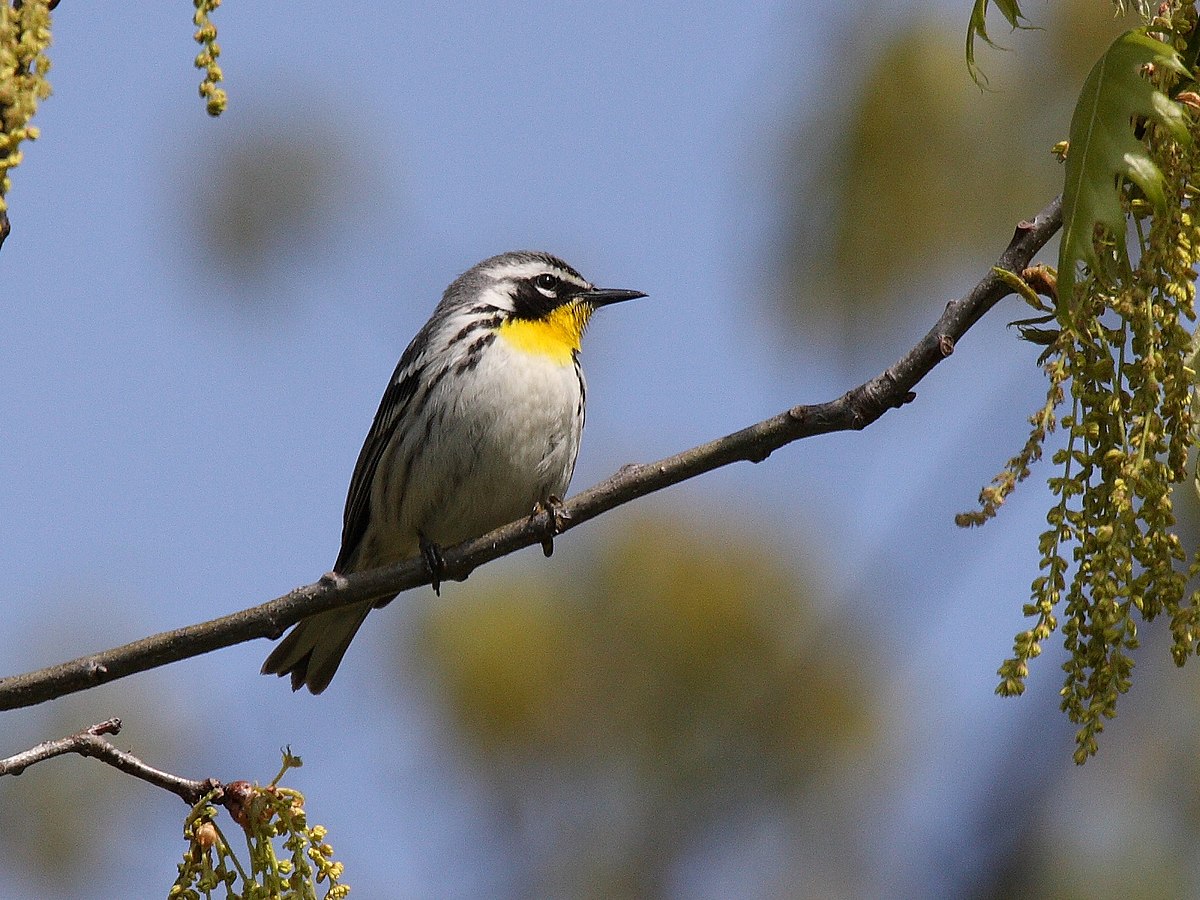
Wikipedia: Yellow-throated warbler
Der Goldkehl-Waldsänger (Setophaga dominica, Syn.: Dendroica dominica) ist ein kleiner Vogel aus der Gattung der Baumwaldsänger (Setophaga) in der Familie der Waldsänger (Parulidae).
[more]

Wikipedia: Hooded warbler
Der Kapuzenwaldsänger (Setophaga citrina, Syn.: Wilsonia citrina) ist ein kleiner Vogel aus der Gattung der Baumwaldsänger (Setophaga) in der Familie der Waldsänger (Parulidae).
[more]

Wikipedia: Prairie warbler
Der Rostscheitel-Waldsänger (Setophaga discolor, Syn.: Dendroica discolor) ist ein kleiner Vogel aus der Gattung der Baumwaldsänger (Setophaga) in der Familie der Waldsänger (Parulidae).
[more]

Wikipedia: Magnolia warbler
Der Magnolienwaldsänger (Setophaga magnolia, Syn.: Dendroica magnolia) ist ein kleiner Vogel in der Familie der Waldsänger (Parulidae). Seinen Namen bekam er von Alexander Wilson, da dieser den ersten Magnolienwaldsänger, den er sah, unter einigen Magnolienbäumen in Mississippi vorfand. Ihre Brutgebiete befinden sich jedoch häufig in den Nadelwäldern in Nordamerika, von Kanada über Neuengland und den Great Lakes. Im Winter zieht er nach Mittelamerika. Als seltener Gast kommt er auch in Westeuropa vor.
[more]

Wikipedia: Black-throated green warbler
The black-throated green warbler (Setophaga virens) is a small songbird of the New World warbler family.
[more]
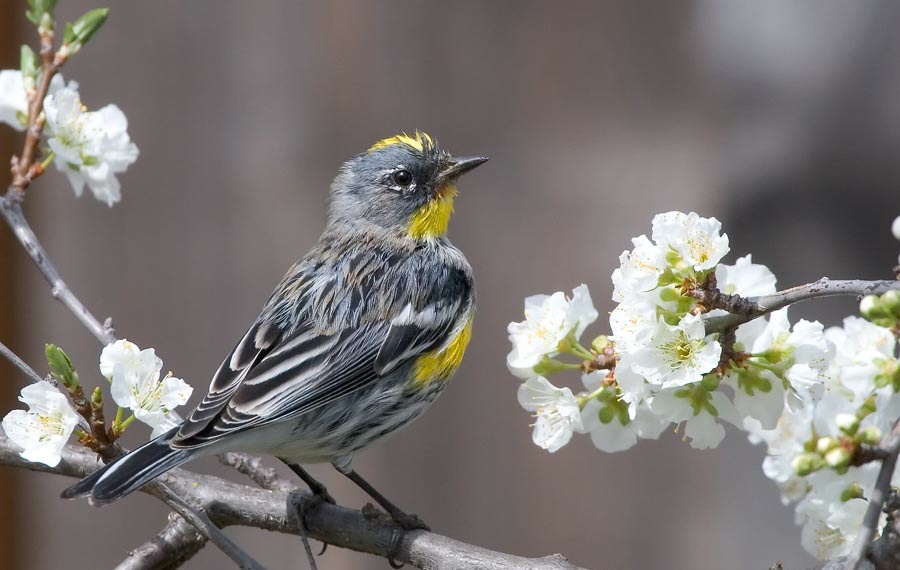
Wikipedia: Yellow-rumped warbler
Der Kronenwaldsänger (Setophaga coronata, Syn.: Dendroica coronata), auch Myrtenwaldsänger genannt, ist ein kleiner Vogel aus der Gattung der Baumwaldsänger (Setophaga) in der Familie der Waldsänger (Parulidae). Die Art wird zum Teil als konspezifisch mit dem Audubonwaldsänger (Setophaga auduboni) angesehen. Beide Formen treffen auf ihrem Weg zu den Brutgebieten bei den Bergen zwischen British Columbia und Alberta aufeinander, wo sie sich beide vermischen (hybridisieren).
[more]

Wikipedia: Black-throated blue warbler
Der Blaurücken-Waldsänger (Setophaga caerulescens, Syn.: Dendroica caerulescens) ist ein kleiner insektenfressender Vogel in der Familie der Waldsänger (Parulidae).
[more]

Wikipedia: Cerulean warbler
Der Pappelwaldsänger (Setophaga cerulea, Syn.: Dendroica cerulea) ist eine kleine Vogelart aus der Familie der neuweltlich verbreiteten Waldsänger (Parulidae). Sein stark zergliedertes Brutgebiet liegt im Osten Nordamerikas und erstreckt sich von den Großen Seen südwärts bis Arkansas. Er überwintert im Westen des nördlichen Südamerikas von Kolumbien und Venezuela bis nach Peru und Bolivien.
[more]

Wikipedia: Chestnut-sided warbler
Der Gelbscheitel-Waldsänger (Setophaga pensylvanica, Syn.: Dendroica pensylvanica) ist ein kleiner insektenfressender Vogel aus der Gattung der Baumwaldsänger (Setophaga) in der Familie der Waldsänger (Parulidae).
[more]

Wikipedia: Townsend's warbler
Townsend's warbler (Setophaga townsendi) is a small songbird of the New World warbler family.
[more]

Wikipedia: Northern parula
Der Meisenwaldsänger (Setophaga americana, Syn.: Parula americana) ist ein kleiner Vogel aus der Gattung der Baumwaldsänger (Setophaga) in der Familie der Waldsänger (Parulidae).
[more]

Wikipedia: Palm warbler
Der Palmenwaldsänger (Setophaga palmarum, Syn.: Dendroica palmarum) ist ein kleiner Vogel aus der Gattung der Baumwaldsänger in der Familie der Waldsänger (Parulidae).
[more]

Wikipedia: Tropical parula
Der Elfenwaldsänger (Setophaga pitiayumi, Syn.: Parula pitiayumi) ist ein kleiner Vogel aus der Gattung der Baumwaldsänger (Setophaga) in der Familie der Waldsänger (Parulidae).
[more]

Wikipedia: Bay-breasted warbler
The Bay-breasted Warbler (Setophaga castanea) is a small species of songbird in the New World warbler family, Parulidae. It is one of thirty-four species in the diverse genus Setophaga.[2] Like all songbirds, or passerines, the species is classified in the order Passeriformes.
[more]

Wikipedia: Yellow warbler
Der Goldwaldsänger (Setophaga petechia) ist ein kleiner insektenfressender Vogel aus der Gattung der Baumwaldsänger (Setophaga) in der Familie der Waldsänger (Parulidae).
[more]
Profil Wikipedia eBird Xeno-Canto
Wikipedia: Magnolia warbler
Der Magnolienwaldsänger (Setophaga magnolia, Syn.: Dendroica magnolia) ist ein kleiner Vogel in der Familie der Waldsänger (Parulidae). Seinen Namen bekam er von Alexander Wilson, da dieser den ersten Magnolienwaldsänger, den er sah, unter einigen Magnolienbäumen in Mississippi vorfand. Ihre Brutgebiete befinden sich jedoch häufig in den Nadelwäldern in Nordamerika, von Kanada über Neuengland und den Great Lakes. Im Winter zieht er nach Mittelamerika. Als seltener Gast kommt er auch in Westeuropa vor.
[more]
Profil Wikipedia eBird Xeno-Canto

Wikipedia: Golden-cheeked warbler
The golden-cheeked warbler (Setophaga chrysoparia [formerly Dendroica chrysoparia]), also known as the gold finch of Texas, is an endangered species of bird that breeds in Central Texas, from Palo Pinto County southwestward along the eastern and southern edge of the Edwards Plateau to Kinney County. The golden-cheeked warbler is the only bird species with a breeding range confined to Texas.
[more]
Profil Wikipedia eBird Xeno-Canto

Wikipedia: Wrenthrush
The wrenthrush or zeledonia (Zeledonia coronata) is a species of nine-primaried oscine which is endemic to Costa Rica and western Panama. The species was first described by Robert Ridgway in 1907.[2] Neither a wren nor a thrush (and unrelated to both), it has a short tail, rounded wings and elongated tarsi.
[more]

Wikipedia: Northern waterthrush
Der Uferwaldsänger (Parkesia noveboracensis, Syn.: Seiurus noveboracensis), auch Drosselwaldsänger, ist ein kleiner Vogel aus der Familie der Waldsänger (Parulidae). Er ist neben dem Stelzenwaldsänger (Parkesia motacilla) die zweite Art in der Gattung Parkesia.
[more]

Wikipedia: Nashville warbler
Der Rubinfleck-Waldsänger (Leiothlypis ruficapilla) ist ein kleiner insektenfressender Vogel in der Familie der Waldsänger (Parulidae).
[more]

Wikipedia: Orange-crowned warbler
The orange-crowned warbler (Leiothlypis celata) is a small songbird of the New World warbler family.
[more]

Wikipedia: Tennessee warbler
The Tennessee warbler (Leiothlypis peregrina) is a New World warbler that breeds in eastern North America and winters in southern Central America, the Caribbean, and northern South America. The specific name peregrina is from Latin peregrinus "wanderer".[2]
[more]
Profil Wikipedia eBird Xeno-Canto

Wikipedia: Flame-throated warbler
The flame-throated warbler (Oreothlypis gutturalis) is a small New World warbler. It is sometimes placed in the genera Vermivora and Parula.
[more]
Profil Wikipedia eBird Xeno-Canto
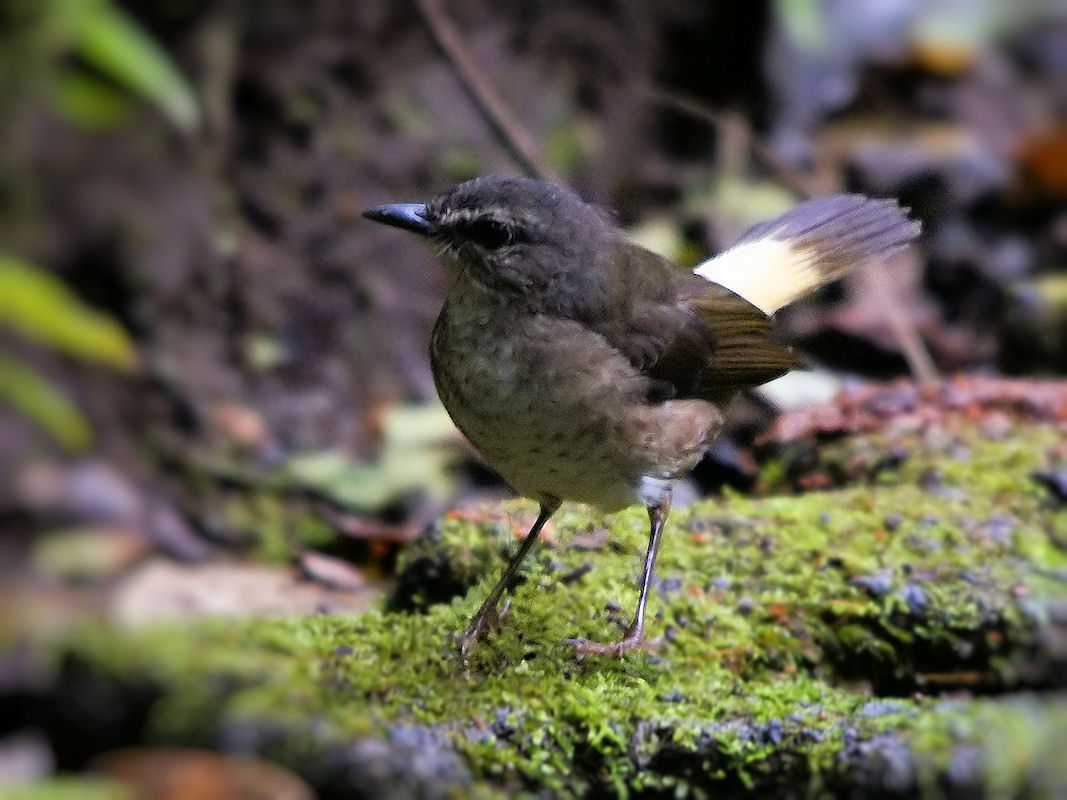
Wikipedia: Buff-rumped warbler
Der Schmätzerwaldsänger (Myiothlypis fulvicauda, Syn.: Phaeothlypis fulvicauda) ist ein kleiner Singvogel in der Gattung Myiothlypis aus der Familie der Waldsänger (Parulidae). Diese Art bildet mit dem Flusswaldsänger (Myiothlypis rivularis) eine Superspezies. Das Verbreitungsgebiet befindet sich in Zentral- und Südamerika. Die IUCN listet die Vogelart als „nicht gefährdet“ (least concern).
[more]
Familie Cotingidae:
Gattung Carpodectes:
Carpodectes antoniae / Yellow-billed cotinga (Carpodectes antoniae)
Profil Wikipedia eBird Xeno-Canto

Wikipedia: Yellow-billed cotinga
The yellow-billed cotinga (Carpodectes antoniae) is a species of bird in the family Cotingidae. It is found in the Pacific lowlands of Costa Rica and Panama. Its natural habitats are subtropical or tropical moist lowland forest, subtropical or tropical mangrove forest, and subtropical or tropical moist shrubland. It is threatened by habitat destruction.
[more]
Carpodectes hopkei / Black-tipped cotinga (Carpodectes hopkei)
Profil Wikipedia eBird Xeno-Canto

Wikipedia: Black-tipped cotinga
The black-tipped cotinga (Carpodectes hopkei), also known as the white cotinga, is a species of bird in the family Cotingidae. It is found in the Chocó region, from southeastern Panama to northwestern Ecuador ; its natural habitat is subtropical or tropical moist lowland forests. The male, being white, is conspicuous, but in general it is an uncommon species.
[more]
Gattung Cephalopterus:
Cephalopterus glabricollis / Bare-necked umbrellabird (Cephalopterus glabricollis)
Profil Wikipedia eBird Xeno-Canto
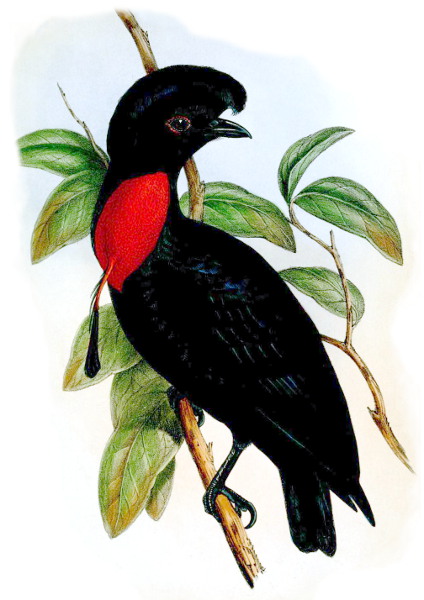
Wikipedia: Bare-necked umbrellabird
The bare-necked umbrellabird (Cephalopterus glabricollis) is a species of bird in the family Cotingidae. It is found in the Talamancan montane forests of Costa Rica and Panama. Umbrellabird populations moved from highlands to lowlands and vice versa, as was proposed by Stiles (1985, 1988), and supported previous observations that male umbrellabirds return to the same breeding area every year. Bare-necked umbrellabirds live only in forests and their diet consists mainly of fruits.
[more]
Gattung Cotinga:
Cotinga amabilis / Lovely cotinga (Cotinga amabilis)
Profil Wikipedia eBird Xeno-Canto
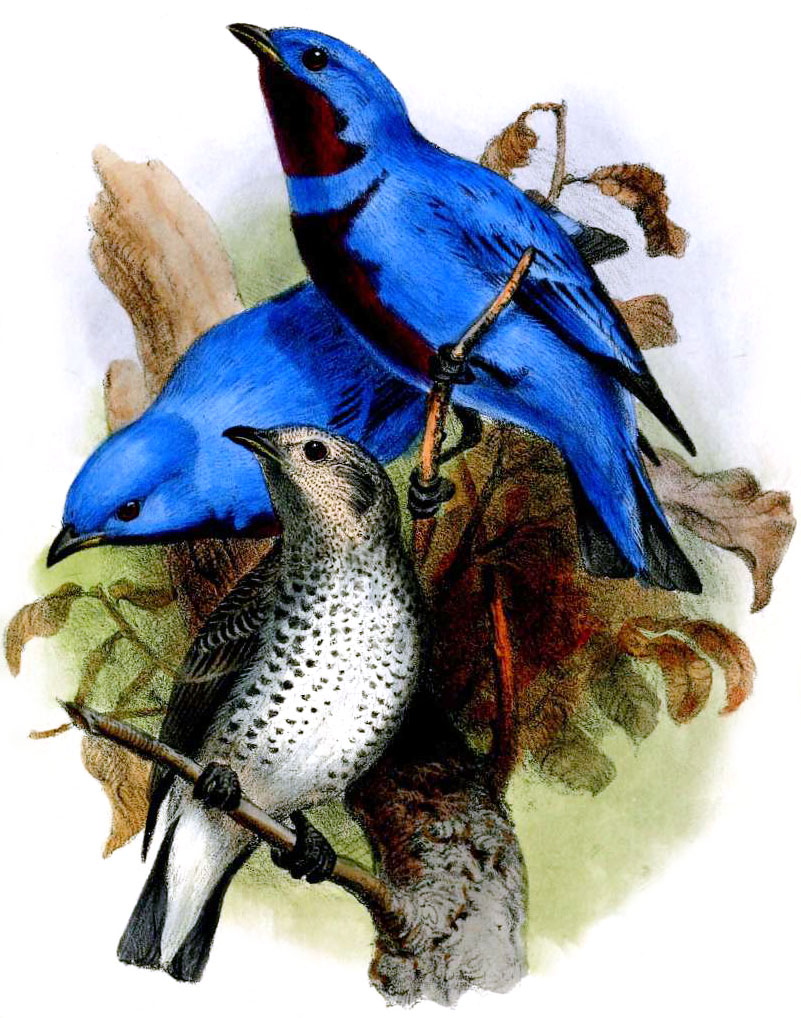
Wikipedia: Lovely cotinga
The lovely cotinga (Cotinga amabilis) is a species of bird in the family Cotingidae. It is found in North and Central America from southern Mexico through Guatemala, Belize, Honduras and Nicaragua to Costa Rica with reports from western Panama. Its natural habitats are tropical moist lowland forests and heavily degraded former forest. The male is a bright turquoise blue while the female is greyish-brown with pale underparts. Because of its total population size and wide range, this species is not yet considered vulnerable.[2]
[more]
Cotinga ridgwayi / Turquoise cotinga (Cotinga ridgwayi)

Wikipedia: Turquoise cotinga
The turquoise cotinga or Ridgway's cotinga (Cotinga ridgwayi) is a species of bird in the family Cotingidae. It is found in Costa Rica and western Panama. Its natural habitats are tropical moist forests and plantations from the lowlands into lower mountain regions. It is threatened by deforestation.
[more]
Nördliche Prachtkotinga / Blue cotinga (Cotinga nattererii)
Profil Wikipedia eBird Xeno-Canto

Wikipedia: Blue cotinga
Die Nördliche Prachtkotinga (Cotinga nattererii), manchmal auch Schwarzbauchkotinga genannt, ist eine Vogelart aus der Familie der Schmuckvögel (Cotingidae). Die Art hat ein großes Verbreitungsgebiet, das die südamerikanischen Länder Ecuador, Kolumbien, Venezuela sowie das mittelamerikanische Land Panama umfasst. Der Bestand wird von der IUCN als nicht gefährdet (Least Concern) eingeschätzt.[1] Die Art gilt als monotypisch.[2]
[more]
Gattung Lipaugus:
Lipaugus unirufus / Rufous piha (Lipaugus unirufus)
Profil Wikipedia eBird Xeno-Canto

Wikipedia: Rufous piha
The rufous piha (Lipaugus unirufus) is a species of bird in the family Cotingidae.
It is found in Belize, Colombia, Costa Rica, Ecuador, Guatemala, Honduras, Mexico, Nicaragua, and Panama. Its natural habitat is subtropical or tropical moist lowland forests.[1]
[more]
Gattung Oxyruncus:
Flammenkopfbekarde / Sharpbill (Oxyruncus cristatus)

Wikipedia: Sharpbill
Die Flammenkopfbekarde (Oxyruncus cristatus) ist ein Schreivogel und das einzige Mitglied der Familie bzw. Unterfamilie der Flammenköpfe (Oxyruncidae). Von einigen Fachleuten wird der Vogel zu den Familien der Schmuckvögel oder der Tyrannen gezählt.
[more]
Gattung Procnias:
Procnias tricarunculatus / Three-wattled bellbird (Procnias tricarunculatus)

Wikipedia: Three-wattled bellbird
The three-wattled bellbird (Procnias tricarunculatus) is a Central American migratory bird of the cotinga family. The sexes are very dis-similar in appearance. The male has a white head and throat and the remaining plumage is chestnut brown. From the base of his beak dangle three long, slender, black wattles that he uses in display. The female has olive plumage with yellowish streaked underparts and a yellow vent area.
[more]
Gattung Querula:
Querula purpurata / Purple-throated fruitcrow (Querula purpurata)
Profil Wikipedia eBird Xeno-Canto

Wikipedia: Purple-throated fruitcrow
The purple-throated fruitcrow (Querula purpurata) is a species of bird in the family Cotingidae, the cotingas. It is the only species of the genus Querula.[2] It is native to Nicaragua, Costa Rica and Panama and most of the northern half of South America, its habitat being humid lowland forest where it feeds mainly on insects and fruit. It is a glossy black, medium-sized bird and the male has a purple-red throat patch. It nests in close vicinity with other birds of its species. Its population is in decline, but it is a common species with a very wide range, and the International Union for Conservation of Nature has assessed its conservation status as being of "least concern".
[more]
Familie Furnariidae:
Gattung Cranioleuca:
Cranioleuca erythrops / Red-faced spinetail (Cranioleuca erythrops)
Profil Wikipedia eBird Xeno-Canto
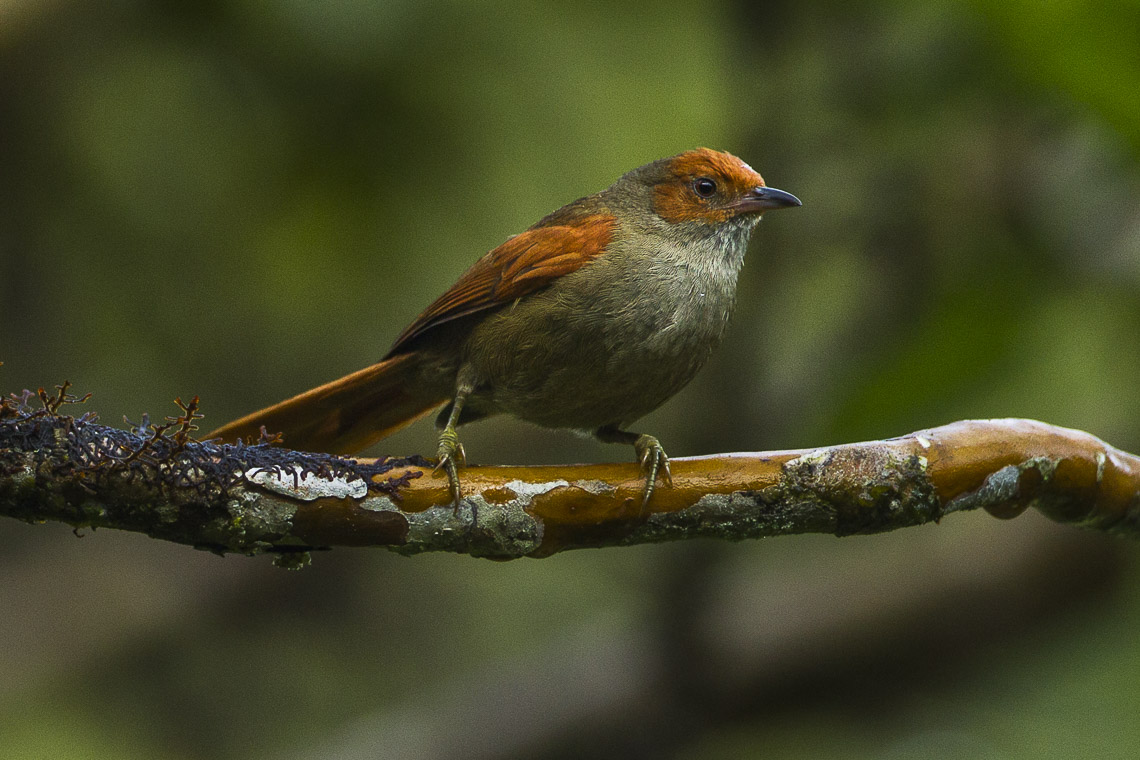
Wikipedia: Red-faced spinetail
The red-faced spinetail (Cranioleuca erythrops) is a species of bird in the family Furnariidae. It is found in Colombia, Costa Rica, Ecuador, and Panama. Its natural habitat is subtropical or tropical moist montane forest.
[more]
Gattung Synallaxis:
Synallaxis brachyura / Slaty spinetail (Synallaxis brachyura)
Profil Wikipedia eBird Xeno-Canto

Wikipedia: Slaty spinetail
The slaty spinetail or slaty castlebuilder, (Synallaxis brachyura), is a passerine bird which breeds in the tropical New World from northern Honduras to western Ecuador and east-central Brazil.
[more]
Synallaxis albescens / Pale-breasted spinetail (Synallaxis albescens)
Profil Wikipedia eBird Xeno-Canto

Wikipedia: Pale-breasted spinetail
The pale-breasted spinetail (Synallaxis albescens), is a passerine bird which breeds in the tropical New World from Costa Rica to Uruguay,[2] and in Trinidad.
[more]
Gattung Glyphorynchus:
Glyphorynchus spirurus / Wedge-billed woodcreeper (Glyphorynchus spirurus)
Profil Wikipedia eBird Xeno-Canto

Wikipedia: Wedge-billed woodcreeper
The wedge-billed woodcreeper (Glyphorynchus spirurus), is a passerine bird which breeds in the tropical New World from southern Mexico to northern Bolivia, central Brazil and the Guianas; it is absent from the Pacific coastal areas except between Costa Rica and Ecuador. It is the only member of the genus Glyphorynchus.
[more]
Gattung Lochmias:
Lochmias nematura / Sharp-tailed streamcreeper (Lochmias nematura)
Profil Wikipedia eBird Xeno-Canto

Wikipedia: Sharp-tailed streamcreeper
The sharp-tailed streamcreeper (Lochmias nematura) is a passerine bird of South America belonging to the family Furnariidae, the ovenbirds. It is the only member of the genus Lochmias. The species is also known as the streamside streamcreeper.[2]
[more]
Gattung Thripadectes:
Thripadectes rufobrunneus / Streak-breasted treehunter (Thripadectes rufobrunneus)
Profil Wikipedia eBird Xeno-Canto

Wikipedia: Streak-breasted treehunter
The streak-breasted treehunter (Thripadectes rufobrunneus) is a passerine bird in the ovenbird family Furnariidae. It is endemic to the Talamancan montane forests of Costa Rica and western Panama in Central America.
[more]
Gattung Philydor:
Philydor fuscipenne / Slaty-winged foliage-gleaner (Philydor fuscipenne)
Profil Wikipedia eBird Xeno-Canto

Wikipedia: Slaty-winged foliage-gleaner
The slaty-winged foliage-gleaner (Philydor fuscipenne) is a perching bird species in the ovenbird family (Furnariidae).
[more]
Gattung Sclerurus:
Sclerurus mexicanus / Tawny-throated leaftosser (Sclerurus mexicanus)
Profil Wikipedia eBird Xeno-Canto

Wikipedia: Tawny-throated leaftosser
The tawny-throated leaftosser (Sclerurus mexicanus) is a tropical American bird species in the ovenbird family Furnariidae. It is also known as the tawny-throated leafscraper, Mexican leaftosser or Mexican leafscraper. This bird might be a cryptic species complex.[2]
[more]
Sclerurus guatemalensis / Scaly-throated leaftosser (Sclerurus guatemalensis)
Profil Wikipedia eBird Xeno-Canto
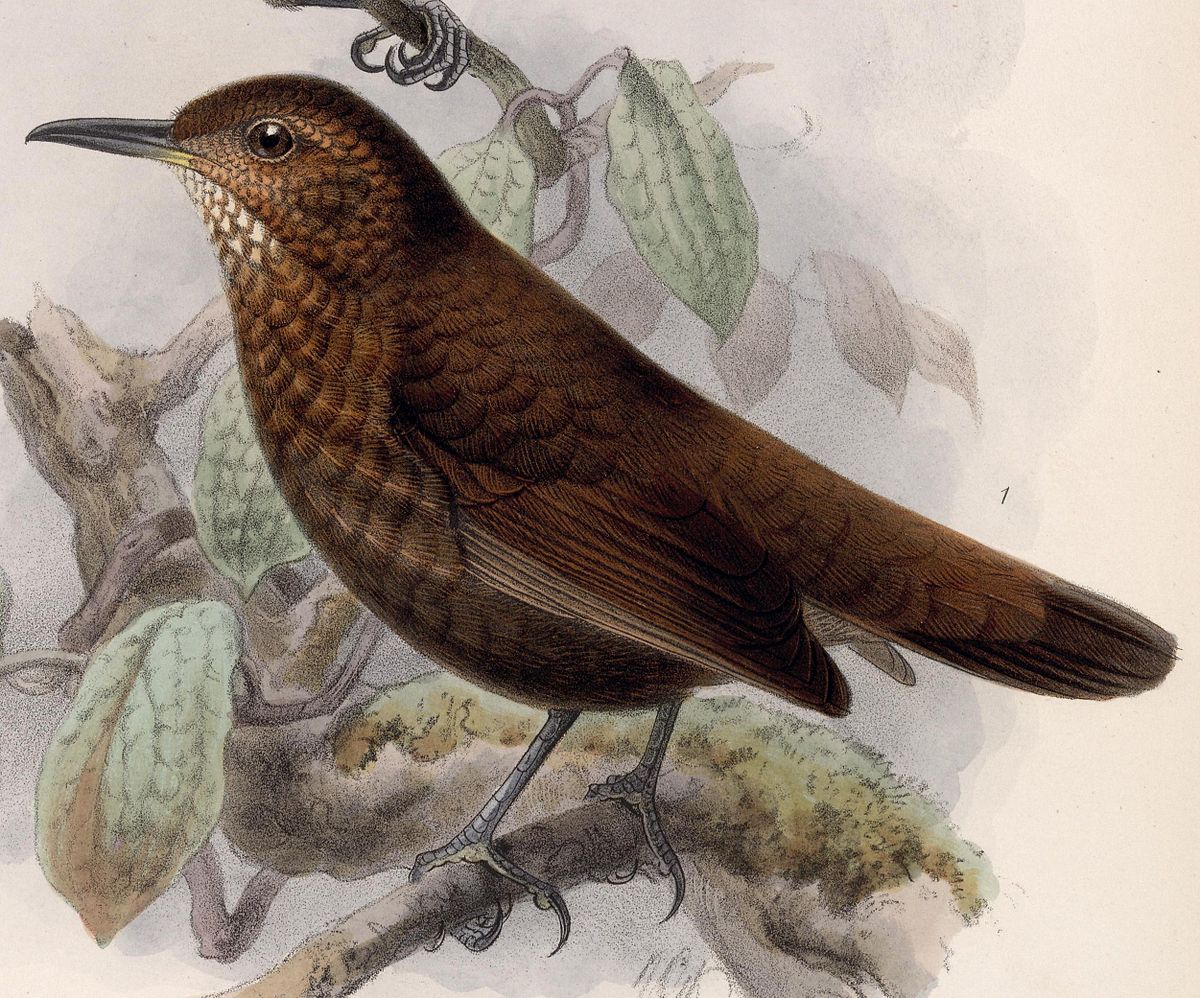
Wikipedia: Scaly-throated leaftosser
The scaly-throated leaftosser (Sclerurus guatemalensis) is a species of bird in the family Furnariidae. It is found in Belize, Colombia, Costa Rica, Ecuador, Guatemala, Honduras, Mexico, Nicaragua, and Panama. Its natural habitats are subtropical or tropical moist lowland forest and subtropical or tropical moist montane forest.
[more]
Sclerurus albigularis / Gray-throated leaftosser (Sclerurus albigularis)
Profil Wikipedia eBird Xeno-Canto

Wikipedia: Gray-throated leaftosser
The grey-throated leaftosser (Sclerurus albigularis) is a species of bird in the family Furnariidae. It is found in Bolivia, Brazil, Colombia, Costa Rica, Ecuador, Panama, Peru, Trinidad and Tobago, and Venezuela. Its natural habitats are subtropical or tropical moist lowland forest and subtropical or tropical moist montane forest.
[more]
Gattung Automolus:
Automolus exsertus / Chiriqui foliage-gleaner (Automolus exsertus)
Profil Wikipedia eBird Xeno-Canto

Wikipedia: Chiriqui foliage-gleaner
The Chiriqui foliage-gleaner (Automolus exsertus) is a species of bird in the family Furnariidae.
[more]
Automolus subulatus / Striped woodhaunter (Automolus subulatus)
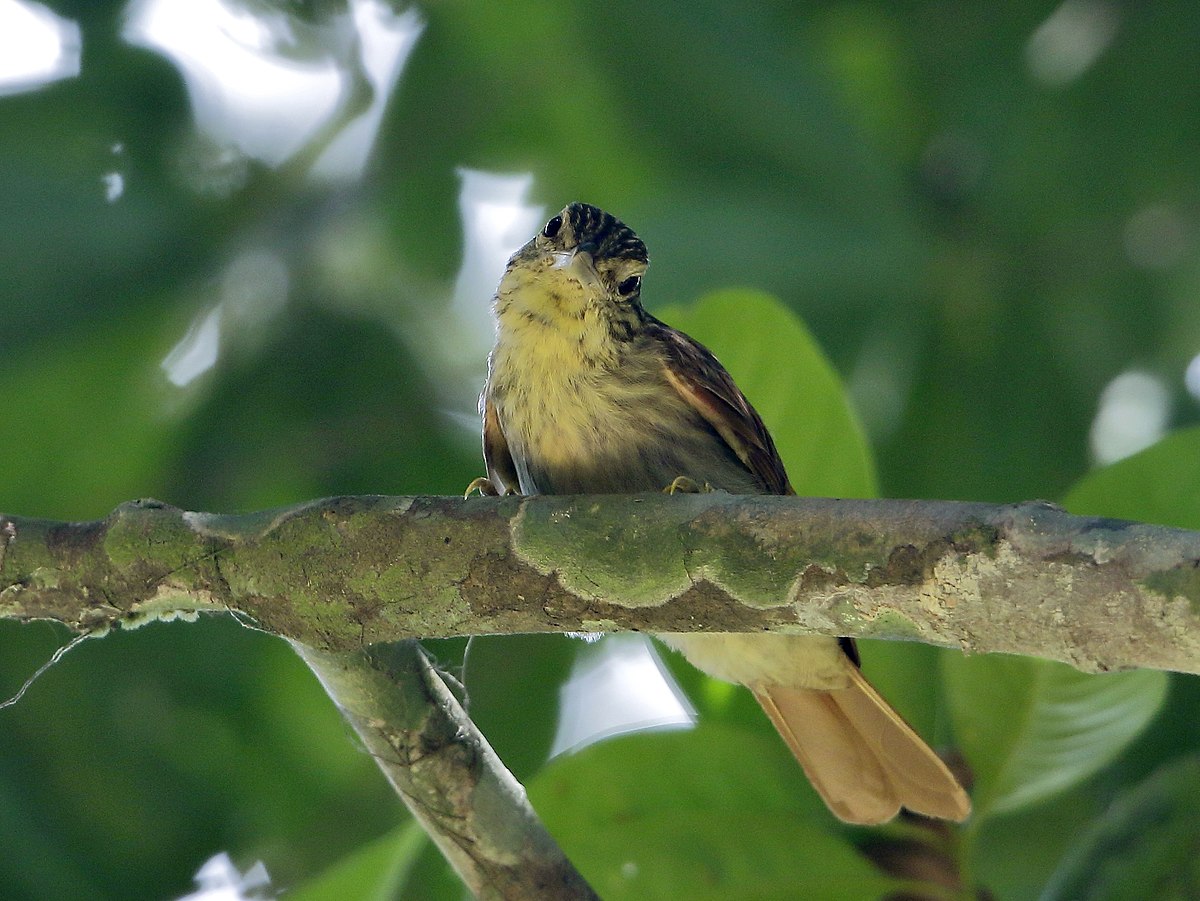
Wikipedia: Striped woodhaunter
The eastern woodhaunter (Automolus subulatus), also known as the Amazonian woodhaunter, is a species of bird in the family Furnariidae. It was formerly treated as conspecific with the western woodhaunter and when lumped had the name "striped woodhaunter". It is found in the western part of the Amazon rainforest: west Brazil, southeast Colombia, east Ecuador, northeast Peru, south Venezuela and north Bolivia. Its natural habitats are subtropical or tropical moist lowland forests and subtropical or tropical moist montane forests. The species nests in earth tunnels.[3]
[more]
Automolus ochrolaemus / Buff-throated foliage-gleaner (Automolus ochrolaemus)

Wikipedia: Buff-throated foliage-gleaner
The buff-throated foliage-gleaner (Automolus ochrolaemus) is a species of bird in the family Furnariidae.
[more]
Gattung Xenops:
Xenops rutilans / Streaked xenops (Xenops rutilans)
Profil Wikipedia eBird Xeno-Canto

Wikipedia: Streaked xenops
The streaked xenops (Xenops rutilans) is a passerine bird which breeds in the tropical New World from Costa Rica and Trinidad south to Bolivia and northern Argentina. Like the closely related true woodcreepers, it is a member of the South American bird family Furnariidae.
[more]
Xenops minutus / Plain xenops (Xenops minutus)
Profil Wikipedia eBird Xeno-Canto

Wikipedia: Plain xenops
The plain xenops (Xenops minutus) is a passerine bird which breeds in moist lowland forests in the tropical New World from southern Mexico south to western Ecuador, northeastern Argentina and central Brazil.
[more]
Gattung Premnoplex:
Premnoplex brunnescens / Spotted barbtail (Premnoplex brunnescens)
Profil Wikipedia eBird Xeno-Canto
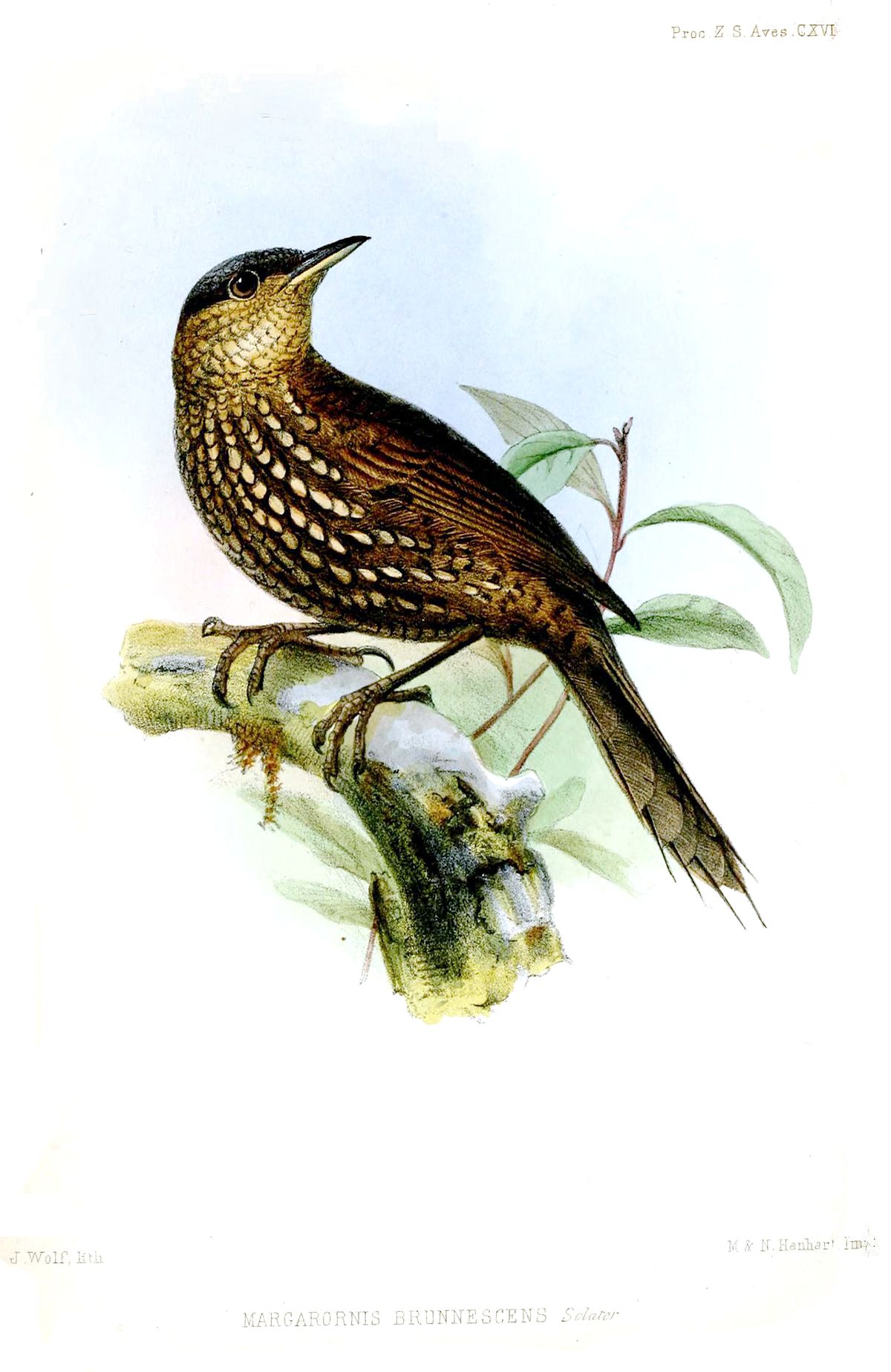
Wikipedia: Spotted barbtail
The spotted barbtail (Premnoplex brunnescens) is a species of bird in the family Furnariidae. Its natural habitat is subtropical or tropical moist montane forest.
[more]
Gattung Pseudocolaptes:
Pseudocolaptes lawrencii / Buffy tuftedcheek (Pseudocolaptes lawrencii)

Wikipedia: Buffy tuftedcheek
The buffy tuftedcheek or Lawrence's tuftedcheek (Pseudocolaptes lawrencii) is a passerine bird in the ovenbird family, which breeds in the tropical New World in Costa Rica, western Panama and the Andes of Colombia and Ecuador. It is sometimes considered conspecific with the streaked tuftedcheek, P. boissonneautii, of South America. Birds from Colombia and Ecuador are sometimes considered a separate species, the Pacific tuftedcheek (P. johnsoni).
[more]
Gattung Anabacerthia:
Anabacerthia variegaticeps / Scaly-throated foliage-gleaner (Anabacerthia variegaticeps)

Wikipedia: Scaly-throated foliage-gleaner
The scaly-throated foliage-gleaner (Anabacerthia variegaticeps), also known as the spectacled foliage-gleaner, is a species of bird in the family Furnariidae.
It is found in Belize, Colombia, Costa Rica, Ecuador, El Salvador, Guatemala, Honduras, Mexico, and Panama.
Its natural habitats are subtropical or tropical moist lowland forest and subtropical or tropical moist montane forest.
[more]
Gattung Syndactyla:
Syndactyla subalaris / Lineated foliage-gleaner (Syndactyla subalaris)
Profil Wikipedia eBird Xeno-Canto
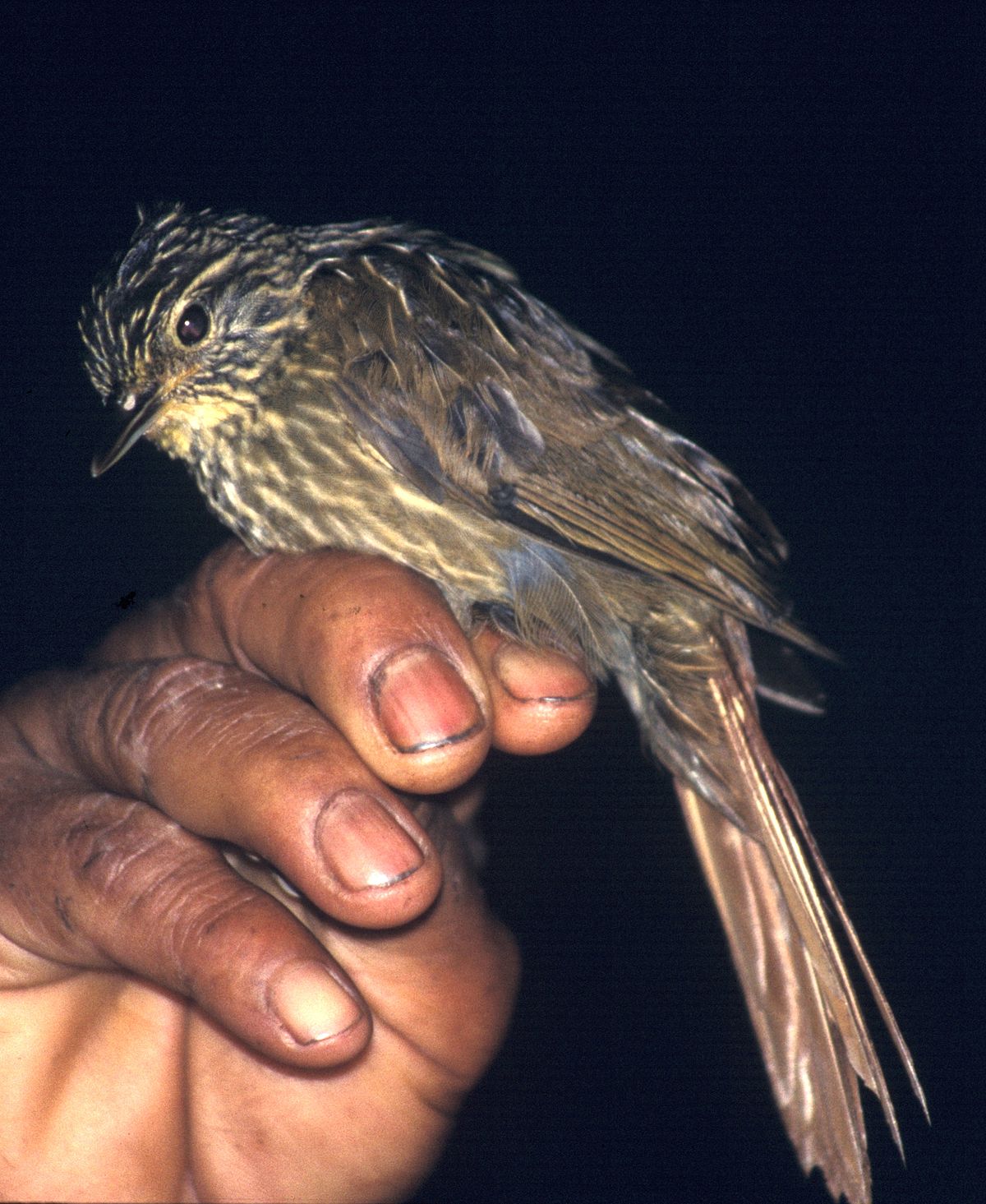
Wikipedia: Lineated foliage-gleaner
The lineated foliage-gleaner (Syndactyla subalaris) is a species of bird in the family Furnariidae. It is found in Colombia, Costa Rica, Ecuador, Panama, Peru, and Venezuela. Its natural habitat is subtropical or tropical moist montane forest.
[more]
Gattung Xenerpestes:
Xenerpestes minlosi / Double-banded graytail (Xenerpestes minlosi)
Profil Wikipedia eBird Xeno-Canto

Wikipedia: Double-banded graytail
The double-banded greytail (Xenerpestes minlosi) is a species of bird in the family Furnariidae. It is found in Colombia, Ecuador, and Panama. Its natural habitats are subtropical or tropical moist lowland forest and subtropical or tropical moist montane forest.
[more]
Gattung Clibanornis:
Clibanornis rubiginosus / Ruddy foliage-gleaner (Clibanornis rubiginosus)
Profil Wikipedia eBird Xeno-Canto
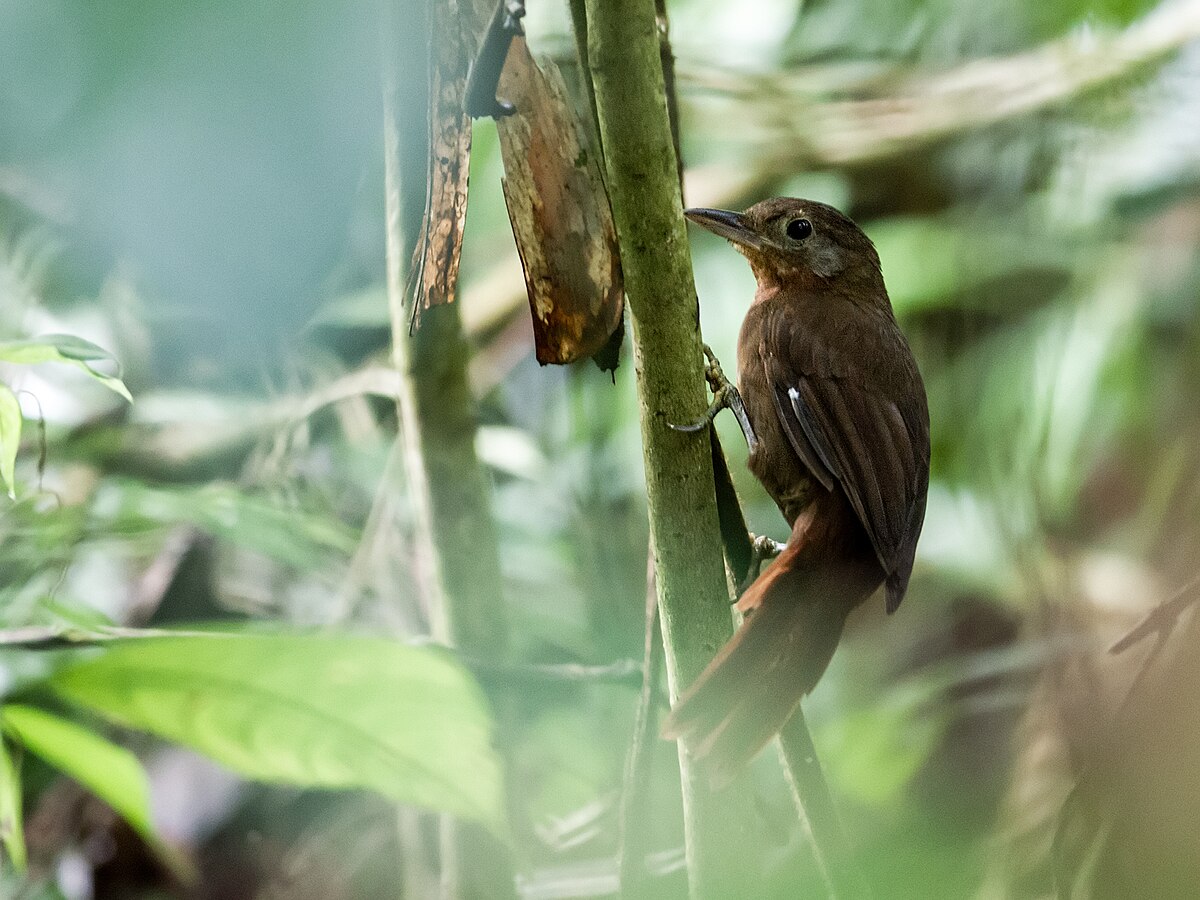
Wikipedia: Ruddy foliage-gleaner
The ruddy foliage-gleaner (Clibanornis rubiginosus) is a species of bird in the family Furnariidae. Its range is highly disjunct, with populations in the highlands of Mexico and Central America, and lowlands and foothills in the Chocó, eastern Andes, and western and northeastern Amazon Basin. It is found in forest. There are distinct vocal variations throughout its range, suggesting that more than one species is involved, and one such population has recently been split from the ruddy foliage-gleaner as the Santa Marta foliage-gleaner.[2] The ruddy foliage-gleaner has recently been reclassified into the genus Clibanornis.[3]
[more]
Familie Rhinocryptidae (Tapaculos):
Gattung Scytalopus:
Scytalopus argentifrons / Silvery-fronted tapaculo (Scytalopus argentifrons)
Profil Wikipedia eBird Xeno-Canto

Wikipedia: Silvery-fronted tapaculo
The silvery-fronted tapaculo (Scytalopus argentifrons) is a species of bird in the family Rhinocryptidae. It is found in the Talamancan montane forests. Its natural habitat is subtropical or tropical moist montane forest.
[more]
Scytalopus chocoensis / Choco tapaculo (Scytalopus chocoensis)
Profil Wikipedia eBird Xeno-Canto

Wikipedia: Choco tapaculo
The Chocó tapaculo (Scytalopus chocoensis) is a species of bird in the family Rhinocryptidae. It is found in Colombia, Ecuador, and Panama.
[more]
Familie Turdidae (Drosseln / Thrushes):
Gattung Catharus:
Catharus ustulatus / Swainson's thrush (Catharus ustulatus)
Profil Wikipedia eBird Audubon AllAboutBirds Xeno-Canto

Wikipedia: Swainson's thrush
Swainson's thrush (Catharus ustulatus), also called olive-backed thrush and russet-backed thrush, is a medium-sized thrush. It is a member of genus Catharus and is typical of it in terms of its subdued coloration and beautiful, ascending flute-like voice. Swainson's thrush was named after William Swainson, an English ornithologist.
[more]
Grauwangendrossel / Gray-cheeked thrush (Catharus minimus)
Profil Wikipedia eBird Audubon AllAboutBirds Xeno-Canto

Wikipedia: Gray-cheeked thrush
Die Grauwangendrossel (Catharus minimus) ist ein nearktischer Singvogel aus der Familie der Drosseln. Es werden mehrere Unterarten unterschieden.
[more]
Wilson-Drossel / Veery (Catharus fuscescens)
Profil Wikipedia eBird Audubon AllAboutBirds Xeno-Canto

Wikipedia: Veery
Die Wilson-Drossel (Catharus fuscescens) oder Weidenmusendrossel ist eine Vogelart aus der Familie der Drosseln (Turdidae).
[more]
Catharus frantzii / Ruddy-capped nightingale-thrush (Catharus frantzii)
Profil Wikipedia eBird Xeno-Canto

Wikipedia: Ruddy-capped nightingale-thrush
The ruddy-capped nightingale-thrush (Catharus frantzii) is a small thrush which is a resident breeder in mountain forests from central Mexico to western Panama. A predominantly brown-plumaged bird, it has a rich song.
[more]
Catharus fuscater / Slaty-backed nightingale-thrush (Catharus fuscater)
Profil Wikipedia eBird Xeno-Canto

Wikipedia: Slaty-backed nightingale-thrush
The slaty-backed nightingale-thrush (Catharus fuscater) is a species of bird in the family Turdidae. It is found in Bolivia, Colombia, Costa Rica, Ecuador, Panama, Peru, and Venezuela.
[more]
Catharus gracilirostris / Black-billed nightingale-thrush (Catharus gracilirostris)
Profil Wikipedia eBird Xeno-Canto
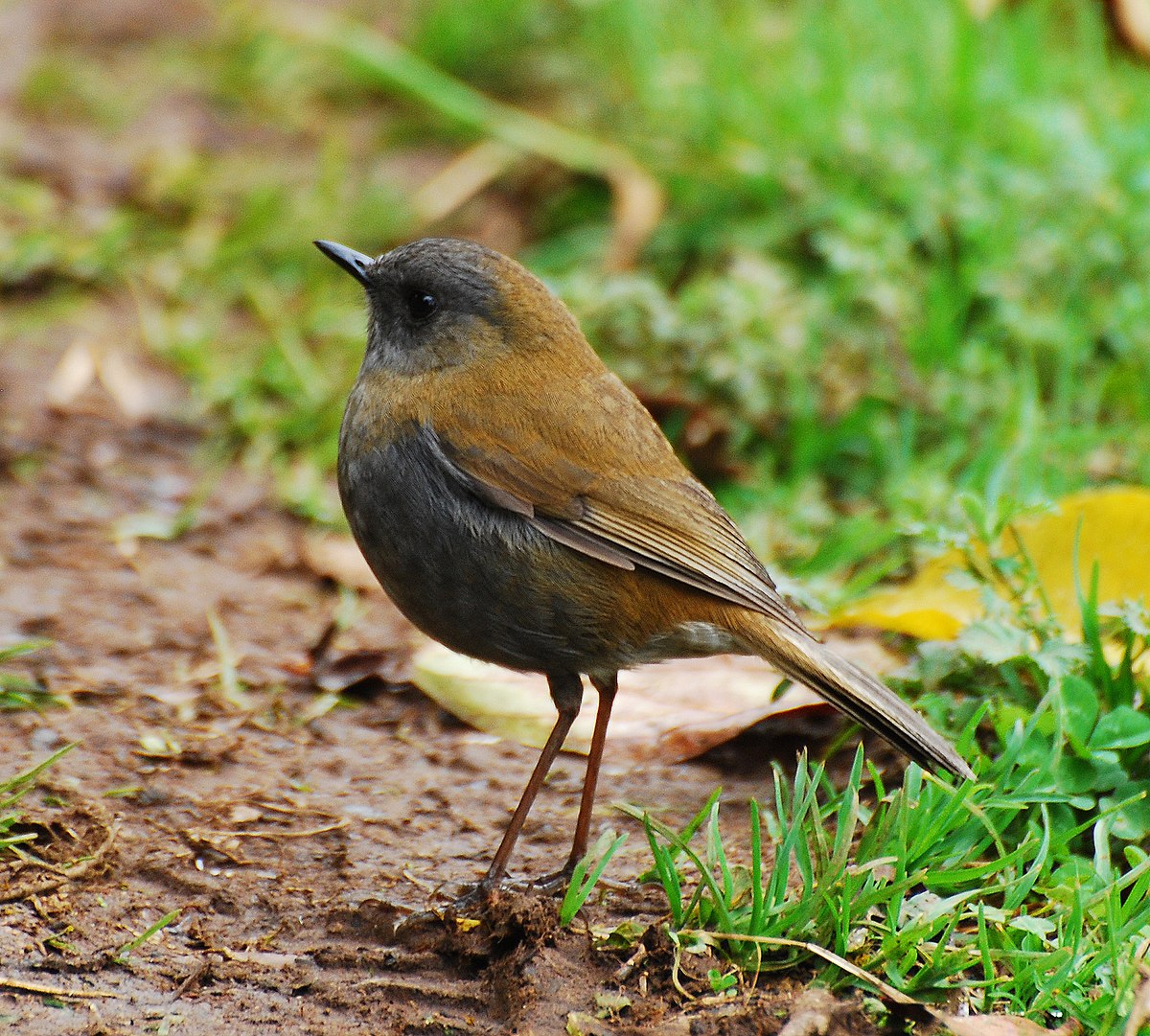
Wikipedia: Black-billed nightingale-thrush
The black-billed nightingale-thrush (Catharus gracilirostris) is a small thrush endemic to the highlands of Costa Rica and western Panama. Its position in the genus Catharus is somewhat equivocal, but it is apparently closer to the hermit thrush than to the other nightingale-thrushes except the russet nightingale-thrush and/or the ruddy-capped nightingale-thrush (Winker & Pruett, 2006).[2]
[more]
Catharus aurantiirostris / Orange-billed nightingale-thrush (Catharus aurantiirostris)
Profil Wikipedia eBird Xeno-Canto
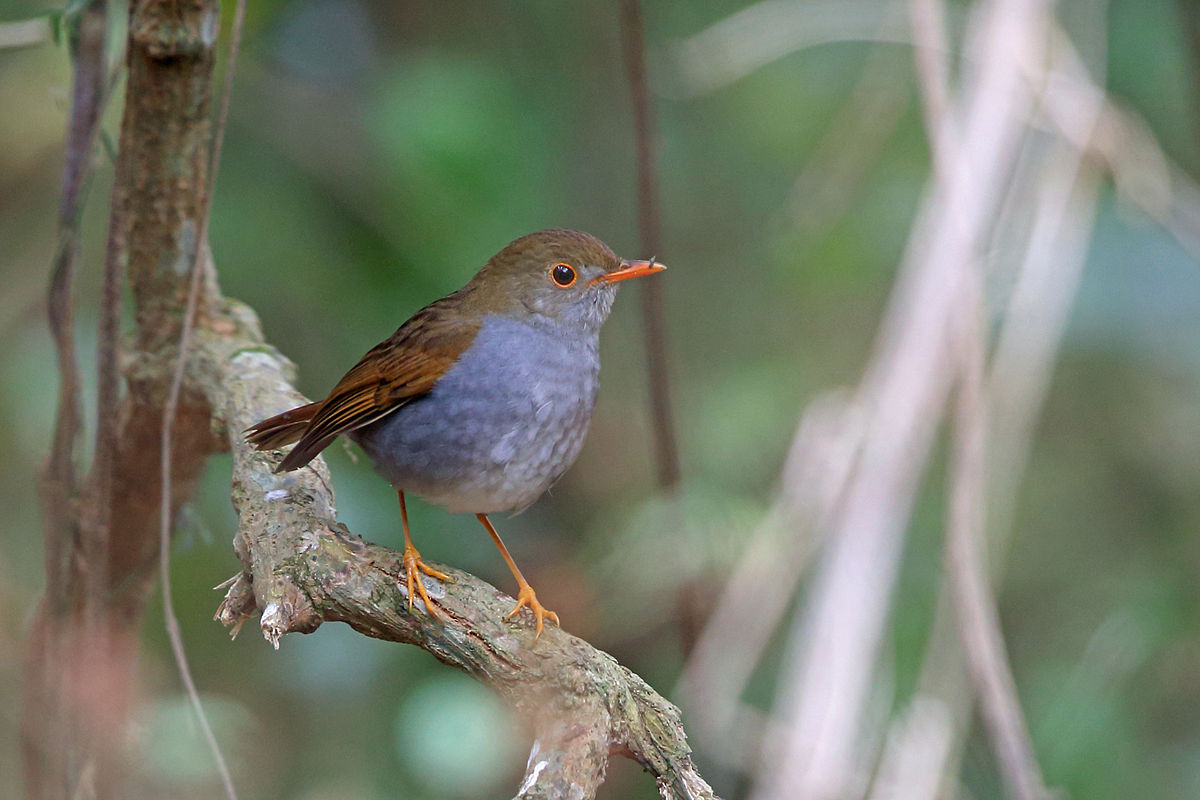
Wikipedia: Orange-billed nightingale-thrush
The orange-billed nightingale-thrush (Catharus aurantiirostris) is a species of bird in the family Turdidae. It is found in Colombia, Costa Rica, El Salvador, Guatemala, Honduras, Mexico, Nicaragua, Panama, Trinidad and Tobago, and Venezuela. Its natural habitats are subtropical or tropical dry forest, subtropical or tropical moist lowland forest, subtropical or tropical moist montane forest, and heavily degraded former forest.
[more]
Catharus mexicanus / Black-headed nightingale-thrush (Catharus mexicanus)
Profil Wikipedia eBird Xeno-Canto
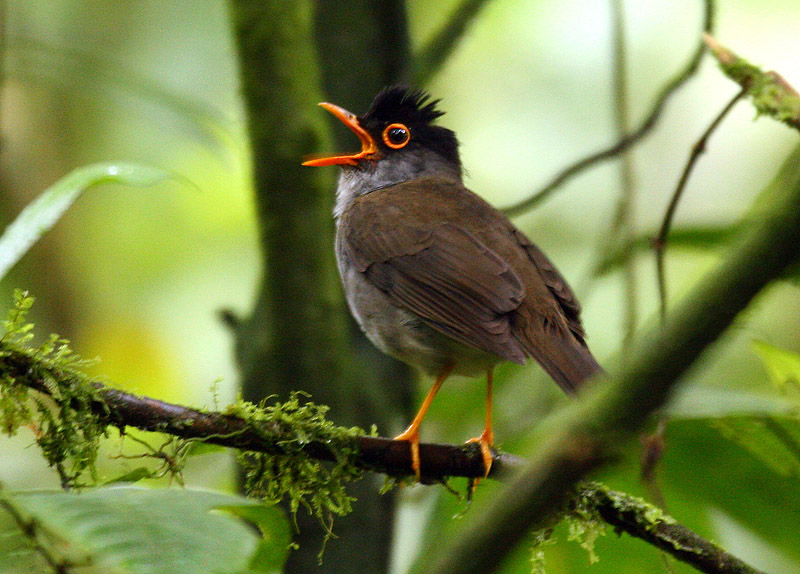
Wikipedia: Black-headed nightingale-thrush
The black-headed nightingale-thrush (Catharus mexicanus) is a species of bird in the family Turdidae. It is found in Costa Rica, Guatemala, Honduras, Mexico, Nicaragua, and Panama.
[more]
Gattung Turdus:
Turdus grayi / Clay-colored robin (Turdus grayi)

Lava hike clay colored thrush? national bird. 2018-03-01 17.09.44 Zentralamerika
The clay-colored thrush (Turdus grayi) is a common Middle American bird of the thrush family (Turdidae). It is the national bird of Costa Rica, where it is well known as the yigüirro (Spanish: [ʝi'ɣwiro]). Other common names include clay-colored robin.[1]
[more]
Turdus assimilis / White-throated thrush (Turdus assimilis)

Wikipedia: White-throated thrush
The white-throated thrush (Turdus assimilis) is a species of bird in the family Turdidae. It is found in Mexico and Central America, ranging south to central Panama.[2] Its natural habitats are subtropical or tropical dry forests, subtropical or tropical moist lowland forests, and subtropical or tropical moist montane forests. It is common in its range and an extremely rare vagrant into Texas and Arizona; 3 sightings have been recorded (1990 and 1998 in Texas and 2019 in Arizona).[3][4]
[more]
Rußdrossel / Sooty thrush (Turdus nigrescens)
Profil Wikipedia eBird Xeno-Canto

Wikipedia: Sooty thrush
Die Rußdrossel (Turdus nigrescens) ist eine großwüchsige Drosselart, welche im Hochland Costa Ricas und dem westlichen Panama endemisch ist.
[more]
Turdus plebejus / Mountain thrush (Turdus plebejus)
Profil Wikipedia eBird Xeno-Canto
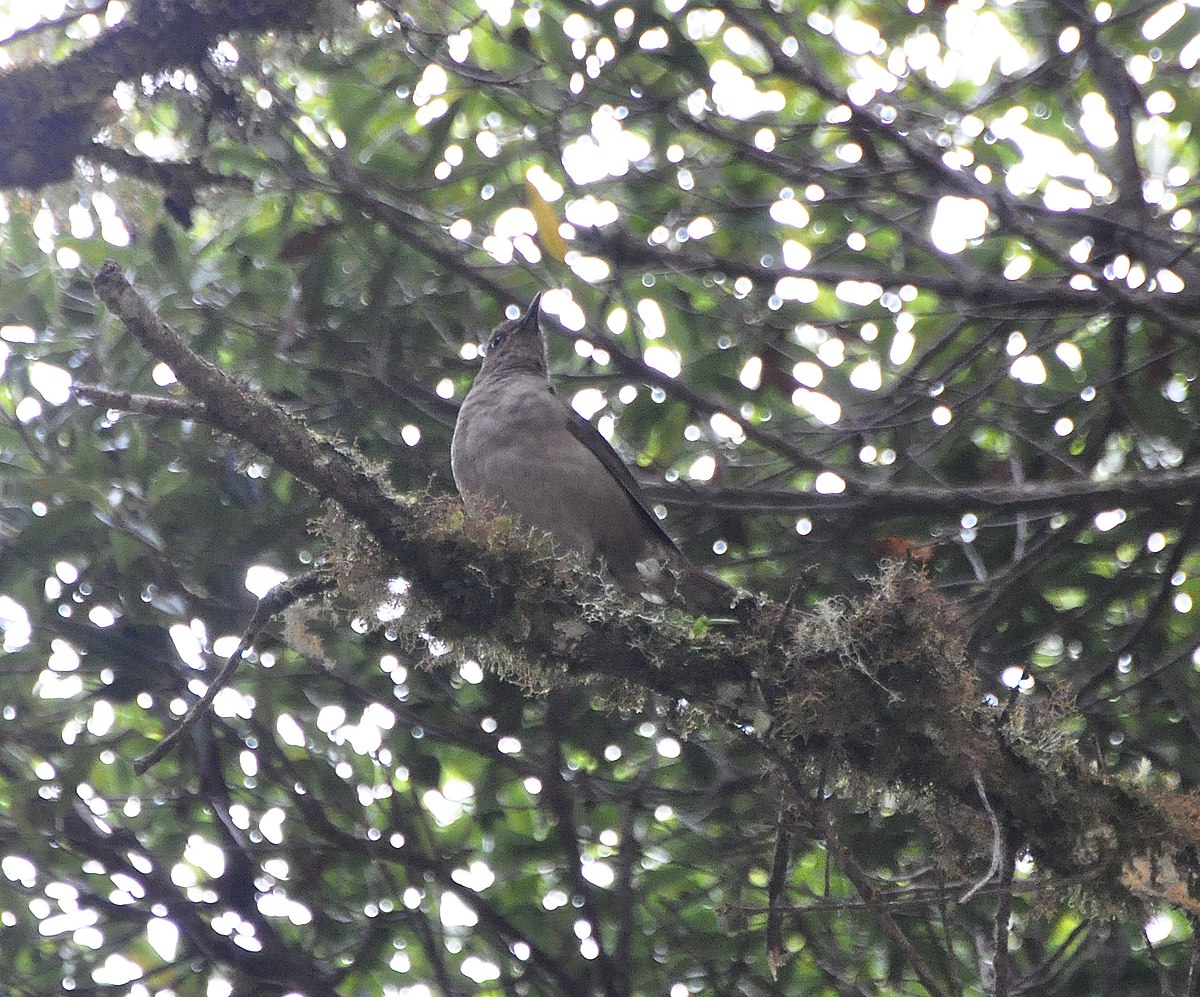
Wikipedia: Mountain thrush
The mountain thrush (Turdus plebejus) is a large thrush which is found in Central America. It was formerly known as the mountain robin. Some authorities refer to it as the American mountain thrush to differentiate it from the Abyssinian thrush (Turdus abyssinicus), known in their taxonomy as the African mountain thrush.[2]
[more]
Turdus obsoletus / Pale-vented thrush (Turdus obsoletus)
Profil Wikipedia eBird Xeno-Canto

Wikipedia: Pale-vented thrush
The pale-vented thrush (Turdus obsoletus) is a species of bird in the family Turdidae.
[more]
Gattung Myadestes:
Myadestes melanops / Black-faced solitaire (Myadestes melanops)

Cloud forest black faced solitaire. 2018-02-17 13.24.56 Zentralamerika
The black-faced solitaire (Myadestes melanops) is a bird in the thrush family endemic to highlands in Costa Rica and western Panama.
[more]
Myadestes coloratus / Varied solitaire (Myadestes coloratus)
Profil Wikipedia eBird Xeno-Canto

Wikipedia: Varied solitaire
The varied solitaire (Myadestes coloratus) is a species of bird in the family Turdidae. It is found in Colombia and Panama. Its natural habitat is subtropical or tropical moist montane forests.
[more]
Gattung Hylocichla:
Walddrossel / Wood thrush (Hylocichla mustelina)
 Wood thrush, one of the few birds at Oregon Ridge we saw for the first time, unforunately out of focus.JPG)
Wood thrush, one of the few birds at Oregon Ridge we saw for the first time, unforunately out of focus. 2021-06-19 09.31.42 Maryland
Die Walddrossel (Hylocichla mustelina) ist eine Vogelart aus der Familie der Drosseln (Turdidae), die in Nord- und Mittelamerika vorkommt. Sie ist die einzige Art in der monotypischen Gattung Hylocichla.
[more]
Familie Tyrannidae:
Gattung Empidonax:
Gartentyrann / Least flycatcher (Empidonax minimus)
Profil Wikipedia eBird Audubon AllAboutBirds Xeno-Canto

Wikipedia: Least flycatcher
Der Gartentyrann (Empidonax minimus) ist ein kleiner, Insekten fressender Vogel aus der Familie der Tyrannen. Er ist der kleinste Vertreter der Gattung Empidonax im östlichen Nordamerika. Der englische Name lautet „Least Flycatcher“. Gelegentlich wird er auch nach seinem Ruflaut Chebec genannt.
[more]
Empidonax flaviventris / Yellow-bellied flycatcher (Empidonax flaviventris)
Profil Wikipedia eBird Audubon AllAboutBirds Xeno-Canto

Wikipedia: Yellow-bellied flycatcher
The yellow-bellied flycatcher (Empidonax flaviventris) is a small insect-eating bird of the tyrant flycatcher family.
[more]
Buchentyrann / Acadian flycatcher (Empidonax virescens)
Profil Wikipedia eBird Audubon AllAboutBirds Xeno-Canto
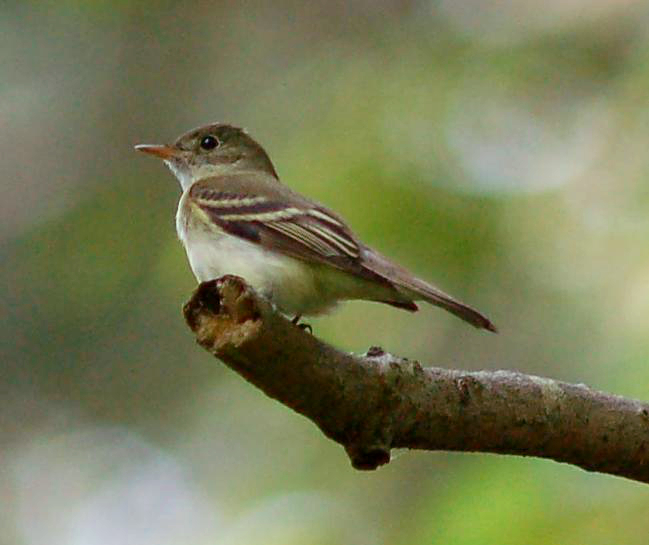
Wikipedia: Acadian flycatcher
Der Buchentyrann (Empidonax virescens) ist ein kleiner insektenfressender Vogel, der zu der Familie der Tyrannen gehört. Wie einige ihrer sehr ähnlichen, oft nur an der Stimme unterscheidbaren Verwandten, halten Buchentyrannen von Ästen aus Ausschau nach Fluginsekten, die sie dann mit kurzem, aber wendigen Jagdflug erbeuten.[1]
[more]
Empidonax alnorum / Alder flycatcher (Empidonax alnorum)
Profil Wikipedia eBird Audubon AllAboutBirds Xeno-Canto

Wikipedia: Alder flycatcher
The alder flycatcher (Empidonax alnorum) is a small insect-eating bird of the tyrant flycatcher family. The genus name Empidonax is from Ancient Greek empis, "gnat", and anax, "master". The specific alnorum is Latin and means "of the alders".[2]
[more]
Empidonax traillii / Willow flycatcher (Empidonax traillii)
Profil Wikipedia eBird Audubon AllAboutBirds Xeno-Canto

Wikipedia: Willow flycatcher
The willow flycatcher (Empidonax traillii) is a small insect-eating, neotropical migrant bird of the tyrant flycatcher family. There are four subspecies of the willow flycatcher currently recognized, all of which breed in North America (including three subspecies that breed in California).[2] Empidonax flycatchers are almost impossible to tell apart in the field so biologists use their songs to distinguish between them.[3] The binomial commemorates the Scottish zoologist Thomas Stewart Traill.
[more]
Gilbufertyrann / Yellowish flycatcher (Empidonax flavescens)
Profil Wikipedia eBird Xeno-Canto

Wikipedia: Yellowish flycatcher
Der Gilbufertyrann (Empidonax flavescens) ist ein kleiner, Insekten fressender Vogel aus der Familie der Tyrannen. Der englische Name lautet Yellowish Flycatcher.
Sein Verbreitungsgebiet erstreckt sich von den Hochebenen Südost-Mexikos bis zum Süden beziehungsweise Westen von Panama. Dort lebt er in den kühleren Gebirgswäldern, bevorzugt am Waldrand oder in der Nähe von Lichtungen. Er brütet in Höhen zwischen 800 und knapp 2500 Meter. Das tassenförmige Nest wird aus Pflanzenfasern und Moos erbaut und befindet sich in zwei bis viereinhalb Metern Höhe über dem Boden. Das Weibchen legt typischerweise zwei bis drei weiße Eier, die grau gesprenkelt sind. Die Brutzeit beträgt 14 bis 15 Tage. Die Küken bleiben nach dem Schlüpfen noch 17 Tage im Nest. Die erwachsenen Tiere werden 12,5 Zentimeter lang und wiegen etwa 12 Gramm.
[more]
Empidonax albigularis / White-throated flycatcher (Empidonax albigularis)
Profil Wikipedia eBird Xeno-Canto

Wikipedia: White-throated flycatcher
The white-throated flycatcher (Empidonax albigularis) is a species of bird in the family Tyrannidae. It is found in Belize, Costa Rica, El Salvador, Guatemala, Honduras, Mexico, Nicaragua, and Panama. Its natural habitats are subtropical or tropical moist shrubland and heavily degraded former forest.
[more]
Empidonax atriceps / Black-capped flycatcher (Empidonax atriceps)
Profil Wikipedia eBird Xeno-Canto
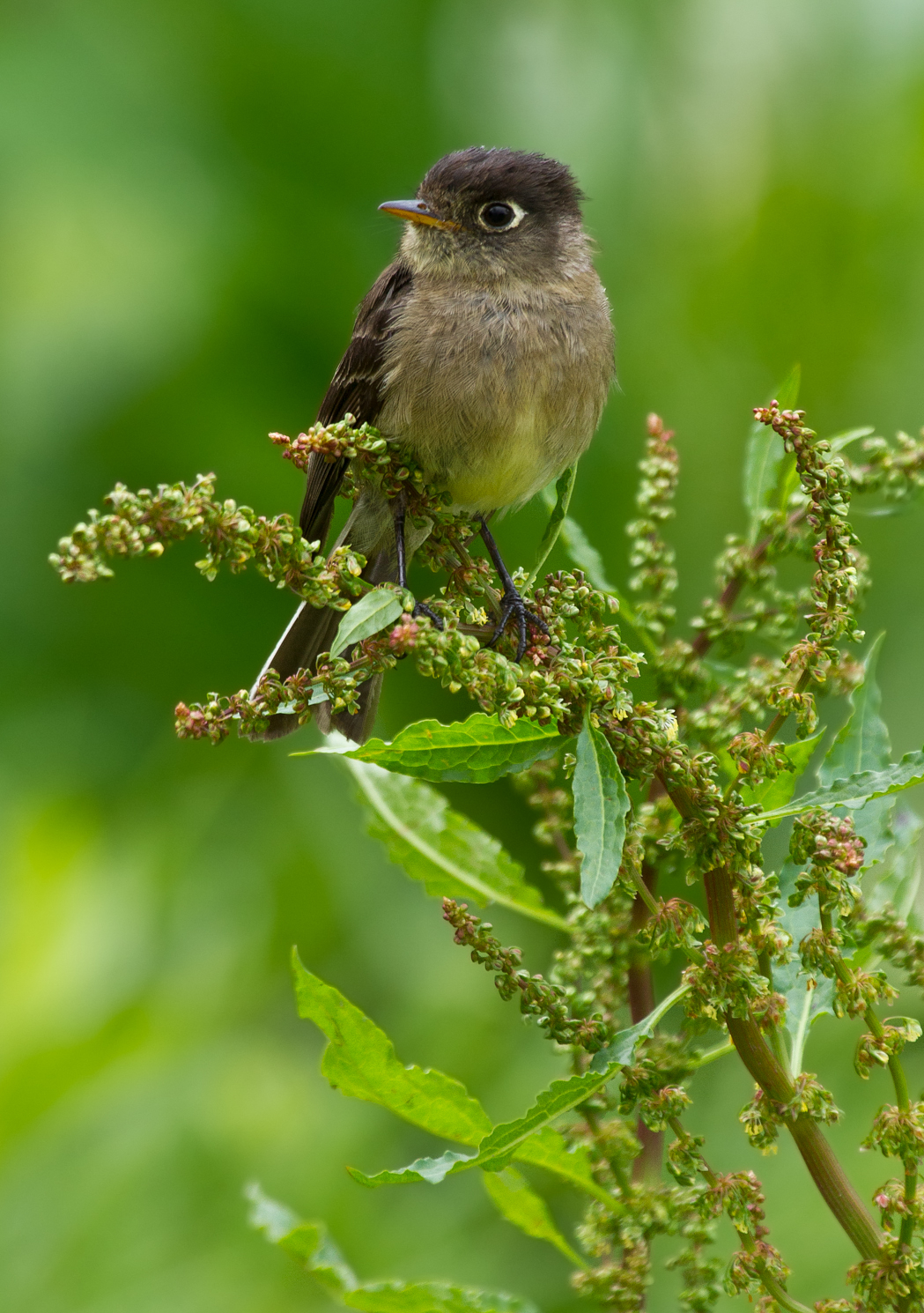
Wikipedia: Black-capped flycatcher
The black-capped flycatcher (Empidonax atriceps) is a very small passerine bird in the tyrant flycatcher family. It is endemic to the highlands of Costa Rica and western Panama.
[more]
Gattung Tyrannus:
Trauertyrann / Tropical kingbird (Tyrannus melancholicus)
Profil Wikipedia eBird Audubon AllAboutBirds Xeno-Canto

Tropical kingbird. 2018-02-16 16.18.52 Zentralamerika
Der Trauertyrann (Tyrannus melancholicus) ist eine Art der Tyrannen. Trauertyrannen kommen in fast ganz Süd- und Mittelamerika vor und sind mit einem geschätzten Bestand von 200 Millionen Individuen die häufigste Art der Königstyrannen.
[more]
Königstyrann / Eastern kingbird (Tyrannus tyrannus)
Profil Wikipedia eBird Audubon AllAboutBirds Xeno-Canto
 Eastern kingbird, Cromwell Valley Park, Maryland.JPG)
Eastern kingbird, Cromwell Valley Park, Maryland. 2021-06-14 16.00.42 Maryland
Der Königstyrann (Tyrannus tyrannus) ist ein ca. 20 cm große und sehr aggressive Vogelart aus der Familie der Tyrannen (Tyrannidae).
[more]
Grauer Königstyrann / Gray kingbird (Tyrannus dominicensis)
Profil Wikipedia eBird Audubon AllAboutBirds Xeno-Canto

Wikipedia: Gray kingbird
Der Graue Königstyrann (Tyrannus dominicensis) ist eine Vogelart aus der Familie der Tyrannen. Er ist weit verbreitet in der karibischen Region, wo er vor allem Küsten- und Feuchtgebiete bewohnt. Die Art wurde erstmals im Jahr 1788 durch den deutschen Naturwissenschaftler Johann Friedrich Gmelin beschrieben.
[more]
Tyrannus savana / Fork-tailed flycatcher (Tyrannus savana)
Profil Wikipedia eBird Audubon AllAboutBirds Xeno-Canto

Wikipedia: Fork-tailed flycatcher
The fork-tailed flycatcher (Tyrannus savana) is a passerine bird of the tyrant flycatcher family, and is the member of a genus typically referred to as kingbirds. Named for their distinguishingly long forked tail, fork-tailed flycatchers are seen in lightly-forested or grassland areas; ranging from southern Mexico, to south past Argentina. They are most frequently observed sitting on conspicuous perches waiting for flying arthropods to fly past, they then sally out, eat their prey, and return to their perch. Northern populations near southern Mexico tend to be permanent residents, while fork-tailed flycatchers that live further south are migrants with a reputation to wander as far north as the eastern seaboard of the United States.
[more]
Scherenschwanz-Königstyrann / Scissor-tailed flycatcher (Tyrannus forficatus)
Profil Wikipedia eBird Audubon AllAboutBirds Xeno-Canto
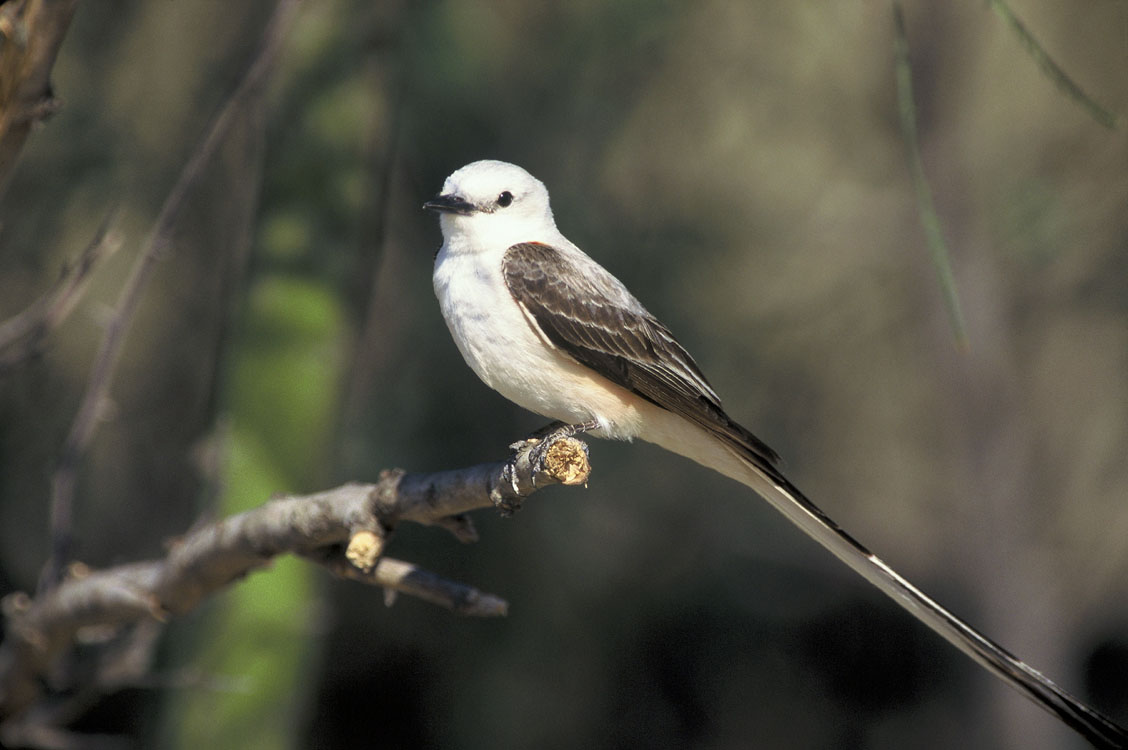
Wikipedia: Scissor-tailed flycatcher
Der Scherenschwanz-Königstyrann (Tyrannus forficatus) ist ein Sperlingsvogel aus der Familie der Tyrannen innerhalb der Unterordnung der Schreivögel.
[more]
Arkansaskönigstyrann / Western kingbird (Tyrannus verticalis)
Profil Wikipedia eBird Audubon AllAboutBirds Xeno-Canto

Wikipedia: Western kingbird
Der Arkansaskönigstyrann (Tyrannus verticalis) ist eine Vogelart aus der Familie der Tyrannen (Tyrannidae). Er ist in großen Teilen des westlichen Nordamerikas verbreitet und dort meist häufig. Die Art wurde erstmals bei einer Forschungsexpedition um 1820 in Arkansas gesammelt, kommt in diesem Bundesstaat aber nur sehr selten mit einzelnen Brutpaaren vor, da hier die östliche Verbreitungsgrenze verläuft.
[more]
Gattung Sayornis:
Schwarzkopf-Phoebetyrann / Black phoebe (Sayornis nigricans)
Profil Wikipedia eBird Audubon AllAboutBirds Xeno-Canto
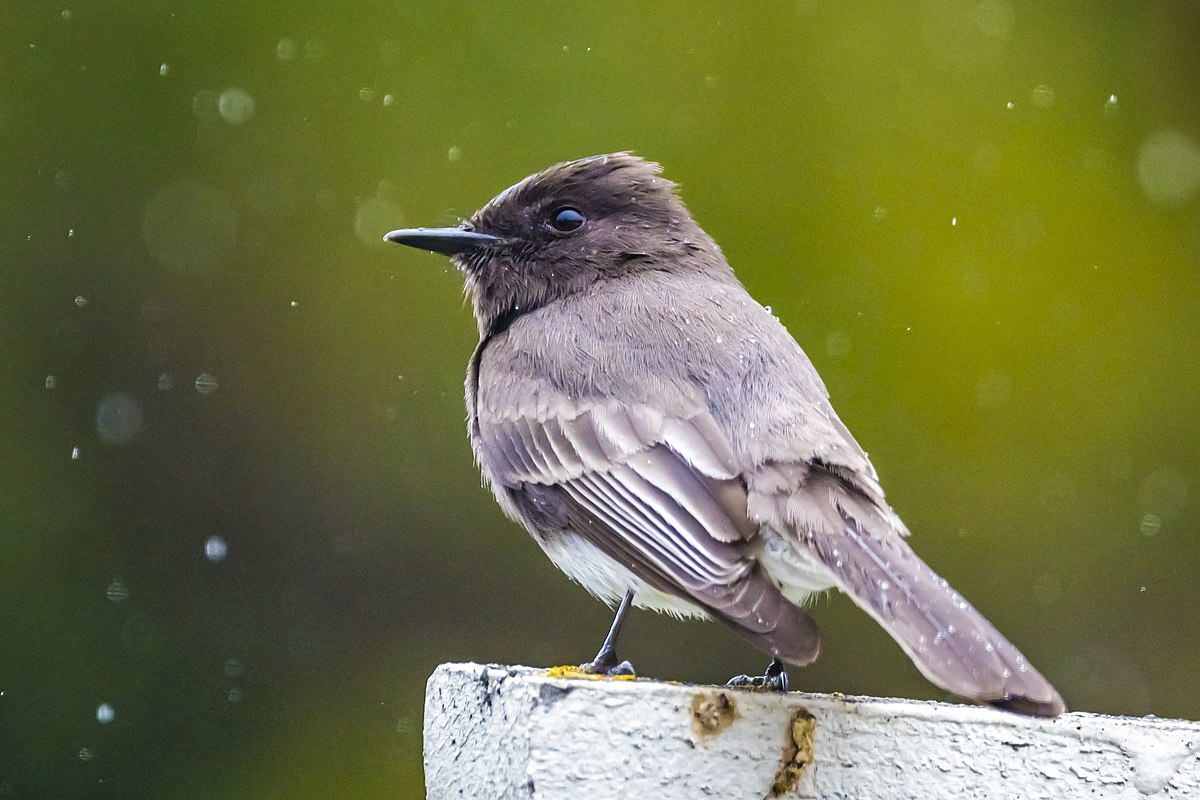
Wikipedia: Black phoebe
Der Schwarzkopf-Phoebetyrann (Sayornis nigricans) ist ein amerikanischer Schreivogel.
[more]
Gattung Elaenia:
Elaenia flavogaster / Yellow-bellied elaenia (Elaenia flavogaster)
Profil Wikipedia eBird Xeno-Canto

Wikipedia: Yellow-bellied elaenia
The yellow-bellied elaenia (Elaenia flavogaster) is a small bird of the tyrant flycatcher family. It breeds from southern Mexico and the Yucatán Peninsula through Central and South America as far as northern Argentina, and on Trinidad and Tobago.
[more]
Elaenia frantzii / Mountain elaenia (Elaenia frantzii)
Profil Wikipedia eBird Xeno-Canto

Wikipedia: Mountain elaenia
The mountain elaenia (Elaenia frantzii) is a small passerine bird in the tyrant flycatcher family. It breeds in highlands from Guatemala to Colombia and western Venezuela. The scientific name celebrates the German physician and naturalist, Alexander von Frantzius.
[more]
Elaenia chiriquensis / Lesser elaenia (Elaenia chiriquensis)
Profil Wikipedia eBird Xeno-Canto
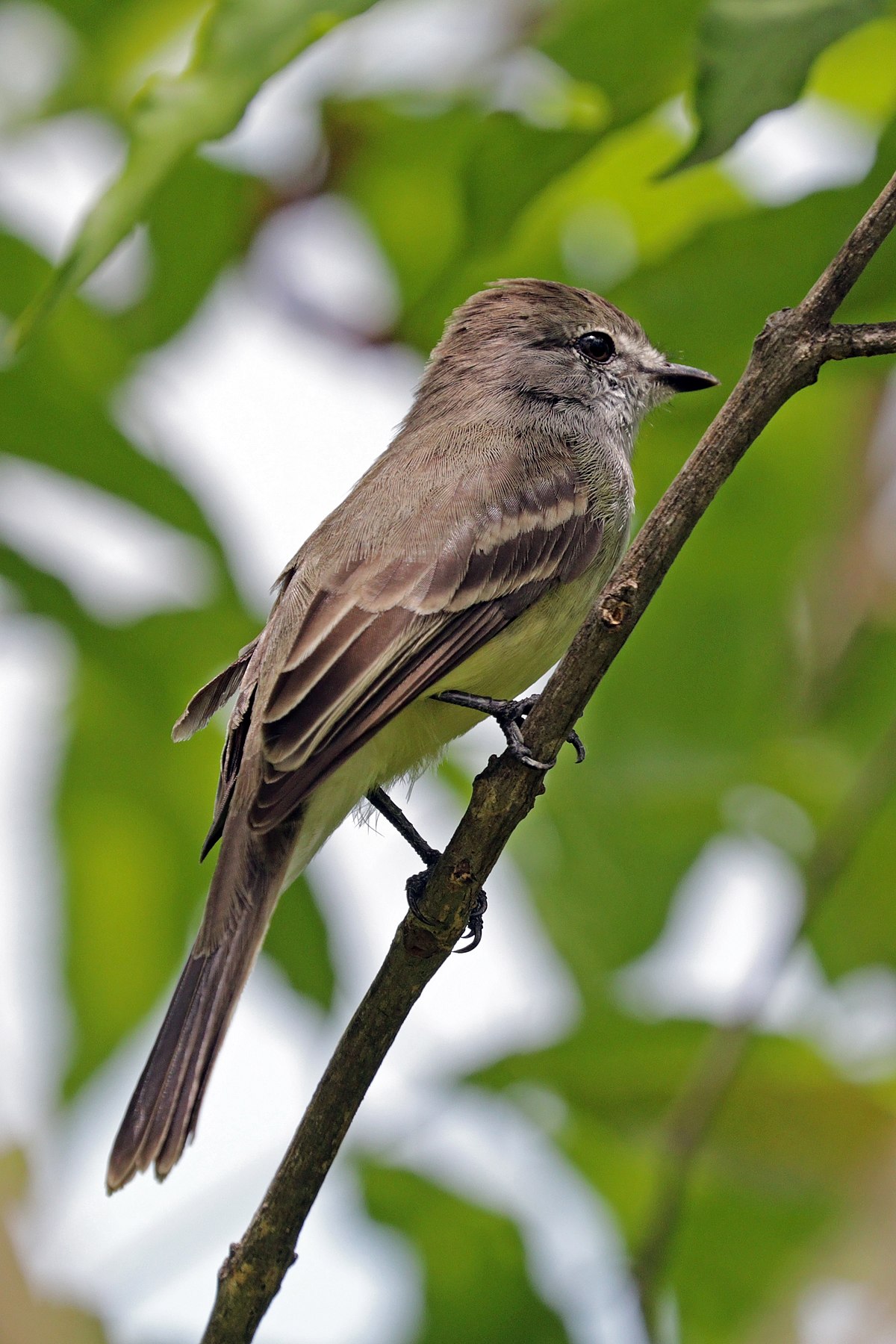
Wikipedia: Lesser elaenia
The lesser elaenia (Elaenia chiriquensis) is a species of bird in the family Tyrannidae, the tyrant flycatchers.
[more]
Gattung Pachyramphus:
Pachyramphus aglaiae / Rose-throated becard (Pachyramphus aglaiae)
Profil Wikipedia eBird Audubon AllAboutBirds Xeno-Canto

Wikipedia: Rose-throated becard
The rose-throated becard (Pachyramphus aglaiae) is a medium-sized member of the family Tityridae. Its genus, Pachyramphus, has traditionally been placed in Cotingidae or Tyrannidae, but evidence strongly suggest it is better placed in Tityridae.[2] This species was named in honour of Aglaé Brelay.[3]
[more]
Pachyramphus cinnamomeus / Cinnamon becard (Pachyramphus cinnamomeus)
Profil Wikipedia eBird Xeno-Canto

Wikipedia: Cinnamon becard
The cinnamon becard (Pachyramphus cinnamomeus) is a passerine bird found in Latin America.
[more]
Pachyramphus versicolor / Barred becard (Pachyramphus versicolor)
Profil Wikipedia eBird Xeno-Canto
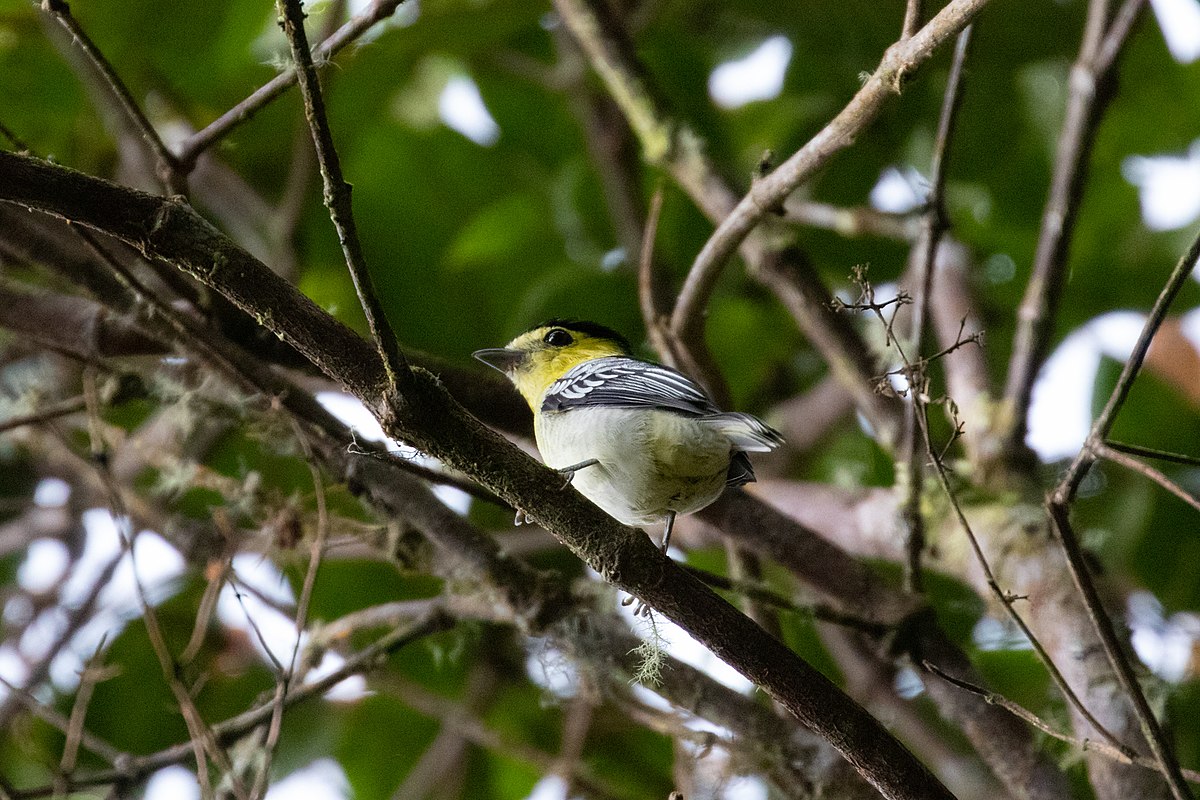
Wikipedia: Barred becard
The barred becard (Pachyramphus versicolor) is a small passerine bird which is a resident breeding species in highlands from Costa Rica to northwestern Ecuador and northern Bolivia. It has traditionally been placed in Cotingidae or Tyrannidae, but evidence strongly suggests it belongs in Tityridae, where it is now placed by the South American Classification Committee.[2]
[more]
Pachyramphus polychopterus / White-winged becard (Pachyramphus polychopterus)
Profil Wikipedia eBird Xeno-Canto

Wikipedia: White-winged becard
The white-winged becard (Pachyramphus polychopterus) is a species of bird in the family Tityridae. It has traditionally been placed in Cotingidae or Tyrannidae, but evidence strongly suggest it is better placed in Tityridae,[2] where it is now placed by the South American Classification Committee. The species contains 8 subspecies that vary markedly in plumage and voice, and it has been suggested that they represent more than one species.
[more]
Pachyramphus albogriseus / Black-and-white becard (Pachyramphus albogriseus)
Profil Wikipedia eBird Xeno-Canto

Wikipedia: Black-and-white becard
The black-and-white becard (Pachyramphus albogriseus) is a species of bird in the family Tityridae. It has traditionally been placed in Cotingidae or Tyrannidae, but evidence strongly suggest it is better placed in Tityridae,[2] where it is now placed by the South American Classification Committee. It is found in Colombia, Costa Rica, Ecuador, Panama, Peru, and Venezuela. Its natural habitats are subtropical or tropical dry forests and subtropical or tropical moist montane forests.
[more]
Pachyramphus homochrous / One-colored becard (Pachyramphus homochrous)
Profil Wikipedia eBird Xeno-Canto

Wikipedia: One-colored becard
The one-colored becard (Pachyramphus homochrous) is a species of bird in the family Tityridae. It has traditionally been placed in Cotingidae or Tyrannidae, but evidence strongly suggest it is better placed in Tityridae,[2] where it is now placed by the South American Classification Committee.
[more]
Pachyramphus rufus / Cinereous becard (Pachyramphus rufus)
Profil Wikipedia eBird Xeno-Canto

Wikipedia: Cinereous becard
The cinereous becard (Pachyramphus rufus) is a species of bird in the family Tityridae. The term cinereous describes its colouration. It has traditionally been placed in Cotingidae or Tyrannidae, but evidence strongly suggest it is better placed in Tityridae,[2] where it is now placed by the South American Classification Committee.
[more]
Gattung Tityra:
Tityra inquisitor / Black-crowned tityra (Tityra inquisitor)
Profil Wikipedia eBird Xeno-Canto

Wikipedia: Black-crowned tityra
The black-crowned tityra (Tityra inquisitor) is a medium-sized passerine bird. It has traditionally been placed in the cotinga or the tyrant flycatcher family, but evidence strongly suggest it is better placed in Tityridae.
[more]
Tityra semifasciata / Masked tityra (Tityra semifasciata)
Profil Wikipedia eBird Xeno-Canto

Cahal pech resort masked tityra tentative ID by Merlin. 2018-02-05 17.22.32 Zentralamerika
The masked tityra (Tityra semifasciata) is a medium-sized passerine bird. It has traditionally been placed in the cotinga or the tyrant flycatcher family, but evidence strongly suggests that it is better placed in Tityridae,[2] where it is now placed by the South American Classification Committee.
[more]
Gattung Mionectes:
Mionectes olivaceus / Olive-striped flycatcher (Mionectes olivaceus)
Profil Wikipedia eBird Xeno-Canto

Wikipedia: Olive-striped flycatcher
The olive-striped flycatcher (Mionectes olivaceus) is a species of bird in the family Tyrannidae.
[more]
Mionectes oleagineus / Ochre-bellied flycatcher (Mionectes oleagineus)

Wikipedia: Ochre-bellied flycatcher
The ochre-bellied flycatcher (Mionectes oleagineus) is a small bird of the tyrant flycatcher family. It breeds from southern Mexico through Central America, and South America east of the Andes as far as southern Brazil, and on Trinidad and Tobago.
[more]
Gattung Terenotriccus:
Terenotriccus erythrurus / Ruddy-tailed flycatcher (Terenotriccus erythrurus)

Wikipedia: Ruddy-tailed flycatcher
The ruddy-tailed flycatcher (Terenotriccus erythrurus) is a small passerine bird in the family Tityridae. It breeds in lowlands from southeastern Mexico to northern Bolivia, north-central Brazil and the Guianas. This flycatcher ranges east of the Andes cordillera into the entire Amazon Basin of northern Brazil and the Guianas; to the west of the Andes in Colombia and Ecuador into Central America. It is the only member of the genus Terenotriccus, but some authorities place it in genus Myiobius. However, it differs in voice, behaviour, and structure from members of that group.
[more]
Gattung Contopus:
Contopus sordidulus / Western wood-pewee (Contopus sordidulus)
Profil Wikipedia eBird Audubon AllAboutBirds Xeno-Canto

Arenal western wood-pewee tentative ID by Merlin. 2018-03-01 07.50.38 Zentralamerika
The western wood pewee (Contopus sordidulus) is a small tyrant flycatcher. Adults are gray-olive on the upperparts[2] with light underparts, washed with olive on the breast. They have two wing bars and a dark bill with yellow at the base of the lower mandible. This bird is very similar in appearance to the eastern wood pewee; the two birds were formerly considered to be one species. The call of C. sordidulus is a loud buzzy peeer; the song consists of three rapid descending tsees ending with a descending peeer.
[more]
Contopus virens / Eastern wood-pewee (Contopus virens)
Profil Wikipedia eBird Audubon AllAboutBirds Xeno-Canto
 Eastern wood pewee, last new bird we discovered - at the parking lot shortly before leaving, Oregon Ridge.JPG)
Eastern wood pewee, last new bird we discovered - at the parking lot shortly before leaving, Oregon Ridge. 2021-06-19 09.34.10 Maryland
The eastern wood pewee (Contopus virens) is a small tyrant flycatcher from North America. This bird and the western wood pewee (C. sordidulus) were formerly considered to be a single species. The two species are virtually identical in appearance, and can be distinguished most easily by their calls.
[more]
Fichtentyrann / Olive-sided flycatcher (Contopus cooperi)
Profil Wikipedia eBird Audubon AllAboutBirds Xeno-Canto

Wikipedia: Olive-sided flycatcher
Der Fichtentyrann (Contopus cooperi) ist eine mittelgroße Vogelart aus der Familie der Tyrannen (Tyrannidae), die in den kaltgemäßigten Nadelwäldern und westlichen Bergwäldern Nordamerikas beheimatet ist. Trotz seiner recht unscheinbaren Färbung ist er mit seiner Vorliebe für sehr prominente Sitzwarten und dem markanten Gesang eine recht auffällige Art. Auf Englisch wird seine durchdringend laute Gesangsstrophe scherzhaft, aber treffend, mit “quick, three beers!” („Schnell, drei Bier!“, Hörbeispiel[1]) beschrieben.
[more]
Contopus cinereus / Tropical pewee (Contopus cinereus)
Profil Wikipedia eBird Xeno-Canto

Wikipedia: Tropical pewee
The tropical pewee or southern tropical pewee (Contopus cinereus) is a small passerine bird in the tyrant flycatcher family. It breeds from southern Mexico and Trinidad south to Bolivia and Argentina. The taxon punensis, found in south-western Ecuador and western Peru, is usually included as a subspecies of the tropical pewee, but it has been suggested it should be considered a separate species, the Tumbes pewee (Contopus punensis) .
[more]
Contopus lugubris / Dark pewee (Contopus lugubris)
Profil Wikipedia eBird Xeno-Canto

Wikipedia: Dark pewee
The dark pewee (Contopus lugubris) is a small passerine bird in the tyrant flycatcher family. It is endemic to the Talamancan montane forests of Costa Rica and western Panama.
[more]
Contopus ochraceus / Ochraceous pewee (Contopus ochraceus)
Profil Wikipedia eBird Xeno-Canto

Wikipedia: Ochraceous pewee
The ochraceous pewee (Contopus ochraceus) is a species of bird in the family Tyrannidae. It is found in Costa Rica and western Panama. Its natural habitat is subtropical or tropical moist montane forests.
[more]
Gattung Aphanotriccus:
Aphanotriccus capitalis / Tawny-chested flycatcher (Aphanotriccus capitalis)

Wikipedia: Tawny-chested flycatcher
The tawny-chested flycatcher (Aphanotriccus capitalis) or Salvin's flycatcher, is a small passerine bird in the tyrant flycatcher family. It breeds in Caribbean lowlands and foothills up to 1000 m altitude from eastern Nicaragua to northern Costa Rica, although all Nicaraguan records are historical specimens collected near Lake Nicaragua or its outflow.
[more]
Aphanotriccus audax / Black-billed flycatcher (Aphanotriccus audax)

Wikipedia: Black-billed flycatcher
The black-billed flycatcher (Aphanotriccus audax) is a species of bird in the family Tyrannidae. It was first described by American naturalist Edward William Nelson in 1912 as Praedo audax.[2] It is found in Colombia and Panama[3] and its natural habitat is subtropical or tropical moist lowland forests. It is threatened by habitat loss.[1]
[more]
Gattung Mitrephanes:
Mitrephanes phaeocercus / Tufted flycatcher (Mitrephanes phaeocercus)
Profil Wikipedia eBird Xeno-Canto

Wikipedia: Tufted flycatcher
The northern tufted flycatcher or simply tufted flycatcher (Mitrephanes phaeocercus) is a small passerine bird in the tyrant flycatcher family. It breeds in highlands from northwestern Mexico to northwestern Ecuador. The olive flycatcher (Mitrephanes olivaceus) of Peru and Bolivia is now considered a separate species.
[more]
Gattung Sublegatus:
Sublegatus arenarum / Northern scrub-flycatcher (Sublegatus arenarum)
Profil Wikipedia eBird Xeno-Canto

Wikipedia: Northern scrub-flycatcher
The northern scrub flycatcher (Sublegatus arenarum) is a species of bird in the family Tyrannidae.
It is found in Aruba, Brazil, Colombia, Costa Rica, French Guiana, Guyana, Netherlands Antilles, Panama, Suriname, Trinidad and Tobago, and Venezuela.
Its natural habitats are subtropical or tropical dry forest, subtropical or tropical moist lowland forest, subtropical or tropical mangrove forest, and subtropical or tropical dry shrubland.
[more]
Gattung Myiobius:
Myiobius atricaudus / Black-tailed flycatcher (Myiobius atricaudus)
Profil Wikipedia eBird Xeno-Canto
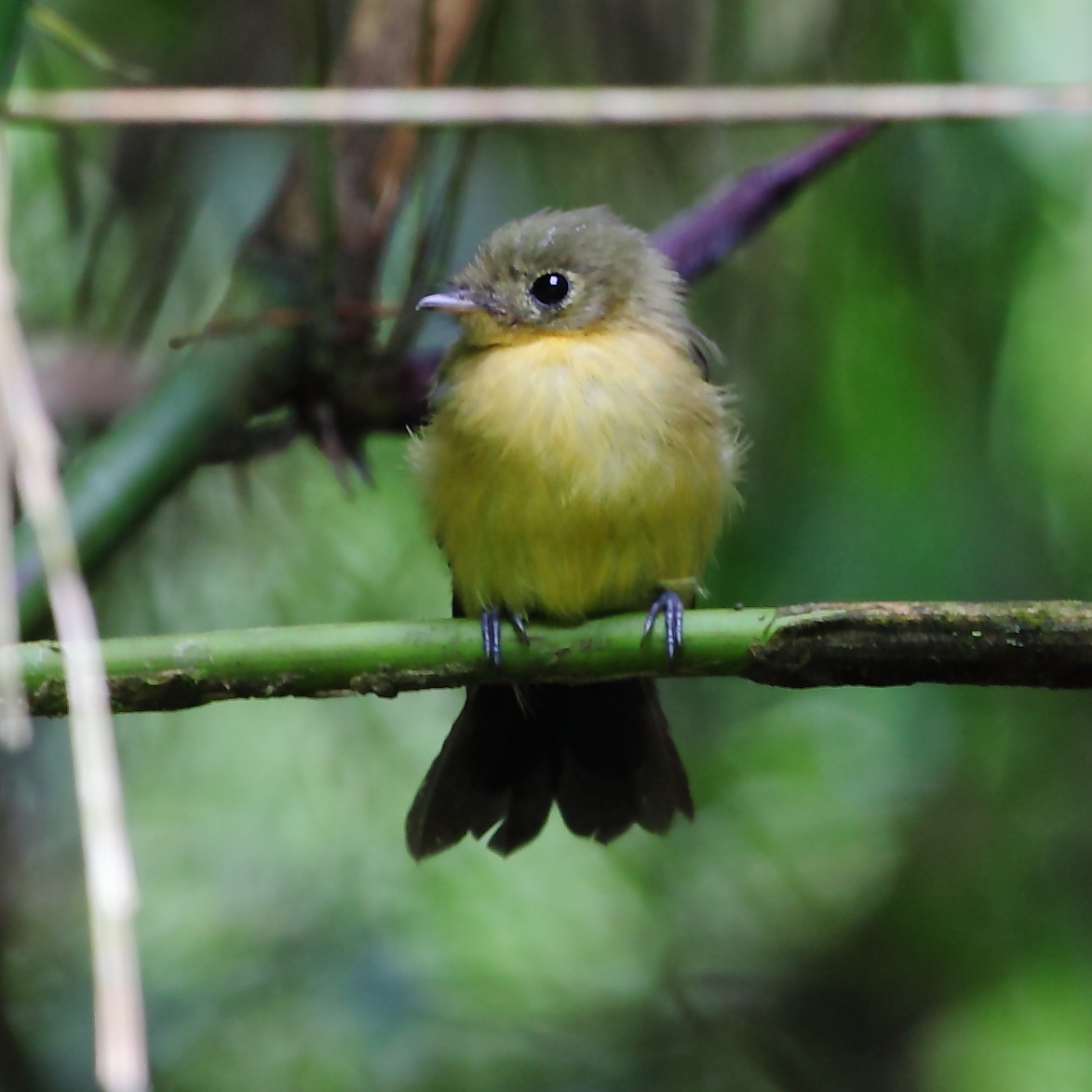
Wikipedia: Black-tailed flycatcher
The black-tailed myiobius or black-tailed flycatcher (Myiobius atricaudus) is a species of passerine bird in the family Tityridae. It was previously placed in the family Tyrannidae.[2] Black-tailed flycatchers are found in Brazil, Colombia, Costa Rica, Ecuador, Panama, Peru, and Venezuela.[3] Their natural habitats are subtropical or tropical moist lowland forests and heavily degraded former forest. They are usually found alone or in pairs, but may join flocks of several species.[3]
[more]
Myiobius sulphureipygius / Sulphur-rumped flycatcher (Myiobius sulphureipygius)
Profil Wikipedia eBird Xeno-Canto

Wikipedia: Sulphur-rumped flycatcher
The sulphur-rumped myiobius or sulphur-rumped flycatcher (Myiobius sulphureipygius) is a species of passerine bird in the family Tityridae. It is found in Belize, Colombia, Costa Rica, Ecuador, Guatemala, Honduras, Mexico, Nicaragua, and Panama. Its natural habitat is subtropical or tropical moist lowland forests.
[more]
Gattung Myiarchus:
Myiarchus crinitus / Great crested flycatcher (Myiarchus crinitus)
Profil Wikipedia eBird Audubon AllAboutBirds Xeno-Canto

Wikipedia: Great crested flycatcher
The great crested flycatcher (Myiarchus crinitus) is a large insect-eating bird of the tyrant flycatcher family. It is the most widespread member of the genus Myiarchus in North America, and is found over most of the eastern and mid-western portions of the continent.[2] It dwells mostly in the treetops and rarely is found on the ground.[3]
[more]
Myiarchus nuttingi / Nutting's flycatcher (Myiarchus nuttingi)

Wikipedia: Nutting's flycatcher
Nutting's flycatcher (Myiarchus nuttingi) is a passerine bird in the tyrant flycatcher family. It breeds in semi-arid desert scrub and tropical deciduous forest from western Mexico to northwest Costa Rica. It is normally a year-round resident, but has been known as an occasional vagrant to southern California and Arizona–(southeastern, central, and western), in the United States. It is named for the zoologist Charles Cleveland Nutting.
[more]
Myiarchus tyrannulus / Brown-crested flycatcher (Myiarchus tyrannulus)
Profil Wikipedia eBird Audubon AllAboutBirds Xeno-Canto

Wikipedia: Brown-crested flycatcher
The brown-crested flycatcher (Myiarchus tyrannulus) is a passerine bird in the tyrant flycatcher family.
[more]
Myiarchus tuberculifer / Dusky-capped flycatcher (Myiarchus tuberculifer)
Profil Wikipedia eBird Audubon AllAboutBirds Xeno-Canto

Wikipedia: Dusky-capped flycatcher
The dusky-capped flycatcher (Myiarchus tuberculifer) is a passerine bird in the tyrant flycatcher family. It breeds in forest and other woodland from southern Arizona, as well as the Chisos Mountains, Texas, south to northern Argentina and on Trinidad. It is resident in most of its range, but American breeders retreat to Mexico in winter.
[more]
Myiarchus panamensis / Panama flycatcher (Myiarchus panamensis)
Profil Wikipedia eBird Xeno-Canto

Wikipedia: Panama flycatcher
The Panamanian flycatcher (Myiarchus panamensis) is a species of bird in the family Tyrannidae. It is found in Colombia, Costa Rica, Panama, and Venezuela. Its natural habitats are subtropical or tropical dry forest, subtropical or tropical moist lowland forest, subtropical or tropical mangrove forest, subtropical or tropical dry shrubland, and heavily degraded former forest.
[more]
Gattung Fluvicola:
Fluvicola pica / Pied water-tyrant (Fluvicola pica)
Profil Wikipedia eBird Xeno-Canto

Wikipedia: Pied water-tyrant
The pied water tyrant (Fluvicola pica) is a small passerine bird in the tyrant flycatcher family. It breeds in tropical South America from Panama and Trinidad south to Bolivia and Argentina.
[more]
Gattung Leptopogon:
Leptopogon superciliaris / Slaty-capped flycatcher (Leptopogon superciliaris)
Profil Wikipedia eBird Xeno-Canto
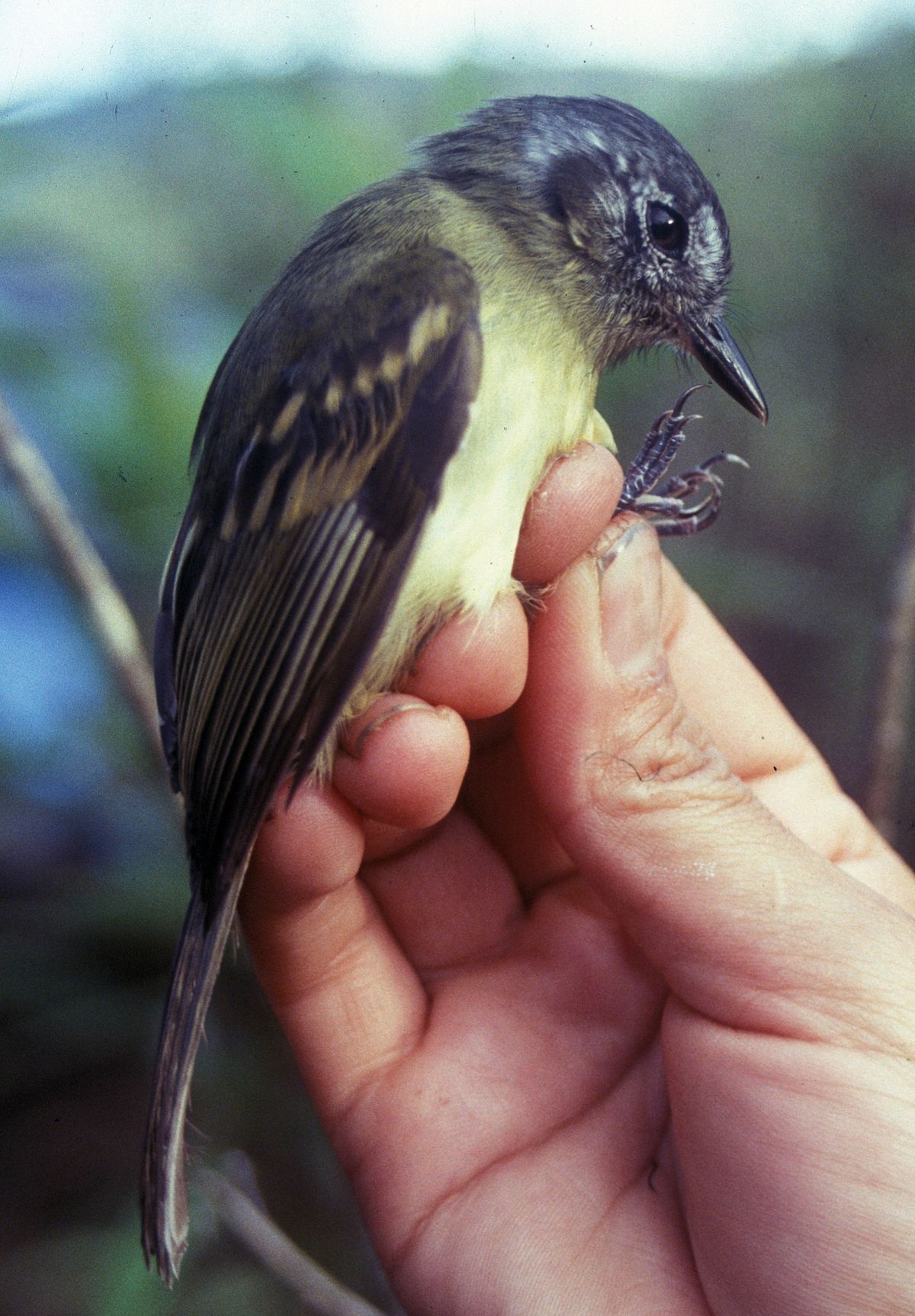
Wikipedia: Slaty-capped flycatcher
The slaty-capped flycatcher (Leptopogon superciliaris) is a small passerine bird in the tyrant flycatcher family. It is found in northern Bolivia to Costa Rica and in Trinidad.
[more]
Leptopogon amaurocephalus / Sepia-capped flycatcher (Leptopogon amaurocephalus)
Profil Wikipedia eBird Xeno-Canto

Wikipedia: Sepia-capped flycatcher
The sepia-capped flycatcher (Leptopogon amaurocephalus) is a species of bird in the family Tyrannidae.
[more]
Gattung Myiopagis:
Myiopagis viridicata / Greenish elaenia (Myiopagis viridicata)
Profil Wikipedia eBird Xeno-Canto

Wikipedia: Greenish elaenia
The greenish elaenia (Myiopagis viridicata) is a species of bird in the family Tyrannidae, the tyrant flycatchers.
It is found in Argentina, Belize, Bolivia, Brazil, Colombia, Costa Rica, Ecuador, El Salvador, Guatemala, Guyana, Honduras, Mexico, Nicaragua, Panama, Paraguay, Peru, the United States, and Venezuela.
Its natural habitats are subtropical or tropical dry forests, subtropical or tropical moist lowland forests, and heavily degraded former forest.
[more]
Myiopagis caniceps / Gray elaenia (Myiopagis caniceps)
Profil Wikipedia eBird Xeno-Canto
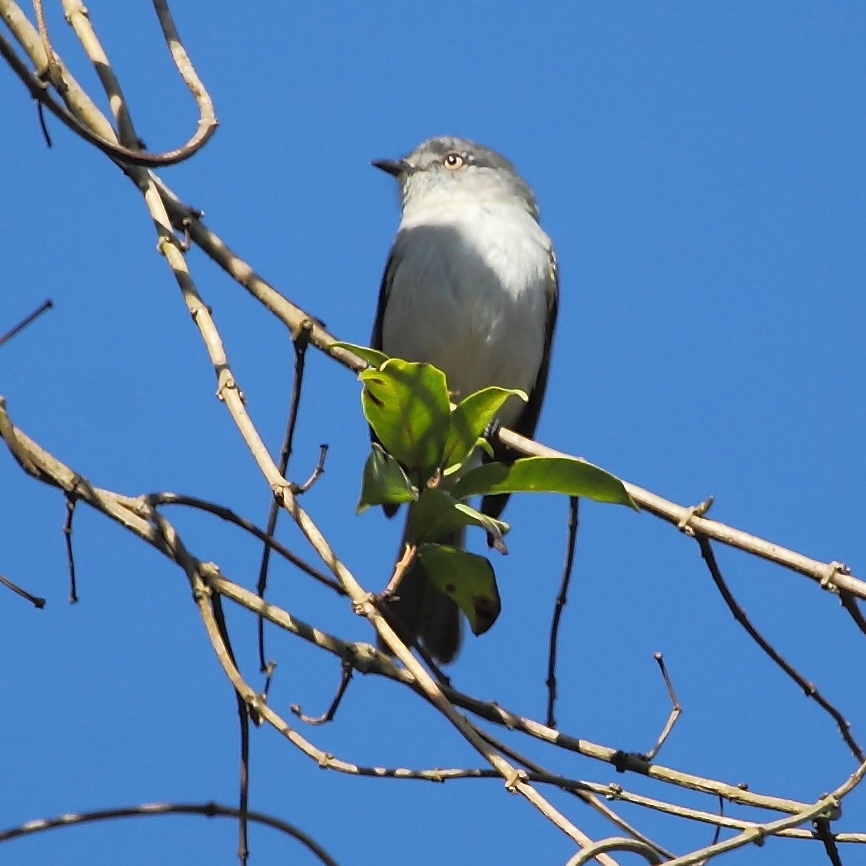
Wikipedia: Gray elaenia
The grey elaenia (Myiopagis caniceps) is a species of bird in the family Tyrannidae. It is found in Argentina, Bolivia, Brazil, Colombia, Ecuador, French Guiana, Guyana, Panama, Paraguay, Peru, and Venezuela. Its natural habitat is subtropical or tropical moist lowland forest.
[more]
Myiopagis gaimardii / Forest elaenia (Myiopagis gaimardii)
Profil Wikipedia eBird Xeno-Canto

Wikipedia: Forest elaenia
The forest elaenia (Myiopagis gaimardii) is a small passerine bird in the tyrant flycatcher family. It breeds from Panama through Colombia, Venezuela and the Guianas to Bolivia and Brazil. It also occurs on Trinidad.
[more]
Gattung Todirostrum:
Todirostrum cinereum / Common tody flycatcher (Todirostrum cinereum)

Wikipedia: Common tody flycatcher
The common tody-flycatcher or black-fronted tody-flycatcher (Todirostrum cinereum) is a very small passerine bird in the tyrant flycatcher family. It breeds from southern Mexico to northwestern Peru, eastern Bolivia and southern, eastern and northeast Brazil.
[more]
Todirostrum nigriceps / Black-headed tody-flycatcher (Todirostrum nigriceps)
Profil Wikipedia eBird Xeno-Canto

Wikipedia: Black-headed tody-flycatcher
The black-headed tody-flycatcher (Todirostrum nigriceps) is a species of bird in the family Tyrannidae.
It is found in Colombia, Costa Rica, Ecuador, Panama, and Venezuela.
Its natural habitat is subtropical or tropical moist lowland forests.
[more]
Gattung Rhytipterna:
Rhytipterna holerythra / Rufous mourner (Rhytipterna holerythra)
Profil Wikipedia eBird Xeno-Canto
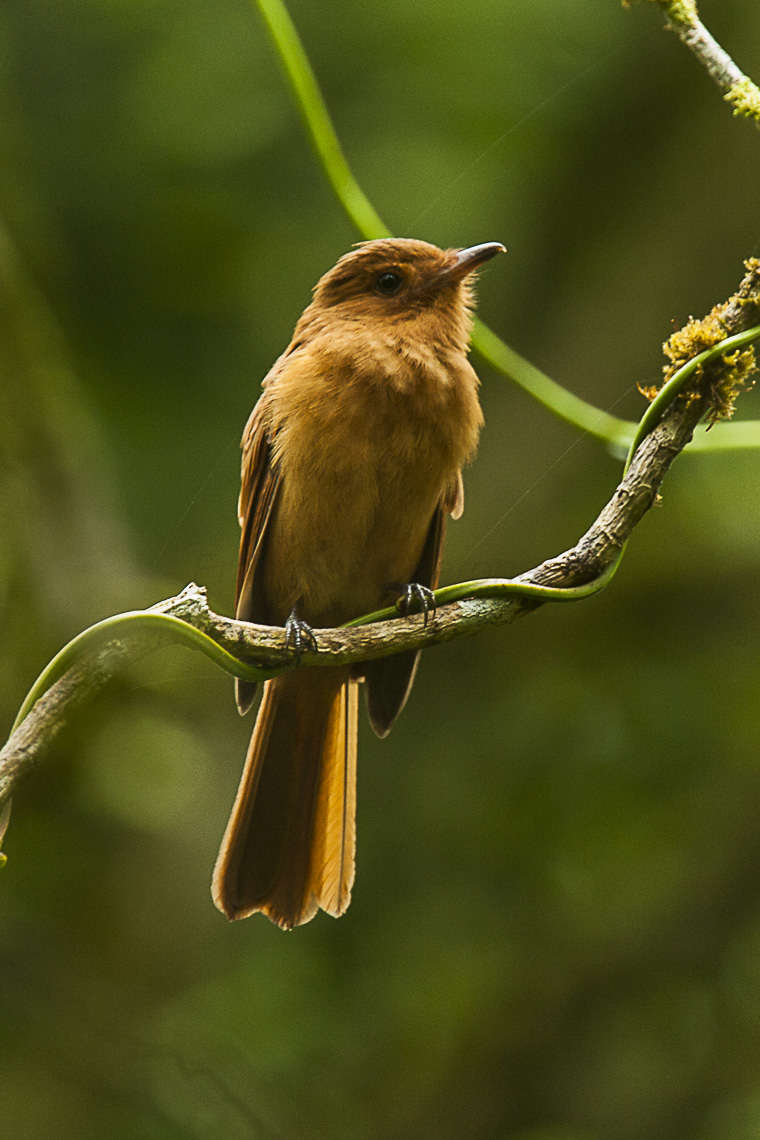
Wikipedia: Rufous mourner
The rufous mourner (Rhytipterna holerythra) is a small passerine bird in the tyrant flycatcher family. It breeds from southwestern Mexico to northwestern Ecuador. It was formerly believed to be a cotinga, but well-supported anatomical evidence has shown it to be related to tyrant flycatchers of the genera Myiarchus, Sirystes and Casiornis.[2]
[more]
Gattung Sapayoa:
Tyrannenbreitrachen / Broad-billed sapayoa (Sapayoa aenigma)

Wikipedia: Broad-billed sapayoa
Der Tyrannenbreitrachen (Sapayoa aenigma), auch Grünbreitrachen genannt, ist eine Schreivogelart, die im östlichen Panama, im westlichen Kolumbien und im nordwestlichen Ecuador vorkommt.[1]
[more]
Gattung Laniocera:
Laniocera rufescens / Speckled mourner (Laniocera rufescens)
Profil Wikipedia eBird Xeno-Canto

Wikipedia: Speckled mourner
The speckled mourner (Laniocera rufescens) is a species of bird in the family Tityridae. It has traditionally been placed in the family Cotingidae, but evidence strongly suggest it is better placed in Tityridae,[2] where it is now placed by the SACC. It is found in Belize, Colombia, Costa Rica, Ecuador, Guatemala, Honduras, Mexico, Nicaragua, and Panama. Its natural habitat is subtropical or tropical moist lowland forest.
[more]
Gattung Colonia:
Colonia colonus / Long-tailed tyrant (Colonia colonus)
Profil Wikipedia eBird Xeno-Canto

Wikipedia: Long-tailed tyrant
The long-tailed tyrant (Colonia colonus) is a species of bird in the family Tyrannidae, the only member of genus Colonia.
[more]
Gattung Lophotriccus:
Lophotriccus pileatus / Scale-crested pygmy-tyrant (Lophotriccus pileatus)
Profil Wikipedia eBird Xeno-Canto

Wikipedia: Scale-crested pygmy-tyrant
The scale-crested pygmy tyrant (Lophotriccus pileatus) is a species of bird in the family Tyrannidae.
[more]
Lophotriccus pilaris / Pale-eyed pygmy-tyrant (Lophotriccus pilaris)
Profil Wikipedia eBird Xeno-Canto

Wikipedia: Pale-eyed pygmy-tyrant
The pale-eyed pygmy tyrant (Atalotriccus pilaris) is a species of bird in the tyrant flycatcher family, Tyrannidae, where it makes up the monotypic genus Atalotriccus.[2]
[more]
Gattung Myiornis:
Myiornis atricapillus / Black-capped pygmy-tyrant (Myiornis atricapillus)
Profil Wikipedia eBird Xeno-Canto

Wikipedia: Black-capped pygmy-tyrant
The black-capped pygmy tyrant (Myiornis atricapillus) is the smallest passerine bird in its range, though larger than its cousin, the short-tailed pygmy tyrant. This tyrant flycatcher occurs from Costa Rica to north-western Ecuador.
[more]
Gattung Cnipodectes:
Cnipodectes subbrunneus / Brownish twistwing (Cnipodectes subbrunneus)
Profil Wikipedia eBird Xeno-Canto

Wikipedia: Brownish twistwing
The brownish twistwing (Cnipodectes subbrunneus), also known as the brownish flycatcher, is a species of bird in the Tyrannidae. It was the only member of the genus Cnipodectes until the description of Cnipodectes superrufus in 2007.
[more]
Gattung Oncostoma:
Oncostoma cinereigulare / Northern bentbill (Oncostoma cinereigulare)
Profil Wikipedia eBird Xeno-Canto

Wikipedia: Northern bentbill
The northern bentbill (Oncostoma cinereigulare) is a species of bird in the family Tyrannidae. It is found in Belize, Colombia, Costa Rica, El Salvador, Guatemala, Honduras, Mexico, Nicaragua, and Panama. Its natural habitats are subtropical or tropical dry forest, subtropical or tropical moist lowland forest, and heavily degraded former forest.
[more]
Oncostoma olivaceum / Southern bentbill (Oncostoma olivaceum)
Profil Wikipedia eBird Xeno-Canto
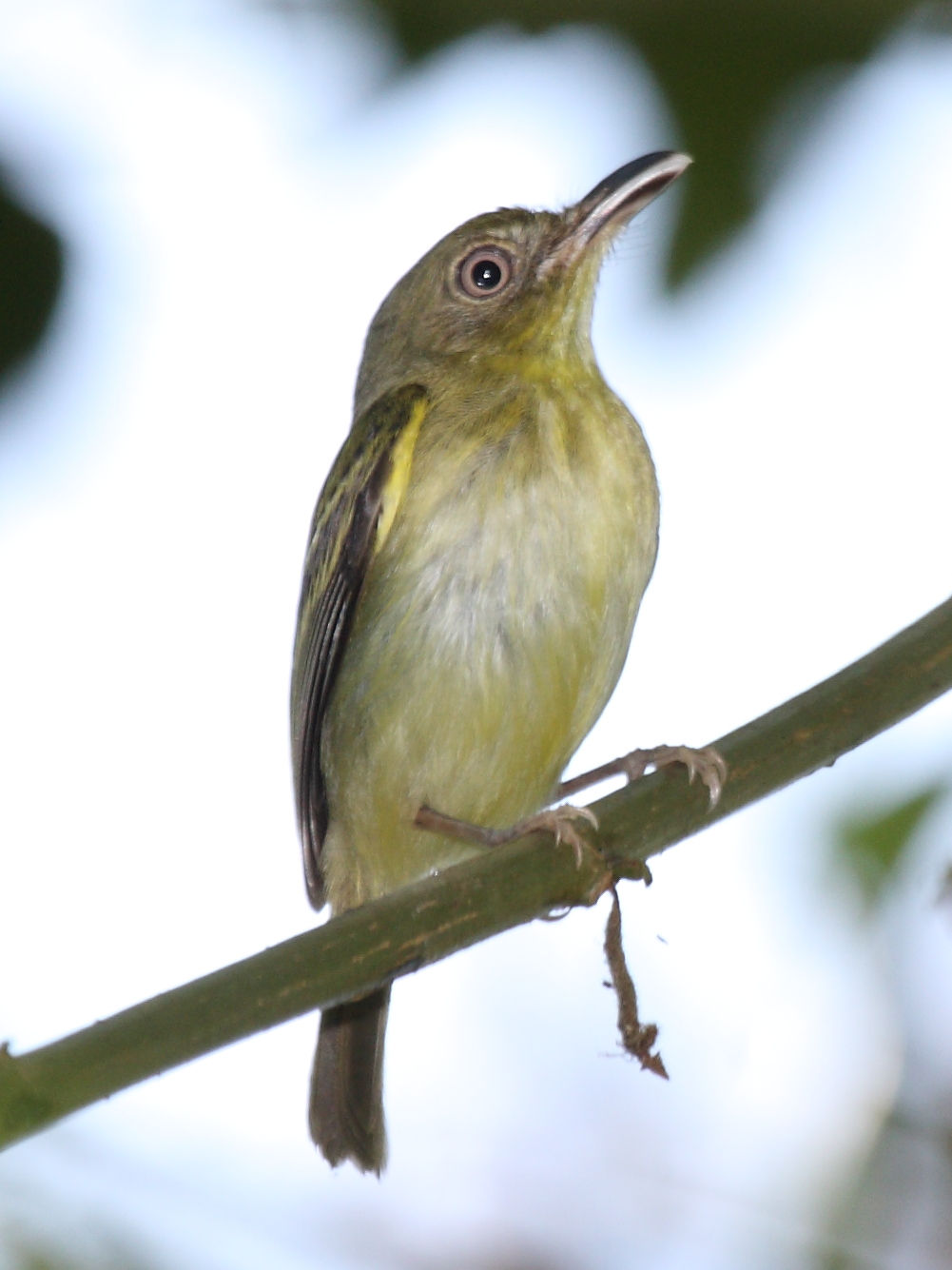
Wikipedia: Southern bentbill
The southern bentbill (Oncostoma olivaceum) is a species of bird in the family Tyrannidae. It is found in Colombia and Panama. Its natural habitats are subtropical or tropical moist lowland forests and heavily degraded former forest.
[more]
Gattung Onychorhynchus:
Onychorhynchus coronatus / Royal flycatcher (Onychorhynchus coronatus)
Profil Wikipedia eBird Xeno-Canto

Wikipedia: Royal flycatcher
The royal flycatchers are a genus, Onychorhynchus, of passerine birds in the family Tityridae[1][2] according to the IOC. Other taxonomic authorities including the AOU, Clements, and the IUCN, include it in Onychorhynchidae. Depending on authority, it includes a single widespread,[1] or four more localized species.[2] The specific epithet of the type species, coronatus, and the common name of all the species in this genus, royal flycatcher, refer to the striking, colourful crest,[3] which is seen displayed very rarely,[3] except after mating, while preening, in courtship as well as being handled.[3]
[more]
Onychorhynchus mexicanus / Royal flycatcher (Onychorhynchus mexicanus)
Profil Wikipedia eBird Xeno-Canto
Wikipedia: Royal flycatcher
The royal flycatchers are a genus, Onychorhynchus, of passerine birds in the family Tityridae[1][2] according to the IOC. Other taxonomic authorities including the AOU, Clements, and the IUCN, include it in Onychorhynchidae. Depending on authority, it includes a single widespread,[1] or four more localized species.[2] The specific epithet of the type species, coronatus, and the common name of all the species in this genus, royal flycatcher, refer to the striking, colourful crest,[3] which is seen displayed very rarely,[3] except after mating, while preening, in courtship as well as being handled.[3]
[more]
Gattung Capsiempis:
Capsiempis flaveola / Yellow tyrannulet (Capsiempis flaveola)

Wikipedia: Yellow tyrannulet
The yellow tyrannulet (Capsiempis flaveola) is a very small passerine bird in the tyrant flycatcher family. It breeds from Nicaragua south to northeastern Argentina and southeastern Brazil. It is the only member of the genus Capsiempis, but its taxonomy is uncertain, and it has been allocated to at least three other genera in the past.
[more]
Gattung Platyrinchus:
Platyrinchus cancrominus / Stub-tailed spadebill (Platyrinchus cancrominus)
Profil Wikipedia eBird Xeno-Canto
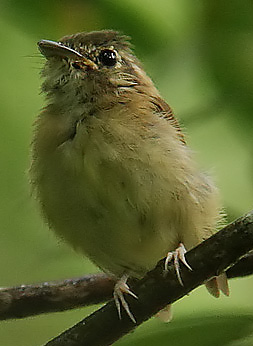
Wikipedia: Stub-tailed spadebill
The stub-tailed spadebill (Platyrinchus cancrominus) is a passerine bird in the Tyrannidae family. It is commonly found in tropical dry rainforests or tropical moist lowlands throughout Central America.[2] First scientifically described in 1860, it was originally thought to be the same as Platyrinchus mystaceus but was later reclassified as a sympatric species. The stub-tailed spadebill may grow up to 9.5 cm (3.74 in) long and may weigh up to 12 g (0.42 oz). It has a white throat, yellow breast, and brown mantle and wings. The stub-tailed spadebill is most easily recognizable due to its stubby tail, broad bill, and its distinctive bird song. Some morphological differences like its greatly reduced crown differentiate it from other related species.
[more]
Platyrinchus coronatus / Golden-crowned spadebill (Platyrinchus coronatus)
Profil Wikipedia eBird Xeno-Canto

Wikipedia: Golden-crowned spadebill
The golden-crowned spadebill (Platyrinchus coronatus) is a species of bird in the family Tyrannidae. It is found in Bolivia, Brazil, Colombia, Costa Rica, Ecuador, French Guiana, Guyana, Honduras, Nicaragua, Panama, Peru, Suriname, and Venezuela. Its natural habitat is subtropical or tropical moist lowland forests.
[more]
Platyrinchus mystaceus / White-throated spadebill (Platyrinchus mystaceus)
Profil Wikipedia eBird Xeno-Canto

Wikipedia: White-throated spadebill
The white-throated spadebill (Platyrinchus mystaceus) is a tiny passerine bird in the tyrant flycatcher family. It lives in the tropical Americas.
[more]
Gattung Phyllomyias:
Phyllomyias burmeisteri / Rough-legged tyrannulet (Phyllomyias burmeisteri)
Profil Wikipedia eBird Xeno-Canto
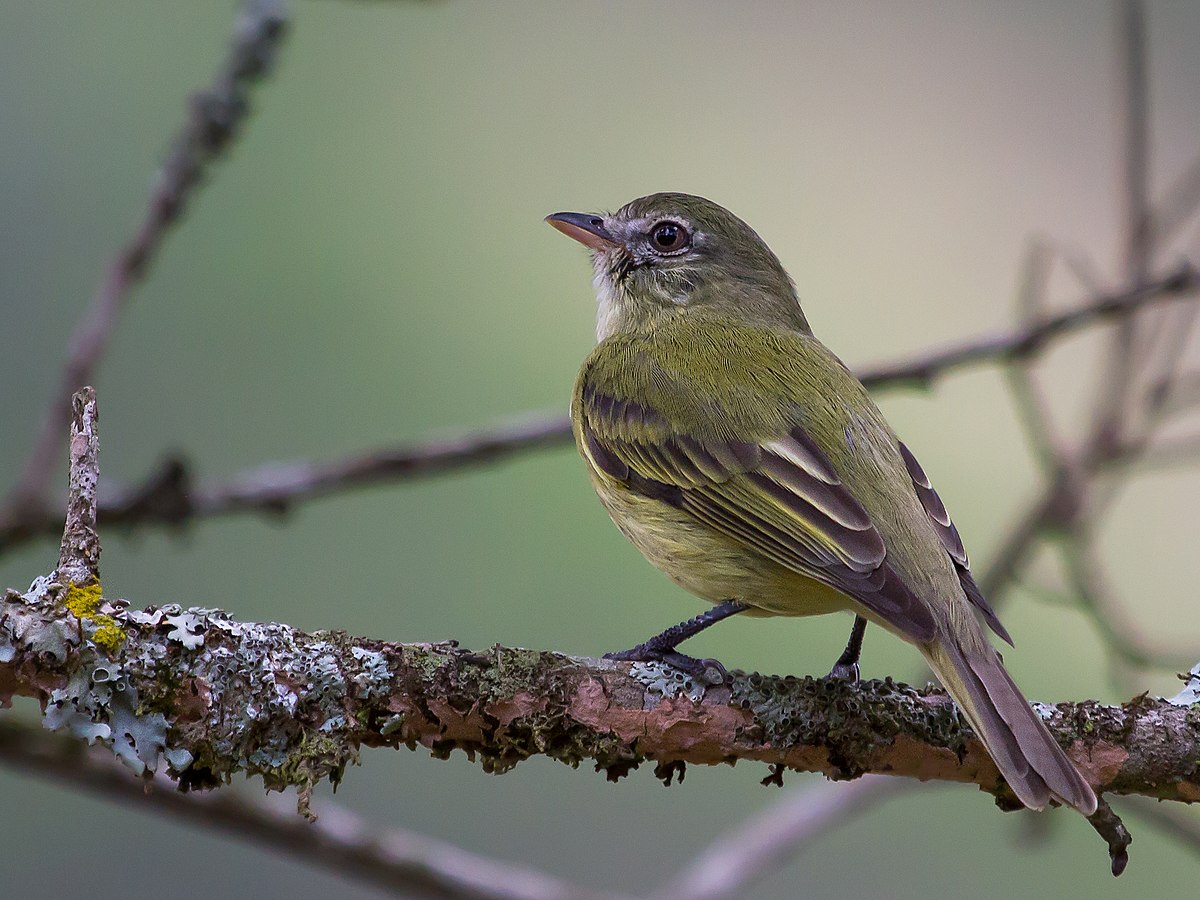
Wikipedia: Rough-legged tyrannulet
The rough-legged tyrannulet (Phyllomyias burmeisteri) is a species of bird in the family Tyrannidae. It is found in Argentina, Bolivia, Brazil, Colombia, Costa Rica, Ecuador, Panama, Paraguay, Peru, and Venezuela. Its natural habitats are subtropical or tropical moist lowland forest and subtropical or tropical moist montane forest.
[more]
Phyllomyias griseiceps / Sooty-headed tyrannulet (Phyllomyias griseiceps)
Profil Wikipedia eBird Xeno-Canto

Wikipedia: Sooty-headed tyrannulet
The sooty-headed tyrannulet (Phyllomyias griseiceps) is a species of bird in the family Tyrannidae. It is found in Brazil, Colombia, Ecuador, Guyana, Panama, Peru, and Venezuela.
[more]
Gattung Tolmomyias:
Tolmomyias assimilis / Yellow-margined flycatcher (Tolmomyias assimilis)
Profil Wikipedia eBird Xeno-Canto

Wikipedia: Yellow-margined flycatcher
Zimmer's flatbill (Tolmomyias assimilis) or the yellow-margined flatbill is a species of bird in the tyrant flycatcher family Tyrannidae. It is found in humid forest in southern Central America, and the Chocó and Amazon in South America.
[more]
Tolmomyias sulphurescens / Yellow-olive flycatcher (Tolmomyias sulphurescens)
Profil Wikipedia eBird Xeno-Canto

Wikipedia: Yellow-olive flycatcher
The yellow-olive flatbill or yellow-olive flycatcher (Tolmomyias sulphurescens) is a species of bird in the family Tyrannidae. It is found in tropical and subtopical forest and woodland in Central and South America, but over its range there are significant variations in plumage, iris-colour and voice, leading to speculations that more than one species is involved. Its plumage is overall greenish-yellow, the lores are whitish, the crown is often greyish and some subspecies have a dusky patch on the auriculars. The flat bill is black above and pale pinkish or greyish below; similar to the yellow-margined flatbill, but unlike the grey-crowned flatbill.
[more]
Tolmomyias flaviventris / Yellow-breasted flycatcher (Tolmomyias flaviventris)
Profil Wikipedia eBird Xeno-Canto

Wikipedia: Yellow-breasted flycatcher
The ochre-lored flatbill (Tolmomyias flaviventris) or yellow-breasted flycatcher, is a passerine bird in the tyrant flycatcher family. It is found in South America, ranging from Colombia and Venezuela south to Peru, Bolivia, and Brazil, and on both Trinidad and Tobago. There are significant variations in its voice and plumage, with western birds duller and more olive, and eastern and northern birds brighter and more ochre-yellow. The two are sometimes considered separate species, the western olive-faced flatbill (or flycatcher), T. viridiceps, and the eastern and northern ochre-lored flatbill (or flycatcher), T. flaviventris.[2]
[more]
Gattung Poecilotriccus:
Poecilotriccus sylvia / Slate-headed tody-flycatcher (Poecilotriccus sylvia)
Profil Wikipedia eBird Xeno-Canto

Wikipedia: Slate-headed tody-flycatcher
The slaty-headed tody-flycatcher (Poecilotriccus sylvia) is a species of bird in the family Tyrannidae, and one of twelve in the genus Poecilotriccus.
[more]
Gattung Pseudotriccus:
Pseudotriccus pelzelni / Bronze-olive pygmy-tyrant (Pseudotriccus pelzelni)
Profil Wikipedia eBird Xeno-Canto
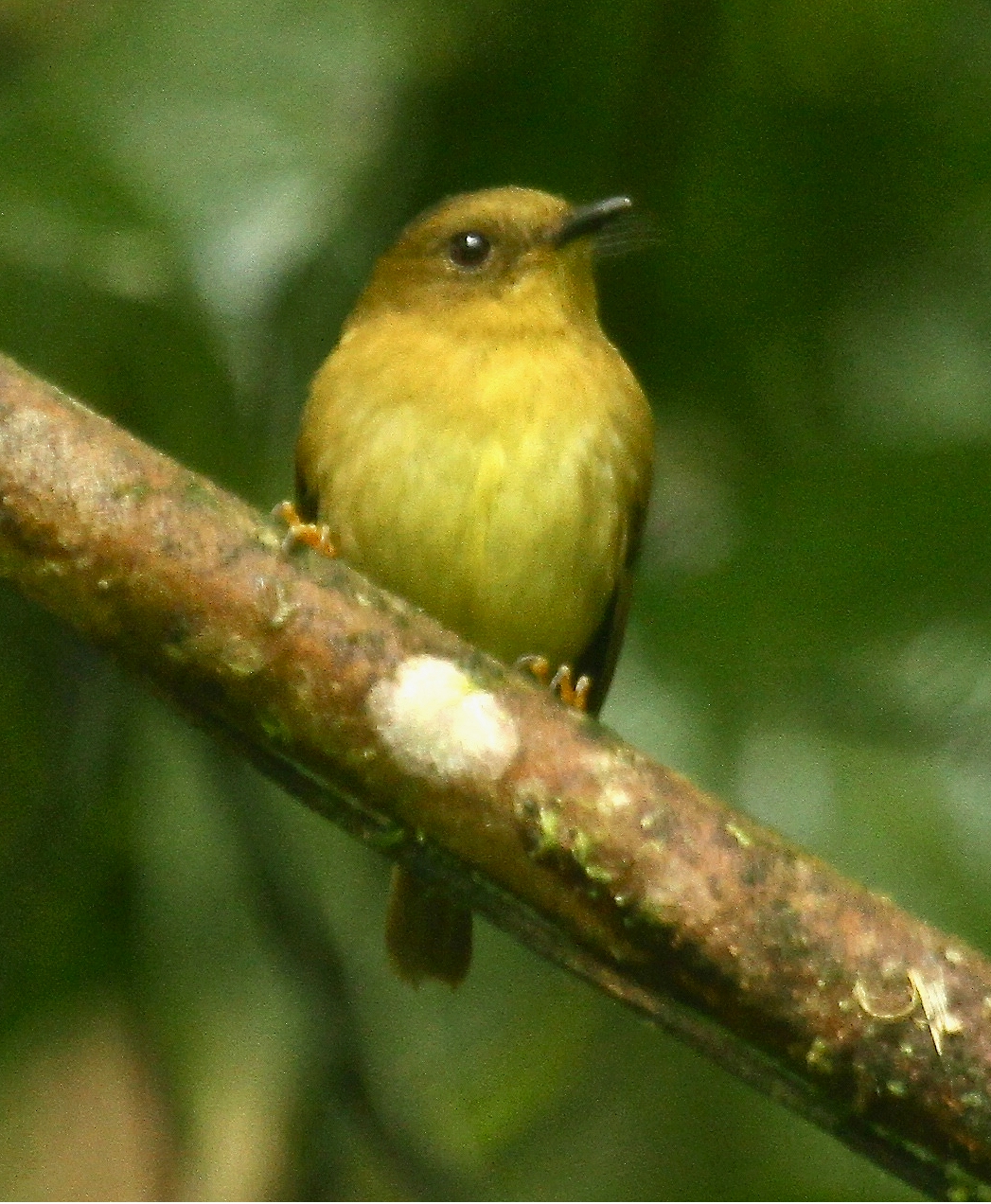
Wikipedia: Bronze-olive pygmy-tyrant
The bronze-olive pygmy tyrant (Pseudotriccus pelzelni) is a species of bird in the family Tyrannidae. It is found in Colombia, Ecuador, Panama, and Peru. Its natural habitat is subtropical or tropical moist montane forests.
[more]
Gattung Rhynchocyclus:
Rhynchocyclus brevirostris / Eye-ringed flatbill (Rhynchocyclus brevirostris)
Profil Wikipedia eBird Xeno-Canto

Wikipedia: Eye-ringed flatbill
The eye-ringed flatbill (Rhynchocyclus brevirostris) is a species of bird in the family Tyrannidae. It is found in Belize, Colombia, Costa Rica, El Salvador, Guatemala, Honduras, Mexico, Nicaragua, and Panama, with a slight incursion into Colombia at the south end of its range. Its natural habitats are subtropical or tropical moist lowland forests and subtropical or tropical moist montane forests.
[more]
Rhynchocyclus olivaceus / Olivaceous flatbill (Rhynchocyclus olivaceus)
Profil Wikipedia eBird Xeno-Canto

Wikipedia: Olivaceous flatbill
The olivaceous flatbill (Rhynchocyclus olivaceus) is a species of bird in the family Tyrannidae.
[more]
Gattung Myiodynastes:
Südlicher Fleckenmaskentyrann / Streaked flycatcher (Myiodynastes maculatus)
Profil Wikipedia eBird Xeno-Canto

Streaked flycatcher. 2020-02-20 14.53.44 Zentralamerika
We saw this at Los Lagartos Restaurant on the grounds of Gamboa Rainforest Resort in Panama.
Allgemein: The streaked flycatcher (Myiodynastes maculatus) is a passerine bird in the tyrant flycatcher family.
[more]
Myiodynastes luteiventris / Sulphur-bellied flycatcher (Myiodynastes luteiventris)
Profil Wikipedia eBird Audubon AllAboutBirds Xeno-Canto
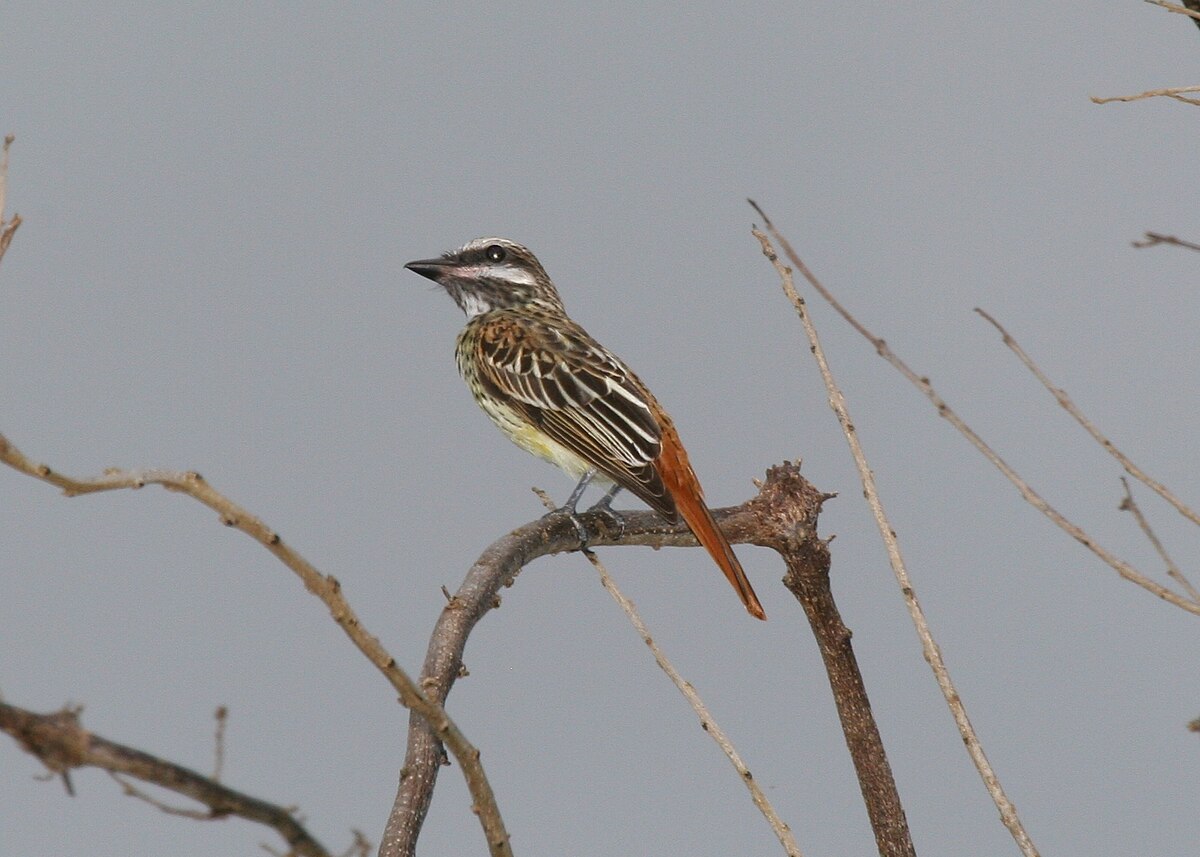
Wikipedia: Sulphur-bellied flycatcher
The sulphur-bellied flycatcher (Myiodynastes luteiventris) is a large tyrant flycatcher. This bird breeds from southeasternmost Arizona of the United States (the Madrean sky islands region of Arizona, southwestern New Mexico, and northern Sonora, Mexico) to Costa Rica. They are short distance migrants, spending winters in the eastern Andean foothills of Colombia, Ecuador, Peru, Bolivia, and Brazil, and are passage migrants over the southern portions of Central America.
[more]
Myiodynastes hemichrysus / Golden-bellied flycatcher (Myiodynastes hemichrysus)
Profil Wikipedia eBird Xeno-Canto

Wikipedia: Golden-bellied flycatcher
The golden-bellied flycatcher (Myiodynastes hemichrysus) is a passerine bird in the tyrant flycatcher family. It is an endemic resident breeder in Costa Rica and western Panama.
[more]
Myiodynastes chrysocephalus / Golden-crowned flycatcher (Myiodynastes chrysocephalus)
Profil Wikipedia eBird Xeno-Canto

Wikipedia: Golden-crowned flycatcher
The golden-crowned flycatcher (Myiodynastes chrysocephalus) is a species of bird in the family Tyrannidae.
[more]
Gattung Pitangus:
Schwefelmaskentyrann / Great kiskadee (Pitangus sulphuratus)
Profil Wikipedia eBird Audubon AllAboutBirds Xeno-Canto

La fortuna Great kiskadee tenatative ID w wings spread. 2018-02-26 10.15.18 Zentralamerika
Der Schwefelmaskentyrann (Pitangus sulphuratus), auch Schwefeltyrann genannt, ist ein Sperlingsvogel und die einzige Art der Gattung Pitangus.
[more]
Gattung Camptostoma:
Camptostoma imberbe / Northern beardless-tyrannulet (Camptostoma imberbe)
Profil Wikipedia eBird Audubon AllAboutBirds Xeno-Canto

Wikipedia: Northern beardless-tyrannulet
The northern beardless tyrannulet (Camptostoma imberbe) is a small passerine bird in the tyrant flycatcher family. It breeds from southeasternmost Arizona and Texas of the United States through Mexico and Central America to northwestern Costa Rica.
[more]
Camptostoma obsoletum / Southern beardless-tyrannulet (Camptostoma obsoletum)
Profil Wikipedia eBird Xeno-Canto
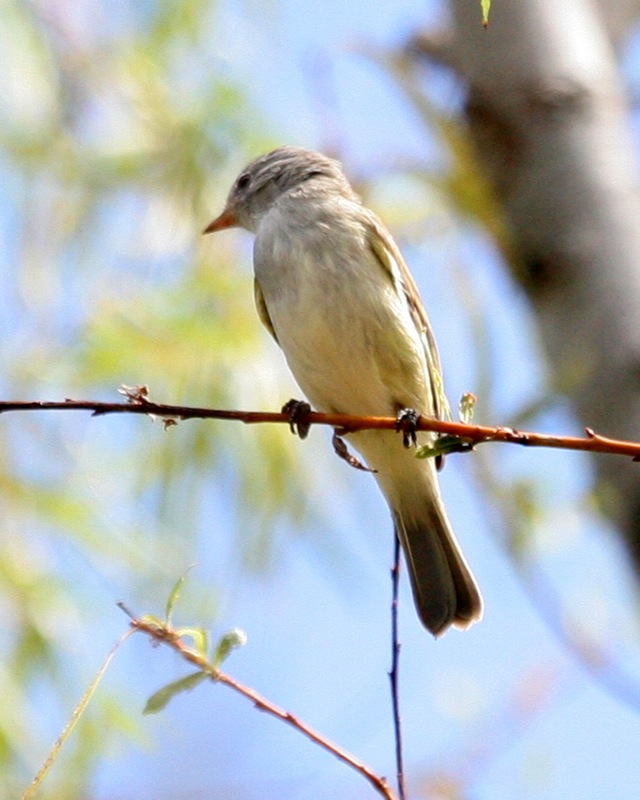
Wikipedia: Southern beardless-tyrannulet
The southern beardless tyrannulet (Camptostoma obsoletum) is a small passerine bird in the tyrant flycatcher family. It breeds from Costa Rica through South America south to Paraguay, Bolivia, and Argentina.
[more]
Gattung Serpophaga:
Serpophaga cinerea / Torrent tyrannulet (Serpophaga cinerea)
Profil Wikipedia eBird Xeno-Canto

Wikipedia: Torrent tyrannulet
The torrent tyrannulet (Serpophaga cinerea) is a small bird of the tyrant flycatcher family. It breeds from Costa Rica south to northern Bolivia and northwestern Venezuela.
[more]
Gattung Myiophobus:
Myiophobus fasciatus / Bran-colored flycatcher (Myiophobus fasciatus)
Profil Wikipedia eBird Xeno-Canto

Wikipedia: Bran-colored flycatcher
The bran-colored flycatcher (Myiophobus fasciatus) is a small passerine bird in the tyrant flycatcher family. It breeds from Costa Rica through South America to Bolivia, Uruguay, and Argentina. It also occurs on Trinidad.
[more]
Gattung Ornithion:
Ornithion brunneicapillus / Brown-capped tyrannulet (Ornithion brunneicapillus)
Profil Wikipedia eBird Xeno-Canto
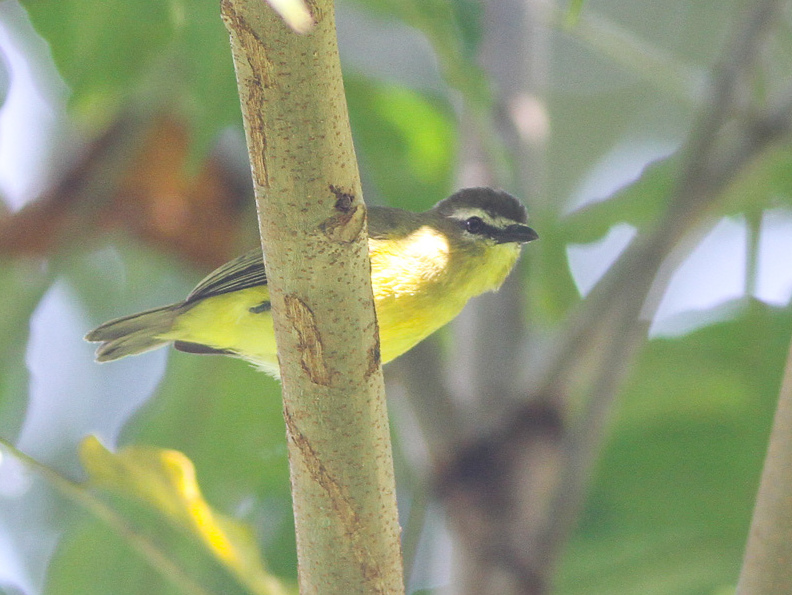
Wikipedia: Brown-capped tyrannulet
The brown-capped tyrannulet (Ornithion brunneicapillus) is a species of bird in the family Tyrannidae. It is found in Colombia, Costa Rica, Ecuador, Panama, and Venezuela. Its natural habitats are subtropical or tropical moist lowland forests and heavily degraded former forest.
[more]
Ornithion semiflavum / Yellow-bellied tyrannulet (Ornithion semiflavum)
Profil Wikipedia eBird Xeno-Canto

Wikipedia: Yellow-bellied tyrannulet
The yellow-bellied tyrannulet (Ornithion semiflavum) is a species of bird in the family Tyrannidae. It is found in Belize, Costa Rica, Guatemala, Honduras, Mexico, and Nicaragua. Its natural habitats are subtropical or tropical moist lowland forest and heavily degraded former forest.
[more]
Gattung Phylloscartes:
Phylloscartes superciliaris / Rufous-browed tyrannulet (Phylloscartes superciliaris)
Profil Wikipedia eBird Xeno-Canto

Wikipedia: Rufous-browed tyrannulet
The rufous-browed tyrannulet (Phylloscartes superciliaris) is a species of bird in the family Tyrannidae.
[more]
Gattung Tyrannulus:
Tyrannulus elatus / Yellow-crowned tyrannulet (Tyrannulus elatus)
Profil Wikipedia eBird Xeno-Canto

Wikipedia: Yellow-crowned tyrannulet
The yellow-crowned tyrannulet (Tyrannulus elatus) is a species of bird in the family Tyrannidae. It is monotypic within the genus Tyrannulus.[2] It is found in Bolivia, Brazil, Colombia, Costa Rica, Ecuador, French Guiana, Guyana, Panama, Peru, Suriname, and Venezuela, where its natural habitats are subtropical or tropical moist lowland forest, subtropical or tropical swamps, and heavily degraded former forest.[1]
[more]
Gattung Zimmerius:
Zimmerius parvus / Mistletoe tyrannulet (Zimmerius parvus)
Profil Wikipedia eBird Xeno-Canto

Wikipedia: Mistletoe tyrannulet
The mistletoe tyrannulet (Zimmerius parvus) is a very small bird, a passerine in family Tyrannidae, the tyrant flycatchers.
[more]
Gattung Attila:
Attila spadiceus / Bright-rumped attila (Attila spadiceus)
Profil Wikipedia eBird Xeno-Canto

Wikipedia: Bright-rumped attila
The bright-rumped attila or polymorphic attila (Attila spadiceus) is a small passerine bird in the tyrant flycatcher family (Tyrannidae). It breeds from northwestern Mexico to western Ecuador, Bolivia and southeastern Brazil, and on Trinidad.
[more]
Gattung Legatus:
Legatus leucophaius / Piratic flycatcher (Legatus leucophaius)
Profil Wikipedia eBird Xeno-Canto
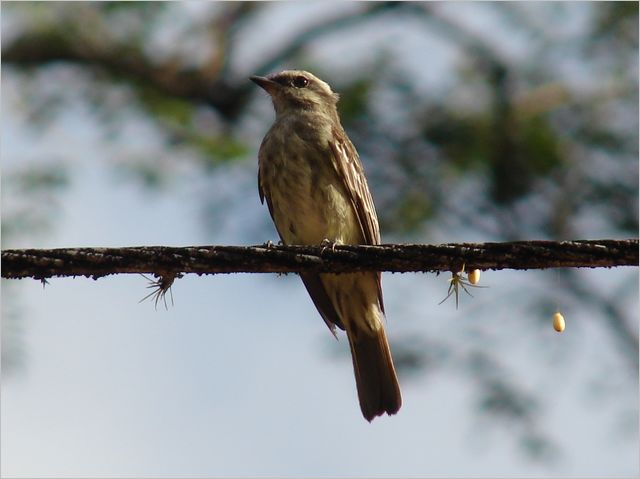
Wikipedia: Piratic flycatcher
The piratic flycatcher (Legatus leucophaius) is a passerine bird, the only member of the genus Legatus. It is a resident breeder from southern Mexico and Trinidad south to Bolivia and Argentina. At least some birds from Central America and Trinidad are migratory, and this species also visits Tobago.
[more]
Gattung Megarynchus:
Megarynchus pitangua / Boat-billed flycatcher (Megarynchus pitangua)
Profil Wikipedia eBird Xeno-Canto

Wikipedia: Boat-billed flycatcher
The boat-billed flycatcher (Megarynchus pitangua) is a passerine bird. It is a large tyrant flycatcher, the only member of the monotypic genus Megarynchus.
[more]
Gattung Myiozetetes:
Myiozetetes granadensis / Gray-capped flycatcher (Myiozetetes granadensis)
Profil Wikipedia eBird Xeno-Canto

La tarde last morning gray-capped flycatcher. 2018-03-11 10.56.34 Zentralamerika
The grey-capped flycatcher (Myiozetetes granadensis) is a passerine bird, a member of the large tyrant flycatcher family.
[more]
Myiozetetes similis / Social flycatcher (Myiozetetes similis)
Profil Wikipedia eBird Xeno-Canto

Wikipedia: Social flycatcher
The social flycatcher (Myiozetetes similis) is a passerine bird from the Americas, a member of the large tyrant flycatcher family (Tyrannidae).
[more]
Myiozetetes cayanensis / Rusty-margined flycatcher (Myiozetetes cayanensis)
Profil Wikipedia eBird Xeno-Canto

Wikipedia: Rusty-margined flycatcher
The rusty-margined flycatcher (Myiozetetes cayanensis) is a species of bird in the family Tyrannidae, the tyrant flycatchers.
[more]
Gattung Sirystes:
Sirystes albogriseus / Choco sirystes (Sirystes albogriseus)
Profil Wikipedia eBird Xeno-Canto

Wikipedia: Choco sirystes
The western sirystes or Chocó sirystes (Sirystes albogriseus) is a species of bird in the family Tyrannidae. It was formerly considered conspecific with the sibilant sirystes.
[more]
Gattung Philohydor:
Philohydor lictor / Lesser kiskadee (Philohydor lictor)

Wikipedia: Lesser kiskadee
The lesser kiskadee (Philohydor lictor) is a species of passerine bird in the family Tyrannidae. It is the only species in the genus Philohydor. It is found in Argentina, Bermuda, Bolivia, Brazil, Colombia, Ecuador, French Guiana, Guyana, Panama, Peru, Suriname, Trinidad, Guatemala, and Venezuela. Its natural habitats are subtropical or tropical moist shrubland and swamps.
[more]
Gattung Conopias:
Conopias albovittatus / White-ringed flycatcher (Conopias albovittatus)
Profil Wikipedia eBird Xeno-Canto

Wikipedia: White-ringed flycatcher
The white-ringed flycatcher (Conopias albovittatus) is a species of bird in the family Tyrannidae.
[more]
Gattung Nesotriccus:
Nesotriccus murinus / Mouse-colored tyrannulet (Nesotriccus murinus)
Profil Wikipedia eBird Xeno-Canto

Wikipedia: Mouse-colored tyrannulet
The mouse-colored tyrannulet (Phaeomyias murina) is a species of bird in the tyrant flycatcher family Tyrannidae. It occurs in a wide range of scrubby and wooded habitats in tropical and subtropical South America, being absent from the southernmost part of the continent, the high Andes and dense rainforest. It also occurs in Panama and Costa Rica. It is generally common, but its small size and dull plumage results in it often being overlooked – or at least not identified, as it resembles several other tyrant flycatchers.
[more]
Nesotriccus ridgwayi / Cocos flycatcher (Nesotriccus ridgwayi)
Profil Wikipedia eBird Xeno-Canto

Wikipedia: Cocos flycatcher
The Cocos flycatcher (Nesotriccus ridgwayi) is a species of bird in the family Tyrannidae, and the only species in the genus Nesotriccus.[3]
[more]
Familie Mimidae (Spottdrosseln):
Gattung Mimus:
Mimus gilvus / Tropical mockingbird (Mimus gilvus)
Profil Wikipedia eBird Xeno-Canto
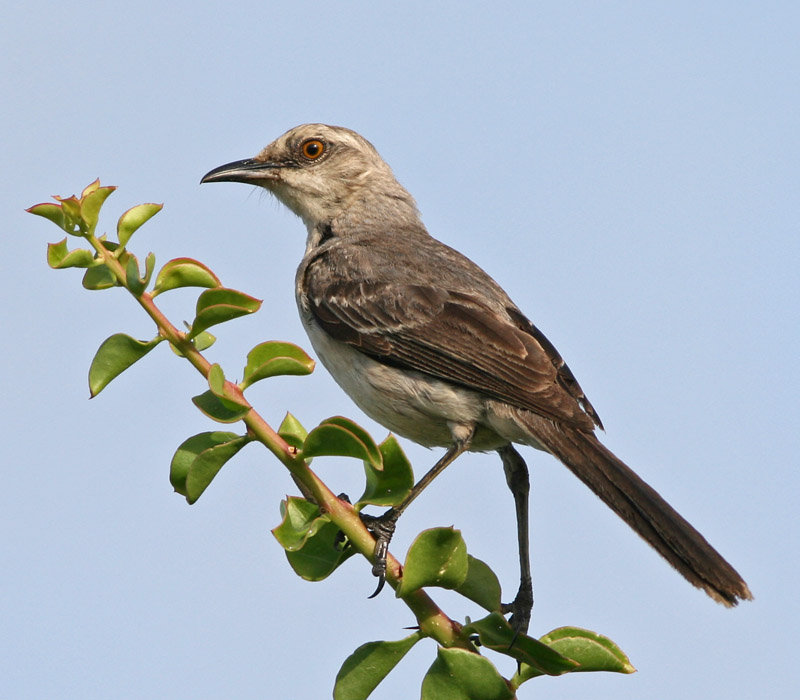
Wikipedia: Tropical mockingbird
The tropical mockingbird (Mimus gilvus) is a resident breeding bird from southern Mexico south to northern Brazil, and in the Lesser Antilles and other Caribbean islands. The birds in Panama and Trinidad may have been introduced. The northern mockingbird (M. polyglottos) is its closest living relative, but the critically endangered Socorro mockingbird (M. graysoni) is also much closer to these two than previously believed .[2]
[more]
Gattung Dumetella:
Katzendrossel / Grey catbird (Dumetella carolinensis)
 Catbird with cicada, Cherrywood Court, Hunt Valley, Maryland.JPG)
Catbird with cicada, Cherrywood Court, Hunt Valley, Maryland. 2021-06-12 17.11.36 Maryland
Die Katzenspottdrossel (Dumetella carolinensis), traditionell kurz Katzendrossel, manchmal auch Katzenvogel genannt, ist ein häufiger nordamerikanischer Singvogel aus der Familie der Spottdrosseln (Mimidae). Sie ist der einzige Vertreter der Gattung Dumetella. Die IUCN stuft die Art als zurzeit (2018) nicht gefährdet (least concern) ein.
[more]
Gattung Donacobius:
Rohrspotter / Black-capped donacobius (Donacobius atricapilla)

Wikipedia: Black-capped donacobius
Der Rohrspotter oder die Rohrspottdrossel (Donacobius atricapilla, Syn.: Donacobius atricapillus) ist ein südamerikanischer Singvogel und die einzige Art der Gattung Donacobius. Bis 1982 wurde der Rohrspotter für eine Spottdrossel gehalten.
[more]
Familie Certhiidae (Baumläufer):
Unterfamilie Troglodytinae:
Gattung Troglodytes:
Profil Wikipedia eBird Audubon AllAboutBirds Xeno-Canto
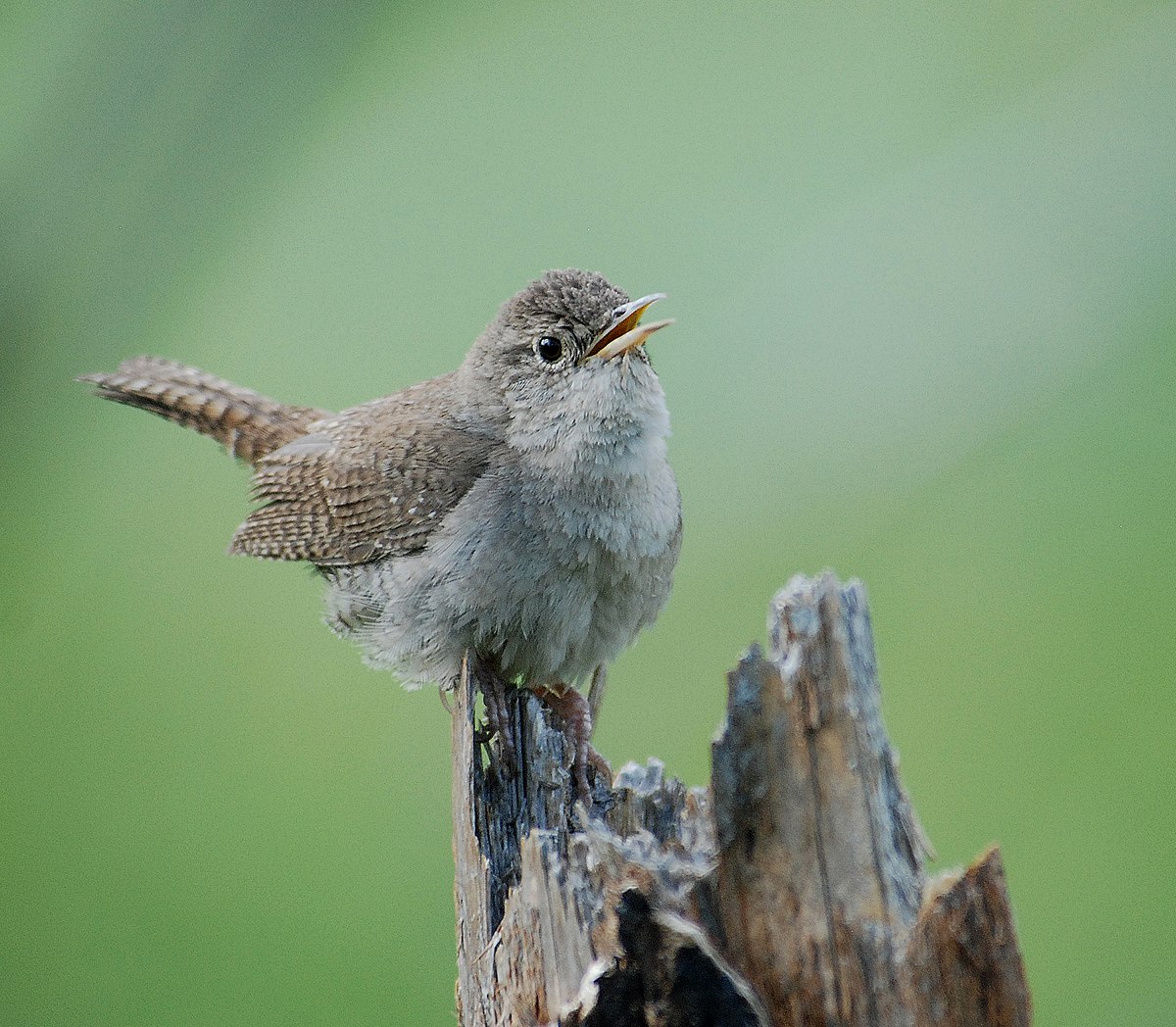
Wikipedia: House wren
The house wren (Troglodytes aedon) is a very small songbird of the wren family, Troglodytidae. It occurs from Canada to southernmost South America, and is thus the most widely distributed native bird in the Americas.[2] It occurs in most suburban areas in its range and it is the single most common wren. Its taxonomy is highly complex and some subspecies groups are often considered separate species.
[more]
Profil Wikipedia eBird Xeno-Canto

Wikipedia: Ochraceous wren
Der Fahlstreif-Zaunkönig (Troglodytes ochraceus) ist eine Vogelart aus der Familie der Zaunkönige (Troglodytidae), die in Costa Rica und Panama verbreitet ist. Der Bestand wird von der IUCN als nicht gefährdet (Least Concern) eingeschätzt.
[more]
Gattung Campylorhynchus:
Profil Wikipedia eBird Xeno-Canto

Wikipedia: Band-backed wren
Der Tigerzaunkönig (Campylorhynchus zonatus) ist eine Vogelart aus der Familie der Zaunkönige (Troglodytidae), die in Mexiko, Belize, Guatemala, Honduras, El Salvador, Nicaragua, Costa Rica, Panama, Kolumbien und Ecuador verbreitet ist. Der Bestand wird von der IUCN als nicht gefährdet (Least Concern) eingeschätzt.
[more]
Profil Wikipedia eBird Xeno-Canto

Wikipedia: White-headed wren
Der Weißkopf-Zaunkönig (Campylorhynchus albobrunneus) ist eine Vogelart aus der Familie der Zaunkönige (Troglodytidae), die in Panama und Kolumbien verbreitet ist. Der Bestand wird von der IUCN als nicht gefährdet (Least Concern) eingeschätzt.
[more]
Gattung Henicorhina:

Wikipedia: Grey-breasted wood-wren
Der Einsiedlerzaunkönig (Henicorhina leucophrys) ist eine Vogelart aus der Familie der Zaunkönige (Troglodytidae), die in Mexiko, Guatemala, El Salvador, Honduras, Nicaragua, Costa Rica, Panama, Kolumbien, Ecuador, Peru und Bolivien verbreitet ist. Der Bestand wird von der IUCN als nicht gefährdet (Least Concern) eingeschätzt.
[more]
Profil Wikipedia eBird Xeno-Canto

Wikipedia: White-breasted wood-wren
The white-breasted wood wren (Henicorhina leucosticta) is a small songbird of the wren family. It is a resident breeding species from central Mexico to northeastern Peru and Suriname.
[more]
Gattung Thryorchilus:
Profil Wikipedia eBird Xeno-Canto

Wikipedia: Timberline wren
Der Bergzaunkönig (Thryorchilus browni) ist eine Vogelart aus der Familie der Zaunkönige (Troglodytidae), die in Panama und Costa Rica verbreitet ist. Der Bestand wird von der IUCN als nicht gefährdet (Least Concern) eingeschätzt.
[more]
Gattung Cyphorhinus:
Profil Wikipedia eBird Xeno-Canto

Wikipedia: Song wren
Der Brillenzaunkönig (Cyphorhinus phaeocephalus) ist eine Vogelart aus der Familie der Zaunkönige (Troglodytidae), die in Honduras, Nicaragua, Costa Rica, Panama, Kolumbien und Ecuador verbreitet ist. Der Bestand wird von der IUCN als nicht gefährdet (Least Concern) eingeschätzt.
[more]
Gattung Cistothorus:
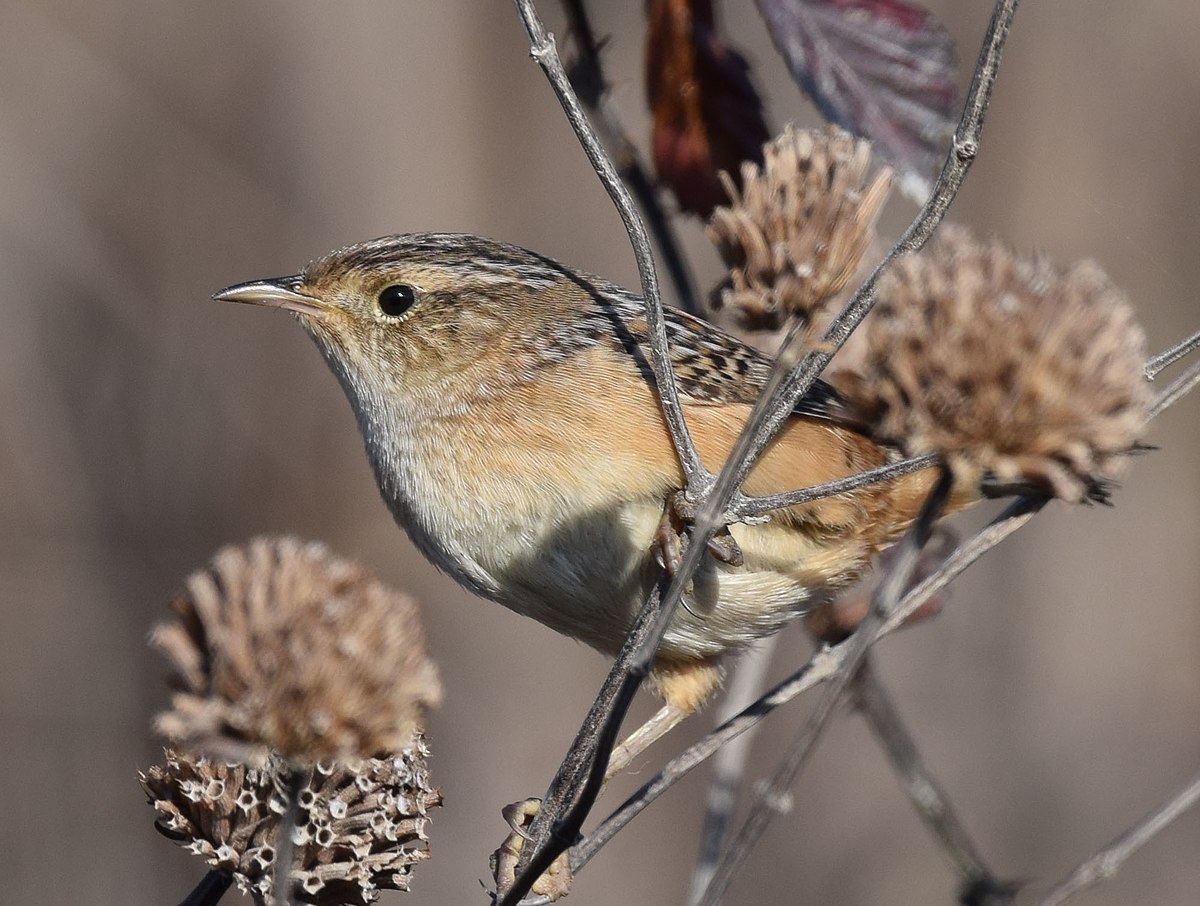
Wikipedia: Sedge wren
Der Seggenzaunkönig (Cistothorus platensis) ist ein kleiner Singvogel aus der Familie der Zaunkönige. Die Verbreitung reicht vom größten Teilareal in den gemäßigten Breiten Nordamerikas über zahlreiche zerstreute Vorkommen in Mittel- und Südamerika südwärts bis nach Feuerland. Zudem kommt die Art auf den Falkland-Inseln vor.
[more]
Gattung Microcerculus:

Wikipedia: Southern nightingale-wren
Der Schuppenbrust-Zaunkönig (Microcerculus marginatus) ist eine Vogelart aus der Familie der Zaunkönige (Troglodytidae), die in Costa Rica, Panama, Kolumbien, Ecuador, Venezuela, Brasilien, Peru und Bolivien verbreitet ist. Der Bestand wird von der IUCN als nicht gefährdet (Least Concern) eingeschätzt.
[more]
Profil Wikipedia eBird Xeno-Canto
Wikipedia: Nightingale wren
Der Nachtigallzaunkönig (Microcerculus philomela) ist eine Vogelart aus der Familie der Zaunkönige (Troglodytidae), die in Mexiko, Guatemala, Belize, Honduras, Nicaragua und Costa Rica verbreitet ist. Der Bestand wird von der IUCN als nicht gefährdet (Least Concern) eingeschätzt. Die Art gilt als monotypisch.[1]
[more]
Gattung Salpinctes:
Profil Wikipedia eBird Audubon AllAboutBirds Xeno-Canto

Wikipedia: Rock wren
The rock wren (Salpinctes obsoletus) is a small songbird of the wren family native to South America and western North America. It is the only species in the genus Salpinctes.
[more]
Gattung Pheugopedius:
Profil Wikipedia eBird Xeno-Canto

Wikipedia: Spot-breasted wren
Der Fleckenbrust-Zaunkönig (Pheugopedius maculipectus) ist eine Vogelart aus der Familie der Zaunkönige (Troglodytidae), die in Mexiko, Belize, Guatemala, El Salvador, Honduras, Nicaragua und Costa Rica verbreitet ist. Der Bestand wird von der IUCN als nicht gefährdet (Least Concern) eingeschätzt.
[more]
Profil Wikipedia eBird Xeno-Canto
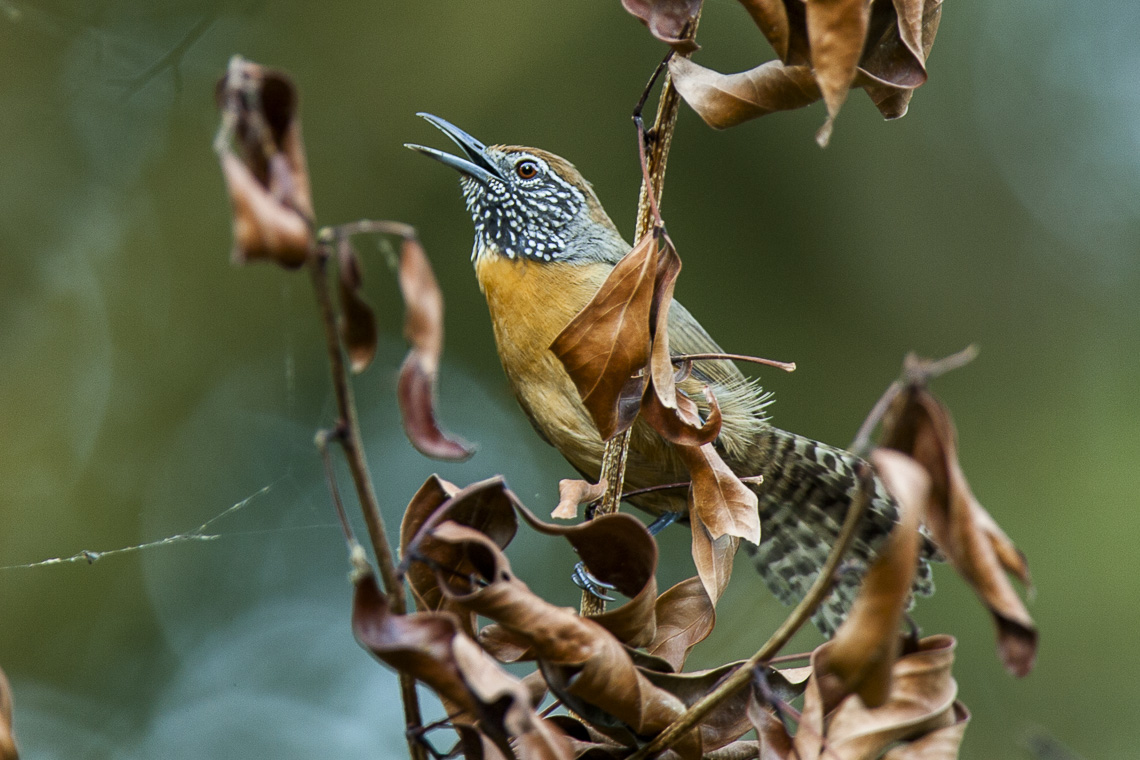
Wikipedia: Rufous-breasted wren
The rufous-breasted wren (Pheugopedius rutilus) is a small songbird of the family Troglodytidae. It is found in Colombia,
Costa Rica, Panama, Trinidad and Tobago, and Venezuela.[2]
[more]
Profil Wikipedia eBird Xeno-Canto

Wikipedia: Black-bellied wren
Der Bindenbauch-Zaunkönig (Pheugopedius fasciatoventris) ist eine Vogelart aus der Familie der Zaunkönige (Troglodytidae), die in Costa Rica, Panama und Kolumbien verbreitet ist. Der Bestand wird von der IUCN als nicht gefährdet (Least Concern) eingeschätzt.
[more]
Profil Wikipedia eBird Xeno-Canto

Wikipedia: Black-throated wren
Der Schwarzkehl-Zaunkönig (Pheugopedius atrogularis) ist eine Vogelart aus der Familie der Zaunkönige (Troglodytidae), die in den östlichen karibischen Tiefländern Nicaraguas, Costa Ricas und Panamas verbreitet ist. Der Bestand wird von der IUCN als nicht gefährdet (Least Concern) eingeschätzt. Die Art gilt als monotypisch.[1]
[more]
Profil Wikipedia eBird Xeno-Canto

Wikipedia: Sooty-headed wren
The sooty-headed wren (Pheugopedius spadix) is a species of bird in the family Troglodytidae. It is found in Colombia and Panama.[2]
[more]
Gattung Thryophilus:

Wikipedia: Rufous-and-white wren
Der Rotrückenzaunkönig (Thryophilus rufalbus) ist eine Vogelart aus der Familie der Zaunkönige (Troglodytidae), die in Mexiko, Guatemala, El Salvador, Honduras, Nicaragua, Costa Rica, Panama, Kolumbien und Venezuela verbreitet ist. Der Bestand wird von der IUCN als nicht gefährdet (Least Concern) eingeschätzt.
[more]

Wikipedia: Banded wren
Der Akazienzaunkönig (Thryophilus pleurostictus) ist eine Vogelart aus der Familie der Zaunkönige (Troglodytidae), die in Mexiko, Guatemala, El Salvador, Honduras, Nicaragua und Costa Rica verbreitet ist. Der Bestand wird von der IUCN als nicht gefährdet (Least Concern) eingeschätzt.
[more]
Gattung Cantorchilus:
Profil Wikipedia eBird Xeno-Canto

Wikipedia: Riverside wren
The riverside wren (Cantorchilus semibadius) is a species of bird in the family Troglodytidae. It is found in Costa Rica and Panama.[2]
[more]
Profil Wikipedia eBird Xeno-Canto
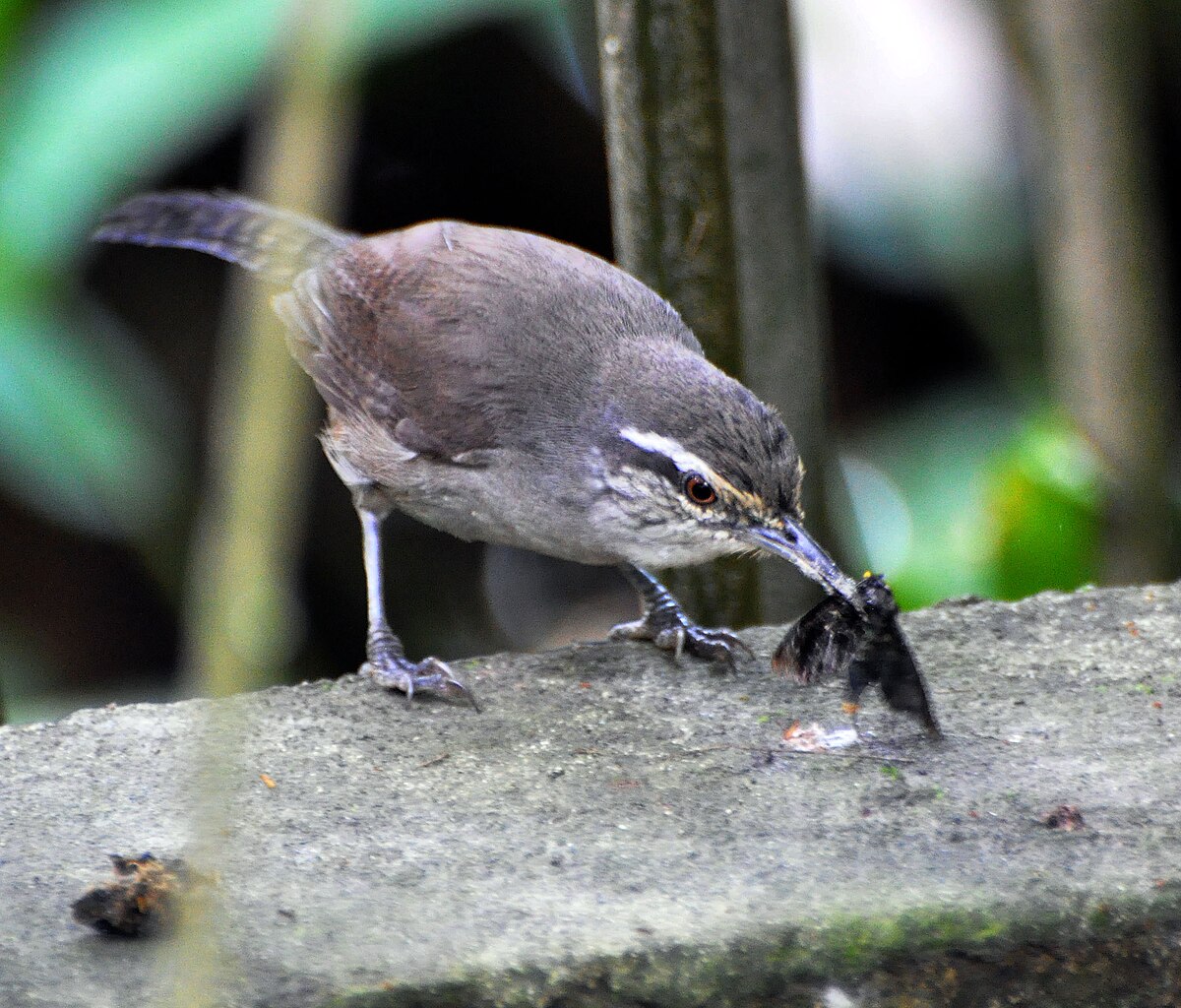
Wikipedia: Canebrake wren
The canebrake wren (Cantorchilus zeledoni) is a species of bird in the family Troglodytidae. It is found in Costa Rica, Nicaragua, and Panama.[2]
[more]
Profil Wikipedia eBird Xeno-Canto

Wikipedia: Stripe-breasted wren
The stripe-breasted wren (Cantorchilus thoracicus) is a species of bird in the family Troglodytidae. It is found in Honduras, Nicaragua, Costa Rica, and Panama.[2]
[more]
Profil Wikipedia eBird Xeno-Canto

Wikipedia: Cabanis's wren
Der Cabaniszaunkönig (Cantorchilus modestus) ist eine Vogelart aus der Familie der Zaunkönige (Troglodytidae), die in Mexiko, Guatemala, Honduras, El Salvador, Nicaragua und Costa Rica verbreitet ist. Der Bestand wird von der IUCN als nicht gefährdet (Least Concern) eingeschätzt. Die Art gilt als monotypisch.[1]
[more]
Profil Wikipedia eBird Xeno-Canto

Wikipedia: Isthmian wren
The isthmian wren (Cantorchilus elutus) is a species of bird in the family Troglodytidae. It is found in Costa Rica and Panama.[1]
[more]
Profil Wikipedia eBird Xeno-Canto

Wikipedia: Bay wren
Der Kastanienzaunkönig (Cantorchilus nigricapillus) ist eine Vogelart aus der Familie der Zaunkönige (Troglodytidae), die in Nicaragua, Costa Rica, Panama, Kolumbien und Ecuador verbreitet ist. Der Bestand wird von der IUCN als nicht gefährdet (Least Concern) eingeschätzt.
[more]
Profil Wikipedia eBird Xeno-Canto

Wikipedia: Stripe-throated wren
Der Streifenkehl-Zaunkönig (Cantorchilus leucopogon) ist eine Vogelart aus der Familie der Zaunkönige (Troglodytidae), die in Panama, Kolumbien und Ecuador verbreitet ist. Der Bestand wird von der IUCN als nicht gefährdet (Least Concern) eingeschätzt.
[more]

Wikipedia: Buff-breasted wren
The buff-breasted wren (Cantorchilus leucotis) is a species of bird in the family Troglodytidae, the wrens.
It is found in the Amazon Basin of northern Brazil and Amazonian Colombia, Ecuador, Peru and northern-border Bolivia; also the Guianan countries Guyana, Suriname, French Guiana. It occurs in non-Amazonian regions of Venezuela and Colombia and its range extends into eastern Panama.
[more]
Unterfamilie Polioptilinae:
Gattung Polioptila:
Profil Wikipedia eBird Xeno-Canto

Wikipedia: Tropical gnatcatcher
The tropical gnatcatcher (Polioptila plumbea) is a small active insectivorous songbird, which is a resident species throughout a large part of the Neotropics. There are large geographical variations in its voice and plumage, resulting in some populations sometimes being considered separate species, notably the bilineata group as the white-browed gnatcatcher, and the taxon maior as the Marañón gnatcatcher.[2]
[more]
Profil Wikipedia eBird Xeno-Canto

Wikipedia: White-lored gnatcatcher
The white-lored gnatcatcher (Polioptila albiloris) is a species of bird in the family Polioptilidae.
It is found in Costa Rica, El Salvador, Guatemala, Honduras, Mexico, and Nicaragua.
Its natural habitats are subtropical or tropical dry forests, subtropical or tropical moist lowland forests, subtropical or tropical dry shrubland, and subtropical or tropical high-altitude shrubland.
[more]
Profil Wikipedia eBird Xeno-Canto

Wikipedia: Slate-throated gnatcatcher
The slate-throated gnatcatcher (Polioptila schistaceigula) is a species of bird in the family Polioptilidae.
It is found in Colombia, Ecuador, and Panama.
Its natural habitat is subtropical or tropical moist lowland forests.
[more]
Gattung Ramphocaenus:

Wikipedia: Long-billed gnatwren
The trilling gnatwren (Ramphocaenus melanurus), formerly long-billed gnatwren, is a very small bird in the gnatcatcher family. It found from southeast Mexico south to Ecuador and Amazonia.
[more]
Gattung Microbates:

Wikipedia: Tawny-faced gnatwren
The tawny-faced gnatwren or half-collared gnatwren (Microbates cinereiventris) is a species of bird in the family Polioptilidae.
[more]
Familie Dendrocolaptidae:
Gattung Xiphorhynchus:
Tränen-Baumsteiger / Black-striped woodcreeper (Xiphorhynchus lachrymosus)
Profil Wikipedia eBird Xeno-Canto

Black-striped woodcreeper in Manzanillo, Costa Rica. 2020-03-12 09.50.48 Zentralamerika
The black-striped woodcreeper (Xiphorhynchus lachrymosus) is a species of bird in the Dendrocolaptinae subfamily.
[more]
Xiphorhynchus susurrans / Cocoa woodcreeper (Xiphorhynchus susurrans)

Wikipedia: Cocoa woodcreeper
The cocoa woodcreeper (Xiphorhynchus susurrans) is a passerine bird in the woodcreeper subfamily of the ovenbird family. It was formerly considered a subspecies of the buff-throated woodcreeper (X. guttatus).
[more]
Xiphorhynchus flavigaster / Ivory-billed woodcreeper (Xiphorhynchus flavigaster)
Profil Wikipedia eBird Xeno-Canto

Wikipedia: Ivory-billed woodcreeper
The ivory-billed woodcreeper (Xiphorhynchus flavigaster) is a species of bird of the order of Passerformes, which are perching birds. It is in the family Furnariidae (ovenbirds) and the subfamily Dendrocolaptinae (woodcreepers).
[more]
Xiphorhynchus erythropygius / Spotted woodcreeper (Xiphorhynchus erythropygius)
Profil Wikipedia eBird Xeno-Canto

Wikipedia: Spotted woodcreeper
The spotted woodcreeper (Xiphorhynchus erythropygius) is a species of bird in the Dendrocolaptinae subfamily. It is found in Belize, Colombia, Costa Rica, Ecuador, El Salvador, Guatemala, Honduras, Mexico, Nicaragua, and Panama.
[more]
Dendroplex picus / Straight-billed woodcreeper (Dendroplex picus)

Wikipedia: Straight-billed woodcreeper
The straight-billed woodcreeper (Dendroplex picus) is a species of bird in the woodcreeper subfamily (Dendrocolaptinae). Its genus, Dendroplex, was recently confirmed to be distinct from Xiphorhynchus.
It is found in Bolivia, Brazil, Colombia, Ecuador, French Guiana, Guyana, Panama, Peru, Suriname, Trinidad and Tobago, and Venezuela.
Its natural habitats are subtropical or tropical dry forests, subtropical or tropical moist lowland forests, subtropical or tropical mangrove forests, and heavily degraded former forest.
[more]
Gattung Lepidocolaptes:
Lepidocolaptes affinis / Spot-crowned woodcreeper (Lepidocolaptes affinis)
Profil Wikipedia eBird Xeno-Canto

Wikipedia: Spot-crowned woodcreeper
The spot-crowned woodcreeper (Lepidocolaptes affinis), is a passerine bird which breeds in the tropical New World from central Mexico in the east, the Sierra Madre Orientals, to northern Panama.
[more]
Lepidocolaptes souleyetii / Streak-headed woodcreeper (Lepidocolaptes souleyetii)
Profil Wikipedia eBird Xeno-Canto
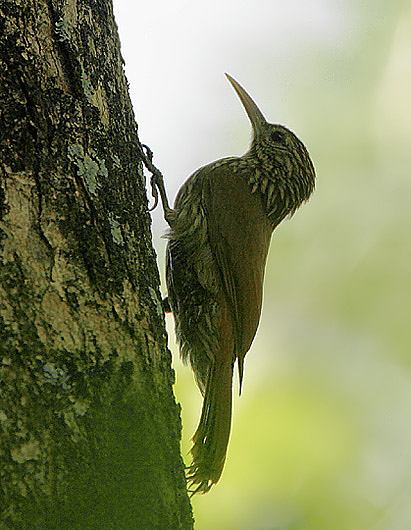
Wikipedia: Streak-headed woodcreeper
The streak-headed woodcreeper (Lepidocolaptes souleyetii) is a passerine bird which breeds in the tropical New World from southern Mexico to northwestern Peru, northern Brazil and Guyana, and also on Trinidad.
[more]
Gattung Sittasomus:
Sittasomus griseicapillus / Olivaceous woodcreeper (Sittasomus griseicapillus)
Profil Wikipedia eBird Xeno-Canto

Wikipedia: Olivaceous woodcreeper
The olivaceous woodcreeper (Sittasomus griseicapillus) is a passerine bird of the tropical Americas. It belongs to the true woodcreepers (tribe Dendrocolaptini) of the ovenbird family (Furnariidae).
[more]
Gattung Dendrocolaptes:
Dendrocolaptes sanctithomae / Northern barred-woodcreeper (Dendrocolaptes sanctithomae)
Profil Wikipedia eBird Xeno-Canto

Wikipedia: Northern barred-woodcreeper
The northern barred woodcreeper (Dendrocolaptes sanctithomae) is a species of bird in the subfamily Dendrocolaptinae. It was formerly included as a subspecies of the Amazonian barred woodcreeper (D. certhia).
[more]
Dendrocolaptes picumnus / Black-banded woodcreeper (Dendrocolaptes picumnus)
Profil Wikipedia eBird Xeno-Canto

Wikipedia: Black-banded woodcreeper
The black-banded woodcreeper (Dendrocolaptes picumnus) is a species of bird in the Dendrocolaptinae subfamily, the woodcreepers.
It is discontinuously spread from Chiapas to Paraguay and northern Argentina.
Its natural habitats are subtropical or tropical moist lowland forests and subtropical or tropical moist montane forests.
[more]
Gattung Xiphocolaptes:
Xiphocolaptes promeropirhynchus / Strong-billed woodcreeper (Xiphocolaptes promeropirhynchus)
Profil Wikipedia eBird Xeno-Canto

Wikipedia: Strong-billed woodcreeper
The strong-billed woodcreeper (Xiphocolaptes promeropirhynchus) is a species of bird in the Dendrocolaptinae subfamily. It is one of the largest woodcreepers and the largest furnariids, though the slender long-billed woodcreeper is longer and the great rufous woodcreeper is larger overall. There is some size variation across the range, with typical birds measuring 28–31 cm (11-12.5 in) long and weighing about 120 grams (4.2 oz). Large strong-billed woodcreepers can measure up to 35 cm (14 in) and weigh 169 grams (6 oz).[2] The most distinctive feature of this typically marked striped, brownish bird (other than its size) is its massive, semi-decurved bill, which may be brown or blackish.
[more]
Gattung Dendrocincla:
Dendrocincla fuliginosa / Plain-brown woodcreeper (Dendrocincla fuliginosa)
Profil Wikipedia eBird Xeno-Canto
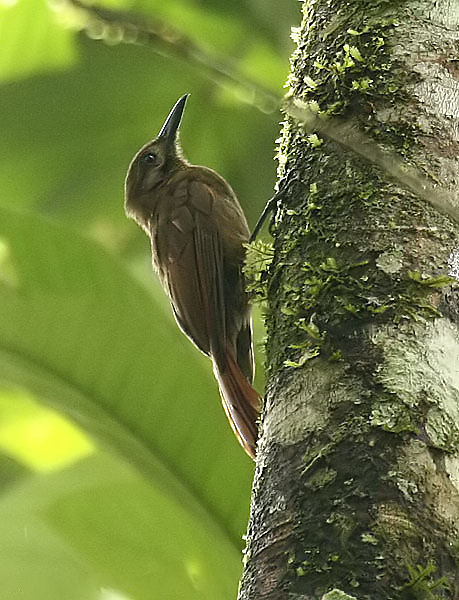
Wikipedia: Plain-brown woodcreeper
The plain-brown woodcreeper (Dendrocincla fuliginosa), is a sub-oscine passerine bird which breeds in the tropical New World from Honduras through South America to northern Argentina, and in Trinidad and Tobago. Sometimes it is considered to include the plain-winged woodcreeper (D. turdina) as a subspecies.
[more]
Dendrocincla homochroa / Ruddy woodcreeper (Dendrocincla homochroa)
Profil Wikipedia eBird Xeno-Canto

Wikipedia: Ruddy woodcreeper
The ruddy woodcreeper (Dendrocincla homochroa), is a passerine bird which breeds in the tropical New World from southern Mexico to northern Colombia and extreme northern Venezuela.
[more]
Dendrocincla anabatina / Tawny-winged woodcreeper (Dendrocincla anabatina)
Profil Wikipedia eBird Xeno-Canto

Wikipedia: Tawny-winged woodcreeper
The tawny-winged woodcreeper (Dendrocincla anabatina) is a species of bird in the subfamily Dendrocolaptinae, the New World woodcreepers. It is found in Belize, Costa Rica, Guatemala, Honduras, Mexico, Nicaragua, and Panama. Its natural habitat is subtropical or tropical moist lowland forests.
[more]
Gattung Campylorhamphus:
Campylorhamphus pusillus / Brown-billed scythebill (Campylorhamphus pusillus )
Profil Wikipedia eBird Xeno-Canto

Wikipedia: Brown-billed scythebill
The brown-billed scythebill (Campylorhamphus pusillus) is a species of bird in the family Furnariidae.
[more]
Rotrücken-Sensenschnabel / Red-billed scythebill (Campylorhamphus trochilirostris)
Profil Wikipedia eBird Xeno-Canto

Wikipedia: Red-billed scythebill
Der Rotrücken-Sensenschnabel (Campylorhamphus trochilirostris, auch Rotsensenschnabel oder Sichelbaumhacker) ist ein südamerikanischer Sperlingsvogel aus der Familie der Baumsteiger.
[more]
Campylorhamphus pusillus / Brown-billed scythebill (Campylorhamphus pusillus)
Profil Wikipedia eBird Xeno-Canto
Wikipedia: Brown-billed scythebill
The brown-billed scythebill (Campylorhamphus pusillus) is a species of bird in the family Furnariidae.
[more]
Gattung Deconychura:
Deconychura longicauda / Long-tailed woodcreeper (Deconychura longicauda)
Profil Wikipedia eBird Xeno-Canto

Wikipedia: Long-tailed woodcreeper
The long-tailed woodcreeper (Deconychura longicauda) is a species of bird in the Dendrocolaptinae subfamily. It is monotypic within Deconychura, but formerly this genus also included the spot-throated woodcreeper.[2]
[more]
Familie Formicariidae:
Gattung Formicarius:
Formicarius rufipectus / Rufous-breasted antthrush (Formicarius rufipectus)
Profil Wikipedia eBird Xeno-Canto

Wikipedia: Rufous-breasted antthrush
The rufous-breasted antthrush (Formicarius rufipectus) is a species of bird in the family Formicariidae. It is found in Colombia, Costa Rica, Ecuador, Panama, Peru, and Venezuela. Its natural habitat is subtropical or tropical moist montane forest.
[more]
Formicarius analis / Black-faced antthrush (Formicarius analis)
Profil Wikipedia eBird Xeno-Canto

Wikipedia: Black-faced antthrush
The black-faced antthrush (Formicarius analis), is a species of passerine bird in the family Formicariidae.
[more]
Formicarius nigricapillus / Black-headed antthrush (Formicarius nigricapillus)
Profil Wikipedia eBird Xeno-Canto

Wikipedia: Black-headed antthrush
The black-headed antthrush (Formicarius nigricapillus) is a species of bird in the family Formicariidae.
Its natural habitats are subtropical or tropical moist lowland forests and subtropical or tropical moist montane forests.
[more]
Gattung Grallaria:
Grallaria guatimalensis / Scaled antpitta (Grallaria guatimalensis)
Profil Wikipedia eBird Xeno-Canto

Wikipedia: Scaled antpitta
The scaled antpitta (Grallaria guatimalensis) is a species of bird in the family Grallariidae.
[more]
Gattung Grallaricula:
Grallaricula flavirostris / Ochre-breasted antpitta (Grallaricula flavirostris)
Profil Wikipedia eBird Xeno-Canto

Wikipedia: Ochre-breasted antpitta
The ochre-breasted antpitta (Grallaricula flavirostris) is a species of bird placed in the family Grallariidae.
[more]
Gattung Hylopezus:
Hylopezus perspicillatus / Streak-chested antpitta (Hylopezus perspicillatus)
Profil Wikipedia eBird Xeno-Canto

Wikipedia: Streak-chested antpitta
The streak-chested antpitta or spectacled antpitta (Hylopezus perspicillatus) is a species of bird in the family Grallariidae.
It is found in Colombia, Costa Rica, Ecuador, Honduras, Nicaragua, and Panama.
Its natural habitat is subtropical or tropical moist lowland forest.[2]
[more]
Hylopezus dives / Thicket antpitta (Hylopezus dives)

Wikipedia: Thicket antpitta
The thicket antpitta (Hylopezus dives) is a species of bird in the family Grallariidae. It is found in Colombia, Costa Rica, Honduras, Nicaragua, Panama, and perhaps Ecuador. Its natural habitats are subtropical or tropical moist lowland forest and heavily degraded former forest.
[more]
Gattung Cercomacra:
Cercomacroides tyrannina / Dusky antbird (Cercomacroides tyrannina)

Wikipedia: Dusky antbird
The dusky antbird or tyrannine antbird (Cercomacroides tyrannina) is a passerine bird in the antbird family. It is a resident breeder in tropical Central and South America from southeastern Mexico southwards to western Ecuador, and Amazonian Brazil.
[more]
Cercomacra nigricans / Jet antbird (Cercomacra nigricans)
Profil Wikipedia eBird Xeno-Canto

Wikipedia: Jet antbird
The jet antbird (Cercomacra nigricans) is a species of bird in the family Thamnophilidae. It is found in Colombia, Venezuela, Panama and western Ecuador. Its natural habitat is subtropical or tropical moist lowland forests.
[more]
Gattung Pittasoma:
Pittasoma michleri / Black-crowned antpitta (Pittasoma michleri)
Profil Wikipedia eBird Xeno-Canto

Wikipedia: Black-crowned antpitta
The black-crowned antpitta (Pittasoma michleri) is a species of bird in the gnateater family, Conopophagidae. It is found in Colombia, Costa Rica, and Panama. Its natural habitat is subtropical or tropical moist foothill forests.
[more]
Familie Thamnophilidae:
Gattung Thamnophilus:
Kapuzen-Ameisenwürger / Black-hooded antshrike (Thamnophilus bridgesi)
Profil Wikipedia eBird Xeno-Canto
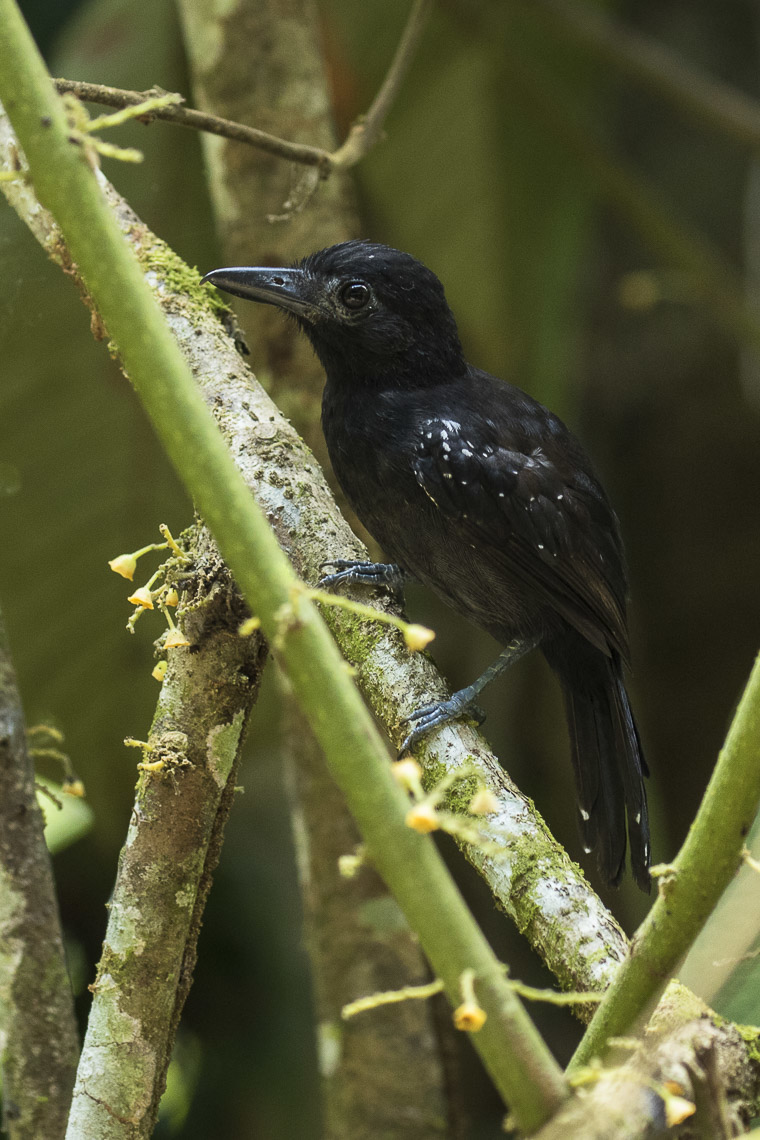
Wikipedia: Black-hooded antshrike
Der Kapuzen-Ameisenwürger (Thamnophilus bridgesi) zählt innerhalb der Familie der Ameisenvögel (Thamnophilidae) zur Gattung Thamnophilus.[1] Der lateinische Artzusatz bezieht sich auf den US-amerikanischen Botaniker und Zoologen Thomas Charles Bridges (1822–1865).[2]
[more]
Binden-Ameisenwürger / Barred antshrike (Thamnophilus doliatus)
Profil Wikipedia eBird Xeno-Canto

Wikipedia: Barred antshrike
Der Binden-Ameisenwürger, Bindenwollrücken oder Weißscheitel-Ameisenwürger (Thamnophilus doliatus) ist eine Art der Ameisenvögel. Die Art kommt nur in Mittel- und Südamerika vor. Es besteht wie bei den meisten Ameisenvögeln ein sehr auffälliger Geschlechtsdimorphismus.
[more]
Thamnophilus atrinucha / Black-crowned antshrike (Thamnophilus atrinucha)
Profil Wikipedia eBird Xeno-Canto

Wikipedia: Black-crowned antshrike
The black-crowned antshrike or western slaty antshrike (Thamnophilus atrinucha) is a species of bird in the family Thamnophilidae.
It is found in from western Ecuador, western Colombia, western Venezuela, and Central America as far north as Belize.
[more]
Thamnophilus nigriceps / Black antshrike (Thamnophilus nigriceps)
Profil Wikipedia eBird Xeno-Canto

Wikipedia: Black antshrike
The black antshrike (Thamnophilus nigriceps) is a species of insectivorous bird in the antbird family Thamnophilidae. It is found in Colombia and Panama. Its natural habitats are subtropical or tropical moist lowland forests and heavily degraded former forest.
[more]
Gattung Formicivora:
Formicivora grisea / White-fringed antwren (Formicivora grisea)
Profil Wikipedia eBird Xeno-Canto

Wikipedia: White-fringed antwren
The southern white-fringed antwren (Formicivora grisea) is an insectivorous bird in the antbird family Thamnophilidae. It is a resident breeder in tropical South America from Colombia southeast to the Guianas and Brazil.
[more]
Gattung Myrmotherula:
Myrmotherula schisticolor / Slaty antwren (Myrmotherula schisticolor)
Profil Wikipedia eBird Xeno-Canto

Wikipedia: Slaty antwren
The slaty antwren (Myrmotherula schisticolor) is a small passerine bird in the antbird family. It is a resident breeder in tropical Central and South America from southern Mexico to western Ecuador and eastern Peru.
[more]
Westlicher Strichelameisenschlüpfer / Pacific antwren (Myrmotherula pacifica)
Profil Wikipedia eBird Xeno-Canto

Wikipedia: Pacific antwren
Der Westliche Strichelameisenschlüpfer, jetzt Chocó-Strichelameisenschlüpfer[1] (Myrmotherula pacifica, Syn.: Myrmotherula surinamensis pacifica), zählt innerhalb der Familie der Ameisenvögel (Thamnophilidae) zur Gattung Myrmotherula.[2]
[more]
Gattung Myrmornis:
Myrmornis torquata / Wing-banded antbird (Myrmornis torquata)
Profil Wikipedia eBird Xeno-Canto

Wikipedia: Wing-banded antbird
The wing-banded antbird (Myrmornis torquata) is a species of passerine bird in the antbird family, Thamnophilidae. It is placed in the monotypic genus Myrmornis.[2]
It is found in Brazil, Colombia, Ecuador, French Guiana, Guyana, Nicaragua, Panama, Peru, Suriname, and Venezuela. Its natural habitat is subtropical or tropical moist lowland forests.[1]
[more]
Gattung Taraba:
Taraba major / Great antshrike (Taraba major)
Profil Wikipedia eBird Xeno-Canto

Wikipedia: Great antshrike
The great antshrike (Taraba major) is a passerine bird in the antbird family, Thamnophilidae. It is the only member of the genus Taraba. It is a resident breeder in the tropical New World in southern Mexico, Central America, Trinidad and South America down to northern Argentina and southeastern Brazil.
[more]
Gattung Thamnistes:
Thamnistes anabatinus / Russet antshrike (Thamnistes anabatinus)
Profil Wikipedia eBird Xeno-Canto
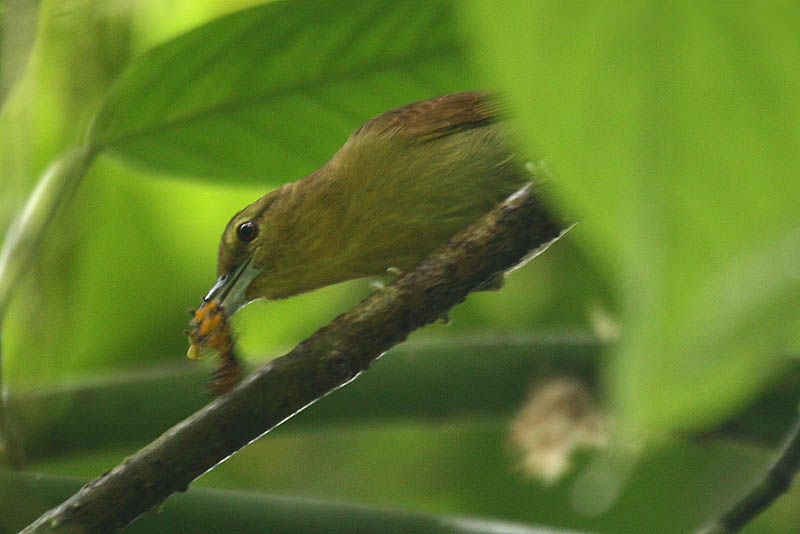
Wikipedia: Russet antshrike
The russet antshrike (Thamnistes anabatinus) is a passerine bird in the antbird family.
[more]
Gattung Dysithamnus:
Dysithamnus striaticeps / Streak-crowned antvireo (Dysithamnus striaticeps)
Profil Wikipedia eBird Xeno-Canto

Wikipedia: Streak-crowned antvireo
The streak-crowned antvireo (Dysithamnus striaticeps) is a species of bird in the family Thamnophilidae. It is found in Costa Rica, Honduras, and Nicaragua. Its natural habitat is subtropical or tropical moist lowland forests.
[more]
Dysithamnus puncticeps / Spot-crowned antvireo (Dysithamnus puncticeps)
Profil Wikipedia eBird Xeno-Canto

Wikipedia: Spot-crowned antvireo
The spot-crowned antvireo (Dysithamnus puncticeps) is a species of bird in the family Thamnophilidae. It is found in Colombia, Costa Rica, Ecuador, and Panama. Its natural habitat is subtropical or tropical moist lowland forests.
[more]
Dysithamnus mentalis / Plain antvireo (Dysithamnus mentalis)
Profil Wikipedia eBird Xeno-Canto

Wikipedia: Plain antvireo
The plain antvireo (Dysithamnus mentalis) is a passerine bird species in the antbird family (Thamnophilidae). It is a resident breeder in tropical Central and South America.
[more]
Gattung Myrmeciza:
Myrmeciza zeledoni / Zeledon's antbird (Myrmeciza zeledoni)
Profil Wikipedia eBird Xeno-Canto

Wikipedia: Zeledon's antbird
Zeledon's antbird (Percnostola zeledoni) is a species of antbird in the family Thamnophilidae. It is found at low levels in humid forests from Nicaragua to Panama, and in the Chocó of western Colombia and western Ecuador. Zeledon's antbird feeds on insects, and regularly follows swarms of army ants in order to catch prey flushed by the swarms, but it is not an obligate ant-follower like some species of antbirds.
[more]
Myrmeciza longipes / White-bellied antbird (Myrmeciza longipes)
Profil Wikipedia eBird Xeno-Canto
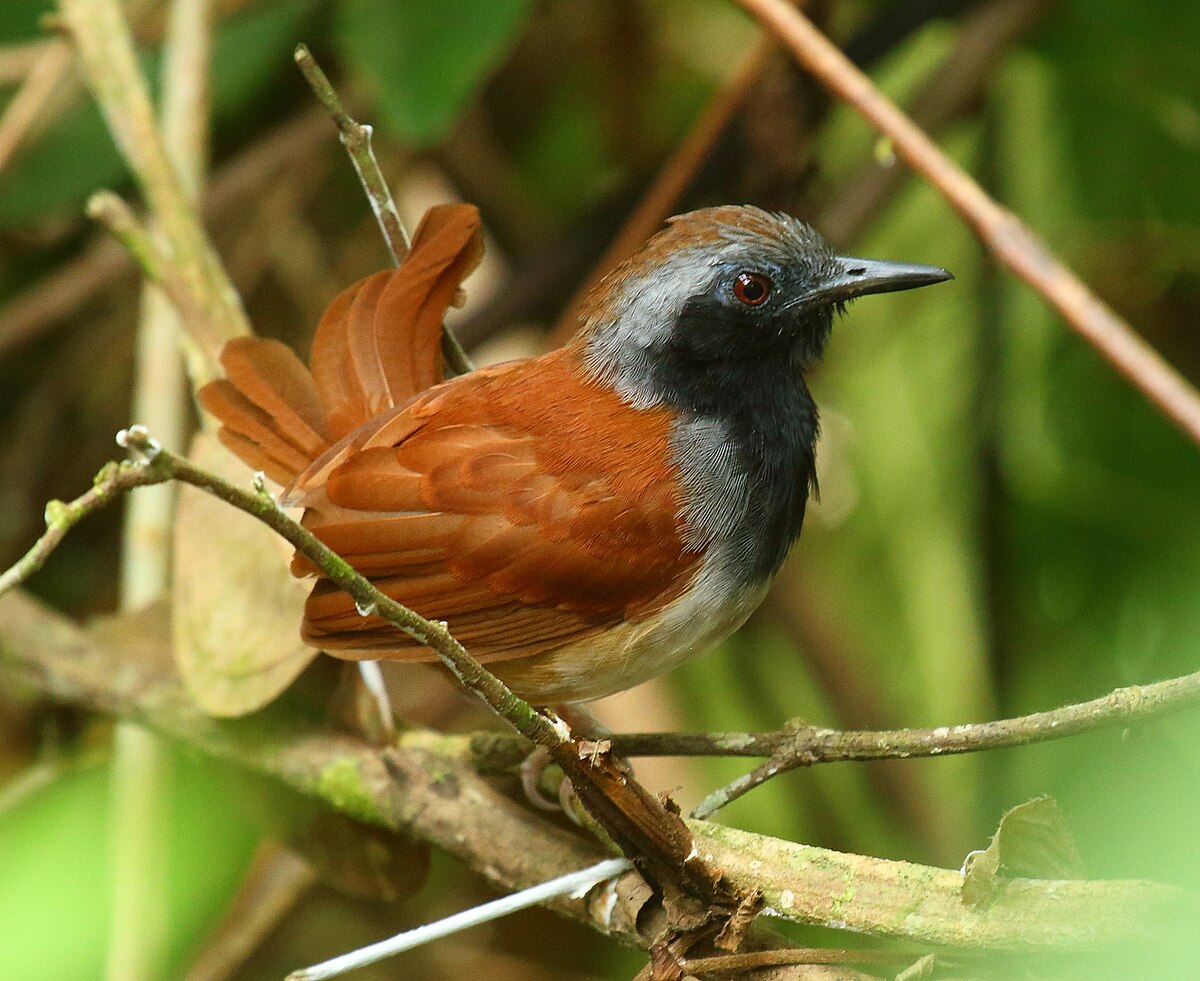
Wikipedia: White-bellied antbird
The white-bellied antbird (Myrmeciza longipes), is a passerine bird which breeds in the tropical New World from Panama to northern Brazil and in Trinidad. It is also called Swainson's antcatcher (usually in historical sources) after William John Swainson, who first described it scientifically. The genus is monotypic.
[more]
Gattung Phaenostictus:
Phaenostictus mcleannani / Ocellated antbird (Phaenostictus mcleannani)
Profil Wikipedia eBird Xeno-Canto

Wikipedia: Ocellated antbird
The ocellated antbird (Phaenostictus mcleannani) is a species of antbird in the family Thamnophilidae. It is monotypic within the genus Phaenostictus and is found in southern Central America and the northwestern part of South America. Its natural habitat is the understory of tropical moist lowland forest, foothill forest, and tall secondary growth woodlands.
[more]
Gattung Gymnopithys:
Gymnopithys bicolor / Bicolored antbird (Gymnopithys bicolor)

Wikipedia: Bicolored antbird
The bicolored antbird (Gymnopithys bicolor) is a species of bird in the family Thamnophilidae. It is found in Honduras south to Panama, western Colombia and Ecuador. Its natural habitat is subtropical or tropical moist lowland forest.
[more]
Gymnopithys leucaspis / Bicolored antbird (Gymnopithys leucaspis)
Wikipedia: Bicolored antbird
The bicolored antbird (Gymnopithys bicolor) is a species of bird in the family Thamnophilidae. It is found in Honduras south to Panama, western Colombia and Ecuador. Its natural habitat is subtropical or tropical moist lowland forest.
[more]
Gattung Microrhopias:
Microrhopias quixensis / Dot-winged antwren (Microrhopias quixensis)
Profil Wikipedia eBird Xeno-Canto

Wikipedia: Dot-winged antwren
The dot-winged antwren (Microrhopias quixensis) is a passerine bird in the antbird family. In the past it was sometimes known as the velvety antwren, and some of its more distinctive subspecies have their own infrequently used English names. It is a resident in tropical Central and South America from southeastern Mexico south to western Ecuador, northern Bolivia, central Brazil and the Guianas. It is the only member of the genus Microrhopias.
[more]
Gattung Hylophylax:
Hylophylax naevioides / Spotted antbird (Hylophylax naevioides)
Profil Wikipedia eBird Xeno-Canto

Wikipedia: Spotted antbird
The spotted antbird (Hylophylax naevioides) is a species of bird in the family Thamnophilidae.
In southern Central America, it is found in Honduras, Nicaragua, Costa Rica and Panama; also Colombia and Ecuador of northwestern South America.
Its natural habitat is subtropical or tropical moist lowland forests.
[more]
Gattung Gymnocichla:
Gymnocichla nudiceps / Bare-crowned antbird (Gymnocichla nudiceps)
Profil Wikipedia eBird Xeno-Canto

Wikipedia: Bare-crowned antbird
The bare-crowned antbird (Gymnocichla nudiceps) is a species of bird in the family Thamnophilidae in the monotypic genus Gymnocichla.
[more]
Gattung Cymbilaimus:
Zebra-Ameisenwürger / Fasciated antshrike (Cymbilaimus lineatus)
Profil Wikipedia eBird Xeno-Canto

Wikipedia: Fasciated antshrike
Der Zebra-Ameisenwürger (Cymbilaimus lineatus) ist ein Sperlingsvogel aus der Familie der Ameisenvögel.
[more]
Gattung Epinecrophylla:
Epinecrophylla fulviventris / Checker-throated antwren (Epinecrophylla fulviventris)

Wikipedia: Checker-throated antwren
The checker-throated stipplethroat (Epinecrophylla fulviventris), also called fulvous-bellied antwren or checker-throated antwren, is a small passerine bird in the antbird family. It has traditionally been placed in the genus Myrmotherula, but is, together with other members of the so-called "stipple-throated group", now placed in the new genus Epinecrophylla. This is supported by molecular work, behavior, voice and morphology. Now treated as monotypic, it includes the former subspecies E. f. costaricensis and E. f. salmoni.
[more]
Gattung Xenornis:
Xenornis setifrons / Spiny-faced antshrike (Xenornis setifrons)
Profil Wikipedia eBird Xeno-Canto

Wikipedia: Spiny-faced antshrike
The speckled antshrike or spiny-faced antshrike (Xenornis setifrons) is a species of bird in the family Thamnophilidae. It is the only member of the genus Xenornis. It is found in Panama and far northwestern Colombia.
[more]
Gattung Euchrepomis:
Euchrepomis callinota / Rufous-rumped antwren (Euchrepomis callinota)
Profil Wikipedia eBird Xeno-Canto

Wikipedia: Rufous-rumped antwren
The rufous-rumped antwren (Euchrepomis callinota) is a species of bird in the family Thamnophilidae. It is found in Colombia, Costa Rica, Ecuador, Guyana, Panama, Peru, Suriname, and Venezuela. Its natural habitat is subtropical or tropical moist montanes.
[more]
Gattung Sipia:
Sipia laemosticta / Dull-mantled antbird (Sipia laemosticta)
Profil Wikipedia eBird Xeno-Canto

Wikipedia: Dull-mantled antbird
The dull-mantled antbird (Sipia laemosticta) is a perching bird species in the antbird family (Thamnophilidae).
[more]
Gattung Hafferia:
Hafferia zeledoni / Zeledon's antbird (Hafferia zeledoni)
Profil Wikipedia eBird Xeno-Canto
Wikipedia: Zeledon's antbird
Zeledon's antbird (Percnostola zeledoni) is a species of antbird in the family Thamnophilidae. It is found at low levels in humid forests from Nicaragua to Panama, and in the Chocó of western Colombia and western Ecuador. Zeledon's antbird feeds on insects, and regularly follows swarms of army ants in order to catch prey flushed by the swarms, but it is not an obligate ant-follower like some species of antbirds.
[more]
Gattung Poliocrania:
Poliocrania exsul / Chestnut-backed antbird (Poliocrania exsul)

Wikipedia: Chestnut-backed antbird
The chestnut-backed antbird (Poliocrania exsul) is a passerine bird in the antbird family. It is found in humid forests in Central and South America (Chocó-Magdalena), ranging from eastern Nicaragua to western Ecuador. It mainly occurs in lowlands up to an altitude of 900 metres (3,000 ft) m, but locally it occurs higher.
[more]
Familie Pipridae:
Gattung Piprites:
Piprites griseiceps / Gray-headed piprites (Piprites griseiceps)
Profil Wikipedia eBird Xeno-Canto

Wikipedia: Gray-headed piprites
The grey-headed piprites (Piprites griseiceps) is a species of bird which traditionally has been placed in the family Tyrannidae. It is found in Costa Rica, Guatemala, Honduras, and Nicaragua. Its natural habitat is subtropical or tropical moist lowland forest.
[more]
Gattung Schiffornis:
Schiffornis veraepacis / Northern schiffornis (Schiffornis veraepacis)
Profil Wikipedia eBird Xeno-Canto

Wikipedia: Northern schiffornis
The northern schiffornis (Schiffornis veraepacis), is a species of Neotropical bird.
[more]
Schiffornis stenorhyncha / Russet-winged schiffornis (Schiffornis stenorhyncha)
Profil Wikipedia eBird Xeno-Canto

Wikipedia: Russet-winged schiffornis
The russet-winged schiffornis (Schiffornis stenorhyncha), is a species of Neotropical bird.
[more]
Gattung Chiroxiphia:
Chiroxiphia lanceolata / Lance-tailed manakin (Chiroxiphia lanceolata)
Profil Wikipedia eBird Xeno-Canto

Wikipedia: Lance-tailed manakin
The lance-tailed manakin (Chiroxiphia lanceolata) is a small passerine bird which breeds in tropical Central and South America from Costa Rica to northern Venezuela. This manakin is a fairly common bird of dry and moist deciduous forests, but not rainforest. It is a small, compact bird about 13 centimetres (5 in) long and similar to the blue-backed manakin, but both sexes have the two central tail feathers elongated to form a spike. Males have black plumage with a blue back, a red crown and orange legs. Females and juveniles are olive-green with paler underparts. At breeding time, males are involved in a cooperative behaviour during which they jump up and down alternately. This is a fairly common species with a wide range, and the International Union for Conservation of Nature has rated its conservation status as being of "least concern".
[more]
Chiroxiphia linearis / Long-tailed manakin (Chiroxiphia linearis)
Profil Wikipedia eBird Xeno-Canto

Wikipedia: Long-tailed manakin
The long-tailed manakin (Chiroxiphia linearis) is a species of bird in the family Pipridae native to Central America where it inhabits both wet and dry tropical and subtropical forests. It is a small, plump bird about 10 centimetres (4 in) long. Males have black plumage with a blue back and a red crown, and the two central tail feathers are greatly elongated.. Females and juveniles are olive-green with paler underparts. At breeding time, males are involved in a cooperative lekking behaviour with a complex coordinated courtship dance. This is a fairly common species with a wide range, and the International Union for Conservation of Nature has rated its conservation status as being of "least concern".
[more]
Gattung Manacus:
Manacus candei / White-collared manakin (Manacus candei)
Profil Wikipedia eBird Xeno-Canto

Wikipedia: White-collared manakin
The white-collared manakin (Manacus candei) is a passerine bird in the manakin family. It is a resident breeder in the tropical New World from southeastern Mexico to Costa Rica and the extreme west of Panama. It typically inhabits thickets at the edges of moist forest, tall secondary growth and old cacao plantations. It is a small, plump bird about 11 centimetres (4.3 in) long. Males have a black crown, mid-back band, wings and tail, an olive-green rump and yellow belly. Females and juveniles are olive-green with yellow bellies and resemble female orange-collared manakins. At breeding time, males are involved in lekking behaviour on the forest floor during which they puff out their neck feathers. This is a fairly common species with a wide range, and the International Union for Conservation of Nature has rated its conservation status as being of "least concern".
[more]
Manacus aurantiacus / Orange-collared manakin (Manacus aurantiacus)
Profil Wikipedia eBird Xeno-Canto

Wikipedia: Orange-collared manakin
The orange-collared manakin (Manacus aurantiacus) is a passerine bird in the manakin family. It is an endemic resident breeder in Costa Rica and western Panama, where it is found in forests, secondary growth and plantations. It is a small, plump bird about 10 centimetres (4 in) long. Males have a black crown, mid back, wings and tail and an olive-green rump. The rest of the head, neck, breast and upper back are orange, and the belly is yellow. Females are olive-green with yellow underparts and resemble female white-collared manakins. At breeding time, males are involved in lekking behaviour on the forest floor. This is a fairly common species with a somewhat restricted range, and the International Union for Conservation of Nature has rated its conservation status as being of "least concern".
[more]
Manacus vitellinus / Golden-collared manakin (Manacus vitellinus)
Profil Wikipedia eBird Xeno-Canto

Wikipedia: Golden-collared manakin
The golden-collared manakin (Manacus vitellinus) is a species of bird in the family Pipridae.
[more]
Gattung Lepidothrix:
Lepidothrix coronata / Blue-crowned manakin (Lepidothrix coronata)

Wikipedia: Blue-crowned manakin
The blue-crowned manakin (Lepidothrix coronata) is a species of bird in the family Pipridae. The males have a brilliant blue cap; some have black, others have green body plumage, but the relationship between the subspecies is not well understood.
[more]
Gattung Corapipo:
Corapipo altera / White-ruffed manakin (Corapipo altera)
Profil Wikipedia eBird Xeno-Canto

Wikipedia: White-ruffed manakin
The white-ruffed manakin (Corapipo altera) is a sub-oscine (Tyranni), passerine bird in the manakin family. It is a resident breeder in the tropical New World from eastern Honduras to northwestern Colombia. Its typical habitat is wet forest, adjacent clearings and tall secondary growth. It is a small, plump bird about 10 centimetres (4 in) long. Males have glossy blue-black plumage with a white erectile ruff on the throat and females are green. At breeding time, males are involved in lekking behaviour on the forest floor during which they puff out their neck feathers. This is a fairly common species with a wide range.
[more]
Gattung Ceratopipra:
Ceratopipra mentalis / Red-capped manakin (Ceratopipra mentalis)
Profil Wikipedia eBird Xeno-Canto

Wikipedia: Red-capped manakin
The red-capped manakin (Ceratopipra mentalis) is a species of bird in the family Pipridae.
It is found in Belize, Colombia, Costa Rica, Ecuador, Guatemala, Honduras, Mexico, Nicaragua, Peru and Panama.
Its natural habitat is subtropical or tropical moist lowland forest.
[more]
Ceratopipra erythrocephala / Golden-headed manakin (Ceratopipra erythrocephala)
Profil Wikipedia eBird Xeno-Canto

Wikipedia: Golden-headed manakin
The golden-headed manakin (Ceratopipra erythrocephala) is a small passerine bird which breeds in tropical Central and South America in both wet and dry forests, secondary growth and plantations. It is a small mannakin, about 9.4 centimetres (3.7 in) long. Males are entirely black apart from a golden head, yellow bill, white and red thighs and pink legs. Females and juveniles are olive-green with pink legs. At breeding time, males are involved in a cooperative lekking behaviour during which they jump, slide and dart from perch to perch. This is a fairly common species with a wide range, and the International Union for Conservation of Nature has rated its conservation status as being of "least concern".
[more]
Gattung Cryptopipo:
Cryptopipo holochlora / Green manakin (Cryptopipo holochlora)

Wikipedia: Green manakin
Chloropipo holochlora
Xenopipo holochlora
[more]
Familie Bombycillidae (Seidenschwänze):
Gattung Bombycilla:
Bombycilla cedrorum / Cedar waxwing (Bombycilla cedrorum)
Profil Wikipedia eBird Audubon AllAboutBirds Xeno-Canto

Wikipedia: Cedar waxwing
The cedar waxwing (Bombycilla cedrorum) is a member of the family Bombycillidae or waxwing family of passerine birds. It is a medium-sized, mostly brown, gray, and yellow. This bird is named for its wax-like wing tips. It is a native of North and Central America, breeding in open wooded areas in southern Canada and wintering in the southern half of the United States, Central America, and the far northwest of South America. Its diet includes cedar cones, fruit, and insects.[2] The cedar waxwing is not endangered.
[more]
Gattung Phainoptila:
Phainoptila melanoxantha / Black-and-yellow silky-flycatcher (Phainoptila melanoxantha)
Profil Wikipedia Xeno-Canto
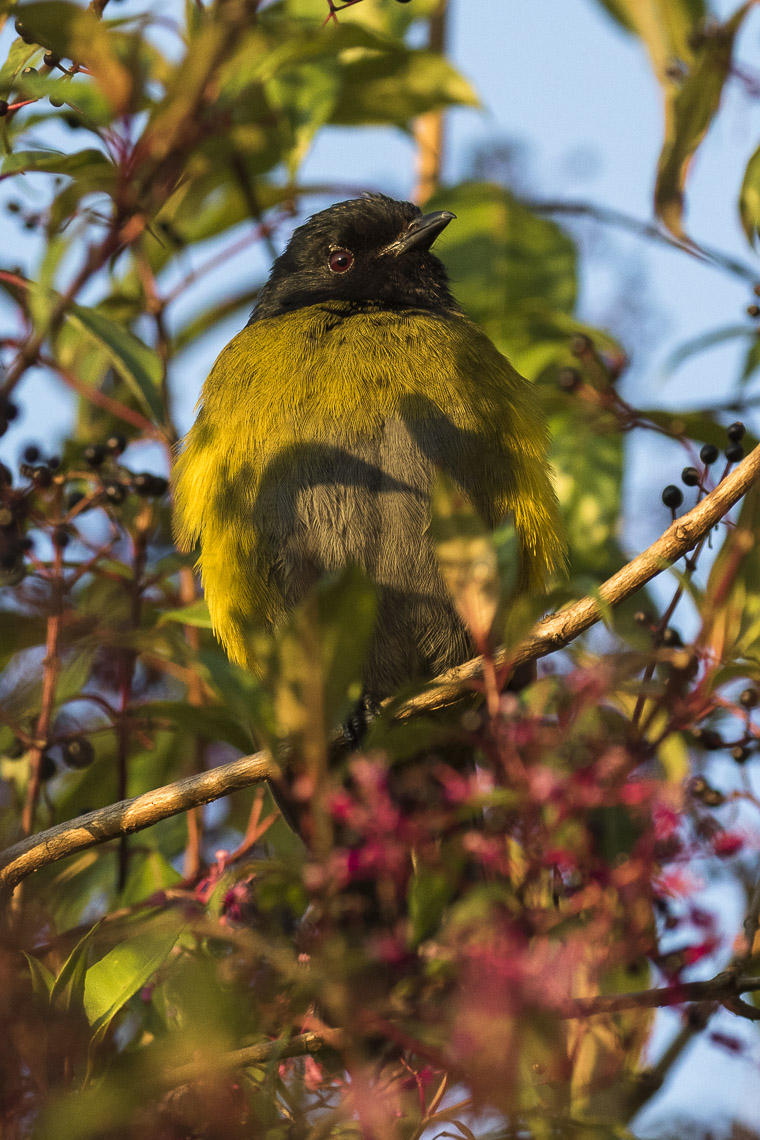
Wikipedia: Black-and-yellow silky-flycatcher
The black-and-yellow phainoptila or black-and-yellow silky-flycatcher (Phainoptila melanoxantha) is a species of bird in the family Ptiliogonatidae. It is monotypic within the genus Phainoptila.[2] It is found in Costa Rica and Panama.
[more]
Familie Cinclidae (Wasseramseln):
Gattung Cinclus:
Grauwasseramsel / American dipper (Cinclus mexicanus)
Profil Wikipedia eBird Audubon AllAboutBirds Xeno-Canto
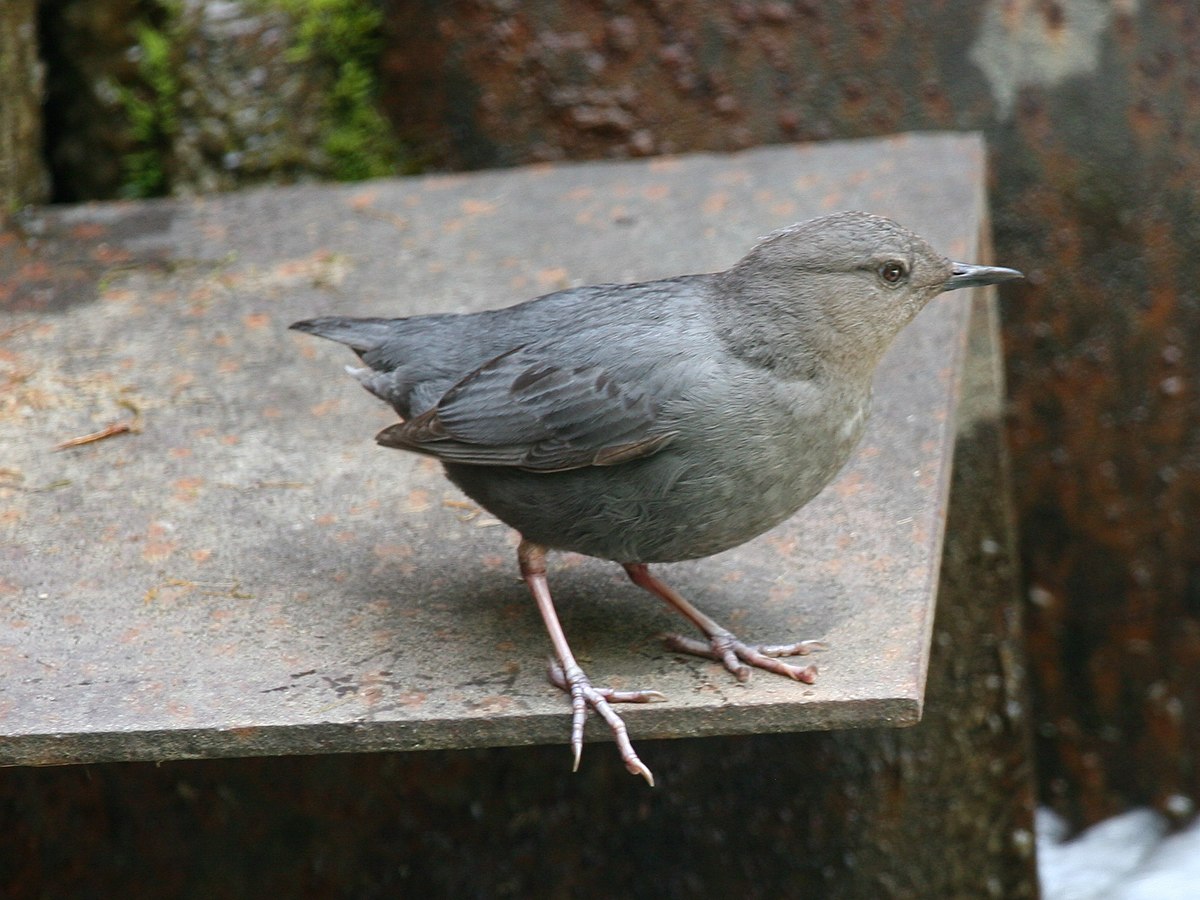
Wikipedia: American dipper
Die Grauwasseramsel (Cinclus mexicanus) ist der einzige in Nordamerika beheimatete Vertreter der Wasseramseln (Cinclidae). Der bis zu knapp 20 Zentimeter große, einheitlich dunkel schiefergrau gefärbte Vogel ist wie alle anderen Arten dieser Familie eng an das Leben entlang strömungs- und sauerstoffreicher kleinerer Fließgewässer gebunden. Zurzeit sind fünf Unterarten anerkannt.
[more]
Überfamilie Corvoidea:
Familie Corvidae (Krähenverwandte):
Gattung Cyanolyca:
Profil Wikipedia eBird Xeno-Canto

Wikipedia: Silvery-throated jay
The silvery-throated jay (Cyanolyca argentigula) is a species of bird in the family Corvidae. It is found in the Talamancan montane forests of Costa Rica and western Panama. The IUCN has rated its conservation status as being of "least concern".
[more]
Profil Wikipedia eBird Xeno-Canto

Wikipedia: Azure-hooded jay
The azure-hooded jay (Cyanolyca cucullata) is a species of bird in the family Corvidae. It is found in Middle America. Its natural habitat is subtropical or tropical moist montane forest. This species is known to have four subspecies. It is 11 to 12 inches (28 to 30 cm) in length and is dark blue with a black head and upper chest. The back of the head and neck are sky blue with a white border.
[more]
Gattung Cyanocorax:
Profil Wikipedia eBird Xeno-Canto
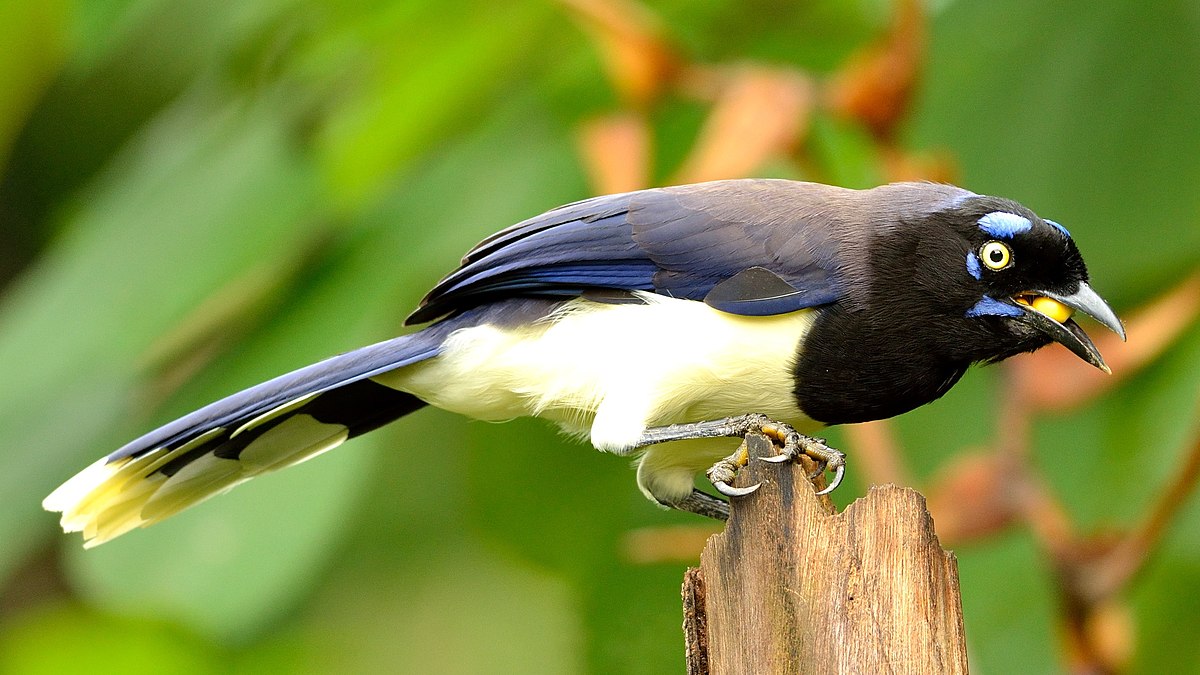
Wikipedia: Black-chested jay
The black-chested jay (Cyanocorax affinis) is a species of bird in the family Corvidae.
[more]

Arenal feeder 2 brown jays. 2018-02-27 13.24.36 Zentralamerika
The brown jay (Psilorhinus morio) is a large American jay which has the habitus of a magpie, but is slightly smaller and with a shorter tail, though the bill is larger.
[more]
Gattung Calocitta:
Profil Wikipedia eBird Xeno-Canto

Wikipedia: White-throated magpie-jay
The white-throated magpie-jay (Calocitta formosa) is a large Central American species of magpie-jay. It ranges in Pacific-slope thorn forest from Jalisco, Mexico to Guanacaste, Costa Rica. Magpie-jays are noisy, gregarious birds, often traveling in easy-to-find flocks, mobbing their observers.
[more]
Familie Vireonidae (Vireos):
Unterfamilie Cyclarhinae (Peppershrikes):
Profil Wikipedia eBird Xeno-Canto

Wikipedia: Rufous-browed peppershrike
Der Rostbrauenvireo (Cyclarhis gujanensis), auch Großschnabelvireo oder Papageiwürger genannt, ist eine Art aus der Gattung der Großschnabelvireos (Cyclarhis) innerhalb der Familie der Vireos (Vireonidae). Es werden mehrere Unterarten beschrieben.
[more]
Unterfamilie Vireoninae (Shrike-vireos):
Profil Wikipedia eBird Audubon AllAboutBirds Xeno-Canto

Wikipedia: Yellow-green vireo
The yellow-green vireo (Vireo flavoviridis) is a small American passerine bird. It is migratory breeding from Mexico to Panama and wintering in the northern and eastern Andes and the western Amazon Basin.
[more]
Profil Wikipedia eBird Audubon AllAboutBirds Xeno-Canto

Wikipedia: Warbling vireo
Der Sängervireo (Vireo gilvus) ist ein nordamerikanischer Singvogel.
[more]
Profil Wikipedia eBird Audubon AllAboutBirds Xeno-Canto

Wikipedia: White-eyed vireo
The white-eyed vireo (Vireo griseus) is a small songbird. It breeds in the southeastern United States from New Jersey west to northern Missouri and south to Texas and Florida, and also in eastern Mexico, northern Central America, Cuba and the Bahamas.
[more]
Profil Wikipedia eBird Audubon AllAboutBirds Xeno-Canto

Wikipedia: Black-whiskered vireo
The black-whiskered vireo (Vireo altiloquus) is a small passerine bird, which breeds in southern Florida, USA, and the West Indies as far south as the offshore islands of Venezuela. It is a partial migrant, with northern birds wintering from the Greater Antilles to northern South America. This species has occurred as a rare vagrant to Costa Rica.
[more]
Profil Wikipedia eBird Audubon AllAboutBirds Xeno-Canto

Wikipedia: Yellow-throated vireo
Der Gelbkehlvireo (Vireo flavifrons) ist ein amerikanischer Singvogel.
[more]
Profil Wikipedia eBird Audubon AllAboutBirds Xeno-Canto

Wikipedia: Red-eyed vireo
Der Rotaugenvireo (Vireo olivaceus) ist ein amerikanischer Singvogel der Vireofamilie. Zwei Unterarten, darunter die Nominatform kommen in Nordamerika vor, etwa weitere zehn Unterarten leben in Mittel- und Südamerika. Er ist einer der häufigsten Waldvogelarten Nordamerikas. Laut Guinness-Buch der Rekorde ist es der Vogel, der die meisten verschiedenen Lieder singt, teilweise über 2.000 unterschiedliche pro Stunde.[1]
[more]

Wikipedia: Philadelphia vireo
The Philadelphia vireo (Vireo philadelphicus) is a small North American songbird in the vireo family (Vireonidae). "Vireo" is a Latin word referring to a green migratory bird, perhaps the female golden oriole, possibly the European greenfinch. The specific philadelphicus is for the city of Philadelphia.[2][3]
[more]
Profil Wikipedia eBird Xeno-Canto

Wikipedia: Brown-capped vireo
The brown-capped vireo (Vireo leucophrys) is a small passerine bird. It breeds in highlands from southern Mexico south to northwestern Bolivia. It is sometimes considered to be conspecific with the similar warbling vireo.
[more]
Profil Wikipedia eBird Xeno-Canto

Wikipedia: Yellow-winged vireo
The yellow-winged vireo (Vireo carmioli) is a small passerine bird. It is endemic to the highlands of Costa Rica and western Panama.
[more]
Profil Wikipedia eBird Xeno-Canto

Wikipedia: Mangrove vireo
The mangrove vireo (Vireo pallens) is a species of bird in the family Vireonidae.
[more]
Unterfamilie Vireolaniinae (Vireos and greenlets):

Wikipedia: Green shrike-vireo
The green shrike-vireo (Vireolanius pulchellus) is a species of bird in the family Vireonidae. It is found in Belize, Colombia, Costa Rica, El Salvador, Guatemala, Honduras, Mexico, Nicaragua, and Panama. Its natural habitat is subtropical or tropical moist lowland forests.
[more]

Wikipedia: Yellow-browed shrike-vireo
The yellow-browed shrike-vireo (Vireolanius eximius) is a species of bird in the family Vireonidae.
[more]
Gattung Hylophilus:

Wikipedia: Tawny-crowned greenlet
Der Fuchsscheitelvireo (Hylophilus ochraceiceps, Syn.: Tunchiornis ochraceiceps), auch Braunkopf-Hylophilus genannt, ist ein in Mittelamerika und im nördlichen Südamerika weit verbreiteter Vertreter der Singvögel aus der Familie der Vireos.
[more]
Profil Wikipedia eBird Xeno-Canto

Wikipedia: Golden-fronted greenlet
The golden-fronted greenlet (Pachysylvia aurantiifrons) is a small passerine bird in the vireo family. It breeds in Panama, Colombia, Venezuela and Trinidad.
[more]
Profil Wikipedia eBird Xeno-Canto

Wikipedia: Lesser greenlet
The lesser greenlet (Pachysylvia decurtata) is a small passerine bird in the vireo family. It breeds from northeastern Mexico south to western Ecuador.
[more]
Familie Thraupidae (Tanagers):
Gattung Ramphocelus:
Scharlachbauchtangare / Crimson-backed tanager (Ramphocelus dimidiatus)
Profil Wikipedia eBird Xeno-Canto

Crimson-backed tanager gamboa town. 2020-02-17 17.52.16 Zentralamerika
We saw this beautiful bird walking around Gamboa town in Panama. They were also common on the hotel grounds.
Allgemein: The crimson-backed tanager (Ramphocelus dimidiatus) is a species of bird in the family Thraupidae. It is found in Colombia, Panama, and Venezuela, and introduced to French Polynesia.[2] Its natural habitats are subtropical or tropical moist lowland forests and heavily degraded former forest.[2] A nickname in Panama is sangre de toro ("Blood of the bull").[3]
[more]
Ramphocelus passerinii / Passerini's tanager (Ramphocelus passerinii)

La fortuna passerinis tanager pair. 2018-02-26 14.57.40 Zentralamerika
The scarlet-rumped tanager (Ramphocelus passerinii) is a medium-sized passerine bird. This tanager is a resident breeder in the Caribbean lowlands from southern Mexico to western Panama. This species was formerly known as the scarlet-rumped tanager, but was renamed when the distinctive form found on the Pacific coast of Costa Rica and Panama was reclassified as a separate species, the Cherrie's tanager, Ramphocelus costaricensis. While most authorities have accepted this split, there are notable exceptions (e.g. the Howard and Moore checklist). It was renamed back to the scarlet-rumped tanager in 2018 when Cherrie's Tanager was lumped back into the species.
[more]
Flammentangare / Crimson-collared tanager (Ramphocelus sanguinolentus)
Profil Wikipedia eBird Xeno-Canto

Crimson collared tanager. 2018-02-26 10.49.32 Zentralamerika
Die Flammentangare (Ramphocelus sanguinolentus) ist eine in Mittelamerika vorkommende Vogelart aus der Familie der Tangaren (Thraupidae).
[more]
Ramphocelus flammigerus / Flame-rumped tanager (Ramphocelus flammigerus)

Wikipedia: Flame-rumped tanager
The flame-rumped tanager (Ramphocelus flammigerus) is a species of bird in the family Thraupidae. It is found in semi-open forest and woodland.
[more]
Gattung Piranga:
Piranga rubra / Summer tanager (Piranga rubra)
Profil Wikipedia eBird Audubon AllAboutBirds Xeno-Canto

Arenal feeder summer tanager tenatative ID. 2018-02-27 12.58.26 Zentralamerika
The summer tanager (Piranga rubra) is a medium-sized American songbird. Formerly placed in the tanager family (Thraupidae), it and other members of its genus are now classified in the cardinal family (Cardinalidae).[2] The species's plumage and vocalizations are similar to other members of the cardinal family.
[more]
Kieferntangare / Western tanager (Piranga ludoviciana)
Profil Wikipedia eBird Audubon AllAboutBirds Xeno-Canto

Wikipedia: Western tanager
Die Kieferntangare (Piranga ludoviciana) ist ein kleiner Vogel aus der Familie der Kardinäle (Cardinalidae). Entdeckt wurde der Vogel von Meriwether Lewis und William Clark während der Lewis-und-Clark-Expedition im Westen von Louisiana. Deshalb bekam er am Anfang von Alexander Wilson auch den Namen „Louisianatangare“.
[more]
Piranga olivacea / Scarlet tanager (Piranga olivacea)
Profil Wikipedia eBird Audubon AllAboutBirds Xeno-Canto

Wikipedia: Scarlet tanager
The scarlet tanager (Piranga olivacea) is a medium-sized American songbird. Until recently, it was placed in the tanager family (Thraupidae), but it and other members of its genus are now classified as belonging to the cardinal family (Cardinalidae).[2] The species' plumage and vocalizations are similar to other members of the cardinal family, although the Piranga species lacks the thick conical bill (well suited to seed and insect eating) that many cardinals possess. The species resides in thick deciduous woodlands and suburbs.
[more]
Piranga flava / Hepatic tanager (Piranga flava)
Profil Wikipedia eBird Audubon AllAboutBirds Xeno-Canto

Wikipedia: Hepatic tanager
The hepatic tanager (Piranga flava) is a medium-sized American songbird. Formerly placed in the tanager family (Thraupidae), it and other members of the genus Piranga are now classified in the cardinal family (Cardinalidae).[2] The species's plumage and vocalizations are similar to other members of the cardinal family.
[more]
Piranga bidentata / Flame-colored tanager (Piranga bidentata)
Profil Wikipedia eBird Audubon AllAboutBirds Xeno-Canto

Wikipedia: Flame-colored tanager
The flame-colored tanager (Piranga bidentata), formerly known as the stripe-backed tanager, is a medium-sized American songbird. Formerly placed in the tanager family Thraupidae, other members of its genus and it are now classified in the cardinal family Cardinalidae.[2][3] The species's plumage and vocalizations are similar to other members of the cardinal family.
[more]
Piranga leucoptera / White-winged tanager (Piranga leucoptera)
Profil Wikipedia eBird Xeno-Canto

Wikipedia: White-winged tanager
The white-winged tanager (Piranga leucoptera) is a medium-sized American songbird. Formerly placed in the tanager family (Thraupidae),other members of its genus and it are now classified in the cardinal family (Cardinalidae).[2] The species' plumage and vocalizations are similar to other members of the cardinal family. Along with the red-headed tanager and red-hooded tanager, it is sometimes placed in the genus Spermagra.
[more]
Gattung Rhodinocichla:
Rhodinocichla rosea / Rosy thrush-tanager (Rhodinocichla rosea)
Profil Wikipedia eBird Xeno-Canto

Wikipedia: Rosy thrush-tanager
The rosy thrush-tanager (Rhodinocichla rosea) or rose-breasted thrush-tanager, is a species of bird in the currently monotypic genus Rhodinocichla. It was formerly assigned to the family Thraupidae and more recently viewed as being of uncertain placement;[2] a 2015 molecular study places it closest to the Calcariidae.[3] Found in Colombia, Costa Rica, Mexico, Panama, and Venezuela, its natural habitats are subtropical or tropical dry forests, subtropical or tropical moist lowland forests, and heavily degraded former forest.[1]
[more]
Gattung Chlorophanes:
Chlorophanes spiza / Green honeycreeper (Chlorophanes spiza)
Profil Wikipedia eBird Xeno-Canto

Wikipedia: Green honeycreeper
The green honeycreeper (Chlorophanes spiza) is a small bird in the tanager family. It is found in the tropical New World from southern Mexico south to Brazil, and on Trinidad. It is the only member of the genus Chlorophanes.
[more]
Gattung Chlorothraupis:
Chlorothraupis carmioli / Carmiol's tanager (Chlorothraupis carmioli)
Profil Wikipedia eBird Xeno-Canto

Wikipedia: Carmiol's tanager
The olive tanager (Chlorothraupis carmioli), also known as Carmiol's tanager, is a species of bird traditionally placed in the family Thraupidae (tanagers), though molecular evidence indicates it should be placed in Cardinalidae (cardinals).[1] This bird's natural habitats are subtropical or tropical moist lowland forests and heavily degraded former forest.
[more]
Chlorothraupis olivacea / Lemon-spectacled tanager (Chlorothraupis olivacea)
Profil Wikipedia eBird Xeno-Canto

Wikipedia: Lemon-spectacled tanager
The lemon-spectacled tanager (Chlorothraupis olivacea) is a species of bird in the family Cardinalidae. It is found in Colombia, Ecuador, and Panama where its natural habitats are subtropical or tropical moist lowland forest, subtropical or tropical moist montane forest, and heavily degraded former forest.
[more]
Gattung Chrysothlypis:
Chrysothlypis chrysomelas / Black-and-yellow tanager (Chrysothlypis chrysomelas)
Profil Wikipedia eBird Xeno-Canto

Wikipedia: Black-and-yellow tanager
The black-and-yellow tanager (Chrysothlypis chrysomelas) is a fairly small passerine bird. This tanager is an endemic resident in the hills of Costa Rica and Panama. In Panama it has been recorded as far east as the border-region with Colombia, but it has not yet been recorded in the latter country, though it almost certainly occurs.[2]
[more]
Gattung Dacnis:
Blaukopfpitpit / Blue dacnis (Dacnis cayana)
Profil Wikipedia eBird Xeno-Canto

Wikipedia: Blue dacnis
Der Blaukopfpitpit (Dacnis cayana) ist ein Vogel aus der Familie der Tangaren (Thraupidae). Er kommt von Costa Rica bis Trinidad und Venezuela sowie von Kolumbien bis nach Paraguay und dem Süden Brasiliens vor.
[more]
Dacnis venusta / Scarlet-thighed dacnis (Dacnis venusta)
Profil Wikipedia eBird Xeno-Canto

Wikipedia: Scarlet-thighed dacnis
The scarlet-thighed dacnis (Dacnis venusta) is a tanager 4¾" long. It is found in Costa Rica, Colombia, Ecuador and Panama.
[more]
Dacnis viguieri / Viridian dacnis (Dacnis viguieri)
Profil Wikipedia eBird Xeno-Canto

Wikipedia: Viridian dacnis
The viridian dacnis (Dacnis viguieri) is a species of bird in the family Thraupidae. It is found in Colombia and Panama.
[more]
Gattung Diglossa:
Diglossa plumbea / Slaty flowerpiercer (Diglossa plumbea)
Profil Wikipedia eBird Xeno-Canto

Wikipedia: Slaty flowerpiercer
The slaty flowerpiercer, Diglossa plumbea, is a passerine bird endemic to the Talamancan montane forests.
[more]
Gattung Eucometis:
Eucometis penicillata / Gray-headed tanager (Eucometis penicillata)
Profil Wikipedia eBird Xeno-Canto

Wikipedia: Gray-headed tanager
The grey-headed tanager (Eucometis penicillata) is a widely distributed species of small Neotropical bird in the tanager family Thraupidae. It is the only member of the genus Eucometis.
[more]
Gattung Habia:
Habia rubica / Red-crowned ant-tanager (Habia rubica)
Profil Wikipedia eBird Xeno-Canto

Wikipedia: Red-crowned ant-tanager
The red-crowned ant tanager (Habia rubica) is a medium-sized passerine bird from tropical America. The genus Habia was long placed with the tanagers (Thraupidae), but it is actually closer to the cardinals (Cardinalidae). Consequently, it can be argued that referring to the members of this genus as ant-tanagers is misleading, but no other common name has gained usage.
[more]
Habia fuscicauda / Red-throated ant-tanager (Habia fuscicauda)
Profil Wikipedia eBird Xeno-Canto

Red throated ant tanager maybe. 2020-02-19 07.46.46 Zentralamerika
The red-throated ant tanager (Habia fuscicauda) is a medium-sized passerine bird. This species is a resident breeder on the Caribbean slopes from southeastern Mexico to eastern Panama. It was usually considered an aberrant kind of tanager and placed in the Thraupidae, but is actually closer to the cardinals (Cardinalidae). Consequently, it can be argued that referring to the members of this genus as ant tanagers is misleading, but no other common name has gained usage.
[more]
Habia atrimaxillaris / Black-cheeked ant-tanager (Habia atrimaxillaris)
Profil Wikipedia eBird Xeno-Canto

Wikipedia: Black-cheeked ant-tanager
The black-cheeked ant tanager (Habia atrimaxillaris) is a species of bird in the family Cardinalidae. It is endemic to the Osa Peninsula of Costa Rica. Its natural habitats are subtropical or tropical moist lowland forest and subtropical or tropical moist shrubland. It is threatened by habitat loss.[1]
[more]
Gattung Hemithraupis:
Hemithraupis flavicollis / Yellow-backed tanager (Hemithraupis flavicollis)
Profil Wikipedia eBird Xeno-Canto

Wikipedia: Yellow-backed tanager
The yellow-backed tanager (Hemithraupis flavicollis) is a species of bird in the family Thraupidae, the tanagers.
[more]
Gattung Heterospingus:
Heterospingus rubrifrons / Sulphur-rumped tanager (Heterospingus rubrifrons)
Profil Wikipedia eBird Xeno-Canto

Wikipedia: Sulphur-rumped tanager
The sulphur-rumped tanager (Heterospingus rubrifrons) is a species of bird in the family Thraupidae.
It is found in Costa Rica and Panama.
Its natural habitat is subtropical or tropical moist lowland forests.
[more]
Heterospingus xanthopygius / Scarlet-browed tanager (Heterospingus xanthopygius)
Profil Wikipedia eBird Xeno-Canto

Wikipedia: Scarlet-browed tanager
The scarlet-browed tanager (Heterospingus xanthopygius) is a species of bird in the family Thraupidae.
[more]
Gattung Lanio:
Lanio leucothorax / White-throated shrike-tanager (Lanio leucothorax)
Profil Wikipedia eBird Xeno-Canto
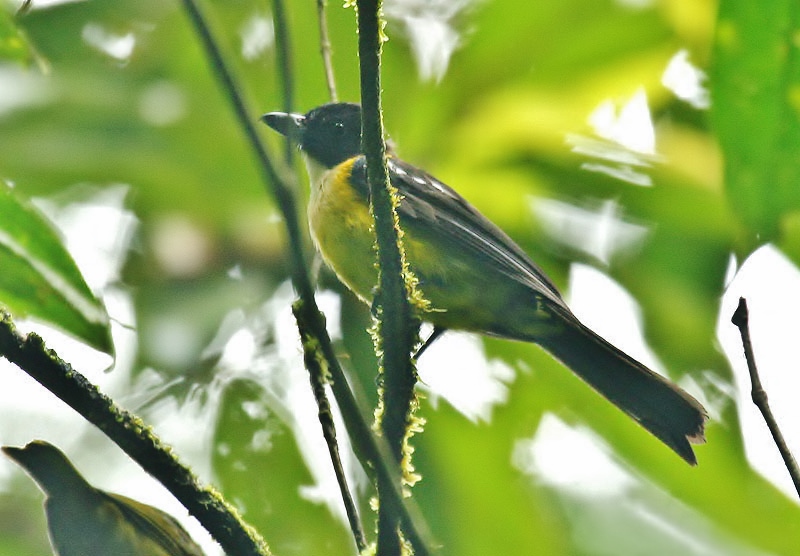
Wikipedia: White-throated shrike-tanager
The white-throated shrike-tanager (Lanio leucothorax) is a species of bird in the family Thraupidae. It is found in Costa Rica, Honduras, Nicaragua, and Panama. Its natural habitat is subtropical or tropical moist lowland forests.
[more]
Gattung Mitrospingus:
Mitrospingus cassinii / Dusky-faced tanager (Mitrospingus cassinii)
Profil Wikipedia eBird Xeno-Canto

Wikipedia: Dusky-faced tanager
The dusky-faced tanager (Mitrospingus cassinii) is a species of bird formerly in the family Thraupidae.
[more]
Gattung Tachyphonus:
Tachyphonus delattrii / Tawny-crested tanager (Tachyphonus delattrii)
Profil Wikipedia eBird Xeno-Canto

Wikipedia: Tawny-crested tanager
The tawny-crested tanager (Tachyphonus delatrii) is a species of bird in the family Thraupidae.
It is found in Colombia, Costa Rica, Ecuador, Honduras, Nicaragua, and Panama.
Its natural habitats are subtropical or tropical moist lowland forests, subtropical or tropical moist montane forests, and heavily degraded former forest.[1]
[more]
Tachyphonus rufus / White-lined tanager (Tachyphonus rufus)
Profil Wikipedia eBird Xeno-Canto

Wikipedia: White-lined tanager
The white-lined tanager (Tachyphonus rufus) is a medium-sized passerine bird in the tanager family Thraupidae. It is a resident breeder from Costa Rica south to northern Argentina, and on the islands of Trinidad and Tobago.
[more]
Schwarzachseltangare / Tawny-crested tanager (Tachyphonus delatrii)
Profil Wikipedia eBird Xeno-Canto
Wikipedia: Tawny-crested tanager
Die Schwarzachseltangare (Tachyphonus delatrii) ist eine in Süd- und Mittelamerika verbreitete Vogelart der Gattung der Schwarztangaren (Tachyphonus) aus der Familie der Tangaren (Thraupidae).
[more]
Gattung Coereba:
Coereba flaveola / Bananaquit (Coereba flaveola)
Profil Wikipedia eBird Xeno-Canto

Wikipedia: Bananaquit
The bananaquit (Coereba flaveola) is a species of passerine bird in the tanager family Thraupidae. Before the development of molecular genetics in the 21st century, its relationship to other species was uncertain and it was either placed with the buntings and New World sparrows in the family Emberizidae, with New World warblers in the family Parulidae or in its own monotypic family Coerebidae. This small, active nectarivore is found in warmer parts of the Americas, and is generally common.
[more]
Gattung Tiaris:
Tiaris olivaceus / Yellow-faced grassquit (Tiaris olivaceus)

Wikipedia: Yellow-faced grassquit
The yellow-faced grassquit (Tiaris olivaceus) is a passerine bird in the tanager family Thraupidae and is the only member of the genus Tiaris. It is native to the Central America, South America, and the Caribbean.
[more]
Gattung Pinaroloxias:
Pinaroloxias inornata / Cocos finch (Pinaroloxias inornata)
Profil Wikipedia eBird Xeno-Canto

Wikipedia: Cocos finch
The Cocos finch or Cocos Island finch (Pinaroloxias inornata) is the only one of the Darwin's finches not native to the Galápagos Islands, and the only member of the genus Pinaroloxias. Sometimes classified in the family Emberizidae, more recent studies have shown it to belongs in the tanager family, Thraupidae. It is endemic to Cocos Island, which is approximately 360 miles (580 km) south of Costa Rica.
[more]
Gattung Haplospiza:
Haplospiza rustica / Slaty finch (Haplospiza rustica)
Profil Wikipedia eBird Xeno-Canto

Wikipedia: Slaty finch
The slaty finch (Haplospiza rustica) is a bird species in the family Thraupidae (formerly in Emberizidae).
[more]
Gattung Sporophila:
Sporophila morelleti / Morelet's seedeater (Sporophila morelleti)
Profil Wikipedia eBird Audubon AllAboutBirds Xeno-Canto

Wikipedia: Morelet's seedeater
Morelet's seedeater (Sporophila morelleti) is a passerine bird in the typical seedeater genus Sporophila.
[more]
Sporophila schistacea / Slate-colored seedeater (Sporophila schistacea)
Profil Wikipedia eBird Xeno-Canto

Wikipedia: Slate-colored seedeater
The slate-coloured seedeater (Sporophila schistacea) is a bird species in the family Thraupidae.
[more]
Sporophila funerea / Thick-billed seed-finch (Sporophila funerea)
Profil Wikipedia eBird Xeno-Canto

Wikipedia: Thick-billed seed-finch
The thick-billed seed finch (Sporophila funerea) is a species of bird in the family Thraupidae, but was until recently placed in Emberizidae. It is found widely in shrubby and grassy areas from southern Mexico, through Central America, to the Chocó in Colombia and Ecuador. It is replaced by the closely related chestnut-bellied seed finch in South America east of the Andes, as well as the valleys of Cauca and Magdalena in Colombia. The two have often been considered conspecific as the lesser seed-finch (Oryzoborus angolensis).
[more]
Sporophila nuttingi / Nicaraguan seed-finch (Sporophila nuttingi)
Profil Wikipedia eBird Xeno-Canto

Wikipedia: Nicaraguan seed-finch
The Nicaraguan seed finch (Sporophila nuttingi) is a species of bird in the family Thraupidae. It is found in Costa Rica, Nicaragua and northwestern Panama.
[more]
Gelbbauchpfäffchen / Yellow-bellied seedeater (Sporophila nigricollis)
Profil Wikipedia eBird Xeno-Canto

Wikipedia: Yellow-bellied seedeater
Das Gelbbauchpfäffchen (Sporophila nigricollis) ist ein Singvogel aus der Gattung der Pfäffchen (Sporophila) innerhalb der Familie der Tangaren (Thraupidae).
[more]
Sporophila corvina / Variable seedeater (Sporophila corvina)
Profil Wikipedia eBird Xeno-Canto

Wikipedia: Variable seedeater
The variable seedeater (Sporophila corvina) is a passerine bird which breeds from southern Mexico through Central America to the Chocó of northwestern South America. The taxonomy is confusing, and it was formerly considered a subspecies of Sporophila americana (see Taxonomy). Even within the variable seedeater as presently defined, there are great variations in plumage.
[more]
Sporophila minuta / Ruddy-breasted seedeater (Sporophila minuta)
Profil Wikipedia eBird Xeno-Canto

Wikipedia: Ruddy-breasted seedeater
The ruddy-breasted seedeater (Sporophila minuta) is a species of bird in the tanager family Thraupidae.
It is found in Brazil, Colombia, Costa Rica, Ecuador, El Salvador, French Guiana, Guatemala, Guyana, Honduras, Mexico, Nicaragua, Panama, Suriname, Trinidad and Tobago, and Venezuela.
Its natural habitats are dry savanna, subtropical or tropical seasonally wet or flooded lowland grassland, and heavily degraded former forest.
[more]
Sporophila crassirostris / Large-billed seed-finch (Sporophila crassirostris)
Profil Wikipedia eBird Xeno-Canto

Wikipedia: Large-billed seed-finch
The large-billed seed finch (Sporophila crassirostris) is a species of bird in the family Thraupidae.
[more]
Gattung Volatinia:
Volatinia jacarina / Blue-black grassquit (Volatinia jacarina)

Wikipedia: Blue-black grassquit
Tanagra jacarina Linnaeus, 1766
[more]
Gattung Sicalis:
Sicalis flaveola / Saffron finch (Sicalis flaveola)
Profil Wikipedia eBird Audubon AllAboutBirds Xeno-Canto

Wikipedia: Saffron finch
The saffron finch (Sicalis flaveola) is a tanager from South America that is common in open and semi-open areas in lowlands outside the Amazon Basin. They have a wide distribution in Colombia, northern Venezuela (where it is called "canario de tejado" or "roof canary"), western Ecuador, western Peru, eastern and southern Brazil (where it is called "canário-da-terra" or "native canary"), Bolivia, Paraguay, Uruguay, northern Argentina, and Trinidad and Tobago. It has also been introduced to Hawaii, Puerto Rico and elsewhere. Although commonly regarded as a canary, it is not related to the Atlantic canary. Formerly, it was placed in the Emberizidae but it is close to the seedeaters.
[more]
Sicalis luteola / Grassland yellow-finch (Sicalis luteola)
Profil Wikipedia eBird Xeno-Canto

Wikipedia: Grassland yellow-finch
The grassland yellow finch (Sicalis luteola) is a small passerine bird. Despite its name, it is not a finch, but is a seedeater. These were formerly united with the buntings and American sparrows in the Emberizidae, but are now known to be tanagers.
[more]
Gattung Conirostrum:
Conirostrum leucogenys / White-eared conebill (Conirostrum leucogenys)
Profil Wikipedia eBird Xeno-Canto
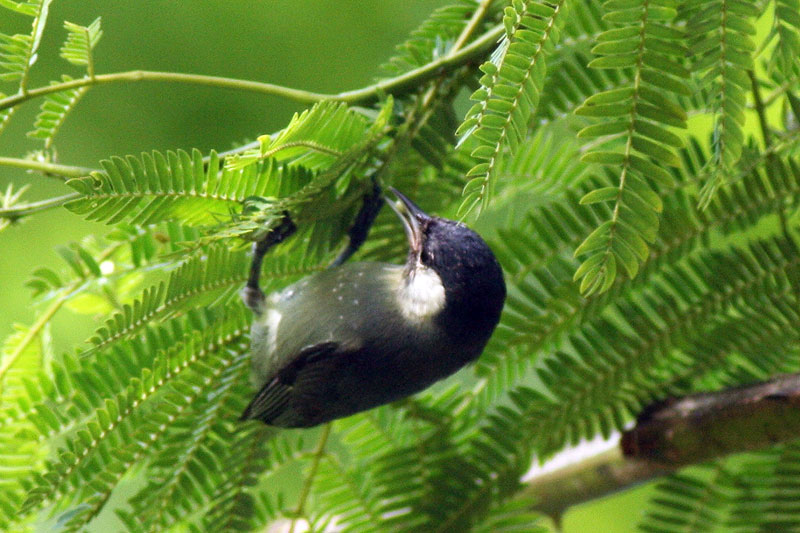
Wikipedia: White-eared conebill
The white-eared conebill (Conirostrum leucogenys) is a species of bird in the family Thraupidae.
[more]
Gattung Acanthidops:
Acanthidops bairdi / Peg-billed finch (Acanthidops bairdi)
Profil Wikipedia eBird Xeno-Canto

Wikipedia: Peg-billed finch
The peg-billed finch, Acanthidops bairdi, is a passerine bird endemic to the highlands of Costa Rica and western Panama. Despite its name, it is not a true finch, but now recognized as a member of the tanager family (Thraupidae), after being long placed in the Emberizidae. It is the only member of the genus Acanthidops. The scientific name commemorates the American ornithologist Spencer Fullerton Baird.
[more]
Gattung Emberizoides:
Emberizoides herbicola / Wedge-tailed grass-finch (Emberizoides herbicola)
Profil Wikipedia eBird Xeno-Canto

Wikipedia: Wedge-tailed grass-finch
The wedge-tailed grass finch (Emberizoides herbicola) is a species of bird in the family Thraupidae; it was formerly placed in the Emberizidae. It is found in Argentina, Bolivia, Brazil, Colombia, Costa Rica, Ecuador, French Guiana, Guyana, Panama, Paraguay, Peru, Suriname, Uruguay, and Venezuela.
[more]
Gattung Amaurospiza:
Amaurospiza concolor / Blue seedeater (Amaurospiza concolor)
Profil Wikipedia eBird Xeno-Canto

Wikipedia: Blue seedeater
The Cabanis's seedeater (Amaurospiza concolor) is a species of bird in the cardinal family Cardinalidae.[2] It is found in highland forest and woodland, mainly near bamboo, in southern Mexico and Central America. Due to its association with bamboo, it is often local and erratic in occurrence, but overall it is not considered threatened and therefore listed as Least Concern by BirdLife International and IUCN.[1]
[more]
Unterfamilie Thraupinae:
Gattung Saltator:

Wikipedia: Grayish saltator
The greyish saltator (Saltator coerulescens) is a passerine bird in the tanager family Thraupidae that is widespread in the tropical Americas. In El Salvador, it is well known as dichosofui after the "elaborate" version of its call, which sounds like a drawn-out ¡dichoso fui!, Spanish for "I was happy!"
[more]
Profil Wikipedia eBird Xeno-Canto

Wikipedia: Black-headed saltator
The black-headed saltator (Saltator atriceps) is a seed-eating bird in the tanager family Thraupidae. It breeds from central Mexico to eastern Panama.
[more]
Profil Wikipedia eBird Xeno-Canto

Wikipedia: Slate-colored grosbeak
The slate-coloured grosbeak (Saltator grossus) is a species of grosbeak in the family Thraupidae. Most of its range is the Amazon in South America, but it is also found in forests of the Chocó in Ecuador and Colombia, and southern Central America from Panama to Honduras.
[more]
Profil Wikipedia eBird Xeno-Canto

Wikipedia: Buff-throated saltator
The buff-throated saltator (Saltator maximus) is a seed-eating bird in the tanager family Thraupidae. It breeds from southeastern Mexico to western Ecuador and northeastern Brazil.
[more]
Profil Wikipedia eBird Xeno-Canto

Wikipedia: Streaked saltator
The streaked saltator (Saltator striatipectus) is a species of saltator in the family Thraupidae. It is found in Colombia, Costa Rica, Ecuador, Guadeloupe, Panama, Peru, and Venezuela.
[more]
Gattung Tangara:

Arenal blue gray tanager. 2018-02-27 13.05.16 Zentralamerika
We saw this on the grounds of Gamboa Rainforest Resort.
Allgemein: Die Blautangare (Tangara episcopus, Syn.: Thraupis episcopus), auch Bischofstangare oder Blaugraue Tangare genannt, ist eine Vogelart der Gattung der Schillertangaren (Tangara) aus der Familie der Tangaren (Thraupidae). Ihr natürliches Verbreitungsgebiet reicht von Mexiko bis nach Peru und dem Nordwesten Brasiliens. Die Art kommt außerdem auf Tobago und Trinidad vor.
[more]

Zoom one golden-hooded tanager on telephone wire. 2020-02-18 10.52.28
We saw this on a nature tour on the grounds of Gamboa Rainforest Resort. I noted it as a honeycreeper, which it is not - not sure if my mistake or the guide's.
Allgemein: Die Goldscheiteltangare (Stilpnia larvata, Syn.: Tangara larvata) früher auch Purpurmaskentangare ist eine in Mittel- und Südamerika vorkommende Vogelart aus der Familie der Tangaren (Thraupidae).
[more]
Profil Wikipedia eBird Xeno-Canto

Wikipedia: Bay-headed tanager
The bay-headed tanager (Tangara gyrola) is a medium-sized passerine bird. This tanager is a resident breeder in Costa Rica, Panama, South America south to Ecuador, Bolivia and southern Brazil, and on Trinidad.
[more]
Profil Wikipedia eBird Xeno-Canto

Wikipedia: Plain-colored tanager
The plain-colored tanager (Tangara inornata) is a species of bird in the family Thraupidae. It is found in Colombia, Costa Rica, and Panama. Its natural habitats are subtropical or tropical moist lowland forests and heavily degraded former forest.
[more]
Profil Wikipedia eBird Xeno-Canto

Wikipedia: Rufous-winged tanager
The rufous-winged tanager (Tangara lavinia) is a species of bird in the family Thraupidae. It is found in Colombia, Costa Rica, Ecuador, Honduras, Nicaragua, and Panama. Its natural habitats are subtropical or tropical moist lowland forests and heavily degraded former forest.
[more]
Profil Wikipedia eBird Xeno-Canto

Wikipedia: Emerald tanager
The emerald tanager (Tangara florida) is a species of bird in the family Thraupidae.
It is found in Colombia, Costa Rica, Ecuador, and Panama.
Its natural habitats are subtropical or tropical moist lowland forests and subtropical or tropical moist montane forests.
[more]

Wikipedia: Silver-throated tanager
Die Silberkehltangare (Tangara icterocephala) ist eine in Mittel- und Südamerika vorkommende Vogelart aus der Familie der Tangaren (Thraupidae).
[more]
Profil Wikipedia eBird Xeno-Canto

Wikipedia: Spangle-cheeked tanager
The spangle-cheeked tanager (Tangara dowii) is a medium-sized passerine bird. This tanager is an endemic resident breeder in the highlands of Costa Rica and western Panama.
[more]
Profil Wikipedia eBird Xeno-Canto

Wikipedia: Green-naped tanager
The green-naped tanager (Tangara fucosa) is a species of bird in the family Thraupidae. It is found in Colombia and Panama. Its natural habitat is subtropical or tropical moist montane forests. It is threatened by habitat loss.
[more]
Gattung Thraupis:
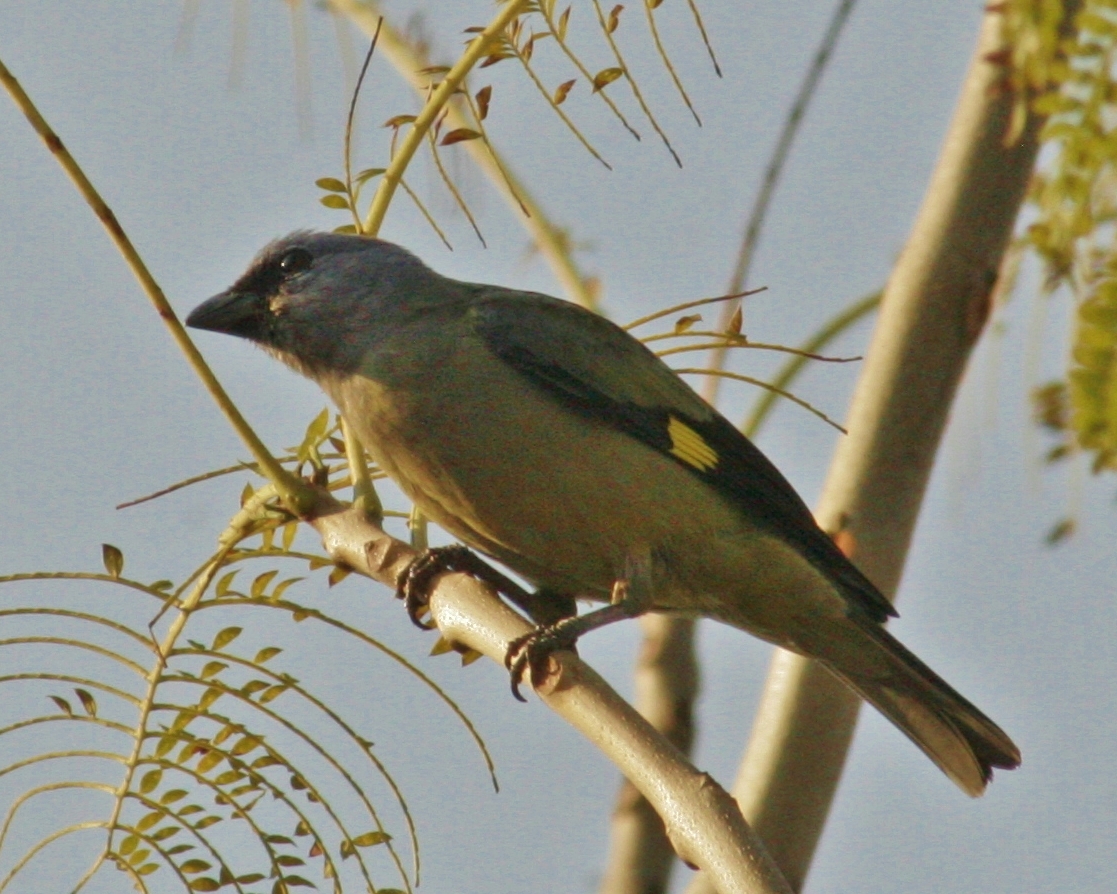
Wikipedia: Yellow-winged tanager
The yellow-winged tanager (Thraupis abbas) is a neotropical member of the tanager family. It is of average size for a tanager, about 18 centimetres (7 inches long). It is distinguished by the yellow patches on its dusky green wings, marking an otherwise dark bluish and gray body. It has a pale lavender tone on its throat and breast. The juvenile lacks this color, but has an olive-green head and upper back.
[more]

Arenal feeder palm tanager. 2018-02-27 12.23.14 Zentralamerika
The palm tanager (Thraupis palmarum) is a medium-sized passerine bird. This tanager is a resident breeder from Nicaragua south to Bolivia, Paraguay and southern Brazil.[2][3] It also breeds on Trinidad and, since 1962, on Tobago. In Trinidad and Tobago, it is known by colloquial names such as the "palmiste" and the "green jean".[4]
[more]
Gattung Bangsia:

Wikipedia: Blue-and-gold tanager
The blue-and-gold tanager (Bangsia arcaei) is a species of bird in the family Thraupidae.
It is found in Costa Rica and Panama.
Its natural habitats are subtropical or tropical moist lowland forests and subtropical or tropical moist montane forests.
It is threatened by habitat loss.
[more]
Familie Passerellidae:
Gattung Junco (Juncos):
Vulkanammer / Volcano junco (Junco vulcani)
Profil Wikipedia eBird Xeno-Canto

Wikipedia: Volcano junco
Die Vulkanammer (Junco vulcani), auch als Streifenwinterammer oder Streifenjunko bezeichnet, ist eine Singvogelart aus der Gattung der Junkos (Junco) in der Familie der Neuweltammern (Passerellidae). Sie kommt in Costa Rica und in Panama vor.
[more]
Gattung Zonotrichia:
Zonotrichia capensis / Rufous-collared sparrow (Zonotrichia capensis)

La fortuna rufous collared sparrow. 2018-02-26 10.16.56 Zentralamerika
The rufous-collared sparrow or Andean sparrow (Zonotrichia capensis) is an American sparrow found in a wide range of habitats, often near humans, from the extreme south-east of Mexico to Tierra del Fuego, and in the Caribbean, only on the island of Hispaniola (in both the Dominican Republic and Haiti). It is famous for its diverse vocalizations, which have been intensely studied since the 1970s, particularly by Paul Handford and Stephen C. Lougheed (UWO), Fernando Nottebohm (Rockefeller University) and Pablo Luis Tubaro (UBA). Local names for this bird include the Portuguese tico-tico, the Spanish chingolo, chincol and copetón, "tufted" in Colombia and comemaíz "corn eater" in Costa Rica.
[more]
Gattung Melospiza:
Singammer / Song sparrow (Melospiza melodia)
 Song sparrow, Cromwell Valley Park.JPG)
Here's a song sparrows Mark and I saw in Cromwell Valley Park. 2021-06-18 10.10.52
I had distinct memories of reading about the song sparrow in the two major books I read about bird biology in general (U. Cornell) and about birdsong by Marler and Slabbekoorn. Once I realized I heard them every morning at my mother's house and thoroughly enjoyed them - in Europe no sparrow really sings in any serious manner - I had to go back to read about all the research into song sparrows in those two books.
Gesang:  Nature's Music: the Science of Birdsong Peter Marler and Hans Slabbekoorn, 2004. In this study it was found that young song sparrows recognize both a typical sound type, a trill, and the temporal pattern of the song, whereas swamp sparrows only listen for the trill, having no complex song. [page 82: acoustic cues for species-selective song learning]
Ibid. The authors describe the singing with amusing terms, puff-sing-wave used to drive off a territorial intruder, and the aggressive 'zhee' call used throughout the year to threaten other species or other song sparrows. [page 165]
Ibid. It was seen (by Hiebert et al in 1989) that song sparrows with a larger repertoire acquired a territory more quickly and survived longer. [page 48]
Ibid. It was seen that song sparrows matched the song repertoire of a neighbor to show that they were recognized. The authors (Beecher et al 1996) said that though not very aggressive, echoing the song of a neighbor's repertoire is more aggressive than singing a completely different song. [page 50]
Ibid. Another theory is that knowing all the songs of a neighbor means that it is sufficient to just responds those songs. If a bird has had to move to a more distant area or knows fewer songs himself, he may need to fight more often to prove the same point. [page 51-52]
Ibid. Young birds are said to learn songs from either one adult male after hatching, therefore in the area his parents did their breeding, or after migration the following spring, in which case it learns other songs from a male there. Dialects happen because birds tend to breed and therefore to sing in the same local area where they learned their songs. [page 115-116]
The Cornell Lab of Ornithology Handbook of Bird Biology Edited by Irby J. Lovette and John W. Fitzpatrick, 2016. One study shows that birds under stress during song learning in early development produce poor quality songs with fewer copied notes. Females prefer songs learned with accuracy, so these poor stress-out kids are out of luck. [page 324]
Ibid. Beecher 2008 notes that song sparrows always learn an entire song and don't link two different songs; and that they tend to learn songs sung by many different males in their new neighbohood, making the song more useful to them. [page 375]
Ibid. Stoddard et all 1991 noted that though each song sparrow has a repertoire of 10 songs, the set of neighbors will have about 50 all in all, but each can recognize the individuals. As I understood from the discussion before that, the point is that each can recognize the other's voice if they both sing the same song [page 384]
Ibid. Here it's mentioned that birds with more songs in their repertoire live longer - whether song sparrows in North America or great tits, which live right by our home. [page 396]
Ibid. Some birds like white-crowned sparrows are "open ended learners", and could learn song sparrow songs but prefer those of their own species. These open ended learners continue to learn songs well into adulthood or even throughout their lives. [page 371]
Lincoln-Ammer / Lincoln's sparrow (Melospiza lincolnii)
Profil Wikipedia eBird Audubon AllAboutBirds Xeno-Canto

Wikipedia: Lincoln's sparrow
Allgemein: Die Lincoln-Ammer (Melospiza lincolnii) ist eine nordamerikanische Singvogelart, die in Kanada sowie in verschiedenen Teilen der USA (Alaska, Nordosten, Westen) vorkommt. Ihr Bestand gilt als stabil, in weiten Teilen ihres Verbreitungsgebiets kommt sie sogar häufig vor. Die Lincoln-Ammer wird deswegen als nicht gefährdete Art eingestuft.[1]
[more]
Gattung Chlorospingus:
Chlorospingus pileatus / Sooty-capped chlorospingus (Chlorospingus pileatus)
Profil Wikipedia eBird Xeno-Canto

Wikipedia: Sooty-capped chlorospingus
The sooty-capped bush tanager or sooty-capped chlorospingus (Chlorospingus pileatus) is a small passerine bird traditionally placed in the family Thraupidae, but now viewed closer to Arremonops in the Passerellidae. This bird is an endemic resident breeder in the highlands of Costa Rica and western Panama.
[more]
Chlorospingus canigularis / Ashy-throated chlorospingus (Chlorospingus canigularis)
Profil Wikipedia eBird Xeno-Canto

Wikipedia: Ashy-throated chlorospingus
The ashy-throated bush tanager (Chlorospingus canigularis) is a species of bird traditionally placed in the family Thraupidae, but perhaps closer to Arremonops in the Passerellidae.
It is found in Colombia, Costa Rica, Ecuador, Panama, Peru, and Venezuela.
Its natural habitats are subtropical or tropical dry forests, subtropical or tropical moist lowland forests, and subtropical or tropical moist montane forests.
[more]
Chlorospingus flavopectus / Common chlorospingus (Chlorospingus flavopectus)
Profil Wikipedia eBird Xeno-Canto

Wikipedia: Common chlorospingus
The common bush tanager (Chlorospingus flavopectus), also referred to as common chlorospingus, is a small passerine bird. It is a resident breeder in the highlands from central Mexico south to Bolivia and northwest Argentina. C. flavopectus in the loose sense is a notorious cryptic species complex, and several of the up to 25 subspecies recognized in recent times are likely to be distinct species. Some populations in fact appear to be more distinct than several other members of Chlorospingus.[2]
[more]
Chlorospingus tacarcunae / Tacarcuna chlorospingus (Chlorospingus tacarcunae)
Profil Wikipedia eBird Xeno-Canto

Wikipedia: Tacarcuna chlorospingus
The Tacarcuna bush tanager (Chlorospingus tacarcunae) is a species of bird traditionally placed in the family Thraupidae, but now viewed closer to Arremonops in the Passerellidae.
[more]
Chlorospingus flavigularis / Yellow-throated chlorospingus (Chlorospingus flavigularis)
Profil Wikipedia eBird Xeno-Canto

Wikipedia: Yellow-throated chlorospingus
The yellow-throated bush tanager (Chlorospingus flavigularis) is a species of bird traditionally placed in the family Thraupidae, but now closer to Arremonops in the Passerellidae. It is found in Bolivia, Colombia, Ecuador, Panama, and Peru.
[more]
Gattung Atlapetes:
Atlapetes tibialis / Yellow-thighed brushfinch (Atlapetes tibialis)
Profil Wikipedia eBird Xeno-Canto

Wikipedia: Yellow-thighed brushfinch
The yellow-thighed brushfinch (Atlapetes tibialis) is a passerine bird which is endemic to the highlands of Costa Rica and western Panama. Despite its name, it is not a true finch, but rather a member of the family Passerellidae, which also includes American sparrows, juncos and towhees.
[more]
Atlapetes albinucha / White-naped brush-finch (Atlapetes albinucha)

Wikipedia: White-naped brush-finch
The white-naped brushfinch (Atlapetes albinucha), also known as the yellow-throated brush finch, is a species of bird in the family Passerellidae.
[more]
Gattung Ammodramus:
Heuschreckenammer / Grasshopper sparrow (Ammodramus savannarum)
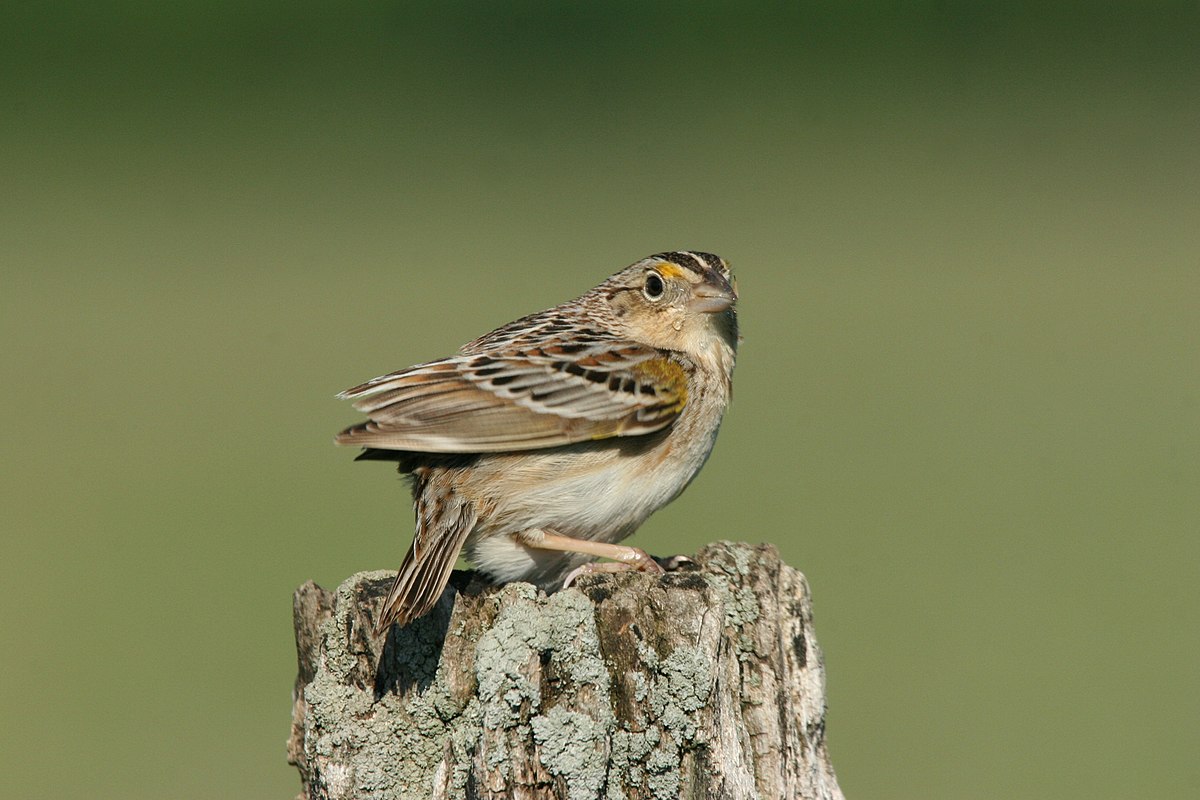
Wikipedia: Grasshopper sparrow
Die Heuschreckenammer (Ammodramus savannarum) ist eine der eher unauffällig gefärbten Neuweltammernarten Nordamerikas („Sparrows“). Sie ist in weiten Teilen Nordamerikas verbreitet. Die in Florida vorkommende Unterart Ammodramus savannarum floridanus gilt als stark gefährdet.[1]
[more]
Gattung Arremonops:
Arremonops rufivirgatus / Olive sparrow (Arremonops rufivirgatus)
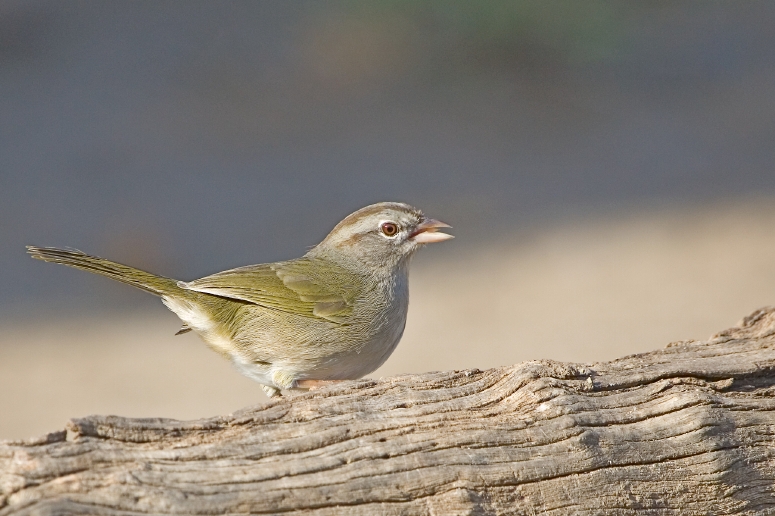
Wikipedia: Olive sparrow
The olive sparrow (Arremonops rufivirgatus) is a species of American sparrow in the family Passerellidae. (Other names include green finch and Texas sparrow.) Its range includes Belize, Costa Rica, Guatemala, Honduras, Mexico, Nicaragua and southern Texas (including the counties of Val Verde, Atascosa, and Nueces).
[more]
Arremonops conirostris / Black-striped sparrow (Arremonops conirostris)

Wikipedia: Black-striped sparrow
The black-striped sparrow (Arremonops conirostris) is a passerine bird found from eastern Honduras to western Ecuador, northern Brazil, and Venezuela.
[more]
Gattung Melozone:
Melozone cabanisi / Cabanis's ground-sparrow (Melozone cabanisi)
Profil Wikipedia eBird Xeno-Canto

Wikipedia: Cabanis's ground-sparrow
Cabanis's ground sparrow or Costa Rican ground sparrow (Melozone cabanisi), is an American sparrow. It previously was considered a subspecies of the Prevost's ground sparrow.
[more]
Melozone leucotis / White-eared ground-sparrow (Melozone leucotis)
Profil Wikipedia eBird Xeno-Canto

Wikipedia: White-eared ground-sparrow
The white-eared ground sparrow (Melozone leucotis) is a large American sparrow which breeds in a small range of Central America at middle altitudes from southern Mexico and Guatemala to northern Costa Rica. The species range is on the Pacific side of Central America, and Belize (on the Gulf of Mexico) and Honduras are not in its normal range.
[more]
Gattung Chondestes:
Chondestes grammacus / Lark sparrow (Chondestes grammacus)
Profil Wikipedia eBird Audubon AllAboutBirds Xeno-Canto

Wikipedia: Lark sparrow
The lark sparrow (Chondestes grammacus) is a fairly large New World sparrow. It is the only member of the genus Chondestes.
[more]
Gattung Aimophila:
Aimophila rufescens / Rusty sparrow (Aimophila rufescens)

Wikipedia: Rusty sparrow
The rusty sparrow (Aimophila rufescens) is a species of bird in the family Passerellidae that is found in Belize, Costa Rica, El Salvador, Guatemala, Honduras, Mexico and Nicaragua. Its natural habitats are subtropical or tropical dry forest, subtropical or tropical moist montane forest, and subtropical or tropical high-altitude shrubland.
[more]
Gattung Arremon:
Arremon crassirostris / Sooty-faced finch (Arremon crassirostris)

Wikipedia: Sooty-faced finch
The sooty-faced finch (Arremon crassirostris) is a species of bird in the family Emberizidae. Until recently, it was placed in the genus Lysurus.[2]
[more]
Arremon aurantiirostris / Orange-billed sparrow (Arremon aurantiirostris)
Profil Wikipedia eBird Xeno-Canto

Wikipedia: Orange-billed sparrow
The orange-billed sparrow (Arremon aurantiirostris) is a species of bird in the family Passerellidae.
In Central America it is found in Belize, Costa Rica, Guatemala, Honduras, Mexico, Nicaragua and Panama. In northwestern South America the orange-billed sparrow is found in Colombia, Ecuador and northern Peru. The species are black and as the name suggests, have an orange bill.[2] Its natural habitat is subtropical or tropical moist lowland forest.
[more]
Arremon costaricensis / Costa Rican brushfinch (Arremon costaricensis)
Profil Wikipedia eBird Xeno-Canto

Wikipedia: Costa Rican brushfinch
The Costa Rican brushfinch or grey-striped brushfinch[2] (Arremon costaricensis) is a species of bird in the family Passerellidae. It is found in the undergrowth of humid forest, especially near the edges, at altitudes of 300 to 1,200 metres (980 to 3,940 ft) in Panama and Costa Rica.[3][4]
[more]
Arremon brunneinucha / Chestnut-capped brush-finch (Arremon brunneinucha)

Wikipedia: Chestnut-capped brush-finch
The chestnut-capped brushfinch (Arremon brunneinucha), is a Neotropical passerine bird in the New World sparrow Passerellidae
[more]
Arremon atricapillus / Black-headed brushfinch (Arremon atricapillus)
Profil Wikipedia eBird Xeno-Canto

Wikipedia: Black-headed brushfinch
The black-headed brushfinch (Arremon atricapillus) is a species of bird in the family Passerellidae. It is found in the undergrowth of humid forest, especially near edges, at altitudes of 300 to 1,200 metres (980 to 3,940 ft) in Colombia and Panama.[2][3]
[more]
Gattung Pezopetes:
Pezopetes capitalis / Large-footed finch (Pezopetes capitalis)
Profil Wikipedia eBird Xeno-Canto

Wikipedia: Large-footed finch
The large-footed finch (Pezopetes capitalis) is a passerine bird endemic to the highlands of Costa Rica and western Panama. Despite its name, it is not a true finch, but rather a member of the large family Passerellidae, which also includes American sparrows, juncos and towhees. It is the only member of the genus Pezopetes.
[more]
Ordnung Charadriiformes (Regenpfeiferartige / Shorebirds and others):
Familie Laridae (Reiher / Gulls):
Unterfamilie Larinae (Möwen):
Gattung Larus:

Wikipedia: Herring gull
Dieser Vogel erscheint jenseits grossen Meere in Kontinenten :
Europa, Nordamerika, Südamerika.
Deutschland: Brut-, Jahres-, Zugvogel, Wintergast
Vokalisierung: Quite vocal. A long and strong "ay-kay-kay-kay-kay" with fading strength commonly heard. A deep "ga-ga-ga" heard from anxious birds. [Link]
Rufe: All calls much deeper pitched than Common Gull. Difficult to distinguish from Lesser Black-backed Gull, but tone is less nasal. [Link]
Körperlich: Länge=55-64 cm,
Flügelspanne=123-148 cm,
Gewicht=750-1440 g

Wikipedia: Ring-billed gull
Allgemein: The ring-billed gull (Larus delawarensis) is a medium-sized gull. The genus name is from Latin Larus which appears to have referred to a gull or other large seabird. The specific delawarensis refers to the Delaware River.[2]
[more]
Gattung Gelochelidon:
Lachseeschwalbe / Gull-billed tern (Gelochelidon nilotica)
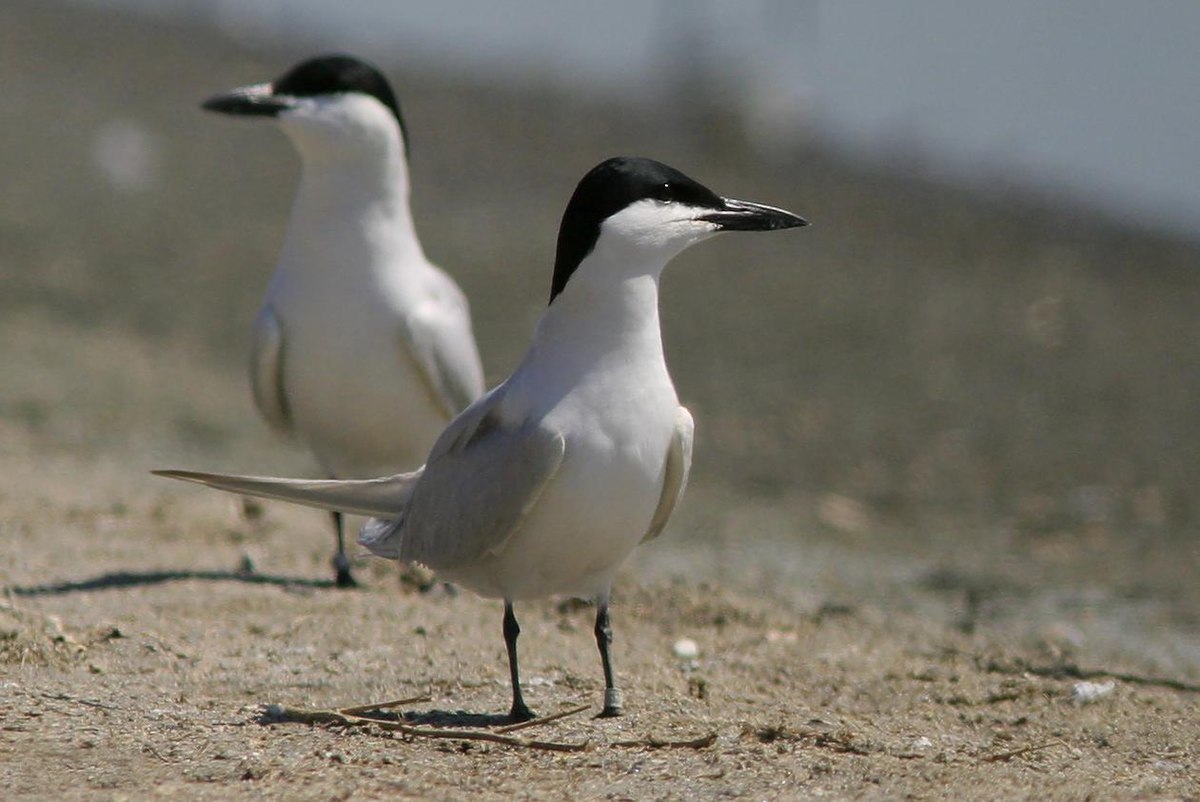
Wikipedia: Gull-billed tern
Dieser Vogel erscheint jenseits grossen Meere in Kontinenten :
Europa, Nordamerika, Südamerika, Afrika.
Die Lachseeschwalbe (Gelochelidon nilotica) ist eine Vogelart aus der Familie der Seeschwalben (Sternidae).
[more]
Gattung Creagrus:
Gabelschwanzmöwe / Swallow-tailed gull (Creagrus furcatus)

Wikipedia: Swallow-tailed gull
Die Gabelschwanzmöwe (Creagrus furcatus) ist eine 55–60 Zentimeter große nachtaktive Möwenart, die in Südamerika vertreten ist.
[more]
Gattung Xema:
Schwalbenmöwe / Sabine's gull (Xema sabini)

Wikipedia: Sabine's gull
Dieser Vogel erscheint jenseits grossen Meere in Kontinenten :
Europa, Nordamerika, Südamerika, Afrika.
Die Schwalbenmöwe (Xema sabini) ist eine Art der Möwen (Larinae) und steht in der monotypischen Gattung Xema. Sie ist ein Brutvogel der hochartkischen Tundra, die in Mitteleuropa alljährlich in geringer Zahl als Irrgast beobachtet werden kann. Typisch sind solche Einflüge bei starken Westwindlagen. So wurden in der Deutschen Bucht und im nordfriesischen Wattenmeer im Jahr 1997 insgesamt 71-mal Schwalbenmöwen gesichtet.[1]
[more]
Gattung Rynchops:
Schwarzmantel-Scherenschnabel / Black skimmer (Rynchops niger)
Profil Wikipedia eBird Xeno-Canto

Wikipedia: Black skimmer
Dieser Vogel erscheint jenseits grossen Meere in Kontinenten :
Südamerika, Afrika.
Der Schwarzmantel-Scherenschnabel (Rynchops niger), auch Amerikanischer Scherenschnabel, jetzt Amerikascherenschnabel[1] genannt, ist ein amerikanischer Vogel aus der Ordnung der Regenpfeiferartigen (Charadriiformes).[2]
[more]
Gattung Chlidonias:
Trauerseeschwalbe / Black tern (Chlidonias niger)
Profil Wikipedia eBird Vogelwarte BirdLife ZH Audubon AllAboutBirds Xeno-Canto BirdID NABU

Wikipedia: Black tern
Dieser Vogel erscheint jenseits grossen Meere in Kontinenten :
Europa, Nordamerika, Südamerika, Afrika.
Die Trauerseeschwalbe (Chlidonias niger) ist eine Vogelart aus der Familie der Seeschwalben (Sternidae), die in der Holarktis vorkommt.
[more]
Vokalisierung: Moderately vocal. [Link]
Rufe: Flight call a more or less clear "kleck, or a disyllabic "klee-ake" with accented first syllable. Sometimes slightly rolling "klirr-eke", but never as much as in White-winged Tern. Also a slightly harsher "kreek", but not as raspy as in Whiskered Tern. [Link]
Körperlich: Länge=22-24 cm,
Flügelspanne=64-68 cm,
Gewicht=60-86 g
Gattung Anous:
Noddi / Brown noddy (Anous stolidus)

Wikipedia: Brown noddy
Dieser Vogel erscheint jenseits grossen Meere in Kontinenten :
Nordamerika, Südamerika, Afrika.
Allgemein: Der Noddi (Anous stolidus; auch Noddiseeschwalbe oder wie im Englischen Noddy) bildet eine Art innerhalb der Unterfamilie der Noddiseeschwalben (Anoinae) innerhalb der Ordnung der Regenpfeiferartigen. Es werden mehrere Unterarten unterschieden.
[more]
Weißkappennoddi / Black noddy (Anous minutus)
Profil Wikipedia eBird Audubon AllAboutBirds Xeno-Canto

Wikipedia: Black noddy
Dieser Vogel erscheint jenseits grossen Meere in Kontinenten :
Nordamerika, Südamerika, Afrika, Australien.
Der Weißkappennoddi (Anous minutus) oder Weißkopfnoddi ist eine Art innerhalb der Unterfamilie der Noddiseeschwalben (Anoinae) in der Ordnung der Regenpfeiferartigen (Charadriiformes).
[more]
Gattung Gygis:
Feenseeschwalbe / White tern (Gygis alba )
Profil Wikipedia eBird Xeno-Canto
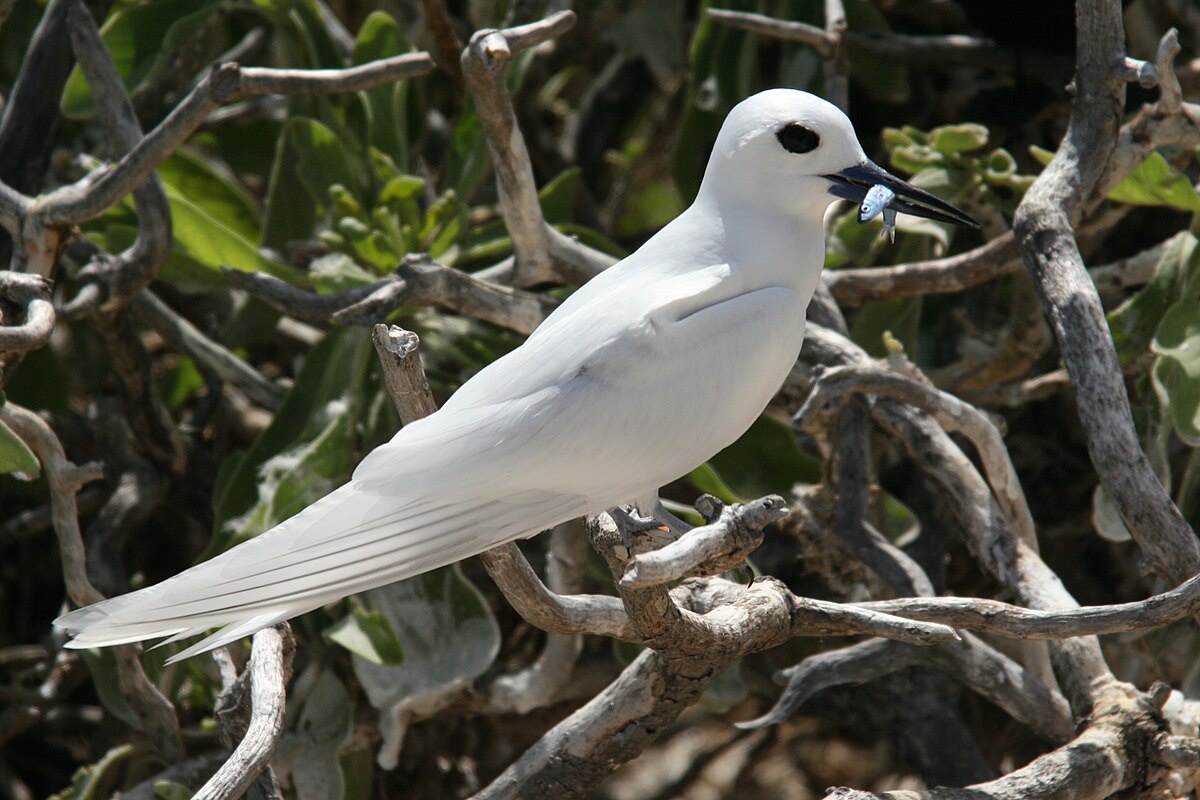
Wikipedia: White tern
Die Feenseeschwalbe (Gygis alba) ist eine Vogelart aus der Ordnung der Regenpfeiferartigen (Charadriiformes).
[more]
Gattung Leucophaeus:
Präriemöwe / Franklin's gull (Leucophaeus pipixcan)

Wikipedia: Franklin's gull
Dieser Vogel erscheint jenseits grossen Meere in Kontinenten :
Nordamerika, Südamerika, Afrika.
Die Präriemöwe (Leucophaeus pipixcan, Syn.: Larus pipixcan) oder Franklinmöwe ist eine mittelgroße, schwarzköpfige Möwenart, die vorwiegend im Bereich der Prairie Pothole Region in den nördlichen Great Plains Nordamerikas brütet und entlang der südamerikanischen Pazifikküste überwintert.
[more]
Aztekenmöwe / Laughing gull (Leucophaeus atricilla)

Wikipedia: Laughing gull
Dieser Vogel erscheint jenseits grossen Meere in Kontinenten :
Nordamerika, Südamerika, Australien.
vagrant
Gattung Hydroprogne:
Raubseeschwalbe / Caspian tern (Hydroprogne caspia)

Wikipedia: Caspian tern
Dieser Vogel erscheint jenseits grossen Meere in Kontinenten :
Europa, Nordamerika, Südamerika, Afrika.
Allgemein: Die Raubseeschwalbe (Hydroprogne caspia, Syn.: Sterna caspia) ist eine Vogelart aus der Ordnung der Regenpfeiferartigen.
Sie ist die größte Art der Familie der Seeschwalben.
[more]
Rufe: Easily recognized by its very harsh calls. Sometimes likened to the sound of a plate of steel being dragged across a concrete floor. Similar in harshness to Grey Heron, but more drawn, with an accented middle; "Kraaeeet", or with a double syllable start "ka-ha-kraaaeet". Immature birds begs with a penetrating, sharp whistle. [Link]
Körperlich: Länge=47-54 cm,
Flügelspanne=130-145 cm,
Gewicht=500-750 g
Gattung Onychoprion:
Rußseeschwalbe / Sooty tern (Onychoprion fuscatus)

Wikipedia: Sooty tern
Dieser Vogel erscheint jenseits grossen Meere in Kontinenten :
Nordamerika, Südamerika, Afrika.
Allgemein: Die Rußseeschwalbe (Onychoprion fuscatus) ist ein Seevogel aus der Familie der Seeschwalben. Früher wurde die Art in die Gattung Sterna gestellt.[1]
[more]
Zügelseeschwalbe / Bridled tern (Onychoprion anaethetus)
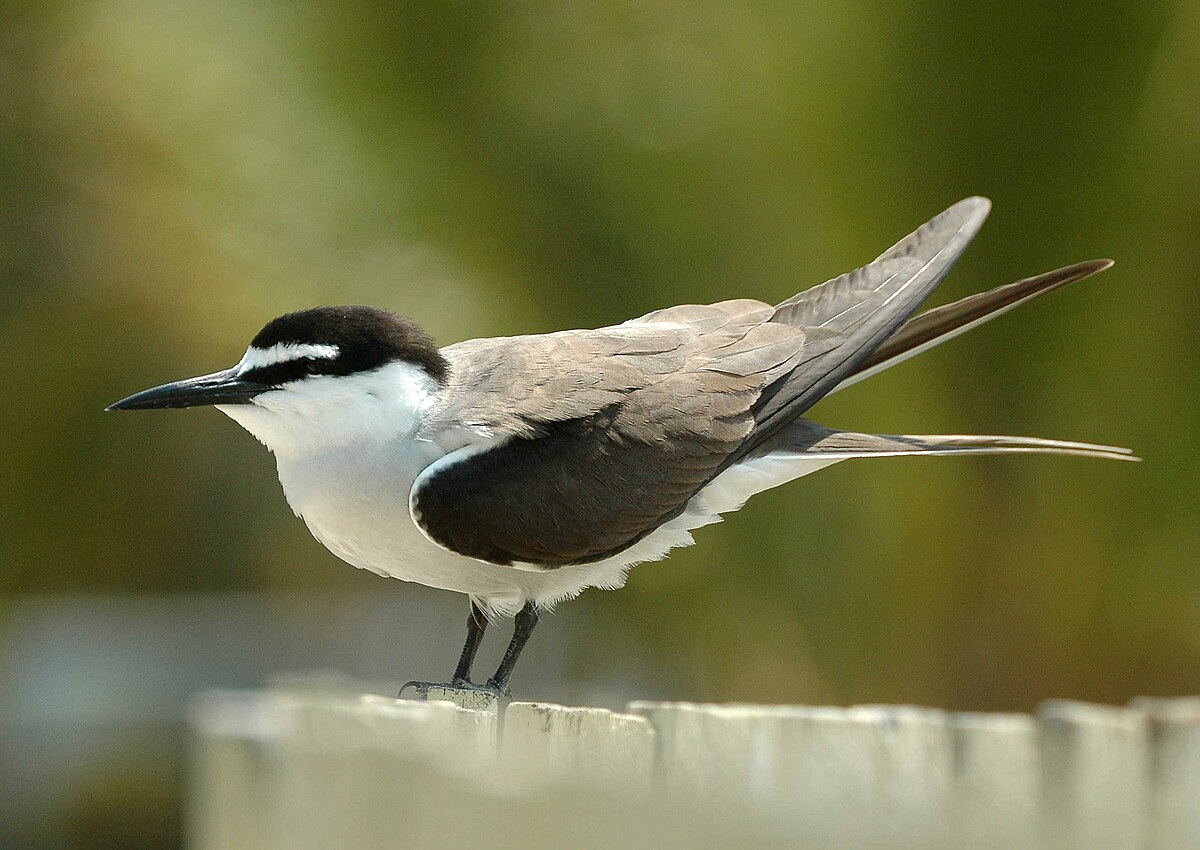
Wikipedia: Bridled tern
Dieser Vogel erscheint jenseits grossen Meere in Kontinenten :
Nordamerika, Südamerika, Afrika.
Die Zügelseeschwalbe (Onychoprion anaethetus, Syn.: Sterna anaethetus) ist ein Seevogel aus der Familie der Seeschwalben. Früher wurde sie in die Gattung Sterna gestellt (Bridge et al., 2005). Sie ist auf allen tropischen und subtropischen Meeren verbreitet.
[more]
Gattung Sternula:
Amerikanische Zwergseeschwalbe / Least tern (Sternula antillarum)

Wikipedia: Least tern
Die Amerikanische Zwergseeschwalbe (Sternula antillarum) ist eine Vogelart aus der Familie der Seeschwalben (Sternidae). Im Aussehen gleicht sie ihrer europäischen Verwandten, der Zwergseeschwalbe (Sternula albifrons), weicht aber vor allem in ihren Lautäußerungen von dieser ab. Mit einer Länge von 22–24 Zentimetern und einer Flügelspannweite von 51 Zentimetern gehört sie zu den kleinsten Seeschwalben.
[more]
Gattung Thalasseus:
Thalasseus elegans / Elegant tern (Thalasseus elegans)

Wikipedia: Elegant tern
Dieser Vogel erscheint jenseits grossen Meere in Kontinenten :
Südamerika, Afrika.
The elegant tern (Thalasseus elegans) is a tern in the family Laridae. It breeds on the Pacific coasts of the southern United States and Mexico and winters south to Peru, Ecuador and Chile.
[more]
Brandseeschwalbe / Sandwich tern (Thalasseus sandvicensis)

La tarde 5 sandwich terns tenative ID by Merlin. 2018-03-11 06.35.12 Zentralamerika
Dieser Vogel erscheint jenseits grossen Meere in Kontinenten :
Europa, Südamerika, Afrika.
Die Brandseeschwalbe (Thalasseus sandvicensis, bis 2005 Sterna sandvicensis) ist eine Vogelart der Gattung Thalasseus aus der Familie der Seeschwalben (Sternidae). In der Roten Liste der Brutvögel Deutschlands von 2015 wird die Art in der Kategorie 1 als vom Aussterben bedroht geführt.[1]
[more]
Rufe: Contact call a sharp and grating "keeree-eek". Often compared to the pressing of amalgam into a tooth. [Link]
Körperlich: Länge=36-41 cm,
Flügelspanne=95-105 cm,
Gewicht=215-275 g
Thalasseus maximus / Royal tern (Thalasseus maximus)

Wikipedia: Royal tern
Dieser Vogel erscheint jenseits grossen Meere in Kontinenten :
Europa, Nordamerika, Südamerika, Afrika.
Allgemein: The royal tern (Thalasseus maximus) is a tern in the family Laridae.
[more]
Thalasseus maxima / Royal tern (Thalasseus maxima)
Profil Wikipedia eBird Xeno-Canto
Wikipedia: Royal tern
The royal tern (Thalasseus maximus) is a tern in the family Laridae.
[more]
Familie Charadriidae (Regenpfeifer):
Gattung Vanellus:
Bronzekiebitz / Southern lapwing (Vanellus chilensis)
Profil Wikipedia eBird Xeno-Canto

Southern lapwings in Chile. 2019-02-17 15.23.52 Patagonien
Der Bronzekiebitz (Vanellus chilensis) ist ein mit einer Körperlänge von 37–38 Zentimetern ein sehr großer Vertreter der Familie der Regenpfeifer.
[more]
Gattung Charadrius:
Amerika-Sandregenpfeifer / Semipalmated plover (Charadrius semipalmatus)
Profil Wikipedia eBird Audubon AllAboutBirds Xeno-Canto NABU

Wikipedia: Semipalmated plover
Dieser Vogel erscheint jenseits grossen Meere in Kontinenten :
Europa, Nordamerika, Südamerika, Australien.
vagrant
Charadrius nivosus / Snowy plover (Charadrius nivosus)
Profil Wikipedia eBird Audubon AllAboutBirds Xeno-Canto

Wikipedia: Snowy plover
Allgemein: The snowy plover (Charadrius nivosus) is a small wader in the plover bird family, typically about 5-7" in length.[2] It breeds in Ecuador, Peru, Chile, the southern and western United States and the Caribbean. Long considered to be a subspecies of the Kentish plover, it is now known to be a distinct species.
[more]
Keilschwanz-Regenpfeifer / Killdeer (Charadrius vociferus)

Wikipedia: Killdeer
Der Keilschwanz-Regenpfeifer (Charadrius vociferus) ist eine amerikanische Vogelart aus der Familie der Regenpfeifer (Charadriidae). In Europa ist der Keilschwanz-Regenpfeifer ein seltener Irrgast. Er wird gelegentlich durch Herbst- und Winterstürme an die ostatlantischen Küsten verdriftet.[1]
[more]
Charadrius wilsonia / Wilson's plover (Charadrius wilsonia)
Profil Wikipedia eBird Audubon AllAboutBirds Xeno-Canto

Wikipedia: Wilson's plover
Wilson's plover (Charadrius wilsonia) is a small bird of the family Charadriidae.
[more]
Charadrius collaris / Collared plover (Charadrius collaris)
Profil Wikipedia eBird Xeno-Canto

Wikipedia: Collared plover
The collared plover (Charadrius collaris) is a small shorebird in the plover family, Charadriidae. It lives along coasts and riverbanks of the tropical to temperate Americas, from central Mexico south to Chile and Argentina.
[more]
Gattung Pluvialis:
Pluvialis dominica / American golden-plover (Pluvialis dominica)
Profil Wikipedia eBird Audubon AllAboutBirds Xeno-Canto
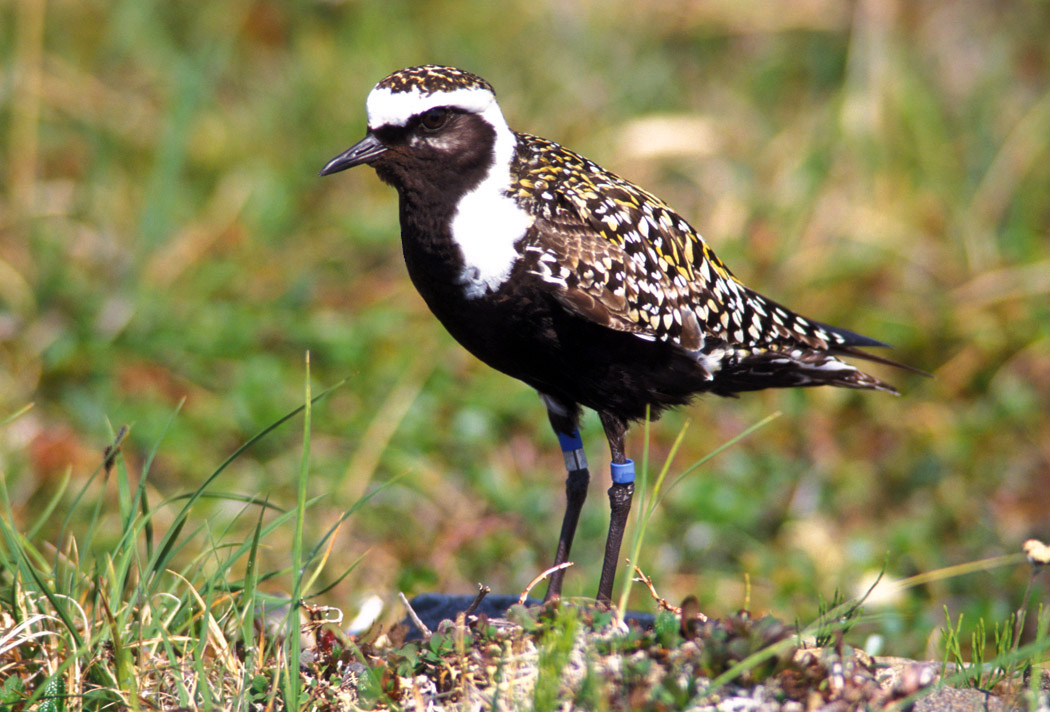
Wikipedia: American golden-plover
Dieser Vogel erscheint jenseits grossen Meere in Kontinenten :
Nordamerika, Südamerika, Afrika.
The American golden plover (Pluvialis dominica), or American golden-plover is a medium-sized plover. The genus name is Latin and means relating to rain, from pluvia, "rain". It was believed that golden plovers flocked when rain was imminent. The species name dominica refers to Santo Domingo, now Hispaniola, in the West Indies.[2]
[more]
Kiebitzregenpfeifer / Black-bellied plover (Pluvialis squatarola)

Black-bellied plover on its nest. 2016-09-25 16.50.10 Botswana
Dieser Vogel erscheint jenseits grossen Meere in Kontinenten :
Europa, Nordamerika, Südamerika, Afrika.
[more]
Rufe: Contact call diagnostic. A plaintive, drawn and trisyllabic (but continuous) "kleeooowee". Pitch falls on second syllable and rises on last. [Link]
Körperlich: Länge=27-30 cm,
Flügelspanne=71-83 cm,
Gewicht=190-280 g
Familie Scolopacidae (Schnepfenvögel / Shorebirds):
Gattung Calidris:
Kampfläufer / Ruff (Calidris pugnax)

Wikipedia: Ruff
Dieser Vogel erscheint jenseits grossen Meere in Kontinenten :
Europa, Nordamerika, Südamerika, Afrika.
Etymologie: Nabu: Der Name leitet sich vom Balzverhalten der Männchen ab: In Balzarenen tragen sie „Turniere“ aus, um die Weibchen zu beeindrucken, dabei herrscht eine komplizierte Rollenverteilung. [Link]
Vokalisierung: Generally silent. Short, muted, nasal, mono or disyllabic grunts sometimes heard. [Link]
Körperlich: Länge=26-30 cm,
Flügelspanne=54-58 cm,
Gewicht=75-230 g
Weißbürzelstrandläufer / White-rumped sandpiper (Calidris fuscicollis)
Profil Wikipedia eBird Audubon AllAboutBirds Xeno-Canto

Wikipedia: White-rumped sandpiper
Dieser Vogel erscheint jenseits grossen Meere in Kontinenten :
Nordamerika, Südamerika, Afrika.
Allgemein: Der Weißbürzelstrandläufer (Calidris fuscicollis) ist eine Vogelart aus der Familie der Schnepfenvögel. Die IUCN stuft den Weißbürzelstrandläufer als nicht gefährdet (least concern) ein und schätzt den Bestand auf 320.000 geschlechtsreife Individuen.[1]
[more]
Sichelstrandläufer / Curlew sandpiper (Calidris ferruginea)
Profil Wikipedia eBird Vogelwarte BirdLife ZH Audubon AllAboutBirds Xeno-Canto BirdID NABU

Wikipedia: Curlew sandpiper
Dieser Vogel erscheint jenseits grossen Meere in Kontinenten :
Europa, Nordamerika, Südamerika, Afrika.
Der Sichelstrandläufer (Calidris ferruginea) ist eine Vogelart aus der Familie der Schnepfenvögel (Scolopacidae). Er ist ein Brutvogel der Tundren Sibiriens. In Mitteleuropa ist er insbesondere während des Herbstzugs ein regelmäßiger Durchzügler. Im Wattenmeer der Niederlande werden jährlich zwischen 500 und 6.000 Individuen beobachtet. In sehr seltenen Fällen übersommern Sichelstrandläufer auch an der mitteleuropäischen Küste.[1]
[more]
Rufe: Flight call a soft, ringing and rolling "krrrrrt, with variations. Lacks the hoarse, nasal quality of similar call by Dunlin. [Link]
Körperlich: Länge=18-19 cm,
Flügelspanne=42-46 cm,
Gewicht=50-65 g
Knutt / Red knot (Calidris canutus)
Profil Wikipedia eBird Vogelwarte BirdLife ZH Audubon AllAboutBirds Xeno-Canto BirdID NABU

Wikipedia: Red knot
Dieser Vogel erscheint jenseits grossen Meere in Kontinenten :
Europa, Nordamerika, Südamerika, Afrika.
Allgemein: Der Knutt (Calidris canutus), auch Knuttstrandläufer genannt, ist ein Vogel aus der Familie der Schnepfenvögel (Scolopacidae). Er wurde möglicherweise nach dem anglo-skandinavischen König Knut dem Großen benannt, aber auch eine lautmalerische Benennung nach dem Klang seiner Rufe ist denkbar.
[more]
Gesang: Song an undulating, nasal mewing "poooor-mee", or "po-hor-mee". [Link]
Rufe: Most commonly heard migratory call, a short "kut" or "knot". Sometimes given in stuttering series. [Link]
Körperlich: Länge=23-25 cm,
Flügelspanne=57-61 cm,
Gewicht=110-160 g
Bairdstrandläufer / Baird's sandpiper (Calidris bairdii)
Profil Wikipedia eBird Audubon AllAboutBirds Xeno-Canto

Wikipedia: Baird's sandpiper
Dieser Vogel erscheint jenseits grossen Meere in Kontinenten :
Nordamerika, Südamerika, Afrika.
Allgemein: Der Bairdstrandläufer (Calidris bairdii) ist eine Art aus der Familie der Schnepfenvögel. Die IUCN stuft den Bairdstrandläufer als ungefährdet (least concern) ein. Der Bestand wird von der IUCN auf 300.000 geschlechtsreife Individuen geschätzt.[1]
[more]
Grasläufer / Buff-breasted sandpiper (Calidris subruficollis)

Wikipedia: Buff-breasted sandpiper
Dieser Vogel erscheint jenseits grossen Meere in Kontinenten :
Nordamerika, Südamerika, Afrika.
Der Grasläufer (Calidris subruficollis,[1] Syn.: Tryngites subruficollis) ist ein kleiner Watvogel, der in Nordamerika vorkommt und ist ein seltener Irrgast, also eine Ausnahmeerscheinung in Europa. Am häufigsten wird er in Großbritannien beobachtet, wo sich zwischen 1958 und 1982 insgesamt 680 Individuen einfanden. Dabei handelt es sich meist um Jungvögel, die im Frühherbst dorthin verdriftet werden. In Deutschland wurde er zwischen 1977 und 1997 insgesamt achtzehn Mal beobachtet.[2]
[more]
Sanderling / Sanderling (Calidris alba)
Profil Wikipedia eBird Vogelwarte BirdLife ZH Audubon AllAboutBirds Xeno-Canto BirdID NABU

Wikipedia: Sanderling
Dieser Vogel erscheint jenseits grossen Meere in Kontinenten :
Europa, Nordamerika, Südamerika, Afrika.
Der Sanderling (Calidris alba) ist ein kleiner Watvogel aus der Gattung der Strandläufer. Im Wattenmeer der Niederlande und Deutschlands taucht er vor allem im Winterhalbjahr in teils großen Schwärmen an der Nordseeküste auf, weitaus seltener im Binnenland. Er lässt sich außerdem ganzjährig zumindest in kleiner Zahl beobachten. An der Ostsee überwintert dagegen nur ein kleiner Teil der Sanderlinge. Während der Zugzeiten sind dort höchstens einige wenige hundert Vögel zu beobachten.
[more]
Rufe: Call not very diagnostic; a short and soft "pleet" or "keek". [Link]
Körperlich: Länge=20-21 cm,
Flügelspanne=40-45 cm,
Gewicht=44-70 g
Alpenstrandläufer / Dunlin (Calidris alpina)
Profil Wikipedia eBird Vogelwarte BirdLife ZH Audubon AllAboutBirds Xeno-Canto BirdID NABU

Wikipedia: Dunlin
Dieser Vogel erscheint jenseits grossen Meere in Kontinenten :
Europa, Nordamerika, Südamerika, Afrika.
Allgemein: Der Alpenstrandläufer (Calidris alpina) ist eine zirkumpolar verbreitete Vogelart aus der Familie der Schnepfenvögel (Scolopacidae). Es werden sechs bis zuweilen sogar zehn Unterarten unterschieden, die drei genetisch deutlich differenzierte Unterartengruppen bilden, von denen je eine in Europa, Sibirien und Alaska sowie Kanada verbreitet ist.[1]
[more]
Gesang: Song: A drawn out, nasal "tweeet", and ringing variations on the contact call in decrescendo. Low chattering heard from feeding birds. [Link]
Rufe: Contact call a diagnostic, very nasal "trrreeet" . Given throughout the year and in many situations, including when being flushed. [Link]
Körperlich: Länge=16-20 cm,
Flügelspanne=38-43 cm,
Gewicht=35-60 g
Graubrust-Strandläufer / Pectoral sandpiper (Calidris melanotos)
Profil Wikipedia eBird Audubon AllAboutBirds Xeno-Canto

Wikipedia: Pectoral sandpiper
Dieser Vogel erscheint jenseits grossen Meere in Kontinenten :
Nordamerika, Südamerika, Afrika.
Allgemein: Der Graubruststrandläufer (Calidris melanotos) ist eine Vogelart aus der Familie der Schnepfenvögel. Die IUCN stuft den Graubruststrandläufer als  (=least concern – nicht gefährdet) ein. Der Bestand wird von BirdLife International auf 25.000 bis 100.000 geschlechtsreife Individuen geschätzt.[1]
[more]
(=least concern – nicht gefährdet) ein. Der Bestand wird von BirdLife International auf 25.000 bis 100.000 geschlechtsreife Individuen geschätzt.[1]
[more]
Calidris himantopus / Stilt sandpiper (Calidris himantopus)

Wikipedia: Stilt sandpiper
Dieser Vogel erscheint jenseits grossen Meere in Kontinenten :
Nordamerika, Südamerika, Australien.
vagrant
Gischtläufer / Surfbird (Calidris virgata)
Profil Wikipedia eBird Audubon AllAboutBirds Xeno-Canto

Wikipedia: Surfbird
Allgemein: Der Gischtläufer (Calidris virgata, Syn.: Aphriza virgata) ist eine mittelgroße Vogelart aus der Familie der Schnepfenvögel (Scolopacidae).
[more]
Bergstrandläufer / Western sandpiper (Calidris mauri)
Profil Wikipedia eBird Audubon AllAboutBirds Xeno-Canto

Wikipedia: Western sandpiper
Der Bergstrandläufer (Calidris mauri) ist ein kleiner Watvogel aus der Gattung der Strandläufer. Bergstrandläufer sind die seltensten Irrgäste unter den amerikanischen Strandläufern in Europa.[1]
[more]
Sandstrandläufer / Semipalmated sandpiper (Calidris pusilla)

Wikipedia: Semipalmated sandpiper
Der Sandstrandläufer (Calidris pusilla) ist eine weitverbreitete, monotypische Art aus der Familie der Schnepfenvögel, der in der südlichen Tundra Alaskas und Kanada brütet. Er ist gelegentlich ein Irrgast in Europa und wird in Großbritannien und Irland fast alljährlich gesichtet.[1]
[more]
Wiesenstrandläufer / Least sandpiper (Calidris minutilla)
Profil Wikipedia eBird Audubon AllAboutBirds Xeno-Canto

Wikipedia: Least sandpiper
Der Wiesenstrandläufer (Calidris minutilla) ist eine Art aus der Familie der Schnepfenvögel. Er ist unter den Calidris-Arten die kleinste Art.
[more]
Gattung Numenius (Curlews):
Regenbrachvogel / Whimbrel (Numenius phaeopus)

Whimbrel on beach in San Christiano, Tenerife. 2022-03-19 11.16.50 Kanarische Inseln
Dieser Vogel erscheint jenseits grossen Meere in Kontinenten :
Europa, Nordamerika, Südamerika, Afrika.
Der Regenbrachvogel (Numenius phaeopus) ist mit einer Spannweite um die 80 cm viel kleiner als der Große Brachvogel, auch der Schnabel ist kürzer und der Oberkopf ist hell und dunkel gestreift. Der Ruf dieser Vogelart ähnelt einem hellen Trillern.
[more]
Gesang: Song starts similar to Curlew with long wailing notes "kluuueee", which then accelerates to a continuous, vibrating single note. Lacks the cyclic phrase ending of Curlew. [Link]
Körperlich: Länge=40-42 cm,
Flügelspanne=76-89 cm,
Gewicht=300-660 g
Numenius americanus / Long-billed curlew (Numenius americanus)
Profil Wikipedia eBird Audubon AllAboutBirds Xeno-Canto

Wikipedia: Long-billed curlew
Allgemein: The long-billed curlew (Numenius americanus) is a large North American shorebird of the family Scolopacidae. This species was also called "sicklebird"[2] and the "candlestick bird". The species breeds in central and western North America, migrating southward and coastward for the winter.
[more]
Gattung Arenaria (Turnstones):
Steinwälzer / Ruddy turnstone (Arenaria interpres)

Ruddy turnstone, San Christiana, Tenerife. 2022-03-19 10.26.30 Kanarische Inseln
Dieser Vogel erscheint jenseits grossen Meere in Kontinenten :
Europa, Nordamerika, Südamerika, Afrika.
Der Steinwälzer (Arenaria interpres) ist eine Vogelart aus der Familie der Schnepfenvögel (Scolopacidae). Der Steinwälzer verdankt seinen Namen seiner speziellen Art der Nahrungssuche, bei der er am Strand Steine und Muscheln umdreht. Er brütet in zwei Unterarten zirkumpolar in Tundren und der borealen sowie zum Teil der gemäßigten Zone. In Mitteleuropa ist er ein lokaler, sehr seltener Brut- und Sommervogel. Während der Zugzeiten sind im Nordwesten Mitteleuropas mehrere tausend Überwinterer sowie Durchzügler und Rastvögel zu beobachten.
[more]
Gesang: Alarm call/song more "wader-like", a staccato "kuvi-kuvi-vit-vit-vitua". [Link]
Rufe: Characteristic call: An explosive, hard, resonant and short "koi" or "kott" with a peculiar timbre, usually given in rapid or accelerating series. [Link]
Körperlich: Länge=22-24 cm,
Flügelspanne=50-57 cm,
Gewicht=85-150 g
Gattung Gallinago:
Wilsonbekassine / Wilson's snipe (Gallinago delicata)
Profil Wikipedia eBird Audubon AllAboutBirds Xeno-Canto

Wikipedia: Wilson's snipe
Allgemein: Die Wilsonbekassine (Gallinago delicata) ist eine mittelgroße, langschnäbelige Vogelart aus der Familie der Schnepfenvögel (Scolopacidae). Sie besiedelt große Teile Nordamerikas von den nördlichen USA nordwärts über Kanada und Alaska bis zur Tundrazone. Bis 2002 wurde sie als Unterart der paläarktisch verbreiteten Bekassine angesehen. Aufgrund verschiedener Merkmale wird ihr mittlerweile Artstatus zuerkannt.[1]
[more]
Gattung Limnodromus:
Großer Schlammläufer / Long-billed dowitcher (Limnodromus scolopaceus)
Profil Wikipedia eBird Audubon AllAboutBirds Xeno-Canto

Wikipedia: Long-billed dowitcher
Dieser Vogel erscheint jenseits grossen Meere in Kontinenten :
Nordamerika, Südamerika, Australien.
vagrant
Gattung Limosa:
Hudsonschnepfe / Hudsonian godwit (Limosa haemastica)
Profil Wikipedia eBird Audubon AllAboutBirds Xeno-Canto

Wikipedia: Hudsonian godwit
Dieser Vogel erscheint jenseits grossen Meere in Kontinenten :
Nordamerika, Südamerika, Afrika.
Allgemein: Die Hudsonschnepfe (Limosa haemastica), auch als Amerikanische Uferschnepfe bezeichnet, ist ein großer Watvogel aus der Gattung der Pfuhlschnepfen (Limosa).
[more]
Amerikanische Pfuhlschnepfe / Marbled godwit (Limosa fedoa)
Profil Wikipedia eBird Audubon AllAboutBirds Xeno-Canto

Wikipedia: Marbled godwit
Die Amerikanische Pfuhlschnepfe (Limosa fedoa, gelegentlich auch als Marmorschnepfe bezeichnet) ist ein großer Watvogel aus der Familie der Schnepfenvögel. Schwärme dieser Vögel können während der Wintermonate an den Küsten Nordamerikas beobachtet werden, während der Brutzeit migriert die Art jedoch zum Teil weit ins Landesinnere. Galt die Art einst als sehr häufiger Vogel, wurden ihre Bestände im 19. Jahrhundert durch Überjagung erheblich dezimiert. Dennoch gilt die Amerikanische Pfuhlschnepfe zurzeit als nicht gefährdet.
[more]
Gattung Tringa:
Kleiner Gelbschenkel / Lesser yellowlegs (Tringa flavipes)
Profil Wikipedia eBird Audubon AllAboutBirds Xeno-Canto

Wikipedia: Lesser yellowlegs
Dieser Vogel erscheint jenseits grossen Meere in Kontinenten :
Nordamerika, Südamerika, Afrika.
Der Kleine Gelbschenkel (Tringa flavipes) ist eine monotypische Vogelart aus der Familie der Schnepfenvögel. Er ist ein Brutvogel Nordamerikas und überwintert im Süden Nordamerikas sowie in Südamerika. Die IUCN stuft den Kleinen Gelbschenkel als (=least concern – nicht gefährdet) ein.
[more]
Wanderwasserläufer / Wandering tattler (Tringa incana)

Wikipedia: Wandering tattler
Dieser Vogel erscheint jenseits grossen Meere in Kontinenten :
Nordamerika, Südamerika, Australien.
Der Wanderwasserläufer (Tringa incanus, Syn.: Heteroscelus incanus) ist eine monotypische Art aus der Familie der Schnepfenvögel. Die Art kommt ausschließlich in der Nearktis vor. Die IUCN stuft den Wanderwasserläufer als nicht gefährdet (least concern) ein.[1]
[more]
Schlammtreter / Willet (Tringa semipalmata)

Wikipedia: Willet
Der Schlammtreter (Tringa semipalmata) ist eine Vogelart aus der Familie der Schnepfenvögel, deren zwei Unterarten sich deutlich in ihren ökologischen Ansprüchen unterscheiden. Die westliche Unterart T. p. inornata brütet in Binnensümpfen im Bereich der Prairie Pothole Region und des Großen Beckens im Inneren Nordwestamerikas; die Nominatform besiedelt die Ostküste Nordamerikas von Neufundland bis Tamaulipas sowie die Westindischen Inseln und brütet in Salzwiesen und Brackwassersümpfen.
[more]
Einsamer Wasserläufer / Solitary sandpiper (Tringa solitaria)
Profil Wikipedia eBird Audubon AllAboutBirds Xeno-Canto

Wikipedia: Solitary sandpiper
Der Einsame Wasserläufer (Tringa solitaria) ist eine Vogelart aus der Familie der Schnepfenvögel. Es werden mehrere Unterarten unterschieden. Die IUCN stuft den Einsamen Wasserläufer als ungefährdet (least concern) ein.
[more]
Tringa melanoleuca / Greater yellowlegs (Tringa melanoleuca)
Profil Wikipedia eBird Audubon AllAboutBirds Xeno-Canto

Wikipedia: Greater yellowlegs
Totanus melanoleucus
[more]
Gattung Actitis:
Drosseluferläufer / Spotted sandpiper (Actitis macularius)
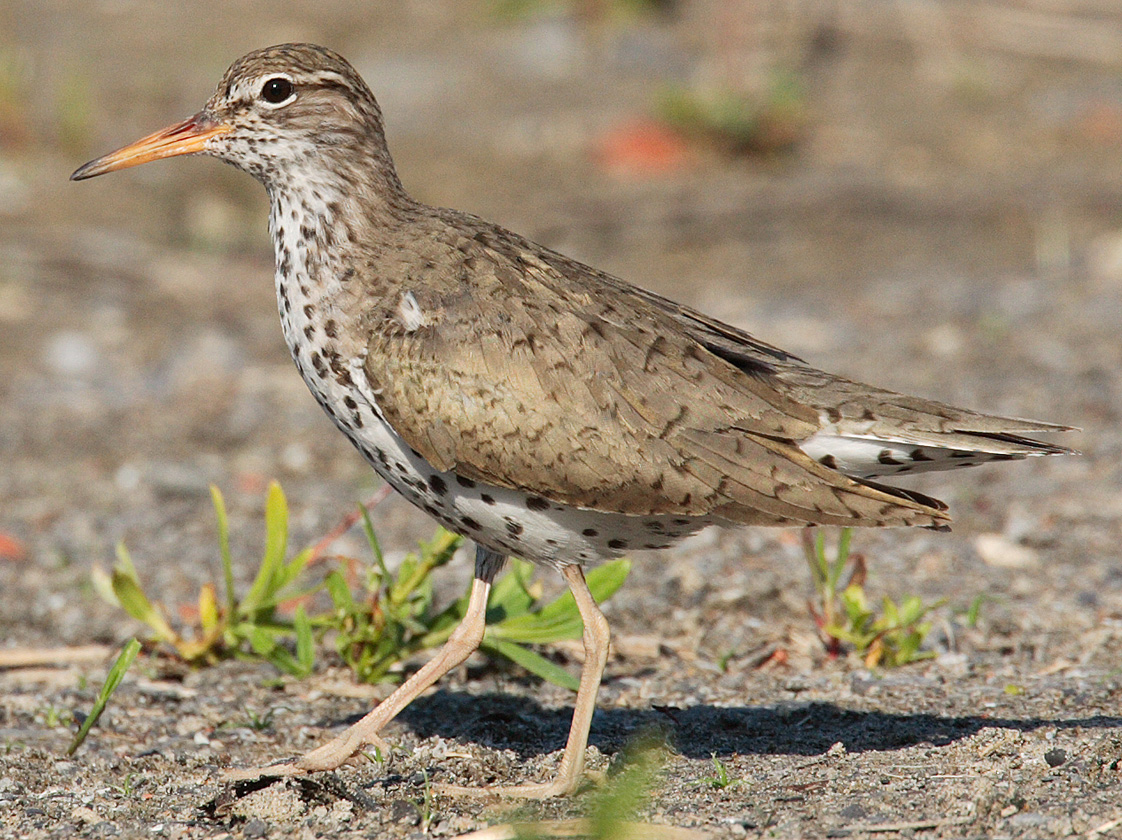
Wikipedia: Spotted sandpiper
Der Drosseluferläufer (Actitis macularius) ist eine monotypische Art aus der Familie der Schnepfenvögel. Er ist das nearktische Äquivalent des sehr ähnlichen Flussuferläufers. Die Bestandssituation des Drosseluferläufers wurde 2016 in der Roten Liste gefährdeter Arten der IUCN als „Least Concern (LC)“ = „nicht gefährdet“ eingestuft.
[more]
Gattung Phalaropus:
Thorshühnchen / Red phalarope (Phalaropus fulicarius)

Wikipedia: Red phalarope
Dieser Vogel erscheint jenseits grossen Meere in Kontinenten :
Europa, Nordamerika, Südamerika, Afrika.
Das Thorshühnchen (Phalaropus fulicaria) ist eine Art aus der Gattung der Wassertreter. Es zählt zu den arktischen Schnepfenvögeln und kann gelegentlich während seiner Zugzeit an der deutschen Nordseeküste beobachtet werden. Während dieser Zeit trägt es jedoch sein Schlicht- oder Ruhekleid, in dem es dem Odinshühnchen sehr ähnelt, das sich sehr viel häufiger als das Thorshühnchen einzeln oder in kleinen Trupps dort einfindet.
[more]
Rufe: Flight-call a short and sharp, Coot-like "kit". Cleaner and higher pitched than Red-necked Phalarope. Display sound a rolling cooing, at stable pitch. Other calls: a hissing like the squeezing of a rubber duck, rising quickly in pitch and ending abruptly. [Link]
Körperlich: Länge=20-22 cm,
Flügelspanne=40-44 cm,
Gewicht=40-75 g
Wilson-Wassertreter / Wilson's phalarope (Phalaropus tricolor)
Profil Wikipedia eBird Audubon AllAboutBirds Xeno-Canto

Wikipedia: Wilson's phalarope
Dieser Vogel erscheint jenseits grossen Meere in Kontinenten :
Nordamerika, Südamerika, Afrika.
Allgemein: Der Wilson-Wassertreter (Steganopus tricolor, Syn.: Phalaropus tricolor) ist eine Vogelart aus der Familie der Schnepfenvögel. Die Erstbeschreibung stammt von Louis Pierre Vieillot und ist dem amerikanischen Ornithologen Alexander Wilson gewidmet.
[more]
Odinshühnchen / Red-necked phalarope (Phalaropus lobatus)
Profil Wikipedia eBird Audubon AllAboutBirds Xeno-Canto NABU

Wikipedia: Red-necked phalarope
Dieser Vogel erscheint jenseits grossen Meere in Kontinenten :
Europa, Nordamerika, Südamerika, Afrika.
Das Odinshühnchen (Phalaropus lobatus) ist eine Art aus der Gattung der Wassertreter. Es zählt zu den arktischen Schnepfenvögeln und kann gelegentlich während seiner Zugzeit in den Monaten August und September sowie April und Mai an der deutschen Nordseeküste beobachtet werden.
[more]
Gattung Bartramia:
Prärieläufer / Upland sandpiper (Bartramia longicauda)
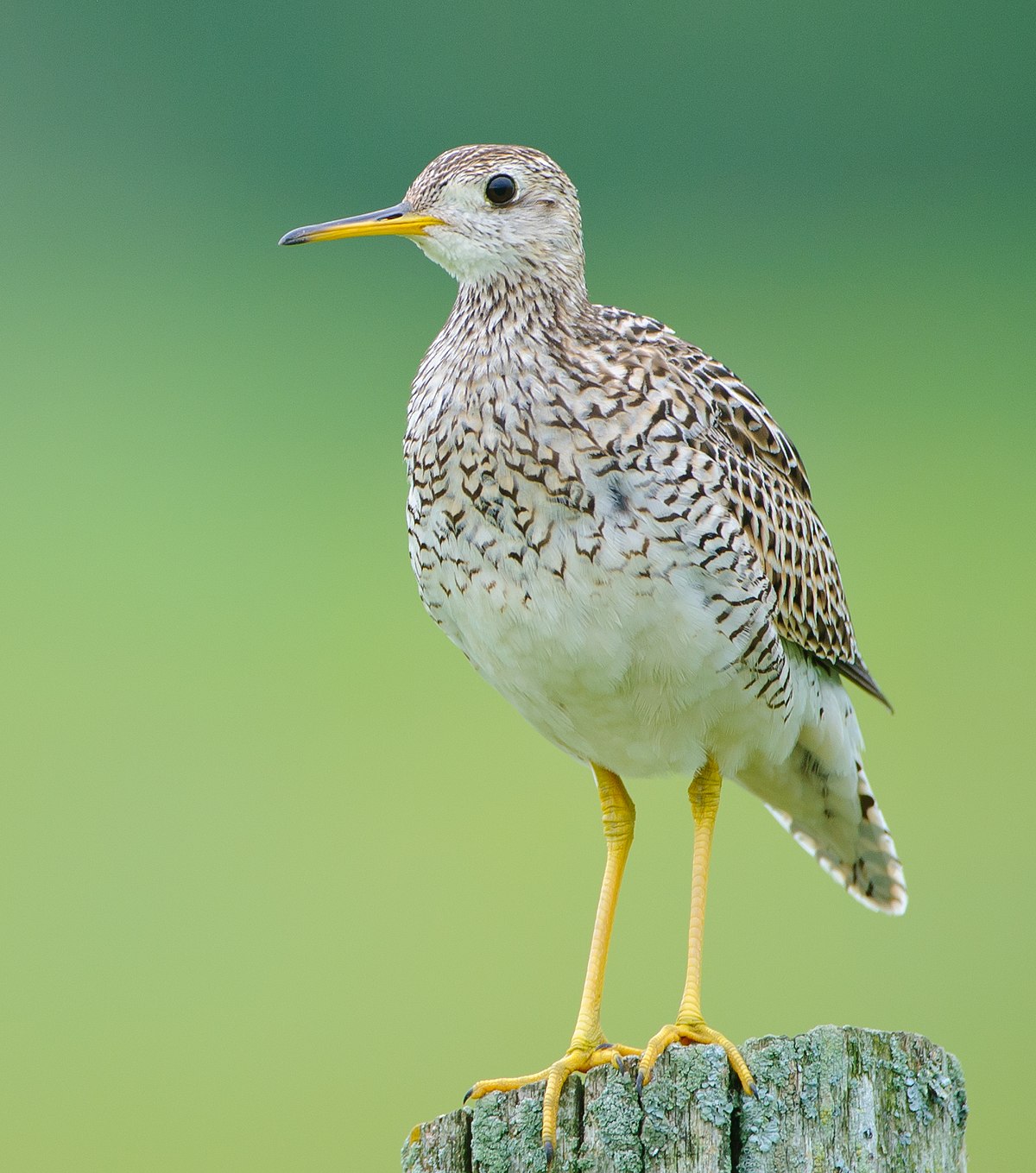
Wikipedia: Upland sandpiper
Dieser Vogel erscheint jenseits grossen Meere in Kontinenten :
Nordamerika, Südamerika, Australien.
vagrant
Unterfamilie Sterninae (Möwenverwandte / Terns):
Gattung Sterna:
Flussseeschwalbe / Common tern (Sterna hirundo)
Profil Wikipedia eBird Vogelwarte BirdLife ZH Audubon AllAboutBirds Xeno-Canto BirdID NABU

Common tern pfaeffikersee. 2020-05-20 09.31.28 Pfäffikersee
Dieser Vogel erscheint jenseits grossen Meere in Kontinenten :
Europa, Nordamerika, Südamerika, Afrika.
Saisonal: Die Flussseeschwalbe (Sterna hirundo) ist eine Vogelart aus der Familie der Seeschwalben (Sternidae).
Sie ist in Mitteleuropa ein verbreiteter, aber nicht sehr häufiger Brut- und Sommervogel.
Während der Zugzeiten können im mitteleuropäischen Raum außerdem viele Durchzügler beobachtet werden. [Link]
Vokalisierung: Similar to Arctic Tern but deeper. [Link]
Rufe: Lacks latter's high pitched "tip-tip-tip" call, and the drawn out "kree-aaahh" call falls more distinctly in pitch. [Link]
Körperlich: Länge=31-35 cm,
Flügelspanne=77-98 cm,
Gewicht=110-150 g
Küstenseeschwalbe / Arctic tern (Sterna paradisaea)
Profil Wikipedia eBird Vogelwarte BirdLife ZH Audubon AllAboutBirds Xeno-Canto BirdID NABU
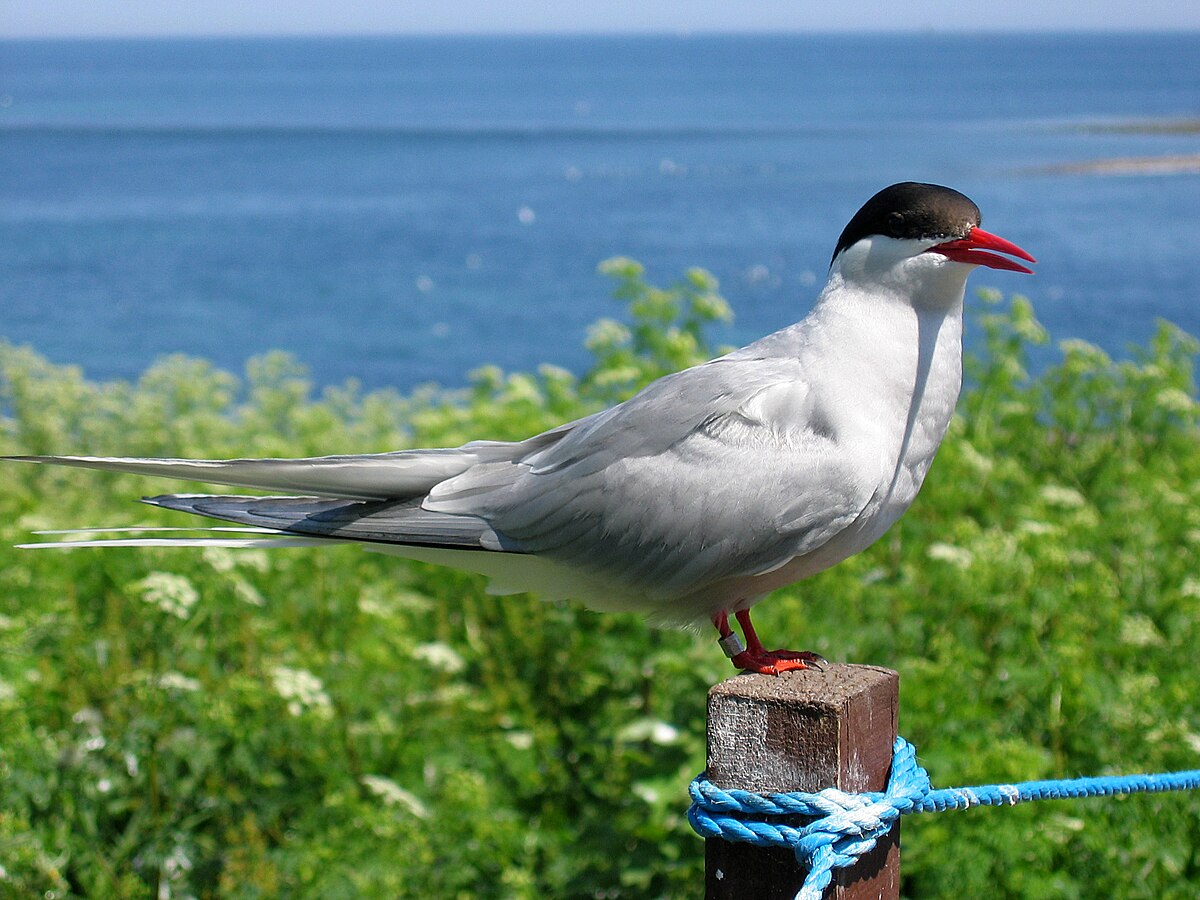
Wikipedia: Arctic tern
Dieser Vogel erscheint jenseits grossen Meere in Kontinenten :
Europa, Nordamerika, Südamerika, Afrika.
Allgemein: Die Küstenseeschwalbe (Sterna paradisaea) ist eine Vogelart aus der Unterfamilie der Seeschwalben (Sterninae). Sie gilt als der Zugvogel mit der längsten Zugstrecke, da sie in der Nordpolarregion brütet und in den Südpolarregionen überwintert.
[more]
Vokalisierung: Similar to Common Tern but higher pitched. [Link]
Rufe: Typical call a series of high pitched "tip-tip-tip", and longer, ringing, high-pitched "kriiiiii" calls. The drawn out "kree-aaahh" call falls less distinctly in pitch than Common Tern. [Link]
Körperlich: Länge=33-35 cm,
Flügelspanne=75-85 cm,
Gewicht=95-120 g
Sterna forsteri / Forster's tern (Sterna forsteri)
Profil Wikipedia eBird Audubon AllAboutBirds Xeno-Canto

Wikipedia: Forster's tern
Allgemein: Forster's tern (Sterna forsteri) is a tern in the family Laridae. The genus name Sterna is derived from Old English "stearn", "tern",[2] and forsteri commemorates the naturalist Johann Reinhold Forster.[3]
[more]
Familie Haematopodidae (Oystercatchers):
Gattung Haematopus:
Braunmantel-Austernfischer / American oystercatcher (Haematopus palliatus)
Profil Wikipedia eBird Audubon AllAboutBirds Xeno-Canto

Wikipedia: American oystercatcher
Der Braunmantel-Austernfischer (Haematopus palliatus) ist eine Art aus der Familie der Austernfischer. Die Art kommt in Nord-, Zentral- und Südamerika vor. Es werden mehrere Unterarten unterschieden.
[more]
Familie Stercorariidae:
Gattung Stercorarius:
Spatelraubmöwe / Pomarine jaeger (Stercorarius pomarinus)
Profil Wikipedia eBird Vogelwarte BirdLife ZH Audubon AllAboutBirds Xeno-Canto BirdID NABU
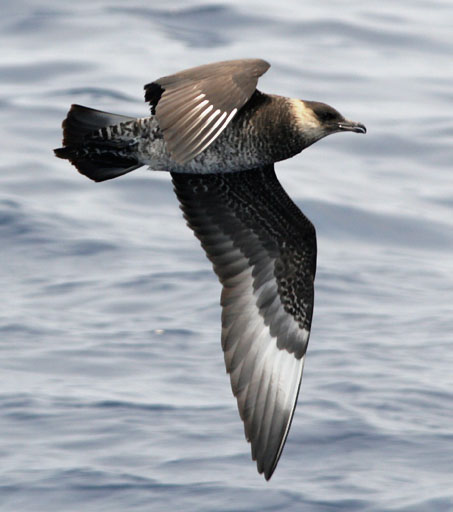
Wikipedia: Pomarine jaeger
Dieser Vogel erscheint jenseits grossen Meere in Kontinenten :
Europa, Nordamerika, Südamerika, Afrika.
Die Spatelraubmöwe (Stercorarius pomarinus) ist eine Vogelart aus der Familie der Raubmöwen (Stercorariidae). Sie brütet in der arktischen Tundra rund um den Nordpol und ist dort ein hochspezialisierter Jäger von Lemmingen. Außerhalb der Brutzeit leben Spatelraubmöwen auf hoher See, sie überwintern auf den Meeren der Tropen und Subtropen. Die Art ist regelmäßiger Durchzügler an der Nordseeküste, im Binnenland Europas wird sie nur sehr selten beobachtet.
[more]
Rufe: Short "kea" or "ke", and various mewing calls, usually deeper pitched than Arctic Skua. Also a characteristic, laughing and vibrating "kayayayayaya", heard mostly on breeding ground. [Link]
Körperlich: Länge=46-51 cm,
Flügelspanne=125-138 cm,
Gewicht=600-900 g
Schmarotzerraubmöwe / Parasitic jaeger (Stercorarius parasiticus)
Profil Wikipedia eBird Vogelwarte BirdLife ZH Audubon AllAboutBirds Xeno-Canto BirdID NABU

Wikipedia: Parasitic jaeger
Dieser Vogel erscheint jenseits grossen Meere in Kontinenten :
Europa, Nordamerika, Südamerika, Afrika.
Allgemein: Die Schmarotzerraubmöwe (Stercorarius parasiticus) ist ein Meeresvogel aus der Familie Stercorariidae. Die zirkumpolar in den Tundren und Küstensümpfen Eurasiens und Nordamerikas brütende Art ist unter den Raubmöwen die häufigste Art, die in Mitteleuropa während der Zugzeiten an den Küsten beobachtet werden kann.[1]
[more]
Vokalisierung: Mostly heard at breeding ground. [Link]
Rufe: Most characteristic call is a mewing, kittiwake-like "aeeeee-ah". First syllable drawn-out and rising in pitch, and followed by a deeper conclusive second syllable "ah". Lacks the introductory double accent of Kittiwakes ("kitti-wake"). [Link]
Körperlich: Länge=41-46 cm,
Flügelspanne=110-125 cm,
Gewicht=330-570 g
Familie Jacanidae (Jacanas):
Gattung Jacana:
Gelbstirn-Blatthühnchen / Northern jacana (Jacana spinosa)
Profil Wikipedia eBird Xeno-Canto

Wikipedia: Northern jacana
Allgemein: Das Gelbstirn-Blatthühnchen (Jacana spinosa) ist ein amerikanischer Vogel aus der Ordnung der Regenpfeiferartigen (Charadriiformes).
[more]
Jacana jacana / Wattled jacana (Jacana jacana)
Profil Wikipedia eBird Xeno-Canto

Wikipedia: Wattled jacana
The wattled jacana (Jacana jacana) is a wader which is a resident breeder from western Panama and Trinidad south through most of South America east of the Andes.
[more]
Familie Burhinidae (Triele, Haematopodidae – Austernfischer und Recurvirostridae – Säbelschnäblerverwandte):
Gattung Burhinus:
Burhinus bistriatus / Double-striped thick-knee (Burhinus bistriatus)

Wikipedia: Double-striped thick-knee
The double-striped thick-knee (Burhinus bistriatus) is a stone-curlew, a group of waders in the family Burhinidae. The vernacular name refers to the prominent joints in the long greenish-grey legs, and bistriatus to the two stripes of the head pattern.
[more]
Familie Recurvirostridae:
Gattung Recurvirostra:
Amerikanischer Säbelschnäbler / American avocet (Recurvirostra americana)
Profil Wikipedia eBird Audubon AllAboutBirds Xeno-Canto

Wikipedia: American avocet
Der Amerikanische Säbelschnäbler (Recurvirostra americana) ist eine Vogelart aus der Familie der Säbelschnäbler (Recurvirostridae).
[more]
Gattung Himantopus:
Amerikanischer Stelzenläufer / Black-necked stilt (Himantopus mexicanus)
Profil Wikipedia eBird Audubon AllAboutBirds Xeno-Canto
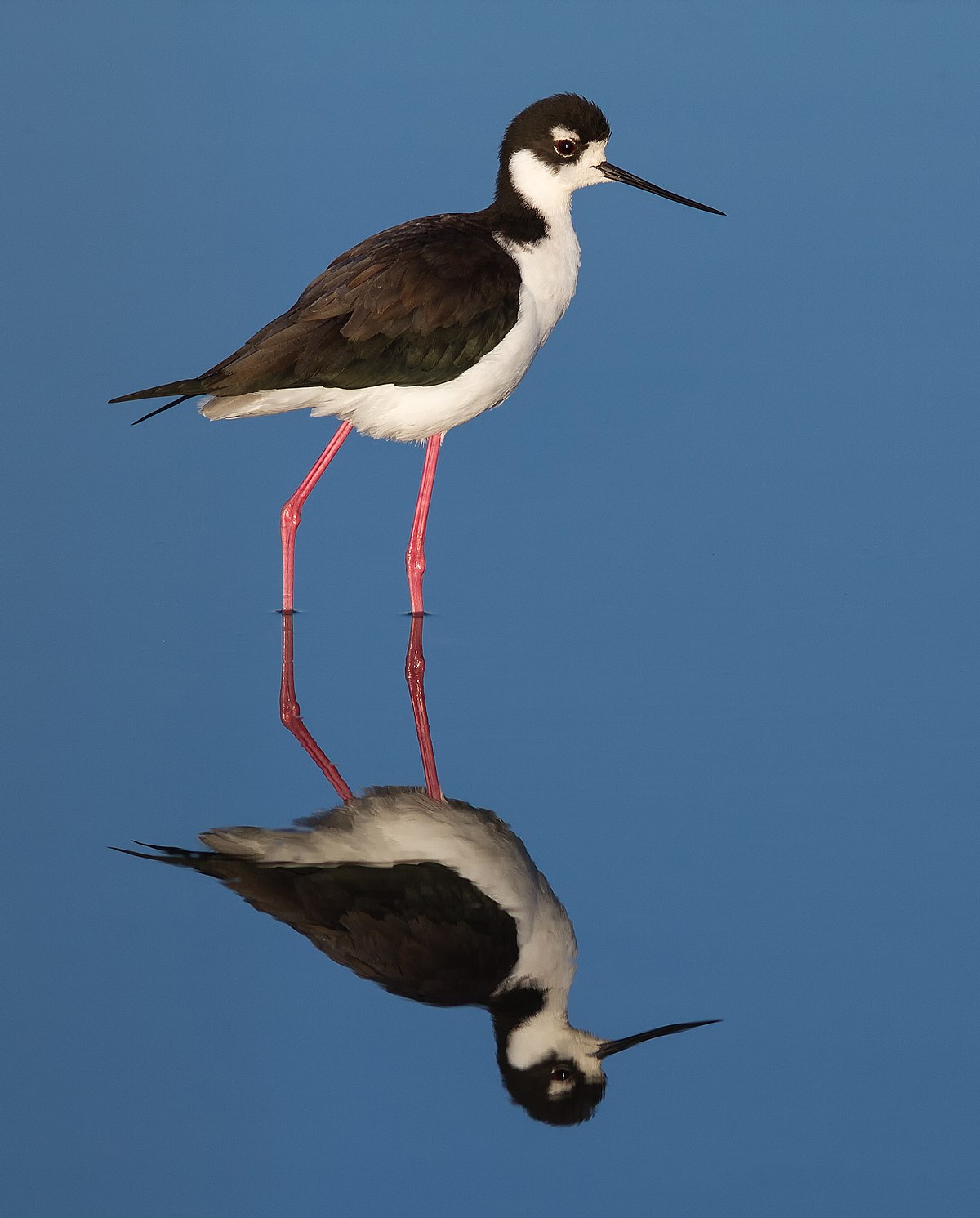
Wikipedia: Black-necked stilt
Der Amerikanische Stelzenläufer (Himantopus mexicanus) ist eine Art aus der Familie der Säbelschnäbler. Die taxonomischer Einordnung als eigenständige Art ist nicht unumstritten. Von einigen Autoren wird die Art auch als Unterart des Stelzenläufers (Himantopus himantopus) eingeordnet.
[more]
Ordnung Gruiformes (Kranichvögel / Terrestrial and marshbirds):
Familie Rallidae (Rallen / Rails):
Gattung Fulica (Coots):
Fulica americana / American coot (Fulica americana)
Profil Wikipedia eBird Audubon AllAboutBirds Xeno-Canto
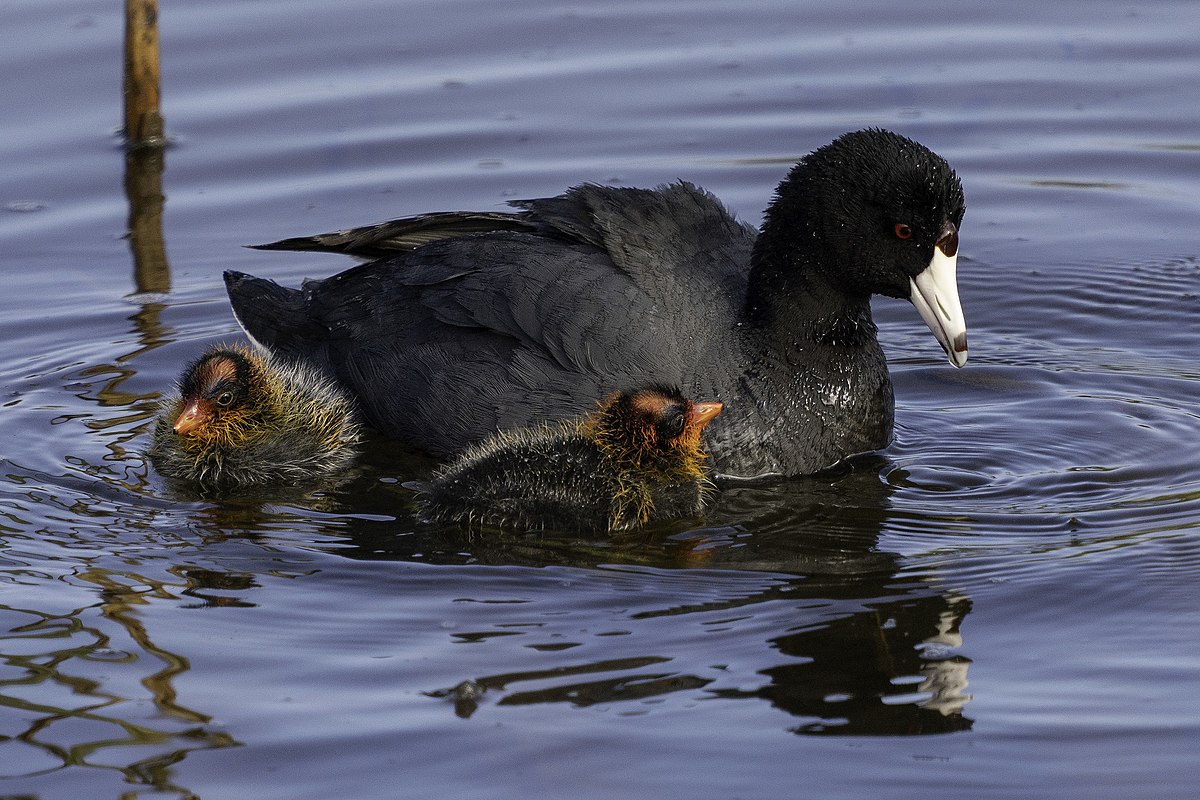
Wikipedia: American coot
The American coot (Fulica americana), also known as a mud hen or pouldeau, is a bird of the family Rallidae. Though commonly mistaken for ducks, American coots are only distantly related to ducks, belonging to a separate order. Unlike the webbed feet of ducks, coots have broad, lobed scales on their lower legs and toes that fold back with each step in order to facilitate walking on dry land.[2] Coots live near water, typically inhabiting wetlands and open water bodies in North America. Groups of coots are called covers[3] or rafts.[citation needed] The oldest known coot lived to be 22 years old.[2]
[more]
Gattung Rallus:
Klapperralle / Mangrove rail (Rallus longirostris)
Profil Wikipedia eBird Xeno-Canto

Wikipedia: Mangrove rail
Die Klapperralle (Rallus longirostris) ist ein mittelgroßer Bodenvogel aus der Familie der Rallen. Klapperrallen leben am Wasser, vornehmlich in Salz- und Brackwassermarschen, in den Tropen und Subtropen aber auch in Süßwassermarschen. Ihre Verbreitung erstreckt sich von Kalifornien über Zentralamerika und die Karibik bis nach Südamerika. Erstmals beschrieb der niederländische Arzt und Naturforscher Pieter Boddaert die Klapperralle im Jahr 1783.
[more]
Gattung Gallinula:
Gallinula galeata / Common gallinule (Gallinula galeata)
Profil Wikipedia eBird Audubon AllAboutBirds Xeno-Canto
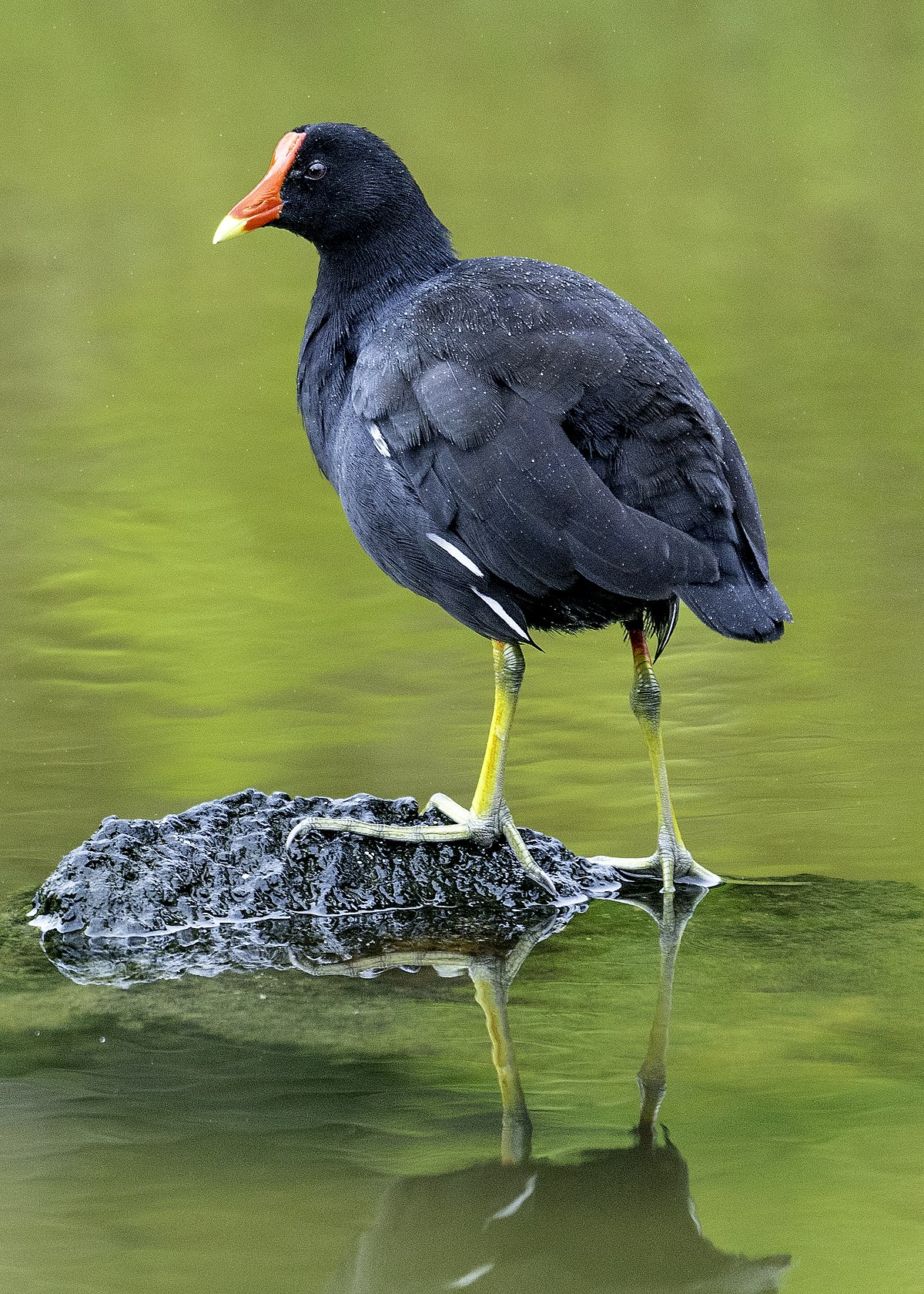
Wikipedia: Common gallinule
The common gallinule (Gallinula galeata) is a bird in the family Rallidae. It was split from the common moorhen by the American Ornithologists' Union in July 2011.[3] It lives around well-vegetated marshes, ponds, canals, and other wetlands in the Americas. The species is not found in the polar regions or many tropical rainforests. Elsewhere, the common gallinule is likely the most commonly seen rail species in much of North America, except for the American coot in some regions.
[more]
Gattung Laterallus:
Laterallus jamaicensis / Black rail (Laterallus jamaicensis)
Profil Wikipedia eBird Audubon AllAboutBirds Xeno-Canto

Wikipedia: Black rail
The black rail (Laterallus jamaicensis) is a mouse-sized member of the bird family Rallidae.
[more]
Laterallus ruber / Ruddy crake (Laterallus ruber)
Profil Wikipedia eBird Xeno-Canto

Wikipedia: Ruddy crake
The ruddy crake (Laterallus ruber) is a bird in the rail family, Rallidae. Other names the Ruddy Crake is known by are “Red Rail”, “Rudy Rail” and “Red Crake”.[2]
[more]
Laterallus albigularis / White-throated crake (Laterallus albigularis)
Profil Wikipedia eBird Xeno-Canto

Wikipedia: White-throated crake
The white-throated crake (Laterallus albigularis) is a species of bird in the family Rallidae.
[more]
Laterallus exilis / Gray-breasted crake (Laterallus exilis)
Profil Wikipedia eBird Xeno-Canto
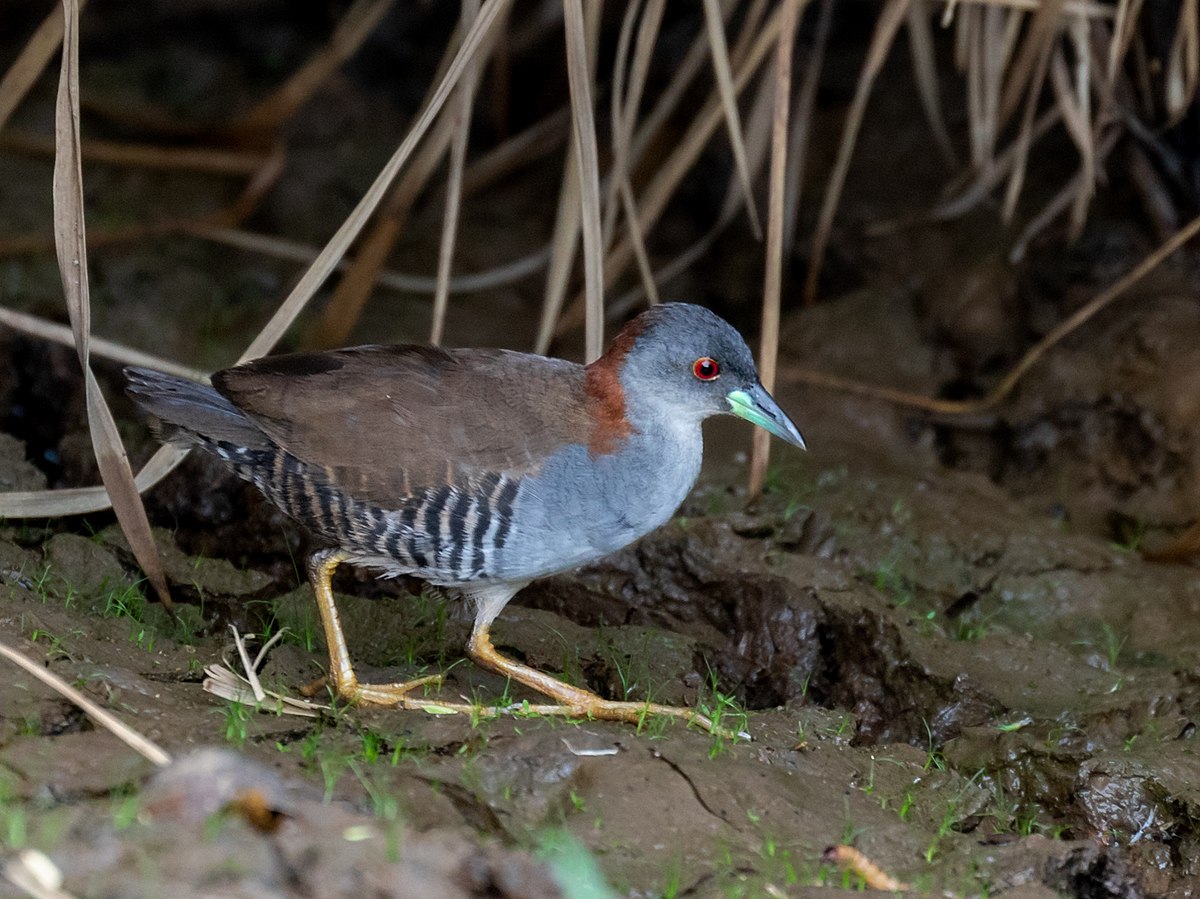
Wikipedia: Gray-breasted crake
The grey-breasted crake (Laterallus exilis) is a species of bird in the family Rallidae. It is found in Argentina, Belize, Bolivia, Brazil, Colombia, Costa Rica, Ecuador, French Guiana, Guatemala, Guyana, Honduras, Nicaragua, Panama, Paraguay, Peru, Suriname, Trinidad and Tobago, and Venezuela. Its natural habitats are swamps and pastureland.
[more]
Gattung Aramides:
Cayenneralle / Gray-cowled wood-rail (Aramides cajaneus)
Profil Wikipedia eBird Xeno-Canto

Wikipedia: Gray-cowled wood-rail
Die Cayenneralle (Aramides cajaneus) ist mit 35 Zentimetern ein sehr großer Vertreter aus der Familie der Rallen.
[more]
Aramides albiventris / Russet-naped wood-rail (Aramides albiventris)
Profil Wikipedia eBird Xeno-Canto

Wikipedia: Russet-naped wood-rail
The russet-naped wood rail or rufous-naped wood rail[1][2] (Aramides albiventris) is a species of bird in the family Rallidae. It lives primarily in forests and mangroves of Central America.
[more]
Aramides axillaris / Rufous-necked wood-rail (Aramides axillaris)
Profil Wikipedia eBird Xeno-Canto

Wikipedia: Rufous-necked wood-rail
The rufous-necked wood rail (Aramides axillaris) is a species of bird in the family Rallidae.
It is found in Belize, Colombia, Costa Rica, Ecuador, El Salvador, French Guiana, Guyana, Honduras, Mexico, Nicaragua, Panama, Peru, Suriname, Trinidad and Tobago, and Venezuela.
Its natural habitats are subtropical or tropical dry forest, subtropical or tropical moist lowland forest, and subtropical or tropical mangrove forest.
[more]
Gattung Pardirallus:
Pardirallus maculatus / Spotted rail (Pardirallus maculatus)
Profil Wikipedia eBird Xeno-Canto

Wikipedia: Spotted rail
The spotted rail (Pardirallus maculatus) is a species of bird in the family Rallidae.
It is found in Argentina, Belize, Bolivia, Brazil, Cayman Islands, Chile, Colombia, Costa Rica, Cuba, the Dominican Republic, Ecuador, El Salvador, French Guiana, Guyana, Jamaica, Mexico, Panama, Paraguay, Peru, Suriname, Trinidad and Tobago, Uruguay, Venezuela, and possibly Honduras.
The spotted rail is found in marshland and swamps.
[more]
Gattung Amaurolimnas:
Amaurolimnas concolor / Uniform crake (Amaurolimnas concolor)

Wikipedia: Uniform crake
The uniform crake (Amaurolimnas concolor) is a species of bird in the family Rallidae, the only member of the genus Amaurolimnas.
[more]
Gattung Micropygia:
Micropygia schomburgkii / Ocellated crake (Micropygia schomburgkii)
Profil Wikipedia eBird Xeno-Canto

Wikipedia: Ocellated crake
The ocellated crake (Micropygia schomburgkii) is a species of bird in the family Rallidae. It belongs to the monotypic genus Micropygia.
It is found in Bolivia, Brazil, Colombia, Costa Rica, French Guiana, Guyana, Paraguay, Peru, Suriname, and Venezuela.
Its natural habitats are dry savanna and subtropical or tropical seasonally wet or flooded lowland grassland.
[more]
Familie Aramidae (Limpkins):
Gattung Aramus:
Rallenkranich / Limpkin (Aramus guarauna)

Wikipedia: Limpkin
Der Rallenkranich (Aramus guarauna) ist eine in den tropischen und subtropischen Bereichen Amerikas lebende Vogelart aus der Ordnung der Kranichvögel und einziges Mitglied der Familie Aramidae. Der langbeinige Vogel frisst als Nahrungsspezialist vor allem Apfelschnecken. Sein Name rührt von seinem rallenähnlichen Verhalten und der sowohl Kranichen als auch Rallen ähnlichen Anatomie. Es werden vier Unterarten unterschieden. Die IUCN führt die Art als nicht gefährdet.
[more]
Familie Heliornithidae (Sungrebes):
Gattung Heliornis:
Zwergbinsenralle / Sungrebe (Heliornis fulica)
Profil Wikipedia eBird Xeno-Canto

Wikipedia: Sungrebe
Die Zwergbinsenralle (Heliornis fulica), auch Zwergbinsenhuhn genannt, ist ein 26 bis 33 Zentimeter großer Vertreter aus der Familie der Binsenrallen. Das Gewicht der Einzeltiere beträgt zwischen 125 und 150 Gramm.
[more]
Familie Eurypygidae (Sunbitterns):
Gattung Eurypyga:
Sonnenralle / Sunbittern (Eurypyga helias)
Profil Wikipedia eBird Xeno-Canto

Wikipedia: Sunbittern
Die Sonnenralle (Eurypyga helias) ist eine Vogelart aus den Tropen Lateinamerikas. Trotz ihres Namens ist sie mit den Rallen nicht näher verwandt. Sie steht verwandtschaftlich isoliert da und bildet daher eine eigene Familie, die traditionell den Kranichvögeln zugeordnet wurde, heute aber zusammen mit dem Kagu in die Ordnung Eurypygiformes gestellt wird.
[more]
Klasse Accipitriformes (Greifvögel / Hawks and eagles):
Familie Accipitridae (Habichtartige):
Unterfamilie Buteoninae (Bussardartige):
Gattung Buteo (Hawks):

Tikal roadside hawk. 2018-02-07 12.31.44 Zentralamerika
We saw this on the Pipeline Road near Gamboa, Panama - see tiger heron for more on that.
Allgemein: The roadside hawk (Rupornis magnirostris) is a relatively small bird of prey found in America. This vocal species is often the most common raptor in its range. It has many subspecies and is now usually placed in the monotypic genus Rupornis instead of Buteo.[2]
[more]
Profil Wikipedia eBird Audubon AllAboutBirds Xeno-Canto

Wikipedia: Short-tailed hawk
The short-tailed hawk (Buteo brachyurus) is an American bird of prey in the family Accipitridae, which also includes the eagles and Old World vultures. As a member of the genus Buteo, it is not a true hawk and thus also referred to as a "buteo" or (outside North America) "buzzard". The white-throated hawk (B. albigula) is a close relative and was formerly included in the species B. brachyurus.
[more]

Wikipedia: Red-tailed hawk
Der Rotschwanzbussard (Buteo jamaicensis) ist ein Vogelart aus der Gattung der Echten Bussarde (Buteo) in der Familie der Habichtartigen (Accipitridae). Er ist der häufigste Bussard in Nordamerika und ernährt sich von Nagern.
[more]
Profil Wikipedia eBird Audubon AllAboutBirds Xeno-Canto

Wikipedia: Zone-tailed hawk
Der Rußbussard (Buteo albonotatus), früher als Mohrenbussard bezeichnet, ist ein mittelgroßer, schlanker Greifvogel aus der Gattung Buteo innerhalb der Unterfamilie der Bussardartigen (Buteoninae). Die fast gänzlich schwarze Art kommt in zwei von einander getrennten Gebieten in den südlichen USA und Nordmexiko, beziehungsweise Südmexiko, Mittelamerika sowie großen Teilen Südamerikas rund um das Amazonasbecken vor. Die Anden werden nach Westen hin nur an wenigen Stellen überschritten. Die Geschlechter sind weitgehend gleich gefärbt, Weibchen sind jedoch merklich größer und wesentlich schwerer als Männchen.[1]
[more]
Profil Wikipedia eBird Audubon AllAboutBirds Xeno-Canto

Wikipedia: Gray hawk
Der Graubussard (Buteo plagiatus) ist ein kleiner bis mittelgroßer, habichtähnlicher Bussard, dessen Verbreitungsgebiet vor allem in Mexiko und dem nördlichen bis zentralen Mittelamerika liegt. Nach vielen taxonomischen Um- und Neubewertungen wird er mit Stand Ende 2019 in die Gattung Bussardartige (Buteo) gestellt, die ihrerseits der Familie der Habichtartigen (Accipitridae) angehört. Die amerikanischen Trivialnamen sind Gray Hawk und Mexican Goshawk. Letzterer reflektiert die Ähnlichkeit des Graubussards mit dem Habicht (Accipiter gentilis).
[more]

Wikipedia: Broad-winged hawk
Der Breitflügelbussard (Buteo platypterus) ist ein kleiner, aber kompakt und robust wirkender Greifvogel der Gattung Buteo innerhalb der Unterfamilie der Habichtartigen (Accipitridae). Er erscheint in einer hellen Farbmorphe und einer dunklen. Dunkelmorphige Vögel, deren Gefieder fast zeichnungslos schwarzbraun erscheint, sind jedoch sehr selten. Obwohl der Breitflügelbussard eine charakteristische Art der südostkanadischen und ostamerikanischen Laub- und Mischwälder ist, ist über die Biologie, der während der Brutzeit sehr verborgen und heimlich lebenden Art, wenig bekannt.[1]
[more]

Wikipedia: Swainson's hawk
Der Präriebussard (Buteo swainsoni) ist ein Vertreter der Echten Bussarde (Gattung Buteo) aus der Familie der Habichtartigen (Accipitridae). Er kommt im Westen Nordamerikas vor.
[more]
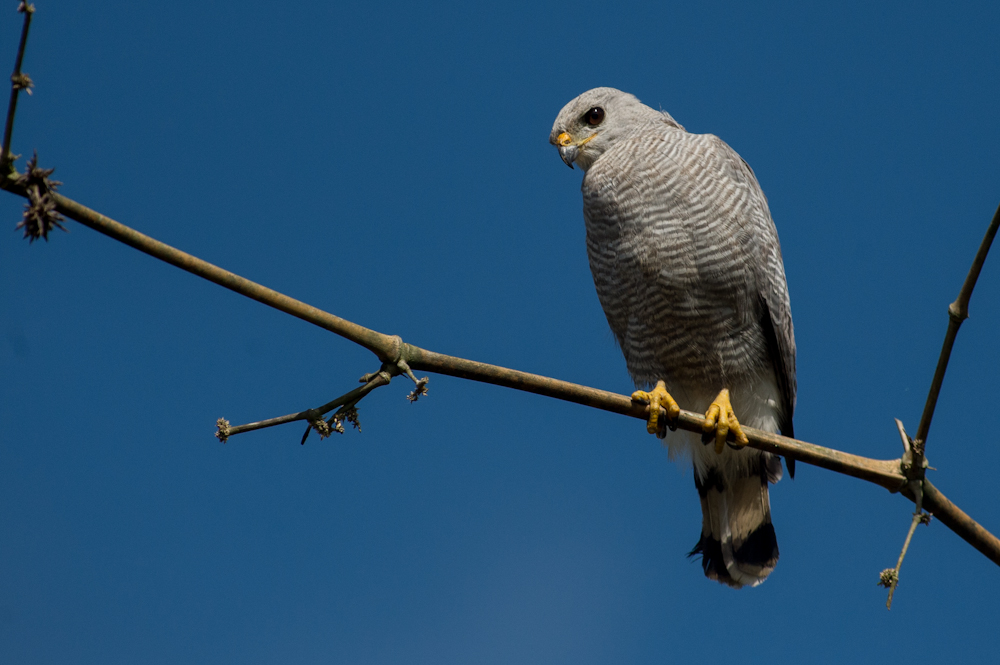
Wikipedia: Grey-lined hawk
The gray-lined hawk (Buteo nitidus) is a smallish raptor found in open country and forest edges. It is sometimes placed in the genus Asturina as Asturina nitida. The species has been split by the American Ornithological Society from the gray hawk. The gray-lined hawk is found from El Salvador to Argentina.
[more]
Unterfamilie Accipitrinae (Bussardartige / True hawks):
Gattung Accipiter:

Wikipedia: Cooper's hawk
Der Rundschwanzsperber (Accipiter cooperii) ist ein mittelgroßer Habichtartiger, der in Nordamerika beheimatet ist. Sein Verbreitungsgebiet reicht von Kanada über die Vereinigten Staaten nach Mexiko. Wie bei Greifvögeln üblich ist auch bei Rundschwanzsperbern das Männchen kleiner als das Weibchen. Östlich des Mississippi lebende Vögel sind durchschnittlich größer als ihre westlichen Artgenossen.
[more]
Profil Wikipedia eBird Audubon AllAboutBirds Xeno-Canto

Wikipedia: Sharp-shinned hawk
Der Eckschwanzsperber (Accipiter striatus) ist ein kleiner Greifvogel aus der Familie der Habichtartigen (Accipitridae). Sein Verbreitungsgebiet umfasst die boreale und Teile der gemäßigten Zone Nordamerikas sowie Teile Zentralamerikas und der Karibik.
[more]

Wikipedia: Tiny hawk
Der Däumlingssperber (Accipiter superciliosus) ist ein Greifvogel aus der Familie der Habichtartigen (Accipitridae). Der Däumlingssperber zählt zu den kleinsten Arten der Gattung Accipiter, Männchen sind etwa so groß wie eine Singdrossel. Weibchen sind erheblich größer und werden fast doppelt so schwer wie die Männchen. Die Art bewohnt aufgelockerte tropische Wälder und Waldränder in weiten Teilen Mittel- und Südamerikas. Sie gilt als ungefährdet.
[more]

Wikipedia: Bicolored hawk
Der Zweifarbensperber (Accipiter bicolor), gelegentlich auch Zweifarbsperber geschrieben, ist ein Greifvogel aus der Familie der Habichtartigen. Trotz eines großes Verbreitungsgebiets in Süd- und Mittelamerika und eines auffälligen Erscheinungsbilds ist die Art bislang nur selten wissenschaftlich erforscht worden. Bemerkenswert ist die sehr variable Färbung des Gefieders, auch zwischen Angehörigen derselben Unterart.
[more]

Wikipedia: Gray-bellied hawk
The grey-bellied hawk or grey-bellied goshawk (Accipiter poliogaster) is a fairly large and rare species of forest-dwelling South American bird of prey in the family Accipitridae.
[more]
Gattung Gampsonyx:
Profil Wikipedia eBird Xeno-Canto

Wikipedia: Pearl kite
The pearl kite (Gampsonyx swainsonii) is a very small raptor found in open savanna habitat adjacent to deciduous woodland. It is the only member of the genus Gampsonyx. The scientific name commemorates the English naturalist William Swainson.
[more]
Gattung Rostrhamus:
Profil Wikipedia eBird Audubon AllAboutBirds Xeno-Canto

Wikipedia: Snail kite
Der Schneckenweih (Rostrhamus sociabilis), auch als Schneckenmilan bezeichnet, ist ein Greifvogel aus der Familie der Habichtartigen (Accipitridae).
[more]
Gattung Elanoides:
Profil Wikipedia eBird Audubon AllAboutBirds Xeno-Canto

Wikipedia: Swallow-tailed kite
Der Schwalbenweih (Elanoides forficatus) ist eine Greifvogelart aus der Unterfamilie der Wespenbussarde (Perninae) und die einzige Art der Gattung Elanoides. Er ist aufgrund seines schwarz-weißen Gefieders und des milanartigen Flugbilds mit dem tief gegabelten Schwanz unverkennbar. Das sehr große Hauptverbreitungsgebiet erstreckt sich über das tropische Südamerika. Zudem kommt die Art in Florida, einigen Nachbarstaaten am Golf von Mexiko und in großen Teilen Zentralamerikas vor.
[more]
Gattung Harpia:
Profil Wikipedia eBird Xeno-Canto

Wikipedia: Harpy eagle
Die Harpyie (Harpia harpyja) (Aussprache [haʁˈpʰyːjə]) ist eine sehr große, kräftig gebaute Greifvogelart. Die Art bewohnt die tropischen Wälder Mittel- und Südamerikas und ernährt sich dort vor allem von Faultieren und Affen. Die Gattung Harpia ist monotypisch mit der Harpyie als einziger Art.
[more]
Gattung Spizaetus:
Profil Wikipedia eBird Xeno-Canto
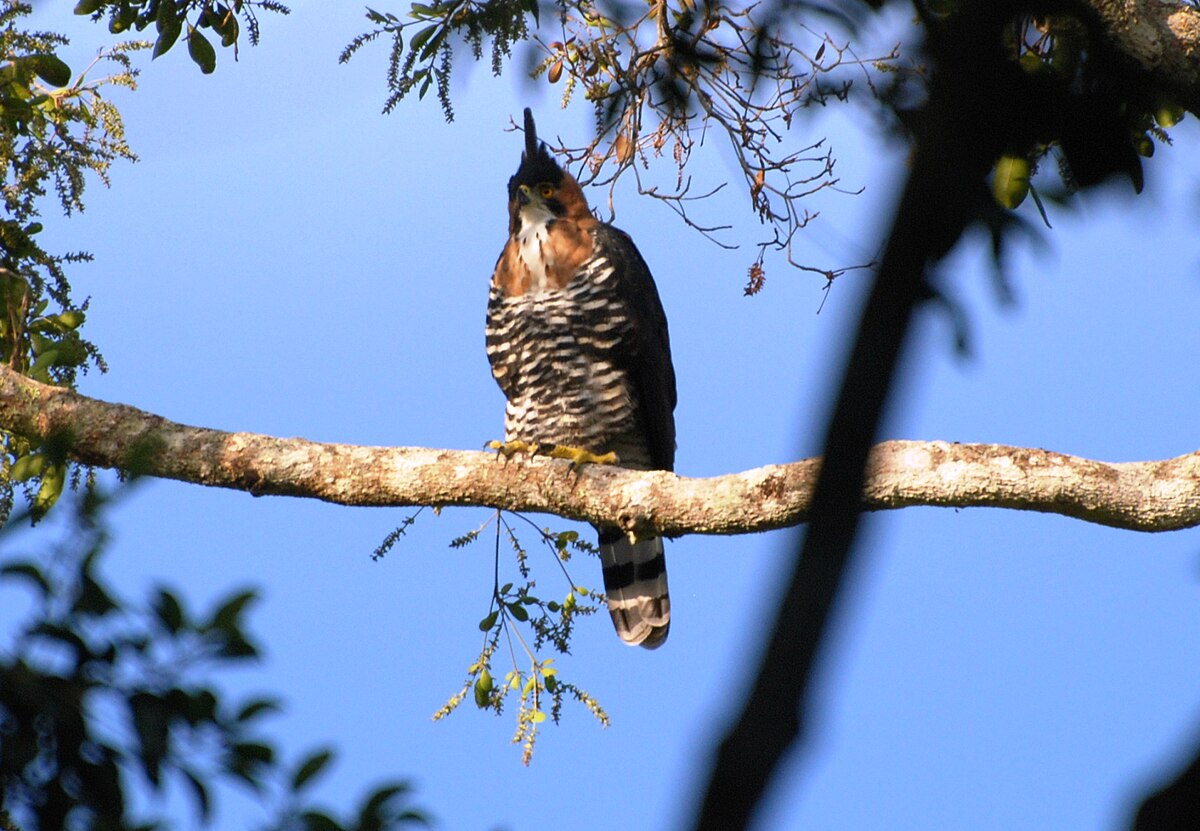
Wikipedia: Ornate hawk-eagle
Der Prachthaubenadler (Spizaetus ornatus), auch Prachtadler genannt, ist ein in Zentral- und Südamerika vorkommender Greifvogel aus der Familie der Habichtartigen (Accipitridae).
[more]
Profil Wikipedia eBird Xeno-Canto

Wikipedia: Black hawk-eagle
Der Tyrannenhaubenadler (Spizaetus tyrannus), gelegentlich auch nur Tyrannenadler, ist ein großer Greifvogel aus der Familie der Habichtartigen. Er bewohnt ein ausgedehntes Verbreitungsgebiet in Süd- und Mittelamerika, gilt jedoch als eher seltene Art.
[more]
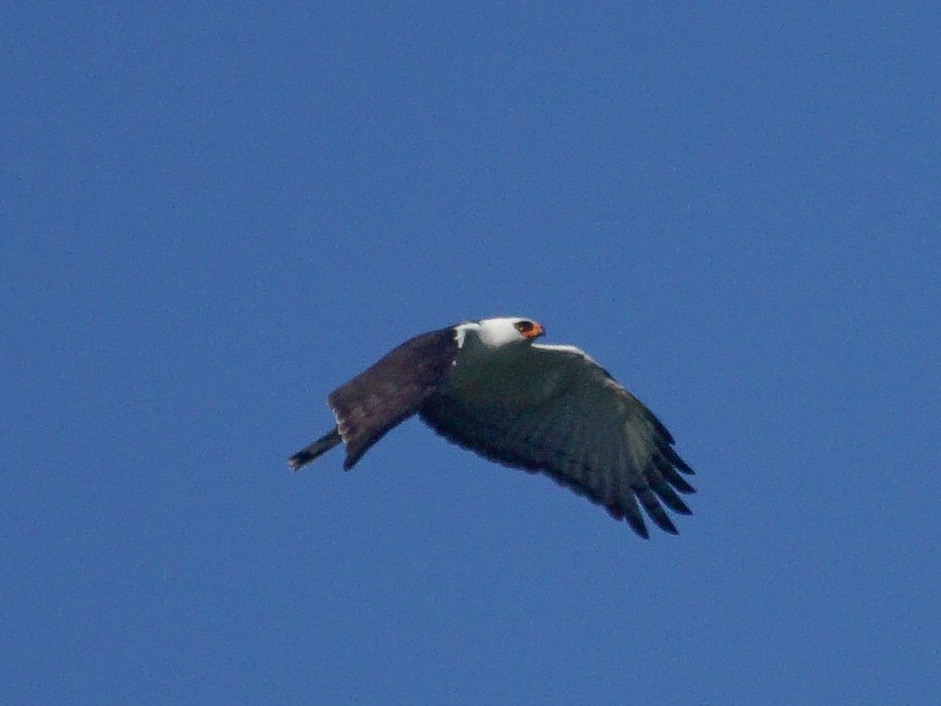
Wikipedia: Black-and-white hawk-eagle
Der Elsteradler (Spizaetus melanoleucus, zuvor Spizastur melanoleucus) ist ein Greifvogel aus der Familie der Habichtartigen (Accipitridae), der vom südlichen Mexiko bis nach Argentinien vorkommt.[1]
[more]
Gattung Parabuteo:
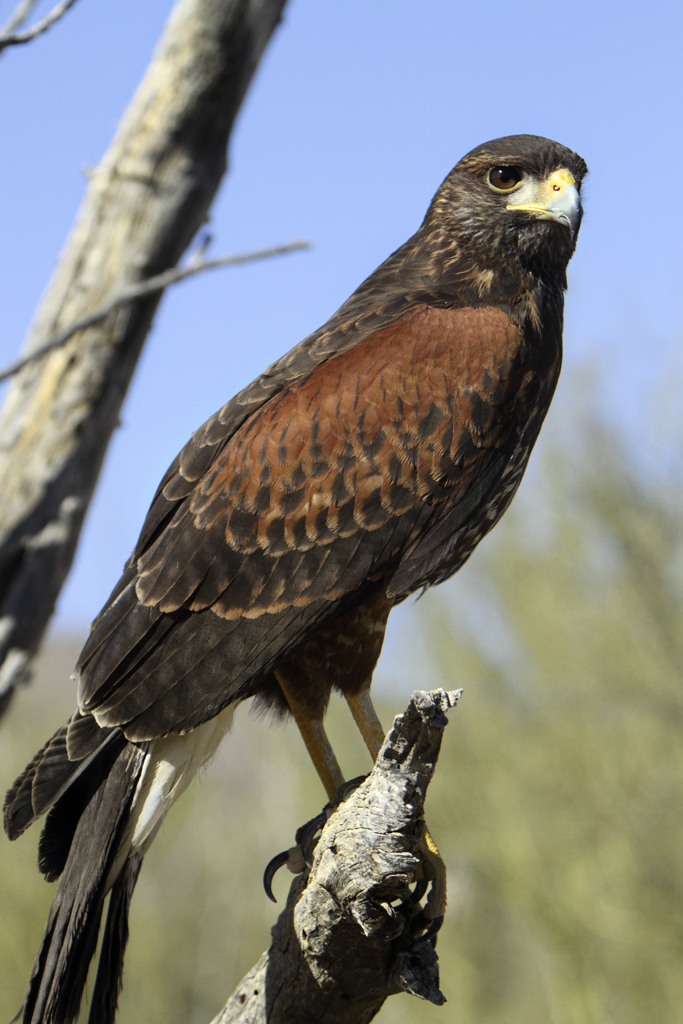
Wikipedia: Harris's hawk
Der Wüstenbussard (Parabuteo unicinctus) (Parabuteo „dem Bussard ähnlich“), häufig auch mit seinem englischen Namen Harris’s Hawk bezeichnet, ist eine mittelgroße Greifvogelart aus der Familie der Habichtartigen (Accipitridae).
[more]
Gattung Buteogallus:
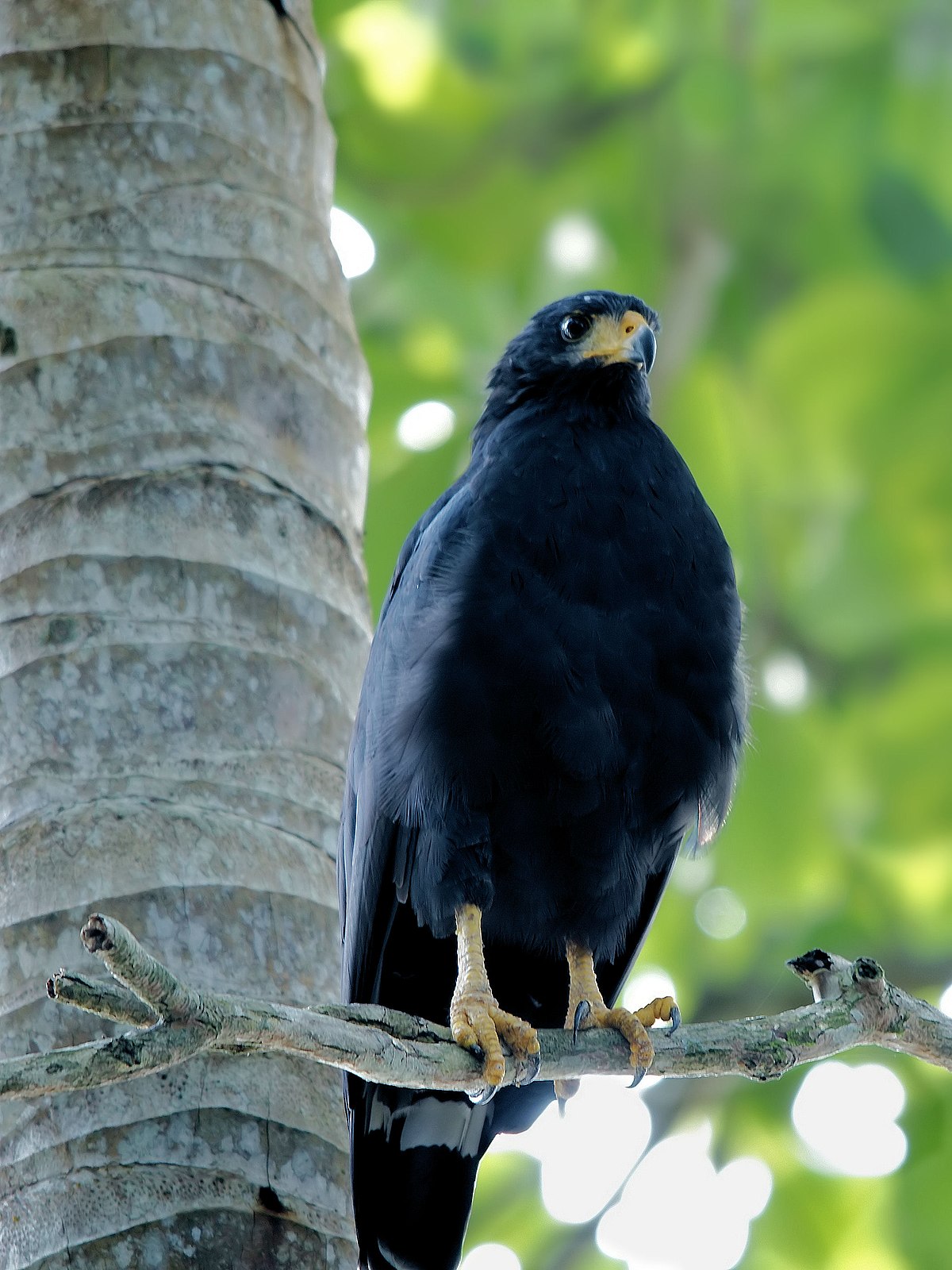
Wikipedia: Common black hawk
The common black hawk (Buteogallus anthracinus) is a bird of prey in the family Accipitridae, which also includes the eagles, hawks, and Old World vultures. It formerly included the Cuban black-hawk (Buteogallus gundlachii) as a subspecies. The mangrove black hawk, traditionally considered a distinct species, is now generally considered a subspecies, B. a. subtilis, of the common black-hawk.[3]
[more]

Wikipedia: Savanna hawk
Der Savannenbussard (Buteogallus meridionalis) ist ein mäusebussardgroßer, langbeiniger Greifvogel aus der Gattung Buteogallus innerhalb der Unterfamilie der Bussardartigen (Buteoninae). Anders als die meisten anderen Arten dieser Gattung weist sein Gefieder nur wenige schwarze Gefiederanteile auf, sondern ist vor allem zimtbraun mit rostbraunen Federpartien. Die Bauchseite ist auffallend dunkelbraun gesperbert.
[more]
Profil Wikipedia eBird Xeno-Canto
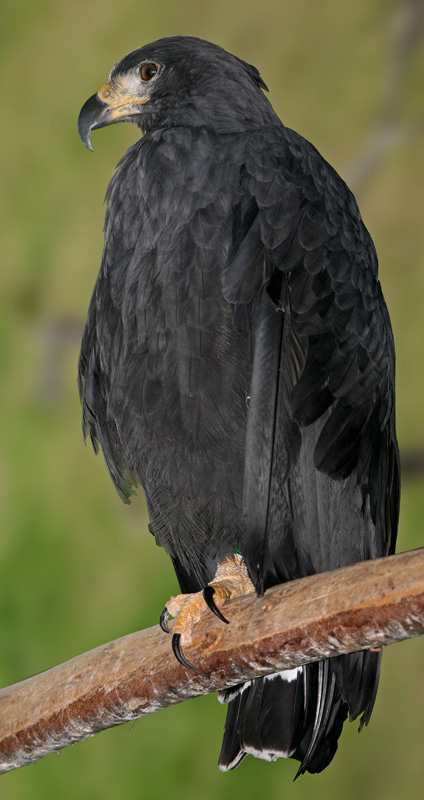
Wikipedia: Solitary eagle
The solitary eagle or montane solitary eagle (Buteogallus solitarius) is a large Neotropical eagle. It is also known as the black solitary eagle.
[more]

Wikipedia: Great black-hawk
The great black hawk (Buteogallus urubitinga) is a bird of prey in the family Accipitridae, which also includes the eagles, hawks, and Old World vultures.
[more]
Gattung Geranoaetus:
Profil Wikipedia eBird Audubon AllAboutBirds Xeno-Canto

Wikipedia: White-tailed hawk
The white-tailed hawk (Geranoaetus albicaudatus) is a large bird of prey species found in tropical and subtropical environments of the Americas.
[more]
Gattung Busarellus:

Wikipedia: Black-collared hawk
Der Fischbussard (Busarellus nigricollis) ist eine Greifvogelart aus der Unterfamilie der Bussardartigen (Buteoninae), deren Verbreitung vom äußersten Süden Nordamerikas über Mittelamerika und große Teile des tropischen Südamerikas reicht. Er ernährt sich überwiegend von Fischen, die er aus dem flachen Wasser fängt. Die Art ist in Südamerika vielerorts recht häufig.
[more]
Gattung Morphnus:
Profil Wikipedia eBird Xeno-Canto
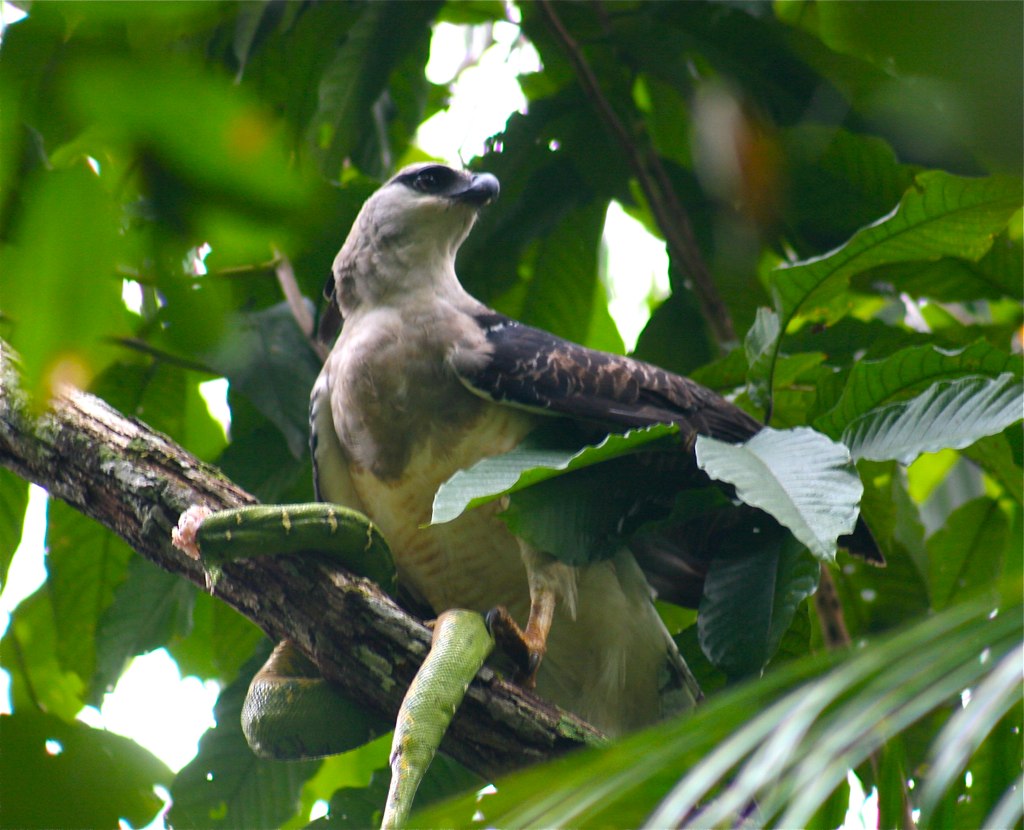
Wikipedia: Crested eagle
Der Würgadler (Morphnus guianensis) ist ein großer Greifvogel aus der Familie der Habichtartigen. Die in den tropischen Wäldern des amerikanischen Kontinents verbreitete Art wurde erstmals im Jahr 1800 durch den französischen Zoologen François-Marie Daudin wissenschaftlich beschrieben. Der Würgadler ist derzeit der einzige Vertreter der Gattung Morphnus.
[more]
Gattung Elanus:
Profil Wikipedia eBird Audubon AllAboutBirds Xeno-Canto

Wikipedia: White-tailed kite
Der Weißschwanzaar (Elanus leucurus) ist ein kleiner bis mittelgroßer Greifvogel aus der Gattung der Gleitaare. Die in weiten Teilen des amerikanischen Kontinents verbreitete Art wurde erstmals im Jahr 1818 durch den französischen Naturforscher Louis Pierre Vieillot wissenschaftlich beschrieben.
[more]
Gattung Chondrohierax:
Profil Wikipedia eBird Audubon AllAboutBirds Xeno-Canto

Wikipedia: Hook-billed kite
The hook-billed kite (Chondrohierax uncinatus), is a bird of prey in the family Accipitridae, which also includes many other diurnal raptors such as kites, eagles, and harriers. It occurs in the Americas, including the Rio Grande Valley of Texas in the United States, Mexico, the Caribbean, Central America, and tropical South America.
[more]
Gattung Leptodon:
Profil Wikipedia eBird Xeno-Canto

Wikipedia: Gray-headed kite
The gray-headed kite (Leptodon cayanensis) is a raptor found in open woodland and swamp forests. It shares the genus Leptodon with the extremely rare white-collared kite. It breeds from eastern Mexico and Trinidad south to Peru, Bolivia, Brazil and northern Argentina.
[more]
Gattung Leucopternis:
Profil Wikipedia eBird Xeno-Canto

Wikipedia: Semiplumbeous hawk
The semiplumbeous hawk (Leucopternis semiplumbeus) is a species of bird of prey in the family Accipitridae. It is found in Colombia, Costa Rica, Ecuador, Honduras, and Panama. Its natural habitat is subtropical or tropical moist lowland forests.
[more]
Gattung Ictinia:
Profil Wikipedia eBird Audubon AllAboutBirds Xeno-Canto

Wikipedia: Mississippi kite
Der Mississippiweih (Ictinia mississippiensis) ist ein kleiner Greifvogel aus der Familie der Habichtartigen. Die auf dem amerikanischen Kontinent beheimatete Art ernährt sich vornehmlich von Insekten und ist für die aggressive Verteidigung ihrer Nistplätze bekannt. Da er gut mit vom Menschen geprägten Landschaftsformen zurecht kommt, nehmen die Bestände des Mississippiweihs seit einigen Jahrzehnten beständig zu.
[more]
Profil Wikipedia eBird Xeno-Canto

Wikipedia: Plumbeous kite
Der Schwebeweih (Ictinia plumbea) ist eine kleine Greifvogelart aus der Unterfamilie der Bussardartigen (Buteoninae),[1] deren Verbreitungsgebiet sich vom äußersten Süden Nordamerikas über die nördliche Hälfte Südamerikas erstreckt. Er besiedelt Waldränder und offene Waldlandschaften und ernährt sich hauptsächlich von Insekten, die von einer Warte aus im Flug gefangen werden.
[more]
Gattung Geranospiza:
Profil Wikipedia eBird Xeno-Canto

Wikipedia: Crane hawk
Die Sperberweihe (Geranospiza caerulescens) ist ein Greifvogel aus der Familie der Habichtartigen. Innerhalb dieser Familie wird sie heute als einziger Vertreter der monotypischen Gattung Geranospiza angesehen. Die Art ist in den tropischen Regionen Mittel- und Südamerikas weit verbreitet, wo sie sowohl lichte Wälder als auch offene Landschaften bewohnt. Bemerkenswert ist die ausgesprochen variable Färbung des Gefieders der Sperberweihe. Des Weiteren nutzt die Art eine eher ungewöhnliche Jagdmethode, bei der mit den besonders flexiblen Beinen in Spalten und Löchern nach Beute geangelt wird.
[more]
Gattung Harpagus:
Profil Wikipedia eBird Xeno-Canto
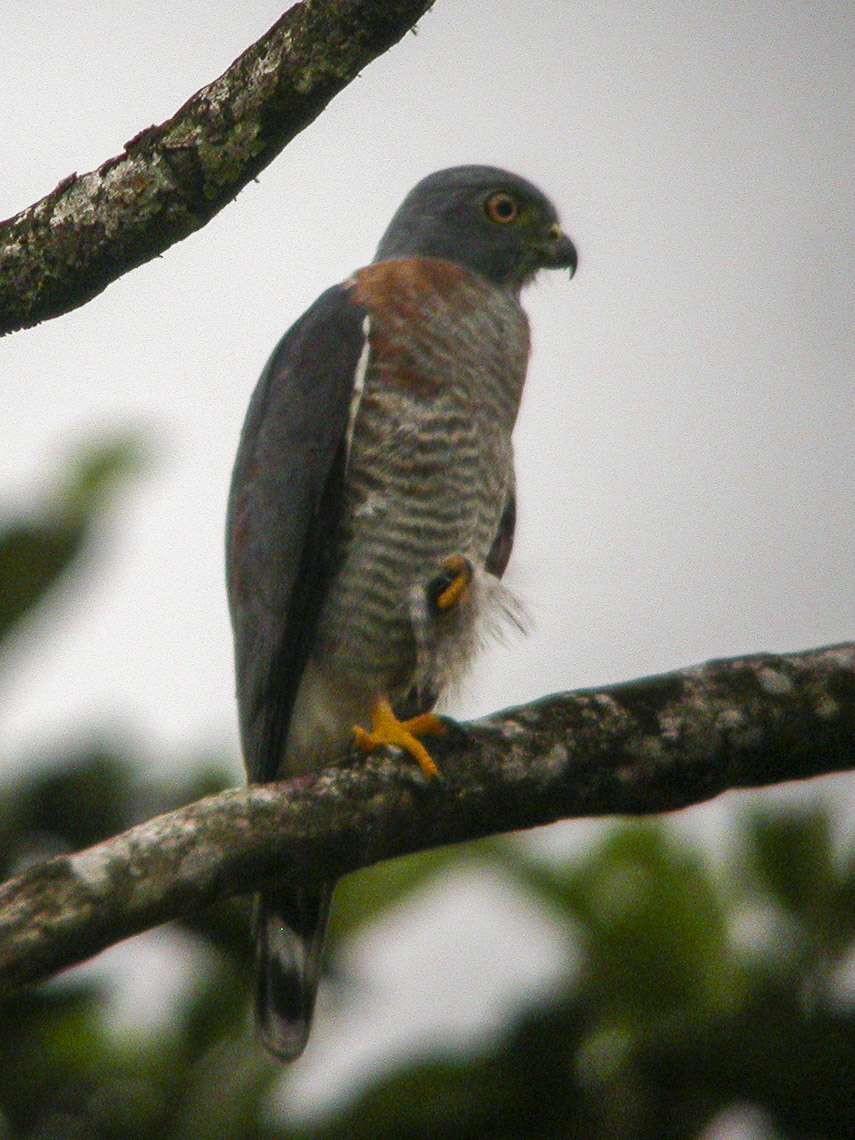
Wikipedia: Double-toothed kite
The double-toothed kite (Harpagus bidentatus) is a species of bird of prey in the family Accipitridae. It is found in Belize, Bolivia, Brazil, Colombia, Costa Rica, Ecuador, El Salvador, French Guiana, Guatemala, Guyana, Honduras, Mexico, Nicaragua, Panama, Peru, Suriname, Trinidad and Tobago, and Venezuela.[1]
[more]
Familie Cathartidae:
Gattung Cathartes:
Cathartes aura / Turkey vulture (Cathartes aura)
Profil Wikipedia eBird Audubon AllAboutBirds Xeno-Canto

Arenal hike turkey vultures. 2018-02-28 11.30.14 Zentralamerika
The turkey vulture (Cathartes aura), also known in some North American regions as the turkey buzzard (or just buzzard), and in some areas of the Caribbean as the John crow or carrion crow,[2] is the most widespread of the New World vultures.[3] One of three species in the genus Cathartes of the family Cathartidae, the turkey vulture ranges from southern Canada to the southernmost tip of South America. It inhabits a variety of open and semi-open areas, including subtropical forests, shrublands, pastures, and deserts.[1]
[more]
Kleiner Gelbkopfgeier / Lesser yellow-headed vulture (Cathartes burrovianus)
Profil Wikipedia eBird Xeno-Canto
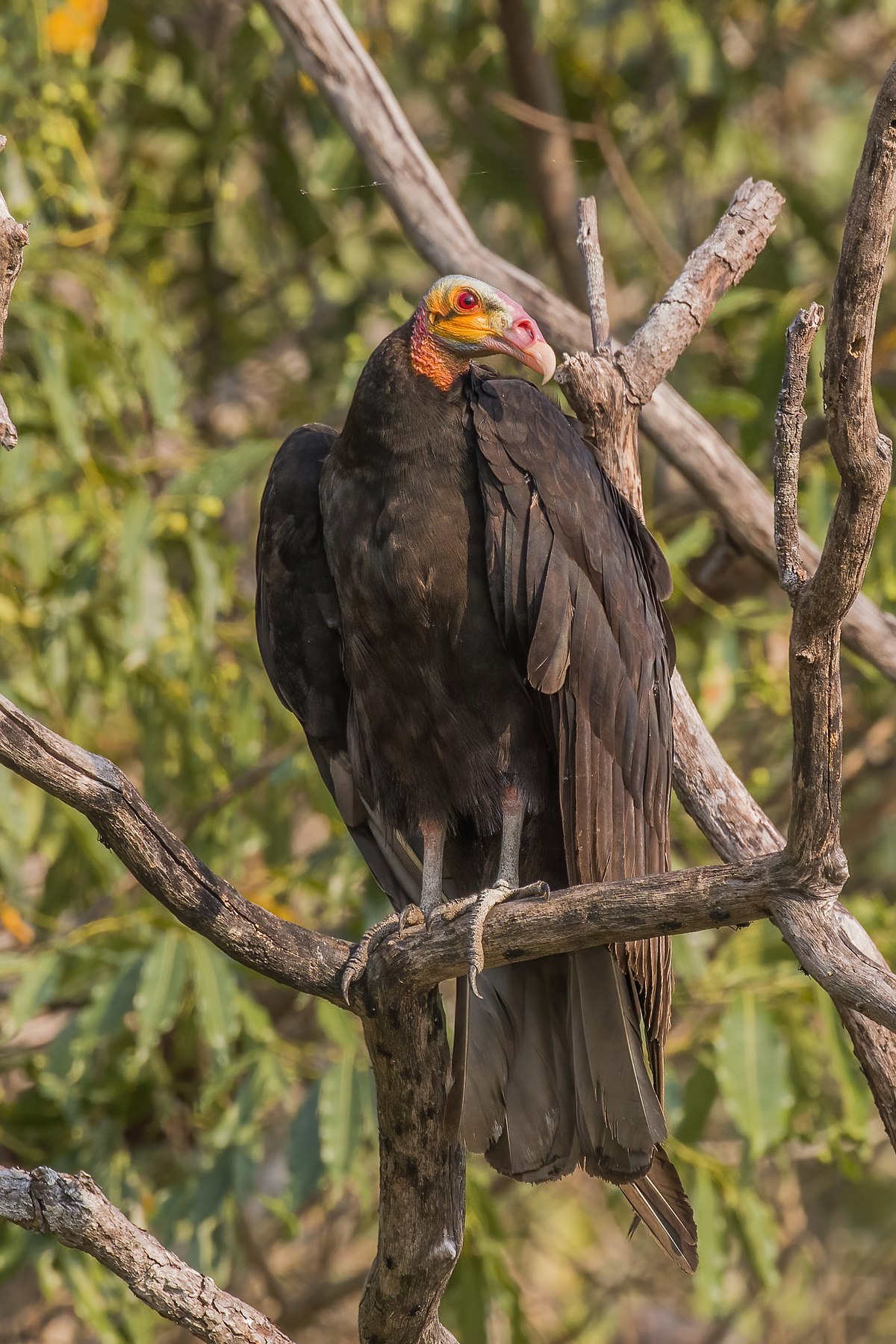
Wikipedia: Lesser yellow-headed vulture
Der Kleine Gelbkopfgeier (Cathartes burrovianus, Syn.: C. urubitinga, C. urubutinga) ist der kleinste Angehörige der Neuweltgeier (Cathartidae). Er lebt in Mittelamerika und im nördlichen und zentralen Südamerika.
[more]
Gattung Coragyps:
Rabengeier / Black vulture (Coragyps atratus)

Wikipedia: Black vulture
Der Rabengeier (Coragyps atratus) ist eine in Nord-, Mittel- und Südamerika weit verbreitete Art der Neuweltgeier.
[more]
Gattung Sarcoramphus:
Königsgeier / King vulture (Sarcoramphus papa)

Wikipedia: King vulture
Der Königsgeier (Sarcoramphus papa) ist ein Neuweltgeier Südamerikas und die einzige lebende Art seiner Gattung. Den Namen erhielt er, da er an Aasstellen gegenüber anderen Geiern dominiert.
[more]
Familie Pandionidae (Fischadler):
Gattung Pandion:
Fischadler / Osprey (Pandion haliaetus)
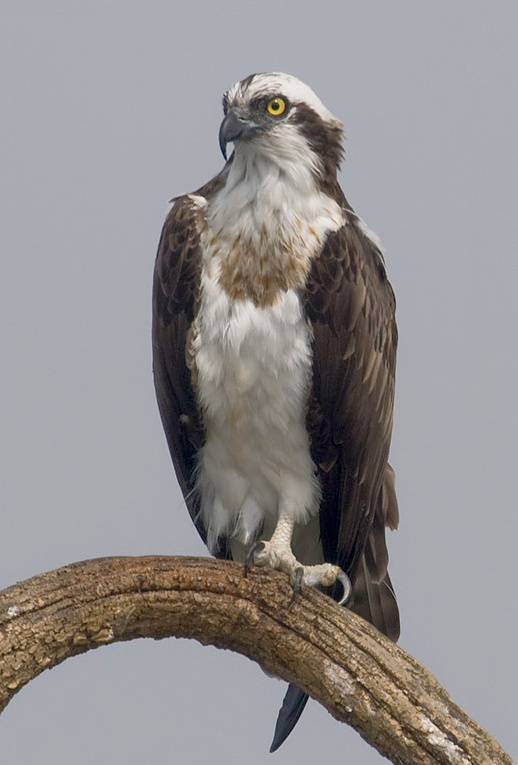
Wikipedia: Osprey
Dieser Vogel erscheint jenseits grossen Meere in Kontinenten :
Europa, Nordamerika, Südamerika, Afrika.
Der Fischadler (Pandion haliaetus) ist eine Vogelart aus der Ordnung der Greifvögel (Accipitriformes). Aufgrund zahlreicher besonderer Merkmale wird die Art meist in eine eigene Familie Pandionidae gestellt, diese Familie und die Gattung Pandion sind damit monotypisch. Die Art ist fast weltweit verbreitet und kommt auch in Mitteleuropa vor.
[more]
Rufe: Calls with sequences of short, soft and clear whistling notes. Often in series with rising pitch, then ending with a few lower pitched notes. [Link]
Körperlich: Länge=55-58 cm,
Flügelspanne=145-170 cm,
Gewicht=1120-2050 g
Überordnung Palaeognathae:
Ordnung Tinamiformes (Tinamous):
Familie Tinamidae:
Gattung Tinamus:
Profil Wikipedia eBird Xeno-Canto

La tarde great tinamou tenative ID by Merlin. 2018-03-09 12.58.40 Zentralamerika
Allgemein: The great tinamou (Tinamus major) is a species of tinamou ground bird native to Central and South America. There are several subspecies, mostly differentiated by their coloration.
[more]
Gattung Crypturellus:
Profil Wikipedia eBird Xeno-Canto

Wikipedia: Thicket tinamou
The thicket tinamou or rufescent tinamou (Crypturellus cinnamomeus) is a type of tinamou commonly found in moist forests in subtropical and tropical central Mexico.[4]
[more]
Profil Wikipedia eBird Xeno-Canto

Wikipedia: Slaty-breasted tinamou
The slaty-breasted tinamou or Boucard's tinamou (Crypturellus boucardi) is a type of tinamou commonly found in lowland moist forests of Mexico and Central America.[4]
[more]
Profil Wikipedia eBird Xeno-Canto

Wikipedia: Little tinamou
The little tinamou (Crypturellus soui) is a species of tinamou. It is found in Central and South America.[4]
[more]
Profil Wikipedia eBird Xeno-Canto

Wikipedia: Choco tinamou
The Choco tinamou or Chocó tinamou (Crypturellus kerriae) is a type of tinamou found in lowland forest and montane forest in subtropical and tropical regions of Colombia and Panama.[4]
[more]
Gattung Nothocercus:
Profil Wikipedia eBird Xeno-Canto

Wikipedia: Highland tinamou
The highland tinamou or Bonaparte's tinamou (Nothocercus bonapartei) is a type of ground bird found in montane moist forest typically over 1,500 m (4,900 ft) altitude.
[more]
Infraklasse Neognathae:
Ordnung Ciconiiformes (Storchenvögel / Storks and others):
Familie Ciconiidae (Storks):
Gattung Mycteria:
Profil Wikipedia eBird Audubon AllAboutBirds Xeno-Canto

Wikipedia: Wood stork
Der Waldstorch (Mycteria americana) ist ein Schreitvogel aus der Gattung der Nimmersatte (Mycteria). Er ist die einzige Storchenart, die auch in Nordamerika brütet und ist dort der größte Schreitvogel. In den USA galt er lange als eine bedrohte Vogelart, bei der die Gefahr bestand, dass sie in dem nördlichsten Teil des Verbreitungsgebietes gänzlich verschwindet und für die zahlreiche Maßnahmen eingeleitet wurden, um ihren Bestand zu schützen. Seit 2014 gilt die Art in diesem Teil ihres Verbreitungsgebietes nur noch als gefährdet.[1]
[more]
Gattung Jabiru:

Wikipedia: Jabiru stork
Der Jabiru (Jabiru mycteria) ist ein monotypischer Storchenvogel Amerikas, der von Mexiko bis Argentinien vorkommt. Als Irrgast ist er gelegentlich auch im US-amerikanischen Bundesstaat Texas zu beobachten. Der Jabiru ist der einzige Vertreter der Gattung Jabiru.[1] Er ist nach dem Andenkondor und dem fast ausgestorbenen Kalifornischen Kondor die drittgrößte fliegende Vogelart Süd- und Mittelamerikas.[2]
[more]
Ordnung Columbiformes (Taubenvögel / Pigeons and others):
Familie Columbidae (Pigeons):
Gattung Columba:

White rock pigeon in Santa Cruz, La Gomera. 2022-03-08 09.38.32 Kanarische Inseln
Dieser Vogel erscheint jenseits grossen Meere in Kontinenten :
Europa, Nordamerika, Südamerika, Afrika.
Die Felsentaube (Columba livia) ist eine Vogelart aus der Familie der Tauben (Columbidae). Sie ist die alleinige Stammform der Haustaube und damit auch der Stadttaube.[1] Diese domestizierte und verwilderte Form zählt zu den erfolgreichsten Vögeln der Erde und ist mittlerweile, von der Arktis und Antarktis abgesehen, weltweit verbreitet. Die Wildform ist dagegen auf Eurasien und Afrika beschränkt.
[more]
Vokalisierung: Not loud. [Link]
Gesang: Song a two-syllable, but continuous cooing. First a rolling ascending "orrrrrr" immediately followed by a short descending "oohh". Wings produce a quite audible whistling sound. [Link]
Körperlich: Länge=31-34 cm,
Flügelspanne=63-70 cm,
Gewicht=230-370 g
Gattung Zenaida:
Profil Wikipedia eBird Audubon AllAboutBirds Xeno-Canto
 Mourning dove, Cromwell Valley Park.JPG)
Mourning dove, Cromwell Valley Park. 2021-06-18 11.32.40 Maryland
Allgemein: Die Carolinataube (Zenaida macroura), auch Trauertaube genannt, ist ein mittelgroßer Vogel in der Familie der Tauben (Columbidae). Sie bewohnt in mehreren Unterarten Nord- und Mittelamerika. Wie bei allen Trauertauben ist ihr Gefieder unauffällig und weist mehrere Braunschattierungen auf. Charakteristisch für sie ist der schwarze Wangenfleck, die dunklen Flügelflecken und eine schwarzweiße Zeichnung.
[more]
Profil Wikipedia eBird Audubon AllAboutBirds Xeno-Canto
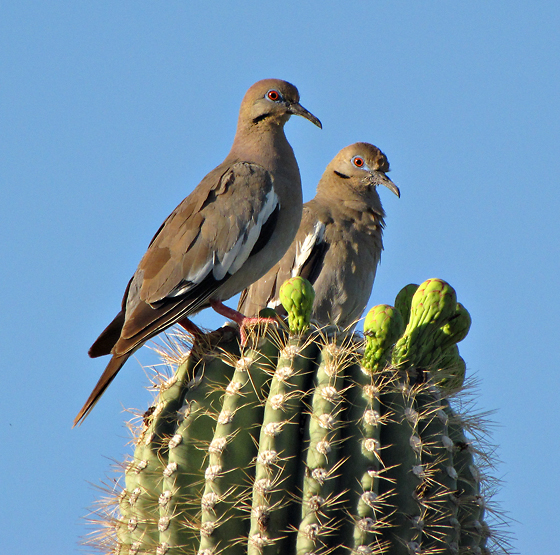
Wikipedia: White-winged dove
Die Weißflügeltaube (Zenaida asiatica) ist eine Art der Taubenvögel. Sie kommt in mehreren Unterarten im südlichen Nordamerika, in der Karibik und in Mittelamerika vor. Die Art ist nicht bedroht. Allein der Bestand in den Vereinigten Staaten wird auf 530.000 Weißflügeltauben geschätzt.[1]
[more]
Gattung Columbina:

Wikipedia: Common ground-dove
Das Sperlingstäubchen (Columbina passerina) ist eine Art der Taubenvögel, die der Unterfamilie der Amerikanischen Kleintauben zugerechnet wird. Die Art gilt als in ihrem Bestand nicht gefährdet und kommt in mehreren Unterarten von Nordamerika bis Südamerika vor.
[more]

La tarde ruddy ground dove tentative ID. 2018-03-11 09.38.10 Zentralamerika
Das Rosttäubchen (Columbina talpacoti) ist eine Art der Taubenvögel, die zur Unterfamilie der Amerikanischen Kleintauben gerechnet wird. Die Art kommt vom äußersten Süden Nordamerikas bis nach Südamerika vor und gilt als in ihrem Bestand nicht gefährdet.
[more]

Wikipedia: Inca dove
The Inca dove or Mexican dove (Columbina inca) is a small New World dove. The species was first described by French surgeon and naturalist René Lesson in 1847. It reaches a length of 16.5–23 cm (6.5–9.1 in) and weighs 30–58 g (1.1–2.0 oz).[2] The Inca dove has an average wingspan of 28.5 cm and a max wingspan of 32 cm.[3] It is a slender species, with a gray-brown body covered in feathers that resemble a scaled pattern. The tail is long and square and edged with white feathers that may flare out in flight. The underwings are reddish, like other ground doves, and upon takeoff, the wings produce a distinctive, quiet rattling noise.
[more]

Wikipedia: Plain-breasted ground-dove
Das Zwergtäubchen (Columbina minuta) ist eine Art der Taubenvögel, die zur Unterfamilie der Amerikanischen Kleintauben gerechnet wird. Die Art kommt in mehreren Unterarten in Mittel- und Südamerika vor und gilt als in ihrem Bestand nicht gefährdet.
[more]
Gattung Claravis:

Wikipedia: Blue ground-dove
Das Blautäubchen (Claravis pretiosa), auch Schmucktäubchen genannt, ist eine Art der Taubenvögel und gehört zur Unterfamilie der Amerikanischen Kleintauben. Die in Mittel- und Südamerika beheimateten Blautäubchen weisen einen auffallenden Geschlechtsdimorphismus auf. Während die Männchen ein überwiegend helles blaugraues Gefieder haben, sind die Weibchen zimtbraun. Die Art gilt als nicht gefährdet, auch wenn sie in einigen Teilen des Verbreitungsgebietes nicht häufig vorkommt. Das Männchen ist auf Grund seiner Färbung unverwechselbar. Das Weibchen weist dagegen Ähnlichkeit zum Purpurbrusttäubchen und zu Geoffroys Täubchen auf.
[more]
Gattung Geotrygon:
Profil Wikipedia eBird Xeno-Canto
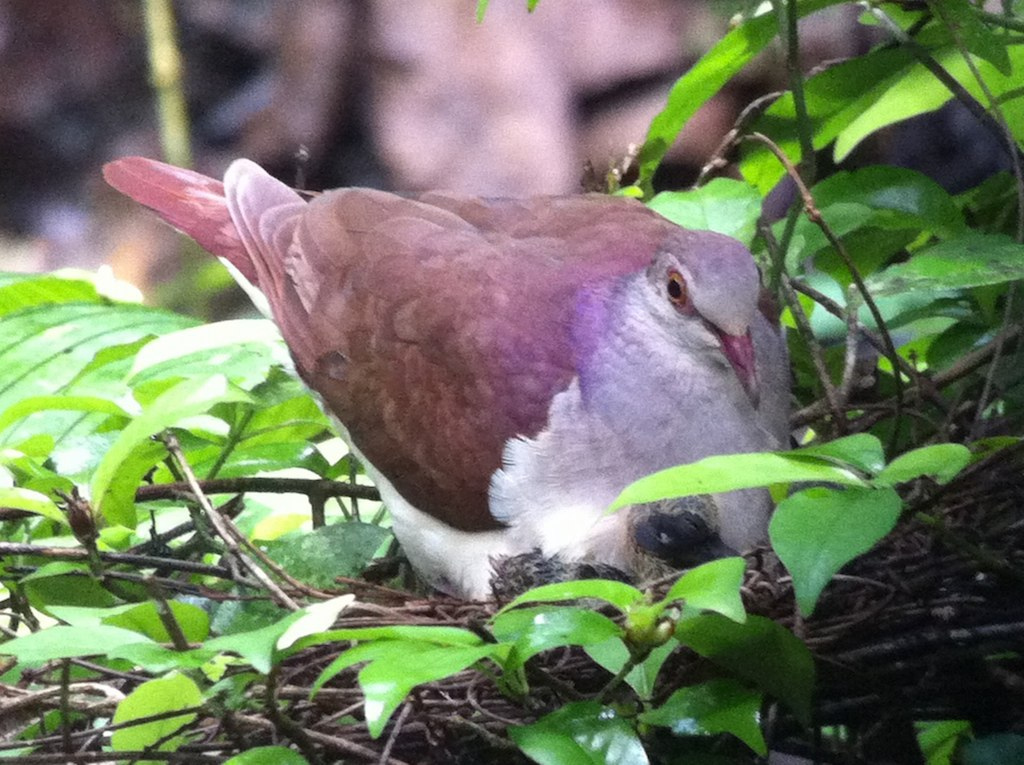
Wikipedia: Violaceous quail-dove
The violaceous quail-dove (Geotrygon violacea) is a species of bird in the family Columbidae. It is found in Argentina, Bolivia, Brazil, Colombia, Costa Rica, Ecuador, Nicaragua, Panama, Paraguay, Peru, Suriname, and Venezuela. Its natural habitats are subtropical or tropical moist lowland forest and heavily degraded former forest.
[more]
Profil Wikipedia eBird Xeno-Canto

Wikipedia: Ruddy quail-dove
Die Rote Erdtaube (Geotrygon montana) ist eine Art der Taubenvögel. Sie kommt von Mittel- bis Südamerika vor. Sie wird von der IUCN als nicht gefährdet eingestuft und ist in Teilen ihres Verbreitungsgebietes eine häufige Taubenart.
[more]

Wikipedia: Olive-backed quail-dove
The olive-backed quail-dove (Leptotrygon veraguensis) is a species of bird in the family Columbidae. It is the only species in the genus Leptotrygon.
[more]
Gattung Leptotila:
Profil Wikipedia eBird Audubon AllAboutBirds Xeno-Canto
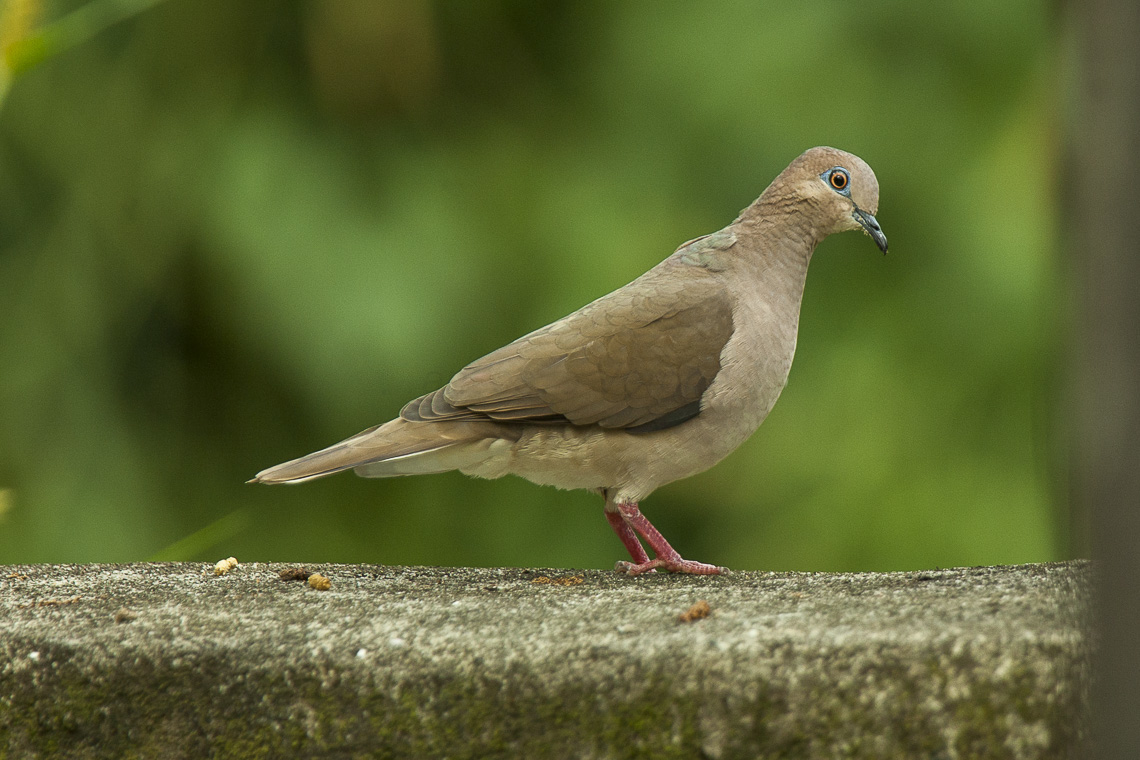
Wikipedia: White-tipped dove
The white-tipped dove (Leptotila verreauxi) is a large New World tropical dove. Its scientific name commemorates the French naturalists Jules and Edouard Verreaux.
[more]

Wikipedia: Grey-chested dove
Die Cassintaube (Leptotila cassini), früher gelegentlich als Graubrusttaube bezeichnet, ist eine Art der Taubenvögel, die ausschließlich in Mittelamerika und dem äußersten Norden Südamerikas vorkommt. Die Bestandssituation der Art wurde 2016 in der Roten Liste gefährdeter Arten der IUCN als „Least Concern (LC)“ = „nicht gefährdet“ eingestuft.[1]
[more]

Wikipedia: Grey-headed dove
Die Graukopftaube (Leptotila plumbeiceps), auch Braunrückentaube oder Bonapartetaube genannt, ist eine Art der Taubenvögel. Sie kommt in mehreren Unterarten ausschließlich in Mittel- und Südamerika vor. Sie gilt als in ihrem Bestand nicht gefährdet.
[more]
Gattung Patagioenas:

Wikipedia: Red-billed pigeon
Die Rotschnabeltaube (Patagioenas flavirostris) ist eine Art innerhalb der Gattung der Amerikanischen Feldtauben. Es ist eine große, dunkle Taube mit grauem und kastanienbraunem Gefieder, die im südlichen Nordamerika und Zentralamerika vorkommt.
[more]

Wikipedia: Band-tailed pigeon
Die Schuppenhalstaube (Patagioenas fasciata, Syn.: Columba fasciata), auch Bindentaube oder Bindenschwanztaube genannt, ist eine in der Neuen Welt verbreitete Taubenart.
[more]

Wikipedia: White-crowned pigeon
The white-crowned pigeon (Patagioenas leucocephala) is a fruit and seed-eating species of bird in the dove and pigeon family Columbidae. It is found primarily in the Caribbean.
[more]
Profil Wikipedia eBird Xeno-Canto
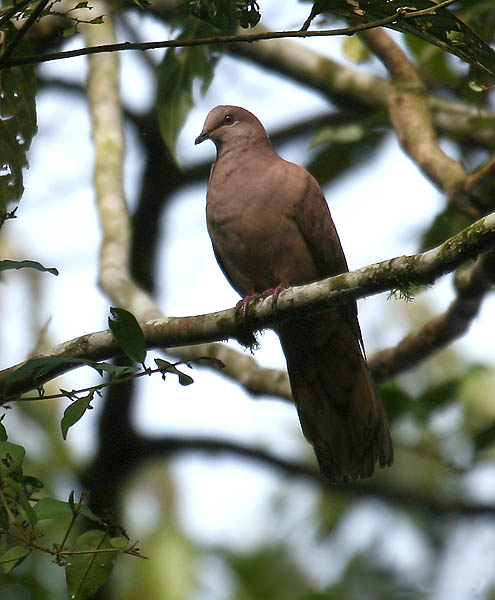
Wikipedia: Ruddy pigeon
Die Purpurtaube (Patagioenas subvinacea), auch Rötliche Taube genannt, ist eine in Süd- und Mittelamerika verbreitete Taubenart. Die IUCN stuft die Art als nicht gefährdet ein. Sie kommt in ihrem Verbreitungsgebiet in vier Unterarten vor.[1]
[more]
Profil Wikipedia eBird Xeno-Canto

Wikipedia: Pale-vented pigeon
Die Rotrückentaube (Patagioenas cayennensis, Syn.: Columba cayennensis), auch Rottaube oder Fuchsrote Taube genannt, ist eine in der Neuen Welt verbreitete Taubenart.
[more]

Wikipedia: Scaled pigeon
Die Schuppenbauchtaube (Patagioenas speciosa, Syn.: Colomba speciosa), auch Prachttaube genannt, ist eine Art innerhalb der Gattung der Amerikanischen Feldtauben. Es ist eine große, kompakt gebaute Taube, die im tropischen Mittel- und Südamerika vorkommt. Die Art ist monotypisch: Es werden trotz des großen Verbreitungsgebietes keine Unterarten unterschieden.[1] Namensgebend ist die durch schmal gesäumte Federn geschuppt wirkende Körperunterseite dieser Taube.
[more]
Profil Wikipedia eBird Xeno-Canto

Wikipedia: Short-billed pigeon
The short-billed pigeon (Patagioenas nigrirostris)[2] is a largish pigeon which breeds from southern Mexico south to northwestern Colombia. It is a member of a clade of Patagioenas that contains the smaller and rather plain species with characteristic calls[2] that constitute the subgenus Oenoenas.[3]
[more]

Wikipedia: Plumbeous pigeon
Die Weintaube (Patagioenas plumbea) ist eine Art innerhalb der Gattung der Amerikanischen Feldtauben. Es ist eine große, langschwänzige und heimlich lebende Taube mit weinrotem Gefieder, die in Wäldern der nördlichen Hälfte Südamerikas vorkommt. Es werden fünf Unterarten unterschieden.[1]
[more]
Gattung Zentrygon:

Wikipedia: Purplish-backed quail-dove
The purplish-backed quail-dove (Zentrygon lawrencii) is a species of bird in the family Columbidae.
It is endemic to the highlands of Central America, more specifically those of Costa Rica and Panama. The Tuxtla quail-dove of Mexico was once considered part of this species.
Its natural habitats are subtropical or tropical moist lowland forest and subtropical or tropical moist montane forest.
[more]

Wikipedia: Buff-fronted quail-dove
Die Costa-Rica-Wachteltaube (Zentrygon costaricensis, Syn.: Geotrygon costaricensis) ist eine bodenbewohnende Art der Taubenvögel, die zu den Wachteltauben zählt. Es ist eine kompaktgebaute und kurzschwänzige Art mit einem überwiegend rötlichbraunen Gefieder, die in Zentralamerika vorkommt.
[more]
Ordnung Coraciiformes (Rackenvögel / Kingfishers and others):
Familie Cerylidae:
Gattung Chloroceryle:

Wikipedia: Green kingfisher
Der Grünfischer (Chloroceryle americana) ist ein amerikanischer Eisvogel aus der gleichnamigen Gattung der Grünfischer (Chloroceryle).
[more]
Profil Wikipedia eBird Xeno-Canto

Wikipedia: American pygmy kingfisher
The American pygmy kingfisher (Chloroceryle aenea) is a resident breeding kingfisher which occurs in the American tropics from southern Mexico south through Central America to western Ecuador, and then around the northern Andes cordillera in the east to central Bolivia and central Brazil. The species occupies the entire Amazon basin and the Tocantins River drainage adjacent in Pará state Brazil. It also occurs on Trinidad.
[more]
Profil Wikipedia eBird Xeno-Canto

Wikipedia: Green-and-rufous kingfisher
Der Zweifarbenfischer (Chloroceryle inda) ist ein Eisvogel der Neotropis.
[more]
Profil Wikipedia eBird Xeno-Canto

Wikipedia: Amazon kingfisher
Der Amazonasfischer (Chloroceryle amazona) ist ein Eisvogel der Neotropis.
[more]
Gattung Megaceryle:

Wikipedia: Belted kingfisher
The belted kingfisher (Megaceryle alcyon) is a large, conspicuous water kingfisher. It is depicted on the 1986 series Canadian $5 note. All kingfishers were formerly placed in one family, Alcedinidae, but recent research suggests that this should be divided into three subfamilies.
[more]
Profil Wikipedia eBird Xeno-Canto

Wikipedia: Ringed kingfisher
The ringed kingfisher (Megaceryle torquata) is a large, conspicuous and noisy kingfisher bird commonly found along the lower Rio Grande valley in southeasternmost Texas in the United States through Central America to Tierra del Fuego in South America.[4]
[more]
Familie Momotidae:
Gattung Momotus:

Curi cancha blue crowned motmot in tree. 2018-02-18 13.52.48 Zentralamerika
Der Amazonasmotmot (Momotus momota, Syn.: Ramphastos momota) ist eine Vogelart aus der Familie der Sägeracken (Momotidae), die im südamerikanischen Amazonasbecken weit verbreitet ist.
[more]
Profil Wikipedia eBird Xeno-Canto

Curi cancha Lessons motmot in tree. 2018-02-18 13.52.46 Zentralamerika
Lesson's motmot (Momotus lessonii) or the blue-diademed motmot, is a colorful near-passerine bird found in forests and woodlands of southern Mexico to western Panama. This species and the blue-capped motmot, whooping motmot, Trinidad motmot, Amazonian motmot, and Andean motmot were all considered conspecific.
[more]
Profil Wikipedia eBird Xeno-Canto

Wikipedia: Whooping motmot
The whooping motmot (Momotus subrufescens) is a colorful near-passerine bird found in forests and woodlands of southern Panama to northwestern Peru. This species and the blue-capped motmot, Lesson's motmot, Trinidad motmot, Amazonian motmot, and Andean motmot were all considered conspecific.
[more]
Gattung Baryphthengus:

Wikipedia: Rufous motmot
The rufous motmot (Baryphthengus martii) is a near-passerine bird which is a resident breeder in rain forests from northeastern Honduras south to western Ecuador, northeastern Bolivia, and southwestern Brazil.
[more]
Gattung Hylomanes:
Profil Wikipedia eBird Xeno-Canto
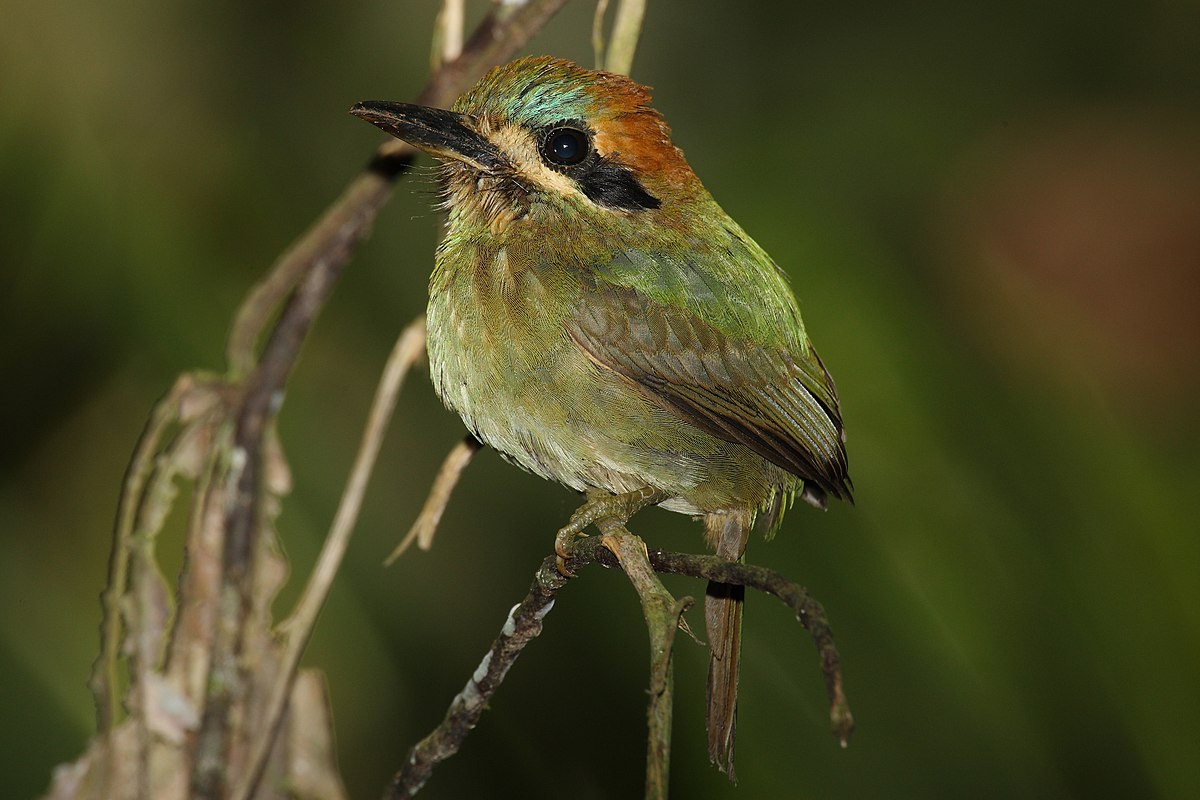
Wikipedia: Tody motmot
The tody motmot (Hylomanes momotula) is a species of bird in the family Momotidae. It is monotypic within the genus Hylomanes.[2]
It is found in Belize, Colombia, Costa Rica, El Salvador, Guatemala, Honduras, Mexico, Nicaragua, and Panama.
Its natural habitats are subtropical or tropical moist lowland forest and subtropical or tropical moist montane forest.
[more]
Gattung Electron:
Profil Wikipedia eBird Xeno-Canto

Wikipedia: Keel-billed motmot
The keel-billed motmot (Electron carinatum) is a species of bird in the motmot family Momotidae. It is very closely related to the broad-billed motmot, and the two may be the same species. The two are similar sizes and shapes, and have been reported to have similar calls, but they do have different plumage.[2]
[more]
Profil Wikipedia eBird Xeno-Canto
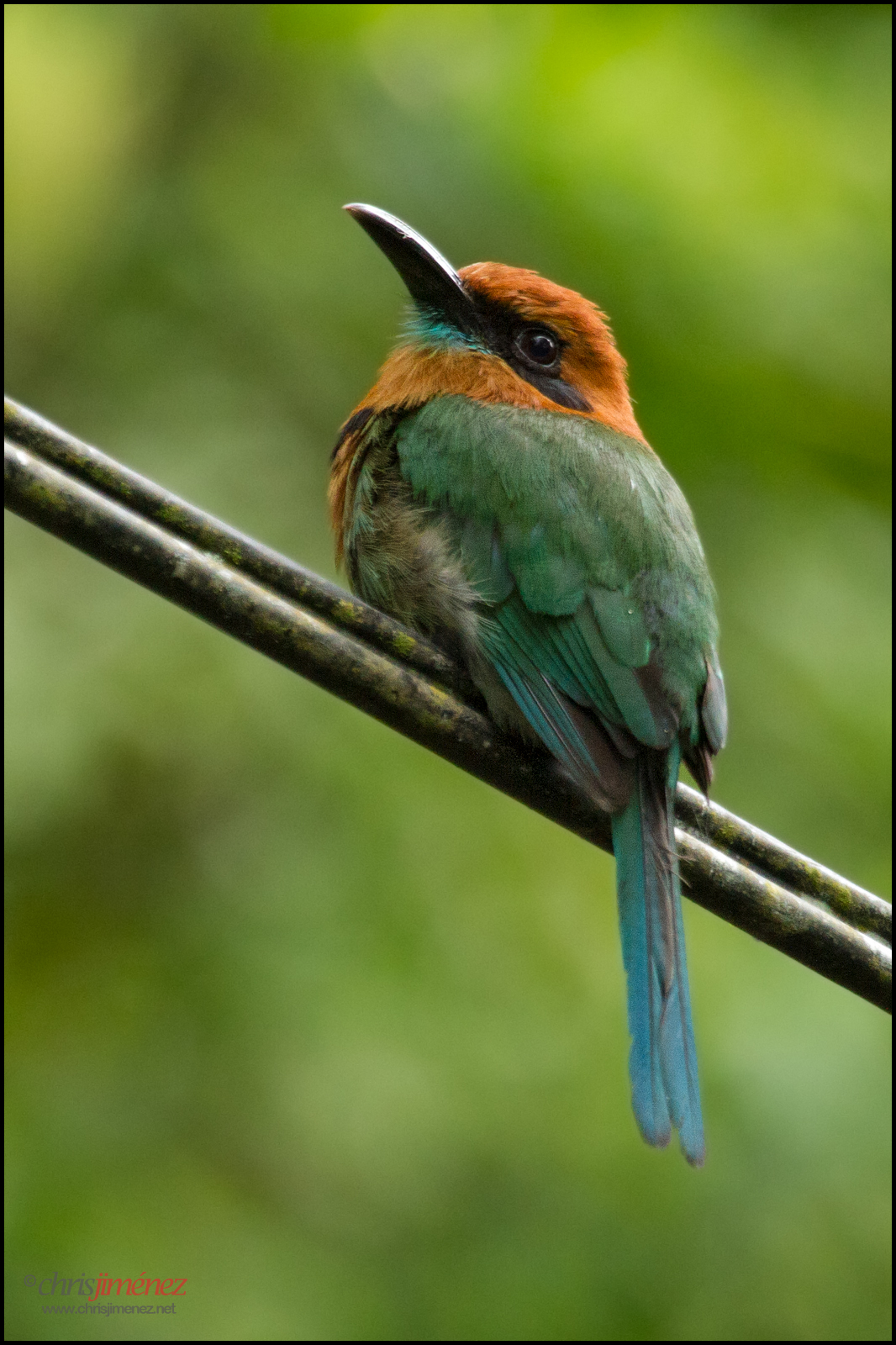
Wikipedia: Broad-billed motmot
The broad-billed motmot (Electron platyrhynchum) is a fairly common[2] Central and South American bird of the Momotidae family.[3] They are nonmigratory, sedentary birds[4] that are most frequently seen in singles or pairs.[3] There exist six subspecies of the broad-billed motmot.[3]
[more]
Gattung Eumomota:
Profil Wikipedia eBird Xeno-Canto

Wikipedia: Turquoise-browed motmot
The turquoise-browed motmot (Eumomota superciliosa) also known as Torogoz, is a colourful, medium-sized bird of the motmot family, Momotidae. It inhabits Central America from south-east Mexico (mostly the Yucatán Peninsula), to Costa Rica, where it is common and not considered threatened. It lives in fairly open habitats such as forest edge, gallery forest and scrubland. It is more conspicuous than other motmots, often perching in the open on wires and fences. From these perches it scans for prey, such as insects and small reptiles. White eggs (3–6) are laid in a long tunnel nest in an earth bank or sometimes in a quarry or fresh-water well. Its name originates from the turquoise color of its brow. It is the national bird of both El Salvador and Nicaragua, where it is known as "Torogoz" and "Guardabarranco" respectively.[2][3]
[more]
Ordnung Cuculiformes (Kuckucke / Cuckoos and others):
Familie Cuculidae (Cuckoos):
Gattung Coccycua:
Profil Wikipedia eBird Xeno-Canto

Wikipedia: Little cuckoo
The little cuckoo (Coccycua minuta) is a species of bird in the cuckoo family (Cuculidae) from South America and Panama. It was formerly placed in the genus Piaya, but was moved to the reinstated genus Coccycua following the discovery that its closest living relatives are a couple species traditionally placed in Coccyzus or Micrococcyx, rather than the other members of Piaya.[2]
[more]
Familie Crotophagidae:
Gattung Crotophaga:
Profil Wikipedia eBird Audubon AllAboutBirds Xeno-Canto
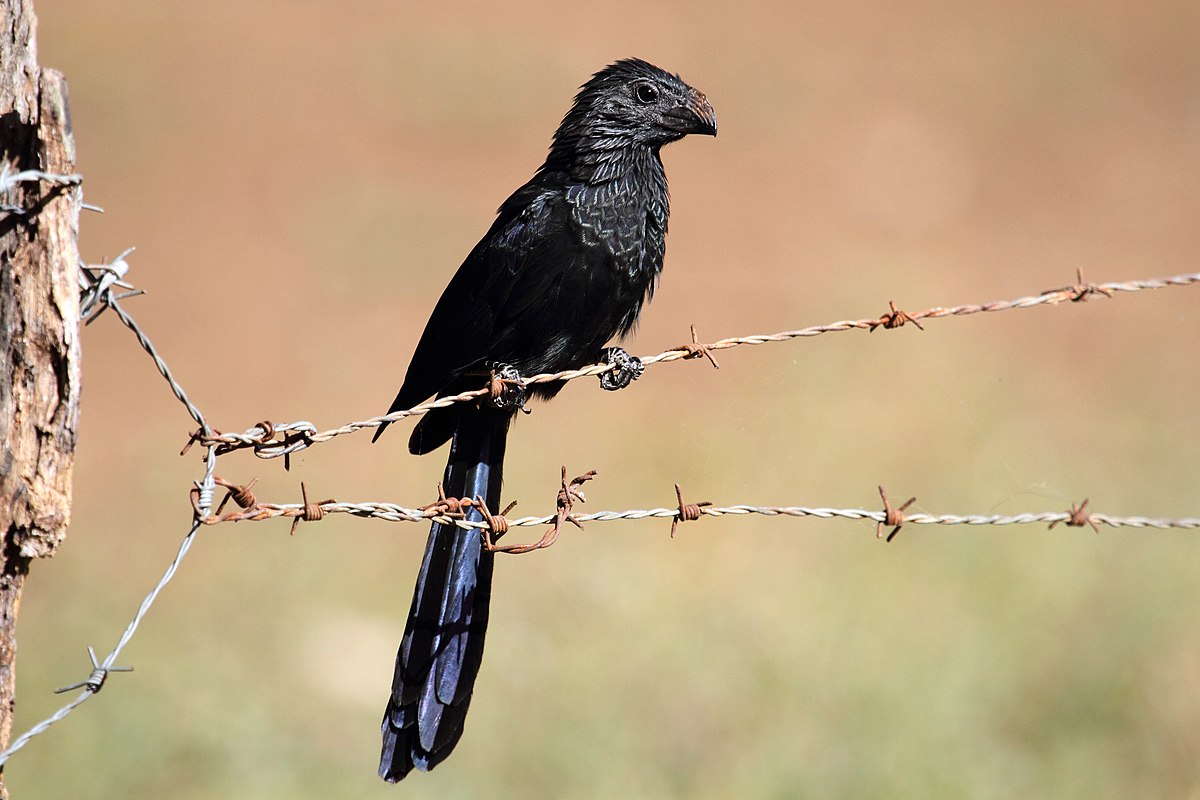
Wikipedia: Groove-billed ani
Der Riefenschnabelani (Crotophaga sulcirostris) ist ein Vertreter der Gattung Crotophaga innerhalb der Familie der Kuckucke (Cuculidae). Der schwarze, auffallend langschwänzige Vogel kommt in einem ausgedehnten Gebiet von der südlichen texanischen Golfküste südwärts bis Nordwestargentinien vor. Seine Insektenbeute sucht er in Familiengruppen, die mehr als 20 Individuen umfassen können, vor allem am Boden. Riefenschnabelanis sind keine Brutschmarotzer, sondern vornehmlich Gemeinschaftsbrüter. Gewöhnlich legen mehrere Weibchen ihre Eier in ein gemeinschaftlich errichtetes Nest und ziehen gemeinsam mit den anderen Gruppenmitgliedern die Jungen auf. Die monotypische Art ist stellenweise häufig und gilt in ihrem Bestand als nicht gefährdet, wird jedoch in einigen Küstengebieten entlang der mittelamerikanischen und südamerikanischen Pazifikküste zunehmend vom nahe verwandten Glattschnabelani verdrängt.[1]
[more]
Profil Wikipedia eBird Audubon AllAboutBirds Xeno-Canto

Wikipedia: Smooth-billed ani
Der Glattschnabelani (Crotophaga ani) ist ein Vertreter der Gattung Crotophaga innerhalb der Familie der Kuckucke (Cuculidae). Der schwarze, auffallend langschwänzige Vogel kommt in weiten Teilen Südamerikas, auf fast allen Inseln der Karibik und in einigen Gebieten Floridas und Mittelamerikas vor. Sein charakteristischer Ruf wurde in einigen Sprachen für die Trivialnamen der Gattung namensgebend und bildet für diese Art das Artepitheton. Glattschnabelanis ernähren sich vorwiegend von Insekten, die sie vom Boden auflesen, aber auch in Büschen und auf Bäumen erbeuten. Wie die beiden anderen Arten der Gattung Crotophaga sind Glattschnabelanis keine Brutschmarotzer, sondern vornehmlich Gemeinschaftsbrüter. Gewöhnlich legen mehrere Weibchen ihre Eier in ein gemeinschaftlich errichtetes Nest und ziehen gemeinsam mit anderen Gruppenmitgliedern die Jungen auf. Die monotypische Art ist stellenweise häufig und gilt in ihrem Bestand als nicht gefährdet. In einigen Gebieten entlang der mittelamerikanischen und südamerikanischen Pazifikküste breitet sie sich stark aus und verdrängt dort zuweilen den Riefenschnabelani.[1]
[more]
Profil Wikipedia eBird Xeno-Canto
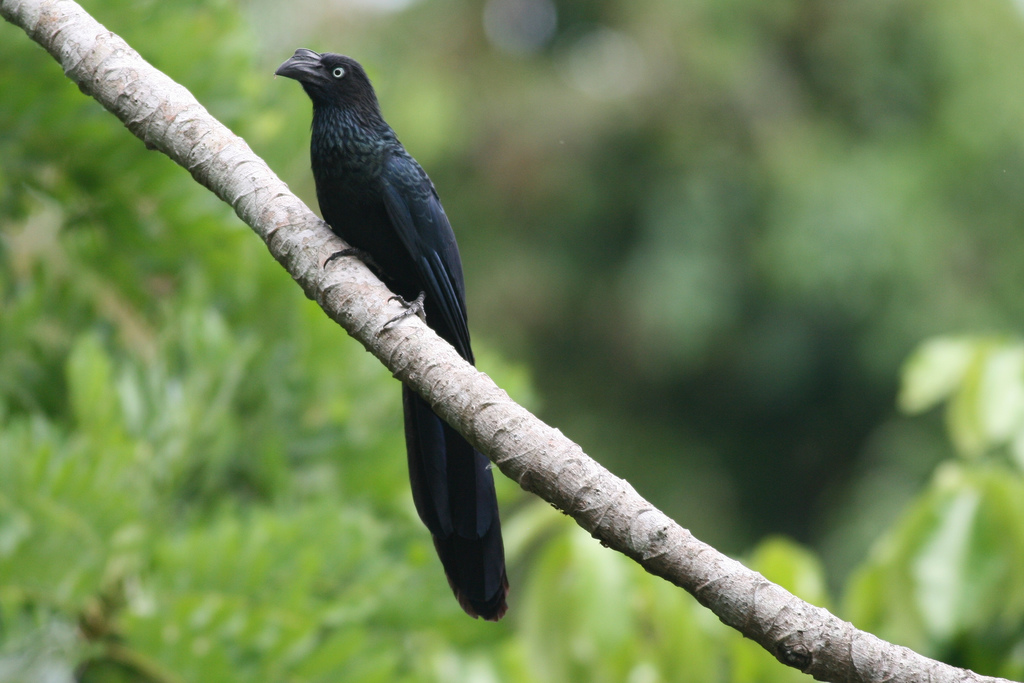
Wikipedia: Greater ani
Der Riesenani (Crotophaga major) ist der größte Vertreter der Gattung Crotophaga innerhalb der Familie der Kuckucke (Cuculidae). Der schwarze, auffallend langschwänzige Vogel kommt vor allem in feuchten Niederungen des nördlichen und zentralen Südamerikas vor. Seine Insektenbeute sucht er in Familiengruppen bis zu etwa einem Dutzend Vögel am Boden oder im Geäst der Bäume. Riesenanis sind keine Brutschmarotzer, sondern vornehmlich Gemeinschaftsbrüter. Gewöhnlich legen mehrere Weibchen ihre Eier in ein gemeinschaftlich errichtetes Nest und ziehen gemeinsam mit den anderen Gruppenmitgliedern die Jungen auf. Die monotypische Art ist stellenweise häufig und gilt in ihrem Bestand als nicht gefährdet.
[more]
Familie Coccyzidae:
Gattung Piaya:
Profil Wikipedia eBird Xeno-Canto

Squirrel cuckoo in Manzanillo, Costa Rica. 2020-03-12 08.12.56 Zentralamerika
The squirrel cuckoo (Piaya cayana) is a large and active species of cuckoo found in wooded habitats from northwestern Mexico to northern Argentina and Uruguay, and on Trinidad. Some authorities have split off the western Mexican form as the Mexican squirrel-cuckoo (Piaya mexicana).[2]
[more]
Gattung Coccyzus:
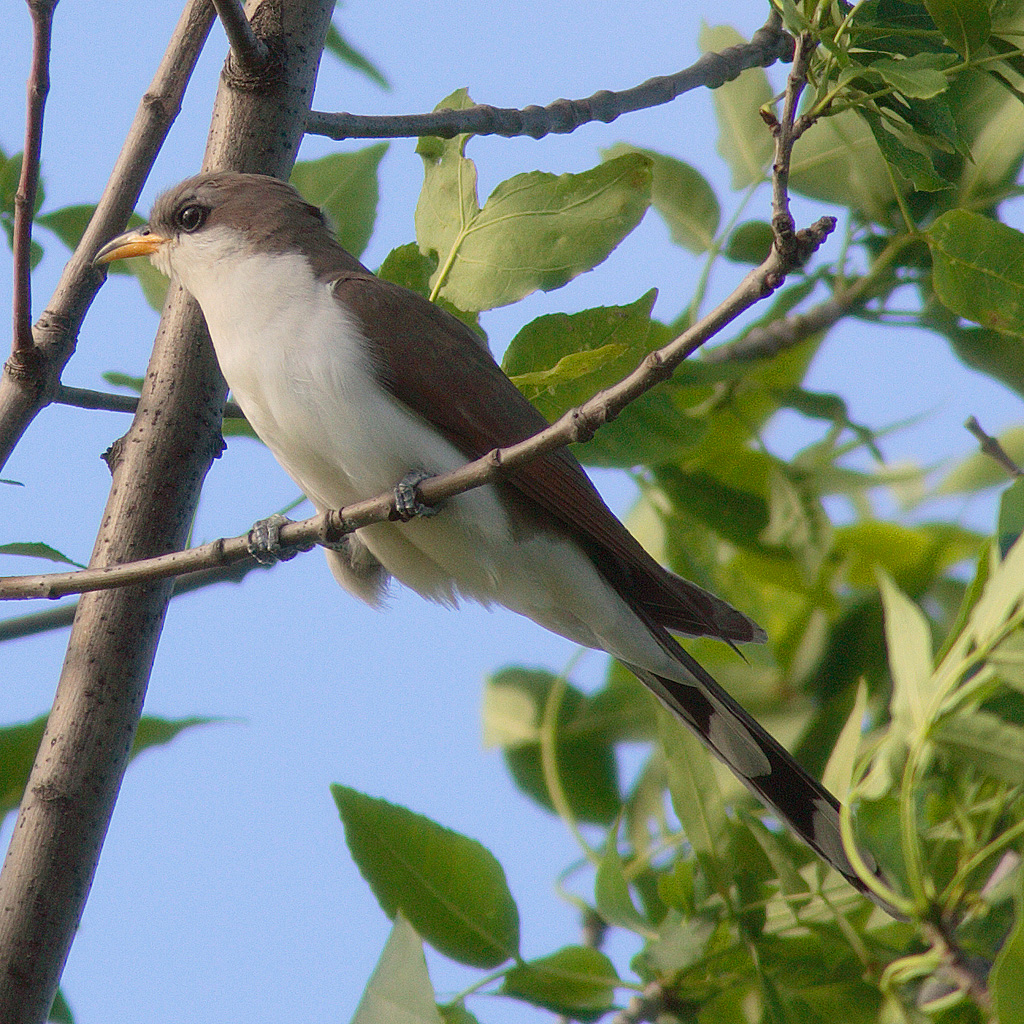
Wikipedia: Yellow-billed cuckoo
The yellow-billed cuckoo (Coccyzus americanus) is a cuckoo. Common folk-names for this bird in the southern United States are rain crow and storm crow. These likely refer to the bird's habit of calling on hot days, often presaging rain or thunderstorms.
[more]
Profil Wikipedia eBird Audubon AllAboutBirds Xeno-Canto

Wikipedia: Mangrove cuckoo
The mangrove cuckoo (Coccyzus minor) is a species of cuckoo that is native to the Neotropics.
[more]
Profil Wikipedia eBird Xeno-Canto

Wikipedia: Cocos cuckoo
Der Cocoskuckuck (Coccyzus ferrugineus), auch Kokosinsel-Kuckuck, ist eine endemische Inselart aus der Familie der Kuckucksvögel und zählt zu den Kuckucksarten, die in ihrem Bestand gefährdet (vulnerable) sind.[1] Wie für Vertreter der Gattung Coccyzus typisch, zieht er seinen Nachwuchs selbst groß.
[more]
Profil Wikipedia eBird Xeno-Canto

Wikipedia: Pearly-breasted cuckoo
The pearly-breasted cuckoo (Coccyzus euleri) is a species of cuckoo in the family Cuculidae.
It is found in Argentina, Bolivia, Brazil,[2] Colombia, Ecuador, French Guiana, Guyana, Paraguay, Suriname, Peru[3] and Venezuela.
Its natural habitats are subtropical or tropical moist lowland forests and heavily degraded former forest. It does not occur above an elevation of 2000 meters.[4]
[more]
Familie Neomorphidae:
Gattung Dromococcyx:
Profil Wikipedia eBird Xeno-Canto

Wikipedia: Pheasant cuckoo
Der Fasanenkuckuck (Dromococcyx phasianellus) ist eine Kuckucksart in Mittel- und Südamerika.
[more]
Gattung Neomorphus:
Profil Wikipedia eBird Xeno-Canto

Wikipedia: Rufous-vented ground-cuckoo
Der Tajazuikuckuck (Neomorphus geoffroyi) ist eine Kuckucksart der Neotropis. Es werden bis zu sieben Unterarten unterschieden.
[more]
Gattung Tapera:
Profil Wikipedia eBird Xeno-Canto
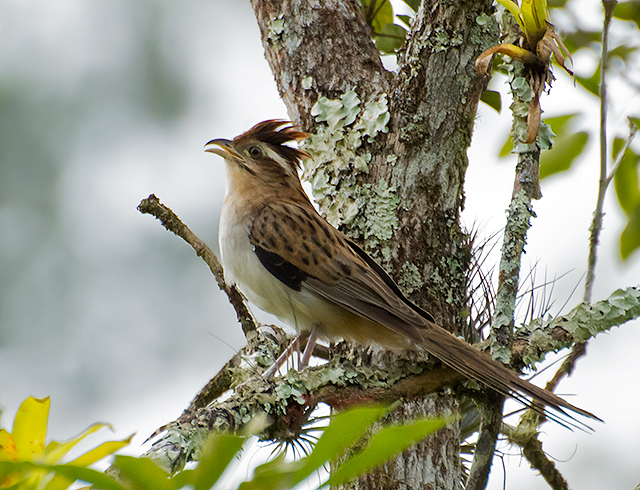
Wikipedia: Striped cuckoo
Der Streifenkuckuck (Tapera naevia) ist eine Kuckucksart der Neotropis. Er ist der einzige Vertreter der Gattung Tapera.
[more]
Ordnung Falconiformes (Falkenartige / Falcons and others):
Familie Falconidae:
Gattung Falco (Falcons):

Wikipedia: Peregrine falcon
Dieser Vogel erscheint jenseits grossen Meere in Kontinenten :
Europa, Nordamerika, Südamerika, Afrika.
Der Wanderfalke (Falco peregrinus) gehört zur Familie der Falkenartigen. Er zählt zu den größten Vertretern der Familie und ist mit einer Spitzengeschwindigkeit von mehr als 320[1] km/h das schnellste Tier des Planeten. Der Wanderfalke ist ein Kosmopolit und die am weitesten verbreitete Vogelart der Welt; er besiedelt bis auf Antarktika alle Kontinente. Wanderfalken sind primär Felsbrüter und bewohnen in erster Linie gebirgige Landschaften aller Art sowie Steilküsten. In den letzten Jahrzehnten hat die Art in vielen Teilen des Verbreitungsgebietes auch Städte und Industrieanlagen mit ihren zahlreichen „Kunstfelsen“ besiedelt.
[more]
Vokalisierung: A harsh, drawn out "kiaaaa" with emphasised endings repeated in series. Much slower than Merlin, but higher pitched than Gyrfalcon. [Link]
Rufe: Also shorter, coarse warning-calls. [Link]
Körperlich: Länge=36-48 cm,
Flügelspanne=95-110 cm,
Gewicht=582-1300 g
Profil Wikipedia eBird Vogelwarte BirdLife ZH Audubon AllAboutBirds Xeno-Canto BirdID NABU

Night tour - sleeping trogon, tenative ID by Merlin collared trogon. 2018-02-14 18.46.34 Zentralamerika
Dieser Vogel erscheint jenseits grossen Meere in Kontinenten :
Europa, Nordamerika, Südamerika, Afrika.
Deutschland: Zugvogel, Wintergast
Vokalisierung: Series of harsh "kwik-wik wik". Coarseness similar to Peregrine, but pace much quicker. [Link]
Rufe: Female call harsher than male. Lacking the clearer tones and attack of Kestrel. [Link]
Körperlich: Länge=25-30 cm,
Flügelspanne=50-62 cm,
Gewicht=125-300 g
Profil Wikipedia eBird Audubon AllAboutBirds Xeno-Canto

Wikipedia: Aplomado falcon
Allgemein: Der Aplomadofalke (Falco femoralis) ist ein mittelgroßer Vertreter der Gattung der Falken. Die vor allem in Mittel- und Südamerika verbreitete Art wurde erstmals im Jahr 1822 durch den niederländischen Zoologen Coenraad Jacob Temminck beschrieben. Der Begriff aplomado stammt aus dem Spanischen und bezeichnet die bleigraue Farbe eines Teils des Gefieders des Aplomadofalken, die zur Unterscheidung von anderen Arten herangezogen werden kann.
[more]
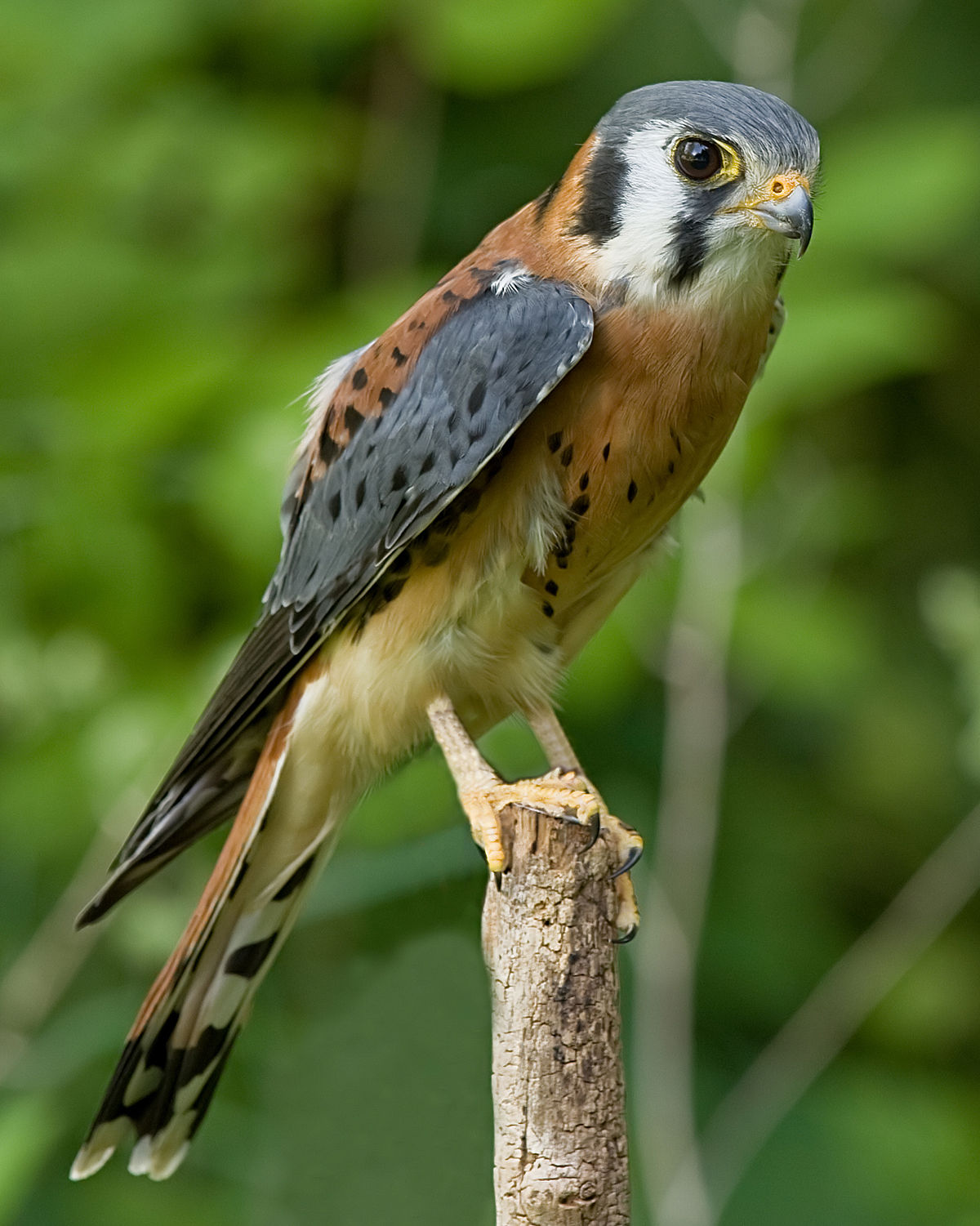
Wikipedia: American kestrel
Der Buntfalke (Falco sparverius), auch Amerikanischer Turmfalke genannt, ist ein Vogel aus der Familie der Falkenartigen (Falconidae). Die Art ähnelt in Aussehen und Verhalten dem auch in Mitteleuropa heimischen Turmfalken, ist jedoch kleiner und vor allem die Männchen sind deutlich bunter. Der Buntfalke bewohnt offene und halboffene Landschaften aller Art in großen Teilen Nord- und Südamerikas und ist auch im menschlichen Siedlungsbereich häufig. Er ist nicht gefährdet.
[more]
Profil Wikipedia eBird Xeno-Canto

Wikipedia: Bat falcon
The bat falcon (Falco rufigularis) is a falcon that is a resident breeder in tropical Mexico, Central and South America, and Trinidad. It was long known as Falco albigularis; the names Falco fusco-coerulescens or Falco fuscocaerulescens, long used for the aplomado falcon, are now believed to refer to the present species.[2]
[more]
Profil Wikipedia eBird Xeno-Canto

Wikipedia: Orange-breasted falcon
The orange-breasted falcon (Falco deiroleucus) is a bird of the falcon family. It is probably closely related to and looks like a larger version of the bat falcon. These two, in turn, are probably closest to the aplomado falcon and constitute a rather old American lineage of Falco.[2]
[more]
Gattung Micrastur:
Profil Wikipedia eBird Xeno-Canto

Wikipedia: Barred forest-falcon
Der Sperberwaldfalke (Micrastur ruficollis) ist ein fleischfressender Vogel aus der Familie der Falkenartigen. Die Art ist ein Waldbewohner der tropischen und subtropischen Regionen Mittel- und Südamerikas. Bedingt durch ihre zurückgezogene Lebensweise werden die Vögel eher selten beobachtet, sind jedoch anhand ihres typischen Rufs leicht zu identifizieren.
[more]

Wikipedia: Slaty-backed forest-falcon
The slaty-backed forest falcon (Micrastur mirandollei) is a species of bird of prey in the family Falconidae.
It is found in Bolivia, Brazil, Colombia, Costa Rica, Ecuador, French Guiana, Guyana, Panama, Peru, Suriname, and Venezuela. Its natural habitat is subtropical or tropical moist lowland forests. It is an active hunter that preys on birds, snakes, lizards, rodents, fish, and sometimes bats. Its call is different from that of other forest falcons, with 7-10 notes repeated in a series.
[more]
Profil Wikipedia eBird Xeno-Canto

Wikipedia: Collared forest-falcon
The collared forest falcon (Micrastur semitorquatus) is a species of bird of prey in the family Falconidae. It is the largest member of the Micrastur genus and a common inhabitant of tropical rainforests in Latin America.[2] Hiding in the dense forest canopy, they are a secretive bird often only recognized by their distinctive call. With a morphology or body type allowing them to be agile in their forested habitat, their diet comprises a wide variety of prey from smaller frogs (20 g) to adult turkeys (2.7-3.2 kg).[3]
[more]
Gattung Milvago:
Profil Wikipedia eBird Xeno-Canto

Wikipedia: Yellow-headed caracara
Der Gelbkopfkarakara (Milvago chimachima) ist ein kleiner Karakara, der hauptsächlich im nördlichen und zentralen Südamerika vorkommt. Sein Name bezieht sich auf seine Gefiederfarbe.
[more]
Gattung Herpetotheres:
Profil Wikipedia eBird Xeno-Canto
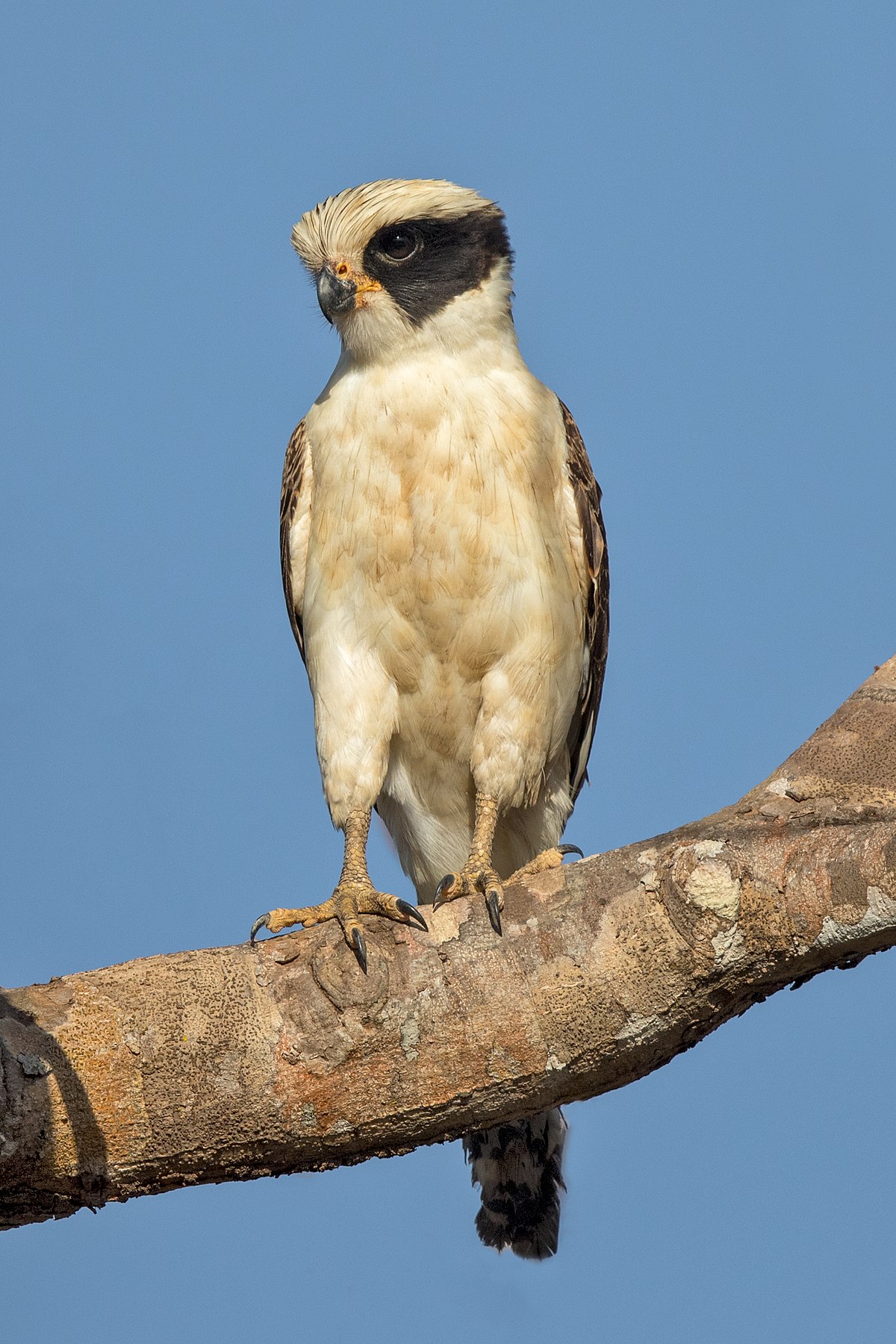
Wikipedia: Laughing falcon
Der Lachfalke (Herpetotheres cachinnans) oder Lachhabicht ist eine Vogelart aus der Familie der Falkenartigen.
[more]
Gattung Caracara:
Profil Wikipedia eBird Audubon AllAboutBirds Xeno-Canto

Wikipedia: Crested caracara
Der Karibikkarakara (Caracara cheriway) ist ein falkenartiger Vogel aus dem südlichen Nordamerika, Mittelamerika und dem nördlichen Südamerika. Die Art wird in zwei Unterarten geteilt, im Norden Caracara cheriway auduboni, im Süden Caracara cheriway cheriway.
[more]
Gattung Ibycter:

Wikipedia: Red-throated caracara
The red-throated caracara (Ibycter americanus) is a social species of bird of prey in the family Falconidae. It is placed in the monotypic genus Ibycter, or sometimes united in Daptrius with the black caracara. Unique among caracaras, it mainly feeds on the larvae of bees and wasps, but also takes the adult insects and fruits and berries.[2]
[more]
Ordnung Piciformes (Spechtvögel / Woodpeckers and others):
Familie Picidae (Woodpeckers):
Gattung Colaptes:

Wikipedia: Golden-olive woodpecker
The golden-olive woodpecker (Colaptes rubiginosus) is a resident breeding bird from Mexico south and east to Guyana, northwest Argentina, Trinidad and Tobago. It was formerly placed in the genus Piculus.[4] The scientific name rubiginosus means "full of rust", describing the color of the bird's wings and back.
[more]
Profil Wikipedia eBird Xeno-Canto

Wikipedia: Spot-breasted woodpecker
Der Tüpfelbrustspecht (Colaptes punctigula) ist eine Vogelart aus der Familie der Spechte (Picidae). Dieser kleine Specht besiedelt große Teile des nördlichen Südamerikas. Die Art bewohnt ein weites Spektrum eher offener und halboffener baumbestandener Habitate von Regenwald, laubabwerfendem Wald und Galeriewald über Sekundärwald, Mangrove, Buschland und Lichtungen bis hin zu Kaffeeplantagen und anderen Plantagen mit einem ausreichenden Baumbestand. Die sowohl in der unteren und mittleren Baumschicht als auch auf dem Boden gesuchte Nahrung besteht in erster Linie aus Ameisen und deren Larven und Puppen.
[more]
Gattung Picoides:

Wikipedia: Hairy woodpecker
Der Haarspecht (Leuconotopicus villosus, Syn.: Picoides villosus) ist die am weitesten verbreitete Spechtart Nordamerikas. Man unterscheidet 18 Unterarten.
[more]
Gattung Dryocopus:
Profil Wikipedia eBird Xeno-Canto

Lineated woodpecker cahal pech. 2018-02-04 15.57.04 Zentralamerika
The lineated woodpecker (Dryocopus lineatus) is a very large woodpecker which is a resident breeding bird from southern Mexico to northern Argentina and on Trinidad in the Caribbean.
[more]
Gattung Piculus:
Profil Wikipedia eBird Xeno-Canto

Wikipedia: Rufous-winged woodpecker
Der Zimtflügelspecht (Piculus simplex) ist ein in Mittelamerika vorkommender Vogel aus der Familie der Spechte (Picidae).
[more]
Profil Wikipedia eBird Xeno-Canto

Wikipedia: Golden-green woodpecker
The golden-green woodpecker (Piculus chrysochloros) is a species of bird in the family Picidae, the woodpeckers, piculets and wrynecks.
It is found in north-central South America, centered on the Amazon Basin in the countries of Argentina, Bolivia, Brazil, Ecuador, French Guiana, Guyana, Paraguay, Peru and Suriname. A disjunct region of the bird's range occurs in northwestern Colombia and Venezuela. A second disjunct group is found 1,500 km southeast of the Amazon Basin in the Brazilian states of Minas Gerais and Espírito Santo in an 800 km coastal strip.
[more]
Gattung Veniliornis:
Profil Wikipedia eBird Xeno-Canto

Wikipedia: Red-rumped woodpecker
The red-rumped woodpecker (Veniliornis kirkii) is a resident breeding bird from Costa Rica south and east to Ecuador, Venezuela, Trinidad and Tobago.
[more]
Gattung Sphyrapicus:
Profil Wikipedia eBird Audubon AllAboutBirds Xeno-Canto

Wikipedia: Yellow-bellied sapsucker
Der Gelbbauch-Saftlecker (Sphyrapicus varius) ist eine kleine nordamerikanische Spechtart aus der Gattung der Saftlecker (Sphyrapicus) innerhalb der Familie der Spechte (Picidae). Der obligate Zugvogel ist im nördlichen Nordamerika östlich der Rocky Mountains weit verbreitet. Er lebt von kleinen Insekten, vornehmlich von Ameisen, sowie von Baumsäften unterschiedlicher Baumarten, die er durch Anlage kleiner Löcher (engl. sap wells) gewinnt. Diese Saftquellen werden zwar bewacht und gepflegt, dienen aber dennoch vielen anderen Vögeln und Insekten als Nahrung oder Nahrungsergänzung. Auch als Höhlenlieferant für kleinere höhlenbrütende Arten spielt diese Spechtart in ihrem Lebensraum eine sehr wichtige Rolle. Die Art ist monotypisch. Gemeinsam mit dem Feuerkopf-Saftlecker (Sphyrapicus ruber) und dem Rotnacken-Saftlecker (Sphyrapicus nuchalis) bildet sie die Superspezies Sphyrapicus varius.[1] Nach Einschätzung der IUCN ist der Bestand nicht gefährdet.[2]
[more]
Gattung Picumnus:
Profil Wikipedia eBird Xeno-Canto

Wikipedia: Olivaceous piculet
The olivaceous piculet (Picumnus olivaceus) is a species of bird in the family Picidae. Etymologically, piculet is as a double diminutive of the Latin picus, woodpecker,[2] see also Picus. In Greek, δρύοψ is woodpecker, which shares its roots with δρῦς, 'tree'; 'oak' and Druids.
[more]
Gattung Melanerpes:
Profil Wikipedia eBird Audubon AllAboutBirds Xeno-Canto
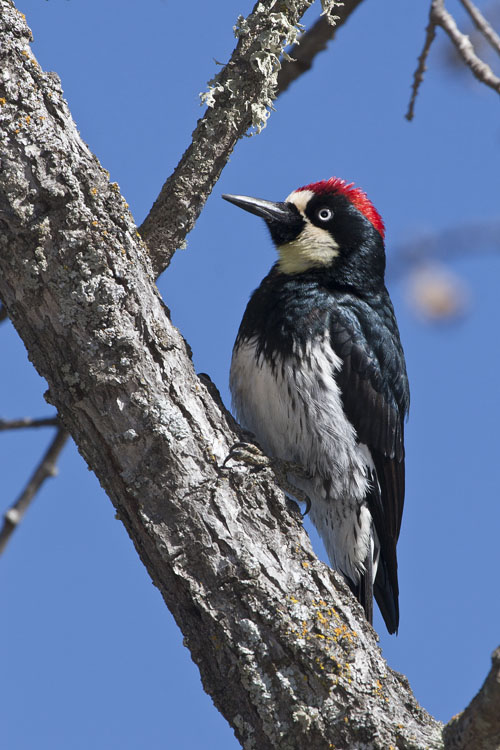
Wikipedia: Acorn woodpecker
Der Eichelspecht (Melanerpes formicivorus) ist ein mittelgroßer Vertreter der Gattung Melanerpes innerhalb der Unterfamilie der Echten Spechte (Picinae). Die auffällige und nicht seltene Art ist vom Südwesten Washingtons südwärts bis ins nordwestliche Südamerika verbreitet. Wie einige andere Melanerpes-Arten leben auch Eichelspechte meist in Familiengruppen, in denen eine höchst differenzierte Sozialstruktur ausgebildet ist. Die geographische Variation ist groß: Es werden über zehn Unterarten beschrieben, von denen sieben allgemein anerkannt sind. Fast alle Unterarten sind Standvögel und betreiben eine intensive herbstliche Vorratshaltung.
[more]
Profil Wikipedia eBird Xeno-Canto

Wikipedia: Golden-naped woodpecker
Der Buntkopfspecht (Melanerpes chrysauchen) ist eine Vogelart aus der Familie der Spechte (Picidae). Diese kleine Spechtart ist ein Endemit Panamas und Costa Ricas und bewohnt überwiegend den dichten tropischen Regenwald, aber auch Waldränder bis hin zu halboffenen Bereichen mit nur noch lockerem Baumbestand. Die überwiegend in mittlerer Höhe und in den Kronen von Bäumen gesuchte Nahrung besteht vorwiegend aus holzbewohnenden Käfern und deren Larven, schwärmenden Termiten und anderen Insekten sowie Früchten. Die Art ist häufig und wird von der IUCN als ungefährdet („least concern“) eingestuft.
[more]
Profil Wikipedia eBird Xeno-Canto

Wikipedia: Black-cheeked woodpecker
Der Schläfenfleckspecht (Melanerpes pucherani) ist eine Vogelart aus der Familie der Spechte (Picidae). Diese kleine Spechtart besiedelt große Teile Mittelamerikas sowie eine relativ schmale Zone im Nordwesten Südamerikas. Schläfenfleckspechte bewohnen überwiegend das Innere des tropischen Regenwaldes, aber auch dessen Ränder, älteren Sekundärwald sowie aufgegebene Bananenplantagen.
[more]
Profil Wikipedia eBird Xeno-Canto

Red crowned woodpecker. 2020-02-18 09.37.00 Zentralamerika
Der Rotkappenspecht (Melanerpes rubricapillus) ist eine Vogelart aus der Familie der Spechte (Picidae). Das Verbreitungsgebiet dieser sehr kleinen Spechtart umfasst das zentrale und südliche Mittelamerika und den Norden Südamerikas. Die Tiere bewohnen dort trockene bis feuchte, halboffene Landschaften. Diese Spechte fressen viele Arten von Früchten und Beeren sowie Insekten und andere Wirbellose, vor allem Ameisen, Käfer, Grillen und deren Larven. Außerdem trinken die Tiere Nektar aus großen Blüten. Die Art ist häufig und wird von der IUCN als ungefährdet ("least concern") eingestuft.
[more]

Wikipedia: Hoffmann's woodpecker
Der Hoffmannspecht (Melanerpes hoffmannii) ist eine Vogelart aus der Familie der Spechte (Picidae). Diese kleine Spechtart hat ein relativ kleines Verbreitungsgebiet in Mittelamerika und bewohnt dort trockene bis mäßig feuchte, halboffene Landschaften. Die überwiegend auf Bäumen gesuchte Nahrung besteht vorwiegend aus Insekten und deren Larven sowie Früchten, außerdem trinken die Tiere auch Nektar aus großen Blüten. Die Art ist häufig und wird von der IUCN als ungefährdet ("least concern") eingestuft.
[more]
Gattung Campephilus:
Profil Wikipedia eBird Xeno-Canto

Arenal pale-billed woodpecker. 2018-02-27 15.51.26 Zentralamerika
The pale-billed woodpecker (Campephilus guatemalensis) is a very large woodpecker that is a resident breeding bird from northern Mexico to western Panama.
[more]

Wikipedia: Crimson-bellied woodpecker
The crimson-bellied woodpecker (Campephilus haematogaster) is a species of bird in the family Picidae.
It is found in Colombia, Ecuador, Panama, and Peru.
Its natural habitats are subtropical or tropical moist lowland forest and subtropical or tropical moist montane forest.
[more]
Profil Wikipedia eBird Xeno-Canto

Wikipedia: Crimson-crested woodpecker
The crimson-crested woodpecker (Campephilus melanoleucos) is a very large woodpecker which is a resident breeding bird from Panama south to northern border regions of Argentina, and on Trinidad.
[more]
Gattung Celeus:
Profil Wikipedia eBird Xeno-Canto

Wikipedia: Chestnut-colored woodpecker
Der Kastanienspecht (Celeus castaneus) ist eine Vogelart aus der Familie der Spechte (Picidae). Dieser kleine und insgesamt überwiegend dunkel kastanienbraune Specht hat ein relativ kleines Verbreitungsgebiet in Mittelamerika. Die Art bewohnt überwiegend dichte, immergrüne oder halb-immergrüne Urwälder und ältere Sekundärwälder sowie gelegentlich Mangrove. Sie bevorzugt Waldränder und Bäume mit dichtem Laubwerk und Epiphytenbewuchs. Die überwiegend im Bereich der Baumkronen gesuchte Nahrung besteht vor allem aus Ameisen, Termiten und anderen Insekten, die Art scheint gelegentlich auch Früchte und Samen zu fressen.
[more]
Profil Wikipedia eBird Xeno-Canto

Wikipedia: Cinnamon woodpecker
The cinnamon woodpecker (Celeus loricatus) is a species of bird in the family Picidae.
[more]
Gattung Dryobates:
Profil Wikipedia eBird Audubon AllAboutBirds Xeno-Canto
Wikipedia: Hairy woodpecker
The hairy woodpecker (Leuconotopicus villosus) is a medium-sized woodpecker that is found over a large area of North America. It is approximately 250 mm (9.8 in) in length with a 380 mm (15 in) wingspan.[2] With an estimated population in 2003 of over nine million individuals, the hairy woodpecker is listed by the IUCN as a species of least concern.[3] Some ornithologists place this species in the genus Dryobates.
[more]
Profil Wikipedia eBird Xeno-Canto
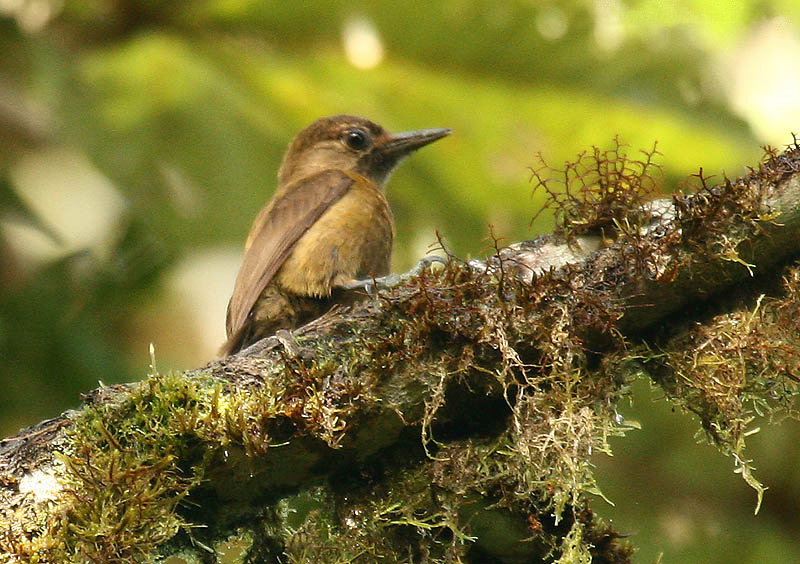
Wikipedia: Smoky-brown woodpecker
The smoky-brown woodpecker or brown woodpecker (Leuconotopicus fumigatus) is a species of bird in the family Picidae.
[more]
Familie Ramphastidae:
Gattung Aulacorhynchus:

Wikipedia: Emerald toucanet
Der Laucharassari (Aulacorhynchus prasinus) ist ein in Mittel- und Südamerika beheimateter Spechtvogel aus der Familie der Tukane. Es werden mehrere Unterarten unterschieden.
[more]
Gattung Capito:
Profil Wikipedia eBird Xeno-Canto

Wikipedia: Spot-crowned barbet
Der Tropfenbartvogel (Capito maculicoronatus) ist eine Vogelart aus der Familie der Amerikanischen Bartvögel. Sie kommt in Zentralamerika und im äußersten Norden Südamerikas vor. Die IUCN stuft den Tropfenbartvogel als nicht gefährdet (Least concern) ein. Es werden mehrere Unterarten unterschieden.
[more]
Gattung Eubucco:
Profil Wikipedia eBird Xeno-Canto

Wikipedia: Red-headed barbet
Der Anden-Bartvogel (Eubucco bourcierii), auch Rotkopf-Bartvogel genannt, ist eine Vogelart aus der Familie der Amerikanischen Bartvögel. Die Art kommt in Zentral- und Südamerika vor. Es handelt sich um einen kleinen, überwiegend grünlichen Vogel mit einem kräftigen Schnabel. Der Sexualdimorphismus ist stark ausgeprägt. Es werden mehrere Unterarten unterschieden. Die IUCN stuft den Anden-Bartvogel als nicht gefährdet (least concern) ein.
[more]
Gattung Pteroglossus:
Profil Wikipedia eBird Xeno-Canto

Tikal collared aracari. 2018-02-07 12.38.40 Zentralamerika
Der Halsbandarassari (Pteroglossus torquatus) ist ein in Mittelamerika beheimateter Spechtvogel aus der Familie der Tukane. Er gehört der Gattung der Schwarzarassaris an und wurde erstmals 1788 von Johann Friedrich Gmelin beschrieben. Er gehört zu den wenigen Tukanarten, die im Freiland über einen längeren Zeitraum beobachtet wurden.[1]
[more]

Wikipedia: Fiery-billed aracari
Der Feuerschnabelarassari (Pteroglossus frantzii) ist ein in Mittelamerika beheimateter Spechtvogel aus der Familie der Tukane. Er gehört der Gattung der Schwarzarassaris an und wurde erstmals 1861 von Jean Louis Cabanis beschrieben. Sein wissenschaftlicher Name geht auf den Vogelforscher Alexander von Frantzius zurück.
[more]
Gattung Ramphastos:
Profil Wikipedia eBird Xeno-Canto

Keel billed toucan. 2020-02-19 06.49.02
We saw this on the grounds of Gamboa Rainforest Resort and around Panama and Costa Rica.
Allgemein: Der Fischertukan (Ramphastos sulfuratus), auch Regenbogentukan genannt, ist eine im tropischen Mittel- und Südamerika lebende Vogelart aus der Familie der Tukane. Es werden zwei Unterarten unterschieden. Der Fischertukan gehört zu den am besten erforschten Tukanarten, bereits 1929 führte der Ornithologe Josselyn van Tyne ausführliche Freilandstudien an dieser Art durch.[1] Sie wird wegen ihrer Größe und Farbenpracht verhältnismäßig häufig in Zoologischen Gärten und Vogelparks gehalten. Die Welt-Erstzucht erfolgte 1974 im Zoo von Houston, die europäische Erstzucht gelang 1983 dem Wuppertaler Zoo.[2]
[more]
Profil Wikipedia eBird Xeno-Canto

Wikipedia: Yellow-throated toucan
Der Goldkehltukan (Ramphastos ambiguus) ist eine Vogelart aus der Familie der Tukane. Er kommt in Zentral- und Südamerika vor. Es handelt sich um einen großen Vogel, der auf Grund seiner Schnabelform eindeutig als Tukan identifizierbar ist. Innerhalb seines Verbreitungsgebietes kann er nur mit dem Küstentukan verwechselt werden. Dieser ist ähnlich gefärbt aber deutlich kleiner.
[more]
Gattung Selenidera:
Profil Wikipedia eBird Xeno-Canto

Wikipedia: Yellow-eared toucanet
Der Gelbohrarassari (Selenidera spectabilis) ist eine Vogelart aus der Familie der Tukane. Sie kommt in Zentral- und Südamerika vor und ist die am weitesten nördlich vorkommende Art der Kurzschnabeltukane. Wie alle Vertreter dieser Gattung weist der Gelbohrarassari einen auffälligen Sexualdimorphismus auf, der in den anderen Tukan-Gattungen kaum zu finden ist. Es werden keine Unterarten unterschieden. Die IUCN stuft den Gelbohrarassari als (=least concern – nicht gefährdet) ein.
[more]
Gattung Semnornis:
Profil Wikipedia eBird Xeno-Canto

Wikipedia: Prong-billed barbet
Der Azteken-Bartvogel (Semnornis frantzii), auch Azteken-Knackbärtling oder Zinkenschnabel genannt, ist eine Vogelart aus der Familie der Tukan-Bartvögel, zu der nur eine weitere Art, nämlich der Tukan-Bartvogel gehört. Beide sind näher mit den Tukanen verwandt als mit den Amerikanischen Bartvögeln. Sie werden daher in eine eigene Familie gestellt.[1][2] Für den Azteken-Bartvogel werden keine Unterarten unterschieden. Die IUCN stuft die Art als nicht gefährdet (least concern) ein. Das Artepitheton frantzii ehrt den deutschen Forschungsreisenden Alexander von Frantzius.
[more]
Ordnung Psittaciformes (Papageien / Parrots and others):
Familie Psittacidae (Parrots):
Gattung Ara:
Profil Wikipedia eBird Xeno-Canto

Wikipedia: Great green macaw
The great green macaw (Ara ambiguus), also known as Buffon's macaw or the great military macaw, is a Central and South American parrot found in Nicaragua, Honduras, Costa Rica, Panama, Colombia and Ecuador.[2] Two allopatric subspecies are recognized; the nominate subspecies, Ara ambiguus ssp. ambiguus, occurs from Honduras to Colombia, while Ara ambiguus ssp. guayaquilensis appears to be endemic to remnants of dry forests on the southern Pacific coast of Ecuador.[3] The nominate subspecies lives in the canopy of wet tropical forests and in Costa Rica is usually associated with the almendro tree, Dipteryx oleifera.[4]
[more]

La tarde 3 scarlet macaws in tree our first morning. 2018-03-09 06.31.28 Zentralamerika
The scarlet macaw (Ara macao) is a large red, yellow, and blue Central and South American parrot, a member of a large group of Neotropical parrots called macaws. It is native to humid evergreen forests of tropical Central and South America. Its range extends from south-eastern Mexico to the Peruvian Amazon, Ecuador, Colombia, Bolivia, Venezuela and Brazil in lowlands of 500 m (1,600 ft) (at least formerly) up to 1,000 m (3,300 ft), as well as the Pacific island of Coiba. Formerly, it ranged north to southern Tamaulipas. In some areas, it has suffered local extinction because of habitat destruction, or capture for the parrot trade, but in other areas, it remains fairly common. It is the national bird of Honduras. Like its relative the blue-and-yellow macaw, scarlet macaws are popular birds in aviculture as a result of their striking plumage.
[more]
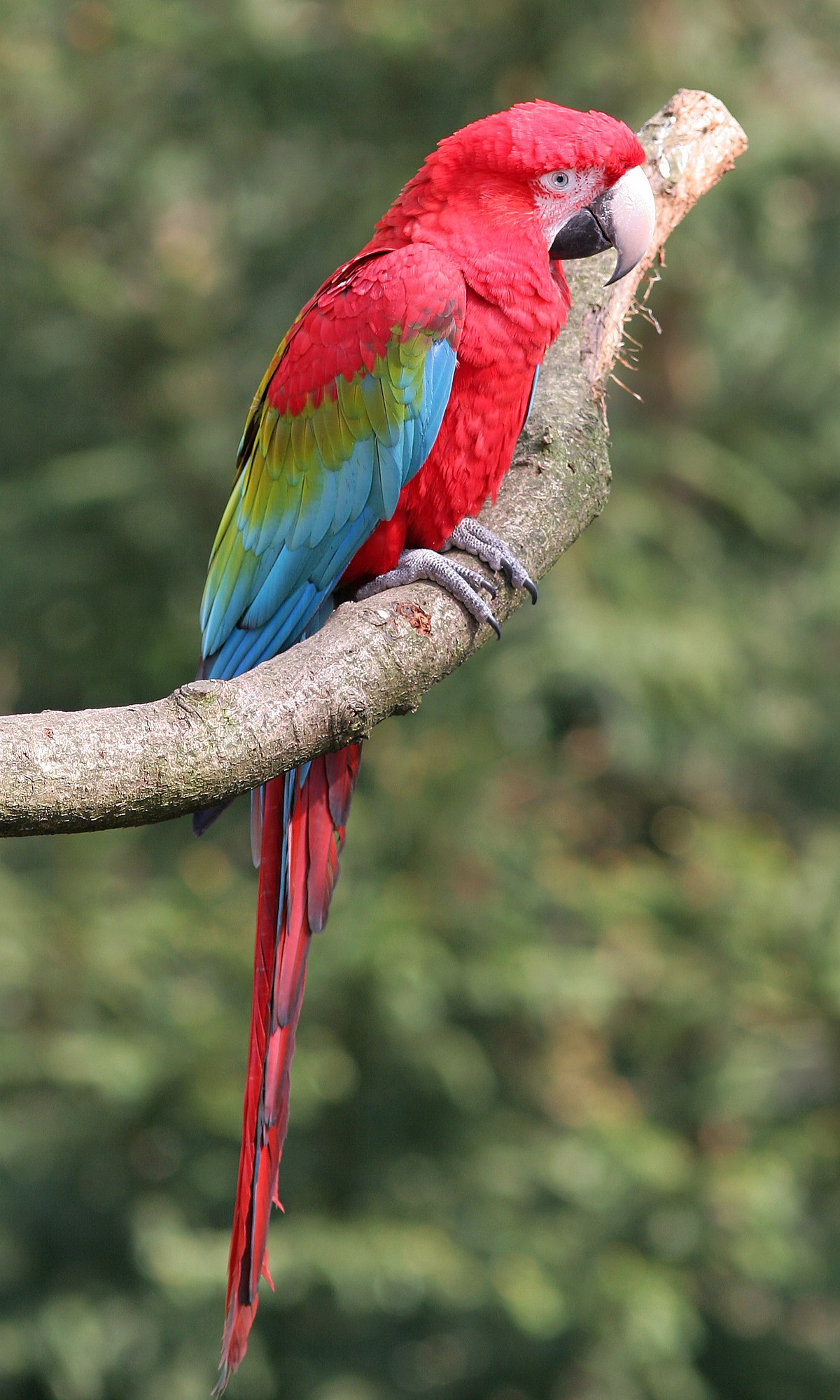
Wikipedia: Red-and-green macaw
Der Grünflügelara oder Dunkelrote Ara (Ara chloroptera) ist eine Vogelart aus der Familie der Eigentlichen Papageien (Psittacidae).
[more]
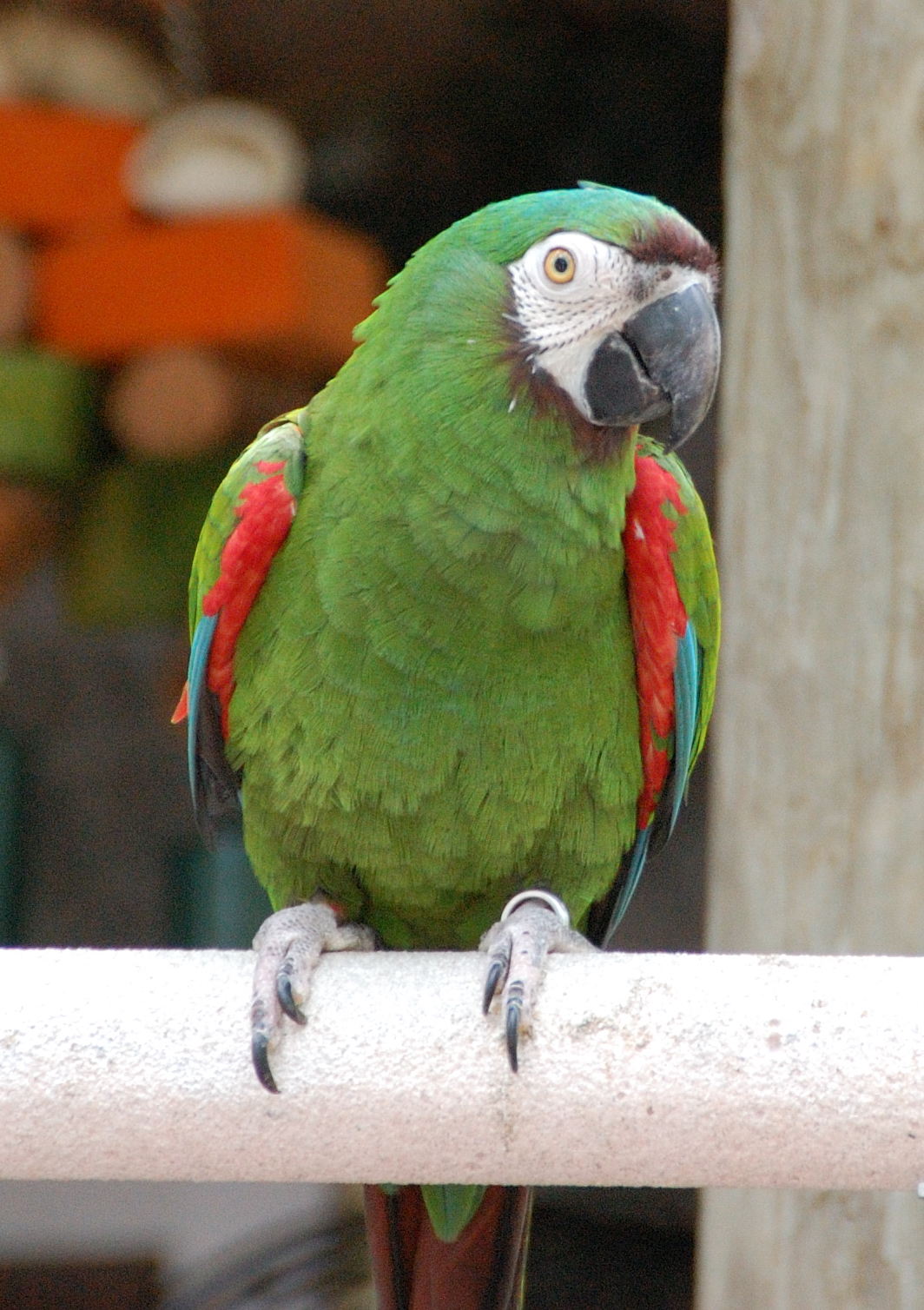
Wikipedia: Chestnut-fronted macaw
Der Rotbugara (Ara severus, Syn.: Ara severa) ist eine Papageienart aus der Gattung der Eigentlichen Aras (Ara) in der Familie der Eigentlichen Papageien (Psittacidae). Das Art-Epitheton severus kommt aus dem Lateinischen und bedeutet streng, herb, ernst aussehend.
[more]
Wikipedia: Great green macaw
Der Große Soldatenara oder Bechsteinara[1] (Ara ambiguus) ist eine Vogelart aus der Familie der Eigentlichen Papageien.
[more]

Wikipedia: Blue-and-yellow macaw
Der Gelbbrustara (Ara ararauna) ist eine Papageienart der Gattung der Eigentlichen Aras (Ara).
[more]
Gattung Amazona:

Probably red-lored amazons flying gamboa. 2020-02-19 17.41.24 Zentralamerika
It's hard to overlook this parrot because of the incredible racket they make! In Manzanilla, Costa Rica, small groups of them (more properly called pandemoniums) flew past our house every morning and evening.
Allgemein: Die Rotstirnamazone (Amazona autumnalis), früher Gelbwangenamazone genannt, ist eine Papageienart aus der Unterfamilie der Neuweltpapageien.
[more]

Possibly mealy parrots in Manzanillo, Costa Rica. 2020-03-12 17.25.08 Zentralamerika
Die Mülleramazone (Amazona farinosa), auch Müller-Amazone geschrieben, ist eine Papageienart aus der Unterfamilie der Neuweltpapageien. Die Grundfärbung des Gefieders dieser 38 Zentimeter groß werdenden Amazonenart ist grün, wobei die Körperoberseite leicht bläulich überhaucht ist. Einzelne Individuen weisen einen deutlich ausgeprägten gelben Scheitelfleck auf. Bei anderen ist dieser Scheitelfleck auf wenige Federn begrenzt. Kopfoberseite, der Nacken sowie die Federn am Hals sind breit graublau gesäumt und weisen violettschwarze Säume auf. Die Vögel weisen keinen Geschlechtsdimorphismus auf. Sie wiegen zwischen 535 und 766 Gramm.[1]
[more]
Profil Wikipedia eBird Xeno-Canto
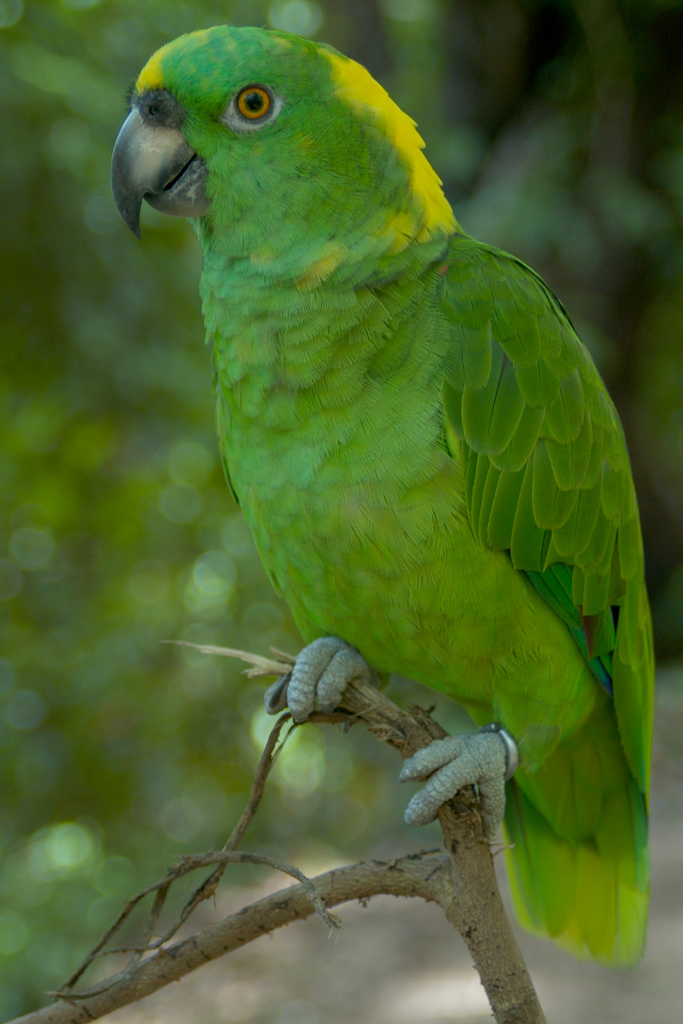
Wikipedia: Yellow-naped parrot
Die Gelbnackenamazone (Amazona auropalliata) ist eine Vogelart aus der Familie der Eigentlichen Papageien. Ihr natürliches Verbreitungsgebiet ist Mittelamerika.
[more]

Wikipedia: White-fronted parrot
Die Weißstirnamazone (Amazona albifrons) ist eine Papageienart aus der Gattung der Amazonenpapageien (Amazona).
Drei Unterarten können unterschieden werden.
[more]

Wikipedia: Yellow-crowned parrot
Die Gelbscheitelamazone, auch Surinam-Amazone (Amazona ochrocephala), ist eine Vogelart aus der Familie der Eigentlichen Papageien.
[more]
Gattung Pionus:

Arenal white-crowned parrot tentative ID by Merlin. 2018-03-01 06.54.32 Zentralamerika
Der Weißkopfpapagei (Pionus senilis) ist eine Vogelart aus der Gattung der Rotsteißpapageien (Pionus). Er wird auch als Glatzenkopfpapagei oder kurz Glatzenkopf bezeichnet.
[more]
Profil Wikipedia eBird Xeno-Canto
Wikipedia: Blue-headed parrot
The blue-headed parrot, also known as the blue-headed pionus (Pionus menstruus) is a medium-sized parrot of about 27 cm in length. The body is mostly green, with a blue head and neck, and red undertail coverts.[2] It is a resident in tropical and subtropical South America and southern Central America, from Costa Rica, Venezuela and Trinidad south to Bolivia and Brazil.
[more]
Gattung Pyrrhura:
Profil Wikipedia eBird Xeno-Canto

Wikipedia: Sulphur-winged parakeet
The sulphur-winged parakeet (Pyrrhura hoffmanni), also known as the Hoffmann's conure in aviculture, is a medium-small parrot endemic to humid highland forests and woodlands in Costa Rica and western Panama. It occurs up to 3000 m asl, and locally down to 1300 m in the wet season. It is named for the German naturalist Karl Hoffmann.
[more]
Profil Wikipedia eBird Xeno-Canto

Wikipedia: Painted parakeet
The painted parakeet (Pyrrhura picta), more commonly known as the painted conure in aviculture, is a species of bird in the family Psittacidae, the true parrots. Its taxonomy is highly complex, and has undergone significant changes in recent years. As here defined, it is restricted to forests in northern South America (north of the Amazon River) and Panama. Some of the taxa here included in the painted parakeet are highly endangered.
[more]
Gattung Forpus:
Profil Wikipedia eBird Xeno-Canto

Wikipedia: Spectacled parrotlet
The spectacled parrotlet (Forpus conspicillatus) is a species of parrot in the family Psittacidae.
[more]
Gattung Brotogeris:
Wikipedia: Cobalt-winged parakeet
Der Tovisittich (Brotogeris jugularis) ist eine Art der Neuweltpapageien. Er kommt in zwei Unterarten in Mittel- und Südamerika vor.
[more]
Gattung Bolborhynchus:

Wikipedia: Barred parakeet
The barred parakeet (Bolborhynchus lineola), also known as lineolated parakeet, Catherine parakeet or 'linnies' for short, is a small parrot found disjunctly in highland forests from southern Mexico to Panama, in the Andes from western Venezuela to southern Peru and Bolivia, the Santa Marta Mountains in Colombia and the Venezuelan Coastal Range. Its plumage is mostly green with multiple black and dark green stripes or bars, and it has a pale-horn coloured beak. The dark stripes vary in prominence between its two subspecies. Several colour mutants are available in aviculture.
[more]
Gattung Touit:
Profil Wikipedia eBird Xeno-Canto

Wikipedia: Red-fronted parrotlet
The red-fronted parrotlet (Touit costaricensis) is a parrot in Central America in Costa Rica and Panama. It is 15 cm, green with a short tail, red forehead, lores, and under eye, red shoulders and leading edge of underwing, and the remaining underwing coverts yellow. Edges of tail also yellowish.
[more]

Wikipedia: Blue-fronted parrotlet
The blue-fronted parrotlet (Touit dilectissimus) is also known as the red-winged parrotlet (but see below). It is a parrot in N. South America from E. Panama down the west coastal Andes to Peru, with a second population around and south of Lake Maracaibo. It is 15 cm, green with a short tail, blue forehead with narrow band of red under eye, red shoulders and leading edge of underwing, and the remaining underwing coverts yellow. Edges of tail also yellowish.
[more]
Gattung Eupsittula:

Wikipedia: Orange-fronted parakeet
The orange-fronted parakeet or orange-fronted conure (Eupsittula canicularis), also known as the half-moon conure, is a medium-sized parrot that is resident from western Mexico to Costa Rica.
[more]

Wikipedia: Brown-throated parakeet
The brown-throated parakeet (Eupsittula pertinax), also known as the St. Thomas conure or the brown-throated conure, in aviculture, is a species of parrot in the family Psittacidae.
[more]
Wikipedia: Olive-throated parakeet
The olive-throated parakeet (Eupsittula nana), also known as the olive-throated conure in aviculture, is a species of parrot in the family Psittacidae. It is found in forest and woodland in Jamaica, Mexico and Central America, and has been introduced to the Dominican Republic.
[more]
Gattung Psittacara:

City parrots in San Jose, Costa Rica, tentative iD crimson-fronted parakeet,. 2018-03-16 15.50.26 Zentralamerika
The crimson-fronted parakeet (Psittacara finschi), also known as Finsch's parakeet or Finsch's conure, is a small green Neotropical parrot. It is found in Nicaragua, Costa Rica and western Panama.Its natural habitats are subtropical or tropical moist lowland forest and heavily degraded former forest.[2]
[more]
Gattung Pyrilia:

Wikipedia: Brown-hooded parrot
The brown-hooded parrot (Pyrilia haematotis) is a small parrot which is a resident breeding species from southeastern Mexico to north-western Colombia. Until recently, it was placed in the genus Pionopsitta, which now is restricted to the type species, the pileated parrot. It is sometimes considered conspecific with the rose-faced parrot (P. pulchra). This species has been adversely affected by deforestation.
[more]
Wikipedia: Saffron-headed parrot
The saffron-headed parrot (Pyrilia pyrilia) is a species of parrot in the family Psittacidae. It was previously placed in the genus Pionopsitta, but moved out, as it is not as close to the type species Pionopsitta pileata as it was believed. It was briefly placed in Gypopsitta, but this is a junior synonym of Pyrilia and thus the saffron-headed parrot is now placed in the latter genus.
[more]
Ordnung Podicipediformes (Lappentaucher / Grebes):
Familie Podicipedidae (Grebes):
Gattung Podilymbus:
Profil Wikipedia eBird Audubon AllAboutBirds Xeno-Canto

Wikipedia: Pied-billed grebe
Dieser Vogel erscheint jenseits grossen Meere in Kontinenten :
Nordamerika, Südamerika, Afrika.
Der Bindentaucher (Podilymbus podiceps) ist eine Vogelart aus der Familie der Lappentaucher (Podicipedidae). Im Südwesten und Westen Europas tritt diese nearktisch verbreitete Art gelegentlich als Irrgast auf. In jüngster Zeit sind auch einige Beobachtungen aus Mitteleuropa bekannt.[1]
[more]
Gattung Tachybaptus:
Profil Wikipedia eBird Audubon AllAboutBirds Xeno-Canto

Wikipedia: Least grebe
Der Schwarzkopftaucher (Tachybaptus dominicus) ist die kleinste Taucher-Art aus der Familie der Lappentaucher. Die Art kommt in Niederkalifornien, Zentralamerika, der Karibik und Südamerika vor. Es werden vier (manchmal auch fünf) Unterarten unterschieden, die vor allem in ihrer Größe voneinander abweichen. Der Bestand der Art ist stabil und wird von der IUCN als nicht gefährdet (least concern) eingestuft.[1]
[more]
Ordnung Procellariiformes (Röhrennasen / Petrels and albatrosses):
Familie Procellariidae (Sturmvögel / Shearwaters and petrels):
Gattung Puffinus:
Profil Wikipedia eBird Audubon AllAboutBirds Xeno-Canto

Wikipedia: Audubon's shearwater
Audubon's shearwater (Puffinus lherminieri) is a common tropical seabird in the petrel family. Sometimes known as the dusky-backed shearwater,[2] the specific epithet honours the French naturalist Félix Louis L'Herminier.
[more]

Wikipedia: Galapagos shearwater
The Galápagos shearwater (Puffinus subalaris) is a small shearwater. Until recently it was considered to be a subspecies of Audubon's shearwater, but it is actually one of two members of a very ancient lineage of the small Puffinus species, the other being, as indicated by mtDNA cytochrome b sequence data, the Christmas shearwater.[3]
[more]
Gattung Procellaria:
Profil Wikipedia eBird Xeno-Canto
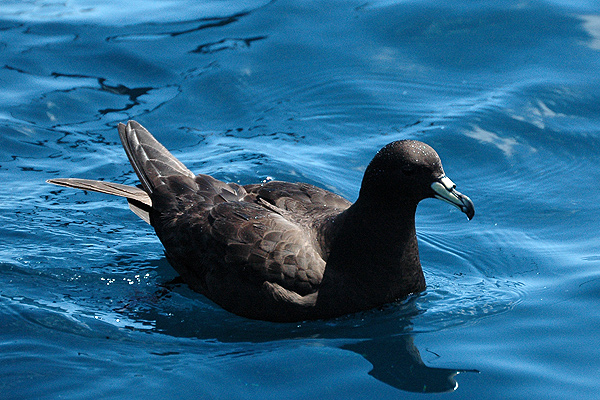
Wikipedia: Parkinson's petrel
Dieser Vogel erscheint jenseits grossen Meere in Kontinenten :
Südamerika, Australien.
The black petrel (Procellaria parkinsoni), also called the Parkinson's petrel, is a medium-sized, black-plumaged petrel, the smallest of the Procellaria. The species is an endemic breeder of New Zealand, breeding only on Great Barrier Island and Little Barrier Island, off the North Island. At sea it disperses as far as Australia and Ecuador.
[more]
Gattung Pseudobulweria:

Wikipedia: Tahiti petrel
Dieser Vogel erscheint jenseits grossen Meere in Kontinenten :
Südamerika, Afrika.
Der Tahiti-Sturmvogel (Pseudobulweria rostrata) ist eine Vogelart aus der Familie der Sturmvögel. Die Art kommt überwiegend auf der südlichen Halbkugel über dem tropischen und subtropischen Pazifik vor. Die IUCN führt den Tahiti-Sturmvogel auf ihrer Vorwarnliste near threatened und schätzt den Bestand auf 20.000 geschlechtsreife Individuen.[1]
[more]
Gattung Ardenna:

Wikipedia: Sooty shearwater
Dieser Vogel erscheint jenseits grossen Meere in Kontinenten :
Europa, Südamerika, Afrika.
The sooty shearwater (Ardenna grisea) is a medium-large shearwater in the seabird family Procellariidae. Ardenna was first used to refer to a seabird by Italian naturalist Ulisse Aldrovandi in 1603, and grisea is medieval Latin for "grey".[2]
[more]
Vokalisierung: Mostly heard at breeding ground. A peculiar, rhythmic, coarse moaning, with a disyllabic attack, followed by a deeper, cooing "in-breath". [Link]
Körperlich: Länge=40-51 cm,
Flügelspanne=94-109 cm,
Gewicht=666-978 g

Wikipedia: Wedge-tailed shearwater
Dieser Vogel erscheint jenseits grossen Meere in Kontinenten :
Südamerika, Afrika.
Allgemein: The wedge-tailed shearwater (Ardenna pacifica) is a medium-large shearwater in the seabird family Procellariidae. It is one of the shearwater species that is sometimes referred to as a muttonbird, like the sooty shearwater of New Zealand and the short-tailed shearwater of Australia. It ranges throughout the tropical Pacific and Indian Oceans, roughly between latitudes 35°N and 35°S. It breeds on islands off Japan, on the Islas Revillagigedo, the Hawaiian Islands, the Seychelles, the Northern Mariana Islands, and off Eastern and Western Australia.
[more]

Wikipedia: Pink-footed shearwater
Dieser Vogel erscheint jenseits grossen Meere in Kontinenten :
Nordamerika, Südamerika, Australien.
vagrant

Wikipedia: Short-tailed shearwater
Dieser Vogel erscheint jenseits grossen Meere in Kontinenten :
Nordamerika, Südamerika, Australien.
Allgemein: Der Kurzschwanz-Sturmtaucher (Ardenna tenuirostris, Synonym: Puffinus tenuirostris) ist ein 41–43 Zentimeter großer Vertreter der Familie der Sturmvögel.
[more]
Profil Wikipedia eBird Audubon AllAboutBirds Xeno-Canto
Wikipedia: Sooty shearwater
The sooty shearwater (Ardenna grisea) is a medium-large shearwater in the seabird family Procellariidae. Ardenna was first used to refer to a seabird by Italian naturalist Ulisse Aldrovandi in 1603, and grisea is medieval Latin for "grey".[2]
[more]
Unterfamilie Hydrobatidae (Sturmschwalben / Storm petrels):
Gattung Pelagodroma:
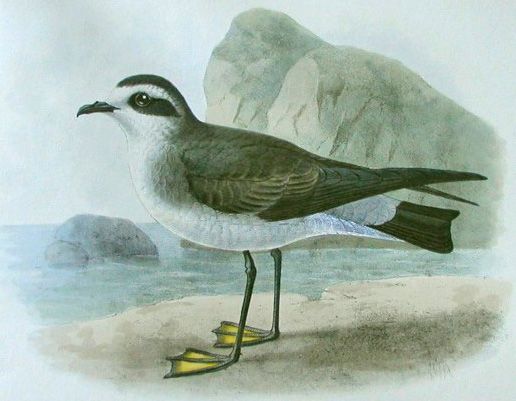
Wikipedia: White-faced storm-petrel
Dieser Vogel erscheint jenseits grossen Meere in Kontinenten :
Europa, Nordamerika, Südamerika, Afrika.
Die Fregattensturmschwalbe (Pelagodroma marina), auch Weißgesicht-Sturmschwalbe genannt, ist eine Art aus der Familie der Südlichen Sturmschwalben. Sie kommt in sechs Unterarten vor, davon sind zwei in der West-Paläarktis vertreten. Im Gegensatz zu dem, was der Name impliziert, ist diese Art kein Schiffsfolger.[1]
[more]
Gattung Oceanodroma:

Wikipedia: Black storm-petrel
Der Schwarz-Wellenläufer (Oceanodroma melania), auch Melaniasturmschwalbe genannt ist eine 21–23 Zentimeter große Vogelart aus der Familie der Nördlichen Sturmschwalben.
[more]

Wikipedia: Markham's storm-petrel
Markham's storm petrel (Oceanodroma markhami) is a species of storm petrel in the family Hydrobatidae. An all black to sooty brown seabird, Markham's storm petrel is difficult to differentiate from the black petrel Procellaria parkinsoni in life, and was once described as conspecific with, or biologically identical to, Tristram's storm petrel Oceanodroma tristrami. Markham's storm petrel inhabits open seas in the Pacific Ocean around Peru, Chile, and Ecuador, but only nests in northern Chile and Peru, with ninety-five percent of all known breeding populations in 2019 found in the Atacama Desert. First described by British ornithologist Osbert Salvin in 1883, the bird was named in honor of Albert Hastings Markham, a naval officer who collected a specimen off Peru.
[more]

Wikipedia: Wedge-rumped storm-petrel
The wedge-rumped storm petrel (Oceanodroma tethys) is a storm petrel. It breeds in the Galápagos Islands and on the coast of Peru.[1]
[more]
Gattung Hydrobates:
Profil Wikipedia eBird Audubon AllAboutBirds Xeno-Canto

Wikipedia: Least storm-petrel
The least storm petrel (Oceanodroma microsoma) is a small seabird of the storm petrel family Hydrobatidae. It is 13–15 cm in length, with a wingspan of 32 cm. It is the smallest member of the order Procellariiformes.
[more]
Profil Wikipedia eBird Audubon AllAboutBirds Xeno-Canto

Wikipedia: Leach's storm-petrel
Der Wellenläufer (Oceanodroma leucorhoa) ist eine von weltweit 13 Vogelarten der Gattung der Wellenläufer. Ihren Namen verdanken die Wellenläufer der Verhaltensweise, oft mit herunterhängenden Beinen dicht über dem Wasser zu gleiten. Dabei tauchen sie mit den Füßen ins Wasser ein.
[more]
Gattung Oceanites:

Wikipedia: Wilson's storm-petrel
Dieser Vogel erscheint jenseits grossen Meere in Kontinenten :
Europa, Nordamerika, Südamerika, Afrika.
Die Buntfuß-Sturmschwalbe (Oceanites oceanicus) ist eine sehr kleine Art der Familie der Südlichen Sturmschwalben. Sie gilt als eine der häufigsten Seevögel, deren Bestand in die Millionen geht. Die Erstbeschreibung der Art erfolgte 1820 von Heinrich Kuhl unter dem Namen Procellaria oceanicus, irrtümlich erneut als neue Art wurde sie 1824 von Charles Lucien Jules Laurent Bonaparte unter dem Namen Procellaria wilsonii beschrieben.[1] Sie ist in Europa ein sehr seltener Irrgast, der im Südwesten und Westen der Küstengebiete Irlands und Großbritanniens seit den 1970er Jahren fast jährlich beobachtet wird.[2]
[more]
Ordnung Strigiformes (Eulen / Owls):
Familie Strigidae:
Gattung Bubo (Eagle owls):

Wikipedia: Great horned owl
Der Virginia-Uhu (Bubo virginianus) ist eine Vogelart aus der Gattung der Uhus (Bubo), die zur Familie der Eigentlichen Eulen (Strigidae) und zur Ordnung der Eulen (Strigiformes) gehört. Er ist eng mit dem Magellan-Uhu (Bubo magellanicus) verwandt, der lange Zeit als eine Unterart des Virginia-Uhus angesehen wurde.
[more]
Gattung Aegolius (Saw-whet owls):
Profil Wikipedia eBird Xeno-Canto
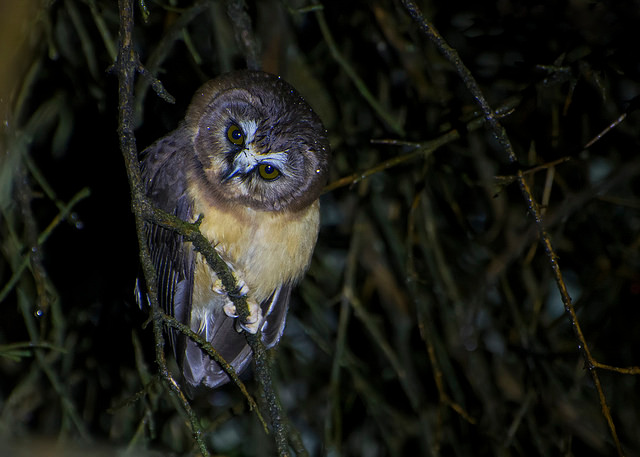
Wikipedia: Unspotted saw-whet owl
The unspotted saw-whet owl (Aegolius ridgwayi) is a small owl. It is a resident breeder in the highlands of Central America from southern Mexico south to western Panama, mainly at altitudes above 2500 m. It has occasionally been considered conspecific with the northern saw-whet owl. There are currently no recognized subspecies.[2]
[more]
Gattung Glaucidium:
Profil Wikipedia eBird Audubon AllAboutBirds Xeno-Canto
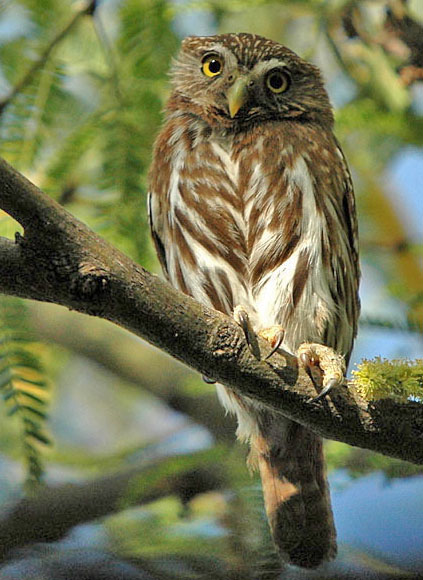
Wikipedia: Ferruginous pygmy-owl
Der Brasilzwergkauz (Glaucidium brasilianum) ist eine kleine Eulenart aus der Gattung der Sperlingskäuze. Er kommt vom Süden der Vereinigten Staaten über Zentralamerika bis Südamerika vor. Es werden mehrere Unterarten unterschieden. Zu den bekannteren Unterarten zählt der Ridgway-Sperlingskauz (Glaucidium brasilianum ridgwayi), der in den Vereinigten Staaten zu den sehr seltenen Vogelarten zählt und zeitweilig durch den Endangered Species Act unter besonderem Schutz stand.
[more]
Profil Wikipedia eBird Xeno-Canto

Wikipedia: Central American pygmy-owl
Der Graukopf-Zwergkauz (Glaucidium griseiceps) oder Yucatán-Sperlingskauz ist eine kleine Eulenart aus der Gattung der Sperlingskäuze. Die Art kommt nur im Süden Nordamerikas und Zentralamerikas vor.
[more]
Profil Wikipedia eBird Xeno-Canto

Wikipedia: Costa Rican pygmy-owl
Der Costa Rica-Sperlingskauz (Glaucidium costaricanum) ist eine kleine Eulenart aus der Gattung der Sperlingskäuze. Er kommt ausschließlich in Zentralamerika vor.
[more]
Gattung Lophostrix:
Profil Wikipedia eBird Xeno-Canto

Wikipedia: Crested owl
Der Haubenkauz (Lophostrix cristata) ist die einzige Art der Gattung Lophostrix innerhalb der Eigentlichen Eulen (Strigidae).
[more]
Gattung Pulsatrix:
Profil Wikipedia eBird Xeno-Canto

Wikipedia: Spectacled owl
The spectacled owl (Pulsatrix perspicillata) is a large tropical owl native to the neotropics. It is a resident breeder in forests from southern Mexico and Trinidad, through Central America, south to southern Brazil, Paraguay and northwestern Argentina.[1] There are six subspecies.[2] One is occasionally treated as a separate species called the short-browed or brown spectacled owl[3] but the consensus is that it is still merely a race until more detailed analysis can be done.[4]
[more]
Gattung Ciccaba:
Profil Wikipedia eBird Xeno-Canto

Wikipedia: Mottled owl
The mottled owl (Strix virgata) is a medium-sized owl found in Central and South America from Mexico to Brazil and Argentina. The head and back are mottled brown and the underparts whitish, with vertical bars on the chest and throat. The eyes are dark and the head is round and they do not have ear tufts. They are territorial and found in dry forests and jungles at altitudes of up to 2,500 m (8,200 ft) above sea level.
[more]
Profil Wikipedia eBird Xeno-Canto

Black-and-white owl near Punta Cahuita in Cahuita National Park, Costa Rica. 2020-03-18 10.22.31 Zentralamerika
The black-and-white owl (Strix nigrolineata) is a species of owl in the family Strigidae.[1][2]
[more]
Gattung Megascops:

Wikipedia: Tropical screech owl
Die Choliba-Kreischeule (Megascops choliba, Syn.: Otus choliba) ist eine Art aus der Familie der Eigentlichen Eulen. Sie kommt in neun Unterarten ausschließlich in Süd- und Zentralamerika vor.
[more]

Wikipedia: Variable screech-owl
Die Guatemala-Kreischeule (Megascops guatemalae) ist eine Art aus der Familie der Eigentlichen Eulen. Sie kommt in vier Unterarten ausschließlich in Nord- und Zentralamerika vor.
[more]

Wikipedia: Pacific screech-owl
Die Mangroven-Kreischeule (Megascops cooperi, Synonym: Otus cooperi), auch als Mangroveneule bezeichnet, ist eine Eulenart aus der Gattung der Kreischeulen. Sie kommt in den zwei Unterarten Megacops cooperi chiapensis und Megascops cooperi cooperi in Mittelamerika vor.
[more]
Profil Wikipedia eBird Xeno-Canto

Wikipedia: Bare-shanked screech-owl
Die Nacktbein-Kreischeule (Megascops clarkii) ist eine ausschließlich in Zentralamerika vorkommende Art aus der Familie der Eigentlichen Eulen.
[more]
Gattung Pseudoscops:

Wikipedia: Striped owl
The striped owl (Asio clamator) is a medium-sized owl with large ear tufts and a brownish-white facial disk rimmed with black. Its beak is black, and it has cinnamon-colored eyes. It has shorter, rounder wings than most of its close relatives. The upperparts are cinnamon with fine black vermiculation and heavy stripes. The underparts are pale tawny with dusky streaks. It is native to South America and parts of Central America.
[more]
Familie Tytonidae (Barn owls):
Gattung Tyto:

Wikipedia: Barn owl
Dieser Vogel erscheint jenseits grossen Meere in Kontinenten :
Europa, Nordamerika, Südamerika, Afrika.
Die Schleiereule (Tyto alba) ist eine Vogelart aus der Ordnung der Eulen (Strigiformes) und der Familie der Schleiereulen (Tytonidae). Die Schleiereule ist eine sehr helle, langbeinige Eule, die keine Federohren aufweist. Zu ihren auffälligsten Erkennungsmerkmalen gehören das herzförmige Gesicht sowie die verhältnismäßig kleinen, schwarzen Augen. Sie ist nachtaktiv und am Tage nur an ihren Ruheplätzen sowie am Brutplatz zu beobachten.
[more]
Vokalisierung: Large repertoire of mainly hissing and screeching sounds. [Link]
Gesang: Song consists of a single, drawn screech, lasting about a second and is often performed in flight. Starting in a very hoarse tone, then progressing with a rising pitch into a more burbling sound, before suddenly ending. [Link]
Körperlich: Länge=33-35 cm,
Flügelspanne=80-95 cm,
Gewicht=240-350 g
Ordnung Trogoniformes (Trogons and quetzals):
Familie Trogonidae:
Gattung Trogon:
Profil Wikipedia eBird Audubon AllAboutBirds Xeno-Canto

Wikipedia: Elegant trogon
Allgemein: The elegant trogon (Trogon elegans) (formerly the "coppery-tailed" trogon) is a near passerine bird in the trogon family.[2] Along with the eared quetzal, it is the most poleward-occurring species of trogon in the world, ranging from Guatemala in the south as far north as the upper Gila River in Arizona and New Mexico. The most northerly populations of subspecies ambiguus are partially migratory,[3] and the species is occasionally found as a vagrant in southeasternmost and western Texas.
[more]
Profil Wikipedia eBird Xeno-Canto

Uvita bairds trogon. 2018-03-05 13.36.20 Zentralamerika
Baird's trogon (Trogon bairdii) is a species of bird belonging to the family Trogonidae. This bird was named after Spencer Fullerton Baird, a 19th-century naturalist.
[more]
Profil Wikipedia eBird Xeno-Canto
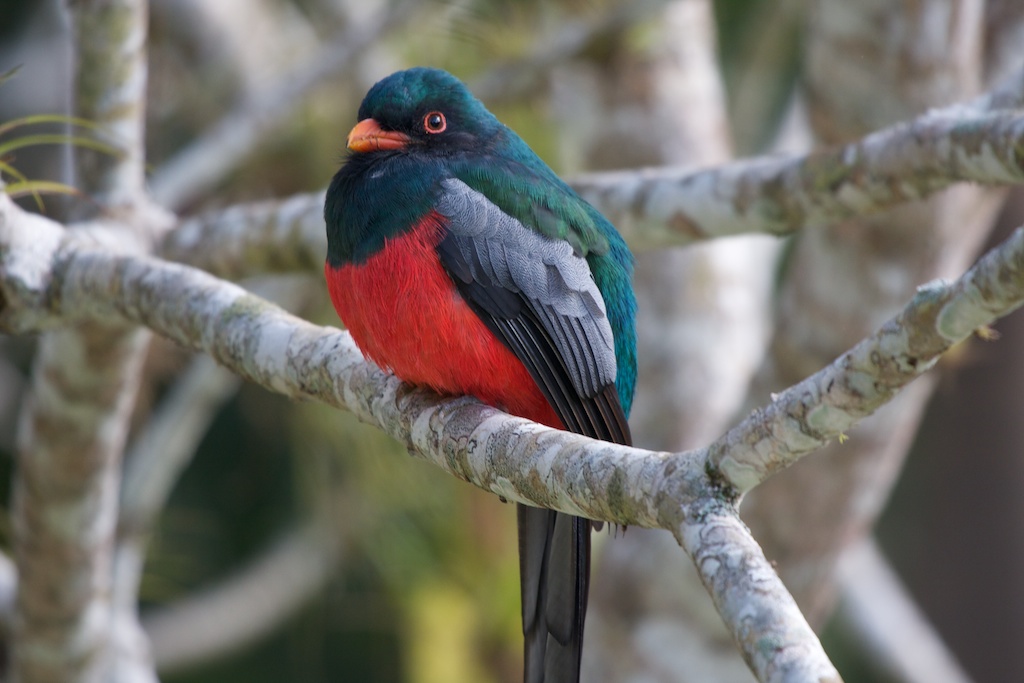
Wikipedia: Slaty-tailed trogon
The slaty-tailed trogon (Trogon massena) is a near passerine bird in the trogon family, Trogonidae. It breeds in lowlands from southeastern Mexico south through Central America, to Colombia, and a small region of northwestern Ecuador.
[more]
Profil Wikipedia eBird Xeno-Canto

Wikipedia: Collared trogon
The collared trogon (Trogon collaris) is a near passerine bird in the trogon family, Trogonidae.
[more]
Profil Wikipedia eBird Xeno-Canto
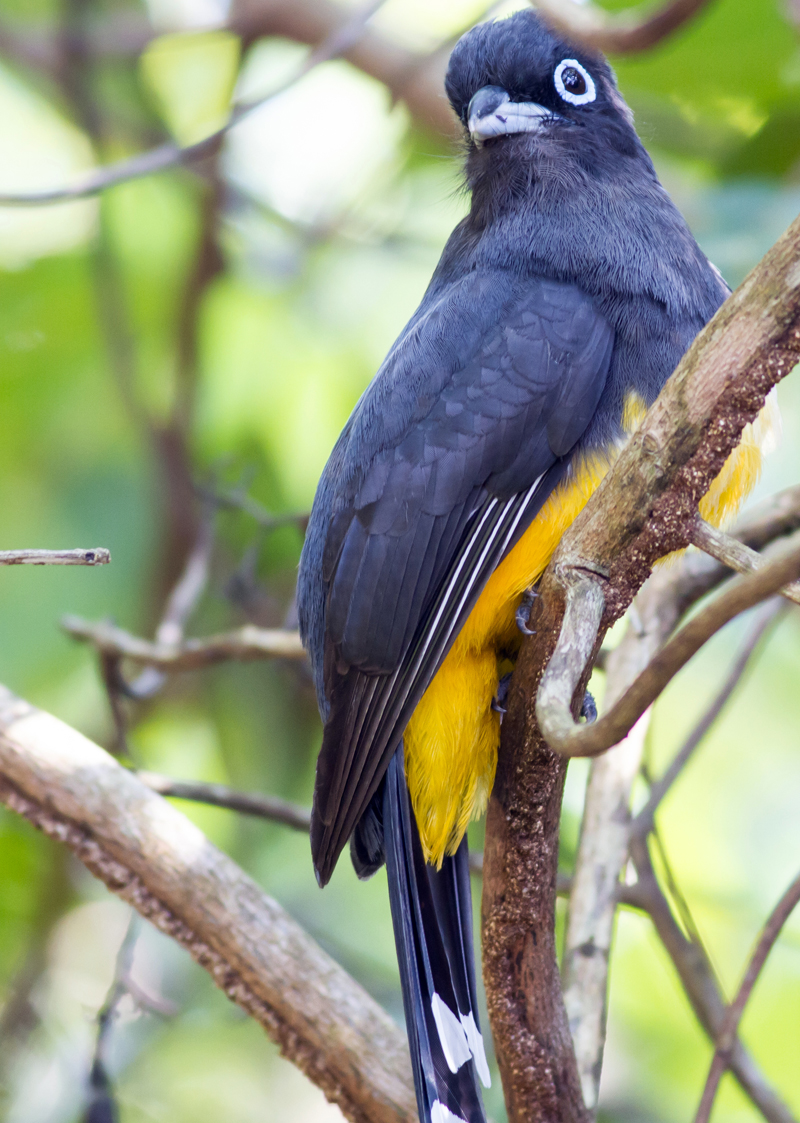
Wikipedia: Black-headed trogon
The black-headed trogon (Trogon melanocephalus) is a species of bird in the family Trogonidae. It is found in Belize, Costa Rica, El Salvador, Guatemala, Honduras, Mexico, and Nicaragua. Its natural habitats are subtropical or tropical dry forest, subtropical or tropical moist lowland forest, and heavily degraded former forest.
[more]
Profil Wikipedia eBird Xeno-Canto

Wikipedia: Lattice-tailed trogon
The lattice-tailed trogon (Trogon clathratus) is a species of bird in the family Trogonidae. It is found in Costa Rica and Panama.
[more]
Profil Wikipedia eBird Xeno-Canto
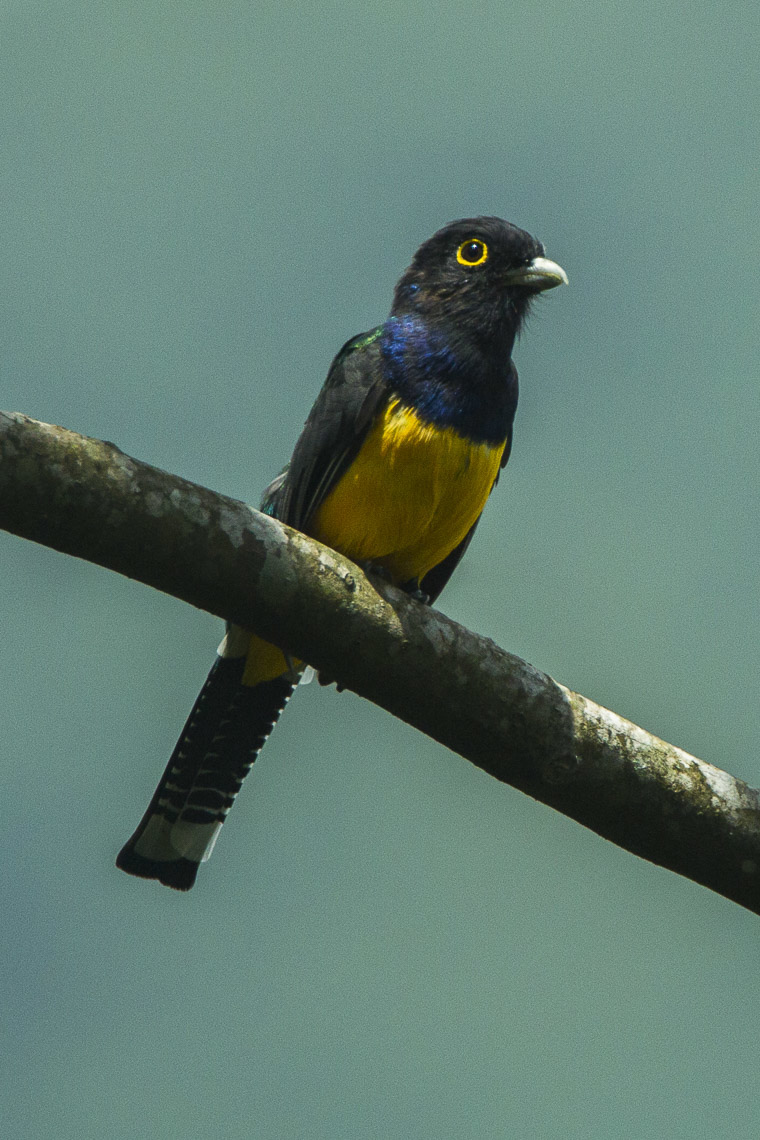
Wikipedia: Gartered trogon
The gartered trogon (Trogon caligatus), also known as the northern violaceous trogon, is a near passerine bird in the trogon family, Trogonidae. It is found in forests in east-central Mexico, south through Central America, to north-western South America (west or north of the Andes in Colombia, Ecuador and Venezuela).[2] It was formerly treated as a subspecies of the violaceous trogon.[1][3]
[more]
Profil Wikipedia eBird Xeno-Canto

Wikipedia: Black-throated trogon
The black-throated trogon, also known as yellow-bellied trogon, (Trogon rufus) is a near passerine bird in the trogon family, Trogonidae. Although it is also called "yellow-bellied trogon" it is not the only trogon with a yellow belly. It breeds in lowlands from Honduras south to western Ecuador and northern Argentina.
[more]

Wikipedia: White-tailed trogon
The white-tailed trogon (Trogon chionurus) is a near passerine bird in the trogon family. It is found in tropical humid forests of the Chocó, ranging from Panama, through western Colombia, to western Ecuador. It was formerly considered a subspecies of T. viridis, which is widespread in South America east of the Andes, but under the English name white-tailed trogon (a name now reserved for T. chionurus, leaving T. viridis as the green-backed trogon).[3]
[more]
Profil Wikipedia eBird Xeno-Canto

Wikipedia: Black-tailed trogon
The black-tailed trogon (Trogon melanurus) is a species of bird in the family Trogonidae. It is found in humid forest in the Amazon basin, north-western South America and adjacent Panama. The taxon mesurus from western Ecuador and far north-western Peru was formerly considered a subspecies of the black-tailed trogon, but is now considered a separate species, the Ecuadorian trogon.
[more]
Gattung Pharomachrus:
Profil Wikipedia eBird Xeno-Canto

Resplendent quetzal. 2020-03-04 10.43.26 Zentralamerika
Systematik: ..ist ein grün- und scharlachrot gefärbter Vogel aus der Familie der Trogone. [Link]
We saw a nesting quetzal pair on the Pipeline Trail near Boquete, Panama, and it was a wonderful experience!
Aussehen und Identifizierung: Der Quetzal ist 35–38 cm lang und etwa 210 g schwer, die Männchen mit Schwanzfedern können eine Länge von bis zu 1 m erreichen.[3] Die Bauchseite des Weibchens ist einfarbig grün. Bei den Männchen der beiden Unterarten P. m. mocinno und P. m. costaricensis bilden sich während der Fortpflanzungszeit stark verlängerte Oberschwanzdecken, die den Schwanz verdecken und nach der Brutzeit wieder ausfallen. Die Federn können bis zu 80 cm lang werden. Vor allem während der Brutzeit führen die Quetzalmännchen spektakuläre, wenige Sekunden dauernde Balzflüge aus. Aus den Bäumen im Kammbereich der Berge steigen sie rufend in welligem Flug nach oben, um dann im Sturzflug wieder in den Kronen zu verschwinden. Bei der Brut und Versorgung der meistens zwei Jungen wechseln sich die Geschlechter ab. Nach der Brutzeit wandern die Quetzale in tiefer gelegene Bereiche der Gebirge ab. ...Der Quetzal lebt ausschließlich in den Wolken- und Nebelwäldern Mittelamerikas [Link]
Profil Wikipedia eBird Xeno-Canto
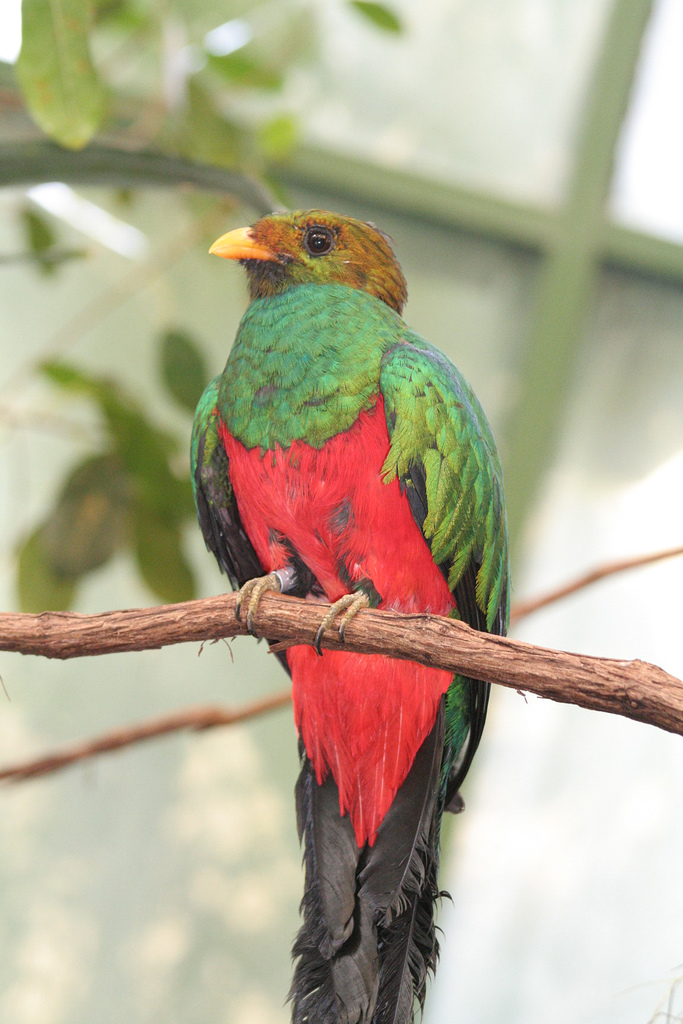
Wikipedia: Golden-headed quetzal
Allgemein: Der Goldkopftrogon (Pharomachrus auriceps) zählt innerhalb der Familie der Trogone (Trogonidae) zur Gattung der
Pharomachrus.[1]
[more]
Ordnung Galbuliformes (Jacamars):
Familie Galbulidae:
Gattung Galbula:
Profil Wikipedia eBird Xeno-Canto

Wikipedia: Rufous-tailed jacamar
The rufous-tailed jacamar (Galbula ruficauda) is a near-passerine bird which breeds in the tropical New World in southern Mexico, Central America and South America as far south as southern Brazil and Ecuador.
[more]
Gattung Jacamerops:
Profil Wikipedia eBird Xeno-Canto

Wikipedia: Great jacamar
The great jacamar (Jacamerops aureus) is a species of bird in the family Galbulidae. It is placed in the monotypic genus Jacamerops.[2] It is found in Bolivia, Brazil, Colombia, Costa Rica, Ecuador, French Guiana, Guyana, Panama, Peru, Suriname, and Venezuela, where its natural habitat is subtropical and tropical moist lowland forests.[1]
[more]
Gattung Brachygalba:
Profil Wikipedia eBird Xeno-Canto

Wikipedia: Dusky-backed jacamar
The dusky-backed jacamar (Brachygalba salmoni) is a species of bird in the family Galbulidae. It is found in Colombia and Panama.[2]
[more]
Familie Bucconidae:
Gattung Nystalus:
Profil Wikipedia eBird Xeno-Canto
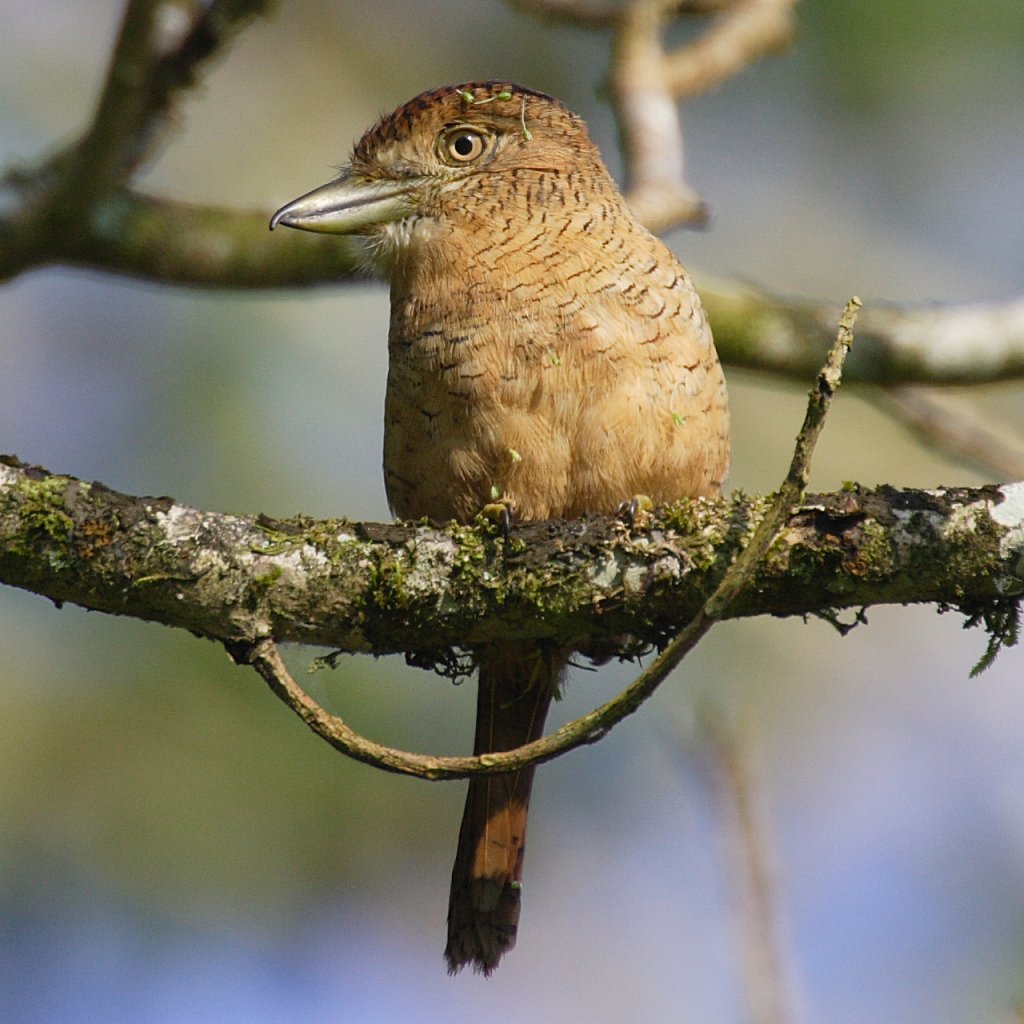
Wikipedia: Barred puffbird
The barred puffbird (Nystalus radiatus) is a species of puffbird in the family Bucconidae. It lives in forests in the Tumbes-Chocó-Magdalena of Panama, Colombia and Ecuador. They can often be found in the middle to upper levels of the forests, in addition it has been spotted on the edges of forest trials, wires in loosely populated land, clearings with scattered trees, and occasionally in lower stories of humid forest borders. In terms of behavior, this bird is easily overlooked because of its propensity to sit still for long periods of time (similar to other puffbirds). Migration of this species has not been observed. Their diet consists of beetles, large caterpillars, local praying mantis, and small lizards. It can be identified by its faint red color, long, narrow and slightly graduated tail, creamy yellow colored iris and small size.[2][3]
[more]
Gattung Nonnula:
Profil Wikipedia eBird Xeno-Canto

Wikipedia: Gray-cheeked nunlet
The grey-cheeked nunlet (Nonnula frontalis) is a species of puffbird in the family Bucconidae.
It is found in Colombia and Panama.
Its natural habitats are subtropical and tropical moist lowland forests and heavily degraded former forest.
[more]
Gattung Malacoptila:
Profil Wikipedia eBird Xeno-Canto

Wikipedia: White-whiskered puffbird
The white-whiskered puffbird (Malacoptila panamensis) is a resident breeding bird species from southeastern Mexico to central Ecuador. It is sometimes known as the white-whiskered softwing.
[more]
Gattung Notharchus:
Profil Wikipedia eBird Xeno-Canto

Wikipedia: Pied puffbird
The pied puffbird (Notharchus tectus) is a species of puffbird in the family Bucconidae.
[more]
Profil Wikipedia eBird Xeno-Canto

Wikipedia: White-necked puffbird
The white-necked puffbird (Notharchus hyperrhynchus) is a species of puffbird in the family Bucconidae.
[more]
Profil Wikipedia eBird Xeno-Canto

Wikipedia: Black-breasted puffbird
The black-breasted puffbird (Notharchus pectoralis) is a species of puffbird in the family Bucconidae. It is found in Colombia, Ecuador, and Panama.
[more]
Gattung Monasa:
Profil Wikipedia eBird Xeno-Canto

Wikipedia: White-fronted nunbird
The white-fronted nunbird (Monasa morphoeus) is a species of near passerine bird in the puffbird family (Bucconidae). It is found in the tropical Americas.
[more]
Überordnung Galloanserae:
Ordnung Galliformes (Hühnervögel / Landfowls):
Familie Cracidae:
Profil Wikipedia eBird Audubon AllAboutBirds Xeno-Canto

Wikipedia: Plain chachalaca
Der Braunflügelguan (Ortalis vetula) ist ein Vogel aus der Familie der Hokkohühner.
[more]

Wikipedia: Grey-headed chachalaca
The grey-headed chachalaca (Ortalis cinereiceps) is a member of an ancient group of birds of the family Cracidae, which are related to the Australasian mound builders. It breeds in lowlands from eastern Honduras to northwestern Colombia (from South Chocó to the upper Atrato) at up to 1,100 m (3,600 ft) altitude.
[more]
Profil Wikipedia eBird Xeno-Canto

La fortuna crested guan. 2018-02-26 10.56.06 Zentralamerika
Der Rostbauchguan (Penelope purpurascens), jetzt Haubenguan[1] ist ein Hühnervogel aus der Familie der Hokkohühner (Cracidae).[2]
[more]
Profil Wikipedia eBird Xeno-Canto

Tikal great curassow. 2018-02-07 12.29.42 Zentralamerika
Der Tuberkelhokko (Crax rubra) ist ein 90 bis 100 Zentimeter großer Hühnervogel aus der Familie der Hokkohühner.
[more]
Profil Wikipedia eBird Xeno-Canto

Curi cancha black guan. 2018-02-18 13.38.52 Zentralamerika
The black guan (Chamaepetes unicolor) is a species of bird in the family Cracidae. It is found in the Talamancan montane forests of Costa Rica and Panama.
[more]
Familie Phasianidae (Turkeys):

Ocellated turkey sign. 2018-02-07 11.30.46 Zentralamerika
Das Pfauentruthuhn (Meleagris ocellata) ist neben dem eigentlichen Truthuhn die einzige weitere Art der Truthühner (Meleagris). Es ist im Norden Mittelamerikas verbreitet.
[more]
Familie Odontophoridae (American quails):
Profil Wikipedia eBird Xeno-Canto

Wikipedia: Crested bobwhite
Die Haubenwachtel (Colinus cristatus) ist eine Vogelart der Gattung Colinus aus der Familie der Zahnwachteln (Odontophoridae). Sie lebt von Mittelamerika bis ins nördliche Südamerika und auf zahlreichen Inseln der Karibik, wie den Niederländischen Antillen.
[more]

Wikipedia: Black-breasted wood quail
The black-breasted wood quail (Odontophorus leucolaemus) is a bird species in the family Odontophoridae. It is found in Costa Rica and Panama. Its natural habitat is subtropical or tropical moist montane forest.
[more]

Wikipedia: Marbled wood quail
The marbled wood quail (Odontophorus gujanensis), also known as the Amazonian wood quail, is a species of bird in the New World quail family. It is found in Bolivia, Brazil, Colombia, Costa Rica, Ecuador, French Guiana, Guyana, Panama, Peru, Suriname, and Venezuela. Its natural habitat is subtropical or tropical moist lowland forests.
[more]

Wikipedia: Spotted wood quail
The spotted wood quail (Odontophorus guttatus) is a small ground-dwelling bird in the New World quail family. It is a resident breeder in the mountains of Central America from southern Mexico to western Panama.
[more]

Wikipedia: Black-eared wood quail
 [more]
Profil Wikipedia eBird Xeno-Canto

Wikipedia: Buffy-crowned wood-partridge
The buffy-crowned wood partridge (Dendrortyx leucophrys) is a bird species in the family Odontophoridae. It is found in Chiapas, Guatemala, Honduras, El Salvador, Costa Rica and Nicaragua. Its natural habitat is subtropical or tropical moist montane forest. Small groups forage in underbrush, secondary growth, near forest clearings and coffee plantations. The species local name is "chir-ras-qua" after its noisy call. It has a chicken-like appearance due to its long tail and legs. Its pale iris and streaked neck differentiates it from other quail like birds.
[more]
Profil Wikipedia eBird Xeno-Canto

Wikipedia: Tawny-faced quail
The tawny-faced quail (Rhynchortyx cinctus) is a species of bird in the family Odontophoridae, and the only species in its genus Rhynchortyx.
[more]
Ordnung Apodiformes (Segler / Swifts and hummingbirds):
Familie Apodidae (Swifts):
Unterfamilie Cypseloidinae:
Profil Wikipedia eBird Xeno-Canto

Wikipedia: Spot-fronted swift
The spot-fronted swift (Cypseloides cherriei) is a species of swift in the family Apodidae. It is found in Colombia, Costa Rica, Ecuador and western Venezuela. Its natural habitat is subtropical or tropical moist montane forests. The scientific name commemorates the specimen collector George K. Cherrie.
[more]
Profil Wikipedia eBird Xeno-Canto

Wikipedia: White-chinned swift
The white-chinned swift (Cypseloides cryptus) is a species of swift in the family Apodidae. It is found in Belize, Colombia, Costa Rica, Ecuador, Guyana, Honduras, Mexico, Nicaragua, Panama, Peru, and Venezuela. Its natural habitats are subtropical or tropical moist lowland forests and subtropical or tropical moist montane forests.
[more]
Profil Wikipedia eBird Xeno-Canto
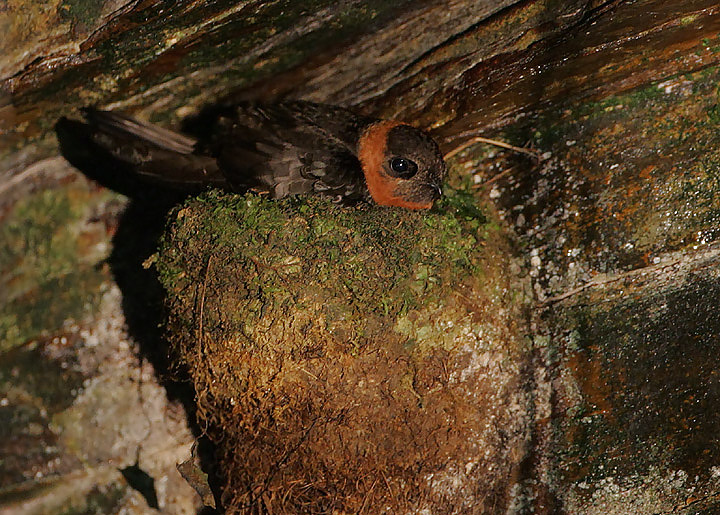
Wikipedia: Chestnut-collared swift
The chestnut-collared swift (Streptoprocne rutila) is a resident breeding bird from Mexico and Trinidad south to Peru and Bolivia. It was one of the species of Cypseloides controversially moved to Streptoprocne by the AOU (BLI 2004).
[more]
Profil Wikipedia eBird Xeno-Canto

Wikipedia: White-collared swift
The white-collared swift (Streptoprocne zonaris) is a resident breeding bird from central Mexico, the Greater Antilles and Trinidad south to Peru, northern Argentina and southeastern Brazil.
[more]
Unterfamilie Apodinae:
Profil Wikipedia eBird Audubon AllAboutBirds Xeno-Canto

Wikipedia: Chimney swift
Der Schornsteinsegler (Chaetura pelagica) ist ein amerikanischer Seglervogel.
[more]
Profil Wikipedia eBird Audubon AllAboutBirds Xeno-Canto

Wikipedia: Short-tailed swift
The short-tailed swift (Chaetura brachyura) is a bird in the Apodidae, or swift family.
[more]
Profil Wikipedia eBird Audubon AllAboutBirds Xeno-Canto

Wikipedia: Vaux's swift
Vaux's swift (Chaetura vauxi) is a small swift native to North America and northern South America. It was named for the American scientist William Sansom Vaux.
[more]
Profil Wikipedia eBird Xeno-Canto

Wikipedia: Gray-rumped swift
The grey-rumped swift (Chaetura cinereiventris) is a small swift.
[more]

Wikipedia: Costa Rican swift
The Costa Rican swift (Chaetura fumosa) is a species of swift in the family Apodidae. It was split from the band-rumped swift, Chaetura spinacauda, in 1998.
[more]
Profil Wikipedia eBird Xeno-Canto
Wikipedia: Band-rumped swift
The band-rumped swift (Chaetura spinicaudus) is a small swift. Until 1998, it was known as Chaetura spinicauda. At that time, the previously considered subspecies Costa Rican swift, Chaetura fumosa, was split from this species and the scientific name was modified from C. spinacauda to C. spinacaudus.
[more]
Familie Trochilidae (Hummingbirds):
Gattung Selasphorus:
Profil Wikipedia eBird Xeno-Canto

Wikipedia: Volcano hummingbird
Die Vulkanelfe (Selasphorus flammula), manchmal auch Weinkehlkolibri oder Kirschkehlkolibri[1] genannt, ist eine Vogelart aus der Familie der Kolibris (Trochilidae).
[more]
Profil Wikipedia eBird Xeno-Canto

Wikipedia: Scintillant hummingbird
Die Orangekehlelfe (Selasphorus scintilla), auch Flämmchenkolibri genannt,[1] ist eine Vogelart aus der Familie der Kolibris (Trochilidae).
[more]
Gattung Phaethornis:
Profil Wikipedia eBird Xeno-Canto
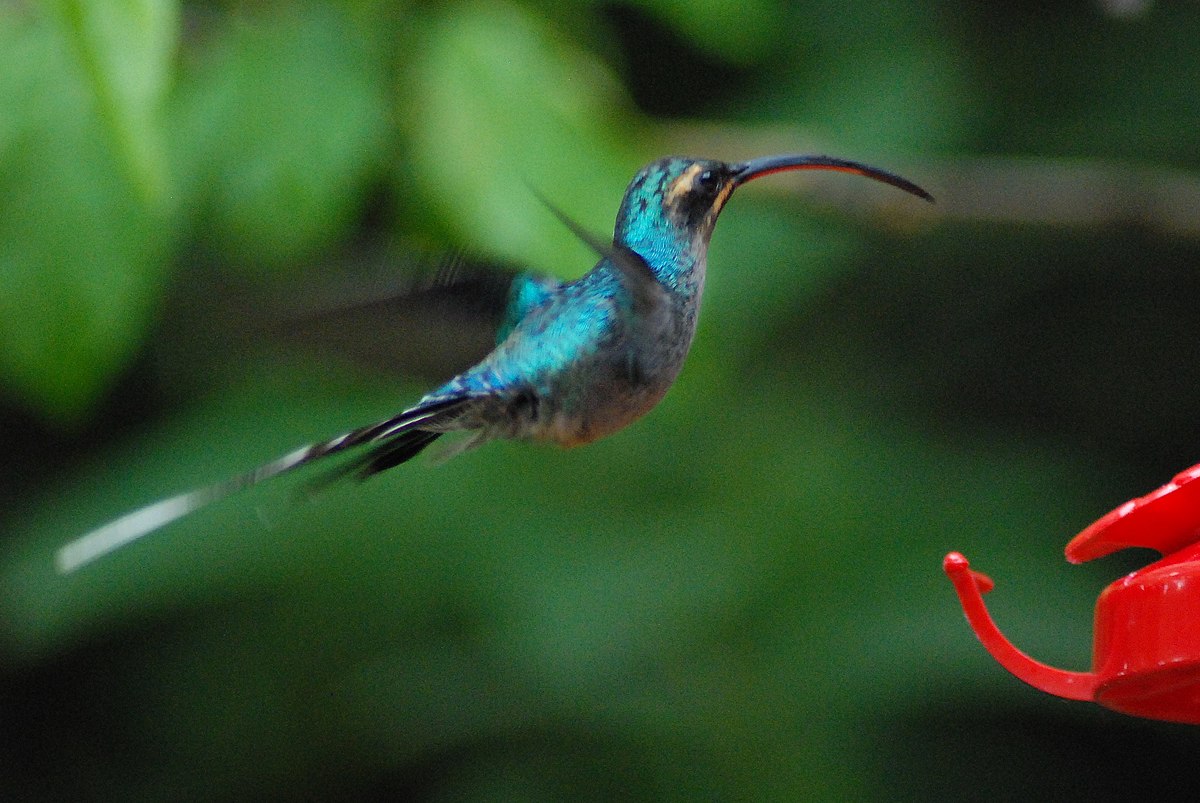
Wikipedia: Green hermit
Der Grüne Schattenkolibri (Phaethornis guy) oder Graubrusteremit ist eine Vogelart aus der Familie der Kolibris (Trochilidae). Das Verbreitungsgebiet dieser Art umfasst die Länder Kolumbien, Venezuela, Ecuador, Peru, Panama und Costa Rica. Der Bestand wird von der IUCN als nicht gefährdet (Least Concern) eingeschätzt.
[more]
Profil Wikipedia eBird Xeno-Canto

Wikipedia: Long-billed hermit
Der Westliche Langschwanz-Schattenkolibri (Phaethornis longirostris) ist eine Vogelart aus der Familie der Kolibris (Trochilidae). Die Art hat ein großes Verbreitungsgebiet, das etwa 540.000 Quadratkilometer in den mittelamerikanischen Ländern Mexiko, Belize, Guatemala, Honduras, Panama und Nicaragua sowie den südamerikanischen Ländern Kolumbien, Ecuador und Peru umfasst. Der Bestand wird von der IUCN als nicht gefährdet (Least Concern) eingeschätzt.
[more]
Profil Wikipedia eBird Xeno-Canto
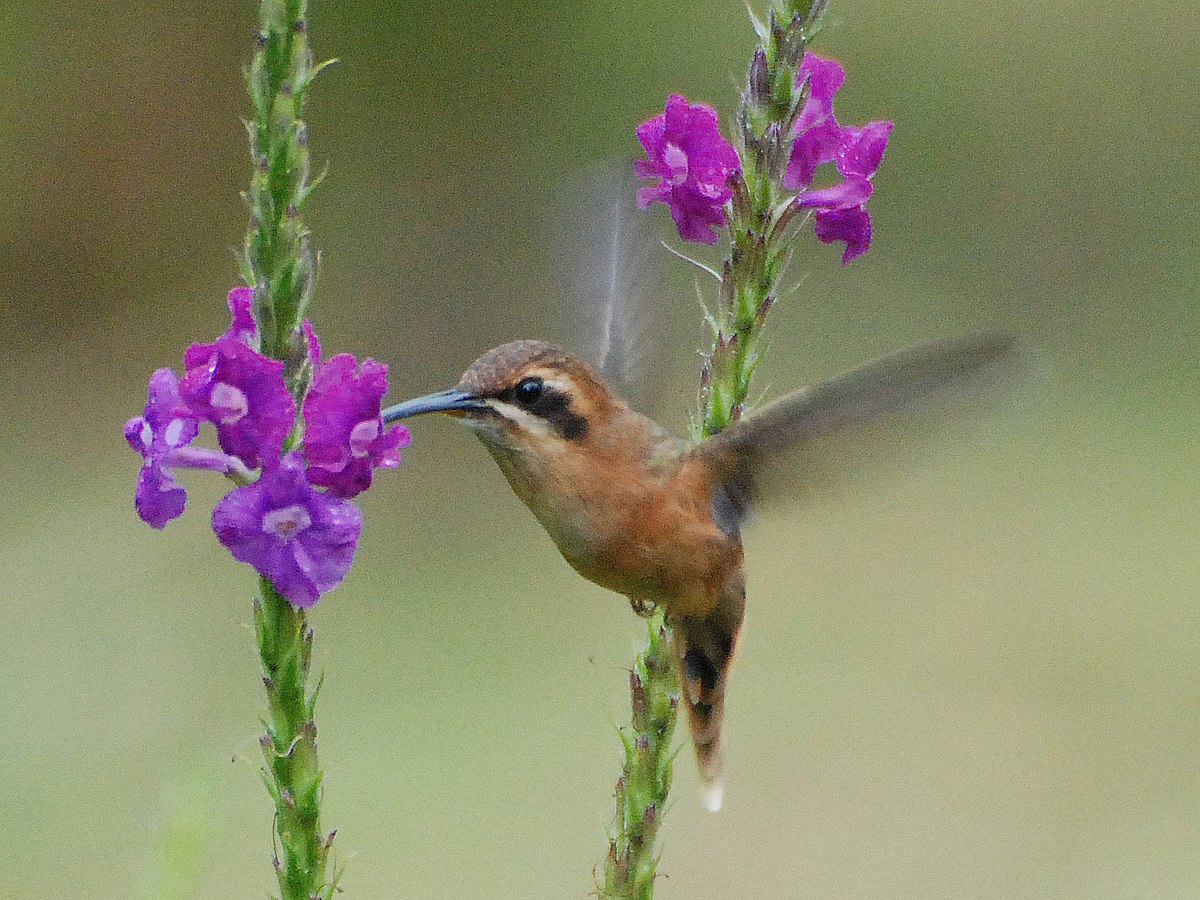
Wikipedia: Stripe-throated hermit
Der Streifenkehl-Schattenkolibri (Phaethornis striigularis) ist eine Vogelart aus der Familie der Kolibris (Trochilidae), die in Mexiko, Belize, Guatemala, Honduras, Nicaragua, Costa Rica, Panama, Kolumbien, Venezuela und Ecuador vorkommt. Der Bestand wird von der IUCN als nicht gefährdet (Least Concern) eingeschätzt.
[more]
Profil Wikipedia eBird Xeno-Canto

Wikipedia: Pale-bellied hermit
The pale-bellied hermit (Phaethornis anthophilus), also known as the Carinegro Hermit, is a species of hummingbird in the family Trochilidae.[2]
[more]
Gattung Amazilia:

La tarde rufous-tailed hummingbird. 2018-03-10 07.58.50 Zentralamerika
The rufous-tailed hummingbird (Amazilia tzacatl) is a medium-sized hummingbird that breeds from east-central Mexico, through Central America and Colombia, east to western Venezuela and south through western Ecuador to near the border with Peru. The larger Escudo hummingbird from Isla Escudo de Veraguas in Panama is commonly considered a subspecies of the rufous-tailed hummingbird. This is a common to abundant bird of open country, river banks, woodland, scrub, forest edge, coffee plantations and gardens up to 1,850 m (6,070 ft).
[more]

Wikipedia: Cinnamon hummingbird
Die Zimtbauchamazilie (Amazilia rutila), manchmal auch Rostamazilie oder Rost-Amazilie genannt, ist eine Vogelart aus der Familie der Kolibris (Trochilidae). Die Art hat ein großes Verbreitungsgebiet, das etwa 350.000 Quadratkilometer in den mittelamerikanischen Ländern Belize, Costa Rica, Guatemala, Honduras, Mexiko, El Salvador und Nicaragua sowie die USA umfasst. Der Bestand wird von der IUCN als nicht gefährdet (Least Concern) eingeschätzt.
[more]

Wikipedia: Mangrove hummingbird
The mangrove hummingbird (Amazilia boucardi) is a species of hummingbird in the family Trochilidae. It is found only in Costa Rica. Its natural habitat is subtropical or tropical mangrove forest. It is threatened by habitat loss. The mangrove hummingbird feeds primarily on nectar from the flowers of the tea mangrove Pelliciera rhizophorae. Mangrove hummingbirds are occasionally seen in adjacent non-mangrove habitats. Nesting for these birds has been recorded during the months of October through February. The mangrove hummingbird is on average approximately 10 cm (3.9 in) long.
[more]
Gattung Chlorostilbon:
Profil Wikipedia eBird Xeno-Canto

Wikipedia: Garden emerald
Der Gartensmaragdkolibri oder Gartenkolibri (Chlorostilbon assimilis) ist eine Vogelart aus der Familie der Kolibris (Trochilidae), die im Südwesten Costa Ricas und in Panama vorkommt. Der Bestand wird von der IUCN als nicht gefährdet (Least Concern) eingeschätzt. Die Art gilt als monotypisch.[1]
[more]
Gattung Anthracothorax:
Profil Wikipedia eBird Xeno-Canto

Wikipedia: Veraguan mango
Der Veragua-Mangokolibri (Anthracothorax veraguensis) oder Veraguamango ist eine Vogelart aus der Familie der Kolibris (Trochilidae), die in den Länder Panama und Costa Rica vorkommt. Der Bestand wird von der IUCN als nicht gefährdet (Least Concern) eingeschätzt. Die Art gilt als monotypisch.[1]
[more]

Funky bird on Bastimentos Island, Panama, possibly green-breasted mango. 2020-03-10 12.07.52 Zentralamerika
The green-breasted mango (Anthracothorax prevostii) is a hummingbird from tropical America. The scientific name of this bird commemorates the French naturalist Florent Prévost.
[more]

Wikipedia: Black-throated mango
Der Schwarzbrust-Mangokolibri (Anthracothorax nigricollis) oder Schwarzkehlmango ist eine Vogelart aus der Familie der Kolibris (Trochilidae). Die Art hat ein großes Verbreitungsgebiet, das sich über Teile der Länder Panama, Kolumbien, Trinidad und Tobago, Venezuela, Guyana, Suriname, Französisch-Guayana, Brasilien, Ecuador, Peru, Bolivien, Paraguay und Argentinien erstreckt. Der Bestand wird von der IUCN als nicht gefährdet (Least Concern) eingeschätzt.
[more]
Gattung Heliomaster:
Profil Wikipedia eBird Xeno-Canto

Wikipedia: Long-billed starthroat
The long-billed starthroat (Heliomaster longirostris) is a hummingbird that breeds from southern Mexico to Panama, from Colombia south and east to Bolivia and Brazil, and on Trinidad. It is present throughout South and Central America and is an uncommon but widespread species, which appears to be a local or seasonal migrant, although its movements are not well understood.
[more]
Gattung Glaucis:

Wikipedia: Bronzy hermit
Der Kupferschattenkolibri oder Erzeremit (Glaucis aeneus) ist eine Vogelart aus der Familie der Kolibris (Trochilidae), der in Honduras, Nicaragua, Costa Rica, Panama, Kolumbien und Ecuador vorkommt. Der Bestand wird von der IUCN als nicht gefährdet (Least Concern) eingeschätzt. Die Art gilt als monotypisch.[1]
[more]
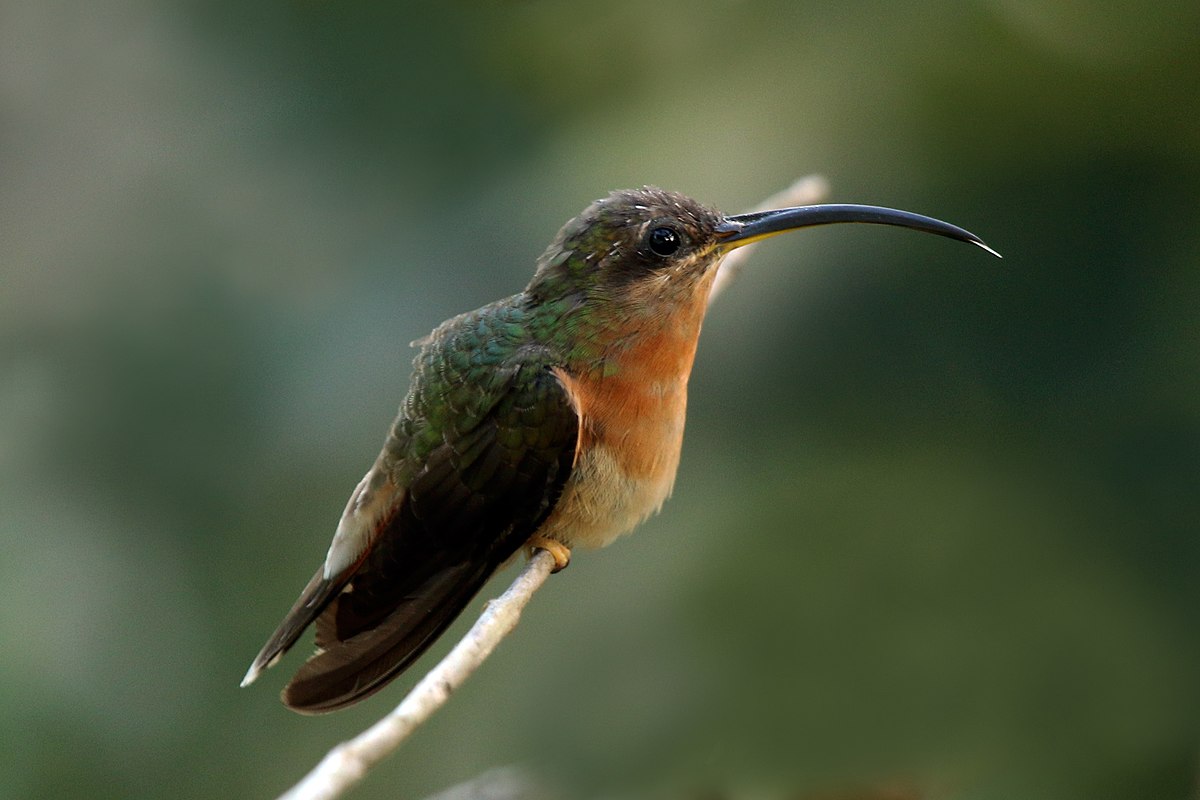
Wikipedia: Rufous-breasted hermit
Der Rotschwanz-Schattenkolibri (Glaucis hirsutus) oder Rotschwanz-Eremit ist ein Kolibri aus Südamerika. Neben der Nominatform Glaucis hirsuta hirsuta von Ost-Kolumbien, West-Venezuela, Ost-Ecuador und Nord-Peru wird die Unterart Glaucis h. insularum von Trinidad und Tobago und Grenada unterschieden.
[more]
Gattung Archilochus:

Wikipedia: Ruby-throated hummingbird
Der winzige Rubinkehlkolibri (Archilochus colubris) ist ein auffallend farbenprächtiger Vogel, der in den östlichen Teilen der USA und Kanadas anzutreffen ist. Der Rubinkehlkolibri ist nicht mit dem südamerikanischen Rubinkolibri identisch.
[more]
Gattung Discosura:
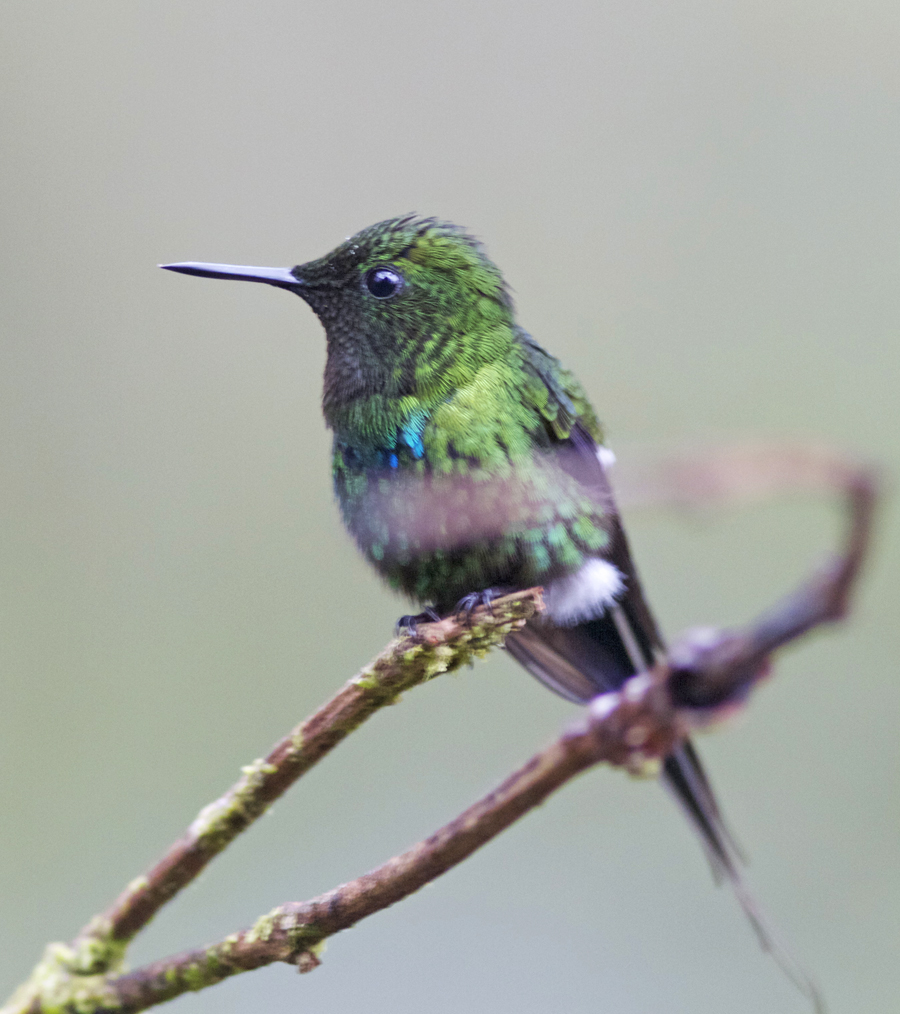
Wikipedia: Green thorntail
Die Grüne Fadenelfe (Discosura conversii) oder Dornschwanzelfe ist eine Vogelart aus der Familie der Kolibris (Trochilidae). Die Art hat ein großes Verbreitungsgebiet, das sich über die Länder Costa Rica, Panama, Kolumbien und Ecuador erstreckt. Der Bestand wird von der IUCN als nicht gefährdet (Least Concern) eingeschätzt.
[more]
Gattung Eutoxeres:
Profil Wikipedia eBird Xeno-Canto

Wikipedia: White-tipped sicklebill
Der Adlerschnabel oder Weißkehl-Sichelschnabel (Eutoxeres aquila) ist eine Vogelart aus der Familie der Kolibris (Trochilidae).
[more]
Gattung Heliothryx:
Profil Wikipedia eBird Xeno-Canto

Wikipedia: Purple-crowned fairy
Der Purpurkron-Schmuckkolibri (Heliothryx barroti) ist eine Vogelart aus der Familie der Kolibris (Trochilidae). Die Art hat ein großes Verbreitungsgebiet, das von Mexiko bis Ecuador erstreckt. Der Bestand wird von der IUCN als nicht gefährdet (Least Concern) eingeschätzt.
[more]
Gattung Lampornis:

Wikipedia: Purple-throated mountain-gem
Die Purpurkehlnymphe (Lampornis calolaemus) ist eine Vogelart aus der Familie der Kolibris (Trochilidae), die in Nicaragua, Costa Rica und Panama vorkommt. Der Bestand wird von der IUCN als nicht gefährdet (Least Concern) eingeschätzt.
[more]
Profil Wikipedia eBird Xeno-Canto

Wikipedia: White-throated mountain-gem
The white-throated mountaingem (Lampornis castaneoventris) is a hummingbird which breeds in the mountains of western Panama. It is replaced in southern Costa Rica by the gray-tailed mountaingem, L. cinereicauda (García-Moreno et al., 2006). Another very close relative, the purple-throated mountaingem, is found sympatrically.
[more]
Profil Wikipedia eBird Xeno-Canto

Wikipedia: White-bellied mountain-gem
The white-bellied mountaingem (Lampornis hemileucus) is a species of hummingbird in the family Trochilidae. It is found in the Talamancan montane forests.
[more]
Gattung Thalurania:
Profil Wikipedia eBird Xeno-Canto

Wikipedia: Crowned woodnymph
Die Violettkronennymphe (Thalurania colombica), auch Kronennymphe genannt, ist eine Vogelart aus der Familie der Kolibris.
[more]
Gattung Androdon:
Profil Wikipedia eBird Xeno-Canto

Wikipedia: Tooth-billed hummingbird
Der Zahnschnabelkolibri (Androdon aequatorialis) oder Hakenkolibri ist eine Vogelart aus der Familie der Kolibris (Trochilidae). Das Verbreitungsgebiet dieser Art umfasst die Länder Ecuador, Kolumbien und Panama. Der Bestand wird von der IUCN als nicht gefährdet (Least Concern) eingeschätzt.
[more]
Gattung Colibri:
Profil Wikipedia eBird Xeno-Canto

Wikipedia: Brown violetear
Der Braune Veilchenohrkolibri (Colibri delphinae), auch Blaues Veilchenohr oder Großer Veilchenohrkolibri genannt, ist eine Art der Kolibris (Trochilidae). Das Verbreitungsgebiet der Art umfasst Teile von Belize, Guatemala, Honduras, Nicaragua, Costa Rica, Panama, Kolumbien, Ecuador, Peru, Bolivien, auf Trinidad, Venezuela, Guyana, Suriname und Brasilien. Der Bestand wird von der IUCN als nicht gefährdet (Least Concern) eingeschätzt.
[more]
Profil Wikipedia eBird Xeno-Canto
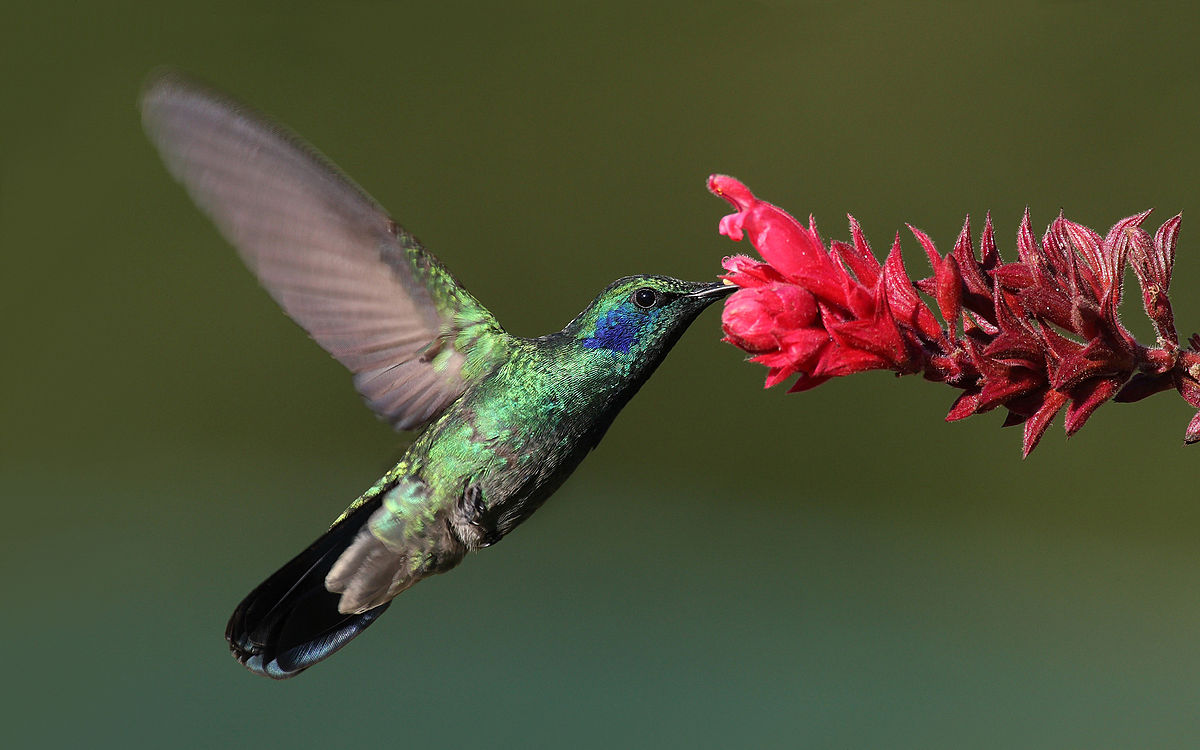
Wikipedia: Lesser violetear
The lesser violetear (Colibri cyanotus), also known as the mountain violet-ear, is a medium-sized, metallic green hummingbird species commonly found in forested areas from Costa Rica to northern South America. This species and the Mexican violetear were formerly considered as conspecific and named the 'green violetear'.
[more]
Gattung Doryfera:
Profil Wikipedia eBird Xeno-Canto

Wikipedia: Green-fronted lancebill
The green-fronted lancebill (Doryfera ludovicae) is a species of hummingbird in the family Trochilidae. Primarily known for its incredibly long bill and “glittering” green patch of feathers on its forehead, D. ludovicae is found in subtropical and tropical moist montane forest and prefers regions that include fast moving rivers and streams.[2]
[more]
Gattung Threnetes:
Profil Wikipedia eBird Xeno-Canto

Wikipedia: Band-tailed barbthroat
Der Weißbinden-Schattenkolibri (Threnetes ruckeri) oder Bindenschwanzeremit ist eine Vogelart aus der Familie der Kolibris (Trochilidae). Die Art hat ein großes Verbreitungsgebiet, das sich über die Länder Venezuela, Kolumbien, Ecuador, Panama, Costa Rica, Nicaragua, Honduras und Belize erstreckt. Der Bestand wird von der IUCN als nicht gefährdet (Least Concern) eingeschätzt.
[more]
Gattung Campylopterus:
Profil Wikipedia eBird Xeno-Canto

Wikipedia: Scaly-breasted hummingbird
Der Schuppenbrustkolibri (Phaeochroa cuvierii, Syn.: Campylopterus cuvierii) ist eine Vogelart aus der Familie der Kolibris (Trochilidae). Die Art hat ein großes Verbreitungsgebiet, das etwa 240.000 Quadratkilometer in den mittelamerikanischen Ländern Mexiko, Belize, Guatemala, Honduras, Nicaragua, Costa Rica und Panama sowie dem südamerikanischen Land Kolumbien umfasst. Der Bestand wird von der IUCN als nicht gefährdet (Least Concern) eingeschätzt.
[more]
Profil Wikipedia eBird Xeno-Canto

Wikipedia: Violet sabrewing
The violet sabrewing (Campylopterus hemileucurus) is a very large hummingbird native to southern Mexico and Central America as far south as Costa Rica and western Panama.
[more]
Gattung Chrysuronia:
Profil Wikipedia eBird Xeno-Canto

Wikipedia: Sapphire-throated hummingbird
The sapphire-throated hummingbird (Chrysuronia coeruleogularis) is a shiny metallic-green hummingbird found in Panama, Colombia, and more recently Costa Rica.[2] The sapphire-throated hummingbird is separated into three subspecies; Chrysuronia coeruleogularis coeruleogularis, Chrysuronia coeruleogularis coelina, and Chrysuronia coeruleogularis conifis.[3][4]
[more]
Gattung Florisuga:
Profil Wikipedia eBird Xeno-Canto

Arenal hummingbird tentative ID White-necked Jacobin. 2018-02-28 09.40.12 Zentralamerika
Der Weißnackenkolibri oder Jakobinerkolibri (Florisuga mellivora) ist eine Vogelart aus der Familie der Kolibris (Trochilidae), der in Mexiko, Belize, Guatemala, Honduras, Nicaragua, Costa Rica, Panama, Kolumbien, Venezuela, Guyana, Suriname, Französisch-Guayana, Brasilien, Ecuador, Peru, Bolivien, auf Trinidad und auf Tobago vorkommt. Der Bestand wird von der IUCN als nicht gefährdet (Least Concern) eingeschätzt.
[more]
Gattung Haplophaedia:
Profil Wikipedia eBird Xeno-Canto

Wikipedia: Greenish puffleg
Der Kupferglanz-Höschenkolibri (Haplophaedia aureliae) oder das Bunthöschen ist eine Vogelart aus der Familie der Kolibris (Trochilidae). Die Art hat ein großes Verbreitungsgebiet, das sich über die Länder Panama, Kolumbien und Ecuador erstreckt. Der Bestand wird von der IUCN als nicht gefährdet (Least Concern) eingeschätzt.
[more]
Gattung Heliodoxa:
Profil Wikipedia eBird Xeno-Canto

Cloud forest green crowned brilliant hummingbird in tree. 2018-02-17 11.03.54 Zentralamerika
Der Grünstirn-Brillantkolibri (Heliodoxa jacula) oder Grünscheitelbrillant ist eine Vogelart aus der Familie der Kolibris (Trochilidae). Die Art hat ein großes Verbreitungsgebiet, das sich über die Länder Costa Rica, Panama, Kolumbien und Ecuador erstreckt. Der Bestand wird von der IUCN als nicht gefährdet (Least Concern) eingeschätzt.
[more]
Gattung Klais:
Profil Wikipedia eBird Xeno-Canto

Wikipedia: Violet-headed hummingbird
Der Violettkopfkolibri (Klais guimeti) ist eine Vogelart aus der Familie der Kolibris (Trochilidae). Die Art kommt in den Ländern Honduras, Nicaragua, Costa Rica, Panama, Kolumbien, Venezuela, Ecuador, Peru und Bolivien vor. Der Bestand wird von der IUCN als nicht gefährdet (Least Concern) eingeschätzt.
[more]
Gattung Lophornis:
Profil Wikipedia eBird Xeno-Canto

Wikipedia: White-crested coquette
Die Weißschopfelfe (Lophornis adorabilis) ist eine Vogelart aus der Familie der Kolibris (Trochilidae), die in Panama und Costa Rica vorkommt. Der Bestand wird von der IUCN als Least Concern (nicht gefährdet) eingeschätzt.
[more]
Profil Wikipedia eBird Xeno-Canto
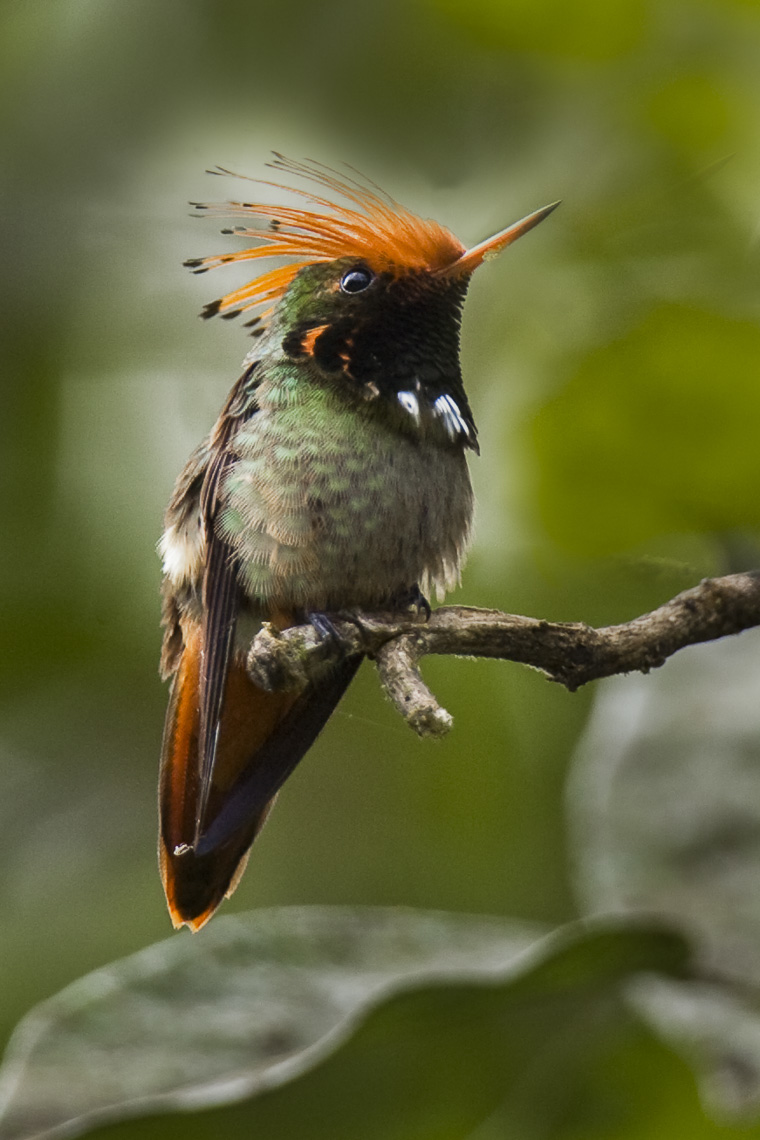
Wikipedia: Rufous-crested coquette
Die Zierelfe oder Rotschopfelfe (Lophornis delattrei) ist eine Vogelart aus der Familie der Kolibris (Trochilidae). Die Art hat ein großes Verbreitungsgebiet, das die mittel- und südamerikanischen Länder Costa Rica, Panama, Kolumbien, Ecuador, Peru und Bolivien umfasst. Der Bestand wird von der IUCN als nicht gefährdet (Least Concern) eingeschätzt.
[more]
Gattung Panterpe:
Profil Wikipedia eBird Xeno-Canto

Wikipedia: Fiery-throated hummingbird
Der Feuerkehlkolibri (Panterpe insignis) ist ein Seglervogel in der Familie der Kolibris (Trochilidae). Er kommt vom Südwesten von Costa Rica bis nach Panama vor. Der Bestand wird von der IUCN als nicht gefährdet (Least Concern) eingestuft.
[more]
Gattung Eugenes:
Profil Wikipedia eBird Xeno-Canto

Wikipedia: Talamanca hummingbird
The Talamanca hummingbird (Eugenes spectabilis) or admirable hummingbird, is a large hummingbird. Some taxonomic authorities, such as the International Ornithological Committee, split the magnificent hummingbird into two species,[1] in which case the nominate subspecies fulgens is renamed Rivoli's hummingbird and spectabilis is named the admirable hummingbird. Other taxonomic authorities have not recognized the split. The talamanca hummingbird's range is Costa Rica to Panama.
[more]
Gattung Calliphlox:
Profil Wikipedia eBird Xeno-Canto
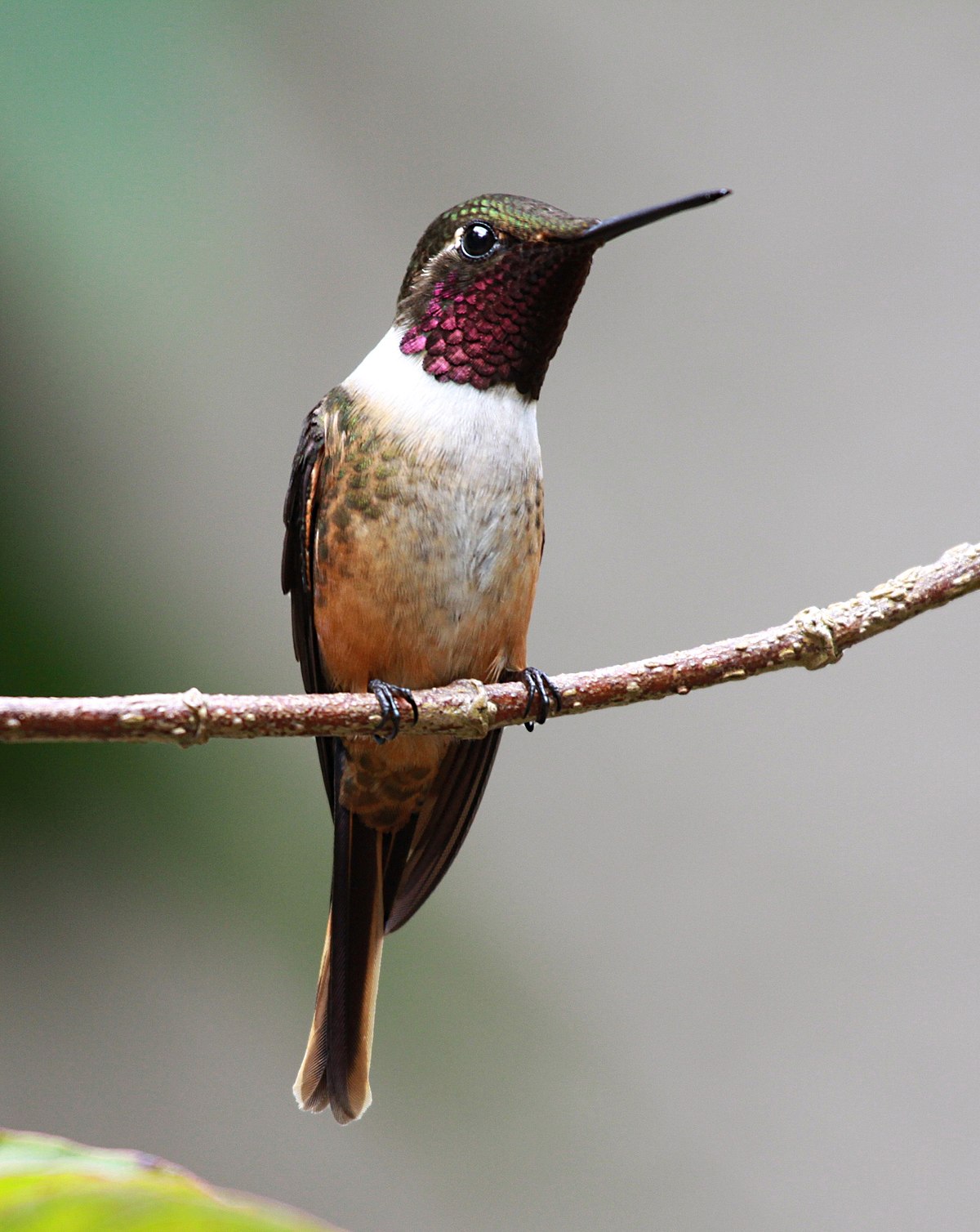
Wikipedia: Magenta-throated woodstar
The magenta-throated woodstar (Calliphlox bryantae) is a hummingbird that is a resident breeder in forest edge and scrub of the Talamancan montane forests.
[more]
Profil Wikipedia eBird Xeno-Canto

Wikipedia: Purple-throated woodstar
Der Purpurkehl-Sternkolibri (Calliphlox mitchellii) ist eine Vogelart aus der Familie der Kolibris (Trochilidae), die in Panama, Kolumbien und Ecuador vorkommt. Der Bestand wird von der IUCN als Least Concern (nicht gefährdet) eingeschätzt.
[more]
Gattung Chalybura:
Profil Wikipedia eBird Xeno-Canto
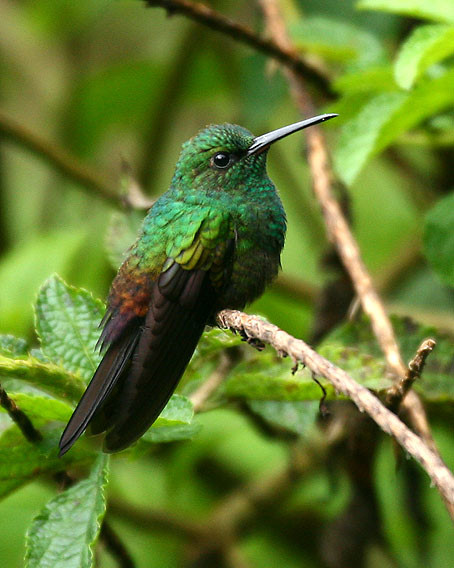
Wikipedia: Bronze-tailed plumeleteer
Die Bronzeschwanz-Buffonkolibri (Chalybura urochrysia) ist eine Vogelart aus der Familie der Kolibris (Trochilidae). Die Art hat ein großes Verbreitungsgebiet, das Teile der Länder Nicaragua, Costa Rica, Panama, Kolumbien und Ecuador umfasst. Der Bestand wird von der IUCN als nicht gefährdet (Least Concern) eingeschätzt.
[more]
Profil Wikipedia eBird Xeno-Canto

Wikipedia: White-vented plumeleteer
Die Blauschwanz-Buffonkolibri (Chalybura buffonii) ist eine Vogelart aus der Familie der Kolibris (Trochilidae). Die Art hat ein großes Verbreitungsgebiet, das die Länder Panama, Kolumbien, Venezuela und Ecuador umfasst. Der Bestand wird von der IUCN als nicht gefährdet (Least Concern) eingeschätzt.
[more]
Gattung Eupherusa:

Wikipedia: Stripe-tailed hummingbird
Der Streifenschwanzkolibri oder Streifenschwanzeupherusa (Eupherusa eximia) ist eine Vogelart aus der Familie der Kolibris (Trochilidae). Die Art hat ein etwa 180.000 Quadratkilometer großes Verbreitungsgebiet in Mexiko, Belize, Guatemala, Honduras, Costa Rica, Panama und Nicaragua. Der Bestand ist laut IUCN nicht gefährdet (least concern).
[more]
Profil Wikipedia eBird Xeno-Canto

Wikipedia: Black-bellied hummingbird
The black-bellied hummingbird (Eupherusa nigriventris) is a species of hummingbird in the family Trochilidae.
[more]
Gattung Microchera:
Profil Wikipedia eBird Xeno-Canto

Wikipedia: Coppery-headed emerald
The coppery-headed emerald (Microchera cupreiceps) is a small hummingbird endemic to Costa Rica. It measures a mere 3 in (7.6 cm) in length, and weighs only 3 g (0.11 oz).[2] The male has distinctive coppery crown and rump with a whole green belly and white vent. The female has a white belly and a narrow black subterminal band on white outer rectrices of the tail. Its noticeably decurved bill sets it apart from similar the allopatric white-tailed emerald.
[more]
Profil Wikipedia eBird Xeno-Canto

Wikipedia: White-tailed emerald
The white-tailed emerald (Microchera chionura) is a species of hummingbird in the family Trochilidae.
It is native to the Talamancan montane forests. With a weight under 3 grams, this is one of the smallest birds in existence.[2]
[more]
Profil Wikipedia eBird Xeno-Canto

Wikipedia: Snowcap
Der Schneekappenkolibri (Microchera albocoronata) ist eine Vogelart aus der Familie der Kolibris (Trochilidae). Das Verbreitungsgebiet umfasst Teile von Panama, Costa Rica und Honduras. Der Bestand wird von der IUCN als nicht gefährdet (Least Concern) eingeschätzt.
[more]
Gattung Cynanthus:
Profil Wikipedia eBird Xeno-Canto
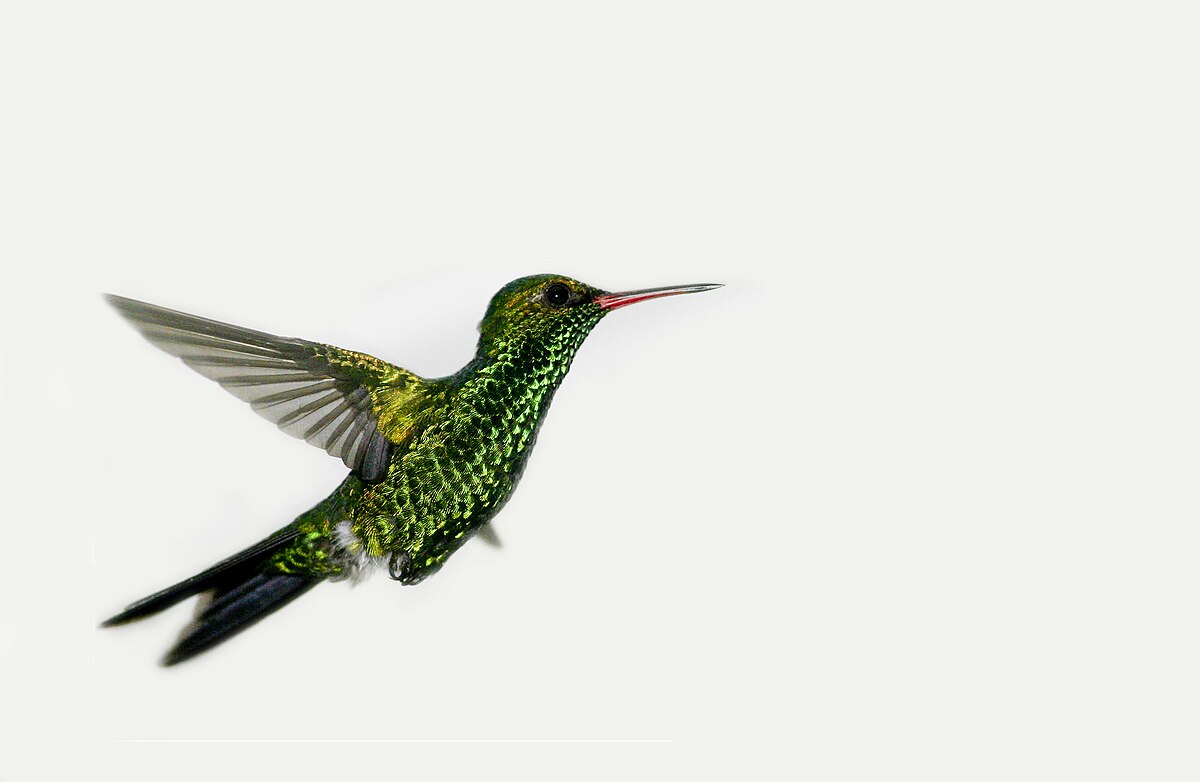
Wikipedia: Canivet's emerald
Canivet's emerald (Cynanthus canivetii) or the fork-tailed emerald, is a species of hummingbird in the family Trochilidae. It is found in Belize, Costa Rica, El Salvador, Guatemala, Honduras, Mexico, and Nicaragua. Its natural habitats are subtropical or tropical dry forest, subtropical or tropical moist lowland forest, and heavily degraded former forest.
[more]
Gattung Goldmania:
Profil Wikipedia eBird Xeno-Canto

Wikipedia: Violet-capped hummingbird
Der Violettkappenkolibri (Goldmania violiceps), manchmal auch Goldmankolibri genannt, ist eine Vogelart aus der Familie der Kolibris (Trochilidae). Die Art hat ein kleines Verbreitungsgebiet in Panama und Kolumbien. Der Bestand wird von der IUCN als nicht gefährdet (Least Concern) eingeschätzt.
[more]
Ordnung Caprimulgiformes (Schwalmvögel / Nightjars and others):
Familie Caprimulgidae:
Unterfamilie Caprimulginae:
Profil Wikipedia eBird Xeno-Canto

Wikipedia: Ocellated poorwill
Die Augennachtschwalbe (Nyctiphrynus ocellatus, Syn. Caprimulgus ocellatus) ist eine Vogelart aus der Familie der Nachtschwalben (Caprimulgidae).[1]
[more]

Wikipedia: Pauraque
Der Pauraque (Nyctidromus albicollis) ist ein Vogel aus der Familie der Nachtschwalben (Caprimulgidae).
[more]

Wikipedia: White-tailed nightjar
Die Weißschwanz-Nachtschwalbe (Hydropsalis cayennensis, Syn. Caprimulgus cayennensis) ist eine Vogelart aus der Familie der Nachtschwalben (Caprimulgidae).[1]
[more]
Unterfamilie Chordeilinae:

Wikipedia: Common nighthawk
Die Falkennachtschwalbe (Chordeiles minor), auch Nachtfalke genannt, ist einer der bekanntesten amerikanischen Sommervögel. Sie ist berühmt durch ihre Sturz- und Zickzackflüge.
[more]
Profil Wikipedia eBird Audubon AllAboutBirds Xeno-Canto

Wikipedia: Lesser nighthawk
Die Texasnachtschwalbe (Chordeiles acutipennis) ist eine Vogelart aus der Familie der Nachtschwalben (Caprimulgidae).[1]
[more]
Profil Wikipedia eBird Xeno-Canto

Wikipedia: Short-tailed nighthawk
Die Bändernachtschwalbe (Lurocalis semitorquatus, Syn.: Caprimulgus semitorquatus) ist eine Vogelart aus der Familie der Nachtschwalben (Caprimulgidae).[1]
[more]
Gattung Antrostomus:

Wikipedia: Chuck-will's-widow
Die Carolinanachtschwalbe (Antrostomus carolinensis, Syn.: Caprimulgus carolinensis) ist eine Vogelart aus der Familie der Nachtschwalben (Caprimulgidae).[1]
[more]

Wikipedia: Eastern whip-poor-will
Die Schwarzkehl-Nachtschwalbe (Antrostomus vociferus), Syn. (Caprimulgus vociferus), ist eine Vogelart aus der Familie der Nachtschwalben (Caprimulgidae).[1]
[more]

Wikipedia: Dusky nightjar
Die Bergnachtschwalbe (Antrostomus saturatus, Syn.: Caprimulgus saturatus), ist eine Vogelart aus der Familie der Nachtschwalben (Caprimulgidae).[1]
[more]

Wikipedia: Rufous nightjar
Die Rostnachtschwalbe (Antrostomus rufus, Syn.: Caprimulgus rufus), ist eine Vogelart aus der Familie der Nachtschwalben (Caprimulgidae).
[more]
Familie Nyctibiidae:
Gattung Nyctibius:
Profil Wikipedia eBird Xeno-Canto

Wikipedia: Common potoo
Der Urutau-Tagschläfer (Nyctibius griseus) ist ein nachtaktiver Vogel, der in Zentral- und Südamerika vom tropischen Mexiko über Costa Rica bis ins nördliche Argentinien und ins nördliche Uruguay vorkommt. Ebenso ist er auf den Karibikinseln Jamaika und Hispaniola anzutreffen. Als Lebensraum bevorzugt er lichte Wälder, Waldränder sowie baumbestandene, savannenähnliche Gelände unterhalb von 1200 m.
[more]
Profil Wikipedia eBird Xeno-Canto
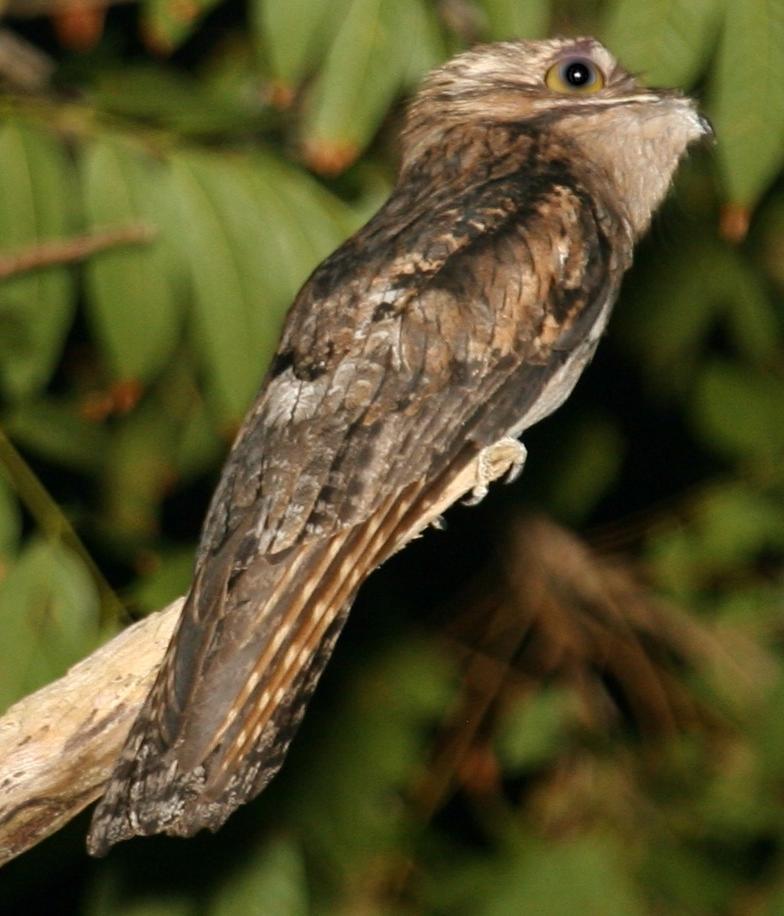
Wikipedia: Northern potoo
The northern potoo (Nyctibius jamaicensis) is a nocturnal bird belonging to the potoo family, Nyctibiidae. It is found from Mexico south to Costa Rica, and on the islands of Jamaica and Hispaniola (Dominican Republic). It was formerly classified as a subspecies of the common potoo (Nyctibius griseus) but is now usually treated as a separate species based on differences in vocalizations.
[more]
Profil Wikipedia eBird Xeno-Canto

Wikipedia: Great potoo
Der Riesentagschläfer (Nyctibius grandis) ist eine Vogelart aus der Gattung der Tagschläfer. Die nachtaktive Art ist in weiten Teilen Südamerikas verbreitet und wurde erstmals im Jahr 1789 durch den deutschen Naturforscher Johann Friedrich Gmelin wissenschaftlich beschrieben.
[more]
Familie Steatornithidae:
Gattung Steatornis:
Profil Wikipedia eBird Xeno-Canto

Wikipedia: Oilbird
Der Fettschwalm (Steatornis caripensis) oder auch Guácharo ist die einzige rezente Art der Vogelfamilie der Fettschwalme (Steatornithidae). Die monotypische Einordnung in eine eigene Familie ist darauf zurückzuführen, dass der Fettschwalm sehr ungewöhnlich ist.
[more]
Klassifikation nicht gefunden:
Berg-Veilchenohrkolibri / Lesser violetear (Colibri cyanotus)

Green violetear and green crowned brilliants at cloud forest hummingbird feeder. 2018-02-17 18.04.19 Zentralamerika
Der Berg-Veilchenohrkolibri (Colibri cyanotus) oder Zwergveilchenohrkolibri ist eine Vogelart aus der Familie der Kolibris (Trochilidae), die in Costa Rica, Panama, Kolumbien, Venezuela, Ecuador, Peru und Bolivien vorkommt. Der Bestand wird von der IUCN als nicht gefährdet (Least Concern) eingeschätzt.
[more]
Schwarzschopfelfe / Black-crested coquette (Lophornis helenae)
Profil Wikipedia eBird Xeno-Canto

La tarde Black-crested Coquette hummingbird. 2018-03-11 09.53.40 Zentralamerika
Die Schwarzschopfelfe (Lophornis helenae) ist eine Vogelart aus der Familie der Kolibris (Trochilidae). Die Art hat ein großes Verbreitungsgebiet, das etwa 250.000 Quadratkilometer in den mittelamerikanischen Ländern Belize, Costa Rica, Guatemala, Honduras, Mexiko und Nicaragua umfasst. Der Bestand wird von der IUCN als nicht gefährdet (Least Concern) eingeschätzt.
[more]
Löffelente / Northern shoveler (Spatula clypeata)
Profil Wikipedia eBird Vogelwarte BirdLife ZH Audubon AllAboutBirds Xeno-Canto BirdID NABU

Loeffelente, Neeracherried. 2021-02-24 12.27.04 Neeracherried
Dieser Vogel erscheint jenseits grossen Meere in Kontinenten :
Europa, Nordamerika, Südamerika, Afrika.
Die Löffelente (Spatula clypeata, Syn.: Anas clypeata) ist eine holarktisch verbreitete Vogelart aus der Familie der Entenvögel (Anatidae). Sie ist nur wenig kleiner als die bekannte Stockente. Der Erpel hat im Prachtkleid ein auffallend kontrastreiches Gefieder. In seiner Färbung erinnert es entfernt an das der Brandgans. Von dieser ist die Löffelente auf Grund ihrer geringeren Größe sowie ihres ententypischen Habitus sicher zu unterscheiden.
[more]
Vokalisierung: Male is characteristic and most often heard: A hoarse nasal knocking sound "took took", often staccato or disyllabic. Female similar to Mallard but flatter and more creaking. [Link]
Körperlich: Länge=44-52 cm,
Flügelspanne=70-84 cm,
Gewicht=470-800 g