Bird song classifiers for Kaltbrunnenriet visit in 2022
Decision table for identifying birdsong
Practice
| Bird | Description | Audio |
 Common snipe ■■
 |
No details but a Xeno-Canto recording.
Song:  Song an unmistakable bleating, drumming sound produced by vibrating tail feathers in sky-dives. [Link] Song an unmistakable bleating, drumming sound produced by vibrating tail feathers in sky-dives. [Link] |
♫

|
 Western marsh harrier ■■
 |
No details but a Xeno-Canto recording.
Call: Call: A sharp "kwii-uuu" of about a seconds length, rapidly ascending in pitch, and ending on a falling tone. [Link] |
♫

|
 Water rail ■■
 |
No details but a Xeno-Canto recording.
Song: Most heard is the territorial song consisting of short, nasal, sharp grunts "tuck- tuck-tuck", ending with a drawn-out trill rising and falling in pitch "kiiiieeerrrr". [Link] |
♫

|
 Eurasian curlew ■■
 |
No details but a Xeno-Canto recording.
Song: Song starts similar to Whimbrel, with long wailing notes "kluuueee", but takes on a different ending as it accelerates to an ascending phrase repeated in rapid cycles . [Link] |
♫

|
| improvised melodic | ||
| mimicry | ||
 Whinchat ■■
 |
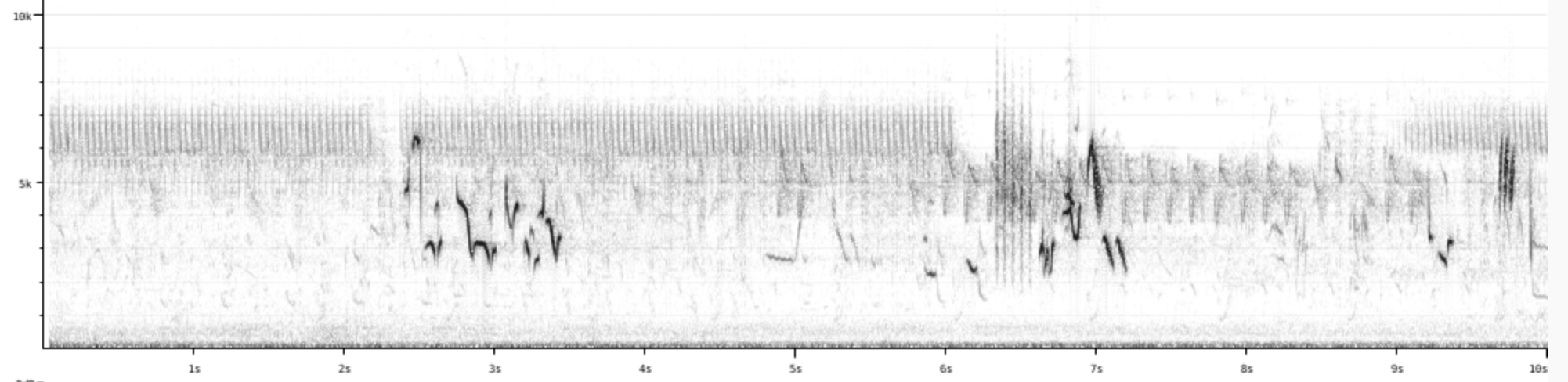
mimicry improvised melodic fast high (3-9 KHz) .
General: Short buzzy trilly sounds, 5-8 notes, high. Song:  Gesang hat zwei Teile wie erster und dritter vom Hausrotschwanz. Steigend, fallend. [Link]
Song: Gesang hat zwei Teile wie erster und dritter vom Hausrotschwanz. Steigend, fallend. [Link]
Song:  Kurzes (3-7 Töne) Liedchen mit 1-2 Kreischlauten, (ähnlich der Mittellaute b. Hausrotschwanz) variabel. Ahmt auch andere Vögel nach.
[Link]Song variable with lots of mimicry. The short phrases starts with dry, rattling or sneering trills, followed by clear whistling notes and expert mimicry. More varied, both in tone and tempo, than both Stonechat and Wheatear. [Link] Kurzes (3-7 Töne) Liedchen mit 1-2 Kreischlauten, (ähnlich der Mittellaute b. Hausrotschwanz) variabel. Ahmt auch andere Vögel nach.
[Link]Song variable with lots of mimicry. The short phrases starts with dry, rattling or sneering trills, followed by clear whistling notes and expert mimicry. More varied, both in tone and tempo, than both Stonechat and Wheatear. [Link] |
♫
|
| trill | ||
 Bluethroat ■■
 |
trill improvised melodic fast high (3-8 KHz) .
Often one little phrase or even a single note repeated, a bit like a nightingale? Occasional figaro?
Song: Song: Structure slightly similar to Nightingale, but tone much thinner and less full-bodied. A good impersonator and various imitations are interwoven among metallic, ringing sounds to form a complex, intriguing song. [Link] |
♫

|
 Common stonechat ■■
 |
No details but a Xeno-Canto recording.
Song: Gesang ähnlich obiger Art [Braunkehlchen]. Reine und kratzende Laute abwechselnd, wellenförmig
[Link] |
♫

|
| simple rhythmic | ||
 Little grebe ■■
 |
simple rhythmic fast medium (1-5 KHz) .
Der Gesang ist ein lautes, hohes Trillern. Männchen und Weibchen tragen ihn häufig im Duett vor. [Link]
Call: Call; sometimes a single quite clear high pitched "dydlylyyt". More often combined into longer phrases with harsher quality, oscillating like laughter and travelling up and down in pitch in agitated motion. Reminiscent of female Cuckoo. [Link] |
♫

|
 Eurasian sparrowhawk ■■
 |
No details but a Xeno-Canto recording.
Song: Meist in Horstnähe zu hören. Eine Reihe von kurzen Einzellauten,
[Link] |
♫

|
| sings 30 seconds or longer | ||
| mimicry | ||
 Sedge warbler ■■
 |
mimicry sings 30 seconds or longer slow medium (1-5 KHz) .
Constant stream of equally spaced sounds.
vogelwarte.ch has a sample that churrs and trills,
similar rhythm to reed warbler / Teichrohrsänger, so maybe that's what it was.
Listening on YouTube videos, you'd call it percussion rather than song!
Song: Gesang sehr ähnlich dem Teichrohrsänger. Aber nicht so im Takt. Bevorzugte Tongebilde werden mehrmals wiederholt. Des öftern Singflug über dem Schilf.
[Link]Song vigorous and varied. [Link] |
♫

|
| weird | ||
 Eurasian reed warbler ■■
 |
weird sings 30 seconds or longer fast medium (1-5 KHz) .
Weird, squeaky, urgent. Slower than Sumpfrohrsaenger.
Song: Gleichmässiges Tempo! Man kann den Takt schlagen dazu.(Metronomsänger) Oft 2-3x wiederholte kurze Motive. Viele schnarrende Töne.
[Link]By far easiest to identify by song: Characteristic, almost metric and even rhythm, very different from Sedge Warbler. Squeaky timbre with many, almost bizarre, harmonics. Phrases generally repeated 2-3 times. [Link] |
♫

|
| rasp | ||
 Great reed warbler ■■
 |
rasp sings 30 seconds or longer slow medium (1-5 KHz) .
General: Sounds to me like croak cheep cheep!
Listening on YouTube videos, you'd call it percussion rather than song! Song: In Vergleich zu Teichrohrsänger langsamer und lauter. [Link]
Song: Gesang ähnlich Teichrohrsänger, aber viel lauter, Tonhöhenunterschiede 2-3 Oktaven. Karre-Kit-Sänger.. Sehr taktmässig.
[Link]Song similar to Reed Warbler in timbre, but much deeper and slower. [Link] |
♫

|
| simple rhythmic | ||
 Common grasshopper warbler ■■
 |
simple rhythmic fast high (5-8 KHz) .
Buzzing like an insect or machinery. BirdLife Schweiz says like a grasshopper (which is after all the English name).
Song: Sehr lang anhaltendes Schwirren. Die einzelnen Schlage noch zu erkennen. Der Klang erinnert etwas an Heuschreckenzirpen (alter Name Heuschreckenrohrsänger, langer Name, lange Strophe) und klingt etwas blechern., d.h. Mit Oberton. (fast wie ein Wecker bei dem man den Finger etwas auf die Glocke hält)
[Link]Song insect-like and high-pitched. A monotonous stream of even clicks similar to a running fishing line. Maintained for seemingly endless periods, and often hard to locate. Song most similar to Savi's Warbler but is slower (each click more separated), and higher pitched with a metallic, ringing quality. Short sequences of song also functions as contact call. Also a Robin-like "tick". [Link] |
♫

|
| improvised melodic | ||
 Garden warbler hm ■■
 |
improvised melodic fast medium (1-5 KHz) .
Song: Hard to distinguish from Mönchsgrasmücke/black cap, but they sing much longer and don't end with a typical short melody like the black caps. [Link] 'minutenlang anhaltenden, plaudernden und abwechslungsreichen Gesang' [Link]
Song: Sprudelnd, orgelnd, die längsten Strophen aller hiesigen Grasmücken. Mit vielen reinen, volltönenden Tönen. Ohne Überschlag der Mönchsgrasmücke.
[Link]Song: a full bodied, flowing, melodious stream of notes, distinguished by its almost constant, warbled quality and lack of clear whistling notes (see Blackcap). Tempo is fairly even. Beware confusion possibility with occasional subsong of Blackcap that never reaches the whistling part! Call a nasal "che". [Link] 'minutenlang anhaltenden, plaudernden und abwechslungsreichen Gesang' [Link]
Song: Sprudelnd, orgelnd, die längsten Strophen aller hiesigen Grasmücken. Mit vielen reinen, volltönenden Tönen. Ohne Überschlag der Mönchsgrasmücke.
[Link]Song: a full bodied, flowing, melodious stream of notes, distinguished by its almost constant, warbled quality and lack of clear whistling notes (see Blackcap). Tempo is fairly even. Beware confusion possibility with occasional subsong of Blackcap that never reaches the whistling part! Call a nasal "che". [Link] |
♫

|
| simple rhythmic | ||
 Spotted flycatcher ■■
 |
simple rhythmic slow high (6-8 KHz) .
High (6-8 KHz?) short sound repeated every half to 5 seconds.
Song: Gesang 'unauffällig' - zirp x 2-3, mal steigender tWITSong a primitive, slow series of various buzzing and very high pitched sounds. No recurring phrases. [Link] |
♫

|
| improvised melodic | ||
| mimicry | ||
 Icterine warbler ■■
 |
mimicry improvised melodic fast low-high (2-10 KHz) .
Short bits 4-8 notes, sometimes with a little pause, overall a greenfinch feel. Some whoops, some chucks like a great tit, some bits like a house sparrow, even a meow. BirdLife Schweiz says full of vigor, includes some mis-tones and creaky calls; eBird says Song is fast, loud, and melodious with lots of mimicry.Can sing low (2k) or high (10k)
Song: Sein lauter, lebhafter und variabler Gesang setzt sich aus flötenden, zwitschernden und nasalen Tönen sowie Imitationen anderer Vogelarten wie Drosseln, Meisen, Schwalben oder Pirol zusammen. [Scheint mir aus Segmente von ~2 Sekunden zu bestehen.] [Link]Song very virtuous and varied. Most similar to Marsh Warbler, but timbre and attack harder and more powerful. Tempo varied with many pauses, but includes longer, and more flowing sequences than Marsh Warbler. Song frequently interrupted by characteristic, nasal, high-pitched squeaks unlike Marsh Warbler. Master of mimicry. Imitations are often repeated several times before changing to melodious motifs or more "noisy" phrases. [Link] |
♫

|
| stereotype melodic | ||
 Western yellow wagtail ■■
 |
stereotype melodic slow high (3-9 KHz) .
Just a few notes, call seems to be common but song rare. Very short chirp of ~ 1 sec, long pause of 3 secs. At Wauwilermoos it seemed to be 'Twee tweetwee (higher note:) twee!'
Song: Song primitive and less striking. Beware differences in calls and songs between different subspecies. [Link] |
♫

|
| one note | ||
 Meadow pipit ■■
 |
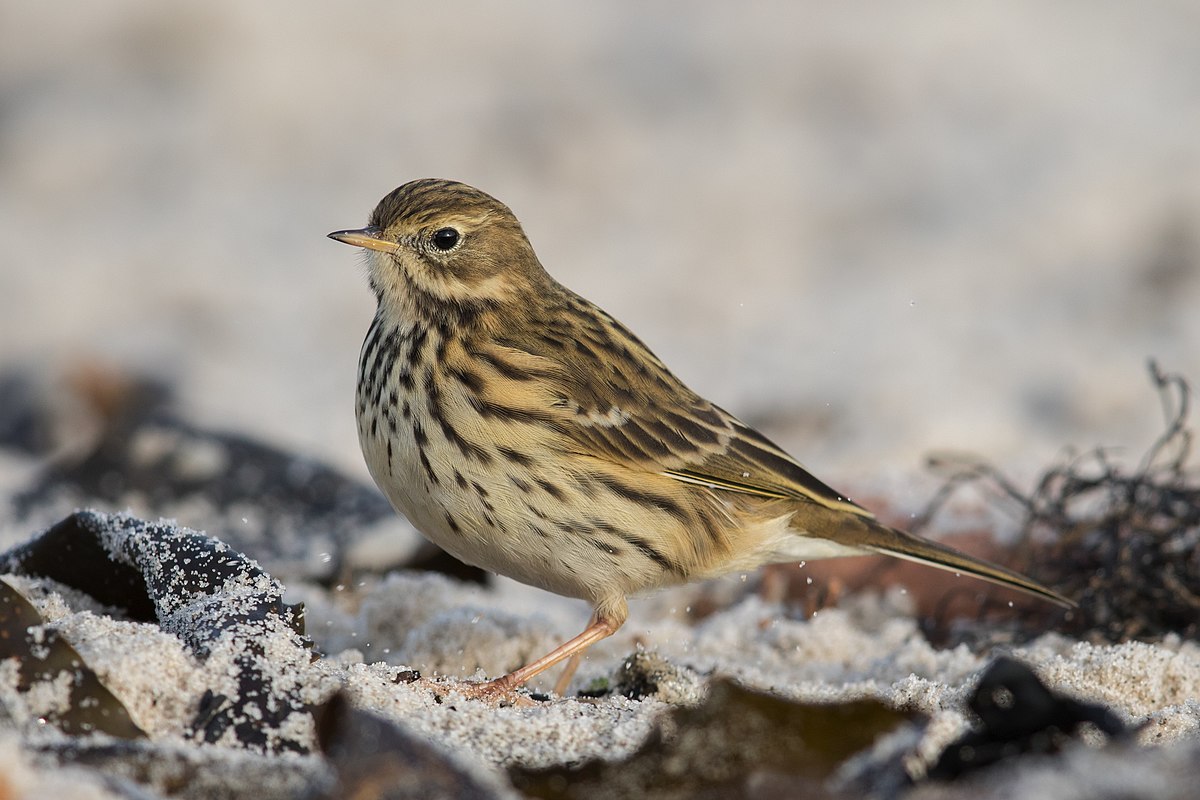
one note fast medium (1-5 KHz) .
Single note, possibly rising at the end. (Or: long 4 second phrases, gradually louder then softer; swoopy or whoopy.) Sings in flight. BirdID: Song very similar to Rock Pipit, but tone less full and more brittle. Lacks Rock Pipit's closing trill, and beginning is less "hammering". - but what does a rock pipit sound like?
Song: Ähnlich Baumpieper, aber ohne Zia-Rufe. Vollständiger Gesang nur in flatterndem Singflug. Lange Strophen. Mittelstück meist zart und hoch [Link]Song very similar to Rock Pipit, but tone less full and more brittle. Lacks Rock Pipit's closing trill, and beginning is less "hammering". [Link] |
♫
|
| simple rhythmic | ||
| trill, whoop | ||
, Jura, Scotland.JPG) Tree pipit ■■
Tree pipit ■■ |
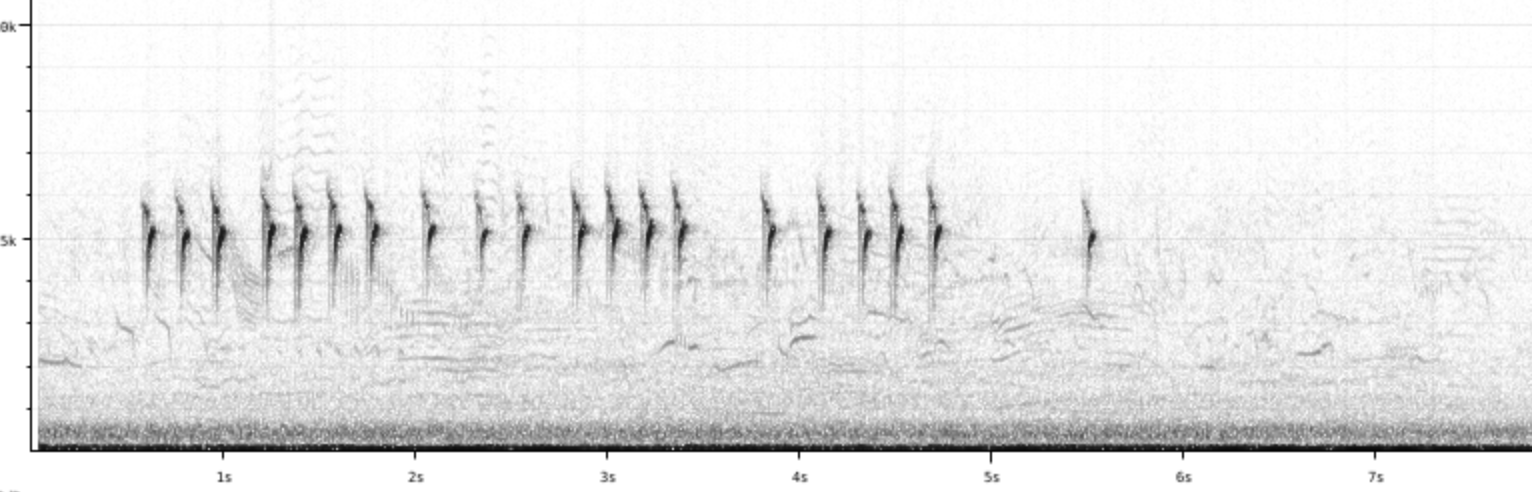
trill, whoop simple rhythmic slow medium (1-5 KHz) .
Reminds me of a greenfinch - series of trills, whoops and other sounds with a long pause
Song: Mehrere unterschiedliche Tonreihen aneinandergefügt. Zuletzt „zia zia zia ziah“. Zuerst auf Baum sitzend, dann im Singflug, Zia-Rufe während Gleitflug (Fallschirmvogel) [Link]Song characteristic. Starts with a series of Chaffinch-like "che-che-che" which gives way to long, descending, "ricocheting" whistling notes (especially at the end of song-flight). [Link] |
♫
|
| stereotype melodic | ||
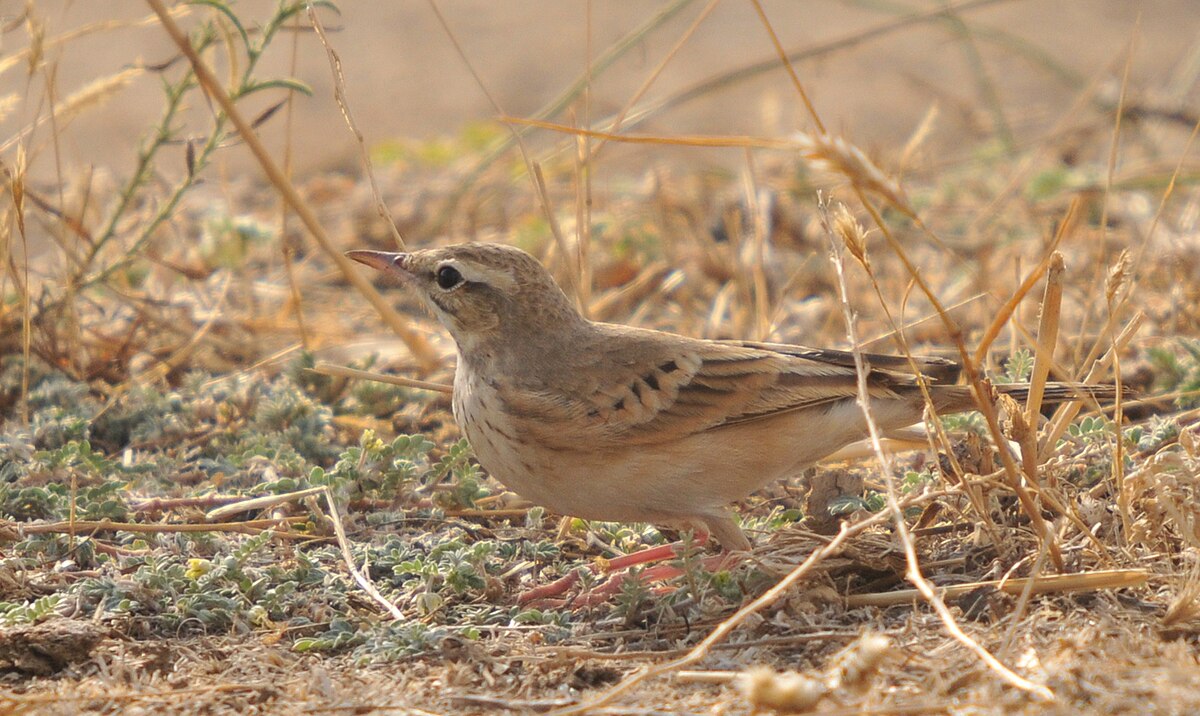 Tawny pipit ❑❑
 |
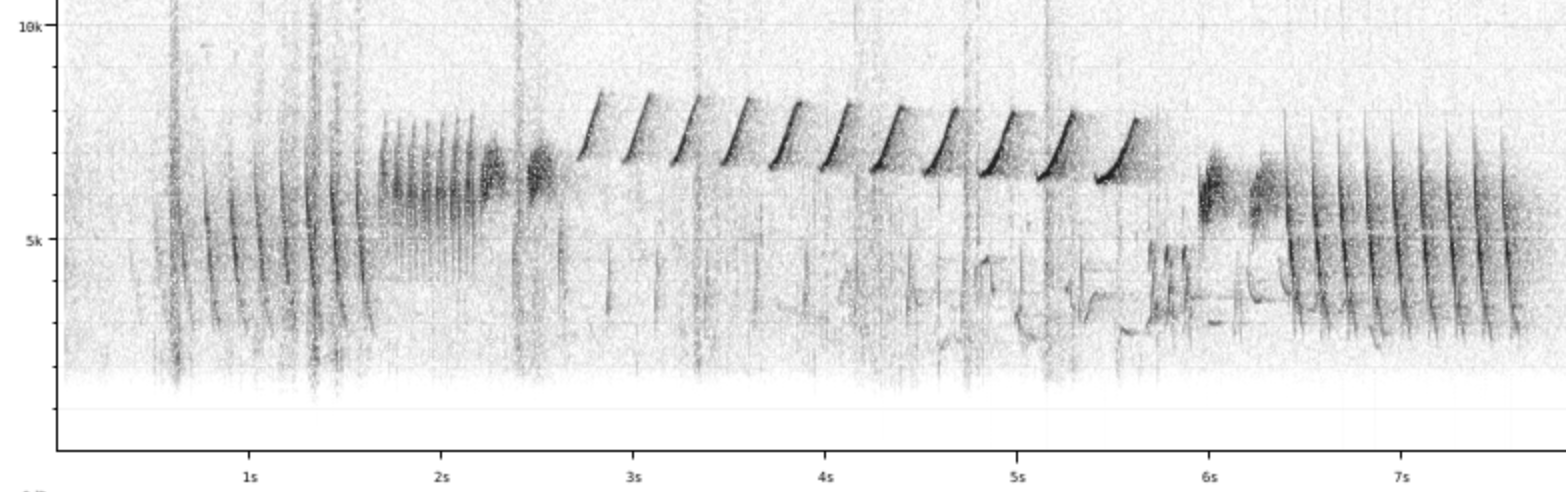
stereotype melodic slow medium (2-6 KHz) .
Song simple. Consists of three notes merged in a short, continuous and ringing "tsee-ro-ee", given every 1-2 seconds.
Song: Song simple. Consists of three notes merged in a short, continuous and ringing "tsee-ro-ee", given every 1-2 seconds. Timbre is wagtail-like and intonation variable, but consistent in each song. Flight call similar in timbre, like a cross between Yellow Wagtail and House Sparrow (song). Thinner and more wagtail-like than Richard's Pipit. [Link] |
♫

|
| sings 30 seconds or longer | ||
| mimicry | ||
 Red-backed shrike ■■
 |
mimicry sings 30 seconds or longer slow medium (1-5 KHz) .
Reminds me a bit of a Rohrsaenger/Feldlerche with its short, varied bits. BirdID says Song surprisingly varied with many expert imitations of small passerines, interwoven with bell-like ringing and dry chirping sounds. May be confusing and hard to identify if bird not seen. Song not very loud, but phrases can be very long. 'May be confusing' - tell me about it! What's not confusing about trying to tell apart 422 species of Swiss birds!
Song: Call a hard "check check" (like striking two rocks together), and a variable nasal "twee" Song surprisingly varied with many expert imitations of small passerines, interwoven with bell-like ringing and dry chirping sounds. May be confusing and hard to identify if bird not seen. Song not very loud, but phrases can be very long. [Link] |
♫

|
 Jackdaw ■■
 |
No details but a Xeno-Canto recording.
Call: Nabu: Ein hartes „kjack“ oder „schack“ sowie ein raues „tschräh“ hört man am häufigsten von der Dohle. Sie ist ein begabtes Stimmwunder und hat eine Vielzahl von Lauten und Imitationen auf Lager. [Link]meist angenehm klingende, kurze Rufe: "kja", oft mehrfach wiederholt, härteres "kjack!" oder gezogenes "kjaar". [Link] | ♫ |
| simple rhythmic | ||
 Savi's warbler ■■
 |
simple rhythmic fast medium (3-5 KHz) .
Endless buzzing like an insect or machinery. Lower tone than Feldschwirl.
Song: Gesang ähnlich obiger Art [Feldschwirl]. Tiefere Tonlage, höhere Frequenz. Strophen meist kürzer
[Link]Song insect-like and high-pitched. A monotonous stream of even clicks similar to the whirring of a sewing machine. Song most similar to Grasshopper Warbler but faster (each click hard to distinguish), and lower pitched with less, ringing quality, due to less prominent high frequencies. At closer range a Robin-like, accelerating ticking is heard, introducing the actual song. [Link] |
♫

|
| stereotype melodic | ||
| trill | ||
 Common reed bunting mllllm ■■
 |
trill stereotype melodic slow high (3-7 KHz) .
General: At Fanel I heard sequences of whistles and trills (buzzes?), just a few notes, but wandering up and down: m h lll, or l m hhh m. Listen to recording of 2022-06-25 13.37.28 Song: Oft 4 Noten: mlhl [Link]BirdID: A short sequence of 3-5 brittle and buzzing sounds, repeated consistently with marked pauses. Last sound in phrase often has a conclusive feel, but not always. [Link]
Song: Song variable between individuals and breeding status: A short sequence of 3-5 brittle and buzzing sounds, repeated consistently with marked pauses. Last sound in phrase often has a conclusive feel, but not always. Paired males sing slower than unpaired. Unpaired male song also more contracted, making the pauses between each phrase stand out. [Link] |
♫

|
 Long-tailed tit Diddly doot-doot-doot-doot hhmll ■■
 |
stereotype melodic slow high (3-9 KHz) .
General: Meistens hört man das Pfief...chk..chk..Pfief von den Rufen, siehe dort. Song: Nabu: Der Gesang ist ein feines Trillern und selten zu hören (someone at XenoCanto compares it to a blue tit trill). [Link] Song: Song: high tsee-tsee; funny downhill trill Song: Rapid, continuous, randomly composed sequence of bubbling,chirping sounds. [Link] |
♫

|
Practice
♫
Answer
Long-tailed tit XC572437 - Long-tailed Tit - Aegithalos caudatus - song.
♫
Answer
Savi's warbler XC710242 - Savi's Warbler - Locustella luscinioides - song.
♫
Answer
Tree pipit XC570506 - Tree Pipit - Anthus trivialis - song.
♫
Answer
Icterine warbler XC772854 - Icterine Warbler - Hippolais icterina - song, recorded in Sweden.
♫
Answer
Eurasian sparrowhawk XC818384 - Eurasian Sparrowhawk - Accipiter nisus - call, Brandenburg, Germany.
♫
Answer
Common stonechat XC633658 - European Stonechat - Saxicola rubicola - song.
♫
Answer
Eurasian curlew XC625195-grosser brachvogel, michal jezierski, uk.
♫
Answer
Common reed bunting XC723277 - Common Reed Bunting - Emberiza schöniclus - song.
♫
Answer
Meadow pipit XC722919 - Meadow Pipit - Anthus pratensis - song.
♫
Answer
Bluethroat XC131272 - Bluethroat - Luscinia svecica volgae - song.
♫
Answer
Western marsh harrier XC884134 - Western Marsh Harrier - Circus äruginosus - whooping, swooping call.
♫
Answer
Water rail XC943956 - Water Rail - Rallus aquaticus - squeaky call.
♫
Answer
Little grebe XC648836 - Little Grebe song in South Africa, sounds like what I heard in Altstätten - Tachybaptus ruficollis capensis.
♫
Answer
Spotted flycatcher Sounds to me like any other 1-note call so far
♫
Answer
Great reed warbler XC661392 - Great Reed Warbler - Acrocephalus arundinaceus - song.
♫
Answer
Whinchat XC775379 - Whinchat - Saxicola rubetra - song, recorded in Sweden.
♫
Answer
Western yellow wagtail XC721189 - Western Yellow Wagtail - Motacilla flava cinereocapilla - song.
♫
Answer
Red-backed shrike XC570644 - Marsh Warbler - Acrocephalus palustris - song.
♫
Answer
Garden warbler XC728379 - Garden Warbler - Sylvia borin - song.
♫
Answer
Common grasshopper warbler XC557238 - Common Grasshopper Warbler - Locustella naevia - song.
♫
Answer
Sedge warbler XC661577 - Sedge Warbler - Acrocephalus schönobänus - song.
♫
Answer
Eurasian reed warbler XC653035 - Eurasian Reed Warbler - Acrocephalus scirpaceus - song.
♫
Answer
Tawny pipit XC726515 - Tawny Pipit - Anthus campestris - song.
♫
Answer
Common snipe XC812599 - Common Snipe song, one note, 4x per sec - Gallinago gallinago.
♫
Answer
Jackdaw Jackdaw, etc in Illnau.
Birds with insufficient information about songs/calls
| Bird | Description | Audio |
 Green sandpiper ■■
Info about calls, not song!!
Green sandpiper ■■
Info about calls, not song!!
|
Call: Sharp, penetrating calls. Display call a high-pitched "kee-kleeoo-eet", continuously repeated with a wave-like motion in pitch. Other common calls have similar timbre and tone with different phrasing like; "klooeett -klee-klee-klee-klee-klee" and a rising pitch. [Link] | |
| non-musical | ||
 Great egret ■■
Info about calls, not song!!
Great egret ■■
Info about calls, not song!!
|
non-musical slow low (1-3 KHz) .
Partly an awkward quack: uck uck. Rattles. Deep-toned urrr. Higher-toned trill.
Call: In colonies various harsh calls like a dry, and mechanical "kerrrrrrr", and a very nasal "geet" or "ga-geet ga-geet" are heard. [Link] |
♫

|
 Common greenshank ■■
 |
Song: Song a clear disyllabic "cloo-eeee", repeated in cycles but each phrase clearly separated. At close range a short creaky sound is audible (between each phrase). Redshank may sing in a slightly similar way, but in continuous, linked phrases. [Link] | |
 Red-throated pipit
 |
Song: Song: Like a mix of Meadow Pipit and Tree Pipit, with typical staccato, and uneven rhythm (extra "beats"). [Link] | |
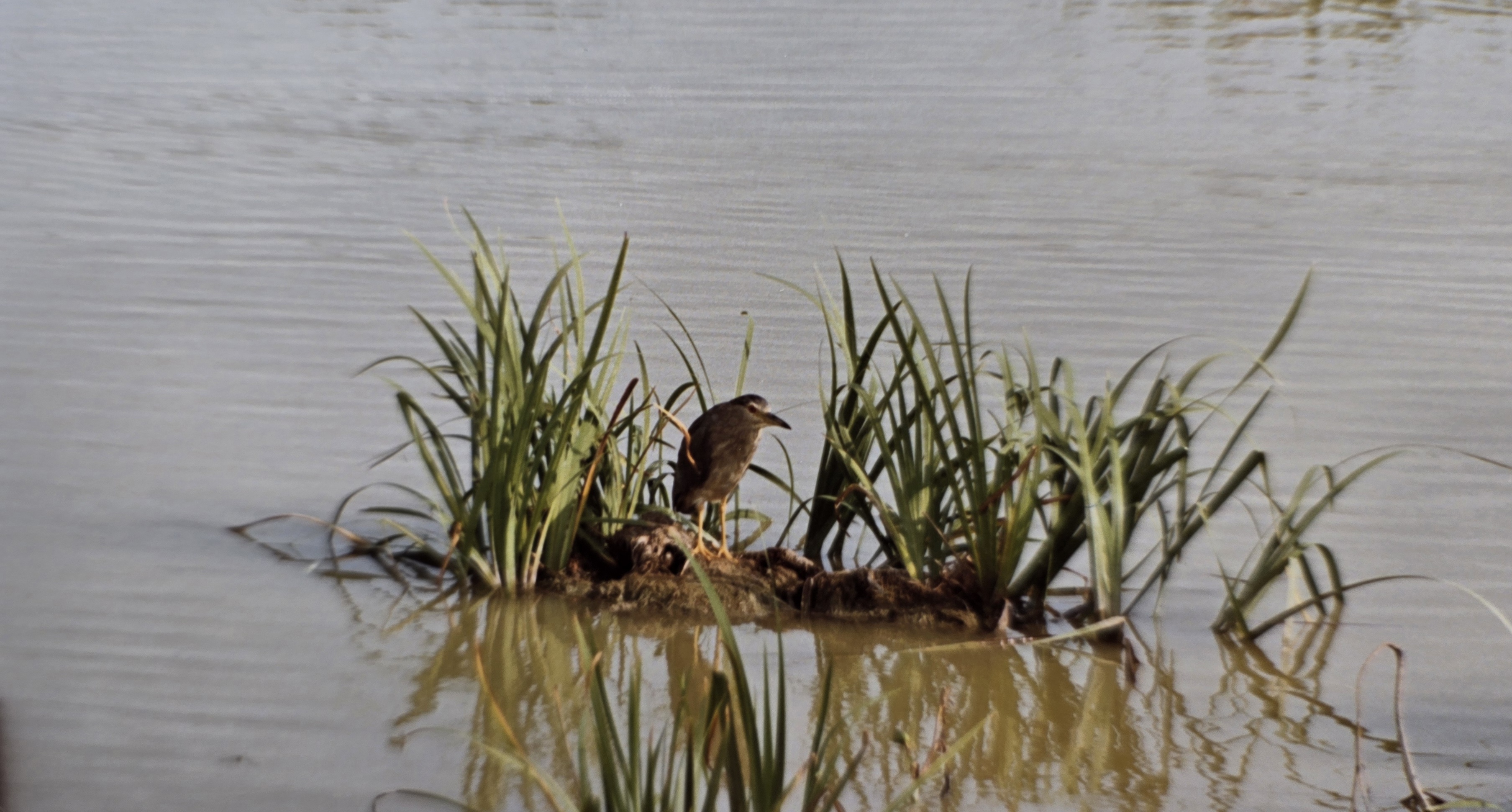 Black-crowned night-heron ■■
Info about calls, not song!!
Black-crowned night-heron ■■
Info about calls, not song!!
|
Call: Most commonly hear call is a nasal, soft croaking "roack", like cross between Raven and frog. [Link] | |
 Red-footed falcon ❑❑
Info about calls, not song!!
Red-footed falcon ❑❑
Info about calls, not song!!
|
Call: Flight call very similar to Hobby, a wryneck-like series of "kew kew kew kew", each call falling rapidly in pitch. Sometimes given in a harsher more staccato version. Very vocal at colony with various squeaky and whimpering begging calls. [Link] | |
| Ringed teal Info about calls, not song!! |