bird-song.ch's forest birds
bird-song.ch Waldvögel
Practice
| Bird | Description | Audio |
| improvised melodic | ||
| flourish | ||
 Common blackbird lmh ■■
 |
flourish improvised melodic slow low-high (1-7 KHz) .
Other: Gut zu erkennen ist die Amsel.
Sie singt melodiös, erklärt Heller, «zuerst flötend und dann gegen Schluss so schnirpslig».
Die Amsel singe gerne dort, wo sie gut gehört werde, etwa vor Hauswänden, die den Schall nicht schlucken.
Ich wollte schauen was schnirpslig heisst, aber diese ist diese einzige Verwendung, die Google kennt!
Der flötende Teil ist relativ tief, 1.5-3 KHz, der schnirpslige aber 2.5-7 KHz.
(Schnirpslig ist ein schones Wort das der Redner erfunden hat - Google findet nur diese eine Webseite mit dem Wort!) [Von der SRF Webseite:]
Song:  Melodisch flötend dazwischen auch zerquetschte Töne. Die Elemente werden nicht wiederholt. Singt von Singwarte aus. Ca. 100 verschiedene Strophentypen.
[Link] Melodisch flötend dazwischen auch zerquetschte Töne. Die Elemente werden nicht wiederholt. Singt von Singwarte aus. Ca. 100 verschiedene Strophentypen.
[Link] One of the most appreciated song birds. Very melodious and resonant, with long mellow notes and a large register. Less high pitched sounds than Song Thrush, and seldom repeats a phrase. Timbre fuller than both Song Thrush and Mistle Thrush. Well defined pauses between phrases, giving the song a relaxed pace. [Link] One of the most appreciated song birds. Very melodious and resonant, with long mellow notes and a large register. Less high pitched sounds than Song Thrush, and seldom repeats a phrase. Timbre fuller than both Song Thrush and Mistle Thrush. Well defined pauses between phrases, giving the song a relaxed pace. [Link] | ♫ |
| stereotype melodic | ||
 Common chaffinch mmmmmmmmLlhH ■■
 |
stereotype melodic slow medium (1-5 KHz) .
General: A medium long phrase that slowly descends (I think of it bouncing down a staircase), then usually takes a
jump up before a final descent. Song:  In Bavaria the mnemonic for the typical chaffinch song is: „Ich hätte gerne ein Weizenbier“,
i.e. "I'd like another Weizenbier". [DasHaus]
Song: Song a falling 5 sec. phrase "zitt-zitt-chep-chepp-chu-chu-churrurrwitt". Structurally similar to Willow Warbler, but with a conclusive, ascending and accented ending, and with a much harder, finch-like, timbre. [Link] In Bavaria the mnemonic for the typical chaffinch song is: „Ich hätte gerne ein Weizenbier“,
i.e. "I'd like another Weizenbier". [DasHaus]
Song: Song a falling 5 sec. phrase "zitt-zitt-chep-chepp-chu-chu-churrurrwitt". Structurally similar to Willow Warbler, but with a conclusive, ascending and accented ending, and with a much harder, finch-like, timbre. [Link] | ♫ |
| simple rhythmic | ||
 Great tit llhllh ■■
 |
simple rhythmic slow medium (1-5 KHz) .
Said to have a repertoire as a species of 50 or more different songs, albeit simple ones, up to 10 per individual.
Females prefer a male with a large repertoire. One two-note song sounds like a squeaky bed.
Song: Nabu: Die erste Vogelart, die wir im Jahr hören, ist meistens die Kohlmeise mit ihrem typischen Läuten: "Zip Zäh" oder "Zip zip Zäh". [NABU Experte Lars Lachmann bei Deutschlandfunk Nova]Song highly variable, but usually consisting of two to three notes repeated in a motif. Same birds have many different motifs but generally repeat them many times before switching. Identified by its timbre and often metallic resonant quality, more than by actual phrasing (which is very variable). Often includes buzzing sounds in song. [Link] | ♫ |
| improvised melodic | ||
| fluting | ||
 European robin ■■
 |
fluting improvised melodic fast high (3-9 KHz) .
General: High pitched but also going low, e.g. 2.9-7.7 KHz. Song: Only for a short period in late summer while they are moulting and inconspicuous do robins stop singing. Both sexes sing. [RSPB article]
Song: Song medium to very high pitched, with mostly clear tones with a liquid quality. Timbre reminiscent of Wren or Dunnock, but with a much more varied structure and tempo. Pitch ranges from very high to low, almost thrush-like, notes. No recognizable motifs. Often ends on a rising or falling pitch, giving it a "Chinese" accent. [Link] |
♫

|
| mimicry | ||
 Black cap warbler hml ■■
 |
mimicry improvised melodic fast medium (2-5 KHz) .
They sometimes sing like a blackbird on speed - also non-stereotypic, seemingly improvised,
in short bursts.
Our local guy ends most of his songs with the same seven notes, which I find a good way to confirm the identification. In Ticino we often heard the 'Leiern' sound - the warblers would sing just the first 3 notes of a longer song, then stop. The order varied; high-medium-low I call 'Figaro' as in the opera, low-high-medium 'whiskey bar', as it sounded to me like the Kurt Weill lyrics, 'O-oh-show me-the-way to-the-next whis-ke-bar' - but the warbler usually stopped after 'way' or 'next' The British authors of The Sound Approach claim to hear 'a warblel and a whistle'.
Song: Mit schwätzendem Vorgesang, (kann auch kurz sein oder ganz fehlen) der dann in klare, kräftige, zum Ende hin in wehmütige Flötentöne übergeht (Überschlag)
[Link]Song pleasing, varied and loud. Sometimes very similar to Garden Warbler. A typical phrase starts with soft, staccato chattering and mimicry, which after a few seconds changes to a much louder, pure and resonant stream of notes for about 3-5 seconds. No fixed motif, but may end phrases with recurring notes. Often deviates from the characteristic type of song, and identification from song alone may be impossible. May sing first part of song for extended periods without ever reaching the characteristic ending. [Link] | ♫ |
| simple rhythmic | ||
 Common chiffchaff ■■
 |
simple rhythmic slow high (3-9 KHz) .
Seems to consist of 3 notes repeated randomly, occasionally just 2 notes.
Though NABU.de says they stop singing at the end of July, I do hear their 3-note song occasionally in October,
but just one or two repetitions.
Song: [Translated from German:] From the middle of August till the end of September the chiffchaff offers regular autumn song. [Link]Lange Reihen (6-20) von „zilp-zalp“-Rufen, meist abwechselnd in Tonhöhe. (Als bemühe sich der Sänger vergeblich den ersten Ton wieder zu treffen , ohne jedoch weit zu verfehlen.) „Zins zahl, Zins zahl, zahl Zins, Zins Zins zahl“ („Zins“ etwas höher als „zahl“) [Link]Song a very distinct: "chiff-chaff-chiff-chiff-chaff-chiff", in a regular clock-like rhythm. Each syllable at seemingly random pitch, but no large intervals tonally. Sometimes "get stuck" at one note. [Link] | ♫ |
 weiblich.jpg) Common firecrest Noten vom 'Sommer' steigen wie die Temperaturen ■■
Common firecrest Noten vom 'Sommer' steigen wie die Temperaturen ■■ |
simple rhythmic fast high (6-8 KHz) .
Very high rhythmic repetition of about 3 seconds
Song: Wie [beim Wintergoldhähnchen] aber auf gleicher Tonhöhe bleibend. [Link]Song: Similar in timbre to Goldcrest, but much more monotonous. [Link] |
♫

|
| improvised melodic | ||
| swoop | ||
 Song thrush mhHL ■■
 |
swoop improvised melodic slow low-high (2-9 KHz) .
Paced like a blackbird, humorous mix of elements like a nightingale. Huge range, elements from 2-5 KHz, others 6.5-9 KHz. Can sing for up to 50 minutes, and a male may know 100 melodies in its repertoire.
Song: Klangfarbe ähnlich obiger Art [Amsel], aber jedes Element 2-4mal wiederholt, Pausen zwischen den Phrasen.(klingt oft wie „Philipp“, oder „Judith“) Einzige Drossel unseres Gebietes die diese Wiederholungen macht. Singt oft nicht von Baumspitze aus, sondern aus dem Geäst.
[Link] | ♫ |
| stereotype melodic | ||
 Goldcrest W=Winter=v.a. runter, dann wieder hoch, plus melodischer Schluss ■■
 |
stereotype melodic slow high (6-8 KHz) .
 Vogelwarte.ch says high-pitched song that gently rises and falls. This song starts out with a repeated note. [Link]
Song: Kurze Reihe von sehr hohen, leisen Tönen in auf-absteigender Tonhöhe, an das „W“-im Namen erinnernd. [Link]Song: a very high-pitched, undulating series of arpeggiated notes moving down and up again, repeated 4-5 times ending with a marked "conclusion" (like "trying to start a tiny motor and failing"). Timbre of song similar to contact call. [Link] Vogelwarte.ch says high-pitched song that gently rises and falls. This song starts out with a repeated note. [Link]
Song: Kurze Reihe von sehr hohen, leisen Tönen in auf-absteigender Tonhöhe, an das „W“-im Namen erinnernd. [Link]Song: a very high-pitched, undulating series of arpeggiated notes moving down and up again, repeated 4-5 times ending with a marked "conclusion" (like "trying to start a tiny motor and failing"). Timbre of song similar to contact call. [Link] |
♫

|
| simple rhythmic | ||
| trill | ||
 Eurasian blue tit h ll ■■
 |
trill simple rhythmic slow high (3-9 KHz) .
General: High-pitched, often descending (hhll), occasionally ascending. "Christina compares it to a ping-pong ball dropping. [In Januar singt die Kohlmeise als erster Vogel in Deutschland], dann kommt die Blaumeise dazu. Song: Song: Characteristic, clear, high-pitched, vibrating call. Usually introduced by a couple of accenting syllables, followed by ringing vibrating notes: "ti ti chuhuhuhuhuhuhuhuhuhu". [Link] | ♫ |
 Common wood pigeon ■■
 |
No details but a Xeno-Canto recording.
Song: Gu-guh-guh-guh guh-gugugu –gu. „ Hansrüdi wo geisch hi, ga Thun, was ga mache, ga Mähl hole, wiviel, es mutt“
[Link]Song a 5 syllable cooing phrase, with emphasis on first syllable (1.st also higher pitched). Fift syllable functions as an introduction to next phrase. [Link] | ♫ |
| stereotype melodic | ||
| trill, rasp | ||
 European greenfinch h m m ■■
 |
trill, rasp stereotype melodic fast low-high (2-7 KHz) .
General: Sequence of 4-6 rhythmic elements at different pitches.
A sort of trill is often start or end of the sequence (can also be a call!),
and there are slides.
Song: Song composed of various sequences of linked sounds, repeated in a vibrating manner; "trrrrrrrrr", "chechechecheche". Sometimes resembles Brambling when making the wheezy "rrrrrrrrr" sound, but differs in being harsher and by "pulling" the pitch downwards (or sometimes upwards) at the end. [Link] | ♫ |
| simple rhythmic | ||
| slur | ||
 Coal tit lhlhlhl ■■
 |
slur simple rhythmic fast high (3-9 KHz) .
Higher-pitched than great tit,
with more slurs instead of pure notes.
Usually 2 or 3 notes in varied order.
To me it seems they have a repertoire of songs, like their 'big brothers', the great tits.
Song: Song: Various repeated motifs, consisting of two to three notes with alternating accents. Slightly similar to Great Tit, but faster, not so metallic and with a less full tone. Can be mistaken for Marsh Tit when singing single or double notes, but tone is softer and notes more clearly separated (if disyllabic). [Link] | ♫ |
| stereotype melodic | ||
 Dunnock ■■
 |
stereotype melodic fast high (4-8 KHz) .
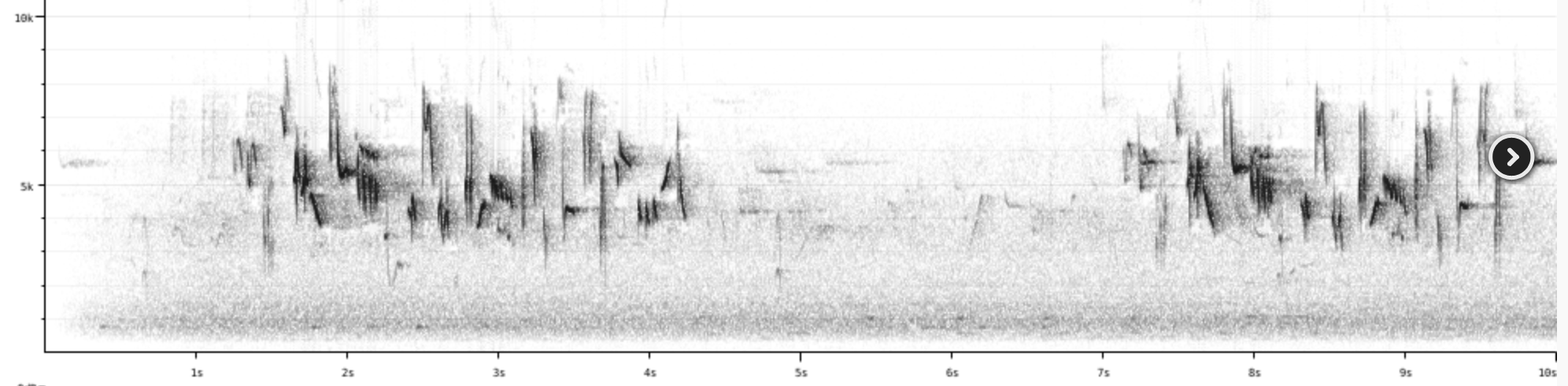
General: High-pitched, repetitive but complex little tune, 3 seconds long with about 15 notes rising and falling, falling at the end, then 3 second pause. Song:  Melodisch, slowly rising, roughly like black-cap warbler, which I guessed in the bird-song.ch quiz. [Link]Schnell wie ein Rotkehlchen aber nicht herunter plätschernd, hoch und runter zwischen 3 und 7 kHz. [Link]
Song: Singt schon im Vorfrühling. Klangfarbe ähnlich Gartenbaumläufer. Aufbau ähnlich Zaunkönig, aber ohne Triller. Viel leiser und dünner.
[Link]Song a fast and evenly paced, high pitched stream of clear notes. No consistent phrasing. Similar in timbre to Robin, but does not vary tempo or pitch nearly as much. Often compared to the sound of a squeaky wheelbarrow. [Link] Melodisch, slowly rising, roughly like black-cap warbler, which I guessed in the bird-song.ch quiz. [Link]Schnell wie ein Rotkehlchen aber nicht herunter plätschernd, hoch und runter zwischen 3 und 7 kHz. [Link]
Song: Singt schon im Vorfrühling. Klangfarbe ähnlich Gartenbaumläufer. Aufbau ähnlich Zaunkönig, aber ohne Triller. Viel leiser und dünner.
[Link]Song a fast and evenly paced, high pitched stream of clear notes. No consistent phrasing. Similar in timbre to Robin, but does not vary tempo or pitch nearly as much. Often compared to the sound of a squeaky wheelbarrow. [Link] |
♫
|
| non-musical | ||
| cawing, mimicry | ||
 XXXX Eichelhaeher close-up.JPG) Eurasian jay ■■
Eurasian jay ■■ |
cawing, mimicry non-musical fast medium (1-5 KHz) .
Harsh crow-like call, or quiet questioning, 'grumbling', or plaintive cries.
Song: Quiet and varied subsong with mimicry, resembling a small passerine heard from both sexes. [Link] |
♫
|
| improvised melodic | ||
| whoop, mimicry, weird | ||
 Common starling ■■
 |
whoop, mimicry, weird improvised melodic slow medium (1-5 KHz) .
I find their individual song amusing, with its (long) whoops and weird noises.
As a group, they're just noisy!
Song: Song a highly varied mix of falling whistles, bill-clappering and various masterful mimicry. [Link] | ♫ |
| trill | ||
 Eurasian wren ■■
 |
trill improvised melodic fast high (3-9 KHz) .
High-pitched, melodic, very variable with many trills and whistles. At least 3 seconds long, switching low to high 6 times or more, always a trill in the mix. Der deutsche Kalendar für 2025 sagt, sie könnten ab Drei-Königs-Tag singen, d.h. ab 6. Januar. nabu.de sagt ab 1. Februar, Drei-Königs-Tag ist eventuell nur wegen dem Namen Zaunkönig? Song: Auffällig laut für den kleinen Vogel. Singt auch im Winter! Schmetternd, mit einem bis zwei Trillern als letztes oder vorletztes Glied.
[Link]Song surprisingly loud. A high-pitched stream of clear notes resembling Robin and Dunnock in timbre. Differs from those in showing frequent shifts in pitch with much larger register than Dunnock, and by the unique, numerous, interspersed long trills. [Link] |
♫

|
| non-musical | ||
| drumming | ||
 Great spotted woodpecker ■■
 |
drumming non-musical fast low (1-3 KHz) .
Song: Other: ‘Drumming’ is the sound that Great Spotted Woodpeckers make by hammering their bills against dead wood 10-20 times over 2-3 seconds. The sound resonates in the dead wood and can be heard over large distances. This drumming acts as an advert and is used by Great spotted Woodpeckers and other woodpecker species instead of a song. [From the GardenBird web site] Nabu: Manchmal, bei strahlendem Sonnenschein, fangen die Spechte schon im Dezember an zu trommeln. [NABU Vogel des Jahres 1997] Call: Nabu: Das bekannteste Geräusch des schwarz-weißen Spechtes ist aber wohl sein kurzes, aber häufiges Trommeln. [Link]  In a sonogram I can see about 13 taps in just over half a second, but you can never distinguish so many.
It's short but intense, and the second half trails off,
especially contrasted with the constant drumming of the three-toed woodpecker. [[Listen here.]]
Call: Typically it lasts 0.5 seconds, sometimes slightly longer. Contact call frequently hear throughout the year. A short hiccup "kek", sometimes in series. When excited this may escalate into a trill. [Link] In a sonogram I can see about 13 taps in just over half a second, but you can never distinguish so many.
It's short but intense, and the second half trails off,
especially contrasted with the constant drumming of the three-toed woodpecker. [[Listen here.]]
Call: Typically it lasts 0.5 seconds, sometimes slightly longer. Contact call frequently hear throughout the year. A short hiccup "kek", sometimes in series. When excited this may escalate into a trill. [Link] |
♫

|
| simple rhythmic | ||
 Marsh tit 1-Noter, Sumpf laenger als Kohl hhmmlll ■■
 |
simple rhythmic fast low-high (2-10 KHz) .
General: Higher-pitched than great tit, sometimes repetitive 1- and 2-note tunes like them, sometimes simple melodies, usually pure, sometimes chirpy or raspy. Song: 'Song: A simple one or two note call repeated in series. Usually rising slightly in pitch, and with a "liquid" quality.'. [Link] At bird-song.ch it's hl-rest-hl, or 7-8 2-noter swoops. bird-song.ch names lh-break-hl as a pistjä call and also has a series of 7 or 8 falling 'swoops'. [Link]
Song: Klapperlied - 6-8 Noten 'angeschlagen'Klapperlied. Reihe (6-8) weich angeschlagene Töne mittlerer Höhe. Ähnlich der Klappergrasmücke aber weicher. (Sumpf ist weich) Oft auch Rufe wie „psja“ zu hören. Ziemlich scharf u. gepresst. [Link] At bird-song.ch it's hl-rest-hl, or 7-8 2-noter swoops. bird-song.ch names lh-break-hl as a pistjä call and also has a series of 7 or 8 falling 'swoops'. [Link]
Song: Klapperlied - 6-8 Noten 'angeschlagen'Klapperlied. Reihe (6-8) weich angeschlagene Töne mittlerer Höhe. Ähnlich der Klappergrasmücke aber weicher. (Sumpf ist weich) Oft auch Rufe wie „psja“ zu hören. Ziemlich scharf u. gepresst. [Link] |
♫

|
| one note | ||
 European nuthatch 6x steigt, wie 6-Buchstaben 'Kleber' ll ■■
 |
one note fast medium (1-5 KHz) .
Song: Song a simple series of loud notes [Link]
Song: Other: The song is very variable, with rising and falling notes, sometimes with repetition of excitement calls. [Link] The song is a slow whistled pee-pee-pee with many variants, including a faster version, and may be intermingled with the call. [Link] The song is a slow whistled pee-pee-pee with many variants, including a faster version, and may be intermingled with the call. [Link]Other: Song a simple series of loud notes. [Link] Song a simple series of loud notes. [Link] |
♫

|
 Common buzzard ■■
 |
No details but a Xeno-Canto recording.
Call: Most typical call a wailing, mewing "peeoooo". Quite similar to Rough-legged Buzzard, but the pitch falls more rapidly and is then sustained for the last part of the call. [Link] | ♫ |
| stereotype melodic | ||
 Redwing down 6+chattering ■■
 |
stereotype melodic slow medium (3-5 KHz) .
Song delivered in two parts. First a simple, melodic phrase of 3 - 6 notes, usually followed by a more silent, indistinct, fast and less melodic, chattering sequence. First part highly variable from place to place, but constant in individuals. [Link]
Song: Song delivered in two parts. [Link] |
♫

|
| simple rhythmic | ||
| drumming | ||
 Lesser spotted woodpecker ■■
 |
drumming simple rhythmic fast medium (0-4 KHz) .
Drumming in lieu of song. Fast, constant.
Call: Most common call a series of merlin-like "ke-ke-ke-ke-ke-ke" given at fairly stable pitch, and less hoarse than Merlin. Differs from Wryneck in lacking marked rise and fall in pitch, and being less plaintive. [Link] |
♫

|
| one note | ||
 Western bonelli's warbler ■■
 |
one note fast high (3-7 KHz) .
Single note repeated 6 or 8 times quickly in half a second
Song: Reihe(5-10) von gleichhohen Schlägen, ähnlich dem Schwirren der obigen Art [Waldlaubsänger], aber langsamer, einzelne Töne deutlich getrennt, etwas scheppernd. Kann mit Klappergrasmücke verwechselt werden) [Link] |
♫

|
| non-musical | ||
| cawing, mimicry | ||
 Spotted nutcracker ■■
 |
cawing, mimicry non-musical slow low-high (1-10 KHz) .
Grehh, grehh, grehh!!
Song: Song a quiet improvisation of whistling and clappering sounds, interspersed with mimicry of other birds. [Link] |
♫
|
| simple rhythmic | ||
| trill, whoop | ||
, Jura, Scotland.JPG) Tree pipit ■■
Tree pipit ■■ |
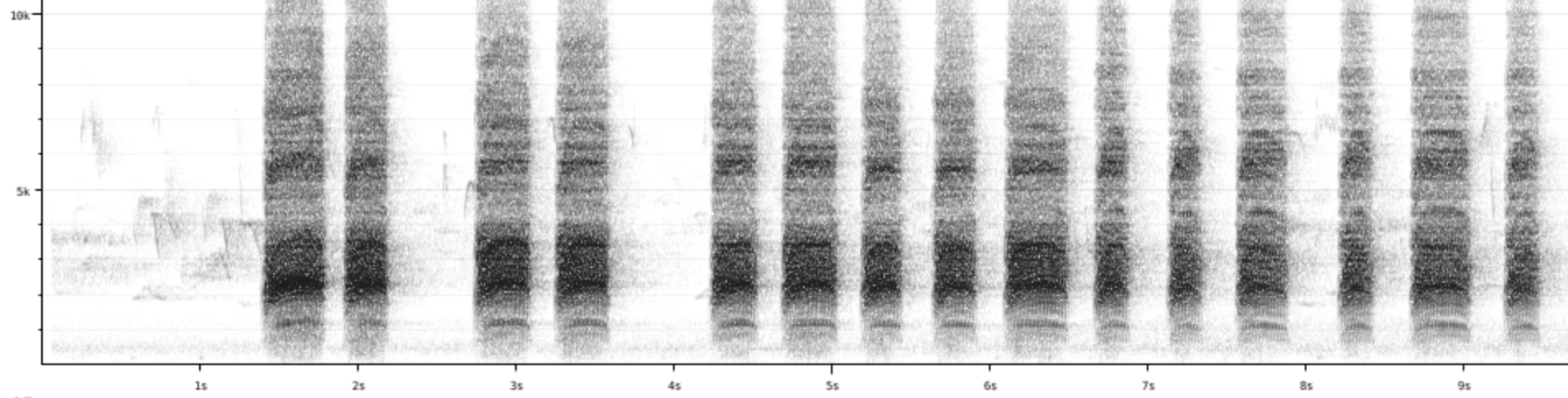
trill, whoop simple rhythmic slow medium (1-5 KHz) .
Reminds me of a greenfinch - series of trills, whoops and other sounds with a long pause
Song: Mehrere unterschiedliche Tonreihen aneinandergefügt. Zuletzt „zia zia zia ziah“. Zuerst auf Baum sitzend, dann im Singflug, Zia-Rufe während Gleitflug (Fallschirmvogel) [Link]Song characteristic. Starts with a series of Chaffinch-like "che-che-che" which gives way to long, descending, "ricocheting" whistling notes (especially at the end of song-flight). [Link] |
♫
|
| trill | ||
 Lesser whitethroat ■■
 |
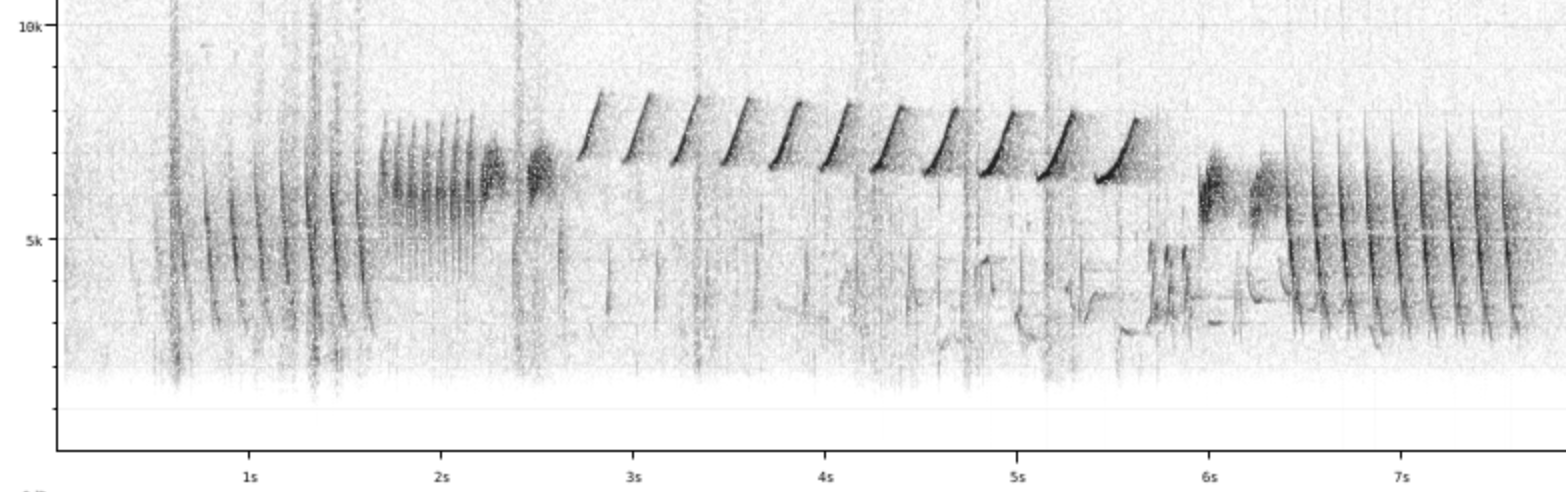
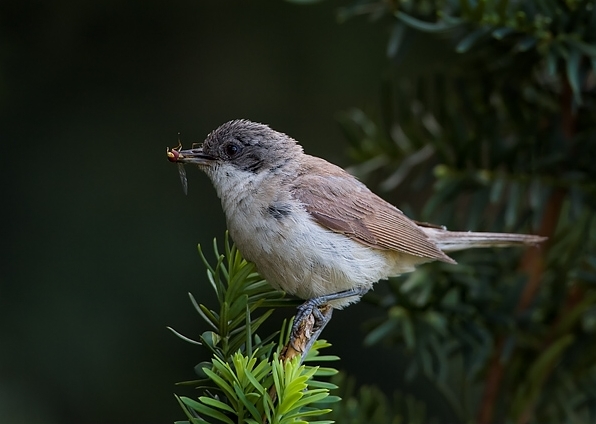
trill simple rhythmic slow medium (3-5 KHz) .
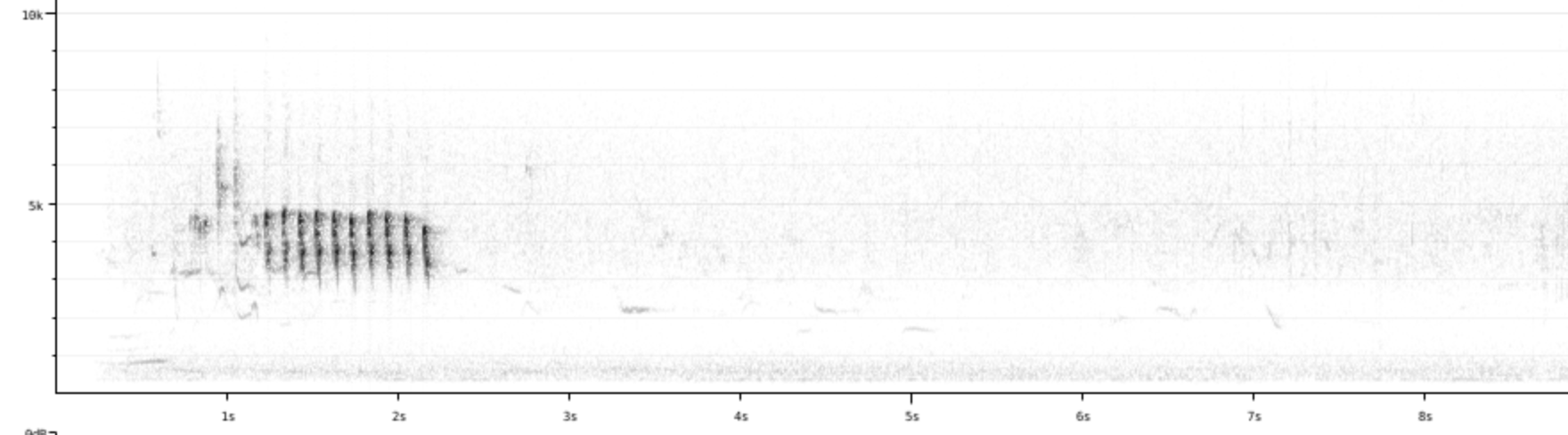
Song typically consists of two parts. An indistinct chattering and warbling, subsong-like part similar to [common] Whitethroat, which is usually followed by a dry, fast and rattling trill. The trill carries much further than the chattering part. May be difficult to identify if trill is omitted. [Link]
Song: Klappernd. (Müllerchen) An Berglaubsänger erinnernd. Klappertöne (5-8) Aber oft mit leisem schwatzendem Vorgesang, der fehlen kann. Kann auch an Sumpfmeise erinnern, doch sind bei dieser die Klappertöne mehr von oben her angeschlagen.
[Link]Song typically consists of two parts. An indistinct chattering and warbling, subsong-like part similar to Whitethroat, which is usually followed by a dry, fast and rattling trill. The trill carries much further than the chattering part. May be difficult to identify if trill is omitted. [Link] |
♫
|
| rasp | ||
 Brambling ■■
 |
rasp simple rhythmic slow medium (1-5 KHz) .
General: Bergfink - call cheep plus two ascending Grünfink squawks. Song? Grünfink squawk but not descending, every 3-4 seconds.
Song: Song very distinct; a soft, wheezing, drawn-out single note. Repeated at the same pitch in a monotonous manner. [Link] |
♫

|
| non-musical | ||
| rattle | ||
 Mistle thrush ■■
 |
rattle non-musical fast low-high (2-9 KHz) .
Song: Die Stimme ist ähnlich wie die vom Pirol. [Link]Gesang ähnlich Amsel, aber eintöniger mit geringerem Tonumfang [auch kürzer, kein schnirpsliges Ende -- Bill] [Link]
Song: Gesang ähnlich dem der Amsel, aber weniger abwechslungsreich und melancholisch, fast weinerlich klingend. Meist von Tannenspitze aus.
[Link]Song loud, far reaching and melodic. Most similar to Blackbird, but pitch is higher, phrases shorter (3-6 notes) and most notably, pauses between phrases are much shorter. All which gives the song a much more hurried feel than that of the Blackbird. Timbre is thinner and slightly shivering, and tonal range more limited. May have recurring favourite motifs, but does not repeat phrases like Song Thrush. Sometimes adds higher pitched parts and imitations. [Link] |
♫

|
| rasp | ||
 Fieldfare lll lll h ■■
 |
rasp non-musical slow medium (1-6 KHz) .
BirdID says song a mix of dry contact calls, BirdLife that it's almost only heard in flight. The XC recording is a bit of a chuckle to me.
Song: Gesang nicht melodisch,aus gepressten, quietschenden Tönen bestehend, fast nur im Flug vorgetragen.
[Link]Song a mix of dry contact calls; "trrrt trrrrt", and high pitched, drawn out, chattering improvisations. [Link] |
♫

|
 Jackdaw ■■
 |
No details but a Xeno-Canto recording.
Call: Nabu: Ein hartes „kjack“ oder „schack“ sowie ein raues „tschräh“ hört man am häufigsten von der Dohle. Sie ist ein begabtes Stimmwunder und hat eine Vielzahl von Lauten und Imitationen auf Lager. [Link]meist angenehm klingende, kurze Rufe: "kja", oft mehrfach wiederholt, härteres "kjack!" oder gezogenes "kjaar". [Link] | ♫ |
 Hawfinch ■■
 |
No details but a Xeno-Canto recording.
Call: Most typical call a sharp and explosive "tzek", with abrupt, emphasized, cut-off ending. Quite similar to Robin, but harder, with each syllable marginally longer with a slightly wheezing timbre. Repetitions are slower and more singular than Robin. Diagnostic when interspersed with high frequency notes. [Link] | ♫ |
| stereotype melodic | ||
 Red crossbill ■■
 |
stereotype melodic slow low-high (2-10 KHz) .
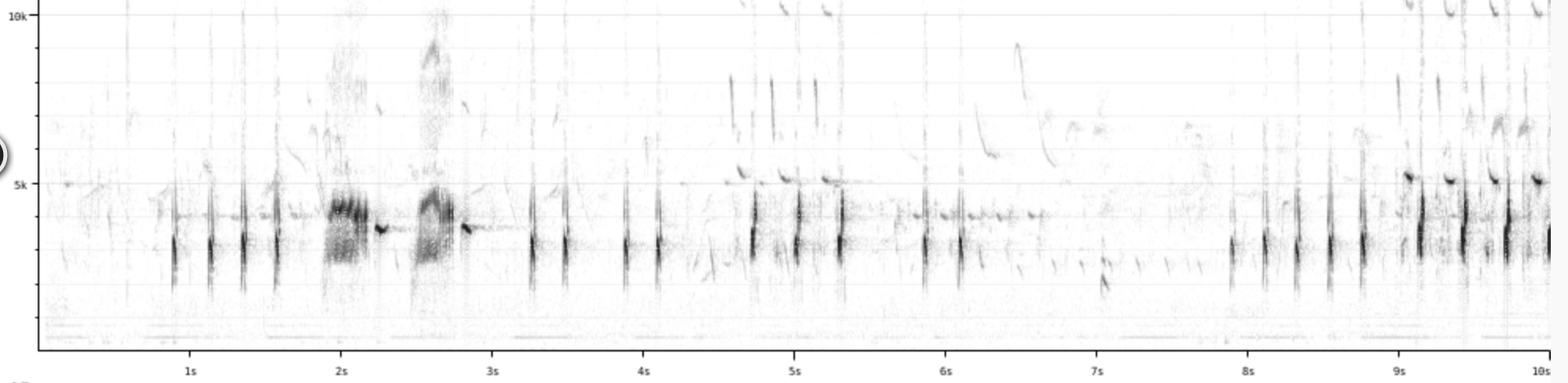
Repeated hi-low pattern...well, doesn't always sound like that.
The very short beginning of my Stazersee recording before the static sets in does,
as well as a song found online.
One recording reminds me of cicada sounds.
Song: The song consist of improvised, resonant twittering, and series of contact calls with no apparent phrases. It is generally faster, with less marked pauses than in Parrot Crossbill, and the phrasing seems more random. [Link] |
♫
|
 Eurasian golden oriole ■■
 |
stereotype melodic slow low (0-1 KHz) .
A soft, lowish whistling. In my opinion, the golden oriole has a beautiful voice, but no imagination as to melody - it's always the same few notes.
Song: Varied repertoire, but song and common contact call very distinct. Song a series of 1-2 seconds long phrases of 3-5 yodeling, clear, fluting notes, interspersed with 2-3 second pauses. Tone very full-bodied, melodic and pleasing. [Link] |
♫

|
| simple rhythmic | ||
 Willow tit ■■
 |
simple rhythmic slow high (3-7 KHz) .
Songs I've heard alternate two notes and look like a sine wave on the sonogram.
Vogelwarte.ch: Apart from minor differences in diet and size, Alpine Tit and Willow Tit can only be identified by their song. The Willow Tit utters a series of long, descending notes («tyoo tyoo tyoo tyoo»), whereas the Alpine Tit’s territorial song consists of short notes on an even pitch («dee dee dee dee dee»).
See more here.
Song: 1.Gesangstyp: „ziü ziü ziü „ etwas wehmütig, die einzelnen Töne leicht absinkend, nicht klappernd. Bei Unterart Alpenmeise auf gleicher Höhe bleibend. 2.Gesangstyp: variable, schwätzende, helle Folge m. trillerndem Schluss. [Link]Song: One or two soft, clear, melancholic notes repeated in a slow, even rhythm. At first rising slightly in pitch, then gradually falling. In some areas song is evenly pitched. [Link] | ♫ |
 Tawny owl ■■
 |
No details but a Xeno-Canto recording.
Song: Song a resonant descending "hoooooo". After 2-3 sec. [Link] | ♫ |
| sings 30 seconds or longer | ||
| mimicry | ||
 Eurasian siskin ■■
 |
mimicry sings 30 seconds or longer fast high (3-9 KHz) .
bird-song.ch sagt Gesang zwitschernd und trillernd und ähnlich wie Girlitz - ich finde auch, es hat das hohe chaotische von den mit ab und zu was rohem. [Link]
Song: Distinct calls and song. The contact call is also prominent in the improvised song. Other typical sounds in the song includes a peculiar wheeze, like someone sucking their teeth, and lots of expert mimicry. [Link] |
♫

|
| stereotype melodic | ||
 Long-tailed tit Diddly doot-doot-doot-doot hhmll ■■
 |
stereotype melodic slow high (3-9 KHz) .
General: Meistens hört man das Pfief...chk..chk..Pfief von den Rufen, siehe dort. Song: Nabu: Der Gesang ist ein feines Trillern und selten zu hören (someone at XenoCanto compares it to a blue tit trill). [Link] Song: Song: high tsee-tsee; funny downhill trill Song: Rapid, continuous, randomly composed sequence of bubbling,chirping sounds. [Link] |
♫

|
| simple rhythmic | ||
| slur | ||
 European crested tit lhlhhh ■■
 |
slur simple rhythmic fast high (3-9 KHz) .
Higher-pitched than great tit - how distinguish from coal tit, etc?
Song: Song: an improvisation over previously described calls. [Link] | ♫ |
| stereotype melodic | ||
 Short-toed treecreeper 'Gar-ten-baum-LÄU-FER' mlLh ■■
 |
stereotype melodic slow high (4-7 KHz) .
It sounds to me like a 5-7 note song like 'five k low high higher', 'short song in the gar-DEN'. The individual notes have the same backward checkmark shape as the call. It's basically the same across Europe.The song of the nominate subspecies is an evenly spaced sequence of notes teet-teet-teet-e-roi-tiit. [Link]Its song is short, loud and rhythmic. [Link] [In comparison with the visually similar Eurasian treecreeper, it] has a clearer, louder more staccato contact call of ‘sreet’ or ‘sree’ and a short ‘wit’ during normal activity [Link]
Song: Kurz u. bündig! (Gartenwege sind kurz.) Tonreihe am Schluss ansteigend. „Hesch du gseh woni bi?
[Link]Song diagnostic, and introductory notes often used singly when interacting. Full song starts with one or two staccato introductory notes, the first higher pitched than the second, followed by a rapid, ascending crescendo ending in a drawn-out, less pure "sree". The tone is loud and much more penetrating and clear than C. familiaris. [Link] [In comparison with the visually similar Eurasian treecreeper, it] has a clearer, louder more staccato contact call of ‘sreet’ or ‘sree’ and a short ‘wit’ during normal activity [Link]
Song: Kurz u. bündig! (Gartenwege sind kurz.) Tonreihe am Schluss ansteigend. „Hesch du gseh woni bi?
[Link]Song diagnostic, and introductory notes often used singly when interacting. Full song starts with one or two staccato introductory notes, the first higher pitched than the second, followed by a rapid, ascending crescendo ending in a drawn-out, less pure "sree". The tone is loud and much more penetrating and clear than C. familiaris. [Link] |
♫

|
 Eurasian treecreeper Waldwege sind lang ■■
 |
stereotype melodic slow medium (1-5 KHz) .
I say: it sounds like a faster higher chaffinch song. Wikipedia says: The male's song begins with srrih, srrih followed in turn by a few twittering notes, a longer descending ripple, and a whistle that falls and then rises.
Song: Lang u. klar! (Waldwege sind lang). Tonreihe im Ganzen absinkend, nur letzter Ton höher. [Link]Song a short, continuous three-part phrase. [Link] |
♫

|
 Middle spotted woodpecker ■■
 |
No details but a Xeno-Canto recording.
Song: Im Gegensatz zu anderen Spechten trommelt der Mittelspecht nur sehr selten. [Link]Song is a series of short, mewing and nasal "peeaa peeaa peeaa ", where each syllable quickly rises in pitch, but the overall phrase is fairly constant. [Link] |
♫

|
 Black woodpecker ■■
 |
No details but a Xeno-Canto recording.
Song: Beide Geschlechter ähnlich Grünspecht aber klangvoller. „klückklückklück“ 10-20 Laute. Die „klück“ werden etwas von unten heraufgeholt, vor allem gegen den Schluss zu. Häufiger hört man „kliüüh“ von am Stamme sitzenden Vogel. Bei Platzwechsel ruft er „krükrükrü“.
[Link]Song a quick series of "klee" calls resembling Green Woodpecker, but with a purer tone and upward infliction at end of each syllable. [Link] | ♫ |
| simple rhythmic | ||
| drumming | ||
 Grey-headed woodpecker ■■
 |
drumming simple rhythmic fast medium (0-4 KHz) .
Drumming in lieu of song. Fast, constant, somehow less harsh than great and middle spotted woodpeckers.
Song: Deutlich abfallende Tonreihe. 4-10 Töne. Absinken beginnt
gewöhnlich erst mit dem dritten oder vierten Ton und wird etwas langsamer.
Klingt etwas klagend (moll). Vor allem gegen den Schluss. Kann nachgepfiffen werden. (beim Grünspecht nicht )
[Link]Song similar to Green Woodpecker, but general tone is soft and melancholic. Phrases consists of series of 5-8 clear notes falling both in pitch and intensity, and with diagnostic ritardando at the end. Short "kek" uttered if excited. Rarely drums. [Link] |
♫
|
 Eurasian three-toed woodpecker ■■
 |
drumming simple rhythmic fast low (1-3 KHz) .
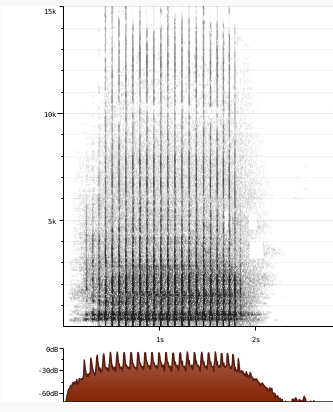
Fast drumming, constant volume, longer than great spotted woodpecker's.
Call: Contact call similar to Great Spotted, but deeper and softer. Not very vocal. [Link] |
♫
|
 Common raven ■■
 | No details but a Xeno-Canto recording. | ♫ |
| simple rhythmic | ||
 Common cuckoo ■■
 |
simple rhythmic slow low (0-1 KHz) .
Two-noter
Song: Männchen: Unverwechselbarer Ruf. Weibchen: im Frühling eine kichernde Rufreihe,
[Link]Song: the well known disyllabic "cuck-coo" with emphasis on first note, and the second note a third lower than the first one. Also a harsh "tchaa tchaa", and a bubbly trill, reminiscent of Little Grebe, uttered by the female. [Link] |
♫

|
| stereotype melodic | ||
 Eurasian bullfinch ■■
 |
stereotype melodic slow low-high (2-8 KHz) .
3-note long M, pause, HL (somewhat falling)...Gim! Gim-peeel! Sounds a bit like a pirol.
Song: Song a quiet, modest mix of contact call and various chirping sounds, with peculiar harmonics. [Link] |
♫

|
| simple rhythmic | ||
| trill | ||
 Wood warbler hl hl hl ■■
 |
trill simple rhythmic fast high (5-8 KHz) .
Sid-sid-sid-sirrrr. 3 secs, then 5 secs pause. At bird-song.ch I hear a slow-fast one-noter, about 8 slow ones in 1.5 seconds, then a trill of 25 fast ones.
Song: kurze Reihe (4-10) v. Stakkatotönen, gefolgt von abfallendem Schwirrroller. (Tönt wie das Anlassen eines Velosolex) Während des Gesanges schwebender Schwirrflug. Dazu hört man eine Reihe angenehmer Pfeiflaute wie „djü“ [Link]Song distinct. An accelerating series of sharp, metallic "swee-swee-swee-swee". Alternative (piping) song a series of 4-6 piping, plaintive and descending "pew - pew" calls. Resembles Willow Tit's song, but is softer with each note more evenly pitched. Contact call similar to individual syllables of piping song, but with heavier accent on the ending. [Link] |
♫

|
| stereotype melodic | ||
 European pied flycatcher Schwarzer Kopf aber nicht traurig ■■
 |
stereotype melodic fast high (3-10 KHz) .
Nice short melody, often with 2-note parts. Blackbird-like but little variation (though differs in dialect).
Song: Song a pleasant, tuneful, simple but varied phrase. [Link] |
♫

|
| simple rhythmic | ||
 Nightjar ■■
 |
simple rhythmic fast medium (2-4 KHz) .
Buzzing like machinery or a (BirdID says) a cricket. Changes pitch at times.
Song: Song unique among birds, but quite similar to Mole cricket. A mechanical, continuous slur, like the sound of a distant motorbike. As opposed to the Mole Cricket, it often "shifts gear" by changing pitch to a note approximately a fourth below the drone. [Link] |
♫

|
|
|
simple rhythmic slow medium (1-5 KHz) .
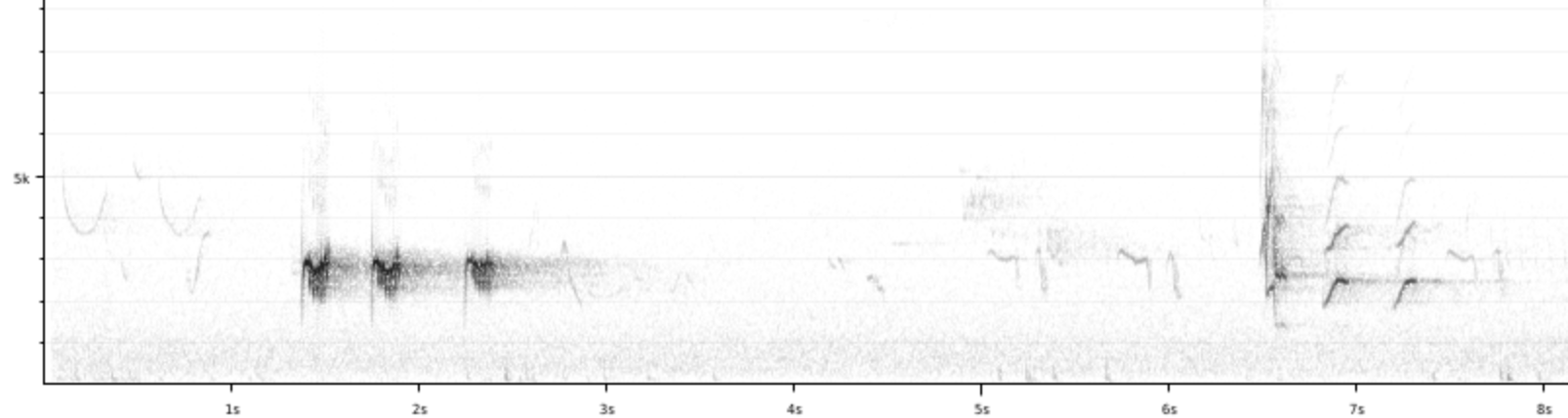
BirdID says Song a primitive, plaintive series of short phrases, often with only 1-2 syllables (I heard 2-3 in Amden, sometimes chirpy, sometimes less musical).
Song: Habe mit dem Buntspecht verwechselt - Ringdrossel singt 2-3 Noten - hilft das? [Link]Song a primitive, plaintive series of short phrases. Often with only one or two syllables. Interspersed with eerie, higher pitched sounds, reminiscent of Song Thrush. [Link] |
♫
|
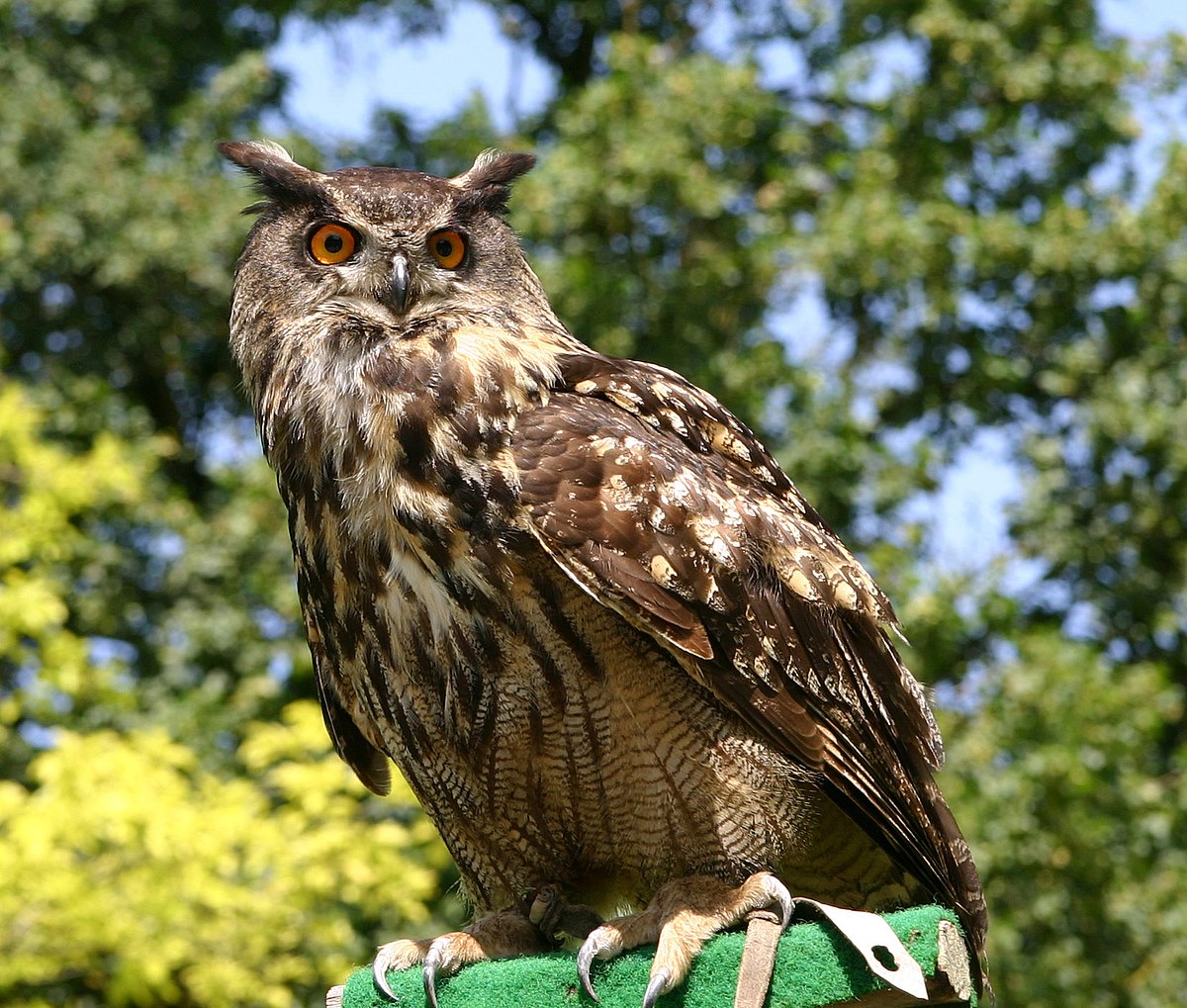 Eurasian eagle-owl ■■
 |
Song: Song a very deep "ooho". Continuous, but disyllabic. First syllable emphasized and second syllable rapidly falling in pitch. Quite similar to Long-eared Owl, but deeper and with more pronounced pitch change at end ("release"). [Link] | |
 Boreal owl ■■
 |
Song: Song consists of fast series of fairly deep whistling notes "po-po-po-po-po-po-po-po", slightly ascending in pitch, and descending in the last few syllables. Phrase includes up to 25 units. [Link] | |
 Hazel grouse ■■
 |
Song: Song an extremely high pitched whistle; "piuuuuuuuiiii pju pju pju". [Link] | |
 Long-eared owl ■■
 |
Song: Song a series of very deep, monotonous "hooooo"s, quite widely spaced. Uttered about once every 2-3 seconds. Sometimes rises in pitch, but with each "hoo" being constant. [Link] |
Practice
♫
Answer
Eurasian wren XC916662 - Eurasian Wren song in China - Troglodytes troglodytes.
♫
Answer
Middle spotted woodpecker Mittelspecht bei Seegräben, heavily edited with noise reduction, hipass, etc.
♫
Answer
Grey-headed woodpecker XC552636 Kleinspecht drumming.
♫
Answer
Black cap warbler Birdnet 1356 - Eurasian Blackcap hml - 2021-03-31 19:12:00 - Eurasian Blackcap - Lugano.
♫
Answer
Common buzzard Mäusebussard Rufe.
♫
Answer
European greenfinch Birdnet 1877 - European Greenfinch, h trill, m trill, 4x m swoop - European Greenfinch - Fehraltorf.
♫
Answer
Jackdaw Jackdaw, etc in Illnau.
♫
Answer
Eurasian siskin XC714393 - Eurasian Siskin - Spinus spinus.
♫
Answer
European robin XC782997 - European Robin - Erithacus rubecula - song recorded in Italy.
♫
Answer
Redwing XC320315 - Redwing - Turdus iliacus.
♫
Answer
Marsh tit XC727754 - Marsh Tit - Poecile palustris.
♫
Answer
Coal tit Tannenmeise lhlhlhl Gesang plus 2 andere TBI von etwas 19 bis 22 Sekunden.
♫
Answer
Common firecrest XC769178 - Common Firecrest - Regulus ignicapilla - song recorded in the Netherlands.
♫
Answer
Nightjar XC768849 - European Nightjar - Caprimulgus europäus - song.
♫
Answer
European crested tit Haubenmeise Ruf lhlhhh bei Hirzli.
♫
Answer
European nuthatch Is the brevity what makes it a song, whereas calls seem to go on endlessly?
♫
Answer
Willow tit
♫
Answer
Eurasian bullfinch XC637392 - Eurasian Bullfinch - Pyrrhula pyrrhula - song, recorded in France.
♫
Answer
Brambling XC731031 - Brambling song - Fringilla montifringilla.
♫
Answer
Common cuckoo XC801215 - Common Cuckoo - Cuculus canorus.
♫
Answer
Long-tailed tit XC572437 - Long-tailed Tit - Aegithalos caudatus - song.
♫
Answer
Lesser whitethroat XC652419 - Lesser Whitethroat - Sylvia curruca - song.
♫
Answer
Common raven Kolkraben bei Agasul.
♫
Answer
Tawny owl Waldkauz in Carona.
♫
Answer
Hawfinch Birdweather-Hawfinch.
♫
Answer
European pied flycatcher XC723965 - European Pied Flycatcher - Ficedula hypoleuca - song.
♫
Answer
Eurasian treecreeper XC656422 - Eurasian Treecreeper - Certhia familiaris - song, recorded in Sweden.
♫
Answer
Eurasian three-toed woodpecker Dreizehenspecht trommelt
♫
Answer
Wood warbler XC727564 - Wood Warbler - Phylloscopus sibilatrix - song.
♫
Answer
Goldcrest Wintergoldhähnchen
♫
Answer
Tree pipit XC570506 - Tree Pipit - Anthus trivialis - song.
♫
Answer
Fieldfare XC769296 - Fieldfare - Turdus pilaris - song, a series of contactcalls.
♫
Answer
Great spotted woodpecker Great spotted woodpecker drumming
♫
Answer
Eurasian golden oriole XC567973 eurasian golden oriole song.
♫
Answer
Mistle thrush XC800869 - Mistle Thrush - Turdus viscivorus.
♫
Answer
Song thrush MerlinBirdId meint Singdrossel, meistens mhHL, aber 1m08 auch Kohlmeise.
♫
Answer
Common blackbird Repetitiver, einfallsloser Amsel den ich für einen Misteldrossel gehalten habe, dazu eine Kohlemeise der lmh singt und ich mit einer Tannen-meise gewechselt habe.
♫
Answer
Common wood pigeon MerlinSoundId MerlinBirdID says European Goldfinch Eurasian Blackbird Common Wood-Pigeon Mistle Thrush Great Tit - from the amphitheater in Syracusa - TBI what's the funny clicking noise after the goldfinch song?
♫
Answer
Short-toed treecreeper XC625133 - Short-toed Treecreeper - Certhia brachydactyla - song.
♫
Answer
Common starling 2025-11-19 13 19 Halsbandsittich, Star in Florenz.
♫
Answer
Eurasian blue tit Blaumeise h-ll, in Zelgli, Fehraltorf.
♫
Answer
Black woodpecker XC554337 Black woodpecker song.
♫
Answer
Common chaffinch Fehraltorf - Buchfink Gesang-Variante, steigt am Schluss - mmmmmmmmLlhH.
♫
Answer
Ring ouzel XC721589 - Ring Ouzel - Turdus torquatus - song.
♫
Answer
Lesser spotted woodpecker XC552636 Kleinspecht drumming.
♫
Answer
Spotted nutcracker XC641465 - Spotted Nutcracker - Nucifraga caryocatactes - song is a series of calls.
♫
Answer
Common chiffchaff Birdnet 968 saw kohlmeise as part of this conversation - Common chiffchaff - Fehraltorf.
♫
Answer
Western bonelli's warbler XC720128 - Western Bonelli's Warbler - Phylloscopus bonelli - song, recorded in France.
♫
Answer
Great tit Kohlmeise gesang in Fehraltorf llhllh.
♫
Answer
Red crossbill XC775798 - Red Crossbill - Loxia curvirostra - song.
♫
Answer
Dunnock XC778759 - Dunnock - Prunella modularis - song recorded in Spain.
Birds with insufficient information about songs/calls
| Bird | Description | Audio |
 Eurasian woodcock ■■
Info about calls, not song!!
Eurasian woodcock ■■
Info about calls, not song!!
|
Call: Flies above treetops while calling with 3-5 deep croaking grunts, followed by an explosive high-pitched sneeze, "psst". [Link] | |
 Eurasian pygmy-owl ■■
Info about calls, not song!!
Eurasian pygmy-owl ■■
Info about calls, not song!!
|
Call: Calls in a clear voice, like a straight note blown on a recorder. Each note often followed by a rhythmic, trisyllabic accent a whole tone deeper than the first note. [Link] |