Vögel gesucht in Neeracherried in August 2026 - hier sind v.a. die Wasservögel
 coming in for a landing.JPG)
Garganey (I can remember the German name Knaekenten better) coming in for a landing. 2025-04-21 09:44:19 Fanel/Chablais de Cudrefin und La Sauge
Zuerst beobachtet in 🇨🇭 an 2025-04-21.
Beschreibung
Allgemein: Deutschland: Brut-, Zugvogel RL 2Saisonales Verhalten
Präsenz: 03-01 - 09-25Weitere Infos
Habitate: Fluss und See Vollprofil

Krickente Männchen, Klingnauerstausee. 2022-02-05 12:51:34 Klingnauer Stausee
Zuerst beobachtet in 🇨🇭 an 2021-01-26.
Beschreibung
Geographie: Dieser Vogel erscheint jenseits grossen Meere in Kontinenten : Europa, Nordamerika, Südamerika, Afrika, Asien.Allgemein: Wintergast am Teich am Aa-Bach beim Südende des Pfäffikersee
Allgemein: Deutschland: Brut-, Jahres-, Zugvogel, Wintergast RL 3
Etymologie:
 Die hellen «krrik»-Rufe der stimmfreudigen Erpel verhalfen dieser Art zu ihrem deutschen Namen. [Link]
Vokalisierung:
 Male: characteristic, short, highly resonant and metallic "plytt". A bit similar to Pintail, but higher pitched and lacking accompanying whistling sound. Female: various quacking sounds generally quicker paced, more nasal and noticeably higher pitched than Mallard. [Link]
Weitere Infos
Physikalische Details
Körperlich: Länge=34-38 cm, Flügelspanne=58-64 cm, Gewicht=200-450 gHabitate: Fluss und See
Vokalisierung
Gesang: No details but a Xeno-Canto recording. Gesang Eigenschaften: Frequency:♫ Quelle: XENOCANTO XC619133-Krickente von Peter Bosman, Belgium.mp3 (Gesang)

Blup blup, fast wie vom Computer generiert, fur mich nohe Noten (obwohl Sonogram nur 2.5 KHz zeigt)
Ruf Eigenschaften: Ruf Melodie: einfach rhythmisch, langsam, Frequenz: low (1-3 KHz),
Vollprofil

Löffelente am Klingnauerstausee. 2022-02-06 08:47:36 Klingnauer Stausee
Zuerst beobachtet in 🇨🇭 an 2021-02-08.
Beschreibung
Geographie: Dieser Vogel erscheint jenseits grossen Meere in Kontinenten : Europa, Nordamerika, Südamerika, Afrika, Asien.Allgemein: Wintergast am Greifensee.
Allgemein: Deutschland: Brut-, Jahres-, Zugvogel, Wintergast RL 3
Aussehen und Identifizierung: PK: white, black, rust-brown, yellow eyes, black spoonbill, red legs.
Vokalisierung:
Male is characteristic and most often heard: A hoarse nasal knocking sound "took took", often staccato or disyllabic. Female similar to Mallard but flatter and more creaking. [Link]
Saisonales Verhalten
JahresvogelWeitere Infos
Physikalische Details
Körperlich: Länge=44-52 cm, Flügelspanne=70-84 cm, Gewicht=470-800 gHabitate: Fluss und See Vollprofil

Stockente Weibchen. 2024-08-02 15:56:02 Greifensee
Zuerst beobachtet in 🇨🇭 an 2020-05-20.
Beschreibung
Geographie: Dieser Vogel erscheint jenseits grossen Meere in Kontinenten : Europa, Nordamerika, Südamerika, Afrika, Asien.Allgemein: Common waterbird at Pfäffikersee
Allgemein: Deutschland: Brut-, Jahres-, Zugvogel, Wintergast
Etymologie:
 Der heutige Name kann als Hinweis auf ihre Brutplätze verstanden werden, zu denen auf Stock gesetzte Weiden, Weidengebüsch oder auch Reisighaufen gehören.
['Stock' wird weiter erklärt: Als Stockausschlag bezeichnet man bei Bäumen und Sträuchern Triebe, die nach dem Verlust der primären Sprossachse
neu aus dem Stumpf oder Stubben (der dann „Stock“ genannt wird) austreiben.] [Link]
The name 'was derived from the Old French malart or mallart for "wild drake"' [Link]
Dazu zählt der charakteristische Grunzpfiff der Männchen, der lautmalerisch mit „gerijib“ oder „fihb“ umschrieben wird. [Link]
Der heutige Name kann als Hinweis auf ihre Brutplätze verstanden werden, zu denen auf Stock gesetzte Weiden, Weidengebüsch oder auch Reisighaufen gehören.
['Stock' wird weiter erklärt: Als Stockausschlag bezeichnet man bei Bäumen und Sträuchern Triebe, die nach dem Verlust der primären Sprossachse
neu aus dem Stumpf oder Stubben (der dann „Stock“ genannt wird) austreiben.] [Link]
The name 'was derived from the Old French malart or mallart for "wild drake"' [Link]
Dazu zählt der charakteristische Grunzpfiff der Männchen, der lautmalerisch mit „gerijib“ oder „fihb“ umschrieben wird. [Link]
Vokalisierung:
Female: A distinct coarse, laughing quacking; "haaa ha ha ha ha ha", with first note accented and then descending in pitch. Male: a more silent, very nasal "rriib". [Link]
Saisonales Verhalten
Jahresvogel Brut: 03-12 - 07-29 Migration rein: 02-01 - 05-01 Migration raus: 07-29 - 12-31Weitere Infos at Vogelwarte.ch
Weitere Infos
Physikalische Details
Körperlich: Länge=50-65 cm, Flügelspanne=81-98 cm, Gewicht=750-1450 gHabitate: Fluss und See Vollprofil

MerlinBirdID meint Schnatterente - ich habe gehofft herauszufinden welche Ente das typische Gelbe da hinten hat. 2022-02-05 14:34:58 Klingnauer Stausee
Zuerst beobachtet in 🇨🇭 an 2021-02-08.
Beschreibung
Geographie: Dieser Vogel erscheint jenseits grossen Meere in Kontinenten : Europa, Nordamerika, Südamerika, Afrika, Asien.Allgemein: Ich habe es für mich die Schokoladenente getauft.
Allgemein: Deutschland: Brutvogel im 19. Jahrhundert aus Osteuropa und Asien zugewandert
Etymologie:
The etymology of the word gadwall is not known, but the name has been in use since 1666.[9] [Link]
Nabu: Die Schnatterente fällt aber – wie ihr Name schon vermuten lässt – durch ihre Art der Nahrungssuche auf. Sie durchschnattert das Wasser mit ihrem Schnabel. [Link]
Aussehen und Identifizierung: Chocolate bill, black-and-white pattern on head, shoulders, belly, sides of wings, chocolate patterned wings, black butt, a bit of white before the butt.
Aussehen und Identifizierung: Nabu: Die Schnatterente ähnelt auf den ersten Blick so sehr der weiblichen Stockente, dass man diese schnell verwechseln kann. [Link]
Saisonal: Wintergast am Greifensee.
Saisonales Verhalten
Jahresvogel Brut: 04-20 - 07-20 Migration rein: 02-20 - 05-21 Migration raus: 07-20 - 12-31Weitere Infos at Vogelwarte.ch
Weitere Infos
Physikalische Details
Körperlich: Länge=46-56 cm, Flügelspanne=84-95 cm, Gewicht=550-1000 gHabitate: Fluss und See
Vokalisierung
Gesang: No details but a Xeno-Canto recording. Gesang Eigenschaften: Frequency:♫ 2021-10-24 13:12:46
 Quelle: Zoom H6/H2n Neeracherried (Gesang)
Vollprofil
Profil Wikipedia Vogelwarte BirdLife ZH ornitho.ch Xeno-Canto BirdID NABU YouTube

Kolbenente - didn't I manage to get one in focus? 2025-04-21 16:35:14 Fanel/Chablais de Cudrefin und La Sauge
Zuerst beobachtet in Iceland an 2015-06-05.
Beschreibung
Allgemein: Deutschland: Jahresvogel RL R; seit 1920 in Deutschland brütendEtymologie: Nabu: Die Kolbenente hat ihren Namen wohl aufgrund des auffällig großen Kopfes des Männchens. Dieser Eindruck wird durch eine ausgeprägte rotbraune Federhaube auf dem Kopf erzeugt. Die Federhaube dürfte vor allem während der Balzzeit von Vorteil sein, wenn der Erpel ein ausgeprägtes Balzverhalten zeigt, um das Weibchen zu beeindrucken. [Link]
Aussehen und Identifizierung: Funny red head that's brown with a golden forehead is the obvious characteristic. Also has a nice black and white pattern on its back and wings with white-rimmed black feathers at the end of the wing, a bit of white before a black butt.
Aussehen und Identifizierung:
Erpel mit orangerotem, buschig dickem Kopf und korallenrotem Schnabel, Hals und Unterseite schwarz; Ente bräunlich mit weissgrauen Wangen, die sich scharf von der dunklen Kopfplatte abheben, Schnabel dunkelgrau; ruft knarrend "körr". [Link]
Vokalisierung:
Female: Indistinct "ahrrrr -ahrrrr -ahrrrr" similar to other female diving ducks. Male: a nasal dry "qweeeek" similar in timbre to Goldeneye male, but mostly monosyllabic and with an almost barking quality. [Link]
Saisonales Verhalten
JahresvogelWeitere Infos
Physikalische Details
Körperlich: Länge=53-57 cm, Flügelspanne=84-88 cm, Gewicht=900-1400 gHabitate: Fluss und See Vollprofil

Reiherenten am Klingnauerstausee, zwei Weibchen, zwei Männchen. 2022-02-05 14:39:46 Klingnauer Stausee
Zuerst beobachtet in Iceland an 2015-06-05.
Beschreibung
Allgemein: Schwarz-weiss mit Muster auf Rücken/Flügel, gelbe Augen, blau-grauer Schnabel mit schwarzer SpitzeAllgemein: An einem See im Winter.
Allgemein: Deutschland: Brut-, Jahres-, Zugvogel, Wintergast um 1900 in Deutschland eingewandert, seit 1930 offiziell Brutvogel
Geographie:
'The tufted duck (Aythya fuligula) is a small diving duck with a population of close to one million birds, found in northern Eurasia',
and a winter guest in Switzerland. [Link]
Vokalisierung:
Male display sound: High pitched short whistling-like noises, "pjuu-uu", not very audible. [Link]
Saisonales Verhalten
Jahresvogel Brut: 05-10 - 08-09 Migration rein: 01-01 - 05-10 Migration raus: 07-10 - 12-31Weitere Infos at Vogelwarte.ch
Weitere Infos
Physikalische Details
Körperlich: Länge=40-47 cm, Flügelspanne=67-73 cm, Gewicht=500-1000 gHabitate: Fluss und See Vollprofil

Rote Fuesse und Schnabel koennten auch eine andere Gansart sein, aber die Streifen sind die vom Graugans. 2022-06-04 11:21:54 Kaltbrunner-Riet
Zuerst beobachtet in 🇨🇭 an 2021-02-26.
Beschreibung
Allgemein: An praktisch alle Schweizer Seen gefunden, v.a. nördlich der AlpenAllgemein: Deutschland: Brut-, Jahres-, Zugvogel, Wintergast
Aussehen und Identifizierung:
Grösste europäische Wildgans. [Link]
Vokalisierung:
Various cackling and honking sounds "gaiiiaia-ga-ga". [Link]
Weitere Infos
Physikalische Details
Körperlich: Länge=75-90 cm, Flügelspanne=147-180 cm, Gewicht=2100-4300 gHabitate: Fluss und See Vollprofil
Graureiher / Grey heron (Ardea cinerea)

Graureiher auf der Insel, Neeracherried. 2022-09-04 08:03:50 Neeracherried
Zuerst beobachtet in 🇨🇭 an 2019-11-22.
Beschreibung
Allgemein: Ein häufiger Besucher in Fehraltorf. Auch Fischreiher genannt.Allgemein: Zumeist auf den Feldern (wo er Wühlmäuser und Molche frisst) oder am Bach
Allgemein: Deutschland: Brut-, Jahres-, Zugvogel, Wintergast
Vokalisierung:
Quite vocal. At breeding ground a varied repertoire of harsh and clattering sounds. [Link]
Saisonales Verhalten
Jahresvogel Brut: 02-01 - 08-29 Migration rein: 02-01 - 04-11 Migration raus: 07-10 - 10-27Weitere Infos at Vogelwarte.ch
Weitere Infos
Physikalische Details
Körperlich: Länge=90-98 cm, Flügelspanne=175-195 cm, Gewicht=1020-2073 gHabitate: Nassgebiet
Vokalisierung
Gesang: No details but a Xeno-Canto recording. Gesang Eigenschaften: Frequency:♫ 2024-11-01 08:26:54 Quelle: BIRDWEATHER 20241101_082654-Birdweather-Gray_Heron call.mp3 Greater Fehraltorf (Ruf)
Rufe:
Most common call a short, far reaching and extremely harsh, rasping sound. [Link]
General: Mechanical-sounding sort-of-a-quackCall:
Quite vocal. Most common call a short, far reaching and extremely harsh, rasping sound. At breeding ground a varied repertoire of harsh and clattering sounds. [Link]
XC876171 - Grey Heron - Ardea cinerea - call - Manyeleti Game Reserve, South Africa.
♫ Quelle: XENOCANTO XC876171 - Grey Heron - Ardea cinerea - call - Manyeleti Game Reserve, South Africa.mp3 (Ruf)

Ruf Eigenschaften: Ruf Melodie: nicht musikalisch, langsam, Frequenz: low (1-3 KHz), Spezielle Klänge: Raspel.
Vollprofil
Silberreiher / Great egret (Ardea alba)

Silberreiher in Deutschland, von WikiCommons Von Andreas Eichler, CC BY-SA 4.0, https://commons.wikimedia.org/w/index.php?curid=59954907 Quelle: OTHER
Wikicommons 2016.10.30--Silberreiher.jpg
Zuerst beobachtet in 🇨🇭 an 2021-02-24.
Beschreibung
Geographie: Dieser Vogel erscheint jenseits grossen Meere in Kontinenten : Europa, Nordamerika, Südamerika, Afrika, Asien.Allgemein: Auf dem Heimweg von Schwanden haben wir bei Benken ganz weisse Reiher gesehen. Laut ornitho.ch waren sie Silberreiher.
Allgemein: Bei den meisten Quellen heisst es, sie sind in der Schweiz nur Durchzüger oder Wintergäste. Aber laut Balzari und Gygax, brüten auch einige Vögel am Lac Neuchatel seit 2013.
Allgemein: Deutschland: Zugvogel, Wintergast
Vokalisierung:
Silent outside breeding ground. [Link]
Saisonales Verhalten
Jahresvogel Migration rein: 03-01 - 05-31 Migration raus: 08-09 - 11-15Weitere Infos at Vogelwarte.ch
Weitere Infos
Physikalische Details
Körperlich: Länge=85-102 cm, Flügelspanne=140-170 cm, Gewicht=960-1030 gHabitate: Nassgebiet
Vokalisierung
Rufe:In colonies various harsh calls like a dry, and mechanical "kerrrrrrr", and a very nasal "geet" or "ga-geet ga-geet" are heard. [Link]
1:
Partly an awkward quack: uck uck. Rattles. Deep-toned urrr. Higher-toned trill.
2: No details but a Xeno-Canto recording.
XC751146 - Great Egret - Ardea alba - call and flight call - Shanghai, China.
♫ Quelle: XENOCANTO XC751146 - Great Egret - Ardea alba - call and flight call - Shanghai, China.mp3 (Flugruf)

Ruf Eigenschaften: Ruf Melodie: nicht musikalisch, langsam, Frequenz: low (1-3 KHz),
Vollprofil
Nachtreiher / Black-crowned night-heron (Nycticorax nycticorax)
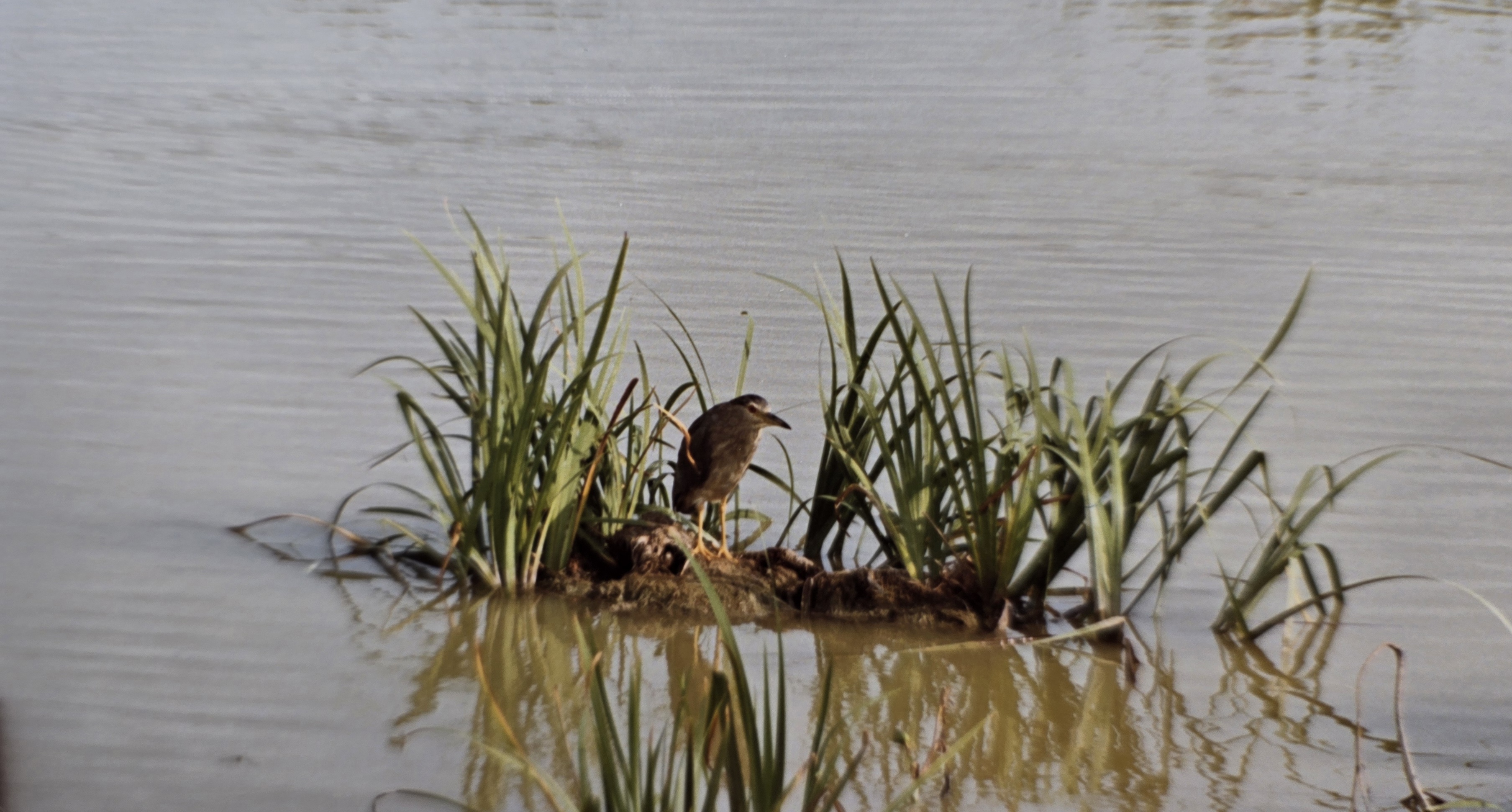
Nachtreiher in Camargue - the only bird I've been able to identify so far looking back on those old photos. 1991-07-15 12:41:47 Camargue
Zuerst beobachtet in Camargue an 1991-07-15.
Beschreibung
Geographie: Dieser Vogel erscheint jenseits grossen Meere in Kontinenten : Europa, Nordamerika, Südamerika, Afrika, Asien.Allgemein: Deutschland: Brutvogel, seltener Zugvogel RL 1
Saisonales Verhalten
Präsenz: 03-23 - 09-28 Migration rein: 09-07 - 09-14 Migration raus: 09-07 - 09-28Weitere Infos at Vogelwarte.ch
Weitere Infos
Physikalische Details
Körperlich: Länge=58-65 cm, Flügelspanne=105-112 cm, Gewicht=500-800 gHabitate: Nassgebiet Vollprofil
Zwergdommel / Little bittern (Ixobrychus minutus)
Profil Wikipedia Vogelwarte BirdLife ZH ornitho.ch bird-song.ch Xeno-Canto NABU YouTube
, Neeracherried.JPG)
Zwergdommel Weibchen (gestreift), Neeracherried. 2022-09-04 09:00:22 Neeracherried
Zuerst beobachtet in 🇨🇭 an 2022-09-04.
Beschreibung
Allgemein:Die Zwergdommel (Ixobrychus minutus) ist ein verborgen lebender Vogel ausgedehnter Röhrichte aus der Familie der Reiher (Ardeidae).
[mehr]
Deutschland: Brut-, Zugvogel RL 1
Vokalisierung:
Mostly silent except in breeding season. [Link]
Saisonales Verhalten
Präsenz: 04-20 - 09-28 Brut: 05-10 - 08-09 Migration rein: 04-20 - 06-09 Migration raus: 07-20 - 09-28Weitere Infos at Vogelwarte.ch
Weitere Infos
Physikalische Details
Körperlich: Länge=33-38 cm, Flügelspanne=52-58 cm, Gewicht=140-150 gHabitate: Nassgebiet
Vokalisierung
Rufe:Flight-call a sharp "ki-ke-ke" or a nasal "ke". [Link]
Almost a bark, low-pitched, little treble.
Ruf Eigenschaften: Ruf Melodie: nicht musikalisch, langsam, Frequenz: low (1-3 KHz),
Vollprofil

Drosselrohrsänger, Leukerfeld. 2022-05-21 10:39:42 Leuk
Zuerst beobachtet in 🇨🇭 an 2020-05-20.
Beschreibung
Allgemein: Deutschland: Brut-, Zugvogel seit 2016 nicht mehr auf der VorwarnlistePersönlich gemerkt: Zuerst in Bolle Magadino gesehen und gehört.
Aussehen und Identifizierung: 50% grösser als der ähnlich aussehende Teichrohrsänger
Verhalten:
 In der Sonntagszeitung von 23. Mai 2021 wurde über neue Erkenntnisse zum Zug von Drosselrohrsängern geschrieben. Durch neue, leichte Messgeräte konnte man sehen, dass die Vögel in der Nacht auf 2 km Höhe fliegen, beim Sonnenaufgang über eine Stunde hoch bis 5.5 km fliegen. Da sie das Mittlemeer und die Saharawüste überfliegen, wo sie nicht landen können, fliegen sie bis 34 Stunden non-stop. Das Fliegen erzeugt viel Körperwärme und die Höhe hilft ihnen abzukühlen. [(Abo erforderlich)]
Saisonales Verhalten
Präsenz: 04-20 - 09-28 Brut: 05-10 - 08-18 Migration rein: 04-20 - 05-31 Migration raus: 07-20 - 09-28Weitere Infos at Vogelwarte.ch
Weitere Infos
Physikalische Details
Körperlich: Länge=19-20 cm, Flügelspanne=24-29 cm, Gewicht=29-36 gHabitate: Nassgebiet
Vokalisierung
Gesang: General: Klingt für mich wie krächz pieps pieps. Vogelarten der Schweiz sieht das anders: 'Laute und auffällig knarrende, rau tönende Strophe ''karre-kiet karre karre-keit.'' 'Song:
 In Vergleich zu Teichrohrsänger langsamer und lauter. [Link]
Gesang: Gesang ähnlich Teichrohrsänger, aber viel lauter, Tonhöhenunterschiede 2-3 Oktaven. Karre-Kit-Sänger.. Sehr taktmässig.
[Link]
Song similar to Reed Warbler in timbre, but much deeper and slower. [Link]
Gesang Eigenschaften:
Melody: singt 20 Sekunden oder länger, langsam, Frequency: medium (1-5 KHz) Special sounds: Raspel
In Vergleich zu Teichrohrsänger langsamer und lauter. [Link]
Gesang: Gesang ähnlich Teichrohrsänger, aber viel lauter, Tonhöhenunterschiede 2-3 Oktaven. Karre-Kit-Sänger.. Sehr taktmässig.
[Link]
Song similar to Reed Warbler in timbre, but much deeper and slower. [Link]
Gesang Eigenschaften:
Melody: singt 20 Sekunden oder länger, langsam, Frequency: medium (1-5 KHz) Special sounds: Raspel
♫ Quelle: XENOCANTO XC661392 - Great Reed Warbler - Acrocephalus arundinaceus - song.mp3 (Gesang)

Vollprofil

Schilfrohrsänger. 2022-06-04 11:48:08 Kaltbrunner-Riet
Zuerst beobachtet in 🇨🇭 an 2020-05-20.
Beschreibung
Allgemein: Brütet hier nicht, darum eher selten, Durchzügler.Allgemein: Deutschland: Brut-, Zugvogel seit 2016 nicht mehr auf der Vorwarnliste
Saisonales Verhalten
Präsenz: 03-23 - 10-27 Brut: 05-01 - 07-29 Migration rein: 03-23 - 05-31 Migration raus: 07-10 - 10-27Weitere Infos at Vogelwarte.ch
Weitere Infos
Physikalische Details
Körperlich: Länge=13 cm, Flügelspanne=17-21 cm, Gewicht=9-15 gHabitate: Nassgebiet
Vokalisierung
Gesang: Das Beispiel auf vogelwarte.ch ist eher ein knarren und trillern, ähnlicher Rhythmus und Klänge wie der Teichrohrsänger. Gesang:Gesang sehr ähnlich dem Teichrohrsänger. Aber nicht so im Takt. Bevorzugte Tongebilde werden mehrmals wiederholt. Des öftern Singflug über dem Schilf.
[Link]
Song vigorous and varied. [Link]
Gesang Eigenschaften:
Melody: singt 20 Sekunden oder länger, langsam, Frequency: medium (1-5 KHz) Special sounds: Mimikry
♫ Quelle: XENOCANTO XC661577 - Sedge Warbler - Acrocephalus schoenobaenus - song.mp3 (Gesang)

Vollprofil

Teichrohrsänger. 2024-05-20 08:58:41 Klingnauer Stausee
Zuerst beobachtet in 🇨🇭 an 2020-04-27.
Beschreibung
Allgemein: 2-5 repetitions of each sound. Is the tone a bit lower than the other reed warblers?Allgemein: Deutschland: Brut-, Zugvogel
Saisonales Verhalten
Präsenz: 04-11 - 10-18 Brut: 05-10 - 08-18 Migration rein: 04-11 - 05-31 Migration raus: 07-29 - 10-18Weitere Infos at Vogelwarte.ch
Weitere Infos
Physikalische Details
Körperlich: Länge=13 cm, Flügelspanne=17-21 cm, Gewicht=10-16 gHabitate: Nassgebiet
Vokalisierung
Gesang: Weird, squeaky, urgent. Slower than Sumpfrohrsaenger. Gesang:Gleichmässiges Tempo! Man kann den Takt schlagen dazu.(Metronomsänger) Oft 2-3x wiederholte kurze Motive. Viele schnarrende Töne.
[Link]
By far easiest to identify by song: Characteristic, almost metric and even rhythm, very different from Sedge Warbler. Squeaky timbre with many, almost bizarre, harmonics. Phrases generally repeated 2-3 times. [Link]
Gesang Eigenschaften:
Melody: singt 20 Sekunden oder länger, schnell, Frequency: medium (1-5 KHz) Special sounds: komisch
♫ Quelle: XENOCANTO XC653035 - Eurasian Reed Warbler - Acrocephalus scirpaceus - song.mp3 (Gesang)

Vollprofil

Das muss ein Gartengrasmücke sein im Feld bei W-Wiher, noch nie so in Getreide gesehen, aber es klingt plausibel. 2024-06-27 18:57:05 Fehraltorf
Zuerst beobachtet in 🇨🇭 an 2020-04-27.
Beschreibung
Allgemein: Unauffällig, schüchtern, singen aber wie verrückt. Ich habe sie früher viel gehört beim Hungerseeli, sehe sie praktisch nur als Schatten in den Ästen oder schnell zum nächsten Baum fliegend.Allgemein: Hidden in the branches. Does change trees though. 2024 saw one in a grain field by the Wildert Weiher
Allgemein: Deutschland: Brut-, Zugvogel
Aussehen und Identifizierung: Nabu: Das Hauptbestimmungsmerkmal dieser sehr unauffällig gefärbten Grasmücke ist, dass sie kein besonderes Merkmal besitzt.
Im gegensatz zu ihrem Namen kommt die Gartengrasmücke eher seltener in Gärten vor, häufiger ist sie in Hecken und grossen Büschen in waldrandlage anzutreffen, wo sie recht versteckt lebt. [Aus der NABU Android-App]
Saisonales Verhalten
Präsenz: 04-15 - 10-05 Brut: 04-30 - 08-10 Migration rein: 04-15 - 05-30 Migration raus: 08-01 - 10-05Weitere Infos at Vogelwarte.ch
Weitere Infos
Physikalische Details
Körperlich: Länge=14 cm, Flügelspanne=20-24 cm, Gewicht=16-22 gHabitate: Wald
Vokalisierung
Gesang: Song: Hard to distinguish from Mönchsgrasmücke/black cap, but they sing much longer and don't end with a typical short melody like the black caps. [Link]'minutenlang anhaltenden, plaudernden und abwechslungsreichen Gesang' [Link]
Gesang: Sprudelnd, orgelnd, die längsten Strophen aller hiesigen Grasmücken. Mit vielen reinen, volltönenden Tönen. Ohne Überschlag der Mönchsgrasmücke.
[Link]
Song: a full bodied, flowing, melodious stream of notes, distinguished by its almost constant, warbled quality and lack of clear whistling notes (see Blackcap). Tempo is fairly even. Beware confusion possibility with occasional subsong of Blackcap that never reaches the whistling part! Call a nasal "che". [Link]
Gesang Eigenschaften:
Melody: improvisiert melodisch (hm), schnell, Frequency: medium (1-5 KHz)
Hard to distinguish from Mönchsgrasmücke/black cap, but they sing much longer and don't end with a typical short melody like the black caps. [Link]'minutenlang anhaltenden, plaudernden und abwechslungsreichen Gesang' [Link]
Gesang: Sprudelnd, orgelnd, die längsten Strophen aller hiesigen Grasmücken. Mit vielen reinen, volltönenden Tönen. Ohne Überschlag der Mönchsgrasmücke.
[Link]
Song: a full bodied, flowing, melodious stream of notes, distinguished by its almost constant, warbled quality and lack of clear whistling notes (see Blackcap). Tempo is fairly even. Beware confusion possibility with occasional subsong of Blackcap that never reaches the whistling part! Call a nasal "che". [Link]
Gesang Eigenschaften:
Melody: improvisiert melodisch (hm), schnell, Frequency: medium (1-5 KHz)
♫ Quelle: XENOCANTO XC728379 - Garden Warbler - Sylvia borin - song.mp3 (Gesang)

Rufe:
Alarm call a hard "check", and a hoarse "tcherr". [Link]
No details but a Xeno-Canto recording.
- but really
OWN
Garden warbler calls from bushes at Wildert.
♫ 2025-07-23 17:28:00 Wildert (Ruf)
Ruf Eigenschaften: Gesang Frequenz: ,
Vollprofil
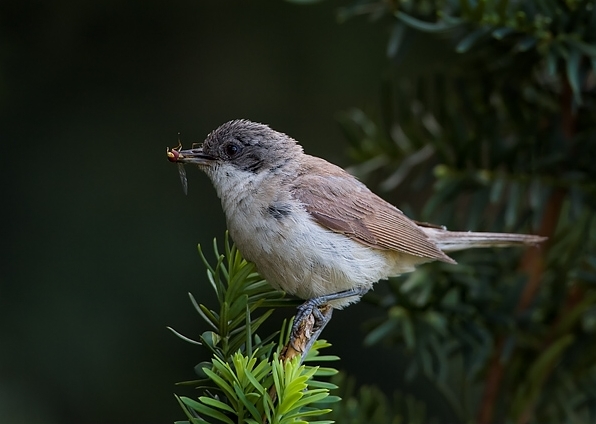
Wikipedia: Lesser whitethroat Quelle: WIKIPEDIA
Sylvia_curruca_1_%28Martin_Mecnarowski%29.jpg
Zuerst beobachtet in 🇨🇭 an 2023-05-27.
Beschreibung
Allgemein: Wollte diese in Klettgau suchen 2023, bin darüber gestolpert bei Bad Vilbel, Deutschland.Allgemein: Deutschland: Brut-, Zugvogel
Saisonal:
Nach ihrer Ankunft im April oder Mai verrät sich diese rastlose und geschickt durch das Geäst hüpfende Grasmücke am ehesten durch ihren Gesang. Das eintönige Klappern ist weithin hörbar und hat ihr den deutschen Artnamen eingebracht. Das Männchen versucht, ein im Revier erscheinendes Weibchen durch Vorausfliegen zu einem Wahlnest zu locken. [Link]
Saisonales Verhalten
Präsenz: 04-01 - 10-07 Brut: 05-21 - 08-09 Migration rein: 04-01 - 05-31 Migration raus: 07-29 - 10-07Weitere Infos at Vogelwarte.ch
Weitere Infos
Physikalische Details
Körperlich: Länge=12-13 cm, Flügelspanne=16-20 cm, Gewicht=10-14 gHabitate: Landwirtschaft
Vokalisierung
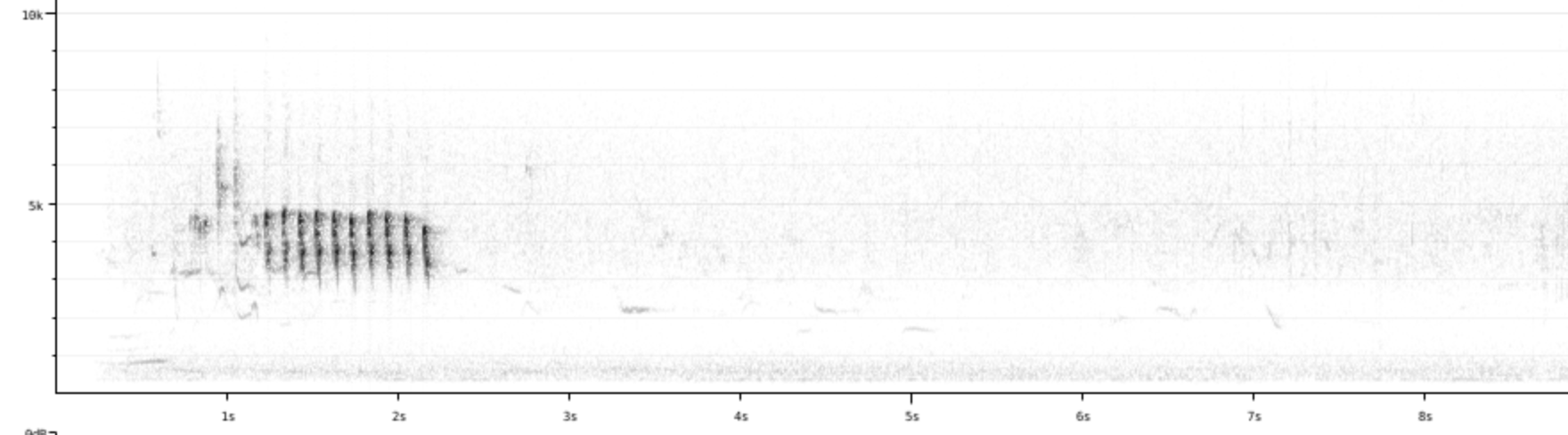
Gesang:Song typically consists of two parts. An indistinct chattering and warbling, subsong-like part similar to [common] Whitethroat, which is usually followed by a dry, fast and rattling trill. The trill carries much further than the chattering part. May be difficult to identify if trill is omitted. [Link]
Gesang: Klappernd. (Müllerchen) An Berglaubsänger erinnernd. Klappertöne (5-8) Aber oft mit leisem schwatzendem Vorgesang, der fehlen kann. Kann auch an Sumpfmeise erinnern, doch sind bei dieser die Klappertöne mehr von oben her angeschlagen.
[Link]
Song typically consists of two parts. An indistinct chattering and warbling, subsong-like part similar to Whitethroat, which is usually followed by a dry, fast and rattling trill. The trill carries much further than the chattering part. May be difficult to identify if trill is omitted. [Link]
Gesang Eigenschaften:
Melody: einfach rhythmisch, langsam, Frequency: 3-5 KHz Special sounds: Triller
♫ Quelle: XENOCANTO XC652419 - Lesser Whitethroat - Sylvia curruca - song.mp3 (Gesang)
Rufe:
„tze“ oder „tett“
[Link]
Warning call a hard "check" similar to Blackcap but slightly softer. [Link]
BirdID says: Warning call a hard "check" similar to Blackcap but slightly softer
♫ Quelle: OTHER 575779 (Ruf)
Ruf Eigenschaften: Ruf Melodie: einnotig, langsam, Frequenz: 2-7 KHz, Spezielle Klänge: stottern/kieseln.
Vollprofil

Mönchsgrasmücke. 2024-05-16 12:18:58 Kaltbrunner-Riet
Zuerst beobachtet in 🇨🇭 an 2019-08-30.
Beschreibung
Allgemein: On a tree branch, but not usually on the treetop.Allgemein: Deutschland: Brut-, Zugvogel
Etymologie:
Häufig vorkommender, kleiner, grau-weisser Vogel mit schwarzem Mönchs-Tonsur.
Der Name hat weder mit Gras, noch mit Mücken zu tun! Es stammt nach Wikipedia 'aus dem Althochdeutschen von Gra-smucka = Grauschlüpfer'. [Link]
Saisonales Verhalten
Jahresvogel Brut: 04-20 - 08-09 Migration rein: 02-20 - 05-10 Migration raus: 08-18 - 10-27Weitere Infos at Vogelwarte.ch
Weitere Infos
Physikalische Details
Körperlich: Länge=13 cm, Flügelspanne=20-23 cm, Gewicht=16-25 gHabitate: Wald, Landwirtschaft
Vokalisierung
Gesang: They sometimes sing like a blackbird on speed - also non-stereotypic, seemingly improvised, in short bursts. Our local guy ends most of his songs with the same seven notes, which I find a good way to confirm the identification. In Ticino we often heard the 'Leiern' sound - the warblers would sing just the first 3 notes of a longer song, then stop. The order varied; high-medium-low I call 'Figaro' as in the opera, low-high-medium 'whiskey bar', as it sounded to me like the Kurt Weill lyrics, 'O-oh-show me-the-way to-the-next whis-ke-bar' - but the warbler usually stopped after 'way' or 'next' The British authors of The Sound Approach claim to hear 'a warblel and a whistle'. Gesang:Mit schwätzendem Vorgesang, (kann auch kurz sein oder ganz fehlen) der dann in klare, kräftige, zum Ende hin in wehmütige Flötentöne übergeht (Überschlag)
[Link]
Song pleasing, varied and loud. Sometimes very similar to Garden Warbler. A typical phrase starts with soft, staccato chattering and mimicry, which after a few seconds changes to a much louder, pure and resonant stream of notes for about 3-5 seconds. No fixed motif, but may end phrases with recurring notes. Often deviates from the characteristic type of song, and identification from song alone may be impossible. May sing first part of song for extended periods without ever reaching the characteristic ending. [Link]
Gesang Eigenschaften:
Melody: improvisiert melodisch (hml), schnell, Frequency: 2-5 KHz Special sounds: Mimikry Singing season: 03-01 - 07-31 Dawn chorus start: 45 minutes before dawn.
♫ 2021-03-31 19:12:00 Quelle: BirdNet 20210331_191200 birdnet 1356 - Eurasian Blackcap hml - 2021-03-31 19:12:00 - Eurasian Blackcap - Lugano.mp3 Lugano (Gesang)
♫ 2023-06-20 07:52:22
Quelle: Zoom H6/H2n Bolle di Magadino (Gesang)♫ 2024-05-15 05:27:28
Quelle: Zoom H6/H2n Luppmen (Gesang)Rufe:
„täck“ oft wiederholt
[Link]
Alarm call a hard "check", similar to Lesser White-throat. Sometimes with an additional hoarse and nasal "cherrrr". [Link]
1:
General: Sputtery/stoney, but may have other calls too.Call:
The Blackcap may generate a perplexing variety of territorial calls, though the typical contact call is a hard, tongue-clicking "teck teck" which has a scolding quality to it. It's not dissimilar to the 'pebble-clacking' call of the Stonechat. [Suffex Wildlife Trust]
XC546030 black cap warbler so-called tac and djii call.
♫ Quelle: XENOCANTO XC546030 black cap warbler so-called tac and djii call.mp3 (Ruf)

2: No details but a Xeno-Canto recording.
XC548858-20200411 Eurasian Blackcap, alarm call part of advertising song, male, Flughafen Belpmoos, Bern, Switzerland.
♫ Quelle: XENOCANTO XC548858-20200411 Eurasian Blackcap, alarm call part of advertising song, male, Flughafen Belpmoos, Bern, Switzerland.mp3 Schweiz (Alarmruf)

Ruf Eigenschaften: Ruf Melodie: einnotig, langsam, Frequenz: high (3-9 KHz), Spezielle Klänge: stottern/kieseln.
Vollprofil
 weiblich.jpg)
Wikipedia Sommergoldhähnchen (Regulus ignicapilla) weiblich. Quelle: WIKIPEDIA
Wikipedia Sommergoldhaehnchen_(Regulus_ignicapilla) weiblich.jpg
Zuerst beobachtet in 🇨🇭 an 2020-05-09.
Beschreibung
Allgemein: Zusammen mit dem Wintergoldhähnchen der kleinste Vogel der Schweiz.Allgemein: Obwohl es Zugvögel sind, kann man ein paar in der Schweiz bebachten - obwohl von den Namen her man würde das Wintergoldhähnchen aber nicht das Sommergoldhähnchen erwarten.
Allgemein: I heard one in the woods by Neschwil. Unfortunately, they prefer perches in the tops of trees, which were 30m or more tall - little chance of seeing one, even if we had lingered.
Allgemein: Deutschland: Brut-, Zugvogel
Vokalisierung:
A slow crescendo of short "tze" sounds in a phrase rising slightly in pitch, without the repeated arpeggiated movements of goldcrest. [Link]
Saisonales Verhalten
Jahresvogel Brut: 04-20 - 07-20 Migration rein: 03-01 - 05-01 Migration raus: 08-09 - 11-06Weitere Infos at Vogelwarte.ch
Weitere Infos
Physikalische Details
Körperlich: Länge=9 cm, Flügelspanne=13-16 cm, Gewicht=4-6 gHabitate: Wald
Vokalisierung
Gesang: Very high rhythmic repetition of about 3 seconds Gesang:Wie [beim Wintergoldhähnchen] aber auf gleicher Tonhöhe bleibend. [Link]
Song: Similar in timbre to Goldcrest, but much more monotonous. [Link]
Gesang Eigenschaften:
Eselsbrücke Noten vom 'Sommer' steigen wie die Temperaturen Melody: einfach rhythmisch, schnell, Frequency: 6-8 KHz
Rufe:
„sisisi“ [Link]
Call: a thin "tsi tsi tsi" similar to Goldcrest, but not so sharp. [Link]
No details but a Xeno-Canto recording.
XC933773 - Common Firecrest call - Regulus ignicapilla.
♫ Quelle: XENOCANTO XC933773 - Common Firecrest call - Regulus ignicapilla.mp3 (Ruf)

Ruf Eigenschaften: Gesang Frequenz: ,
Vollprofil
Profil Wikipedia A-Z Animals Vogelwarte BirdLife ZH ornitho.ch bird-song.ch Audubon AllAboutBirds Xeno-Canto BirdID NABU YouTube

Rauchschwalbe braucht eine Coiffeuse. 2025-08-03 16:54:17 Fehraltorf
Zuerst beobachtet in 🇨🇭 an 2020-04-16.
Beschreibung
Geographie: Dieser Vogel erscheint jenseits grossen Meere in Kontinenten : Europa, Nordamerika, Südamerika, Afrika, Asien.Allgemein: Deutschland: Brut-, Zugvogel RL V
Gut zu wissen: Die langen Schwanzfedern vom Rauchschwalbe und anderen geben auch dem Schmetterling Schwalbenschwanz seine deutschen Namen.
Etymologie:
In früheren Jahrhunderten flogen sie vielfach durch die Öffnungen im Giebel ein und aus, durch die auch der Rauch des Herdfeuers abzog. So erhielten sie den Namen Rauchschwalben. [Link]
Aussehen und Identifizierung:
Rauchschwalbes Bauch ist etwas braun rot, nicht weiss wie der von der Mehlschwalbe - was wahrscheinlich Quelle der zwei Namen ist. [Link]
Saisonales Verhalten
Präsenz: 03-01 - 10-27 Brut: 04-20 - 09-17 Migration rein: 03-01 - 05-31 Migration raus: 08-18 - 10-27Weitere Infos at Vogelwarte.ch
Weitere Infos
Physikalische Details
Körperlich: Länge=17-19 cm, Flügelspanne=32-34 cm, Gewicht=16-22 gHabitate: Siedlung
Ähnliche Arten
Sieht ähnlich aus wie: Mehlschwalbe.Vokalisierung
Gesang: General: Squeaky with occasional buzzes, usually heard in flock.Song:
Kann melodisch sein wenn einzeln gehört statt viele zusammen. [Link]
Gesang: Characteristic calls and song. Song a sparkling, squeaky energetic improvisation with interspersed contact calls, often with diagnostic ending; an electric and drawn-out "su-eerrrrrrrrrrrrrrr". [Link]
Gesang Eigenschaften:
Melody: stereotypisch melodisch, schnell, Frequency: 2-6 KHz
Rufe:
Contact call a short and sharp "weet" or "kee-weet". [Link]
XC898815 - Barn Swallow - Hirundo rustica - flight call.
♫ Quelle: XENOCANTO XC898815 - Barn Swallow - Hirundo rustica - flight call.mp3 (Flugruf)

Ruf Eigenschaften: Flugruf Ruf Melodie: einnotig, langsam, Frequenz: medium (1-5 KHz),
Vollprofil

MerlinBirdID meint Mehlschwalbe. 2022-05-21 10:11:56 Leuk
Zuerst beobachtet in 🇨🇭 an 2020-08-10.
Beschreibung
Allgemein: This one is a swallow in German but a martin in English.Allgemein: Deutschland: Brut-, Zugvogel RL V
Etymologie:
Der Kontaktlaut ist ein hartes trieer, gelegentlich lautmalerisch auch als chirrp umschrieben. [Link]
Saisonales Verhalten
Präsenz: 03-23 - 10-27 Brut: 05-21 - 09-28 Migration rein: 03-23 - 06-09 Migration raus: 08-18 - 10-27Weitere Infos at Vogelwarte.ch
Weitere Infos
Physikalische Details
Körperlich: Länge=12 cm, Flügelspanne=26-29 cm, Gewicht=15-23 gHabitate: Siedlung
Ähnliche Arten
Sieht ähnlich aus wie: Rauchschwalbe.Vokalisierung
Gesang: Song:Mehlschwalbe klingt weniger melodisch als der Rauchschwalbe [Link]Merry improv of chirping, contact call [Link]
Gesang: Song a merry improvisation of chirping, contact call-like sounds (sometimes recalling a budgerigar). [Link]
Gesang Eigenschaften:
Melody: stereotypisch melodisch, schnell, Frequency: 2-7 KHz
♫ Quelle: XENOCANTO XC730813 - Common House Martin - Delichon urbicum - song and call according to recordist Fernando Aranguren Jiménez, recorded in Spain.mp3 Spanien (Gesang)

Rufe:
Contact call a rolling "krreet". Similar to Sand Martin but noticeably dryer, more rolling and less raucous. Typically varies the pitch of the call more. Warning call a sharp and plaintive "tsreee". [Link]
1:
Heard from in the air, loud, with lots of chirps!
2:
XC742347 - Common House Martin - Delichon urbicum - flight call, recorded in Spain.
♫ Quelle: XENOCANTO XC742347 - Common House Martin - Delichon urbicum - flight call, recorded in Spain.mp3 Spanien (Flugruf)
 Birdnet 864 flight call - Common house martin.
♫ 2020-08-10 14:45:28 Quelle: BirdNet 20200810_144528 birdnet 864 flight call - Common house martin.mp3 Luppmen (Flugruf)
Ruf Eigenschaften: Ruf Melodie: einfach rhythmisch, schnell, Frequenz: 4-7 KHz,
Vollprofil

Wikipedia: Common grasshopper warbler Quelle: WIKIPEDIA
Grashoppsangare-070512.jpg
🔍
Never observed (yet!)
Beschreibung
Allgemein:Der Feldschwirl (Locustella naevia) ist ein Singvogel aus der Gattung der Schwirle (Locustella) und der Familie der Grassänger (Locustellidae). In Mitteleuropa ist diese Art ein verbreiteter und lokal häufiger Brut- und Sommervogel.
[mehr]
Deutschland: Brut-, Zugvogel RL 3
Saisonales Verhalten
Präsenz: 04-11 - 10-07 Brut: 05-01 - 07-29 Migration rein: 04-11 - 06-09 Migration raus: 07-29 - 10-07Weitere Infos at Vogelwarte.ch
Weitere Infos
Physikalische Details
Körperlich: Länge=12-13 cm, Flügelspanne=15-19 cm, Gewicht=11-16 gHabitate: Nassgebiet
Ähnliche Arten
Gesang oder Rüfe ähnlich wie: Rohrschwirl.Vokalisierung
Gesang: Buzzing like an insect or machinery. BirdLife Schweiz says like a grasshopper (which is after all the English name). Gesang:Sehr lang anhaltendes Schwirren. Die einzelnen Schlage noch zu erkennen. Der Klang erinnert etwas an Heuschreckenzirpen (alter Name Heuschreckenrohrsänger, langer Name, lange Strophe) und klingt etwas blechern., d.h. Mit Oberton. (fast wie ein Wecker bei dem man den Finger etwas auf die Glocke hält)
[Link]
Song insect-like and high-pitched. A monotonous stream of even clicks similar to a running fishing line. Maintained for seemingly endless periods, and often hard to locate. Song most similar to Savi's Warbler but is slower (each click more separated), and higher pitched with a metallic, ringing quality. Short sequences of song also functions as contact call. Also a Robin-like "tick". [Link]
Gesang Eigenschaften:
Melody: einfach rhythmisch, schnell, Frequency: 5-8 KHz
Vollprofil

Wikipedia - Rohrschwirl Chiemgau. Quelle: WIKIPEDIA
Wikipedia - Rohrschwirl_Chiemgau.jpg
Zuerst beobachtet in 🇨🇭 an 2022-06-04.
Beschreibung
Allgemein:Der Rohrschwirl (Locustella luscinioides) ist ein Singvogel aus der Familie der Grassänger (Locustellidae). Es werden drei Unterarten unterschieden.
[mehr]
Deutschland: Brut-, Zugvogel
Saisonales Verhalten
Präsenz: 04-01 - 08-29 Brut: 05-01 - 08-09 Migration rein: 04-01 - 05-31 Migration raus: 07-29 - 08-29Weitere Infos at Vogelwarte.ch
Weitere Infos
Physikalische Details
Körperlich: Länge=14 cm, Flügelspanne=18-21 cm, Gewicht=14-16 gHabitate: Nassgebiet
Ähnliche Arten
Gesang oder Rüfe ähnlich wie: Feldschwirl, Ziegenmelker.Vokalisierung
Gesang: Endless buzzing like an insect or machinery. Lower tone than Feldschwirl. Gesang:Gesang ähnlich obiger Art [Feldschwirl]. Tiefere Tonlage, höhere Frequenz. Strophen meist kürzer
[Link]
Song insect-like and high-pitched. A monotonous stream of even clicks similar to the whirring of a sewing machine. Song most similar to Grasshopper Warbler but faster (each click hard to distinguish), and lower pitched with less, ringing quality, due to less prominent high frequencies. At closer range a Robin-like, accelerating ticking is heard, introducing the actual song. [Link]
Gesang Eigenschaften:
Melody: einfach rhythmisch, schnell, Frequency: 3-5 KHz
♫ Quelle: XENOCANTO XC710242 - Savi's Warbler - Locustella luscinioides - song.mp3 (Gesang)

Vollprofil
Profil Wikipedia Vogelwarte BirdLife ZH ornitho.ch bird-song.ch Xeno-Canto NABU YouTube

Kernbeisser bei Staldenweiher etwa 30m hoch in einem Baum. 2025-03-09 10:19:54 Staldenweiher
Zuerst beobachtet in 🇨🇭 an 2025-02-10.
Beschreibung
Allgemein:The hawfinch (Coccothraustes coccothraustes) is a passerine bird in the finch family Fringillidae. It is the only species placed in the genus Coccothraustes. Its closest living relatives are the Chinese grosbeak (Eophona migratoria) and Japanese grosbeak (Eophona personata) of East Asia, and the evening grosbeak (Hesperiphona vespertina) and hooded grosbeak (Hesperiphona abeillei) of North America.
[mehr]
Deutschland: Brut-, Jahres-, Zugvogel, Wintergast
Saisonales Verhalten
Jahresvogel Brut: 04-20 - 07-10 Migration rein: 02-10 - 04-20 Migration raus: 08-29 - 11-15Weitere Infos at Vogelwarte.ch
Weitere Infos
Physikalische Details
Körperlich: Länge=18 cm, Flügelspanne=29-33 cm, Gewicht=46-70 gHabitate: Wald
Vokalisierung
Gesang: No details but a Xeno-Canto recording. Gesang Eigenschaften: Frequency:♫ 2024-10-31 13:29:37 Quelle: BIRDWEATHER 20241031_132937-Birdweather-Hawfinch.mp3 Greater Fehraltorf (Gesang)
Rufe:
Most typical call a sharp and explosive "tzek", with abrupt, emphasized, cut-off ending. Quite similar to Robin, but harder, with each syllable marginally longer with a slightly wheezing timbre. Repetitions are slower and more singular than Robin. Diagnostic when interspersed with high frequency notes. [Link]
Found no references to song
XC712663 - Hawfinch - Coccothraustes coccothraustes - whit whit tsirp, recorded in Sweden, redubbed by me to a call.
♫ Quelle: XENOCANTO XC712663 - Hawfinch - Coccothraustes coccothraustes - whit whit tsirp, recorded in Sweden, redubbed by me to a call.mp3 (Ruf)

Ruf Eigenschaften: Ruf Melodie: einnotig, schnell, Frequenz: 4-8 KHz,
Vollprofil
Profil Wikipedia Vogelwarte BirdLife ZH ornitho.ch bird-song.ch Xeno-Canto BirdID NABU YouTube

The most common yellowhammer dialects shown at the yellowhammers.net project - so cool! Most Swiss dialects shown on their map are XlB. In my own recordings so far, I hear (and on the sonograms see) a pause after the initial phrase rather than a higher note. I'd like to follow that further. Quelle: OTHER
Yellowhammers.net dialect graphs.jpg
Zuerst beobachtet in 🇨🇭 an 2020-05-26.
Beschreibung
Allgemein: Deutschland: Brut-, Jahres-, Zugvogel, Wintergast RL VPersönlich gemerkt: Habe ihn im Fehraltorfer-Wald endlich gesehen als er von einem Baum in die Spitze eines anderen geflogen ist.
Etymologie: Ich dachte, es ist komisch, dass diese Vögel auf deutsch Ammer und Englisch Hammer heissen. Hammer scheint gar nicht logisch und Ammer ist nicht klar. Die Wikpedia Seite für Bunting auf Englisch sagt The genus name Emberiza is from Old German Embritz, a bunting.[6] The origin of the English "bunting" is unknown. - also Ammer ist nur eine andere Ausspracher von Embritz.
Etymologie:
Sie werden lautmalerisch mit tsr, zik oder zrk umschrieben. [Link]
Verhalten: Vogelwarte.ch: besiedelt am liebsten Kulturlandschaften mit Hecken, Obstgärten, Äckern und Wiesen. Bei uns im Wald am Rand von einem Ackerfeld gehört. Die Brust weist ein Muster aus, das mich etwas an Drossel erinnert, obwohl sie anscheinend gar nicht eng verwandt mit den sind.
Saisonales Verhalten
Jahresvogel Brut: 04-15 - 09-05 Migration rein: 01-05 - 12-05 Migration raus: 01-06 - 02-20Weitere Infos at Vogelwarte.ch
Weitere Infos
Physikalische Details
Körperlich: Länge=16 cm, Flügelspanne=23-29 cm, Gewicht=25-36 gHabitate: Landwirtschaft
Vokalisierung
Gesang: Stakkato 2-Noten-Sequenz wird 10-12 mal wiederholt, mit Pause oder höhere Note und Pfiff am Ende. In der Schweiz höre ich (und andere) meistens den XlB-Dialekt, was Pavel Pipek vom yellowhammers.net Projekt erklärt heisst eine Silbe mit hoher Note und lang gezogen (Xl) und am schluss eine tiefe Frequenz (B). Vogelwarte.ch schreibt: Bereits im zeitigen Frühjahr trägt das Männchen seinen einfachen Gesang vor: «Wie, wie, wie, wie hab ich dich lieb». Bolzari und Gygax in Vogelarten der Schweiz sind weniger poetisch aber hilfreicher mit der Beschreibung: vzizizizizizizi-düüüh. Gesang:Kurzes Liedchen. „ Wie wie wie hab ich dich liiieb“ Das „Lieb“ ist meist etwas tiefer, kann aber auch höher sein oder doppelt, dabei das eine höher und das andere tiefer. Sehr variabel!
[Link]
Song a series of 6-8 (or more) slightly ascending "tze" 's, rising in volume and ending on a sustained note, which may be lower or higher than the others. Often rendered as "little-bit-of-cheese-and-no-bread". Last note is often omitted, which may lead to confusion with Cirl Bunting. Timbre with prominent harmonics as in other bunting songs. [Link]
Gesang Eigenschaften:
Melody: einfach rhythmisch, schnell, Frequency: 4-8 KHz Singing season: 03-01 - 09-30 Dawn chorus start: 45 minutes before dawn.
Rufe:
„zick“ „zeck“
[Link]
Distinct contact call: A short and brittle "zeet", rich in harmonics. [Link]
No details but a Xeno-Canto recording.
Call recorded in UK, sounds typical to me, and spiced up by a yellowhammer in the background and several other birds
♫ Quelle: XENOCANTO XC444002 - Willow Warbler - Phylloscopus trochilus trochilus - call in UK, with yellowhammer in background.mp3 (Ruf)

Ruf Eigenschaften: Gesang Frequenz: ,
Vollprofil

Wahrscheinlich ein Grauammer, die wurden auch durch MerlinBirdID gemeldet. 2022-04-08 14:27:44
Zuerst beobachtet in Mallorca an 2022-04-08.
Beschreibung
Allgemein: Deutschland: Brut-, Jahres-, Zugvogel, Wintergast RL 3Etymologie:
[4] Die Strophe lässt sich lautmalerisch etwa wie „tück tück-zick-zik-zkzkzkrissrisss“ wiedergeben. [Link]
Geographie:
Eher selten in CH. [Link]
Vokalisierung:
Repeated in a monotonous manner, to form a typical soundscape of fields where it is numerous. Often compared to the sound of a chain of small keys. The phrase starts with a few staccato, ticking sounds that progress into a dry trill, followed by a short ritardando. [Link]
Saisonales Verhalten
Jahresvogel Brut: 05-10 - 08-09 Migration rein: 02-20 - 04-11 Migration raus: 09-07 - 11-15Weitere Infos at Vogelwarte.ch
Weitere Infos
Physikalische Details
Körperlich: Länge=17-18 cm, Flügelspanne=26-32 cm, Gewicht=35-63 gHabitate: Landwirtschaft
Vokalisierung
Gesang: General: Song is an ascending trill or buzz that climbs about an octave - 4-8 KHz.Song:
Gesang steigend und immer schneller wie .... was? [Link]
Gesang: Sieht für mich eher braun aus als der Grau im Namen, mit einem Finken-Schnabel und Striche oben auf der Brust wie ein Drossel [Link]
Song diagnostic. A brittle, jingling and accelerating phrase of about 2 seconds duration. [Link]
Gesang Eigenschaften:
Melody: stereotypisch melodisch, schnell, Frequency: 4-8 KHz Special sounds: Triller, aufsteigend
♫ Quelle: XENOCANTO XC632949 - Corn Bunting - Emberiza calandra - song.mp3 (Gesang)

Vollprofil

Rohrammer von Fanel-Platform aus. 2024-05-22 18:08:53 Fanel/Chablais de Cudrefin und La Sauge
Zuerst beobachtet in 🇨🇭 an 2020-04-27.
Beschreibung
Allgemein: Deutschland: Brut-, Zugvogel, WintergastAussehen und Identifizierung:
A bit like General Burnsides: white sideburns, here curling back around a black head. [Link]
Saisonales Verhalten
Jahresvogel Brut: 04-20 - 07-29 Migration rein: 02-10 - 04-20 Migration raus: 09-17 - 11-26Weitere Infos at Vogelwarte.ch
Weitere Infos
Physikalische Details
Körperlich: Länge=15-16 cm, Flügelspanne=21-28 cm, Gewicht=16-25 gHabitate: Nassgebiet
Ähnliche Arten
Sieht ähnlich aus wie: Haussperling.Vokalisierung
Gesang: General: At Fanel I heard sequences of whistles and trills (buzzes?), just a few notes, but wandering up and down: m h lll, or l m hhh m. Listen to recording of 2022-06-25 13.37.28Song:
Oft 4 Noten: mlhl [Link]BirdID: A short sequence of 3-5 brittle and buzzing sounds, repeated consistently with marked pauses. Last sound in phrase often has a conclusive feel, but not always. [Link]
Gesang: Song variable between individuals and breeding status: A short sequence of 3-5 brittle and buzzing sounds, repeated consistently with marked pauses. Last sound in phrase often has a conclusive feel, but not always. Paired males sing slower than unpaired. Unpaired male song also more contracted, making the pauses between each phrase stand out. [Link]
Gesang Eigenschaften:
Melody: stereotypisch melodisch (mllllm), langsam, Frequency: 3-7 KHz Special sounds: Triller
♫ Quelle: XENOCANTO XC723277 - Common Reed Bunting - Emberiza schoeniclus - song.mp3 (Gesang)

♫ 2022-06-25 13:37:28 Quelle: BirdNet 20220625_133728 birdnet - Rohrammer - Rohrammer - Neuchâtel.mp3 La Sauge (Gesang)
♫ Quelle: XENOCANTO XC665288 - Common Reed Bunting - Emberiza schoeniclus schoeniclus - song.mp3 (Gesang)

♫ Quelle: XENOCANTO XC694863 - Common Reed Bunting - Emberiza schoeniclus - song.mp3 (Gesang)

♫ Quelle: XENOCANTO XC719864 - Common Reed Bunting - Emberiza schoeniclus - song.mp3 (Gesang)

♫ Quelle: XENOCANTO XC656275 - Common Reed Bunting - Emberiza schoeniclus - song.mp3 (Gesang)

♫ Quelle: XENOCANTO XC572969 - Common Reed Bunting - Emberiza schoeniclus - song.mp3 (Gesang)

Rufe:
Contact call a sharp, descending and drawn "tseeeoo". A bit similar to Yellow Wagtail, but not as sharp and explosive. In migration a thick, and unmusical "chong" is often heard. [Link]
No details but a Xeno-Canto recording.
XC884544 - Common Reed Bunting - Emberiza schöniclus - swooping call.
♫ Quelle: XENOCANTO XC884544 - Common Reed Bunting - Emberiza schoeniclus - swooping call.mp3 (Ruf)

Ruf Eigenschaften: Gesang Frequenz: ,
Vollprofil

Gebirgsstelze am Bach beim Klingnauer Stausee. 2022-02-05 14:16:30 Klingnauer Stausee
Zuerst beobachtet in 🇨🇭 an 2022-02-05.
Beschreibung
Allgemein: Yellow breast and butt end, white belly, light grey head and back, white eye stripe and stripe above black beard, dark wings with 3 white V's, long tail.Allgemein: Deutschland: Brut-, Jahres-, Zugvogel, Wintergast
Saisonales Verhalten
Jahresvogel Brut: 03-23 - 08-29 Migration rein: 02-20 - 04-01 Migration raus: 08-18 - 10-27Weitere Infos at Vogelwarte.ch
Weitere Infos
Physikalische Details
Körperlich: Länge=18-19 cm, Flügelspanne=25-27 cm, Gewicht=14-22 gHabitate: Nassgebiet
Vokalisierung
Gesang:BirdID says Song simple but variable. I hear trills up to 2 seconds long and chirps. Another description says a series of calls, not very melodic. I noted zwitx3, sometimes hhhhhll. [Link]
Gesang: Song simple but variable. Sometimes with more elaborate song-flight like White Wagtail. [Link]
Gesang Eigenschaften:
Melody: stereotypisch melodisch, schnell, Frequency: high (3-9 KHz) Special sounds: Triller
♫ Quelle: XENOCANTO XC767550 - Grey Wagtail - Motacilla cinerea - song with trills and a cheek-cheek.mp3 (Gesang)

♫ Quelle: XENOCANTO XC757193 - Grey Wagtail - Motacilla cinerea - one-note song recorded in Germany.mp3 (Gesang)

Rufe:
Contact call short, metallic and with a clipped ending. Often disyllabic, "tzeet-tzeet", with each syllable more separated than in White Wagtail, and timbre more "dirty". Often starts with the contact call, followed by short melodic phrases. [Link]
1:
Birdweather hat ein-Noter aufgenommen.
XC854585 - Grey Wagtail - Motacilla cinerea - 2-note call.
♫ Quelle: XENOCANTO XC854585 - Grey Wagtail - Motacilla cinerea - 2-note call.mp3 (Ruf)

2: Ich habe zwei-noter lh lhhh notiert, wahrscheinlich von Birdweather?
3: No details but a Xeno-Canto recording. - but really OWN
Gebirgsstelze bei 5 minuten durch geflogen, evtl Flugruf.
♫ 2024-09-09 08:24:00 Greater Fehraltorf (Flugruf)
Gebirgsstelze bei letzen 30 Sekunden durch geflogen, evtl Flugruf.
♫ 2024-09-09 08:24:00 Greater Fehraltorf (Flugruf)
Ruf Eigenschaften: Ruf Melodie: einnotig, langsam, Frequenz: medium (1-5 KHz),
Vollprofil

Schafstelze, Albufera. 2022-04-12 14:59:06
Zuerst beobachtet in Mallorca an 2022-04-12.
Beschreibung
Allgemein: Yellow, gray head, white mask.Allgemein: Deutschland: Brut-, Zugvogel
Saisonales Verhalten
Präsenz: 03-23 - 10-27 Brut: 05-10 - 07-29 Migration rein: 03-23 - 05-31 Migration raus: 08-09 - 10-27Weitere Infos at Vogelwarte.ch
Weitere Infos
Physikalische Details
Körperlich: Länge=17 cm, Flügelspanne=23-27 cm, Gewicht=14-21 gHabitate: Nassgebiet
Ähnliche Arten
Sieht ähnlich aus wie: Brachpieper.Vokalisierung
Gesang: Just a few notes, call seems to be common but song rare. Very short chirp of ~ 1 sec, long pause of 3 secs. At Wauwilermoos it seemed to be 'Twee tweetwee (higher note:) twee!' Gesang:Song primitive and less striking. Beware differences in calls and songs between different subspecies. [Link]
Gesang Eigenschaften:
Melody: stereotypisch melodisch, langsam, Frequency: 3-9 KHz
♫ Quelle: XENOCANTO XC721189 - Western Yellow Wagtail - Motacilla flava cinereocapilla - song.mp3 (Gesang)

Rufe:
Contact call characteristic and widely used; a sharp, drawn out "pseeeoo" with an accented ending falling in pitch. A variable phrase with two or three notes resembling the contact call in timbre. [Link]
General: Single note repeatedSong:
sperling ähnliches lh lh lh. Dachte die wären melodisch?? Nein. BL chirpy ml ml [Link]
XC653784 - Western Yellow Wagtail - Motacilla flava flavissima - call.
♫ Quelle: XENOCANTO XC653784 - Western Yellow Wagtail - Motacilla flava flavissima - call.mp3 (Ruf)

Ruf Eigenschaften: Ruf Melodie: einnotig, langsam, Frequenz: 3-9 KHz, Spezielle Klänge: absteigend.
Vollprofil
Kohlmeise / Great tit (Parus major)
Profil Wikipedia Vogelwarte BirdLife ZH ornitho.ch bird-song.ch Xeno-Canto NABU YouTube

Junge Kohlmeise, Bahnhofstrasse 53, Fehraltorf. 2024-06-13 13:53:49 Fehraltorf
Zuerst beobachtet in 🇨🇭 an 2019-04-22.
Beschreibung
Allgemein: Most common year-round bird at our house. Often seen at the suet balls we hang out, or in fall at our sunflowers. It's said that they will sound a false alarm at a feeding source, knowing that other birds listen for their alarms and flee! There are many entertaining stories in the Norwegian book 'The Secret Life of Small Birds'.Allgemein: Ein Lieblingsbeutetier des Sperbers, wobei Katzen sicher mehr davon fressen.
Allgemein: They flit from tree to tree in small scattered groups, and often avail themselves of the seeds on our sunflowers. They can be heard on the Luppman in Fehraltorf at any time of year and day.
Allgemein: Deutschland: Brut-, Jahres-, Zugvogel, Wintergast
Etymologie:
(Conrad) Gessner also notes that the coal tit was known as Kohlmeiß in German – the literal equivalent of its English name, though in its modern orthography Kohlmeise it refers to the great tit (Parus major). That bird was in Gessner's day usually called Spiegelmeiß ("multicoloured tit"[5]), Brandtmeiß ("burnt tit") or grosse Meiß ("great tit") in German. [Link]
Verhalten:
'Studies in Europe on tits showed a 2-way doubly asymmetric interaction: the great tit (Parus major) is dominant over the blue tit (Cyanistes caeruleus)
during the nonbreeding season (Haftorn 1993), and the smaller blue tit is competitively dominant during the breeding season (Dhondt 1989).'
Another cited work notes that the coal tit is considered the bottom of the hierarchy in Scandinavia. [Interspecific dominance relationships and hybridization between black-capped and mountain chickadees | Behavioral Ecology]
Like all tits it is a cavity nester, usually nesting in a hole in a tree. [Link]
Sie lernen voneinander und sogar von den verwandten Blaumeisen und finden neue Nahrungsquellen. Aber sie merken es sich auch, wenn sie sehen das andere Vögel etwas fressen, was ihnen nicht zukömmlich ist. [Schlaue Kohlmeisen gucken voneinander ab]
Saisonales Verhalten
Jahresvogel Brut: 03-23 - 08-09 Migration rein: 02-10 - 03-23 Migration raus: 09-07 - 10-27Weitere Infos at Vogelwarte.ch
Weitere Infos
Physikalische Details
Körperlich: Länge=14 cm, Flügelspanne=22-25 cm, Gewicht=14-22 gHabitate: Siedlung
Vokalisierung
Gesang: Said to have a repertoire as a species of 50 or more different songs, albeit simple ones, up to 10 per individual. Females prefer a male with a large repertoire. One two-note song sounds like a squeaky bed. Gesang: Nabu: Die erste Vogelart, die wir im Jahr hören, ist meistens die Kohlmeise mit ihrem typischen Läuten: "Zip Zäh" oder "Zip zip Zäh". [NABU Experte Lars Lachmann bei Deutschlandfunk Nova]Song highly variable, but usually consisting of two to three notes repeated in a motif. Same birds have many different motifs but generally repeat them many times before switching. Identified by its timbre and often metallic resonant quality, more than by actual phrasing (which is very variable). Often includes buzzing sounds in song. [Link]
Gesang Eigenschaften:
Melody: einfach rhythmisch (llhllh), langsam, Frequency: medium (1-5 KHz) Singing season: 01-01 - 06-30 Dawn chorus start: 30 minutes before dawn.
♫ 2025-01-15 13:28:00 Fehraltorf (Gesang)
♫ 2024-05-02 15:36:26 Fehraltorf (Gesang)
♫ 2026-02-24 16:38:24
Quelle: Zoom H2n Fehraltorf (Gesang)♫ 2025-02-10 14:00:00 Luppmen (Gesang)
♫ 2020-09-30 17:04:29 Quelle: BirdNet 20200930_170429 birdnet 960 lhm glide saw great tit - Great tit - Fehraltorf.mp3 Fehraltorf (Gesang)
♫ 2024-03-22 06:43:22
Quelle: Zoom H6/H2n Staldenweiher (Gesang)♫ 2025-03-30 13:41:00 Schweiz (Ruf)
♫ 2024-03-22 06:46:48
Quelle: Zoom H6/H2n Staldenweiher (Gesang)♫ 2020-10-30 07:20:23 Quelle: BirdNet 20201030_072023 birdnet 1055 hlll - Great tit - Fehraltorf.mp3 Fehraltorf (Gesang)
♫ 2024-09-12 10:10:00 Fehraltorf (Ruf)

♫ 2025-03-17 11:59:59
Quelle: Zoom H2n Schweiz (Gesang)♫ 2020-06-03 09:14:37 Quelle: BirdNet 20200603_091437 birdnet 577 lmh kohlmeise - Great tit.mp3 Hungerseeli (Gesang)
♫ 2024-04-27 09:40:00 Schachen, Tobel Wissbach till Degersheim (Gesang)
♫ 2024-05-15 05:27:28
Quelle: Zoom H6/H2n Luppmen (Gesang)♫ 2025-02-03 15:23:00 Schweiz (Gesang)
♫ 2024-09-09 07:03:00 Greater Fehraltorf (Ruf)
Rufe:
Generally more full-bodied and resonant calls than blue tit, and not so high-pitched. Characteristic Chaffinch-like "tink tink tink" often uttered by male. [Link]
1:
Chuck-a-chuck-a-chuck, sometimes preceded by higher 'wheat!'
Call from Xeno-Canto
♫ Illustrates higher 'wheat' before the 'chuck-a-chuck' Quelle: XENOCANTO XC586723 great tit call wheat chuck-a-chuck.mp3 (Ruf)
 Call from Xeno-Canto
♫ Quelle: XENOCANTO XC592152 great tit call.mp3 (Ruf)

2: No details but a Xeno-Canto recording. - but really OWN_VIA_ZOOM
Vogelkonzert bei Staldenweiher - Kohlmeise, Buchfink, Tannenmeise, Trommeln von Buntspecht oder Schwarzspecht, Singdrossel.
♫ 2025-03-04 09:25:21
Quelle: Zoom H6/H2n Staldenweiher (Trommeln)Trommeln, Kohlmeise, chattering.
♫ 2024-03-22 06:49:36
Quelle: Zoom H6/H2n Staldenweiher (Trommeln)3: No details but a Xeno-Canto recording.
XC580188 great tit begging call.
♫ Quelle: XENOCANTO XC580188 great tit begging call.mp3 (Bettelruf)
4: No details but a Xeno-Canto recording. - but really OWN
Kontaktrufe Kohlmeise, evtl auch Blaumeisen im Garten, an der Luppmen.
♫ 2021-08-09 08:20:56 Luppmen (Kontaktruf)
Kohlmeise contact call chatter an der Luppmen.
♫ 2020-08-29 07:43:28 Luppmen (Kontaktruf)
5: No details but a Xeno-Canto recording. - but really OWN_VIA_ZOOM
Great tit check alarm call oder täck Ruf.
♫ 2021-09-19 10:13:00
Quelle: Zoom H6/H2n Fehraltorf (Alarmruf)Ruf Eigenschaften: Ruf Melodie: zweinotig, schnell, Frequenz: 1-7 KHz,
Vollprofil
Singdrossel / Song thrush (Turdus philomelos)
Profil Wikipedia eBird Vogelwarte BirdLife ZH ornitho.ch bird-song.ch Xeno-Canto BirdID NABU YouTube

Singdrossel bei Unterer Buchholzweg, Fehraltorf. 2024-05-13 07:33:52 Fehraltorf
Zuerst beobachtet in Île-de-Bréhat an 2019-06-16.
Beschreibung
Allgemein:Die Singdrossel (Turdus philomelos) ist eine Vogelart, die zur Familie der Drosseln (Turdidae) und zur Ordnung der Sperlingsvögel (Passeriformes) gehört. Sie ist in der gemäßigten und der borealen Zone der westlichen und zentralen Paläarktis beheimatet und zählt dort zu den häufigen waldbewohnenden Arten. Europäische Vögel überwintern im Mittelmeerraum. Im Südosten Australiens und in Neuseeland wurde sie Mitte des 19. Jahrhunderts als Neubürger (Neozoon) eingeführt.
[mehr]
Deutschland: Brut-, Zugvogel
Vokalisierung:
Very melodious, varied and a master imitator. Still easily distinguished by its tendency to repeat introductory motives two or more times, and its many high pitched themes. Each phrase is loud and penetrating and the tempo deliberate. [Link]
Saisonales Verhalten
Jahresvogel Brut: 04-01 - 07-10 Migration rein: 02-10 - 04-20 Migration raus: 08-29 - 11-06Weitere Infos at Vogelwarte.ch
Weitere Infos
Physikalische Details
Körperlich: Länge=23 cm, Flügelspanne=33-36 cm, Gewicht=65-100 gHabitate: Wald
Vokalisierung
Gesang: Paced like a blackbird, humorous mix of elements like a nightingale. Huge range, elements from 2-5 KHz, others 6.5-9 KHz. Can sing for up to 50 minutes, and a male may know 100 melodies in its repertoire. Gesang:Klangfarbe ähnlich obiger Art [Amsel], aber jedes Element 2-4mal wiederholt, Pausen zwischen den Phrasen.(klingt oft wie „Philipp“, oder „Judith“) Einzige Drossel unseres Gebietes die diese Wiederholungen macht. Singt oft nicht von Baumspitze aus, sondern aus dem Geäst.
[Link]
Gesang Eigenschaften:
Melody: improvisiert melodisch (mhHL), langsam, Frequency: 2-9 KHz Special sounds: absteigend Singing season: 02-01 - 07-31 Dawn chorus start: 60 minutes before dawn.
♫ 2026-02-24 16:38:24
Quelle: Zoom H2n Fehraltorf (Gesang)Rufe:
Rufe :“zipp“, oft beim abfliegen.
[Link]
Most heard (but easily overlooked) contact call is a dry and very short "zip", sometimes given as a two syllable call "zip-ip". [Link]
1:
One or two high chirps followed by long pause of 1-2 seconds
XC389294 song thrush contact call.
♫ Quelle: XENOCANTO XC389294 song thrush contact call.mp3 (Kontaktruf)
2: No details but a Xeno-Canto recording.
XC570136 song thrush alarm call.
♫ Quelle: XENOCANTO XC570136 song thrush alarm call.mp3 (Alarmruf)
XC570138 song thrush alarm call.
♫ Quelle: XENOCANTO XC570138 song thrush alarm call.mp3 (Alarmruf)
XC918847 - Song Thrush alarm call - Turdus philomelos.
♫ Quelle: XENOCANTO XC918847 - Song Thrush alarm call - Turdus philomelos.mp3 (Alarmruf)
 XC794170 - Song Thrush - Turdus philomelos - alarm call.
♫ Quelle: XENOCANTO XC794170 - Song Thrush - Turdus philomelos - alarm call.mp3 (Alarmruf)
3: No details but a Xeno-Canto recording. - but really OWN_VIA_ZOOM
Singdrossel, trommeln, Gartenbaumläufer 5-noter.
♫ 2024-03-22 06:44:18
Quelle: Zoom H6/H2n Staldenweiher (Trommeln)Singdrossel Gesang, Tannenmeise Gesang, Buntspecht trommeln, Rabenkraeue Rufe.
♫ 2026-02-24 16:11:26
Quelle: Zoom H2n Fehraltorf (Trommeln)Singdrossel, Kohlmeise, Sumpfmeise oder Tannenmeise, Trommeln von Buntspecht oder Schwarzspecht.
♫ 2025-03-04 09:26:58
Quelle: Zoom H6/H2n Schweiz (Trommeln)100 Sekunden von Singdrossel-Gesang, um 4 und 18 usw Sekunden Trommeln eines Buntspechts.
♫ 2025-03-09 09:09:08
Quelle: Zoom H2n Schweiz (Trommeln)Ruf Eigenschaften: Kontaktruf Ruf Melodie: einnotig, langsam, Frequenz: 7-10 KHz,
Vollprofil
Rotkehlchen / European robin (Erithacus rubecula)
Profil Wikipedia Vogelwarte BirdLife ZH ornitho.ch bird-song.ch Xeno-Canto NABU YouTube

Rotkehlchen - sie singen endlich wieder. 2021-10-24 09:57:40 Neeracherried
Zuerst beobachtet in 🇨🇭 an 2020-04-02.
Beschreibung
Allgemein: Rotes Geschicht und rote Brust, Bauch hell, Flügel und Rücken braun und grau.Allgemein: Im Baum singend, oder auf dem Boden auf der Suche nach Futter.
Allgemein: Deutschland: Brut-, Jahres-, Zugvogel, Wintergast
Saisonales Verhalten
Jahresvogel Brut: 04-11 - 08-18 Migration rein: 02-20 - 05-01 Migration raus: 08-18 - 11-15Weitere Infos at Vogelwarte.ch
Weitere Infos
Physikalische Details
Körperlich: Länge=14 cm, Flügelspanne=20-22 cm, Gewicht=14-21 gHabitate: Wald
Vokalisierung
Gesang: General: Hoch aber auch bis tief, z.B. 2.9-7.7 KHz. Wikipedia sagt, 'Der Gesang des Rotkehlchens ist mit 275 nachgewiesenen, sich fortlaufend ändernden Motiven äußerst variabel. [Ein einzelner Vogel lernt teilweise mehr als 30 verschiedene Strophen, sagteChristina Ebneter in BirdLife Feldornithologie-Kurs.] Er wird mit vorgestreckter, das Rot betonender Brust, in der Regel von einer hohen Singwarte aus, vorgetragen. Er beginnt etwa eine Stunde vor Sonnenaufgang und ist noch eine gute Zeit nach Sonnenuntergang zu hören, hauptsächlich jedoch während der Dämmerung.Der Revieranzeigegesang wird normalerweise mit perlenden reinen Tönen und Trillern eingeleitet und fällt gegen Ende langsam ab; hohe metallische Töne werden oft dazwischen eingeschoben. Häufig sind in die 2,5 Sekunden langen Strophen auch undeutliche Imitationsphrasen eingelegt. Auf den Menschen wirkt der Reviergesang lieblich und schwermütig melodiös. Ist das Rotkehlchen hochgradig erregt, verdeutlicht es seinen Willen zur Eskalation durch übertönendes oder störendes Singen.' Ich habe in Ticino und Falera festgestellt, dass die Rotkehlchen immer noch singen und habe es nachher auch daheim im Zürcher Oberland gehört; das Ende des Singen Ende Juli ist anscheinend relativ. Seitdem weiss ich dass es eine der wenigen Vogelarten ist, die auch in Winter ein Territorium verteidigt...darum.
Song:
Only for a short period in late summer while they are moulting and inconspicuous do robins stop singing. Both sexes sing. [RSPB article]
Gesang: Song medium to very high pitched, with mostly clear tones with a liquid quality. Timbre reminiscent of Wren or Dunnock, but with a much more varied structure and tempo. Pitch ranges from very high to low, almost thrush-like, notes. No recognizable motifs. Often ends on a rising or falling pitch, giving it a "Chinese" accent. [Link]
Gesang Eigenschaften:
Melody: improvisiert melodisch, schnell, Frequency: high (3-9 KHz) Special sounds: flöten Singing season: 02-01 - 07-31 Only pauses singing while molting and thus endangered. Dawn chorus start: 50 minutes before dawn.
Rufe:
Alarm call a thin, electric "tick", often in series with decelerating tempo. [Link]
1:
"ticking call", "tik", "tek", .
Personal: A single note usually repeated twice. Somewhat sputtery. BirdID refers to 'a thin, electric "tick". In one source said to be used as alarm call. Call:
A variety of calls is also made at any time of year, including a ticking note indicating anxiety or mild alarm. [Link]
I heard 3 or 4 scattered birds calling it in woods with underbrush but saw no birds. BirdNet told me they were robins, which I found hard to believe, but on comparing it with recordings at XenoCanto, I was convinced! Maybe they were telling each other "Don't show yourself to that alarming guy!".
♫ 2021-07-03 08:05:14 (Ruf)

2: "srii". Low chirpy to sputtery monotone
Xeno-Canto recording by Stanislas Wroza noted as 'srii' call
♫ Quelle: XENOCANTO XC496627 European robin srii call.mp3 (Ruf)

3: "tsii". General: A longer falling note (9Khz-7Khz) called a tsii by the recordist.
Call:
Sound Approach: If you listen carefully you may notice that in the daytime, apart from the ubiquitous tik call, Robins also give a shrill tsi rather frequently. It is this tsi that they adapt for use as a nocturnal flight call. Nfc=night flight call. [Link]
In the sonogram it's a longer, falling note.
♫ Quelle: XENOCANTO XC512416 - European Robin - Erithacus rubecula - named tsii or alarm call by recordist Marcin Solowiej in Poland.mp3 (Alarmruf)

4: Here is an audio of a high-pitched hawk call (7.5-8.5 KHz). See also a YouTube video comparing ground threats from aerial threats.
XC139085 - European Robin - Erithacus rubecula - hawk alarm call from Paul Driver.
♫ Quelle: XENOCANTO XC139085 - European Robin - Erithacus rubecula - hawk alarm call from Paul Driver.mp3 (Alarmruf)
5: No details but a Xeno-Canto recording. - but really OWN_VIA_ZOOM
Volles Konzert - Rotkehlchen, Trommeln eine Buntspechts, Buchfink.
♫ 2025-03-09 10:34:24
Quelle: Zoom H2n Schweiz (Trommeln)Ruf Eigenschaften: Ruf Melodie: einnotig, langsam, Frequenz: 4-9 KHz, Spezielle Klänge: stottern/kieseln.
Vollprofil
Blaukehlchen / Bluethroat (Luscinia svecica)

I had an ID via app for an immature or female bluethroat - which has no blue throat, but long legs and a relatively short tail in comparison - could be this. 2024-02-17 07:02:22 Laos
Zuerst beobachtet in Laos an 2024-02-17.
Beschreibung
Allgemein: Gesucht in Kaltbrunnenriet - in Juni 2022 nicht gefunden.Allgemein: Deutschland: Brut-, Zugvogel seit 2016 nicht mehr auf der Vorwarnliste
Aussehen und Identifizierung: Sparrow-brown head, then strong blue, orange-brown, blue,dark brown, orange-brown, ending in a white belly!
Saisonales Verhalten
Präsenz: 03-12 - 10-07 Brut: 05-01 - 07-29 Migration rein: 03-12 - 05-01 Migration raus: 08-09 - 10-07Weitere Infos at Vogelwarte.ch
Weitere Infos
Physikalische Details
Körperlich: Länge=14 cm, Flügelspanne=20-22 cm, Gewicht=15-25 gHabitate: Nassgebiet
Vokalisierung
Gesang: Often one little phrase or even a single note repeated, a bit like a nightingale? Occasional figaro? Gesang:Song: Structure slightly similar to Nightingale, but tone much thinner and less full-bodied. A good impersonator and various imitations are interwoven among metallic, ringing sounds to form a complex, intriguing song. [Link]
Gesang Eigenschaften:
Melody: improvisiert melodisch, schnell, Frequency: 3-8 KHz Special sounds: Triller
Vollprofil
Nachtigall / Common nightingale (Luscinia megarhynchos)
Profil Wikipedia Vogelwarte BirdLife ZH ornitho.ch bird-song.ch Xeno-Canto BirdID NABU YouTube

Common nightingales - das erste Mal das ich sie gesehen habe und direkt beim Haus in Fehraltorf. 2020-04-19 07:41:56 Fehraltorf
Zuerst beobachtet in 🇨🇭 an 2020-04-19.
Beschreibung
Allgemein:Die Nachtigall (Luscinia megarhynchos) ist eine Vogelart aus der Ordnung der Sperlingsvögel (Passeriformes), Unterordnung Singvögel (Passeres). Nach neueren molekularbiologischen Erkenntnissen zur Phylogenese der Singvögel wird sie heute meist zur Familie der Fliegenschnäpper (Muscicapidae) gestellt. Manchmal findet man sie aber auch heute noch bei den Drosseln (Turdidae) eingeordnet. Die nordöstliche Schwesterart der Nachtigall ist der Sprosser.
[mehr]
Deutschland: Brut-, Zugvogel
Vokalisierung:
It consists of extremely resonant, full-bodied notes and lacks the, dry, rolling, rattling sounds of T.N. Most distinct species specific sound is the interwoven series of slightly ascending, plaintive notes (0.04 - 0.10 in recording). May mimic Thrush Nightningale!. [Link]
Saisonales Verhalten
Präsenz: 04-01 - 09-28 Brut: 05-01 - 07-20 Migration rein: 04-01 - 05-21 Migration raus: 07-20 - 09-28Weitere Infos at Vogelwarte.ch
Weitere Infos
Physikalische Details
Körperlich: Länge=16 cm, Flügelspanne=23-26 cm, Gewicht=17-24 gHabitate: Nassgebiet
Vokalisierung
Gesang: Can be a sequence of unrelated weird but musical sounds - trills, churrs, human-like whistles - very amusing. Gesang:The song is the best characteristic to separate it from T. Nightingale. [Link]
Gesang Eigenschaften:
Melody: improvisiert melodisch, langsam, Frequency: medium (1-5 KHz) Special sounds: Triller, aufsteigend, komisch Singing season: 04-15 - 06-30
♫ Quelle: XENOCANTO XC505897 - Common Nightingale - Luscinia megarhynchos - song, recorded in Spain.mp3 Spanien (Gesang)

Vollprofil
Trauerschnäpper / European pied flycatcher (Ficedula hypoleuca)
Profil Wikipedia Vogelwarte BirdLife ZH ornitho.ch bird-song.ch Xeno-Canto BirdID NABU YouTube

Erster Trauerschnaepper seit Jahren gesehn - im Wald nah beim Naturzentrum. 2024-09-14 17:03:29 Fanel/Chablais de Cudrefin und La Sauge
Zuerst beobachtet in 🇨🇭 an 2020-04-15.
Beschreibung
Allgemein: Deutschland: Brut-, Zugvogel RL 3Etymologie: Vögel mit viel schwarzem Gefieder werden in der Vogelnamensgebung gerne mit dem Wortzusatz „Trauer“ versehen. Denn durch dieses „Trauerkleid“ unterscheiden sie sich von verwandten Arten, die nicht schwarz gefärbt sind. [lbv.de]
Aussehen und Identifizierung:
Kleiner SW Vogel, Kopf schwarz mit weissem Punkt an der Stirn, Bauch weiss. Gesang gar nicht traurig! [Link]
Saisonales Verhalten
Präsenz: 04-01 - 10-18 Brut: 05-01 - 07-20 Migration rein: 04-01 - 05-31 Migration raus: 07-20 - 10-18Weitere Infos at Vogelwarte.ch
Weitere Infos
Physikalische Details
Körperlich: Länge=13 cm, Flügelspanne=21-24 cm, Gewicht=10-15 gHabitate: Wald
Vokalisierung
Gesang: Nice short melody, often with 2-note parts. Blackbird-like but little variation (though differs in dialect). Gesang:Song a pleasant, tuneful, simple but varied phrase. [Link]
Gesang Eigenschaften:
Eselsbrücke Schwarzer Kopf aber nicht traurig Melody: stereotypisch melodisch, schnell, Frequency: 3-10 KHz
♫ Quelle: XENOCANTO XC723965 - European Pied Flycatcher - Ficedula hypoleuca - song.mp3 (Gesang)

Rufe:
Alarm call a sharp, energetic "wit", often in combination with a short "tic"; "whit-tic". Typically starts with disyllabic notes being repeated 3-5 times, diminishing in pitch and intensity like an echo of the first two syllables. Occasionally throws in a quick diagnostic ascending scale excercise. Clear notes and well defined pauses between phrases. [Link]
XC918321 - European Pied Flycatcher one-note call - Ficedula hypoleuca.
♫ Quelle: XENOCANTO XC918321 - European Pied Flycatcher one-note call - Ficedula hypoleuca.mp3 (Ruf)

Ruf Eigenschaften: Ruf Melodie: einnotig, langsam, Frequenz: medium (1-5 KHz), Spezielle Klänge: aufsteigend.
Vollprofil
Grauschnäpper / Spotted flycatcher (Muscicapa striata)

MerlinBirdID meint Klapper-grasmuecke, was super waere. Denke selber es sieht aus wie ein Grauschnaepper, teilweise weil die Fluegel der KGM im Fotos etwas brauner waren. Mein Birdweather Geraet sagt, es hat GS gehoert. 2024-09-09 12:48:42 Wald Fehraltorf
Zuerst beobachtet in 🇨🇭 an 2020-06-03.
Beschreibung
Allgemein: Perches on limbs in forest to swoop for insects and return to perch, specifically heard in woods near Staldenweiher.Allgemein: Deutschland: Brut-, Zugvogel
Aussehen und Identifizierung: Heard in woods near Staldenweiher, seen at Kaltbrunnerriet. Has streaks on crown and breast, rather than spots. Medium brown on head and back, light colored belly. 'Pincette-shaped beak'.
Saisonal:
Auf Englisch heissen sie 'Flycatcher' und fressen tatsächlich vor allen Insekte,aber Wikipedia sagt 'ab Mitte Juli auch verschiedene Früchte' - was bestätigt das das Foto von 9. September 2024 ein Grauschnäpper sein kann. [Link]
Saisonales Verhalten
Präsenz: 04-20 - 10-07 Brut: 05-21 - 08-09 Migration rein: 04-20 - 05-31 Migration raus: 07-29 - 10-07Weitere Infos at Vogelwarte.ch
Weitere Infos
Physikalische Details
Körperlich: Länge=14 cm, Flügelspanne=23-25 cm, Gewicht=14-20 gHabitate: Siedlung
Vokalisierung
Gesang: High (6-8 KHz?) short sound repeated every half to 5 seconds. Gesang: Gesang 'unauffällig' - zirp x 2-3, mal steigender tWITGesang:
Song a primitive, slow series of various buzzing and very high pitched sounds. No recurring phrases. [Link]
Gesang Eigenschaften:
Melody: einfach rhythmisch, langsam, Frequency: 6-8 KHz
Rufe:
The discreet calls often goes unnoticed. Most calls high pitched with a buzzing, "electric" timbre. Alarm call a sharp, drawn "tzreeeee-check", with the second syllable abruptly clipping the sound. [Link]
General: To me something between a one-note and an extremely simple melody, namely med-med chk-hi-med-med, with a very irregular speed, not at all like a metronome.Call:
Most calls high pitched with a buzzing, "electric" timbre. [Link]
KLingt für mich bisher wie alle 1-notige Rufe.
♫ Quelle: XENOCANTO XC656714 - Spotted Flycatcher - Muscicapa striata.mp3 (Gesang?)

Ruf Eigenschaften: Ruf Melodie: einnotig, langsam, Frequenz: 4-7 KHz, Spezielle Klänge: unregelmässig rhythmisch.
Vollprofil
Schwarzkehlchen / Common stonechat (Saxicola torquatus)

Wahrscheinlich junges Schwarzkehlchen. 2024-06-20 19:30:57 Bannriet, SG
Zuerst beobachtet in Morocco an 2019-11-20.
Beschreibung
Allgemein:Das Schwarzkehlchen (Saxicola rubicola) ist ein kleiner Singvogel aus der Gattung der Wiesenschmätzer (Saxicola) und der Familie der Fliegenschnäpper (Muscicapidae). Die beiden nächstverwandten Arten, das Afrikaschwarzkehlchen (Saxicola torquatus) und das Pallasschwarzkehlchen (Saxicola maurus), galten früher als Unterarten, wurden aber durch Ewan Urquhart und Adam Bowley im Jahr 2002 als selbständige Arten klassifiziert. Die hier beschriebene Art wird zur Unterscheidung daher zuweilen auch Europäisches Schwarzkehlchen genannt. Das Schwarzkehlchen gilt regional als ein stark gefährdeter Vogel. Der Gesamtbestand ist aber mit 2.000.000 – 4.000.000 Brutpaaren (Birdlife International) derzeit nicht gefährdet.
[mehr]
Saisonales Verhalten
Jahresvogel Brut: 03-23 - 08-18 Migration rein: 02-20 - 05-10 Migration raus: 08-18 - 11-06Weitere Infos at Vogelwarte.ch
Weitere Infos
Habitate: LandwirtschaftVokalisierung
Gesang: No details but a Xeno-Canto recording. Gesang:Gesang ähnlich obiger Art [Braunkehlchen]. Reine und kratzende Laute abwechselnd, wellenförmig
[Link]
Gesang Eigenschaften:
Frequency:
♫ Quelle: XENOCANTO XC633658 - European Stonechat - Saxicola rubicola - song.mp3 (Gesang)

Rufe:
hart „track“ oder „fiet-track-track“
[Link]
No details but a Xeno-Canto recording.
XC937556 - European Stonechat or Schwarzkehlchen - Saxicola rubicola - call.
♫ Quelle: XENOCANTO XC937556 - European Stonechat or Schwarzkehlchen - Saxicola rubicola - call.mp3 (Ruf)

Ruf Eigenschaften: Gesang Frequenz: ,
Vollprofil
Kleiber / European nuthatch (Sitta europaea)

Kleiber bei St Moritz - nur die können am Baum abwärts laufen. 2023-02-05 16:02:54 Engadin
Zuerst beobachtet in 🇨🇭 an 2020-04-04.
Beschreibung
Allgemein: Maybe 8 or 10 short loud notes, a bit of a whoop on the sonogramAllgemein: Deutschland: Brut-, Jahres-, Zugvogel, Wintergast
Etymologie:
Der Name bezieht sich darauf, dass der Kleiber den Eingang von Bruthöhlen anderer Vögel, zum Beispiel die von Spechten, mit Lehm verklebt [kleibt], um sie selbst zu nutzen. [Link]
Vokalisierung: Eurasian Nuthatch is very vocal. [Link]
Very varied voice. [Link]
Saisonales Verhalten
Jahresvogel Brut: 04-01 - 07-29Weitere Infos at Vogelwarte.ch
Weitere Infos
Physikalische Details
Körperlich: Länge=14 cm, Flügelspanne=22-27 cm, Gewicht=21-26 gHabitate: Wald
Vokalisierung
Gesang: Song:Song a simple series of loud notes [Link]
Gesang: The song is very variable, with rising and falling notes, sometimes with repetition of excitement calls. [Link]
The song is a slow whistled pee-pee-pee with many variants, including a faster version, and may be intermingled with the call. [Link]
Song a simple series of loud notes. [Link]
Song a simple series of loud notes. [Link]
Gesang Eigenschaften:
Eselsbrücke 6x steigt, wie 6-Buchstaben 'Kleber' Melody: einnotig (ll), schnell, Frequency: medium (1-5 KHz) Singing season: 02-01 - 07-31 Dawn chorus start: 10 minutes before dawn.
♫ Quelle: XENOCANTO XC777051 - Eurasian Nuthatch - Sitta europaea, recorded in France and designated as song - a series of 5-6 whoops, pause and repeat, hard for me to distinguish from a ca-ll.mp3 (Gesang)

Rufe: It gives loud calls when excited, an abrupt ‘twit”, only one, or in slow series, but often in phrases of 3-4 notes in rapid succession. But in great excitement, it utters phrases of about ten notes per second! We can also hear some shrill “sirrrr”, becoming harsher in alarm call. The contact call is a thin “tsit” uttered before to take off. [Link]
The Eurasian nuthatch calls frequently, usually with a loud, sharp dwip normally repeated twice, sometimes more often if excited. It has a shrill sirrrr or tsi-si-si alarm call, and a thin tsit pre-flight call. [Link]
Very varied voice. Ranging from very high pitched whistles and melodic resonant calls, to chattering and nasal mocking sounds. Characteristic warning call a hard "check" or "chwit", often in rapid series, like a pebble bouncing on hollow ice. [Link]
Ranging from very high pitched whistles and melodic resonant calls, to chattering and nasal mocking sounds. Characteristic warning call a hard "check" or "chwit", often in rapid series, like a pebble bouncing on hollow ice. [Link]
1:
Twit, dwip.
Schnelle Sequenz - ist es der oben erwähnte 'twit'?
Long fast sequence of identical whoops, possibly 'twit' call.
♫ Quelle: XENOCANTO XC129686 - Eurasian Nuthatch - Sitta europaea caesia.mp3 (Gesang?)
 Similar to XC423335 but very regular rhythm
♫ Quelle: XENOCANTO XC781193 - Eurasian Nuthatch - Sitta europaea - call, one note, regular rhythm, 2 per second, recorded in Spain.mp3 Spanien (Ruf)
 One note, irregular rhythm. A bird calling while moving up a pine tree (says recordist Nick Talbot).
♫ Quelle: XENOCANTO XC423335 - Eurasian Nuthatch - Sitta europaea caesia.mp3 (Gesang?)

2: Kleiber whoop Ruf ist ähnlich wie der vom Buchfink. Er wiederholt ihn etwa viermal.
XC632108 Kleiber whoop Ruf von Albert Noorlander in den Nederlanden.
♫ Quelle: XENOCANTO XC632108 Kleiber whoop Ruf von Albert Noorlander in den Nederlanden.mp3 (Ruf)
3: Tsit. Recordist Stanislav Wroz says flight call.
Flight call in Dampierre-en-Yvelines, Yvelines, Île-de-France. Wikipedia describes a 'thin tsit pre-flight call'.
♫ Quelle: XENOCANTO XC522601 - Eurasian Nuthatch - Sitta europaea.mp3 (Flugruf)

Ruf Eigenschaften: Ruf Melodie: einnotig, schnell, Frequenz: 2-3 KHz,
Vollprofil
Profil Wikipedia Vogelwarte BirdLife ZH ornitho.ch bird-song.ch Xeno-Canto NABU YouTube

Baumläufer, wahrscheinlich Gartenbaumläufer. 2022-07-18 08:58:32 Greifensee
Zuerst beobachtet in 🇨🇭 an 2020-10-16.
Beschreibung
Allgemein:Der Gartenbaumläufer (Certhia brachydactyla) ist eine Vogelart der Gattung der Eigentlichen Baumläufer (Certhia) aus der Familie der Baumläufer (Certhiidae). Er ist in weiten Teilen Mitteleuropas ein verbreiteter Brutvogel, der vor allem im Tiefland anzutreffen ist.
[mehr]
Deutschland: Brut-, Jahresvogel
Saisonales Verhalten
Jahresvogel Brut: 05-10 - 08-09Weitere Infos at Vogelwarte.ch
Weitere Infos
Physikalische Details
Körperlich: Länge=12 cm, Flügelspanne=17-20 cm, Gewicht=8-11 gHabitate: Wald
Ähnliche Arten
Sieht ähnlich aus wie: Waldbaumläufer.Vokalisierung
Gesang: It sounds to me like a 5-7 note song like 'five k low high higher', 'short song in the gar-DEN'. The individual notes have the same backward checkmark shape as the call. It's basically the same across Europe.The song of the nominate subspecies is an evenly spaced sequence of notes teet-teet-teet-e-roi-tiit. [Link]Its song is short, loud and rhythmic. [Link] [In comparison with the visually similar Eurasian treecreeper, it] has a clearer, louder more staccato contact call of ‘sreet’ or ‘sree’ and a short ‘wit’ during normal activity [Link]
Gesang: Kurz u. bündig! (Gartenwege sind kurz.) Tonreihe am Schluss ansteigend. „Hesch du gseh woni bi?
[Link]
Song diagnostic, and introductory notes often used singly when interacting. Full song starts with one or two staccato introductory notes, the first higher pitched than the second, followed by a rapid, ascending crescendo ending in a drawn-out, less pure "sree". The tone is loud and much more penetrating and clear than C. familiaris. [Link]
Gesang Eigenschaften:
Eselsbrücke 'Gar-ten-baum-LÄU-FER' Melody: stereotypisch melodisch (mlLh), langsam, Frequency: 4-7 KHz
[In comparison with the visually similar Eurasian treecreeper, it] has a clearer, louder more staccato contact call of ‘sreet’ or ‘sree’ and a short ‘wit’ during normal activity [Link]
Gesang: Kurz u. bündig! (Gartenwege sind kurz.) Tonreihe am Schluss ansteigend. „Hesch du gseh woni bi?
[Link]
Song diagnostic, and introductory notes often used singly when interacting. Full song starts with one or two staccato introductory notes, the first higher pitched than the second, followed by a rapid, ascending crescendo ending in a drawn-out, less pure "sree". The tone is loud and much more penetrating and clear than C. familiaris. [Link]
Gesang Eigenschaften:
Eselsbrücke 'Gar-ten-baum-LÄU-FER' Melody: stereotypisch melodisch (mlLh), langsam, Frequency: 4-7 KHz
♫ Quelle: XENOCANTO XC625133 - Short-toed Treecreeper - Certhia brachydactyla - song.mp3 (Gesang)

Rufe:
scharf „tiit, sri“ [Link]
Contact call very similar to C. familiaris. A thin "sreee" often repeated in an even rhythm, perhaps with slighly shorter pauses. Flight call a short and sharp "wit" used freely when moving about. Timbre recalls wet rubber-boots on vinyl flooring. Note that "mixed singers" of C. familiaris are not uncommon in areas where both species of treecreepers occur. [Link]
General: See the sonogram how the song may descend rapidly from 7Khz to and then climb from 5 to 5.75 KHz, a kind of reversed checkmark. However I find it hard to distinguish from a single note. I'm not a bird ;-(Call:
calls with a loud (Wikipedia says shrill) “tyt tyt” [Link]
A recording from Jorge Leitão in the Netherlands that I assume is the tyt tyt call.
♫ Quelle: XENOCANTO XC569503 - Short-toed Treecreeper - Certhia brachydactyla.mp3 (Gesang?)

Ruf Eigenschaften: Ruf Melodie: einnotig, langsam, Frequenz: 5-7 KHz,
Vollprofil
Profil Wikipedia Xeno-Canto BirdID NABU YouTube

Neuntöter im Apfelbaum beim Bauernhof Friedliweid. 2024-08-03 17:39:44 Friedliweid
Zuerst beobachtet in 🇨🇭 an 2021-05-29.
Beschreibung
Allgemein: Kulturland. Im Gebüsch an der Stillen Reuss.Allgemein: Deutschland: Brut-, Zugvogel
Persönlich gemerkt: Saw this masked bandit at Maienfeld. I was also told where to find it in the hedges at the Stille Reuss in Rottenschwil.
Kultur:
The BirdLife Switzerland bird of the year of 2020, the red-backed shrike or Neuntöter, made a surprising appearance in the New York Times in May 2021 when a private collection of manuscript and books from the Brontë family was put up for sale. Among the books is father Brontë's copy of Thomas Bewick’s 'A History of British Birds,' which Jane Eyre leafs through in a scene in Charlotte's novel of the same name. [NY Times, 'A Lost Brontë Library Surfaces', by Jennifer Schuessler, May 25, 2021]
Etymologie:
Er spiesst Beutetiere oft an Dornen oder spitzen Seitenästen auf, um sie zu bearbeiten und zu zerteilen oder als Vorrat zu halten. Seinen Namen soll der Neuntöter dieser Eigenart verdanken: Man hat früher irrtümlicherweise angenommen, dass er immer erst neun Tiere aufspiesst, bevor er wieder eines verzehrt. [Link]
Saisonales Verhalten
Präsenz: 05-01 - 10-07 Brut: 05-10 - 08-09 Migration rein: 05-01 - 06-09 Migration raus: 07-20 - 10-07Weitere Infos at Vogelwarte.ch
Weitere Infos
Physikalische Details
Körperlich: Länge=17 cm, Flügelspanne=24-27 cm, Gewicht=25-35 gHabitate: Landwirtschaft
Ähnliche Arten
Sieht ähnlich aus wie: Steinschmätzer.Vokalisierung
Gesang: Reminds me a bit of a Rohrsaenger/Feldlerche with its short, varied bits. BirdID says Song surprisingly varied with many expert imitations of small passerines, interwoven with bell-like ringing and dry chirping sounds. May be confusing and hard to identify if bird not seen. Song not very loud, but phrases can be very long. 'May be confusing' - tell me about it! What's not confusing about trying to tell apart 422 species of Swiss birds! Gesang:Call a hard "check check" (like striking two rocks together), and a variable nasal "twee" Song surprisingly varied with many expert imitations of small passerines, interwoven with bell-like ringing and dry chirping sounds. May be confusing and hard to identify if bird not seen. Song not very loud, but phrases can be very long. [Link]
Gesang Eigenschaften:
Melody: singt 20 Sekunden oder länger, langsam, Frequency: medium (1-5 KHz) Special sounds: Mimikry
♫ Quelle: XENOCANTO XC570644 - Marsh Warbler - Acrocephalus palustris - song.mp3 (Gesang)

Vollprofil

Dohle-Paar wieder beim Fehraltorf Bahnhof-Parkplatz. 2025-03-19 09:08:59 Fehraltorf
Zuerst beobachtet in 🇨🇭 an 2022-05-21.
Beschreibung
Allgemein: Deutschland: Brut-, Jahres-, Zugvogel, Wintergast je nach Bundesland: RL V; RL 3Etymologie:
[Der deutsche Name der Dohle lässt sich bis auf das althochdeutsche tāha zurückverfolgen, wahrscheinlich eine lautmalerische Bezeichnung, die sich von den Rufen der Vögel ableitete. [Link]
Saisonales Verhalten
Jahresvogel Brut: 04-11 - 07-10 Migration rein: 02-01 - 04-01 Migration raus: 09-28 - 11-26Weitere Infos at Vogelwarte.ch
Weitere Infos
Habitate: SiedlungÄhnliche Arten
Gesang oder Rüfe ähnlich wie: Rabenkrähe.Vokalisierung
Gesang: No details but a Xeno-Canto recording. Gesang Eigenschaften: Frequency:♫ 2025-02-05 14:52:00 Schweiz (Gesang)
Rufe: Nabu: Ein hartes „kjack“ oder „schack“ sowie ein raues „tschräh“ hört man am häufigsten von der Dohle. Sie ist ein begabtes Stimmwunder und hat eine Vielzahl von Lauten und Imitationen auf Lager. [Link]
meist angenehm klingende, kurze Rufe: "kja", oft mehrfach wiederholt, härteres "kjack!" oder gezogenes "kjaar". [Link]
Strange tone, Almost barking or a gull cry.
XC604997 - Western Jackdaw - Coloeus monedula - call, recorded in England.
♫ Quelle: XENOCANTO XC604997 - Western Jackdaw - Coloeus monedula - call, recorded in England.mp3 (Ruf)

Ruf Eigenschaften: Ruf Melodie: einfach rhythmisch, schnell, Frequenz: 1-3 KHz, Spezielle Klänge: komisch.
Vollprofil

Rabenkrähe bei der Pferderennbahn, Fehraltorf. 2025-04-01 11:36:14 Fehraltorf
Zuerst beobachtet in 🇨🇭 an 2020-04-22.
Beschreibung
Allgemein:Die Rabenkrähe (Corvus corone) ist eine Vogelart aus der Familie der Rabenvögel (Corvidae). Sie ist eng mit der grau-schwarzen Nebelkrähe (Corvus cornix) verwandt, mit der sie sich auch verpaart. Beide Arten wurden früher als zwei Unterarten oder Morphen derselben Art aufgefasst, die traditionell als Aaskrähe bezeichnet wurde – eine Auffassung, die von einigen Autoren weiterhin vertreten wird. Aufgrund der engen Verwandtschaft beider Schwesterarten, bzw. Unterarten, wird in der folgenden Darstellung das traditionelle Bild der Unterarten verwendet und der Artname „Aaskrähe“ für die gemeinsame Klade verwendet. Die Forschungsdiskussion zur Aufteilung beider Arten wird unten im Abschnitt „Systematik und Taxonomie“ dargestellt.
[mehr]
Deutschland: Brut-, Jahres-, Zugvogel, Wintergast
Vokalisierung:
Probably impossible to tell from Hooded Crow by sound with certainty, but tends to sound harder, and more mean. [Link]
Saisonales Verhalten
Jahresvogel Brut: 03-12 - 06-20Weitere Infos at Vogelwarte.ch
Weitere Infos
Physikalische Details
Körperlich: Länge=45-47 cm, Flügelspanne=93-104 cm, Gewicht=370-650 gHabitate: Landwirtschaft
Ähnliche Arten
Gesang oder Rüfe ähnlich wie: Dohle.Vokalisierung
Gesang: No details but a Xeno-Canto recording. Gesang Eigenschaften: Frequency:♫ 2024-07-17 14:31:02
Quelle: Zoom H6/H2n Greater Fehraltorf (Gesang)
1: Graak!
XC1036835 - Carrion Crow - Corvus corone call.
♫ Quelle: XENOCANTO XC1036835 - Carrion Crow - Corvus corone call.mp3 (Ruf)

2: No details but a Xeno-Canto recording. - but really OWN_VIA_ZOOM
Aaskrähe at 0, Zilpzalp at 2, Trommeln at 10, Amsel, Zaunkönig at 17, evtl 10, 5-note Taube at 32.
♫ 2024-03-22 06:28:12
Quelle: Zoom H6/H2n Staldenweiher (Trommeln)Ruf Eigenschaften: Ruf Melodie: nicht musikalisch, langsam, Frequenz: low (1-3 KHz), Spezielle Klänge: Krächzen.
Vollprofil

Wikimedia Eurasian golden oriole. Quelle: WIKIPEDIA
Wikimedia Eurasian golden oriole.jpg
Zuerst beobachtet in 🇨🇭 an 2010-06-14.
Beschreibung
Allgemein: Pirol: auffälligen Sexualdimorphismus. Wo/Habitat: lichter Auenwälder, Bruchwälder und gewässernaher Gehölze. Ebenso zählen Laub-, Misch- und Nadelwälder sowie Parks, große Gärten, Friedhöfe, Streuobstwiesen, hohe Obstbäume, Windschutzgürtel und Alleen zu seinen Brutgebieten, wo er sich überwiegend im Kronendach höherer Bäume aufhält. Der Verbreitungsschwerpunkt liegt hier im kontinentaleren Osteuropa. knapp amselgross; Presence april 15 - September 15 https://www.vogelwarte.ch/de/vögel/vögel-der-schweiz/pirolAllgemein: In Western Europe they prefer open broadleaf forests and plantations, copses, riverine forest, orchards, large gardens.They reside in Switzerland from mid-April to mid-September, breeding in mid-May to mid-July. They predominate near the German and French borders, from Lake Constance to Geneva. I want to try to see one at Neeracherried or Thurauen.
Allgemein: Deutschland: Brut-, Zugvogel RL V
Etymologie:
[9] Albertus Magnus used the Latin form oriolus in about 1250 and erroneously stated that it was onomatopoeic because of the golden oriole's song. [Link]
Geographie:
Einzige Art der Oriolidae, die in Europa brutet.
[Link]
Saisonales Verhalten
Präsenz: 04-20 - 09-17 Brut: 05-21 - 07-20 Migration rein: 04-20 - 06-09 Migration raus: 07-10 - 09-17Weitere Infos at Vogelwarte.ch
Weitere Infos
Physikalische Details
Körperlich: Länge=24 cm, Flügelspanne=44-47 cm, Gewicht=56-79 gHabitate: Wald
Vokalisierung
Gesang: Weiches, tiefes Flöten. Meiner Meinung nach hat der Pirol eine wunderschöne Stimme aber gar keine Fantasie was Melodie betrifft - er sind immer die gleichen paar Noten. Gesang:Varied repertoire, but song and common contact call very distinct. Song a series of 1-2 seconds long phrases of 3-5 yodeling, clear, fluting notes, interspersed with 2-3 second pauses. Tone very full-bodied, melodic and pleasing. [Link]
Gesang Eigenschaften:
Melody: stereotypisch melodisch, langsam, Frequency: 0-1 KHz Singing season: 04-22 - 09-21
♫ Quelle: XENOCANTO XC567973 eurasian golden oriole song.mp3 (Gesang)

Rufe:
Flötenrufen
Oft wird der Gesang allerdings vom Star treffend ähnlich nachgeahmt. [Link]
Contact call surprisingly different: A forced, drawn "weeackt", slightly resembling Jay, but less harsh, and much more nasal. Other sounds include a Wryneck-like warning call. [Link]
3 somewhat harsh ascending notes, more melodic than a Eurasian jay call
XC565722 eurasian golden oriole call.
♫ Quelle: XENOCANTO XC565722 eurasian golden oriole call.mp3 (Ruf)

Ruf Eigenschaften: Ruf Melodie: einfach rhythmisch, langsam, Frequenz: medium (1-5 KHz),
Vollprofil

Cormorant, Graureiher, zwei Lachmöwen am Klingnauerstausee. 2022-02-05 10:35:32 Klingnauer Stausee
Zuerst beobachtet in 🇨🇭 an 2020-05-20.
Beschreibung
Geographie: Dieser Vogel erscheint jenseits grossen Meere in Kontinenten : Europa, Nordamerika, Afrika, Asien.Allgemein: Common waterbird at Pfäffikersee, that doesn't necessarily have the eponymous black head.
Allgemein: Deutschland: Brut-, Jahres-, Zugvogel, Wintergast
Etymologie:
[40], In Richard Adams' 1972 novel Watership Down, a black-headed gull named Kehaar (who claims his name is the onomatopoeia of waves breaking against the shore) plays a major part in the story. [Link]
Vokalisierung:
Quite vocal, especially at breeding ground. [Link]
Saisonales Verhalten
JahresvogelWeitere Infos
Physikalische Details
Körperlich: Länge=34-37 cm, Flügelspanne=86-99 cm, Gewicht=200-400 gnicht sexuelldimorphic. Kein Prachtkleid Identifikation: Sommer: Kopf = schwarz, , , , , Schwanz = schwarz Winter: Kopf = weiss (Mit schwarzem Halbkreis oder C hinterm Auge), , , , generell: Schnabel = rot, Beine = rot, Flügel = grau, Habitate: Fluss und See
Vokalisierung
Gesang: No details but a Xeno-Canto recording. Gesang Eigenschaften: Frequency:♫ 2021-04-27 16:51:23 Quelle: BirdNet 20210427_165123 birdnet 1485 - Black-headed Gull racket at Chlisee - No confident detection - Wetzikon.mp3 Wetzikon (Gesang)
Vollprofil
Schwarzkopfmöwe / Mediterranean gull (Ichthyaetus melanocephalus)

Schwarzkopfmöwe, Tom meint der meist fotografierte Vogel in Rappi, weil nur ein paar dort auftachen, diese aber jeden Winter. 2022-12-03 10:29:14 Rapperswil
Zuerst beobachtet in 🇨🇭 an 2022-12-03.
Beschreibung
Allgemein:Die Schwarzkopfmöwe (Ichthyaetus melanocephalus, Syn.: Larus melanocephalus) gehört innerhalb der Ordnung der Regenpfeiferartigen zu den Möwen.
[mehr]
Deutschland: Brut-, Zugvogel, seltener Wintergast RL R
Weitere Infos
Physikalische Details
Körperlich: Länge=36-38 cm, Flügelspanne=92-100 cm, Gewicht=232-280 gnicht sexuelldimorphic. Kein Prachtkleid Identifikation: Adult: Kopf = schwarz, , , , , Schwanz = weiss, Jugend: Kopf = weiss (der Hinterkopf hat eine blasse, graubraune Färbung), , , , , Schwanz = schwarz (Schwanzspitze schwarzbraun [bei Jugend]) generell: Flügel = grau (hellgrau, die Handschwingen sind jedoch weiss), Schnabel = rot (Ihr ... Schnabelschaft [ist] dunkelrot [ich sagte in Levanto orange], die Schnabelspitze ist in der Regel gelb bis orange, kann aber auch rot sein. Zwischen der Schnabelspitze und dem Schnabelschaft befindet sich ein dunkles Band.), Beine = rot (Ihre Füsse ... sind dunkelrot. [Beine auch?]), , Habitate: Fluss und See Vollprofil
Kiebitz / Northern lapwing (Vanellus vanellus)
Profil Wikipedia Vogelwarte BirdLife ZH ornitho.ch bird-song.ch Xeno-Canto NABU YouTube

Kiebitz im Flug, Wauwilermoos. 2022-06-22 15:07:12 Wauwilermoos
Zuerst beobachtet in 🇨🇭 an 2021-02-24.
Beschreibung
Allgemein: Deutschland: Brut-, Zugvogel RL 2Etymologie:
The name lapwing has been variously attributed to the "lapping" sound its wings make in flight, from the irregular progress in flight due to its large wings (the Oxford English Dictionary derives this from an Old English word meaning "to totter"),[4] or from its habit of drawing potential predators away from its nest by trailing a wing as if broken. [Link]
The names peewit, pewit, tuit or tew-it are onomatopoeic and refer to the bird's characteristic call. [Link]
Vokalisierung:
Quite vocal, especially in flight at breeding ground. [Link]
Saisonales Verhalten
Jahresvogel Brut: 03-12 - 06-29 Migration rein: 05-01 - 06-29 Migration raus: 02-01 - 04-11Weitere Infos at Vogelwarte.ch
Weitere Infos
Physikalische Details
Körperlich: Länge=28-31 cm, Flügelspanne=82-87 cm, Gewicht=140-320 gHabitate: Nassgebiet
Vokalisierung
Gesang: No details but a Xeno-Canto recording. Gesang Eigenschaften: Frequency:♫ 2025-05-16 19:34:00 Schweiz (Gesang)
Rufe:
Ruf ist entweder mhhhh oder Bogen-artiges hoch und runter. [Link]
Territorial call: Dry, introductory phrases followed by drawn-out mewing sounds; "wyrrr-peeeoo-weeep". Alarm call "pee-wit". [Link]
No details but a Xeno-Canto recording.
XC801017 - Northern Lapwing - Vanellus vanellus - bizarre-sounding call.
♫ Quelle: XENOCANTO XC801017 - Northern Lapwing - Vanellus vanellus - bizarre-sounding call.mp3 (Ruf)

Ruf Eigenschaften: Gesang Frequenz: ,
Vollprofil
Flussregenpfeifer / Little ringed plover (Charadrius dubius)
Profil Wikipedia Vogelwarte BirdLife ZH ornitho.ch Xeno-Canto NABU YouTube

Stelzenläufer mit kleinem Flussregenpfeifer. 2022-04-12 14:25:34
Zuerst beobachtet in Mallorca an 2022-04-10.
Beschreibung
Allgemein: Deutschland: Brut-, ZugvogelVokalisierung:
Quite different from Ringed Plover. Sharper sounding, lacking Ringed's soft tone. Often starts with a rolling "r". [Link]
Saisonales Verhalten
Präsenz: 03-01 - 10-18 Brut: 04-20 - 07-20 Migration rein: 03-01 - 05-31 Migration raus: 06-29 - 10-18Weitere Infos at Vogelwarte.ch
Weitere Infos
Physikalische Details
Körperlich: Länge=14-15 cm, Flügelspanne=42-48 cm, Gewicht=32-48 gHabitate: Nassgebiet
Vokalisierung
Gesang: No details but a Xeno-Canto recording. Gesang Eigenschaften: Frequency:♫ 2022-04-10 11:10:23 Quelle: BirdNet 20220410_111023 birdnet - Flussregenpfeifer - Flussregenpfeifer - Felanitx.mp3 (Gesang)
Vollprofil
Temminckstrandläufer / Temminck's stint (Calidris temminckii)
Profil Wikipedia Vogelwarte BirdLife ZH ornitho.ch Xeno-Canto BirdID NABU YouTube

Wikipedia: Temminck's stint Quelle: WIKIPEDIA
1200px-Temmincks_Stint.jpg
🔍
Never observed (yet!)
Beschreibung
Allgemein: Deutschland: ZugvogelWeitere Infos
Physikalische Details
Körperlich: Länge=13-15 cm, Flügelspanne=34-37 cm, Gewicht=17-30 gHabitate: Nassgebiet Vollprofil
Bekassine / Common snipe (Gallinago gallinago)

Wahrscheinlich Bekassine mit dem langen Schnabel, Klingnauerstausee. 2022-02-05 11:54:14 Klingnauer Stausee
Zuerst beobachtet in 🇨🇭 an 2021-10-24.
Beschreibung
Geographie: Dieser Vogel erscheint jenseits grossen Meere in Kontinenten : Europa, Nordamerika, Afrika, Asien.Allgemein:
Die Bekassine (Gallinago gallinago) ist eine sehr langschnäbelige, mittelgroße Art aus der Familie der Schnepfenvögel. Sie ist über große Teile der Paläarktis verbreitet und überwintert überwiegend in den Subtropen und Tropen der Alten Welt. Sie besiedelt zur Brutzeit Moore, Feuchtgrünland und Wiesen; zur Zugzeit ist sie wie die meisten Watvögel auf schlammigen Flächen an Binnengewässern und Küsten zu finden. Charakteristisch ist der Balzflug, bei dem der Vogel sich aus großer Höhe senkrecht herabfallen lässt und mit abgespreizten, äußeren Steuerfedern ein „wummerndes“ Geräusch erzeugt.
[mehr]
Deutschland: Brut-, Zugvogel, Wintergast RL 1
Vokalisierung:
Quite vocal, especially at breeding ground. [Link]
Saisonales Verhalten
Jahresvogel Migration rein: 01-01 - 05-21 Migration raus: 07-20 - 12-31Weitere Infos at Vogelwarte.ch
Weitere Infos
Physikalische Details
Körperlich: Länge=25-27 cm, Flügelspanne=44-47 cm, Gewicht=80-140 gHabitate: Nassgebiet
Vokalisierung
Gesang: No details but a Xeno-Canto recording. Gesang:Song an unmistakable bleating, drumming sound produced by vibrating tail feathers in sky-dives. [Link]
Gesang Eigenschaften:
Frequency:
♫ Quelle: XENOCANTO XC812599 - Common Snipe song, one note, 4x per sec - Gallinago gallinago.mp3 (Gesang)

Rufe:
Almost always give diagnostic hoarse and nasal "kaaat" call when flushed. Another territorial call is a rhythmic, mechanical and sharp "tika-tika-tka", or "ika-ka-ka". [Link]
XC947581 - Common Snipe flight call - Gallinago gallinago.
♫ Quelle: XENOCANTO XC947581 - Common Snipe flight call - Gallinago gallinago.mp3 (Flugruf)

Ruf Eigenschaften: Flugruf Ruf Melodie: einnotig, langsam, Frequenz: medium (1-5 KHz), Spezielle Klänge: quaken.
Vollprofil
Bruchwasserläufer / Wood sandpiper (Tringa glareola)
Profil Wikipedia Vogelwarte BirdLife ZH ornitho.ch Audubon AllAboutBirds Xeno-Canto BirdID NABU YouTube

Bruchwasserläufer. 2024-08-24 18:24:00 Klingnauer Stausee
Zuerst beobachtet in 🇨🇭 an 2021-08-19.
Beschreibung
Geographie: Dieser Vogel erscheint jenseits grossen Meere in Kontinenten : Europa, Nordamerika, Afrika, Asien.Allgemein: Deutschland: ehemaliger Brutvogel, Zugvogel RL 1
Vokalisierung:
Totally different from Green Sandpiper. [Link]
Weitere Infos
Physikalische Details
Körperlich: Länge=19-21 cm, Flügelspanne=56-57 cm, Gewicht=50-80 gHabitate: Nassgebiet
Vokalisierung
Gesang: No details but a Xeno-Canto recording. Gesang Eigenschaften: Frequency:♫ 2021-08-19 08:26:04 Quelle: BirdNet 20210819_082604 birdnet 1940 - Wood Sandpiper, saw a bird flying, check reports in Ornitho - Wood Sandpiper - Uznach.mp3 Uznach (Gesang)
Vollprofil
Waldwasserläufer / Green sandpiper (Tringa ochropus)
Profil Wikipedia Vogelwarte BirdLife ZH ornitho.ch Xeno-Canto BirdID NABU YouTube

Waldwasserläufer. 2025-07-17 12:54:08 Kaltbrunner-Riet
Zuerst beobachtet in 🇨🇭 an 2022-09-04.
Beschreibung
Allgemein: Deutschland: Brut-, Zugvogel, WintergastVokalisierung:
Totally different from Wood Sandpiper. [Link]
Saisonales Verhalten
Jahresvogel Migration rein: 06-20 - 09-07 Migration raus: 03-23 - 05-01Weitere Infos at Vogelwarte.ch
Weitere Infos
Physikalische Details
Körperlich: Länge=21-24 cm, Flügelspanne=57-61 cm, Gewicht=60-90 gHabitate: Nassgebiet Vollprofil
Flussuferläufer / Common sandpiper (Actitis hypoleucos)
_probing_mud_banks_in_Kolkata_I_IMG_4169, by J.M.Garg - Own work.jpg)
Common Sandpiper (Actitis hypoleucos) probing mud banks in Kolkata I IMG 4169, by J.M.Garg - Own work. Quelle: OTHER
Common_Sandpiper_(Actitis_hypoleucos)_probing_mud_banks_in_Kolkata_I_IMG_4169, by J.M.Garg - Own work.jpg
Zuerst beobachtet in 🇨🇭 an 2022-09-04.
Beschreibung
Geographie: Dieser Vogel erscheint jenseits grossen Meere in Kontinenten : Europa, Nordamerika, Afrika, Asien.Allgemein: Deutschland: Brut-, Zugvogel RL 2
Etymologie: Birdweather: Mein Birdweather Gerät hat öfter das Gefühl dass es einen Flussuferläufer hört; Merlin hat es auch einmal gemeldet. [Link]
Weitere Infos
Physikalische Details
Körperlich: Länge=19-21 cm, Flügelspanne=38-41 cm, Gewicht=40-60 gHabitate: Nassgebiet
Vokalisierung
Gesang: No details but a Xeno-Canto recording. Gesang Eigenschaften: Frequency:♫ 2024-08-08 07:22:45 Quelle: BIRDWEATHER 20240808_072245-Birdweather-Common_Sandpiper call.mp3 (Ruf)
Rufe:
Very vocal with characteristic repertoire of very high-pitched calls. Often heard is a disyllabic call, drawn out and slightly rising in pitch in the second part. This is often repeated in a series of rising tones in a cyclic manner, with approx 5 tones in each cycle. [Link]
1:
High-pitched, at least in Birdweather detection
XC927032 - Common Sandpiper 2-note call - Actitis hypoleucos.
♫ Quelle: XENOCANTO XC927032 - Common Sandpiper 2-note call - Actitis hypoleucos.mp3 (Ruf)

2: No details but a Xeno-Canto recording.
XC924773 - Common Sandpiper flight call, swoop, 2 to 8 notes - Actitis hypoleucos.
♫ Quelle: XENOCANTO XC924773 - Common Sandpiper flight call, swoop, 2 to 8 notes - Actitis hypoleucos.mp3 (Flugruf)

Ruf Eigenschaften: Ruf Melodie: einfach rhythmisch, langsam, Frequenz: medium (1-5 KHz),
Vollprofil
Flussseeschwalbe / Common tern (Sterna hirundo)
Profil Wikipedia Vogelwarte BirdLife ZH ornitho.ch bird-song.ch Audubon AllAboutBirds Xeno-Canto BirdID NABU YouTube

Flussseeschwalbe. 2023-07-08 19:00:12 Neeracherried
Zuerst beobachtet in 🇨🇭 an 2020-04-27.
Beschreibung
Geographie: Dieser Vogel erscheint jenseits grossen Meere in Kontinenten : Europa, Nordamerika, Südamerika, Afrika, Asien.Allgemein: Deutschland: Brut-, Zugvogel RL 2
Etymologie:
[9] The Scots names picktarnie,[11] tarrock[12] and their many variants are also believed to be onomatopoeic, derived from the distinctive call. [Link]
Saisonal:
Die Flussseeschwalbe (Sterna hirundo) ist eine Vogelart aus der Familie der Seeschwalben (Sternidae).
Sie ist in Mitteleuropa ein verbreiteter, aber nicht sehr häufiger Brut- und Sommervogel.
Während der Zugzeiten können im mitteleuropäischen Raum außerdem viele Durchzügler beobachtet werden. [Link]
Vokalisierung:
Similar to Arctic Tern but deeper. [Link]
Saisonales Verhalten
Präsenz: 03-23 - 10-07 Brut: 05-01 - 07-29 Migration rein: 03-23 - 06-09 Migration raus: 06-29 - 10-07Weitere Infos at Vogelwarte.ch
Weitere Infos
Physikalische Details
Körperlich: Länge=31-35 cm, Flügelspanne=77-98 cm, Gewicht=110-150 gHabitate: Fluss und See
Vokalisierung
Gesang: No details but a Xeno-Canto recording. Gesang Eigenschaften: Frequency:♫ 2020-04-27 14:08:13 Quelle: BirdNet 20200427_140813 birdnet 430 - Common tern.mp3 Luppmen (Gesang)
Vollprofil
Familie Burhinidae (Triele, Haematopodidae – Austernfischer und Recurvirostridae – Säbelschnäblerverwandte):
Blässhuhn / Eurasian coot (Fulica atra)

Eurasian coot in the rain. 2025-04-21 09:29:12 Fanel/Chablais de Cudrefin und La Sauge
Zuerst beobachtet in 🇨🇭 an 2020-04-14.
Beschreibung
Allgemein:Das Blässhuhn (Fulica atra) ist eine mittelgroße Vogelart der Gattung der Blässhühner (Fulica) aus der Familie der Rallen (Rallidae), die als einer der häufigsten Wasservögel bevorzugt auf nährstoffreichen Gewässern anzutreffen ist. Die Art ist über große Teile Eurasiens verbreitet und kommt darüber hinaus in Australasien vor.
[mehr]
Deutschland: Brut-, Jahres-, Zugvogel, Wintergast
Vokalisierung:
Varied. Usually short, metallic and explosive. [Link]
Saisonales Verhalten
JahresvogelWeitere Infos
Physikalische Details
Körperlich: Länge=36-38 cm, Flügelspanne=70-80 cm, Gewicht=600-1000 gHabitate: Fluss und See
Vokalisierung
Gesang: No details but a Xeno-Canto recording. Gesang Eigenschaften: Frequency:♫ Quelle: XENOCANTO XC841364 - Eurasian Coot song - Fulica atra.mp3 (Gesang)

Rufe:
Most diagnostic call a very short, sharp and explosive "tsk". Sometimes a longer, less sharp but nasal "caw", with varying harshness. [Link]
XC902440 - Eurasian Coot squeaky call - Fulica atra.
♫ Quelle: XENOCANTO XC902440 - Eurasian Coot squeaky call - Fulica atra.mp3 (Ruf)

Ruf Eigenschaften: Ruf Melodie: einnotig, langsam, Frequenz: medium (1-5 KHz), Spezielle Klänge: komisch.
Vollprofil
Wasserralle / Water rail (Rallus aquaticus)

Irgendwo etwa 3m weg, gab's eine Wasserralle, immer noch nicht gesehen. 2025-10-31 15:14:35 Wildert
Zuerst beobachtet in 🇨🇭 an 2021-02-15.
Beschreibung
Allgemein: Im Schilf an einem See.Allgemein: Deutschland: Brut-, Jahres-, Zugvogel, Wintergast RL V
Aussehen und Identifizierung:
Die Wasserralle hat einen kurzen Schwanz und einen leicht nach unten gebogenen, rötlichen Schnabel. Kopfseiten, Kehle, Hals und Brust sind schiefergrau bis graublau. Die Augen sind rötlich und die mittellangen Beine mit den recht langen Zehen sind fleischfarbig gefärbt. Das Gefieder am Bauch, an der Brust und im Gesicht ist hellblau. Der Rücken ist dunkelbraun mit schwarzen Streifen gekennzeichnet. An den Seiten ist eine schwarz-weiße Musterung zu finden. Männchen und Weibchen haben die gleiche Färbung.
[Link]
Verhalten:
 Shy but generally not uncommon, this reclusive marsh bird is more often heard than seen: listen for its varied piglike squeals and grunts coming from dense vegetation. Favors fresh marshes and ponds with taller vegetation, especially reeds and rushes [Link]
Vokalisierung:
Varied but distinct. [Link]
Saisonales Verhalten
Jahresvogel Brut: 04-20 - 07-29 Migration rein: 02-20 - 05-10 Migration raus: 07-29 - 11-15Weitere Infos at Vogelwarte.ch
Weitere Infos
Physikalische Details
Körperlich: Länge=23-28 cm, Flügelspanne=38-45 cm, Gewicht=80-180 gHabitate: Nassgebiet
Vokalisierung
Gesang: No details but a Xeno-Canto recording. Gesang:Most heard is the territorial song consisting of short, nasal, sharp grunts "tuck- tuck-tuck", ending with a drawn-out trill rising and falling in pitch "kiiiieeerrrr". [Link]
Gesang Eigenschaften:
Frequency:
♫ Quelle: XENOCANTO XC943956 - Water Rail - Rallus aquaticus - squeaky call.mp3 (Ruf)

Rufe:
Another diagnostic call is heard from excited birds; a longer pig-like shrilling squeal, with waning repetitions. A bit like someone squeezing a rubber toy. Also short and sharp calls "kvii". [Link]
Alle sagen, sie klingen wie Schweine!
Ruf Eigenschaften: Ruf Melodie: einnotig, langsam, Frequenz: medium (1-5 KHz), Spezielle Klänge: komisch.
Vollprofil
Teichhuhn / Common moorhen (Gallinula chloropus)

Teichhuhn am Greifensee. 2022-01-27 14:06:40 Greifensee
Zuerst beobachtet in 🇨🇭 an 2021-02-12.
Beschreibung
Geographie: Dieser Vogel erscheint jenseits grossen Meere in Kontinenten : Europa, Nordamerika, Afrika, Asien.Allgemein: Gesehen auf dem Weg am Pfäffikersee nahe Wetzikon, als einer vom Schilf zu Schilf gelaufen ist. Später hat eine Praktikantin vom Naturzentrum dies als Teichhuhn identifiziert. Da unser Vogel den farbigen Schnabel nicht hatte, hat sie gemeint, es war wahrscheinlich ein Jungvogel. Ich hätte gesagt, die Beine waren kürzer, aber der Teichhuhn hat auf jeden Fall auch der kurze aufrecht gehaltene Schwanz den wir gesehen haben.
Allgemein: Deutschland: Brut-, Jahres-, Zugvogel, Wintergast RL V
Habitat:
Teichhühner nisten am liebsten im Dickicht am Rand von Teichen, Seen oder Flüssen und verraten sich meist nur durch ihre gutturalen Rufe. Im Winter sind sie leichter zu beobachten, da sie ihren deckungsreichen Lebensraum verlassen und auf Wiesen, in Parks oder an offenen Gewässern erscheinen. [Link]
Saisonales Verhalten
Jahresvogel Brut: 04-20 - 08-09 Migration rein: 03-01 - 05-01 Migration raus: 09-07 - 12-16Weitere Infos at Vogelwarte.ch
Weitere Infos
Physikalische Details
Körperlich: Länge=32-35 cm, Flügelspanne=50-55 cm, Gewicht=240-420 gHabitate: Nassgebiet
Vokalisierung
Gesang: No details but a Xeno-Canto recording. Gesang:Most typical is the territorial call (song); a sharp, loud and resonant "krrrr-ook" or "krrrk". [Link]
Gesang Eigenschaften:
Frequency:
♫ Quelle: XENOCANTO XC946631 - Common Moorhen call, like a quack - Gallinula chloropus.mp3 (Ruf)

Rufe:
Rich repertoire of loud calls and softer sounds. Other calls; a sharp, three or four-syllable "kekeke", and a soft "wep" sometimes drawn-out in a more mewing version. [Link]
Ruf Eigenschaften: Ruf Melodie: einnotig, langsam, Frequenz: medium (1-5 KHz), Spezielle Klänge: quaken.
Vollprofil

Mäusebussard nah bei Gutenswil. 2024-06-04 10:29:56 Fehraltorf
Zuerst beobachtet in 🇨🇭 an 2020-04-17.
Beschreibung
Geographie: Dieser Vogel erscheint jenseits grossen Meere in Kontinenten : Europa, Nordamerika, Afrika, Asien.Allgemein:
Der Mäusebussard (Buteo buteo) ist ein Greifvogel aus der Familie der Habichtartigen und der häufigste Vertreter dieser Familie in Mitteleuropa. Er ist mittelgroß und kompakt, das Gefieder variiert von Dunkelbraun bis fast Weiß. Er kann oft bei seinen kreisenden Segelflügen oder bei der Ansitzjagd beobachtet werden. Den Hauptteil der Nahrung machen Kleinsäuger aus. Lebensraum sind offene Landschaften wie Wiesen, Äcker und Heide mit angrenzenden Waldgebieten, in denen das Nest gebaut wird.
[mehr]
Deutschland: Brut-, Jahres-, Zugvogel, Wintergast
Vokalisierung:
Quite vocal. [Link]
Saisonales Verhalten
JahresvogelWeitere Infos
Physikalische Details
Körperlich: Länge=51-57 cm, Flügelspanne=113-128 cm, Gewicht=550-1300 gHabitate: Landwirtschaft
Vokalisierung
Gesang: No details but a Xeno-Canto recording. Gesang Eigenschaften: Frequency:♫ 2026-02-24 16:08:50
Quelle: Zoom H2n Fehraltorf (Ruf)Rufe:
Most typical call a wailing, mewing "peeoooo". Quite similar to Rough-legged Buzzard, but the pitch falls more rapidly and is then sustained for the last part of the call. [Link]
Klingt ähnlich wie Rotmilan aber kürzer
XC917665 - Common Buzzard - Buteo buteo - call.
♫ Quelle: XENOCANTO XC917665 - Common Buzzard - Buteo buteo - call.mp3 (Ruf)

Ruf Eigenschaften: Ruf Melodie: einfach rhythmisch, langsam, Frequenz: medium (1-5 KHz), Spezielle Klänge: absteigend.
Vollprofil

Sperber Paar im Naturschutzgebiet im Staldenweiher-Wald. 2024-08-04 18:33:32 Staldenweiher
Zuerst beobachtet in 🇨🇭 an 2021-02-06.
Beschreibung
Allgemein:Der Sperber (Accipiter nisus) ist ein Greifvogel und gehört zur Familie der Habichtartigen (Accipitridae). Die Weibchen sind fast doppelt so groß und schwer wie die Männchen. In der Jägersprache werden die Männchen Sprinz genannt (während bei allen anderen Greifvögeln für das Männchen die Bezeichnung Terzel verwendet wird).
[mehr]
Deutschland: Brut-, Jahres-, Zugvogel, Wintergast
Vokalisierung:
Series of short "ke-ke-ke-ke-ke", with rising pitch. [Link]
Saisonales Verhalten
Jahresvogel Brut: 05-01 - 08-09 Migration rein: 02-20 - 05-10 Migration raus: 08-18 - 11-06Weitere Infos at Vogelwarte.ch
Weitere Infos
Physikalische Details
Körperlich: Länge=28-38 cm, Flügelspanne=55-70 cm, Gewicht=110-342 gHabitate: Landwirtschaft
Vokalisierung
Gesang: No details but a Xeno-Canto recording. Gesang:Meist in Horstnähe zu hören. Eine Reihe von kurzen Einzellauten,
[Link]
Gesang Eigenschaften:
Frequency:
♫ Quelle: XENOCANTO XC818384 - Eurasian Sparrowhawk - Accipiter nisus - call, Brandenburg, Germany.mp3 (Ruf)

Rufe:
wie „gigigi“. Ähnlichkeit mit Wendehals, aber klarer und schneller. Schneller auch als Grünspecht und tiefer als Turmfalke. [Link]
Less resonant and less full than similar call of Goshawk, and much faster. Also a short "peeaaaa", shorter and more squeaky than Buzzard. [Link]
No details but a Xeno-Canto recording.
Ruf Eigenschaften: Gesang Frequenz: ,
Vollprofil

MerlinBirdID meint Rohrweihe. 2022-05-21 16:00:56 Leuk
Zuerst beobachtet in 🇨🇭 an 2022-05-21.
Beschreibung
Allgemein: Deutschland: Brut-, ZugvogelSaisonales Verhalten
Jahresvogel Migration rein: 03-12 - 06-09 Migration raus: 07-29 - 10-27Weitere Infos at Vogelwarte.ch
Weitere Infos
Physikalische Details
Körperlich: Länge=48-56 cm, Flügelspanne=115-130 cm, Gewicht=405-800 gHabitate: Landwirtschaft
Vokalisierung
Gesang: No details but a Xeno-Canto recording. Gesang Eigenschaften: Frequency:♫ Quelle: XENOCANTO XC884134 - Western Marsh Harrier - Circus aeruginosus - whooping, swooping call.mp3 (Ruf)

Rufe:
Call: A sharp "kwii-uuu" of about a seconds length, rapidly ascending in pitch, and ending on a falling tone. [Link]
No details but a Xeno-Canto recording.
Ruf Eigenschaften: Gesang Frequenz: ,
Vollprofil
Profil Wikipedia Vogelwarte BirdLife ZH ornitho.ch bird-song.ch Xeno-Canto BirdID NABU YouTube

Rotmilan beim Industriegebeit, Fehraltorf. 2025-02-03 16:37:14 Fehraltorf
Zuerst beobachtet in 🇨🇭 an 2020-04-13.
Beschreibung
Allgemein: Deutschland: Brut-, Jahres-, Zugvogel, Wintergast RL VGeographie:
Der Rotmilan ist nach Bartgeier und Steinadler der drittgrösste einheimische Greifvogel.
Der Rotmilan hat sich bei uns in den letzten Jahrzehnten deutlich ausbreiten können. Der Schweizer Brutbestand ist zunehmend von internationaler Bedeutung, denn in vielen Regionen Europas sind die Vorkommen rückläufig. [Link]
Vokalisierung:
Mainly heard in breeding season. A piercing long whistle, quickly ascending, then descending "piuuu". Often used in movies to give an eerie wildlife mood. [Link]
Saisonales Verhalten
Jahresvogel Brut: 04-10 - 07-28 Migration rein: 01-20 - 04-30 Migration raus: 08-18 - 11-28Weitere Infos at Vogelwarte.ch
Weitere Infos
Physikalische Details
Körperlich: Länge=60-66 cm, Flügelspanne=175-195 cm, Gewicht=800-1300 gHabitate: Landwirtschaft
Vokalisierung
Gesang: No details but a Xeno-Canto recording. Gesang Eigenschaften: Frequency:♫ 2020-05-24 16:56:51 Luppmen (Gesang)
Rufe:
Differs from Black Kite in being a clear whistle all the way through the call, without "shivering". Higher pitched than Buzzard, and with less pause between calls. [Link]
1:
Etwa vier fallende Noten
XC879195 - Red Kite - Milvus milvus - flight call.
♫ Quelle: XENOCANTO XC879195 - Red Kite - Milvus milvus - flight call.mp3 (Flugruf)
 Birdweather-Red Kite flight call,start=0.0.
♫ 2024-08-06 10:05:13 Quelle: BIRDWEATHER 20240806_100513-Birdweather-Red_Kite flight call,start=0.0.mp3 Greater Fehraltorf (Flugruf)
2: No details but a Xeno-Canto recording. - but really OWN
Check if red kite begging calls.
♫ 2021-08-14 10:02:45 (Bettelruf)
Ruf Eigenschaften: Flugruf Ruf Melodie: einfach rhythmisch, langsam, Frequenz: medium (1-5 KHz), Spezielle Klänge: absteigend.
Vollprofil

Wikipedia: European honey-buzzard Quelle: WIKIPEDIA
1200px-Wespenbussard_European_honey_buzzard_Pernis_apivorus%2C_crop.jpg
🔍
Never observed (yet!)
Beschreibung
Allgemein: Deutschland: Brut-, Zugvogel RL VSaisonales Verhalten
Präsenz: 05-01 - 09-25Weitere Infos
Physikalische Details
Körperlich: Länge=52-60 cm, Flügelspanne=135-150 cm, Gewicht=360-1050 gHabitate: Landwirtschaft Vollprofil

Weissstorch auf dem Feld bei Mesikon, mit Canon EOS R7 + 20-240mm zoom fotografiert. 2024-05-04 14:54:34 Mesikon
Zuerst beobachtet in Morocco an 2016-03-27.
Beschreibung
Allgemein: New as frequent visitor in Fehraltorf area in the 2010's. It actually died out in Switzerland in the 1950's, but has reestablished itself.Allgemein: Either in the fields looking for food, or on a high output like a lamppost (the soccer field has especially high ones) or the chimneys at the RAV/Electrosuisse building or occasinally a rooftop.
Allgemein: Deutschland: Brut-, Zugvogel, seltener Jahresvogel RL 3
Vokalisierung:
Mostly silent. Loud, modulated bill-clattering from both sexes is heard during courtship/display. [Link]
Saisonales Verhalten
Jahresvogel Brut: 03-12 - 07-29 Migration rein: 02-20 - 06-09 Migration raus: 07-10 - 10-18Weitere Infos at Vogelwarte.ch
Weitere Infos
Physikalische Details
Körperlich: Länge=100-115 cm, Flügelspanne=155-165 cm, Gewicht=2275-4400 gHabitate: Nassgebiet
Vokalisierung
Gesang: Das berühmte Klappern. Im FOK-Kurs hat man erwähnt, dass dies ein Beispiel von einem 'Instrumentallaut' ist. Gesang Eigenschaften: Melody: nicht musikalisch, langsam, Frequency: low (1-3 KHz) Special sounds: rasselnNo details but a Xeno-Canto recording.
XC878183 - White Stork - Ciconia ciconia ciconia - call, auf Deutsch Klappern.
♫ Quelle: XENOCANTO XC878183 - White Stork - Ciconia ciconia ciconia - call, auf Deutsch Klappern.mp3 (Ruf)

Ruf Eigenschaften: Gesang Frequenz: ,
Vollprofil
Rock dove with beautiful orange eyes. 2025-06-06 15:26:39 Stromboli
Zuerst beobachtet in La Gomera an 2022-03-08.
Beschreibung
Geographie: Dieser Vogel erscheint jenseits grossen Meere in Kontinenten : Europa, Nordamerika, Südamerika, Afrika, Asien.Allgemein: Deutschland: Brut-, Jahresvogel
Vokalisierung:
Not loud. [Link]
Saisonales Verhalten
Jahresvogel Brut: 01-01 - 12-31Weitere Infos at Vogelwarte.ch
Weitere Infos
Physikalische Details
Körperlich: Länge=31-34 cm, Flügelspanne=63-70 cm, Gewicht=230-370 gHabitate: Siedlung
Vokalisierung
Gesang: No details but a Xeno-Canto recording. Gesang:Song a two-syllable, but continuous cooing. First a rolling ascending "orrrrrr" immediately followed by a short descending "oohh". Wings produce a quite audible whistling sound. [Link]
Gesang Eigenschaften:
Frequency:
♫ Quelle: XENOCANTO XC661807 - Rock Dove call - Columba livia.mp3 (Ruf)

No details but a Xeno-Canto recording.
Ruf Eigenschaften: Gesang Frequenz: ,
Vollprofil

Stock dove, according to BirdID. 2022-07-18 08:15:10 Greifensee
Zuerst beobachtet in 🇨🇭 an 2021-05-29.
Beschreibung
Allgemein: Ich habe diese zum ersten Mal bewusst gesehen auf Mettmenalp.Allgemein: Deutschland: Brut-, Zugvogel
Saisonales Verhalten
Jahresvogel Brut: 03-23 - 09-17 Migration rein: 02-10 - 05-01 Migration raus: 08-09 - 10-27Weitere Infos at Vogelwarte.ch
Weitere Infos
Physikalische Details
Körperlich: Länge=32-34 cm, Flügelspanne=63-69 cm, Gewicht=250-350 gHabitate: Wald
Vokalisierung
Gesang: Song:Song a two-syllable, cooing. Much louder and more accentuated first syllable than in Feral Pigeon. First a short ascending "oooh", immediately followed by a short descending "oohh". Tone quite pure, mostly lacking the rolling quality of Feral Pigeon. [Link]Jede Note ein gleitender hlm, klingt wir hu-u-u [Link]
Gesang: „Huuh-hup“ . Das „huuh“ fast zweisilbig, erste Silbe höher, das „hup“ noch höher. Fast wie „Hooh ruck“
[Link]
Song a two-syllable, cooing. Much louder and more accentuated first syllable than in Feral Pigeon. First a short ascending "oooh", immediately followed by a short descending "oohh". Tone quite pure, mostly lacking the rolling quality of Feral Pigeon. [Link]
Gesang Eigenschaften:
Melody: einfach rhythmisch, langsam, Frequency: 0-1 KHz
Rufe:
Nur noch sehr selten zu hören!
[Link]
No details but a Xeno-Canto recording.
XC747105 - Stock Dove - Columba oenas - call, sounds almost like a growling dog.
♫ Quelle: XENOCANTO XC747105 - Stock Dove - Columba oenas - call, sounds almost like a growling dog.mp3 (Ruf)
Ruf Eigenschaften: Gesang Frequenz: ,
Vollprofil

Common wood pigeon at Calo dOr. 2022-04-08 10:20:02
Zuerst beobachtet in 🇨🇭 an 2020-04-18.
Beschreibung
Allgemein: Deutschland: Brut-, Jahres-, Zugvogel, WintergastSaisonales Verhalten
Präsenz: 03-01 - 10-25Weitere Infos
Physikalische Details
Körperlich: Länge=40-42 cm, Flügelspanne=75-80 cm, Gewicht=284-614 gHabitate: Wald
Vokalisierung
Gesang: No details but a Xeno-Canto recording. Gesang:Gu-guh-guh-guh guh-gugugu –gu. „ Hansrüdi wo geisch hi, ga Thun, was ga mache, ga Mähl hole, wiviel, es mutt“
[Link]
Song a 5 syllable cooing phrase, with emphasis on first syllable (1.st also higher pitched). Fift syllable functions as an introduction to next phrase. [Link]
Gesang Eigenschaften:
Frequency:
♫ 2025-05-30 18:15:00 Schweiz (Gesang)
Vollprofil

Endlich wieder ein Eisvogel gesehen. 2024-08-17 08:53:53 Greater Fehraltorf
Zuerst beobachtet in 🇨🇭 an 2020-10-08.
Beschreibung
Allgemein: Dies ist ein beliebter Vogel, weil es einerseits sehr bunt und aktiv ist, anderseits relativ selten - vergleiche die 400-500 Brutpaare mit 400'000-550'000 bei den KohlmeisenAllgemein: An apprentice for the nature center on Lake Pfäffikon told us a bit about the kingfishers that hunt on a waterway that feeds into the lake. She said they spend the breeding season elsewhere in sandy areas and return to the lake in fall. I've read elsewhere that they watch for fish from convenient waterside branches. A classic motif for a picture is a branch sticking out of the water, and one photographer said he has actually placed a branch there, knowing the kingfisher would not be able to resist.
Allgemein: Deutschland: Brut-, Jahres-, Zugvogel, Wintergast
Etymologie: Nabu: Ob der Name des Eisvogels (Alcedo atthis) tatsächlich mit Eis zu tun hat oder das eisblaue Rückengefieder Pate stand, ist strittig. Manche Deutungen leiten den Namen vom althochdeutschen „eisan“ für „schillern“ oder „glänzen“ ab. Der „Schillervogel“ wäre eine gute Beschreibung für das flirrende Farbenspiel, das der Eisvogel im Sitzen und erst recht im Flug bietet. Wieder andere Autoren interpretieren den „Eisvogel“ als „Eisenvogel“ und vermuten einen Bezug auf das stahlblaue Rücken- oder das rostfarbene Bauchgefieder des Eisvogels. [Link]
Saisonal:
Status (in CH): regelmässiger, spärlicher Brutvogel, Durchzügler und Wintergast. [Link]
Saisonales Verhalten
Jahresvogel Brut: 04-01 - 08-09Weitere Infos at Vogelwarte.ch
Weitere Infos
Physikalische Details
Körperlich: Länge=16-17 cm, Flügelspanne=24-26 cm, Gewicht=34-46 gHabitate: Nassgebiet
Vokalisierung
Gesang: No details but a Xeno-Canto recording. Gesang Eigenschaften: Frequency:♫ Quelle: XENOCANTO XC839045 - Common Kingfisher - Alcedo atthis - song - Viana do Castelo, Portugal.mp3 (Gesang)

Rufe:
Wikipedia says 'The common kingfisher has no song.
The flight call is a short, sharp whistle chee repeated two or three times. Anxious birds emit a harsh, shrit-it-it and nestlings call for food with a churring noise.'
The NABU app only has calls,
which seems to confirm this. Therefore I'm classifying all recordings as calls,
even though some say Song at Xeno-Canto. [Link]
Most heard is the thin and penetrating contact call: A short "tzee", or disyllabic "tzee-tzu", with a ringing metallic quality. In excitement it is often alternated with ringing trills "tzeerrrrrrrrrr". [Link]
Common kingfisher call from Xeno-Canto, similar to one from NABU app. Fairly high pitched single chirps or occasional high-low pairs.
♫ Quelle: XENOCANTO XC511677 Common kingfisher call similar to one from NABU app.mp3 (Ruf)

Ruf Eigenschaften: Ruf Melodie: einnotig, langsam, Frequenz: 5-7 KHz,
Vollprofil
Profil Wikipedia Vogelwarte BirdLife ZH ornitho.ch Xeno-Canto BirdID NABU YouTube
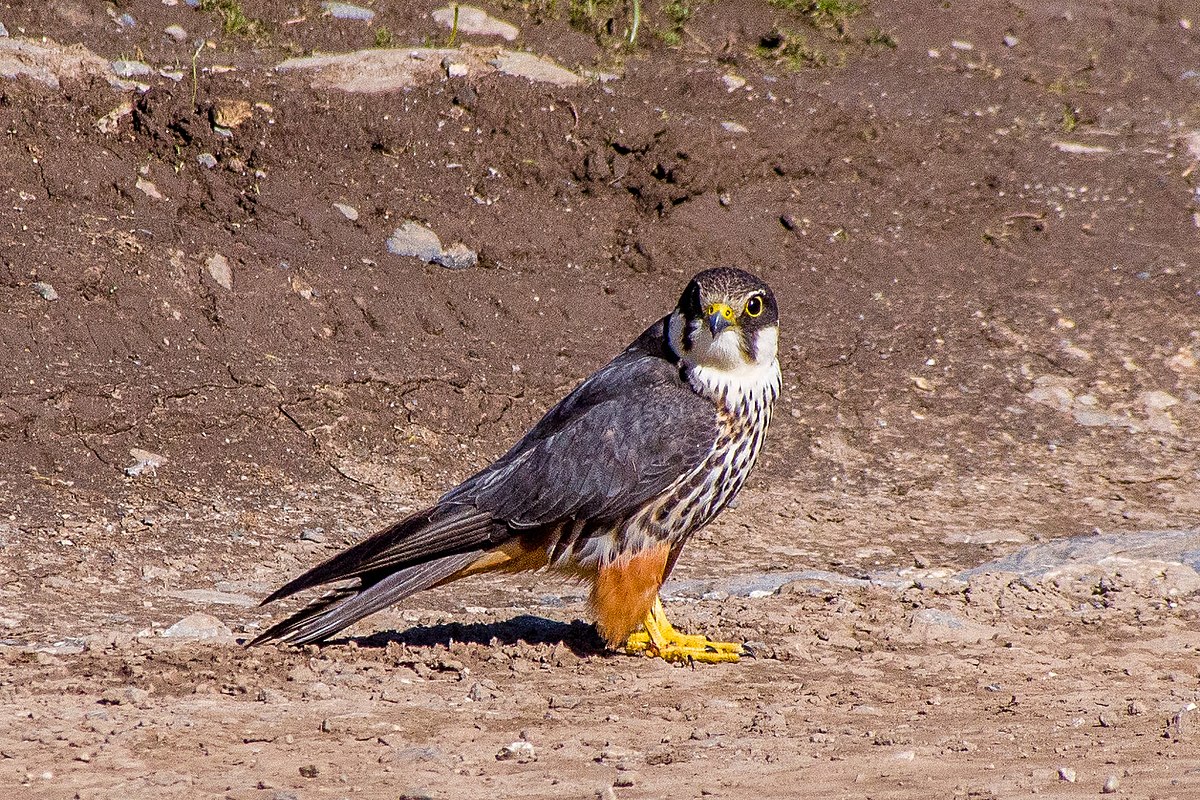
Wikipedia: Eurasian hobby Quelle: WIKIPEDIA
1200px-Eurasian_Hobby_%2814574008925%29_%28cropped%29.jpg
Zuerst beobachtet in 🇨🇭 an 2024-08-14.
Beschreibung
Allgemein: Deutschland: Brut-, Zugvogel RL 3Etymologie: Nabu: 2024 das erste Mal gehört nah beim Rosinli, aus der Ferne gesehen am Klingnauerstausee. [Link]
Vokalisierung:
Varied, but not very vocal. [Link]
Saisonales Verhalten
Präsenz: 04-01 - 10-27 Brut: 05-01 - 08-29 Migration rein: 04-01 - 06-20 Migration raus: 08-09 - 10-27Weitere Infos at Vogelwarte.ch
Weitere Infos
Physikalische Details
Körperlich: Länge=30-36 cm, Flügelspanne=82-92 cm, Gewicht=131-340 gHabitate: Landwirtschaft
Vokalisierung
Gesang: No details but a Xeno-Canto recording. Gesang Eigenschaften: Frequency:♫ 2024-08-14 13:57:00 Greater Fehraltorf (Gesang)
Rufe:
Calls when courting and at breeding ground. Most common sound a high-pitched "tew-tew-tew". Similar to Wryneck, but less pleading. Also a sneezing "ktcho". [Link]
General: About 20 single notes.
XC669704 - Eurasian Hobby - Falco subbuteo - call, about twenty peeps.
♫ Quelle: XENOCANTO XC669704 - Eurasian Hobby - Falco subbuteo - call, about twenty peeps.mp3 (Ruf)

Ruf Eigenschaften: Ruf Melodie: nicht musikalisch, langsam, Frequenz: low (1-3 KHz),
Vollprofil

Wikipedia: Peregrine falcon Quelle: WIKIPEDIA
Falco_peregrinus_good_-_Christopher_Watson.jpg
🔍
Never observed (yet!)
Beschreibung
Geographie: Dieser Vogel erscheint jenseits grossen Meere in Kontinenten : Europa, Nordamerika, Südamerika, Afrika, Asien.Allgemein: Deutschland: Brut-, Jahres-, Zugvogel, Wintergast
Vokalisierung:
A harsh, drawn out "kiaaaa" with emphasised endings repeated in series. Much slower than Merlin, but higher pitched than Gyrfalcon. [Link]
Saisonales Verhalten
Jahresvogel Brut: 02-20 - 07-10 Migration rein: 02-20 - 05-01 Migration raus: 08-09 - 11-06Weitere Infos at Vogelwarte.ch
Weitere Infos
Physikalische Details
Körperlich: Länge=36-48 cm, Flügelspanne=95-110 cm, Gewicht=582-1300 gHabitate: Landwirtschaft
Vokalisierung
Gesang: No details but a Xeno-Canto recording. Gesang Eigenschaften: Frequency:♫ Quelle: XENOCANTO XC942609 - Peregrine Falcon call - Falco peregrinus.mp3 (Ruf)

Rufe:
Also shorter, coarse warning-calls. [Link]
No details but a Xeno-Canto recording.
Ruf Eigenschaften: Gesang Frequenz: ,
Vollprofil

Buntspecht in Wildert. 2024-08-31 10:29:52 Wildert
Zuerst beobachtet in 🇨🇭 an 2020-04-12.
Beschreibung
Allgemein: Häufigste Spechtart in der SchweizAllgemein: Deutschland: Brut-, Jahresvogel
Vokalisierung:
It's frequent drumming is easily recognized by its short duration. [Link]
Saisonales Verhalten
Jahresvogel Brut: 04-11 - 07-20Weitere Infos at Vogelwarte.ch
Weitere Infos
Physikalische Details
Körperlich: Länge=22-23 cm, Flügelspanne=34-39 cm, Gewicht=70-100 gHabitate: Wald
Ähnliche Arten
Gesang oder Rüfe ähnlich wie: Ringdrossel.Vokalisierung
Gesang: Song: Other: ‘Drumming’ is the sound that Great Spotted Woodpeckers make by hammering their bills against dead wood 10-20 times over 2-3 seconds. The sound resonates in the dead wood and can be heard over large distances. This drumming acts as an advert and is used by Great spotted Woodpeckers and other woodpecker species instead of a song. [From the GardenBird web site]Nabu: Manchmal, bei strahlendem Sonnenschein, fangen die Spechte schon im Dezember an zu trommeln. [NABU Vogel des Jahres 1997]
Call: Nabu: Das bekannteste Geräusch des schwarz-weißen Spechtes ist aber wohl sein kurzes, aber häufiges Trommeln. [Link]
 In a sonogram I can see about 13 taps in just over half a second, but you can never distinguish so many.
It's short but intense, and the second half trails off,
especially contrasted with the constant drumming of the three-toed woodpecker. [[Listen here.]]
Gesang Eigenschaften:
Melody: nicht musikalisch, schnell, Frequency: low (1-3 KHz) Special sounds: trommeln Singing season: 01-01 - 06-30
In a sonogram I can see about 13 taps in just over half a second, but you can never distinguish so many.
It's short but intense, and the second half trails off,
especially contrasted with the constant drumming of the three-toed woodpecker. [[Listen here.]]
Gesang Eigenschaften:
Melody: nicht musikalisch, schnell, Frequency: low (1-3 KHz) Special sounds: trommeln Singing season: 01-01 - 06-30
♫ Quelle: XENOCANTO XC625181 buntspecht drumming.mp3 (Trommeln)

Rufe:
Typically it lasts 0.5 seconds, sometimes slightly longer. Contact call frequently hear throughout the year. A short hiccup "kek", sometimes in series. When excited this may escalate into a trill. [Link]
1:
General: A chirping (that I couldn't associate in my mind with a woodpecker), repeated at somewhat irregular intervals of about a second2023: klang in bird-song.ch Quiz wie eine lauter Haussperling
Call: Nabu: Der häufigste Ruf ist ein kurzes und spitzes „kix“. Ist ein Buntspecht aufgebracht, etwa durch einen Artgenossen, kann man ein schnelles Schnarren hören. [Link]
Great spotted woodpecker call
♫ Quelle: XENOCANTO XC200059 Great spotted woodpecker call.mp3 (Ruf)

2: No details but a Xeno-Canto recording. - but really OWN_VIA_BIRDNET
Birdnet 1937 - Great Spotted Woodpecker xxxx, also heard drumming - Great Spotted Woodpecker - Fehraltorf.
♫ 2021-08-14 09:57:28 Quelle: BirdNet 20210814_095728 birdnet 1937 - Great Spotted Woodpecker xxxx, also heard drumming - Great Spotted Woodpecker - Fehraltorf.mp3 Fehraltorf (Trommeln)
FOK3 - ein Specht trommelt, welcher war das, ein Buntspecht? Dazu eine Zilzalp, evtl Zaunkönig, und unser Kursleiter, der das Trommeln erklärt.
♫ 2025-03-22 09:08:40
Quelle: Zoom H2n Schweiz (Trommeln)Trommeln während ein Buntspecht ruft, im Wildert.
♫ 2024-08-31 09:31:25 Wildert (Trommeln)
Birdnet 1937 - Great spotted woodpecker, heard slow drumming - Not analyzed - Fehraltorf.
♫ 2021-08-14 09:57:28 Quelle: BirdNet 20210814_095728 birdnet 1937 - Great spotted woodpecker, heard slow drumming - Not analyzed - Fehraltorf.mp3 Fehraltorf (Trommeln)
Ruf Eigenschaften: Ruf Melodie: einnotig, langsam, Frequenz: 1-8 KHz,
Vollprofil

Vogelwarte Mittelspecht. Quelle: VOGELWARTE
Vogelwarte Mittelspecht.jpg
🔍
Never observed (yet!)
Beschreibung
Allgemein: Deutschland: Brut-, JahresvogelHabitat:
Der Mittelspecht ist ein Habitatspezialist, der bei uns hauptsächlich ehemalige Mittelwälder mit zahlreichen Alteichen besiedelt. Der Bestand ist gefährdet und langfristig wird er sich nur halten können, wenn grossflächige Wälder mit der Eiche als Hauptbaumart bestehen bleiben. [Link]
Saisonales Verhalten
Jahresvogel Brut: 04-11 - 06-20Weitere Infos at Vogelwarte.ch
Weitere Infos
Physikalische Details
Körperlich: Länge=20-22 cm, Flügelspanne=33-34 cm, Gewicht=50-80 gHabitate: Wald
Vokalisierung
Gesang: No details but a Xeno-Canto recording. Gesang:Im Gegensatz zu anderen Spechten trommelt der Mittelspecht nur sehr selten. [Link]
Song is a series of short, mewing and nasal "peeaa peeaa peeaa ", where each syllable quickly rises in pitch, but the overall phrase is fairly constant. [Link]
Gesang Eigenschaften:
Frequency:
♫ 2024-04-07 13:50:00 (Gesang)

Rufe:
Contact and alarm call consists of a series of short "kitt" sounds, where the first syllable is clearer and distinctly in a higher pitch than the rest of the phrase. Seldom drums. [Link]
Stattdessen ist in der Brutzeit das klagende Quäken zu hören, womit der Mittelspecht sein Revier markiert. [Link]
XC624229 Mittelspecht call.
♫ Quelle: XENOCANTO XC624229 Mittelspecht call.mp3 (Ruf)

Ruf Eigenschaften: Ruf Melodie: einfach rhythmisch, langsam, Frequenz: 0-4 KHz,
Vollprofil
Profil Wikipedia Vogelwarte BirdLife ZH ornitho.ch bird-song.ch Xeno-Canto BirdID NABU YouTube

Schwarzspecht in Wildert Naturschutzgebiet. 2024-12-18 14:30:58 Wildert
Zuerst beobachtet in 🇨🇭 an 2020-10-21.
Beschreibung
Allgemein: Bisher gehört und später gesehen aber nie gut fotografiertAllgemein: Deutschland: Brut-, Jahresvogel
Aussehen und Identifizierung:
The black woodpecker (Dryocopus martius) is a large woodpecker that lives in mature forests across the northern Palearctic. It is the sole representative of its genus in that region. Its range is expanding. It does not migrate. [Link]
Habitat:
The black woodpecker is mainly found in forested regions, with a preference for extensive, mature woodland, including coniferous, tropical, subtropical and boreal forests. It is very widespread throughout mountainous and lowland forests. It is more likely to occur in marginal woods near human habitations during the non-breeding season. [Link]
Vokalisierung:
Most sounds diagnostic and very far reaching. Drumming very powerful and long (1.8 - 3 sec.) with slightly falling intensity and accelerated ending. Each beat clearly distinguishable as in Tree-toed Woodpecker, but duration much longer. [Link]
Saisonales Verhalten
Jahresvogel Brut: 04-01 - 07-20Weitere Infos at Vogelwarte.ch
Weitere Infos
Physikalische Details
Körperlich: Länge=45-57 cm, Flügelspanne=64-68 cm, Gewicht=290-370 gHabitate: Wald
Vokalisierung
Gesang: No details but a Xeno-Canto recording. Gesang:Beide Geschlechter ähnlich Grünspecht aber klangvoller. „klückklückklück“ 10-20 Laute. Die „klück“ werden etwas von unten heraufgeholt, vor allem gegen den Schluss zu. Häufiger hört man „kliüüh“ von am Stamme sitzenden Vogel. Bei Platzwechsel ruft er „krükrükrü“.
[Link]
Song a quick series of "klee" calls resembling Green Woodpecker, but with a purer tone and upward infliction at end of each syllable. [Link]
Gesang Eigenschaften:
Frequency:
♫ Quelle: XENOCANTO XC554337 Black woodpecker song.mp3 (Gesang)
Rufe:
Drumming: Flight call a characteristic resonant trill "krrreekrrreekrrreekrrree". A characteristic short, sharp and plaintive "keeaaa" with descending pitch often uttered when excited. A few slower drawn-out introductory calls before the phrase gets going is diagnostic. [Link] 1: General: A loud unearthly call on a single unwavering note.
Erschrenkender Ruf
♫ Source as noted in xeno-canto: Recordist Bodo Sonnenburg 2021-10-11 07:26 Latitude 52.2333 Longitude 13.8365 Location Oder-Spree (near Storkow (Mark)), Brandenburg Country Germany Elevation 40 m Quelle: XENOCANTO XC679746 - Black Woodpecker - Dryocopus martius.mp3 (Gesang?)

2: Describe drumming here, cf to other peckers!
XC553023 Black woodpecker drumming.
♫ Quelle: XENOCANTO XC553023 Black woodpecker drumming.mp3 (Trommeln)
3: No details but a Xeno-Canto recording.
XC549818 Black woodpecker flight call.
♫ Quelle: XENOCANTO XC549818 Black woodpecker flight call.mp3 (Flugruf)
Ruf Eigenschaften: Ruf Melodie: einnotig, langsam, Frequenz: 1-8 KHz,
Vollprofil

Elster im Baum nah bei einem Grünspecht, den ich gehört aber nicht gesehen habe. 2025-05-08 18:06:57 Wald Fehraltorf
Zuerst beobachtet in 🇨🇭 an 2020-11-08.
Beschreibung
Allgemein: In the FOK course, Tom mentioned that his nephew said it should be called the Buntspecht, since it has so many colors.Allgemein: Da es v.a. Ameisen frisst, trommelt es nicht viel, so weit ich mich erinnere, daher ist es hier nicht beschrieben. Xenocanto hat auch nichts.
Allgemein: Deutschland: Brut-, Jahresvogel RL V
Aussehen und Identifizierung:
Der Grünspecht fällt neben dem laut lachenden Balzruf auch durch den wellenförmigen Flug auf, bei dem er die Flügel zwischen zwei Schlagphasen ganz an den Körper anlegt. Neben dem Wendehals ist er unter den Spechtarten Europas am stärksten auf Ameisen spezialisiert. Er besitzt eine mehr als 10 Zentimeter lange Zunge, die klebrig und an der Spitze mit Widerhaken versehen ist. [Link]
Saisonales Verhalten
Jahresvogel Brut: 04-11 - 07-20Weitere Infos at Vogelwarte.ch
Weitere Infos
Physikalische Details
Körperlich: Länge=31-33 cm, Flügelspanne=40-42 cm, Gewicht=150-220 gHabitate: Wald
Vokalisierung
Gesang: Spooky laugh. Gesang:Helles Lachen. Weiche, oft leicht abfallende Tonreihe. Variabel in Lautstärke und Silbenzahl. je nach Stimmung. Wenn abfallend dann vom Anfang der Rufreihe an. Auch dreisilbig „kiäckkiäckkiäck“.
[Link]
Song similar to Grey-headed Woodpecker, but not as soft and fluty. Each phrase consist of a series of short "klee", with a laughing quality. Pitch drops slightly throughout the phrase, but not as markedly as in Grey-headed, and tempo is fairly constant (no ritardando). [Link]
Gesang Eigenschaften:
Melody: nicht musikalisch, langsam, Frequency: 1-6 KHz
Rufe:
Short "kek" calls when excited and in flight. Drumming of 1.5 seconds duration with decelerating tempo, but not often heard. Another call is similar to Black Woodpecker; a series of resonant "klit-klit-klit-klit-klit-klit", but is less clear, has a more determined start and has less obvious rising pitch at the end of each syllable. [Link]
Unheimliches Lachen.
XC627157 Grünspecht laughing call.
♫ Quelle: XENOCANTO XC627157 Gruenspecht laughing call.mp3 (Ruf)

Ruf Eigenschaften: Ruf Melodie: einnotig, langsam, Frequenz: high (3-9 KHz), Spezielle Klänge: absteigend.
Vollprofil

Kleinspecht am Baum wo wir mehrere Specht gesehen habe. 2024-05-31 07:58:53 Frauenfeld Allmend
Zuerst beobachtet in 🇨🇭 an 2021-01-16.
Beschreibung
Allgemein: Bisher gesehen aber nicht gehört!Allgemein: Deutschland: Brut-, Jahresvogel, Wintergast RL V
Aussehen und Identifizierung:
The smallest European woodpecker. ... From its small size and its habit of spending most of its time in the tops of tall trees in woods and parks, this little woodpecker is often overlooked, but if sighted on a trunk
it may at once be identified by the broad barring on the wings and narrower bars across the lower back. [Link]
Der Kleinspecht ist der Zwerg unter den europäischen Spechten.
Er macht sich im Frühjahr mit hohen Rufreihen und gleichmässigen Trommelwirbeln bemerkbar. [Link]
Habitat:
As above: spend(s) most of its time in the tops of tall trees [Link]
Vokalisierung:
Frequently drums in quite long series. Much longer than Great Spotted, and without ritardando. [Link]
Saisonales Verhalten
Jahresvogel Brut: 04-20 - 06-20Weitere Infos at Vogelwarte.ch
Weitere Infos
Physikalische Details
Körperlich: Länge=14-15 cm, Flügelspanne=25-27 cm, Gewicht=17-25 gHabitate: Wald
Vokalisierung
Gesang: Drumming in lieu of song. Fast, constant. Gesang Eigenschaften: Melody: einfach rhythmisch, schnell, Frequency: 0-4 KHz Special sounds: trommeln♫ Quelle: XENOCANTO XC552636 Kleinspecht drumming.mp3 (Trommeln)

Rufe:
Most common call a series of merlin-like "ke-ke-ke-ke-ke-ke" given at fairly stable pitch, and less hoarse than Merlin. Differs from Wryneck in lacking marked rise and fall in pitch, and being less plaintive. [Link]
1:
Vogelwarte wie oben..hohe Rufreihen
XC625101 Kleinspecht call.
♫ Quelle: XENOCANTO XC625101 Kleinspecht call.mp3 (Ruf)

2: No details but a Xeno-Canto recording.
Ruf Eigenschaften: Ruf Melodie: einfach rhythmisch, schnell, Frequenz: high (3-9 KHz),
Vollprofil
Profil Wikipedia Vogelwarte BirdLife ZH ornitho.ch bird-song.ch Xeno-Canto BirdID NABU YouTube

Zwergtaucher, Bannriet. 2024-06-21 08:22:26 Bannriet, SG
Zuerst beobachtet in Südafrika an 2009-10-22.
Beschreibung
Allgemein:Der Zwergtaucher (Tachybaptus ruficollis) ist eine Art aus der Familie der Lappentaucher. In Europa ist diese in Eurasien und Afrika verbreitete Art der kleinste Vertreter dieser Familie. Zwergtaucher sind in Europa durchaus häufig. Sie werden jedoch wegen ihres unauffälligen Gefieders und ihrer insbesondere während der Brutzeit sehr versteckten Lebensweise meist übersehen.
[mehr]
Deutschland: Brut-, Jahres-, Zugvogel, Wintergast
Vokalisierung:
Relatively vocal compared to many other grebes. [Link]
Saisonales Verhalten
Jahresvogel Brut: 04-11 - 08-18 Migration rein: 02-20 - 05-01 Migration raus: 06-29 - 11-26Weitere Infos at Vogelwarte.ch
Weitere Infos
Physikalische Details
Körperlich: Länge=25-29 cm, Flügelspanne=40-45 cm, Gewicht=140-193 gHabitate: Fluss und See
Vokalisierung
Gesang:Der Gesang ist ein lautes, hohes Trillern. Männchen und Weibchen tragen ihn häufig im Duett vor. [Link]
Gesang Eigenschaften:
Melody: einfach rhythmisch, schnell, Frequency: 1-5 KHz
Rufe:
Call; sometimes a single quite clear high pitched "dydlylyyt". More often combined into longer phrases with harsher quality, oscillating like laughter and travelling up and down in pitch in agitated motion. Reminiscent of female Cuckoo. [Link]
No details but a Xeno-Canto recording.
- but really
OWN
Zwergtaucher in bannriet, SG - ich habe ihn überrascht, er hat diesen panischen Ruf gemacht und ist dann getaucht und verschwunden - herrlich!
♫ 2024-06-20 19:23:00 Bannriet, SG (Ruf)
Ruf Eigenschaften: Gesang Frequenz: ,
Vollprofil
Klassifikation nicht gefunden:
Allgemein: 1 Spezien nicht korrekt klassifiziertSchwarzmilan / Black kite (Milvus migrans)

Schwarzmilan. 2022-05-22 10:42:20 Leuk
Zuerst beobachtet in 🇨🇭 an 2021-04-03.
Beschreibung
Allgemein: This is on my list of birds to find, as it is supposed to be exist in this area,but I've never identified one. Their call (see Vogelwarte link) is a rapid sequence of whistles, and definitely distinct from that of the red kites. Visually they are harder to tell apart, but if you look closely, it should be clear: the black kite has less of a V in its tail and no big white patch at the wingtips. birdguides.com has a guide to distinguishing black and red kites, and says black are much rarer, but that is not true in Switzerland - Vogelwarte.ch says Switzerland has 2800–3500 red kites and 2000-3000 black kites.Allgemein: Tenatively identified one flying high over Lake Lugano at San Salvatore in Ticino.
Allgemein: Often near water.
Allgemein: Deutschland: Brut-, Zugvogel
Vokalisierung:
A piercing, first ascending then descending long "piuuu". Starting as a clear tone then gradually taking on a vibrating character that differs from Red Kite. Also a sharp "kieee -ki- ki-ki". More vocal than Red Kite. [Link]
Saisonales Verhalten
Präsenz: 02-20 - 10-07 Brut: 04-01 - 07-20 Migration rein: 02-20 - 05-21 Migration raus: 07-20 - 10-07Weitere Infos at Vogelwarte.ch
Weitere Infos
Physikalische Details
Körperlich: Länge=55-60 cm, Flügelspanne=160-180 cm, Gewicht=630-941 gHabitate: Landwirtschaft
Vokalisierung
Gesang: No details but a Xeno-Canto recording. Gesang Eigenschaften: Frequency:♫ 2026-06-18 09:22:00 (Gesang)
Drei fallende Noten
XC884100 - Black Kite - Milvus migrans - flight call.
♫ Quelle: XENOCANTO XC884100 - Black Kite - Milvus migrans - flight call.mp3 (Flugruf)

Ruf Eigenschaften: Flugruf Ruf Melodie: einfach rhythmisch, langsam, Frequenz: medium (1-5 KHz), Spezielle Klänge: absteigend.
Vollprofil