Birds of Japan

Schellente, Altnau. 2024-12-07 13:28:47
First observed in 🇨🇭 on 2021-01-26.
Description
Geography: This bird appears across the great seas in the following continents: Europe, North America, Asia.General: Deutschland: Brut-, Zugvogel, Wintergast RL R
Etymology: Nabu: Schellenten verdanken ihren Namen dem pfeifenden und wie ein Klingeln («Schellen») tönenden Fluggeräusch. [Vogelwarte.ch erklärt: ]
Appearance and identification: Grüner Kopf mit gelbem Auge (Goldeneye), weisser Kreis zwischen Auge und (schwarzem) Schnabel, weisser Bauch und Seiten mit etwa 5 dünnen schwarzen Streifen, schwarzer Rücken. In Island gibt's eine sehr ähnliche Ente und in kleineren Mengen auch diese.
Seasonal Behavior: Wintergast am Pfäffikersee.
Vocalization:
 Male display sound a dry nasal disyllabic "Ka-weerr". First note introductory and second longer and descending. Usually accompanied by back-throwing head motion. Female: dry harsh "aahrrrr aahrrrr aahrrrr ". Wings make a characteristic whistling sound. [Link]
Seasonal behavior
Year-round bird Migration in: 01-01 - 05-21 Migration out: 10-07 - 12-31 More details at Vogelwarte.ch
Other Details
Physical details
Physical details: length=42-50 cm, wingspan=65-80 cm, weight=650-1200 gHabitats: River and lake Details
Profile Wikipedia Vogelwarte BirdLife ZH ornitho.ch Audubon AllAboutBirds Xeno-Canto BirdID NABU YouTube

Mittelsäger-Paar im Luppmen in Fehraltorf. 2025-02-03 16:58:13 Luppmen
First observed in 🇨🇭 on 2021-04-06.
Description
Geography: This bird appears across the great seas in the following continents: Europe, North America, South America, Asia.General: Deutschland: Brut-, Zugvogel, Wintergast RL R
Personal notes:
 Zuerst gesehen in Lago Maggiore in Locarno. Jan 2022 auch als Wintergast am Pfäffikersee. [Link]
Appearance and identification:
In winter you can admire a few of these birds with the straggly tuft. [Link]
Seasonal behavior
Year-round bird Breeding: 05-01 - 07-29 Migration in: 10-18 - 12-31 Migration out: 02-20 - 05-21More details at Vogelwarte.ch
Other Details
Physical details
Physical details: length=52-58 cm, wingspan=70-86 cm, weight=900-1350 gHabitats: River and lake
Similar species
Looks similar to: Greater scaup. Details

Gänsesäger Weibchen mit dem Punk-Look, Locarno. 2024-09-02 15:51:02 Locarno
First observed in 🇨🇭 on 2021-01-26.
Description
Geography: This bird appears across the great seas in the following continents: Europe, North America, Asia.General: Zuerst gesehen am Pfäffikersee.
General: Deutschland: Brut-, Zugvogel, Wintergast RL 2
Vocalization:
Male: Mostly heard when courting. A twanging, disyllabic "whip-ooooo", first syllable ascending and second whistle-like and rapidly falling. Female: A coarse "ahrrr ahrrrr", or a raspy drawn "ah-ahrrrrrr ah-ahrrrrr", slightly rising, then falling in pitch. Also various cackling sounds. [Link]
Seasonal behavior
Year-round bird Breeding: 03-23 - 07-20 Migration in: 01-01 - 04-11 Migration out: 10-27 - 12-31More details at Vogelwarte.ch
Other Details
Physical details
Physical details: length=58-66 cm, wingspan=82-97 cm, weight=900-2100 gHabitats: River and lake
Vocalisation
Song: No details but a Xeno-Canto recording. Song attributes: Frequency:♫ 2021-05-10 09:09:39 Source: BirdNet 20210510_090939 birdnet 1539 - Common Merganser plus Golden Oriole - = - Common Merganser - Locarno.mp3 Locarno (song)
Details

Stockente Weibchen. 2024-08-02 15:56:02 Greifensee
First observed in 🇨🇭 on 2020-05-20.
Description
Geography: This bird appears across the great seas in the following continents: Europe, North America, South America, Africa, Asia.General: Common waterbird at Pfäffikersee
General: Deutschland: Brut-, Jahres-, Zugvogel, Wintergast
Etymology:
 Der heutige Name kann als Hinweis auf ihre Brutplätze verstanden werden, zu denen auf Stock gesetzte Weiden, Weidengebüsch oder auch Reisighaufen gehören.
['Stock' wird weiter erklärt: Als Stockausschlag bezeichnet man bei Bäumen und Sträuchern Triebe, die nach dem Verlust der primären Sprossachse
neu aus dem Stumpf oder Stubben (der dann „Stock“ genannt wird) austreiben.] [Link]
The name 'was derived from the Old French malart or mallart for "wild drake"' [Link]
Dazu zählt der charakteristische Grunzpfiff der Männchen, der lautmalerisch mit „gerijib“ oder „fihb“ umschrieben wird. [Link]
Der heutige Name kann als Hinweis auf ihre Brutplätze verstanden werden, zu denen auf Stock gesetzte Weiden, Weidengebüsch oder auch Reisighaufen gehören.
['Stock' wird weiter erklärt: Als Stockausschlag bezeichnet man bei Bäumen und Sträuchern Triebe, die nach dem Verlust der primären Sprossachse
neu aus dem Stumpf oder Stubben (der dann „Stock“ genannt wird) austreiben.] [Link]
The name 'was derived from the Old French malart or mallart for "wild drake"' [Link]
Dazu zählt der charakteristische Grunzpfiff der Männchen, der lautmalerisch mit „gerijib“ oder „fihb“ umschrieben wird. [Link]
Vocalization:
Female: A distinct coarse, laughing quacking; "haaa ha ha ha ha ha", with first note accented and then descending in pitch. Male: a more silent, very nasal "rriib". [Link]
Seasonal behavior
Year-round bird Breeding: 03-12 - 07-29 Migration in: 02-01 - 05-01 Migration out: 07-29 - 12-31More details at Vogelwarte.ch
Other Details
Physical details
Physical details: length=50-65 cm, wingspan=81-98 cm, weight=750-1450 gHabitats: River and lake Details

Krickente Männchen, Klingnauerstausee. 2022-02-05 12:51:34 Klingnauer Stausee (man-made lake)
First observed in 🇨🇭 on 2021-01-26.
Description
Geography: This bird appears across the great seas in the following continents: Europe, North America, South America, Africa, Asia.General: Wintergast am Teich am Aa-Bach beim Südende des Pfäffikersee
General: Deutschland: Brut-, Jahres-, Zugvogel, Wintergast RL 3
Etymology:
Die hellen «krrik»-Rufe der stimmfreudigen Erpel verhalfen dieser Art zu ihrem deutschen Namen. [Link]
Vocalization:
Male: characteristic, short, highly resonant and metallic "plytt". A bit similar to Pintail, but higher pitched and lacking accompanying whistling sound. Female: various quacking sounds generally quicker paced, more nasal and noticeably higher pitched than Mallard. [Link]
Other Details
Physical details
Physical details: length=34-38 cm, wingspan=58-64 cm, weight=200-450 gHabitats: River and lake
Vocalisation
Song: No details but a Xeno-Canto recording. Song attributes: Frequency:♫ Source: XENOCANTO XC619133-Krickente von Peter Bosman, Belgium.mp3 (song)

Blup blup, fast wie vom Computer generiert, fur mich nohe Noten (obwohl Sonogram nur 2.5 KHz zeigt)
Call attributes: Call melody: simple rhythmic, slow, Frequency: low (1-3 KHz),
Details

Löffelente am Klingnauerstausee. 2022-02-06 08:47:36 Klingnauer Stausee (man-made lake)
First observed in 🇨🇭 on 2021-02-08.
Description
Geography: This bird appears across the great seas in the following continents: Europe, North America, South America, Africa, Asia.General: Wintergast am Greifensee.
General: Deutschland: Brut-, Jahres-, Zugvogel, Wintergast RL 3
Appearance and identification: PK: white, black, rust-brown, yellow eyes, black spoonbill, red legs.
Vocalization:
Male is characteristic and most often heard: A hoarse nasal knocking sound "took took", often staccato or disyllabic. Female similar to Mallard but flatter and more creaking. [Link]
Seasonal behavior
Year-round birdOther Details
Physical details
Physical details: length=44-52 cm, wingspan=70-84 cm, weight=470-800 gHabitats: River and lake Details
Profile Wikipedia Vogelwarte BirdLife ZH ornitho.ch Audubon AllAboutBirds Xeno-Canto NABU YouTube

Spiessente plus 2 Hockerschwäne. 2024-12-07 12:01:46
First observed in 🇨🇭 on 2022-01-27.
Description
Geography: This bird appears across the great seas in the following continents: Europe, North America, South America, Africa, Asia.General: Long tailfeathers make the name obvious, also a thin white stripe from the white neck up the back of the head.
General: Deutschland: Brut-, Jahres-, Zugvogel, Wintergast RL 3
Vocalization:
Female: similar to Mallards coarse laughing sound, but with a more emphasized first "haaa", and a more silent accelerating subsequent "laugh". Male: Pleasant, resonant "plop" similar to Teal, but lower pitched, richer, mellower and not so metallic. Accompanied by a higher pitched, slightly raspy whistling "aiiooo" rising and falling in pitch. [Link]
Seasonal behavior
Year-round bird Migration in: 02-01 - 05-10 Migration out: 08-18 - 12-07More details at Vogelwarte.ch
Other Details
Physical details
Physical details: length=51-66 cm, wingspan=51-66 cm, weight=500-1100 gHabitats: River and lake Details

Wikipedia: Eastern spot-billed duck Source: WIKIPEDIA
1200px-Anas_zonorhyncha_swimming.jpg
🔍
Never observed (yet!)
Description
General: Rare winter visitorDetails

MerlinBirdID meint Schnatterente - ich habe gehofft herauszufinden welche Ente das typische Gelbe da hinten hat. 2022-02-05 14:34:58 Klingnauer Stausee (man-made lake)
First observed in 🇨🇭 on 2021-02-08.
Description
Geography: This bird appears across the great seas in the following continents: Europe, North America, South America, Africa, Asia.General: In my mind this is the chocolate duck.
General: Deutschland: Brutvogel im 19. Jahrhundert aus Osteuropa und Asien zugewandert
Etymology:
The etymology of the word gadwall is not known, but the name has been in use since 1666.[9] [Link]
Nabu: Die Schnatterente fällt aber – wie ihr Name schon vermuten lässt – durch ihre Art der Nahrungssuche auf. Sie durchschnattert das Wasser mit ihrem Schnabel. [Link]
Appearance and identification: Chocolate bill, black-and-white pattern on head, shoulders, belly, sides of wings, chocolate patterned wings, black butt, a bit of white before the butt.
Appearance and identification: Nabu: Die Schnatterente ähnelt auf den ersten Blick so sehr der weiblichen Stockente, dass man diese schnell verwechseln kann. [Link]
Seasonal Behavior: Wintergast am Greifensee.
Seasonal behavior
Year-round bird Breeding: 04-20 - 07-20 Migration in: 02-20 - 05-21 Migration out: 07-20 - 12-31More details at Vogelwarte.ch
Other Details
Physical details
Physical details: length=46-56 cm, wingspan=84-95 cm, weight=550-1000 gHabitats: River and lake
Vocalisation
Song: No details but a Xeno-Canto recording. Song attributes: Frequency:♫ 2021-10-24 13:12:46
 Source: Zoom H6/H2n Neeracherried (song)
Details

Wikipedia: Falcated duck Source: WIKIPEDIA
1200px-Falcated_duck_1.jpg
🔍
Never observed (yet!)
Description
General: AccidentalDetails

Tafelente mit roten Augen, braunem Kopf, Schnabel schwarz plus silber, fein und schön gemusterte Feder am Rücken. 2022-02-05 13:09:16 Klingnauer Stausee (man-made lake)
First observed in 🇨🇭 on 2021-02-08.
Description
Geography: This bird appears across the great seas in the following continents: Europe, North America, Africa, Asia.General: Wintergast am Greifensee.
General: Deutschland: Brut-, Jahres-, Zugvogel, Wintergast in den westl. Bundesl. erst seit den 1920/1930er heimisch
Etymology:
Die in der deutschen Sprache übliche Bezeichnung Tafelente ist ein Hinweis auf das als schmackhaft angesehene Fleisch dieses Entenvogels. [Link]
Appearance and identification: Tafelente: Wiederspruch: wer isst ein Tier mit roten Augen?Rostbraun, schwarz, schwarz-weiss-gemustert, Schnabel schwarz UND weiss.
Vocalization:
Female: a coarse "ahrrrrrrr-ahrrrrr-ahrrrr" with a vibrating quality. [Link]
Seasonal behavior
Year-round bird Breeding: 05-01 - 07-29 Migration in: 01-01 - 05-10 Migration out: 07-20 - 12-31More details at Vogelwarte.ch
Other Details
Physical details
Physical details: length=42-49 cm, wingspan=72-82 cm, weight=650-1200 gHabitats: River and lake Details

Reiherenten am Klingnauerstausee, zwei Weibchen, zwei Männchen. 2022-02-05 14:39:46 Klingnauer Stausee (man-made lake)
First observed in Iceland on 2015-06-05.
Description
General: Schwarz-weiss mit Muster auf Rücken/Flügel, gelbe Augen, blau-grauer Schnabel mit schwarzer SpitzeGeneral: On a lake in wintertime.
General: Deutschland: Brut-, Jahres-, Zugvogel, Wintergast um 1900 in Deutschland eingewandert, seit 1930 offiziell Brutvogel
Geography:
'Die Reiherente ... zählt zu den so genannten Tauchenten und gilt als die häufigste Süßwassertauchente. Es handelt sich um eine verhältnismäßig kleine, kompakt gebaute Ente. Auffällig sind der verhältnismäßig kurze Schnabel und der auffällig runde Kopf. Die Männchen haben am Hinterkopf einen langen, herabhängenden Schopf. Das Weibchen weist eine kurze Holle auf.
Die Reiherente ist in Mitteleuropa ein verbreiteter Brut- und Jahresvogel',
und in der Schweiz ein Wintergast. [Link]
Vocalization:
Male display sound: High pitched short whistling-like noises, "pjuu-uu", not very audible. [Link]
Seasonal behavior
Year-round bird Breeding: 05-10 - 08-09 Migration in: 01-01 - 05-10 Migration out: 07-10 - 12-31More details at Vogelwarte.ch
Other Details
Physical details
Physical details: length=40-47 cm, wingspan=67-73 cm, weight=500-1000 gHabitats: River and lake Details

Wikipedia: Greater scaup Source: WIKIPEDIA
1200px-Greater-scaup-male2.jpg
🔍
Never observed (yet!)
Description
Geography: This bird appears across the great seas in the following continents: Europe, North America, Asia.General: Deutschland: Zugvogel, Wintergast RL R
Seasonal behavior
Year-round bird Migration in: 01-21 - 01-29 Migration out: 01-21 - 02-20More details at Vogelwarte.ch
Other Details
Physical details
Physical details: length=42-51 cm, wingspan=72-84 cm, weight=700-1300 gHabitats: River and lake
Similar species
Looks similar to: Red-breasted merganser. DetailsProfile Wikipedia Xeno-Canto YouTube

Wikipedia: Bär's pochard Source: WIKIPEDIA
1280px-Aythya_baeri_cropped.jpg
🔍
Never observed (yet!)
Description
General: Rare winter visitor, critically endangeredDetails
Profile Wikipedia Vogelwarte BirdLife ZH ornitho.ch Xeno-Canto BirdID NABU YouTube

Brandgans mal zwei. 2022-02-05 13:43:48 Klingnauer Stausee (man-made lake)
First observed in 🇨🇭 on 2022-02-05.
Description
General: Deutschland: Brut-, Jahres-, Zugvogel, WintergastVocalization:
Male: Various whistling sounds. Often series of ricochet-like "piu" repeated with gradually rising and falling intensity. Also passerine-like "tzzrrrr". Female: different variants on deeper hoarse sounds like "ar-ar-ar-ar" sometimes with accented endings with rising pitch. [Link]
Other Details
Physical details
Physical details: length=58-67 cm, wingspan=110-133 cm, weight=800-1450 gHabitats: River and lake Details
Description
Details

Wikipedia: Mandarin duck Source: WIKIPEDIA
1200px-Pair_of_mandarin_ducks.jpg
🔍
Never observed (yet!)
Description
Geography: This bird appears across the great seas in the following continents: Europe, North America, Africa, Asia.General: Deutschland: etabliertes Neozoon, Brut-, Jahresvogel
Vocalization:
Other sounds include a short and sharp, coot-like "ket", and a short "ack". [Link]
Seasonal behavior
Year-round bird Breeding: 04-11 - 06-29More details at Vogelwarte.ch
Other Details
Physical details
Physical details: length=41-49 cm, wingspan=68-74 cm, weight=571-608 gHabitats: River and lake Details
Profile Wikipedia Audubon AllAboutBirds Xeno-Canto BirdID NABU YouTube

Wikipedia: Harlequin duck Source: WIKIPEDIA
1200px-Histrionicus_histrionicus_drake_Barnegat.jpg
🔍
Never observed (yet!)
Description
Geography: This bird appears across the great seas in the following continents: Europe, North America, Asia.General:
The harlequin duck (Histrionicus histrionicus) is a small sea duck. It takes its name from Harlequin (French Arlequin, Italian Arlecchino), a colourfully dressed character in Commedia dell'arte. The species name comes from the Latin word "histrio", meaning "actor".[2] In North America it is also known as lords and ladies. Other names include painted duck, totem pole duck, rock duck, glacier duck, mountain duck, white-eyed diver, squeaker and blue streak.
[more]
Details

Wikipedia: Smew Source: WIKIPEDIA
1200px-Zwergsaeger_maenchen_weibchen.jpg
🔍
Never observed (yet!)
Description
Deutschland: Zugvogel, WintergastVocalization:
Mostly quiet except when displaying, and even then difficult to hear. Male: an ascending, froglike, rattling pulse of clicks. Also various grunting sounds. [Link]
Seasonal behavior
Year-round bird Migration in: 01-21 - 01-29 Migration out: 01-21 - 02-01More details at Vogelwarte.ch
Other Details
Physical details
Physical details: length=38-44 cm, wingspan=55-69 cm, weight=500-800 gHabitats: River and lake Details
Profile Wikipedia Vogelwarte BirdLife ZH ornitho.ch Audubon AllAboutBirds Xeno-Canto BirdID NABU YouTube

Wikipedia: Long-tailed duck Source: WIKIPEDIA
Long-tailed-duck.jpg
🔍
Never observed (yet!)
Description
Geography: This bird appears across the great seas in the following continents: Europe, North America, Asia.General: Deutschland: Zugvogel, Wintergast
Vocalization:
Very vocal and distinct. Male: a pleasant resonant melodic "ahh-aaooee" in a yodeling, breaking triad. Starting with an accented first note (ahh), then gliding from first through second and third note (-aaoooeee). Far carrying. [Link]
Seasonal behavior
Year-round bird Migration in: 03-15 - 03-23 Migration out: 03-01 - 03-23More details at Vogelwarte.ch
Other Details
Physical details
Physical details: length=40-47 cm, wingspan=40-47 cm, weight=550-900 gHabitats: River and lake Details
Description
Geography: This bird appears across the great seas in the following continents: Europe, North America, Asia.General:
Die Pazifiktrauerente (Melanitta americana) ist ein Entenvogel aus der Gattung Melanitta. Sie wird auch Pazifische Trauerente oder Amerikanische Trauerente genannt. Der Gattungsname stammt von den altgriechischen Wörtern μελας melas, μελανος melanos „schwarz“ und νηττα nētta „Ente“. Der Artname americana stammt vom lateinischen Wort für „amerikanisch“.[1] Diese Art bildet zusammen mit der Trauerente die Untergattung Oidemia. Gelegentlich werden beide Arten auch als konspezifisch angesehen, die Pazifiktrauerente wird dann als M. nigra americana gelistet.
[more]
Details
Profile Wikipedia Audubon AllAboutBirds Xeno-Canto NABU YouTube
Description
Geography: This bird appears across the great seas in the following continents: Europe, North America, Asia.General:
Stejneger's scoter (Melanitta stejnegeri), also known as the Siberian scoter, is a large sea duck. The genus name is derived from Ancient Greek melas "black" and netta "duck".
[more]
Details
Profile Wikipedia Xeno-Canto BirdID NABU YouTube

Wikipedia: Steller's eider Source: WIKIPEDIA
1200px-Steller%27s_Eider_%28Polysticta_stelleri%29_%2813667966664%29.jpg
🔍
Never observed (yet!)
Description
Steller's eider (Polysticta stelleri) is a sea duck that breeds along the Arctic coasts of eastern Siberia and Alaska.
[more]
Vocalization:
Male seldom heard. Display sound probably a clear whistle rising slightly and then falling in pitch, a bit like Golden Plover. Female more noisy with indistinct guttural sounds. [Link]
Other Details
Physical details
Physical details: length=43-47 cm, wingspan=70-76 cm, weight=670-1000 gDetails

Wikipedia: Baikal teal Source: WIKIPEDIA
Anas.formosa.4.jpg
🔍
Never observed (yet!)
Description
General: AccidentalDetails

White-fronted goose closeup, on the way home from Laphroiag? 2023-08-11 13:38:38 Scotland
First observed in Scotland on 2023-08-11.
Description
Geography: This bird appears across the great seas in the following continents: Europe, North America, Africa, Asia.General: Deutschland: Zugvogel, Wintergast Bruten gehen auf entflogene Tiere zurück
Vocalization:
Similar to Bean- and Greylag Goose, but higher pitched, more musical, often disyllabic and with a laughing quality. Far from as high pitched as Lesser White-fronted Goose. [Link]
Other Details
Physical details
Physical details: length=65-78 cm, wingspan=130-165 cm, weight=1800-3100 gHabitats: River and lake Details

Wikipedia: Tundra bean goose Source: WIKIPEDIA
Tundra_Bean_Goose.jpg
🔍
Never observed (yet!)
Description
Geography: This bird appears across the great seas in the following continents: Europe, North America, Asia.General:
The tundra bean goose (Anser serrirostris) is a goose that breeds in northern Siberia. This and the taiga bean goose are recognised as separate species by the American Ornithological Society and International Ornithologists' Union, but are considered a single species by other authorities (collectively called bean goose). It is migratory and winters further south in Asia. The taiga and tundra bean goose diverged about 2.5 million years ago and established secondary contact ca. 60,000 years ago, resulting in extensive gene flow.[1]
[more]
Details

Wikipedia: Taiga bean goose Source: WIKIPEDIA
1200px-Anser_fabalis_fabalis%2C_Kurortny_District%2C_St_Petersburg%2C_Russia_1.jpg
🔍
Never observed (yet!)
Description
Geography: This bird appears across the great seas in the following continents: Europe, North America, Africa, Asia.General: Deutschland: Zugvogel, Wintergast Bruten gehen auf entflogene Tiere zurück
Other Details
Physical details
Physical details: length=66-84 cm, wingspan=142-175 cm, weight=2220-4060 gHabitats: River and lake Details

The crowd hanging out at the one island by La Sauge - mute swans, a carrion crow, cormorants, yellow-legged gulls, and two Eurasian curlews at the left. 2025-04-21 14:04:37 Fanel/Chablais de Cudrefin und La Sauge
First observed in 🇨🇭 on 2021-02-12.
Description
Geography: This bird appears across the great seas in the following continents: Europe, North America, Africa, Asia.General: Common waterbird at Pfäffikersee, very common on Lake Zurich.
General: Deutschland: Brut-, Jahres-, Zugvogel, Wintergast
Etymology:
Ein Schwanenweibchen, das Junge führt, lässt bei Annäherung eines fliegenden Fressfeindes mehrsilbige ächzende Laute hören, die lautmalerisch mit krrr-wip-wip, chh oder einem tiefen chorr umschrieben werden können. [Link]
Vocalization:
Silent compared to other swans. A repertoire of snorting, grunting and hissing sound when interacting. No far carrying sounds. [Link]
Seasonal behavior
Year-round birdOther Details
Physical details
Physical details: length=145-160 cm, wingspan=208-238 cm, weight=7000-14000 gHabitats: River and lake Details

Wikipedia: Tundra swan Source: WIKIPEDIA
1200px-Cygnus_bewickii_01.jpg
First observed in 🇨🇭 on 2024-12-07.
Description
Geography: This bird appears across the great seas in the following continents: Europe, North America, Asia.General: Deutschland: Zugvogel, Wintergast
Vocalization:
More vocal than other swans. Both higher pitched and deeper sounds. Birds on the water often gives crooning, crane-like notes with less defined pitch. [Link]
Seasonal behavior
Seldom seen hereMore details at Vogelwarte.ch
Other Details
Physical details
Physical details: length=115-127 cm, wingspan=180-211 cm, weight=3400-7800 gHabitats: River and lake Details

Whooper swan, Iceland. 2015-06-03 16:01:16
First observed in Iceland on 2015-06-03.
Description
Geography: This bird appears across the great seas in the following continents: Europe, North America, Asia.General: Deutschland: Zugvogel, Wintergast RL R
Vocalization:
Quite vocal. Trumpet-like clear honks of half a second length most frequent in flight and take-off/landing. Often voiced with a register break. [Link]
Seasonal behavior
Year-round bird Migration in: 03-12 - 03-19 Migration out: 02-20 - 03-12More details at Vogelwarte.ch
Other Details
Physical details
Physical details: length=145-160 cm, wingspan=218-243 cm, weight=8500-10000 gHabitats: River and lake
Vocalisation
Song: No details but a Xeno-Canto recording. Song attributes: Frequency:♫ 2024-12-07 10:28:00 (song)
Details
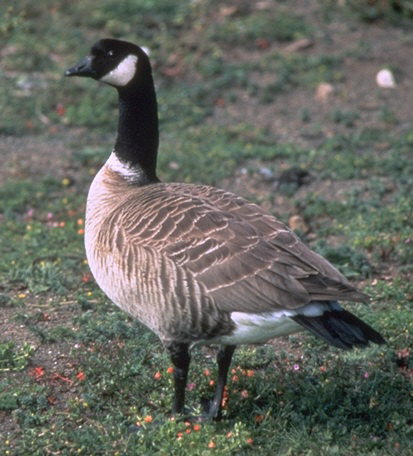
Wikipedia: Cackling goose Source: WIKIPEDIA
AleutianCanadaGoose2.jpg
🔍
Never observed (yet!)
Description
Geography: This bird appears across the great seas in the following continents: Europe, North America, Asia.General:
The cackling goose (Branta hutchinsii) is a North American bird of the genus Branta of black geese, which contains species with largely black plumage, distinguishing them from the grey Anser species.
[more]
Details
Description
Geography: This bird appears across the great seas in the following continents: Europe, North America, Asia.General: Deutschland: Zugvogel, Wintergast
Vocalization:
A bubbling, trembling, ascending, three syllable "ahrahrrhit", quite different from other geese. [Link]
Seasonal behavior
Year-round bird Migration in: 11-26 - 12-31 Migration out: 03-12 - 04-20More details at Vogelwarte.ch
Other Details
Physical details
Physical details: length=56-61 cm, wingspan=110-120 cm, weight=1300-1600 gDetails
Garganey / Knäkente (Spatula querquedula)
Profile Wikipedia Vogelwarte BirdLife ZH ornitho.ch bird-song.ch Xeno-Canto NABU YouTube
 coming in for a landing.JPG)
Garganey (I can remember the German name Knaekenten better) coming in for a landing. 2025-04-21 09:44:19 Fanel/Chablais de Cudrefin und La Sauge
First observed in 🇨🇭 on 2025-04-21.
Description
Vocalization:
Male display sound a characteristic dry rattling, like the sound of running fingernails along the teeth of a comb. A bit similar to Ptarmigan. Also heard at other times than when courting. [Link]
Seasonal behavior
Presence: 03-01 - 09-25Other Details
Physical details
Physical details: length=37-41 cm, wingspan=60-63 cm, weight=250-450 gHabitats: River and lake Details

Wikipedia: Lesser whistling duck Source: WIKIPEDIA
1200px-Dendrocygna_javanica_-_Chiang_Mai.jpg
🔍
Never observed (yet!)
Description
Details
Great cormorant / Kormoran (Phalacrocorax carbo)
Profile Wikipedia Vogelwarte BirdLife ZH ornitho.ch Audubon AllAboutBirds Xeno-Canto NABU YouTube

Kormoran im Profil. 2024-05-22 17:14:35 Fanel/Chablais de Cudrefin und La Sauge
First observed in 🇨🇭 on 2021-01-26.
Description
Geography: This bird appears across the great seas in the following continents: Europe, North America, Africa, Asia.General: Deutschland: Brut-, Jahres-, Zugvogel, Wintergast
Seasonal Behavior:
Lokaler Brutvogel, regelmässiger, häufiger Durchzügler und Wintergast.[Brutpaare am Zürichsee und Greifensee bei Mönchaltorf] [Link]
Vocalization:
Mostly heard at breeding ground. Also deep, rattling and creaking sounds. [Link]
Seasonal behavior
Year-round birdOther Details
Physical details
Physical details: length=80-100 cm, wingspan=130-160 cm, weight=1700-3000 gHabitats: River and lake
Vocalisation
Song: No details but a Xeno-Canto recording. Song attributes: Frequency:♫ 2021-05-19 07:39:23 Source: BirdNet 20210519_073923 birdnet 1559 - Great Cormorant - 2021-05-19 07:39:23 - Great Cormorant - Cudrefin.mp3 Fanel/Chablais de Cudrefin und La Sauge (song)
Calls:
Coarse, vibrating calls "hahahahaharo". [Link]
No details but a Xeno-Canto recording.
XC770245 - Great Cormorant call - Phalacrocorax carbo.
♫ Source: XENOCANTO XC770245 - Great Cormorant call - Phalacrocorax carbo.mp3 (call)

Call attributes: song Frequency: ,
Details
Japanese cormorant / Japankormoran (Phalacrocorax capillatus)
Description
Details
Pelagic cormorant / Meerscharbe (Phalacrocorax pelagicus)

Wikipedia: Pelagic cormorant Source: WIKIPEDIA
1200px-Pelagic_Cormorant_flying.jpg
🔍
Never observed (yet!)
Description
Geography: This bird appears across the great seas in the following continents: North America, Asia.General:
The pelagic cormorant (Phalacrocorax pelagicus), also known as Baird's cormorant, is a small member of the cormorant family Phalacrocoracidae. Analogous to other smallish cormorants, it is also called the pelagic shag occasionally. This seabird lives along the coasts of the northern Pacific; during winter it can also be found in the open ocean.[2] Pelagic cormorants have relatively short wings due to their need for economical movement underwater, and consequently have the highest flight costs of any bird.[3]
[more]
Details
Red-faced cormorant (Urile urile)
Profile Wikipedia Xeno-Canto YouTube

Wikipedia: Red-faced cormorant Source: WIKIPEDIA
1200px-Red-faced_Cormorant_on_St._Paul_Island_by_Lisa_Hupp_USFWS.jpg
🔍
Never observed (yet!)
Description
The red-faced cormorant (Phalacrocorax urile), red-faced shag or violet shag, is a bird species of the family Phalacrocoracidae.
[more]
Details
Great egret / Silberreiher (Ardea alba)

Silberreiher in Deutschland, von WikiCommons Von Andreas Eichler, CC BY-SA 4.0, https://commons.wikimedia.org/w/index.php?curid=59954907 Source: OTHER
Wikicommons 2016.10.30--Silberreiher.jpg
First observed in 🇨🇭 on 2021-02-24.
Description
Geography: This bird appears across the great seas in the following continents: Europe, North America, South America, Africa, Asia.General: Auf dem Heimweg von Schwanden haben wir bei Benken ganz weisse Reiher gesehen. Laut ornitho.ch waren sie Silberreiher.
General: Bei den meisten Quellen heisst es, sie sind in der Schweiz nur Durchzüger oder Wintergäste. Aber laut Balzari und Gygax, brüten auch einige Vögel am Lac Neuchatel seit 2013.
General: Deutschland: Zugvogel, Wintergast
Vocalization:
Silent outside breeding ground. [Link]
Seasonal behavior
Year-round bird Migration in: 03-01 - 05-31 Migration out: 08-09 - 11-15More details at Vogelwarte.ch
Other Details
Physical details
Physical details: length=85-102 cm, wingspan=140-170 cm, weight=960-1030 gHabitats: Wetland
Vocalisation
Calls:In colonies various harsh calls like a dry, and mechanical "kerrrrrrr", and a very nasal "geet" or "ga-geet ga-geet" are heard. [Link]
1:
Partly an awkward quack: uck uck. Rattles. Deep-toned urrr. Higher-toned trill.
2: No details but a Xeno-Canto recording.
XC751146 - Great Egret - Ardea alba - call and flight call - Shanghai, China.
♫ Source: XENOCANTO XC751146 - Great Egret - Ardea alba - call and flight call - Shanghai, China.mp3 (flight call)

Call attributes: Call melody: non-musical, slow, Frequency: low (1-3 KHz),
Details
Grey heron / Graureiher (Ardea cinerea)

Graureiher auf der Insel, Neeracherried. 2022-09-04 08:03:50 Neeracherried
First observed in 🇨🇭 on 2019-11-22.
Description
General: Frequent visitor.General: Normally in the fields looking for food, also seen flying over or standing in the Luppmen (brook).
General: Deutschland: Brut-, Jahres-, Zugvogel, Wintergast
Vocalization:
Quite vocal. At breeding ground a varied repertoire of harsh and clattering sounds. [Link]
Seasonal behavior
Year-round bird Breeding: 02-01 - 08-29 Migration in: 02-01 - 04-11 Migration out: 07-10 - 10-27More details at Vogelwarte.ch
Other Details
Physical details
Physical details: length=90-98 cm, wingspan=175-195 cm, weight=1020-2073 gHabitats: Wetland
Vocalisation
Song: No details but a Xeno-Canto recording. Song attributes: Frequency:♫ 2024-11-01 08:26:54 Source: BIRDWEATHER 20241101_082654-Birdweather-Gray_Heron call.mp3 Greater Fehraltorf (call)
Calls:
Most common call a short, far reaching and extremely harsh, rasping sound. [Link]
General: Mechanical-sounding sort-of-a-quackCall:
Quite vocal. Most common call a short, far reaching and extremely harsh, rasping sound. At breeding ground a varied repertoire of harsh and clattering sounds. [Link]
XC876171 - Grey Heron - Ardea cinerea - call - Manyeleti Game Reserve, South Africa.
♫ Source: XENOCANTO XC876171 - Grey Heron - Ardea cinerea - call - Manyeleti Game Reserve, South Africa.mp3 (call)

Call attributes: Call melody: non-musical, slow, Frequency: low (1-3 KHz), Special sounds: rasp.
Details
Medium egret / Mittelreiher (Ardea intermedia)

Could be a medium egret aka intermedian egret aka median egret with orange bill but dark legs but could also be a great egret, which we saw a lot. 2024-02-22 11:59:32 Laos
First observed in Laos on 2024-02-22.
Description
Vocalisation
Song: No details but a Xeno-Canto recording. Song attributes: Frequency:♫ Source: XENOCANTO XC460203 - Intermediate Egret - Ardea intermedia - call - Bharatpur, Rajasthan, India.mp3 (call)

No details but a Xeno-Canto recording.
Call attributes: song Frequency: ,
Details
Western cattle egret / Kuhreiher (Ardea ibis)

Cattle egret. 2025-02-19 16:04:27 Fuerteventura
First observed in Costa Rica on 2018-02-27.
Description
Geography: This bird appears across the great seas in the following continents: Europe, North America, South America, Africa, Asia.Vocalisation
Song: No details but a Xeno-Canto recording. Song attributes: Frequency:♫ Source: XENOCANTO XC794287 - Eastern Cattle Egret - Bubulcus coromandus - call - Hong Kong, China.mp3 (call)

1: No details but a Xeno-Canto recording.
2: No details but a Xeno-Canto recording.
XC353848 - Western Cattle Egret - Bubulcus ibis - flight call - sevilla, andalucía, Spain.
♫ Source: XENOCANTO XC353848 - Western Cattle Egret - Bubulcus ibis - flight call - sevilla, andalucía, Spain.mp3 Spain (flight call)

Call attributes: song Frequency: ,
Details
Purple heron / Purpurreiher (Ardea purpurea)
Profile Wikipedia Vogelwarte BirdLife ZH ornitho.ch Xeno-Canto BirdID NABU YouTube

Purple heron, Phnom Krom. 2024-03-03 06:13:38 Phnom Krom
First observed in Phnom Krom on 2024-03-03.
Description
General: Deutschland: Brutvogel, seltener Zugvogel RL RVocalization:
Quite similar to Grey Heron, but not so vocal. [Link]
Seasonal behavior
Presence: 03-23 - 10-18 Breeding: 04-20 - 07-29 Migration in: 09-17 - 10-18 Migration out: 09-17 - 09-25More details at Vogelwarte.ch
Other Details
Physical details
Physical details: length=78-90 cm, wingspan=120-150 cm, weight=525-1218 gHabitats: Wetland
Vocalisation
Calls:Pitch slightly higher and remains stable throughout the short call. Volume muffled and timbre drier. [Link]
No details but a Xeno-Canto recording.
XC878038 - Purple Heron - Ardea purpurea manilensis - flight call - Nonthaburi, Thailand.
♫ Source: XENOCANTO XC878038 - Purple Heron - Ardea purpurea manilensis - flight call - Nonthaburi, Thailand.mp3 Thailand (flight call)

Call attributes: flight call Frequency: ,
Details
Black-crowned night-heron / Nachtreiher (Nycticorax nycticorax)
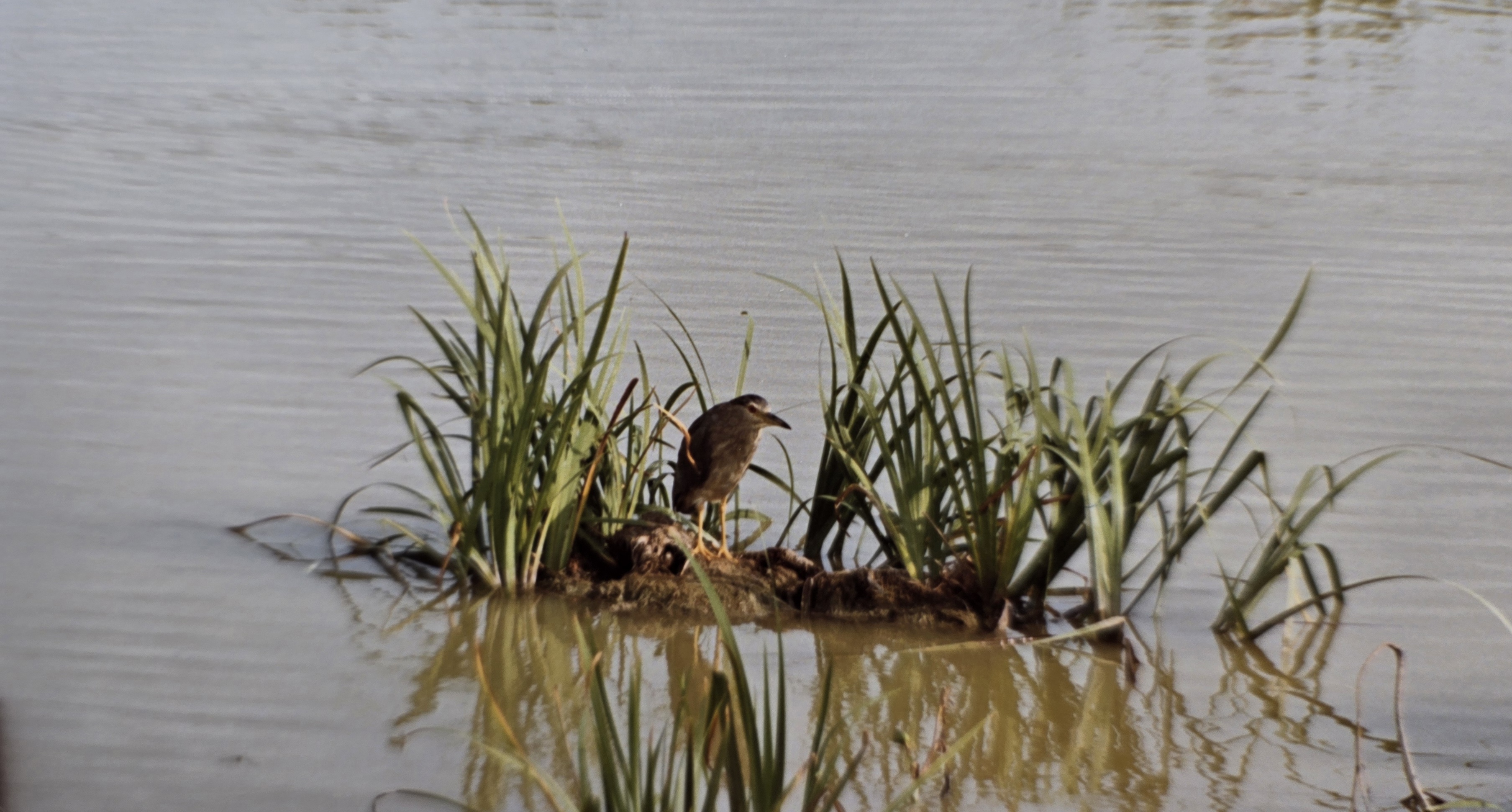
Nachtreiher in Camargue - the only bird I've been able to identify so far looking back on those old photos. 1991-07-15 12:41:47 Camargue
First observed in Camargue on 1991-07-15.
Description
Geography: This bird appears across the great seas in the following continents: Europe, North America, South America, Africa, Asia.General: Deutschland: Brutvogel, seltener Zugvogel RL 1
Seasonal behavior
Presence: 03-23 - 09-28 Migration in: 09-07 - 09-14 Migration out: 09-07 - 09-28More details at Vogelwarte.ch
Other Details
Physical details
Physical details: length=58-65 cm, wingspan=105-112 cm, weight=500-800 gHabitats: Wetland Details
Nankeen night-heron / Rotrückenreiher (Nycticorax caledonicus)
Description
Details
Little egret / Seidenreiher (Egretta garzetta)
Profile Wikipedia Vogelwarte BirdLife ZH ornitho.ch Xeno-Canto BirdID NABU YouTube

Seidenreiher. 2022-02-05 11:42:26 Klingnauer Stausee (man-made lake)
First observed in 🇨🇭 on 2019-11-22.
Description
Appearance and identification: The little egret has yellow feet but dark gray legs and beak
Vocalization:
Sometimes utters a dry, rasping "kerrr" when flushed, but is mostly silent away from breeding ground. In colonies a peculiar gurgling and vibrating sound is heard; "ghala-la-la-la". [Link]
Seasonal behavior
Year-round bird Migration in: 09-28 - 10-07 Migration out: 09-28 - 10-05More details at Vogelwarte.ch
Other Details
Physical details
Physical details: length=55-65 cm, wingspan=88-95 cm, weight=350-550 gHabitats: Wetland
Vocalisation
Song: No details but a Xeno-Canto recording. Song attributes: Frequency:♫ Source: XENOCANTO XC799679 - Little Egret - Egretta garzetta - call that sounds like its vomiting - Catalunya, Spain.mp3 Spain (call)

Sort of a quack, brighter and higher than grey heron, with a bit of wawa.
Call attributes: Call melody: non-musical, slow, Frequency: low (1-3 KHz),
Details
Pacific reef-egret / Riffreiher (Egretta sacra)

Wikipedia: Pacific reef-egret Source: WIKIPEDIA
1200px-Egretta_sacra.jpg
🔍
Never observed (yet!)
Description
Geography: This bird appears across the great seas in the following continents: North America, Asia.Details
Chinese egret / Schneereiher (Egretta eulophotes)
Profile Wikipedia Xeno-Canto YouTube
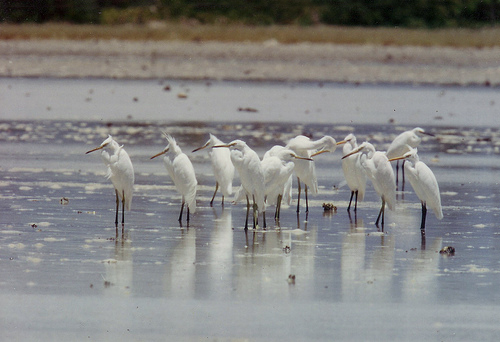
Wikipedia: Chinese egret Source: WIKIPEDIA
Olangoegret.jpg
🔍
Never observed (yet!)
Description
General: Very rare winter visitorDetails
Great bittern / Rohrdommel (Botaurus stellaris)

Rohrdommel - ausgestopft - von Silberweide Naturzentrum. 2021-10-30 13:24:28 Source: OTHER
20211030_132428-DSC_0583 Rohrdommel - ausgestopft - von Silberweide Naturzentrum. Vielen Dank, dass sie es draussen aufgestellt haben, damit ich ein schoeneres Foto habe machen koennen!.JPG
Greifensee
First observed in 🇨🇭 on 2021-10-30.
Description
General:The Eurasian bittern or great bittern (Botaurus stellaris) is a wading bird in the bittern subfamily (Botaurinae) of the heron family Ardeidae. There are two subspecies, the northern race (B. s. stellaris) breeding in parts of Europe and across the Palearctic, as well as on the northern coast of Africa, while the southern race (B. s. capensis) is endemic to parts of southern Africa. It is a secretive bird, seldom seen in the open as it prefers to skulk in reed beds and thick vegetation near water bodies. Its presence is apparent in the spring, when the booming call of the male during the breeding season can be heard. It feeds on fish, small mammals, fledgling birds, amphibians, crustaceans and insects.
[more]
Deutschland: Brut-, Jahres-, Zugvogel, Wintergast RL 2
Etymology:
[13] Most of these were onomatopoeic colloquial names for the bird; the call was described as "bumping"[14] or "booming". [Link]
Seasonal behavior
Year-round bird Migration in: 02-01 - 05-10 Migration out: 08-09 - 12-31More details at Vogelwarte.ch
Other Details
Physical details
Physical details: length=70-80 cm, wingspan=125-135 cm, weight=867-1940 gHabitats: Wetland
Vocalisation
Calls:Flight call a deep croaking "graat". [Link]
A little buzz/beep that sounds more like an appliance or app.
Call attributes: Call melody: non-musical, slow, Frequency: low (1-3 KHz),
Details
Green-backed heron / Mangrovereiher (Butorides striata)

Striated heron. 2024-02-22 11:31:30 Laos
First observed in Laos on 2024-02-22.
Description
Geography: This bird appears across the great seas in the following continents: Europe, South America, Africa, Asia.Vocalisation
Song: No details but a Xeno-Canto recording. Song attributes: Frequency:♫ Source: XENOCANTO XC791519 - Striated Heron - Butorides striata - song, sounds like Ow plus pi-rol lhl, Copperbelt Province, Zambia.mp3 (song)

Details
Cinnamon bittern / Zimtdommel (Ixobrychus cinnamomeus)
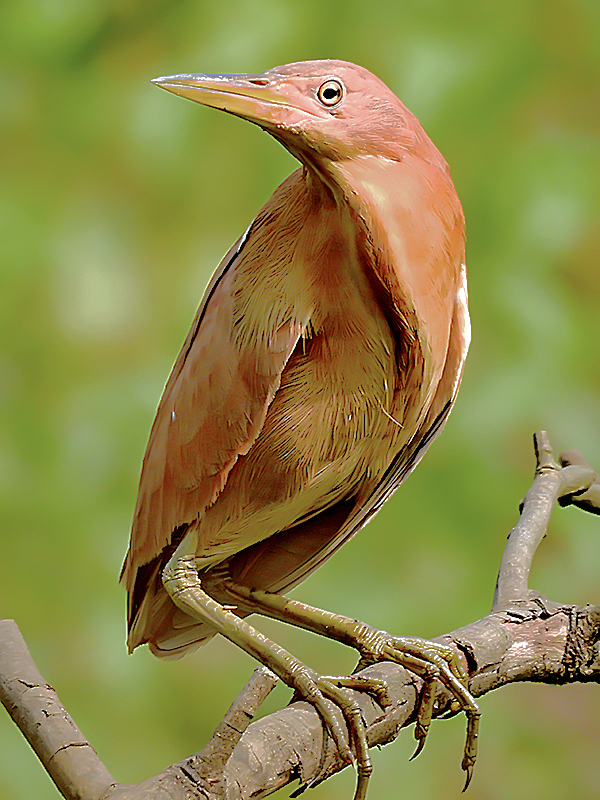
Wikipedia: Cinnamon bittern Source: WIKIPEDIA
Cinnamon_bittern_or_chestnut_bittern_%28Ixobrychus_cinnamomeus%29_Photograph_by_Shantanu_Kuveskar.jpg
🔍
Never observed (yet!)
Description
Details
Yellow bittern / Chinadommel (Ixobrychus sinensis)
Profile Wikipedia Xeno-Canto YouTube

Wikipedia: Yellow bittern Source: WIKIPEDIA
1200px-Ixobrychus_sinensis_-_Chinese_Garden.jpg
🔍
Never observed (yet!)
Description
Details
Chinese pond heron / Bacchusreiher (Ardeola bacchus)

Chinese pond heron. 2024-02-24 09:34:38 Laos
First observed in Laos on 2024-02-22.
Description
General: Winter visitorVocalisation
No details but a Xeno-Canto recording.XC794055 - Chinese Pond Heron - Ardeola bacchus - flight call.
♫ Source: XENOCANTO XC794055 - Chinese Pond Heron - Ardeola bacchus - flight call.mp3 (flight call)
 XC794055 - Chinese Pond Heron - Ardeola bacchus - flight call - Mai Po Nature Reserve, New Territories, Hong Kong, China.
♫ Source: XENOCANTO XC794055 - Chinese Pond Heron - Ardeola bacchus - flight call - Mai Po Nature Reserve, New Territories, Hong Kong, China.mp3 (flight call)

Call attributes: flight call Frequency: ,
Details
Malayan night-heron / Wellenreiher (Gorsachius melanolophus)

Wikipedia: Malayan night-heron Source: WIKIPEDIA
Malayan_Night-Heron_-_Taiwan_S4E8695_%2817320173361%29.jpg
🔍
Never observed (yet!)
Description
Details
Japanese night-heron / Rotscheitelreiher (Gorsachius goisagi)
Profile Wikipedia Xeno-Canto YouTube
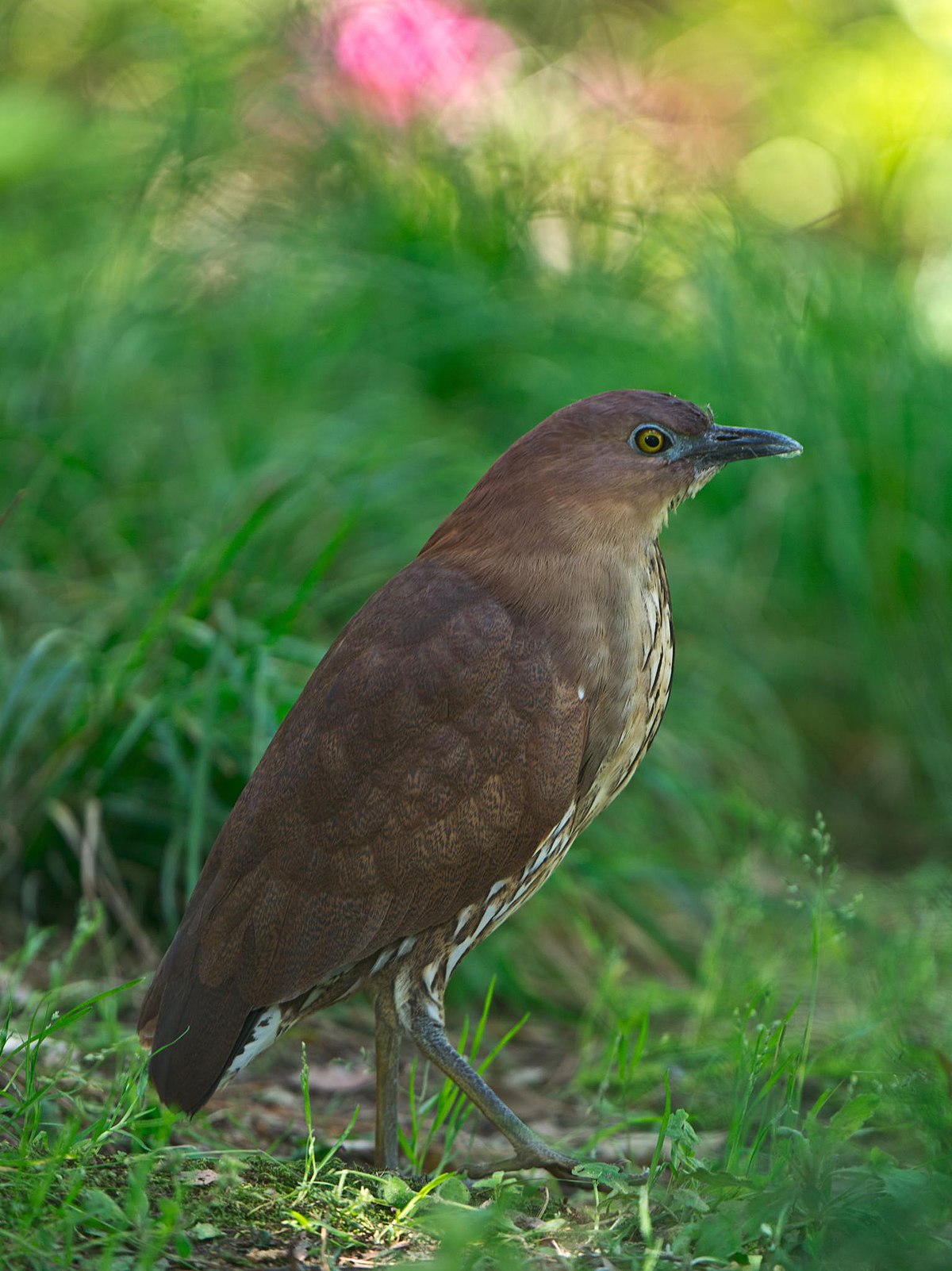
Wikipedia: Japanese night-heron Source: WIKIPEDIA
1200px-Japanese_night_heron_%28Gorsachius_goisagi%29.jpg
🔍
Never observed (yet!)
Description
General:The Japanese night heron (Gorsachius goisagi) is a species of night heron found in East Asia. It breeds in Japan, and winters in the Philippines and Indonesia. It is also seen in the spring and summer in Korea and the Russian Far East.
[more]
Details
Red-tailed tropicbird / Rotschwanz-Tropikvogel (Phaethon rubricauda)
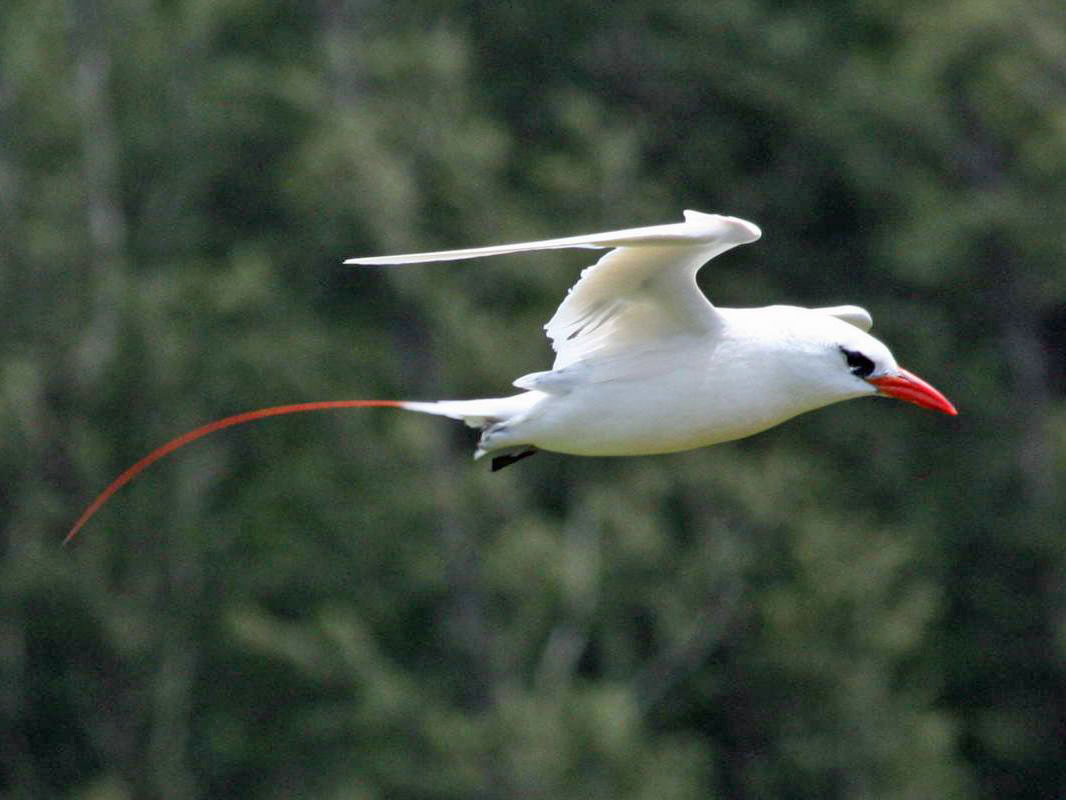
Wikipedia: Red-tailed tropicbird Source: WIKIPEDIA
Red-tailed_Tropicbird_RWD2.jpg
🔍
Never observed (yet!)
Description
Geography: This bird appears across the great seas in the following continents: North America, Africa, Asia.Details
Masked booby / Maskentölpel (Sula dactylatra)

Wikipedia: Masked booby Source: WIKIPEDIA
1200px-Starr_080606-6808_Coronopus_didymus.jpg
🔍
Never observed (yet!)
Description
Geography: This bird appears across the great seas in the following continents: North America, South America, Africa, Asia.Details
Brown booby / Weißbauchtölpel (Sula leucogaster)
Profile Wikipedia Audubon AllAboutBirds Xeno-Canto YouTube

Wikipedia: Brown booby Source: WIKIPEDIA
1200px-Atob%C3%A1-pardo.jpg
🔍
Never observed (yet!)
Description
Geography: This bird appears across the great seas in the following continents: North America, South America, Africa, Asia.Details
Red-footed booby / Rotfußtölpel (Sula sula)
Profile Wikipedia Audubon AllAboutBirds Xeno-Canto YouTube
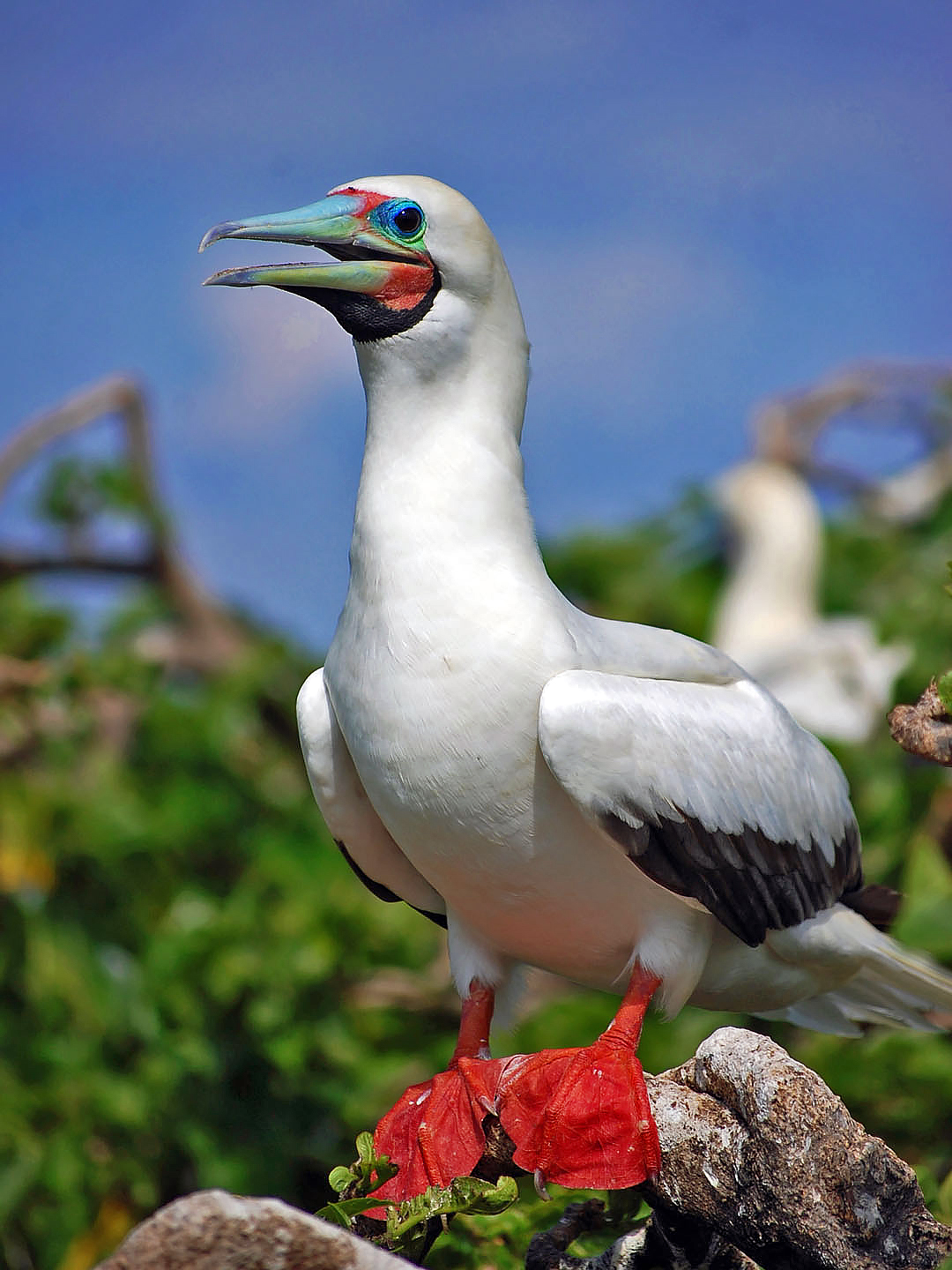
Wikipedia: Red-footed booby Source: WIKIPEDIA
Sula_sula_by_Gregg_Yan_01.jpg
🔍
Never observed (yet!)
Description
Geography: This bird appears across the great seas in the following continents: North America, South America, Asia.Details
Eurasian spoonbill / Löffler (Platalea leucorodia)
Profile Wikipedia Vogelwarte BirdLife ZH ornitho.ch Xeno-Canto BirdID NABU YouTube

Wikipedia: Eurasian spoonbill Source: WIKIPEDIA
1280px-Eurasian_Spoonbill-2.jpg
🔍
Never observed (yet!)
Description
General: Deutschland: Brut-, Zugvogel RL RVocalization:
Mostly silent, and of little use for identification. Soft utterances can be heard when feeding, and when interacting at nest. [Link]
Seasonal behavior
Seldom seen hereMore details at Vogelwarte.ch
Other Details
Physical details
Physical details: length=80-90 cm, wingspan=115-130 cm, weight=1130-1960 gDetails
Black-faced spoonbill / Schwarzstirnlöffler (Platalea minor)
Profile Wikipedia Xeno-Canto YouTube

Wikipedia: Black-faced spoonbill Source: WIKIPEDIA
1280px-Black_faced_spoonbill_at_Niigata.JPG
🔍
Never observed (yet!)
Description
General: Very rare winter visitor, endangeredDetails
Crested ibis / Nipponibis (Nipponia nippon)
Description
Details

Herzige Schwanzmeise. 2025-01-10 14:59:26 Fehraltorf
First observed in 🇨🇭 on 2020-04-13.
Description
General: Quite surprised to identify this bird at the Hungerseeli, but have since realized they can be found here in the woods and in the reeds. They're small birds that look bigger because they fluff up their feathers and have a very long tail, which is just what I saw when I first sighted a pair June 3, 2020 at the Hungerseeli.General: Deutschland: Brut-, Jahres-, Zugvogel, Wintergast
Appearance and identification:
The subspecies europaeus occurs in Switzerland; it has a broad dark stripe over each eye,
whereas the nominate caudatus has a pure white head.
'The long-tailed tit was first classified as a true tit of the Parus group. Parus has since been split from the Aegithalidae.' [Link]
Seasonal behavior
Year-round bird Breeding: 03-23 - 06-29More details at Vogelwarte.ch
Other Details
Physical details
Physical details: length=14 cm, wingspan=16-19 cm, weight=7-10 gHabitats: Forest
Vocalisation
Song: General: Meistens hört man das Pfief...chk..chk..Pfief von den Rufen, siehe dort.Song: Nabu: Der Gesang ist ein feines Trillern und selten zu hören (someone at XenoCanto compares it to a blue tit trill). [Link] Song: Song: high tsee-tsee; funny downhill trill
Song:
Song: Rapid, continuous, randomly composed sequence of bubbling,chirping sounds. [Link]
Song attributes:
Mnemnoic: Diddly doot-doot-doot-doot Melody: stereotype melodic (hhmll), slow, Frequency: high (3-9 KHz)
♫ Source: XENOCANTO XC572437 - Long-tailed Tit - Aegithalos caudatus - song.mp3 (song)

Calls:
Call: quite short, chirping, twittering "tzzirrret tzirrrret". Often starting at high pitch and rapidly falling, or just flat. Also a thin, slightly falling "zi zi ziii". [Link]
1:
Die fast ständig geäusserten, hohen Rufe verraten die kleinen, rastlosen Turner im Gezweig meist schon, bevor sie zu sehen sind. [Link]
Flight call from XenoCanto
♫ Source: XENOCANTO XC517804 Long-tailed tit flight call.mp3 (flight call)

2: A swoop with a trill at the end
♫ Source: XENOCANTO XC871720 - Long-tailed Tit call with swoop and trill - Aegithalos caudatus.mp3 (call)

Call attributes: contact call Call melody: simple rhythmic, slow, Frequency: 7-9 KHz,
Details

Wikipedia: Oriental reed warbler Source: WIKIPEDIA
Oriental_Reed_Warbler_I_IMG_0246.jpg
🔍
Never observed (yet!)
Description
General: Winter visitorDetails
Profile Wikipedia Xeno-Canto YouTube

Wikipedia: Black-browed reed warbler Source: WIKIPEDIA
Black-browed_Reed_Warbler_by_Jason_Thompson_%28Cropped%29.jpg
🔍
Never observed (yet!)
Description
General: Winter visitorDetails
Profile Wikipedia Xeno-Canto YouTube

Wikipedia: Asian stubtail Source: WIKIPEDIA
Urosphena_squameiceps.jpg
🔍
Never observed (yet!)
Description
General: Winter visitorDetails
Profile Wikipedia Vogelwarte BirdLife ZH ornitho.ch bird-song.ch Xeno-Canto BirdID NABU YouTube

Wintergoldhähnchen im Hönggerwald. 2024-04-14 08:24:44
First observed in 🇨🇭 on 2020-07-13.
Description
General: I'd often heard the high-pitched song and call in the woods by Fehraltorf but had doubts I'd ever see one (they're the smallest bird in Switzerland, fairly shy, and I seemed to only hear them in very tall trees). I didn't see one until hiking at the Pragelpass. And finally in October 2020, I saw them near Rumlikon and at the Pfaeffikersee, where I took the new profile picture. In December I saw five of them cruise through the bushes beside our house, hopping from branch to branch, snapping up insects - something I'd never have believe in spring 2020.General: Said to be the smallest bird in Switzerland, but it's basically the same size as the Firecrest.
General: Deutschland: Brut-, Jahres-, Zugvogel, Wintergast
Seasonal behavior
Year-round bird Breeding: 04-01 - 08-18 Migration in: 03-01 - 05-01 Migration out: 08-18 - 11-06More details at Vogelwarte.ch
Other Details
Physical details
Physical details: length=9 cm, wingspan=13-15 cm, weight=4-7 gHabitats: Forest
Vocalisation
Song:Vogelwarte.ch says high-pitched song that gently rises and falls. This song starts out with a repeated note. [Link]
Song:  Kurze Reihe von sehr hohen, leisen Tönen in auf-absteigender Tonhöhe, an das „W“-im Namen erinnernd. [Link]
Song: a very high-pitched, undulating series of arpeggiated notes moving down and up again, repeated 4-5 times ending with a marked "conclusion" (like "trying to start a tiny motor and failing"). Timbre of song similar to contact call. [Link]
Song attributes:
Mnemnoic: W=Winter=v.a. runter, dann wieder hoch, plus melodischer Schluss Melody: stereotype melodic, slow, Frequency: 6-8 KHz
Kurze Reihe von sehr hohen, leisen Tönen in auf-absteigender Tonhöhe, an das „W“-im Namen erinnernd. [Link]
Song: a very high-pitched, undulating series of arpeggiated notes moving down and up again, repeated 4-5 times ending with a marked "conclusion" (like "trying to start a tiny motor and failing"). Timbre of song similar to contact call. [Link]
Song attributes:
Mnemnoic: W=Winter=v.a. runter, dann wieder hoch, plus melodischer Schluss Melody: stereotype melodic, slow, Frequency: 6-8 KHz
Calls:
'sisisi' [Link]
Contact call a very high pitched "zit zit zit", only similar to Firecrest and treecreepers. Treecreepers usually calls with longer "zzzziiiiit" repeated at regular intervals, while Goldcrest calls in phrases with two to four calls in series in an uneven rhythm. Firecrest contact calls lower pitched than Goldcrest, and in a softer tone (but quite similar). [Link]
No details but a Xeno-Canto recording.
- but really
OWN
Wintergoldhähnchen whoop Ruf im Biotop.
♫ 2024-09-12 16:40:00 Greater Fehraltorf (call)
Call attributes: song Frequency: ,
Details
Description
Details
Profile Wikipedia Xeno-Canto YouTube

Wikipedia: Light-vented bulbul Source: WIKIPEDIA
1280px-Av_Light-Vented_Bulbul_%28Taiwan%29_JG.jpg
🔍
Never observed (yet!)
Description
Details
Profile Wikipedia Audubon AllAboutBirds Xeno-Canto YouTube

Red-whiskered bulbul, Chiang Mai. 2024-01-21 14:42:26 Thailand
First observed in Thailand on 2024-01-21.
Description
Geography: This bird appears across the great seas in the following continents: North America, Asia.General: introduced
Vocalisation
Song: No details but a Xeno-Canto recording. Song attributes: Frequency:♫ Source: XENOCANTO XC776525 - Red-whiskered Bulbul - Pycnonotus jocosus pattani.mp3 (song)

Details
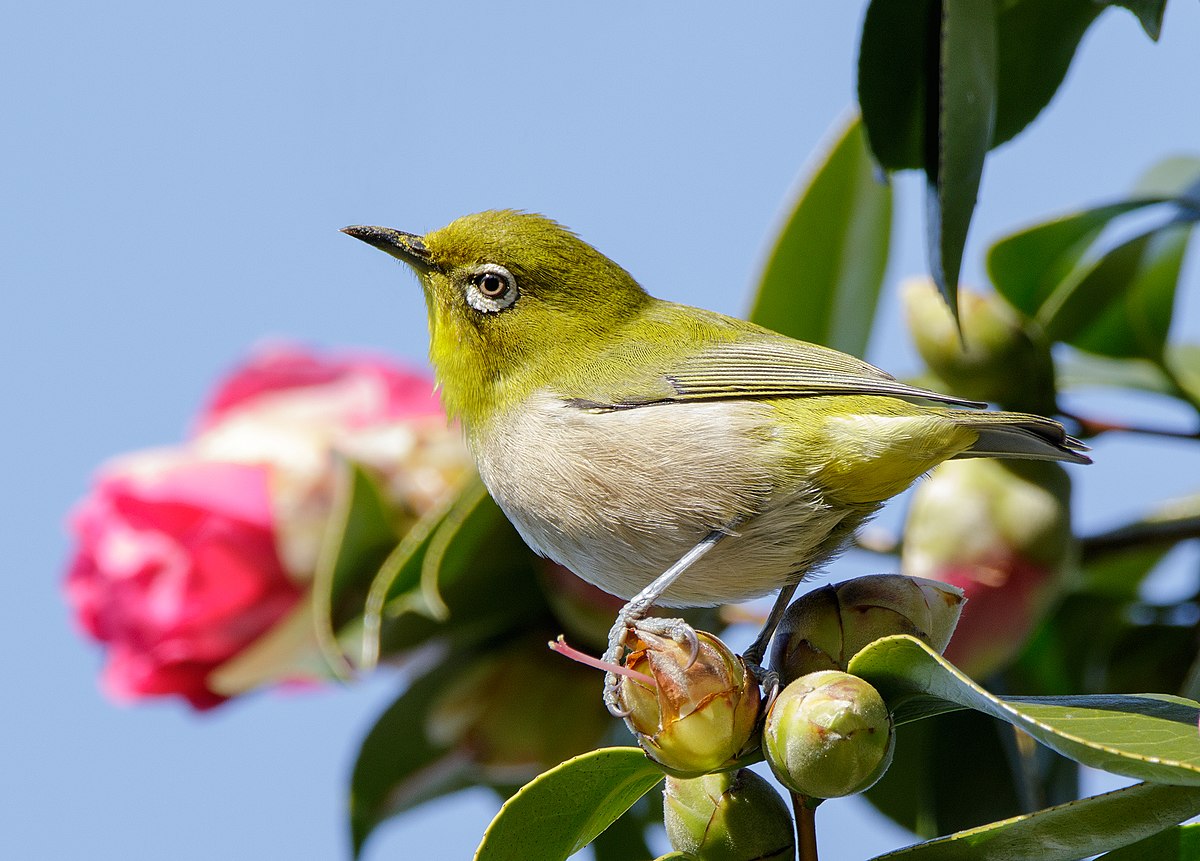
Wikipedia: Japanese white-eye Source: WIKIPEDIA
1200px-Japanese_white-eye_at_Tenn%C5%8Dji_Park_in_Osaka%2C_January_2016_III.jpg
🔍
Never observed (yet!)
Description
Geography: This bird appears across the great seas in the following continents: North America, Asia.General:
The warbling white-eye (Zosterops japonicus), also known as the Japanese white-eye and mountain white-eye, is a small passerine bird in the white-eye family. The specific epithet is occasionally written japonica, but this is incorrect due to the gender of the genus. Its native range includes much of East Asia, including the Russian Far East, Japan, Indonesia, Korea, and the Philippines. It has been intentionally introduced to other parts of the world as a pet and as pest control, with mixed results. As one of the native species of the Japanese islands, it has been depicted in Japanese art on numerous occasions, and historically was kept as a cage bird.
[more]
Details
Description
Endemic in JapanDetails
Profile Wikipedia A-Z Animals Vogelwarte BirdLife ZH ornitho.ch bird-song.ch Audubon AllAboutBirds Xeno-Canto BirdID NABU YouTube

Rauchschwalbe braucht eine Coiffeuse. 2025-08-03 16:54:17 Fehraltorf
First observed in 🇨🇭 on 2020-04-16.
Description
Geography: This bird appears across the great seas in the following continents: Europe, North America, South America, Africa, Asia.General: Deutschland: Brut-, Zugvogel RL V
Good to know: Die langen Schwanzfedern vom Rauchschwalbe und anderen geben auch dem Schmetterling Schwalbenschwanz seine deutschen Namen.
Etymology:
In früheren Jahrhunderten flogen sie vielfach durch die Öffnungen im Giebel ein und aus, durch die auch der Rauch des Herdfeuers abzog. So erhielten sie den Namen Rauchschwalben. [Link]
Appearance and identification:
Rauchschwalbes Bauch ist etwas braun rot, nicht weiss wie der von der Mehlschwalbe - was wahrscheinlich Quelle der zwei Namen ist. [Link]
Seasonal behavior
Presence: 03-01 - 10-27 Breeding: 04-20 - 09-17 Migration in: 03-01 - 05-31 Migration out: 08-18 - 10-27More details at Vogelwarte.ch
Other Details
Physical details
Physical details: length=17-19 cm, wingspan=32-34 cm, weight=16-22 gHabitats: Settlement
Similar species
Looks similar to: Common house martin.Vocalisation
Song: General: Squeaky with occasional buzzes, usually heard in flock.Song:
Kann melodisch sein wenn einzeln gehört statt viele zusammen. [Link]
Song: Characteristic calls and song. Song a sparkling, squeaky energetic improvisation with interspersed contact calls, often with diagnostic ending; an electric and drawn-out "su-eerrrrrrrrrrrrrrr". [Link]
Song attributes:
Melody: stereotype melodic, fast, Frequency: 2-6 KHz
Calls:
Contact call a short and sharp "weet" or "kee-weet". [Link]
XC898815 - Barn Swallow - Hirundo rustica - flight call.
♫ Source: XENOCANTO XC898815 - Barn Swallow - Hirundo rustica - flight call.mp3 (flight call)

Call attributes: flight call Call melody: one note, slow, Frequency: medium (1-5 KHz),
Details
Profile Wikipedia Xeno-Canto YouTube

Wikipedia: Pacific swallow Source: WIKIPEDIA
Hirundo_tahitica_javanica.JPG
🔍
Never observed (yet!)
Description
Details

Wikipedia: Red-rumped swallow Source: WIKIPEDIA
Red-rumped_Swallow_%28Cecropis_daurica%29_Photograph_by_Shantanu_Kuveskar.jpg
🔍
Never observed (yet!)
Description
Vocalization:
Less vocal than Barn Swallow. [Link]
Seasonal behavior
Seldom seen here Presence: 04-11 - 06-09 Migration in: 05-21 - 05-28 Migration out: 05-21 - 06-09More details at Vogelwarte.ch
Other Details
Physical details
Physical details: length=16-17 cm, wingspan=32-34 cm, weight=19-28 gDetails

Bank swallow. 2024-01-26 15:58:58 Thailand
First observed in Thailand on 2024-01-26.
Description
Geography: This bird appears across the great seas in the following continents: Europe, North America, South America, Africa, Asia.General:
The sand martin (Riparia riparia) or European sand martin, bank swallow, and collared sand martin in India, is a migratory passerine bird in the swallow family. It has a wide range in summer, embracing practically the whole of Europe and the Mediterranean countries and across the Palearctic to the Pacific Ocean. It is a Holarctic species also found in North America. It winters in eastern and southern Africa, South America, and the Indian Subcontinent.
[more]
Deutschland: Brut-, Zugvogel RL V
Seasonal behavior
Presence: 03-23 - 10-18 Breeding: 05-01 - 09-07 Migration in: 03-23 - 06-09 Migration out: 07-10 - 10-18More details at Vogelwarte.ch
Other Details
Physical details
Physical details: length=12 cm, wingspan=26-29 cm, weight=11-16 gHabitats: Wetland
Vocalisation
Song: Fast raspy one-noter. Song:Song a primitive improvisation on the contact call. [Link]
Song attributes:
Melody: non-musical, fast, Frequency: 1-7 KHz Special sounds: rasp
♫ Source: XENOCANTO XC344092 - Sand Martin - Riparia riparia - raspy song but note, does not sing often.mp3 (song)

Calls:
Contact call a mono- or disyllabic "trrrrt". Similar to House Martin but more raucous and less crisp, with less rolling r's, and with stable pitch throughout. Alarm call similar to House Martin; a sharp plaintive "tseep", but somewhat purer and more drawn. [Link]
No details but a Xeno-Canto recording.
XC659747 - Sand Martin - Riparia riparia - noisy call recorded in Sweden.
♫ Source: XENOCANTO XC659747 - Sand Martin - Riparia riparia - noisy call recorded in Sweden.mp3 (call)

Call attributes: song Frequency: ,
Details

Wikipedia: Asian house-martin Source: WIKIPEDIA
Delichon_dasypus_-Taiwan-8-4c.jpg
🔍
Never observed (yet!)
Description
General: Winter visitorDetails

Feldlerche auf einer Sonnenblume, Neunkirch. 2023-07-16 10:19:38 Neunkirch, Schaffhausen
First observed in 🇨🇭 on 2022-06-25.
Description
Geography: This bird appears across the great seas in the following continents: Europe, North America (introduced), Africa, Asia.General: Deutschland: Brut-, Jahres-, Zugvogel, Wintergast RL 3
Good to know:
Aus dem Kurzjahresbericht BirdLife Schweiz 2022: Die Feldlerche, Vogel des Jahres 2022..., ist eihne dieser bredrohten Arten, welche durch die Industrialisierung der Landwirtschaft ausgerottet wird. [Link]
Appearance and identification:
Somewhat like a house sparrow but 18-19 cm long, not 14-15, kleiner als Star. Ruffled head feathers. NABU says streaks on breast contrast with white belly. [Link]
Geography:
 Introduced population in North America is gradually declining. [Link]
Habitat: Stark gefährdet durch Verlust von geeignetem Lebensraum. Eine Massnahme ist die Erstellung von Lerchenfenstern auf den Feldern - eine kleine Fläche mitten im Feld, die nicht bepflanzt oder gemäht wird. So was sieht man bei uns, z.B. zwischen Freudwil und Gutenswil, wobei ich nicht genau weiss, ob Feldlerchen das Ziel davon sind. Die Infos habe ich vom FOK Kurs 2021-2022 von Christina Ebneter.
Seasonal behavior
Year-round bird Breeding: 04-11 - 08-18 Migration in: 02-01 - 04-01 Migration out: 09-17 - 11-15More details at Vogelwarte.ch
Other Details
Physical details
Physical details: length=18-19 cm, wingspan=30-36 cm, weight=26-50 gHabitats: Agricultural
Vocalisation
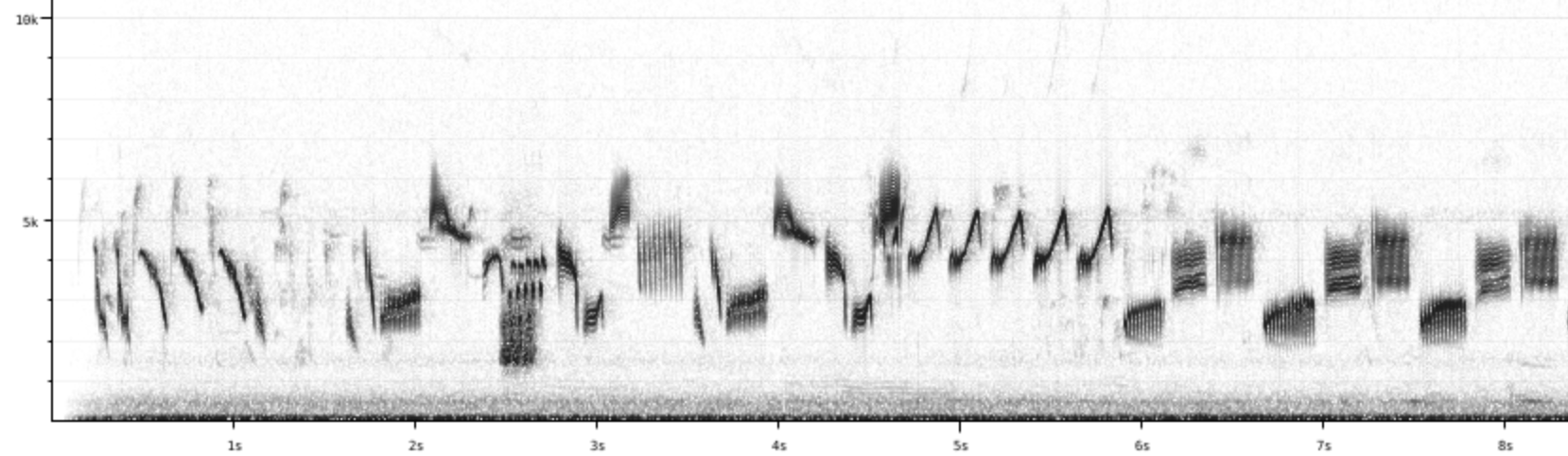
Song: Fast chirpy improvization without a break, not very high, reminds me of a nightingale or a Eurasian reed warbler/Teichrohrsänger with the exact rhythm, but most likely sung in a cornfield. Or a Singdrossel that repeats its elements longer that that guy. Repeats elements 1-8 times. Sometimes buzzy/trilly. Can go on for minutes at a time. Ich habe es auch mit einem Amsel verwechselt, da er lang und melodisch, fast wie Amsel aber hört nicht auf. Song:Song a pleasing energetic stream of chirping, merry trills, interspersed with mimicry. Trills quite resonant with fairly full tone. Song usually given in flight high in the air. Less characteristic, shorter, weaker and more varied song when given from ground. [Link]
Song attributes:
Melody: sings 30 seconds or longer, slow, Frequency: 2-6 KHz Special sounds: mimicry
♫ Source: XENOCANTO XC685846 - Eurasian Skylark - Alauda arvensis - song, recorded in France.mp3 (song)
Calls:
Most typical flight call a short trilling "chirrup", with the end note noticeably lower pitched than the start. Also several other more cryptic calls. [Link]
This quickly-written call archetype may need review/enhancement.
♫ Source: XENOCANTO XC772869 - Eurasian Skylark - Alauda arvensis - flight call.mp3 (flight call)
 XC772869 - Eurasian Skylark - Alauda arvensis - flight call.
♫ Source: XENOCANTO XC772869 - Eurasian Skylark - Alauda arvensis - flight call.mp3 (flight call)
XC946652 - Eurasian Skylark one-note swooping flight call - Alauda arvensis.
♫ Source: XENOCANTO XC946652 - Eurasian Skylark one-note swooping flight call - Alauda arvensis.mp3 (flight call)

Call attributes: flight call Frequency: ,
Details
Description
General: Endemic in JapanDetails
Profile Wikipedia Xeno-Canto BirdID NABU YouTube

Zistensaenger singt beim Fliegen auf dem Land bei Es Trenc. 2022-04-08 14:36:48
First observed in Mallorca on 2022-04-08.
Description
General:The zitting cisticola or streaked fantail warbler (Cisticola juncidis) is a widely distributed Old World warbler whose breeding range includes southern Europe, Africa (outside the deserts and rainforest), and southern Asia down to northern Australia. A small bird found mainly in grasslands, it is best identified by its rufous rump; as well, it lacks any gold on the collar and the brownish tail is tipped with white. During the breeding season, males have a zigzagging flight display accompanied by regular "zitting" calls that have been likened to repeated snips of a scissor. They build their pouch nest suspended within a clump of grass.
[more]
Seasonal behavior
Presence: 05-01 - 09-28 Breeding: 05-01 - 08-29 Migration in: 05-01 - 09-28More details at Vogelwarte.ch
Other Details
Physical details
Physical details: length=10 cm, wingspan=12-14 cm, weight=8-12 gVocalisation
Song: No details but a Xeno-Canto recording. Song:Male song a diagnostic, monosyllabic, high-pitched "cist", repeated in an even rhythm about once every second, while in bounding song-flight or perched. [Link]
Song attributes:
Frequency:
♫ 2022-04-08 14:43:27 Source: BirdNet 20220408_144327 birdnet - Zistensänger - Zistensänger.mp3 (song)
Details

Wikipedia: Eastern crowned-warbler Source: WIKIPEDIA
Eastern_crowned_warbler.jpg
🔍
Never observed (yet!)
Description
General: Winter and passage visitorDetails
Description
Details
Description
General: AccidentalDetails

Wikipedia: Arctic warbler Source: WIKIPEDIA
Arctic_Warbler_4683b.jpg
🔍
Never observed (yet!)
Description
Geography: This bird appears across the great seas in the following continents: Europe, North America, Asia.General: Winter and passage visitor
Other Details
Physical details
Physical details: length=10-11 cm, wingspan=16-22 cm, weight=8-12 gDetails

Yellow-browed warbler. 2024-02-18 07:21:24 Laos
First observed in Laos on 2024-02-18.
Description
General: Deutschland: seltener ZugvogelOther Details
Physical details
Physical details: length=10 cm, wingspan=14-20 cm, weight=4-9 gVocalisation
Song: No details but a Xeno-Canto recording. Song:Contact call and song both distinct. Song an ornamented, drawn out, slow-motion version of the contact call, with similar timbre and pitch. [Link]
Song attributes:
Frequency:
♫ Source: XENOCANTO XC894390 - Yellow-browed Warbler - Phylloscopus inornatus - song, lLMmh - Krung Thep Maha Nakhon, Thailand.mp3 Thailand (song)
Details
Description
Details
Profile Wikipedia Xeno-Canto YouTube

Wikipedia: Sakhalin leaf warbler Source: WIKIPEDIA
1248px-Sakhalin_Leaf-warbler.jpg
🔍
Never observed (yet!)
Description
Details
Profile Wikipedia Audubon AllAboutBirds Xeno-Canto BirdID NABU YouTube
, surprisingly good photo considering I shot it through the screen.JPG)
A red-billed leiothrix (Leiothrix lutea), surprisingly good photo considering I shot it through the screen. 2025-10-11 07:58:34 Levanto
First observed in 🇨🇭 on 2025-10-06.
Description
Geography: This bird appears across the great seas in the following continents: Europe, North America, Asia.Etymology:
In Italian, it's Usignolo del Giappone [Link]
Appearance and identification:
It doesn't fly frequently, except in open habitats. This bird is very active and an excellent singer but very secretive and difficult to see. [Link]
Geography:
It has become a common cagebird and amongst aviculturists it goes by various names: Pekin robin, Pekin nightingale, Japanese nightingale, and Japanese (hill) robin, the last two being misnomers as it is not native to Japan (although it has been introduced and naturalised there).[ [Link]
Vocalisation
Song: No details but a Xeno-Canto recording. Song attributes: Frequency:♫ 2025-10-06 15:53:00 Switzerland (song)
Details

Wikipedia: Chinese hwamei Source: WIKIPEDIA
Garrulax_canorus_-_Watching_Back.jpg
🔍
Never observed (yet!)
Description
This bird appears across the great seas in the following continents: North America, Asia.General:
The Chinese hwamei or melodious laughingthrush (Garrulax canorus) is a passerine bird of eastern Asia in the family Leiothrichidae. The name "hwamei" comes from the Chinese 画眉 (huà-méi) means "painted eyebrow"[2] referring to the distinctive marking around the bird's eyes. The species is a popular cagebird because of its attractive song.
[more]
Details
Description
Details
Profile Wikipedia Xeno-Canto YouTube

Wikipedia: Lanceolated warbler Source: WIKIPEDIA
1200px-Locustella_lanceolata_71284996.jpg
🔍
Never observed (yet!)
Description
Winter visitorDetails
Wikipedia: Japanese bush warbler Source: WIKIPEDIA
1200px-Cettia_diphone_%28crying%29.JPG
🔍
Never observed (yet!)
Description
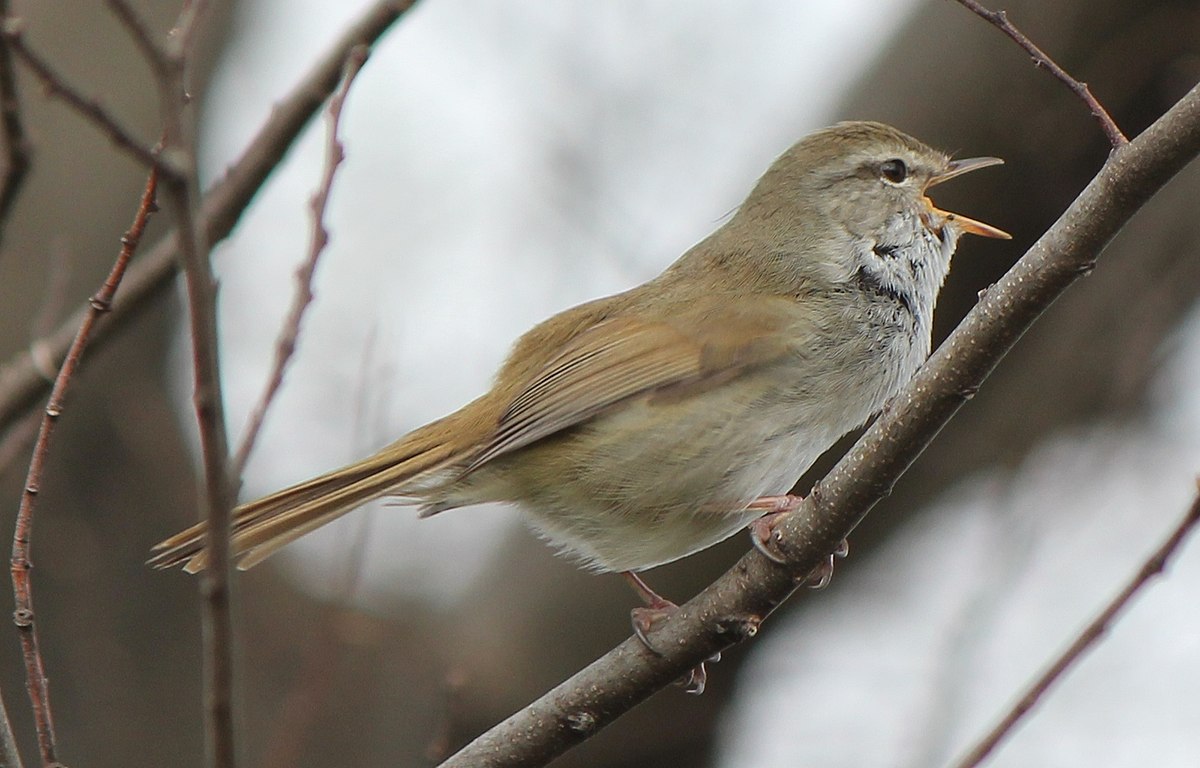
Geography: This bird appears across the great seas in the following continents: North America, Asia.General:
The Japanese bush warbler (Horornis diphone), known in Japanese as uguisu (鶯), is an Asian passerine bird more often heard than seen. Its distinctive breeding song can be heard throughout much of Japan from the start of spring.
[more]
Details
Profile Wikipedia Vogelwarte BirdLife ZH ornitho.ch bird-song.ch Audubon AllAboutBirds Xeno-Canto BirdID NABU YouTube

Rekordbeobachtung - 8 Vögel an der Futterstelle, hinten links ein ungewöhnlicher Besuch von einem Buchfink, und sonst Feldsperlinge und eine Kohlmeise. 2024-12-15 13:40:22 Greater Fehraltorf
First observed in 🇨🇭 on 2020-04-10.
Description
Geography: This bird appears across the great seas in the following continents: Europe, North America (introduced), Africa, Asia.General: Similar to the house sparrow, but with the black cheek patch seen here. in Fehraltorf there are 5 times as many house sparrows as tree sparrows.
General: Deutschland: Brut-, Jahresvogel RL V
Etymology:
Der Gesang ist ein rhythmisches Tschilpen, das lautmalerisch mit tsche tsche umschrieben wird. [Link]
Geography:
Brought from Germany, about 20 of these birds were released in St. Louis in 1870. The population took hold there, and they might have spread except that the House Sparrow, seemingly more aggressive and adaptable, reached the St. Louis area at about the same time. Eurasian Tree Sparrows are still found in parts of Missouri and Illinois, and have reached southeastern Iowa, but they are fairly local in farmland and suburbs. The tougher House Sparrow may keep them out of other areas. [Link]
Vocalization:
Most other sounds similar to House Sparrow, and may be difficult to identify. [Link]
Seasonal behavior
Year-round birdOther Details
Physical details
Physical details: length=14 cm, wingspan=20-22 cm, weight=18-29 gHabitats: Settlement
Vocalisation
Song: Monotone chirping, rougher than that of the house sparrow. Most 2-7 KHz mit many overtones, i.e. somewhat higher than the house sparrow. Song:Chattering sounds are generally harder, and song slightly higher pitched than House Sparrow. [Link]
Song attributes:
Melody: simple rhythmic, slow, Frequency: 2-7 KHz
Calls:
Distinct, high-pitched and explosive contact-call; "che-witt" typically given in flight. Second syllable rising rapidly in pitch. [Link]
Rough sounding voice
XC926073 - Eurasian Tree Sparrow - Passer montanus - call.
♫ Source: XENOCANTO XC926073 - Eurasian Tree Sparrow - Passer montanus - call.mp3 (call)

Call attributes: Call melody: one note, slow, Frequency: medium (1-5 KHz),
Details
Profile Wikipedia Xeno-Canto YouTube

Wikipedia: Russet sparrow Source: WIKIPEDIA
1280px-Russet_Sparrow_in_Sillery_Gaon_September_2025_by_Tisha_Mukherjee_03.jpg
🔍
Never observed (yet!)
Description
General: Rare winter visitorDetails
Wikipedia: Alpine accentor Source: WIKIPEDIA
Alpine_accentor_saganta.jpg
🔍
Never observed (yet!)
Description
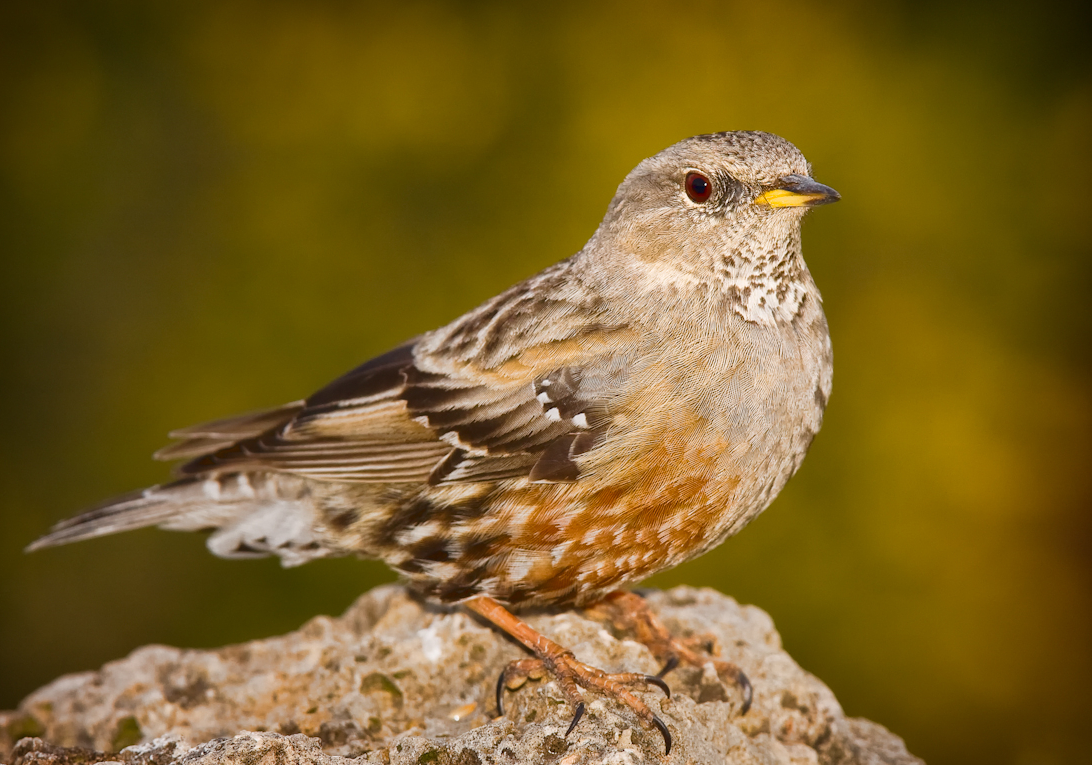
General:The alpine accentor (Prunella collaris) is a small passerine bird in the family Prunellidae, which is native to Eurasia and North Africa.
[more]
Deutschland: Brut-, Jahres-, Zugvogel RL R
Seasonal behavior
Year-round bird Breeding: 05-01 - 08-09More details at Vogelwarte.ch
Other Details
Physical details
Physical details: length=18 cm, wingspan=30-32 cm, weight=37-43 gHabitats: Mountain
Vocalisation
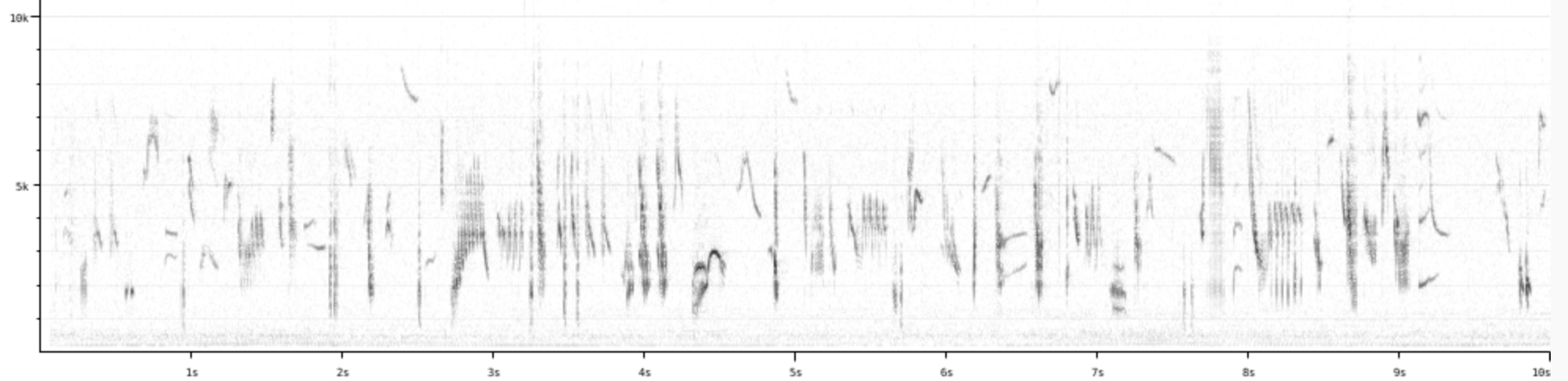
Song: Fast, long, chirpy Song:Song is a varied stream of melodious and chattering notes, more resembling skylark than the much higher pitched Dunnock. [Link]
Song attributes:
Melody: sings 30 seconds or longer, fast, Frequency: 1-8 KHz
♫ Source: XENOCANTO XC688398 - Alpine Accentor - Prunella collaris - long song recorded in France.mp3 (song)
Details
Profile Wikipedia Xeno-Canto YouTube
Description
Details

Wikipedia: Java sparrow Source: WIKIPEDIA
Buberel_Lonchura_oryzivora_3.jpg
🔍
Never observed (yet!)
Description
Geography: This bird appears across the great seas in the following continents: North America, South America, Africa, Asia.General: introduced, Christmas Island
Details

Bergfink bei Bahnhof Fehraltorf. 2023-02-01 12:50:26 Fehraltorf
First observed in 🇨🇭 on 2023-02-01.
Description
Geography: This bird appears across the great seas in the following continents: Europe, North America, Africa, Asia.General: Deutschland: Zugvogel, Wintergast
Geography:
the Brambling appears regularly in small numbers in Alaska during migration, straying the short distance across the Bering Sea. Some of those that stray across in autumn apparently then continue south on the American side, and there have been winter records for numerous states and provinces east to the Atlantic Coast and south to Colorado. Many of these vagrant Bramblings have been found visiting bird feeders. [Link]
Vocalization:
Large repertoire of mostly characteristic sounds. [Link]
Seasonal behavior
Year-round bird Migration in: 02-20 - 04-20 Migration out: 09-17 - 12-07More details at Vogelwarte.ch
Other Details
Physical details
Physical details: length=14 cm, wingspan=25-26 cm, weight=17-30 gHabitats: Forest
Vocalisation
Song: General: Bergfink - call cheep plus two ascending Grünfink squawks. Song? Grünfink squawk but not descending, every 3-4 seconds. Song:Song very distinct; a soft, wheezing, drawn-out single note. Repeated at the same pitch in a monotonous manner. [Link]
Song attributes:
Melody: simple rhythmic, slow, Frequency: medium (1-5 KHz) Special sounds: rasp Singing season: 04-14 - 09-15
♫ Source: XENOCANTO XC731031 - Brambling song - Fringilla montifringilla.mp3 (song)

Calls:
Contact calls include a short, nasal, ascending "keeaa", a short high-pitched, piercing "tzeet" and a linnet-like "chepp". May be mistaken for Greenfinch, but note softer timbre and stable pitch throughout the call. [Link]
call cheep plus two ascending greenfinch (Grünfink) squawks
XC900455 - Brambling call - Fringilla montifringilla.
♫ Source: XENOCANTO XC900455 - Brambling call - Fringilla montifringilla.mp3 (call)

Call attributes: Call melody: one note, slow, Frequency: 2-6 KHz,
Details
Description
Details
Profile Wikipedia Xeno-Canto YouTube
Description
General: Endemic in JapanDetails
Profile Wikipedia Xeno-Canto YouTube

Wikipedia: Pallas's rosefinch Source: WIKIPEDIA
Carpodacus_roseus.jpg
🔍
Never observed (yet!)
Description
General:Pallas's rosefinch (Carpodacus roseus) is a species of bird in the finch family Fringillidae. It is found in China, Japan, Kazakhstan, Korea, Mongolia, and Russia. Birds are occasionally reported from further west and there are records from several European regions, including Britain, but the cage-bird trade makes the origin of some such birds hard to assess. Its natural habitats are boreal forests and boreal shrubland.
[more]
Details

Eine Seltenheit - ein Birkenzeisig im Baum bei Binario 3 in Fehraltorf. 2025-12-04 12:09:03 Ich habe den Vogel weit weg im Baum bei Binario 3 gesehen, und war neugierig (wie immer) und habe mein 200-800mm Telefoto geschnappt. Ohne das hätte ich es nicht identifizieren können. Beim ersten Blick auf die Fotos habe ich gedacht, es könnte ein Sperling sein, aber sie sind meistens sehr sozial, und hier war nur ein Vogel hoch in dem Baum. Und vor allen die kleinen Streifen auf dem Bauch haben nicht gepasst. Das wäre eher ein Drossel. "Die Vogel App!" hat 18 Möglichkeit gefunden, aber ich bin nicht schlauer geworden. Dann habe ich MerlinBirdID gefragt, was im besten Foto erscheint, und es hat gesagt Birkenzeisig. Das war (weil es alphabetisch geordnet ist) die erste Art in der Vogel App Liste. Und bisher hatte ich einen nur einmal einen Birkenzeisig gesehen in Andermatt auf einem FOK3 Ausflug. Übrigens, bei ornitho.ch wird es Alpenbirkenzeisig genannt. Ich habe dort geschaut, ob andere in Kanton Zürich einen Birkenzeisig gesehen haben, und in den letzen Tagen ja in Winterthur, Chatzenseen und Wädenswil. Fehraltorf
First observed in 🇨🇭 on 2025-06-14.
Description
Geography: This bird appears across the great seas in the following continents: Europe, North America, Asia.General: Es gibt Streit um den Namen, vor allem ob der Alpenbirkenzeisig eine Underart oder eingene Art ist. Wikipedia sagt das erste, ornitho das zweite, usw. Ich habe das Problem für mich gelöst, indem ich die Mehrheit respektiere; wenn Alpenbirkenzeisig erwähnt wird, wird es hier as Birkenzeisig gezeigt.
General: Deutschland: Zugvogel, Wintergast
Etymology: Nachdem ich bei uns in 2025 einen Birkenzeisig gesehen, wurde ich neugierig wegen dem Namen. Der deutsche Name kommt von westschlavischen Sprachen. Google AI fasst so zusammen: Der Name "Zeisig" stammt aus dem Westslawischen abäleitet von Wörtern wie tschechisch "čížek" oder polnisch "czyżyk" (kleiner Zeisig) und wurde im 13./14. Jahrhundert ins Deutsche entlehnt, ursprünglich als "zīse" im Mittelhochdeutschen. ... Die ursprüngliche slawische Form "čižb" (Zeisig) und die Diminutivform "čižbkb" (kleiner Zeisig) sind lautmalerischen Ursprungs und spiegeln möglicherweise den Ruf des Vogels wider ähnlich dem ukrainischen "unù Bu?" (wer seid ihr?).
Etymology: The ‘poll’ part of the English name ‘Redpoll’ refers to a old word for ‘head’. [Link]
Appearance and identification: roter Punkt auf Kopf, sonst weiss+braun, teilweise hell-rot auf brust.
Behavior:
Trotz Ihrer roten Abzeichen sind die bräunlich-weiss gestreiften Vögel wenig auffällig, und wenn sie nicht gerade rufen, bleiben sie meist unentdeckt. Oft fliegen sie unvermittelt auf, drehen im Schwarm eine Runde und fallen wieder ein. [Link]
Seasonal behavior
Seldom seen here Year-round bird Breeding: 05-21 - 08-18 Migration in: 03-01 - 05-01 Migration out: 08-29 - 10-27More details at Vogelwarte.ch
Other Details
Physical details
Physical details: length=11-14 cm, wingspan=20-25 cm, weight=9-16 gHabitats: Mountain
Vocalisation
Song: A few chirps and a trill, then repeat. Song:Song an improvised chattering on various contact calls with no apparent phrasing. [Link]
Song attributes:
Melody: simple rhythmic, fast, Frequency: 2-6 KHz Special sounds: trill
Details

Von Frühstückstisch aus durchs Fenster fotografiert - ein Gimpel! 2024-06-25 08:07:08 Mettmenalp, GL
First observed in 🇨🇭 on 2021-02-21.
Description
General:The Eurasian bullfinch, common bullfinch or bullfinch (Pyrrhula pyrrhula) is a small passerine bird in the finch family, Fringillidae. In Anglophone Europe it is known simply as the bullfinch, as it is the original bird to bear the name bullfinch.
[more]
Deutschland: Brut-, Jahres-, Zugvogel, Wintergast
Seasonal behavior
Year-round bird Breeding: 04-20 - 08-18 Migration in: 02-10 - 04-01 Migration out: 10-07 - 11-26More details at Vogelwarte.ch
Other Details
Physical details
Physical details: length=14-16 cm, wingspan=22-29 cm, weight=27-38 gHabitats: Forest
Vocalisation
Song: 3-note long M, pause, HL (somewhat falling)...Gim! Gim-peeel! Sounds a bit like a pirol. Song:Song a quiet, modest mix of contact call and various chirping sounds, with peculiar harmonics. [Link]
Song attributes:
Melody: stereotype melodic, slow, Frequency: 2-8 KHz
♫ Source: XENOCANTO XC637392 - Eurasian Bullfinch - Pyrrhula pyrrhula - song, recorded in France.mp3 (song)

Calls:
Contact call a soft, full-bodied, descending, pure whistle; "peeuu". [Link]
laconic 1 note call w slight dip? Song NABU 1 parakeet like puppy-dog whining, NABU 2 whistles, 2-syllable peek-a-boo, ...
XC214867 - Eurasian Bullfinch - Pyrrhula pyrrhula - contact call, recorded in Germany.
♫ Source: XENOCANTO XC214867 - Eurasian Bullfinch - Pyrrhula pyrrhula - contact call, recorded in Germany.mp3 (contact call)

Call attributes: contact call Call melody: one note, slow, Frequency: 2-3 KHz,
Details
Profile Wikipedia Vogelwarte BirdLife ZH ornitho.ch bird-song.ch Xeno-Canto NABU YouTube

Kernbeisser bei Staldenweiher etwa 30m hoch in einem Baum. 2025-03-09 10:19:54 Staldenweiher
First observed in 🇨🇭 on 2025-02-10.
Description
General:The hawfinch (Coccothraustes coccothraustes) is a passerine bird in the finch family Fringillidae. It is the only species placed in the genus Coccothraustes. Its closest living relatives are the Chinese grosbeak (Eophona migratoria) and Japanese grosbeak (Eophona personata) of East Asia, and the evening grosbeak (Hesperiphona vespertina) and hooded grosbeak (Hesperiphona abeillei) of North America.
[more]
Deutschland: Brut-, Jahres-, Zugvogel, Wintergast
Seasonal behavior
Year-round bird Breeding: 04-20 - 07-10 Migration in: 02-10 - 04-20 Migration out: 08-29 - 11-15More details at Vogelwarte.ch
Other Details
Physical details
Physical details: length=18 cm, wingspan=29-33 cm, weight=46-70 gHabitats: Forest
Vocalisation
Song: No details but a Xeno-Canto recording. Song attributes: Frequency:♫ 2024-10-31 13:29:37 Source: BIRDWEATHER 20241031_132937-Birdweather-Hawfinch.mp3 Greater Fehraltorf (song)
Calls:
Most typical call a sharp and explosive "tzek", with abrupt, emphasized, cut-off ending. Quite similar to Robin, but harder, with each syllable marginally longer with a slightly wheezing timbre. Repetitions are slower and more singular than Robin. Diagnostic when interspersed with high frequency notes. [Link]
Found no references to song
XC712663 - Hawfinch - Coccothraustes coccothraustes - whit whit tsirp, recorded in Sweden, redubbed by me to a call.
♫ Source: XENOCANTO XC712663 - Hawfinch - Coccothraustes coccothraustes - whit whit tsirp, recorded in Sweden, redubbed by me to a call.mp3 (call)

Call attributes: Call melody: one note, fast, Frequency: 4-8 KHz,
Details

Fichtenkreuzschnabel. 2025-10-16 14:46:49 Engadin
First observed in 🇨🇭 on 2020-06-13.
Description
Geography: This bird appears across the great seas in the following continents: Europe, North America, Africa, Asia.General: Forests with conifers. Some spend the winter in Switzerland, others are here year-round.
General: Deutschland: Brut-, Jahres-, Zugvogel, Wintergast
Appearance and identification:
Nabu.de: das Männchen schon von weitem durch seine ziegelrote Farbe auf. Das Weibchen dagegen ist unscheinbar graugrün gefärbt.Größe: 15 bis 17 Zentimeter
Zugtyp: Teilzieher
Beobachtungszeitraum: Oktober bis April, im Mittelgebirge und Alpenraum ganzjährig. [Link]
New research suggests that there may be as many as eight different full species of Red Crossbills on [North America]. [Link]
Behavior:
Wikipedia: a small passerine bird in the finch family Fringillidae, also known as the Common Crossbill in Eurasia. Crossbills have distinctive mandibles, crossed at the tips, which enable them to extract seeds from conifer cones and other fruits. [Link]
Seasonal behavior
Year-round bird Breeding: 01-01 - 12-31 Migration in: 01-01 - 12-31More details at Vogelwarte.ch
Other Details
Physical details
Physical details: length=16 cm, wingspan=27-30 cm, weight=35-50 gHabitats: Forest
Vocalisation
Song: Repeated hi-low pattern...well, doesn't always sound like that. The very short beginning of my Stazersee recording before the static sets in does, as well as a song found online. One recording reminds me of cicada sounds. Song:The song consist of improvised, resonant twittering, and series of contact calls with no apparent phrases. It is generally faster, with less marked pauses than in Parrot Crossbill, and the phrasing seems more random. [Link]
Song attributes:
Melody: stereotype melodic, slow, Frequency: 2-10 KHz
Calls:
Contact call similar to Parroy Crossbill's "tupp", but is on average higher and less powerful, with a "cut-off" ending. In sum: Parrot Crossbill; hard attack, soft ending, Crossbill: softer attack, cut-off ending. Beware regional variations and overlap in pitch of calls with Parrot. [Link]
No details but a Xeno-Canto recording.
- but really
OWN
Fichtenkreuzschnabel Rufe bei Bever.
♫ 2025-10-16 14:45:00 Switzerland (call)
Call attributes: song Frequency: ,
Details
Profile Wikipedia Xeno-Canto YouTube

Wikipedia: Yellow-billed grosbeak Source: WIKIPEDIA
960px-Eophona_migratoria_1.jpg
🔍
Never observed (yet!)
Description
General: AccidentalDetails
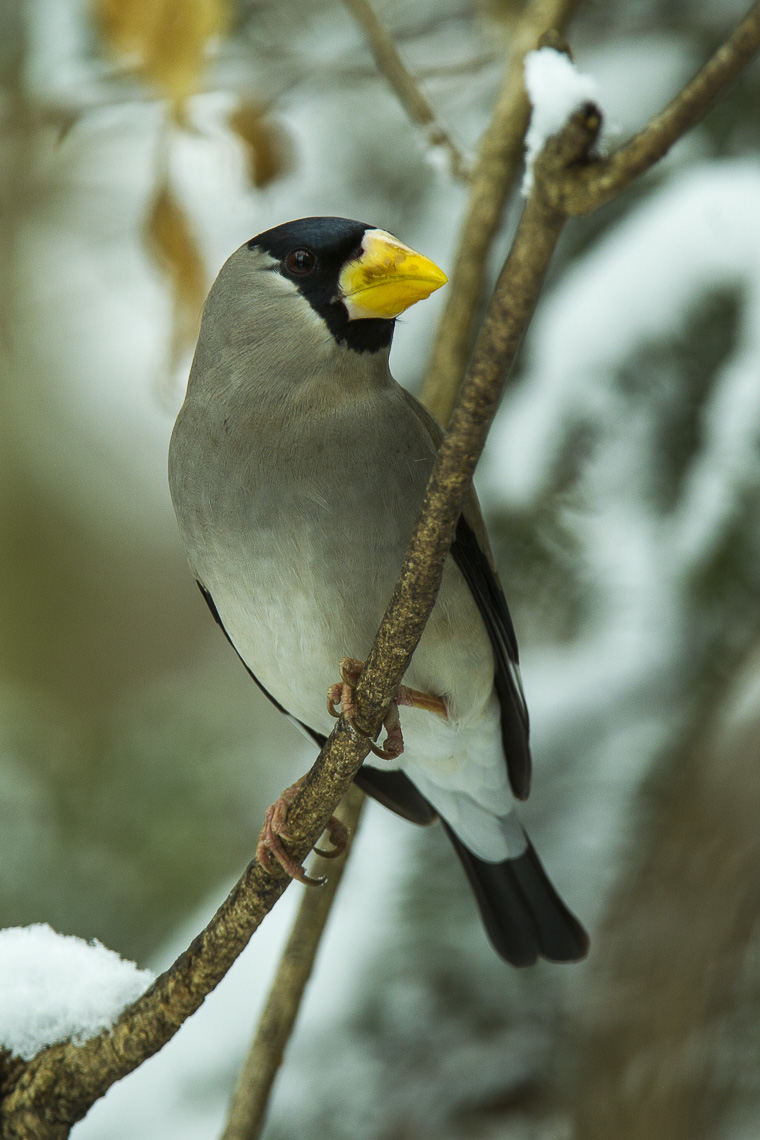
Wikipedia: Japanese grosbeak Source: WIKIPEDIA
Japanese_Grosbeak_-_Honshu_-_Japan_S4E2393_%2822418840923%29.jpg
🔍
Never observed (yet!)
Description
General: AccidentalDetails
Profile Wikipedia Audubon AllAboutBirds Xeno-Canto NABU YouTube

Wikipedia: Pine grosbeak Source: WIKIPEDIA
1200px-Pine_Grosbeak_%28Pinicola_enucleator%29_%2813667564073%29.jpg
🔍
Never observed (yet!)
Description
Geography: This bird appears across the great seas in the following continents: Europe, North America, Asia.General:
The pine grosbeak (Pinicola enucleator) (this scientific name roughly translates to "the bird that lives in the pines and shells the seeds") is a large member of the true finch family, Fringillidae. It is the only species in the genus Pinicola. It is found in coniferous woods across Alaska, the western mountains of the United States, Canada, and in subarctic Fennoscandia and across the Palearctic to Siberia. The species is a frugivore, especially in winter, favoring small fruits, such as rowans (mountain-ashes in the New World). With fruit-crop abundance varying from year to year, pine grosbeak is one of many subarctic-resident bird species that exhibit irruptive behavior. In irruption years, individuals can move long distances in search of suitable food supplies, bringing them farther south and/or downslope than is typical of years with large fruit crops.
[more]
Other Details
Physical details
Physical details: length=18 cm, wingspan=30-35 cm, weight=47-64 gDetails
Profile Wikipedia Xeno-Canto YouTube

Wikipedia: Asian rosy-finch Source: WIKIPEDIA
Leucosticte_arctoa.jpg
🔍
Never observed (yet!)
Description
The Asian rosy finch or Asian rosy-finch (Leucosticte arctoa) is a species of finch in the family Fringillidae.
It breeds in Mongolia and the East Palearctic; it winters in Manchuria, Korea, Sakhalin and Japan.
Its natural habitats are tundra and temperate grassland.
[more]
Details

Erlenzeisig beim Ortstockhaus nahe Braunwald. 2022-07-15 11:38:28 Gumen
First observed in 🇨🇭 on 2021-02-12.
Description
Also lives in North America!General: Deutschland: Brut-, Jahres-, Zugvogel, Wintergast
Etymology:
[A siskin giving the 'siskin' calls from which its name derives, The name siskin is derived from an adaptation of the German dialect words sisschen, zeischen, which are diminutive forms of Middle High German (zîsec) and Middle Low German (ziseke, sisek) words, with cognates in Slavic languages, such as Czech čížek; these names are all of onomatopoeic origin, derived from the bird's calls. [Link]
[This bird has two calls, both powerful but conflicting, one is descending and the other is ascending, their onomatopoeic sounds can be represented as "tilu" and "tluih". [Link]
Appearance and identification: Gelb aber schwarz/weiss auf dem Kopf, bauch/flügel wie weiss mit schwarzen Streifen, mehr braun bei weibchen?
Seasonal behavior
Year-round bird Breeding: 02-20 - 07-20 Migration in: 02-20 - 05-01 Migration out: 09-07 - 12-07More details at Vogelwarte.ch
Other Details
Physical details
Physical details: length=12 cm, wingspan=20-23 cm, weight=11-18 gHabitats: Mountain
Vocalisation
Song:bird-song.ch sagt Gesang zwitschernd und trillernd und ähnlich wie Girlitz - ich finde auch, es hat das hohe chaotische von den mit ab und zu was rohem. [Link]
Song: Distinct calls and song. The contact call is also prominent in the improvised song. Other typical sounds in the song includes a peculiar wheeze, like someone sucking their teeth, and lots of expert mimicry. [Link]
Song attributes:
Melody: sings 30 seconds or longer, fast, Frequency: high (3-9 KHz) Special sounds: mimicry
♫ Source: XENOCANTO XC714393 - Eurasian Siskin - Spinus spinus.mp3 (song)

Calls:
Most often heard is the sharp and disyllabic contact call: "doo-lee", with both notes descending. Sometimes given a in monosyllabic manner "dlyy". [Link]
No details but a Xeno-Canto recording.
XC941264 - Eurasian Siskin - Spinus spinus - 2-note swooping call.
♫ Source: XENOCANTO XC941264 - Eurasian Siskin - Spinus spinus - 2-note swooping call.mp3 (call)

Call attributes: song Frequency: ,
Details

Wikipedia: Oriental greenfinch Source: WIKIPEDIA
Oriental_Greenfinch_-_Honshu_-_Japan_S4E2635_%2823026479292%29.jpg
🔍
Never observed (yet!)
Description
General: Rare winter visitorDetails

Rohrammer von Fanel-Platform aus. 2024-05-22 18:08:53 Fanel/Chablais de Cudrefin und La Sauge
First observed in 🇨🇭 on 2020-04-27.
Description
General: Deutschland: Brut-, Zugvogel, WintergastAppearance and identification:
A bit like General Burnsides: white sideburns, here curling back around a black head. [Link]
Seasonal behavior
Year-round bird Breeding: 04-20 - 07-29 Migration in: 02-10 - 04-20 Migration out: 09-17 - 11-26More details at Vogelwarte.ch
Other Details
Physical details
Physical details: length=15-16 cm, wingspan=21-28 cm, weight=16-25 gHabitats: Wetland
Similar species
Looks similar to: House sparrow.Vocalisation
Song: General: At Fanel I heard sequences of whistles and trills (buzzes?), just a few notes, but wandering up and down: m h lll, or l m hhh m. Listen to recording of 2022-06-25 13.37.28Song:
Oft 4 Noten: mlhl [Link]BirdID: A short sequence of 3-5 brittle and buzzing sounds, repeated consistently with marked pauses. Last sound in phrase often has a conclusive feel, but not always. [Link]
Song: Song variable between individuals and breeding status: A short sequence of 3-5 brittle and buzzing sounds, repeated consistently with marked pauses. Last sound in phrase often has a conclusive feel, but not always. Paired males sing slower than unpaired. Unpaired male song also more contracted, making the pauses between each phrase stand out. [Link]
Song attributes:
Melody: stereotype melodic (mllllm), slow, Frequency: 3-7 KHz Special sounds: trill
♫ Source: XENOCANTO XC723277 - Common Reed Bunting - Emberiza schoeniclus - song.mp3 (song)

♫ 2022-06-25 13:37:28 Source: BirdNet 20220625_133728 birdnet - Rohrammer - Rohrammer - Neuchâtel.mp3 La Sauge (song)
♫ Source: XENOCANTO XC665288 - Common Reed Bunting - Emberiza schoeniclus schoeniclus - song.mp3 (song)

♫ Source: XENOCANTO XC694863 - Common Reed Bunting - Emberiza schoeniclus - song.mp3 (song)

♫ Source: XENOCANTO XC719864 - Common Reed Bunting - Emberiza schoeniclus - song.mp3 (song)

♫ Source: XENOCANTO XC656275 - Common Reed Bunting - Emberiza schoeniclus - song.mp3 (song)

♫ Source: XENOCANTO XC572969 - Common Reed Bunting - Emberiza schoeniclus - song.mp3 (song)

Calls:
Contact call a sharp, descending and drawn "tseeeoo". A bit similar to Yellow Wagtail, but not as sharp and explosive. In migration a thick, and unmusical "chong" is often heard. [Link]
No details but a Xeno-Canto recording.
XC884544 - Common Reed Bunting - Emberiza schöniclus - swooping call.
♫ Source: XENOCANTO XC884544 - Common Reed Bunting - Emberiza schoeniclus - swooping call.mp3 (call)

Call attributes: song Frequency: ,
Details
Profile Wikipedia Xeno-Canto YouTube
Description
Details

Wikipedia: Yellow-throated bunting Source: WIKIPEDIA
1200px-Emberiza_elegans_male_and_female.JPG
🔍
Never observed (yet!)
Description
General:The yellow-throated bunting (Emberiza elegans), also known as the elegant bunting,[2] is a species of bird in the family Emberizidae.
[more]
Details

Wikipedia: Pine bunting Source: WIKIPEDIA
1200px-Pine_Bunting_%28Emberiza_leucocephalos%29_-_%D0%A6%D0%B0%D0%B3%D0%B0%D0%B0%D0%BD%D1%88%D0%B0%D0%BD%D0%B0%D0%B0%D1%82_%D1%85%D3%A9%D0%BC%D1%80%D3%A9%D0%B3_%2815617685422%29.jpg
🔍
Never observed (yet!)
Description
AccidentalDetails
Profile Wikipedia Xeno-Canto YouTube
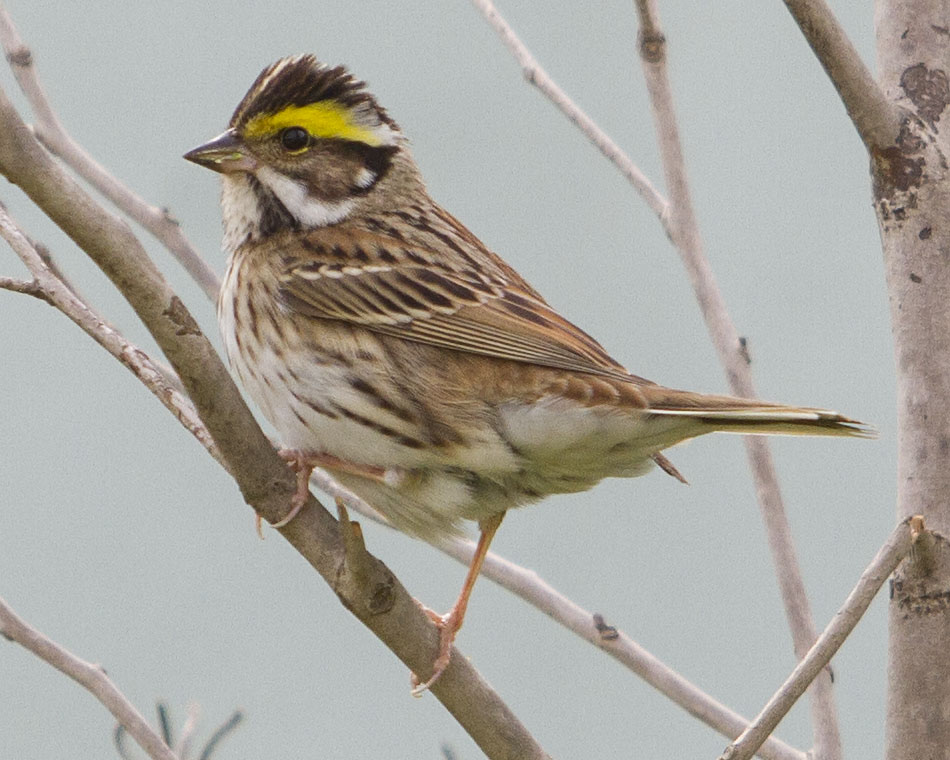
Wikipedia: Yellow-browed bunting Source: WIKIPEDIA
Yellow-browed_bunting_%28Emberiza_chrysophrys%29_Eocheong_Island_Korea_2012.jpg
🔍
Never observed (yet!)
Description
General:The yellow-browed bunting (Emberiza chrysophrys) is a passerine bird in the bunting family Emberizidae, a group now separated by most modern taxonomists from the finches (Fringillidae). The genus name Emberiza is from Old German Embritz, a bunting. The specific chrysophrys is from Ancient Greek khrusophrus, "golden-browed".[2]
[more]
Details
Profile Wikipedia Xeno-Canto YouTube
Description
Details
Profile Wikipedia Xeno-Canto YouTube
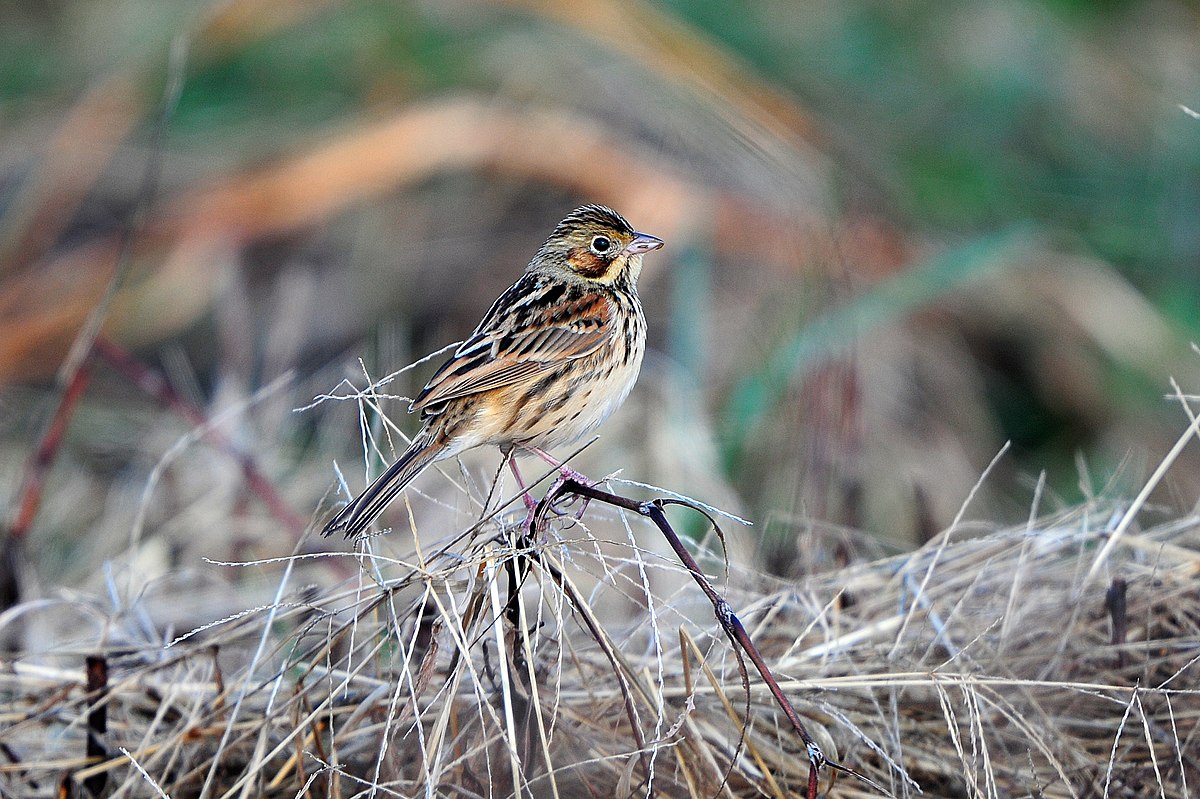
Wikipedia: Chestnut-eared bunting Source: WIKIPEDIA
1200px-Emberiza_fucata.jpg
🔍
Never observed (yet!)
Description
Winter visitorDetails
Description
Details
Profile Wikipedia Xeno-Canto YouTube

Wikipedia: Tristram's bunting Source: WIKIPEDIA
Tristram%27s_Bunting_9849.jpg
🔍
Never observed (yet!)
Description
General: AccidentalDetails

Wikipedia: Grey bunting Source: WIKIPEDIA
1200px-Emberiza_variabilis_%280s5%29.JPG
🔍
Never observed (yet!)
Description
General:The grey bunting (Emberiza variabilis) is a species of bird in the family Emberizidae.
[more]
Details

Wikipedia: Rustic bunting Source: WIKIPEDIA
Emberiza_rustica2.jpg
🔍
Never observed (yet!)
Description
The rustic bunting (Emberiza rustica) is a passerine bird in the bunting family Emberizidae, a group now separated by most modern authors from the finches, Fringillidae. The genus name Emberiza is from Old German Embritz, a bunting. The specific rustica is Latin for "rustic, simple".[2]
[more]
Other Details
Physical details
Physical details: length=14-15 cm, wingspan=21-25 cm, weight=17-22 gDetails
Profile Wikipedia Xeno-Canto YouTube

Wikipedia: Chestnut bunting Source: WIKIPEDIA
1200px-Chestnut_Bunting_Dzuleke_Nagaland_India_05.11.2019.jpg
🔍
Never observed (yet!)
Description
Winter visitorDetails
Profile Wikipedia Xeno-Canto YouTube

Wikipedia: Yellow-breasted bunting Source: WIKIPEDIA
1200px-Yellow-breasted_bunting_in_Nepal_02_-Cropped.jpg
🔍
Never observed (yet!)
Description
General: Winter visitor, critically endangeredDetails
Profile Wikipedia Vogelwarte BirdLife ZH ornitho.ch Xeno-Canto BirdID NABU YouTube

Wikipedia: Little bunting Source: WIKIPEDIA
1200px-Zwergammer.jpg
🔍
Never observed (yet!)
Description
General: Winter visitorSeasonal behavior
Presence: 04-01 - 11-26 Migration in: 04-01 - 05-01 Migration out: 10-07 - 11-26More details at Vogelwarte.ch
Other Details
Physical details
Physical details: length=13-14 cm, wingspan=20-22 cm, weight=13-19 gDetails
Profile Wikipedia Vogelwarte BirdLife ZH ornitho.ch Audubon AllAboutBirds Xeno-Canto BirdID NABU YouTube

Wikipedia: Lapland longspur Source: WIKIPEDIA
Lapland_Longspur_-_Calcarius_lapponicus_-_Sportittlingur_1.jpg
🔍
Never observed (yet!)
Description
Geography: This bird appears across the great seas in the following continents: Europe, North America, Asia.General: Deutschland: Zugvogel, Wintergast
Seasonal behavior
Presence: 03-23 - 11-06 Migration in: 03-23 - 05-01 Migration out: 09-28 - 11-06More details at Vogelwarte.ch
Other Details
Physical details
Physical details: length=15-16 cm, wingspan=25-28 cm, weight=20-28 gDetails

Wikipedia: Snow bunting Source: WIKIPEDIA
1280px-Snow_Bunting_%28Plectrophenax_nivalis%29%2C_Thule%2C_Greenland_1.jpg
🔍
Never observed (yet!)
Description
Geography: This bird appears across the great seas in the following continents: Europe, North America, Asia.General: Deutschland: Wintergast
Seasonal behavior
Seldom seen here Presence: 02-01 - 12-16 Migration in: 11-26 - 12-16 Migration out: 11-26 - 12-03More details at Vogelwarte.ch
Other Details
Physical details
Physical details: length=16-17 cm, wingspan=32-38 cm, weight=28-50 gDetails
Profile Wikipedia Xeno-Canto BirdID NABU YouTube

Wikipedia: Richard's pipit Source: WIKIPEDIA
1280px-Anthus_richardi_-_Laem_Pak_Bia.jpg
🔍
Never observed (yet!)
Description
General: Deutschland: seltener ZugvogelDetails

Olive-backed pipit. 2024-01-29 11:44:04 Laos
First observed in Laos on 2024-01-29.
Description
Geography: This bird appears across the great seas in the following continents: North America, Africa, Asia.General: Winter visitor
Other Details
Physical details
Physical details: length=14 cm, wingspan=24-27 cm, weight=17-25 gVocalisation
Song: No details but a Xeno-Canto recording. Song:Song similar to Tree Pipit, but tempo more even and with a timbre resembling Dunnock. [Link]
Song attributes:
Frequency:
♫ Source: XENOCANTO XC832521 - Olive-backed Pipit - Anthus hodgsoni - song, Ulaanbaatar, Mongolia.mp3 (song)

Details

Wikipedia: Red-throated pipit Source: WIKIPEDIA
1200px-Red-throated_Pipit.jpg
🔍
Never observed (yet!)
Description
Geography: This bird appears across the great seas in the following continents: Europe, North America, Africa, Asia.General: Deutschland: Zugvogel
Seasonal behavior
Seldom seen here Presence: 04-11 - 10-27 Migration in: 10-18 - 10-25 Migration out: 04-20 - 05-10More details at Vogelwarte.ch
Other Details
Physical details
Physical details: length=15 cm, wingspan=25-27 cm, weight=17-24 gDetails
Profile Wikipedia Vogelwarte BirdLife ZH ornitho.ch bird-song.ch Audubon AllAboutBirds Xeno-Canto BirdID NABU YouTube

Bachstelze. 2024-05-16 11:54:46 Kaltbrunner-Riet
First observed in Iceland on 2015-06-05.
Description
Geography: This bird appears across the great seas in the following continents: Europe, North America, Africa, Asia.General:
The white wagtail (Motacilla alba) is a small passerine bird in the family Motacillidae, which also includes pipits and longclaws. The species breeds in much of Europe and the Asian Palearctic and parts of North Africa. It has a toehold in Alaska as a scarce breeder. It is resident in the mildest parts of its range, but otherwise migrates to Africa. In Ireland and Great Britain, the darker subspecies, the pied wagtail or water wagtail[2] (M. a. yarrellii) predominates. In total, there are between 9 and 11 subspecies.
[more]
Deutschland: Brut-, Zugvogel
Seasonal behavior
Other Details
Physical details
Physical details: length=18 cm, wingspan=25-30 cm, weight=17-25 gHabitats: Settlement Interesting behavior: Wags its tail when calling.
Vocalisation
Song: General: Usually just calls. This song is just a few chirpy slurs, sometimes rising-rising-falling.Song:
Zirpt wie ein Sperling aber weniger Noten. Lh lh lh [Link]
Song: Song either slow and primitive, consisting of sharp falling notes given by perched birds, or longer fast and energic bursts in excited song-flight. [Link]
Song attributes:
Mnemnoic: Plaetschert wie ein Bach Melody: stereotype melodic, slow, Frequency: 2-7 KHz
♫ Source: XENOCANTO XC694995 - White Wagtail - Motacilla alba - song recorded in Spain.mp3 Spain (song)

Calls:
Contact calls short and sharp. Usually with disyllabic, "bouncing" quality, and with each syllable only accented, not clearly separated from the other (see Grey Wagtail). [Link]
bird-song.ch: zweisilbig «zilipp» oder einsilbig «zipp»
XC644775 - White Wagtail - Motacilla alba alba - call, recorded in Estonia.
♫ Source: XENOCANTO XC644775 - White Wagtail - Motacilla alba alba - call, recorded in Estonia.mp3 (call)

Call attributes: Call melody: one note, slow, Frequency: 3-7 KHz,
Details

Gebirgsstelze am Bach beim Klingnauer Stausee. 2022-02-05 14:16:30 Klingnauer Stausee (man-made lake)
First observed in 🇨🇭 on 2022-02-05.
Description
General: Yellow breast and butt end, white belly, light grey head and back, white eye stripe and stripe above black beard, dark wings with 3 white V's, long tail.General: Deutschland: Brut-, Jahres-, Zugvogel, Wintergast
Seasonal behavior
Year-round bird Breeding: 03-23 - 08-29 Migration in: 02-20 - 04-01 Migration out: 08-18 - 10-27More details at Vogelwarte.ch
Other Details
Physical details
Physical details: length=18-19 cm, wingspan=25-27 cm, weight=14-22 gHabitats: Wetland
Vocalisation
Song:BirdID says Song simple but variable. I hear trills up to 2 seconds long and chirps. Another description says a series of calls, not very melodic. I noted zwitx3, sometimes hhhhhll. [Link]
Song: Song simple but variable. Sometimes with more elaborate song-flight like White Wagtail. [Link]
Song attributes:
Melody: stereotype melodic, fast, Frequency: high (3-9 KHz) Special sounds: trill
♫ Source: XENOCANTO XC767550 - Grey Wagtail - Motacilla cinerea - song with trills and a cheek-cheek.mp3 (song)

♫ Source: XENOCANTO XC757193 - Grey Wagtail - Motacilla cinerea - one-note song recorded in Germany.mp3 (song)

Calls:
Contact call short, metallic and with a clipped ending. Often disyllabic, "tzeet-tzeet", with each syllable more separated than in White Wagtail, and timbre more "dirty". Often starts with the contact call, followed by short melodic phrases. [Link]
1:
Birdweather hat ein-Noter aufgenommen.
XC854585 - Grey Wagtail - Motacilla cinerea - 2-note call.
♫ Source: XENOCANTO XC854585 - Grey Wagtail - Motacilla cinerea - 2-note call.mp3 (call)

2: Ich habe zwei-noter lh lhhh notiert, wahrscheinlich von Birdweather?
3: No details but a Xeno-Canto recording. - but really OWN
Gebirgsstelze bei 5 minuten durch geflogen, evtl Flugruf.
♫ 2024-09-09 08:24:00 Greater Fehraltorf (flight call)
Gebirgsstelze bei letzen 30 Sekunden durch geflogen, evtl Flugruf.
♫ 2024-09-09 08:24:00 Greater Fehraltorf (flight call)
Call attributes: Call melody: one note, slow, Frequency: medium (1-5 KHz),
Details
Profile Wikipedia Xeno-Canto YouTube
Description
Details

Wikipedia: Eastern yellow wagtail Source: WIKIPEDIA
1200px-Motacilla_tschutschensis%2C_Tomohon%2C_North_Sulawesi.jpg
🔍
Never observed (yet!)
Description
Geography: This bird appears across the great seas in the following continents: Europe, North America, Asia.Details
Description
Details
Profile Wikipedia Audubon AllAboutBirds Xeno-Canto YouTube
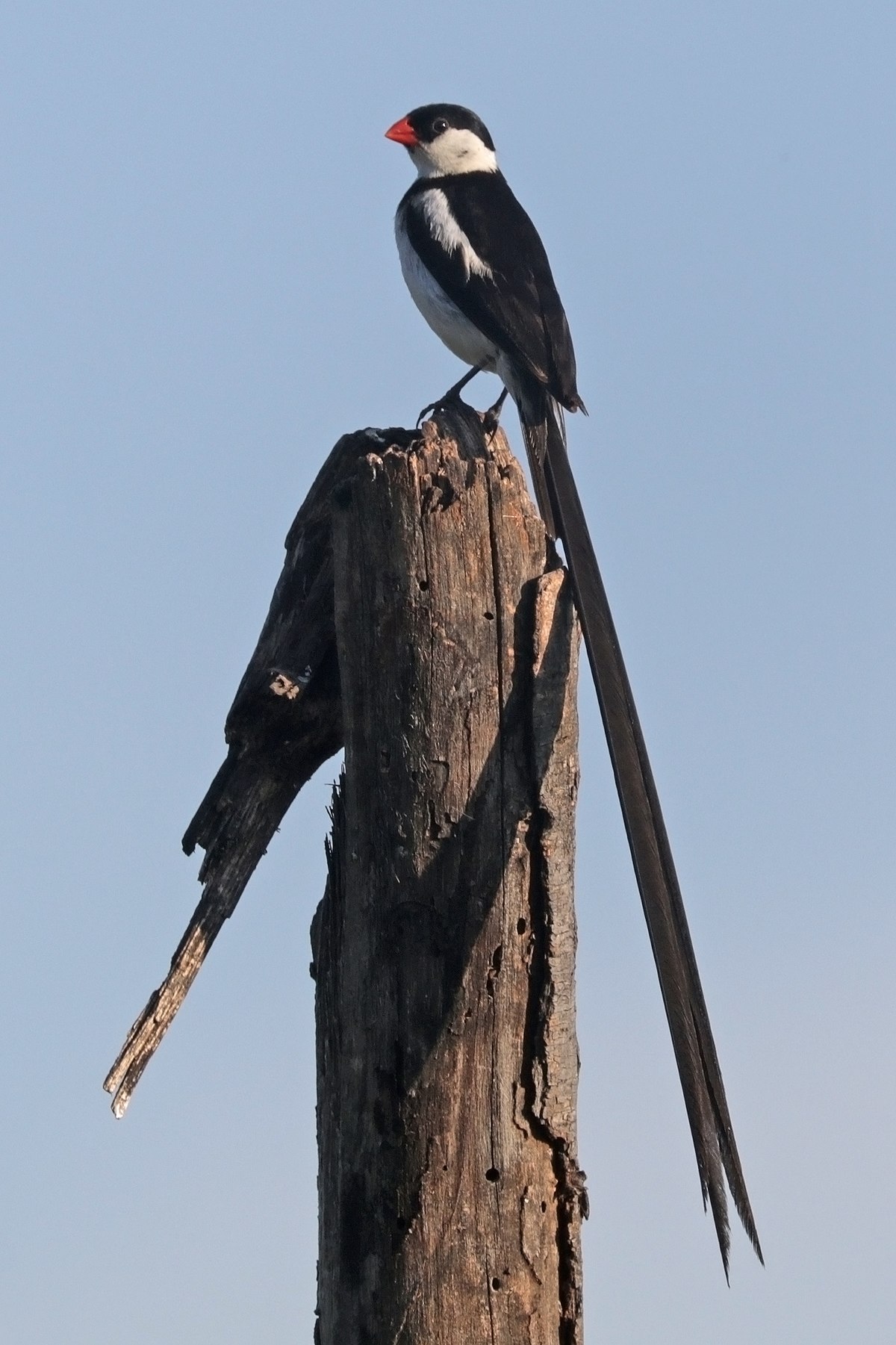
Wikipedia: Pin-tailed whydah Source: WIKIPEDIA
1200px-Pin-tailed_whydah_%28Vidua_macroura%29_breeding_male.jpg
🔍
Never observed (yet!)
Description
Geography: This bird appears across the great seas in the following continents: North America, Africa, Asia.Details

Wikipedia: White-rumped munia Source: WIKIPEDIA
1200px-White-rumped_Munia_East_Distrct_Sikkim_India_05.07.2018.jpg
🔍
Never observed (yet!)
Description
Details
Profile Wikipedia Audubon AllAboutBirds Xeno-Canto NABU YouTube

Wikipedia: Chestnut munia Source: WIKIPEDIA
Lonchura_atricapilla_jagori_-Cebu-8-3c.jpg
🔍
Never observed (yet!)
Description
Geography: This bird appears across the great seas in the following continents: Europe, North America, Asia.General: introduced
Details
Profile Wikipedia Audubon AllAboutBirds Xeno-Canto NABU YouTube

Scaly breasted munia, Vientiane. 2024-02-18 06:54:12 Laos
First observed in Laos on 2024-02-18.
Description
Geography: This bird appears across the great seas in the following continents: Europe, North America, Asia.Vocalisation
Song: No details but a Xeno-Canto recording. Song attributes: Frequency:♫ Source: XENOCANTO XC797137 - Scaly-breasted Munia - Lonchura punctulata topela - song, Pha Chang Park, Wiang Chai District, Chiang Rai, Thailand.mp3 Thailand (song)

Details
Profile Wikipedia Xeno-Canto YouTube

Wikipedia: White-headed munia Source: WIKIPEDIA
White-headed_Munia.jpg
🔍
Never observed (yet!)
Description
Details

Wikipedia: Red avadavat Source: WIKIPEDIA
A_pair_of_Red_avadavat_%28Amandava_amandava%29_Photograph_by_Shantanu_Kuveskar.jpg
🔍
Never observed (yet!)
Description
Geography: This bird appears across the great seas in the following continents: Europe, North America, Africa, Asia.Details
Profile Wikipedia Xeno-Canto YouTube

Wikipedia: Orange-cheeked waxbill Source: WIKIPEDIA
1200px-Orange-Cheeked_Waxbill_zackandzill.jpg
🔍
Never observed (yet!)
Description
General:The orange-cheeked waxbill (Estrilda melpoda) is a common species of estrildid finch native to western and central Africa, with an estimated global extent of occurrence of 3,600,000 km2.
[more]
Details
Profile Wikipedia Xeno-Canto YouTube

Wikipedia: Black-rumped waxbill Source: WIKIPEDIA
Black-rumped_Waxbill_-_Gambia_%2831806634704%29.jpg
🔍
Never observed (yet!)
Description
The black-rumped waxbill (Estrilda troglodytes) is a common species of estrildid finch found in Southern Africa. It has an estimated global extent of occurrence of 2,000,000 km².
[more]
Details

Wikipedia: Lesser masked weaver Source: WIKIPEDIA
Lesser_Masked_Weaver_-_Baringo_-_Kenya_NH8O1107_%2822662509730%29.jpg
🔍
Never observed (yet!)
Description
Details

Wikipedia: Orange bishop Source: WIKIPEDIA
1200px-Euplectes_orix_5_Luc_Viatour.jpg
🔍
Never observed (yet!)
Description
Geography: This bird appears across the great seas in the following continents: North America, Africa, Asia.General:
The northern red bishop or orange bishop (Euplectes franciscanus) is a small passerine bird in the family Ploceidae. It is part of the largest genus in the family with over 60 different species.[2] Its sister species is the Southern red bishop (Euplectes orix). This species is most recognizable by the bright reddish orange with contrasting black plumage displayed by the breeding male. It is most common throughout the northern African continent but has also been introduced to areas in the western hemisphere.
[more]
Details
Cinereous tit (Parus cinereus)
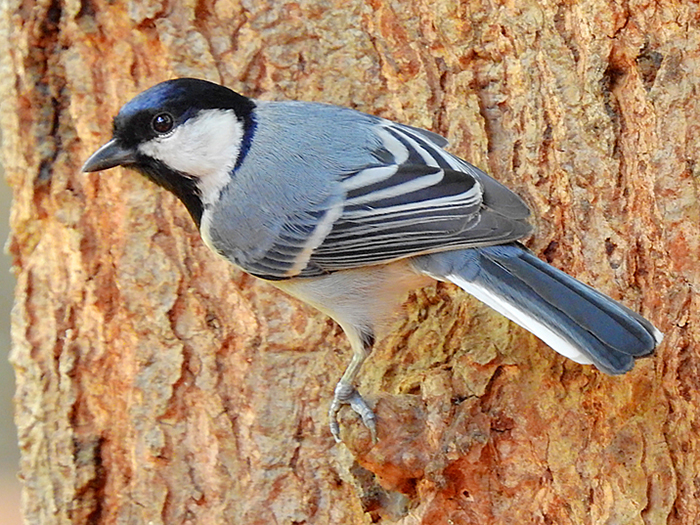
Wikipedia: Cinereous tit Source: WIKIPEDIA
Cinereous_tit_%28Parus_cinereus%29_Photograph_by_Shantanu_Kuveskar.jpg
🔍
Never observed (yet!)
Description
Details
Marsh tit / Sumpfmeise (Poecile palustris)

Sumpfmeise richtung Wildertweiher. 2024-09-09 08:12:48 Wald Fehraltorf
First observed in 🇨🇭 on 2020-05-04.
Description
General: I see them occasionally at the Luppmen or our house, but maybe 1% as often as Kohlmeisen and Blaumeisen. BirdNet suggested a Wiesenmeise, but those are rare here and Sumpfmeisen not uncommon according to BirdLife ZurichGeneral: Deutschland: Brut-, Jahresvogel
Etymology:
Auch Nonnenmeise genannt - weil es auch eine Mönchmeise gibt? [Link]
Vocalization:
Most easily identified by sound. Especially in areas where plumage is less distinct compared to Willow Tit, like in Britain. [Link]
Seasonal behavior
Year-round bird Breeding: 04-01 - 06-29More details at Vogelwarte.ch
Other Details
Physical details
Physical details: length=11 cm, wingspan=18-19 cm, weight=10-13 gHabitats: Forest
Vocalisation
Song: General: Higher-pitched than great tit, sometimes repetitive 1- and 2-note tunes like them, sometimes simple melodies, usually pure, sometimes chirpy or raspy.Song:
'Song: A simple one or two note call repeated in series. Usually rising slightly in pitch, and with a "liquid" quality.'. [Link] At bird-song.ch it's hl-rest-hl, or 7-8 2-noter swoops. bird-song.ch names lh-break-hl as a pistjä call and also has a series of 7 or 8 falling 'swoops'. [Link]
Song: Klapperlied - 6-8 Noten 'angeschlagen'
At bird-song.ch it's hl-rest-hl, or 7-8 2-noter swoops. bird-song.ch names lh-break-hl as a pistjä call and also has a series of 7 or 8 falling 'swoops'. [Link]
Song: Klapperlied - 6-8 Noten 'angeschlagen'
Song:
Klapperlied. Reihe (6-8) weich angeschlagene Töne mittlerer Höhe. Ähnlich der Klappergrasmücke aber weicher. (Sumpf ist weich) Oft auch Rufe wie „psja“ zu hören. Ziemlich scharf u. gepresst. [Link]
Song attributes:
Mnemnoic: 1-Noter, Sumpf laenger als Kohl Melody: simple rhythmic (hhmmlll), fast, Frequency: 2-10 KHz
♫ Source: XENOCANTO XC727754 - Marsh Tit - Poecile palustris.mp3 (song)

♫ Source: XENOCANTO XC778730 - Marsh Tit - Poecile palustris - the two-note song BirdID, recorded in France.mp3 (song)

Calls:
Most typical call an explosive, sneeze-like "pee-choo", starting high-pitched and ending on a lower note. . [Link] 1: Falling note, relatively long, sometimes repeated - like the pee below without the choo?
Call from Xeno-Canto
♫ Source: XENOCANTO XC594764 marsh tit call.mp3 (call)
 'Swooping' call on the Luppmen
♫ 2020-10-21 08:38:51 Chiffchaff calls go up, marsh tit calls down! Source: BirdNet 20201021_083851 birdnet 1019 am Luppmen - Marsh tit - Fehraltorf.mp3 Luppmen (song?)
2: BirdID (at Nord U.) says an explosive, sneeze-like "pee-choo",, similar to Blaumeise with clear note followed by rough ones, but hll
Call from Xeno-Canto
♫ Source: XENOCANTO XC733901 - Marsh Tit - Poecile palustris - pee-choo call, sometimes just pee - recorded in Germany.mp3 (call)

Call attributes: Call melody: one note, slow, Frequency: 6-9 KHz, Special sounds: swoop.
Details
Willow tit / Weidenmeise (Poecile montanus)

Tannenmeise oder weidenmeise , Sils-Maria. 2020-06-10 10:59:58 Sils
First observed in 🇨🇭 on 2020-04-25.
Description
General: Vogelwarte.ch says, Two forms of Poecile montanus exist in Switzerland: the Willow Tit occurs in the Jura, the Pre-Alps and locally on the Central Plateau, while the Alpine Tit is confined to the Alps. The two forms have a distinct song as well as different ecological requirements, and could evolve into two species over time. Since I've heard them in St. Moritz, they're more properly alpine tits than willow tits. I should verify the audio recordings vs xenocanto, etc, as it was BirdNet that identified them as willow tits, and it is not infallible.General: Deutschland: Brut-, Jahresvogel
Vocalization:
Other sounds: high pitced "zi zi" similar to other tits. [Link]
Seasonal behavior
Year-round bird Breeding: 04-20 - 08-18More details at Vogelwarte.ch
Other Details
Physical details
Physical details: length=11 cm, wingspan=17-20 cm, weight=8-14 gHabitats: Forest
Vocalisation
Song: Songs I've heard alternate two notes and look like a sine wave on the sonogram. Vogelwarte.ch: Apart from minor differences in diet and size, Alpine Tit and Willow Tit can only be identified by their song. The Willow Tit utters a series of long, descending notes («tyoo tyoo tyoo tyoo»), whereas the Alpine Tit’s territorial song consists of short notes on an even pitch («dee dee dee dee dee»). See more here. Song:1.Gesangstyp: „ziü ziü ziü „ etwas wehmütig, die einzelnen Töne leicht absinkend, nicht klappernd. Bei Unterart Alpenmeise auf gleicher Höhe bleibend. 2.Gesangstyp: variable, schwätzende, helle Folge m. trillerndem Schluss. [Link]
Song: One or two soft, clear, melancholic notes repeated in a slow, even rhythm. At first rising slightly in pitch, then gradually falling. In some areas song is evenly pitched. [Link]
Song attributes:
Melody: simple rhythmic, slow, Frequency: 3-7 KHz
♫ Source: OTHER 509229 (song)
Details
Coal tit / Tannenmeise (Periparus ater)

Tannenmeise auf dem Weg zu Stazersee, St Moritz. 2023-02-05 15:51:20 Engadin
First observed in 🇨🇭 on 2020-04-18.
Description
General: Periparus ater at Xeno-Canto - a small classification fightGeneral: Deutschland: Brut-, Jahres-, Zugvogel, Wintergast
Etymology:
The German Wikipedia page says 'ater' from the genus 'Periparus ater' is Latin for 'düster' meaning dark or even gloomy. [Link]
In German the name means fir tit - so obviously found in woods with many firs [Link]
Appearance and identification: Nabu: Mit ihrem schwarzen Kopf und den weißen Wangen erinnert sie an eine kleine Kohlmeise, jedoch ist die Unterseite der Tannenmeise eher beige statt gelb, und ihr fehlt der dunkle Längsstreifen an der Unterseite. [Link]
Seasonal behavior
Year-round bird Breeding: 04-01 - 08-09 Migration in: 03-23 - 05-31 Migration out: 08-18 - 10-27More details at Vogelwarte.ch
Other Details
Physical details
Physical details: length=11 cm, wingspan=17-21 cm, weight=8-10 gHabitats: Forest
Vocalisation
Song: Higher-pitched than great tit, with more slurs instead of pure notes. Usually 2 or 3 notes in varied order. To me it seems they have a repertoire of songs, like their 'big brothers', the great tits. Song:Song: Various repeated motifs, consisting of two to three notes with alternating accents. Slightly similar to Great Tit, but faster, not so metallic and with a less full tone. Can be mistaken for Marsh Tit when singing single or double notes, but tone is softer and notes more clearly separated (if disyllabic). [Link]
Song attributes:
Melody: simple rhythmic (lhlhlhl), fast, Frequency: 3-9 KHz Special sounds: slur
♫ 2026-02-24 15:40:02
Source: Zoom H2n Fehraltorf (song)♫ 2024-08-07 08:17:00 Thon, Schwanden (call)
♫ 2020-12-14 11:41:25 Luppmen (song)
♫ 2023-02-23 17:17:08
Source: Zoom H6/H2n (song)♫ 2026-02-24 15:56:58
Source: Zoom H2n Fehraltorf (call)Calls:
Call: short soft and clear "piu", first rapidly rising and then falling in pitch. [Link]
Typical coal tit calls do a slide between two notes high-low alarm call but simple song-like calls too
XC539352 coal tit 1m04.
♫ Source: XENOCANTO XC539352 coal tit 1m04.mp3 (song?)

Call attributes: Call melody: two notes, slow, Frequency: high (3-9 KHz),
Details
Chinese penduline-tit / Chinesische Beutelmeise (Remiz consobrinus)
Description
Details
Iriomote tit (Sittiparus olivaceus)
Profile Wikipedia Xeno-Canto YouTubeDescription
General: Endemic in JapanDetails
Varied tit / Buntmeise (Sittiparus varius)
Description
Details
Owston's tit (Sittiparus owstoni)
Profile Wikipedia Xeno-Canto YouTubeDescription
General: Endemic in JapanDetails
Fairy pitta / Nymphenpitta (Pitta nympha)
Profile Wikipedia Xeno-Canto YouTube

Wikipedia: Fairy pitta Source: WIKIPEDIA
Fairy_Pitta_3952%2C_crop.jpg
🔍
Never observed (yet!)
Description
General: AccidentalDetails
Common starling / Star (Sturnus vulgaris)

Junger Star sitzt auf einem Highland Cattle bei Speck, Fehraltorf. 2022-08-17 14:44:56 Fehraltorf
First observed in 🇨🇭 on 2020-04-11.
Description
Geography: This bird appears across the great seas in the following continents: Europe, North America (introduced), Africa, Asia.General: Learned on BBC's Winterwatch: the movement of a swarm of starlings is called a murmuration! Check out this this video or even an entire half hour
General: In trees or in the fields by the cows.
General: Deutschland: Brut-, Jahres-, Zugvogel RL 3[8]
Personal notes: Frequently seen here, for instance by their nests under the eaves of one of the Toblerone houses. Introduced to North America from Europe by Eugene Schieffelin.
Vocalization: Eine der Vogelarten, die gleichzeitig zwei Töne singen kann!
Vocalization:
Among the best of imitators. Mimics birds, animals and mechanical noises. Often makes several sounds at the same time. [Link]
Seasonal behavior
Year-round bird Breeding: 04-01 - 07-20 Migration in: 01-21 - 04-11 Migration out: 09-07 - 11-26More details at Vogelwarte.ch
Other Details
Physical details
Physical details: length=21 cm, wingspan=37-42 cm, weight=60-90 gHabitats: Agricultural
Vocalisation
Song: I find their individual song amusing, with its (long) whoops and weird noises. As a group, they're just noisy! Song:Song a highly varied mix of falling whistles, bill-clappering and various masterful mimicry. [Link]
Song attributes:
Melody: improvised melodic, slow, Frequency: medium (1-5 KHz) Special sounds: whoop, mimicry, weird Singing season: 01-01 - 09-30 Dawn chorus start: 15 minutes before dawn.
Calls:
Other calls; a harsh "chaee" and a short sharp "tink". [Link]
I hear this occasionally and really enjoy it - a long rising 'whoop', as I call it', starting low at 1 1/2 KHz and rising to 6 1/2 KHz!
Birdnet 1968 - European Starling long whoop call - 2021-08-23 17-26-09 - European Starling - Fehraltorf.
♫ 2021-08-23 17:26:09 Source: BirdNet 20210823_172609 birdnet 1968 - European Starling long whoop call - 2021-08-23 17-26-09 - European Starling - Fehraltorf.mp3 Fehraltorf (call)
Call attributes: Call melody: one note, slow, Frequency: 1-6 KHz, Special sounds: whoop.
Details
Bank myna / Ufermaina (Acridotheres ginginianus)

Wikipedia: Bank myna Source: WIKIPEDIA
1200px-Bank_myna_%28Acridotheres_ginginianus%29.jpg
🔍
Never observed (yet!)
Description
General:The bank myna (Acridotheres ginginianus) is a myna found in the northern parts of South Asia. It is smaller but similar in colouration to the common myna, only differing in having brick-red naked skin behind the eyes instead of yellow. It is greyer on the underside and in this and in the presence of a slight tuft of feathers bears some resemblance to the jungle myna. They are found in flocks on the plains of northern and central India, often within towns and cities. Their range appears to be extending southwards into India. The name is derived from their habit of nesting almost exclusively in the earthen banks of rivers, where they excavate burrows and breed in large colonies.
[more]
Details
Crested myna / Schopfmaina (Acridotheres cristatellus)

Wikipedia: Crested myna Source: WIKIPEDIA
1200px-Crested_myna%2C_Osaka%2C_Japan.jpg
🔍
Never observed (yet!)
Description
Details
Common myna / Maina (Acridotheres tristis)

First common myna seen on trip to SE Asia, in Wat Pho, Bangkok. 2024-01-19 17:00:32 Asia
First observed in Asia on 2024-01-19.
Description
Geography: This bird appears across the great seas in the following continents: North America, Africa, Asia.General: introduced
Vocalisation
Song: No details but a Xeno-Canto recording. Song attributes: Frequency:♫ Source: XENOCANTO XC729094 - Common Myna - Acridotheres tristis tristis.mp3 (song)

Details
White-shouldered starling / Mandarinstar (Sturnia sinensis)

Wikipedia: White-shouldered starling Source: WIKIPEDIA
1200px-Sturnia_sinensis_%28Mandarinstar_-_White-shouldered_Starling%29_-_Weltvogelpark_Walsrode_2013-03.jpg
🔍
Never observed (yet!)
Description
General: Winter visitorDetails
Chestnut-cheeked starling (Agropsar philippensis)
Profile Wikipedia Xeno-Canto YouTube
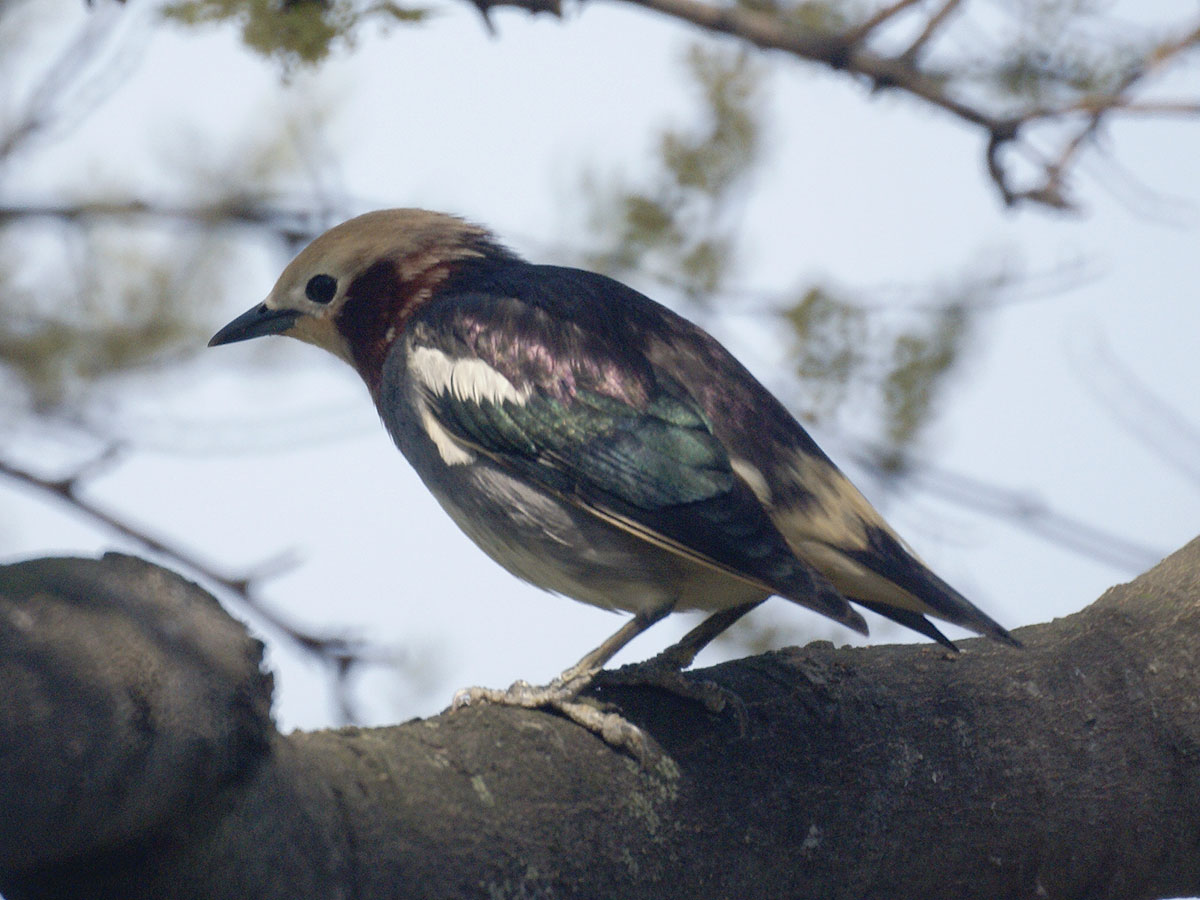
Wikipedia: Chestnut-cheeked starling Source: WIKIPEDIA
Sturnus_philippensis.jpg
🔍
Never observed (yet!)
Description
General: AccidentalDetails
Siamese pied starling (Gracupica floweri;)

Wikipedia: Siamese pied starling Source: WIKIPEDIA
Gracupica_contra_by_shrikant_rao.jpg
🔍
Never observed (yet!)
Description
Details
Japanese grey thrush / Scheckendrossel (Turdus cardis)

Wikipedia: Japanese grey thrush Source: WIKIPEDIA
960px-Japanese_Thrush_imported_from_iNaturalist_photo_248320437_on_21_June_2024.jpg
🔍
Never observed (yet!)
Description
General: AccidentalDetails
Brown-headed thrush / Rotkopfdrossel (Turdus chrysolaus)
Description
Details
Dusky thrush / Rostflügeldrossel (Turdus eunomus)

Wikipedia: Dusky thrush Source: WIKIPEDIA
1200px-Turdus_eunomus_-Japan-8.jpg
Japan
🔍
Never observed (yet!)
Description
General: Irruptive in winterDetails
Pale thrush / Fahldrossel (Turdus pallidus)
Profile Wikipedia Xeno-Canto YouTubeDescription
Details
Eye-browed thrush / Weißbrauendrossel (Turdus obscurus)

Wikipedia: Eye-browed thrush Source: WIKIPEDIA
Eyebrowed_Thrush.jpg
🔍
Never observed (yet!)
Description
Geography: This bird appears across the great seas in the following continents: North America, Asia.General: Winter visitor
Details
Izu thrush / Kurodadrossel (Turdus celaenops)
Profile Wikipedia Xeno-Canto YouTubeDescription
General: Endemic in JapanDetails
Blue rock-thrush / Blaumerle (Monticola solitarius)

MerlinBirdID schlägt Blaumerle vor, könnte aber genauso gut in Kaltbrunnerriet ein Amsel sein. 2022-06-04 12:05:18 Kaltbrunner-Riet
First observed in Mallorca on 2022-04-07.
Description
General:The blue rock thrush (Monticola solitarius) is a species of chat. This thrush-like Old World flycatcher was formerly placed in the family Turdidae. It breeds in southern Europe, northwest Africa, and from Central Asia to northern China and Malaysia. The blue rock thrush is the official national bird of Malta and was shown on the Lm 1 coins that were part of the country's former currency.
[more]
Resident (ssp madoci) in far south and winter visitor
Vocalization:
Often two notes in sequence, the second one higher ("pjuu-eee"), and sometimes followed by series of dry "check" sounds. [Link]
Other Details
Physical details
Physical details: length=20 cm, wingspan=33-37 cm, weight=57-64 gHabitats: Mountain
Vocalisation
Song: Pretty short up-and-down song heard in Mallorca Song:The song is a beautiful, melodious fluting which can be very difficult to distinguish from M. saxatilis. It generally has a more melancholic feel, with more tremulous fluting than the latter, with less lingering in the higher register. The structure is variable and simple, but sometimes more elaborate in song-flight or when including mimicry. Both sexes sing, but male most actively. [Link]
Song attributes:
Melody: stereotype melodic, fast, Frequency: 2-4 KHz Special sounds: mimicry
♫ Source: XENOCANTO XC659831 - Blue Rock Thrush - Monticola solitarius - song is a variable up and down - recorded in France.mp3 (song)

Details
Bonin thrush (Zoothera terrestris)
Profile Wikipedia Xeno-Canto YouTubeDescription
General: Endemic in JapanDetails
Amami thrush (Zoothera major)
Profile Wikipedia Xeno-Canto YouTubeDescription
General: Endemic in JapanDetails
Scaly thrush / Himalajärddrossel (Zoothera dauma)

Wikipedia: Scaly thrush Source: WIKIPEDIA
1200px-Scaly_Thrush_0A2A8657.jpg
🔍
Never observed (yet!)
Description
General: Winter visitor, resident in mountainsDetails
White's thrush (Zoothera aurea)

Wikipedia: White's thrush Source: WIKIPEDIA
1200px-Zoothera_dauma_-_Ang_Khang.jpg
🔍
Never observed (yet!)
Description
Details
Orange-flanked bush-robin / Blauschwanz (Tarsiger cyanurus)
Description
General: Winter visitorDetails
Siberian thrush / Schieferdrossel (Geokichla sibirica)

Wikipedia: Siberian thrush Source: WIKIPEDIA
1200px-Geokichla_sibirica.jpg
🔍
Never observed (yet!)
Description
General: Winter visitorDetails
Narcissus flycatcher / Narzissenschnäpper (Ficedula narcissina)
Profile Wikipedia Xeno-Canto YouTube

Wikipedia: Narcissus flycatcher Source: WIKIPEDIA
1200px-Narcissus_Flycatcher-cropped.jpg
🔍
Never observed (yet!)
Description
General: AccidentalDetails
Mugimaki flycatcher / Mugimakischnäpper (Ficedula mugimaki)
Profile Wikipedia Xeno-Canto YouTube

Wikipedia: Mugimaki flycatcher Source: WIKIPEDIA
1200px-Ficedula_mugimaki_-_Khao_Yai.jpg
🔍
Never observed (yet!)
Description
General: Winter visitorDetails
Yellow-rumped flycatcher / Korea-Goldschnäpper (Ficedula zanthopygia)
Profile Wikipedia Xeno-Canto YouTube

Wikipedia: Yellow-rumped flycatcher Source: WIKIPEDIA
1200px-%C4%90%E1%BB%9Bp_ru%E1%BB%93i_v%C3%A0ng_%28cropped%29.jpg
🔍
Never observed (yet!)
Description
General: Passage migrantDetails
Asian brown flycatcher / Braunschnäpper (Muscicapa dauurica)

Wikipedia: Asian brown flycatcher Source: WIKIPEDIA
Asian_Brown_Flycatcher_%28Muscicapa_dauurica%29_at_Periyar_National_Park.jpg
🔍
Never observed (yet!)
Description
General: Resident and winter visitorDetails
Gray-streaked flycatcher / Strichelschnäpper (Muscicapa griseisticta)

Wikipedia: Gray-streaked flycatcher Source: WIKIPEDIA
1200px-Muscicapa_griseisticta.JPG
🔍
Never observed (yet!)
Description
General: RareDetails
Dark-sided flycatcher / Sibirischer Grauschnäpper (Muscicapa sibirica)
Profile Wikipedia Xeno-Canto YouTube

Wikipedia: Dark-sided flycatcher Source: WIKIPEDIA
1200px-Muscicapa_sibirica.jpg
🔍
Never observed (yet!)
Description
General: Winter visitorDetails
Stejneger's stonechat (Saxicola stejnegeri)

Amur stonechat, Phnom Krom, Cambodia. 2024-03-03 07:52:24 Phnom Krom
First observed in Phnom Krom on 2024-03-03.
Description
Vocalisation
Song: No details but a Xeno-Canto recording. Song attributes: Frequency:♫ Source: XENOCANTO XC405064 - Stejneger's Stonechat - Saxicola stejnegeri - song - Muraviovka Park, Russian Federation.mp3 (song)

Details
Daurian redstart / Spiegelrotschwanz (Phoenicurus auroreus)
Profile Wikipedia Xeno-Canto YouTube

Wikipedia: Daurian redstart Source: WIKIPEDIA
1280px-Daurian_redstart_at_Daisen_Park_in_Osaka%2C_January_2016.jpg
🔍
Never observed (yet!)
Description
General: Winter visitorDetails
Blue-and-white flycatcher / Japanschnäpper (Cyanoptila cyanomelana)
Profile Wikipedia Xeno-Canto YouTube

Wikipedia: Blue-and-white flycatcher Source: WIKIPEDIA
1200px-Blue_and_white_flycatcher.jpg
🔍
Never observed (yet!)
Description
General: Passage migrantDetails
Siberian rubythroat / Rubinkehlchen (Calliope calliope)

Siberian rubythroat, near the Mekong in Vientiane. 2024-02-18 07:33:56 Laos
First observed in Laos on 2024-02-18.
Description
Geography: This bird appears across the great seas in the following continents: North America, Asia.General: Winter visitor
Vocalisation
Song: No details but a Xeno-Canto recording. Song attributes: Frequency:♫ Source: XENOCANTO XC843510 - Siberian Rubythroat - Calliope calliope - song, Vientiane Prefecture, Laos.mp3 Laos (song)

Details
Izu robin (Larvivora tanensis)
Profile Wikipedia Xeno-Canto YouTubeDescription
General: Endemic in JapanDetails
Ryūkyū robin / Samtkehlnachtigall (Larvivora komadori)
Description
General: Endemic in JapanDetails
Okinawa robin (Larvivora namiyei)
Profile Wikipedia Xeno-Canto YouTubeDescription
General: Endemic in JapanDetails
Japanese robin / Rostkehlnachtigall (Larvivora akahige)

Wikipedia: Japanese robin Source: WIKIPEDIA
Japanese_Robin_9625.jpg
🔍
Never observed (yet!)
Description
Details
Siberian blue robin (Larvivora cyane)
Profile Wikipedia Xeno-Canto YouTube

Wikipedia: Siberian blue robin Source: WIKIPEDIA
1200px-Luscinia_cyane_-_Khao_Yai.jpg
🔍
Never observed (yet!)
Description
General: Winter visitorDetails
Rufous-tailed robin / Sibilantnachtigall (Larvivora sibilans)

Wikipedia: Rufous-tailed robin Source: WIKIPEDIA
1200px-Luscinia_sibilans_-_Khao_Yai.jpg
🔍
Never observed (yet!)
Description
General: Rare winter visitorDetails
European nuthatch / Kleiber (Sitta europaea)

Kleiber bei St Moritz - nur die können am Baum abwärts laufen. 2023-02-05 16:02:54 Engadin
First observed in 🇨🇭 on 2020-04-04.
Description
General: Maybe 8 or 10 short loud notes, a bit of a whoop on the sonogramGeneral: Deutschland: Brut-, Jahres-, Zugvogel, Wintergast
Etymology:
Der Name bezieht sich darauf, dass der Kleiber den Eingang von Bruthöhlen anderer Vögel, zum Beispiel die von Spechten, mit Lehm verklebt [kleibt], um sie selbst zu nutzen. [Link]
Vocalization: Eurasian Nuthatch is very vocal. [Link]
Very varied voice. [Link]
Seasonal behavior
Year-round bird Breeding: 04-01 - 07-29More details at Vogelwarte.ch
Other Details
Physical details
Physical details: length=14 cm, wingspan=22-27 cm, weight=21-26 gHabitats: Forest
Vocalisation
Song: Song:Song a simple series of loud notes [Link]
Song: The song is very variable, with rising and falling notes, sometimes with repetition of excitement calls. [Link]
The song is a slow whistled pee-pee-pee with many variants, including a faster version, and may be intermingled with the call. [Link]
Song a simple series of loud notes. [Link]
Song a simple series of loud notes. [Link]
Song attributes:
Mnemnoic: 6x steigt, wie 6-Buchstaben 'Kleber' Melody: one note (ll), fast, Frequency: medium (1-5 KHz) Singing season: 02-01 - 07-31 Dawn chorus start: 10 minutes before dawn.
♫ Source: XENOCANTO XC777051 - Eurasian Nuthatch - Sitta europaea, recorded in France and designated as song - a series of 5-6 whoops, pause and repeat, hard for me to distinguish from a ca-ll.mp3 (song)

Calls: It gives loud calls when excited, an abrupt ‘twit”, only one, or in slow series, but often in phrases of 3-4 notes in rapid succession. But in great excitement, it utters phrases of about ten notes per second! We can also hear some shrill “sirrrr”, becoming harsher in alarm call. The contact call is a thin “tsit” uttered before to take off. [Link]
The Eurasian nuthatch calls frequently, usually with a loud, sharp dwip normally repeated twice, sometimes more often if excited. It has a shrill sirrrr or tsi-si-si alarm call, and a thin tsit pre-flight call. [Link]
Very varied voice. Ranging from very high pitched whistles and melodic resonant calls, to chattering and nasal mocking sounds. Characteristic warning call a hard "check" or "chwit", often in rapid series, like a pebble bouncing on hollow ice. [Link]
Ranging from very high pitched whistles and melodic resonant calls, to chattering and nasal mocking sounds. Characteristic warning call a hard "check" or "chwit", often in rapid series, like a pebble bouncing on hollow ice. [Link]
1:
Twit, dwip.
A long fast sequence of notes - is it the 'twit' call mentioned above?
Long fast sequence of identical whoops, possibly 'twit' call.
♫ Source: XENOCANTO XC129686 - Eurasian Nuthatch - Sitta europaea caesia.mp3 (song?)
 Similar to XC423335 but very regular rhythm
♫ Source: XENOCANTO XC781193 - Eurasian Nuthatch - Sitta europaea - call, one note, regular rhythm, 2 per second, recorded in Spain.mp3 Spain (call)
 One note, irregular rhythm. A bird calling while moving up a pine tree (says recordist Nick Talbot).
♫ Source: XENOCANTO XC423335 - Eurasian Nuthatch - Sitta europaea caesia.mp3 (song?)

2: The Nuthatch whoop call is similar to that of the chaffinch. It repeats it about 4 times.
XC632108 Kleiber whoop Ruf von Albert Noorlander in den Nederlanden.
♫ Source: XENOCANTO XC632108 Kleiber whoop Ruf von Albert Noorlander in den Nederlanden.mp3 (call)
3: Tsit. Recordist Stanislav Wroz says flight call.
Flight call in Dampierre-en-Yvelines, Yvelines, Île-de-France. Wikipedia describes a 'thin tsit pre-flight call'.
♫ Source: XENOCANTO XC522601 - Eurasian Nuthatch - Sitta europaea.mp3 (flight call)

Call attributes: Call melody: one note, fast, Frequency: 2-3 KHz,
Details

Zaunkönig im Garten am Bodensee. 2024-01-01 13:32:24 Güttingen
First observed in 🇨🇭 on 2019-07-07.
Description
General: The third smallest bird in Switzerland, after the goldcrest and firecrestGeneral: Deutschland: Brut-, Jahres-, Zugvogel, Wintergast
Etymology:
The scientific name is taken from the Greek word "troglodytes" (from trogle a hole, and dyein to creep), meaning "cave-dweller",[4] and refers to its habit of disappearing into cavities or crevices whilst hunting arthropods or to roost. [Link]
Seasonal behavior
Year-round bird Breeding: 04-11 - 08-18 Migration in: 03-01 - 04-20 Migration out: 08-29 - 11-06More details at Vogelwarte.ch
Other Details
Physical details
Physical details: length=9-10 cm, wingspan=13-17 cm, weight=7-12 gHabitats: Forest
Vocalisation
Song: High-pitched, melodic, very variable with many trills and whistles. At least 3 seconds long, switching low to high 6 times or more, always a trill in the mix.Der deutsche Kalendar für 2025 sagt, sie könnten ab Drei-Königs-Tag singen, d.h. ab 6. Januar. nabu.de sagt ab 1. Februar, Drei-Königs-Tag ist eventuell nur wegen dem Namen Zaunkönig? Song:
Auffällig laut für den kleinen Vogel. Singt auch im Winter! Schmetternd, mit einem bis zwei Trillern als letztes oder vorletztes Glied.
[Link]
Song surprisingly loud. A high-pitched stream of clear notes resembling Robin and Dunnock in timbre. Differs from those in showing frequent shifts in pitch with much larger register than Dunnock, and by the unique, numerous, interspersed long trills. [Link]
Song attributes:
Melody: improvised melodic, fast, Frequency: high (3-9 KHz) Special sounds: trill Singing season: 02-01 - 07-31 Dawn chorus start: 60 minutes before dawn.
♫ Source: XENOCANTO XC916662 - Eurasian Wren song in China - Troglodytes troglodytes.mp3 (song)

Calls:
„zerr“ (z-und rr-gleichzeitig) auch durchdringendes „tzr“(Gezetter)
[Link]
Warning call a short hard "teck", like banging two rocks together. Often repeated in series when excited to form machine-gun-like "firing". [Link]
Sputtery/drippy/trilly repeated notes at 3-8 KHz. June 2022 heard check calls that were distinctly irregularly in their rhythm.
XC195946 - Eurasian Wren call - Troglodytes troglodytes.
♫ Source: XENOCANTO XC195946 - Eurasian Wren call - Troglodytes troglodytes.mp3 (call)

Call attributes: Call melody: one note, slow, Frequency: 3-8 KHz, Special sounds: sputter/pebble-clatter.
Details

Waldbaumläufer oder Gartenbaumläufer am Aabach. 2023-02-09 15:34:44 Sils
First observed in 🇨🇭 on 2020-04-23.
Description
General:The Eurasian treecreeper or common treecreeper (Certhia familiaris) is a small passerine bird also known in the British Isles, where it is the only living member of its genus, simply as treecreeper. It is similar to other treecreepers, and has a curved bill, patterned brown upperparts, whitish underparts, and long stiff tail feathers which help it creep up tree trunks. It can be most easily distinguished from the similar short-toed treecreeper, which shares much of its European range, by its different song.
[more]
Deutschland: Brut-, Jahresvogel
Seasonal behavior
Year-round bird Breeding: 04-20 - 07-20More details at Vogelwarte.ch
Other Details
Physical details
Physical details: length=12 cm, wingspan=17-21 cm, weight=8-11 gHabitats: Forest
Similar species
Looks similar to: Short-toed treecreeper.Vocalisation
Song: I say: it sounds like a faster higher chaffinch song. Wikipedia says: The male's song begins with srrih, srrih followed in turn by a few twittering notes, a longer descending ripple, and a whistle that falls and then rises. Song:Lang u. klar! (Waldwege sind lang). Tonreihe im Ganzen absinkend, nur letzter Ton höher. [Link]
Song a short, continuous three-part phrase. [Link]
Song attributes:
Mnemnoics: Waldwege sind lang, Sagging tree branch Melody: stereotype melodic, slow, Frequency: medium (1-5 KHz)
Calls:
weniger scharf, „srih,“ weniger eindringlich als oben
[Link]
Contact call a drawn, high-pitched "tzreeee". Similar to Goldcrest in timbre, but of longer duration with a vibrating and slightly rolling tone. Generally repeated in evenly paced, slow series (unlike Goldcrest). Each phrase starts with a few contact call-like notes followed by a Willow Warbler-like descending part, which then jumps to a few descending high notes to form a marked conclusion. Note that "mixed singers" are not uncommon in areas where both species of treecreepers occur. [Link]
1:
General: Wikipedia says: The contact call is a very quiet, thin and high-pitched sit, but the most distinctive call is a penetrating tsree, with a vibrato quality, sometimes repeated as a series of notes. Fairly regularly spaced single tseep at 7-9KHz.
Call:
Contact call a drawn, high-pitched "tzreeee". Similar to Goldcrest in timbre, but of longer duration with a vibrating and slightly rolling tone. Generally repeated in evenly paced, slow series (unlike Goldcrest). [Link]
XC206282 Eurasian treecreeper call.
♫ Source: XENOCANTO XC206282 Eurasian treecreeper call.mp3 (call)

2: No details but a Xeno-Canto recording.
XC574757 Eurasian treecreeper alarm call.
♫ Source: XENOCANTO XC574757 Eurasian treecreeper alarm call.mp3 (alarm call)

Call attributes: Call melody: one note, slow, Frequency: 7-9 KHz,
Details
Bohemian waxwing / Seidenschwanz (Bombycilla garrulus)

Wikipedia: Bohemian waxwing Source: WIKIPEDIA
1200px-Bombycilla_garrulusII.jpg
🔍
Never observed (yet!)
Description
Geography: This bird appears across the great seas in the following continents: Europe, North America, Asia.General: Deutschland: Zugvogel, Wintergast, Invasionsvogel
Seasonal Behavior:
Seltener Durchzügler, seltener Wintergast [Link]
Seasonal behavior
Year-round bird Migration in: 02-01 - 02-08 Migration out: 02-01 - 02-10More details at Vogelwarte.ch
Other Details
Physical details
Physical details: length=18 cm, wingspan=32-35 cm, weight=50-75 gHabitats: Settlement
Vocalisation
Song:Lots of trills. [Link]
Song: Song more or less a variation on the contact call. [Link]
Song attributes:
Melody: simple rhythmic, fast, Frequency: 5-7 KHz
Calls:
Contact call weak, but distinct and typically alert one to the presence of a flock. A thin, high pitched, ringing "tzrrrrrrr". [Link]
No details but a Xeno-Canto recording.
XC763124 - Bohemian Waxwing - Bombycilla garrulus - call recorded in Sweden.
♫ Source: XENOCANTO XC763124 - Bohemian Waxwing - Bombycilla garrulus - call recorded in Sweden.mp3 (call)

Call attributes: song Frequency: ,
Details
Japanese waxwing / Japanischer Seidenschwanz (Bombycilla japonica)
Description
Details
Brown dipper / Pallaswasseramsel (Cinclus pallasii)

Wikipedia: Brown dipper Source: WIKIPEDIA
1280px-Cinclus_pallasii_%28side%29.JPG
🔍
Never observed (yet!)
Description
General: Rare non-breeding visitorDetails
Profile Wikipedia Xeno-Canto YouTube
Description
Details
Profile Wikipedia Xeno-Canto YouTube
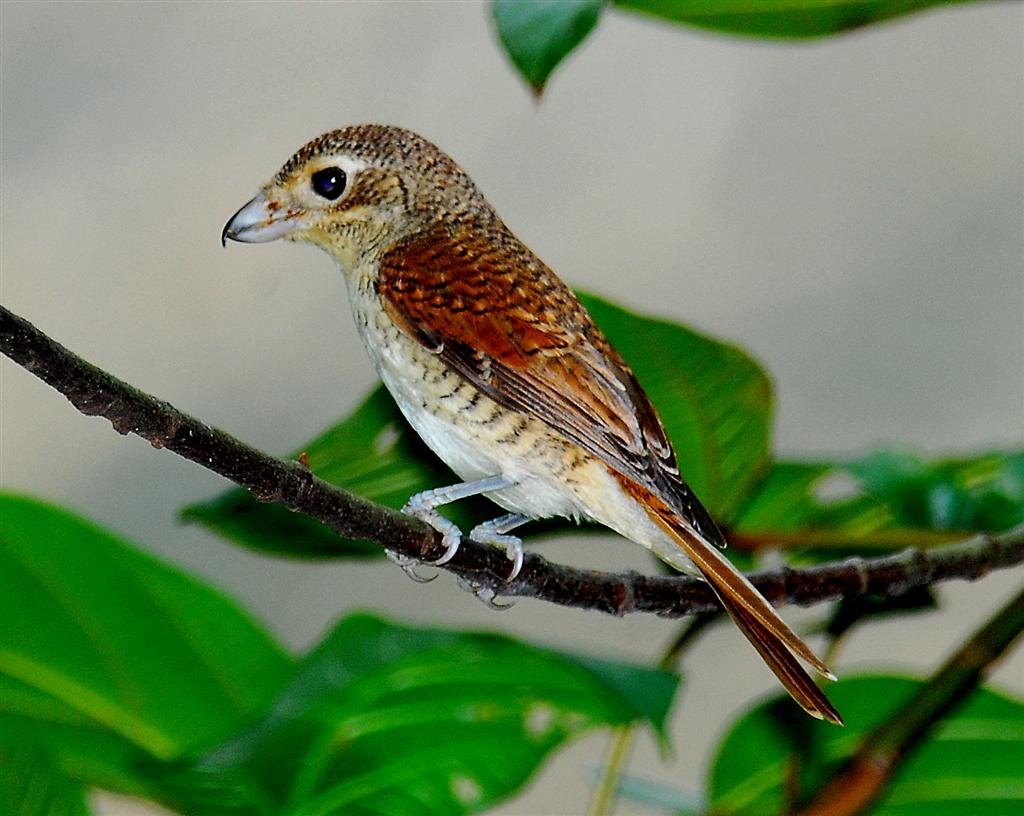
Wikipedia: Tiger shrike Source: WIKIPEDIA
Tiger_shrike_%28Lanius_tigrinus%29%2C_Hindhede_Nature_Park%2C_Singapore_-_20060921.jpg
🔍
Never observed (yet!)
Description
General: Fairly common passage migrantDetails
Profile Wikipedia Audubon AllAboutBirds Xeno-Canto YouTube

Wikipedia: Northern shrike Source: WIKIPEDIA
1200px-Northern_Shrike%2C_Arvada%2C_Jefferson%2C_Colorado.jpg
🔍
Never observed (yet!)
Description
Geography: This bird appears across the great seas in the following continents: North America, Asia.General:
The northern shrike (Lanius borealis) is a large songbird species in the shrike family (Laniidae) native to North America and Siberia. Long considered a subspecies of the great grey shrike, it was classified as a distinct species in 2017. Six subspecies are recognised.
[more]
Details
Profile Wikipedia Xeno-Canto YouTube

Wikipedia: Brown shrike Source: WIKIPEDIA
1200px-Lanius_cristatus_-_Surin.jpg
🔍
Never observed (yet!)
Description
Winter visitorDetails

Rabenkrähe bei der Pferderennbahn, Fehraltorf. 2025-04-01 11:36:14 Fehraltorf
First observed in 🇨🇭 on 2020-04-22.
Description
General:The carrion crow (Corvus corone) is a passerine bird of the family Corvidae and the genus Corvus which is native to western Europe and the eastern Palearctic.
[more]
Deutschland: Brut-, Jahres-, Zugvogel, Wintergast
Vocalization:
Probably impossible to tell from Hooded Crow by sound with certainty, but tends to sound harder, and more mean. [Link]
Seasonal behavior
Year-round bird Breeding: 03-12 - 06-20More details at Vogelwarte.ch
Other Details
Physical details
Physical details: length=45-47 cm, wingspan=93-104 cm, weight=370-650 gHabitats: Agricultural
Similar species
Song or calls similar to: Jackdaw.Vocalisation
Song: No details but a Xeno-Canto recording. Song attributes: Frequency:♫ 2024-07-17 14:31:02
Source: Zoom H6/H2n Greater Fehraltorf (song)
1: Graak!
XC1036835 - Carrion Crow - Corvus corone call.
♫ Source: XENOCANTO XC1036835 - Carrion Crow - Corvus corone call.mp3 (call)

2: No details but a Xeno-Canto recording. - but really OWN_VIA_ZOOM
Aaskrähe at 0, Zilpzalp at 2, Trommeln at 10, Amsel, Zaunkönig at 17, evtl 10, 5-note Taube at 32.
♫ 2024-03-22 06:28:12
Source: Zoom H6/H2n Staldenweiher (drumming)Call attributes: Call melody: non-musical, slow, Frequency: low (1-3 KHz), Special sounds: cawing.
Details

EIn Kolkrabe wollte anscheinend etwas zum Fressen von uns. 2024-09-14 12:18:14 Fanel/Chablais de Cudrefin und La Sauge
First observed in 🇨🇭 on 2021-03-10.
Description
Geography: This bird appears across the great seas in the following continents: Europe, North America, Africa, Asia.General: The raven is often mentioned in word puzzles as the largest songbird.
General: Deutschland: Brut-, Jahresvogel
Good to know: A flock of ravens may be called an unkindness [Literary names of groups and flocks]
Etymology:
Kolk, die erste Silbe seines seit dem 16. Jahrhundert bezeugten deutschen Namens, ist vermutlich lautmalerischen Ursprungs, ahmt also den Ruf des Vogels nach. [Link]
Jahrhundert bezeugten deutschen Namens, ist vermutlich lautmalerischen Ursprungs, ahmt also den Ruf des Vogels nach. [Link]
Appearance and identification:
It is one of the two largest corvids, alongside the thick-billed raven, and is possibly the heaviest passerine bird [Link]
Ravens are larger, the size of a Red-tailed Hawk [in Switzerland a red kite, similar 'length' but only 2/3 of the huge kite wingspan]. Ravens often travel in pairs, while crows are seen in larger groups. Also, watch the bird’s tail as it flies overhead. The crow’s tail feathers are basically the same length, so when the bird spreads its tail, it opens like a fan. Ravens, however, have longer middle feathers in their tails, so their tail appears wedge-shaped when open.
Listen closely to the birds’ calls. Crows give a cawing sound. But ravens produce a lower croaking sound.
[How to Tell a Raven From a Crow]
Vocalization:
Quite varied repertoire. Most heard sound a short, coarse, but resonant "korrk. Other sounds may be surprisingly resonant and pure, like a ringing "clong" etc. Shows even more variation when courting. [Link]
Seasonal behavior
Year-round bird Breeding: 02-20 - 06-09More details at Vogelwarte.ch
Other Details
Physical details
Physical details: length=64 cm, wingspan=120-150 cm, weight=800-1560 gHabitats: Mountain
Vocalisation
Song: No details but a Xeno-Canto recording. Song attributes: Frequency:♫ 2025-10-14 15:41:00 Switzerland (song)
Graak!
XC779842 - Northern Raven - Corvus corax corax - call recorded in Sweden.
♫ Source: XENOCANTO XC779842 - Northern Raven - Corvus corax corax - call recorded in Sweden.mp3 (call)

Call attributes: Call melody: non-musical, slow, Frequency: low (1-3 KHz), Special sounds: cawing.
Details
Profile Wikipedia Vogelwarte BirdLife ZH ornitho.ch Xeno-Canto NABU YouTube

Wikipedia Saatkrähe photo - English Rook, scientific Corvus frugilegus. Source: WIKIPEDIA
Wikipedia Saatkraehe photo - English Rook, scientific Corvus_frugilegus.jpg
First observed in 🇨🇭 on 2022-05-21.
Description
General:The rook (Corvus frugilegus) is a member of the family Corvidae in the passerine order of birds. It is found in the Palearctic, its range extending from Scandinavia and western Europe to eastern Siberia. It is a large, gregarious, black-feathered bird, distinguished from similar species by the whitish featherless area on the face. Rooks nest collectively in the tops of tall trees, often close to farms or villages; the groups of nests are known as rookeries.
[more]
Deutschland: Brut-, Jahres-, Zugvogel, Wintergast
Vocalization:
Makes similar caws as Carrion Crow, but is harsher, softer, flatter with less rolling r's. [Link]
Seasonal behavior
Year-round bird Breeding: 03-12 - 06-09 Migration in: 02-20 - 04-11 Migration out: 09-28 - 11-15More details at Vogelwarte.ch
Other Details
Physical details
Physical details: length=44-46 cm, wingspan=81-99 cm, weight=280-340 gHabitats: Agricultural
Vocalisation
Song: Gurgling and rattling, but mostly calls Song:Also gives a varied song of soft gurgling and rattling sounds, interwoven with calls at breeding ground. [Link]
Song attributes:
Melody: non-musical, fast, Frequency: 0-3 KHz Special sounds: weird
No details but a Xeno-Canto recording.
XC1024253 - Rook - Corvus frugilegus call.
♫ Source: XENOCANTO XC1024253 - Rook - Corvus frugilegus call.mp3 (call)

Call attributes: song Frequency: ,
Details

Large billed crow, Wat Pho, Bangkok. 2024-01-19 16:45:02 Thailand
First observed in Thailand on 2024-01-19.
Description
Vocalisation
Song: No details but a Xeno-Canto recording. Song attributes: Frequency:♫ Source: XENOCANTO XC854761 - Large-billed Crow - Corvus macrorhynchos.mp3 (song)

Details
Profile Wikipedia Xeno-Canto YouTube
Description
Details
Profile Wikipedia Xeno-Canto YouTube

Oriental magpie-robin near Jim Thompson's house in Bangkok. 2024-01-18 15:34:16 Thailand
First observed in Thailand on 2024-01-18.
Description
General: AccidentalVocalisation
Song: No details but a Xeno-Canto recording. Song attributes: Frequency:♫ Source: OTHER Melodic appearance of Oriental Magpie Robin Male 🕊️🌄#birds #viral #morning #song.mp3 (song)
Details
 XXXX Eichelhaeher close-up.JPG)
Eichelhäher close-up. 2026-03-24 11:24:32 Bolle di Magadino
First observed in 🇨🇭 on 2020-04-17.
Description
General: The German name Häher is the English name jay, both being onomatopoeicGeneral: Deutschland: Brut-, Jahres-, Zugvogel, Wintergast
Etymology: Nachahmung des Vogelrufs...mittelhochdeutsch heher [Der deutsche Wortschatz (DSDW.de)]
[22] Viele der Namen sind lautmalerisch und ahmen verschiedene Rufe nach wie Gäckser, Tschäcker, Jägg, Gäbsch oder Gräcke. [Link]
Vocalization:
Large repertoire. Many other social sounds. [Link]
Seasonal behavior
Year-round bird Breeding: 04-11 - 06-29 Migration in: 04-01 - 06-09 Migration out: 08-29 - 11-06More details at Vogelwarte.ch
Other Details
Physical details
Physical details: length=34-35 cm, wingspan=52-58 cm, weight=140-190 gHabitats: Forest
Vocalisation
Song: Harsh crow-like call, or quiet questioning, 'grumbling', or plaintive cries. Song:Quiet and varied subsong with mimicry, resembling a small passerine heard from both sexes. [Link]
Song attributes:
Melody: non-musical, fast, Frequency: medium (1-5 KHz) Special sounds: cawing, mimicry
Calls:
Most heard call a short, drawn and very hoarse, raspy sound, often given in quick successions. Also a Buzzard-like, mewing "peeeaaa" (more drawn and less full tone than Siberian Jay). [Link]
1:
Typically harsh jay call. I would say a contact call usually means 'Here I am', answered by 'Good, here I am.' Listening to two jays in the Swiss mountains of Toggenburg, it sounded like 'HEY IDIOT, HERE I AM...WHERE THE HECK ARE YOU?' 'WHAT? YOU HAVEN'T FIGURED IT OUT? OF COURSE I'M OVER HERE. PEABRAIN.' On the other hand, anthropomorphism is always dangerous, usually completely wrong approach.
XC536051 Eurasian Jay harsh call 20s.
♫ Source: XENOCANTO XC536051 Eurasian Jay harsh call 20s.mp3 (call)
2: We saw and heard a jay (Eichelhaeher) at the Pfaeffikersee imitating a common buzzard - very cool.
XC97136 - Eurasian Jay - Garrulus glandarius - imitating common buzzard.
♫ Source: XENOCANTO XC97136 - Eurasian Jay - Garrulus glandarius - imitating common buzzard.mp3 (Imitation of another bird's call)

Call attributes: Call melody: one note, slow, Frequency: medium (1-5 KHz), Special sounds: rasp.
Details
Profile Wikipedia Xeno-Canto YouTube
Description
General: Endemic in JapanDetails

Tannenhäher - habe einen Specht gehört, in etwa dem Baum einen grossen Vogel gesehen, der aber von Ast zu Ast geflogen ist. 2021-07-20 15:32:10 Source: OTHER
20210720_153210-DSC_0457 XX Tannenhaeher - habe einen Specht gehört, in etwa dem Baum einen grossen Vogel gesehen, der aber von Ast zu Ast geflogen ist.JPG
Fehraltorf
First observed in 🇨🇭 on 2020-06-10.
Description
General: Deutschland: Brut-, Jahres-, Zugvogel, WintergastAppearance and identification: What a schnozzola. Spotted like thrush (on belly) or starling (on back), rough jay-like calling but somewhat softer than the Eurasian Jay
Vocalization:
Fairly silent. [Link]
Seasonal behavior
Year-round bird Breeding: 03-12 - 07-29More details at Vogelwarte.ch
Other Details
Physical details
Physical details: length=32-33 cm, wingspan=52-58 cm, weight=140-190 gHabitats: Mountain
Vocalisation
Song: Grehh, grehh, grehh!! Song:Song a quiet improvisation of whistling and clappering sounds, interspersed with mimicry of other birds. [Link]
Song attributes:
Melody: non-musical, slow, Frequency: 1-10 KHz Special sounds: cawing, mimicry
♫ Source: XENOCANTO XC641465 - Spotted Nutcracker - Nucifraga caryocatactes - song is a series of calls.mp3 (song)
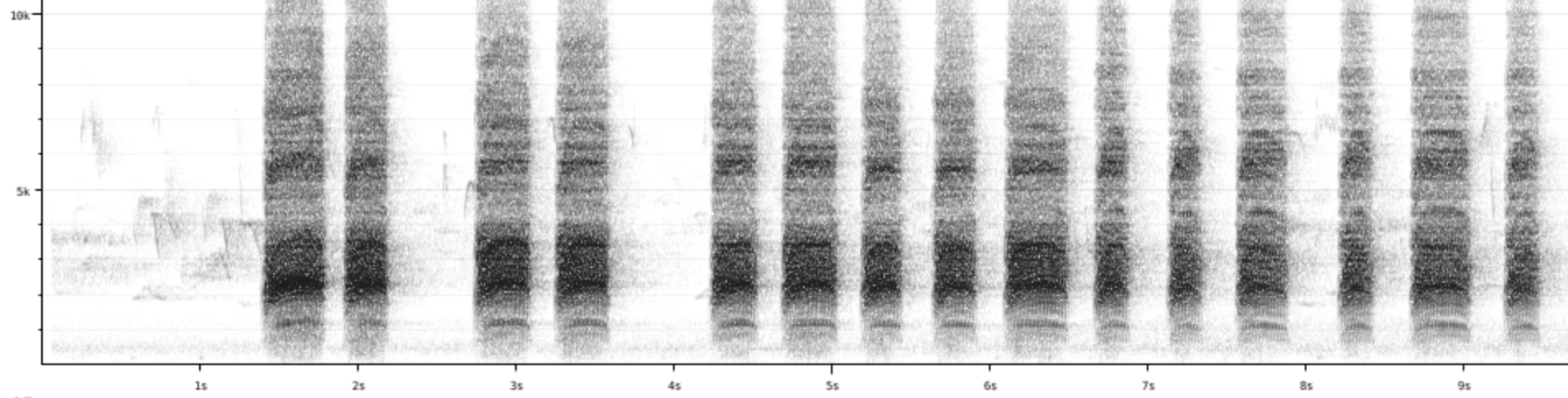
Calls:
Warning call a characteristic dry and rasping "karrr karrr karr" in even pitch. [Link]
Like crow or its cousin the Eurasian jay (Eichelhaeher).
Call attributes: alarm call Call melody: one note, slow, Frequency: 1-10 KHz, Special sounds: rasp.
Details
Profile Wikipedia Xeno-Canto YouTube
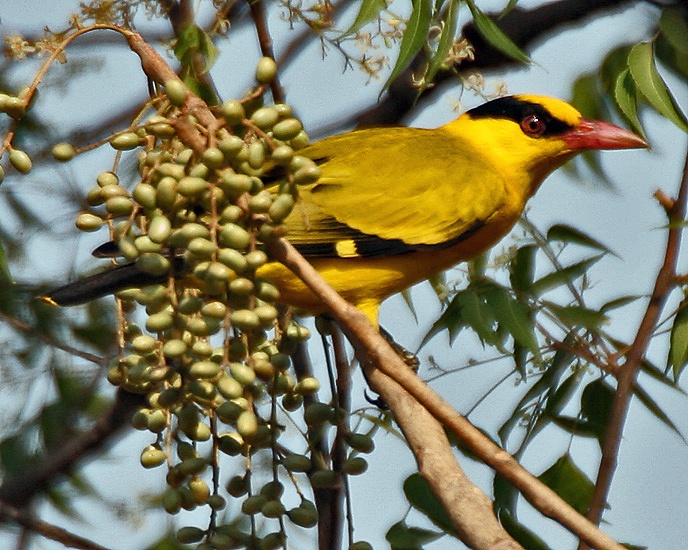
Wikipedia: Black-naped oriole Source: WIKIPEDIA
Black-naped_Oriole_eyeing_on_Lannea_coromandelica_fruits_W_IMG_7449.jpg
🔍
Never observed (yet!)
Description
General: Winter visitorDetails
Description
Details
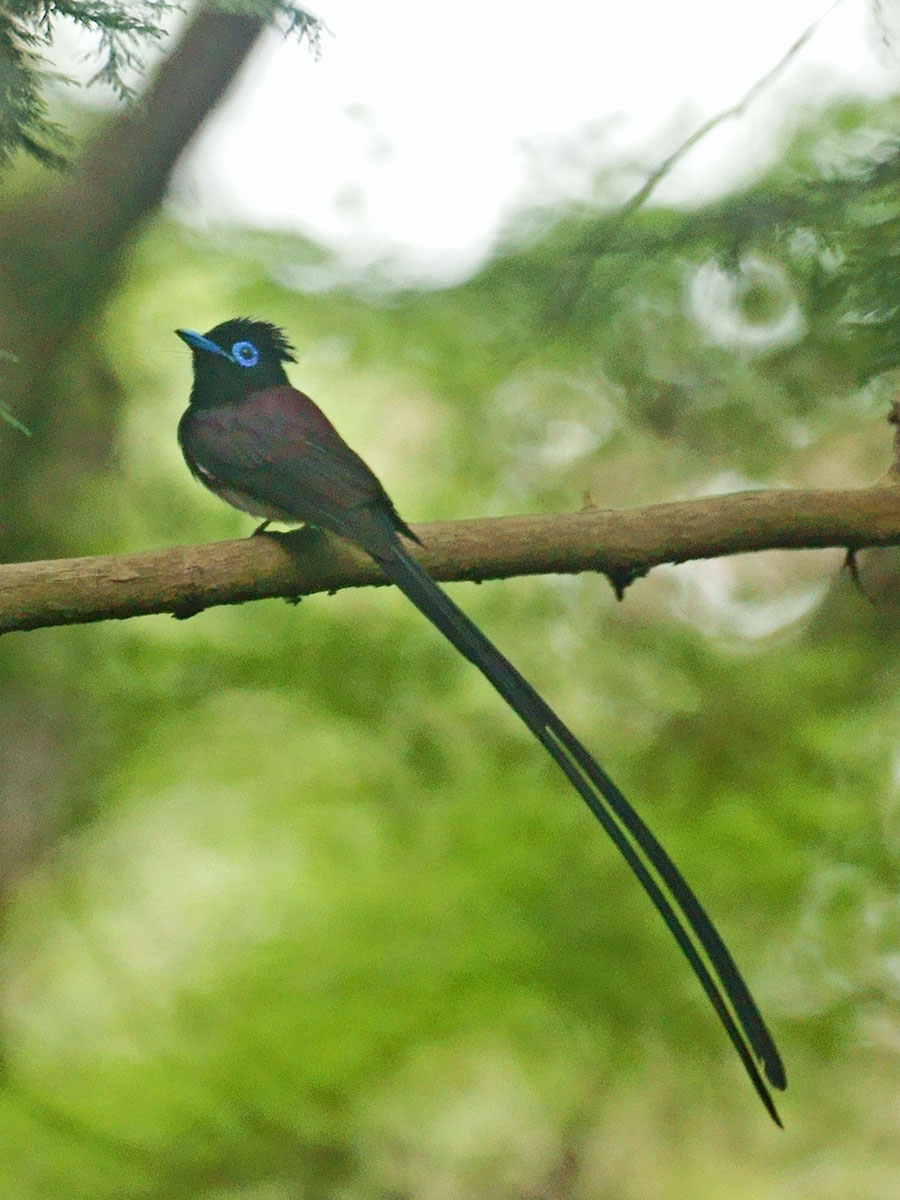
Wikipedia: Japanese paradise-flycatcher Source: WIKIPEDIA
ITerpsiphone_atrocaudata.jpg
🔍
Never observed (yet!)
Description
General: Rare winter visitor, passage migrantDetails
Profile Wikipedia Xeno-Canto YouTube

TBI Masked bird, probably ashy minivet, Phnom Krom. 2024-03-03 06:23:54 Phnom Krom
First observed in Phnom Krom on 2024-03-03.
Description
General: Winter visitorVocalisation
Song: No details but a Xeno-Canto recording. Song attributes: Frequency:♫ Source: XENOCANTO XC842169 - Ashy Minivet - Pericrocotus divaricatus - song - Bangkok, Thailand.mp3 Thailand (song)

Details
Description
General: Endemic in JapanDetails
Profile Wikipedia Audubon AllAboutBirds Xeno-Canto YouTube
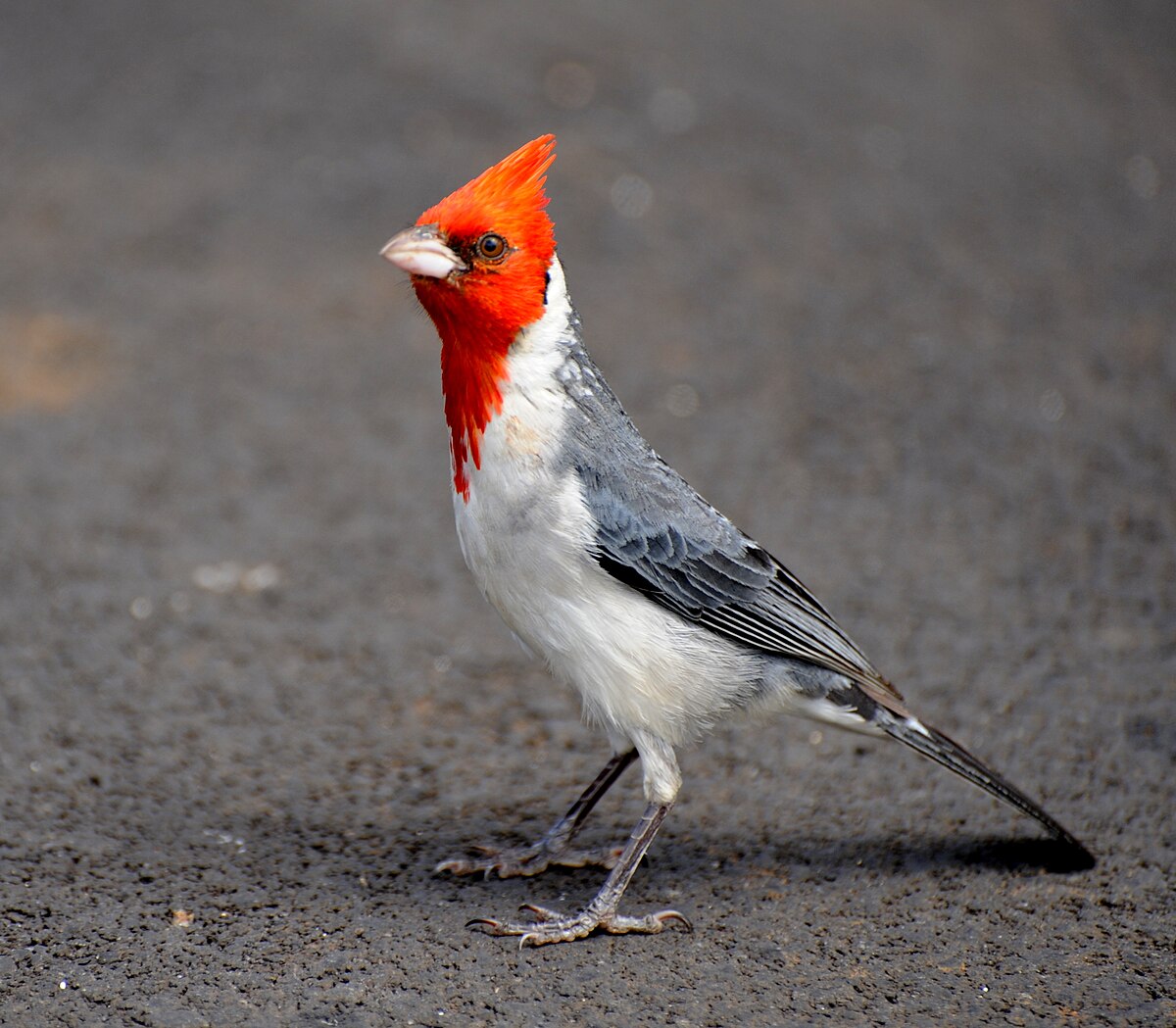
Wikipedia: Red-crested cardinal Source: WIKIPEDIA
1200px-Paroaria_coronata_-Koke%27e_State_Park%2C_Hawaii%2C_USA-8.jpg
🔍
Never observed (yet!)
Description
Geography: This bird appears across the great seas in the following continents: North America, Asia.General:
The red-crested cardinal (Paroaria coronata) is a songbird, the species belonging to the family of tanagers (Thraupidae). Notwithstanding its similar name, this bird is not closely related to the true cardinal family (Cardinalidae). It is sometimes known as the Brazilian cardinal.
[more]
Details

Fantasievolle Sturmmöwe Zürichsee, Postkarte vom Teddys Souvenir Shop, Limmatquai, Zürich. 2021-09-11 12:00:00
First observed in 🇨🇭 on 2021-02-05.
Description
Geography: This bird appears across the great seas in the following continents: Europe, North America, Africa, Asia.General: Not so common in Switzerland (most common would be the black-headed gull as far as I can see
General: Deutschland: Brut-, Jahres-, Zugvogel, Wintergast
Etymology:
[10] The original English word mew is related to German möwe and Dutch meeuw, and is ultimately onomatopoeic. [Link]
Appearance and identification: Nabu: NABU über das Aussehen der Sturmmöwe: 'Sturmmöwen sind etwas größer als Lachmöwen, jedoch deutlich kleiner als Silbermöwen. Sie sind überwiegend weiß mit grauem Rücken und grauen Flügeln. Die Flügelenden sind schwarz mit weißer Spitze. Der Kopf ist rundlich, die dunklen Augen dünn rot umrandet. Der schlanke Schnabel und die Beine sind grünlichgelb, ein Schnabelfleck fehlt.' [Porträt]
Vocalization:
Various mewing sounds. Similar in form to Herring Gull, but much higher pitched. [Link]
Seasonal behavior
Year-round bird Migration in: 01-01 - 05-10 Migration out: 10-18 - 12-31More details at Vogelwarte.ch
Other Details
Physical details
Physical details: length=40-42 cm, wingspan=100-115 cm, weight=300-480 gnot sexually dimporphic. Identifying characteristics: general: head = white (Gray in winter and when young), beak = yellow (greenish yellow), legs = yellow (duller in winter), , , , Adult: wings = gray, , , Youth: wings = white (with brown streaks), , Winter: tail = black (and white striped), Prachtkleid: tail = white Habitats: River and lake Details
Profile Wikipedia Audubon AllAboutBirds Xeno-Canto YouTube

Wikipedia: Glaucous-winged gull Source: WIKIPEDIA
1200px-Glaucous-winged_gull.jpg
🔍
Never observed (yet!)
Description
Geography: This bird appears across the great seas in the following continents: North America, Asia.General:
The glaucous-winged gull (Larus glaucescens) is a large, white-headed gull. The genus name is from Latin Larus which appears to have referred to a gull or other large seabird. The specific glaucescens is New Latin for "glaucous" from the Ancient Greek, glaukos, denoting the grey color of its wings.[2]
[more]
Details
Profile Wikipedia Xeno-Canto YouTube

Wikipedia: Black-tailed gull Source: WIKIPEDIA
1200px-Laridae_in_Beijing_Zoo.JPG
🔍
Never observed (yet!)
Description
Very rare winter visitorDetails
Profile Wikipedia Audubon AllAboutBirds Xeno-Canto BirdID NABU YouTube

MerlinBirdID says glaucous gull and American black duck females. 2023-10-12 13:39:32 New England
First observed in New England on 2023-10-12.
Description
Geography: This bird appears across the great seas in the following continents: Europe, North America, Asia.General:
The glaucous gull (Larus hyperboreus) is a large gull, the second-largest gull in the world. It breeds in Arctic regions of the Northern Hemisphere and winters south to shores of the Holarctic. The genus name is from Latin larus, which appears to have referred to a gull or other large seabird. The specific name hyperboreus is Latin for "northern" from the Ancient Greek Huperboreoi people from the far north [2] "Glaucous" is from Latin glaucus and denotes the grey colour of the gull.[3]
[more]
Vocalization:
Like Herring Gull. [Link]
Other Details
Physical details
Physical details: length=62-68 cm, wingspan=150-165 cm, weight=964-2215 gDetails

Herring gull, near Barnegat Lighthouse, Long Beach Island, NJ. 2024-09-18 19:48:40 New Jersey
First observed in Scotland on 2023-08-19.
Description
Geography: This bird appears across the great seas in the following continents: Europe, North America, South America, Asia.General: Deutschland: Brut-, Jahres-, Zugvogel, Wintergast
Vocalization:
Quite vocal. A long and strong "ay-kay-kay-kay-kay" with fading strength commonly heard. A deep "ga-ga-ga" heard from anxious birds. [Link]
Other Details
Physical details
Physical details: length=55-64 cm, wingspan=123-148 cm, weight=750-1440 gHabitats: River and lake Details
Profile Wikipedia Audubon AllAboutBirds Xeno-Canto YouTube

Wikipedia: Slaty-backed gull Source: WIKIPEDIA
Ooseguro-kamome.jpg
🔍
Never observed (yet!)
Description
Geography: This bird appears across the great seas in the following continents: North America, Asia.General: Accidental
Details

Cormorant, Graureiher, zwei Lachmöwen am Klingnauerstausee. 2022-02-05 10:35:32 Klingnauer Stausee (man-made lake)
First observed in 🇨🇭 on 2020-05-20.
Description
Geography: This bird appears across the great seas in the following continents: Europe, North America, Africa, Asia.General: Common waterbird at Pfäffikersee, that doesn't necessarily have the eponymous black head.
General: Deutschland: Brut-, Jahres-, Zugvogel, Wintergast
Etymology:
[40], In Richard Adams' 1972 novel Watership Down, a black-headed gull named Kehaar (who claims his name is the onomatopoeia of waves breaking against the shore) plays a major part in the story. [Link]
Vocalization:
Quite vocal, especially at breeding ground. [Link]
Seasonal behavior
Year-round birdOther Details
Physical details
Physical details: length=34-37 cm, wingspan=86-99 cm, weight=200-400 gnot sexually dimporphic. No breeding plumage Identifying characteristics: Summer: head = black, , , , , tail = black Winter: head = white (With Charlie Brown-style half circle behind the eye), , , , general: beak = red, legs = red, wings = gray, Habitats: River and lake
Vocalisation
Song: No details but a Xeno-Canto recording. Song attributes: Frequency:♫ 2021-04-27 16:51:23 Source: BirdNet 20210427_165123 birdnet 1485 - Black-headed Gull racket at Chlisee - No confident detection - Wetzikon.mp3 Wetzikon (song)
Details
Description
Details
Black-legged kittiwake / Dreizehenmöwe (Rissa tridactyla)
Profile Wikipedia Vogelwarte BirdLife ZH ornitho.ch Audubon AllAboutBirds Xeno-Canto NABU YouTube

Wikipedia: Black-legged kittiwake Source: WIKIPEDIA
1200px-Rissa_tridactyla_%28Vard%C3%B8%2C_2012%29.jpg
🔍
Never observed (yet!)
Description
Geography: This bird appears across the great seas in the following continents: Europe, North America, Africa, Asia.General: Deutschland: Brut-, Jahres-, Zugvogel, Wintergast RL R
Vocalization:
Highly vocal at breeding ground. A mewing "kitti-wake", with the pitch rising on the second drawn out syllable, and then falling. Generally silent elsewhere, except when squabbling over food. [Link]
Seasonal behavior
Seldom seen here Year-round bird Migration in: 03-01 - 03-23 Migration out: 03-15 - 03-23More details at Vogelwarte.ch
Other Details
Physical details
Physical details: length=38-40 cm, wingspan=95-105 cm, weight=310-500 gDetails
Whiskered tern / Weissbart-Seeschwalbe (Chlidonias hybrida)

Possibly great egrets and whiskered terns in flight, Phnom Krom. 2024-03-03 07:06:26 Phnom Krom
First observed in Phnom Krom on 2024-03-03.
Description
General: Deutschland: ausnahmsweise Brutvogel, seltener Zugvogel RL ROther Details
Physical details
Physical details: length=23-25 cm, wingspan=74-78 cm, weight=79-94 gHabitats: River and lake
Vocalisation
Calls:Contact call freely used and fairly distinct: An extremely hoarse, and rasping "krreek" in various moods. Timbre comparable to Corncrake. Sometimes uttered in stuttering series "kr-kr-kr-kr-kr". [Link]
No details but a Xeno-Canto recording.
XC770351 - Whiskered Tern - Chlidonias hybrida - call, flight call - Heves County, Hungary.
♫ Source: XENOCANTO XC770351 - Whiskered Tern - Chlidonias hybrida - call, flight call - Heves County, Hungary.mp3 (flight call)

Call attributes: flight call Frequency: ,
Details
White-winged tern / Weissflügelseeschwalbe (Chlidonias leucopterus)

Wikipedia: White-winged tern Source: WIKIPEDIA
Chlidonias_leucopterus_Mai_Po.jpg
🔍
Never observed (yet!)
Description
General: Deutschland: ausnahmsweise Brutvogel, seltener Zugvogel RL 0Vocalization:
Mostly silent away from breeding ground. [Link]
Seasonal behavior
Presence: 04-20 - 10-07 Migration in: 09-07 - 09-14 Migration out: 05-01 - 05-31More details at Vogelwarte.ch
Other Details
Physical details
Physical details: length=20-23 cm, wingspan=63-67 cm, weight=50-75 gDetails
Brown noddy / Noddi (Anous stolidus)

Wikipedia: Brown noddy Source: WIKIPEDIA
1200px-Common_Noddy_1_-_Michaelmas.jpg
🔍
Never observed (yet!)
Description
Geography: This bird appears across the great seas in the following continents: North America, South America, Africa, Asia.Details
Bridled tern / Zügelseeschwalbe (Onychoprion anaethetus)
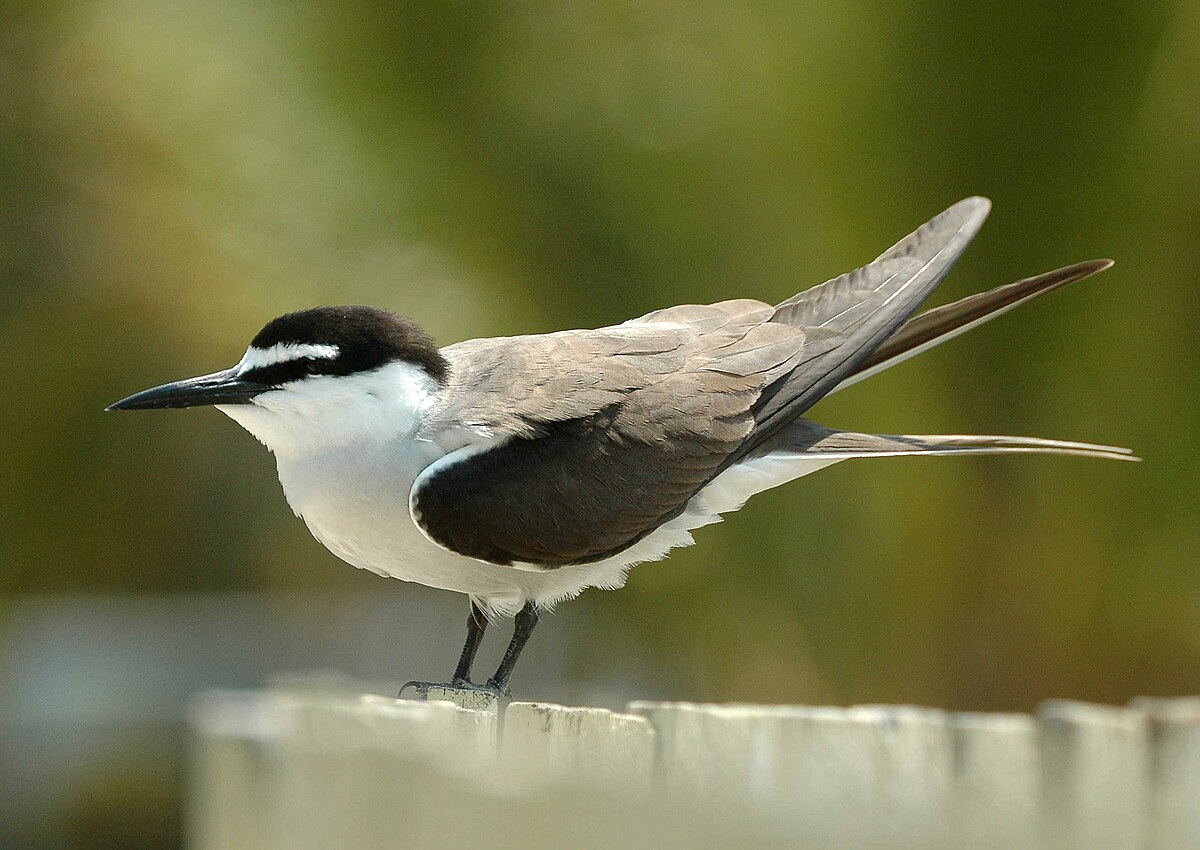
Wikipedia: Bridled tern Source: WIKIPEDIA
1200px-Bridled_Tern_LEI_Nov06.JPG
🔍
Never observed (yet!)
Description
Geography: This bird appears across the great seas in the following continents: North America, South America, Africa, Asia.Details
Sooty tern / Rußseeschwalbe (Onychoprion fuscatus)

Wikipedia: Sooty tern Source: WIKIPEDIA
1200px-Sterna_fuscata.JPG
🔍
Never observed (yet!)
Description
Geography: This bird appears across the great seas in the following continents: Europe, North America, South America, Africa, Asia.Details
Little tern / Zwergseeschwalbe (Sternula albifrons)

Little Tern, Reykjavik, Iceland. 2015-05-29 11:18:30
First observed in Iceland on 2015-05-29.
Description
General: Deutschland: Brut-, Zugvogel RL 1Vocalization:
Fairly distinct voice. [Link]
Other Details
Physical details
Physical details: length=22-24 cm, wingspan=48-55 cm, weight=49-63 gHabitats: River and lake Details
Great crested-tern / Eilseeschwalbe (Thalasseus bergii)

Wikipedia: Great crested-tern Source: WIKIPEDIA
1200px-Crested_Tern_Tasmania.jpg
🔍
Never observed (yet!)
Description
Details
Northern lapwing / Kiebitz (Vanellus vanellus)
Profile Wikipedia Vogelwarte BirdLife ZH ornitho.ch bird-song.ch Xeno-Canto NABU YouTube

Kiebitz im Flug, Wauwilermoos. 2022-06-22 15:07:12 Wauwilermoos
First observed in 🇨🇭 on 2021-02-24.
Description
General: Deutschland: Brut-, Zugvogel RL 2Etymology:
The name lapwing has been variously attributed to the "lapping" sound its wings make in flight, from the irregular progress in flight due to its large wings (the Oxford English Dictionary derives this from an Old English word meaning "to totter"),[4] or from its habit of drawing potential predators away from its nest by trailing a wing as if broken. [Link]
The names peewit, pewit, tuit or tew-it are onomatopoeic and refer to the bird's characteristic call. [Link]
Vocalization:
Quite vocal, especially in flight at breeding ground. [Link]
Seasonal behavior
Year-round bird Breeding: 03-12 - 06-29 Migration in: 05-01 - 06-29 Migration out: 02-01 - 04-11More details at Vogelwarte.ch
Other Details
Physical details
Physical details: length=28-31 cm, wingspan=82-87 cm, weight=140-320 gHabitats: Wetland
Vocalisation
Song: No details but a Xeno-Canto recording. Song attributes: Frequency:♫ 2025-05-16 19:34:00 Switzerland (song)
Calls:
Ruf ist entweder mhhhh oder Bogen-artiges hoch und runter. [Link]
Territorial call: Dry, introductory phrases followed by drawn-out mewing sounds; "wyrrr-peeeoo-weeep". Alarm call "pee-wit". [Link]
No details but a Xeno-Canto recording.
XC801017 - Northern Lapwing - Vanellus vanellus - bizarre-sounding call.
♫ Source: XENOCANTO XC801017 - Northern Lapwing - Vanellus vanellus - bizarre-sounding call.mp3 (call)

Call attributes: song Frequency: ,
Details
Grey-headed lapwing / Graukopfkiebitz (Vanellus cinereus)

Grey-headed lapwings have this typical pattern of black-white-grey in flight. 2024-01-26 16:01:40 Thailand
First observed in Thailand on 2024-01-26.
Description
General: Winter visitorVocalisation
Song: No details but a Xeno-Canto recording. Song attributes: Frequency:♫ Source: XENOCANTO XC114440 - Grey-headed Lapwing - Vanellus cinereus - call, Inner Mongolia, nr Tumuji Town, China.mp3 (call)

No details but a Xeno-Canto recording.
XC414502 - Grey-headed Lapwing - Vanellus cinereus - flight call, Jilin Sheng, China.
♫ Source: XENOCANTO XC414502 - Grey-headed Lapwing - Vanellus cinereus - flight call, Jilin Sheng, China.mp3 (flight call)

Call attributes: flight call Frequency: ,
Details
Lesser sand-plover / Mongolenregenpfeifer (Charadrius mongolus)

Wikipedia: Lesser sand-plover Source: WIKIPEDIA
1200px-Charadrius_mongolus_-_Laem_Phak_Bia.jpg
🔍
Never observed (yet!)
Description
Geography: This bird appears across the great seas in the following continents: North America, Africa, Asia.Details
Kentish plover / Seeregenpfeifer (Charadrius alexandrinus)
Profile Wikipedia Vogelwarte BirdLife ZH ornitho.ch Audubon AllAboutBirds Xeno-Canto NABU YouTube

Der kleinste Watvögel bei Ses Salines, Mallorcal, ein Seeregenpfeifer. 2022-04-08 17:00:16
First observed in Mallorca on 2022-04-08.
Description
Geography: This bird appears across the great seas in the following continents: Europe, North America, Africa, Asia.General: Deutschland: Brut-, Zugvogel RL 1
Seasonal behavior
Presence: 04-01 - 10-27 Migration in: 05-01 - 06-08 Migration out: 06-29 - 10-27More details at Vogelwarte.ch
Other Details
Physical details
Physical details: length=15-17 cm, wingspan=42-45 cm, weight=39-56 gHabitats: Wetland Details
Long-billed plover / Ussuriregenpfeifer (Charadrius placidus)

Wikipedia: Long-billed plover Source: WIKIPEDIA
Charadrius_placidus_japonicus.JPG
🔍
Never observed (yet!)
Description
General: Rare winter visitorDetails
Common ringed plover / Sandregenpfeifer (Charadrius hiaticula)
Profile Wikipedia Vogelwarte BirdLife ZH ornitho.ch Audubon AllAboutBirds Xeno-Canto BirdID NABU YouTube

Sandregenpfeifer auf Ende vom Damm in La Sauge. 2024-09-14 15:34:58 Fanel/Chablais de Cudrefin und La Sauge
First observed in 🇨🇭 on 2022-09-04.
Description
Geography: This bird appears across the great seas in the following continents: Europe, North America, Africa, Asia.General: Deutschland: Brut-, Zugvogel RL 1
Vocalization:
Usually heard before seen. [Link]
Seasonal behavior
Presence: 03-12 - 10-27 Migration in: 10-07 - 10-27 Migration out: 10-07 - 10-15More details at Vogelwarte.ch
Other Details
Physical details
Physical details: length=18-20 cm, wingspan=48-57 cm, weight=55-73 gHabitats: Wetland Details
Little ringed plover / Flussregenpfeifer (Charadrius dubius)
Profile Wikipedia Vogelwarte BirdLife ZH ornitho.ch Xeno-Canto NABU YouTube

Stelzenläufer mit kleinem Flussregenpfeifer. 2022-04-12 14:25:34
First observed in Mallorca on 2022-04-10.
Description
General: Deutschland: Brut-, ZugvogelVocalization:
Quite different from Ringed Plover. Sharper sounding, lacking Ringed's soft tone. Often starts with a rolling "r". [Link]
Seasonal behavior
Presence: 03-01 - 10-18 Breeding: 04-20 - 07-20 Migration in: 03-01 - 05-31 Migration out: 06-29 - 10-18More details at Vogelwarte.ch
Other Details
Physical details
Physical details: length=14-15 cm, wingspan=42-48 cm, weight=32-48 gHabitats: Wetland
Vocalisation
Song: No details but a Xeno-Canto recording. Song attributes: Frequency:♫ 2022-04-10 11:10:23 Source: BirdNet 20220410_111023 birdnet - Flussregenpfeifer - Flussregenpfeifer - Felanitx.mp3 (song)
Details
Greater sand-plover (Charadrius leschenaultti)
Profile Wikipedia Xeno-Canto YouTube

Wikipedia: Greater sand-plover Source: WIKIPEDIA
1200px-Greater_Sand_Plover_1_-_Lee_Point.jpg
🔍
Never observed (yet!)
Description
General:The greater sand plover (Charadrius leschenaultii) is a small wader in the plover family of birds. The spelling is commonly given as "greater sandplover" or "greater sand-plover", but the official British Ornithologists' Union spelling is "Greater Sand Plover".[2] The genus name Charadrius is a Late Latin word for a yellowish bird mentioned in the fourth-century Vulgate. It derives from Ancient Greek kharadrios a bird found in ravines and river valleys (kharadra, "ravine"). The specific leschenaultii commemorates the French botanist Jean Baptiste Leschenault de la Tour.[3]
[more]
Details
Black-bellied plover / Kiebitzregenpfeifer (Pluvialis squatarola)

Wikipedia: Black-bellied plover Source: WIKIPEDIA
1200px-Pluvialis_squatarola_%28summer_plumage%29.jpg
🔍
Never observed (yet!)
Description
Geography: This bird appears across the great seas in the following continents: Europe, North America, South America, Africa, Asia.General: Deutschland: Zugvogel
Seasonal behavior
Presence: 04-11 - 11-26 Migration in: 11-06 - 11-14 Migration out: 05-01 - 05-31More details at Vogelwarte.ch
Other Details
Physical details
Physical details: length=27-30 cm, wingspan=71-83 cm, weight=190-280 gHabitats: Wetland Details
Pacific golden plover / Sibirischer Goldregenpfeifer (Pluvialis fulva)

Wikipedia: Pacific golden plover Source: WIKIPEDIA
Pluvialis_fulva_-Bering_Land_Bridge_National_Preserve%2C_Alaska%2C_USA-8.jpg
🔍
Never observed (yet!)
Description
Geography: This bird appears across the great seas in the following continents: North America, Asia.Details
Curlew sandpiper / Sichelstrandläufer (Calidris ferruginea)
Profile Wikipedia Vogelwarte BirdLife ZH ornitho.ch Audubon AllAboutBirds Xeno-Canto BirdID NABU YouTube
.JPG)
Rostgans und nach MBI mehrere Sichelstrandlaeufer, die ich nur hier sehen (2024 auch). 2025-09-13 14:52:16 Klingnauer Stausee (man-made lake)
First observed in 🇨🇭 on 2024-08-24.
Description
Geography: This bird appears across the great seas in the following continents: Europe, North America, South America, Africa, Asia.General: Deutschland: Zugvogel
Etymology:
Nicolas Baiker sagt, Hauptmerkmale innerhalb der Strandläufer sind der Augenstreif und der Schnabel der relativ lang ist und immer lezten Drittel immer krummer, darum Sichelstrandläufer. [Link]
Other Details
Physical details
Physical details: length=18-19 cm, wingspan=42-46 cm, weight=50-65 gHabitats: Wetland
Vocalisation
Calls:Flight call a soft, ringing and rolling "krrrrrt, with variations. Lacks the hoarse, nasal quality of similar call by Dunlin. [Link]
At XenoCanto I heard 5 rising notes within a second.
Call attributes: Call melody: one note, fast, Frequency: 4-6 KHz, Special sounds: whoop.
Details
Ruff / Kampfläufer (Calidris pugnax)

MerlinBirdId sagt, das mit dem rotbraunen Rücken mit vielen Punkten war ein Kampfläufer - in dem Fall meine erste Besichtigung - und der dunkle wo wir nur den Arschsehen wären Dunkelwasserläufer - auf dem Klingnauerstausee. 2024-08-24 18:17:54 Klingnauer Stausee (man-made lake)
First observed in 🇨🇭 on 2024-08-24.
Description
Geography: This bird appears across the great seas in the following continents: Europe, North America, South America, Africa, Asia.General: Deutschland: Brut-, Zugvogel RL 1
Etymology: Nabu: Der Name leitet sich vom Balzverhalten der Männchen ab: In Balzarenen tragen sie „Turniere“ aus, um die Weibchen zu beeindrucken, dabei herrscht eine komplizierte Rollenverteilung. [Link]
Vocalization:
Generally silent. Short, muted, nasal, mono or disyllabic grunts sometimes heard. [Link]
Seasonal behavior
Presence: 02-20 - 11-06 Migration in: 05-21 - 05-31 Migration out: 05-21 - 05-28More details at Vogelwarte.ch
Other Details
Physical details
Physical details: length=26-30 cm, wingspan=54-58 cm, weight=75-230 gHabitats: Wetland Details
Red knot / Knutt (Calidris canutus)
Profile Wikipedia Vogelwarte BirdLife ZH ornitho.ch Audubon AllAboutBirds Xeno-Canto BirdID NABU YouTube

Red knots, according to MerlinBirdID - underway to somewhere better at Las Coloradas. 2023-04-15 09:34:08 Yucatan
First observed in Yucatan on 2023-04-15.
Description
Geography: This bird appears across the great seas in the following continents: Europe, North America, South America, Africa, Asia.General: Deutschland: Zugvogel, Wintergast
Other Details
Physical details
Physical details: length=23-25 cm, wingspan=57-61 cm, weight=110-160 gHabitats: Wetland Details
Dunlin / Alpenstrandläufer (Calidris alpina)
Profile Wikipedia Vogelwarte BirdLife ZH ornitho.ch Audubon AllAboutBirds Xeno-Canto BirdID NABU YouTube
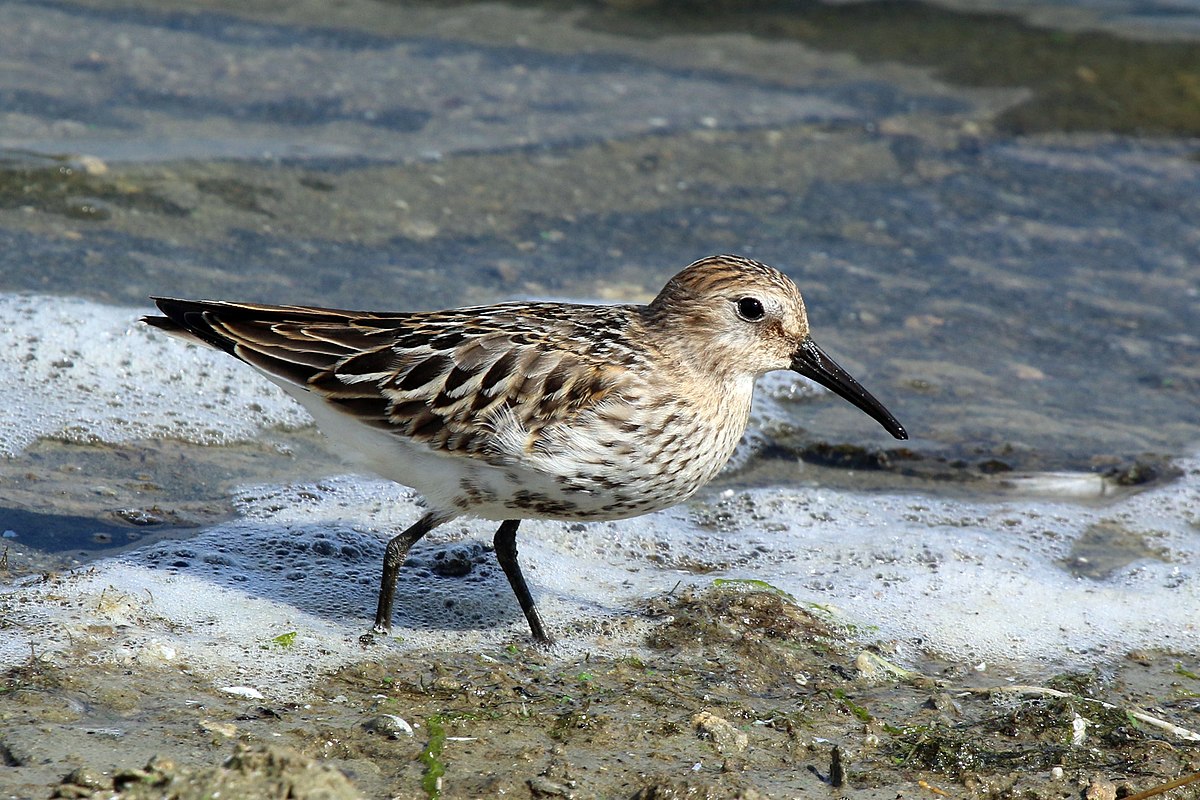
Wikipedia: Dunlin Source: WIKIPEDIA
1200px-Dunlin_%28Calidris_alpina%29_juvenile.jpg
🔍
Never observed (yet!)
Description
Geography: This bird appears across the great seas in the following continents: Europe, North America, South America, Africa, Asia.General: Deutschland: Brut-, Zugvogel, Wintergast RL 1
Seasonal behavior
Year-round bird Migration in: 03-01 - 03-23 Migration out: 03-15 - 03-23More details at Vogelwarte.ch
Other Details
Physical details
Physical details: length=16-20 cm, wingspan=38-43 cm, weight=35-60 gHabitats: Wetland Details
Pectoral sandpiper / Graubrust-Strandläufer (Calidris melanotos)
Profile Wikipedia Vogelwarte BirdLife ZH ornitho.ch Audubon AllAboutBirds Xeno-Canto BirdID NABU YouTube

Wikipedia: Pectoral sandpiper Source: WIKIPEDIA
1200px-Pectoral_Sandpiper3.jpg
🔍
Never observed (yet!)
Description
Geography: This bird appears across the great seas in the following continents: Europe, North America, South America, Asia.General: Deutschland: seltener Zugvogel
Details
Rufous-necked stint / Rotkehlstrandläufer (Calidris ruficollis)
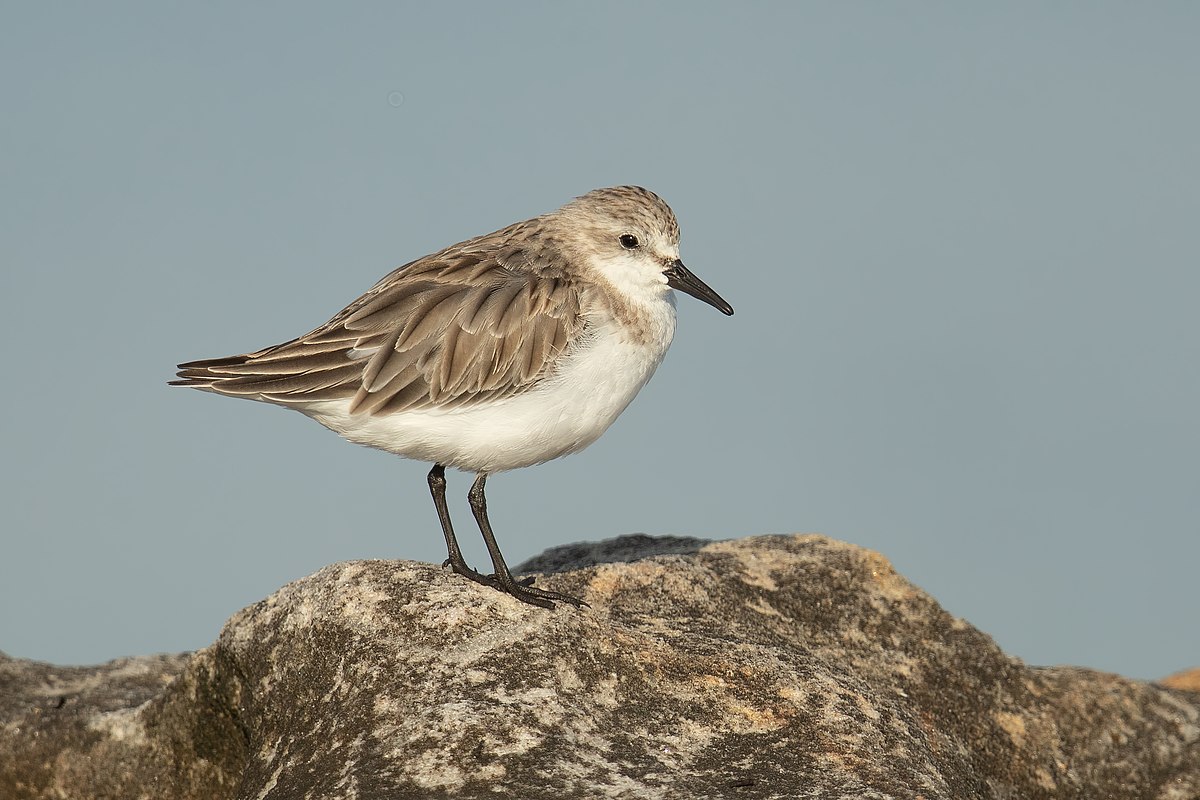
Wikipedia: Rufous-necked stint Source: WIKIPEDIA
1200px-Red-necked_Stint_-_Boat_Harbour.jpg
🔍
Never observed (yet!)
Description
Geography: This bird appears across the great seas in the following continents: North America, Asia.Details
Great knot / Großer Knutt (Calidris tenuirostris)
Profile Wikipedia Xeno-Canto YouTube

Wikipedia: Great knot Source: WIKIPEDIA
1200px-Calidris_tenuirostris_-_Laem_Phak_Bia.jpg
🔍
Never observed (yet!)
Description
Details
Broad-billed sandpiper / Sumpfläufer (Calidris falcinellus)
Profile Wikipedia Vogelwarte BirdLife ZH ornitho.ch Xeno-Canto NABU YouTube

Wikipedia: Broad-billed sandpiper Source: WIKIPEDIA
1200px-Broad_billed_sandpiper_by_Sreedev_Puthur.jpg
🔍
Never observed (yet!)
Description
Other Details
Physical details
Physical details: length=16-17 cm, wingspan=37-39 cm, weight=30-49 gDetails
Long-toed stint / Langzehenstrandläufer (Calidris subminuta)
Profile Wikipedia Audubon AllAboutBirds Xeno-Canto YouTube

Wikipedia: Long-toed stint Source: WIKIPEDIA
1200px-Calidris_subminuta_-_Pak_Thale.jpg
🔍
Never observed (yet!)
Description
Geography: This bird appears across the great seas in the following continents: North America, Asia.Details
Temminck's stint / Temminckstrandläufer (Calidris temminckii)
Profile Wikipedia Vogelwarte BirdLife ZH ornitho.ch Xeno-Canto BirdID NABU YouTube

Wikipedia: Temminck's stint Source: WIKIPEDIA
1200px-Temmincks_Stint.jpg
🔍
Never observed (yet!)
Description
General: Deutschland: ZugvogelOther Details
Physical details
Physical details: length=13-15 cm, wingspan=34-37 cm, weight=17-30 gHabitats: Wetland Details
Rock sandpiper / Beringstrandläufer (Calidris ptilocnemis)
Profile Wikipedia Audubon AllAboutBirds Xeno-Canto YouTube

Wikipedia: Rock sandpiper Source: WIKIPEDIA
1200px-Calidris_ptilocnemis1.jpg
🔍
Never observed (yet!)
Description
Geography: This bird appears across the great seas in the following continents: North America, Asia.General:
The rock sandpiper (Calidris or Erolia ptilocnemis) is a small shorebird.
[more]
Details
Sharp-tailed sandpiper / Spitzschwanz-Strandläufer (Calidris acuminata)
Profile Wikipedia Audubon AllAboutBirds Xeno-Canto YouTube

Wikipedia: Sharp-tailed sandpiper Source: WIKIPEDIA
1200px-Calidris_acuminata_-_Hexham_Swamp.jpg
🔍
Never observed (yet!)
Description
Geography: This bird appears across the great seas in the following continents: North America, Asia.Details
Sanderling / Sanderling (Calidris alba)
Profile Wikipedia Vogelwarte BirdLife ZH ornitho.ch Audubon AllAboutBirds Xeno-Canto BirdID NABU YouTube

Wahrscheinlich Sanderling - there must be a better photo. 2024-09-14 15:34:48 Fanel/Chablais de Cudrefin und La Sauge
First observed in Yucatan on 2023-03-27.
Description
Geography: This bird appears across the great seas in the following continents: Europe, North America, South America, Africa, Asia.General: Deutschland: Zugvogel, Wintergast
Seasonal behavior
Presence: 04-11 - 10-27 Migration in: 10-07 - 10-15 Migration out: 04-20 - 05-31More details at Vogelwarte.ch
Other Details
Physical details
Physical details: length=20-21 cm, wingspan=40-45 cm, weight=44-70 gHabitats: Wetland Details
Eurasian curlew / Grosser Brachvogel (Numenius arquata)

Grosser brachvogel, Klingnauerstausee. 2022-02-05 11:54:42 Klingnauer Stausee (man-made lake)
First observed in 🇨🇭 on 2021-02-12.
Description
General: In Jona findet man viele auf der Wiese unter Obstbäumen, anscheinend weil es dort viele Insekten und Schnecken gibt (siehe oben).General: Deutschland: Brut-, Zugvogel RL 1
Geography:
Die Brachvögel brütet im Moment recht viel in Vergleich mit früher. [Link]
Diet: Nabu: Auf dem Speiseplan des Großen Brachvogels stehen vor allem Insekten und deren Larven und andere Kleintiere wie Schnecken und Regenwürmer, aber auch Krebstierchen. Ab und zu frisst er auch Amphibien, Reptilien oder Fische. [Link]
Seasonal behavior
Year-round bird Migration in: 02-20 - 05-10 Migration out: 07-10 - 12-07More details at Vogelwarte.ch
Other Details
Physical details
Physical details: length=50-60 cm, wingspan=80-100 cm, weight=540-1300 gHabitats: Wetland
Vocalisation
Song: No details but a Xeno-Canto recording. Song:Song starts similar to Whimbrel, with long wailing notes "kluuueee", but takes on a different ending as it accelerates to an ascending phrase repeated in rapid cycles . [Link]
Song attributes:
Frequency:
♫ Source: XENOCANTO XC625195-grosser brachvogel, michal jezierski, uk.mp3 (flight call)
 Das Männchen steigt mit einzelnen, klangvollen Rufen auf, die vor der Landung in einen weithin hörbaren Triller übergehen. [Link]
Call attributes: flight call Call melody: simple rhythmic, slow, Frequency: low (1-3 KHz),
Details
Far eastern curlew / Sibirischer Brachvogel (Numenius madagascariensis)

Wikipedia: Far eastern curlew Source: WIKIPEDIA
1200px-Numenius_madagascariensis_1_-_Stockton_Sandspit.jpg
🔍
Never observed (yet!)
Description
Details
Whimbrel / Regenbrachvogel (Numenius phaeopus)

Whimbrel at x. 2025-02-25 10:29:04 Lanzarote
First observed in San Christiano on 2022-03-19.
Description
Geography: This bird appears across the great seas in the following continents: Europe, North America, South America, Africa, Asia.General: Deutschland: Zugvogel
Seasonal behavior
Presence: 03-23 - 10-07 Migration in: 05-10 - 05-31 Migration out: 05-10 - 05-18More details at Vogelwarte.ch
Other Details
Physical details
Physical details: length=40-42 cm, wingspan=76-89 cm, weight=300-660 gHabitats: Wetland Details
Ruddy turnstone / Steinwälzer (Arenaria interpres)

Ruddy turnstone, San Christiana, Tenerife. 2022-03-19 10:26:30
First observed in Tenerife on 2022-03-19.
Description
Geography: This bird appears across the great seas in the following continents: Europe, North America, South America, Africa, Asia.General: Deutschland: Brut-, Zugvogel, Wintergast RL 2
Seasonal behavior
Presence: 04-11 - 10-18 Migration in: 05-01 - 06-20 Migration out: 05-01 - 06-08More details at Vogelwarte.ch
Other Details
Physical details
Physical details: length=22-24 cm, wingspan=50-57 cm, weight=85-150 gHabitats: Wetland Details
Eurasian woodcock / Waldschnepfe (Scolopax rusticola)
Profile Wikipedia Vogelwarte BirdLife ZH ornitho.ch bird-song.ch Xeno-Canto BirdID NABU YouTube

Wikipedia: Eurasian woodcock Source: WIKIPEDIA
Woodcock_earthworm.jpg
🔍
Never observed (yet!)
Description
General: Deutschland: Brut-, Jahres-, Zugvogel, Wintergast RL VVocalization:
Sometimes give a snipe-like hoarse "raaat" when flushed. Male display flight at night distinctive. [Link]
Seasonal behavior
Year-round bird Breeding: 03-23 - 08-09 Migration in: 02-20 - 05-01 Migration out: 09-07 - 12-16More details at Vogelwarte.ch
Other Details
Physical details
Physical details: length=33-35 cm, wingspan=56-60 cm, weight=131-420 gHabitats: Forest Details
Amami woodcock / Amamiwaldschnepfe (Scolopax mira)
Profile Wikipedia Xeno-Canto YouTubeDescription
General: Endemic in JapanDetails
Common snipe / Bekassine (Gallinago gallinago)

Wahrscheinlich Bekassine mit dem langen Schnabel, Klingnauerstausee. 2022-02-05 11:54:14 Klingnauer Stausee (man-made lake)
First observed in 🇨🇭 on 2021-10-24.
Description
Geography: This bird appears across the great seas in the following continents: Europe, North America, Africa, Asia.General:
The common snipe (Gallinago gallinago) is a small, stocky wader native to the Old World.
[more]
Deutschland: Brut-, Zugvogel, Wintergast RL 1
Vocalization:
Quite vocal, especially at breeding ground. [Link]
Seasonal behavior
Year-round bird Migration in: 01-01 - 05-21 Migration out: 07-20 - 12-31More details at Vogelwarte.ch
Other Details
Physical details
Physical details: length=25-27 cm, wingspan=44-47 cm, weight=80-140 gHabitats: Wetland
Vocalisation
Song: No details but a Xeno-Canto recording. Song:Song an unmistakable bleating, drumming sound produced by vibrating tail feathers in sky-dives. [Link]
Song attributes:
Frequency:
♫ Source: XENOCANTO XC812599 - Common Snipe song, one note, 4x per sec - Gallinago gallinago.mp3 (song)

Calls:
Almost always give diagnostic hoarse and nasal "kaaat" call when flushed. Another territorial call is a rhythmic, mechanical and sharp "tika-tika-tka", or "ika-ka-ka". [Link]
XC947581 - Common Snipe flight call - Gallinago gallinago.
♫ Source: XENOCANTO XC947581 - Common Snipe flight call - Gallinago gallinago.mp3 (flight call)

Call attributes: flight call Call melody: one note, slow, Frequency: medium (1-5 KHz), Special sounds: quack.
Details
Solitary snipe / Einsiedlerbekassine (Gallinago solitaria)
Profile Wikipedia Xeno-Canto YouTube
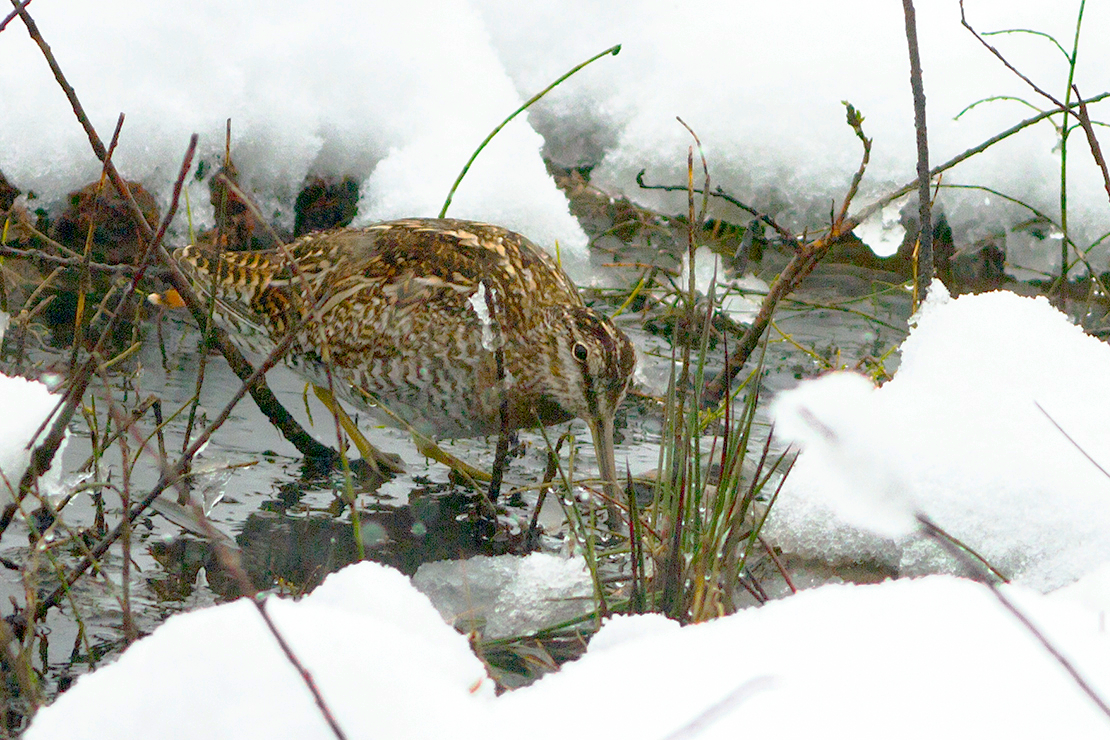
Wikipedia: Solitary snipe Source: WIKIPEDIA
Solitary_Snipe_Paro_River_Bhutan.jpg
🔍
Never observed (yet!)
Description
General:The solitary snipe (Gallinago solitaria) is a small stocky wader. It is found in the Palearctic from northeast Iran to Japan and Korea.
[more]
Details
Pintail snipe / Spießbekassine (Gallinago stenura)

Wikipedia: Pintail snipe Source: WIKIPEDIA
1200px-Gallinago_stenura_-_Laem_Pak_Bia.jpg
🔍
Never observed (yet!)
Description
Details
Swinhoe's snipe / Waldbekassine (Gallinago megala)
Profile Wikipedia Audubon AllAboutBirds Xeno-Canto YouTube

Wikipedia: Swinhoe's snipe Source: WIKIPEDIA
Gallinago_megala.jpg
🔍
Never observed (yet!)
Description
Geography: This bird appears across the great seas in the following continents: North America, Asia.Details
Latham's snipe / Japanbekassine (Gallinago hardwickii)

Wikipedia: Latham's snipe Source: WIKIPEDIA
Latham%27s_snipe.jpg
🔍
Never observed (yet!)
Description
Details
Long-billed dowitcher / Großer Schlammläufer (Limnodromus scolopaceus)
Profile Wikipedia Audubon AllAboutBirds Xeno-Canto YouTube

You can see why it's called Las Colarados here - I believe Erik said short-billed dowitchers. 2023-04-15 09:33:38 Yucatan
First observed in Yucatan on 2023-04-15.
Description
Geography: This bird appears across the great seas in the following continents: North America, South America, Asia.General: Accidental
Details
Bar-tailed godwit / Pfuhlschnepfe (Limosa lapponica)
Profile Wikipedia Vogelwarte BirdLife ZH ornitho.ch Audubon AllAboutBirds Xeno-Canto BirdID NABU YouTube

Wikipedia: Bar-tailed godwit Source: WIKIPEDIA
1200px-Bar-tailed_Godwit.jpg
🔍
Never observed (yet!)
Description
Geography: This bird appears across the great seas in the following continents: Europe, North America, Africa, Asia.General: Deutschland: Zugvogel
Seasonal Behavior: Eine junge Pfuhlschnepfe scheint einen Non-Stop-Rekord für Zugvögel aufgestellt zu haben. Der Vogel sei über 13.500 Kilometer von Alaska in den australischen Bundesstaat Tasmanien geflogen, das berichteten mehrere Medien übereinstimmend. [Link]
Vocalization:
Quite vocal at breeding ground but mostly silent elsewhere. Varied repertoire of mewing and sharp sounds, some resembling Black-tailed, some almost Snipe-like. [Link]
Seasonal behavior
Presence: 04-01 - 11-06 Migration in: 07-29 - 08-29 Migration out: 08-21 - 08-29More details at Vogelwarte.ch
Other Details
Physical details
Physical details: length=37-39 cm, wingspan=70-80 cm, weight=230-450 gHabitats: Wetland Details
Black-tailed godwit / Uferschnepfe (Limosa limosa)
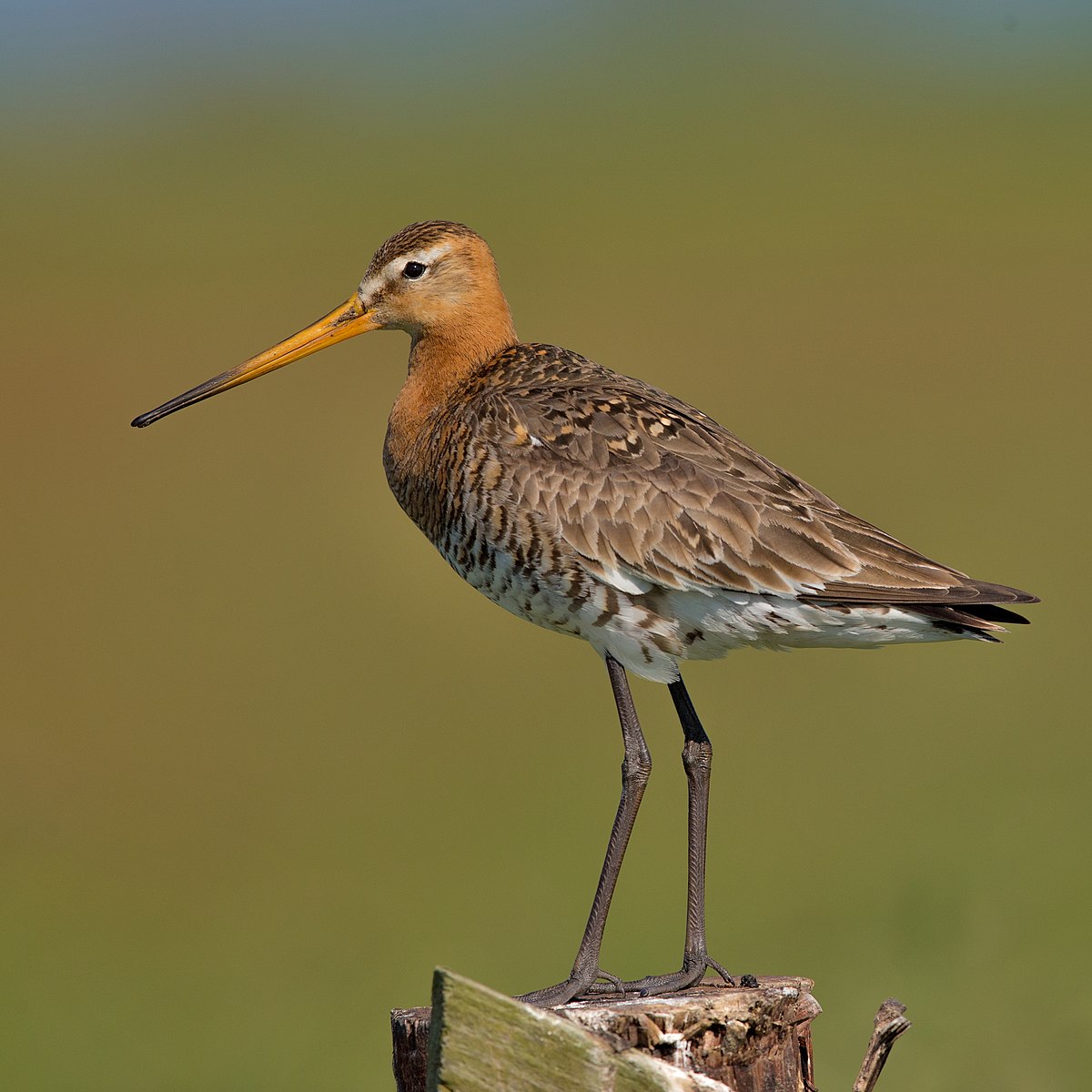
Wikipedia: Black-tailed godwit Source: WIKIPEDIA
1200px-Black-tailed_Godwit_Uferschnepfe.jpg
🔍
Never observed (yet!)
Description
Geography: This bird appears across the great seas in the following continents: Europe, North America, Africa, Asia.General: Deutschland: Brut-, Zugvogel RL 1
Vocalization:
Quite vocal at breeding ground, but mostly silent elsewhere. Varied repertoire of mewing and sharp sounds, some resembling Bar-tailed, some almost lapwing-like. [Link]
Seasonal behavior
Presence: 02-20 - 09-28 Migration in: 05-01 - 05-31 Migration out: 05-01 - 05-08More details at Vogelwarte.ch
Other Details
Physical details
Physical details: length=40-44 cm, wingspan=70-82 cm, weight=250-390 gHabitats: Wetland Details
Grey-tailed tattler / Grauschwanzwasserläufer (Tringa brevipes)

Wikipedia: Grey-tailed tattler Source: WIKIPEDIA
Tringa_brevipes2.jpg
🔍
Never observed (yet!)
Description
Geography: This bird appears across the great seas in the following continents: North America, Asia.Details
Common redshank / Rotschenkel (Tringa totanus)
Profile Wikipedia Vogelwarte BirdLife ZH ornitho.ch Xeno-Canto BirdID NABU YouTube

Common redshank plus common pochard. 2022-04-12 14:02:38
First observed in Mallorca on 2022-04-12.
Description
General: Deutschland: Brut-, Zugvogel, Wintergast RL VVocalization:
Generally a noisy and loud bird, especially at breeding ground. Most heard is a characteristic "tew-hoo", or "tew-hoo-hoo" with first syllable accentuated. No gap between the syllables like Greenshank, and usually with a marked falling pitch. [Link]
Seasonal behavior
Presence: 03-01 - 10-07 Migration in: 03-23 - 05-21 Migration out: 03-15 - 03-23More details at Vogelwarte.ch
Other Details
Physical details
Physical details: length=27-29 cm, wingspan=59-66 cm, weight=85-150 gHabitats: Wetland Details
Spotted redshank / Dunkler Wasserläufer (Tringa erythropus)
Profile Wikipedia Vogelwarte BirdLife ZH ornitho.ch Xeno-Canto BirdID NABU YouTube

Spotted redshank in Albufera. 2022-04-12 14:05:20
First observed in 🇨🇭 on 2021-10-24.
Description
General: Deutschland: ZugvogelOther Details
Physical details
Physical details: length=29-31 cm, wingspan=61-67 cm, weight=125-210 gHabitats: Wetland Details
Wood sandpiper / Bruchwasserläufer (Tringa glareola)
Profile Wikipedia Vogelwarte BirdLife ZH ornitho.ch Audubon AllAboutBirds Xeno-Canto BirdID NABU YouTube

Bruchwasserläufer. 2024-08-24 18:24:00 Klingnauer Stausee (man-made lake)
First observed in 🇨🇭 on 2021-08-19.
Description
Geography: This bird appears across the great seas in the following continents: Europe, North America, Africa, Asia.General: Deutschland: ehemaliger Brutvogel, Zugvogel RL 1
Vocalization:
Totally different from Green Sandpiper. [Link]
Other Details
Physical details
Physical details: length=19-21 cm, wingspan=56-57 cm, weight=50-80 gHabitats: Wetland
Vocalisation
Song: No details but a Xeno-Canto recording. Song attributes: Frequency:♫ 2021-08-19 08:26:04 Source: BirdNet 20210819_082604 birdnet 1940 - Wood Sandpiper, saw a bird flying, check reports in Ornitho - Wood Sandpiper - Uznach.mp3 Uznach (song)
Details
Common greenshank / Grünschenkel (Tringa nebularia)
Profile Wikipedia Vogelwarte BirdLife ZH ornitho.ch Audubon AllAboutBirds Xeno-Canto BirdID NABU YouTube

MerlinBirdID says common greenshank, probably non-breeding adult. 2022-04-12 14:52:08
First observed in Mallorca on 2022-04-12.
Description
Geography: This bird appears across the great seas in the following continents: Europe, North America, Africa, Asia.General: Deutschland: ausnahmsweise Brutvogel, Zugvogel
Vocalization:
Most heard is a characteristic, trisyllabic "tew-tew-tew" (sometimes two or four syllables). Can resemble redshank, but pitch more stable, and not falling notably. Each syllable is clearly separated and equally emphasized. [Link]
Other Details
Physical details
Physical details: length=30-33 cm, wingspan=68-70 cm, weight=130-270 gHabitats: Wetland Details
Marsh sandpiper / Teichwasserläufer (Tringa stagnatilis)
Profile Wikipedia Vogelwarte BirdLife ZH ornitho.ch Xeno-Canto BirdID NABU YouTube

Wikipedia: Marsh sandpiper Source: WIKIPEDIA
1200px-Tringa_stagnatilis_2_-_Laem_Pak_Bia.jpg
🔍
Never observed (yet!)
Description
General: Deutschland: seltener ZugvogelSeasonal behavior
Seldom seen hereMore details at Vogelwarte.ch
Other Details
Physical details
Physical details: length=22-24 cm, wingspan=55-59 cm, weight=50-85 gDetails
Green sandpiper / Waldwasserläufer (Tringa ochropus)
Profile Wikipedia Vogelwarte BirdLife ZH ornitho.ch Xeno-Canto BirdID NABU YouTube

Waldwasserläufer. 2025-07-17 12:54:08 Kaltbrunner-Riet
First observed in 🇨🇭 on 2022-09-04.
Description
General: Deutschland: Brut-, Zugvogel, WintergastVocalization:
Totally different from Wood Sandpiper. [Link]
Seasonal behavior
Year-round bird Migration in: 06-20 - 09-07 Migration out: 03-23 - 05-01More details at Vogelwarte.ch
Other Details
Physical details
Physical details: length=21-24 cm, wingspan=57-61 cm, weight=60-90 gHabitats: Wetland Details
Terek sandpiper / Terekwasserläufer (Xenus cinereus)
Profile Wikipedia Audubon AllAboutBirds Xeno-Canto BirdID NABU YouTube

Wikipedia: Terek sandpiper Source: WIKIPEDIA
Xenus_cinereus_%28Alnus%29.jpg
🔍
Never observed (yet!)
Description
Geography: This bird appears across the great seas in the following continents: Europe, North America, Africa, Asia.Details
Common sandpiper / Flussuferläufer (Actitis hypoleucos)
_probing_mud_banks_in_Kolkata_I_IMG_4169, by J.M.Garg - Own work.jpg)
Common Sandpiper (Actitis hypoleucos) probing mud banks in Kolkata I IMG 4169, by J.M.Garg - Own work. Source: OTHER
Common_Sandpiper_(Actitis_hypoleucos)_probing_mud_banks_in_Kolkata_I_IMG_4169, by J.M.Garg - Own work.jpg
First observed in 🇨🇭 on 2022-09-04.
Description
Geography: This bird appears across the great seas in the following continents: Europe, North America, Africa, Asia.General: Deutschland: Brut-, Zugvogel RL 2
Etymology: Birdweather: Mein Birdweather Gerät hat öfter das Gefühl dass es einen Flussuferläufer hört; Merlin hat es auch einmal gemeldet. [Link]
Other Details
Physical details
Physical details: length=19-21 cm, wingspan=38-41 cm, weight=40-60 gHabitats: Wetland
Vocalisation
Song: No details but a Xeno-Canto recording. Song attributes: Frequency:♫ 2024-08-08 07:22:45 Source: BIRDWEATHER 20240808_072245-Birdweather-Common_Sandpiper call.mp3 (call)
Calls:
Very vocal with characteristic repertoire of very high-pitched calls. Often heard is a disyllabic call, drawn out and slightly rising in pitch in the second part. This is often repeated in a series of rising tones in a cyclic manner, with approx 5 tones in each cycle. [Link]
1:
High-pitched, at least in Birdweather detection
XC927032 - Common Sandpiper 2-note call - Actitis hypoleucos.
♫ Source: XENOCANTO XC927032 - Common Sandpiper 2-note call - Actitis hypoleucos.mp3 (call)

2: No details but a Xeno-Canto recording.
XC924773 - Common Sandpiper flight call, swoop, 2 to 8 notes - Actitis hypoleucos.
♫ Source: XENOCANTO XC924773 - Common Sandpiper flight call, swoop, 2 to 8 notes - Actitis hypoleucos.mp3 (flight call)

Call attributes: Call melody: simple rhythmic, slow, Frequency: medium (1-5 KHz),
Details
Red-necked phalarope / Odinshühnchen (Phalaropus lobatus)
Profile Wikipedia Vogelwarte BirdLife ZH ornitho.ch Audubon AllAboutBirds Xeno-Canto BirdID NABU YouTube

Wikipedia: Red-necked phalarope Source: WIKIPEDIA
1200px-Red-necked_Phalarope.jpg
🔍
Never observed (yet!)
Description
Geography: This bird appears across the great seas in the following continents: Europe, North America, South America, Africa, Asia.General: Deutschland: Zugvogel
Vocalization:
Short and sharp "teck", sometimes repeated to form trilling series. Also a mewing, nasal "veeoo". [Link]
Seasonal behavior
Presence: 05-21 - 10-27 Migration in: 10-07 - 10-27 Migration out: 10-07 - 10-15More details at Vogelwarte.ch
Other Details
Physical details
Physical details: length=18-19 cm, wingspan=32-41 cm, weight=27-48 gDetails
Red phalarope / Thorshühnchen (Phalaropus fulicarius)

Wikipedia: Red phalarope Source: WIKIPEDIA
1200px-Phalaropus_fulicarius_10.jpg
🔍
Never observed (yet!)
Description
Geography: This bird appears across the great seas in the following continents: Europe, North America, South America, Africa, Asia.General: Deutschland: seltener Zugvogel
Seasonal behavior
Seldom seen hereMore details at Vogelwarte.ch
Other Details
Physical details
Physical details: length=20-22 cm, wingspan=40-44 cm, weight=40-75 gDetails
Common tern / Flussseeschwalbe (Sterna hirundo)
Profile Wikipedia Vogelwarte BirdLife ZH ornitho.ch bird-song.ch Audubon AllAboutBirds Xeno-Canto BirdID NABU YouTube

Flussseeschwalbe. 2023-07-08 19:00:12 Neeracherried
First observed in 🇨🇭 on 2020-04-27.
Description
Geography: This bird appears across the great seas in the following continents: Europe, North America, South America, Africa, Asia.General: Deutschland: Brut-, Zugvogel RL 2
Etymology:
[9] The Scots names picktarnie,[11] tarrock[12] and their many variants are also believed to be onomatopoeic, derived from the distinctive call. [Link]
Seasonal Behavior:
Die Flussseeschwalbe (Sterna hirundo) ist eine Vogelart aus der Familie der Seeschwalben (Sternidae).
Sie ist in Mitteleuropa ein verbreiteter, aber nicht sehr häufiger Brut- und Sommervogel.
Während der Zugzeiten können im mitteleuropäischen Raum außerdem viele Durchzügler beobachtet werden. [Link]
Vocalization:
Similar to Arctic Tern but deeper. [Link]
Seasonal behavior
Presence: 03-23 - 10-07 Breeding: 05-01 - 07-29 Migration in: 03-23 - 06-09 Migration out: 06-29 - 10-07More details at Vogelwarte.ch
Other Details
Physical details
Physical details: length=31-35 cm, wingspan=77-98 cm, weight=110-150 gHabitats: River and lake
Vocalisation
Song: No details but a Xeno-Canto recording. Song attributes: Frequency:♫ 2020-04-27 14:08:13 Source: BirdNet 20200427_140813 birdnet 430 - Common tern.mp3 Luppmen (song)
Details
Black-naped tern / Schwarznacken-Seeschwalbe (Sterna sumatrana)
Profile Wikipedia Xeno-Canto YouTube

Wikipedia: Black-naped tern Source: WIKIPEDIA
Black-naped_Tern_LEI.JPG
🔍
Never observed (yet!)
Description
Details
Roseate tern / Rosenseeschwalbe (Sterna dougallii)
Profile Wikipedia Audubon AllAboutBirds Xeno-Canto BirdID NABU YouTube

Wikipedia: Roseate tern Source: WIKIPEDIA
1200px-Roseate_terns_Palometas.jpg
🔍
Never observed (yet!)
Description
Geography: This bird appears across the great seas in the following continents: Europe, North America, Africa, Asia.Other Details
Physical details
Physical details: length=33-38 cm, wingspan=72-80 cm, weight=92-133 gDetails
Barred buttonquail / Bindenlaufhühnchen (Turnix suscitator)
Profile Wikipedia Xeno-Canto YouTube

Wikipedia: Barred buttonquail Source: WIKIPEDIA
Barred_Button_quail_or_Common_Bustard-Quail_%28Turnix_suscitatior%29_Photograph_By_Shantanu_Kuveskar.jpg
🔍
Never observed (yet!)
Description
Details
Thick-billed guillemot / Dickschnabellumme (Uria lomvia)

Wikipedia: Thick-billed guillemot Source: WIKIPEDIA
Uria_lomvia1.jpg
🔍
Never observed (yet!)
Description
Geography: This bird appears across the great seas in the following continents: Europe, North America, Asia.General:
The thick-billed murre or Brünnich's guillemot (Uria lomvia) is a bird in the auk family (Alcidae). This bird is named after the Danish zoologist Morten Thrane Brünnich. The very deeply black North Pacific subspecies Uria lomvia arra is also called Pallas' murre after its describer. The genus name is from Ancient Greek ouria, a waterbird mentioned by Athenaeus. The species term lomvia is a Swedish word for an auk or diver.[2] The English "guillemot" is from French guillemot probably derived from Guillaume, "William".[3] "Murre" is of uncertain origins, but may imitate the call of the common guillemot.[4]
[more]
Vocalization:
Coarse and deep voice, like a cross between Guillemot and Razorbill. Coarser than Guillemot but with the same laughing ending, but slower. [Link]
Other Details
Physical details
Physical details: length=39-43 cm, wingspan=65-73 cm, weight=750-1100 gDetails
Common murre / Trottellumme (Uria aalge)

Wikipedia: Common murre Source: WIKIPEDIA
1200px-Common_Murre_Uria_aalge.jpg
🔍
Never observed (yet!)
Description
Geography: This bird appears across the great seas in the following continents: Europe, North America, Africa, Asia.General: Deutschland: Brut-, Jahres-, Zugvogel, Wintergast RL R
Vocalization:
Very coarse and deep voice. [Link]
Other Details
Physical details
Physical details: length=38-41 cm, wingspan=64-70 cm, weight=490-863 gDetails
Crested auklet / Schopfalk (Aethia cristatella)

Wikipedia: Crested auklet Source: WIKIPEDIA
1200px-Aethia_cristatella.jpg
🔍
Never observed (yet!)
Description
Geography: This bird appears across the great seas in the following continents: North America, Asia.General:
The crested auklet (Aethia cristatella) is a small seabird of the family Alcidae, distributed throughout the northern Pacific and the Bering Sea. The species feeds by diving in deep waters, eating krill and a variety of small marine animals. It nests in dense colonies of up to 1 million individuals in the Bering Sea and the Sea of Okhotsk. It often breeds in mixed-species colonies with the least auklet, a smaller congener.
[more]
Details
Least auklet / Zwergalk (Aethia pusilla)

Wikipedia: Least auklet Source: WIKIPEDIA
Leastauklet6.jpg
🔍
Never observed (yet!)
Description
Geography: This bird appears across the great seas in the following continents: North America, Asia.General:
The least auklet (Aethia pusilla) is a seabird and the smallest species of auk. It is the most abundant seabird in North America, and one of the most abundant in the world, with a population of around nine million birds. They breed on the islands of Alaska and Siberia, and spend the winter close to the edge of the ice sheet[clarification needed]. Their largest colonies are on the Aleutian Islands, St. Lawrence Island and Little Diomede Island.
[more]
Details
Parakeet auklet / Rotschnabelalk (Aethia psittacula)
Profile Wikipedia Audubon AllAboutBirds Xeno-Canto YouTube

Wikipedia: Parakeet auklet Source: WIKIPEDIA
1200px-Parakeetauklets2.jpg
🔍
Never observed (yet!)
Description
Geography: This bird appears across the great seas in the following continents: North America, Asia.General:
The parakeet auklet (Aethia psittacula) is a small seabird of the North Pacific. Parakeet Auklets used to be placed on its own in the genus Cyclorrhynchus (Kaup, 1829) but recent morphological and genetic evidence suggest it should be placed in the genus Aethia, making them closely related to crested auklets and least auklets. It is associated with the boreal waters of Alaska, Kamchatka and Siberia. It breeds on the cliffs, slopes and boulder fields of offshore islands, generally moving south during the winter.
[more]
Details
Long-billed murrelet / Kamtschatka-Marmelalk (Brachyramphus perdix)

Wikipedia: Long-billed murrelet Source: WIKIPEDIA
Brachyramphus_perdix0.jpg
🔍
Never observed (yet!)
Description
The long-billed murrelet (Brachyramphus perdix) is a small seabird from the North Pacific. The genus name Brachyramphus is from Ancient Greek brakhus, "short", and rhamphos, "bill". The species name perdix is Latin for "partridge" Pallas described this auk as Magnitudine Perdicis.[2] "Murrelet" is a diminutive of "murre", a word of uncertain origins, but which may imitate the call of the common guillemot.[3][4]
[more]
Details
Spectacled guillemot / Brillenteiste (Cepphus carbo)
Profile Wikipedia Xeno-Canto YouTubeDescription
Details
Pigeon guillemot / Taubenteiste (Cepphus columba)
Profile Wikipedia Audubon AllAboutBirds Xeno-Canto NABU YouTube

Wikipedia: Pigeon guillemot Source: WIKIPEDIA
1200px-Pigeon_guillemot.jpg
🔍
Never observed (yet!)
Description
Geography: This bird appears across the great seas in the following continents: Europe, North America, Asia.General:
The pigeon guillemot (Cepphus columba) (/ˈɡɪlɪmɒt/) is a species of bird in the auk family, Alcidae. One of three species in the genus Cepphus, it is most closely related to the spectacled guillemot. There are five subspecies of the pigeon guillemot; all subspecies, when in breeding plumage, are dark brown with a black iridescent sheen and a distinctive wing patch broken by a brown-black wedge. Its non-breeding plumage has mottled grey and black upperparts and white underparts. The long bill is black, as are the claws. The legs, feet, and inside of the mouth are red. It closely resembles the black guillemot, which is slightly smaller and lacks the dark wing wedge present in the pigeon guillemot. Combined, the two form a superspecies.
[more]
Details
Tufted puffin / Gelbschopflund (Fratercula cirrhata)

Wikipedia: Tufted puffin Source: WIKIPEDIA
Tufted_Puffin_Alaska_%28cropped%29.jpg
🔍
Never observed (yet!)
Description
Geography: This bird appears across the great seas in the following continents: North America, Asia.General:
The tufted puffin (Fratercula cirrhata), also known as crested puffin, is a relatively abundant medium-sized pelagic seabird in the auk family (Alcidae) found throughout the North Pacific Ocean.
It is one of three species of puffin that make up the genus Fratercula and is easily recognizable by its thick red bill and yellow tufts.
[more]
Details
Ancient murrelet / Silberalk (Synthliboramphus antiquus)
Profile Wikipedia Audubon AllAboutBirds Xeno-Canto YouTube

Wikipedia: Ancient murrelet Source: WIKIPEDIA
1200px-Ancient_Murrelet_-_Semiahmoo_Spit.jpg
🔍
Never observed (yet!)
Description
Geography: This bird appears across the great seas in the following continents: North America, Asia.General: Accidental
Details
Japanese murrelet / Japanalk (Synthliboramphus wumizusume)
Profile Wikipedia Xeno-Canto YouTube

Wikipedia: Japanese murrelet Source: WIKIPEDIA
1200px-Synthliboramphus_wumizusume_-Japan-8.jpg
Japan
🔍
Never observed (yet!)
Description
General:The Japanese murrelet or crested murrelet (Synthliboramphus wumizusume) is a small bird that inhabits rocky islets and reefs in the warm waters of Japan and southern Korea. Its non breeding range includes Hokkaido and southern parts of Primorye and Sakhalin. It has black and bluish grey upper body and white underparts plumage.
[more]
Details
Rhinoceros auklet / Nashornalk (Cerorhinca monocerata)
Profile Wikipedia Audubon AllAboutBirds Xeno-Canto YouTube
Wikipedia: Rhinoceros auklet Source: WIKIPEDIA
1200px-Wiki-utou2.jpg
🔍
Never observed (yet!)
Description
Geography: This bird appears across the great seas in the following continents: North America, Asia.General:
The rhinoceros auklet (Cerorhinca monocerata) is a seabird and a close relative of the puffins. It is the only extant species of the genus Cerorhinca. Given its close relationship with the puffins, the common name rhinoceros puffin has been proposed for the species.[2]
[more]
Details
Eurasian oystercatcher / Austernfischer (Haematopus ostralegus)
Profile Wikipedia Vogelwarte BirdLife ZH ornitho.ch Xeno-Canto BirdID NABU YouTube

Eurasian oystercatcher, Iceland. 2015-06-09 14:04:38
First observed in Iceland on 2015-06-09.
Description
Deutschland: Brut-, Jahres-, Zugvogel, WintergastEtymology: Bbc2: A flock of oyster catchers is a parcel [A nugget from Winterwatch 2022, episode 1, from BBC 2]
Vocalization:
Very vocal. [Link]
Other Details
Physical details
Physical details: length=40-45 cm, wingspan=80-86 cm, weight=430-650 gHabitats: Wetland Details
Oriental pratincole / Orientbrachschwalbe (Glareola maldivarum)
Profile Wikipedia Xeno-Canto YouTube

Wikipedia: Oriental pratincole Source: WIKIPEDIA
1200px-Glareola_maldivarum_-_Beung_Borapet.jpg
🔍
Never observed (yet!)
Description
Details
Pomarine jaeger / Spatelraubmöwe (Stercorarius pomarinus)
Wikipedia: Pomarine jäger Source: WIKIPEDIA
Stercorarius_pomarinusPCCA20070623-3985B.jpg
🔍
Never observed (yet!)
Description
Geography: This bird appears across the great seas in the following continents: Europe, North America, South America, Africa, Asia.General: Deutschland: seltener Zugvogel
Seasonal behavior
Seldom seen hereMore details at Vogelwarte.ch
Other Details
Physical details
Physical details: length=46-51 cm, wingspan=125-138 cm, weight=600-900 gDetails
Parasitic jaeger / Schmarotzerraubmöwe (Stercorarius parasiticus)

Arctic Skua, defending its nest. 2015-06-10 14:32:52
First observed in Iceland on 2015-06-10.
Description
Geography: This bird appears across the great seas in the following continents: Europe, North America, South America, Africa, Asia.General: Deutschland: Zugvogel
Vocalization:
Mostly heard at breeding ground. [Link]
Seasonal behavior
Seldom seen hereMore details at Vogelwarte.ch
Other Details
Physical details
Physical details: length=41-46 cm, wingspan=110-125 cm, weight=330-570 gDetails
South polar skua / Südpolarskua (Stercorarius maccormicki)

Wikipedia: South polar skua Source: WIKIPEDIA
1200px-South_polar_skua.jpg
🔍
Never observed (yet!)
Description
Geography: This bird appears across the great seas in the following continents: North America, Asia.Details
Long-tailed jaeger / Falkenraubmöwe (Stercorarius longicaudus)

Wikipedia: Long-tailed jäger Source: WIKIPEDIA
1200px-Long-tailed_Skua_%28js%29_26.jpg
🔍
Never observed (yet!)
Description
Geography: This bird appears across the great seas in the following continents: Europe, North America, South America, Africa, Asia.General: Deutschland: seltener Zugvogel
Seasonal behavior
Seldom seen hereMore details at Vogelwarte.ch
Other Details
Physical details
Physical details: length=48-53 cm, wingspan=105-117 cm, weight=240-350 gDetails
Family Burhinidae (Triele, Haematopodidae – Austernfischer und Recurvirostridae – Säbelschnäblerverwandte):
Greater painted-snipe / Bunt-Goldschnepfe (Rostratula benghalensis)
Profile Wikipedia Xeno-Canto NABU YouTube

Wikipedia: Greater painted-snipe Source: WIKIPEDIA
Greater_Painted-snipe_%28Female%29_I2_IMG_9477.jpg
🔍
Never observed (yet!)
Description
Details
Black-winged stilt / Stelzenläufer (Himantopus himantopus)
Profile Wikipedia Vogelwarte BirdLife ZH ornitho.ch Xeno-Canto BirdID NABU YouTube

Es ist lang gegangen bis ich den Regenflusspfeifer vor den Stelzenläufern gesehen habe. 2022-04-12 13:59:42
First observed in Morocco on 2019-11-22.
Description
General: Deutschland: ausnahmsweise Brutvogel, seltener ZugvogelVocalization:
Most vocal at breeding ground. Various short,sharp "kyp" may resemble both Avocet, Coot and Spur-winged Lapwing (Vanellus spinosus). While a tern-like "kee-arr" is more distinct. [Link]
Seasonal behavior
Presence: 04-11 - 08-18 Migration in: 05-21 - 05-28 Migration out: 07-10 - 08-18More details at Vogelwarte.ch
Other Details
Physical details
Physical details: length=35-40 cm, wingspan=0 cm, weight=150-210 gHabitats: Wetland
Vocalisation
Calls:Note that immature birds have a different contact call closely resembling Wood Sandpiper, but do not utter it in series. [Link]
No details but a Xeno-Canto recording.
XC863470 - Black-winged Stilt - Himantopus himantopus - flight call, a squeaky yapping - Camargue, France.
♫ Source: XENOCANTO XC863470 - Black-winged Stilt - Himantopus himantopus - flight call, a squeaky yapping - Camargue, France.mp3 Camargue (flight call)

Call attributes: flight call Frequency: ,
Details
Eurasian coot / Blässhuhn (Fulica atra)

Eurasian coot in the rain. 2025-04-21 09:29:12 Fanel/Chablais de Cudrefin und La Sauge
First observed in 🇨🇭 on 2020-04-14.
Description
General:The Eurasian coot (Fulica atra), also known as the common coot, or Australian coot, is a member of the rail and crake bird family, the Rallidae. It is found in Europe, Asia, Australia, New Zealand and parts of North Africa. It has a slaty-black body, a glossy black head and a white bill with a white frontal shield. The sexes are similar.
[more]
Deutschland: Brut-, Jahres-, Zugvogel, Wintergast
Vocalization:
Varied. Usually short, metallic and explosive. [Link]
Seasonal behavior
Year-round birdOther Details
Physical details
Physical details: length=36-38 cm, wingspan=70-80 cm, weight=600-1000 gHabitats: River and lake
Vocalisation
Song: No details but a Xeno-Canto recording. Song attributes: Frequency:♫ Source: XENOCANTO XC841364 - Eurasian Coot song - Fulica atra.mp3 (song)

Calls:
Most diagnostic call a very short, sharp and explosive "tsk". Sometimes a longer, less sharp but nasal "caw", with varying harshness. [Link]
XC902440 - Eurasian Coot squeaky call - Fulica atra.
♫ Source: XENOCANTO XC902440 - Eurasian Coot squeaky call - Fulica atra.mp3 (call)

Call attributes: Call melody: one note, slow, Frequency: medium (1-5 KHz), Special sounds: weird.
Details
Brown-cheeked rail (Rallus indicus)
Profile Wikipedia Xeno-Canto YouTube

Wikipedia: Brown-cheeked rail Source: WIKIPEDIA
1280px-RallusIndicusNeale.jpg
🔍
Never observed (yet!)
Description
General: Winter visitorDetails
Common moorhen / Teichhuhn (Gallinula chloropus)

Teichhuhn am Greifensee. 2022-01-27 14:06:40 Greifensee
First observed in 🇨🇭 on 2021-02-12.
Description
Geography: This bird appears across the great seas in the following continents: Europe, North America, Africa, Asia.General: Seen at the Pfäffikersee walking across the path from one set of reeds to another. An apprentice at the nature center gave us the identification, presuming it was a juvenile because of the lack of color. I'd have said its legs were shorter, but the moorhen definitely has the main trait we saw, that it holds its short tail in the air.
General: Deutschland: Brut-, Jahres-, Zugvogel, Wintergast RL V
Habitat:
Common Moorhens prefer to nest in the thicket on the edge of ponds, lakes or rivers and mostly only give themselves away through their guttural calls. They are easier to observe in winter because then they leave their well-vegetated habitat and are seen in meadows, parks and on open waters. [Link]
Seasonal behavior
Year-round bird Breeding: 04-20 - 08-09 Migration in: 03-01 - 05-01 Migration out: 09-07 - 12-16More details at Vogelwarte.ch
Other Details
Physical details
Physical details: length=32-35 cm, wingspan=50-55 cm, weight=240-420 gHabitats: Wetland
Vocalisation
Song: No details but a Xeno-Canto recording. Song:Most typical is the territorial call (song); a sharp, loud and resonant "krrrr-ook" or "krrrk". [Link]
Song attributes:
Frequency:
♫ Source: XENOCANTO XC946631 - Common Moorhen call, like a quack - Gallinula chloropus.mp3 (call)

Calls:
Rich repertoire of loud calls and softer sounds. Other calls; a sharp, three or four-syllable "kekeke", and a soft "wep" sometimes drawn-out in a more mewing version. [Link]
Call attributes: Call melody: one note, slow, Frequency: medium (1-5 KHz), Special sounds: quack.
Details
Okinawa rail (Gallirallus okinawae)
Profile Wikipedia Xeno-Canto YouTubeDescription
General: Endemic in JapanDetails
Spotted crake / Tüpfelsumpfhuhn (Porzana porzana)
Profile Wikipedia Vogelwarte BirdLife ZH ornitho.ch Xeno-Canto BirdID NABU YouTube

Wikipedia: Spotted crake Source: WIKIPEDIA
Porzana_porzana_6_%28Marek_Szczepanek%29.jpg
🔍
Never observed (yet!)
Description
General: Deutschland: Brut-, Zugvogel RL 1Seasonal behavior
Presence: 03-23 - 10-27 Breeding: 05-10 - 08-09 Migration in: 07-22 - 07-29 Migration out: 07-29 - 09-28More details at Vogelwarte.ch
Other Details
Physical details
Physical details: length=22-24 cm, wingspan=37-42 cm, weight=70-110 gHabitats: Wetland Details
White-breasted waterhen / Weißbrust-Kielralle (Amaurornis phoenicurus)

Wikipedia: White-breasted waterhen Source: WIKIPEDIA
1200px-Amaurornis_phoenicurus_-_Singapore_Botanic_Gardens.jpg
🔍
Never observed (yet!)
Description
Details
Watercock / Schildralle (Gallicrex cinerea)
Profile Wikipedia Xeno-Canto YouTube

Wikipedia: Watercock Source: WIKIPEDIA
Gallicrex_cinerea_-Basai_Wetlands%2C_near_Gurgaon%2C_Haryana%2C_India-8.jpg
🔍
Never observed (yet!)
Description
General: Summer visitor and residentDetails
Slaty-legged crake / Hinduralle (Rallina eurizonoides)
Profile Wikipedia Xeno-Canto YouTube

Wikipedia: Slaty-legged crake Source: WIKIPEDIA
Slaty-legged_crake_%28Rallina_eurizonoides%29_Photograph_by_Shantanu_Kuveskar.jpg
🔍
Never observed (yet!)
Description
General: Rare, mainly winter visitorDetails
Ruddy-breasted crake / Zimtsumpfhuhn (Zapornia fusca)
Profile Wikipedia Xeno-Canto YouTube

Wikipedia: Ruddy-breasted crake Source: WIKIPEDIA
Ruddy-breasted_Crake_%28Porzana_fusca%29_in_Kolkata_I_IMG_2677.jpg
🔍
Never observed (yet!)
Description
Details
Eurasian crane / Kranich (Grus grus)

Kranich bei Uster-Werrikon. 2023-02-10 16:20:32 Uster
First observed in 🇨🇭 on 2023-02-10.
Description
General: 2023 haben wir zum ersten Mal einen Kranich gesehen, der in Uster-Werrikon gelandet ist und einige Tage geblieben. 31 Oktober 2024 hat ein Artikel im Tages-Anzeiger beschrieben wie Renaturalisierung in Deutschland usw die Anzahl Kraniche in Europa stark erhöht hat, und dass sie seit 2011 wieder und immer mehr über die Schweiz fliegen. Man hat in Kanton Argau sogar ein Trupp von 800 Kranichen gesehen!General: Deutschland: Brut-, Zugvogel, seltener Wintergast
Vocalization:
Powerful, resonant and bugling "kriiiiioooo" in various forms. Very far reaching. [Link]
Seasonal behavior
Presence: 02-20 - 11-26 Migration in: 11-15 - 11-23 Migration out: 03-12 - 04-01More details at Vogelwarte.ch
Other Details
Physical details
Physical details: length=110-120 cm, wingspan=220-245 cm, weight=4500-7000 gHabitats: Wetland Details
Hooded crane / Mönchskranich (Grus monacha)
Profile Wikipedia Xeno-Canto YouTubeDescription
Details
Red-crowned crane / Rotkronenkranich (Grus japonensis)
Description
Details
White-naped crane / Weißnackenkranich (Antigone vipio)
Description
Details
Profile Wikipedia Xeno-Canto YouTube

Wikipedia: Eastern buzzard Source: WIKIPEDIA
Buteo_vulgaris_japonicus_Fauna_Japonica.jpg
🔍
Never observed (yet!)
Description
General: Winter visitorDetails

Wikipedia: Rough-legged hawk Source: WIKIPEDIA
Fjellv%C3%A5k_%28Buteo_lagopus%29_%28Rough-legged_Buzzard%29_%28Fj%C3%A4llvr%C3%A5k%29.jpg
🔍
Never observed (yet!)
Description
Geography: This bird appears across the great seas in the following continents: Europe, North America, Asia.General: Deutschland: ausnahmsweise Brutvogel, Wintergast
Seasonal behavior
Year-round bird Migration in: 11-15 - 12-31 Migration out: 02-20 - 04-11More details at Vogelwarte.ch
Other Details
Physical details
Physical details: length=50-60 cm, wingspan=120-150 cm, weight=700-1600 gDetails

Sperber Paar im Naturschutzgebiet im Staldenweiher-Wald. 2024-08-04 18:33:32 Staldenweiher
First observed in 🇨🇭 on 2021-02-06.
Description
General:The Eurasian sparrowhawk (Accipiter nisus), also known as the northern sparrowhawk or simply the sparrowhawk, is a small bird of prey in the family Accipitridae. Adult male Eurasian sparrowhawks have bluish grey upperparts and orange-barred underparts; females and juveniles are brown above with brown barring below. The female is up to 25% larger than the male – one of the greatest size differences between the sexes in any bird species. Though it is a predator which specialises in catching woodland birds, the Eurasian sparrowhawk can be found in any habitat and often hunts garden birds in towns and cities. Males tend to take smaller birds, including tits, finches, and sparrows; females catch primarily thrushes and starlings, but are capable of killing birds weighing 500 g (18 oz) or more.
[more]
Deutschland: Brut-, Jahres-, Zugvogel, Wintergast
Vocalization:
Series of short "ke-ke-ke-ke-ke", with rising pitch. [Link]
Seasonal behavior
Year-round bird Breeding: 05-01 - 08-09 Migration in: 02-20 - 05-10 Migration out: 08-18 - 11-06More details at Vogelwarte.ch
Other Details
Physical details
Physical details: length=28-38 cm, wingspan=55-70 cm, weight=110-342 gHabitats: Agricultural
Vocalisation
Song: No details but a Xeno-Canto recording. Song:Meist in Horstnähe zu hören. Eine Reihe von kurzen Einzellauten,
[Link]
Song attributes:
Frequency:
♫ Source: XENOCANTO XC818384 - Eurasian Sparrowhawk - Accipiter nisus - call, Brandenburg, Germany.mp3 (call)

Calls:
wie „gigigi“. Ähnlichkeit mit Wendehals, aber klarer und schneller. Schneller auch als Grünspecht und tiefer als Turmfalke. [Link]
Less resonant and less full than similar call of Goshawk, and much faster. Also a short "peeaaaa", shorter and more squeaky than Buzzard. [Link]
No details but a Xeno-Canto recording.
Call attributes: song Frequency: ,
Details

Kiebitze fliehen wenn ein Habicht darüber fliegt. 2021-10-24 13:31:52 Neeracherried
First observed in 🇨🇭 on 2021-01-17.
Description
Geography: This bird appears across the great seas in the following continents: Europe, North America, Africa, Asia.General: A young northern goshawk appeared in a tree on the Bahnhofstrasse in Fehraltorf one snowy January day in 2021.
General: Deutschland: Brut-, Jahresvogel
Appearance and identification:
A medium-large raptor in the family Accipitridae, which also includes other extant diurnal raptors, such as eagles, buzzards and harriers. As a species in the genus Accipiter, the goshawk is often considered a "true hawk".[3] The scientific name is Latin; Accipiter is "hawk", from accipere, "to grasp", and gentilis is "noble" or "gentle" because in the Middle Ages only the nobility were permitted to fly goshawks for falconry. [Link]
Vocalization:
Series of short "ke-ke-ke-ke-ke". [Link]
Seasonal behavior
Year-round bird Breeding: 04-01 - 07-20More details at Vogelwarte.ch
Other Details
Physical details
Physical details: length=48-62 cm, wingspan=135-165 cm, weight=600-2000 gHabitats: Agricultural Details
Profile Wikipedia Xeno-Canto YouTube

Wikipedia: Japanese sparrowhawk Source: WIKIPEDIA
1200px-20100710_tumi_nagoya_03.jpg
🔍
Never observed (yet!)
Description
General: Passage migrant and winter visitorDetails

Wikipedia: Chinese goshawk Source: WIKIPEDIA
Juvenile_Chinese_Sparrowhawk_in_flight.JPG
🔍
Never observed (yet!)
Description
General: Passage migrant and winter visitorDetails

Steinadler. 2022-05-21 16:32:48 Leuk
First observed in 🇨🇭 on 2022-05-21.
Description
Geography: This bird appears across the great seas in the following continents: Europe, North America, Africa, Asia.General: Deutschland: Brut-, Jahresvogel RL 2
Vocalization:
Not very vocal. A short, clear, yelping "kew". Sometimes in series in mellow tempo. [Link]
Seasonal behavior
Year-round bird Breeding: 03-23 - 08-18More details at Vogelwarte.ch
Other Details
Physical details
Physical details: length=75-88 cm, wingspan=204-220 cm, weight=2840-6665 gHabitats: Agricultural Details

Wikipedia: Imperial eagle Source: WIKIPEDIA
Str%C3%B6hl_Heraldischer_Atlas_t09_3.jpg
🔍
Never observed (yet!)
Description
General: Rare winter visitorDetails
Profile Wikipedia Xeno-Canto YouTube
Wikipedia: Eastern marsh-harrier Source: WIKIPEDIA
Circus_spilotonus.jpg
🔍
Never observed (yet!)
Description
General: Winter visitorDetails

Unklares Bild von entfernter Kornweihe beim Kraftwerk neben Albufera. 2022-04-12 13:11:40 Source: OTHER
20220412_131140-DSC_0080 Unklares Bild von entfernter Kornweihe beim Kraftwerk neben Albufera.JPG
🔍
Never observed (yet!)
Description
General: Deutschland: Brut-, Jahres-, Zugvogel, Wintergast RL 1Vocalization:
Mostly heard at breeding ground. [Link]
Seasonal behavior
Year-round bird Migration in: 05-01 - 05-08 Migration out: 03-23 - 05-01More details at Vogelwarte.ch
Other Details
Physical details
Physical details: length=44-52 cm, wingspan=100-120 cm, weight=300-600 gHabitats: Agricultural
Vocalisation
Song: No details but a Xeno-Canto recording. Song attributes: Frequency:♫ Source: XENOCANTO XC658950 - Hen Harrier - Circus cyaneus - 2-second melodic call.mp3 (call)

Calls:
Calls with quite soft series of "ke-ke-ke-ke". Also a wailing, squealing whistle, with emphasized first syllable. [Link]
No details but a Xeno-Canto recording.
Call attributes: song Frequency: ,
Details

Wikipedia: Steller's sea-eagle Source: WIKIPEDIA
Haliaeetus_pelagicus_%28Rausu%2C_Japan%29.jpg
🔍
Never observed (yet!)
Description
General:Steller's sea eagle (Haliaeetus pelagicus) is a large diurnal bird of prey in the family Accipitridae. It was originally described by Peter Simon Pallas in 1811. No subspecies are recognised. A sturdy eagle, it has dark brown plumage with white wings and tail, and yellow beak and talons. On average, it is the heaviest eagle in the world, at about 5 to 9 kg (11 to 20 lb), but may be below the harpy eagle (Harpia harpyja) and Philippine eagle (Pithecophaga jefferyi) in some standard measurements.[3]
[more]
Details

Wikipedia: White-tailed eagle Source: WIKIPEDIA
1200px-White_tailed_eagle_raftsund_square_crop.jpg
🔍
Never observed (yet!)
Description
Deutschland: Brut-, Jahresvogel, WintergastVocalization:
A sharp high-pitched clear "klyytt klyytt klyytt klyytt" is often heard. Uttered with some variation in pitch and timbre. Sometimes more raucous and not so high pitched. [Link]
Seasonal behavior
Year-round bird Migration in: 02-01 - 04-01 Migration out: 11-06 - 12-31More details at Vogelwarte.ch
Other Details
Physical details
Physical details: length=70-90 cm, wingspan=200-240 cm, weight=3075-6920 gDetails
Wikipedia: Oriental honey-buzzard Source: WIKIPEDIA
Oriental_Honey_Buzzard_%28Pernis_ptilorhynchus%29_Photograph_By_Shantanu_Kuveskar.jpg
🔍
Never observed (yet!)
Description
Details

Crested serpent-eagle, Siem Reap, Cambodia. 2024-03-02 11:10:12 Cambodia
First observed in Laos on 2024-02-10.
Description
Vocalisation
Song: No details but a Xeno-Canto recording. Song attributes: Frequency:♫ Source: XENOCANTO XC809894 - Crested Serpent Eagle - Spilornis cheela - song - Lumbini Province, Nepal.mp3 (song)

No details but a Xeno-Canto recording.
XC762002 - Crested Serpent Eagle - Spilornis cheela - alarm call, Shanghai Zoo, Shanghai Shi, China.
♫ Source: XENOCANTO XC762002 - Crested Serpent Eagle - Spilornis cheela - alarm call, Shanghai Zoo, Shanghai Shi, China.mp3 (alarm call)

Call attributes: alarm call Frequency: ,
Details
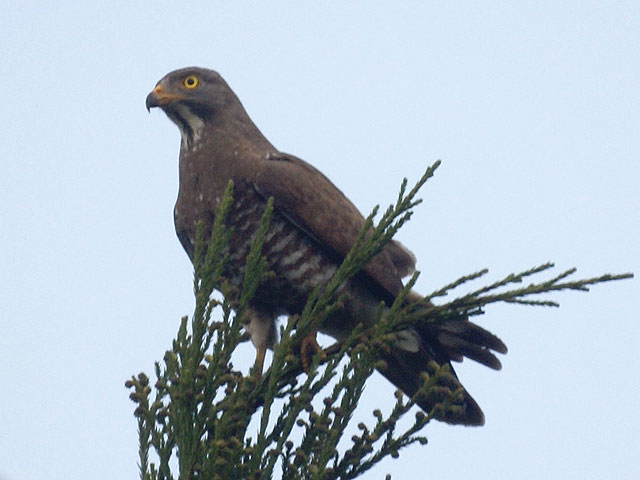
Wikipedia: Gray-faced buzzard Source: WIKIPEDIA
Butastur_indicus.jpg
🔍
Never observed (yet!)
Description
General: Passage migrant and winter visitorDetails

Wikipedia: Mountain hawk-eagle Source: WIKIPEDIA
Mountain_Hawk_Eagle_Mahananda_WLS_West_Bengal_India_07.12.2015.jpg
🔍
Never observed (yet!)
Description
Details
Osprey / Fischadler (Pandion haliaetus)

Osprey with eyes wide open in Holbox. 2023-04-21 06:54:26 Yucatan
First observed in Yucatan on 2023-04-21.
Description
Geography: This bird appears across the great seas in the following continents: Europe, North America, South America, Africa, Asia.General: Deutschland: Brut-, Zugvogel RL 3
Other Details
Physical details
Physical details: length=55-58 cm, wingspan=145-170 cm, weight=1120-2050 gHabitats: Agricultural
Vocalisation
Song: No details but a Xeno-Canto recording. Song attributes: Frequency:♫ 2023-10-12 15:55:00 New England (song)
Details
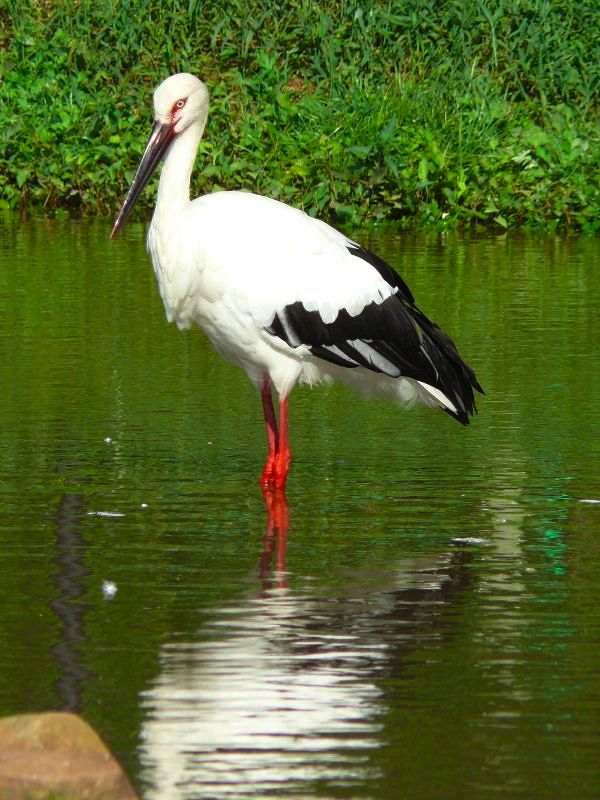
Wikipedia: Oriental stork Source: WIKIPEDIA
Kounotori_06f4471sv.jpg
🔍
Never observed (yet!)
Description
General: EndangeredDetails
Profile Wikipedia Xeno-Canto YouTube
Description
General: Endemic in JapanDetails
Profile Wikipedia Xeno-Canto YouTube
Description
Details
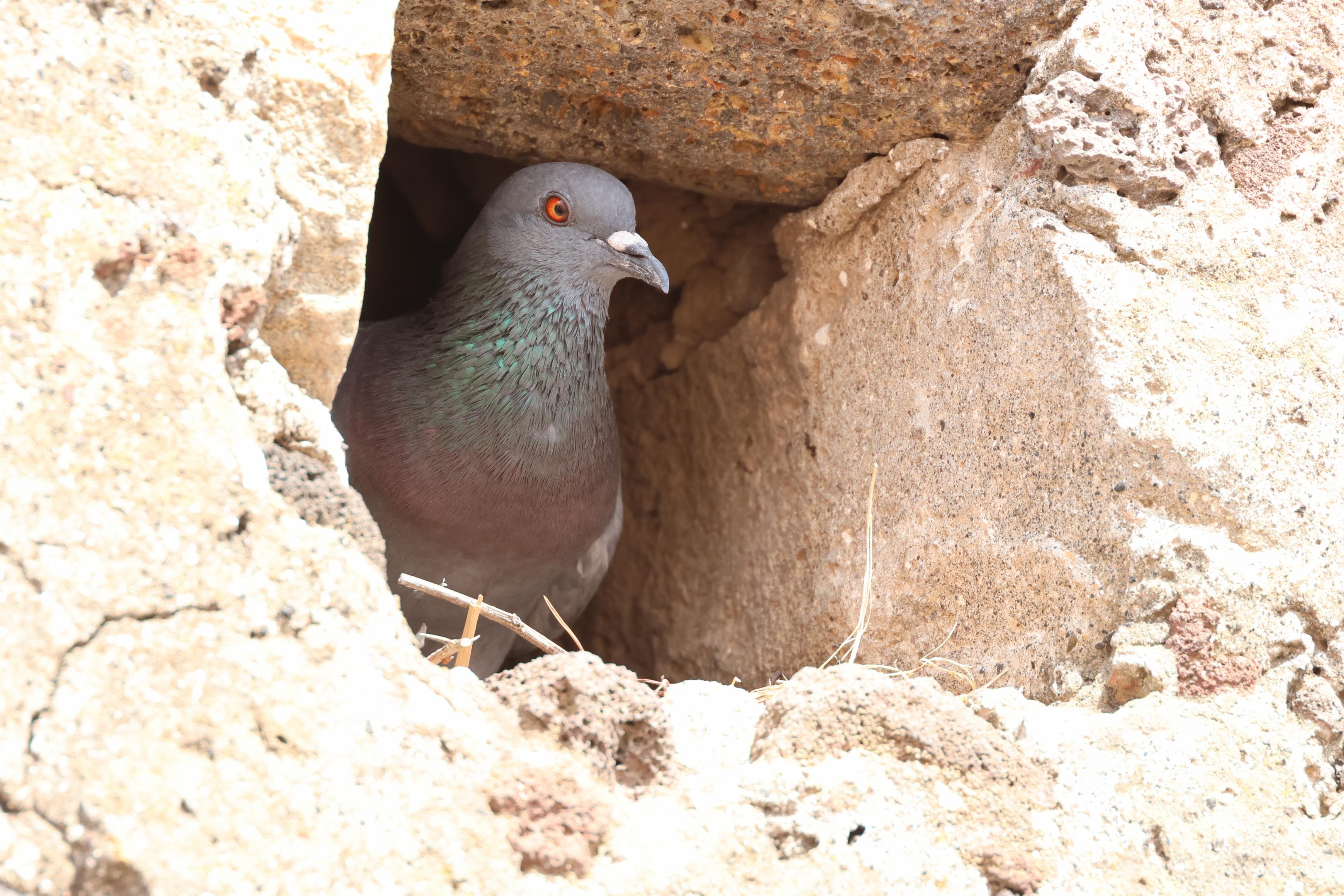
Rock dove with beautiful orange eyes. 2025-06-06 15:26:39 Stromboli
First observed in La Gomera on 2022-03-08.
Description
Geography: This bird appears across the great seas in the following continents: Europe, North America, South America, Africa, Asia.General: Deutschland: Brut-, Jahresvogel
Vocalization:
Not loud. [Link]
Seasonal behavior
Year-round bird Breeding: 01-01 - 12-31More details at Vogelwarte.ch
Other Details
Physical details
Physical details: length=31-34 cm, wingspan=63-70 cm, weight=230-370 gHabitats: Settlement
Vocalisation
Song: No details but a Xeno-Canto recording. Song:Song a two-syllable, but continuous cooing. First a rolling ascending "orrrrrr" immediately followed by a short descending "oohh". Wings produce a quite audible whistling sound. [Link]
Song attributes:
Frequency:
♫ Source: XENOCANTO XC661807 - Rock Dove call - Columba livia.mp3 (call)

No details but a Xeno-Canto recording.
Call attributes: song Frequency: ,
Details

Domestic pigeons flying formation until their owners call them back. 2023-06-28 15:45:30
First observed in 🇨🇭 on 2020-04-21.
Description
General: Endemic in JapanVocalisation
Song: No details but a Xeno-Canto recording. Song attributes: Frequency:♫ Source: XENOCANTO XC862888 - Greater Coucal - Centropus sinensis intermedius - song, pigeon-like.mp3 (song)

Details

Türkentaube in der bekannten Birke an der Luppmen. 2024-11-16 16:45:22 Luppmen
First observed in 🇨🇭 on 2020-05-21.
Description
Geography: This bird appears across the great seas in the following continents: Europe, North America (introduced), Africa, Asia (introduced).General:
The Eurasian collared dove (Streptopelia decaocto) is a dove species native to Europe and Asia; it was introduced to Japan, North America and islands in the Caribbean. Because of its vast global range and increasing population trend, it has been listed as Least Concern on the IUCN Red List since 2014.[1]
[more]
Deutschland: Brut-, Jahresvogel
Seasonal behavior
Year-round bird Breeding: 01-01 - 10-27More details at Vogelwarte.ch
Other Details
Physical details
Physical details: length=31-33 cm, wingspan=47-55 cm, weight=170-240 gHabitats: Settlement
Vocalisation
Song: No details but a Xeno-Canto recording. Song:Gu-guh-gu, klingt wie „ Gross-mue-ti“ Dazu auch „chräi“ oder „chwii“
[Link]
Song a characteristic, rhythmic cooing, consisting of three syllables with emphasis on the second. The third lower pitched than the rest. Can be rendered as "su-do-ku" (or "deca-oc-to", latin name derived from song). [Link]
Song attributes:
Frequency:
♫ 2023-03-14 08:21:46
Source: Zoom H6/H2n Madeira (song)Details
Description
Details
Profile Wikipedia Xeno-Canto YouTube
Description
Details
Profile Wikipedia Xeno-Canto YouTube
Description
Details

Wikipedia: White-bellied green-pigeon Source: WIKIPEDIA
1280px-Treron_sieboldii_129284676.jpg
🔍
Never observed (yet!)
Description
General: Very rareDetails

Wikipedia: Asian emerald dove Source: WIKIPEDIA
1200px-Chalcophaps_indica_-a_pair_in_captivity-8a.jpg
🔍
Never observed (yet!)
Description
General: Christmas IslandDetails

Endlich wieder ein Eisvogel gesehen. 2024-08-17 08:53:53 Greater Fehraltorf
First observed in 🇨🇭 on 2020-10-08.
Description
General: This is a favorite bird in Switzerland. On the one hand it's colorful and very active when seen in its hunting grounds at a waterway; on the other hand, it's seldom seen. Contrast the 400-500 breeding pairs with 400,000-550,000 of the everpresent great tits.General: An apprentice for the nature center on Lake Pfaeffikon told us a bit about the kingfishers that hunt on a waterway that feeds into the lake. She said they spend the breeding season elsewhere in sandy areas and return to the lake in fall. I've read elsewhere that they watch for fish from convenient waterside branches. A classic motif for a picture is a branch sticking out of the water, and one photographer said he has actually placed a branch there, knowing the kingfisher would not be able to resist.
General: Deutschland: Brut-, Jahres-, Zugvogel, Wintergast
Etymology: Nabu: Ob der Name des Eisvogels (Alcedo atthis) tatsächlich mit Eis zu tun hat oder das eisblaue Rückengefieder Pate stand, ist strittig. Manche Deutungen leiten den Namen vom althochdeutschen „eisan“ für „schillern“ oder „glänzen“ ab. Der „Schillervogel“ wäre eine gute Beschreibung für das flirrende Farbenspiel, das der Eisvogel im Sitzen und erst recht im Flug bietet. Wieder andere Autoren interpretieren den „Eisvogel“ als „Eisenvogel“ und vermuten einen Bezug auf das stahlblaue Rücken- oder das rostfarbene Bauchgefieder des Eisvogels. [Link]
Seasonal Behavior:
Status (in CH): regelmässiger, spärlicher Brutvogel, Durchzügler und Wintergast. [Link]
Seasonal behavior
Year-round bird Breeding: 04-01 - 08-09More details at Vogelwarte.ch
Other Details
Physical details
Physical details: length=16-17 cm, wingspan=24-26 cm, weight=34-46 gHabitats: Wetland
Vocalisation
Song: No details but a Xeno-Canto recording. Song attributes: Frequency:♫ Source: XENOCANTO XC839045 - Common Kingfisher - Alcedo atthis - song - Viana do Castelo, Portugal.mp3 (song)

Calls:
Wikipedia says 'The common kingfisher has no song.
The flight call is a short, sharp whistle chee repeated two or three times. Anxious birds emit a harsh, shrit-it-it and nestlings call for food with a churring noise.'
The NABU app only has calls,
which seems to confirm this. Therefore I'm classifying all recordings as calls,
even though some say Song at Xeno-Canto. [Link]
Most heard is the thin and penetrating contact call: A short "tzee", or disyllabic "tzee-tzu", with a ringing metallic quality. In excitement it is often alternated with ringing trills "tzeerrrrrrrrrr". [Link]
Common kingfisher call from Xeno-Canto, similar to one from NABU app. Fairly high pitched single chirps or occasional high-low pairs.
♫ Source: XENOCANTO XC511677 Common kingfisher call similar to one from NABU app.mp3 (call)

Call attributes: Call melody: one note, slow, Frequency: 5-7 KHz,
Details
Profile Wikipedia Xeno-Canto YouTube

Wikipedia: Ruddy kingfisher Source: WIKIPEDIA
1200px-Ruddy_Kingfisher_0A2A7077.jpg
🔍
Never observed (yet!)
Description
Details
Profile Wikipedia Xeno-Canto YouTube
Description
Details
Profile Wikipedia Xeno-Canto YouTube

Wikipedia: Dollarbird Source: WIKIPEDIA
Dollarbird_Samcem_Dec02.JPG
🔍
Never observed (yet!)
Description
Details
Profile Wikipedia Vogelwarte BirdLife ZH ornitho.ch bird-song.ch Audubon AllAboutBirds Xeno-Canto BirdID NABU YouTube

Wikipedia Kuckuck, Cuculus canorus. Source: WIKIPEDIA
Wikipedia Kuckuck, Cuculus canorus.jpg
First observed in 🇨🇭 on 2021-05-04.
Description
Geography: This bird appears across the great seas in the following continents: Europe, North America, Africa, Asia.General: Deutschland: Brut-, Zugvogel RL V
Etymology:
Auch in vielen anderen Sprachen, wie im Französischen (Coucou), Italienischen (cucú), Spanischen (cuco, manchmal cuclillo), Russischen (Kukuschka), Griechisch (koukoula), Englischen (Cuckoo), Polnischen (Kukułka), Ungarischen (kakukk) und Lateinischen (cuculus) wurde der Ruf lautmalerisch in seinen Namen integriert. [Link]
[2][3] The cuckoo family gets its common name and genus name by onomatopoeia for the call of the male common cuckoo. [Link]
Geography:
A common migratory bird across most of Europe and Asia, it regularly strays to the western Alaskan islands in late spring and early summer. [Link]
Seasonal behavior
Presence: 04-01 - 10-07 Breeding: 05-01 - 07-20 Migration in: 04-01 - 05-31 Migration out: 07-10 - 10-07More details at Vogelwarte.ch
Other Details
Physical details
Physical details: length=32-34 cm, wingspan=55-60 cm, weight=95-140 gHabitats: Forest
Vocalisation
Song: Two-noter Song:Männchen: Unverwechselbarer Ruf. Weibchen: im Frühling eine kichernde Rufreihe,
[Link]
Song: the well known disyllabic "cuck-coo" with emphasis on first note, and the second note a third lower than the first one. Also a harsh "tchaa tchaa", and a bubbly trill, reminiscent of Little Grebe, uttered by the female. [Link]
Song attributes:
Melody: simple rhythmic, slow, Frequency: 0-1 KHz
Details

Wikipedia: Horsfield's cuckoo Source: WIKIPEDIA
Oriental_Cuckoo_Maiala.JPG
🔍
Never observed (yet!)
Description
Details
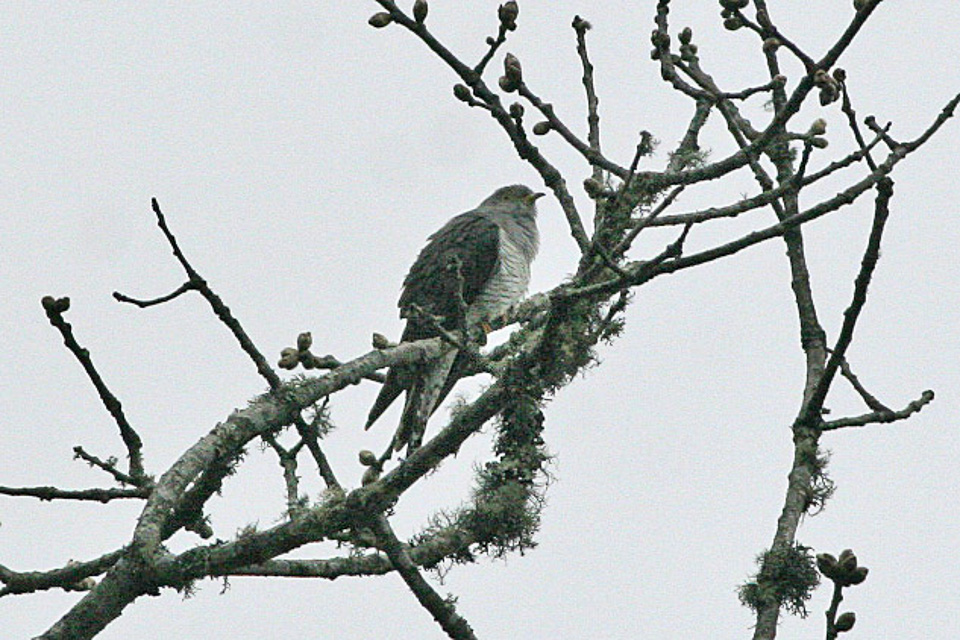
Wikipedia: Lesser cuckoo Source: WIKIPEDIA
Cuculus_poliocephalus.jpg
🔍
Never observed (yet!)
Description
General: Very rareDetails

Wikipedia: Northern hawk-cuckoo Source: WIKIPEDIA
960px-BirdsAsiaJohnGoVIGoul_0180.jpg
🔍
Never observed (yet!)
Description
General: AccidentalDetails
Profile Wikipedia Vogelwarte BirdLife ZH ornitho.ch Audubon AllAboutBirds Xeno-Canto BirdID NABU YouTube

Wikipedia Datei Falco columbarius Male. Source: WIKIPEDIA
Wikipedia_Datei_Falco_columbarius_Male.jpg
First observed in 🇨🇭 on 2024-05-16.
Description
Geography: This bird appears across the great seas in the following continents: Europe, North America, South America, Africa, Asia.General:
The merlin (Falco columbarius) is a small species of falcon from the Northern Hemisphere,[2] with numerous subspecies throughout North America and Eurasia. A bird of prey, the merlin breeds in the northern Holarctic; some migrate to subtropical and northern tropical regions in winter. Males typically have wingspans of 53–58 centimetres (21–23 in), with females being slightly larger. They are swift fliers and skilled hunters which specialize in preying on small birds in the size range of sparrows to doves and medium-sized shorebirds. In recent decades merlin populations in North America have been significantly increasing, with some merlins becoming so well adapted to city life that they forgo migration; in Europe, populations increased up to about 2000 but have been steady subsequently.[3] The merlin has for centuries been well regarded as a falconry bird.
[more]
Deutschland: Zugvogel, Wintergast
Vocalization:
Series of harsh "kwik-wik wik". Coarseness similar to Peregrine, but pace much quicker. [Link]
Seasonal behavior
Year-round bird Migration in: 02-20 - 03-01 Migration out: 02-22 - 03-01More details at Vogelwarte.ch
Other Details
Physical details
Physical details: length=25-30 cm, wingspan=50-62 cm, weight=125-300 gHabitats: Agricultural Details
Profile Wikipedia Vogelwarte BirdLife ZH ornitho.ch Xeno-Canto BirdID NABU YouTube
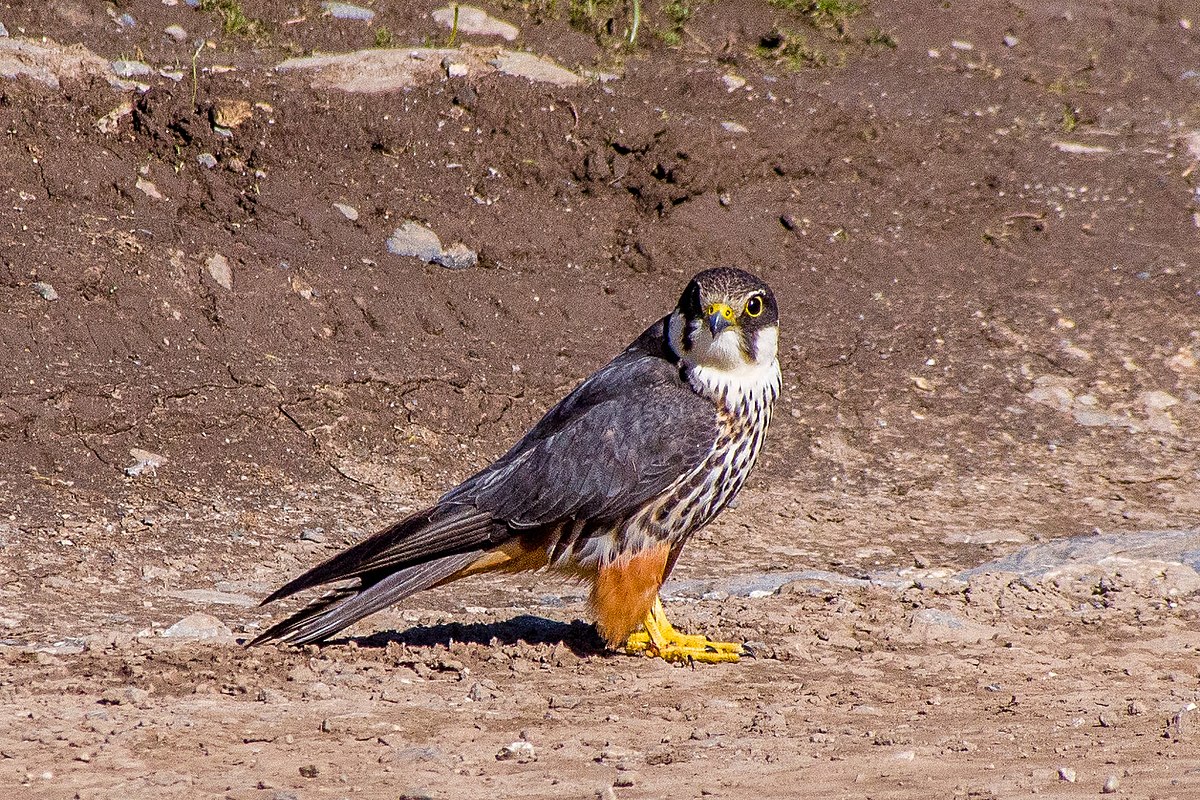
Wikipedia: Eurasian hobby Source: WIKIPEDIA
1200px-Eurasian_Hobby_%2814574008925%29_%28cropped%29.jpg
First observed in 🇨🇭 on 2024-08-14.
Description
General: Deutschland: Brut-, Zugvogel RL 3Etymology: Nabu: 2024 das erste Mal gehört nah beim Rosinli, aus der Ferne gesehen am Klingnauerstausee. [Link]
Vocalization:
Varied, but not very vocal. [Link]
Seasonal behavior
Presence: 04-01 - 10-27 Breeding: 05-01 - 08-29 Migration in: 04-01 - 06-20 Migration out: 08-09 - 10-27More details at Vogelwarte.ch
Other Details
Physical details
Physical details: length=30-36 cm, wingspan=82-92 cm, weight=131-340 gHabitats: Agricultural
Vocalisation
Song: No details but a Xeno-Canto recording. Song attributes: Frequency:♫ 2024-08-14 13:57:00 Greater Fehraltorf (song)
Calls:
Calls when courting and at breeding ground. Most common sound a high-pitched "tew-tew-tew". Similar to Wryneck, but less pleading. Also a sneezing "ktcho". [Link]
General: About 20 single notes.
XC669704 - Eurasian Hobby - Falco subbuteo - call, about twenty peeps.
♫ Source: XENOCANTO XC669704 - Eurasian Hobby - Falco subbuteo - call, about twenty peeps.mp3 (call)

Call attributes: Call melody: non-musical, slow, Frequency: low (1-3 KHz),
Details

Turmfalke zwischen Fehraltorf und Mesikon. 2021-10-16 15:25:46 Fehraltorf
First observed in 🇨🇭 on 2020-04-24.
Description
General: Oft seen in the fields around Fehraltorf, flapping away to stay in place.General: Deutschland: Brut-, Jahres-, Zugvogel, Wintergast
Seasonal behavior
Year-round bird Breeding: 04-20 - 08-29 Migration in: 02-10 - 05-10 Migration out: 08-18 - 11-15More details at Vogelwarte.ch
Other Details
Physical details
Physical details: length=32-35 cm, wingspan=71-80 cm, weight=156-252 gHabitats: Agricultural
Similar species
Song or calls similar to: Pallid swift.Vocalisation
Song: No details but a Xeno-Canto recording. Song attributes: Frequency:♫ 2026-04-28 15:13:38
Source: Zoom H2n Switzerland (song)Calls:
Turmfalke kann auch wie einen Specht tönen, scharf und relativ hoch [Link]
Most common call a fast series of short, high-pitched "ke-ke-ke". Much less raucous than Merlin or Peregrine. [Link]
Heard from in the air, about 6 notes per second (do I find them high??)
XC928672 - Common Kestrel - Falco tinnunculus - calls.
♫ Source: XENOCANTO XC928672 - Common Kestrel - Falco tinnunculus - calls.mp3 (call)

Call attributes: Call melody: one note, fast, Frequency: 2-7 KHz,
Details
Profile Wikipedia Audubon AllAboutBirds Xeno-Canto BirdID NABU YouTube
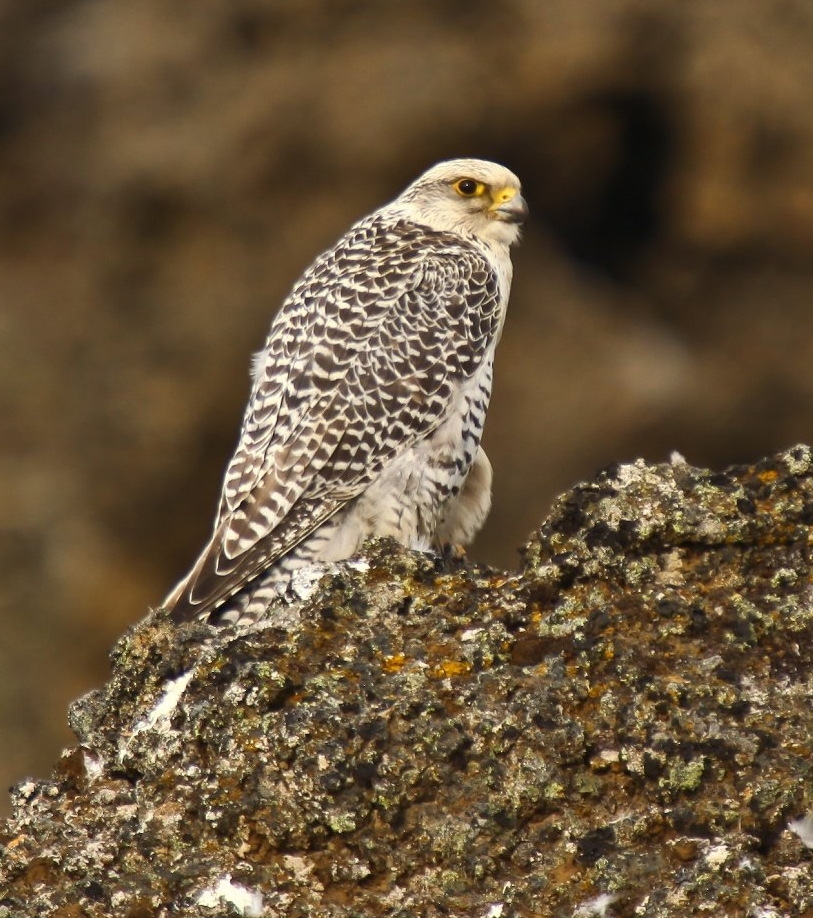
Wikipedia: Gyrfalcon Source: WIKIPEDIA
Falco_rusticolus_white_cropped.jpg
🔍
Never observed (yet!)
Description
Geography: This bird appears across the great seas in the following continents: Europe, North America, Asia.General:
Der Gerfalke (Falco rusticolus) ist die weltweit größte Falkenart. Er ist zirkumpolar in den arktischen Regionen Eurasiens und Nordamerikas sowie Grönlands vertreten und besiedelt dort die Tundra. In Mitteleuropa ist er nur sehr selten als Wintergast zu beobachten und hält sich dann meist in Küstennähe auf.
[more]
Vocalization:
A coarse, drawn out, Peregrine-like "kaaawt", with emphasis on ending, is repeated in series. Much slower paced than in small falcons, and deeper and with different attack than in Peregrine. [Link]
Other Details
Physical details
Physical details: length=50-60 cm, wingspan=130-160 cm, weight=805-2100 gDetails

Wikipedia: Peregrine falcon Source: WIKIPEDIA
Falco_peregrinus_good_-_Christopher_Watson.jpg
🔍
Never observed (yet!)
Description
Geography: This bird appears across the great seas in the following continents: Europe, North America, South America, Africa, Asia.General: Deutschland: Brut-, Jahres-, Zugvogel, Wintergast
Vocalization:
A harsh, drawn out "kiaaaa" with emphasised endings repeated in series. Much slower than Merlin, but higher pitched than Gyrfalcon. [Link]
Seasonal behavior
Year-round bird Breeding: 02-20 - 07-10 Migration in: 02-20 - 05-01 Migration out: 08-09 - 11-06More details at Vogelwarte.ch
Other Details
Physical details
Physical details: length=36-48 cm, wingspan=95-110 cm, weight=582-1300 gHabitats: Agricultural
Vocalisation
Song: No details but a Xeno-Canto recording. Song attributes: Frequency:♫ Source: XENOCANTO XC942609 - Peregrine Falcon call - Falco peregrinus.mp3 (call)

Calls:
Also shorter, coarse warning-calls. [Link]
No details but a Xeno-Canto recording.
Call attributes: song Frequency: ,
Details

Vogelwarte Weissrückenspecht. Source: VOGELWARTE
Vogelwarte Weissrueckenspecht.jpg
🔍
Never observed (yet!)
Description
General: Da es selten zu sehen ist, habe ich wenig beschrieben.General: Deutschland: Brut-, Jahresvogel, Wintergast RL 2
Habitat:
The White-backed Woodpecker is the largest and rarest of the black and white woodpeckers. Since a few years only, individual breeding pairs have been observed in the east of Switzerland. Because of its special habitat requirements – natural forests with a great number of dying and dead trees – the occurrence of the White-backed Woodpecker is limited to remote and inaccessible forests. It has secretive habits and is most likely observed during the courtship period. [Link]
Vocalization:
Drumming noticeably longer and more powerful than Great Spotted, with accelerated ending (similar to Three-toed Woodpecker but faster). [Link]
Other Details
Physical details
Physical details: length=24-26 cm, wingspan=38-40 cm, weight=99-112 gHabitats: Forest Details
Profile Wikipedia Xeno-Canto YouTube
Description
General: Endemic in JapanDetails
Description
General: Endemic in JapanDetails
Profile Wikipedia Vogelwarte BirdLife ZH ornitho.ch bird-song.ch Xeno-Canto BirdID NABU YouTube

Wendehals am Rand des Golfplatzes in Susten. 2022-05-21 10:27:54 Leuk
First observed in 🇨🇭 on 2021-05-10.
Description
General: Invisible as soon as it lands in a tree - perfect bark camouflage.General: Deutschland: Brut-, Zugvogel RL 2
Vocalization:
Normally silent when not breeding. Other sounds: a guttural "gru", and hissing sounds when threatened. [Link]
Seasonal behavior
Presence: 03-23 - 10-07 Breeding: 05-01 - 08-18 Migration in: 03-23 - 05-21 Migration out: 07-29 - 10-07More details at Vogelwarte.ch
Other Details
Physical details
Physical details: length=16-17 cm, wingspan=25-27 cm, weight=30-45 gHabitats: Agricultural
Vocalisation
Song: Woodpecker-like series of up to 25 slightly rising calls. Song:Reihe von 8-12 Pfeiftönen. Klingt fast etwas heiser., Jeder Ruf etwas absinkend. Die Tonhöhe kann innerhalb der Reihe etwas schwanken, etwas zunehmen und eindringlicher werden. Klangfarbe weich, obertönig.
[Link]
Song (both sexes): an insisting, Merlin- or Lesser Spotted Woodpecker-like series of plaintive "kee kee kee kee kee ". First slightly ascending, then descending. [Link]
Song attributes:
Melody: non-musical, slow, Frequency: 1-6 KHz
Details
Profile Wikipedia Xeno-Canto YouTube

Female red-breasted parakeet at Banteay Srei, Angkor area. 2024-03-04 09:36:12 Cambodia
First observed in Cambodia on 2024-03-04.
Description
Vocalisation
Song: No details but a Xeno-Canto recording. Song attributes: Frequency:♫ Source: XENOCANTO XC35744 - Red-breasted Parakeet - Psittacula alexandri - song - Cat Tien National Park, Cochinchina, Vietnam.mp3 (song)

Details
Profile Wikipedia Xeno-Canto YouTube

Wikipedia: Alexandrine parakeet Source: WIKIPEDIA
960px-Alexandrine_parakeet_%28Psittacula_eupatria_eupatria%29_male.jpg
🔍
Never observed (yet!)
Description
General: Deutschland: etabliertes Neozoon, Brut-, JahresvogelDetails
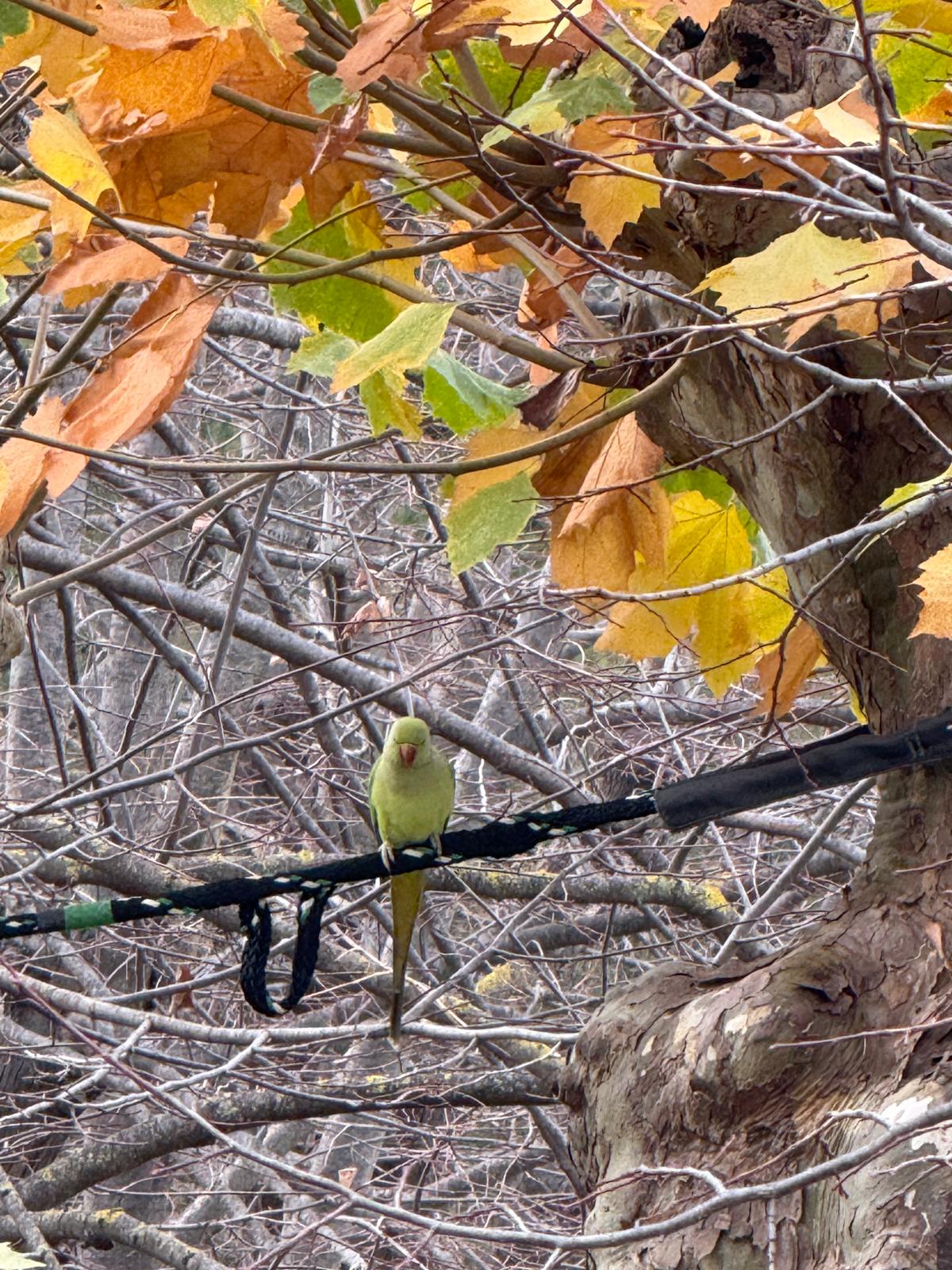
Halsbandsittich in Giardino di Boboli mit Annas iPhone aufgenommen. 2025-11-19 13:12:00 Florence
First observed in Florence on 2025-11-19.
Description
Geography: This bird appears across the great seas in the following continents: Europe, North America, Africa, Asia.General: Deutschland: etabliertes Neozoon, Brut-, Jahresvogel
Vocalisation
Song: No details but a Xeno-Canto recording. Song attributes: Frequency:♫ 2025-11-20 17:03:12 Switzerland (song)
Details
Profile Wikipedia Xeno-Canto YouTube

Wikipedia: Budgerigar Source: WIKIPEDIA
1200px-Budgerigar-male-strzelecki-qld.jpg
🔍
Never observed (yet!)
Description
Details
Profile Wikipedia Audubon AllAboutBirds Xeno-Canto BirdID NABU YouTube

Wikipedia: Yellow-billed loon Source: WIKIPEDIA
1200px-Yellow-billed_Loon_Chipp_South_8-12-13_Ryan_Askren.jpg
🔍
Never observed (yet!)
Description
Geography: This bird appears across the great seas in the following continents: Europe, North America, Asia.General:
The yellow-billed loon (Gavia adamsii), also known as the white-billed diver, is the largest member of the loon or diver family. Breeding adults have a black head, white underparts and chequered black-and-white mantle. Non-breeding plumage is drabber with the chin and foreneck white. The main distinguishing feature from great northern loon is the longer straw-yellow bill which, because the culmen is straight, appears slightly uptilted.
[more]
Other Details
Physical details
Physical details: length=76-91 cm, wingspan=0 cm, weight=4050-6400 gDetails

Prachttaucher paar, er im Schlichtkleid im Winter, Altnau. 2024-12-07 13:15:56
First observed in 🇨🇭 on 2024-12-07.
Description
Geography: This bird appears across the great seas in the following continents: Europe, North America, Asia.General: Deutschland: Zugvogel, Wintergast
Seasonal behavior
Year-round bird Migration in: 02-01 - 02-10 Migration out: 02-02 - 02-10More details at Vogelwarte.ch
Other Details
Physical details
Physical details: length=58-73 cm, wingspan=110-130 cm, weight=1316-3400 gHabitats: River and lake Details
Profile Wikipedia Audubon AllAboutBirds Xeno-Canto YouTube

Wikipedia: Pacific loon Source: WIKIPEDIA
PacificLoon24.jpg
🔍
Never observed (yet!)
Description
Geography: This bird appears across the great seas in the following continents: North America, Asia.General:
The Pacific loon or Pacific diver (Gavia pacifica), is a medium-sized member of the loon, or diver, family.
[more]
Details

Wikipedia: Red-throated loon Source: WIKIPEDIA
1200px-Gavia_Stellata_%C3%96lfus%C3%A1_20090606.jpg
🔍
Never observed (yet!)
Description
Geography: This bird appears across the great seas in the following continents: Europe, North America, Asia.General: Deutschland: Zugvogel, Wintergast
Vocalization:
In flight; nasal, dry, gooselike series of rhythmic cackling "ko-ko-ko". Most vocal when courting and breeding. A meowing drawn-out sound starting with a register break, then falling in pitch. [Link]
Seasonal behavior
Year-round bird Migration in: 02-01 - 02-10 Migration out: 02-02 - 02-10More details at Vogelwarte.ch
Other Details
Physical details
Physical details: length=53-69 cm, wingspan=106-116 cm, weight=1170-1900 gHabitats: River and lake Details
Profile Wikipedia Vogelwarte BirdLife ZH ornitho.ch bird-song.ch Xeno-Canto BirdID NABU YouTube

Haubentaucher auf Lago Maggiore, Locarno. 2024-09-02 15:48:02 Locarno
First observed in 🇨🇭 on 2020-04-27.
Description
General: Exotic looking waterbird common at PfäffikerseeGeneral: Deutschland: Brut-, Jahres-, Zugvogel, Wintergast
Vocalization:
Laughing sequences with nasal grunts, a rolling nasal "treaa" and bill-clattering. [Link]
Seasonal behavior
Year-round birdOther Details
Physical details
Physical details: length=46-51 cm, wingspan=85-90 cm, weight=568-813 gHabitats: River and lake
Vocalisation
Song: No details but a Xeno-Canto recording. Song attributes: Frequency:♫ 2021-04-21 10:31:08 Source: BirdNet 20210421_103108 birdnet 1470 - Great Crested Grebe - 2021-04-21 10:31:08 - Great Crested Grebe - Pf=C3=A4ffikon.mp3 Pfäffikersee (song)
No details but a Xeno-Canto recording. - but really OWN
Lützelsee Haubentaucher Bettelruf.
♫ 2024-09-07 18:26:00 Lützelsee (begging call)
Call attributes: begging call Frequency: ,
Details

Evtl Schwarzhalstaucher. 2021-03-07 11:13:08 Rapperswil
First observed in 🇨🇭 on 2021-03-07.
Description
Geography: This bird appears across the great seas in the following continents: Europe, North America, Africa, Asia.General:
The black-necked grebe or eared grebe (Podiceps nigricollis) is a member of the grebe family of water birds. It was described in 1831 by Christian Ludwig Brehm. There are currently three accepted subspecies, including the nominate subspecies. Its breeding plumage features a distinctive ochre-coloured plumage which extends behind its eye and over its ear coverts. The rest of the upper parts, including the head, neck, and breast, are coloured black to blackish brown. The flanks are tawny rufous to maroon-chestnut, and the abdomen is white. When in its non-breeding plumage, this bird has greyish-black upper parts, including the top of the head and a vertical stripe on the back of the neck. The flanks are also greyish-black. The rest of the body is a white or whitish colour. The juvenile has more brown in its darker areas. The subspecies californicus can be distinguished from the nominate by the former's usually longer bill. The other subspecies, P. n. gurneyi, can be differentiated by its greyer head and upper parts and by its smaller size. P. n. gurneyi can also be told apart by its lack of a non-breeding plumage. This species is present in parts of Africa, Eurasia, and the Americas.
[more]
Deutschland: Brut-, Zugvogel, seltener Wintergast
Seasonal behavior
Year-round bird Breeding: 05-01 - 07-29 Migration in: 03-01 - 06-09 Migration out: 06-29 - 11-26More details at Vogelwarte.ch
Other Details
Physical details
Physical details: length=28-34 cm, wingspan=56-60 cm, weight=213-450 gHabitats: River and lake Details
Profile Wikipedia Vogelwarte BirdLife ZH ornitho.ch Audubon AllAboutBirds Xeno-Canto BirdID NABU YouTube

Wikipedia: Red-necked grebe Source: WIKIPEDIA
1200px-Red-necked_grebe_%28Podiceps_grisegena_grisegena%29_breeding_adult_Gronjordssoen.jpg
🔍
Never observed (yet!)
Description
Geography: This bird appears across the great seas in the following continents: Europe, North America, Asia.General: Deutschland: Brut-, Zugvogel
Vocalization:
Most vocal at breeding ground. Wide repertoire of harsh, raucous and wailing sounds. [Link]
Seasonal behavior
Year-round bird Migration in: 02-20 - 05-10 Migration out: 07-29 - 12-07More details at Vogelwarte.ch
Other Details
Physical details
Physical details: length=40-50 cm, wingspan=61-88 cm, weight=692-925 gHabitats: River and lake Details

Horned grebe, Myvatn, Iceland. 2015-06-05 11:22:28
First observed in Iceland on 2015-06-05.
Description
Geography: This bird appears across the great seas in the following continents: Europe, North America, Asia.General: Deutschland: Brut-, Zugvogel, Wintergast RL 1
Vocalization:
Varied. Vibrating, wailing, dry and cackling sequences. A mewing, falling and far-reaching "kiaa" and various rattling sounds. [Link]
Other Details
Physical details
Physical details: length=31-38 cm, wingspan=46-55 cm, weight=364-449 gHabitats: River and lake Details
Profile Wikipedia Vogelwarte BirdLife ZH ornitho.ch bird-song.ch Xeno-Canto BirdID NABU YouTube

Zwergtaucher, Bannriet. 2024-06-21 08:22:26 Bannriet, SG
First observed in South Africa on 2009-10-22.
Description
General:The little grebe (Tachybaptus ruficollis), also known as dabchick, is a member of the grebe family of water birds. The genus name is from Ancient Greek takhus "fast" and bapto "to sink under". The specific ruficollis is from Latin rufus "red" and Modern Latin -collis, "-necked", itself derived from Latin collum "neck".[2]
[more]
Deutschland: Brut-, Jahres-, Zugvogel, Wintergast
Vocalization:
Relatively vocal compared to many other grebes. [Link]
Seasonal behavior
Year-round bird Breeding: 04-11 - 08-18 Migration in: 02-20 - 05-01 Migration out: 06-29 - 11-26More details at Vogelwarte.ch
Other Details
Physical details
Physical details: length=25-29 cm, wingspan=40-45 cm, weight=140-193 gHabitats: River and lake
Vocalisation
Song:Der Gesang ist ein lautes, hohes Trillern. Männchen und Weibchen tragen ihn häufig im Duett vor. [Link]
Song attributes:
Melody: simple rhythmic, fast, Frequency: 1-5 KHz
Calls:
Call; sometimes a single quite clear high pitched "dydlylyyt". More often combined into longer phrases with harsher quality, oscillating like laughter and travelling up and down in pitch in agitated motion. Reminiscent of female Cuckoo. [Link]
No details but a Xeno-Canto recording.
- but really
OWN
Zwergtaucher in bannriet, SG - ich habe ihn überrascht, er hat diesen panischen Ruf gemacht und ist dann getaucht und verschwunden - herrlich!
♫ 2024-06-20 19:23:00 Bannriet, SG (call)
Call attributes: song Frequency: ,
Details

Wikipedia: Tropical shearwater Source: WIKIPEDIA
P%C3%A9trel_de_Barau_.jpg
🔍
Never observed (yet!)
Description
Geography: This bird appears across the great seas in the following continents: North America, Africa, Asia.Details

Wikipedia: Bryan's shearwater Source: WIKIPEDIA
Puffinus_bryani_-_wyst%C4%99powanie.png
🔍
Never observed (yet!)
Description
General:Bryan's shearwater (Puffinus bryani) is a species of shearwater that may occur around the Hawaiian Islands. It is the smallest species of shearwater and is black and white with a bluish gray beak and blue tarsi. First collected in 1963 and thought to be a little shearwater (Puffinus assimilis) it was determined using DNA analysis to be distinct in 2011. It is rare and possibly threatened and there is little information on its breeding or non-breeding ranges. The species is named after Edwin Horace Bryan Jr. a former curator of the B. P. Bishop Museum at Honolulu.[2]
[more]
Details
Description
Details

Wikipedia: Northern fulmar Source: WIKIPEDIA
Fulmarus_Glacialis.jpg
🔍
Never observed (yet!)
Description
Geography: This bird appears across the great seas in the following continents: Europe, North America, Asia.General: Deutschland: Brut-, Jahres-, Zugvogel, Wintergast RL R
Vocalization:
Mostly heard on breeding ground. [Link]
Other Details
Physical details
Physical details: length=45-50 cm, wingspan=102-112 cm, weight=610-1000 gDetails
Profile Wikipedia Audubon AllAboutBirds Xeno-Canto YouTube
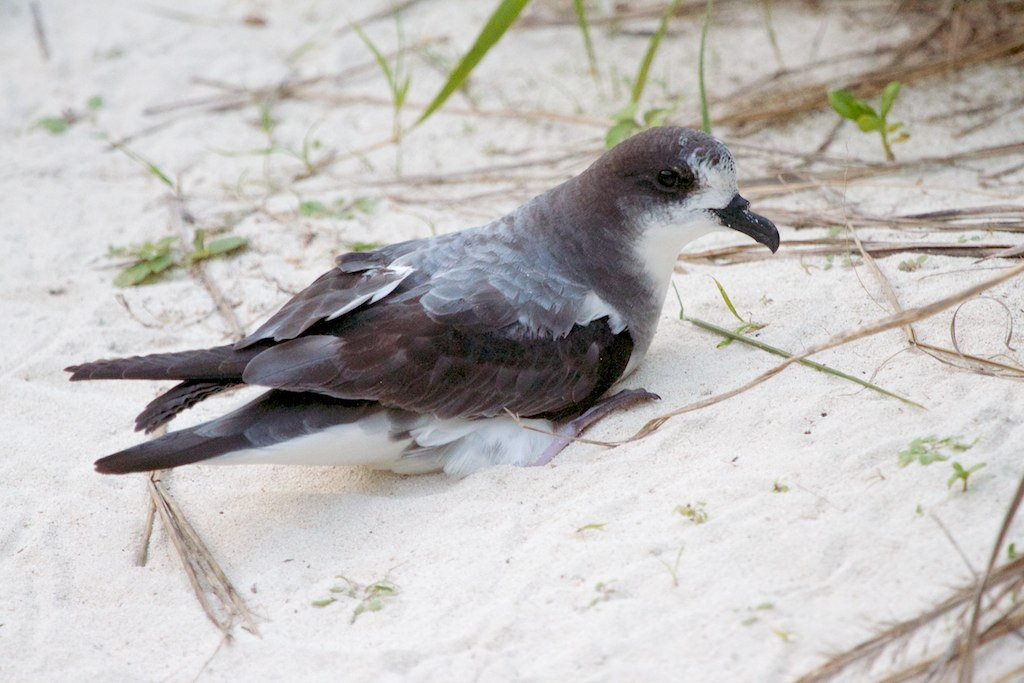
Wikipedia: Bonin petrel Source: WIKIPEDIA
Pterodroma_hypoleuca_-Midway_Atoll%2C_USA-8.jpg
🔍
Never observed (yet!)
Description
Geography: This bird appears across the great seas in the following continents: North America, Asia.General:
The Bonin petrel or nunulu[2] (Pterodroma hypoleuca) is a seabird in the family Procellariidae. It is a small gadfly petrel. The species is native to the North Pacific Ocean. Its secretive habits, remote breeding colonies and limited range have resulted in few studies and many aspects of the species' biology are poorly known.
[more]
Details
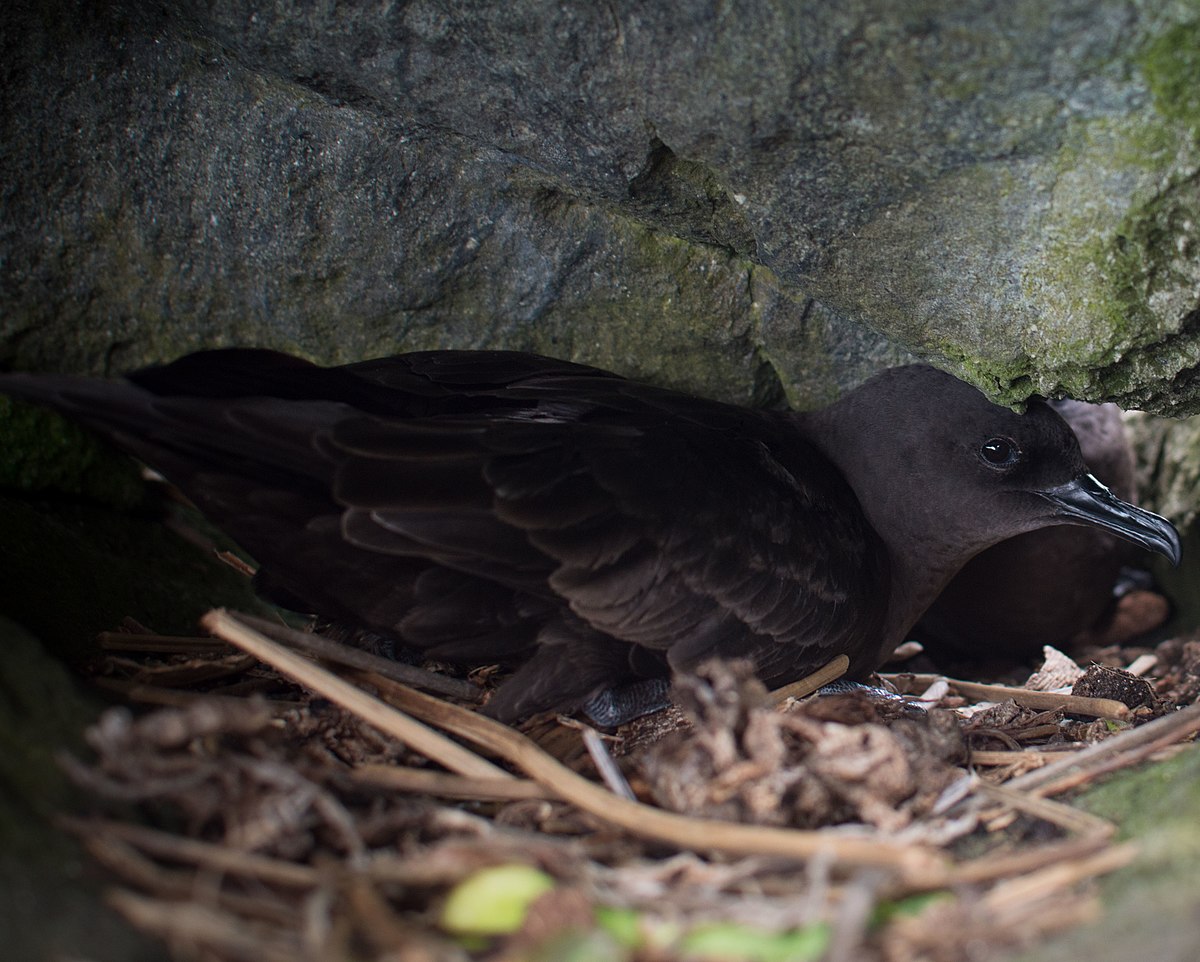
Wikipedia: Bulwer's petrel Source: WIKIPEDIA
1200px-P%C3%A9trel_de_Bulwer.jpg
🔍
Never observed (yet!)
Description
Geography: This bird appears across the great seas in the following continents: Europe, North America, Africa, Asia.Details

Wikipedia: Streaked shearwater Source: WIKIPEDIA
1200px-Streaked_shearwater_sitting.jpg
🔍
Never observed (yet!)
Description
Details

Wikipedia: Short-tailed shearwater Source: WIKIPEDIA
1200px-Puffinus_tenuirostris_-_SE_Tasmania.jpg
🔍
Never observed (yet!)
Description
Geography: This bird appears across the great seas in the following continents: North America, South America, Asia.Details

Wikipedia: Sooty shearwater Source: WIKIPEDIA
1200px-Puffinus_griseus_in_flight_-_SE_Tasmania.jpg
🔍
Never observed (yet!)
Description
Geography: This bird appears across the great seas in the following continents: Europe, South America, Africa, Asia.General: Deutschland: seltener Zugvogel
Vocalization:
Mostly heard at breeding ground. A peculiar, rhythmic, coarse moaning, with a disyllabic attack, followed by a deeper, cooing "in-breath". [Link]
Other Details
Physical details
Physical details: length=40-51 cm, wingspan=94-109 cm, weight=666-978 gDetails

Wikipedia: Wedge-tailed shearwater Source: WIKIPEDIA
Wedge_tailed_shearwater2.jpg
🔍
Never observed (yet!)
Description
Geography: This bird appears across the great seas in the following continents: North America, South America, Africa, Asia.Details
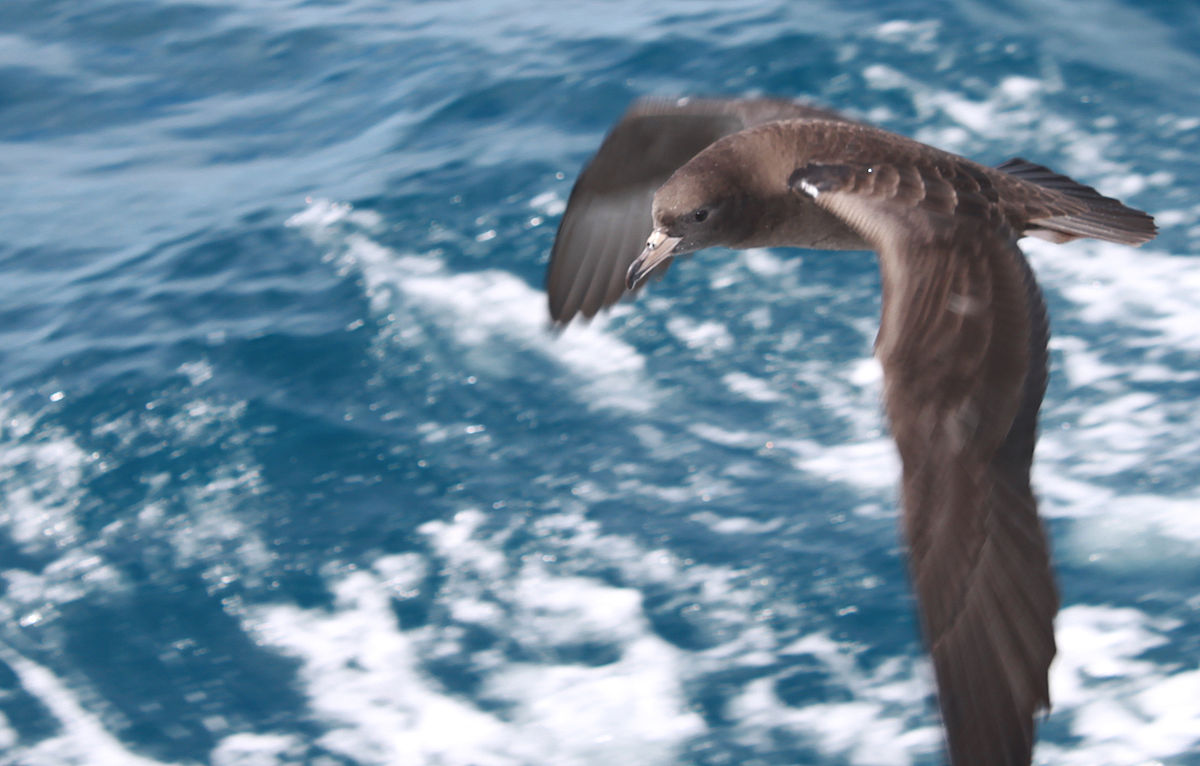
Wikipedia: Flesh-footed shearwater Source: WIKIPEDIA
1200px-Puffinus_carneipes_-New_Zealand_-flying-8b.jpg
🔍
Never observed (yet!)
Description
Geography: This bird appears across the great seas in the following continents: North America, Africa, Asia.Details
Description
Geography: This bird appears across the great seas in the following continents: North America, Asia.General:
Der Schwarzfußalbatros (Phoebastria nigripes) ist eine der drei im Nordpazifik lebende Arten der Albatrosse. Mit einer Flügelspanne zwischen 2 und 2,1 Meter ist er größer als ein Laysanalbatros, jedoch kleiner als der sehr seltene Kurzschwanzalbatros, die beide ebenfalls im Nordpazifik vorkommen. Von Kurzschwanzalbatrossen im Jugendkleid unterscheidet sich der Schwarzfußalbatros durch den dunklen Schnabel und die dunklen Beine.
[more]
Details
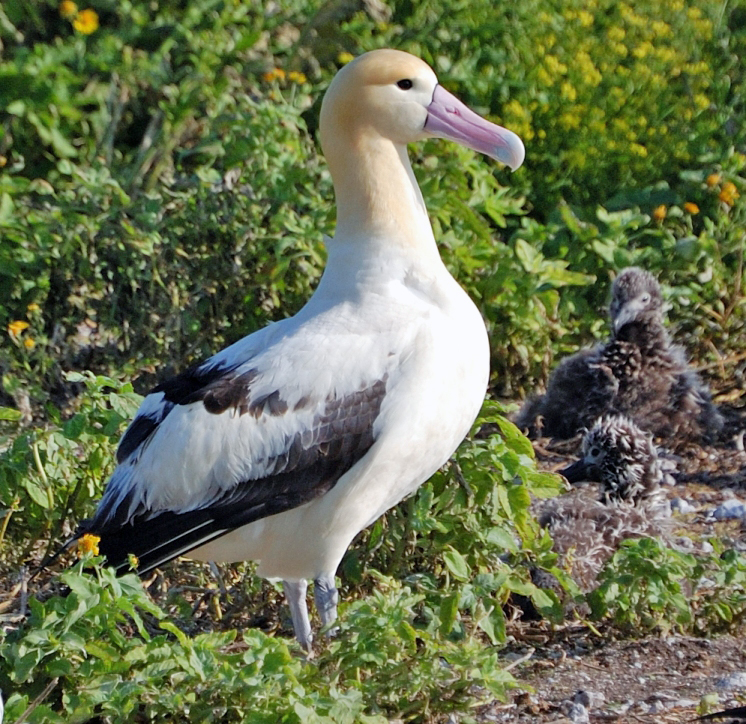
Wikipedia: Short-tailed albatross Source: WIKIPEDIA
Short_tailed_Albatross1.jpg
🔍
Never observed (yet!)
Description
Geography: This bird appears across the great seas in the following continents: North America, Asia.General:
The short-tailed albatross or Steller's albatross (Phoebastria albatrus) is a large rare seabird from the North Pacific. Although related to the other North Pacific albatrosses, it also exhibits behavioural and morphological links to the albatrosses of the Southern Ocean. It was described by the German naturalist Peter Simon Pallas from skins collected by Georg Wilhelm Steller (after whom its other common name is derived). Once common, it was brought to the edge of extinction by the trade in feathers, but with protection efforts underway since the 1950's, the species is in the process of recovering with an increasing population trend. Its breeding range, however, remains small.[4]
[more]
Details
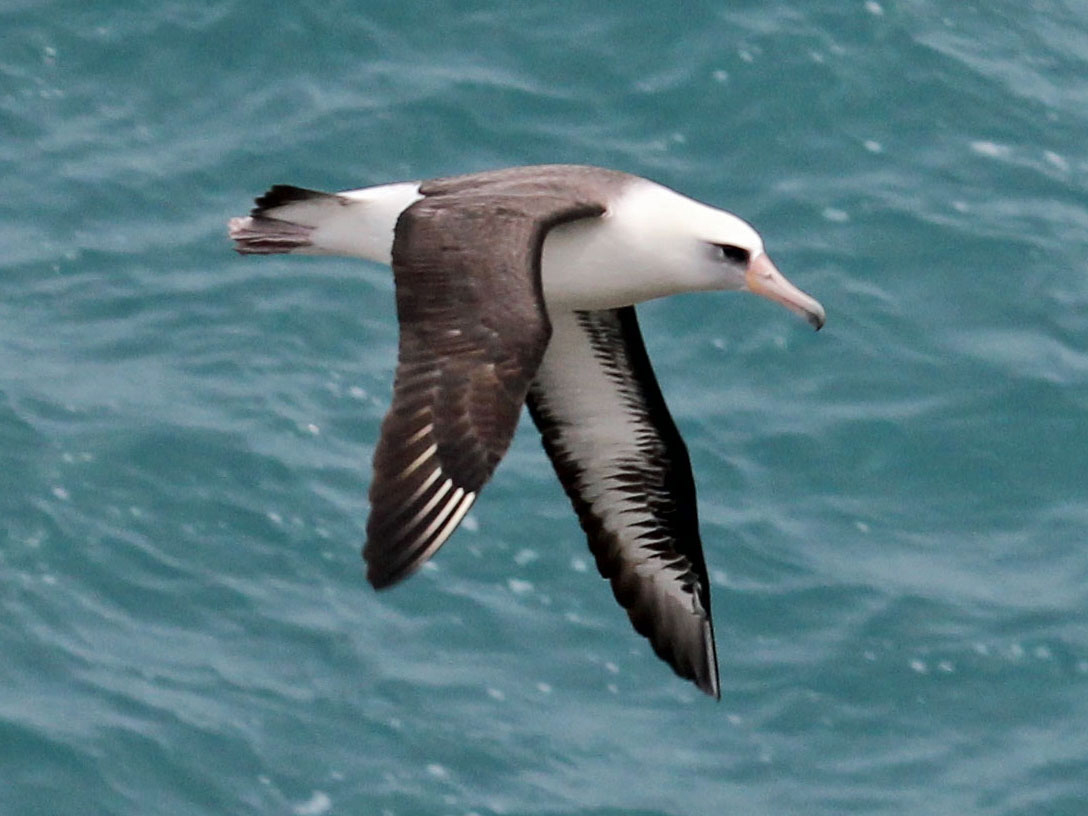
Wikipedia: Laysan albatross Source: WIKIPEDIA
Laysan_Albatross_RWD2.jpg
🔍
Never observed (yet!)
Description
Geography: This bird appears across the great seas in the following continents: North America, Asia.Details

Wikipedia: Band-rumped storm-petrel Source: WIKIPEDIA
1200px-Band_rumped_storm_petrel_Andre_Raine_KESRP_%2821789178016%29.jpg
🔍
Never observed (yet!)
Description
Geography: This bird appears across the great seas in the following continents: Europe, North America, South America, Africa, Asia.General:
The band-rumped storm petrel, Madeiran storm petrel, or Harcourt's storm petrel (Oceanodroma castro) is of the storm petrel family Hydrobatidae.
[more]
Details

Wikipedia: Swinhoe's storm-petrel Source: WIKIPEDIA
1200px-OceanodromaMonorhisSmit.jpg
🔍
Never observed (yet!)
Description
Details

Wikipedia: Tristram's storm-petrel Source: WIKIPEDIA
1200px-Tristram%27s_storm_petrel_on_Nihoa_Island_%2826642384862%29.jpg
🔍
Never observed (yet!)
Description
Geography: This bird appears across the great seas in the following continents: North America, Asia.General:
Tristram's storm petrel or ʻakihikeʻehiʻale[2] (Oceanodroma tristrami) is a species of seabird in the storm petrel family Hydrobatidae. The species' common and scientific name is derived from the English clergyman Henry Baker Tristram; the species can also be known as the sooty storm petrel. Tristram's storm petrel has a distribution across the north Pacific Ocean, predominantly in tropical seas.
[more]
Details
Profile Wikipedia Audubon AllAboutBirds Xeno-Canto YouTube

Wikipedia: Fork-tailed storm-petrel Source: WIKIPEDIA
1200px-Oceanodroma_furcata_1.jpg
🔍
Never observed (yet!)
Description
Geography: This bird appears across the great seas in the following continents: North America, Asia.General:
The fork-tailed storm petrel (Oceanodroma furcata or Hydrobates furcatus) is a small seabird of the storm petrel family Hydrobatidae. It is the second-most abundant and widespread storm petrel (after Leach's storm petrel) and is the only bird in its family that is bluish-grey in colour.[2]
[more]
Details
Profile Wikipedia Audubon AllAboutBirds Xeno-Canto BirdID NABU YouTube

Wikipedia: Leach's storm-petrel Source: WIKIPEDIA
1200px-Lesp1.jpg
🔍
Never observed (yet!)
Description
Geography: This bird appears across the great seas in the following continents: Europe, North America, South America, Asia.General:
Leach's storm petrel or Leach's petrel (Oceanodroma leucorhoa) is a small seabird of the tubenose order. It is named after the British zoologist William Elford Leach. The scientific name is derived from Ancient Greek. Oceanodroma is from okeanos, "ocean" and dromos, "runner", and leucorhoa is from leukos, "white" and orrhos, "rump".[2]
[more]
Details
Profile Wikipedia Xeno-Canto YouTube

Wikipedia: Matsudaira's storm-petrel Source: WIKIPEDIA
012016-IMG_5713_Matsudaira%27s_Storm-Petrel_%28Oceanodroma_matsudairae%29_%288005427860%29.jpg
🔍
Never observed (yet!)
Description
Matsudaira's storm petrel (Oceanodroma matsudairae) is a species of seabird in the family Hydrobatidae.
[more]
Details
Description
Details
Profile Wikipedia Xeno-Canto BirdID NABU YouTube

Wikipedia: Ural owl Source: WIKIPEDIA
1280px-Strix_uralensis%2C_Kotka%2C_Finland_1.jpg
🔍
Never observed (yet!)
Description
Deutschland: sehr seltener Brut- und Jahresvogel[7] RL R Bruten gehen auf ausgesetzte Tiere zurückVocalization:
A variety of barking social sounds. [Link]
Other Details
Physical details
Physical details: length=60-62 cm, wingspan=124-134 cm, weight=450-1020 gDetails

Wikipedia: Boreal owl Source: WIKIPEDIA
Aegolius-funereus-001.jpg
🔍
Never observed (yet!)
Description
Geography: This bird appears across the great seas in the following continents: Europe, North America, Asia.General: Deutschland: Brut-, Jahresvogel
Seasonal behavior
Year-round bird Breeding: 03-12 - 07-10More details at Vogelwarte.ch
Other Details
Physical details
Physical details: length=24-26 cm, wingspan=54-62 cm, weight=100-190 gHabitats: Forest Details

Wikipedia: Short-eared owl Source: WIKIPEDIA
1200px-Short_Eared_Owl_on_the_Ground.jpg
🔍
Never observed (yet!)
Description
Geography: This bird appears across the great seas in the following continents: Europe, North America, South America, Africa, Asia.General: Deutschland: Brut-, Zugvogel, Wintergast RL 1
Other Details
Physical details
Physical details: length=37-39 cm, wingspan=95-110 cm, weight=260-420 gHabitats: Wetland Details

Wikipedia: Long-eared owl Source: WIKIPEDIA
Long-eared_Owl_-_Kisjuszallas_-_Hungary_S4E0920_%2815671750198%29.jpg
🔍
Never observed (yet!)
Description
Geography: This bird appears across the great seas in the following continents: Europe, North America, Africa, Asia.General: Deutschland: Brut-, Jahres-, Zugvogel, Wintergast
Vocalization:
Other sounds include; a nasal "eeeeeaaa" reminiscent of Collared Dove, nasal mewing and bill clicking. [Link]
Seasonal behavior
Year-round bird Breeding: 03-12 - 07-20More details at Vogelwarte.ch
Other Details
Physical details
Physical details: length=35-37 cm, wingspan=90-100 cm, weight=220-370 gHabitats: Agricultural Details
Profile Wikipedia Xeno-Canto YouTube
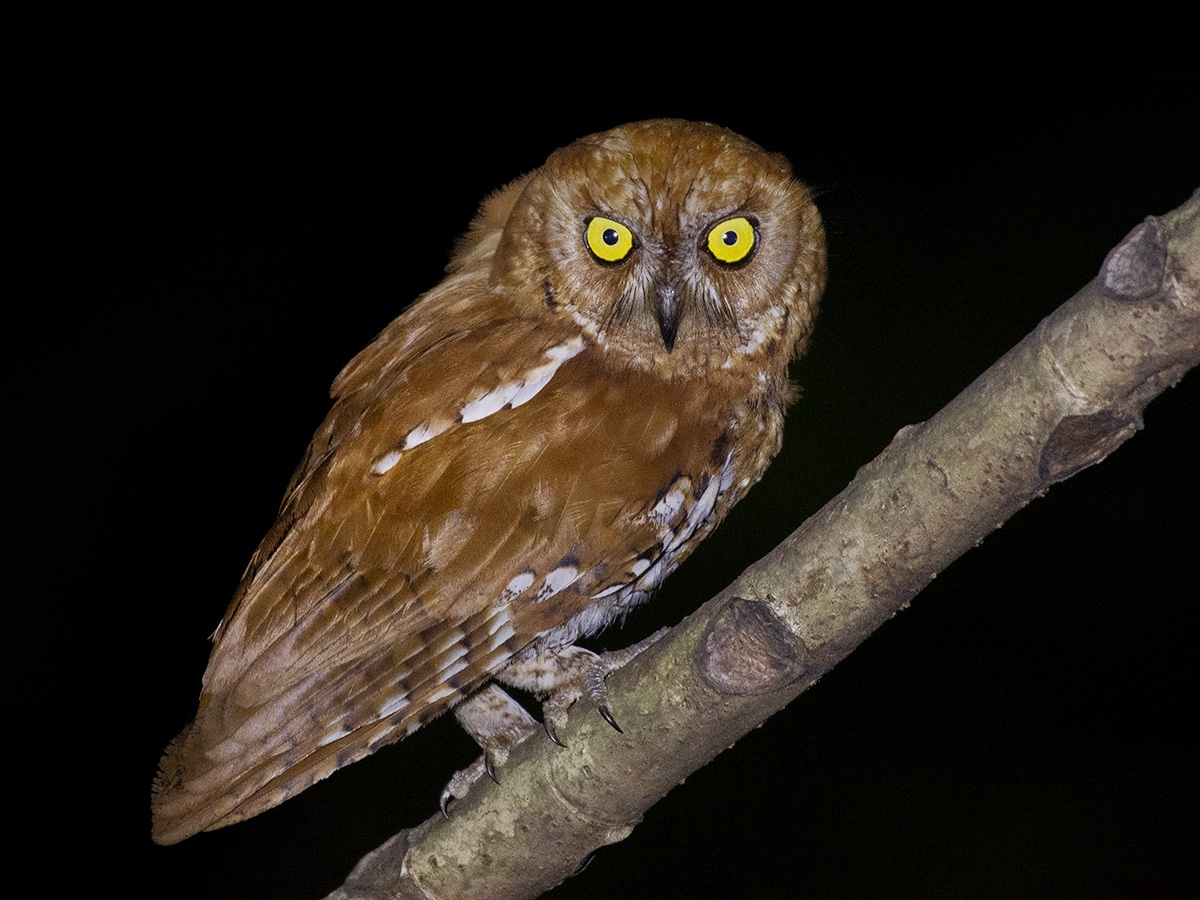
Wikipedia: Oriental scops-owl Source: WIKIPEDIA
Oriental_Scops_Owl.jpg
🔍
Never observed (yet!)
Description
Details
Profile Wikipedia Xeno-Canto YouTube
Description
Details
Description
Details

Wikipedia: Northern boobook Source: WIKIPEDIA
Ninox_japonica%2C_Japan.jpg
🔍
Never observed (yet!)
Description
General: AccidentalDetails

Wiedehopf in Calo dOr, Mallorca, fliegt öfter um die Bucht herum. 2022-04-07 12:33:32
First observed in Mallorca on 2022-04-07.
Description
General: Deutschland: Brut-, Zugvogel RL 2Etymology:
Am wahrscheinlichsten ist ein althochdeutsches, lautmalerisches wūthūp als Ursprung anzunehmen. [Link]
Seasonal behavior
Presence: 03-12 - 09-28 Breeding: 04-20 - 07-29 Migration in: 03-12 - 05-10 Migration out: 07-20 - 09-28More details at Vogelwarte.ch
Other Details
Physical details
Physical details: length=26-28 cm, wingspan=42-46 cm, weight=55-87 gHabitats: Agricultural Details
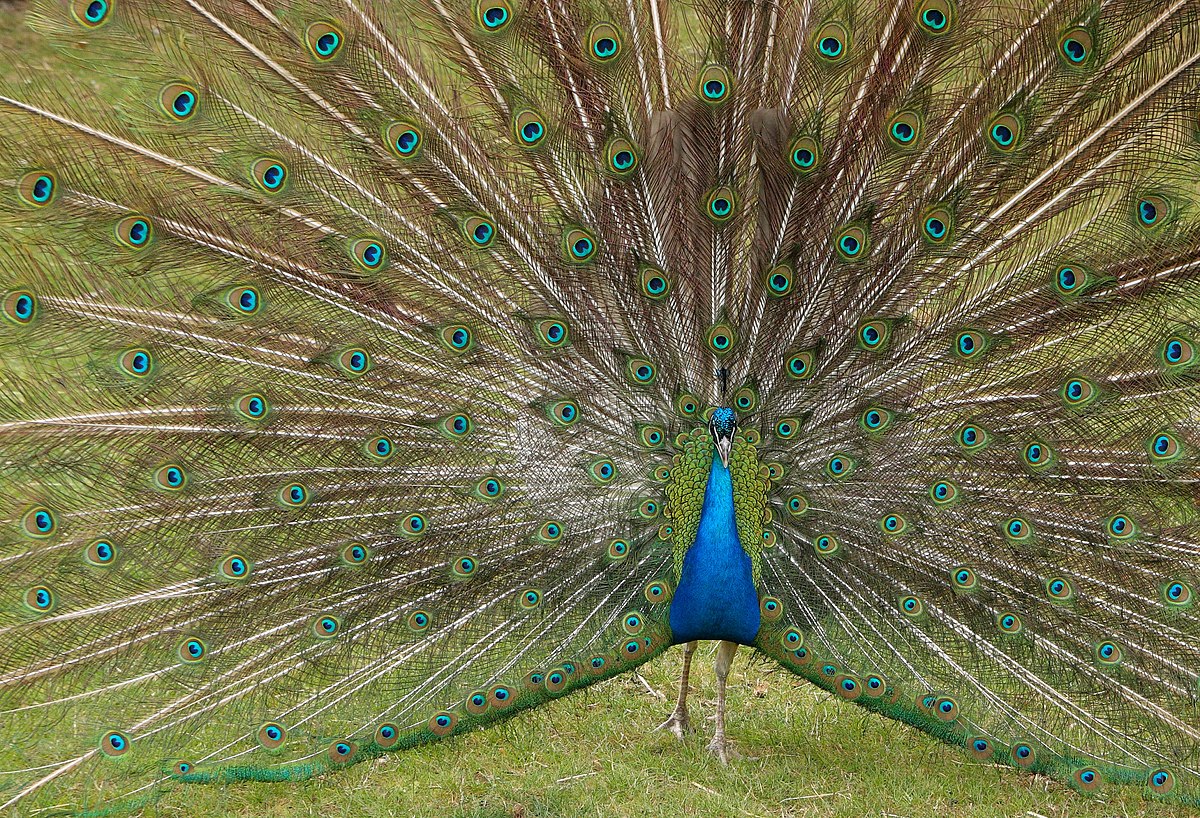
Wikipedia: Indian peafowl Source: WIKIPEDIA
1200px-Peacock%2C_East_Park%2C_Hull_-_panoramio.jpg
🔍
Never observed (yet!)
Description
Geography: This bird appears across the great seas in the following continents: North America, Africa, Asia.General: introduced, King, Rottnest & Furneaux Islands
Details
Description
General: Endemic in JapanDetails
Profile Wikipedia Xeno-Canto YouTube
Description
General: Endemic in JapanDetails
Profile Wikipedia Xeno-Canto YouTube
Description
Details
Description
Details
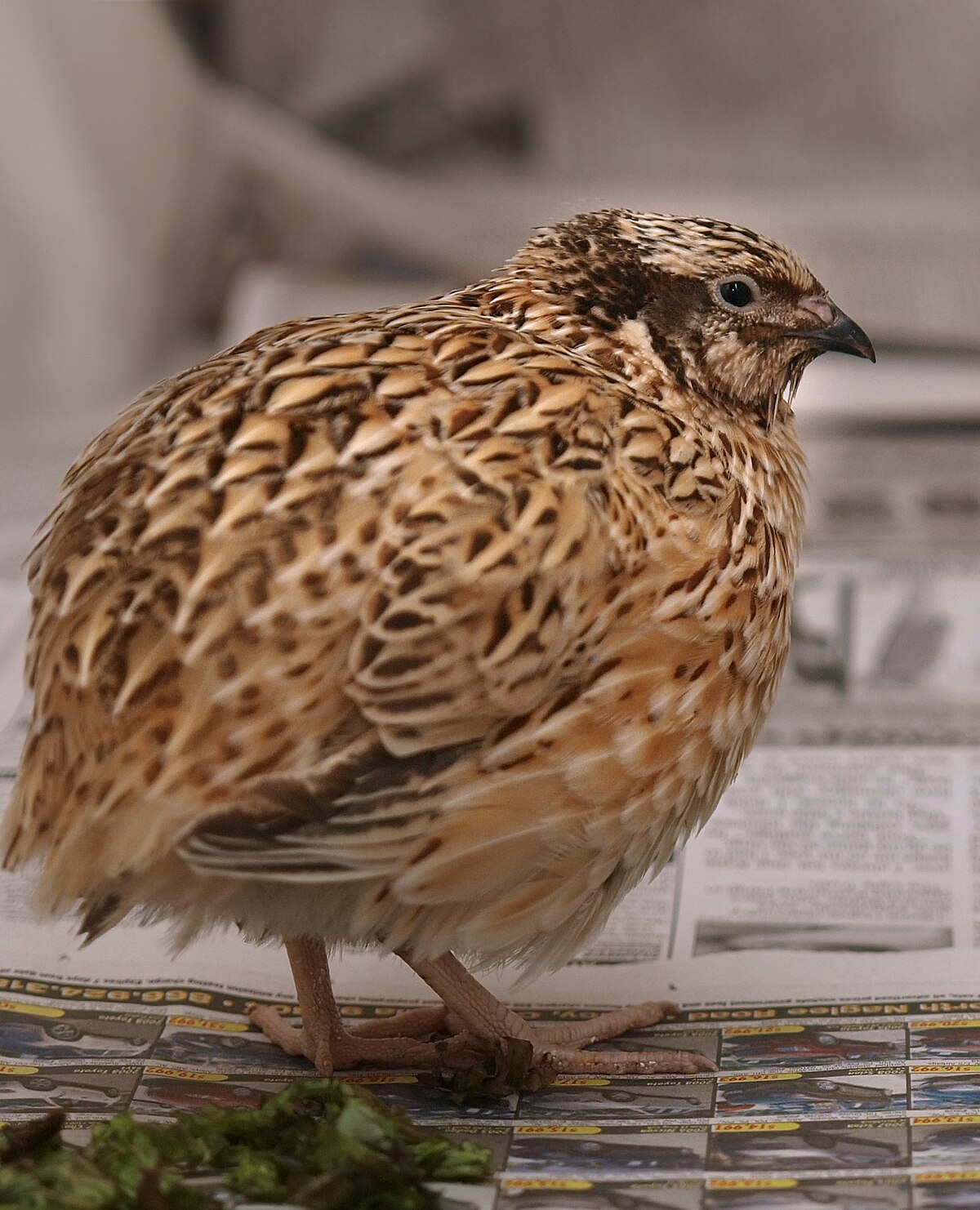
Wikipedia: Japanese quail Source: WIKIPEDIA
1200px-Japanese_Quail.jpg
🔍
Never observed (yet!)
Description
Geography: This bird appears across the great seas in the following continents: North America, Asia.General: Very rare winter visitor
Details
Profile Wikipedia Vogelwarte BirdLife ZH ornitho.ch bird-song.ch Audubon AllAboutBirds Xeno-Canto BirdID NABU YouTube
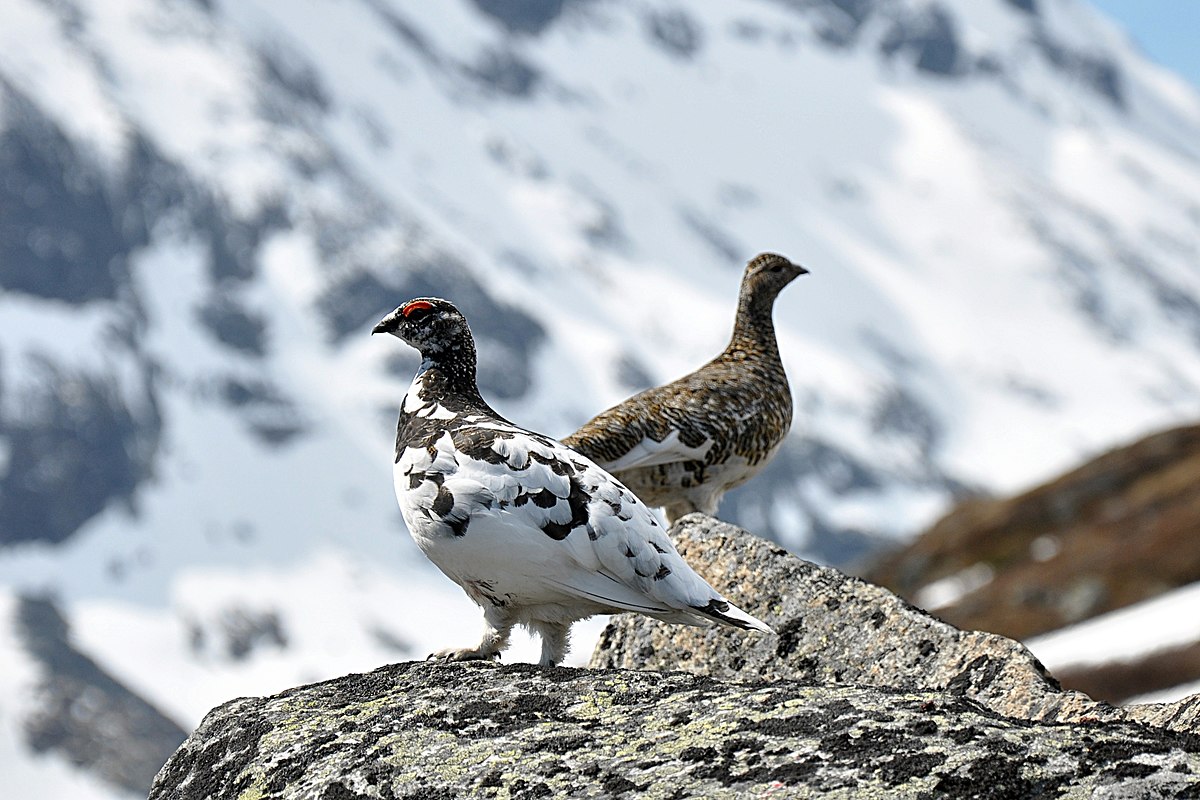
Wikipedia: Rock ptarmigan Source: WIKIPEDIA
1200px-Rock_Ptarmigan_%28Lagopus_Muta%29.jpg
🔍
Never observed (yet!)
Description
Geography: This bird appears across the great seas in the following continents: Europe, North America, Asia.General: Deutschland: Brut-, Jahresvogel RL R
Vocalization:
Female has similar sounds, but is higher pitched and not so coarse as male. [Link]
Seasonal behavior
Year-round bird Breeding: 05-01 - 08-09More details at Vogelwarte.ch
Other Details
Physical details
Physical details: length=34-36 cm, wingspan=54-60 cm, weight=350-600 gHabitats: Mountain Details

Wikipedia: Hazel grouse Source: WIKIPEDIA
1200px-Hazel_Grouse_imported_from_iNaturalist_photo_116195913_on_11_June_2024.jpg
🔍
Never observed (yet!)
Description
General: Deutschland: Brut-, Jahresvogel RL 2Seasonal behavior
Year-round bird Breeding: 04-11 - 07-20More details at Vogelwarte.ch
Other Details
Physical details
Physical details: length=35-37 cm, wingspan=48-54 cm, weight=310-490 gHabitats: Mountain Details

Germain's swiftlet is on Mina's list, but MerlinBirdID says house swift or Himalayan swiftlet, Phnom Krom. 2024-03-03 06:13:04 Phnom Krom
First observed in Phnom Krom on 2024-03-03.
Description
Details

The white band on the back could shows it's a pacific swift, seen nesting in Vientiane. 2024-02-18 09:08:58 Laos
First observed in Laos on 2024-02-18.
Description
Vocalisation
No details but a Xeno-Canto recording.XC485668 - Pacific Swift - Apus pacificus - flight call, Kabansky District, Buryatia, Russian Federation.
♫ Source: XENOCANTO XC485668 - Pacific Swift - Apus pacificus - flight call, Kabansky District, Buryatia, Russian Federation.mp3 (flight call)
 XC485667 - Pacific Swift - Apus pacificus - flight call, Buryatia, Russian Federation.
♫ Source: XENOCANTO XC485667 - Pacific Swift - Apus pacificus - flight call, Buryatia, Russian Federation.mp3 (flight call)

Call attributes: flight call Frequency: ,
Details
Profile Wikipedia Xeno-Canto YouTube

Wikipedia: White-throated needletail Source: WIKIPEDIA
White-throated_needletail_Hunting_over_Wolotschajewka_Perwaja_%28cropped%29.jpg
🔍
Never observed (yet!)
Description
Details

Wikipedia: Grey nightjar Source: WIKIPEDIA
Grey_Nightjar.jpg
🔍
Never observed (yet!)
Description
General: Winter visitor, breeds in mountainsDetails
Classification not found:
General: 1 species not correctly classifiedBlack kite / Schwarzmilan (Milvus migrans)

Schwarzmilan. 2022-05-22 10:42:20 Leuk
First observed in 🇨🇭 on 2021-04-03.
Description
General: This is on my list of birds to find, as it is supposed to be exist in this area,but I've never identified one. Their call (see Vogelwarte link) is a rapid sequence of whistles, and definitely distinct from that of the red kites. Visually they are harder to tell apart, but if you look closely, it should be clear: the black kite has less of a V in its tail and no big white patch at the wingtips. birdguides.com has a guide to distinguishing black and red kites, and says black are much rarer, but that is not true in Switzerland - Vogelwarte.ch says Switzerland has 2800–3500 red kites and 2000-3000 black kites.General: Tenatively identified one flying high over Lake Lugano at San Salvatore in Ticino.
General: Often near water.
General: Deutschland: Brut-, Zugvogel
Vocalization:
A piercing, first ascending then descending long "piuuu". Starting as a clear tone then gradually taking on a vibrating character that differs from Red Kite. Also a sharp "kieee -ki- ki-ki". More vocal than Red Kite. [Link]
Seasonal behavior
Presence: 02-20 - 10-07 Breeding: 04-01 - 07-20 Migration in: 02-20 - 05-21 Migration out: 07-20 - 10-07More details at Vogelwarte.ch
Other Details
Physical details
Physical details: length=55-60 cm, wingspan=160-180 cm, weight=630-941 gHabitats: Agricultural
Vocalisation
Song: No details but a Xeno-Canto recording. Song attributes: Frequency:♫ 2026-06-18 09:22:00 (song)
Drei fallende Noten
XC884100 - Black Kite - Milvus migrans - flight call.
♫ Source: XENOCANTO XC884100 - Black Kite - Milvus migrans - flight call.mp3 (flight call)

Call attributes: flight call Call melody: simple rhythmic, slow, Frequency: medium (1-5 KHz), Special sounds: swoop.
Details