La Sauge 2024 Prep Cheatsheet
Images and brief info about song.
A total of 52 species is included.
One note Sings 5-19 seconds Sings 30 seconds or longer Sings 30 seconds or longer: weird Sings 30 seconds or longer: rasp Improvised melodic Improvised melodic: flourish Improvised melodic: fluting Improvised melodic: swoop Improvised melodic: whoop Improvised melodic: trill Stereotype melodic Stereotype melodic: churr Stereotype melodic: rattle Stereotype melodic: trill Simple rhythmic Simple rhythmic: trill Non-musical Non-musical: rattle Non-musical: rasp No information about song motif Non-singer
| Name/Image | Song mnemonic/description | Description |
| One note | ||
European nuthatch / Kleiber (Sitta europaea)

Kleiber bei St Moritz - nur die können am Baum abwärts laufen. 2023-02-05 16:02:54 Engadin
Profile
|
6x steigt, wie 6-Buchstaben 'Kleber'
Song:  Song a simple series of loud notes [Link]
♫ Source: XENOCANTO
XC777051 - Eurasian Nuthatch - Sitta europaea, recorded in France and designated as song - a series of 5-6 whoops, pause and repeat, hard for me to distinguish from a ca-ll.mp3
(song) Song a simple series of loud notes [Link]
♫ Source: XENOCANTO
XC777051 - Eurasian Nuthatch - Sitta europaea, recorded in France and designated as song - a series of 5-6 whoops, pause and repeat, hard for me to distinguish from a ca-ll.mp3
(song)
|
Song: Other: The song is very variable, with rising and falling notes, sometimes with repetition of excitement calls. [Link]
Song:  The song is a slow whistled pee-pee-pee with many variants, including a faster version, and may be intermingled with the call. [Link]
Song: Other: Song a simple series of loud notes. [Link]
Song: Song a simple series of loud notes. [Link] The song is a slow whistled pee-pee-pee with many variants, including a faster version, and may be intermingled with the call. [Link]
Song: Other: Song a simple series of loud notes. [Link]
Song: Song a simple series of loud notes. [Link]
|
| Sings 5-19 seconds | ||
European serin / Girlitz (Serinus serinus)

Girlitz in Levanto. 2024-05-30 06:15:49 Levanto
Profile
|
Weird hectic song, and you'll probably hear them but not see them, which is a shame, because they're a colorful yellow bird. The song seems to defy description - described variously as the jingling of a bunch of keys, like crushing glass or the pouring of broken glass (the German Wikipedia refers to a nickname 'Glasscutter'), the sound of a cork twising in a bottle (Thomas Seilnacht on digitalefolien.ch), and one source I can no longer find talked about a ruined cassette tape. A Portuguese web site aptly calls it 'a high-pitched and fast rambled sum of indistinctive elements', and U. Cornell's ebird.org calls it frantically fast, oiseaux-birds.com 'a prolonged, wheezy, chirping', beautyofbirds.com 'a buzzing trill'. Der Gesang des Girlitz ... ist nicht so melodisch wie der des verwandten Kanarienvogels [auch Kanariengirlitz genannt]. Er wurd schon mit 'einem schnell zürückgespulten Kassentenrekorder' verglichen oder als 'hastig quitschend' bezeichnet. [Link]Das Gesangsrepertoire umfasst über 50 komplexe Silben, die in einem sehr schnellen Tempo und einer sehr stereotypen Reihenfolge eigene Lieder bilden. Starke Variationen finden sich im Übergang von einer Tour (zusammenhängenden Abfolge von Silben, also (Teil-)Strophe) in eine andere (Modulation). Das Gesangsrepertoire ist unter den Stieglitzartigen (Carduelinae) einzigartig.[1] Zudem umfasst es eine variable Menge an Silben, die auch im Gesang anderer Vögel verwendet werden. Es konnte bewiesen werden, dass die Komposition des Repertoires geographisch variiert. [Wikipedia setzt sich ernsthaft mit dem Gesang auseinander]
♫ Source: XENOCANTO
XC637940 - European Serin - Serinus serinus - song, recorded in France.mp3
(song) Der Gesang des Girlitz ... ist nicht so melodisch wie der des verwandten Kanarienvogels [auch Kanariengirlitz genannt]. Er wurd schon mit 'einem schnell zürückgespulten Kassentenrekorder' verglichen oder als 'hastig quitschend' bezeichnet. [Link]Das Gesangsrepertoire umfasst über 50 komplexe Silben, die in einem sehr schnellen Tempo und einer sehr stereotypen Reihenfolge eigene Lieder bilden. Starke Variationen finden sich im Übergang von einer Tour (zusammenhängenden Abfolge von Silben, also (Teil-)Strophe) in eine andere (Modulation). Das Gesangsrepertoire ist unter den Stieglitzartigen (Carduelinae) einzigartig.[1] Zudem umfasst es eine variable Menge an Silben, die auch im Gesang anderer Vögel verwendet werden. Es konnte bewiesen werden, dass die Komposition des Repertoires geographisch variiert. [Wikipedia setzt sich ernsthaft mit dem Gesang auseinander]
♫ Source: XENOCANTO
XC637940 - European Serin - Serinus serinus - song, recorded in France.mp3
(song)
|
Song: Song a hectic, jingling, continuous trill, like the pouring of broken glass. The highest notes are constantly modulated to form vague motifs. Timbre comparable to Corn Bunting. [Link]
Similar to: European goldfinch (Habe ich oft mit den Steiglitz verwechselt, aber der Girlitz singt schneller, länger, mit weniger Struktur)♫ Adult call recorded in the UK. Source: XENOCANTO
XC468566 European Goldfinch call in UK.mp3
(call)
|
| Sings 30 seconds or longer | ||
Eurasian skylark / Feldlerche (Alauda arvensis)

Feldlerche auf einer Sonnenblume, Neunkirch. 2023-07-16 10:19:38 Neunkirch, Schaffhausen
Profile
|
Fast chirpy improvization without a break, not very high, reminds me of a nightingale or a Eurasian reed warbler/Teichrohrsänger with the exact rhythm, but most likely sung in a cornfield. Or a Singdrossel that repeats its elements longer that that guy. Repeats elements 1-8 times. Sometimes buzzy/trilly. Can go on for minutes at a time. Ich habe es auch mit einem Amsel verwechselt, da er lang und melodisch, fast wie Amsel aber hört nicht auf.
♫ Source: XENOCANTO
XC685846 - Eurasian Skylark - Alauda arvensis - song, recorded in France.mp3
(song)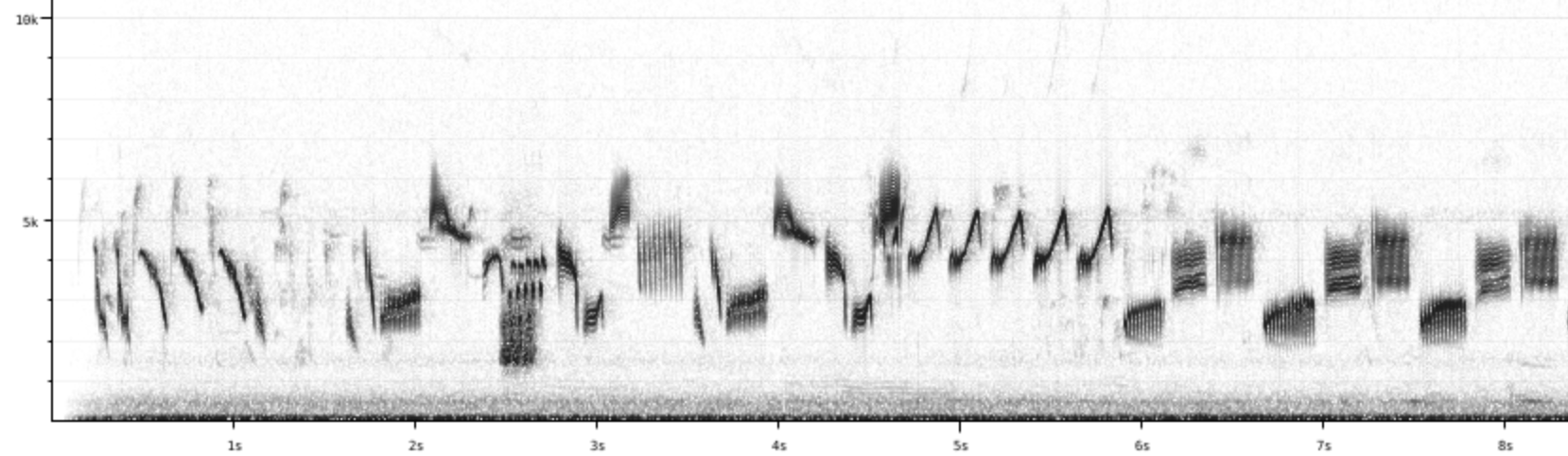
|
Good to know:  Aus dem Kurzjahresbericht BirdLife Schweiz 2022: Die Feldlerche, Vogel des Jahres 2022..., ist eihne dieser bredrohten Arten, welche durch die Industrialisierung der Landwirtschaft ausgerottet wird. [Link]
Appearance and identification: Aus dem Kurzjahresbericht BirdLife Schweiz 2022: Die Feldlerche, Vogel des Jahres 2022..., ist eihne dieser bredrohten Arten, welche durch die Industrialisierung der Landwirtschaft ausgerottet wird. [Link]
Appearance and identification:  Somewhat like a house sparrow but 18-19 cm long, not 14-15, kleiner als Star. Ruffled head feathers. NABU says streaks on breast contrast with white belly. [Link]
Song: Song a pleasing energetic stream of chirping, merry trills, interspersed with mimicry. Trills quite resonant with fairly full tone. Song usually given in flight high in the air. Less characteristic, shorter, weaker and more varied song when given from ground. [Link] Somewhat like a house sparrow but 18-19 cm long, not 14-15, kleiner als Star. Ruffled head feathers. NABU says streaks on breast contrast with white belly. [Link]
Song: Song a pleasing energetic stream of chirping, merry trills, interspersed with mimicry. Trills quite resonant with fairly full tone. Song usually given in flight high in the air. Less characteristic, shorter, weaker and more varied song when given from ground. [Link]
|
Red-backed shrike / Neuntöter (Lanius collurio)

Neuntöter im Apfelbaum beim Bauernhof Friedliweid. 2024-08-03 17:39:44 Friedliweid
Profile
|
Reminds me a bit of a Rohrsaenger/Feldlerche with its short, varied bits. BirdID says Song surprisingly varied with many expert imitations of small passerines, interwoven with bell-like ringing and dry chirping sounds. May be confusing and hard to identify if bird not seen. Song not very loud, but phrases can be very long. 'May be confusing' - tell me about it! What's not confusing about trying to tell apart 422 species of Swiss birds!
♫ Source: XENOCANTO
XC386987 - Red-backed Shrike - Lanius collurio - song with mimicry.mp3
(song)
|
Personal notes: Saw this masked bandit at Maienfeld. I was also told where to find it in the hedges at the Stille Reuss in Rottenschwil.
Song: Call a hard "check check" (like striking two rocks together), and a variable nasal "twee" Song surprisingly varied with many expert imitations of small passerines, interwoven with bell-like ringing and dry chirping sounds. May be confusing and hard to identify if bird not seen. Song not very loud, but phrases can be very long. [Link]
Similar to: Marsh warbler (Sounds like a more melodic, less staccato marsh warbler to me, see above.)Eurasian skylark (Reminds me a a Skylark (Feldlerche) with its short, varied bits.)♫ Source: XENOCANTO
XC772869 - Eurasian Skylark - Alauda arvensis - flight call.mp3
(flight call)
|
| Sings 30 seconds or longer: weird | ||
Marsh warbler / Sumpfrohrsänger (Acrocephalus palustris)

Sumpfrohrsänger wahrscheinlich. 2021-05-04 08:12:50 Flachsee am Reuss
Profile
|
Weird, squeaky, urgent, more variable than reed warbler, with imitations of European and African birds.
♫ Source: XENOCANTO
XC570644 - Marsh Warbler - Acrocephalus palustris - song.mp3
(song)
|
Song: Der Virtuose unter den Rohrsängern! Meisterhafter Imitator anderer Vogelstimmen. Viele wirbelnde und zwirlende Laute, wenig schnarrende. Variable Tempi.
[Link]
Song: Song extremely varied and full of mimicry of both European and African species. Up to 75 species imitated by the same bird. Phrases often repeated 2-4 times, and different phrases may overlap. Nevertheless, clearly defined phrases with marked pauses. Sometimes more flowing streams of notes, but less so than Icterine Warbler. Most similar to Icterine and Blyth's Reed Warbler. Softer timbre than Icterine, and not so loud. [Link]
|
Eurasian reed warbler / Teichrohrsänger (Acrocephalus scirpaceus)

Teichrohrsänger. 2024-05-20 08:58:41 Klingnauer Stausee (man-made lake)
Profile
|
Weird, squeaky, urgent. Slower than Sumpfrohrsaenger.
♫ Source: XENOCANTO
XC653035 - Eurasian Reed Warbler - Acrocephalus scirpaceus - song.mp3
(song)
|
Song: Gleichmässiges Tempo! Man kann den Takt schlagen dazu.(Metronomsänger) Oft 2-3x wiederholte kurze Motive. Viele schnarrende Töne.
[Link]
Song: By far easiest to identify by song: Characteristic, almost metric and even rhythm, very different from Sedge Warbler. Squeaky timbre with many, almost bizarre, harmonics. Phrases generally repeated 2-3 times. [Link]
Similar to: Marsh warbler (Schnell wechselnde kurze Themen wie Sumpfrohrsänger aber in exaktem Takt (und bei uns früher als der Sumpfrohrsänger). [Link])
|
| Sings 30 seconds or longer: rasp | ||
Great reed warbler / Drosselrohrsänger (Acrocephalus arundinaceus)

Drosselrohrsänger, Leukerfeld. 2022-05-21 10:39:42 Leuk
Profile
|
General: Sounds to me like croak cheep cheep!
Listening on YouTube videos, you'd call it percussion rather than song! Song: In Vergleich zu Teichrohrsänger langsamer und lauter. [Link]
♫ Source: XENOCANTO
XC661392 - Great Reed Warbler - Acrocephalus arundinaceus - song.mp3
(song)
|
Personal notes: Zuerst in Bolle Magadino gesehen und gehört.
Song: Gesang ähnlich Teichrohrsänger, aber viel lauter, Tonhöhenunterschiede 2-3 Oktaven. Karre-Kit-Sänger.. Sehr taktmässig.
[Link]
Song: Song similar to Reed Warbler in timbre, but much deeper and slower. [Link]
|
| Improvised melodic | ||
Whinchat / Braunkehlchen (Saxicola rubetra)

Whinchat aka Braunkehlchen in Andermatt. 2025-06-14 09:58:09 Andermatt
Profile
|
General: Short buzzy trilly sounds, 5-8 notes, high. Song: Gesang hat zwei Teile wie erster und dritter vom Hausrotschwanz. Steigend, fallend. [Link]
♫ Source: XENOCANTO
XC775379 - Whinchat - Saxicola rubetra - song, recorded in Sweden.mp3
(song)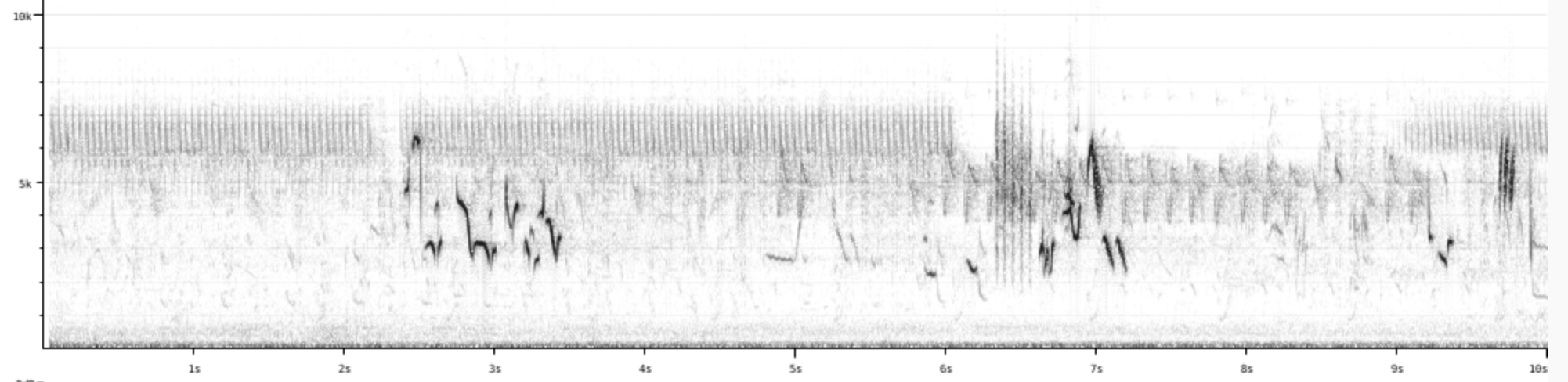
|
Personal notes: Diesen Vogel haben wir paarweise in einem Rapsfeld entdeckt.
Von weitem konnte man nur etwas orange Farbe entdecken.
Ich habe ihn 2 Tage später im gleichen Feld gesucht und bin um das ganze Feld gelaufen.
Erst am Ende habe ich ihn gesehen: am Anfang, sicher 100m von mit entfernt und um 2 Ecken.
Da habe ich dieses Foto gemacht und in Büchern, Apps und Internet nach seiner Identität gesucht.
Als ich ein sehr ähnliches Bild auf ornitho.ch gefunden habe, wo er auch auf einer Rapspflanze drauf sitzt,
sah ich es als bestätigt, dass es ein Braunkelchen war.
Song:
Song: |
Garden warbler / Gartengrasmücke (Sylvia borin)

Das muss ein Gartengrasmücke sein im Feld bei W-Wiher, noch nie so in Getreide gesehen, aber es klingt plausibel. 2024-06-27 18:57:05 Fehraltorf
Profile
|
Song: Hard to distinguish from Mönchsgrasmücke/black cap, but they sing much longer and don't end with a typical short melody like the black caps. [Link] 'minutenlang anhaltenden, plaudernden und abwechslungsreichen Gesang' [Link]
♫ Source: XENOCANTO
XC728633 - Garden Warbler - Sylvia borin - song.mp3
(song) 'minutenlang anhaltenden, plaudernden und abwechslungsreichen Gesang' [Link]
♫ Source: XENOCANTO
XC728633 - Garden Warbler - Sylvia borin - song.mp3
(song)
|
Song: Sprudelnd, orgelnd, die längsten Strophen aller hiesigen Grasmücken. Mit vielen reinen, volltönenden Tönen. Ohne Überschlag der Mönchsgrasmücke.
[Link]
Song: Song: a full bodied, flowing, melodious stream of notes, distinguished by its almost constant, warbled quality and lack of clear whistling notes (see Blackcap). Tempo is fairly even. Beware confusion possibility with occasional subsong of Blackcap that never reaches the whistling part! Call a nasal "che". [Link]
Similar to: Black cap warbler♫ Source: XENOCANTO
XC546030 black cap warbler so-called tac and djii call.mp3
(call)
|
Black cap warbler / Mönchsgrasmücke (Sylvia atricapilla)

Mönchsgrasmücke. 2024-05-16 12:18:58 Kaltbrunner-Riet
Profile
|
They sometimes sing like a blackbird on speed - also non-stereotypic, seemingly improvised,
in short bursts.
Our local guy ends most of his songs with the same seven notes, which I find a good way to confirm the identification. In Ticino we often heard the 'Leiern' sound - the warblers would sing just the first 3 notes of a longer song, then stop. The order varied; high-medium-low I call 'Figaro' as in the opera, low-high-medium 'whiskey bar', as it sounded to me like the Kurt Weill lyrics, 'O-oh-show me-the-way to-the-next whis-ke-bar' - but the warbler usually stopped after 'way' or 'next' The British authors of The Sound Approach claim to hear 'a warblel and a whistle'.
♫ 2021-03-31 08:19:11 Source: BirdNet
20210331_081911 birdnet 1345 - Eurasian Blackcap, first confirmed detection in 2021 - Eurasian Blackcap - Fehraltorf.mp3
Fehraltorf (song?)✔ |
Song: Mit schwätzendem Vorgesang, (kann auch kurz sein oder ganz fehlen) der dann in klare, kräftige, zum Ende hin in wehmütige Flötentöne übergeht (Überschlag)
[Link]
Song: Song pleasing, varied and loud. Sometimes very similar to Garden Warbler. A typical phrase starts with soft, staccato chattering and mimicry, which after a few seconds changes to a much louder, pure and resonant stream of notes for about 3-5 seconds. No fixed motif, but may end phrases with recurring notes. Often deviates from the characteristic type of song, and identification from song alone may be impossible. May sing first part of song for extended periods without ever reaching the characteristic ending. [Link]
Similar to: Common blackbird (So say I - similar tone, less inventive with motifs it uses most of the time (though regionally different), no high bits at end)♫ Source: XENOCANTO
XC919083 - Common Blackbird - Turdus merula - 1-note alarm call in Estonia.mp3
(alarm call) , Garden warbler (Gartengrasmücke meistens länger, [Link])♫ 2025-07-23 17:28:00 Wildert (call)
 |
| Improvised melodic: flourish | ||
Common blackbird / Amsel (Turdus merula)

Wunderschöner junge Amsel. 2024-05-29 07:27:36 Levanto
Profile
|
Other: Gut zu erkennen ist die Amsel.
Sie singt melodiös, erklärt Heller, «zuerst flötend und dann gegen Schluss so schnirpslig».
Die Amsel singe gerne dort, wo sie gut gehört werde, etwa vor Hauswänden, die den Schall nicht schlucken.
Ich wollte schauen was schnirpslig heisst, aber diese ist diese einzige Verwendung, die Google kennt!
Der flötende Teil ist relativ tief, 1.5-3 KHz, der schnirpslige aber 2.5-7 KHz.
(Schnirpslig ist ein schones Wort das der Redner erfunden hat - Google findet nur diese eine Webseite mit dem Wort!) [Von der SRF Webseite:]
♫ Source: XENOCANTO
XC926712 - Common Blackbird - Turdus merula - nice song recorded in New Zealand.mp3
(song) |
Song: Melodisch flötend dazwischen auch zerquetschte Töne. Die Elemente werden nicht wiederholt. Singt von Singwarte aus. Ca. 100 verschiedene Strophentypen.
[Link]
Song: One of the most appreciated song birds. Very melodious and resonant, with long mellow notes and a large register. Less high pitched sounds than Song Thrush, and seldom repeats a phrase. Timbre fuller than both Song Thrush and Mistle Thrush. Well defined pauses between phrases, giving the song a relaxed pace. [Link]
|
| Improvised melodic: fluting | ||
European robin / Rotkehlchen (Erithacus rubecula)

Rotkehlchen - sie singen endlich wieder. 2021-10-24 09:57:40 Neeracherried
Profile
|
General: High pitched but also going low, e.g. 2.9-7.7 KHz. Song:  Only for a short period in late summer while they are moulting and inconspicuous do robins stop singing. Both sexes sing. [RSPB article]
♫ Source: XENOCANTO
XC782997 - European Robin - Erithacus rubecula - song recorded in Italy.mp3
Italy (song) Only for a short period in late summer while they are moulting and inconspicuous do robins stop singing. Both sexes sing. [RSPB article]
♫ Source: XENOCANTO
XC782997 - European Robin - Erithacus rubecula - song recorded in Italy.mp3
Italy (song)
|
Song: Song medium to very high pitched, with mostly clear tones with a liquid quality. Timbre reminiscent of Wren or Dunnock, but with a much more varied structure and tempo. Pitch ranges from very high to low, almost thrush-like, notes. No recognizable motifs. Often ends on a rising or falling pitch, giving it a "Chinese" accent. [Link]
|
| Improvised melodic: swoop | ||
Song thrush / Singdrossel (Turdus philomelos)

Singdrossel bei Unterer Buchholzweg, Fehraltorf. 2024-05-13 07:33:52 Fehraltorf
Profile
|
Paced like a blackbird, humorous mix of elements like a nightingale. Huge range, elements from 2-5 KHz, others 6.5-9 KHz. Can sing for up to 50 minutes, and a male may know 100 melodies in its repertoire.
♫ Source: XENOCANTO
XC749679 - Song Thrush - Turdus philomelos - single-note swooping call.mp3
(song) |
Song: Klangfarbe ähnlich obiger Art [Amsel], aber jedes Element 2-4mal wiederholt, Pausen zwischen den Phrasen.(klingt oft wie „Philipp“, oder „Judith“) Einzige Drossel unseres Gebietes die diese Wiederholungen macht. Singt oft nicht von Baumspitze aus, sondern aus dem Geäst.
[Link]
|
| Improvised melodic: whoop | ||
Common starling / Star (Sturnus vulgaris)

Junger Star sitzt auf einem Highland Cattle bei Speck, Fehraltorf. 2022-08-17 14:44:56 Fehraltorf
Profile
|
I find their individual song amusing, with its (long) whoops and weird noises.
As a group, they're just noisy!
♫ 2025-11-20 16:59:58 Switzerland (song?) |
Personal notes: Frequently seen here, for instance by their nests under the eaves of one of the Toblerone houses.
Introduced to North America from Europe by Eugene Schieffelin.
Song: Song a highly varied mix of falling whistles, bill-clappering and various masterful mimicry. [Link]
|
| Improvised melodic: trill | ||
Common nightingale / Nachtigall (Luscinia megarhynchos)

Common nightingales - das erste Mal das ich sie gesehen habe und direkt beim Haus in Fehraltorf. 2020-04-19 07:41:56 Fehraltorf
Profile
|
Can be a sequence of unrelated weird but musical sounds - trills, churrs, human-like whistles - very amusing.
♫ Source: XENOCANTO
XC505897 - Common Nightingale - Luscinia megarhynchos - song, recorded in Spain.mp3
Spain (song)
|
Song: The song is the best characteristic to separate it from T. Nightingale. [Link]
|
Eurasian wren / Zaunkönig (Troglodytes troglodytes)

Zaunkönig im Garten am Bodensee. 2024-01-01 13:32:24 Güttingen
Profile
|
High-pitched, melodic, very variable with many trills and whistles. At least 3 seconds long, switching low to high 6 times or more, always a trill in the mix. Der deutsche Kalendar für 2025 sagt, sie könnten ab Drei-Königs-Tag singen, d.h. ab 6. Januar. nabu.de sagt ab 1. Februar, Drei-Königs-Tag ist eventuell nur wegen dem Namen Zaunkönig? ♫ Source: XENOCANTO XC916662 - Eurasian Wren song in China - Troglodytes troglodytes.mp3 (song) 
|
Song: Auffällig laut für den kleinen Vogel. Singt auch im Winter! Schmetternd, mit einem bis zwei Trillern als letztes oder vorletztes Glied.
[Link]
Song: Song surprisingly loud. A high-pitched stream of clear notes resembling Robin and Dunnock in timbre. Differs from those in showing frequent shifts in pitch with much larger register than Dunnock, and by the unique, numerous, interspersed long trills. [Link]
Similar to: European greenfinch (Beide haben abwechselnde kurze Muster, nur der Grünfink hat den typischen fallenden 'Swoop' wie auch bei seinen Rufen.)♫ Source: XENOCANTO
XC919412 - European Greenfinch - Chloris chloris - alarm call, aka wheeze.mp3
(alarm call) , Common chaffinch (Structure is similar but wren song more variable and often longer, also flatter)♫ Recorded by Paul Driver in Mundford, Norfolk, UK Source: XENOCANTO
XC71019 common chaffinch rain call.mp3
(rain call)
, Common chaffinch (Structure is similar but wren song more variable and often longer, also flatter)♫ Recorded by Paul Driver in Mundford, Norfolk, UK Source: XENOCANTO
XC71019 common chaffinch rain call.mp3
(rain call)
|
| Stereotype melodic | ||
White wagtail / Bachstelze (Motacilla alba)

Bachstelze. 2024-05-16 11:54:46 Kaltbrunner-Riet
Profile
|
Plaetschert wie ein Bach
General: Usually just calls. This song is just a few chirpy slurs, sometimes rising-rising-falling. Song: Zirpt wie ein Sperling aber weniger Noten. Lh lh lh [Link]
♫ Source: XENOCANTO
XC694995 - White Wagtail - Motacilla alba - song recorded in Spain.mp3
Spain (song)
|
Song: Song either slow and primitive, consisting of sharp falling notes given by perched birds, or longer fast and energic bursts in excited song-flight. [Link]
|
Common chaffinch / Buchfink (Fringilla coelebs)

Buchfink, sieht für mich gut ernährt aus! 2025-01-04 15:58:56 Greater Fehraltorf
Profile
|
General: A medium long phrase that slowly descends (I think of it bouncing down a staircase), then usually takes a
jump up before a final descent. Song: In Bavaria the mnemonic for the typical chaffinch song is: „Ich hätte gerne ein Weizenbier“,
i.e. "I'd like another Weizenbier". [DasHaus]
♫ 2024-06-25 08:29:58  Source: Zoom H6/H2n Mettmenalp, GL (call) Source: Zoom H6/H2n Mettmenalp, GL (call)
|
Song: Song a falling 5 sec. phrase "zitt-zitt-chep-chepp-chu-chu-churrurrwitt". Structurally similar to Willow Warbler, but with a conclusive, ascending and accented ending, and with a much harder, finch-like, timbre. [Link]
|
Willow warbler / Fitis (Phylloscopus trochilus)
 XXXX Bei Wildert glaube ich dass das ein Fitis ist und kein Zilp-zalp aber MerlinBirdId war auch verwirrt und hat ZZ besser gefunden.JPG)
Bei Wildert glaube ich dass das ein Fitis ist und kein Zilp-zalp aber MerlinBirdId war auch verwirrt und hat ZZ besser gefunden. 2026-05-12 17:25:20 Wildert
Profile
|
Buchfink diva
Song similar to common chaffinch but higher, faster, tendency to descend but with more ups and downs.
♫ Source: XENOCANTO
XC556112-Fitis_1 Laubsänger 2 song.mp3
(song)
|
Song: Reihe v. Pfeiflauten (ca 12) etwas abfallend. Klingt ähnlich Buchfink, aber etwas traurig, melancholisch, wie in moll-Tonart. [Link]
Song: By far most easily identified by it's call or song. Song: A 3-5 second, falling phrase of soft, rippling "svi-svi" sounds, starting high with some attack, and then falling in a mellow manner. The phrase lacks any conclusion, and diminishes both in strength and tempo. [Link]
Similar to: Common chaffinch♫ Recorded by Paul Driver in Mundford, Norfolk, UK Source: XENOCANTO
XC71019 common chaffinch rain call.mp3
(rain call)
|
Short-toed treecreeper / Gartenbaumläufer (Certhia brachydactyla)

Baumläufer, wahrscheinlich Gartenbaumläufer. 2022-07-18 08:58:32 Greifensee
Profile
|
'Gar-ten-baum-LÄU-FER'
It sounds to me like a 5-7 note song like 'five k low high higher', 'short song in the gar-DEN'. The individual notes have the same backward checkmark shape as the call. It's basically the same across Europe.The song of the nominate subspecies is an evenly spaced sequence of notes teet-teet-teet-e-roi-tiit. [Link]Its song is short, loud and rhythmic. [Link] [In comparison with the visually similar Eurasian treecreeper, it] has a clearer, louder more staccato contact call of ‘sreet’ or ‘sree’ and a short ‘wit’ during normal activity [Link]
♫ Source: XENOCANTO
XC625133 - Short-toed Treecreeper - Certhia brachydactyla - song.mp3
(song) [In comparison with the visually similar Eurasian treecreeper, it] has a clearer, louder more staccato contact call of ‘sreet’ or ‘sree’ and a short ‘wit’ during normal activity [Link]
♫ Source: XENOCANTO
XC625133 - Short-toed Treecreeper - Certhia brachydactyla - song.mp3
(song)
|
Song: Kurz u. bündig! (Gartenwege sind kurz.) Tonreihe am Schluss ansteigend. „Hesch du gseh woni bi?
[Link]
Song: Song diagnostic, and introductory notes often used singly when interacting. Full song starts with one or two staccato introductory notes, the first higher pitched than the second, followed by a rapid, ascending crescendo ending in a drawn-out, less pure "sree". The tone is loud and much more penetrating and clear than C. familiaris. [Link]
|
Dunnock / Heckenbraunelle (Prunella modularis)

Heckenbraunelle singt auf Baumspitze - nicht in der Hecke. 2024-06-25 07:33:46 Mettmenalp, GL
Profile
|
General: High-pitched, repetitive but complex little tune, 3 seconds long with about 15 notes rising and falling, falling at the end, then 3 second pause. Song: Melodisch, slowly rising, roughly like black-cap warbler, which I guessed in the bird-song.ch quiz. [Link]Schnell wie ein Rotkehlchen aber nicht herunter plätschernd, hoch und runter zwischen 3 und 7 kHz. [Link]
♫ Source: XENOCANTO
XC778759 - Dunnock - Prunella modularis - song recorded in Spain.mp3
Spain (song)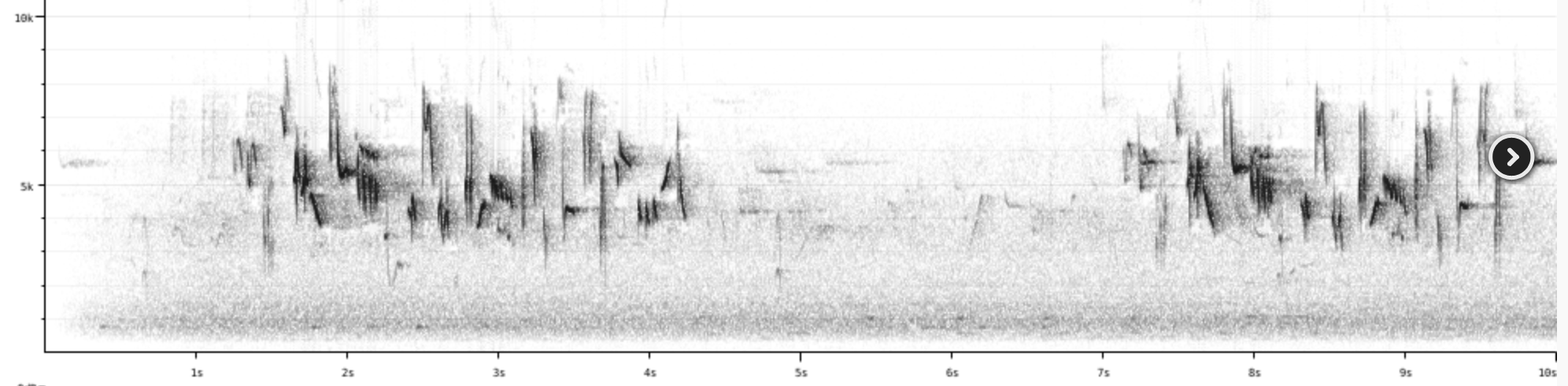
|
Song: Singt schon im Vorfrühling. Klangfarbe ähnlich Gartenbaumläufer. Aufbau ähnlich Zaunkönig, aber ohne Triller. Viel leiser und dünner.
[Link]
Song: Song a fast and evenly paced, high pitched stream of clear notes. No consistent phrasing. Similar in timbre to Robin, but does not vary tempo or pitch nearly as much. Often compared to the sound of a squeaky wheelbarrow. [Link]
Similar to: European goldfinch (Habe es verwechselt in meiner eigen Übung Stieglitz geraten, war doch Heckenbraunelle!)♫ Adult call recorded in the UK. Source: XENOCANTO
XC468566 European Goldfinch call in UK.mp3
(call)
, Black cap warbler♫ Source: XENOCANTO
XC546030 black cap warbler so-called tac and djii call.mp3
(call)
, European robin (Dunnock song stays around same pitch, isn't cascading)♫ 2021-07-03 08:05:14 (call)
|
Common house martin / Mehlschwalbe (Delichon urbicum)

MerlinBirdID meint Mehlschwalbe. 2022-05-21 10:11:56 Leuk
Profile
|
Song: Mehlschwalbe klingt weniger melodisch als der Rauchschwalbe [Link]Merry improv of chirping, contact call [Link]
♫ Source: XENOCANTO
XC730813 - Common House Martin - Delichon urbicum - song and call according to recordist Fernando Aranguren Jiménez, recorded in Spain.mp3
Spain (song)
|
Song: Song a merry improvisation of chirping, contact call-like sounds (sometimes recalling a budgerigar). [Link]
|
Eurasian golden oriole / Pirol (Oriolus oriolus)

Wikimedia Eurasian golden oriole. Source: WIKIPEDIA Wikimedia Eurasian golden oriole.jpg
Profile
|
A soft, lowish whistling. In my opinion, the golden oriole has a beautiful voice, but no imagination as to melody - it's always the same few notes.
♫ Source: XENOCANTO
XC567973 eurasian golden oriole song.mp3
(song)
|
Song: Varied repertoire, but song and common contact call very distinct. Song a series of 1-2 seconds long phrases of 3-5 yodeling, clear, fluting notes, interspersed with 2-3 second pauses. Tone very full-bodied, melodic and pleasing. [Link]
|
Barn swallow / Rauchschwalbe (Hirundo rustica)

Rauchschwalbe braucht eine Coiffeuse. 2025-08-03 16:54:17 Fehraltorf
Profile
|
General: Squeaky with occasional buzzes, usually heard in flock. Song: Kann melodisch sein wenn einzeln gehört statt viele zusammen. [Link]
♫ Source: XENOCANTO
XC768452 - Barn Swallow - Hirundo rustica - song recorded in Denmark, rare recording with just a single bird.mp3
(song)
|
Good to know: Die langen Schwanzfedern vom Rauchschwalbe und anderen geben auch dem Schmetterling Schwalbenschwanz seine deutschen Namen.
Appearance and identification: Rauchschwalbes Bauch ist etwas braun rot, nicht weiss wie der von der Mehlschwalbe - was wahrscheinlich Quelle der zwei Namen ist. [Link]
Song: Characteristic calls and song. Song a sparkling, squeaky energetic improvisation with interspersed contact calls, often with diagnostic ending; an electric and drawn-out "su-eerrrrrrrrrrrrrrr". [Link]
|
Western yellow wagtail / Schafstelze (Motacilla flava)

Schafstelze, Albufera. 2022-04-12 14:59:06
Profile
|
Just a few notes, call seems to be common but song rare. Very short chirp of ~ 1 sec, long pause of 3 secs. At Wauwilermoos it seemed to be 'Twee tweetwee (higher note:) twee!'
♫ 2026-05-25 06:51:00 La Sauge (song?) |
Song: Song primitive and less striking. Beware differences in calls and songs between different subspecies. [Link]
|
Long-tailed tit / Schwanzmeise (Aegithalos caudatus)

Herzige Schwanzmeise. 2025-01-10 14:59:26 Fehraltorf
Profile
|
Diddly doot-doot-doot-doot
General: Meistens hört man das Pfief...chk..chk..Pfief von den Rufen, siehe dort. Song: Nabu: Der Gesang ist ein feines Trillern und selten zu hören (someone at XenoCanto compares it to a blue tit trill). [Link] ♫ Source: XENOCANTO XC572437 - Long-tailed Tit - Aegithalos caudatus - song.mp3 (song) 
|
Song: Song: high tsee-tsee; funny downhill trill
Song: Song: Rapid, continuous, randomly composed sequence of bubbling,chirping sounds. [Link]
|
| Stereotype melodic: churr | ||
Black redstart / Hausrotschwanz (Phoenicurus ochruros)

Hausrotschwanz beim Ortstockhaus, Braunwald. 2022-07-15 12:33:54 Gumen
Profile
|
The song is two parts and unvarying. If it were a pop song, you'd call it ABABAB... The second part starts with a
sputtering trill. The RSPB in the UK says 'warble with crackling trills.' Vogelwarte.ch says
'Der gepresst knirschende Gesang setzt meist lange vor Sonnenaufgang ein und ist der Auftakt für das Vogelkonzert.'
BirdLife-Zuerich.ch says 'Einziger Sänger morgens um drei in den Häuserschluchten'.
Obwohl NABU.de meint, sie singen nicht mehr nach Juli, war ich angenehm überrascht sie in Oktober im Tessin zu hören.
♫ Source: XENOCANTO
XC745021 - Black Redstart - Phoenicurus ochruros - typical song recorded in Calabria, Italy.mp3
Italy (song)
|
Song: Other: Einige Arten wie der Hausrotschwanz singen zudem im Herbst, bevor sie in ihr Winterquartier ziehen. Die Männchen legen dann ihre Reviere bereits «provisorisch» fest. [Link]
Song: Am Morgen der erste Sänger: Kurzes dreiteiliges Liedchen, meist von Warte aus gesungen. Mittelstück aus rauen gequetschten Tönen. (als ob kurz die Stimme verloren)
[Link]
Song: Song consists of three parts and is distinct if heard well. It opens with some clear notes that may form a trill, which are then followed by a pause. The "gravel-part" does not carry as far as the rest of the song. [Link]
|
| Stereotype melodic: rattle | ||
European goldfinch / Stieglitz (Carduelis carduelis)

Stieglitz. 2024-05-16 10:55:11 Kaltbrunner-Riet
Profile
|
General: Hectic sing-song, quite chaotic in feeding groups. But kept as songbird, so I guess more melodic when singing solo. A bit like a black cap warbler (Mönchsgrasmücke). Gesang hat eine Struktur (und ist langsamer als der Girlitz): Zuerst eine kleine Melodie hoch und runter; dann vielleicht ein Grünfink-Triller, dann 4 wiederholte Noten oder ein neues Melodiechen. (Oder kommen diese Elemente eher zufällig?) Song: Melodie geht meistens 2-3 Sekunden hoch und runter, meistens mit einer wiederholten 1-Noter mit ~6x die gleiche Note. [Link]
♫ Source: XENOCANTO
XC638230 - European Goldfinch - Carduelis carduelis.mp3
(song)
|
Song: My first (multilingual) notes: Stieglitz like Grünfink, fast, high, occasional trills. Occasionally ends a bit with falling note like buchfink
Song: Mir wurde erst in St. Moritz in Juli 2021 bewusst wie ähnlich der Stieglitz wie ein Grünfink klingt - beide können lange Gesang mit Trillern und rauhen sinkenden Toenen singen, und ich habe Stieglitz v.a. durch dieses Stöhnen für Grünfink gehalten.
Song: Contact-call distinct, and also constitutes a major part of the song. A sharp and explosive "witt", or "tzee-witt". Sometimes given as a single syllable, di- or trisyllabic, or as continuous series. The song is comprised of rapid series of the contact call, interrupted by drawn-out melodic notes and trills. [Link]
Similar to: European greenfinch (Higher pitched than the greenfinch, easily hitting 9 KHz rather than 6.5 KHz)♫ Source: XENOCANTO
XC919412 - European Greenfinch - Chloris chloris - alarm call, aka wheeze.mp3
(alarm call)
|
| Stereotype melodic: trill | ||
Grey wagtail / Gebirgsstelze (Motacilla cinerea)

Gebirgsstelze am Bach beim Klingnauer Stausee. 2022-02-05 14:16:30 Klingnauer Stausee (man-made lake)
Profile
|
BirdID says Song simple but variable. I hear trills up to 2 seconds long and chirps. Another description says a series of calls, not very melodic. I noted zwitx3, sometimes hhhhhll. [Link]
♫ Source: XENOCANTO
XC767550 - Grey Wagtail - Motacilla cinerea - song with trills and a cheek-cheek.mp3
(song)
|
Song: Song simple but variable. Sometimes with more elaborate song-flight like White Wagtail. [Link]
|
Corn bunting / Grauammer (Emberiza calandra)

Wahrscheinlich ein Grauammer, die wurden auch durch MerlinBirdID gemeldet. 2022-04-08 14:27:44
Profile
|
General: Song is an ascending trill or buzz that climbs about an octave - 4-8 KHz. Song: Gesang steigend und immer schneller wie .... was? [Link]
♫ Source: XENOCANTO
XC632949 - Corn Bunting - Emberiza calandra - song.mp3
(song)
|
Geography: Eher selten in CH. [Link]
Song: Sieht für mich eher braun aus als der Grau im Namen, mit einem Finken-Schnabel und Striche oben auf der Brust wie ein Drossel [Link]
Song: Song diagnostic. A brittle, jingling and accelerating phrase of about 2 seconds duration. [Link]
|
European greenfinch / Grünfink (Chloris chloris)

Grünfink im Profil vom Esstisch aus fotografiert in Fehraltorf. 2023-01-16 10:54:12 Fehraltorf
Profile
|
General: Sequence of 4-6 rhythmic elements at different pitches.
A sort of trill is often start or end of the sequence (can also be a call!),
and there are slides.
♫ 2024-09-09 07:03:00 Greater Fehraltorf (call) |
Song: Song composed of various sequences of linked sounds, repeated in a vibrating manner; "trrrrrrrrr", "chechechecheche". Sometimes resembles Brambling when making the wheezy "rrrrrrrrr" sound, but differs in being harsher and by "pulling" the pitch downwards (or sometimes upwards) at the end. [Link]
Similar to: Eurasian wren (Zaunkönig und Grünfink singen eine Reihe von kleinen Teilen, beim Grünfink sind es 6-12, je eine Sekunde lang, faster immer mit dem verzerrten 'Swoop', siehe z.B. 'Grünfink motif 1' auf der Profil-Seite)♫ Source: XENOCANTO
XC195946 - Eurasian Wren call - Troglodytes troglodytes.mp3
(call) , Brambling (Greenfinch also occasionally utters rising squawks like the brambling)♫ Source: XENOCANTO
XC900455 - Brambling call - Fringilla montifringilla.mp3
(call)
, Brambling (Greenfinch also occasionally utters rising squawks like the brambling)♫ Source: XENOCANTO
XC900455 - Brambling call - Fringilla montifringilla.mp3
(call) Tree pipit
|
Common reed bunting / Rohrammer (Emberiza schoeniclus)

Rohrammer von Fanel-Platform aus. 2024-05-22 18:08:53 Fanel/Chablais de Cudrefin und La Sauge
Profile
|
General: At Fanel I heard sequences of whistles and trills (buzzes?), just a few notes, but wandering up and down: m h lll, or l m hhh m. Listen to recording of 2022-06-25 13.37.28 Song: Oft 4 Noten: mlhl [Link]BirdID: A short sequence of 3-5 brittle and buzzing sounds, repeated consistently with marked pauses. Last sound in phrase often has a conclusive feel, but not always. [Link]
♫ Source: XENOCANTO
XC723277 - Common Reed Bunting - Emberiza schoeniclus - song.mp3
(song)
|
Appearance and identification: A bit like General Burnsides: white sideburns, here curling back around a black head. [Link]
Song: Song variable between individuals and breeding status: A short sequence of 3-5 brittle and buzzing sounds, repeated consistently with marked pauses. Last sound in phrase often has a conclusive feel, but not always. Paired males sing slower than unpaired. Unpaired male song also more contracted, making the pauses between each phrase stand out. [Link]
Similar to: Eurasian reed warbler (Auch langer Gesang mit kurzen Phrasen von ganz anderen Toenen)
|
| Simple rhythmic | ||
Common whitethroat / Dorngrasmücke (Sylvia communis)

Wikipedia: Common whitethroat Source: WIKIPEDIA 1200px-Common_Whitethroat.jpg
Profile
|
Song: Often ends with more indistinct mimicry, or subsong. May omit characteristic phrase and sing more cryptic for periods of time, and may be more difficult to identify. [Link]Relativ kurzer gesang, an Anfang fallend, dann entweder weiter oder steigend. 7-14 notes. [Link]
♫ Source: XENOCANTO
XC344648 - Common Whitethroat - Sylvia communis communis - song, recorded in Germany.mp3
(song)
|
Song: Gesang kurz und rau (Kürzester Name).Oft im Singflug aber auch ab Warte. Wenn im Singflug dann Strophe etwas länger.
[Link]
Song: Often ends with more indistinct mimicry, or subsong. May omit characteristic phrase and sing more cryptic for periods of time, and may be more difficult to identify. [Link]
|
Eurasian tree sparrow / Feldsperling (Passer montanus)

Rekordbeobachtung - 8 Vögel an der Futterstelle, hinten links ein ungewöhnlicher Besuch von einem Buchfink, und sonst Feldsperlinge und eine Kohlmeise. 2024-12-15 13:40:22 Greater Fehraltorf
Profile
|
Monotone chirping, rougher than that of the house sparrow. Most 2-7 KHz mit many overtones,
i.e. somewhat higher than the house sparrow.
♫ Source: XENOCANTO
XC558751-Feldsperling.mp3
(song?)
|
Song: Chattering sounds are generally harder, and song slightly higher pitched than House Sparrow. [Link]
|
Yellowhammer / Goldammer (Emberiza citrinella)

The most common yellowhammer dialects shown at the yellowhammers.net project - so cool! Most Swiss dialects shown on their map are XlB. In my own recordings so far, I hear (and on the sonograms see) a pause after the initial phrase rather than a higher note. I'd like to follow that further. Source: OTHER Yellowhammers.net dialect graphs.jpg
Profile
|
High-pitched, two notes that sound like one, repeated 10-12 times, with a higher tweet and then a whistle that sounds higher to me but usually shows up on the sonogram as the same range.
The mnemonic for the staccato song in German is: «Wie, wie, wie, wie hab ich dich lieb». See the image for dialects noted by yellowhammers.net - the most common Swiss dialect is said to be XlB, though I don't always hear the second note myself (and interestingly enough, it doesn't play on my Bose headphones). Pavel Pipek of the yellowhammers project kindly explained to me: 'Regarding the XlB and other dialects, these codes were defined by a Danish scientist Poul Hansen in his paper from 1985. In this case Xl stands for a syllable with high frequency (and long) and B for a syllable with low frequency.'
♫ Source: XENOCANTO
XC29721 - Yellowhammer - Emberiza citrinella - song with XlB dialect, recorded in Cudrefin, Switzerland.mp3
Switzerland (song)
|
Personal notes: Habe ihn im Fehraltorfer-Wald endlich gesehen
als er von einem Baum in die Spitze eines anderen geflogen ist.
Song: Kurzes Liedchen. „ Wie wie wie hab ich dich liiieb“ Das „Lieb“ ist meist etwas tiefer, kann aber auch höher sein oder doppelt, dabei das eine höher und das andere tiefer. Sehr variabel!
[Link]
Song: Song a series of 6-8 (or more) slightly ascending "tze" 's, rising in volume and ending on a sustained note, which may be lower or higher than the others. Often rendered as "little-bit-of-cheese-and-no-bread". Last note is often omitted, which may lead to confusion with Cirl Bunting. Timbre with prominent harmonics as in other bunting songs. [Link]
|
Spotted flycatcher / Grauschnäpper (Muscicapa striata)

MerlinBirdID meint Klapper-grasmuecke, was super waere. Denke selber es sieht aus wie ein Grauschnaepper, teilweise weil die Fluegel der KGM im Fotos etwas brauner waren. Mein Birdweather Geraet sagt, es hat GS gehoert. 2024-09-09 12:48:42 Wald Fehraltorf
Profile
|
High (6-8 KHz?) short sound repeated every half to 5 seconds.
♫ Source: XENOCANTO
XC656714 - Spotted Flycatcher - Muscicapa striata.mp3
(song?)
|
Song: Gesang 'unauffällig' - zirp x 2-3, mal steigender tWIT
Song: Song a primitive, slow series of various buzzing and very high pitched sounds. No recurring phrases. [Link]
|
House sparrow / Haussperling (Passer domesticus)

MerlinBirdID suggests a Spanish sparrow, Italian sparrow or House sparrow. 2022-04-12 15:18:40
Profile
|
An monotone chirping. Mainly 2-5 KHz with higher overtones.
♫ 2024-06-18 08:35:00 Fehraltorf (call) |
Song: Song a primitive, monosyllabic, or slightly disyllabic "chilp", hard to distinguish from Tree Sparrow. [Link]
|
Great tit / Kohlmeise (Parus major)

Junge Kohlmeise, Bahnhofstrasse 53, Fehraltorf. 2024-06-13 13:53:49 Fehraltorf
Profile
|
Said to have a repertoire as a species of 50 or more different songs, albeit simple ones, up to 10 per individual.
Females prefer a male with a large repertoire. One two-note song sounds like a squeaky bed.
♫ 2025-03-30 13:41:00 Switzerland (call) |
Song: Nabu: Die erste Vogelart, die wir im Jahr hören, ist meistens die Kohlmeise mit ihrem typischen Läuten: "Zip Zäh" oder "Zip zip Zäh". [NABU Experte Lars Lachmann bei Deutschlandfunk Nova]
Song: Song highly variable, but usually consisting of two to three notes repeated in a motif. Same birds have many different motifs but generally repeat them many times before switching. Identified by its timbre and often metallic resonant quality, more than by actual phrasing (which is very variable). Often includes buzzing sounds in song. [Link]
|
Common cuckoo / Kuckuck (Cuculus canorus)

Wikipedia Kuckuck, Cuculus canorus. Source: WIKIPEDIA Wikipedia Kuckuck, Cuculus canorus.jpg
Profile
|
Two-noter
♫ Source: XENOCANTO
XC801215 - Common Cuckoo - Cuculus canorus.mp3
(song?)
|
Song: Männchen: Unverwechselbarer Ruf. Weibchen: im Frühling eine kichernde Rufreihe,
[Link]
Song: Song: the well known disyllabic "cuck-coo" with emphasis on first note, and the second note a third lower than the first one. Also a harsh "tchaa tchaa", and a bubbly trill, reminiscent of Little Grebe, uttered by the female. [Link]
|
Common swift / Mauersegler (Apus apus)

Mindestens 20 Mauersegler beim Sportfeld in Rapperswil, wo Magnus und die Renegades gespielt haben. 2026-05-16 18:00:30 Rapperswil
Profile
|
Song: Sie singen im Flug (eigentlich LEBEN sie im Flug), und wenn du sie nicht siehst, schau weiter hoch, dann noch einmal - sie können mehrere 100m hoch fliegen oft in Gruppen von 3-10. Kappe abziehen wenn nötig! [Link]A shrilling trill "zreeeee" of about 1 -2 seconds length, gradually rising in pitch with accentuated firs half, then falling from the middle of phrase. Often continued with a dry lower pitched "trrrrrr" before calling again. [Link]
♫ Source: XENOCANTO
XC813064 - Common Swift song - Apus apus.mp3
(song)
| |
Savi's warbler / Rohrschwirl (Locustella luscinioides)

Wikipedia - Rohrschwirl Chiemgau. Source: WIKIPEDIA Wikipedia - Rohrschwirl_Chiemgau.jpg
Profile
|
Endless buzzing like an insect or machinery. Lower tone than Feldschwirl.
♫ Source: XENOCANTO
XC710242 - Savi's Warbler - Locustella luscinioides - song.mp3
(song)
|
Song: Gesang ähnlich obiger Art [Feldschwirl]. Tiefere Tonlage, höhere Frequenz. Strophen meist kürzer
[Link]
Song: Song insect-like and high-pitched. A monotonous stream of even clicks similar to the whirring of a sewing machine. Song most similar to Grasshopper Warbler but faster (each click hard to distinguish), and lower pitched with less, ringing quality, due to less prominent high frequencies. At closer range a Robin-like, accelerating ticking is heard, introducing the actual song. [Link]
Common grasshopper warblerNightjar
|
Common firecrest / Sommergoldhähnchen (Regulus ignicapilla)
 weiblich.jpg)
Wikipedia Sommergoldhähnchen (Regulus ignicapilla) weiblich. Source: WIKIPEDIA Wikipedia Sommergoldhaehnchen_(Regulus_ignicapilla) weiblich.jpg
Profile
|
Noten vom 'Sommer' steigen wie die Temperaturen
Very high rhythmic repetition of about 3 seconds
♫ Source: XENOCANTO
XC769178 - Common Firecrest - Regulus ignicapilla - song recorded in the Netherlands.mp3
(song)
|
Song: Wie [beim Wintergoldhähnchen] aber auf gleicher Tonhöhe bleibend. [Link]
Song: Song: Similar in timbre to Goldcrest, but much more monotonous. [Link]
|
Marsh tit / Sumpfmeise (Poecile palustris)

Sumpfmeise richtung Wildertweiher. 2024-09-09 08:12:48 Wald Fehraltorf
Profile
|
1-Noter, Sumpf laenger als Kohl
General: Higher-pitched than great tit, sometimes repetitive 1- and 2-note tunes like them, sometimes simple melodies, usually pure, sometimes chirpy or raspy. Song: 'Song: A simple one or two note call repeated in series. Usually rising slightly in pitch, and with a "liquid" quality.'. [Link] At bird-song.ch it's hl-rest-hl, or 7-8 2-noter swoops. bird-song.ch names lh-break-hl as a pistjä call and also has a series of 7 or 8 falling 'swoops'. [Link]
♫ Source: XENOCANTO
XC727754 - Marsh Tit - Poecile palustris.mp3
(song) At bird-song.ch it's hl-rest-hl, or 7-8 2-noter swoops. bird-song.ch names lh-break-hl as a pistjä call and also has a series of 7 or 8 falling 'swoops'. [Link]
♫ Source: XENOCANTO
XC727754 - Marsh Tit - Poecile palustris.mp3
(song)
|
Song: Klapperlied - 6-8 Noten 'angeschlagen'
Song: Klapperlied. Reihe (6-8) weich angeschlagene Töne mittlerer Höhe. Ähnlich der Klappergrasmücke aber weicher. (Sumpf ist weich) Oft auch Rufe wie „psja“ zu hören. Ziemlich scharf u. gepresst. [Link]
Similar to: European nuthatch (Die wiederholten Noten tönten für mich wie ein Kleiber aber sie sind nicht so regelmässig.)♫ Source: XENOCANTO
XC129686 - Eurasian Nuthatch - Sitta europaea caesia.mp3
(song?)
|
Common chiffchaff / Zilpzalp (Phylloscopus collybita)

Zilpzalp vorm Fanel-Plattform. 2024-05-22 17:46:23 Fanel/Chablais de Cudrefin und La Sauge
Profile
|
Seems to consist of 3 notes repeated randomly, occasionally just 2 notes.
Though NABU.de says they stop singing at the end of July, I do hear their 3-note song occasionally in October,
but just one or two repetitions.
♫ 2020-10-05 09:04:33 Source: BirdNet
20201005_090433 birdnet 968 saw kohlmeise as part of this conversation - Common chiffchaff - Fehraltorf.mp3
Fehraltorf (song?) |
Song: [Translated from German:] From the middle of August till the end of September the chiffchaff offers regular autumn song. [Link]
Song: Lange Reihen (6-20) von „zilp-zalp“-Rufen, meist abwechselnd in Tonhöhe. (Als bemühe sich der Sänger vergeblich den ersten Ton wieder zu treffen , ohne jedoch weit zu verfehlen.) „Zins zahl, Zins zahl, zahl Zins, Zins Zins zahl“ („Zins“ etwas höher als „zahl“) [Link]
Song: Song a very distinct: "chiff-chaff-chiff-chiff-chaff-chiff", in a regular clock-like rhythm. Each syllable at seemingly random pitch, but no large intervals tonally. Sometimes "get stuck" at one note. [Link]
|
| Simple rhythmic: trill | ||
Eurasian blue tit / Blaumeise (Cyanistes caeruleus)

Junge Blaumeise mit gelbem Gesicht, fehlender Kinnstreifen, graue Kopftonsur. 2021-07-19 08:33:44 Fehraltorf
Profile
|
General: High-pitched, often descending (hhll), occasionally ascending. "Christina compares it to a ping-pong ball dropping. [In Januar singt die Kohlmeise als erster Vogel in Deutschland], dann kommt die Blaumeise dazu. ♫ Source: XENOCANTO XC555029 blaumeise.mp3 (song?) 
|
Personal notes: In How to be a Bad Birdwatcher, Simon Barnes nicely explains hierarchies in feeding groups and how niches prevent blue tits from being starved by the larger, more dominant great tits. Normally they forage differently, he says, and at feeders it's simply clear to both that the great tit goes first. However in May 2021, we watched a blue tit repeatedly chase off a great tit that landed at the feeder where he was already enjoying some sunflower seeds! There are always exceptions to the rules!
Song: Song: Characteristic, clear, high-pitched, vibrating call. Usually introduced by a couple of accenting syllables, followed by ringing vibrating notes: "ti ti chuhuhuhuhuhuhuhuhuhu". [Link]
|
Wood warbler / Waldlaubsänger (Phylloscopus sibilatrix)

Wahrscheinlich Waldlaubsänger. 2022-05-22 09:52:22 Leuk
Profile
| Sid-sid-sid-sirrrr. 3 secs, then 5 secs pause. At bird-song.ch I hear a slow-fast one-noter, about 8 slow ones in 1.5 seconds, then a trill of 25 fast ones. |
Song: kurze Reihe (4-10) v. Stakkatotönen, gefolgt von abfallendem Schwirrroller. (Tönt wie das Anlassen eines Velosolex) Während des Gesanges schwebender Schwirrflug. Dazu hört man eine Reihe angenehmer Pfeiflaute wie „djü“ [Link]
Song: Song distinct. An accelerating series of sharp, metallic "swee-swee-swee-swee". Alternative (piping) song a series of 4-6 piping, plaintive and descending "pew - pew" calls. Resembles Willow Tit's song, but is softer with each note more evenly pitched. Contact call similar to individual syllables of piping song, but with heavier accent on the ending. [Link]
|
| Non-musical | ||
Eurasian wryneck / Wendehals (Jynx torquilla)

Wendehals am Rand des Golfplatzes in Susten. 2022-05-21 10:27:54 Leuk
Profile
|
Woodpecker-like series of up to 25 slightly rising calls.
♫ Source: XENOCANTO
XC800958 - Eurasian Wryneck - Jynx torquilla.mp3
(song?)
|
Song: Reihe von 8-12 Pfeiftönen. Klingt fast etwas heiser., Jeder Ruf etwas absinkend. Die Tonhöhe kann innerhalb der Reihe etwas schwanken, etwas zunehmen und eindringlicher werden. Klangfarbe weich, obertönig.
[Link]
Song: Song (both sexes): an insisting, Merlin- or Lesser Spotted Woodpecker-like series of plaintive "kee kee kee kee kee ". First slightly ascending, then descending. [Link]
|
| Non-musical: rattle | ||
Eurasian magpie / Elster (Pica pica)

Elster macht eine Pause in einem Baum bei Auslikon. 2024-06-05 10:51:18 Auslikon
Profile
|
Familiar rattle
♫ 2024-12-18 13:57:00 Wildert Weiher (song?) |
Song: Rich repertoire includes soft and surprisingly varied sub-song. [Link]
|
| Non-musical: rasp | ||
Bank swallow / Uferschwalbe (Riparia riparia)

Bank swallow. 2024-01-26 15:58:58 Thailand
Profile
|
Fast raspy one-noter.
♫ Source: XENOCANTO
XC344092 - Sand Martin - Riparia riparia - raspy song but note, does not sing often.mp3
(song)
|
Song: Song a primitive improvisation on the contact call. [Link]
|
| No information about song motif | ||
Common kingfisher / Eisvogel (Alcedo atthis)

Endlich wieder ein Eisvogel gesehen. 2024-08-17 08:53:53 Greater Fehraltorf
Profile
|
No details but a Xeno-Canto recording.
♫ Source: XENOCANTO
XC839045 - Common Kingfisher - Alcedo atthis - song - Viana do Castelo, Portugal.mp3
(song)
| |
Common stonechat / Schwarzkehlchen (Saxicola torquatus)

Wahrscheinlich junges Schwarzkehlchen. 2024-06-20 19:30:57 Bannriet, SG
Profile
|
No details but a Xeno-Canto recording.
♫ Source: XENOCANTO
XC710467 - European Stonechat - Saxicola rubicola rubicola.mp3
(song)
|
Song: Gesang ähnlich obiger Art [Braunkehlchen]. Reine und kratzende Laute abwechselnd, wellenförmig
[Link]
|
| Non-singer | ||
Bearded reedling / Bartmeise (Panurus biarmicus)

Wikipedia: Bearded reedling Source: WIKIPEDIA Bartmeise%28Cropped%29_by_Wolfram_Riech.jpg
Profile
| This birds doesn't sing, only calls. |
Song: Song a primitive, 3-syllable phrase, consisting of contact call-like sounds. [Link]
|