Birds of Fuerteventura listed by their systematic.
 avibase lists 330 species, the majority of which rare or accidental. A large number are waterbirds or raptors. [Link]
A total of 177 species is included, 118 of them have been observed.
2 of them are endemic.
Birds not observed yet
Cream colored courser
Nanday parakeet
White-faced storm-petrel
Pomarine jaeger
Black-legged kittiwake
Little bittern
Dark chanting-goshawk
Cinnamon teal
Eurasian spoonbill
Collared pratincole
Red-billed chough
Pied crow
Woolesser short-toed lark
Red phalarope
Yellow-billed stork
Black-bellied sandgrouse
Houbara bustard
White-tailed laurel pigeon (endemic)
Leach's storm-petrel
Dunlin
Great skua
Little stint
European storm-petrel
Black-bellied plover
Spectacled warbler
Peregrine falcon
Short-eared owl
Kentish plover
Black-tailed godwit
Sacred ibis
Laughing dove
African collared-dove
European red-rumped swallow
Common waxbill
Barolo shearwater
Bar-tailed godwit
Canary islands chaffinch
Booted eagle
Long-eared owl
Plain swift
Canary Islands chiffchaff
Great shearwater
Bulwer's petrel
Barn owl
Manx shearwater
Eurasian stone-curlew
Iberian chiffchaff
Cory's shearwater
Common quail
Woodchat shrike
Eurasian eagle-owl
Great spotted cuckoo
Trumpeter finch
Rock pipit
Northern gannet
Tundra bean goose
Band-rumped storm-petrel
Greater short-toed lark
Gull-billed tern
avibase lists 330 species, the majority of which rare or accidental. A large number are waterbirds or raptors. [Link]
A total of 177 species is included, 118 of them have been observed.
2 of them are endemic.
Birds not observed yet
Cream colored courser
Nanday parakeet
White-faced storm-petrel
Pomarine jaeger
Black-legged kittiwake
Little bittern
Dark chanting-goshawk
Cinnamon teal
Eurasian spoonbill
Collared pratincole
Red-billed chough
Pied crow
Woolesser short-toed lark
Red phalarope
Yellow-billed stork
Black-bellied sandgrouse
Houbara bustard
White-tailed laurel pigeon (endemic)
Leach's storm-petrel
Dunlin
Great skua
Little stint
European storm-petrel
Black-bellied plover
Spectacled warbler
Peregrine falcon
Short-eared owl
Kentish plover
Black-tailed godwit
Sacred ibis
Laughing dove
African collared-dove
European red-rumped swallow
Common waxbill
Barolo shearwater
Bar-tailed godwit
Canary islands chaffinch
Booted eagle
Long-eared owl
Plain swift
Canary Islands chiffchaff
Great shearwater
Bulwer's petrel
Barn owl
Manx shearwater
Eurasian stone-curlew
Iberian chiffchaff
Cory's shearwater
Common quail
Woodchat shrike
Eurasian eagle-owl
Great spotted cuckoo
Trumpeter finch
Rock pipit
Northern gannet
Tundra bean goose
Band-rumped storm-petrel
Greater short-toed lark
Gull-billed tern

Krickente Männchen, Klingnauerstausee. 2022-02-05 12:51:34 Klingnauer Stausee (man-made lake)
First observed in 🇨🇭 on 2021-01-26.
Description
Geography: This bird appears across the great seas in the following continents: Europe, North America, South America, Africa, Asia.General: Wintergast am Teich am Aa-Bach beim Südende des Pfäffikersee
General: Deutschland: Brut-, Jahres-, Zugvogel, Wintergast RL 3
Etymology:
 Die hellen «krrik»-Rufe der stimmfreudigen Erpel verhalfen dieser Art zu ihrem deutschen Namen. [Link]
Vocalization:
 Male: characteristic, short, highly resonant and metallic "plytt". A bit similar to Pintail, but higher pitched and lacking accompanying whistling sound. Female: various quacking sounds generally quicker paced, more nasal and noticeably higher pitched than Mallard. [Link]
Other Details
Physical details
Physical details: length=34-38 cm, wingspan=58-64 cm, weight=200-450 gHabitats: River and lake
Vocalisation
Song: No details but a Xeno-Canto recording. Song attributes: Frequency:♫ Source: XENOCANTO XC619133-Krickente von Peter Bosman, Belgium.mp3 (song)

Blup blup, fast wie vom Computer generiert, fur mich nohe Noten (obwohl Sonogram nur 2.5 KHz zeigt)
Call attributes: Call melody: simple rhythmic, slow, Frequency: low (1-3 KHz),
Details

Löffelente am Klingnauerstausee. 2022-02-06 08:47:36 Klingnauer Stausee (man-made lake)
First observed in 🇨🇭 on 2021-02-08.
Description
Geography: This bird appears across the great seas in the following continents: Europe, North America, South America, Africa, Asia.General: Wintergast am Greifensee.
General: Deutschland: Brut-, Jahres-, Zugvogel, Wintergast RL 3
Appearance and identification: PK: white, black, rust-brown, yellow eyes, black spoonbill, red legs.
Vocalization:
Male is characteristic and most often heard: A hoarse nasal knocking sound "took took", often staccato or disyllabic. Female similar to Mallard but flatter and more creaking. [Link]
Seasonal behavior
Year-round birdOther Details
Physical details
Physical details: length=44-52 cm, wingspan=70-84 cm, weight=470-800 gHabitats: River and lake Details
Profile Wikipedia Vogelwarte BirdLife ZH ornitho.ch Audubon AllAboutBirds Xeno-Canto NABU YouTube

Spiessente plus 2 Hockerschwäne. 2024-12-07 12:01:46
First observed in 🇨🇭 on 2022-01-27.
Description
Geography: This bird appears across the great seas in the following continents: Europe, North America, South America, Africa, Asia.General: Long tailfeathers make the name obvious, also a thin white stripe from the white neck up the back of the head.
General: Deutschland: Brut-, Jahres-, Zugvogel, Wintergast RL 3
Vocalization:
Female: similar to Mallards coarse laughing sound, but with a more emphasized first "haaa", and a more silent accelerating subsequent "laugh". Male: Pleasant, resonant "plop" similar to Teal, but lower pitched, richer, mellower and not so metallic. Accompanied by a higher pitched, slightly raspy whistling "aiiooo" rising and falling in pitch. [Link]
Seasonal behavior
Year-round bird Migration in: 02-01 - 05-10 Migration out: 08-18 - 12-07More details at Vogelwarte.ch
Other Details
Physical details
Physical details: length=51-66 cm, wingspan=51-66 cm, weight=500-1100 gHabitats: River and lake Details

The big gull is a Mittelmeermoewe then there's a Lachmoewe and two Pfeifenten. 2025-09-13 14:11:02 Klingnauer Stausee (man-made lake)
First observed in 🇨🇭 on 2021-02-24.
Description
Geography: This bird appears across the great seas in the following continents: Europe, North America, Africa, Asia.General: Deutschland: Zugvogel, Wintergast
Etymology:
 Es ist der Ruf des Männchens, der zu dem deutschen Namen der Art geführt hat. Das Männchen leitet seine kurzen, scharfen, zwei- bis dreisilbigen pfeifenden wiu-Rufe häufig mit einem krr krkrkrr ein. [Link]
Appearance and identification: Funny red head (made me confused it with the Kolbente) that's brown with a golden forehead (Kolbente is brown, a bit lighter at the back of the head) is the obvious characteristic. Also has a nice black and white pattern on its back and wings with white-rimmed black feathers at the end of the wing, a bit of white before a black butt.
Vocalization:
Male: a pleasant high pitched whistle "piiiiuuu", rapidly rising in pitch and then falling. Quite vocal. Female: a harsh "kraaa kraaa kraa" more like female diving-ducks than other dabbling-ducks. [Link]
Seasonal behavior
Year-round bird Migration in: 02-20 - 05-10 Migration out: 09-07 - 12-31More details at Vogelwarte.ch
Other Details
Physical details
Physical details: length=45-51 cm, wingspan=75-86 cm, weight=500-1000 gHabitats: River and lake
Vocalisation
Song: No details but a Xeno-Canto recording. Song attributes: Frequency:♫ Source: XENOCANTO XC613742-Pfeifente von Adrien Mauss.mp3 (song)

Pfeifen, fast wie ein Rotmilan oder Mäusebussard. Ton steigt und fällt!
Call attributes: Call melody: simple rhythmic, slow, Frequency: low (1-3 KHz),
Details

MerlinBirdID meint Schnatterente - ich habe gehofft herauszufinden welche Ente das typische Gelbe da hinten hat. 2022-02-05 14:34:58 Klingnauer Stausee (man-made lake)
First observed in 🇨🇭 on 2021-02-08.
Description
Geography: This bird appears across the great seas in the following continents: Europe, North America, South America, Africa, Asia.General: In my mind this is the chocolate duck.
General: Deutschland: Brutvogel im 19. Jahrhundert aus Osteuropa und Asien zugewandert
Etymology:
The etymology of the word gadwall is not known, but the name has been in use since 1666.[9] [Link]
Nabu: Die Schnatterente fällt aber – wie ihr Name schon vermuten lässt – durch ihre Art der Nahrungssuche auf. Sie durchschnattert das Wasser mit ihrem Schnabel. [Link]
Appearance and identification: Chocolate bill, black-and-white pattern on head, shoulders, belly, sides of wings, chocolate patterned wings, black butt, a bit of white before the butt.
Appearance and identification: Nabu: Die Schnatterente ähnelt auf den ersten Blick so sehr der weiblichen Stockente, dass man diese schnell verwechseln kann. [Link]
Seasonal Behavior: Wintergast am Greifensee.
Seasonal behavior
Year-round bird Breeding: 04-20 - 07-20 Migration in: 02-20 - 05-21 Migration out: 07-20 - 12-31More details at Vogelwarte.ch
Other Details
Physical details
Physical details: length=46-56 cm, wingspan=84-95 cm, weight=550-1000 gHabitats: River and lake
Vocalisation
Song: No details but a Xeno-Canto recording. Song attributes: Frequency:♫ 2021-10-24 13:12:46
 Source: Zoom H6/H2n Neeracherried (song)
Details

Tafelente mit roten Augen, braunem Kopf, Schnabel schwarz plus silber, fein und schön gemusterte Feder am Rücken. 2022-02-05 13:09:16 Klingnauer Stausee (man-made lake)
First observed in 🇨🇭 on 2021-02-08.
Description
Geography: This bird appears across the great seas in the following continents: Europe, North America, Africa, Asia.General: Wintergast am Greifensee.
General: Deutschland: Brut-, Jahres-, Zugvogel, Wintergast in den westl. Bundesl. erst seit den 1920/1930er heimisch
Etymology:
Die in der deutschen Sprache übliche Bezeichnung Tafelente ist ein Hinweis auf das als schmackhaft angesehene Fleisch dieses Entenvogels. [Link]
Appearance and identification: Tafelente: Wiederspruch: wer isst ein Tier mit roten Augen?Rostbraun, schwarz, schwarz-weiss-gemustert, Schnabel schwarz UND weiss.
Vocalization:
Female: a coarse "ahrrrrrrr-ahrrrrr-ahrrrr" with a vibrating quality. [Link]
Seasonal behavior
Year-round bird Breeding: 05-01 - 07-29 Migration in: 01-01 - 05-10 Migration out: 07-20 - 12-31More details at Vogelwarte.ch
Other Details
Physical details
Physical details: length=42-49 cm, wingspan=72-82 cm, weight=650-1200 gHabitats: River and lake Details

Reiherenten am Klingnauerstausee, zwei Weibchen, zwei Männchen. 2022-02-05 14:39:46 Klingnauer Stausee (man-made lake)
First observed in Iceland on 2015-06-05.
Description
General: Schwarz-weiss mit Muster auf Rücken/Flügel, gelbe Augen, blau-grauer Schnabel mit schwarzer SpitzeGeneral: On a lake in wintertime.
General: Deutschland: Brut-, Jahres-, Zugvogel, Wintergast um 1900 in Deutschland eingewandert, seit 1930 offiziell Brutvogel
Geography:
'Die Reiherente ... zählt zu den so genannten Tauchenten und gilt als die häufigste Süßwassertauchente. Es handelt sich um eine verhältnismäßig kleine, kompakt gebaute Ente. Auffällig sind der verhältnismäßig kurze Schnabel und der auffällig runde Kopf. Die Männchen haben am Hinterkopf einen langen, herabhängenden Schopf. Das Weibchen weist eine kurze Holle auf.
Die Reiherente ist in Mitteleuropa ein verbreiteter Brut- und Jahresvogel',
und in der Schweiz ein Wintergast. [Link]
Vocalization:
Male display sound: High pitched short whistling-like noises, "pjuu-uu", not very audible. [Link]
Seasonal behavior
Year-round bird Breeding: 05-10 - 08-09 Migration in: 01-01 - 05-10 Migration out: 07-10 - 12-31More details at Vogelwarte.ch
Other Details
Physical details
Physical details: length=40-47 cm, wingspan=67-73 cm, weight=500-1000 gHabitats: River and lake Details
Profile Wikipedia Vogelwarte BirdLife ZH ornitho.ch Xeno-Canto BirdID NABU YouTube

Rostgans - MerlinBirdID konnte es nicht herausfinden aber Google und ich. 2024-08-24 18:21:39 Klingnauer Stausee (man-made lake)
First observed in 🇨🇭 on 2024-05-20.
Description
General: Deutschland: etabliertes Neozoon, Brut-, JahresvogelVocalization:
Distinct voice and quite vocal. [Link]
Seasonal behavior
Year-round birdOther Details
Physical details
Physical details: length=61-67 cm, wingspan=0 cm, weight=925-1600 gHabitats: River and lake Details

These Muscovy ducks are the ones that gather by the parking area. 2025-02-14 18:00:39 Fuerteventura
First observed in Fuerteventura on 2025-02-14.
Description
Geography: This bird appears across the great seas in the following continents: Europe, North America, South America.General:
The Muscovy duck (Cairina moschata) is a large duck native to Mexico and Central and South America. Small wild and feral breeding populations have established themselves in the United States, particularly in Florida, Louisiana, Massachusetts, and the lower Rio Grande Valley of Texas, the Big Island of Hawaii, as well as in many other parts of North America, including southern Canada. Feral Muscovy ducks are found in New Zealand, Australia, and in parts of Europe.
[more]
Details

Wikipedia: Tundra bean goose Source: WIKIPEDIA
Tundra_Bean_Goose.jpg
🔍
Never observed (yet!)
Description
Geography: This bird appears across the great seas in the following continents: Europe, North America, Asia.General:
The tundra bean goose (Anser serrirostris) is a goose that breeds in northern Siberia. This and the taiga bean goose are recognised as separate species by the American Ornithological Society and International Ornithologists' Union, but are considered a single species by other authorities (collectively called bean goose). It is migratory and winters further south in Asia. The taiga and tundra bean goose diverged about 2.5 million years ago and established secondary contact ca. 60,000 years ago, resulting in extensive gene flow.[1]
[more]
Details
Cinnamon teal / Zimtente (Spatula cyanoptera)
Profile Wikipedia Audubon AllAboutBirds Xeno-Canto NABU YouTube

Wikipedia: Cinnamon teal Source: WIKIPEDIA
1200px-Sarcelle_cannelle_%28Spatula_cyanoptera%29.jpg
🔍
Never observed (yet!)
Description
Geography: This bird appears across the great seas in the following continents: Europe, North America, South America.General:
 [more]
Details
Garganey / Knäkente (Spatula querquedula)
Profile Wikipedia Vogelwarte BirdLife ZH ornitho.ch bird-song.ch Xeno-Canto NABU YouTube
 coming in for a landing.JPG)
Garganey (I can remember the German name Knaekenten better) coming in for a landing. 2025-04-21 09:44:19 Fanel/Chablais de Cudrefin und La Sauge
First observed in 🇨🇭 on 2025-04-21.
Description
Vocalization:
Male display sound a characteristic dry rattling, like the sound of running fingernails along the teeth of a comb. A bit similar to Ptarmigan. Also heard at other times than when courting. [Link]
Seasonal behavior
Presence: 03-01 - 09-25Other Details
Physical details
Physical details: length=37-41 cm, wingspan=60-63 cm, weight=250-450 gHabitats: River and lake Details
Grey heron / Graureiher (Ardea cinerea)

Graureiher auf der Insel, Neeracherried. 2022-09-04 08:03:50 Neeracherried
First observed in 🇨🇭 on 2019-11-22.
Description
General: Frequent visitor.General: Normally in the fields looking for food, also seen flying over or standing in the Luppmen (brook).
General: Deutschland: Brut-, Jahres-, Zugvogel, Wintergast
Vocalization:
Quite vocal. At breeding ground a varied repertoire of harsh and clattering sounds. [Link]
Seasonal behavior
Year-round bird Breeding: 02-01 - 08-29 Migration in: 02-01 - 04-11 Migration out: 07-10 - 10-27More details at Vogelwarte.ch
Other Details
Physical details
Physical details: length=90-98 cm, wingspan=175-195 cm, weight=1020-2073 gHabitats: Wetland
Vocalisation
Song: No details but a Xeno-Canto recording. Song attributes: Frequency:♫ 2024-11-01 08:26:54 Source: BIRDWEATHER 20241101_082654-Birdweather-Gray_Heron call.mp3 Greater Fehraltorf (call)
Calls:
Most common call a short, far reaching and extremely harsh, rasping sound. [Link]
General: Mechanical-sounding sort-of-a-quackCall:
Quite vocal. Most common call a short, far reaching and extremely harsh, rasping sound. At breeding ground a varied repertoire of harsh and clattering sounds. [Link]
XC876171 - Grey Heron - Ardea cinerea - call - Manyeleti Game Reserve, South Africa.
♫ Source: XENOCANTO XC876171 - Grey Heron - Ardea cinerea - call - Manyeleti Game Reserve, South Africa.mp3 (call)

Call attributes: Call melody: non-musical, slow, Frequency: low (1-3 KHz), Special sounds: rasp.
Details
Western cattle egret / Kuhreiher (Ardea ibis)

Cattle egret. 2025-02-19 16:04:27 Fuerteventura
First observed in Costa Rica on 2018-02-27.
Description
Geography: This bird appears across the great seas in the following continents: Europe, North America, South America, Africa, Asia.Vocalisation
Song: No details but a Xeno-Canto recording. Song attributes: Frequency:♫ Source: XENOCANTO XC794287 - Eastern Cattle Egret - Bubulcus coromandus - call - Hong Kong, China.mp3 (call)

1: No details but a Xeno-Canto recording.
2: No details but a Xeno-Canto recording.
XC353848 - Western Cattle Egret - Bubulcus ibis - flight call - sevilla, andalucía, Spain.
♫ Source: XENOCANTO XC353848 - Western Cattle Egret - Bubulcus ibis - flight call - sevilla, andalucía, Spain.mp3 Spain (flight call)

Call attributes: song Frequency: ,
Details
Purple heron / Purpurreiher (Ardea purpurea)
Profile Wikipedia Vogelwarte BirdLife ZH ornitho.ch Xeno-Canto BirdID NABU YouTube

Purple heron, Phnom Krom. 2024-03-03 06:13:38 Phnom Krom
First observed in Phnom Krom on 2024-03-03.
Description
General: Deutschland: Brutvogel, seltener Zugvogel RL RVocalization:
Quite similar to Grey Heron, but not so vocal. [Link]
Seasonal behavior
Presence: 03-23 - 10-18 Breeding: 04-20 - 07-29 Migration in: 09-17 - 10-18 Migration out: 09-17 - 09-25More details at Vogelwarte.ch
Other Details
Physical details
Physical details: length=78-90 cm, wingspan=120-150 cm, weight=525-1218 gHabitats: Wetland
Vocalisation
Calls:Pitch slightly higher and remains stable throughout the short call. Volume muffled and timbre drier. [Link]
No details but a Xeno-Canto recording.
XC878038 - Purple Heron - Ardea purpurea manilensis - flight call - Nonthaburi, Thailand.
♫ Source: XENOCANTO XC878038 - Purple Heron - Ardea purpurea manilensis - flight call - Nonthaburi, Thailand.mp3 Thailand (flight call)

Call attributes: flight call Frequency: ,
Details
Black-crowned night-heron / Nachtreiher (Nycticorax nycticorax)
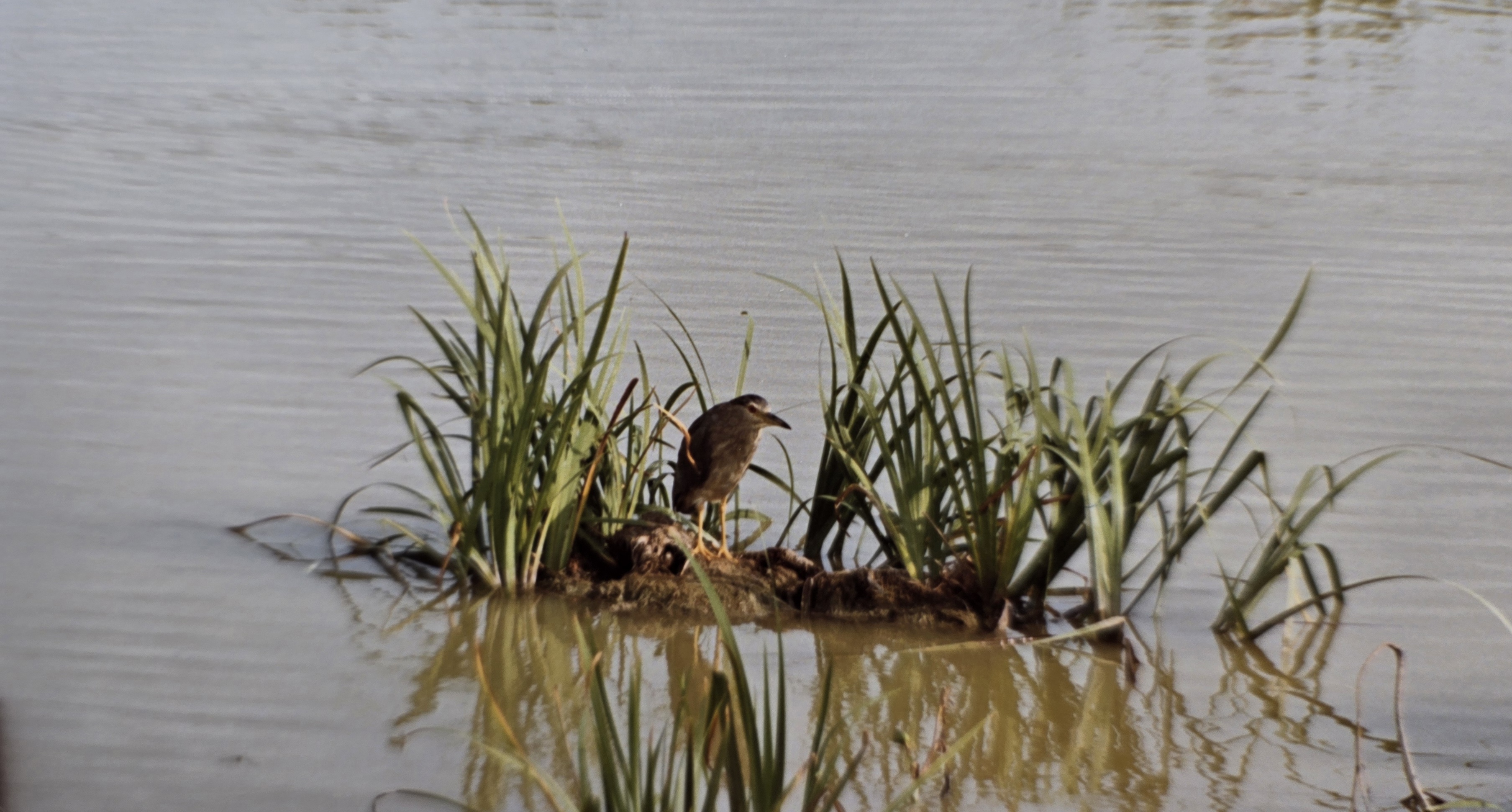
Nachtreiher in Camargue - the only bird I've been able to identify so far looking back on those old photos. 1991-07-15 12:41:47 Camargue
First observed in Camargue on 1991-07-15.
Description
Geography: This bird appears across the great seas in the following continents: Europe, North America, South America, Africa, Asia.General: Deutschland: Brutvogel, seltener Zugvogel RL 1
Seasonal behavior
Presence: 03-23 - 09-28 Migration in: 09-07 - 09-14 Migration out: 09-07 - 09-28More details at Vogelwarte.ch
Other Details
Physical details
Physical details: length=58-65 cm, wingspan=105-112 cm, weight=500-800 gHabitats: Wetland Details
Little egret / Seidenreiher (Egretta garzetta)
Profile Wikipedia Vogelwarte BirdLife ZH ornitho.ch Xeno-Canto BirdID NABU YouTube

Seidenreiher. 2022-02-05 11:42:26 Klingnauer Stausee (man-made lake)
First observed in 🇨🇭 on 2019-11-22.
Description
Appearance and identification: The little egret has yellow feet but dark gray legs and beak
Vocalization:
Sometimes utters a dry, rasping "kerrr" when flushed, but is mostly silent away from breeding ground. In colonies a peculiar gurgling and vibrating sound is heard; "ghala-la-la-la". [Link]
Seasonal behavior
Year-round bird Migration in: 09-28 - 10-07 Migration out: 09-28 - 10-05More details at Vogelwarte.ch
Other Details
Physical details
Physical details: length=55-65 cm, wingspan=88-95 cm, weight=350-550 gHabitats: Wetland
Vocalisation
Song: No details but a Xeno-Canto recording. Song attributes: Frequency:♫ Source: XENOCANTO XC799679 - Little Egret - Egretta garzetta - call that sounds like its vomiting - Catalunya, Spain.mp3 Spain (call)

Sort of a quack, brighter and higher than grey heron, with a bit of wawa.
Call attributes: Call melody: non-musical, slow, Frequency: low (1-3 KHz),
Details
Little bittern (Botaurus minutus)
Profile Wikipedia Xeno-Canto BirdID NABU YouTube

Wikipedia: Little bittern Source: WIKIPEDIA
1200px-Zwergdommel.jpg
🔍
Never observed (yet!)
Description
General:Details
Northern gannet / Basstölpel (Morus bassanus)

Wikipedia: Northern gannet Source: WIKIPEDIA
1200px-Morus_bassanus_adu.jpg
🔍
Never observed (yet!)
Description
Geography: This bird appears across the great seas in the following continents: Europe, North America, Africa.General: Deutschland: Brut-, Jahres-, Zugvogel, Wintergast RL R
Vocalization:
Heard mostly at breeding ground. Even, rhythmical series of harsh "harrr, harrr, harrr,". [Link]
Other Details
Physical details
Physical details: length=87-100 cm, wingspan=165-180 cm, weight=2400-3600 gDetails
Glossy ibis / Brauner Sichler (Plegadis falcinellus)

Sichler nach ornitho, Brauner Sichler nach Wikipedia oder Plegadis falcinellus, Neeracherried. 2022-09-04 07:11:46 Source: WIKIPEDIA
20220904_071146-DSC_0059 Sichler nach ornitho, Brauner Sichler nach Wikipedia oder Plegadis falcinellus, Neeracherried.JPG
Neeracherried
First observed in 🇨🇭 on 2022-09-04.
Description
Geography: This bird appears across the great seas in the following continents: Europe, North America, South America, Africa, Asia.Vocalization:
Generally silent away from breeding ground. Dry, crow-like "garr garr", may be heard occasionally in flight. At breeding ground various guttural grunts, and piping, hissing sounds. [Link]
Other Details
Physical details
Physical details: length=55-65 cm, wingspan=80-95 cm, weight=530-768 gDetails
Eurasian spoonbill / Löffler (Platalea leucorodia)
Profile Wikipedia Vogelwarte BirdLife ZH ornitho.ch Xeno-Canto BirdID NABU YouTube

Wikipedia: Eurasian spoonbill Source: WIKIPEDIA
1280px-Eurasian_Spoonbill-2.jpg
🔍
Never observed (yet!)
Description
General: Deutschland: Brut-, Zugvogel RL RVocalization:
Mostly silent, and of little use for identification. Soft utterances can be heard when feeding, and when interacting at nest. [Link]
Seasonal behavior
Seldom seen hereMore details at Vogelwarte.ch
Other Details
Physical details
Physical details: length=80-90 cm, wingspan=115-130 cm, weight=1130-1960 gDetails
African spoonbill / Rotgesichtlöffler (Platalea alba)
Profile Wikipedia Xeno-Canto BirdID NABU YouTube

African spoonbill makes shade with its wing to hunt. 2016-09-29 08:30:10 Botswana
First observed in Botswana on 2016-09-29.
Description
General:The African spoonbill (Platalea alba) is a long-legged wading bird[2] of the ibis and spoonbill family Threskiornithidae. The species is widespread across Africa and Madagascar, including Botswana, Kenya, Mozambique, Namibia, South Africa, and Zimbabwe.[2]
[more]
Details
Sacred ibis / Heiliger Ibis (Threskiornis aethiopicus)

Wikipedia: Sacred ibis Source: WIKIPEDIA
1200px-Sacred_ibis_%28Threskiornis_aethiopicus%29.jpg
🔍
Never observed (yet!)
Description
Details

Teichrohrsänger. 2024-05-20 08:58:41 Klingnauer Stausee (man-made lake)
First observed in 🇨🇭 on 2020-04-27.
Description
General: 2-5 repetitions of each sound. Is the tone a bit lower than the other reed warblers?General: Deutschland: Brut-, Zugvogel
Seasonal behavior
Presence: 04-11 - 10-18 Breeding: 05-10 - 08-18 Migration in: 04-11 - 05-31 Migration out: 07-29 - 10-18More details at Vogelwarte.ch
Other Details
Physical details
Physical details: length=13 cm, wingspan=17-21 cm, weight=10-16 gHabitats: Wetland
Vocalisation
Song: Weird, squeaky, urgent. Slower than Sumpfrohrsaenger. Song: Gleichmässiges Tempo! Man kann den Takt schlagen dazu.(Metronomsänger) Oft 2-3x wiederholte kurze Motive. Viele schnarrende Töne.
[Link]
By far easiest to identify by song: Characteristic, almost metric and even rhythm, very different from Sedge Warbler. Squeaky timbre with many, almost bizarre, harmonics. Phrases generally repeated 2-3 times. [Link]
Song attributes:
Melody: sings 30 seconds or longer, fast, Frequency: medium (1-5 KHz) Special sounds: weird
Gleichmässiges Tempo! Man kann den Takt schlagen dazu.(Metronomsänger) Oft 2-3x wiederholte kurze Motive. Viele schnarrende Töne.
[Link]
By far easiest to identify by song: Characteristic, almost metric and even rhythm, very different from Sedge Warbler. Squeaky timbre with many, almost bizarre, harmonics. Phrases generally repeated 2-3 times. [Link]
Song attributes:
Melody: sings 30 seconds or longer, fast, Frequency: medium (1-5 KHz) Special sounds: weird
♫ Source: XENOCANTO XC653035 - Eurasian Reed Warbler - Acrocephalus scirpaceus - song.mp3 (song)

Details

Schilfrohrsänger. 2022-06-04 11:48:08 Kaltbrunner-Riet
First observed in 🇨🇭 on 2020-05-20.
Description
General: Brütet hier nicht, darum eher selten, Durchzügler.General: Deutschland: Brut-, Zugvogel seit 2016 nicht mehr auf der Vorwarnliste
Seasonal behavior
Presence: 03-23 - 10-27 Breeding: 05-01 - 07-29 Migration in: 03-23 - 05-31 Migration out: 07-10 - 10-27More details at Vogelwarte.ch
Other Details
Physical details
Physical details: length=13 cm, wingspan=17-21 cm, weight=9-15 gHabitats: Wetland
Vocalisation
Song: Constant stream of equally spaced sounds. vogelwarte.ch has a sample that churrs and trills, similar rhythm to reed warbler / Teichrohrsänger, so maybe that's what it was. Listening on YouTube videos, you'd call it percussion rather than song! Song:Gesang sehr ähnlich dem Teichrohrsänger. Aber nicht so im Takt. Bevorzugte Tongebilde werden mehrmals wiederholt. Des öftern Singflug über dem Schilf.
[Link]
Song vigorous and varied. [Link]
Song attributes:
Melody: sings 30 seconds or longer, slow, Frequency: medium (1-5 KHz) Special sounds: mimicry
♫ Source: XENOCANTO XC661577 - Sedge Warbler - Acrocephalus schoenobaenus - song.mp3 (song)

Details

Mönchsgrasmücke. 2024-05-16 12:18:58 Kaltbrunner-Riet
First observed in 🇨🇭 on 2019-08-30.
Description
General: On a tree branch, but not usually on the treetop.General: Deutschland: Brut-, Zugvogel
Etymology:
Grayish bird with black cap (or brown in the case of females), for which reason the German
name refers to them as monks. [Link]
Seasonal behavior
Year-round bird Breeding: 04-20 - 08-09 Migration in: 02-20 - 05-10 Migration out: 08-18 - 10-27More details at Vogelwarte.ch
Other Details
Physical details
Physical details: length=13 cm, wingspan=20-23 cm, weight=16-25 gHabitats: Forest, Agricultural
Vocalisation
Song: They sometimes sing like a blackbird on speed - also non-stereotypic, seemingly improvised, in short bursts. Our local guy ends most of his songs with the same seven notes, which I find a good way to confirm the identification. In Ticino we often heard the 'Leiern' sound - the warblers would sing just the first 3 notes of a longer song, then stop. The order varied; high-medium-low I call 'Figaro' as in the opera, low-high-medium 'whiskey bar', as it sounded to me like the Kurt Weill lyrics, 'O-oh-show me-the-way to-the-next whis-ke-bar' - but the warbler usually stopped after 'way' or 'next' The British authors of The Sound Approach claim to hear 'a warblel and a whistle'. Song:Mit schwätzendem Vorgesang, (kann auch kurz sein oder ganz fehlen) der dann in klare, kräftige, zum Ende hin in wehmütige Flötentöne übergeht (Überschlag)
[Link]
Song pleasing, varied and loud. Sometimes very similar to Garden Warbler. A typical phrase starts with soft, staccato chattering and mimicry, which after a few seconds changes to a much louder, pure and resonant stream of notes for about 3-5 seconds. No fixed motif, but may end phrases with recurring notes. Often deviates from the characteristic type of song, and identification from song alone may be impossible. May sing first part of song for extended periods without ever reaching the characteristic ending. [Link]
Song attributes:
Melody: improvised melodic (hml), fast, Frequency: 2-5 KHz Special sounds: mimicry Singing season: 03-01 - 07-31 Dawn chorus start: 45 minutes before dawn.
♫ 2021-03-31 19:12:00 Source: BirdNet 20210331_191200 birdnet 1356 - Eurasian Blackcap hml - 2021-03-31 19:12:00 - Eurasian Blackcap - Lugano.mp3 Lugano (song)
♫ 2023-06-20 07:52:22
Source: Zoom H6/H2n Bolle di Magadino (song)♫ 2024-05-15 05:27:28
Source: Zoom H6/H2n Luppmen (song)Calls:
„täck“ oft wiederholt
[Link]
Alarm call a hard "check", similar to Lesser White-throat. Sometimes with an additional hoarse and nasal "cherrrr". [Link]
1:
General: Sputtery/stoney, but may have other calls too.Call:
 The Blackcap may generate a perplexing variety of territorial calls, though the typical contact call is a hard, tongue-clicking "teck teck" which has a scolding quality to it. It's not dissimilar to the 'pebble-clacking' call of the Stonechat. [Suffex Wildlife Trust]
XC546030 black cap warbler so-called tac and djii call.
♫ Source: XENOCANTO XC546030 black cap warbler so-called tac and djii call.mp3 (call)

2: No details but a Xeno-Canto recording.
XC548858-20200411 Eurasian Blackcap, alarm call part of advertising song, male, Flughafen Belpmoos, Bern, Switzerland.
♫ Source: XENOCANTO XC548858-20200411 Eurasian Blackcap, alarm call part of advertising song, male, Flughafen Belpmoos, Bern, Switzerland.mp3 Switzerland (alarm call)

Call attributes: Call melody: one note, slow, Frequency: high (3-9 KHz), Special sounds: sputter/pebble-clatter.
Details

Das muss ein Gartengrasmücke sein im Feld bei W-Wiher, noch nie so in Getreide gesehen, aber es klingt plausibel. 2024-06-27 18:57:05 Fehraltorf
First observed in 🇨🇭 on 2020-04-27.
Description
General: Nondescript, shy.General: Hidden in the branches. Does change trees though. 2024 saw one in a grain field by the Wildert Weiher
General: Deutschland: Brut-, Zugvogel
Appearance and identification: Nabu: Das Hauptbestimmungsmerkmal dieser sehr unauffällig gefärbten Grasmücke ist, dass sie kein besonderes Merkmal besitzt.
Im gegensatz zu ihrem Namen kommt die Gartengrasmücke eher seltener in Gärten vor, häufiger ist sie in Hecken und grossen Büschen in waldrandlage anzutreffen, wo sie recht versteckt lebt. [Aus der NABU Android-App]
Seasonal behavior
Presence: 04-15 - 10-05 Breeding: 04-30 - 08-10 Migration in: 04-15 - 05-30 Migration out: 08-01 - 10-05More details at Vogelwarte.ch
Other Details
Physical details
Physical details: length=14 cm, wingspan=20-24 cm, weight=16-22 gHabitats: Forest
Vocalisation
Song: Song: Hard to distinguish from Mönchsgrasmücke/black cap, but they sing much longer and don't end with a typical short melody like the black caps. [Link]'minutenlang anhaltenden, plaudernden und abwechslungsreichen Gesang' [Link]
Song: Sprudelnd, orgelnd, die längsten Strophen aller hiesigen Grasmücken. Mit vielen reinen, volltönenden Tönen. Ohne Überschlag der Mönchsgrasmücke.
[Link]
Song: a full bodied, flowing, melodious stream of notes, distinguished by its almost constant, warbled quality and lack of clear whistling notes (see Blackcap). Tempo is fairly even. Beware confusion possibility with occasional subsong of Blackcap that never reaches the whistling part! Call a nasal "che". [Link]
Song attributes:
Melody: improvised melodic (hm), fast, Frequency: medium (1-5 KHz)
Hard to distinguish from Mönchsgrasmücke/black cap, but they sing much longer and don't end with a typical short melody like the black caps. [Link]'minutenlang anhaltenden, plaudernden und abwechslungsreichen Gesang' [Link]
Song: Sprudelnd, orgelnd, die längsten Strophen aller hiesigen Grasmücken. Mit vielen reinen, volltönenden Tönen. Ohne Überschlag der Mönchsgrasmücke.
[Link]
Song: a full bodied, flowing, melodious stream of notes, distinguished by its almost constant, warbled quality and lack of clear whistling notes (see Blackcap). Tempo is fairly even. Beware confusion possibility with occasional subsong of Blackcap that never reaches the whistling part! Call a nasal "che". [Link]
Song attributes:
Melody: improvised melodic (hm), fast, Frequency: medium (1-5 KHz)
♫ Source: XENOCANTO XC728379 - Garden Warbler - Sylvia borin - song.mp3 (song)

Calls:
Alarm call a hard "check", and a hoarse "tcherr". [Link]
No details but a Xeno-Canto recording.
- but really
OWN
Garden warbler calls from bushes at Wildert.
♫ 2025-07-23 17:28:00 Wildert (call)
Call attributes: song Frequency: ,
Details

Wikipedia: Spectacled warbler Source: WIKIPEDIA
Sylvia_conspicillata_Gran_Canaria.jpg
🔍
Never observed (yet!)
Description
General:The spectacled warbler (Curruca conspicillata) is a species in the typical warbler genus, Curruca. The specific conspicillata is from Latin conspicillum, a place to look from, equivalent to "spectacled".[2]
[more]
Details

Sardinian warbler at Braco-Mesco by Levanto. 2024-05-31 07:58:51 Levanto
First observed in Mallorca on 2022-04-07.
Description
The Sardinian warbler (Curruca melanocephala) is a common and widespread typical warbler from the Mediterranean region. Like most Curruca species, it has distinct male and female plumages. The adult male has a grey back, whitish underparts, black head, white throat and red eyes. Plumages are somewhat variable even in the same locality, with the intensity of a reddish hue on upper- and/or underside varies from absent to (in some subspecies) pronounced. The female is mainly brown above and buff below, with a grey head. The Sardinian warbler's song is fast and rattling, and is very characteristic of the Mediterranean areas where this bird breeds.
[more]
Vocalisation
Song: No details but a Xeno-Canto recording. Song attributes: Frequency:♫ 2025-06-07 13:02:00 Stromboli (call)
No details but a Xeno-Canto recording. - but really OWN
Call attributes: song Frequency: ,
Details
Profile Wikipedia Vogelwarte BirdLife ZH ornitho.ch bird-song.ch Xeno-Canto BirdID NABU YouTube

Wintergoldhähnchen im Hönggerwald. 2024-04-14 08:24:44
First observed in 🇨🇭 on 2020-07-13.
Description
I'd often heard the high-pitched song and call in the woods by Fehraltorf but had doubts I'd ever see one (they're the smallest bird in Switzerland, fairly shy, and I seemed to only hear them in very tall trees). I didn't see one until hiking at the Pragelpass. And finally in October 2020, I saw them near Rumlikon and at the Pfaeffikersee, where I took the new profile picture. In December I saw five of them cruise through the bushes beside our house, hopping from branch to branch, snapping up insects - something I'd never have believe in spring 2020.General: Said to be the smallest bird in Switzerland, but it's basically the same size as the Firecrest.
General: Deutschland: Brut-, Jahres-, Zugvogel, Wintergast
Seasonal behavior
Year-round bird Breeding: 04-01 - 08-18 Migration in: 03-01 - 05-01 Migration out: 08-18 - 11-06More details at Vogelwarte.ch
Other Details
Physical details
Physical details: length=9 cm, wingspan=13-15 cm, weight=4-7 gHabitats: Forest
Vocalisation
Song:Vogelwarte.ch says high-pitched song that gently rises and falls. This song starts out with a repeated note. [Link]
Song: Kurze Reihe von sehr hohen, leisen Tönen in auf-absteigender Tonhöhe, an das „W“-im Namen erinnernd. [Link]
Song: a very high-pitched, undulating series of arpeggiated notes moving down and up again, repeated 4-5 times ending with a marked "conclusion" (like "trying to start a tiny motor and failing"). Timbre of song similar to contact call. [Link]
Song attributes:
Mnemnoic: W=Winter=v.a. runter, dann wieder hoch, plus melodischer Schluss Melody: stereotype melodic, slow, Frequency: 6-8 KHz
Calls:
'sisisi' [Link]
Contact call a very high pitched "zit zit zit", only similar to Firecrest and treecreepers. Treecreepers usually calls with longer "zzzziiiiit" repeated at regular intervals, while Goldcrest calls in phrases with two to four calls in series in an uneven rhythm. Firecrest contact calls lower pitched than Goldcrest, and in a softer tone (but quite similar). [Link]
No details but a Xeno-Canto recording.
- but really
OWN
Wintergoldhähnchen whoop Ruf im Biotop.
♫ 2024-09-12 16:40:00 Greater Fehraltorf (call)
Call attributes: song Frequency: ,
Details
Profile Wikipedia A-Z Animals Vogelwarte BirdLife ZH ornitho.ch bird-song.ch Audubon AllAboutBirds Xeno-Canto BirdID NABU YouTube

Rauchschwalbe braucht eine Coiffeuse. 2025-08-03 16:54:17 Fehraltorf
First observed in 🇨🇭 on 2020-04-16.
Description
Geography: This bird appears across the great seas in the following continents: Europe, North America, South America, Africa, Asia.General: Deutschland: Brut-, Zugvogel RL V
Good to know: Die langen Schwanzfedern vom Rauchschwalbe und anderen geben auch dem Schmetterling Schwalbenschwanz seine deutschen Namen.
Etymology:
In früheren Jahrhunderten flogen sie vielfach durch die Öffnungen im Giebel ein und aus, durch die auch der Rauch des Herdfeuers abzog. So erhielten sie den Namen Rauchschwalben. [Link]
Appearance and identification:
Rauchschwalbes Bauch ist etwas braun rot, nicht weiss wie der von der Mehlschwalbe - was wahrscheinlich Quelle der zwei Namen ist. [Link]
Seasonal behavior
Presence: 03-01 - 10-27 Breeding: 04-20 - 09-17 Migration in: 03-01 - 05-31 Migration out: 08-18 - 10-27More details at Vogelwarte.ch
Other Details
Physical details
Physical details: length=17-19 cm, wingspan=32-34 cm, weight=16-22 gHabitats: Settlement
Similar species
Looks similar to: Common house martin.Vocalisation
Song: General: Squeaky with occasional buzzes, usually heard in flock.Song:
Kann melodisch sein wenn einzeln gehört statt viele zusammen. [Link]
Song: Characteristic calls and song. Song a sparkling, squeaky energetic improvisation with interspersed contact calls, often with diagnostic ending; an electric and drawn-out "su-eerrrrrrrrrrrrrrr". [Link]
Song attributes:
Melody: stereotype melodic, fast, Frequency: 2-6 KHz
Calls:
Contact call a short and sharp "weet" or "kee-weet". [Link]
XC898815 - Barn Swallow - Hirundo rustica - flight call.
♫ Source: XENOCANTO XC898815 - Barn Swallow - Hirundo rustica - flight call.mp3 (flight call)

Call attributes: flight call Call melody: one note, slow, Frequency: medium (1-5 KHz),
Details
Profile Wikipedia Xeno-Canto NABU YouTube

Wikipedia: European red-rumped swallow Source: WIKIPEDIA
RED-RUMPED_SWALLOW_Hirundo_daurica_rufula_%288467592335%29.jpg
🔍
Never observed (yet!)
Description
General:Details

Bank swallow. 2024-01-26 15:58:58 Thailand
First observed in Thailand on 2024-01-26.
Description
Geography: This bird appears across the great seas in the following continents: Europe, North America, South America, Africa, Asia.General:
The sand martin (Riparia riparia) or European sand martin, bank swallow, and collared sand martin in India, is a migratory passerine bird in the swallow family. It has a wide range in summer, embracing practically the whole of Europe and the Mediterranean countries and across the Palearctic to the Pacific Ocean. It is a Holarctic species also found in North America. It winters in eastern and southern Africa, South America, and the Indian Subcontinent.
[more]
Deutschland: Brut-, Zugvogel RL V
Seasonal behavior
Presence: 03-23 - 10-18 Breeding: 05-01 - 09-07 Migration in: 03-23 - 06-09 Migration out: 07-10 - 10-18More details at Vogelwarte.ch
Other Details
Physical details
Physical details: length=12 cm, wingspan=26-29 cm, weight=11-16 gHabitats: Wetland
Vocalisation
Song: Fast raspy one-noter. Song:Song a primitive improvisation on the contact call. [Link]
Song attributes:
Melody: non-musical, fast, Frequency: 1-7 KHz Special sounds: rasp
♫ Source: XENOCANTO XC344092 - Sand Martin - Riparia riparia - raspy song but note, does not sing often.mp3 (song)

Calls:
Contact call a mono- or disyllabic "trrrrt". Similar to House Martin but more raucous and less crisp, with less rolling r's, and with stable pitch throughout. Alarm call similar to House Martin; a sharp plaintive "tseep", but somewhat purer and more drawn. [Link]
No details but a Xeno-Canto recording.
XC659747 - Sand Martin - Riparia riparia - noisy call recorded in Sweden.
♫ Source: XENOCANTO XC659747 - Sand Martin - Riparia riparia - noisy call recorded in Sweden.mp3 (call)

Call attributes: song Frequency: ,
Details

MerlinBirdID meint Mehlschwalbe. 2022-05-21 10:11:56 Leuk
First observed in 🇨🇭 on 2020-08-10.
Description
General: This one is a swallow in German but a martin in English.General: Deutschland: Brut-, Zugvogel RL V
Etymology:
Der Kontaktlaut ist ein hartes trieer, gelegentlich lautmalerisch auch als chirrp umschrieben. [Link]
Seasonal behavior
Presence: 03-23 - 10-27 Breeding: 05-21 - 09-28 Migration in: 03-23 - 06-09 Migration out: 08-18 - 10-27More details at Vogelwarte.ch
Other Details
Physical details
Physical details: length=12 cm, wingspan=26-29 cm, weight=15-23 gHabitats: Settlement
Similar species
Looks similar to: Barn swallow.Vocalisation
Song: Song:Mehlschwalbe klingt weniger melodisch als der Rauchschwalbe [Link]Merry improv of chirping, contact call [Link]
Song: Song a merry improvisation of chirping, contact call-like sounds (sometimes recalling a budgerigar). [Link]
Song attributes:
Melody: stereotype melodic, fast, Frequency: 2-7 KHz
♫ Source: XENOCANTO XC730813 - Common House Martin - Delichon urbicum - song and call according to recordist Fernando Aranguren Jiménez, recorded in Spain.mp3 Spain (song)

Calls:
Contact call a rolling "krreet". Similar to Sand Martin but noticeably dryer, more rolling and less raucous. Typically varies the pitch of the call more. Warning call a sharp and plaintive "tsreee". [Link]
1:
Heard from in the air, loud, with lots of chirps!
2:
XC742347 - Common House Martin - Delichon urbicum - flight call, recorded in Spain.
♫ Source: XENOCANTO XC742347 - Common House Martin - Delichon urbicum - flight call, recorded in Spain.mp3 Spain (flight call)
 Birdnet 864 flight call - Common house martin.
♫ 2020-08-10 14:45:28 Source: BirdNet 20200810_144528 birdnet 864 flight call - Common house martin.mp3 Luppmen (flight call)
Call attributes: Call melody: simple rhythmic, fast, Frequency: 4-7 KHz,
Details

Feldlerche auf einer Sonnenblume, Neunkirch. 2023-07-16 10:19:38 Neunkirch, Schaffhausen
First observed in 🇨🇭 on 2022-06-25.
Description
Geography: This bird appears across the great seas in the following continents: Europe, North America (introduced), Africa, Asia.General: Deutschland: Brut-, Jahres-, Zugvogel, Wintergast RL 3
Good to know:
Aus dem Kurzjahresbericht BirdLife Schweiz 2022: Die Feldlerche, Vogel des Jahres 2022..., ist eihne dieser bredrohten Arten, welche durch die Industrialisierung der Landwirtschaft ausgerottet wird. [Link]
Appearance and identification:
Somewhat like a house sparrow but 18-19 cm long, not 14-15, kleiner als Star. Ruffled head feathers. NABU says streaks on breast contrast with white belly. [Link]
Geography:
 Introduced population in North America is gradually declining. [Link]
Habitat: Stark gefährdet durch Verlust von geeignetem Lebensraum. Eine Massnahme ist die Erstellung von Lerchenfenstern auf den Feldern - eine kleine Fläche mitten im Feld, die nicht bepflanzt oder gemäht wird. So was sieht man bei uns, z.B. zwischen Freudwil und Gutenswil, wobei ich nicht genau weiss, ob Feldlerchen das Ziel davon sind. Die Infos habe ich vom FOK Kurs 2021-2022 von Christina Ebneter.
Seasonal behavior
Year-round bird Breeding: 04-11 - 08-18 Migration in: 02-01 - 04-01 Migration out: 09-17 - 11-15More details at Vogelwarte.ch
Other Details
Physical details
Physical details: length=18-19 cm, wingspan=30-36 cm, weight=26-50 gHabitats: Agricultural
Vocalisation
Song: Fast chirpy improvization without a break, not very high, reminds me of a nightingale or a Eurasian reed warbler/Teichrohrsänger with the exact rhythm, but most likely sung in a cornfield. Or a Singdrossel that repeats its elements longer that that guy. Repeats elements 1-8 times. Sometimes buzzy/trilly. Can go on for minutes at a time. Ich habe es auch mit einem Amsel verwechselt, da er lang und melodisch, fast wie Amsel aber hört nicht auf. Song:Song a pleasing energetic stream of chirping, merry trills, interspersed with mimicry. Trills quite resonant with fairly full tone. Song usually given in flight high in the air. Less characteristic, shorter, weaker and more varied song when given from ground. [Link]
Song attributes:
Melody: sings 30 seconds or longer, slow, Frequency: 2-6 KHz Special sounds: mimicry
♫ Source: XENOCANTO XC685846 - Eurasian Skylark - Alauda arvensis - song, recorded in France.mp3 (song)
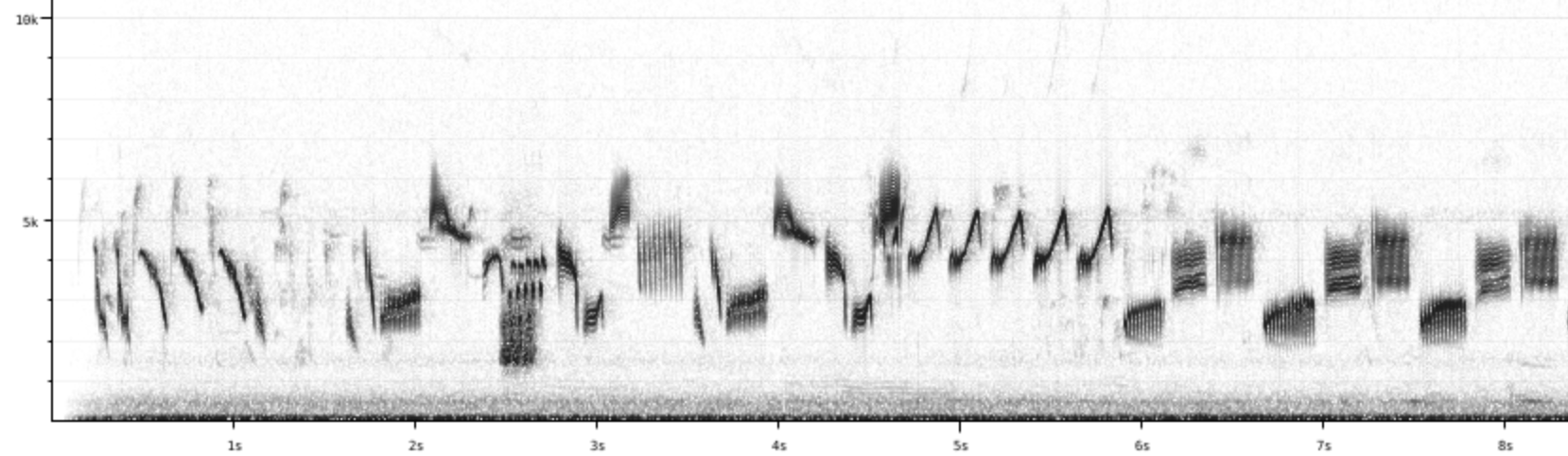
Calls:
Most typical flight call a short trilling "chirrup", with the end note noticeably lower pitched than the start. Also several other more cryptic calls. [Link]
This quickly-written call archetype may need review/enhancement.
♫ Source: XENOCANTO XC772869 - Eurasian Skylark - Alauda arvensis - flight call.mp3 (flight call)
 XC772869 - Eurasian Skylark - Alauda arvensis - flight call.
♫ Source: XENOCANTO XC772869 - Eurasian Skylark - Alauda arvensis - flight call.mp3 (flight call)
XC946652 - Eurasian Skylark one-note swooping flight call - Alauda arvensis.
♫ Source: XENOCANTO XC946652 - Eurasian Skylark one-note swooping flight call - Alauda arvensis.mp3 (flight call)

Call attributes: flight call Frequency: ,
Details

Wikipedia: Greater short-toed lark Source: WIKIPEDIA
Greater_short-toed_lark_%28Calandrella_brachydactyla%29_Photograph_by_Shantanu_Kuveskar.jpg
🔍
Never observed (yet!)
Description
General:The greater short-toed lark (Calandrella brachydactyla) is a small passerine bird. The current scientific name is from Ancient Greek. The genus name, Calandrella, is a diminutive of kalandros, the calandra lark, and brachydactila is from brakhus, "short", and daktulos, "toe".[2]
[more]
Seasonal behavior
Seldom seen hereMore details at Vogelwarte.ch
Other Details
Physical details
Physical details: length=13-14 cm, wingspan=25-30 cm, weight=20-26 gDetails
Profile Wikipedia Vogelwarte BirdLife ZH ornitho.ch bird-song.ch Xeno-Canto BirdID NABU YouTube

Wikipedia Berglaubsänger Phylloscopus bonelli. Source: WIKIPEDIA
Wikipedia Berglaubsaenger Phylloscopus_bonelli.jpg
First observed in 🇨🇭 on 2020-06-08.
Description
Roman von Sury likes them, but notes that their habitat is increasingly disappearing in Switzerland.General: Deutschland: Brut-, Zugvogel
Seasonal behavior
Presence: 04-11 - 09-17 Breeding: 05-01 - 07-20 Migration in: 04-11 - 06-09 Migration out: 07-20 - 09-17More details at Vogelwarte.ch
Other Details
Habitats: ForestVocalisation
Song: Single note repeated 6 or 8 times quickly in half a second Song:Reihe(5-10) von gleichhohen Schlägen, ähnlich dem Schwirren der obigen Art [Waldlaubsänger], aber langsamer, einzelne Töne deutlich getrennt, etwas scheppernd. Kann mit Klappergrasmücke verwechselt werden) [Link]
Song attributes:
Melody: one note, fast, Frequency: 3-7 KHz
♫ Source: XENOCANTO XC720128 - Western Bonelli's Warbler - Phylloscopus bonelli - song, recorded in France.mp3 (song)

Details
 XXXX Bei Wildert glaube ich dass das ein Fitis ist und kein Zilp-zalp aber MerlinBirdId war auch verwirrt und hat ZZ besser gefunden.JPG)
Bei Wildert glaube ich dass das ein Fitis ist und kein Zilp-zalp aber MerlinBirdId war auch verwirrt und hat ZZ besser gefunden. 2026-05-12 17:25:20 Wildert
First observed in 🇨🇭 on 2020-04-24.
Description
General:The willow warbler (Phylloscopus trochilus) is a very common and widespread leaf warbler which breeds throughout northern and temperate Europe and the Palearctic, from Ireland east to the Anadyr River basin in eastern Siberia. It is strongly migratory, with almost all of the population wintering in Sub-Saharan Africa.[2][3]
[more]
Deutschland: Brut-, Zugvogel
Seasonal behavior
Presence: 03-10 - 10-10 Breeding: 04-20 - 05-31 Migration in: 03-10 - 04-30 Migration out: 07-15 - 10-18More details at Vogelwarte.ch
Other Details
Physical details
Physical details: length=10-11 cm, wingspan=16-22 cm, weight=7-12 gHabitats: Forest
Vocalisation
Song: Song similar to common chaffinch but higher, faster, tendency to descend but with more ups and downs. Song:Reihe v. Pfeiflauten (ca 12) etwas abfallend. Klingt ähnlich Buchfink, aber etwas traurig, melancholisch, wie in moll-Tonart. [Link]
By far most easily identified by it's call or song. Song: A 3-5 second, falling phrase of soft, rippling "svi-svi" sounds, starting high with some attack, and then falling in a mellow manner. The phrase lacks any conclusion, and diminishes both in strength and tempo. [Link]
Song attributes:
Mnemnoic: Buchfink diva Melody: stereotype melodic, fast, Frequency: high (3-9 KHz) Singing season: 04-01 - 06-30 Dawn chorus start: 22 minutes before dawn.
Calls:
ähnlich oben, aber mehr zweisilbig [Link]
Contact/alarm call a soft, plaintive ascending "hoo-eet". Similar to Chiff-chaff, but first part more drawn, giving it a disyllabic feel. [Link]
Whoop very similar to chiffchaff, etc. but starts at an even level, then ascends.
Call recorded in UK, sounds typical to me, and spiced up by a yellowhammer in the background and several other birds
♫ Source: XENOCANTO XC444002 - Willow Warbler - Phylloscopus trochilus trochilus - call in UK, with yellowhammer in background.mp3 (call)

Call attributes: contact call Call melody: one note, slow, Frequency: 2-4 KHz, Special sounds: whoop.
Details

Zilpzalp vorm Fanel-Plattform. 2024-05-22 17:46:23 Fanel/Chablais de Cudrefin und La Sauge
First observed in 🇨🇭 on 2019-06-04.
Description
General: In the survey of 2008, there was only 1 Chiffchaff in Fehraltorf for every 7 blackbirds, and it was ranked 19th in the village. Yet in summer 2020 I heard them in nearly every recording I make, whether at home by the brook (Luppmen) or in the woods. I presume their population has exploded in the last 10 years.General: I see them in middle branches, but not in particularly exposed places.
General: Deutschland: Brut-, Zugvogel
Etymology:
Greenish-brown above and off-white below, it is named onomatopoeically for its simple chiff-chaff song. [Link]
[The common chiffchaff's English name is onomatopoeic, referring to the repetitive chiff-chaff song of the European subspecies. [Link]
Seasonal behavior
Year-round bird Breeding: 04-11 - 08-09 Migration in: 02-20 - 05-01 Migration out: 08-29 - 11-06More details at Vogelwarte.ch
Other Details
Physical details
Physical details: length=10-11 cm, wingspan=15-21 cm, weight=6-10 gHabitats: Forest
Vocalisation
Song: Seems to consist of 3 notes repeated randomly, occasionally just 2 notes. Though NABU.de says they stop singing at the end of July, I do hear their 3-note song occasionally in October, but just one or two repetitions. Song:[Translated from German:] From the middle of August till the end of September the chiffchaff offers regular autumn song. [Link]
Lange Reihen (6-20) von „zilp-zalp“-Rufen, meist abwechselnd in Tonhöhe. (Als bemühe sich der Sänger vergeblich den ersten Ton wieder zu treffen , ohne jedoch weit zu verfehlen.) „Zins zahl, Zins zahl, zahl Zins, Zins Zins zahl“ („Zins“ etwas höher als „zahl“) [Link]
Song a very distinct: "chiff-chaff-chiff-chiff-chaff-chiff", in a regular clock-like rhythm. Each syllable at seemingly random pitch, but no large intervals tonally. Sometimes "get stuck" at one note. [Link]
Song attributes:
Melody: simple rhythmic, slow, Frequency: high (3-9 KHz) Singing season: 03-01 - 07-31 Dawn chorus start: 35 minutes before dawn.
Calls:
Rufe :einsilbiges „hüid“, hinaufgezogen, wandelbar. [Link]
Contact/alarm call a soft, plaintive ascending "hooeet". Similar to W.Warbler, but shorter with a monosyllabic feel. [Link]
Repeated rising note, not too loud
XC656913 - Common Chiffchaff - Phylloscopus collybita - call recorded in Belgium.
♫ Source: XENOCANTO XC656913 - Common Chiffchaff - Phylloscopus collybita - call recorded in Belgium.mp3 (contact call)

Call attributes: Call melody: one note, slow, Frequency: 2-4 KHz, Special sounds: whoop.
Details
Profile Wikipedia Vogelwarte BirdLife ZH ornitho.ch bird-song.ch Xeno-Canto NABU YouTube

Wahrscheinlich Waldlaubsänger. 2022-05-22 09:52:22 Leuk
First observed in 🇨🇭 on 2022-05-22.
Description
General:The wood warbler (Phylloscopus sibilatrix) is a common and widespread leaf warbler which breeds throughout northern and temperate Europe, and just into the extreme west of Asian Russia in the southern Ural Mountains.
[more]
Deutschland: Brut-, Zugvogel
Seasonal behavior
Presence: 04-11 - 09-17 Breeding: 05-01 - 07-10 Migration in: 04-11 - 05-31 Migration out: 07-20 - 09-17More details at Vogelwarte.ch
Other Details
Physical details
Physical details: length=12 cm, wingspan=19-24 cm, weight=8-12 gHabitats: Forest
Vocalisation
Song: Sid-sid-sid-sirrrr. 3 secs, then 5 secs pause. At bird-song.ch I hear a slow-fast one-noter, about 8 slow ones in 1.5 seconds, then a trill of 25 fast ones. Song:kurze Reihe (4-10) v. Stakkatotönen, gefolgt von abfallendem Schwirrroller. (Tönt wie das Anlassen eines Velosolex) Während des Gesanges schwebender Schwirrflug. Dazu hört man eine Reihe angenehmer Pfeiflaute wie „djü“ [Link]
Song distinct. An accelerating series of sharp, metallic "swee-swee-swee-swee". Alternative (piping) song a series of 4-6 piping, plaintive and descending "pew - pew" calls. Resembles Willow Tit's song, but is softer with each note more evenly pitched. Contact call similar to individual syllables of piping song, but with heavier accent on the ending. [Link]
Song attributes:
Melody: simple rhythmic (hl hl hl), fast, Frequency: 5-8 KHz Special sounds: trill
♫ Source: XENOCANTO XC727564 - Wood Warbler - Phylloscopus sibilatrix - song.mp3 (song)

Calls:
„düü“ [Link]
Typically with a staccato beginning. Pitch drops as the speed increases and the syllables fuses into a continuous trill. Often described as the sound of a spinning coin coming to rest on a glass table. Some phrases may be given in an almost even tempo, and may recall Bonelli's Warbler. [Link]
No details but a Xeno-Canto recording.
- but really
OWN_VIA_ZOOM
Kurzer Ruf hl hl hl, BirdNet meint Waldlaubsänger.
♫ 2025-04-24 09:15:02
Source: Zoom H2n Switzerland (call)Call attributes: song Frequency: ,
Details
Profile Wikipedia Xeno-Canto BirdID NABU YouTube

Wikipedia: Canary Islands chiffchaff Source: WIKIPEDIA
1200px-Phylloscopus_canariensis_-Drago%2C_Gran_Canaria%2C_Canary_Islands%2C_Spain-8_%281%29.jpg
🔍
Never observed (yet!)
Description
General: Endemic in AfrikaDetails
Profile Wikipedia Xeno-Canto NABU YouTube

Wikipedia: Iberian chiffchaff Source: WIKIPEDIA
Phylloscopus_ibericus.jpg
🔍
Never observed (yet!)
Description
General:The Iberian chiffchaff (Phylloscopus ibericus) is a species of leaf warbler endemic to Portugal, Spain and North Africa, west of a line stretching roughly from the western Pyrenees via the mountains of central Spain to the Atlantic.
[more]
Details
Profile Wikipedia eBird Vogelwarte BirdLife ZH ornitho.ch bird-song.ch Audubon AllAboutBirds Xeno-Canto BirdID NABU YouTube

MerlinBirdID suggests a Spanish sparrow, Italian sparrow or House sparrow. 2022-04-12 15:18:40
First observed in 🇨🇭 on 2019-05-14.
Description
Geography: This bird appears across the great seas in the following continents: Europe, North America (introduced), South America, Africa, Asia.General: One of the most common birds anywhere in Europe and North America. In Fehraltorf there are 5 house sparrows for every one tree sparrow. Eugene Schieffelin brought house sparrows and starlings to North Ameria. As a Shakespeare fan, it is often claimed that he wanted to introduce all species to North America that are mentioned in Shakespeare, but apparently this is not supported by any records
General: Found practically everywhere. Often on the ground or on your table in a cafe (they're very bold) or in groups in bushes and hedges
General: Deutschland: Brut-, Jahresvogel RL V
Seasonal behavior
Year-round birdOther Details
Physical details
Physical details: length=14-15 cm, wingspan=21-25 cm, weight=24-38 gnot sexually dimporphic. No breeding plumage Identifying characteristics: Youth: beak = yellow (Makes it look like a finch) Habitats: Settlement
Similar species
Looks similar to: Common reed bunting.Vocalisation
Song: An monotone chirping. Mainly 2-5 KHz with higher overtones. Song:Song a primitive, monosyllabic, or slightly disyllabic "chilp", hard to distinguish from Tree Sparrow. [Link]
Song attributes:
Melody: simple rhythmic (mh mh mh), slow, Frequency: 2-5 KHz Singing season: 01-01 - 08-31 Dawn chorus start: 30 minutes before dawn.
♫ 2024-06-18 08:35:00 Fehraltorf (call)
Calls:
Most calls very similar to Tree Sparrow, but lacks said species' distinct high pitched call (chew-itt), and alarm call is less dry and raucous. [Link]
1:
XC943040 - House Sparrow one-note swoop call - Passer domesticus.
♫ Source: XENOCANTO XC943040 - House Sparrow one-note swoop call - Passer domesticus.mp3 (call)

2: No details but a Xeno-Canto recording. - but really OWN_VIA_BIRDNET
Birdnet 825 chittering could be alarm call, - House sparrow.
♫ 2020-07-25 09:18:27 Source: BirdNet 20200725_091827 birdnet 825 chittering could be alarm call, - House sparrow.mp3 Luppmen (alarm call)
3: No details but a Xeno-Canto recording. - but really OWN_VIA_BIRDNET
Birdnet 853 typical chirping - contact calls? 2-5 KHz - House sparrow.
♫ 2020-08-06 09:04:55 Source: BirdNet 20200806_090455 birdnet 853 typical chirping - contact calls? 2-5 KHz - House sparrow.mp3 Luppmen (contact call)
Call attributes: Call melody: one note, slow, Frequency: medium (1-5 KHz), Special sounds: swoop.
Details
Profile Wikipedia Vogelwarte BirdLife ZH ornitho.ch bird-song.ch Audubon AllAboutBirds Xeno-Canto BirdID NABU YouTube

Rekordbeobachtung - 8 Vögel an der Futterstelle, hinten links ein ungewöhnlicher Besuch von einem Buchfink, und sonst Feldsperlinge und eine Kohlmeise. 2024-12-15 13:40:22 Greater Fehraltorf
First observed in 🇨🇭 on 2020-04-10.
Description
Geography: This bird appears across the great seas in the following continents: Europe, North America (introduced), Africa, Asia.General: Similar to the house sparrow, but with the black cheek patch seen here. in Fehraltorf there are 5 times as many house sparrows as tree sparrows.
General: Deutschland: Brut-, Jahresvogel RL V
Etymology:
Der Gesang ist ein rhythmisches Tschilpen, das lautmalerisch mit tsche tsche umschrieben wird. [Link]
Geography:
Brought from Germany, about 20 of these birds were released in St. Louis in 1870. The population took hold there, and they might have spread except that the House Sparrow, seemingly more aggressive and adaptable, reached the St. Louis area at about the same time. Eurasian Tree Sparrows are still found in parts of Missouri and Illinois, and have reached southeastern Iowa, but they are fairly local in farmland and suburbs. The tougher House Sparrow may keep them out of other areas. [Link]
Vocalization:
Most other sounds similar to House Sparrow, and may be difficult to identify. [Link]
Seasonal behavior
Year-round birdOther Details
Physical details
Physical details: length=14 cm, wingspan=20-22 cm, weight=18-29 gHabitats: Settlement
Vocalisation
Song: Monotone chirping, rougher than that of the house sparrow. Most 2-7 KHz mit many overtones, i.e. somewhat higher than the house sparrow. Song:Chattering sounds are generally harder, and song slightly higher pitched than House Sparrow. [Link]
Song attributes:
Melody: simple rhythmic, slow, Frequency: 2-7 KHz
Calls:
Distinct, high-pitched and explosive contact-call; "che-witt" typically given in flight. Second syllable rising rapidly in pitch. [Link]
Rough sounding voice
XC926073 - Eurasian Tree Sparrow - Passer montanus - call.
♫ Source: XENOCANTO XC926073 - Eurasian Tree Sparrow - Passer montanus - call.mp3 (call)

Call attributes: Call melody: one note, slow, Frequency: medium (1-5 KHz),
Details
Profile Wikipedia Xeno-Canto BirdID NABU YouTube

Possibly Spanish sparrow building nest at Hotel Gren Rey, La Gomera. 2022-03-12 11:06:30
First observed in La Gomera on 2022-03-12.
Description
General:The Spanish sparrow or willow sparrow (Passer hispaniolensis) is a passerine bird of the sparrow family Passeridae. It is found in the Mediterranean region and south-west and central Asia. It is very similar to the closely related house sparrow, and the two species show their close relation in a "biological mix-up" of hybridisation in the Mediterranean region, which complicates the taxonomy of this species.
[more]
Vocalization:
. [Link]
Other Details
Physical details
Physical details: length=15 cm, wingspan=23-26 cm, weight=22-36 gDetails
Profile Wikipedia Xeno-Canto BirdID NABU YouTube

Steinsperling, Ponta de Sao Lourenco, Madeira. 2023-03-10 15:29:04 Madeira
First observed in Madeira on 2023-03-10.
Description
General:Der Steinsperling (Petronia petronia) ist eine Vogelart aus der Familie der Sperlinge. Er kommt im Süden Eurasiens sowie im Norden Afrikas vor.
[more]
Other Details
Physical details
Physical details: length=14 cm, wingspan=28-32 cm, weight=26-35 gDetails
Profile Wikipedia Xeno-Canto NABU YouTube

Wikipedia: Canary islands chaffinch Source: WIKIPEDIA
1200px-Fringilla_coelebs_palmae_-_Los_Tilos.jpg
🔍
Never observed (yet!)
Description
Details

Kanarengirlitz, Ponta de Sao Laurenco. 2023-03-10 15:20:00 Madeira
First observed in La Palma on 2022-03-08.
Description
Geography: This bird appears across the great seas in the following continents: Europe, North America, Africa.General: It's unusual that the name of a bird refers to dogs. Wikipedia writes: The name Islas Canarias is likely derived from the Latin name Canariae Insulae, meaning "Islands of the Dogs", a name that was evidently generalized from the ancient name of one of these islands, Canaria – presumably Gran Canaria. According to the historian Pliny the Elder, the island Canaria contained "vast multitudes of dogs of very large size".
General: The common canary kept as a pet is subspecies Serinus canaria forma domestica.
Vocalisation
Song: No details but a Xeno-Canto recording. Song attributes: Frequency:♫ 2023-03-11 11:58:22
Source: Zoom H6/H2n Madeira (song)Details

Stieglitz. 2024-05-16 10:55:11 Kaltbrunner-Riet
First observed in 🇨🇭 on 2019-09-22.
Description
General: One of the more colorful birds in our area, but fairly shy and skittish, so you don't see them much. Supposedly a bit smaller than a sparrow or a great tit, but to me they look bigger and heavier?General: Well hidden in the tree branches; at thistles or sunflowers.
General: Deutschland: Brut-, Jahres-, Zugvogel, Wintergast
Etymology: Name stammt angeblich vom Gesang: ein steigernder sti-ge-litt. Google AI sagt 'der Name "Stieglitz" stammt aus dem Slawischer (z.B. Polnisch szczvaieł, Tschechisch stehlik).'
Etymology: Google AI sagt, Distelfink 'bezeichnet einen Vogel, der sich von Distelsamen ernährt. ...was auch den lateinischen Namen Cardülis (von Carduus, Distel) begründet
Etymology:
Das slawische Wort stellt wohl ursprünglich eine lautmalerische Wiedergabe des Lockrufes des Vogels dar. [Link]
Seasonal behavior
Year-round bird Breeding: 04-20 - 09-07 Migration in: 03-12 - 05-10 Migration out: 08-29 - 11-15More details at Vogelwarte.ch
Other Details
Physical details
Physical details: length=12 cm, wingspan=21-25 cm, weight=14-19 gHabitats: Settlement
Vocalisation
Song: General: Hectic sing-song, quite chaotic in feeding groups. But kept as songbird, so I guess more melodic when singing solo. A bit like a black cap warbler (Mönchsgrasmücke).Gesang hat eine Struktur (und ist langsamer als der Girlitz): Zuerst eine kleine Melodie hoch und runter; dann vielleicht ein Grünfink-Triller, dann 4 wiederholte Noten oder ein neues Melodiechen. (Oder kommen diese Elemente eher zufällig?)
Song:
Melodie geht meistens 2-3 Sekunden hoch und runter, meistens mit einer wiederholten 1-Noter mit ~6x die gleiche Note. [Link]
Song: My first (multilingual) notes: Stieglitz like Grünfink, fast, high, occasional trills. Occasionally ends a bit with falling note like buchfink
Song: Mir wurde erst in St. Moritz in Juli 2021 bewusst wie ähnlich der Stieglitz wie ein Grünfink klingt - beide können lange Gesang mit Trillern und rauhen sinkenden Toenen singen, und ich habe Stieglitz v.a. durch dieses Stöhnen für Grünfink gehalten.
Song:
Contact-call distinct, and also constitutes a major part of the song. A sharp and explosive "witt", or "tzee-witt". Sometimes given as a single syllable, di- or trisyllabic, or as continuous series. The song is comprised of rapid series of the contact call, interrupted by drawn-out melodic notes and trills. [Link]
Song attributes:
Melody: stereotype melodic (Llmh), fast, Frequency: 2-7 KHz Special sounds: rattle, fluting Singing season: year round Only pauses singing while molting and thus endangered. Dawn chorus start: 20 minutes before dawn.
♫ Source: XENOCANTO XC638230 - European Goldfinch - Carduelis carduelis.mp3 (song)

Calls:
Other calls: A harsh budgerigar or house martin-like "trrrtt-trrrrt". [Link]
Wild melody (remember these birds are also kept as songbirds in cages.
the German name Stieglitz imitates its call (sti-ge-lit) - though I don't hear that! [Link]
Xeno-Canto recording
♫ Adult call recorded in the UK. Source: XENOCANTO XC468566 European Goldfinch call in UK.mp3 (call)
 Xeno-Canto recording
♫ Record in Lège-Cap-Ferret, France byStanislas Wroza and described by him as a 'tik' call and a flight call. Source: XENOCANTO XC526383 European Goldfinch flight call.mp3 (flight call)

Call attributes: Call melody: stereotype melodic, fast, Frequency: 2-8 KHz,
Details

Grünfink im Profil vom Esstisch aus fotografiert in Fehraltorf. 2023-01-16 10:54:12 Fehraltorf
First observed in 🇨🇭 on 2019-08-01.
Description
General: Vogelewarte.ch: Neben Haussperling und Amsel ist er einer der zahlreichsten Vögel der Städte und Dörfer. Ich habe Monate lang nur eins in Pfäffikon gehört, dann ein Schwarm im Fehraltorfer Industriegebiet. Endlich in Juli 2020 ist eine Gruppe zu uns gezogen und entweder im Birkenbaum oder hinter der Kinderkrippe zu hören gewesen. Im Birkenbaum habe ich endlich eins fotografieren können.General: In Laubbäumen
General: Deutschland: Brut-, Jahres-, Zugvogel, Wintergast
Seasonal behavior
Year-round bird Breeding: 04-01 - 08-09 Migration in: 02-20 - 04-20 Migration out: 09-28 - 11-15More details at Vogelwarte.ch
Other Details
Physical details
Physical details: length=15 cm, wingspan=24-27 cm, weight=17-34 gHabitats: Settlement
Similar species
Song or calls similar to: Tree pipit.Vocalisation
Song: General: Sequence of 4-6 rhythmic elements at different pitches. A sort of trill is often start or end of the sequence (can also be a call!), and there are slides. Song:Song composed of various sequences of linked sounds, repeated in a vibrating manner; "trrrrrrrrr", "chechechecheche". Sometimes resembles Brambling when making the wheezy "rrrrrrrrr" sound, but differs in being harsher and by "pulling" the pitch downwards (or sometimes upwards) at the end. [Link]
Song attributes:
Melody: stereotype melodic (h m m), fast, Frequency: 2-7 KHz Special sounds: trill, rasp Singing season: 01-01 - 07-31 Dawn chorus start: 15 minutes before dawn.
♫ 2021-07-31 10:22:32 Source: BirdNet 20210731_102232 birdnet 1877 - European Greenfinch, h trill, m trill, 4x m swoop - European Greenfinch - Fehraltorf.mp3 Fehraltorf (song)
♫ 2024-09-09 07:03:00 Greater Fehraltorf (call)
Calls:
Contact call a fairly resonant "chep-chep", resembling Redpoll, but less nasal and with a fuller tone. Also a sharp, drawn, ascending "kooeee", (perhaps not obviously recognized as a finch). [Link]
1:
Raspy descending note. XenoCanto submitter of Bavaria called this an alarm call, but it's also called a 'wheeze' and it's part of the song as well.
XC919412 - European Greenfinch - Chloris chloris - alarm call, aka wheeze.
♫ Source: XENOCANTO XC919412 - European Greenfinch - Chloris chloris - alarm call, aka wheeze.mp3 (alarm call)

2: Birdid.no says 'Also a sharp, drawn, ascending "kooeee", (perhaps not obviously recognized as a finch).' You can say that again, listen to zilpzalp-like recording of 31.08.2024
Evtl grünfink whoop call.
♫ 2024-08-31 08:35:00 Wildert Weiher (call)
3: .
XC195946 - Eurasian Wren call - Troglodytes troglodytes.
♫ Source: XENOCANTO XC195946 - Eurasian Wren call - Troglodytes troglodytes.mp3 (call)
 XC871583 - European Greenfinch - Chloris chloris - one-note call from a Kelly of Ireland.
♫ Source: XENOCANTO XC871583 - European Greenfinch - Chloris chloris - one-note call from a Kelly of Ireland.mp3 (call)
4: No details but a Xeno-Canto recording.
XC900345 - European Greenfinch - Chloris chloris - described as flight call.
♫ Source: XENOCANTO XC900345 - European Greenfinch - Chloris chloris - described as flight call.mp3 (flight call)

Call attributes: alarm call Call melody: one note, slow, Frequency: medium (1-5 KHz), Special sounds: swoop, rasp.
Details

Paar bei Colonia de Sant Pere, Mallorca - MerlinBirdID suggests eurasian linnet or less likely cirl bunting. 2022-04-15 15:36:36
First observed in Mallorca on 2022-04-15.
Description
General: Deutschland: Brut-, Jahres-, Zugvogel, Wintergast RL VEtymology:
 Herkunft: von der Hanf-Pflanze (Cánnabis), deren Samen zu seiner Nahrung gehören [Link]
Appearance and identification: Rote Stirn, Bauch; Kopf grau, Kinn weiss.
Appearance and identification:
The summer male has a grey nape, red head-patch and red breast. Females and young birds lack the red and have white underparts, the breast streaked buff. [Link]
Seasonal behavior
Year-round bird Breeding: 04-20 - 08-18 Migration in: 03-01 - 05-10 Migration out: 09-17 - 11-15More details at Vogelwarte.ch
Other Details
Physical details
Physical details: length=13 cm, wingspan=21-25 cm, weight=15-22 gHabitats: Agricultural
Vocalisation
Song: General: Ähnlich wie ein Rohrsänger aber nur kurze Segmente mit klaren Pausen.Song: Nabu: Sein Gesang umfasst trillernde, kurze und musikalische pfeifende Laute, unter anderem „piUU“, „trrüh“ und „tu-ki-jüüh“. [Link]
Song:
Gesang ist fast Rohrsänger-artig, relativ hoch und zirpend. Manchmal mit kleinen Pausen. bird-song Aufnahme where kurz, llll mhllll [Link]
Song: Gesang für mich ähnlich wie Grünfink.
Song:
Song a varied, sweet stream of contact calls, mimicry and trills with a staccato feel. [Link]
Song attributes:
Melody: stereotype melodic, fast, Frequency: 2-7 KHz Special sounds: mimicry
♫ Source: XENOCANTO XC705526 - Common Linnet - Linaria cannabina cannabina - song, recorded in England.mp3 (song)

Calls:
Flight-call a quick and "bouncing" "gig-gig" or "tchett-tchett". Most often disyllabic utterances, while Twite seems to vary more the number of syllables. Tone harder and more bouncing. Most easily recognized by the frequently interwoven, disyllabic contact calls. [Link]
No details but a Xeno-Canto recording.
XC910816 - Common Linnet call - Linaria cannabina.
♫ Source: XENOCANTO XC910816 - Common Linnet call - Linaria cannabina.mp3 (call)

Call attributes: song Frequency: ,
Details

Wahrscheinlich ein Grauammer, die wurden auch durch MerlinBirdID gemeldet. 2022-04-08 14:27:44
First observed in Mallorca on 2022-04-08.
Description
General: Deutschland: Brut-, Jahres-, Zugvogel, Wintergast RL 3Etymology:
[4] Die Strophe lässt sich lautmalerisch etwa wie „tück tück-zick-zik-zkzkzkrissrisss“ wiedergeben. [Link]
Geography:
Eher selten in CH. [Link]
Vocalization:
Repeated in a monotonous manner, to form a typical soundscape of fields where it is numerous. Often compared to the sound of a chain of small keys. The phrase starts with a few staccato, ticking sounds that progress into a dry trill, followed by a short ritardando. [Link]
Seasonal behavior
Year-round bird Breeding: 05-10 - 08-09 Migration in: 02-20 - 04-11 Migration out: 09-07 - 11-15More details at Vogelwarte.ch
Other Details
Physical details
Physical details: length=17-18 cm, wingspan=26-32 cm, weight=35-63 gHabitats: Agricultural
Vocalisation
Song: General: Song is an ascending trill or buzz that climbs about an octave - 4-8 KHz.Song:
Gesang steigend und immer schneller wie .... was? [Link]
Song: Sieht für mich eher braun aus als der Grau im Namen, mit einem Finken-Schnabel und Striche oben auf der Brust wie ein Drossel [Link]
Song diagnostic. A brittle, jingling and accelerating phrase of about 2 seconds duration. [Link]
Song attributes:
Melody: stereotype melodic, fast, Frequency: 4-8 KHz Special sounds: trill, whoop
♫ Source: XENOCANTO XC632949 - Corn Bunting - Emberiza calandra - song.mp3 (song)

Details
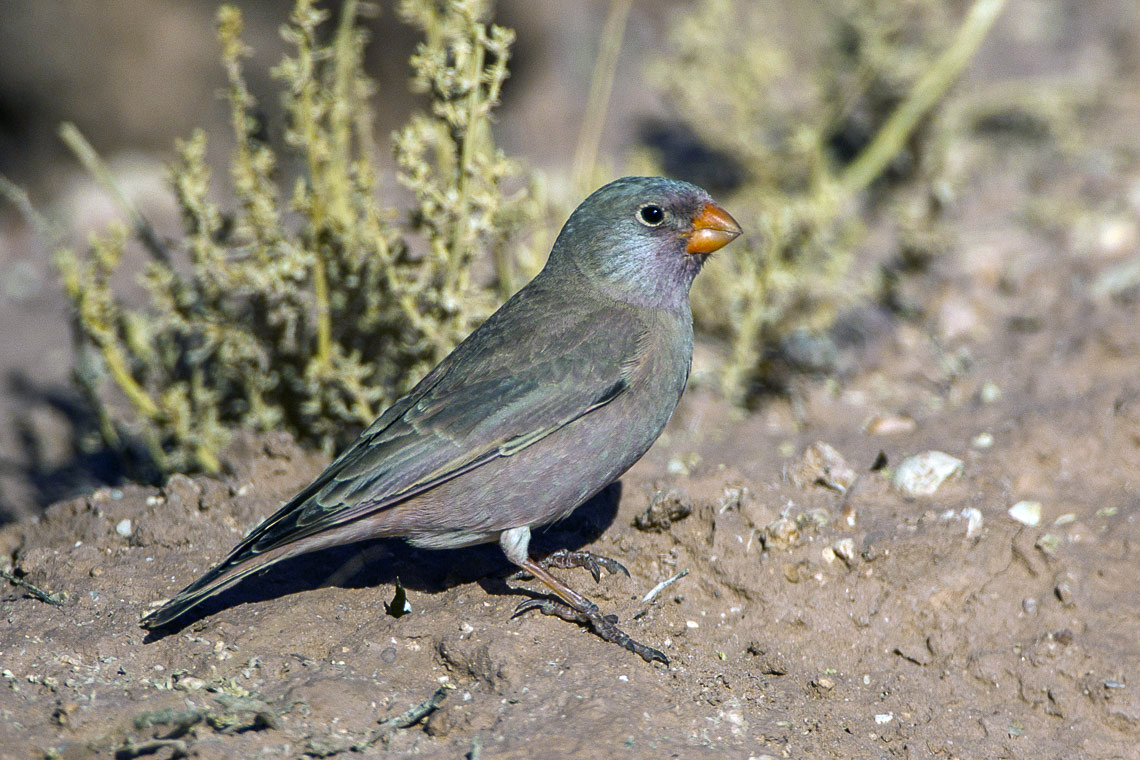
Wikipedia: Trumpeter finch Source: WIKIPEDIA
Trumpeter_Finch_-_Morocco_07_2921_%2823051137061%29.jpg
🔍
Never observed (yet!)
Description
General:The trumpeter finch (Bucanetes githagineus) is a small passerine bird in the finch family Fringillidae. It is mainly a desert species which is found in North Africa and Spain through to southern Asia. It has occurred as a vagrant in areas north of its breeding range.
[more]
Details
, Jura, Scotland.JPG)
MerlinBirdID says Tree pipit (Baumpieper), Jura, Scotland. 2023-08-13 10:51:12 Scotland
First observed in 🇨🇭 on 2020-06-12.
Description
Sieht aus wie ein DrosselGeneral: Deutschland: Brut-, Zugvogel RL V
Seasonal behavior
Presence: 04-01 - 10-07 Breeding: 04-20 - 08-09 Migration in: 04-01 - 05-21 Migration out: 08-09 - 10-07More details at Vogelwarte.ch
Other Details
Physical details
Physical details: length=15 cm, wingspan=25-27 cm, weight=18-29 gHabitats: Mountain
Similar species
Song or calls similar to: European greenfinch.Vocalisation
Song: Reminds me of a greenfinch - series of trills, whoops and other sounds with a long pause Song:Mehrere unterschiedliche Tonreihen aneinandergefügt. Zuletzt „zia zia zia ziah“. Zuerst auf Baum sitzend, dann im Singflug, Zia-Rufe während Gleitflug (Fallschirmvogel) [Link]
Song characteristic. Starts with a series of Chaffinch-like "che-che-che" which gives way to long, descending, "ricocheting" whistling notes (especially at the end of song-flight). [Link]
Song attributes:
Melody: simple rhythmic, slow, Frequency: medium (1-5 KHz) Special sounds: trill, whoop
♫ Source: XENOCANTO XC570506 - Tree Pipit - Anthus trivialis - song.mp3 (song)
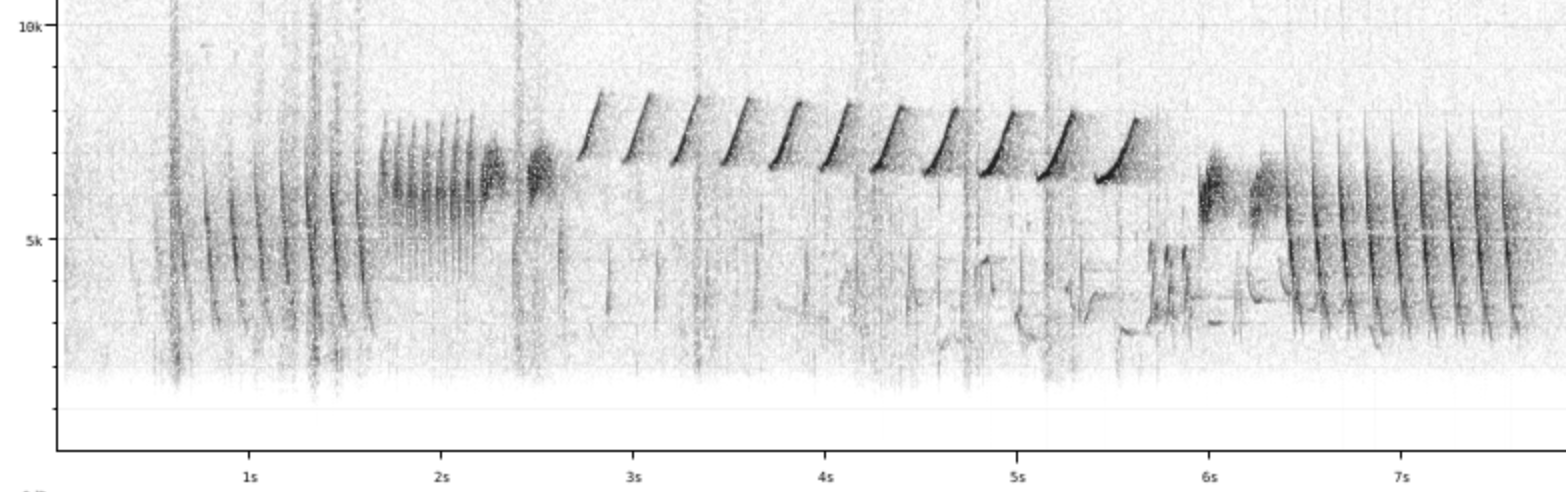
♫ Source: XENOCANTO XC649035 - Tree Pipit - Anthus trivialis - song.mp3 (song)

Calls:
“psiet“ etwas nach unten gezogen. Auch „zieh“
[Link]
Flight call a short buzzing "tzzzeet". Given at even pitch, and in a fuller tone than Red-Throated Pipit. [Link]
1:
Sounds like 1-note to me. Have also heard two high notes, then dann hlhlhl
2: No details but a Xeno-Canto recording.
XC917776 - Tree Pipit alarm call, one note, repeated every second - Anthus trivialis.
♫ Source: XENOCANTO XC917776 - Tree Pipit alarm call, one note, repeated every second - Anthus trivialis.mp3 (alarm call)

Call attributes: Call melody: one note, slow, Frequency: medium (1-5 KHz),
Details
Profile Wikipedia Vogelwarte BirdLife ZH ornitho.ch bird-song.ch Xeno-Canto BirdID NABU YouTube
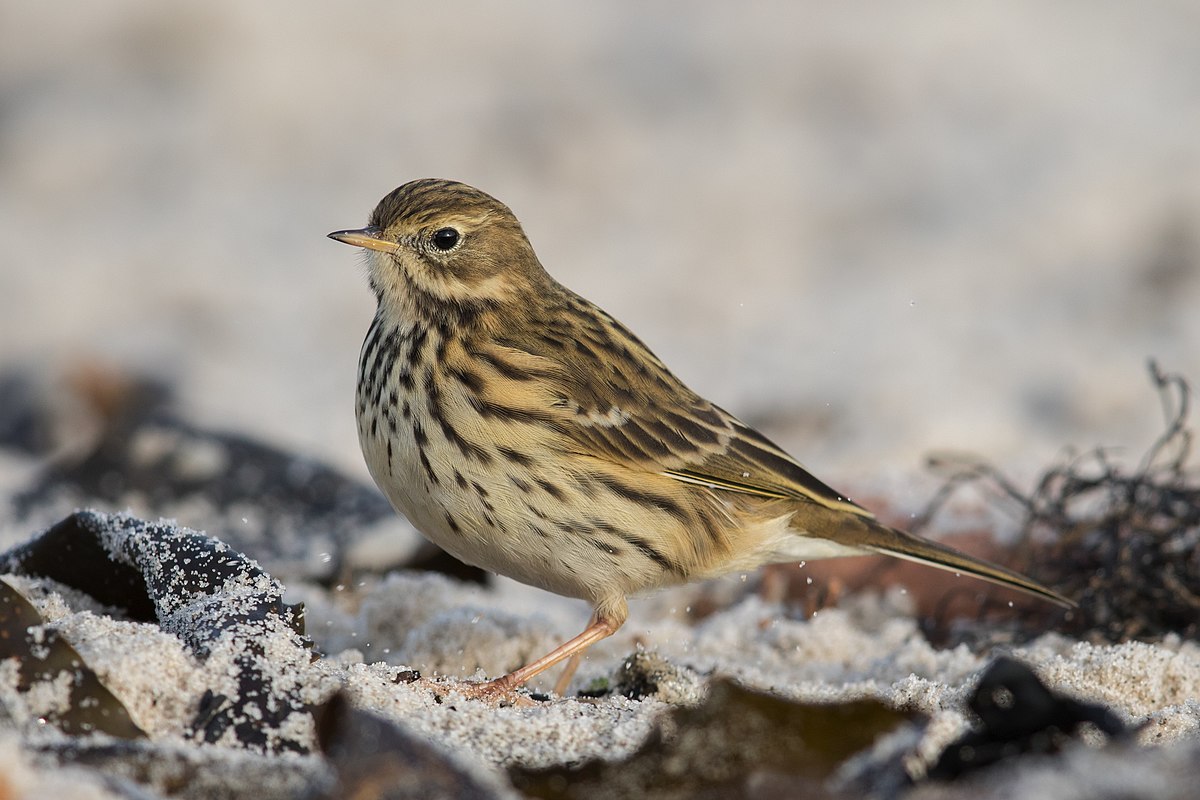
Wikipedia: Meadow pipit Source: WIKIPEDIA
1200px-Wiesenpieper_Meadow_pipit.jpg
First observed in 🇨🇭 on 2021-06-27.
Description
General: Looks like MisteldrosselGeneral: Deutschland: Brut, Zugvogel, Wintergast RL V
Etymology:
[9] The name "pipit", first documented by Thomas Pennant in 1768, is onomatopoeic, from the call note of this species. [Link]
Seasonal Behavior:
Meadow Pipits can often be observed in large numbers when they gather on fields during migration. They like to stay in meadows with high grass or on arable land and only fly up when disturbed or when a bird of prey appears, which is why they are often overlooked. [Link]
Seasonal behavior
Year-round bird Breeding: 04-01 - 07-29 Migration in: 02-20 - 05-10 Migration out: 09-17 - 11-06More details at Vogelwarte.ch
Other Details
Physical details
Physical details: length=14 cm, wingspan=22-25 cm, weight=15-22 gHabitats: Mountain
Similar species
Looks similar to: Mistle thrush.Vocalisation
Song: Single note, possibly rising at the end. (Or: long 4 second phrases, gradually louder then softer; swoopy or whoopy.) Sings in flight. BirdID: Song very similar to Rock Pipit, but tone less full and more brittle. Lacks Rock Pipit's closing trill, and beginning is less "hammering". - but what does a rock pipit sound like? Song:Ähnlich Baumpieper, aber ohne Zia-Rufe. Vollständiger Gesang nur in flatterndem Singflug. Lange Strophen. Mittelstück meist zart und hoch [Link]
Song very similar to Rock Pipit, but tone less full and more brittle. Lacks Rock Pipit's closing trill, and beginning is less "hammering". [Link]
Song attributes:
Melody: one note, fast, Frequency: medium (1-5 KHz)
♫ Source: XENOCANTO XC722919 - Meadow Pipit - Anthus pratensis - song.mp3 (song)
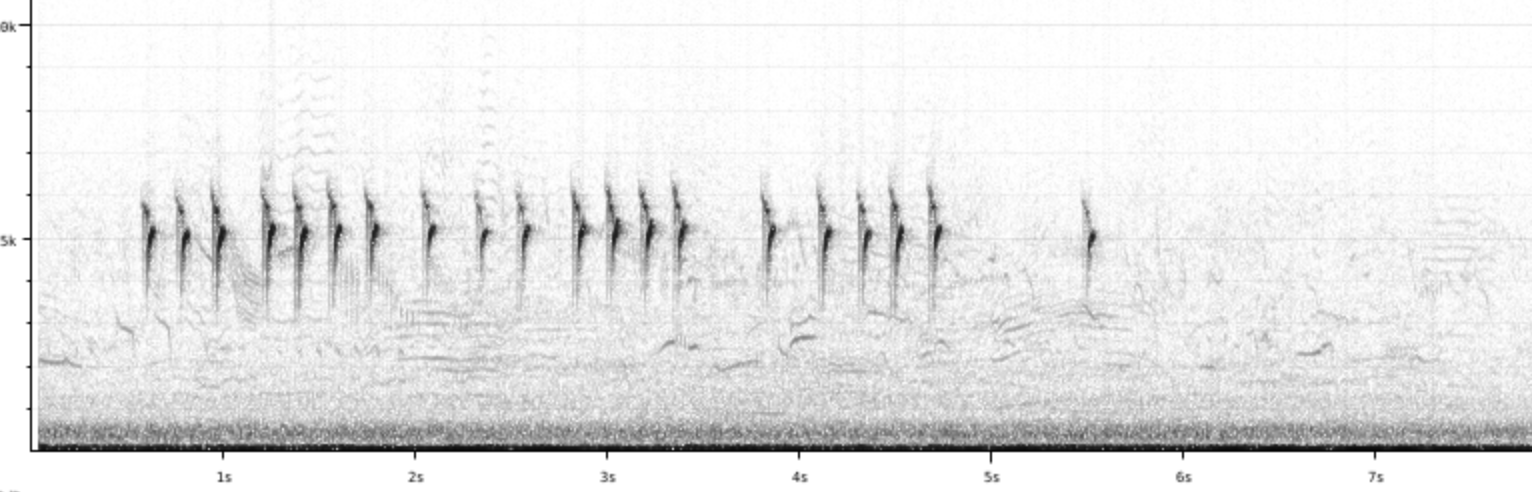
Calls:
fast tonlos „ist, ist.“
[Link]
Contact call a short "eest". Similar to Rock Pipit but shorter,cleaner and most often in quick series. Warning call a sharp, high pitched "tzeet". Also a rattling "trrrrt". [Link]
No details but a Xeno-Canto recording.
XC930459 - Meadow Pipit flight call - Anthus pratensis.
♫ Source: XENOCANTO XC930459 - Meadow Pipit flight call - Anthus pratensis.mp3 (flight call)

Call attributes: flight call Frequency: ,
Details
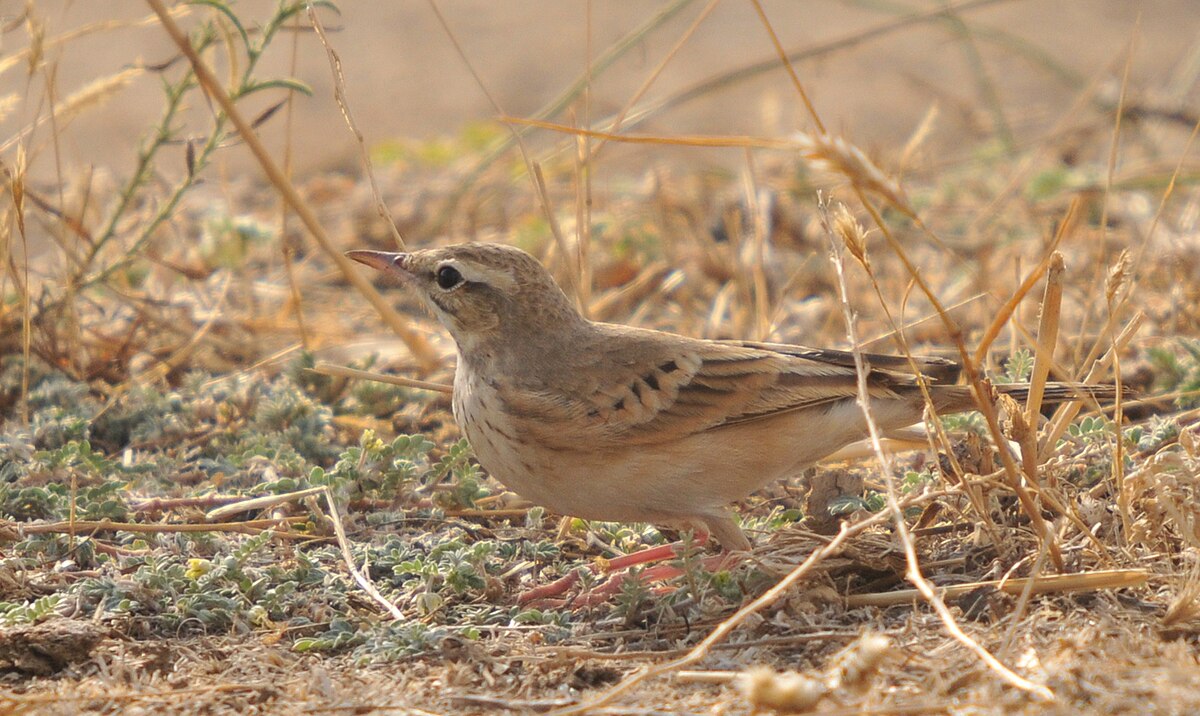
Wikipedia: Tawny pipit Source: WIKIPEDIA
1200px-Anthus_campestris-3.jpg
First observed in 🇨🇭 on 2022-10-02.
Description
General: Langer schlanker Vogel, man sagt ähnlicher wie eine SchafstelzeGeneral: Deutschland: Brut-, Zugvogel RL 1
Seasonal behavior
Presence: 04-01 - 10-07 Breeding: 05-10 - 07-29 Migration in: 08-10 - 08-18 Migration out: 08-18 - 10-07More details at Vogelwarte.ch
Other Details
Physical details
Physical details: length=16 cm, wingspan=25-28 cm, weight=24-32 gHabitats: Agricultural
Similar species
Looks similar to: Western yellow wagtail.Vocalisation
Song: Song simple. Consists of three notes merged in a short, continuous and ringing "tsee-ro-ee", given every 1-2 seconds. Song:Song simple. Consists of three notes merged in a short, continuous and ringing "tsee-ro-ee", given every 1-2 seconds. Timbre is wagtail-like and intonation variable, but consistent in each song. Flight call similar in timbre, like a cross between Yellow Wagtail and House Sparrow (song). Thinner and more wagtail-like than Richard's Pipit. [Link]
Song attributes:
Melody: stereotype melodic, slow, Frequency: 2-6 KHz
♫ Source: XENOCANTO XC726515 - Tawny Pipit - Anthus campestris - song.mp3 (song)

Details
Profile Wikipedia Xeno-Canto BirdID NABU YouTube

Berthelot's pipit, Playa Santiago, La Gomera. 2022-03-16 11:25:18
First observed in La Gomera on 2022-03-16.
Description
General:Der Kanarenpieper (Anthus berthelotii) ist eine Singvogelart aus der Familie der Stelzen und Pieper. Er kommt auf den Kanarischen Inseln, den Ilhas Selvagens und auf Madeira vor, wo er trockene, gras- und buschbestandene Habitate bewohnt und die einzige dort brütende Pieperart ist. Er ist ein Standvogel, von dem es bislang keinerlei Nachweise als Irrgast außerhalb seines Verbreitungsgebiets gab. Der Bestand wird grob auf 20.000–100.000 Brutpaare geschätzt und die Art ist laut IUCN nicht bedroht (“least concern”). Das Artepitheton ehrt den französischen Naturforscher Sabin Berthelot.
[more]
Details

Wikipedia: Rock pipit Source: WIKIPEDIA
1200px-Eurasian_Rock_Pipit%2C_Helgoland_1.jpg
🔍
Never observed (yet!)
Description
Deutschland: ausnahmsweise Brutvogel, WintergastVocalization:
All sounds very similar to Water Pipit. [Link]
Other Details
Physical details
Physical details: length=16-17 cm, wingspan=22-28 cm, weight=20-27 gDetails
Profile Wikipedia Vogelwarte BirdLife ZH ornitho.ch bird-song.ch Audubon AllAboutBirds Xeno-Canto BirdID NABU YouTube

Bachstelze. 2024-05-16 11:54:46 Kaltbrunner-Riet
First observed in Iceland on 2015-06-05.
Description
Geography: This bird appears across the great seas in the following continents: Europe, North America, Africa, Asia.General:
The white wagtail (Motacilla alba) is a small passerine bird in the family Motacillidae, which also includes pipits and longclaws. The species breeds in much of Europe and the Asian Palearctic and parts of North Africa. It has a toehold in Alaska as a scarce breeder. It is resident in the mildest parts of its range, but otherwise migrates to Africa. In Ireland and Great Britain, the darker subspecies, the pied wagtail or water wagtail[2] (M. a. yarrellii) predominates. In total, there are between 9 and 11 subspecies.
[more]
Deutschland: Brut-, Zugvogel
Seasonal behavior
Other Details
Physical details
Physical details: length=18 cm, wingspan=25-30 cm, weight=17-25 gHabitats: Settlement Interesting behavior: Wags its tail when calling.
Vocalisation
Song: General: Usually just calls. This song is just a few chirpy slurs, sometimes rising-rising-falling.Song:
Zirpt wie ein Sperling aber weniger Noten. Lh lh lh [Link]
Song: Song either slow and primitive, consisting of sharp falling notes given by perched birds, or longer fast and energic bursts in excited song-flight. [Link]
Song attributes:
Mnemnoic: Plaetschert wie ein Bach Melody: stereotype melodic, slow, Frequency: 2-7 KHz
♫ Source: XENOCANTO XC694995 - White Wagtail - Motacilla alba - song recorded in Spain.mp3 Spain (song)

Calls:
Contact calls short and sharp. Usually with disyllabic, "bouncing" quality, and with each syllable only accented, not clearly separated from the other (see Grey Wagtail). [Link]
bird-song.ch: zweisilbig «zilipp» oder einsilbig «zipp»
XC644775 - White Wagtail - Motacilla alba alba - call, recorded in Estonia.
♫ Source: XENOCANTO XC644775 - White Wagtail - Motacilla alba alba - call, recorded in Estonia.mp3 (call)

Call attributes: Call melody: one note, slow, Frequency: 3-7 KHz,
Details

Schafstelze, Albufera. 2022-04-12 14:59:06
First observed in Mallorca on 2022-04-12.
Description
General: Yellow, gray head, white mask.General: Deutschland: Brut-, Zugvogel
Seasonal behavior
Presence: 03-23 - 10-27 Breeding: 05-10 - 07-29 Migration in: 03-23 - 05-31 Migration out: 08-09 - 10-27More details at Vogelwarte.ch
Other Details
Physical details
Physical details: length=17 cm, wingspan=23-27 cm, weight=14-21 gHabitats: Wetland
Similar species
Looks similar to: Tawny pipit.Vocalisation
Song: Just a few notes, call seems to be common but song rare. Very short chirp of ~ 1 sec, long pause of 3 secs. At Wauwilermoos it seemed to be 'Twee tweetwee (higher note:) twee!' Song:Song primitive and less striking. Beware differences in calls and songs between different subspecies. [Link]
Song attributes:
Melody: stereotype melodic, slow, Frequency: 3-9 KHz
♫ Source: XENOCANTO XC721189 - Western Yellow Wagtail - Motacilla flava cinereocapilla - song.mp3 (song)

Calls:
Contact call characteristic and widely used; a sharp, drawn out "pseeeoo" with an accented ending falling in pitch. A variable phrase with two or three notes resembling the contact call in timbre. [Link]
General: Single note repeatedSong:
sperling ähnliches lh lh lh. Dachte die wären melodisch?? Nein. BL chirpy ml ml [Link]
XC653784 - Western Yellow Wagtail - Motacilla flava flavissima - call.
♫ Source: XENOCANTO XC653784 - Western Yellow Wagtail - Motacilla flava flavissima - call.mp3 (call)

Call attributes: Call melody: one note, slow, Frequency: 3-9 KHz, Special sounds: swoop.
Details

Gebirgsstelze am Bach beim Klingnauer Stausee. 2022-02-05 14:16:30 Klingnauer Stausee (man-made lake)
First observed in 🇨🇭 on 2022-02-05.
Description
General: Yellow breast and butt end, white belly, light grey head and back, white eye stripe and stripe above black beard, dark wings with 3 white V's, long tail.General: Deutschland: Brut-, Jahres-, Zugvogel, Wintergast
Seasonal behavior
Year-round bird Breeding: 03-23 - 08-29 Migration in: 02-20 - 04-01 Migration out: 08-18 - 10-27More details at Vogelwarte.ch
Other Details
Physical details
Physical details: length=18-19 cm, wingspan=25-27 cm, weight=14-22 gHabitats: Wetland
Vocalisation
Song:BirdID says Song simple but variable. I hear trills up to 2 seconds long and chirps. Another description says a series of calls, not very melodic. I noted zwitx3, sometimes hhhhhll. [Link]
Song: Song simple but variable. Sometimes with more elaborate song-flight like White Wagtail. [Link]
Song attributes:
Melody: stereotype melodic, fast, Frequency: high (3-9 KHz) Special sounds: trill
♫ Source: XENOCANTO XC767550 - Grey Wagtail - Motacilla cinerea - song with trills and a cheek-cheek.mp3 (song)

♫ Source: XENOCANTO XC757193 - Grey Wagtail - Motacilla cinerea - one-note song recorded in Germany.mp3 (song)

Calls:
Contact call short, metallic and with a clipped ending. Often disyllabic, "tzeet-tzeet", with each syllable more separated than in White Wagtail, and timbre more "dirty". Often starts with the contact call, followed by short melodic phrases. [Link]
1:
Birdweather hat ein-Noter aufgenommen.
XC854585 - Grey Wagtail - Motacilla cinerea - 2-note call.
♫ Source: XENOCANTO XC854585 - Grey Wagtail - Motacilla cinerea - 2-note call.mp3 (call)

2: Ich habe zwei-noter lh lhhh notiert, wahrscheinlich von Birdweather?
3: No details but a Xeno-Canto recording. - but really OWN
Gebirgsstelze bei 5 minuten durch geflogen, evtl Flugruf.
♫ 2024-09-09 08:24:00 Greater Fehraltorf (flight call)
Gebirgsstelze bei letzen 30 Sekunden durch geflogen, evtl Flugruf.
♫ 2024-09-09 08:24:00 Greater Fehraltorf (flight call)
Call attributes: Call melody: one note, slow, Frequency: medium (1-5 KHz),
Details
Profile Wikipedia Audubon AllAboutBirds Xeno-Canto BirdID NABU YouTube

Wikipedia: Common waxbill Source: WIKIPEDIA
1200px-Estrilda_astrild_-Gran_Canaria%2C_Canary_Islands%2C_Spain-8_%281%29.jpg
🔍
Never observed (yet!)
Description
Geography: This bird appears across the great seas in the following continents: Europe, North America, Africa.General:
The common waxbill (Estrilda astrild), also known as the St Helena waxbill, is a small passerine bird belonging to the estrildid finch family. It is native to sub-Saharan Africa but has been introduced to many other regions of the world and now has an estimated global extent of occurrence of 10,000,000 km2. It is popular and easy to keep in captivity.
[more]
Details
Tenerife blue tit / Kanarenmeise (Cyanistes teneriffae)
First observed in Canary Islands on 2022-03-13.
Description
Die Kanarenmeise oder Ultramarinmeise[1] (Cyanistes teneriffae) ist ein Vogel der Familie Meisen (Paridae), der in kühlen, gemäßigten Wäldern der Kanarischen Inseln und Nordwestafrikas vorkommt. Die Kanarenmeise und die Blaumeise wurden früher zur selben Art zusammengefasst.
[more]
Vocalisation
Song: No details but a Xeno-Canto recording. Song attributes: Frequency:♫ 2022-03-13 14:17:39 Source: BirdNet 20220313_141739 birdnet - Kanarenmeise - 2022-03-13 14:17:39 - Kanarenmeise - Valle Gran Rey.mp3 (song)
Details
Common starling / Star (Sturnus vulgaris)

Junger Star sitzt auf einem Highland Cattle bei Speck, Fehraltorf. 2022-08-17 14:44:56 Fehraltorf
First observed in 🇨🇭 on 2020-04-11.
Description
Geography: This bird appears across the great seas in the following continents: Europe, North America (introduced), Africa, Asia.General: Learned on BBC's Winterwatch: the movement of a swarm of starlings is called a murmuration! Check out this this video or even an entire half hour
General: In trees or in the fields by the cows.
General: Deutschland: Brut-, Jahres-, Zugvogel RL 3[8]
Personal notes: Frequently seen here, for instance by their nests under the eaves of one of the Toblerone houses. Introduced to North America from Europe by Eugene Schieffelin.
Vocalization: Eine der Vogelarten, die gleichzeitig zwei Töne singen kann!
Vocalization:
Among the best of imitators. Mimics birds, animals and mechanical noises. Often makes several sounds at the same time. [Link]
Seasonal behavior
Year-round bird Breeding: 04-01 - 07-20 Migration in: 01-21 - 04-11 Migration out: 09-07 - 11-26More details at Vogelwarte.ch
Other Details
Physical details
Physical details: length=21 cm, wingspan=37-42 cm, weight=60-90 gHabitats: Agricultural
Vocalisation
Song: I find their individual song amusing, with its (long) whoops and weird noises. As a group, they're just noisy! Song:Song a highly varied mix of falling whistles, bill-clappering and various masterful mimicry. [Link]
Song attributes:
Melody: improvised melodic, slow, Frequency: medium (1-5 KHz) Special sounds: whoop, mimicry, weird Singing season: 01-01 - 09-30 Dawn chorus start: 15 minutes before dawn.
Calls:
Other calls; a harsh "chaee" and a short sharp "tink". [Link]
I hear this occasionally and really enjoy it - a long rising 'whoop', as I call it', starting low at 1 1/2 KHz and rising to 6 1/2 KHz!
Birdnet 1968 - European Starling long whoop call - 2021-08-23 17-26-09 - European Starling - Fehraltorf.
♫ 2021-08-23 17:26:09 Source: BirdNet 20210823_172609 birdnet 1968 - European Starling long whoop call - 2021-08-23 17-26-09 - European Starling - Fehraltorf.mp3 Fehraltorf (call)
Call attributes: Call melody: one note, slow, Frequency: 1-6 KHz, Special sounds: whoop.
Details
Song thrush / Singdrossel (Turdus philomelos)
Profile Wikipedia eBird Vogelwarte BirdLife ZH ornitho.ch bird-song.ch Xeno-Canto BirdID NABU YouTube

Singdrossel bei Unterer Buchholzweg, Fehraltorf. 2024-05-13 07:33:52 Fehraltorf
First observed in Île-de-Bréhat on 2019-06-16.
Description
General:Die Singdrossel (Turdus philomelos) ist eine Vogelart, die zur Familie der Drosseln (Turdidae) und zur Ordnung der Sperlingsvögel (Passeriformes) gehört. Sie ist in der gemäßigten und der borealen Zone der westlichen und zentralen Paläarktis beheimatet und zählt dort zu den häufigen waldbewohnenden Arten. Europäische Vögel überwintern im Mittelmeerraum. Im Südosten Australiens und in Neuseeland wurde sie Mitte des 19. Jahrhunderts als Neubürger (Neozoon) eingeführt.
[more]
Deutschland: Brut-, Zugvogel
Vocalization:
Very melodious, varied and a master imitator. Still easily distinguished by its tendency to repeat introductory motives two or more times, and its many high pitched themes. Each phrase is loud and penetrating and the tempo deliberate. [Link]
Seasonal behavior
Year-round bird Breeding: 04-01 - 07-10 Migration in: 02-10 - 04-20 Migration out: 08-29 - 11-06More details at Vogelwarte.ch
Other Details
Physical details
Physical details: length=23 cm, wingspan=33-36 cm, weight=65-100 gHabitats: Forest
Vocalisation
Song: Paced like a blackbird, humorous mix of elements like a nightingale. Huge range, elements from 2-5 KHz, others 6.5-9 KHz. Can sing for up to 50 minutes, and a male may know 100 melodies in its repertoire. Song:Klangfarbe ähnlich obiger Art [Amsel], aber jedes Element 2-4mal wiederholt, Pausen zwischen den Phrasen.(klingt oft wie „Philipp“, oder „Judith“) Einzige Drossel unseres Gebietes die diese Wiederholungen macht. Singt oft nicht von Baumspitze aus, sondern aus dem Geäst.
[Link]
Song attributes:
Melody: improvised melodic (mhHL), slow, Frequency: 2-9 KHz Special sounds: swoop Singing season: 02-01 - 07-31 Dawn chorus start: 60 minutes before dawn.
♫ 2026-02-24 16:38:24
Source: Zoom H2n Fehraltorf (song)Calls:
Rufe :“zipp“, oft beim abfliegen.
[Link]
Most heard (but easily overlooked) contact call is a dry and very short "zip", sometimes given as a two syllable call "zip-ip". [Link]
1:
One or two high chirps followed by long pause of 1-2 seconds
XC389294 song thrush contact call.
♫ Source: XENOCANTO XC389294 song thrush contact call.mp3 (contact call)
2: No details but a Xeno-Canto recording.
XC570136 song thrush alarm call.
♫ Source: XENOCANTO XC570136 song thrush alarm call.mp3 (alarm call)
XC570138 song thrush alarm call.
♫ Source: XENOCANTO XC570138 song thrush alarm call.mp3 (alarm call)
XC918847 - Song Thrush alarm call - Turdus philomelos.
♫ Source: XENOCANTO XC918847 - Song Thrush alarm call - Turdus philomelos.mp3 (alarm call)
 XC794170 - Song Thrush - Turdus philomelos - alarm call.
♫ Source: XENOCANTO XC794170 - Song Thrush - Turdus philomelos - alarm call.mp3 (alarm call)
3: No details but a Xeno-Canto recording. - but really OWN_VIA_ZOOM
Singdrossel, trommeln, Gartenbaumläufer 5-noter.
♫ 2024-03-22 06:44:18
Source: Zoom H6/H2n Staldenweiher (drumming)Singdrossel Gesang, Tannenmeise Gesang, Buntspecht trommeln, Rabenkraeue Rufe.
♫ 2026-02-24 16:11:26
Source: Zoom H2n Fehraltorf (drumming)Singdrossel, Kohlmeise, Sumpfmeise oder Tannenmeise, Trommeln von Buntspecht oder Schwarzspecht.
♫ 2025-03-04 09:26:58
Source: Zoom H6/H2n Switzerland (drumming)100 Sekunden von Singdrossel-Gesang, um 4 und 18 usw Sekunden Trommeln eines Buntspechts.
♫ 2025-03-09 09:09:08
Source: Zoom H2n Switzerland (drumming)Call attributes: contact call Call melody: one note, slow, Frequency: 7-10 KHz,
Details
Redwing / Rotdrossel (Turdus iliacus)
Profile Wikipedia Vogelwarte BirdLife ZH ornitho.ch bird-song.ch Xeno-Canto BirdID NABU YouTube

Wieder mal ein Rotdrossel bei Wildert, auf der Flucht vom kalten Norden. 2025-10-31 16:07:48 Wildert
First observed in Iceland on 2015-06-05.
Description
General: In Switzerland these are migrants or winter guests that breed in Scandinavia. I saw a group that landed in a tree by the Luppmen. Some sang an odd song that I didn't recognize but unfortunately couldn't record. They were rather nervous and quickly flew off.General: I had an interesting educational experience with fieldfares! At the end of December 2020 I saw redwings in Fehraltorf for the first time. They're a winter guest that breeds in Scandinavia. Jan 2021 I saw one from our dining room window, and two days later saw 31 of them land in four trees along the Luppmen brook, and spontaneously decided to report them via the eBird app. The next day I got an automated response saying this was an unusually high number, and that I should document the sighting further. I added pictures of the group in the trees pus one of an individual close up. Then I got a nice e-mail from eBird volunteer Raphaël Nussbaumer, an Earth Science PhD and postdoc at the Swiss Ornithological Institute, saying that my redwings were fieldfares. I checked the guide books and apps, and that seemed plausible. I was surprised that none of them mentioned the danger of confusing the two, which are actually quite similar (and related). I checked the closeup I took on December 31 and asked Raphaël if it was actually a redwing, and he confirmed it. So I actually found two (to me) new thrushes within 3 weeks. He noted 'they are often found mixed with fieldfare or mistle thrush, so one has to be careful to check the entire group and not assume that all are redwings. I saw 8 similar looking birds when I saw the actual redwing, and while I think there's more than one redwing there, I can't see the whole flock well enough to be sure.
General: Deutschland: Brut-, Zugvogel, Wintergast
Appearance and identification:
Vogelwarte.ch describes just what I saw. In translation, somewhat smaller than a song thrush and distinguishable from them by the prominent white stripe above the eye and the rust-red feathers under the wings. [Link]
Seasonal Behavior:
'Regelmässiger Durchzügler, regelmässiger Wintergast', darum nur im Winter in Fehraltorf [Link]
Vocalization:
First a simple, melodic phrase of 3 - 6 notes, usually followed by a more silent, indistinct, fast and less melodic, chattering sequence. First part highly variable from place to place, but constant in individuals. Often causes confusion when a new dialect is heard at a distance, since only the first part is far-reaching, and the diagnostic two-part structure gets lost. [Link]
Seasonal behavior
Year-round bird Migration in: 02-10 - 04-20 Migration out: 09-17 - 12-07More details at Vogelwarte.ch
Other Details
Physical details
Physical details: length=21 cm, wingspan=33-34 cm, weight=50-75 gHabitats: Forest
Vocalisation
Song:Song delivered in two parts. First a simple, melodic phrase of 3 - 6 notes, usually followed by a more silent, indistinct, fast and less melodic, chattering sequence. First part highly variable from place to place, but constant in individuals. [Link]
Song: Song delivered in two parts. [Link]
Song attributes:
Mnemnoic: down 6+chattering Melody: stereotype melodic, slow, Frequency: 3-5 KHz
♫ Source: XENOCANTO XC320315 - Redwing - Turdus iliacus.mp3 (song)

Calls:
Contact call a thin, drawn and sharp "sreee". Often heard at night during migration. Alarm call harder, dryer and more raucous than other thrushes. [Link]
No details but a Xeno-Canto recording.
XC678455 - Redwing - Turdus iliacus - single call.
♫ Source: XENOCANTO XC678455 - Redwing - Turdus iliacus - single call.mp3 (call)

Call attributes: song Frequency: ,
Details
Common blackbird / Amsel (Turdus merula)

Wunderschöner junge Amsel. 2024-05-29 07:27:36 Levanto
First observed in Australia on 2008-01-01.
Description
General: The first bird I loved listening toGeneral: It earned its own song on my album i.e.: Blackbird on a Palm Tree.
General: Deutschland: Brut-, Jahres-, Zugvogel, Wintergast
Seasonal behavior
Year-round birdOther Details
Physical details
Physical details: length=24-25 cm, wingspan=34-38 cm, weight=80-125 gHabitats: Settlement Interesting behavior: Flaps its wings when calling.
Vocalisation
Song: Other: Gut zu erkennen ist die Amsel. Sie singt melodiös, erklärt Heller, «zuerst flötend und dann gegen Schluss so schnirpslig». Die Amsel singe gerne dort, wo sie gut gehört werde, etwa vor Hauswänden, die den Schall nicht schlucken. Ich wollte schauen was schnirpslig heisst, aber diese ist diese einzige Verwendung, die Google kennt! Der flötende Teil ist relativ tief, 1.5-3 KHz, der schnirpslige aber 2.5-7 KHz. (Schnirpslig ist ein schones Wort das der Redner erfunden hat - Google findet nur diese eine Webseite mit dem Wort!) [Von der SRF Webseite:] Song:Melodisch flötend dazwischen auch zerquetschte Töne. Die Elemente werden nicht wiederholt. Singt von Singwarte aus. Ca. 100 verschiedene Strophentypen.
[Link]
One of the most appreciated song birds. Very melodious and resonant, with long mellow notes and a large register. Less high pitched sounds than Song Thrush, and seldom repeats a phrase. Timbre fuller than both Song Thrush and Mistle Thrush. Well defined pauses between phrases, giving the song a relaxed pace. [Link]
Song attributes:
Melody: improvised melodic (lmh), slow, Frequency: 1-7 KHz Special sounds: flourish Singing season: 02-01 - 07-31 Dawn chorus start: 45 minutes before dawn.
♫ 2023-02-23 17:40:48
Source: Zoom H6/H2n (song)♫ 2024-05-15 05:27:28
Source: Zoom H6/H2n Luppmen (song)Calls:
Je nach Situation, „duck duck duck“, „tix-tix-tix“ in rascher Folge, „srieh“ (auch als Flugwarnruf)
[Link]
Large repertoire of calls. Most characteristic is a hysterical rattle often given when flushed. Sometimes preceded by a hard "tok tok", which then accelerates into a panicky arpeggio-like crescendo. Contact call a thin redwing-like "srrreee". Alarm calls: a sharp "tink, tink" or a very high pitch falling whistle. [Link]
1:
Sharp-edged call, mostly one note.
XC919083 - Common Blackbird - Turdus merula - 1-note alarm call in Estonia.
♫ Source: XENOCANTO XC919083 - Common Blackbird - Turdus merula - 1-note alarm call in Estonia.mp3 (alarm call)
 Alarm rattle
♫ Had never heard something like this, but I saw a black bird land in a tree by the Luppmen and shortly thereafter a blackbird started singing, so I check xeno-canto for something similar. Sometimes called an alarm rattle. Source: XENOCANTO XC557335 common blackbird alarm call.mp3 (alarm call)
 XC931182 - Common Blackbird - Turdus merula - alarm call swoop from Sweden.
♫ Source: XENOCANTO XC931182 - Common Blackbird - Turdus merula - alarm call swoop from Sweden.mp3 (alarm call)
2: Loud falling series of notes, unlike anything else you hear from a blackbird, sometimes called an alarm rattle
Call attributes: alarm call Call melody: one note, slow, Frequency: medium (1-5 KHz),
Details
Ring ouzel / Ringdrossel (Turdus torquatus)
Profile Wikipedia Vogelwarte BirdLife ZH ornitho.ch bird-song.ch Xeno-Canto BirdID NABU YouTube
Ringdrossel - ich wollte unbedingt einen fotografieren, und dieser hat sicher frei. 2024-06-25 09:14:04 Mettmenalp, GL
First observed in 🇨🇭 on 2021-06-27.
Description
General: Deutschland: Brut-, ZugvogelSeasonal behavior
Presence: 03-12 - 11-06 Breeding: 04-20 - 07-20 Migration in: 03-12 - 05-10 Migration out: 08-29 - 11-06More details at Vogelwarte.ch
Other Details
Physical details
Physical details: length=23-24 cm, wingspan=38-42 cm, weight=92-138 gHabitats: Mountain
Similar species
Song or calls similar to: Great spotted woodpecker.Vocalisation
Song: BirdID says Song a primitive, plaintive series of short phrases, often with only 1-2 syllables (I heard 2-3 in Amden, sometimes chirpy, sometimes less musical). Song:Habe mit dem Buntspecht verwechselt - Ringdrossel singt 2-3 Noten - hilft das? [Link]
Song a primitive, plaintive series of short phrases. Often with only one or two syllables. Interspersed with eerie, higher pitched sounds, reminiscent of Song Thrush. [Link]
Song attributes:
Mnemnoic: 3 Noten wie Ring-dross-el Melody: simple rhythmic, slow, Frequency: 1-5 KHz
♫ Source: XENOCANTO XC721589 - Ring Ouzel - Turdus torquatus - song.mp3 (song)
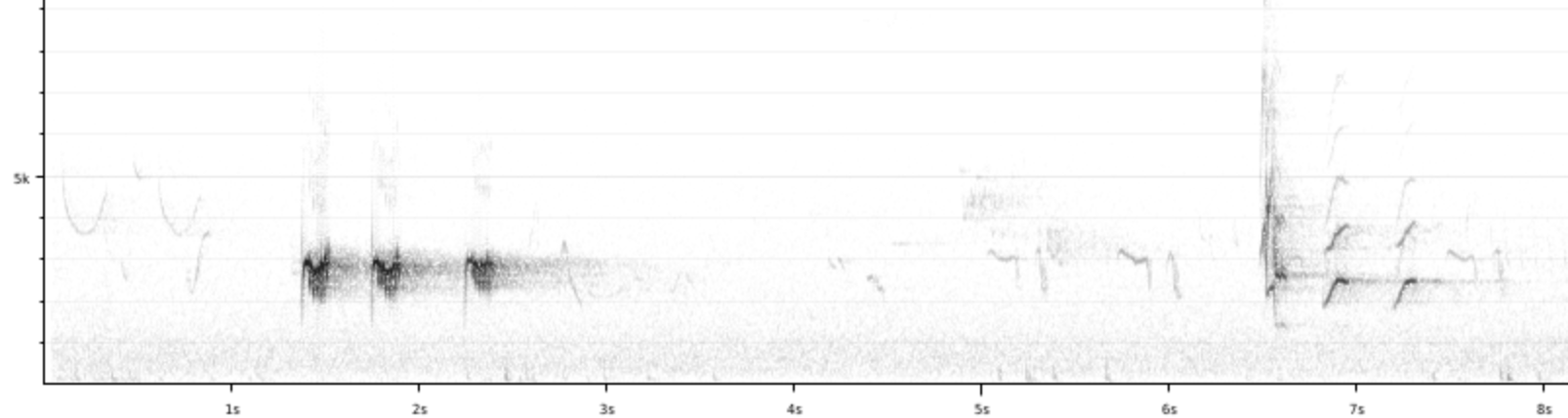
Calls:
Alarm call a series of "chok-chok". Thicker and more resonant than Redwing. [Link]
No details but a Xeno-Canto recording.
XC942931 - Ring Ouzel - Turdus torquatus - clicky call.
♫ Source: XENOCANTO XC942931 - Ring Ouzel - Turdus torquatus - clicky call.mp3 (call)

Call attributes: song Frequency: ,
Details
European robin / Rotkehlchen (Erithacus rubecula)
Profile Wikipedia Vogelwarte BirdLife ZH ornitho.ch bird-song.ch Xeno-Canto NABU YouTube

Rotkehlchen - sie singen endlich wieder. 2021-10-24 09:57:40 Neeracherried
First observed in 🇨🇭 on 2020-04-02.
Description
General: Red face and breast, light colored belly, brown and gray back and wings.General: Singing in a tree, searching for food on the ground.
General: Deutschland: Brut-, Jahres-, Zugvogel, Wintergast
Seasonal behavior
Year-round bird Breeding: 04-11 - 08-18 Migration in: 02-20 - 05-01 Migration out: 08-18 - 11-15More details at Vogelwarte.ch
Other Details
Physical details
Physical details: length=14 cm, wingspan=20-22 cm, weight=14-21 gHabitats: Forest
Vocalisation
Song: General: High pitched but also going low, e.g. 2.9-7.7 KHz.Song:
Only for a short period in late summer while they are moulting and inconspicuous do robins stop singing. Both sexes sing. [RSPB article]
Song: Song medium to very high pitched, with mostly clear tones with a liquid quality. Timbre reminiscent of Wren or Dunnock, but with a much more varied structure and tempo. Pitch ranges from very high to low, almost thrush-like, notes. No recognizable motifs. Often ends on a rising or falling pitch, giving it a "Chinese" accent. [Link]
Song attributes:
Melody: improvised melodic, fast, Frequency: high (3-9 KHz) Special sounds: fluting Singing season: 02-01 - 07-31 Only pauses singing while molting and thus endangered. Dawn chorus start: 50 minutes before dawn.
Calls:
Alarm call a thin, electric "tick", often in series with decelerating tempo. [Link]
1:
"ticking call", "tik", "tek", .
Personal: A single note usually repeated twice. Somewhat sputtery. BirdID refers to 'a thin, electric "tick". In one source said to be used as alarm call. Call:
A variety of calls is also made at any time of year, including a ticking note indicating anxiety or mild alarm. [Link]
I heard 3 or 4 scattered birds calling it in woods with underbrush but saw no birds. BirdNet told me they were robins, which I found hard to believe, but on comparing it with recordings at XenoCanto, I was convinced! Maybe they were telling each other "Don't show yourself to that alarming guy!".
♫ 2021-07-03 08:05:14 (call)

2: "srii". Low chirpy to sputtery monotone
Xeno-Canto recording by Stanislas Wroza noted as 'srii' call
♫ Source: XENOCANTO XC496627 European robin srii call.mp3 (call)

3: "tsii". General: A longer falling note (9Khz-7Khz) called a tsii by the recordist.
Call:
Sound Approach: If you listen carefully you may notice that in the daytime, apart from the ubiquitous tik call, Robins also give a shrill tsi rather frequently. It is this tsi that they adapt for use as a nocturnal flight call. Nfc=night flight call. [Link]
In the sonogram it's a longer, falling note.
♫ Source: XENOCANTO XC512416 - European Robin - Erithacus rubecula - named tsii or alarm call by recordist Marcin Solowiej in Poland.mp3 (alarm call)

4: Here is an audio of a high-pitched hawk call (7.5-8.5 KHz). See also a YouTube video comparing ground threats from aerial threats.
XC139085 - European Robin - Erithacus rubecula - hawk alarm call from Paul Driver.
♫ Source: XENOCANTO XC139085 - European Robin - Erithacus rubecula - hawk alarm call from Paul Driver.mp3 (alarm call)
5: No details but a Xeno-Canto recording. - but really OWN_VIA_ZOOM
Volles Konzert - Rotkehlchen, Trommeln eine Buntspechts, Buchfink.
♫ 2025-03-09 10:34:24
Source: Zoom H2n Switzerland (drumming)Call attributes: Call melody: one note, slow, Frequency: 4-9 KHz, Special sounds: sputter/pebble-clatter.
Details
Common nightingale / Nachtigall (Luscinia megarhynchos)
Profile Wikipedia Vogelwarte BirdLife ZH ornitho.ch bird-song.ch Xeno-Canto BirdID NABU YouTube

Common nightingales - das erste Mal das ich sie gesehen habe und direkt beim Haus in Fehraltorf. 2020-04-19 07:41:56 Fehraltorf
First observed in 🇨🇭 on 2020-04-19.
Description
General:Die Nachtigall (Luscinia megarhynchos) ist eine Vogelart aus der Ordnung der Sperlingsvögel (Passeriformes), Unterordnung Singvögel (Passeres). Nach neueren molekularbiologischen Erkenntnissen zur Phylogenese der Singvögel wird sie heute meist zur Familie der Fliegenschnäpper (Muscicapidae) gestellt. Manchmal findet man sie aber auch heute noch bei den Drosseln (Turdidae) eingeordnet. Die nordöstliche Schwesterart der Nachtigall ist der Sprosser.
[more]
Deutschland: Brut-, Zugvogel
Vocalization:
It consists of extremely resonant, full-bodied notes and lacks the, dry, rolling, rattling sounds of T.N. Most distinct species specific sound is the interwoven series of slightly ascending, plaintive notes (0.04 - 0.10 in recording). May mimic Thrush Nightningale!. [Link]
Seasonal behavior
Presence: 04-01 - 09-28 Breeding: 05-01 - 07-20 Migration in: 04-01 - 05-21 Migration out: 07-20 - 09-28More details at Vogelwarte.ch
Other Details
Physical details
Physical details: length=16 cm, wingspan=23-26 cm, weight=17-24 gHabitats: Wetland
Vocalisation
Song: Can be a sequence of unrelated weird but musical sounds - trills, churrs, human-like whistles - very amusing. Song:The song is the best characteristic to separate it from T. Nightingale. [Link]
Song attributes:
Melody: improvised melodic, slow, Frequency: medium (1-5 KHz) Special sounds: trill, whoop, weird Singing season: 04-15 - 06-30
♫ Source: XENOCANTO XC505897 - Common Nightingale - Luscinia megarhynchos - song, recorded in Spain.mp3 Spain (song)

Details
European pied flycatcher / Trauerschnäpper (Ficedula hypoleuca)
Profile Wikipedia Vogelwarte BirdLife ZH ornitho.ch bird-song.ch Xeno-Canto BirdID NABU YouTube

Erster Trauerschnaepper seit Jahren gesehn - im Wald nah beim Naturzentrum. 2024-09-14 17:03:29 Fanel/Chablais de Cudrefin und La Sauge
First observed in 🇨🇭 on 2020-04-15.
Description
General: Deutschland: Brut-, Zugvogel RL 3Etymology: Vögel mit viel schwarzem Gefieder werden in der Vogelnamensgebung gerne mit dem Wortzusatz „Trauer“ versehen. Denn durch dieses „Trauerkleid“ unterscheiden sie sich von verwandten Arten, die nicht schwarz gefärbt sind. [lbv.de]
Appearance and identification:
Kleiner SW Vogel, Kopf schwarz mit weissem Punkt an der Stirn, Bauch weiss. Gesang gar nicht traurig! [Link]
Seasonal behavior
Presence: 04-01 - 10-18 Breeding: 05-01 - 07-20 Migration in: 04-01 - 05-31 Migration out: 07-20 - 10-18More details at Vogelwarte.ch
Other Details
Physical details
Physical details: length=13 cm, wingspan=21-24 cm, weight=10-15 gHabitats: Forest
Vocalisation
Song: Nice short melody, often with 2-note parts. Blackbird-like but little variation (though differs in dialect). Song:Song a pleasant, tuneful, simple but varied phrase. [Link]
Song attributes:
Mnemnoic: Schwarzer Kopf aber nicht traurig Melody: stereotype melodic, fast, Frequency: 3-10 KHz
♫ Source: XENOCANTO XC723965 - European Pied Flycatcher - Ficedula hypoleuca - song.mp3 (song)

Calls:
Alarm call a sharp, energetic "wit", often in combination with a short "tic"; "whit-tic". Typically starts with disyllabic notes being repeated 3-5 times, diminishing in pitch and intensity like an echo of the first two syllables. Occasionally throws in a quick diagnostic ascending scale excercise. Clear notes and well defined pauses between phrases. [Link]
XC918321 - European Pied Flycatcher one-note call - Ficedula hypoleuca.
♫ Source: XENOCANTO XC918321 - European Pied Flycatcher one-note call - Ficedula hypoleuca.mp3 (call)

Call attributes: Call melody: one note, slow, Frequency: medium (1-5 KHz), Special sounds: whoop.
Details
Spotted flycatcher / Grauschnäpper (Muscicapa striata)

MerlinBirdID meint Klapper-grasmuecke, was super waere. Denke selber es sieht aus wie ein Grauschnaepper, teilweise weil die Fluegel der KGM im Fotos etwas brauner waren. Mein Birdweather Geraet sagt, es hat GS gehoert. 2024-09-09 12:48:42 Wald Fehraltorf
First observed in 🇨🇭 on 2020-06-03.
Description
General: Perches on limbs in forest to swoop for insects and return to perch, specifically heard in woods near Staldenweiher.General: Deutschland: Brut-, Zugvogel
Appearance and identification: Heard in woods near Staldenweiher, seen at Kaltbrunnerriet. Has streaks on crown and breast, rather than spots. Medium brown on head and back, light colored belly. 'Pincette-shaped beak'.
Seasonal Behavior:
Auf Englisch heissen sie 'Flycatcher' und fressen tatsächlich vor allen Insekte,aber Wikipedia sagt 'ab Mitte Juli auch verschiedene Früchte' - was bestätigt das das Foto von 9. September 2024 ein Grauschnäpper sein kann. [Link]
Seasonal behavior
Presence: 04-20 - 10-07 Breeding: 05-21 - 08-09 Migration in: 04-20 - 05-31 Migration out: 07-29 - 10-07More details at Vogelwarte.ch
Other Details
Physical details
Physical details: length=14 cm, wingspan=23-25 cm, weight=14-20 gHabitats: Settlement
Vocalisation
Song: High (6-8 KHz?) short sound repeated every half to 5 seconds. Song: Gesang 'unauffällig' - zirp x 2-3, mal steigender tWITSong:
Song a primitive, slow series of various buzzing and very high pitched sounds. No recurring phrases. [Link]
Song attributes:
Melody: simple rhythmic, slow, Frequency: 6-8 KHz
Calls:
The discreet calls often goes unnoticed. Most calls high pitched with a buzzing, "electric" timbre. Alarm call a sharp, drawn "tzreeeee-check", with the second syllable abruptly clipping the sound. [Link]
General: To me something between a one-note and an extremely simple melody, namely med-med chk-hi-med-med, with a very irregular speed, not at all like a metronome.Call:
Most calls high pitched with a buzzing, "electric" timbre. [Link]
Sounds to me like any other 1-note call so far
♫ Source: XENOCANTO XC656714 - Spotted Flycatcher - Muscicapa striata.mp3 (song?)

Call attributes: Call melody: one note, slow, Frequency: 4-7 KHz, Special sounds: irregularly rhythmic.
Details
Stonechat / Schwarzkehlchen (Saxicola rubicola)

Stonechat near Colonia de Sant Pere, Mallorca. 2022-04-15 11:40:52
First observed in Mallorca on 2022-04-15.
Description
General: Deutschland: Brut-, Zugvogel RL VEtymology: Nabu: Der wissenschaftlich Name „rubicola“ bedeutet „Brombeerstrauch-Bewohner“. Einzelne Sträucher auf einer sonst offenen Fläche fliegt das Schwarzkehlchen gerne an. [Link]
They breed in heathland, coastal dunes and rough grassland with scattered small shrubs and bramble, open gorse, tussocks or heather. [Link]
Other Details
Physical details
Physical details: length=12 cm, wingspan=18-21 cm, weight=13-17 gVocalisation
Song: Series of short, often squawky little bits, sometimes like a house sparrow, often repeated with only small variation. E.g. MmLMH?Kurzer Gesang, eher steigend 8-19 slurred notes. Or 21 43 2143 [Link]
Song: The English name derives from its call, sounding like two stones knocked together. [Link]
The song is a sweet stream of scratchy notes. Much more even, and less chattering than the Whinchat. Almost like a short and scratchy Dunnock phrase. [Link]
Song attributes:
Melody: improvised melodic, fast, Frequency: 2-7 KHz
♫ Source: XENOCANTO XC710467 - European Stonechat - Saxicola rubicola rubicola.mp3 (song)

♫ Source: XENOCANTO XC633658 - European Stonechat - Saxicola rubicola - song.mp3 (song)

Details
Whinchat / Braunkehlchen (Saxicola rubetra)
Profile Wikipedia Vogelwarte BirdLife ZH ornitho.ch bird-song.ch Xeno-Canto BirdID NABU YouTube

Whinchat aka Braunkehlchen in Andermatt. 2025-06-14 09:58:09 Andermatt
First observed in 🇨🇭 on 2020-05-07.
Description
General: Die bauen ein Nest auf dem Boden auf einer Wiese oder Feld und brauchen relativ lang bis die Jungen flugge sind, darum hoffe ich, dass sie weitergezogen sind. Da Felder selten so lang ungestört bleiben im Mittelland, sind sie immer mehr in höheren Lagen zu finden.General: Deutschland: Brut-, Zugvogel RL 3
Personal notes: Diesen Vogel haben wir paarweise in einem Rapsfeld entdeckt. Von weitem konnte man nur etwas orange Farbe entdecken. Ich habe ihn 2 Tage später im gleichen Feld gesucht und bin um das ganze Feld gelaufen. Erst am Ende habe ich ihn gesehen: am Anfang, sicher 100m von mit entfernt und um 2 Ecken. Da habe ich dieses Foto gemacht und in Büchern, Apps und Internet nach seiner Identität gesucht. Als ich ein sehr ähnliches Bild auf ornitho.ch gefunden habe, wo er auch auf einer Rapspflanze drauf sitzt, sah ich es als bestätigt, dass es ein Braunkelchen war.
Vocalization: The "peeu"-sound is depper and more resonant than similar sounds by Wheatear and Stonechat. [Link]
Seasonal behavior
Presence: 03-20 - 10-15 Breeding: 05-10 - 08-10 Migration in: 03-20 - 05-15 Migration out: 07-20 - 10-15More details at Vogelwarte.ch
Other Details
Physical details
Physical details: length=12 cm, wingspan=21-24 cm, weight=14-19 gHabitats: Agricultural
Vocalisation
Song: General: Short buzzy trilly sounds, 5-8 notes, high.Song:
Gesang hat zwei Teile wie erster und dritter vom Hausrotschwanz. Steigend, fallend. [Link]
Song:
Song:
Kurzes (3-7 Töne) Liedchen mit 1-2 Kreischlauten, (ähnlich der Mittellaute b. Hausrotschwanz) variabel. Ahmt auch andere Vögel nach.
[Link]
Song variable with lots of mimicry. The short phrases starts with dry, rattling or sneering trills, followed by clear whistling notes and expert mimicry. More varied, both in tone and tempo, than both Stonechat and Wheatear. [Link]
Song attributes:
Melody: improvised melodic, fast, Frequency: high (3-9 KHz) Special sounds: mimicry
Calls:
„teck, teck“ (ähnlich wie wenn man zwei Steine zusammen schlägt)
[Link]
Contact call resembles many of it relatives. A short, soft "peeu", followed by a hard "check" (like hitting two rocks together). [Link]
No details but a Xeno-Canto recording.
XC732132 - Whinchat - Saxicola rubetra - call - chirp, click.
♫ Source: XENOCANTO XC732132 - Whinchat - Saxicola rubetra - call - chirp, click.mp3 (call)

Call attributes: song Frequency: ,
Details
Canary islands stonechat / Kanarenschmätzer (Saxicola dacotiae)

Fuertaventura stonechat, first endemic bird seen on Fuertaventura. 2025-02-14 16:18:52 Fuerteventura
First observed in Fuerteventura on 2025-02-14.
Description
General: Endemic in AfrikaDetails
Black redstart / Hausrotschwanz (Phoenicurus ochruros)
Profile Wikipedia Vogelwarte BirdLife ZH ornitho.ch bird-song.ch Xeno-Canto BirdID NABU YouTube

Hausrotschwanz beim Ortstockhaus, Braunwald. 2022-07-15 12:33:54 Gumen
First observed in 🇨🇭 on 2020-04-09.
Description
General: Look for them in a treetop or the peak of a roof - they like to be heard and don't mind being seen.General: Deutschland: Brut-, Zugvogel
Etymology:
The English name Redstart intrigued me. According to Wikipedia, it comes from Middle English stert
meaning tail, so it's a redtail, which makes sense. As to black, they often look rather gray to me. [Link]
Vocalization:
 Der Hausrotschwanz singt besonders früh am Morgen, oft schon über eine Stunde vor Sonnenaufgang, und zählt zu den ersten Sängern im Vogelkonzert
. Die Hauptsangsaison liegt zwischen Mitte März und Juli, wobei er im September und Oktober auch im Herbst noch einmal lautstark sein Revier markiert.
Wann und wo singt er?
Tageszeit: Sehr früh morgens (oft 60-80 Min. vor Sonnenaufgang) und vereinzelt abends.
Jahreszeit: März bis Juli, erneuter Gesang im September/Oktober.
Ort: Männchen singen von erhöhten Sitzwarten wie Dachgiebeln, Schornsteinen, Antennen oder Baumwipfeln. [Link]
Next part is rather unique, and sounds as if shaking a handful of gravel. The phrase then usually closes with a couple of trills. [Link]
Der Hausrotschwanz singt besonders früh am Morgen, oft schon über eine Stunde vor Sonnenaufgang, und zählt zu den ersten Sängern im Vogelkonzert
. Die Hauptsangsaison liegt zwischen Mitte März und Juli, wobei er im September und Oktober auch im Herbst noch einmal lautstark sein Revier markiert.
Wann und wo singt er?
Tageszeit: Sehr früh morgens (oft 60-80 Min. vor Sonnenaufgang) und vereinzelt abends.
Jahreszeit: März bis Juli, erneuter Gesang im September/Oktober.
Ort: Männchen singen von erhöhten Sitzwarten wie Dachgiebeln, Schornsteinen, Antennen oder Baumwipfeln. [Link]
Next part is rather unique, and sounds as if shaking a handful of gravel. The phrase then usually closes with a couple of trills. [Link]
Seasonal behavior
Year-round bird Breeding: 04-11 - 08-18 Migration in: 02-20 - 04-20 Migration out: 08-29 - 11-15More details at Vogelwarte.ch
Other Details
Physical details
Physical details: length=14 cm, wingspan=23-26 cm, weight=13-19 gHabitats: Settlement
Vocalisation
Song: The song is two parts and unvarying. If it were a pop song, you'd call it ABABAB... The second part starts with a sputtering trill. The RSPB in the UK says 'warble with crackling trills.' Vogelwarte.ch says 'Der gepresst knirschende Gesang setzt meist lange vor Sonnenaufgang ein und ist der Auftakt für das Vogelkonzert.' BirdLife-Zuerich.ch says 'Einziger Sänger morgens um drei in den Häuserschluchten'. Obwohl NABU.de meint, sie singen nicht mehr nach Juli, war ich angenehm überrascht sie in Oktober im Tessin zu hören. Song: Einige Arten wie der Hausrotschwanz singen zudem im Herbst, bevor sie in ihr Winterquartier ziehen. Die Männchen legen dann ihre Reviere bereits «provisorisch» fest. [Link]Am Morgen der erste Sänger: Kurzes dreiteiliges Liedchen, meist von Warte aus gesungen. Mittelstück aus rauen gequetschten Tönen. (als ob kurz die Stimme verloren)
[Link]
Song consists of three parts and is distinct if heard well. It opens with some clear notes that may form a trill, which are then followed by a pause. The "gravel-part" does not carry as far as the rest of the song. [Link]
Song attributes:
Melody: stereotype melodic, slow, Frequency: high (3-9 KHz) Special sounds: churr Singing season: 03-01 - 07-31 Dawn chorus start: 70 minutes before dawn.
Calls:
„hüid-tze“ das tze deutlich tiefer.
[Link]
Alarm call is a chat-like alternation between short, high-pitched "wit" sounds, and series of hard and dry "teck". [Link]
1:
XC560014 matches exactly what BirdID describes: 'Alarm call is a chat-like alternation between short, high-pitched "wit" sounds, and series of hard and dry "teck".' The high-pitched call I heard recently was between 5 and 6 KHz, which could help to distinguish between other birds with a deeper voice. The whooping call is sometimes listed as an alarm call.
XC657510 - Black Redstart - Phönicurus ochruros - call.
♫ Source: XENOCANTO XC657510 - Black Redstart - Phoenicurus ochruros - call.mp3 (call)
 XC560014 black redstart call.
♫ Very high notes. Source: XENOCANTO XC560014 black redstart call.mp3 (call)

2: Begging call sputters
XC567747-Black Redstart begging call.
♫ Source: XENOCANTO XC567747-Black Redstart begging call.mp3 (begging call)

Call attributes: alarm call Call melody: one note, slow, Frequency: 4-5 KHz, Special sounds: whoop, sputter/pebble-clatter.
Details
Common redstart / Gartenrotschwanz (Phoenicurus phoenicurus)

Vogelwarte zeigt, dass der Gartenrotschwanz eher im Tessin und in Wallis gesehen wird Source: VOGELWARTE
Vogelwarte Gartenrotschwanz Dichte 2013-2016.png
First observed in 🇨🇭 on 2020-04-27.
Description
General: Deutschland: Brut-, ZugvogelPersonal notes: I'd only seen them in Locarno - but I liked them! Later in our FOK expediton to cultural areas around Maienfeld, they were quite common. Also heard many near Frankfurt and Mainz.
Personal notes: I'd only seen them in Locarno - but I liked them! Later in our FOK expediton to cultural areas around Maienfeld, they were quite common. Also heard many near Frankfurt and Mainz.
Appearance and identification: Red-orange belly with white further down, grey back and head, black beard up to eyes with white eyebrows
Where to find it: In Locarno in 2020, they were often hidden in trees but also visible on powerlines. In 2021 one sang every morning at 5:00 in a gingko tree next to our room in Casa Egner.
Seasonal behavior
Presence: 03-20 - 10-25 Breeding: 05-01 - 07-15 Migration in: 03-20 - 05-07 Migration out: 07-15 - 10-25More details at Vogelwarte.ch
Other Details
Physical details
Physical details: length=14 cm, wingspan=20-24 cm, weight=11-19 gHabitats: Settlement
Vocalisation
Song: I though I had these guys figured out after hearing them in Locarno several times, but they're hard to get a handle on! At BirdID they are described the first two parts of a three-part song like this: 'an ascending single note, immediately followed by a trill', whereas in Locarno I heard an initial high-low-high-low, sometimes without the final low, perhaps also a quick middle note, and no trill. Then a relatively short blackbird or warbler-like tune of maybe 5-8 notes. Listening to more recordings at XenoCanto has completely confused me now! BirdID also says the song is similar to the black redstart, which I sometimes hear at XenoCanto, but never did in Locarno! They also note a similarity to the Lesser Whitethroat (Klappergrasmücke), which I hope to hear in Maienfeld. Song:Fängt immer mit denselben 3 Tönen an, einem „dih dede“, wobei das dih etwa ein bis zwei Töne höher liegt. Dann folgt eine kurze Strophe mehr oder weniger reine Töne. Das Ganze ist ziemlich individuell.
[Link]
Song distinct, with three parts: First an ascending single note, immediately followed by a trill, then concluding with a squeaky, rattling improvisation that usually contains some mimicry. [Link]
Song attributes:
Melody: stereotype melodic, slow, Frequency: high (3-9 KHz) Special sounds: mimicry Singing season: 04-01 - 07-31 Dawn chorus start: 80 minutes before dawn.
♫ 2021-05-10 05:07:35 Locarno (song)
Calls:
„Füid-tack“ das füid ähnlich dem des Fitislaubsängers, das tack schnalzend. (wie wenn man die Zunge schnell vom Gaumen abzieht)
[Link]
Alarm call a slightly drawn, Willow Warbler-like "huit" with a rising pitch, followed by a short, soft "tuc". [Link]
At least in French, this is called the huit call. Not very consistent in tone from one note to another. Some stick to 3-4 or 3-4.5 KHz, others 2.5-5.5.
XC551707 - Common Redstart - Phönicurus phönicurus.
♫ Source: XENOCANTO XC551707 - Common Redstart - Phoenicurus phoenicurus.mp3 (song?)
 XC146715 common redstart huit call.
♫ Seine-et-Marne, Île-de-France recorded by Julien Rochefort - perhaps this isn't a good example as he writes 'An independent juvenile. Its calls are quite irregular. Difficult to distinguish from Phylloscopus collybita, when they don't insert the "tec tec" calls between "huit ...... huit"! But it was really a phoenicurus phoenicurus juvenile, easy to see, perched 15m from me.' Source: XENOCANTO XC146715 common redstart huit call.mp3 (call)
 XC560039 - Common Redstart - Phönicurus phönicurus phönicurus.
♫ Source: XENOCANTO XC560039 - Common Redstart - Phoenicurus phoenicurus phoenicurus.mp3 (alarm call)

Call attributes: contact call Call melody: one note, slow, Frequency: 2-5 KHz, Special sounds: whoop.
Details
Northern wheatear / Steinschmätzer (Oenanthe oenanthe)
Profile Wikipedia Vogelwarte BirdLife ZH ornitho.ch Audubon AllAboutBirds Xeno-Canto NABU YouTube

Male northern wheatear, photo by Andreas Trepte - Own work, CC BY-SA 2.5 Source: WIKIPEDIA
Wikimedia Steinschmaetzer_Northern_wheatear_male.jpg
First observed in 🇨🇭 on 2021-07-29.
Description
Geography: This bird appears across the great seas in the following continents: Europe, North America, Africa, Asia.General: I thought after seeing these at over 2700 meters that they must be a typical mountain bird (and in the FOK Zurich materials they were in the mountain section), however Wikipedia explains that such a stony landscape is the key, whether that is high or not:
Geography:
The northern wheatear is a migratory insectivorous species breeding in open stony country in Europe and east across the Palearctic with footholds in northeastern Canada and Greenland as well as in northwestern Canada and Alaska. It nests in rock crevices and rabbit burrows. All birds spend most of their winter in Africa. ... Miniature tracking devices have recently shown that the northern wheatear has one of the longest migratory flights known - 30,000 km (18,640 miles), from sub-Saharan Africa to their Arctic breeding grounds.[15] [Link]Strangely the residence and migration maps differ greatly by source: in Wikipedia the northern wheatear spends winter in subsaharan Africa, while the authoratitive Kosmos-Vogelführer shows some in northern Africa like Morocco. Most other sources agree with Wikipedia and Sub-Saharan Africa.
General: Deutschland: Brut-, Zugvogel RL 1
Etymology: I thought the German name Steinschmätzer, presumably stone kisser (no one explains it, oddly enough) to be much more logical than the English northern wheatear. I was greatly amused to look it up and find it to be a 'folk etymology of "white" and "arse"' (Wikipedia).
Etymology:
The genus name Oenanthe is derived from the Greek oenos (οίνος) "wine" and anthos (ανθός) "flower". It refers to the northern wheatear's return to Greece in the spring just as the grapevines blossom. [Link]
Appearance and identification: It has an evil-looking black eye stripe like the shrike. (I liked Nici Baiker's description of it in the FOK field ornithology course as 'Zorro look'.) I saw one flying on Muottas Muragl and thought the striking gray oval surrounded by dark feathers has to be typical and seems unique to the northern wheatear.
Geography: In den FOK Unterlagen werden die Zugrouten von Alaska und von nordosten Kanada gezeigt, die beide für Winter nach Afrika ziehen. Die aus Alaska fliegen über Asien unglaubliche 15000 Kilometer! Die in Kanada haben es auch nicht leicht, da sie zuerst über den Atlantik nach Spanien fliegen!
Behavior:
 Herbert Steffny schreibt auch jetzt Anfang Mai wo die Neuntöter aus Afrika zureuckgekehrt sind, muss man nicht früh aufstehen um sie zu beobachten, weil sie selber warten bis es warm genug ist für die (leckeren) Insekten aktiv zu werden! [Link]
Vocalization:
Each phrase is often introduced by the "weet" sound, then followed by hastened, creaking, rattling and warbling sounds of 1-2 seconds duration. [Link]
Seasonal behavior
Presence: 03-23 - 10-27 Breeding: 05-10 - 08-09 Migration in: 03-23 - 05-31 Migration out: 08-09 - 10-27More details at Vogelwarte.ch
Other Details
Physical details
Physical details: length=14-15 cm, wingspan=26-32 cm, weight=18-29 gHabitats: Mountain
Similar species
Looks similar to: Red-backed shrike.Vocalisation
Song:The Wheatear song consists of short phrases with marked pauses. Each phrase is often introduced by the "weet" sound, then followed by hastened, creaking, rattling and warbling sounds of 1-2 seconds duration. The "check" sound is also often included in the song. [Link]
General: I thought after seeing these at over 2700 meters that they must be a typical mountain bird (and in the FOK Zurich materials they were in the mountain section), however Wikipedia explains that such a stony landscape is the key, whether that is high or not: Geography:
The northern wheatear is a migratory insectivorous species breeding in open stony country in Europe and east across the Palearctic with footholds in northeastern Canada and Greenland as well as in northwestern Canada and Alaska. It nests in rock crevices and rabbit burrows. All birds spend most of their winter in Africa. ... Miniature tracking devices have recently shown that the northern wheatear has one of the longest migratory flights known - 30,000 km (18,640 miles), from sub-Saharan Africa to their Arctic breeding grounds.[15] [Link]Strangely the residence and migration maps differ greatly by source: in Wikipedia the northern wheatear spends winter in subsaharan Africa, while the authoratitive Kosmos-Vogelführer shows some in northern Africa like Morocco. Most other sources agree with Wikipedia and Sub-Saharan Africa.
Song:
Kurze, wechselvolle Strophe mit vielen unreinen Tönen. Meist von erhöhter Warte aus oder in kurzem Singflug vorgetragen.
[Link]
The Wheatear song consists of short phrases with marked pauses. The "check" sound is also often included in the song. [Link]
Song attributes:
Melody: improvised melodic, fast, Frequency: 2-6 KHz Special sounds: rasp, rattle
♫ Source: XENOCANTO XC730221 - Northern Wheatear - Oenanthe oenanthe - song recorded in France, just 2-3 notes, then long pause.mp3 (song)

♫ Source: XENOCANTO XC764932 - Northern Wheatear - Oenanthe oenanthe - song recorded in Sweden with lots of whoops and swoops, about 2 seconds long, then 3-4 seconds pause.mp3 (song)

♫ Source: XENOCANTO XC319898 - Northern Wheatear - Oenanthe oenanthe - song recorded in Scotland and includes creaking or rattling mentioned at Nord U BirdID.mp3 Scotland (song)

♫ Source: XENOCANTO XC769228 - Northern Wheatear - Oenanthe oenanthe - song recorded in the Netherlands.mp3 (song)

Details
Profile Wikipedia Vogelwarte BirdLife ZH ornitho.ch Xeno-Canto BirdID NABU YouTube

Wikipedia: Woodchat shrike Source: WIKIPEDIA
1200px-17_5_2012_averla_capirossa_strillozzo_091.jpg
🔍
Never observed (yet!)
Description
General:The woodchat shrike (Lanius senator) is a member of the shrike family Laniidae. It can be identified by its red-brown crown and nape. It is mainly insectivorous and favours open wooded areas with scattered trees such as orchards, particularly when there is bare or sandy ground. The woodchat shrike breeds in southern Europe, the Middle East and northwest Africa, and winters in tropical Africa.
[more]
Deutschland: Brut-, seltener Zugvogel RL 1
Seasonal behavior
Presence: 04-20 - 09-28 Breeding: 05-01 - 07-29 Migration in: 04-20 - 06-09 Migration out: 07-20 - 09-28More details at Vogelwarte.ch
Other Details
Physical details
Physical details: length=18 cm, wingspan=26-28 cm, weight=30-40 gHabitats: Agricultural
Vocalisation
Song:Territorial song loud and varied. Often repeats phrases and includes mimicry. Alternative [non-territorial] song a more continuous chattering with impressive mimicry similar to Red-backed and Lesser Grey Shrike, and difficult to separate from those. [Link]
Song: Territorial song loud and varied. Often repeats phrases and includes mimicry. Alternativ song a more continuous chattering with impressive mimicry similar to Red-backed and Lesser Grey Shrike, and difficult to separate from those. [Link]
Song attributes:
Melody: sings 30 seconds or longer, fast, Frequency: 2-6 KHz Special sounds: mimicry
Details

Wikipedia: Northern shrike Source: WIKIPEDIA
Lanius_excubitor_1_%28Marek_Szczepanek%29.jpg
First observed in 🇨🇭 on 2022-10-02.
Description
General:The northern shrike (Lanius borealis) is a large songbird species in the shrike family (Laniidae) native to North America and Siberia. Long considered a subspecies of the great grey shrike, it was classified as a distinct species in 2017. Six subspecies are recognised.
[more]
Deutschland: Brut-, Jahres-, Zugvogel, Wintergast RL 2
Seasonal behavior
Year-round bird Migration in: 02-10 - 04-01 Migration out: 09-17 - 11-26More details at Vogelwarte.ch
Other Details
Physical details
Physical details: length=24-25 cm, wingspan=30-35 cm, weight=48-81 gHabitats: Agricultural
Vocalisation
Song: I'd have called the song a call myself. Song:Song varied. During breeding season a varied subdued song is heard from both sexes. [Link]
Song attributes:
Melody: stereotype melodic (lmh), slow, Frequency: 2-5 KHz
♫ Source: XENOCANTO XC30172 - Great Grey Shrike - Lanius excubitor koenigi - three-note-song lmh recorded in Spain.mp3 Spain (song)

♫ Source: XENOCANTO XC627164 - Great Grey Shrike - Lanius excubitor excubitor - two-note song lh lh recorded in Poland.mp3 (song)

Details

EIn Kolkrabe wollte anscheinend etwas zum Fressen von uns. 2024-09-14 12:18:14 Fanel/Chablais de Cudrefin und La Sauge
First observed in 🇨🇭 on 2021-03-10.
Description
Geography: This bird appears across the great seas in the following continents: Europe, North America, Africa, Asia.General: The raven is often mentioned in word puzzles as the largest songbird.
General: Deutschland: Brut-, Jahresvogel
Good to know: A flock of ravens may be called an unkindness [Literary names of groups and flocks]
Etymology:
Kolk, die erste Silbe seines seit dem 16. Jahrhundert bezeugten deutschen Namens, ist vermutlich lautmalerischen Ursprungs, ahmt also den Ruf des Vogels nach. [Link]
Jahrhundert bezeugten deutschen Namens, ist vermutlich lautmalerischen Ursprungs, ahmt also den Ruf des Vogels nach. [Link]
Appearance and identification:
It is one of the two largest corvids, alongside the thick-billed raven, and is possibly the heaviest passerine bird [Link]
Ravens are larger, the size of a Red-tailed Hawk [in Switzerland a red kite, similar 'length' but only 2/3 of the huge kite wingspan]. Ravens often travel in pairs, while crows are seen in larger groups. Also, watch the bird’s tail as it flies overhead. The crow’s tail feathers are basically the same length, so when the bird spreads its tail, it opens like a fan. Ravens, however, have longer middle feathers in their tails, so their tail appears wedge-shaped when open.
Listen closely to the birds’ calls. Crows give a cawing sound. But ravens produce a lower croaking sound.
[How to Tell a Raven From a Crow]
Vocalization:
Quite varied repertoire. Most heard sound a short, coarse, but resonant "korrk. Other sounds may be surprisingly resonant and pure, like a ringing "clong" etc. Shows even more variation when courting. [Link]
Seasonal behavior
Year-round bird Breeding: 02-20 - 06-09More details at Vogelwarte.ch
Other Details
Physical details
Physical details: length=64 cm, wingspan=120-150 cm, weight=800-1560 gHabitats: Mountain
Vocalisation
Song: No details but a Xeno-Canto recording. Song attributes: Frequency:♫ 2025-10-14 15:41:00 Switzerland (song)
Graak!
XC779842 - Northern Raven - Corvus corax corax - call recorded in Sweden.
♫ Source: XENOCANTO XC779842 - Northern Raven - Corvus corax corax - call recorded in Sweden.mp3 (call)

Call attributes: Call melody: non-musical, slow, Frequency: low (1-3 KHz), Special sounds: cawing.
Details
Profile Wikipedia Xeno-Canto BirdID NABU YouTube

Wikipedia: Pied crow Source: WIKIPEDIA
1200px-Corvus_albus_-Etosha_National_Park%2C_Namibia-8.jpg
🔍
Never observed (yet!)
Description
General:The pied crow (Corvus albus) is a widely distributed African bird species in the crow genus.
[more]
Details
Profile Wikipedia Vogelwarte BirdLife ZH ornitho.ch Xeno-Canto BirdID NABU YouTube
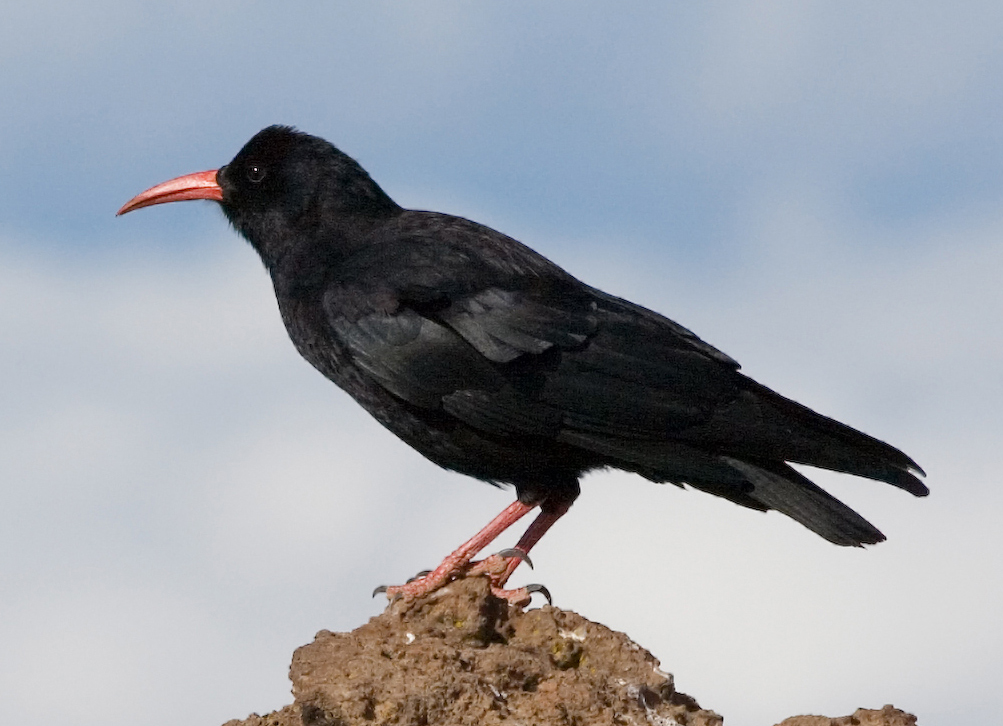
Wikipedia: Red-billed chough Source: WIKIPEDIA
Pyrrhocorax_pyrrhocorax_-standing-8.jpg
🔍
Never observed (yet!)
Description
Etymology:[6], "Chough" was originally an alternative onomatopoeic name for the jackdaw, Corvus monedula, based on its call. [Link]
Vocalization:
Easily distinguished from the thin, trilling, whistling sounds of Alpine Chough. [Link]
Seasonal behavior
Year-round bird Breeding: 04-01 - 07-10More details at Vogelwarte.ch
Other Details
Physical details
Physical details: length=39-40 cm, wingspan=73-90 cm, weight=260-350 gHabitats: Mountain
Vocalisation
Calls: Ebird: Gives a variety of calls, including a loud “chaw!”, as well as higher-pitched gull-like mewing calls. [Link]Call: A rapidly descending "keeaaaw", sometimes resembling a coarse jackdaw. At other times a more mewing sound, with similar coarseness, or a sharper, descending "kieew". [Link]
1:
Higher-pitched falling graak.
2: No details but a Xeno-Canto recording.
XC417702 - Red-billed Chough - Pyrrhocorax pyrrhocorax - flight call recorded in Spain.
♫ Source: XENOCANTO XC417702 - Red-billed Chough - Pyrrhocorax pyrrhocorax - flight call recorded in Spain.mp3 Spain (flight call)

Call attributes: Call melody: non-musical, slow, Frequency: low (1-3 KHz), Special sounds: cawing.
Details

Wikimedia Eurasian golden oriole. Source: WIKIPEDIA
Wikimedia Eurasian golden oriole.jpg
First observed in 🇨🇭 on 2010-06-14.
Description
General: Pirol: auffälligen Sexualdimorphismus. Wo/Habitat: lichter Auenwälder, Bruchwälder und gewässernaher Gehölze. Ebenso zählen Laub-, Misch- und Nadelwälder sowie Parks, große Gärten, Friedhöfe, Streuobstwiesen, hohe Obstbäume, Windschutzgürtel und Alleen zu seinen Brutgebieten, wo er sich überwiegend im Kronendach höherer Bäume aufhält. Der Verbreitungsschwerpunkt liegt hier im kontinentaleren Osteuropa. knapp amselgross; Presence april 15 - September 15 https://www.vogelwarte.ch/de/vögel/vögel-der-schweiz/pirolGeneral: In Western Europe they prefer open broadleaf forests and plantations, copses, riverine forest, orchards, large gardens.They reside in Switzerland from mid-April to mid-September, breeding in mid-May to mid-July. They predominate near the German and French borders, from Lake Constance to Geneva. I want to try to see one at Neeracherried or Thurauen.
General: Deutschland: Brut-, Zugvogel RL V
Etymology:
[9] Albertus Magnus used the Latin form oriolus in about 1250 and erroneously stated that it was onomatopoeic because of the golden oriole's song. [Link]
Geography:
Wikipedia: only member of the oriole family of passerine birds breeding in Northern Hemisphere temperate regions. It is a summer migrant in Europe and western Asia and spends the winter season in central and southern Africa. [Link]
Seasonal behavior
Presence: 04-20 - 09-17 Breeding: 05-21 - 07-20 Migration in: 04-20 - 06-09 Migration out: 07-10 - 09-17More details at Vogelwarte.ch
Other Details
Physical details
Physical details: length=24 cm, wingspan=44-47 cm, weight=56-79 gHabitats: Forest
Vocalisation
Song: A soft, lowish whistling. In my opinion, the golden oriole has a beautiful voice, but no imagination as to melody - it's always the same few notes. Song:Varied repertoire, but song and common contact call very distinct. Song a series of 1-2 seconds long phrases of 3-5 yodeling, clear, fluting notes, interspersed with 2-3 second pauses. Tone very full-bodied, melodic and pleasing. [Link]
Song attributes:
Melody: stereotype melodic, slow, Frequency: 0-1 KHz Singing season: 04-22 - 09-21
♫ Source: XENOCANTO XC567973 eurasian golden oriole song.mp3 (song)

Calls:
Flötenrufen
Oft wird der Gesang allerdings vom Star treffend ähnlich nachgeahmt. [Link]
Contact call surprisingly different: A forced, drawn "weeackt", slightly resembling Jay, but less harsh, and much more nasal. Other sounds include a Wryneck-like warning call. [Link]
3 somewhat harsh ascending notes, more melodic than a Eurasian jay call
XC565722 eurasian golden oriole call.
♫ Source: XENOCANTO XC565722 eurasian golden oriole call.mp3 (call)

Call attributes: Call melody: simple rhythmic, slow, Frequency: medium (1-5 KHz),
Details

Mittelmeermöwe, Tenero. 2024-09-04 18:20:23 Locarno
First observed in 🇨🇭 on 2021-03-07.
Description
General:The yellow-legged gull is a large gull found in Europe, the Middle East and North Africa, which has only recently achieved wide recognition as a distinct species. It was formerly treated as a subspecies of either the Caspian gull L. cachinnans, or more broadly as a subspecies of the herring gull L. argentatus.
The genus name is from Latin Larus which appears to have referred to a gull or other large seabird, and the species name honours the German zoologist Karl Michahelles.[2]
[more]
Deutschland: Brut-, Zugvogel, Wintergast
Vocalization:
Voice more nasal than Herring Gull, but ID by sound difficult. [Link]
Seasonal behavior
Year-round birdOther Details
Physical details
Physical details: length=59-67 cm, wingspan=140-158 cm, weight=750-1500 gnot sexually dimporphic. No breeding plumage Identifying characteristics: general: head = gray (sprinkled), beak = yellow (yellow orange with a red tip esp. on the lower half), legs = yellow (yellow orange), wings = gray, tail = black (with white stripes) Habitats: River and lake
Vocalisation
Song: No details but a Xeno-Canto recording. Song attributes: Frequency:♫ 2025-09-26 16:12:00 Chioggia (song)
Details
Profile Wikipedia Vogelwarte BirdLife ZH ornitho.ch Audubon AllAboutBirds Xeno-Canto BirdID NABU YouTube

Either a lesser black-backed gull because of the orange legs, short neck, flat-topped head or yellow-legged gull because the bill is more yellow than orange. 2022-01-16 13:20:46
🔍
Never observed (yet!)
Description
Geography: This bird appears across the great seas in the following continents: Europe, North America, Africa, Asia.General: Deutschland: Brut-, Zugvogel, Wintergast
Vocalization:
Very similar to Herring Gull, but tone more nasal. [Link]
Other Details
Physical details
Physical details: length=52-64 cm, wingspan=117-134 cm, weight=620-1000 gHabitats: River and lake Details

Cormorant, Graureiher, zwei Lachmöwen am Klingnauerstausee. 2022-02-05 10:35:32 Klingnauer Stausee (man-made lake)
First observed in 🇨🇭 on 2020-05-20.
Description
Geography: This bird appears across the great seas in the following continents: Europe, North America, Africa, Asia.General: Common waterbird at Pfäffikersee, that doesn't necessarily have the eponymous black head.
General: Deutschland: Brut-, Jahres-, Zugvogel, Wintergast
Etymology:
[40], In Richard Adams' 1972 novel Watership Down, a black-headed gull named Kehaar (who claims his name is the onomatopoeia of waves breaking against the shore) plays a major part in the story. [Link]
Vocalization:
Quite vocal, especially at breeding ground. [Link]
Seasonal behavior
Year-round birdOther Details
Physical details
Physical details: length=34-37 cm, wingspan=86-99 cm, weight=200-400 gnot sexually dimporphic. No breeding plumage Identifying characteristics: Summer: head = black, , , , , tail = black Winter: head = white (With Charlie Brown-style half circle behind the eye), , , , general: beak = red, legs = red, wings = gray, Habitats: River and lake
Vocalisation
Song: No details but a Xeno-Canto recording. Song attributes: Frequency:♫ 2021-04-27 16:51:23 Source: BirdNet 20210427_165123 birdnet 1485 - Black-headed Gull racket at Chlisee - No confident detection - Wetzikon.mp3 Wetzikon (song)
Details
Black-legged kittiwake / Dreizehenmöwe (Rissa tridactyla)
Profile Wikipedia Vogelwarte BirdLife ZH ornitho.ch Audubon AllAboutBirds Xeno-Canto NABU YouTube

Wikipedia: Black-legged kittiwake Source: WIKIPEDIA
1200px-Rissa_tridactyla_%28Vard%C3%B8%2C_2012%29.jpg
🔍
Never observed (yet!)
Description
Geography: This bird appears across the great seas in the following continents: Europe, North America, Africa, Asia.General: Deutschland: Brut-, Jahres-, Zugvogel, Wintergast RL R
Vocalization:
Highly vocal at breeding ground. A mewing "kitti-wake", with the pitch rising on the second drawn out syllable, and then falling. Generally silent elsewhere, except when squabbling over food. [Link]
Seasonal behavior
Seldom seen here Year-round bird Migration in: 03-01 - 03-23 Migration out: 03-15 - 03-23More details at Vogelwarte.ch
Other Details
Physical details
Physical details: length=38-40 cm, wingspan=95-105 cm, weight=310-500 gDetails
Gull-billed tern / Lachseeschwalbe (Gelochelidon nilotica)
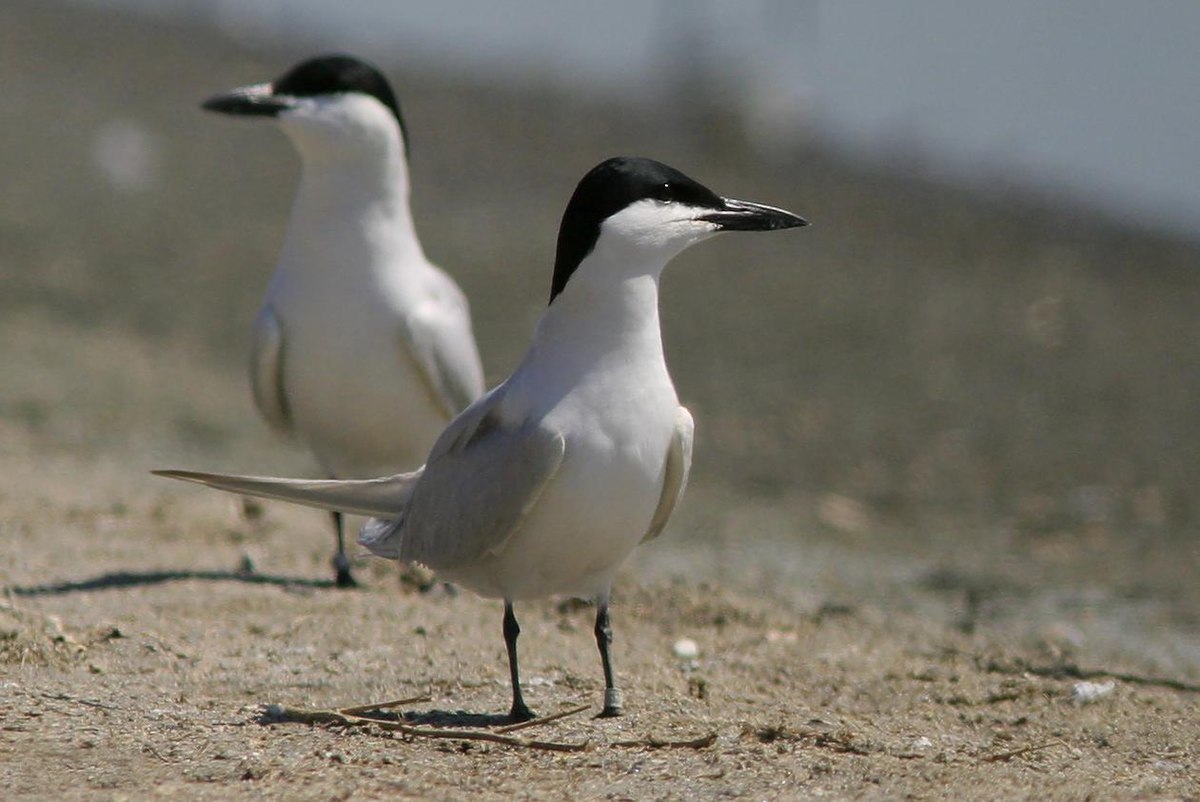
Wikipedia: Gull-billed tern Source: WIKIPEDIA
1200px-Gelochelidon_nilotica_vanrossemi.jpg
🔍
Never observed (yet!)
Description
Geography: This bird appears across the great seas in the following continents: Europe, North America, South America, Africa, Asia.General: Deutschland: Brut-, seltener Zugvogel RL 1
Vocalization:
Quite vocal and easily distinguished from most congeners. Mewing and sharp in tone, but not rattling or raucous like most terns. Other variants are series of "ke-ke-ke-ke", or the mewing sounds. [Link]
Seasonal behavior
Seldom seen hereMore details at Vogelwarte.ch
Other Details
Physical details
Physical details: length=35-38 cm, wingspan=100-115 cm, weight=190-260 gDetails
Sandwich tern / Brandseeschwalbe (Thalasseus sandvicensis)

Sandwich tern in flight with distinct yellow tipped bill. 2023-09-27 12:28:34 Florida
First observed in Costa Rica on 2018-03-11.
Description
Geography: This bird appears across the great seas in the following continents: Europe, North America, South America, Africa.General: Deutschland: Brut-, Zugvogel RL 2
Other Details
Physical details
Physical details: length=36-41 cm, wingspan=95-105 cm, weight=215-275 gHabitats: River and lake Details
Audouin's gull (Ichthyaetus audouinii)

Audouin's gull in Portocolom, Mallorca. 2022-04-07 16:43:56
First observed in Mallorca on 2022-04-07.
Description
General:Audouin's gull (Ichthyaetus audouinii) is a large gull restricted to the Mediterranean and the western coast of Saharan Africa and the Iberian peninsula. The genus name is from Ancient Greek ikhthus, "fish", and aetos, "eagle", and
the specific audouinii and the English name are after the French naturalist Jean Victoire Audouin.[2]
[more]
Details
Northern lapwing / Kiebitz (Vanellus vanellus)
Profile Wikipedia Vogelwarte BirdLife ZH ornitho.ch bird-song.ch Xeno-Canto NABU YouTube

Kiebitz im Flug, Wauwilermoos. 2022-06-22 15:07:12 Wauwilermoos
First observed in 🇨🇭 on 2021-02-24.
Description
Deutschland: Brut-, Zugvogel RL 2Etymology:
The name lapwing has been variously attributed to the "lapping" sound its wings make in flight, from the irregular progress in flight due to its large wings (the Oxford English Dictionary derives this from an Old English word meaning "to totter"),[4] or from its habit of drawing potential predators away from its nest by trailing a wing as if broken. [Link]
The names peewit, pewit, tuit or tew-it are onomatopoeic and refer to the bird's characteristic call. [Link]
Vocalization:
Quite vocal, especially in flight at breeding ground. [Link]
Seasonal behavior
Year-round bird Breeding: 03-12 - 06-29 Migration in: 05-01 - 06-29 Migration out: 02-01 - 04-11More details at Vogelwarte.ch
Other Details
Physical details
Physical details: length=28-31 cm, wingspan=82-87 cm, weight=140-320 gHabitats: Wetland
Vocalisation
Song: No details but a Xeno-Canto recording. Song attributes: Frequency:♫ 2025-05-16 19:34:00 Switzerland (song)
Calls:
Ruf ist entweder mhhhh oder Bogen-artiges hoch und runter. [Link]
Territorial call: Dry, introductory phrases followed by drawn-out mewing sounds; "wyrrr-peeeoo-weeep". Alarm call "pee-wit". [Link]
No details but a Xeno-Canto recording.
XC801017 - Northern Lapwing - Vanellus vanellus - bizarre-sounding call.
♫ Source: XENOCANTO XC801017 - Northern Lapwing - Vanellus vanellus - bizarre-sounding call.mp3 (call)

Call attributes: song Frequency: ,
Details
Common ringed plover / Sandregenpfeifer (Charadrius hiaticula)
Profile Wikipedia Vogelwarte BirdLife ZH ornitho.ch Audubon AllAboutBirds Xeno-Canto BirdID NABU YouTube

Sandregenpfeifer auf Ende vom Damm in La Sauge. 2024-09-14 15:34:58 Fanel/Chablais de Cudrefin und La Sauge
First observed in 🇨🇭 on 2022-09-04.
Description
Geography: This bird appears across the great seas in the following continents: Europe, North America, Africa, Asia.General: Deutschland: Brut-, Zugvogel RL 1
Vocalization:
Usually heard before seen. [Link]
Seasonal behavior
Presence: 03-12 - 10-27 Migration in: 10-07 - 10-27 Migration out: 10-07 - 10-15More details at Vogelwarte.ch
Other Details
Physical details
Physical details: length=18-20 cm, wingspan=48-57 cm, weight=55-73 gHabitats: Wetland Details
Little ringed plover (Thinornis dubius)
Profile Wikipedia Xeno-Canto NABU YouTube

Little Ringed Plovers, Phnom Krom. 2024-03-03 09:12:46 Phnom Krom
First observed in Phnom Krom on 2024-03-03.
Description
General:Vocalisation
No details but a Xeno-Canto recording.XC835676 - Little Ringed Plover - Charadrius dubius - flight call, song - Dundgovi, Mongolia.
♫ Source: XENOCANTO XC835676 - Little Ringed Plover - Charadrius dubius - flight call, song - Dundgovi, Mongolia.mp3 (flight call)

Call attributes: flight call Frequency: ,
Details
Black-bellied plover / Kiebitzregenpfeifer (Pluvialis squatarola)

Wikipedia: Black-bellied plover Source: WIKIPEDIA
1200px-Pluvialis_squatarola_%28summer_plumage%29.jpg
🔍
Never observed (yet!)
Description
Geography: This bird appears across the great seas in the following continents: Europe, North America, South America, Africa, Asia.General: Deutschland: Zugvogel
Seasonal behavior
Presence: 04-11 - 11-26 Migration in: 11-06 - 11-14 Migration out: 05-01 - 05-31More details at Vogelwarte.ch
Other Details
Physical details
Physical details: length=27-30 cm, wingspan=71-83 cm, weight=190-280 gHabitats: Wetland Details
Kentish plover (Anarhynchus alexandrinus)
Profile Wikipedia Xeno-Canto BirdID NABU YouTube

Wikipedia: Kentish plover Source: WIKIPEDIA
1200px-Kentish_plover_%28Charadrius_alexandrinus%29_Cyprus.jpg
🔍
Never observed (yet!)
Description
General:Details
Curlew sandpiper / Sichelstrandläufer (Calidris ferruginea)
Profile Wikipedia Vogelwarte BirdLife ZH ornitho.ch Audubon AllAboutBirds Xeno-Canto BirdID NABU YouTube
.JPG)
Rostgans und nach MBI mehrere Sichelstrandlaeufer, die ich nur hier sehen (2024 auch). 2025-09-13 14:52:16 Klingnauer Stausee (man-made lake)
First observed in 🇨🇭 on 2024-08-24.
Description
Geography: This bird appears across the great seas in the following continents: Europe, North America, South America, Africa, Asia.General: Deutschland: Zugvogel
Etymology:
Nicolas Baiker sagt, Hauptmerkmale innerhalb der Strandläufer sind der Augenstreif und der Schnabel der relativ lang ist und immer lezten Drittel immer krummer, darum Sichelstrandläufer. [Link]
Other Details
Physical details
Physical details: length=18-19 cm, wingspan=42-46 cm, weight=50-65 gHabitats: Wetland
Vocalisation
Calls:Flight call a soft, ringing and rolling "krrrrrt, with variations. Lacks the hoarse, nasal quality of similar call by Dunlin. [Link]
At XenoCanto I heard 5 rising notes within a second.
Call attributes: Call melody: one note, fast, Frequency: 4-6 KHz, Special sounds: whoop.
Details
Ruff / Kampfläufer (Calidris pugnax)

MerlinBirdId sagt, das mit dem rotbraunen Rücken mit vielen Punkten war ein Kampfläufer - in dem Fall meine erste Besichtigung - und der dunkle wo wir nur den Arschsehen wären Dunkelwasserläufer - auf dem Klingnauerstausee. 2024-08-24 18:17:54 Klingnauer Stausee (man-made lake)
First observed in 🇨🇭 on 2024-08-24.
Description
Geography: This bird appears across the great seas in the following continents: Europe, North America, South America, Africa, Asia.General: Deutschland: Brut-, Zugvogel RL 1
Etymology: Nabu: Der Name leitet sich vom Balzverhalten der Männchen ab: In Balzarenen tragen sie „Turniere“ aus, um die Weibchen zu beeindrucken, dabei herrscht eine komplizierte Rollenverteilung. [Link]
Vocalization:
Generally silent. Short, muted, nasal, mono or disyllabic grunts sometimes heard. [Link]
Seasonal behavior
Presence: 02-20 - 11-06 Migration in: 05-21 - 05-31 Migration out: 05-21 - 05-28More details at Vogelwarte.ch
Other Details
Physical details
Physical details: length=26-30 cm, wingspan=54-58 cm, weight=75-230 gHabitats: Wetland Details
Red knot / Knutt (Calidris canutus)
Profile Wikipedia Vogelwarte BirdLife ZH ornitho.ch Audubon AllAboutBirds Xeno-Canto BirdID NABU YouTube

Red knots, according to MerlinBirdID - underway to somewhere better at Las Coloradas. 2023-04-15 09:34:08 Yucatan
First observed in Yucatan on 2023-04-15.
Description
Geography: This bird appears across the great seas in the following continents: Europe, North America, South America, Africa, Asia.General: Deutschland: Zugvogel, Wintergast
Other Details
Physical details
Physical details: length=23-25 cm, wingspan=57-61 cm, weight=110-160 gHabitats: Wetland Details
Dunlin / Alpenstrandläufer (Calidris alpina)
Profile Wikipedia Vogelwarte BirdLife ZH ornitho.ch Audubon AllAboutBirds Xeno-Canto BirdID NABU YouTube
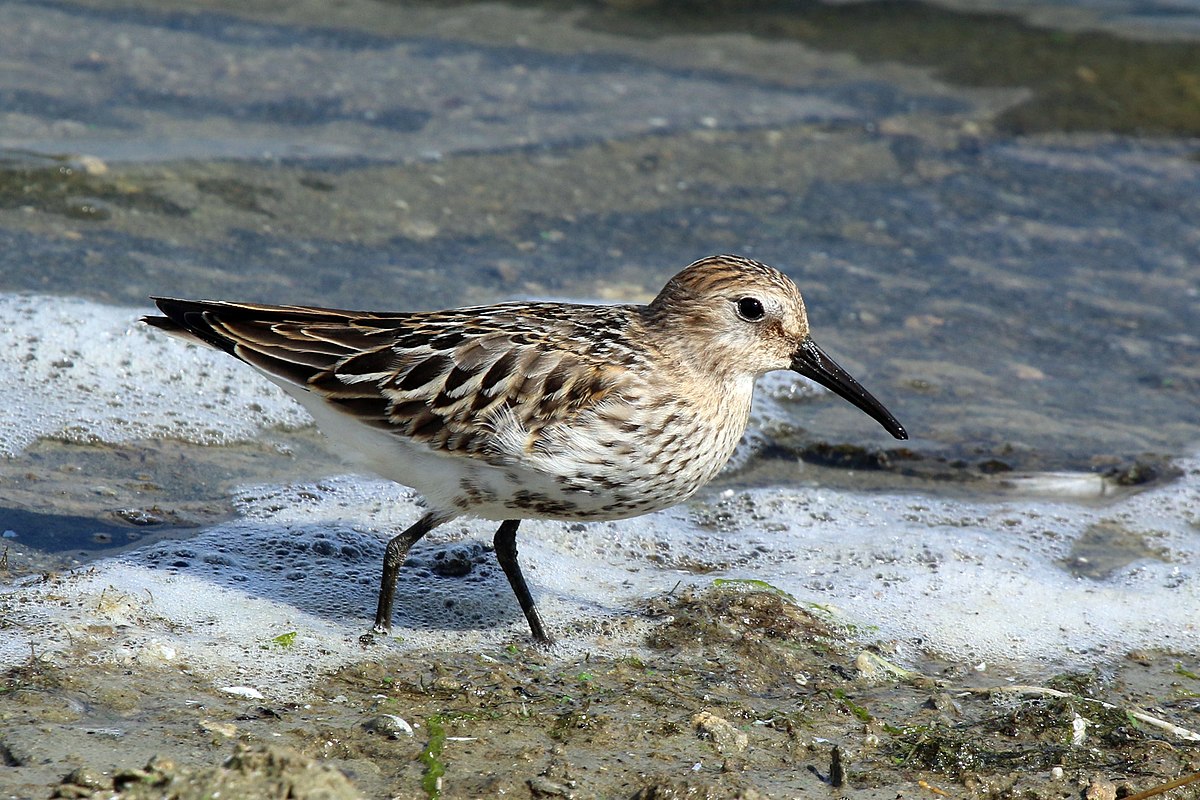
Wikipedia: Dunlin Source: WIKIPEDIA
1200px-Dunlin_%28Calidris_alpina%29_juvenile.jpg
🔍
Never observed (yet!)
Description
Geography: This bird appears across the great seas in the following continents: Europe, North America, South America, Africa, Asia.General: Deutschland: Brut-, Zugvogel, Wintergast RL 1
Seasonal behavior
Year-round bird Migration in: 03-01 - 03-23 Migration out: 03-15 - 03-23More details at Vogelwarte.ch
Other Details
Physical details
Physical details: length=16-20 cm, wingspan=38-43 cm, weight=35-60 gHabitats: Wetland Details
Little stint / Zwergstrandläufer (Calidris minuta)
Profile Wikipedia Vogelwarte BirdLife ZH ornitho.ch Xeno-Canto BirdID NABU YouTube

Wikipedia: Little stint Source: WIKIPEDIA
Little_Stint_%28Calidris_minuta%29_2.jpg
🔍
Never observed (yet!)
Description
General: Deutschland: ZugvogelSeasonal behavior
Presence: 04-20 - 10-27 Migration in: 10-07 - 10-15 Migration out: 05-01 - 06-09More details at Vogelwarte.ch
Other Details
Physical details
Physical details: length=12-14 cm, wingspan=34-37 cm, weight=18-30 gHabitats: Wetland Details
Sanderling / Sanderling (Calidris alba)
Profile Wikipedia Vogelwarte BirdLife ZH ornitho.ch Audubon AllAboutBirds Xeno-Canto BirdID NABU YouTube

Wahrscheinlich Sanderling - there must be a better photo. 2024-09-14 15:34:48 Fanel/Chablais de Cudrefin und La Sauge
First observed in Yucatan on 2023-03-27.
Description
Geography: This bird appears across the great seas in the following continents: Europe, North America, South America, Africa, Asia.General: Deutschland: Zugvogel, Wintergast
Seasonal behavior
Presence: 04-11 - 10-27 Migration in: 10-07 - 10-15 Migration out: 04-20 - 05-31More details at Vogelwarte.ch
Other Details
Physical details
Physical details: length=20-21 cm, wingspan=40-45 cm, weight=44-70 gHabitats: Wetland Details
Eurasian curlew / Grosser Brachvogel (Numenius arquata)

Grosser brachvogel, Klingnauerstausee. 2022-02-05 11:54:42 Klingnauer Stausee (man-made lake)
First observed in 🇨🇭 on 2021-02-12.
Description
General: In Jona findet man viele auf der Wiese unter Obstbäumen, anscheinend weil es dort viele Insekten und Schnecken gibt (siehe oben).General: Deutschland: Brut-, Zugvogel RL 1
Geography:
Die Brachvögel brütet im Moment recht viel in Vergleich mit früher. [Link]
Diet: Nabu: Auf dem Speiseplan des Großen Brachvogels stehen vor allem Insekten und deren Larven und andere Kleintiere wie Schnecken und Regenwürmer, aber auch Krebstierchen. Ab und zu frisst er auch Amphibien, Reptilien oder Fische. [Link]
Seasonal behavior
Year-round bird Migration in: 02-20 - 05-10 Migration out: 07-10 - 12-07More details at Vogelwarte.ch
Other Details
Physical details
Physical details: length=50-60 cm, wingspan=80-100 cm, weight=540-1300 gHabitats: Wetland
Vocalisation
Song: No details but a Xeno-Canto recording. Song:Song starts similar to Whimbrel, with long wailing notes "kluuueee", but takes on a different ending as it accelerates to an ascending phrase repeated in rapid cycles . [Link]
Song attributes:
Frequency:
♫ Source: XENOCANTO XC625195-grosser brachvogel, michal jezierski, uk.mp3 (flight call)
 Das Männchen steigt mit einzelnen, klangvollen Rufen auf, die vor der Landung in einen weithin hörbaren Triller übergehen. [Link]
Call attributes: flight call Call melody: simple rhythmic, slow, Frequency: low (1-3 KHz),
Details
Whimbrel / Regenbrachvogel (Numenius phaeopus)

Whimbrel at x. 2025-02-25 10:29:04 Lanzarote
First observed in San Christiano on 2022-03-19.
Description
Geography: This bird appears across the great seas in the following continents: Europe, North America, South America, Africa, Asia.General: Deutschland: Zugvogel
Seasonal behavior
Presence: 03-23 - 10-07 Migration in: 05-10 - 05-31 Migration out: 05-10 - 05-18More details at Vogelwarte.ch
Other Details
Physical details
Physical details: length=40-42 cm, wingspan=76-89 cm, weight=300-660 gHabitats: Wetland Details
Ruddy turnstone / Steinwälzer (Arenaria interpres)

Ruddy turnstone, San Christiana, Tenerife. 2022-03-19 10:26:30
First observed in Tenerife on 2022-03-19.
Description
Geography: This bird appears across the great seas in the following continents: Europe, North America, South America, Africa, Asia.General: Deutschland: Brut-, Zugvogel, Wintergast RL 2
Seasonal behavior
Presence: 04-11 - 10-18 Migration in: 05-01 - 06-20 Migration out: 05-01 - 06-08More details at Vogelwarte.ch
Other Details
Physical details
Physical details: length=22-24 cm, wingspan=50-57 cm, weight=85-150 gHabitats: Wetland Details
Common snipe / Bekassine (Gallinago gallinago)

Wahrscheinlich Bekassine mit dem langen Schnabel, Klingnauerstausee. 2022-02-05 11:54:14 Klingnauer Stausee (man-made lake)
First observed in 🇨🇭 on 2021-10-24.
Description
Geography: This bird appears across the great seas in the following continents: Europe, North America, Africa, Asia.General:
The common snipe (Gallinago gallinago) is a small, stocky wader native to the Old World.
[more]
Deutschland: Brut-, Zugvogel, Wintergast RL 1
Vocalization:
Quite vocal, especially at breeding ground. [Link]
Seasonal behavior
Year-round bird Migration in: 01-01 - 05-21 Migration out: 07-20 - 12-31More details at Vogelwarte.ch
Other Details
Physical details
Physical details: length=25-27 cm, wingspan=44-47 cm, weight=80-140 gHabitats: Wetland
Vocalisation
Song: No details but a Xeno-Canto recording. Song:Song an unmistakable bleating, drumming sound produced by vibrating tail feathers in sky-dives. [Link]
Song attributes:
Frequency:
♫ Source: XENOCANTO XC812599 - Common Snipe song, one note, 4x per sec - Gallinago gallinago.mp3 (song)

Calls:
Almost always give diagnostic hoarse and nasal "kaaat" call when flushed. Another territorial call is a rhythmic, mechanical and sharp "tika-tika-tka", or "ika-ka-ka". [Link]
XC947581 - Common Snipe flight call - Gallinago gallinago.
♫ Source: XENOCANTO XC947581 - Common Snipe flight call - Gallinago gallinago.mp3 (flight call)

Call attributes: flight call Call melody: one note, slow, Frequency: medium (1-5 KHz), Special sounds: quack.
Details
Bar-tailed godwit / Pfuhlschnepfe (Limosa lapponica)
Profile Wikipedia Vogelwarte BirdLife ZH ornitho.ch Audubon AllAboutBirds Xeno-Canto BirdID NABU YouTube

Wikipedia: Bar-tailed godwit Source: WIKIPEDIA
1200px-Bar-tailed_Godwit.jpg
🔍
Never observed (yet!)
Description
Geography: This bird appears across the great seas in the following continents: Europe, North America, Africa, Asia.General: Deutschland: Zugvogel
Seasonal Behavior: Eine junge Pfuhlschnepfe scheint einen Non-Stop-Rekord für Zugvögel aufgestellt zu haben. Der Vogel sei über 13.500 Kilometer von Alaska in den australischen Bundesstaat Tasmanien geflogen, das berichteten mehrere Medien übereinstimmend. [Link]
Vocalization:
Quite vocal at breeding ground but mostly silent elsewhere. Varied repertoire of mewing and sharp sounds, some resembling Black-tailed, some almost Snipe-like. [Link]
Seasonal behavior
Presence: 04-01 - 11-06 Migration in: 07-29 - 08-29 Migration out: 08-21 - 08-29More details at Vogelwarte.ch
Other Details
Physical details
Physical details: length=37-39 cm, wingspan=70-80 cm, weight=230-450 gHabitats: Wetland Details
Black-tailed godwit / Uferschnepfe (Limosa limosa)
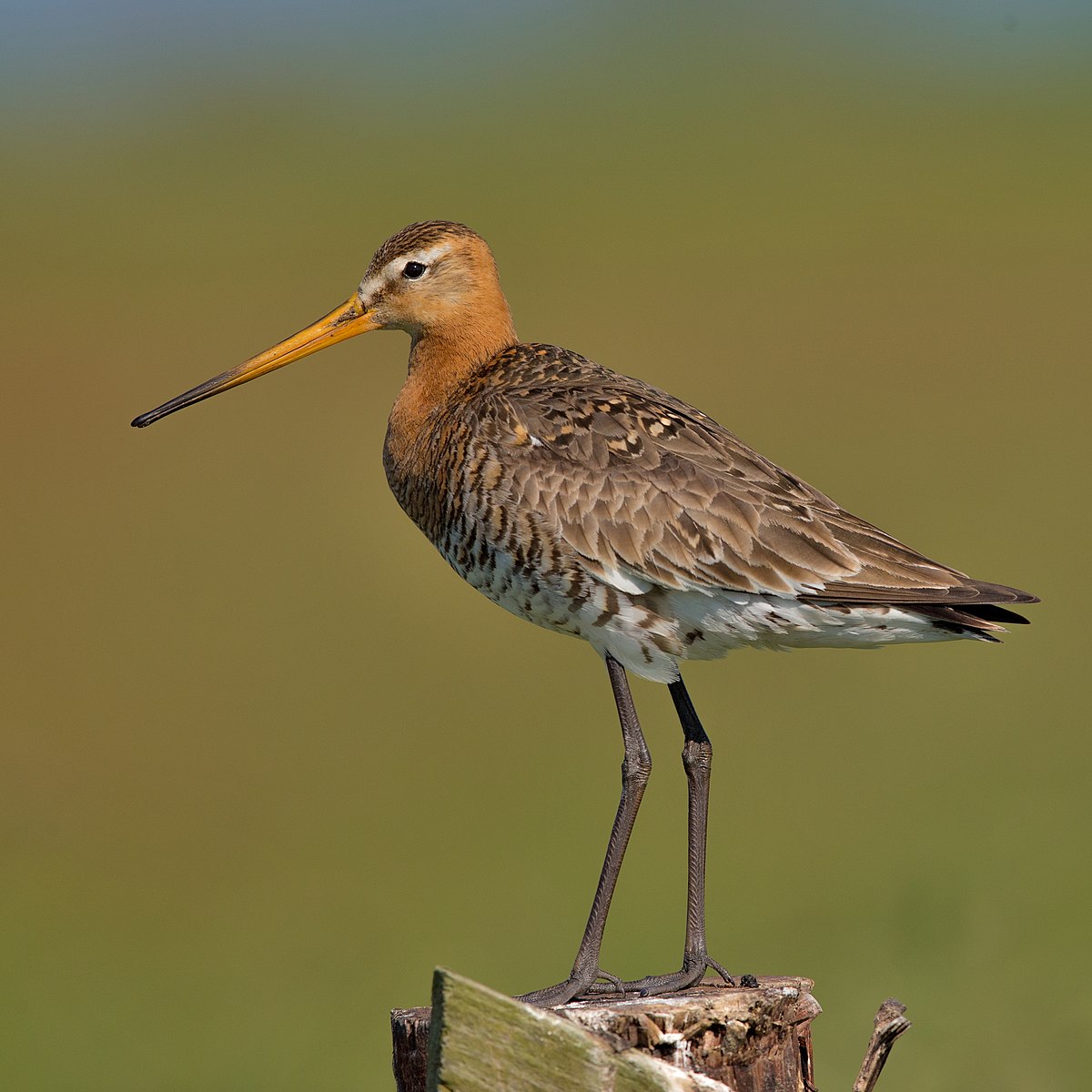
Wikipedia: Black-tailed godwit Source: WIKIPEDIA
1200px-Black-tailed_Godwit_Uferschnepfe.jpg
🔍
Never observed (yet!)
Description
Geography: This bird appears across the great seas in the following continents: Europe, North America, Africa, Asia.General: Deutschland: Brut-, Zugvogel RL 1
Vocalization:
Quite vocal at breeding ground, but mostly silent elsewhere. Varied repertoire of mewing and sharp sounds, some resembling Bar-tailed, some almost lapwing-like. [Link]
Seasonal behavior
Presence: 02-20 - 09-28 Migration in: 05-01 - 05-31 Migration out: 05-01 - 05-08More details at Vogelwarte.ch
Other Details
Physical details
Physical details: length=40-44 cm, wingspan=70-82 cm, weight=250-390 gHabitats: Wetland Details
Common redshank / Rotschenkel (Tringa totanus)
Profile Wikipedia Vogelwarte BirdLife ZH ornitho.ch Xeno-Canto BirdID NABU YouTube

Common redshank plus common pochard. 2022-04-12 14:02:38
First observed in Mallorca on 2022-04-12.
Description
General: Deutschland: Brut-, Zugvogel, Wintergast RL VVocalization:
Generally a noisy and loud bird, especially at breeding ground. Most heard is a characteristic "tew-hoo", or "tew-hoo-hoo" with first syllable accentuated. No gap between the syllables like Greenshank, and usually with a marked falling pitch. [Link]
Seasonal behavior
Presence: 03-01 - 10-07 Migration in: 03-23 - 05-21 Migration out: 03-15 - 03-23More details at Vogelwarte.ch
Other Details
Physical details
Physical details: length=27-29 cm, wingspan=59-66 cm, weight=85-150 gHabitats: Wetland Details
Spotted redshank / Dunkler Wasserläufer (Tringa erythropus)
Profile Wikipedia Vogelwarte BirdLife ZH ornitho.ch Xeno-Canto BirdID NABU YouTube

Spotted redshank in Albufera. 2022-04-12 14:05:20
First observed in 🇨🇭 on 2021-10-24.
Description
General: Deutschland: ZugvogelOther Details
Physical details
Physical details: length=29-31 cm, wingspan=61-67 cm, weight=125-210 gHabitats: Wetland Details
Wood sandpiper / Bruchwasserläufer (Tringa glareola)
Profile Wikipedia Vogelwarte BirdLife ZH ornitho.ch Audubon AllAboutBirds Xeno-Canto BirdID NABU YouTube

Bruchwasserläufer. 2024-08-24 18:24:00 Klingnauer Stausee (man-made lake)
First observed in 🇨🇭 on 2021-08-19.
Description
Geography: This bird appears across the great seas in the following continents: Europe, North America, Africa, Asia.General: Deutschland: ehemaliger Brutvogel, Zugvogel RL 1
Vocalization:
Totally different from Green Sandpiper. [Link]
Other Details
Physical details
Physical details: length=19-21 cm, wingspan=56-57 cm, weight=50-80 gHabitats: Wetland
Vocalisation
Song: No details but a Xeno-Canto recording. Song attributes: Frequency:♫ 2021-08-19 08:26:04 Source: BirdNet 20210819_082604 birdnet 1940 - Wood Sandpiper, saw a bird flying, check reports in Ornitho - Wood Sandpiper - Uznach.mp3 Uznach (song)
Details
Common greenshank / Grünschenkel (Tringa nebularia)
Profile Wikipedia Vogelwarte BirdLife ZH ornitho.ch Audubon AllAboutBirds Xeno-Canto BirdID NABU YouTube

MerlinBirdID says common greenshank, probably non-breeding adult. 2022-04-12 14:52:08
First observed in Mallorca on 2022-04-12.
Description
Geography: This bird appears across the great seas in the following continents: Europe, North America, Africa, Asia.General: Deutschland: ausnahmsweise Brutvogel, Zugvogel
Vocalization:
Most heard is a characteristic, trisyllabic "tew-tew-tew" (sometimes two or four syllables). Can resemble redshank, but pitch more stable, and not falling notably. Each syllable is clearly separated and equally emphasized. [Link]
Other Details
Physical details
Physical details: length=30-33 cm, wingspan=68-70 cm, weight=130-270 gHabitats: Wetland Details
Green sandpiper / Waldwasserläufer (Tringa ochropus)
Profile Wikipedia Vogelwarte BirdLife ZH ornitho.ch Xeno-Canto BirdID NABU YouTube

Waldwasserläufer. 2025-07-17 12:54:08 Kaltbrunner-Riet
First observed in 🇨🇭 on 2022-09-04.
Description
General: Deutschland: Brut-, Zugvogel, WintergastVocalization:
Totally different from Wood Sandpiper. [Link]
Seasonal behavior
Year-round bird Migration in: 06-20 - 09-07 Migration out: 03-23 - 05-01More details at Vogelwarte.ch
Other Details
Physical details
Physical details: length=21-24 cm, wingspan=57-61 cm, weight=60-90 gHabitats: Wetland Details
Common sandpiper / Flussuferläufer (Actitis hypoleucos)
_probing_mud_banks_in_Kolkata_I_IMG_4169, by J.M.Garg - Own work.jpg)
Common Sandpiper (Actitis hypoleucos) probing mud banks in Kolkata I IMG 4169, by J.M.Garg - Own work. Source: OTHER
Common_Sandpiper_(Actitis_hypoleucos)_probing_mud_banks_in_Kolkata_I_IMG_4169, by J.M.Garg - Own work.jpg
First observed in 🇨🇭 on 2022-09-04.
Description
Geography: This bird appears across the great seas in the following continents: Europe, North America, Africa, Asia.General: Deutschland: Brut-, Zugvogel RL 2
Etymology: Birdweather: Mein Birdweather Gerät hat öfter das Gefühl dass es einen Flussuferläufer hört; Merlin hat es auch einmal gemeldet. [Link]
Other Details
Physical details
Physical details: length=19-21 cm, wingspan=38-41 cm, weight=40-60 gHabitats: Wetland
Vocalisation
Song: No details but a Xeno-Canto recording. Song attributes: Frequency:♫ 2024-08-08 07:22:45 Source: BIRDWEATHER 20240808_072245-Birdweather-Common_Sandpiper call.mp3 (call)
Calls:
Very vocal with characteristic repertoire of very high-pitched calls. Often heard is a disyllabic call, drawn out and slightly rising in pitch in the second part. This is often repeated in a series of rising tones in a cyclic manner, with approx 5 tones in each cycle. [Link]
1:
High-pitched, at least in Birdweather detection
XC927032 - Common Sandpiper 2-note call - Actitis hypoleucos.
♫ Source: XENOCANTO XC927032 - Common Sandpiper 2-note call - Actitis hypoleucos.mp3 (call)

2: No details but a Xeno-Canto recording.
XC924773 - Common Sandpiper flight call, swoop, 2 to 8 notes - Actitis hypoleucos.
♫ Source: XENOCANTO XC924773 - Common Sandpiper flight call, swoop, 2 to 8 notes - Actitis hypoleucos.mp3 (flight call)

Call attributes: Call melody: simple rhythmic, slow, Frequency: medium (1-5 KHz),
Details
Red phalarope / Thorshühnchen (Phalaropus fulicarius)

Wikipedia: Red phalarope Source: WIKIPEDIA
1200px-Phalaropus_fulicarius_10.jpg
🔍
Never observed (yet!)
Description
Geography: This bird appears across the great seas in the following continents: Europe, North America, South America, Africa, Asia.General: Deutschland: seltener Zugvogel
Seasonal behavior
Seldom seen hereMore details at Vogelwarte.ch
Other Details
Physical details
Physical details: length=20-22 cm, wingspan=40-44 cm, weight=40-75 gDetails
Common tern / Flussseeschwalbe (Sterna hirundo)
Profile Wikipedia Vogelwarte BirdLife ZH ornitho.ch bird-song.ch Audubon AllAboutBirds Xeno-Canto BirdID NABU YouTube

Flussseeschwalbe. 2023-07-08 19:00:12 Neeracherried
First observed in 🇨🇭 on 2020-04-27.
Description
Geography: This bird appears across the great seas in the following continents: Europe, North America, South America, Africa, Asia.General: Deutschland: Brut-, Zugvogel RL 2
Etymology:
[9] The Scots names picktarnie,[11] tarrock[12] and their many variants are also believed to be onomatopoeic, derived from the distinctive call. [Link]
Seasonal Behavior:
Die Flussseeschwalbe (Sterna hirundo) ist eine Vogelart aus der Familie der Seeschwalben (Sternidae).
Sie ist in Mitteleuropa ein verbreiteter, aber nicht sehr häufiger Brut- und Sommervogel.
Während der Zugzeiten können im mitteleuropäischen Raum außerdem viele Durchzügler beobachtet werden. [Link]
Vocalization:
Similar to Arctic Tern but deeper. [Link]
Seasonal behavior
Presence: 03-23 - 10-07 Breeding: 05-01 - 07-29 Migration in: 03-23 - 06-09 Migration out: 06-29 - 10-07More details at Vogelwarte.ch
Other Details
Physical details
Physical details: length=31-35 cm, wingspan=77-98 cm, weight=110-150 gHabitats: River and lake
Vocalisation
Song: No details but a Xeno-Canto recording. Song attributes: Frequency:♫ 2020-04-27 14:08:13 Source: BirdNet 20200427_140813 birdnet 430 - Common tern.mp3 Luppmen (song)
Details
Eurasian oystercatcher / Austernfischer (Haematopus ostralegus)
Profile Wikipedia Vogelwarte BirdLife ZH ornitho.ch Xeno-Canto BirdID NABU YouTube

Eurasian oystercatcher, Iceland. 2015-06-09 14:04:38
First observed in Iceland on 2015-06-09.
Description
General: Deutschland: Brut-, Jahres-, Zugvogel, WintergastEtymology: Bbc2: A flock of oyster catchers is a parcel [A nugget from Winterwatch 2022, episode 1, from BBC 2]
Vocalization:
Very vocal. [Link]
Other Details
Physical details
Physical details: length=40-45 cm, wingspan=80-86 cm, weight=430-650 gHabitats: Wetland Details
Collared pratincole / Rotflügel-Brachschwalbe (Glareola pratincola)
Profile Wikipedia Vogelwarte BirdLife ZH ornitho.ch Xeno-Canto BirdID NABU YouTube

Wikipedia: Collared pratincole Source: WIKIPEDIA
1200px-Collared_pratincole_%28Glareola_pratincola%29.jpg
🔍
Never observed (yet!)
Description
Vocalization:
Quite vocal. [Link]
Other Details
Physical details
Physical details: length=25 cm, wingspan=60-65 cm, weight=70-95 gDetails
Great skua / Skua (Stercorarius skua)
Description
Geography: This bird appears across the great seas in the following continents: Europe, North America, Africa.General: Deutschland: seltener Zugvogel, seltener Wintergast
Vocalization:
Heard mostly at breeding ground. Short, and dry "kek", when agitated. Also a nasal, slightly mewing "kew". [Link]
Seasonal behavior
Presence: 04-01 - 10-27 Migration in: 10-18 - 10-27 Migration out: 10-18 - 10-25More details at Vogelwarte.ch
Other Details
Physical details
Physical details: length=53-58 cm, wingspan=132-140 cm, weight=1210-1630 gDetails
Pomarine jaeger / Spatelraubmöwe (Stercorarius pomarinus)
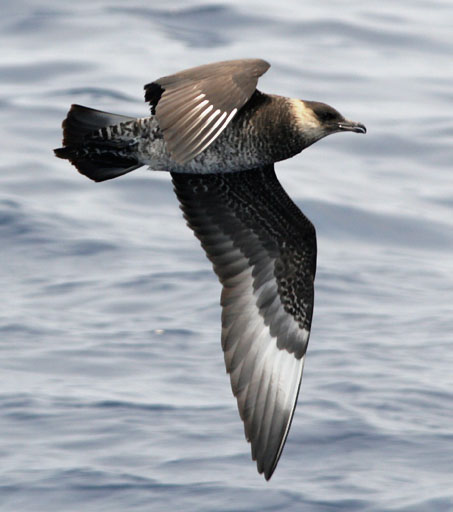
Wikipedia: Pomarine jäger Source: WIKIPEDIA
Stercorarius_pomarinusPCCA20070623-3985B.jpg
🔍
Never observed (yet!)
Description
Geography: This bird appears across the great seas in the following continents: Europe, North America, South America, Africa, Asia.General: Deutschland: seltener Zugvogel
Seasonal behavior
Seldom seen hereMore details at Vogelwarte.ch
Other Details
Physical details
Physical details: length=46-51 cm, wingspan=125-138 cm, weight=600-900 gDetails
Parasitic jaeger / Schmarotzerraubmöwe (Stercorarius parasiticus)

Arctic Skua, defending its nest. 2015-06-10 14:32:52
First observed in Iceland on 2015-06-10.
Description
Geography: This bird appears across the great seas in the following continents: Europe, North America, South America, Africa, Asia.General: Deutschland: Zugvogel
Vocalization:
Mostly heard at breeding ground. [Link]
Seasonal behavior
Seldom seen hereMore details at Vogelwarte.ch
Other Details
Physical details
Physical details: length=41-46 cm, wingspan=110-125 cm, weight=330-570 gDetails
Family Burhinidae (Triele, Haematopodidae – Austernfischer und Recurvirostridae – Säbelschnäblerverwandte):
Eurasian stone-curlew / Triel (Burhinus oedicnemus)

Wikipedia: Eurasian stone-curlew Source: WIKIPEDIA
1200px-Burhinus_oedicnemus_insularum_Lanzarote_1.jpg
🔍
Never observed (yet!)
Description
General:The Eurasian stone-curlew, Eurasian thick-knee, or simply stone-curlew (Burhinus oedicnemus) is a northern species of the Burhinidae (stone-curlew) bird family.
[more]
Seasonal behavior
Presence: 03-12 - 10-07 Migration in: 05-01 - 05-08 Migration out: 07-20 - 10-07More details at Vogelwarte.ch
Other Details
Physical details
Physical details: length=40-44 cm, wingspan=77-85 cm, weight=430-500 gHabitats: Wetland Details
Pied avocet / Säbelschnäbler (Recurvirostra avosetta)
Profile Wikipedia Vogelwarte BirdLife ZH ornitho.ch Xeno-Canto NABU YouTube

Säbelschnäbler bei Ses Salines. 2022-04-08 17:01:38
First observed in Mallorca on 2022-04-08.
Description
Deutschland: Brut-, Jahres-, Zugvogel, WintergastVocalization:
Not very vocal away from breeding ground. [Link]
Seasonal behavior
Presence: 03-23 - 12-07 Migration in: 05-01 - 06-20 Migration out: 05-01 - 06-08More details at Vogelwarte.ch
Other Details
Physical details
Physical details: length=42-45 cm, wingspan=77-80 cm, weight=260-290 gHabitats: Wetland
Vocalisation
Song: No details but a Xeno-Canto recording. Song attributes: Frequency:♫ 2022-04-08 17:18:58 Source: BirdNet 20220408_171858 birdnet - Säbelschnäbler - Säbelschnäbler - Campos.mp3 (song)
Details
Black-winged stilt / Stelzenläufer (Himantopus himantopus)
Profile Wikipedia Vogelwarte BirdLife ZH ornitho.ch Xeno-Canto BirdID NABU YouTube

Es ist lang gegangen bis ich den Regenflusspfeifer vor den Stelzenläufern gesehen habe. 2022-04-12 13:59:42
First observed in Morocco on 2019-11-22.
Description
General: Deutschland: ausnahmsweise Brutvogel, seltener ZugvogelVocalization:
Most vocal at breeding ground. Various short,sharp "kyp" may resemble both Avocet, Coot and Spur-winged Lapwing (Vanellus spinosus). While a tern-like "kee-arr" is more distinct. [Link]
Seasonal behavior
Presence: 04-11 - 08-18 Migration in: 05-21 - 05-28 Migration out: 07-10 - 08-18More details at Vogelwarte.ch
Other Details
Physical details
Physical details: length=35-40 cm, wingspan=0 cm, weight=150-210 gHabitats: Wetland
Vocalisation
Calls:Note that immature birds have a different contact call closely resembling Wood Sandpiper, but do not utter it in series. [Link]
No details but a Xeno-Canto recording.
XC863470 - Black-winged Stilt - Himantopus himantopus - flight call, a squeaky yapping - Camargue, France.
♫ Source: XENOCANTO XC863470 - Black-winged Stilt - Himantopus himantopus - flight call, a squeaky yapping - Camargue, France.mp3 Camargue (flight call)

Call attributes: flight call Frequency: ,
Details
Eurasian coot / Blässhuhn (Fulica atra)

Eurasian coot in the rain. 2025-04-21 09:29:12 Fanel/Chablais de Cudrefin und La Sauge
First observed in 🇨🇭 on 2020-04-14.
Description
General:The Eurasian coot (Fulica atra), also known as the common coot, or Australian coot, is a member of the rail and crake bird family, the Rallidae. It is found in Europe, Asia, Australia, New Zealand and parts of North Africa. It has a slaty-black body, a glossy black head and a white bill with a white frontal shield. The sexes are similar.
[more]
Deutschland: Brut-, Jahres-, Zugvogel, Wintergast
Vocalization:
Varied. Usually short, metallic and explosive. [Link]
Seasonal behavior
Year-round birdOther Details
Physical details
Physical details: length=36-38 cm, wingspan=70-80 cm, weight=600-1000 gHabitats: River and lake
Vocalisation
Song: No details but a Xeno-Canto recording. Song attributes: Frequency:♫ Source: XENOCANTO XC841364 - Eurasian Coot song - Fulica atra.mp3 (song)

Calls:
Most diagnostic call a very short, sharp and explosive "tsk". Sometimes a longer, less sharp but nasal "caw", with varying harshness. [Link]
XC902440 - Eurasian Coot squeaky call - Fulica atra.
♫ Source: XENOCANTO XC902440 - Eurasian Coot squeaky call - Fulica atra.mp3 (call)

Call attributes: Call melody: one note, slow, Frequency: medium (1-5 KHz), Special sounds: weird.
Details
Common moorhen / Teichhuhn (Gallinula chloropus)

Teichhuhn am Greifensee. 2022-01-27 14:06:40 Greifensee
First observed in 🇨🇭 on 2021-02-12.
Description
Geography: This bird appears across the great seas in the following continents: Europe, North America, Africa, Asia.General: Seen at the Pfäffikersee walking across the path from one set of reeds to another. An apprentice at the nature center gave us the identification, presuming it was a juvenile because of the lack of color. I'd have said its legs were shorter, but the moorhen definitely has the main trait we saw, that it holds its short tail in the air.
General: Deutschland: Brut-, Jahres-, Zugvogel, Wintergast RL V
Habitat:
Common Moorhens prefer to nest in the thicket on the edge of ponds, lakes or rivers and mostly only give themselves away through their guttural calls. They are easier to observe in winter because then they leave their well-vegetated habitat and are seen in meadows, parks and on open waters. [Link]
Seasonal behavior
Year-round bird Breeding: 04-20 - 08-09 Migration in: 03-01 - 05-01 Migration out: 09-07 - 12-16More details at Vogelwarte.ch
Other Details
Physical details
Physical details: length=32-35 cm, wingspan=50-55 cm, weight=240-420 gHabitats: Wetland
Vocalisation
Song: No details but a Xeno-Canto recording. Song:Most typical is the territorial call (song); a sharp, loud and resonant "krrrr-ook" or "krrrk". [Link]
Song attributes:
Frequency:
♫ Source: XENOCANTO XC946631 - Common Moorhen call, like a quack - Gallinula chloropus.mp3 (call)

Calls:
Rich repertoire of loud calls and softer sounds. Other calls; a sharp, three or four-syllable "kekeke", and a soft "wep" sometimes drawn-out in a more mewing version. [Link]
Call attributes: Call melody: one note, slow, Frequency: medium (1-5 KHz), Special sounds: quack.
Details
Houbara bustard / Kragentrappe (Chlamydotis undulata)
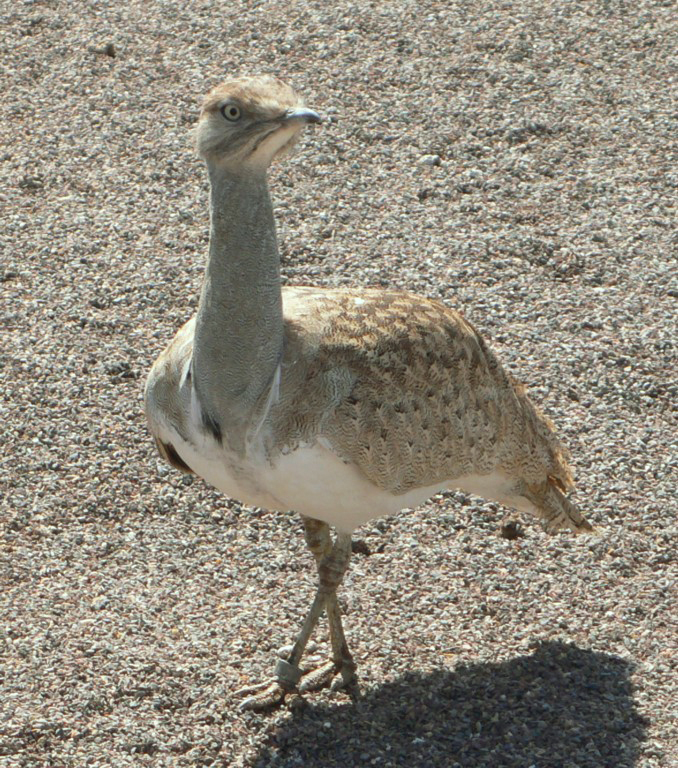
Wikipedia: Houbara bustard Source: WIKIPEDIA
Houbara035.JPG
🔍
Never observed (yet!)
Description
General:The houbara bustard (Chlamydotis undulata), also known as African houbara, is a large bustard native to North Africa and southwestern Asia, where it lives in arid habitats. The global population is listed as Vulnerable on the IUCN Red List since 2014.[1] The European population is restricted to the Canary Islands and has been assessed as Near Threatened in 2015.[2]
[more]
Details

Mäusebussard nah bei Gutenswil. 2024-06-04 10:29:56 Fehraltorf
First observed in 🇨🇭 on 2020-04-17.
Description
Geography: This bird appears across the great seas in the following continents: Europe, North America, Africa, Asia.General:
The common buzzard (Buteo buteo) is a medium-to-large bird of prey which has a large range. A member of the genus Buteo, it is a member of the family Accipitridae. The species lives in most of Europe and extends its breeding range across much of the Palearctic as far as the northwestern China (Tien Shan), far western Siberia and northwestern Mongolia.[1][2] Over much of its range, it is a year-round resident. However, buzzards from the colder parts of the Northern Hemisphere as well as those that breed in the eastern part of their range typically migrate south for the northern winter, many journeying as far as South Africa.[3] The common buzzard is an opportunistic predator that can take a wide variety of prey, but it feeds mostly on small mammals, especially rodents such as voles. It typically hunts from a perch.[4] Like most accipitrid birds of prey, it builds a nest, typically in trees in this species, and is a devoted parent to a relatively small brood of young.[2] The common buzzard appears to be the most common diurnal raptor in Europe, as estimates of its total global population run well into the millions.[2][5]
[more]
Deutschland: Brut-, Jahres-, Zugvogel, Wintergast
Vocalization:
Quite vocal. [Link]
Seasonal behavior
Year-round birdOther Details
Physical details
Physical details: length=51-57 cm, wingspan=113-128 cm, weight=550-1300 gHabitats: Agricultural
Vocalisation
Song: No details but a Xeno-Canto recording. Song attributes: Frequency:♫ 2026-02-24 16:08:50
Source: Zoom H2n Fehraltorf (call)Calls:
Most typical call a wailing, mewing "peeoooo". Quite similar to Rough-legged Buzzard, but the pitch falls more rapidly and is then sustained for the last part of the call. [Link]
Klingt ähnlich wie Rotmilan aber kürzer
XC917665 - Common Buzzard - Buteo buteo - call.
♫ Source: XENOCANTO XC917665 - Common Buzzard - Buteo buteo - call.mp3 (call)

Call attributes: Call melody: simple rhythmic, slow, Frequency: medium (1-5 KHz), Special sounds: swoop.
Details

Sperber Paar im Naturschutzgebiet im Staldenweiher-Wald. 2024-08-04 18:33:32 Staldenweiher
First observed in 🇨🇭 on 2021-02-06.
Description
General:The Eurasian sparrowhawk (Accipiter nisus), also known as the northern sparrowhawk or simply the sparrowhawk, is a small bird of prey in the family Accipitridae. Adult male Eurasian sparrowhawks have bluish grey upperparts and orange-barred underparts; females and juveniles are brown above with brown barring below. The female is up to 25% larger than the male – one of the greatest size differences between the sexes in any bird species. Though it is a predator which specialises in catching woodland birds, the Eurasian sparrowhawk can be found in any habitat and often hunts garden birds in towns and cities. Males tend to take smaller birds, including tits, finches, and sparrows; females catch primarily thrushes and starlings, but are capable of killing birds weighing 500 g (18 oz) or more.
[more]
Deutschland: Brut-, Jahres-, Zugvogel, Wintergast
Vocalization:
Series of short "ke-ke-ke-ke-ke", with rising pitch. [Link]
Seasonal behavior
Year-round bird Breeding: 05-01 - 08-09 Migration in: 02-20 - 05-10 Migration out: 08-18 - 11-06More details at Vogelwarte.ch
Other Details
Physical details
Physical details: length=28-38 cm, wingspan=55-70 cm, weight=110-342 gHabitats: Agricultural
Vocalisation
Song: No details but a Xeno-Canto recording. Song:Meist in Horstnähe zu hören. Eine Reihe von kurzen Einzellauten,
[Link]
Song attributes:
Frequency:
♫ Source: XENOCANTO XC818384 - Eurasian Sparrowhawk - Accipiter nisus - call, Brandenburg, Germany.mp3 (call)

Calls:
wie „gigigi“. Ähnlichkeit mit Wendehals, aber klarer und schneller. Schneller auch als Grünspecht und tiefer als Turmfalke. [Link]
Less resonant and less full than similar call of Goshawk, and much faster. Also a short "peeaaaa", shorter and more squeaky than Buzzard. [Link]
No details but a Xeno-Canto recording.
Call attributes: song Frequency: ,
Details

MerlinBirdID meint Rohrweihe. 2022-05-21 16:00:56 Leuk
First observed in 🇨🇭 on 2022-05-21.
Description
General: Deutschland: Brut-, ZugvogelSeasonal behavior
Year-round bird Migration in: 03-12 - 06-09 Migration out: 07-29 - 10-27More details at Vogelwarte.ch
Other Details
Physical details
Physical details: length=48-56 cm, wingspan=115-130 cm, weight=405-800 gHabitats: Agricultural
Vocalisation
Song: No details but a Xeno-Canto recording. Song attributes: Frequency:♫ Source: XENOCANTO XC884134 - Western Marsh Harrier - Circus aeruginosus - whooping, swooping call.mp3 (call)

Calls:
Call: A sharp "kwii-uuu" of about a seconds length, rapidly ascending in pitch, and ending on a falling tone. [Link]
No details but a Xeno-Canto recording.
Call attributes: song Frequency: ,
Details
Profile Wikipedia Vogelwarte BirdLife ZH ornitho.ch Xeno-Canto BirdID NABU YouTube
An Egyptian vulture seen at. 2025-02-27 16:29:36 Lanzarote
First observed in Lanzarote on 2025-02-27.
Description
General:The Egyptian vulture (Neophron percnopterus), also called the white scavenger vulture or pharaoh's chicken, is a small Old World vulture and the only member of the genus Neophron. It is widely distributed from the Iberian Peninsula and North Africa to India. The contrasting underwing pattern and wedge-shaped tail make it distinctive in flight as it soars in thermals during the warmer parts of the day. Egyptian vultures feed mainly on carrion but are opportunistic and will prey on small mammals, birds, and reptiles. They also feed on the eggs of other birds, breaking larger ones by tossing a large pebble onto them.
[more]
Vocalization:
Almost never heard. May emit different grunting sounds and a slightly mallard-like "ga ga ga ga ga ga ga". [Link]
Other Details
Physical details
Physical details: length=60-70 cm, wingspan=155-180 cm, weight=1600-2200 gDetails
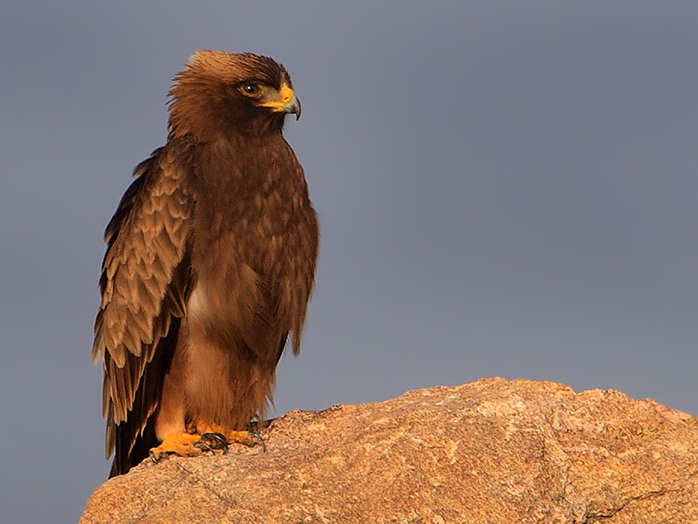
Wikipedia: Booted eagle Source: WIKIPEDIA
MH_Booted.jpg
🔍
Never observed (yet!)
Description
Vocalization:
Very vocal in breeding season. Most often heard is a quite soft, wader-like series of "kli-kli-kli-kli-kli-kli". [Link]
Seasonal behavior
Seldom seen hereMore details at Vogelwarte.ch
Other Details
Physical details
Physical details: length=45-53 cm, wingspan=100-121 cm, weight=510-1250 gDetails

Wikipedia: Dark chanting-goshawk Source: WIKIPEDIA
1200px-Melierax_metabates_-Kapama_Game_Reserve%2C_South_Africa-8-4c.jpg
🔍
Never observed (yet!)
Description
General:The dark chanting goshawk (Melierax metabates) is a bird of prey in the family Accipitridae which is found across much of sub-Saharan Africa and southern Arabia, with an isolated and declining population in southern Morocco.
[more]
Details
Profile Wikipedia Xeno-Canto BirdID NABU YouTube

Wikipedia: Yellow-billed stork Source: WIKIPEDIA
1200px-Yellow-billed_Stork_%28Mycteria_ibis%29_%286045310265%29.jpg
🔍
Never observed (yet!)
Description
The yellow-billed stork (Mycteria ibis), sometimes also called the wood stork or wood ibis, is a large African wading stork species in the family Ciconiidae. It is widespread in regions south of the Sahara and also occurs in Madagascar.
[more]
Details
Profile Wikipedia Xeno-Canto BirdID NABU YouTube

Wikipedia: Black-bellied sandgrouse Source: WIKIPEDIA
1200px-Pterocles_orientalis_in_flight.jpg
🔍
Never observed (yet!)
Description
The black-bellied sandgrouse (Pterocles orientalis) is a medium large bird in the sandgrouse family.
[more]
Details
Description
Endemic in AfrikaDetails
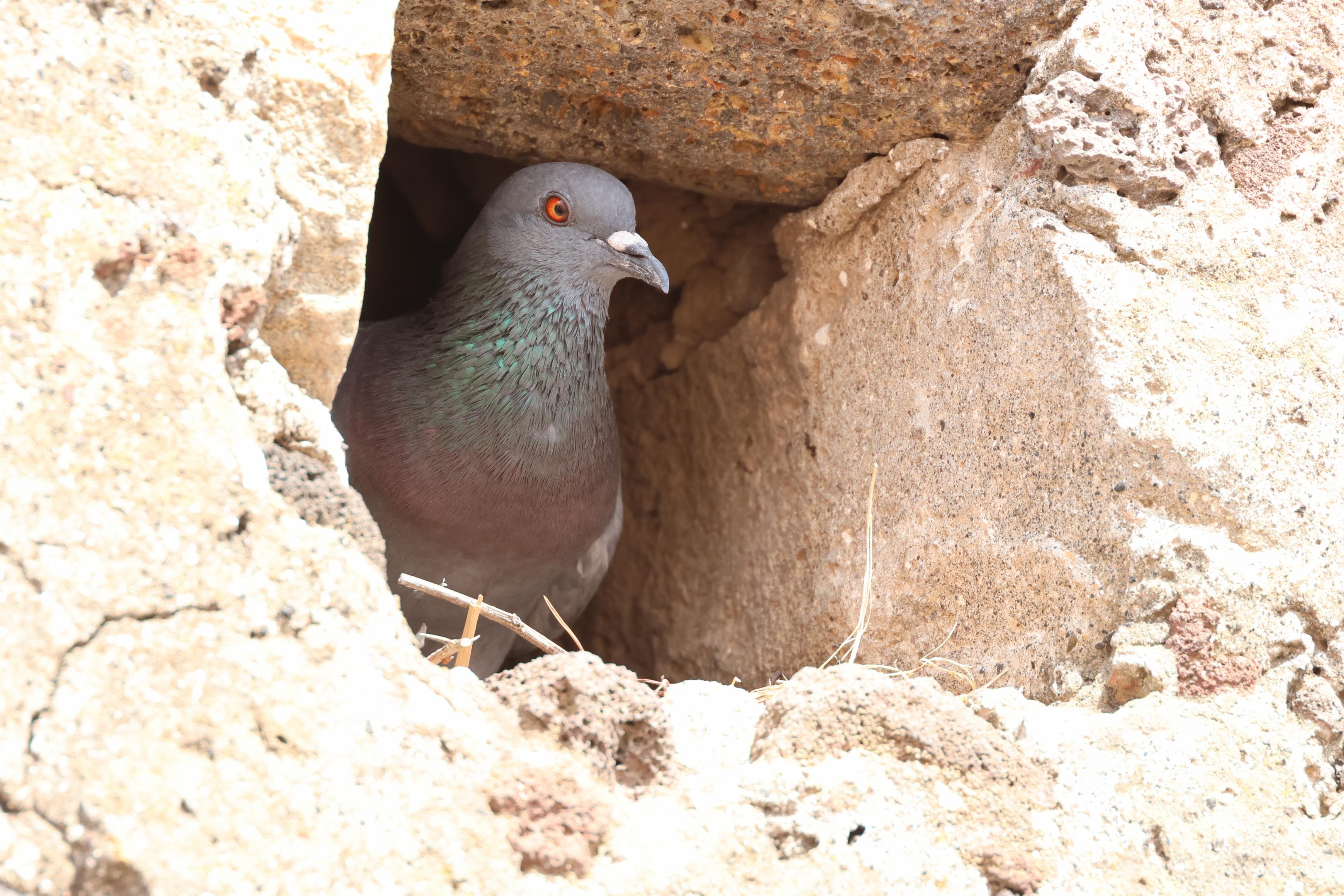
Rock dove with beautiful orange eyes. 2025-06-06 15:26:39 Stromboli
First observed in La Gomera on 2022-03-08.
Description
Geography: This bird appears across the great seas in the following continents: Europe, North America, South America, Africa, Asia.General: Deutschland: Brut-, Jahresvogel
Vocalization:
Not loud. [Link]
Seasonal behavior
Year-round bird Breeding: 01-01 - 12-31More details at Vogelwarte.ch
Other Details
Physical details
Physical details: length=31-34 cm, wingspan=63-70 cm, weight=230-370 gHabitats: Settlement
Vocalisation
Song: No details but a Xeno-Canto recording. Song:Song a two-syllable, but continuous cooing. First a rolling ascending "orrrrrr" immediately followed by a short descending "oohh". Wings produce a quite audible whistling sound. [Link]
Song attributes:
Frequency:
♫ Source: XENOCANTO XC661807 - Rock Dove call - Columba livia.mp3 (call)

No details but a Xeno-Canto recording.
Call attributes: song Frequency: ,
Details

Türkentaube in der bekannten Birke an der Luppmen. 2024-11-16 16:45:22 Luppmen
First observed in 🇨🇭 on 2020-05-21.
Description
Geography: This bird appears across the great seas in the following continents: Europe, North America (introduced), Africa, Asia (introduced).General:
The Eurasian collared dove (Streptopelia decaocto) is a dove species native to Europe and Asia; it was introduced to Japan, North America and islands in the Caribbean. Because of its vast global range and increasing population trend, it has been listed as Least Concern on the IUCN Red List since 2014.[1]
[more]
Deutschland: Brut-, Jahresvogel
Seasonal behavior
Year-round bird Breeding: 01-01 - 10-27More details at Vogelwarte.ch
Other Details
Physical details
Physical details: length=31-33 cm, wingspan=47-55 cm, weight=170-240 gHabitats: Settlement
Vocalisation
Song: No details but a Xeno-Canto recording. Song:Gu-guh-gu, klingt wie „ Gross-mue-ti“ Dazu auch „chräi“ oder „chwii“
[Link]
Song a characteristic, rhythmic cooing, consisting of three syllables with emphasis on the second. The third lower pitched than the rest. Can be rendered as "su-do-ku" (or "deca-oc-to", latin name derived from song). [Link]
Song attributes:
Frequency:
♫ 2023-03-14 08:21:46
Source: Zoom H6/H2n Madeira (song)Details
.jpg)
Wikipedia European Turtle Dove (Streptopelia turtur). Source: WIKIPEDIA
Wikipedia European_Turtle_Dove_(Streptopelia_turtur).jpg
First observed in 🇨🇭 on 2023-06-19.
Description
General:Die Turteltaube (Streptopelia turtur) ist eine Vogelart aus der Familie der Tauben. Das Verbreitungsgebiet umfasst weite Teile der westlichen und zentralen Paläarktis und reicht vom nördlichen Afrika, der iberischen Halbinsel und Großbritannien nach Osten über den Nahen und Mittleren Osten bis Nordwestchina und in die Mongolei. Im Mittelmeerraum ist die Turteltaube besonders häufig. Nach einer im Jahr 2007 veröffentlichten Studie der EU ist ihr Bestand jedoch in den letzten 25 Jahren um 62 Prozent zurückgegangen.[1] Der Bestandsrückgang wird auf veränderte landwirtschaftliche Anbaumethoden und den Rückgang der Erdraucharten zurückgeführt, die bei der Ernährung der Turteltauben eine große Rolle spielen. Zu den für den Bestandsrückgang verantwortlichen Faktoren gehört aber auch der Abschuss der Tauben insbesondere im Mittelmeerraum während der Zugzeiten.
[more]
Deutschland: Brut-, Zugvogel RL 3
Seasonal behavior
Presence: 04-11 - 10-07 Breeding: 05-10 - 07-10 Migration in: 04-11 - 06-20 Migration out: 08-09 - 10-07More details at Vogelwarte.ch
Other Details
Physical details
Physical details: length=26-28 cm, wingspan=47-53 cm, weight=100-180 gHabitats: Forest
Vocalisation
Song: Trilling coo. Song:Song: a deep, rolling, and slightly ascending cooing; "trrrrrrrrrrrrrrrrr trrr-trrrr" with variations in rhythm. Sometimes birds sticks to a phrase, but phrases varies between individuals. [Link]
Song attributes:
Melody: one note, slow, Frequency: low (1-3 KHz)
Details

Wikipedia: African collared-dove Source: WIKIPEDIA
Streptopelia_roseogrisea.jpg
🔍
Never observed (yet!)
Description
Geography: This bird appears across the great seas in the following continents: Europe, North America, Africa.General:
The African collared dove (Streptopelia roseogrisea) is a small dove found in the Sahel, northern parts of the Horn of Africa and southwestern Arabia. Although it lives in arid lands, it is found around water sources.
[more]
Details

Wikipedia: Laughing dove Source: WIKIPEDIA
1200px-Laughing_dove_%28Spilopelia_senegalensis_cambayensis%29.jpg
🔍
Never observed (yet!)
Description
introducedDetails
Profile Wikipedia Vogelwarte BirdLife ZH ornitho.ch Xeno-Canto BirdID NABU YouTube

Die ersten Bienenfresser, die Jacqueline und ich gesehen haben in Leukerfeld. 2022-05-21 10:02:38 Leuk
First observed in 🇨🇭 on 2022-05-21.
Description
General: Deutschland: Brut-, ZugvogelPersonal notes: Hoped to hear it and especially see it in Maienfeld (Kulturland-Exkursion) but didn't. It'll show up in Leuk in 2022!
Vocalization:
Quite vocal in all activities. [Link]
Seasonal behavior
Presence: 04-20 - 10-07 Breeding: 05-21 - 08-09 Migration in: 04-20 - 06-09 Migration out: 07-20 - 10-07More details at Vogelwarte.ch
Other Details
Physical details
Physical details: length=27-29 cm, wingspan=44-49 cm, weight=44-78 gHabitats: Agricultural
Vocalisation
Song: BirdID says multi-syllabic, rolling phrases, although it often seems to be one syllable as well. Hope to hear it and especially see it in Maienfeld. Song attributes: Melody: simple rhythmic, slow, Frequency: medium (1-5 KHz)Details
Profile Wikipedia Vogelwarte BirdLife ZH ornitho.ch bird-song.ch Audubon AllAboutBirds Xeno-Canto BirdID NABU YouTube

Wikipedia Kuckuck, Cuculus canorus. Source: WIKIPEDIA
Wikipedia Kuckuck, Cuculus canorus.jpg
First observed in 🇨🇭 on 2021-05-04.
Description
Geography: This bird appears across the great seas in the following continents: Europe, North America, Africa, Asia.General: Deutschland: Brut-, Zugvogel RL V
Etymology:
Auch in vielen anderen Sprachen, wie im Französischen (Coucou), Italienischen (cucú), Spanischen (cuco, manchmal cuclillo), Russischen (Kukuschka), Griechisch (koukoula), Englischen (Cuckoo), Polnischen (Kukułka), Ungarischen (kakukk) und Lateinischen (cuculus) wurde der Ruf lautmalerisch in seinen Namen integriert. [Link]
[2][3] The cuckoo family gets its common name and genus name by onomatopoeia for the call of the male common cuckoo. [Link]
Geography:
A common migratory bird across most of Europe and Asia, it regularly strays to the western Alaskan islands in late spring and early summer. [Link]
Seasonal behavior
Presence: 04-01 - 10-07 Breeding: 05-01 - 07-20 Migration in: 04-01 - 05-31 Migration out: 07-10 - 10-07More details at Vogelwarte.ch
Other Details
Physical details
Physical details: length=32-34 cm, wingspan=55-60 cm, weight=95-140 gHabitats: Forest
Vocalisation
Song: Two-noter Song:Männchen: Unverwechselbarer Ruf. Weibchen: im Frühling eine kichernde Rufreihe,
[Link]
Song: the well known disyllabic "cuck-coo" with emphasis on first note, and the second note a third lower than the first one. Also a harsh "tchaa tchaa", and a bubbly trill, reminiscent of Little Grebe, uttered by the female. [Link]
Song attributes:
Melody: simple rhythmic, slow, Frequency: 0-1 KHz
Details
Profile Wikipedia Xeno-Canto BirdID NABU YouTube

Wikipedia: Great spotted cuckoo Source: WIKIPEDIA
Clamator_glandarius_%28cropped_2%29.jpg
🔍
Never observed (yet!)
Description
General:The great spotted cuckoo (Clamator glandarius) is a member of the cuckoo order of birds, the Cuculiformes, which also includes the roadrunners, the anis and the coucals. The genus name clamator is Latin for "shouter" from clamare, "to shout". The specific glandarius is derived from Latin glans, glandis, "acorn".[2]
[more]
Details
Profile Wikipedia Vogelwarte BirdLife ZH ornitho.ch Audubon AllAboutBirds Xeno-Canto BirdID NABU YouTube

Wikipedia Datei Falco columbarius Male. Source: WIKIPEDIA
Wikipedia_Datei_Falco_columbarius_Male.jpg
First observed in 🇨🇭 on 2024-05-16.
Description
Geography: This bird appears across the great seas in the following continents: Europe, North America, South America, Africa, Asia.General:
The merlin (Falco columbarius) is a small species of falcon from the Northern Hemisphere,[2] with numerous subspecies throughout North America and Eurasia. A bird of prey, the merlin breeds in the northern Holarctic; some migrate to subtropical and northern tropical regions in winter. Males typically have wingspans of 53–58 centimetres (21–23 in), with females being slightly larger. They are swift fliers and skilled hunters which specialize in preying on small birds in the size range of sparrows to doves and medium-sized shorebirds. In recent decades merlin populations in North America have been significantly increasing, with some merlins becoming so well adapted to city life that they forgo migration; in Europe, populations increased up to about 2000 but have been steady subsequently.[3] The merlin has for centuries been well regarded as a falconry bird.
[more]
Deutschland: Zugvogel, Wintergast
Vocalization:
Series of harsh "kwik-wik wik". Coarseness similar to Peregrine, but pace much quicker. [Link]
Seasonal behavior
Year-round bird Migration in: 02-20 - 03-01 Migration out: 02-22 - 03-01More details at Vogelwarte.ch
Other Details
Physical details
Physical details: length=25-30 cm, wingspan=50-62 cm, weight=125-300 gHabitats: Agricultural Details
Profile Wikipedia Vogelwarte BirdLife ZH ornitho.ch Xeno-Canto BirdID NABU YouTube
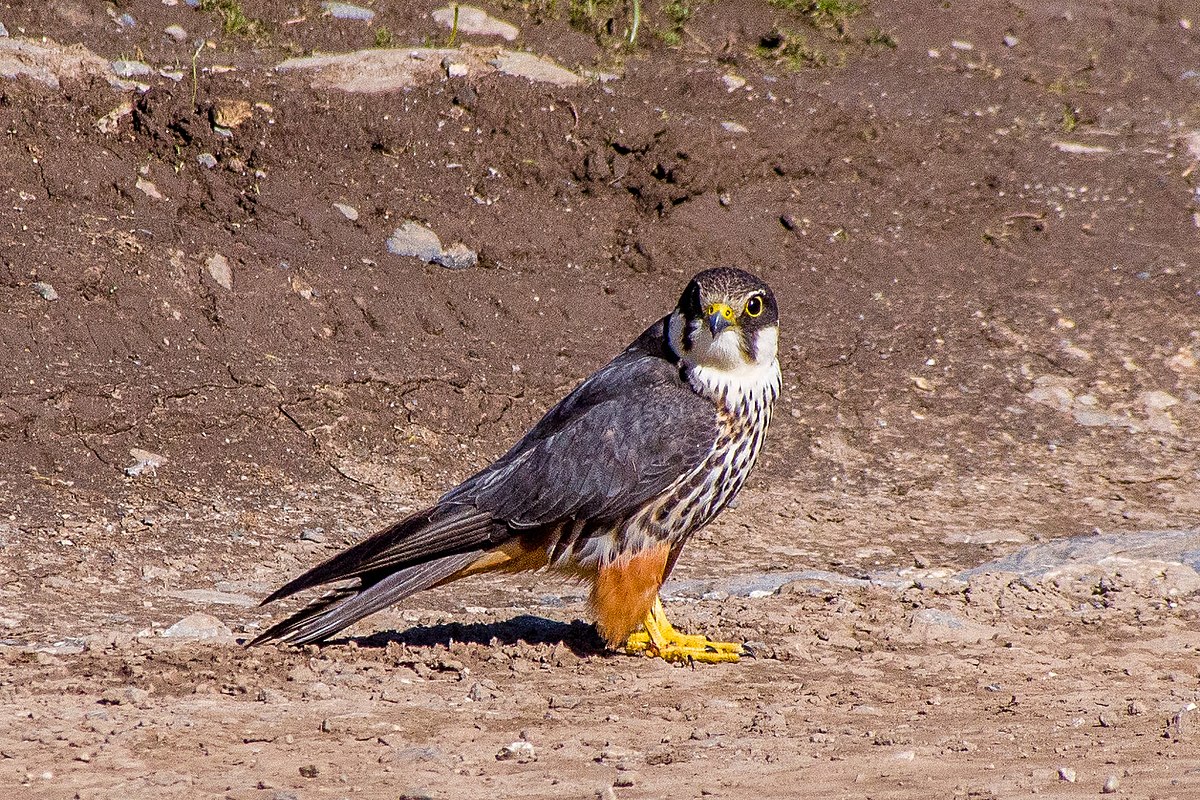
Wikipedia: Eurasian hobby Source: WIKIPEDIA
1200px-Eurasian_Hobby_%2814574008925%29_%28cropped%29.jpg
First observed in 🇨🇭 on 2024-08-14.
Description
General: Deutschland: Brut-, Zugvogel RL 3Etymology: Nabu: 2024 das erste Mal gehört nah beim Rosinli, aus der Ferne gesehen am Klingnauerstausee. [Link]
Vocalization:
Varied, but not very vocal. [Link]
Seasonal behavior
Presence: 04-01 - 10-27 Breeding: 05-01 - 08-29 Migration in: 04-01 - 06-20 Migration out: 08-09 - 10-27More details at Vogelwarte.ch
Other Details
Physical details
Physical details: length=30-36 cm, wingspan=82-92 cm, weight=131-340 gHabitats: Agricultural
Vocalisation
Song: No details but a Xeno-Canto recording. Song attributes: Frequency:♫ 2024-08-14 13:57:00 Greater Fehraltorf (song)
Calls:
Calls when courting and at breeding ground. Most common sound a high-pitched "tew-tew-tew". Similar to Wryneck, but less pleading. Also a sneezing "ktcho". [Link]
General: About 20 single notes.
XC669704 - Eurasian Hobby - Falco subbuteo - call, about twenty peeps.
♫ Source: XENOCANTO XC669704 - Eurasian Hobby - Falco subbuteo - call, about twenty peeps.mp3 (call)

Call attributes: Call melody: non-musical, slow, Frequency: low (1-3 KHz),
Details

Turmfalke zwischen Fehraltorf und Mesikon. 2021-10-16 15:25:46 Fehraltorf
First observed in 🇨🇭 on 2020-04-24.
Description
General: Oft seen in the fields around Fehraltorf, flapping away to stay in place.General: Deutschland: Brut-, Jahres-, Zugvogel, Wintergast
Seasonal behavior
Year-round bird Breeding: 04-20 - 08-29 Migration in: 02-10 - 05-10 Migration out: 08-18 - 11-15More details at Vogelwarte.ch
Other Details
Physical details
Physical details: length=32-35 cm, wingspan=71-80 cm, weight=156-252 gHabitats: Agricultural
Similar species
Song or calls similar to: Pallid swift.Vocalisation
Song: No details but a Xeno-Canto recording. Song attributes: Frequency:♫ 2026-04-28 15:13:38
Source: Zoom H2n Switzerland (song)Calls:
Turmfalke kann auch wie einen Specht tönen, scharf und relativ hoch [Link]
Most common call a fast series of short, high-pitched "ke-ke-ke". Much less raucous than Merlin or Peregrine. [Link]
Heard from in the air, about 6 notes per second (do I find them high??)
XC928672 - Common Kestrel - Falco tinnunculus - calls.
♫ Source: XENOCANTO XC928672 - Common Kestrel - Falco tinnunculus - calls.mp3 (call)

Call attributes: Call melody: one note, fast, Frequency: 2-7 KHz,
Details

Wikipedia: Peregrine falcon Source: WIKIPEDIA
Falco_peregrinus_good_-_Christopher_Watson.jpg
🔍
Never observed (yet!)
Description
Geography: This bird appears across the great seas in the following continents: Europe, North America, South America, Africa, Asia.General: Deutschland: Brut-, Jahres-, Zugvogel, Wintergast
Vocalization:
A harsh, drawn out "kiaaaa" with emphasised endings repeated in series. Much slower than Merlin, but higher pitched than Gyrfalcon. [Link]
Seasonal behavior
Year-round bird Breeding: 02-20 - 07-10 Migration in: 02-20 - 05-01 Migration out: 08-09 - 11-06More details at Vogelwarte.ch
Other Details
Physical details
Physical details: length=36-48 cm, wingspan=95-110 cm, weight=582-1300 gHabitats: Agricultural
Vocalisation
Song: No details but a Xeno-Canto recording. Song attributes: Frequency:♫ Source: XENOCANTO XC942609 - Peregrine Falcon call - Falco peregrinus.mp3 (call)

Calls:
Also shorter, coarse warning-calls. [Link]
No details but a Xeno-Canto recording.
Call attributes: song Frequency: ,
Details

Lesser flamingos. 2016-09-07 14:44:58 Namibia
First observed in Namibia on 2016-09-07.
Description
General:The lesser flamingo (Phoeniconaias minor) is a species of flamingo occurring in sub-Saharan Africa and northwestern India.[4] Birds are occasionally reported from further north, but these are generally considered vagrants.
[more]
Details

Buntspecht in Wildert. 2024-08-31 10:29:52 Wildert
First observed in 🇨🇭 on 2020-04-12.
Description
Most common woodpecker in SwitzerlandGeneral: Deutschland: Brut-, Jahresvogel
Vocalization:
It's frequent drumming is easily recognized by its short duration. [Link]
Seasonal behavior
Year-round bird Breeding: 04-11 - 07-20More details at Vogelwarte.ch
Other Details
Physical details
Physical details: length=22-23 cm, wingspan=34-39 cm, weight=70-100 gHabitats: Forest
Similar species
Song or calls similar to: Ring ouzel.Vocalisation
Song: Song: Other: ‘Drumming’ is the sound that Great Spotted Woodpeckers make by hammering their bills against dead wood 10-20 times over 2-3 seconds. The sound resonates in the dead wood and can be heard over large distances. This drumming acts as an advert and is used by Great spotted Woodpeckers and other woodpecker species instead of a song. [From the GardenBird web site]Nabu: Manchmal, bei strahlendem Sonnenschein, fangen die Spechte schon im Dezember an zu trommeln. [NABU Vogel des Jahres 1997]
Call: Nabu: Das bekannteste Geräusch des schwarz-weißen Spechtes ist aber wohl sein kurzes, aber häufiges Trommeln. [Link]
 In a sonogram I can see about 13 taps in just over half a second, but you can never distinguish so many.
It's short but intense, and the second half trails off,
especially contrasted with the constant drumming of the three-toed woodpecker. [[Listen here.]]
Song attributes:
Melody: non-musical, fast, Frequency: low (1-3 KHz) Special sounds: drumming Singing season: 01-01 - 06-30
In a sonogram I can see about 13 taps in just over half a second, but you can never distinguish so many.
It's short but intense, and the second half trails off,
especially contrasted with the constant drumming of the three-toed woodpecker. [[Listen here.]]
Song attributes:
Melody: non-musical, fast, Frequency: low (1-3 KHz) Special sounds: drumming Singing season: 01-01 - 06-30
♫ Source: XENOCANTO XC625181 buntspecht drumming.mp3 (drumming)

Calls:
Typically it lasts 0.5 seconds, sometimes slightly longer. Contact call frequently hear throughout the year. A short hiccup "kek", sometimes in series. When excited this may escalate into a trill. [Link]
1:
General: A chirping (that I couldn't associate in my mind with a woodpecker), repeated at somewhat irregular intervals of about a second2023: klang in bird-song.ch Quiz wie eine lauter Haussperling
Call: Nabu: Der häufigste Ruf ist ein kurzes und spitzes „kix“. Ist ein Buntspecht aufgebracht, etwa durch einen Artgenossen, kann man ein schnelles Schnarren hören. [Link]
Great spotted woodpecker call
♫ Source: XENOCANTO XC200059 Great spotted woodpecker call.mp3 (call)

2: No details but a Xeno-Canto recording. - but really OWN_VIA_BIRDNET
Birdnet 1937 - Great Spotted Woodpecker xxxx, also heard drumming - Great Spotted Woodpecker - Fehraltorf.
♫ 2021-08-14 09:57:28 Source: BirdNet 20210814_095728 birdnet 1937 - Great Spotted Woodpecker xxxx, also heard drumming - Great Spotted Woodpecker - Fehraltorf.mp3 Fehraltorf (drumming)
FOK3 - ein Specht trommelt, welcher war das, ein Buntspecht? Dazu eine Zilzalp, evtl Zaunkönig, und unser Kursleiter, der das Trommeln erklärt.
♫ 2025-03-22 09:08:40
Source: Zoom H2n Switzerland (drumming)Trommeln während ein Buntspecht ruft, im Wildert.
♫ 2024-08-31 09:31:25 Wildert (drumming)
Birdnet 1937 - Great spotted woodpecker, heard slow drumming - Not analyzed - Fehraltorf.
♫ 2021-08-14 09:57:28 Source: BirdNet 20210814_095728 birdnet 1937 - Great spotted woodpecker, heard slow drumming - Not analyzed - Fehraltorf.mp3 Fehraltorf (drumming)
Call attributes: Call melody: one note, slow, Frequency: 1-8 KHz,
Details
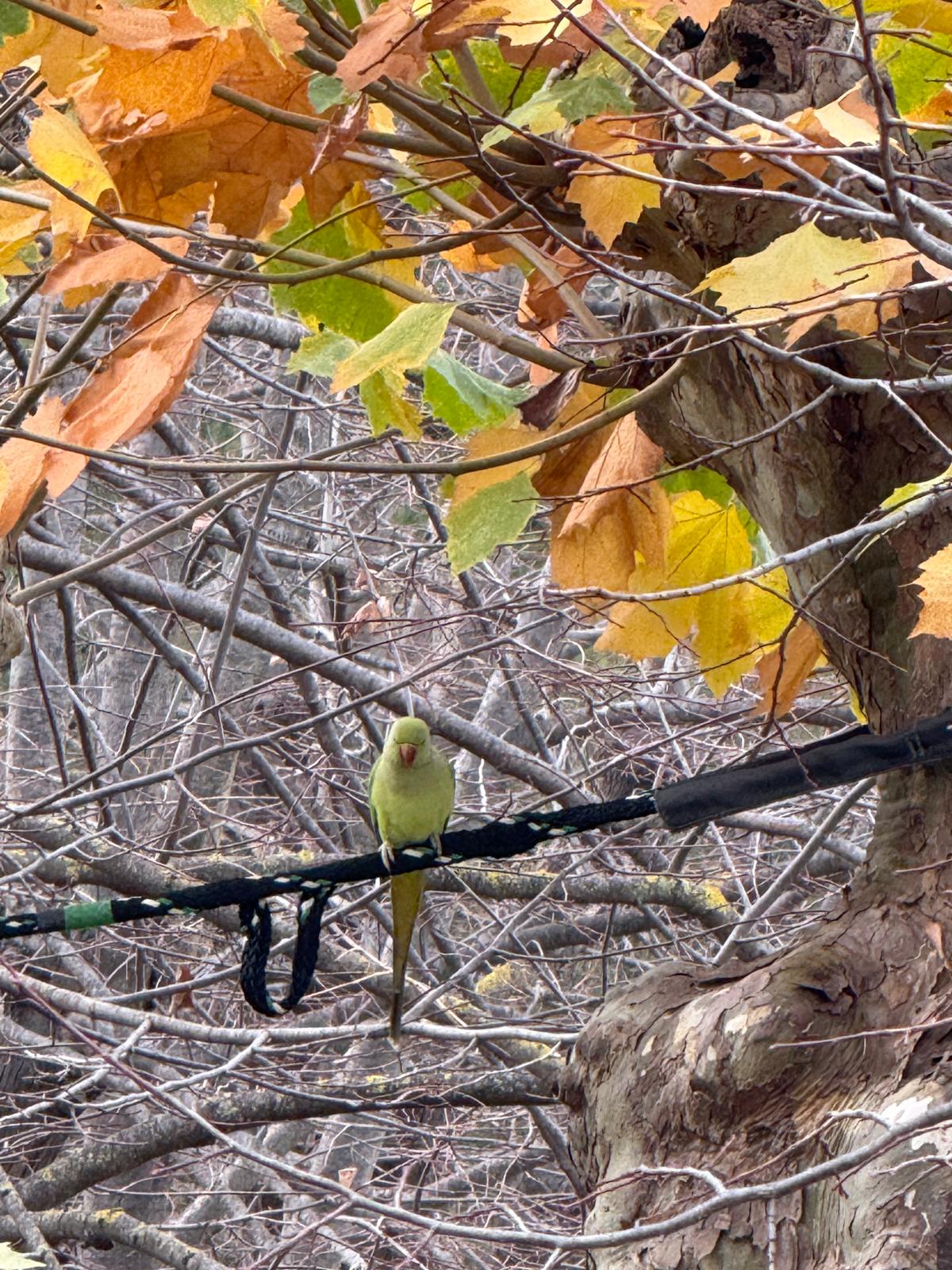
Halsbandsittich in Giardino di Boboli mit Annas iPhone aufgenommen. 2025-11-19 13:12:00 Florence
First observed in Florence on 2025-11-19.
Description
Geography: This bird appears across the great seas in the following continents: Europe, North America, Africa, Asia.General: Deutschland: etabliertes Neozoon, Brut-, Jahresvogel
Vocalisation
Song: No details but a Xeno-Canto recording. Song attributes: Frequency:♫ 2025-11-20 17:03:12 Switzerland (song)
Details

Wikipedia: Nanday parakeet Source: WIKIPEDIA
1200px-2011-4_parrot_in_Strasbourg.jpg
🔍
Never observed (yet!)
Description
Geography: This bird appears across the great seas in the following continents: Europe, North America.General:
The nanday parakeet (Aratinga nenday), also known as the black-hooded parakeet or nanday conure, is a medium-small, mostly green, Neotropical parrot native to continental South America.
[more]
Details

Monk parakeet - I though this was the first time I'd seen them, but I saw one in Madrid! 2025-02-18 14:09:07 Madrid
First observed in Madrid on 2024-07-12.
Description
Geography: This bird appears across the great seas in the following continents: Europe, North America, Africa.General:
The monk parakeet (Myiopsitta monachus), also known as the Quaker parrot, is a species of true parrot in the family Psittacidae. It is a small, bright-green parrot with a greyish breast and greenish-yellow abdomen. Its average lifespan is 20–30 years. It originates from the temperate to subtropical areas of Argentina and the surrounding countries in South America. Self-sustaining feral populations occur in many places, mainly in North America and Europe.
[more]
Vocalisation
Song: No details but a Xeno-Canto recording. Song attributes: Frequency:♫ 2025-07-12 14:31:00 Switzerland (song)
Details

Wikipedia: Barolo shearwater Source: WIKIPEDIA
Barolo_Shearwater.jpg
🔍
Never observed (yet!)
Description
The Barolo shearwater (Puffinus baroli), also known as the North Atlantic little shearwater or Macaronesian shearwater, is a small shearwater which breeds in the Azores and Canaries of Macaronesia in the North Atlantic Ocean. Puffinus is a New Latin loanword based on the English "puffin" and its variants, such as poffin, pophyn and puffing,[2] that referred to the cured carcass of the fat nestling of the Manx shearwater, a former delicacy. The specific baroli refers to Carlo Tencredi Falletti, marquis of Barolo.[3]
[more]
Details
Profile Wikipedia Audubon AllAboutBirds Xeno-Canto BirdID NABU YouTube
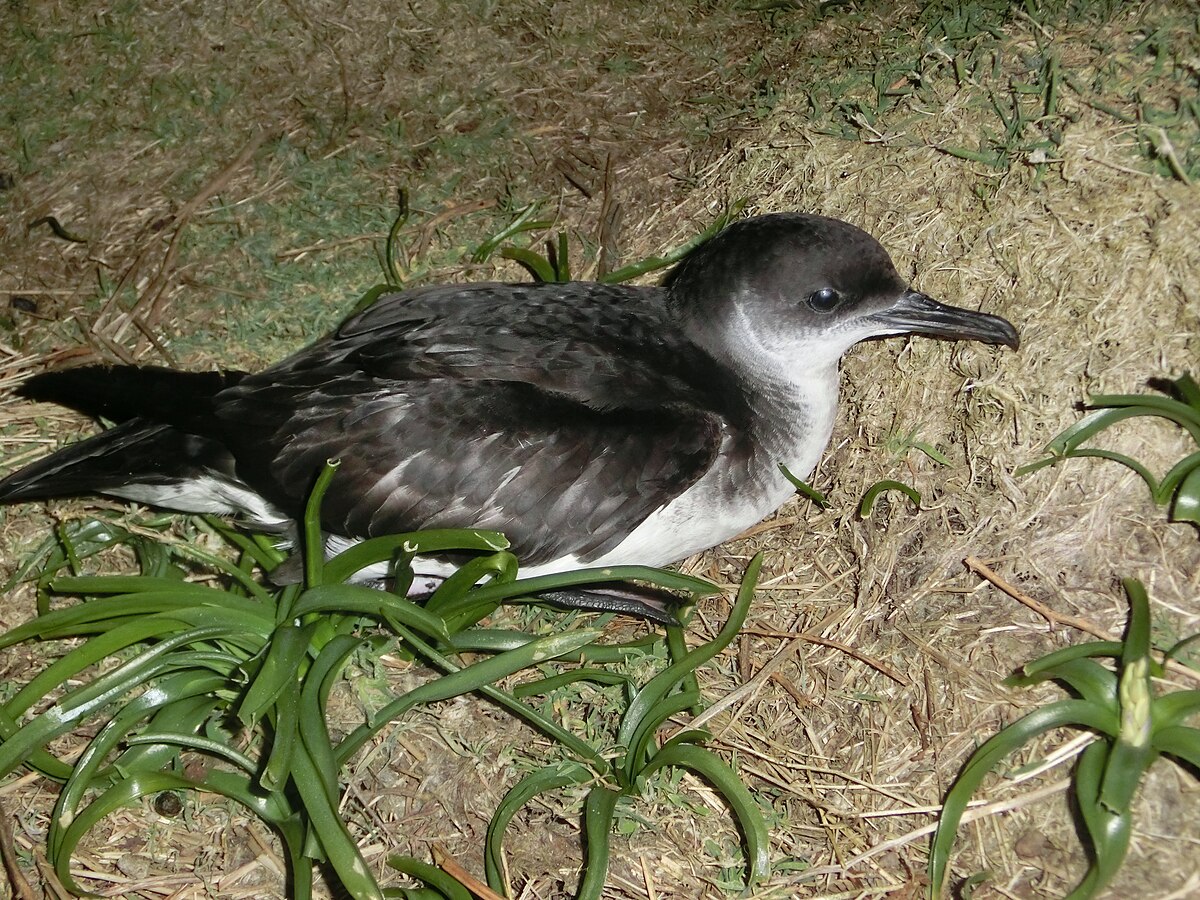
Wikipedia: Manx shearwater Source: WIKIPEDIA
1200px-Manx_Shearwater.JPG
🔍
Never observed (yet!)
Description
Geography: This bird appears across the great seas in the following continents: Europe, North America, Africa.General:
The Manx shearwater (Puffinus puffinus) is a medium-sized shearwater in the seabird family Procellariidae. The scientific name of this species records a name shift: Manx shearwaters were called Manks puffins in the 17th century. Puffin is an Anglo-Norman word (Middle English pophyn) for the cured carcasses of nestling shearwaters. The Atlantic puffin acquired the name much later, possibly because of its similar nesting habits.
[more]
Vocalization:
Vocal at breeding ground. [Link]
Other Details
Physical details
Physical details: length=31-36 cm, wingspan=76-88 cm, weight=375-459 gDetails
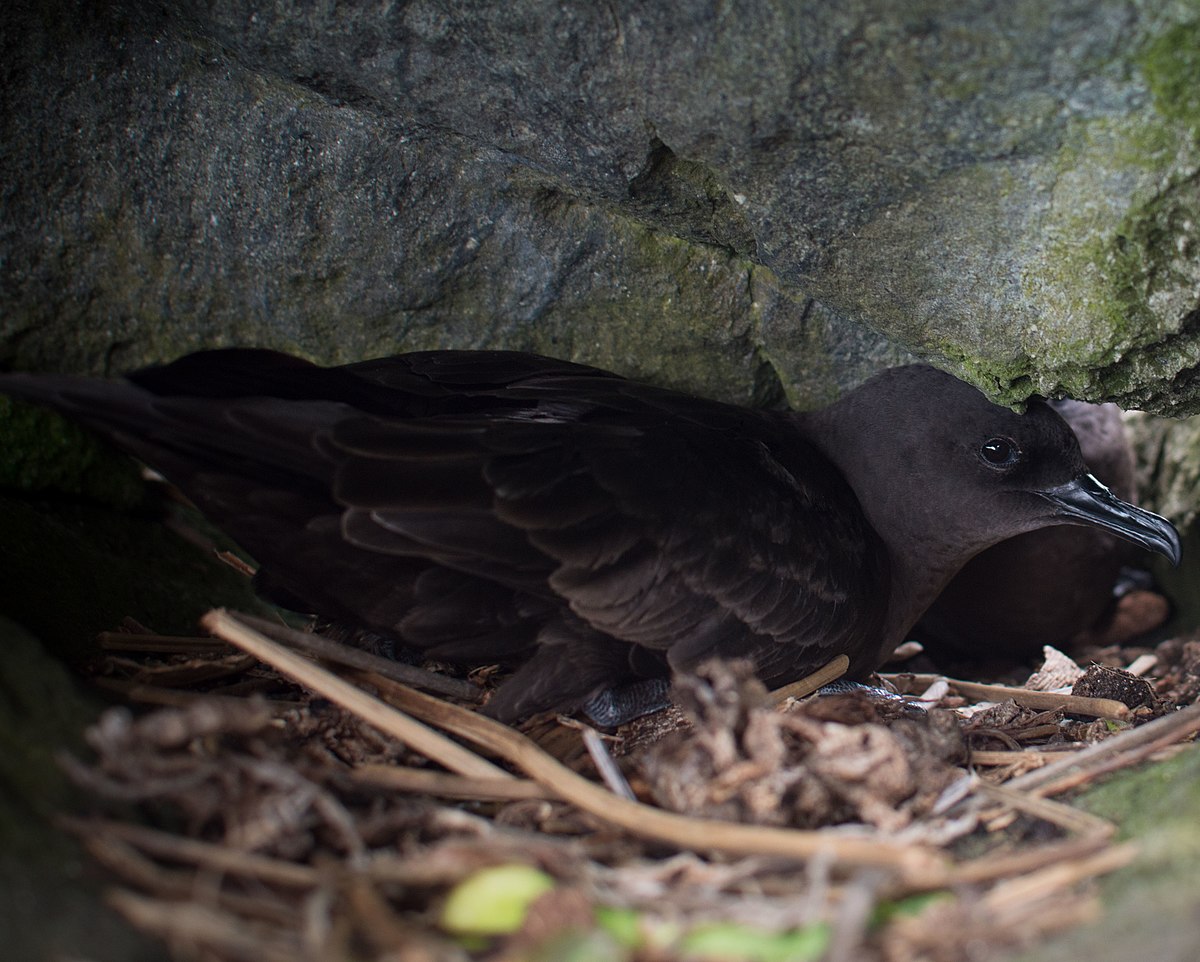
Wikipedia: Bulwer's petrel Source: WIKIPEDIA
1200px-P%C3%A9trel_de_Bulwer.jpg
🔍
Never observed (yet!)
Description
Geography: This bird appears across the great seas in the following continents: Europe, North America, Africa, Asia.Details

Wikipedia: Cory's shearwater Source: WIKIPEDIA
Cory%27s_Shearwater_from_the_Crossley_ID_Guide_Britain_and_Ireland_crop.jpg
🔍
Never observed (yet!)
Description
General:Cory's shearwater (Calonectris borealis) is a large shearwater in the seabird family Procellariidae. The genus name Calonectris comes from Ancient Greek kalos, "good" and nectris, "swimmer", and borealis is Latin for "northern".[2] The English name is after the American ornithologist Charles B. Cory.
[more]
Details

Wikipedia: Great shearwater Source: WIKIPEDIA
Puffinus_gravisPCCA20070623-3641B.jpg
🔍
Never observed (yet!)
Description
Geography: This bird appears across the great seas in the following continents: Europe, North America, Africa.General:
The great shearwater (Ardenna gravis) is a large shearwater in the seabird family Procellariidae. Ardenna was first used to refer to a seabird by Italian naturalist Ulisse Aldrovandi in 1603, and gravis is Latin for "heavy".[3]
[more]
Other Details
Physical details
Physical details: length=43-51 cm, wingspan=100-118 cm, weight=715-950 gDetails
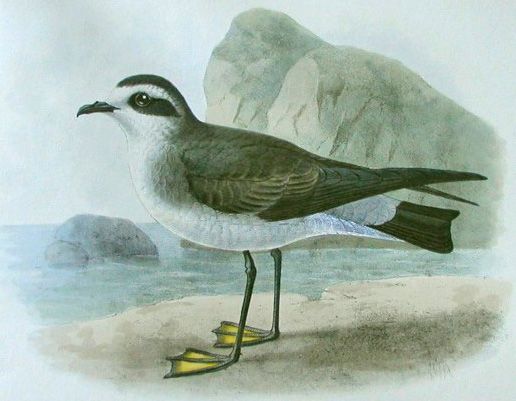
Wikipedia: White-faced storm-petrel Source: WIKIPEDIA
Godmanstormlg.jpg
🔍
Never observed (yet!)
Description
Geography: This bird appears across the great seas in the following continents: Europe, North America, South America, Africa.Details

Wikipedia: Band-rumped storm-petrel Source: WIKIPEDIA
1200px-Band_rumped_storm_petrel_Andre_Raine_KESRP_%2821789178016%29.jpg
🔍
Never observed (yet!)
Description
Geography: This bird appears across the great seas in the following continents: Europe, North America, South America, Africa, Asia.General:
The band-rumped storm petrel, Madeiran storm petrel, or Harcourt's storm petrel (Oceanodroma castro) is of the storm petrel family Hydrobatidae.
[more]
Details

Wikipedia: European storm-petrel Source: WIKIPEDIA
1200px-European_Storm_Petrel_From_The_Crossley_ID_Guide_Eastern_Birds.jpg
🔍
Never observed (yet!)
Description
Die Nördlichen Sturmschwalben (Hydrobatidae) sind eine auf allen Weltmeeren weit verbreitete Familie der Röhrennasen (Procellariiformes). Zur Familie gehören 15 Arten, die in der IOC-World Bird List zwei Gattungen zugeordnet werden[1], bei Winkler und Kollegen aber alle zur Gattung Hydrobates gehören.[2]
[more]
Vocalization:
Heard at breeding ground. Dry, cyclic, rattling and cooing, interrupted by deeper nasal moaning or a higher pitched "kee-ee-kee", with emphasis on second syllable. [Link]
Other Details
Physical details
Physical details: length=14-18 cm, wingspan=36-39 cm, weight=23-30 gDetails
Profile Wikipedia Audubon AllAboutBirds Xeno-Canto BirdID NABU YouTube

Wikipedia: Leach's storm-petrel Source: WIKIPEDIA
1200px-Lesp1.jpg
🔍
Never observed (yet!)
Description
Geography: This bird appears across the great seas in the following continents: Europe, North America, South America, Asia.General:
Leach's storm petrel or Leach's petrel (Oceanodroma leucorhoa) is a small seabird of the tubenose order. It is named after the British zoologist William Elford Leach. The scientific name is derived from Ancient Greek. Oceanodroma is from okeanos, "ocean" and dromos, "runner", and leucorhoa is from leukos, "white" and orrhos, "rump".[2]
[more]
Details
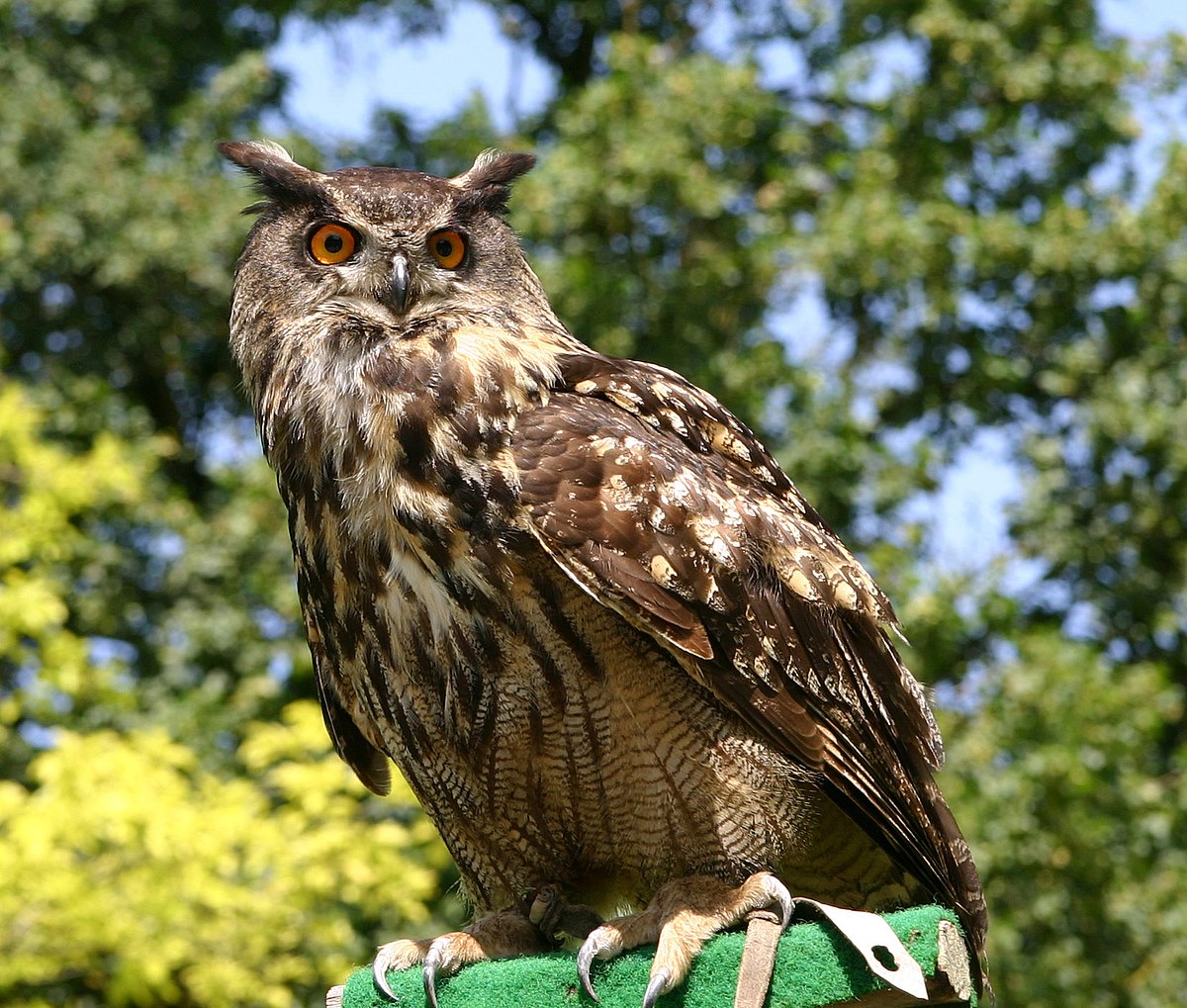
Wikipedia: Eurasian eagle-owl Source: WIKIPEDIA
1200px-Uhu-muc.jpg
🔍
Never observed (yet!)
Description
Deutschland: Brut-, JahresvogelSeasonal behavior
Year-round bird Breeding: 03-23 - 07-10More details at Vogelwarte.ch
Other Details
Physical details
Physical details: length=60-75 cm, wingspan=160-188 cm, weight=1800-4200 gHabitats: Agricultural Details

Wikipedia: Short-eared owl Source: WIKIPEDIA
1200px-Short_Eared_Owl_on_the_Ground.jpg
🔍
Never observed (yet!)
Description
Geography: This bird appears across the great seas in the following continents: Europe, North America, South America, Africa, Asia.General: Deutschland: Brut-, Zugvogel, Wintergast RL 1
Other Details
Physical details
Physical details: length=37-39 cm, wingspan=95-110 cm, weight=260-420 gHabitats: Wetland Details

Wikipedia: Long-eared owl Source: WIKIPEDIA
Long-eared_Owl_-_Kisjuszallas_-_Hungary_S4E0920_%2815671750198%29.jpg
🔍
Never observed (yet!)
Description
Geography: This bird appears across the great seas in the following continents: Europe, North America, Africa, Asia.General: Deutschland: Brut-, Jahres-, Zugvogel, Wintergast
Vocalization:
Other sounds include; a nasal "eeeeeaaa" reminiscent of Collared Dove, nasal mewing and bill clicking. [Link]
Seasonal behavior
Year-round bird Breeding: 03-12 - 07-20More details at Vogelwarte.ch
Other Details
Physical details
Physical details: length=35-37 cm, wingspan=90-100 cm, weight=220-370 gHabitats: Agricultural Details

Wikipedia: Barn owl Source: WIKIPEDIA
1200px-Tyto_alba_-British_Wildlife_Centre%2C_Surrey%2C_England-8a_%281%29.jpg
🔍
Never observed (yet!)
Description
Geography: This bird appears across the great seas in the following continents: Europe, North America, South America, Africa, Asia.General: Deutschland: Brut-, Jahresvogel
Vocalization:
Large repertoire of mainly hissing and screeching sounds. [Link]
Seasonal behavior
Year-round bird Breeding: 04-01 - 09-17More details at Vogelwarte.ch
Other Details
Physical details
Physical details: length=33-35 cm, wingspan=80-95 cm, weight=240-350 gHabitats: Agricultural Details

Wiedehopf in Calo dOr, Mallorca, fliegt öfter um die Bucht herum. 2022-04-07 12:33:32
First observed in Mallorca on 2022-04-07.
Description
General: Deutschland: Brut-, Zugvogel RL 2Etymology:
Am wahrscheinlichsten ist ein althochdeutsches, lautmalerisches wūthūp als Ursprung anzunehmen. [Link]
Seasonal behavior
Presence: 03-12 - 09-28 Breeding: 04-20 - 07-29 Migration in: 03-12 - 05-10 Migration out: 07-20 - 09-28More details at Vogelwarte.ch
Other Details
Physical details
Physical details: length=26-28 cm, wingspan=42-46 cm, weight=55-87 gHabitats: Agricultural Details
Profile Wikipedia Vogelwarte BirdLife ZH ornitho.ch bird-song.ch Xeno-Canto BirdID NABU YouTube

Wikipedia: Common quail Source: WIKIPEDIA
1200px-A_common_quail_in_Lebanon.jpg
🔍
Never observed (yet!)
Description
General: Deutschland: Brut-, Zugvogel RL VVocalization:
Other sounds: A nasal disyllabic mewing "mau-au", and a wader-like rolling "wreee". [Link]
Seasonal behavior
Presence: 04-20 - 10-07 Breeding: 05-10 - 08-18 Migration in: 04-20 - 07-10 Migration out: 07-29 - 10-07More details at Vogelwarte.ch
Other Details
Physical details
Physical details: length=16-18 cm, wingspan=32-35 cm, weight=75-135 gHabitats: Agricultural Details

Mindestens 20 Mauersegler beim Sportfeld in Rapperswil, wo Magnus und die Renegades gespielt haben. 2026-05-16 18:00:30 Rapperswil
First observed in 🇨🇭 on 2020-06-10.
Description
General: Vielleicht haben wir bald Mauersegler Brutkästen am Haus!General: Deutschland: Brut-, Zugvogel
Etymology:
Die Etymologie des Wortes ist unklar, vorgeschlagen werden erstens ein eigenständiges Etymon, zweitens Verwandtschaft mit norddeutsch Spier(e) „Spitze, Rundholz, Stange“ und damit Bezugnahme auf die langen spitzen Flügel der Vögel und drittens eine lautmalerische Bezugnahme auf die charakteristischen Rufe. [Link]
Vocalization:
A shrilling trill "zreeeee" of about 1 -2 seconds length, gradually rising in pitch with accentuated firs half, then falling from the middle of phrase. [Link]
Seasonal behavior
Presence: 04-20 - 09-28 Breeding: 05-01 - 08-18 Migration in: 04-20 - 05-31 Migration out: 07-20 - 09-28More details at Vogelwarte.ch
Other Details
Physical details
Physical details: length=16-17 cm, wingspan=42-48 cm, weight=31-56 gHabitats: Settlement
Vocalisation
Song: Song:Sie singen im Flug (eigentlich LEBEN sie im Flug), und wenn du sie nicht siehst, schau weiter hoch, dann noch einmal - sie können mehrere 100m hoch fliegen oft in Gruppen von 3-10. Kappe abziehen wenn nötig! [Link]A shrilling trill "zreeeee" of about 1 -2 seconds length, gradually rising in pitch with accentuated firs half, then falling from the middle of phrase. Often continued with a dry lower pitched "trrrrrr" before calling again. [Link]
Song attributes:
Melody: simple rhythmic, fast, Frequency: 5-7 KHz
Calls:
Often continued with a dry lower pitched "trrrrrr" before calling again. Very vocal at breeding area, and often a flock will call together. Despite being quite similar to Pallid Swift, the call is probably the best field character to separate the two. Pallid puts the stress on the ending of the call, followed by a quick fall in pitch (dynamics like moaning with a quick release). Plain Swift calls similar to Common Swift, but differs in slightly fluctuating pitch during the call, and a loss of resonance towards the ending (thinner sounding). [Link]
Heard from high in the air
XC564619 - Common Swift - Apus apus - calls.
♫ Source: XENOCANTO XC564619 - Common Swift - Apus apus - calls.mp3 (call)

Call attributes: Call melody: one note, fast, Frequency: 4-7 KHz,
Details

Wikipedia: Plain swift Source: WIKIPEDIA
Einfarbsegler.jpg
🔍
Never observed (yet!)
Description
General:The plain swift (Apus unicolor) is a medium-sized swift. Although this bird is superficially similar to a barn swallow or house martin, it is not related to those passerine species. The resemblances between the groups are due to convergent evolution reflecting similar life styles.
[more]
Details

Pallid swift at xx, Lanzarota. 2025-02-25 11:41:29 Lanzarote
First observed in Lanzarote on 2025-02-25.
Description
The pallid swift (Apus pallidus) is a small bird, superficially similar to a barn swallow or house martin. It is, however, completely unrelated to those passerine species, since the swifts are in the order Apodiformes. The resemblances between the groups are due to convergent evolution reflecting similar life styles.
[more]
Vocalization:
Similar to Common Swift, but usually very helpful for ID. Almost di-syllabic, with marked accent on second syllable which rapidly drops in pitch, "srrrree-aah". [Link]
Seasonal behavior
Presence: 03-23 - 11-15 Breeding: 05-01 - 11-06 Migration in: 03-23 - 05-21 Migration out: 09-07 - 11-15More details at Vogelwarte.ch
Other Details
Physical details
Physical details: length=16-17 cm, wingspan=42-46 cm, weight=41 gHabitats: Settlement
Similar species
Song or calls similar to: Common kestrel.Vocalisation
Calls:Common swift has a more even call, with accents on first part, without the sudden pitch-drop. [Link]
No details but a Xeno-Canto recording.
XC897963 - Pallid Swift - Apus pallidus - flight call in Portugal.
♫ Source: XENOCANTO XC897963 - Pallid Swift - Apus pallidus - flight call in Portugal.mp3 (flight call)

Call attributes: flight call Frequency: ,
Details

MerlinBirdID sagt das sind Alpensegler die ich von der Ferienwohnung in Locarno gesehen habe. 2025-04-28 07:41:43 Locarno
First observed in 🇨🇭 on 2020-06-20.
Description
General: Deutschland: Brut-, Zugvogel RL RSeasonal behavior
Presence: 04-01 - 09-25Other Details
Habitats: SettlementVocalisation
Song: No details but a Xeno-Canto recording. Song attributes: Frequency:♫ 2020-06-20 12:18:16 Source: BirdNet 20200620_121816 birdnet 688 - Alpine swift.mp3 Luppmen (song)
Details
Classification not found:
General: 5 species not correctly classifiedCommon whitethroat / Dorngrasmücke (Sylvia communis)

Wikipedia: Common whitethroat Source: WIKIPEDIA
1200px-Common_Whitethroat.jpg
First observed in 🇨🇭 on 2023-07-16.
Description
General:Die Dorngrasmücke (Sylvia communis) ist ein Singvogel aus der Gattung der Grasmücken (Sylvia) und in Europa weit verbreitet. Sie bevorzugt Lebensräume mit dornigen Büschen, in denen sie ihr Nest anlegt.
[more]
Deutschland: Brut-, Zugvogel
Vocalization:
Variable. Usually recognized by fairly concise phrase, usually with three ascending and descending parts. [Link]
Seasonal behavior
Presence: 04-01 - 09-28 Breeding: 05-01 - 08-09 Migration in: 04-01 - 05-21 Migration out: 07-20 - 09-28More details at Vogelwarte.ch
Other Details
Physical details
Physical details: length=14 cm, wingspan=18-23 cm, weight=13-18 gHabitats: Agricultural
Vocalisation
Song: Song:Often ends with more indistinct mimicry, or subsong. May omit characteristic phrase and sing more cryptic for periods of time, and may be more difficult to identify. [Link]Relativ kurzer gesang, an Anfang fallend, dann entweder weiter oder steigend. 7-14 notes. [Link]
Song: Gesang kurz und rau (Kürzester Name).Oft im Singflug aber auch ab Warte. Wenn im Singflug dann Strophe etwas länger.
[Link]
Often ends with more indistinct mimicry, or subsong. May omit characteristic phrase and sing more cryptic for periods of time, and may be more difficult to identify. [Link]
Song attributes:
Melody: simple rhythmic, fast, Frequency: 3-7 KHz Special sounds: mimicry
♫ Source: XENOCANTO XC344648 - Common Whitethroat - Sylvia communis communis - song, recorded in Germany.mp3 (song)

Calls:
heiser, etwas nasal „wäd“ warnt m.“tschähr“.
[Link]
Warning call a harsh, drawn "weeet", usually with accented ending, sometimes rising abruptly in pitch. [Link]
No details but a Xeno-Canto recording.
- but really
OWN
Dorngrasmücke buzzy calls.
♫ 2023-07-16 10:03:00 Neunkirch, Schaffhausen (call)
Call attributes: song Frequency: ,
Details
Woolesser short-toed lark / Stummellerche (Alaudala rufescens)
Description
General:Die Stummellerche (Calandrella rufescens) ist eine Vogelart aus der Familie der Lerchen (Alaudidae).
[more]
Other Details
Physical details
Physical details: length=13-14 cm, wingspan=24-32 cm, weight=21-30 gDetails
Scopoli's shearwater / Sepiasturmtaucher (Calonectris diomedia)

Wikipedia: Scopoli's shearwater Source: WIKIPEDIA
Scopoli%27s_Shearwater.jpg
First observed in Canary Islands on 2022-03-16.
Description
Geography: This bird appears across the great seas in the following continents: Europe, North America, Africa.General:
Scopoli's shearwater (Calonectris diomedea) is a bird in the family Procellariidae currently considered conspecific with Cory's shearwater (Calonectris borealis). It has no subspecies.[2] The genus name Calonectris comes from Ancient Greek kalos, "good" and nectris, "swimmer". The specific diomedea refers to Diomedes, the mythical king. His wife was serially unfaithful while he fought at Troy, so he left to found a city in Italy. After his death, his distraught friends were turned into white seabirds.[3] The English name is for Italian naturalist Giovanni Antonio Scopoli who first described the species.
[more]
Vocalisation
Song: No details but a Xeno-Canto recording. Song attributes: Frequency:♫ 2022-03-16 22:04:37 (song)
Details
Western subalpine warbler / Westliche Weissbart-Grasmücke (Curruca iberiae)
Profile Wikipedia Vogelwarte BirdLife ZH ornitho.ch Xeno-Canto NABU YouTube

Wikipedia: Western subalpine warbler Source: WIKIPEDIA
1200px-Western_Subalpine_Warbler_Sylvia_inornata%2C_Aiguamolls_de_l%27Empord%C3%A0.jpg
First observed in 🇨🇭 on 2025-06-07.
Description
The western subalpine warbler (Curruca iberiae) is a small typical warbler which breeds in the southernmost areas of Europe and north-western Africa.
[more]
Vocalisation
Song: No details but a Xeno-Canto recording. Song attributes: Frequency:♫ 2025-06-07 11:09:00 Switzerland (song)
Details